Oral Cavity Antibacterial Discovery Pipeline Driven by Advanced Analytical Techniques

 ,
, 


Abstract
1. Introduction
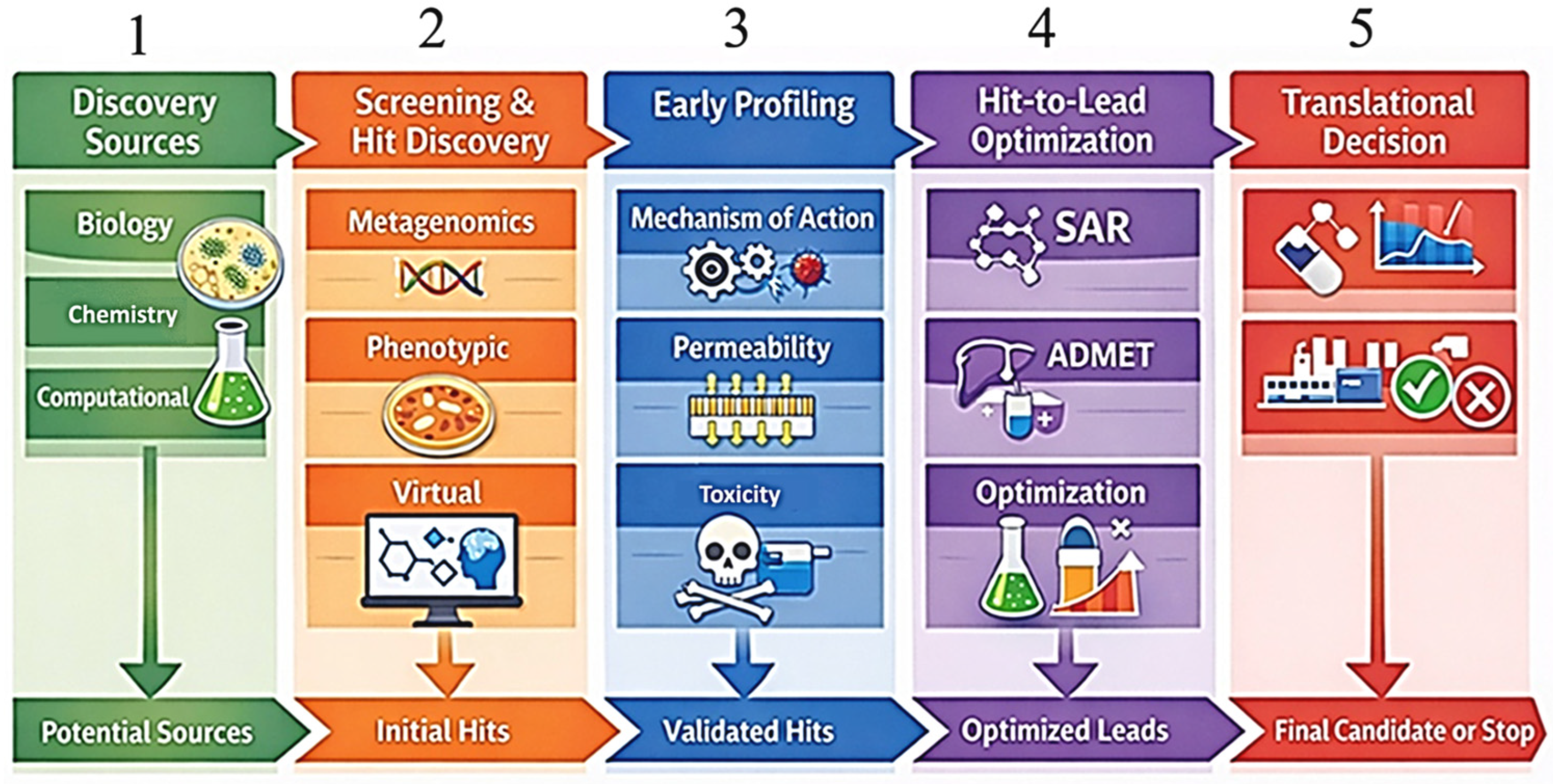
2. The Antibacterial Discovery Pipeline
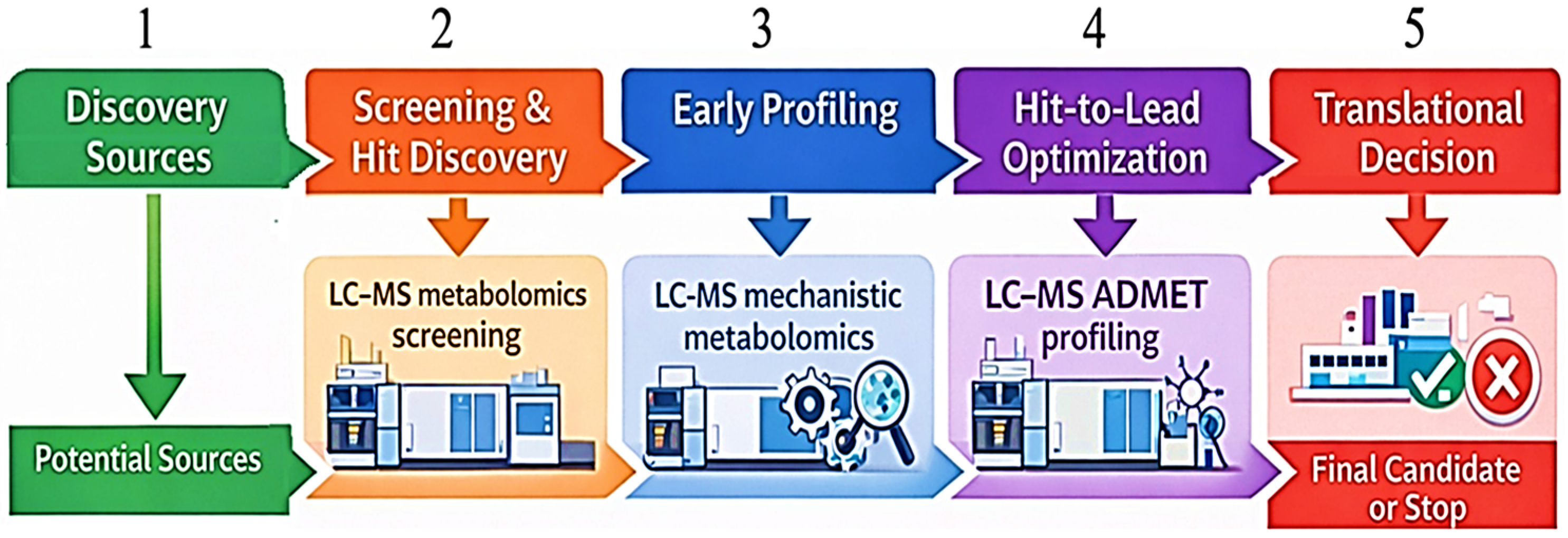
2.1. Role of LC–MS Platforms in the Modular Pipeline
2.2. Complementary Techniques and Multi-Level Integration
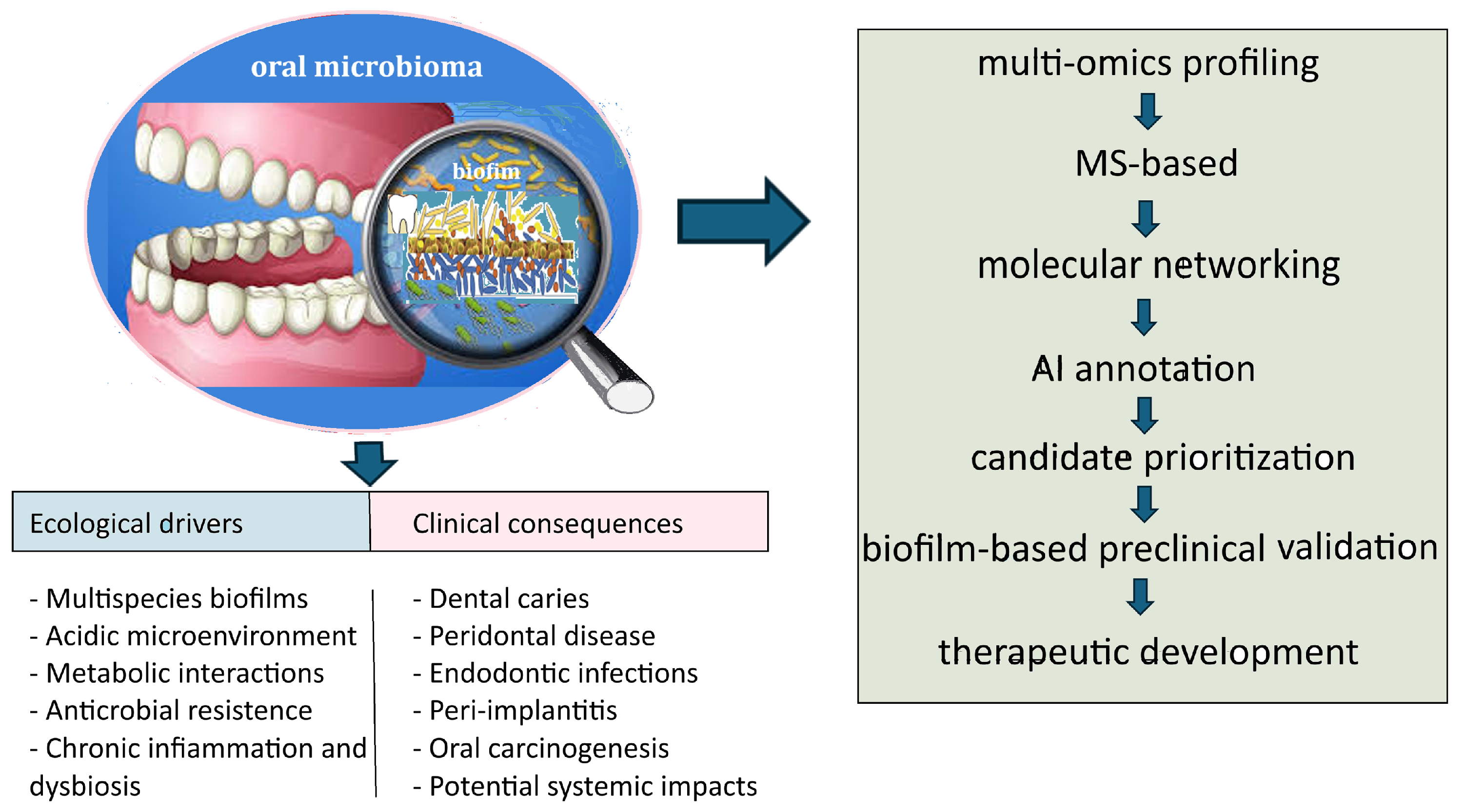
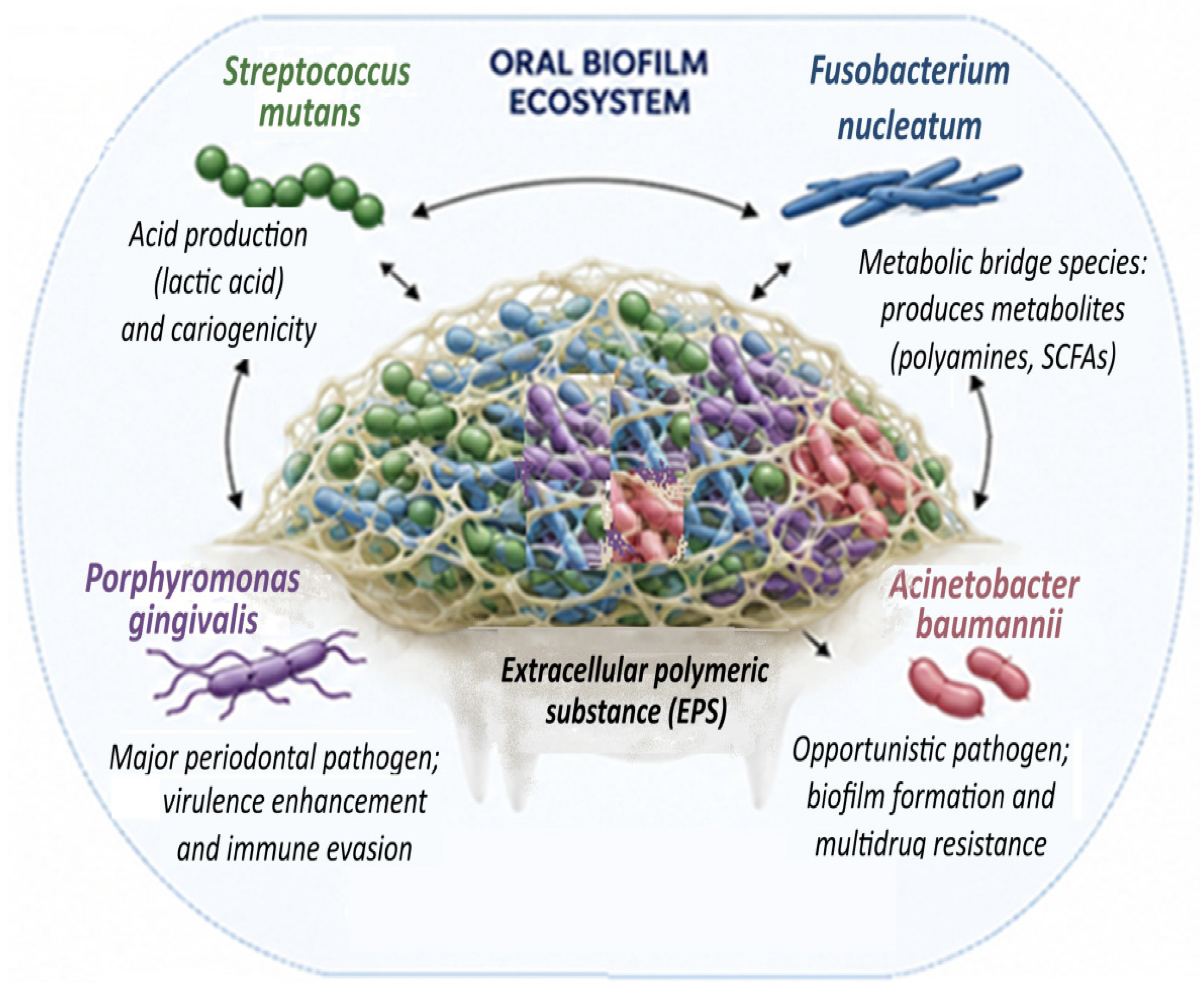
3. The Oral Microbiome as a Source of Bioactive Molecules and Antimicrobial Resistance
3.1. Analytical Techniques in the Modern Pipeline of Oral Antibacterial Discovery
3.2. Representative Oral Microbiome-Derived Molecules Identified Through MS-Based Approaches
3.3. Functional Prioritization of Antibacterial Metabolites
4. Future Integrated Pipeline for Oral Antibacterial Discovery
5. Conclusions
Author Contributions
Funding
Informed Consent Statement
Data Availability Statement
Acknowledgments
Conflicts of Interest
References
- Murray, C.J.; Ikuta, K.S.; Sharara, F.; Swetschinski, L.; Aguilar, G.R.; Gray, A.; Han, C.; Bisignano, C.; Rao, P.; Wool, E.; et al. Global burden of bacterial antimicrobial resistance in 2019: A systematic analysis. Lancet 2022, 399, 629–655. [Google Scholar] [CrossRef] [PubMed]
- Lewis, K. The science of antibiotic discovery. Cell 2020, 181, 29–45. [Google Scholar] [CrossRef] [PubMed]
- Miethke, M.; Pieroni, M.; Weber, T.; Brönstrup, M.; Hammann, P.; Halby, L.; Arimondo, P.B.; Glaser, P.; Aigle, B.; Bode, H.B.; et al. Towards the sustainable discovery and development of new antibiotics. Nat. Rev. Chem. 2021, 5, 726–749. [Google Scholar] [CrossRef] [PubMed]
- Gigante, V.; Sati, H.; Beyer, P. Recent advances and challenges in antibacterial drug development. ADMET DMPK 2022, 10, 147–151. [Google Scholar] [CrossRef] [PubMed]
- Donia, M.S.; Fischbach, M.A. Small molecules from the human microbiota. Science 2015, 349, 1254766. [Google Scholar] [CrossRef] [PubMed]
- Wade, W.G. The oral microbiome in health and disease. Pharmacol. Res. 2013, 69, 137–143. [Google Scholar] [CrossRef] [PubMed]
- Belda-Ferre, P.; Williamson, J.; Simón-Soro, Á.; Artacho, A.; Jensen, O.N.; Mira, A. The human oral metaproteome reveals potential biomarkers for caries disease. Proteomics 2015, 15, 3497–3507. [Google Scholar] [CrossRef] [PubMed]
- Belstrøm, D.; Jersie-Christensen, R.R.; Lyon, D.; Damgaard, C.; Jensen, L.J.; Holmstrup, P.; Olsen, J.V. Metaproteomics of saliva identifies human protein markers specific for individuals with periodontitis and dental caries compared to orally healthy controls. PeerJ 2016, 4, e2433. [Google Scholar] [CrossRef] [PubMed]
- Ruan, W.; Sun, C.; Gao, Q.; Shrivastava, N. Metaproteomics associated with severe early childhood caries highlights the differences in salivary proteins. Arch. Oral Biol. 2021, 131, 105220. [Google Scholar] [CrossRef] [PubMed]
- Huang, S.; He, T.; Yue, F.; Xu, X.; Wang, L.; Zhu, P.; Teng, F.; Sun, Z.; Liu, X.; Jing, G.; et al. Longitudinal multi-omics and microbiome meta-analysis identify an asymptomatic gingival state that links gingivitis, periodontitis, and aging. mBio 2021, 12, 10-1128. [Google Scholar] [CrossRef] [PubMed]
- Bostanci, N.; Grant, M.; Bao, K.; Silbereisen, A.; Hetrodt, F.; Manoil, D.; Belibasakis, G.N. Metaproteome and metabolome of oral microbial communities. Periodontology 2000 2021, 85, 46–81. [Google Scholar]
- Carneiro, M.C.; da Silva, N.D.G.; Ventura, T.M.O.; da Silva Santos, P.S.; Buzalaf, M.A.R.; Freire, M. Salivary Proteome Role in Infection and Immunity. In Oral Immunology; Springer Nature: Cham, Switzerland, 2025; pp. 747–773. [Google Scholar]
- Edlund, A.; Garg, N.; Mohimani, H.; Gurevich, A.; He, X.; Shi, W.; Dorrestein, P.C.; McLean, J.S. Metabolic fingerprints from the human oral microbiome reveal a vast knowledge gap of secreted small peptidic molecules. Msystems 2017, 2, 10-1128. [Google Scholar] [CrossRef] [PubMed]
- Brooks, L.; Narvekar, U.; McDonald, A.; Mullany, P. Prevalence of antibiotic resistance genes in the oral cavity and mobile genetic elements that disseminate antimicrobial resistance: A systematic review. Mol. Oral Microbiol. 2022, 37, 133–153. [Google Scholar] [CrossRef] [PubMed]
- Anderson, A.C.; von Ohle, C.; Frese, C.; Boutin, S.; Bridson, C.; Schoilew, K.; Peikert, S.A.; Hellwig, E.; Pelz, K.; Wittmer, A.; et al. The oral microbiota is a reservoir for antimicrobial resistance: Resistome and phenotypic resistance characteristics of oral biofilm in health, caries, and periodontitis. Ann. Clin. Microbiol. Antimicrob. 2023, 22, 37. [Google Scholar] [CrossRef] [PubMed]
- Waller, M.C.; Bober, J.R.; Nair, N.U.; Beisel, C.L. Toward a genetic tool development pipeline for host-associated bacteria. Curr. Opin. Microbiol. 2017, 38, 156–164. [Google Scholar] [CrossRef] [PubMed]
- Meinen, A.; Reuss, A.; Willrich, N.; Feig, M.; Noll, I.; Eckmanns, T.; Al-Nawas, B.; Markwart, R. Antimicrobial resistance and the spectrum of pathogens in dental and oral-maxillofacial infections in hospitals and dental practices in Germany. Front. Microbiol. 2021, 12, 676108. [Google Scholar] [CrossRef] [PubMed]
- Bostanci, N.; Belibasakis, G.N. Porphyromonas gingivalis: An invasive and evasive opportunistic oral pathogen. FEMS Microbiol. Lett. 2012, 333, 1–9. [Google Scholar] [CrossRef] [PubMed]
- Ghannoum, M.A.; Jurevic, R.J.; Mukherjee, P.K.; Cui, F.; Sikaroodi, M.; Naqvi, A.; Gillevet, P.M. Characterization of the oral fungal microbiome (mycobiome) in healthy individuals. PLoS Pathog. 2010, 6, e1000713. [Google Scholar] [CrossRef] [PubMed]
- Verma, D.; Garg, P.K.; Dubey, A.K. Insights into the human oral microbiome. Arch. Microbiol. 2018, 200, 525–540. [Google Scholar] [CrossRef] [PubMed]
- Brown, E.D.; Wright, G.D. Antibacterial drug discovery in the resistance era. Nature 2016, 529, 336–343. [Google Scholar] [CrossRef] [PubMed]
- De Oliveira, D.M.; Forde, B.M.; Kidd, T.J.; Harris, P.N.; Schembri, M.A.; Beatson, S.A.; Paterson, D.L.; Walker, M.J. Antimicrobial resistance in ESKAPE pathogens. Clin. Microbiol. Rev. 2020, 33, 10-1128. [Google Scholar] [CrossRef] [PubMed]
- Hughes, J.P.; Rees, S.; Kalindjian, S.B.; Philpott, K.L. Principles of early drug discovery. Br. J. Pharmacol. 2011, 162, 1239–1249. [Google Scholar] [CrossRef] [PubMed]
- Scannell, J.W.; Bosley, J.; Hickman, J.A.; Dawson, G.R.; Truebel, H.; Ferreira, G.S.; Richards, D.; Treherne, J.M. Predictive validity in drug discovery: What it is, why it matters and how to improve it. Nat. Rev. Drug Discov. 2022, 21, 915–931. [Google Scholar] [CrossRef] [PubMed]
- Theuretzbacher, U. The global resistance problem and the clinical antibacterial pipeline. Nat. Rev. Microbiol. 2025, 23, 491–508. [Google Scholar] [CrossRef] [PubMed]
- Broeckling, C.D.; Beger, R.D.; Cheng, L.L.; Cumeras, R.; Cuthbertson, D.J.; Dasari, S.; Davis, W.C.; Dunn, W.B.; Evans, A.M.; Fernández-Ochoa, A.; et al. Current practices in LC-MS untargeted metabolomics: A scoping review on the use of pooled quality control samples. Anal. Chem. 2023, 95, 18645–18654. [Google Scholar] [CrossRef] [PubMed]
- Wang, M.; Carver, J.J.; Phelan, V.V.; Sanchez, L.M.; Garg, N.; Peng, Y.; Nguyen, D.D.; Watrous, J.; Kapono, C.A.; Luzzatto-Knaan, T.; et al. Sharing and community curation of mass spectrometry data with Global Natural Products Social Molecular Networking. Nat. Biotechnol. 2016, 34, 828–837. [Google Scholar] [CrossRef] [PubMed]
- Rochat, B. Quantitative and qualitative LC-high-resolution MS: The technological and biological reasons for a shift of paradigm. In Recent Advances in Analytical Chemistry; IntechOpen: London, UK, 2018. [Google Scholar]
- Perez de Souza, L.; Alseekh, S.; Scossa, F.; Fernie, A.R. Ultra-high-performance liquid chromatography high-resolution mass spectrometry variants for metabolomics research. Nat. Methods 2021, 18, 733–746. [Google Scholar] [CrossRef] [PubMed]
- Du, X.; Dastmalchi, F.; Ye, H.; Garrett, T.J.; Diller, M.A.; Liu, M.; Hogan, W.R.; Brochhausen, M.; Lemas, D.J. Evaluating LC-HRMS metabolomics data processing software using FAIR principles for research software. Metabolomics 2023, 19, 11. [Google Scholar] [CrossRef] [PubMed]
- Paglia, G.; Astarita, G. Metabolomics and lipidomics using traveling-wave ion mobility mass spectrometry. Nat. Protoc. 2017, 12, 797–813. [Google Scholar] [CrossRef] [PubMed]
- Song, X.; Li, C.; Meng, Y. Mass spectrometry imaging advances and application in pharmaceutical research. Acta Mater. Med. 2022, 1, 507–533. [Google Scholar] [CrossRef]
- Dührkop, K.; Fleischauer, M.; Ludwig, M.; Aksenov, A.A.; Melnik, A.V.; Meusel, M.; Dorrestein, P.C.; Rousu, J.; Böcker, S. SIRIUS 4: A rapid tool for turning tandem mass spectra into metabolite structure information. Nat. Methods 2019, 16, 299–302. [Google Scholar] [CrossRef] [PubMed]
- Dührkop, K. Deep kernel learning improves molecular fingerprint prediction from tandem mass spectra. Bioinformatics 2022, 38, i342–i349. [Google Scholar] [CrossRef] [PubMed]
- Koo, H.; Falsetta, M.L.; Klein, M.I. The exopolysaccharide matrix: A virulence determinant of cariogenic biofilm. J. Dent. Res. 2013, 92, 1065–1073. [Google Scholar] [CrossRef] [PubMed]
- Kim, D.; Barraza, J.P.; Arthur, R.A.; Hara, A.; Lewis, K.; Liu, Y.; Scisci, E.L.; Hajishengallis, E.; Whiteley, M.; Koo, H. Spatial mapping of polymicrobial communities reveals a precise biogeography associated with human dental caries. Proc. Natl. Acad. Sci. USA 2020, 117, 12375–12386. [Google Scholar] [CrossRef] [PubMed]
- Liu, W.; Røder, H.L.; Madsen, J.S.; Bjarnsholt, T.; Sørensen, S.J.; Burmølle, M. Interspecific bacterial interactions are reflected in multispecies biofilm spatial organization. Front. Microbiol. 2016, 7, 213013. [Google Scholar] [CrossRef] [PubMed]
- Marsh, P.D.; Zaura, E. Dental biofilm: Ecological interactions in health and disease. J. Clin. Periodontol. 2017, 44, S12–S22. [Google Scholar] [CrossRef] [PubMed]
- Bowen, W.H.; Burne, R.A.; Wu, H.; Koo, H. Oral biofilms: Pathogens, matrix, and polymicrobial interactions in microenvironments. Trends Microbiol. 2018, 26, 229–242. [Google Scholar] [CrossRef] [PubMed]
- Cassini, A.; Högberg, L.D.; Plachouras, D.; Quattrocchi, A.; Hoxha, A.; Simonsen, G.S.; Hopkins, S. Attributable deaths and disability-adjusted life-years caused by infections with antibiotic-resistant bacteria in the EU and the European Economic Area in 2015: A population-level modelling analysis. Lancet Infect. Dis. 2019, 19, 56–66. [Google Scholar] [CrossRef] [PubMed]
- Jiang, L.; Tang, Y.; Xu, L.; Wei, Y.; Liu, M.; Che, X.; Xin, R.; Zhu, Y. Microbiome in adults, severe caries and validation of biofilms across the kingdom. Oral Clin. Investig. 2026, 30, 192. [Google Scholar] [CrossRef] [PubMed]
- Jiang, X.; Zhang, Y.; Wang, H.; Wang, Z.; Hu, S.; Cao, C.; Xiao, H. In-depth metaproteomics analysis of oral microbiome for lung cancer. Research 2022, 2022, 9781578. [Google Scholar] [CrossRef] [PubMed]
- Mohammed, M.M.A.; Pettersen, V.K.; Nerland, A.H.; Wiker, H.G.; Bakken, V. Protein interactions between the oral bacteria Fusobacterium nucleatum and Porphyromonas gingivalis in biofilm and planktonic culture. bioRxiv 2020. [Google Scholar] [CrossRef]
- Wang, B.; Deng, J.; Donati, V.; Merali, N.; Frampton, A.E.; Giovannetti, E.; Deng, D. The roles and interactions of Porphyromonas gingivalis and Fusobacterium nucleatum in oral and gastrointestinal carcinogenesis: A narrative review. Pathogens 2024, 13, 93. [Google Scholar] [CrossRef] [PubMed]
- Ciani, L.; Libonati, A.; Dri, M.; Pomella, S.; Campanella, V.; Barillari, G. About a possible impact of endodontic infections by Fusobacterium nucleatum or Porphyromonas gingivalis on oral carcinogenesis: A literature overview. Int. J. Mol. Sci. 2024, 25, 5083. [Google Scholar] [CrossRef] [PubMed]
- Yuan, K.; Xu, S.; Liu, G.; Han, Y.; Hu, J.; Zhang, W.; Zhang, Z.; Liu, L.; Huang, Z.; Zhu, Y.; et al. Porphyromonas gingivalis promotes oral squamous cell carcinoma progression by modulating autophagy. Oral Dis. 2025, 31, 492–502. [Google Scholar] [CrossRef] [PubMed]
- Priyadharsini, J.V.; Girija, A.S.; Paramasivam, A. An insight into the emergence of Acinetobacter baumannii as an oro-dental pathogen and its drug resistance gene profile—An in silico approach. Heliyon 2018, 4, e01051. [Google Scholar] [CrossRef] [PubMed]
- Girija, A.S. Acinetobacter baumannii as an oro-dental pathogen: A red alert!! J. Appl. Oral Sci. 2024, 32, e20230382. [Google Scholar] [CrossRef] [PubMed]
- Pathoor, N.N.; Ganesh, P.S.; Gopal, R.K. Microbiome interactions: Acinetobacter baumannii biofilms as a co-factor in oral cancer progression. World J. Microbiol. Biotechnol. 2024, 40, 398. [Google Scholar] [CrossRef] [PubMed]
- Kardivel, N.; Kannan, K.P.; Girija, A.S.; Priyadharsini, J.V. Prevalence of Quorum Sensing Regulator/Autoinducer Synthase (abaR/abaL) genes among the Multi-drug resistant strains of Acinetobacter baumannii: A Cross-sectional Study. J. Clin. Diagn. Res. 2025, 19, 10–14. [Google Scholar] [CrossRef]
- Alonso, A.; Marsal, S.; Julià, A. Analytical methods in untargeted metabolomics: State of the art in 2015. Front. Bioeng. Biotechnol. 2015, 3, 23. [Google Scholar] [CrossRef] [PubMed]
- Alseekh, S.; Aharoni, A.; Brotman, Y.; Contrepois, K.; D’Auria, J.; Ewald, J.; CEwald, J.; Fraser, P.D.; Giavalisco, P.; Hall, R.D.; et al. Mass spectrometry-based metabolomics: A guide for annotation, quantification and best reporting practices. Nat. Methods 2021, 18, 747–756. [Google Scholar] [CrossRef] [PubMed]
- Grassl, N.; Kulak, N.A.; Pichler, G.; Geyer, P.E.; Jung, J.; Schubert, S.; Sinitcyn, P.; Cox, J.; Mann, M. Ultra-deep and quantitative saliva proteome reveals dynamics of the oral microbiome. Genome Med. 2016, 8, 44. [Google Scholar] [CrossRef] [PubMed]
- Cleaver, L.M.; Carda-Diéguez, M.; Moazzez, R.; Carpenter, G.H. Novel bacterial proteolytic and metabolic activity associated with dental erosion-induced oral dysbiosis. Microbiome 2023, 11, 69. [Google Scholar] [CrossRef] [PubMed]
- Corana, M.; Baima, G.; Iaderosa, G.; Franco, F.; Zhang, J.; Berta, G.N.; Romano, F.; Aimetti, M. Salivary proteomics for detecting novel biomarkers of periodontitis: A systematic review. J. Periodontal Res. 2025, 60, 633–655. [Google Scholar] [CrossRef] [PubMed]
- Hu, H.; Leung, W.K. Mass spectrometry-based proteomics for discovering salivary biomarkers in periodontitis: A systematic review. Int. J. Mol. Sci. 2023, 24, 14599. [Google Scholar] [CrossRef] [PubMed]
- Zambonin, C.; Aresta, A. MALDI-TOF/MS analysis of non-invasive human urine and saliva samples for the identification of new cancer biomarkers. Molecules 2022, 27, 1925. [Google Scholar] [CrossRef] [PubMed]
- Palmisani, J.; Aresta, A.M.; Vergaro, V.; Mancini, G.; Mazzola, M.C.; Nisi, M.R.; Pastore, L.; Pizzillo, V.; De Vietro, N.; Boncristiani, C.; et al. Volatile Organic Compounds (VOCs) in Neurodegenerative Diseases (NDDs): Diagnostic Potential and Analytical Approaches. Molecules 2025, 30, 4028. [Google Scholar] [CrossRef] [PubMed]
- Gardner, A.; Carpenter, G.; So, P.W. Salivary metabolomics: From diagnostic biomarker discovery to investigating biological function. Metabolites 2020, 10, 47. [Google Scholar] [CrossRef] [PubMed]
- Teruya, T.; Goga, H.; Yanagida, M. Human Age-Declined Saliva Metabolic Markers Determined by LC–MS. Sci. Rep. 2021, 11, 18135. [Google Scholar] [CrossRef] [PubMed]
- Grocholska, P.; Kowalska, M.; Bąchor, R. Qualitative and quantitative mass spectrometry in salivary metabolomics and proteomics. Metabolites 2023, 13, 155. [Google Scholar] [CrossRef] [PubMed]
- Ciurli, A.; Mohammed, Y.; Ammon, C.; Derks, R.J.; Olivier-Jimenez, D.; Ducarmon, Q.R.; Slingerland, M.; Neefjes, J.; Giera, M. Spatially and temporally resolved metabolome of the human oral cavity. iScience 2024, 27, 108884. [Google Scholar] [CrossRef] [PubMed]
- Sakanaka, A.; Kuboniwa, M.; Shimma, S.; Alghamdi, S.A.; Mayumi, S.; Lamont, R.J.; Fukusaki, E.; Amano, A. Fusobacterium nucleatum metabolically integrates commensals and pathogens in oral biofilms. Msystems 2022, 7, e00170-22. [Google Scholar] [CrossRef] [PubMed]
- Ahmad, P.; Hussain, A.; Siqueira, W.L. Mass spectrometry-based proteomic approaches for salivary protein biomarkers discovery and dental caries diagnosis: A critical review. Mass Spectrom. Rev. 2024, 43, 826–856. [Google Scholar] [CrossRef] [PubMed]
- Paglia, G.; Smith, A.J.; Astarita, G. Ion mobility mass spectrometry in the omics era: Challenges and opportunities for metabolomics and lipidomics. Mass Spectrom. Rev. 2022, 41, 722–765. [Google Scholar] [CrossRef] [PubMed]
- Vaysse, P.M.; Demers, I.; van den Hout, M.F.; van de Worp, W.; Anthony, I.G.; Baijens, L.W.; Tan, B.I.; Lacko, M.; Vaassen, L.A.; van Mierlo, A.; et al. Evaluation of the sensitivity of metabolic profiling by rapid evaporative ionization mass spectrometry: Toward more radical oral cavity cancer resections. Anal. Chem. 2022, 94, 6939–6947. [Google Scholar] [CrossRef] [PubMed]
- Overmyer, K.A.; Rhoads, T.W.; Merrill, A.E.; Ye, Z.; Westphall, M.S.; Acharya, A.; Shukla, S.K.; Coon, J.J. Proteomics, lipidomics, metabolomics, and 16S DNA sequencing of dental plaque from patients with diabetes and periodontal disease. Mol. Cell. Proteom. 2021, 20, 100126. [Google Scholar] [CrossRef] [PubMed]
- Joyner, P.M.; Liu, J.; Zhang, Z.; Merritt, J.; Qi, F.; Cichewicz, R.H. Mutanobactin A from the human oral pathogen Streptococcus mutans is a cross-kingdom regulator of the yeast-mycelium transition. Org. Biomol. Chem. 2010, 8, 5486–5489. [Google Scholar] [CrossRef] [PubMed]
- Pultar, F.; Hansen, M.E.; Wolfrum, S.; Boselt, L.; Fróis-Martins, R.; Bloch, S.; Kravina, A.G.; Pehlivanoglu, D.; Schaffer, C.; LeibundGut-Landmann, S.; et al. Mutanobactin D from the human microbiome: Total synthesis, configurational assignment, and biological evaluation. J. Am. Chem. Soc. 2021, 143, 10389–10402. [Google Scholar] [CrossRef] [PubMed]
- Allaker, R.P.; Stephen, A.S. Use of probiotics and oral health. Curr. Oral Health Rep. 2017, 4, 309–318. [Google Scholar] [CrossRef] [PubMed]
- Zhu, L.; Kreth, J. The role of hydrogen peroxide in environmental adaptation of oral microbial communities. Oxidative Med. Cell. Longev. 2012, 2012, 717843. [Google Scholar] [CrossRef] [PubMed]
- Zhao, J.; Quan, C.; Jin, L.; Chen, M. Production, detection and application perspectives of quorum sensing autoinducer-2 in bacteria. J. Biotechnol. 2018, 268, 53–60. [Google Scholar] [CrossRef] [PubMed]
- Chu, S.; Chan, A.K.Y.; Chu, C.H. Polyamines in dysbiotic oral conditions of older adults: A scoping review. Int. J. Mol. Sci. 2024, 25, 10596. [Google Scholar] [CrossRef] [PubMed]
- Corrêa, R.O.; Vieira, A.; Sernaglia, E.M.; Lancellotti, M.; Vieira, A.T.; Avila-Campos, M.J.; Rodrigues, H.G.; Vinolo, M.A. Bacterial short-chain fatty acid metabolites modulate the inflammatory response against infectious bacteria. Cell. Microbiol. 2017, 19, e12720. [Google Scholar] [CrossRef] [PubMed]




| Technique | Main Role | Strengths | Limitations |
|---|---|---|---|
| LC-MS/MS (HRMS, Q-TOF) | Metabolite discovery and characterization | High sensitivity, sub-ppm accuracy, broad analytical coverage | Ionization dependency, data complexity |
| LC-MS | Exploration of chemical space | Identification of unknown metabolites | Variability, incomplete databases |
| IM-MS | Structural separation (CCS-based) | Isomer/isobar discrimination | Incomplete CCS reference databases for microbial metabolites; analytical complexity |
| IMS (MALDI, DESI) | Spatial metabolite distribution | In situ analysis | Lower sensitivity, limited metabolite identification |
| In silico annotation (SIRIUS, CSI:FingerID, CANOPUS) | Structural prediction | Speed, prioritization support | False positives, need for experimental validation |
| Matrix | Main Analytes Detected | Molecular Origin | Analytical Depth/Sensitivity | Relevance for Antibacterial Discovery | Critical Considerations | Relevant Ref. |
|---|---|---|---|---|---|---|
| Saliva | Human proteins, microbial proteins, posttranslational peptides | Mixed (host + microbial) | Ultra-deep depth proteomics (>3000 proteins); high sensitivity for low abundance proteins | Biomarker discovery and prioritization of host–microbiome interactions relevant to antibacterial target selection | High biological variability, dilution effects and difficulty in discriminating host- from microbially derived molecules | [53] |
| Saliva + dental plaque | Human and microbial proteins; metabolites; lipids | Mixed (host + microbial; microbial enrichment in plaque) | Simultaneous multi-omics profiling; high sensitivity | Identification of microbial pathways associated with dysbiosis and potential therapeutic vulnerabilities | Sampling and extraction protocols differ substantially among studies, limiting comparability | [11,18] |
| Saliva, biofilm, eroded tooth surfaces | Proteases, bacterial proteins, metabolites | Predominantly microbial (biofilm) | Deep metaproteomics + metabolomics. Excellent sensitivity to rare microbial enzymes and underrepresented pathways | Identification of disease-associated metabolic activities and potential antibacterial vulnerabilities | Mostly observational; most findings remain associative and require functional validation | [54] |
| Saliva/plaque | Proteins, metabolites, lipids | Mixed | Deep multi- omics characterization | Identification of disease-associated protein and metabolic signatures supporting target prioritization and biomarker discovery | Correlations do not necessarily demonstrate causal mechanisms | [55] |
| Oral biofilm, microbial cultures | Bacterial metabolites, semi-polar compounds, unknown molecules | Microbial | Detection of thousands of LC–MS features, including cryptic metabolites | Primary source of novel antibacterial metabolites; enables discovery of ecological interactions | Large proportion of detected metabolites remain unannotated; structural and functional validation is challenging | [13] |
| Saliva/Biofilm | Metabolites, proteins, lipids | Mixed | High metabolic coverage. Detection of bacterial metabolites and chemical fingerprints | Characterization of metabolic fingerprints associated with oral physiological and pathological states. | Biological significance of many low-abundance metabolites remains uncertain | [56] |
| Class | Representative Example | Biological Role |
|---|---|---|
| Bioactive metabolites | Short-chain fatty acids | Inflammation modulation |
| Polyamines | Biofilm resilience | |
| Small peptidic molecules | Antibacterial potential | |
| Siderophore-like metabolites | Competition and virulence | |
| Proteomic biomarkers | Inflammatory salivary proteins | Periodontitis |
| Proteolytic enzymes | Dysbiosis | |
| Oxidative stress metabolites | Caries/OSCC | |
| Space metabolites | Localized lipid signatures | Spatial metabolic heterogeneity |
| REIMS-derived lipid fingerprints | Oral cancer discrimination |
| Bioactive Molecule/Biomarker | Oral Source/Species | Biological Significance | Analytical Platform | Potential Application | Reference |
|---|---|---|---|---|---|
| Small peptidic metabolites | Multispecies oral biofilm | Previously uncharacterized secreted metabolites involved in microbial interactions | LC–MS/MS + molecular networking | Discovery of novel bioactive scaffolds | [13] |
| Metabolic cross-feeding metabolites | F. nucleatum/P. gingivalis | Virulence modulation and biofilm resilience | LC–MS metabolomics | Identification of metabolic vulnerabilities in oral biofilms | [63] |
| Salivary inflammatory and microbial proteins | Periodontitis-associated saliva and plaque | Differential protein expression associated with periodontal inflammation | LC–MS/MS proteomics | Salivary biomarker discovery | [11,56,64] |
| Proteolytic enzymes and dysbiosis-associated metabolites | Erosive oral biofilms | Altered metabolic and proteolytic activity associated with oral dysbiosis | Metaproteomics + metabolomics | Functional biomarkers of biofilm-associated disease | [56] |
| Lipidomic fingerprints | Oral cancer tissues | Tumor discrimination | REIMS/IM–MS | Surgical guidance/diagnostics | [66] |
| Antimicrobial resistance genes (ARGs) and mobile genetic elements | Oral biofilm communities | Reservoir and dissemination of antimicrobial resistance | Metagenomics + LC–MS-integrated approaches | Resistance surveillance and target prioritization | [14,15] |
| Spatial metabolomic profiles | Distinct oral cavity niches | Site-specific metabolic heterogeneity | LC–MS spatial metabolomics | Precision oral diagnostics and ecological profiling | [62] |
| Molecule/ Family | Producing Species | Functional Role | Potential Relevance | Reference |
|---|---|---|---|---|
| Mutanobactins | S. mutans | Oxidative stress adaptation and biofilm fitness | Anti-biofilm targeting | [68,69] |
| Reuterin-like metabolites | Oral Lactobacillus spp. | Antimicrobial activity | Ecological therapeutics | [70] |
| Hydrogen peroxide | Oral Streptococcus spp. | Competitive inhibition | Colonization resistance | [71] |
| Autoinducer-2 (AI-2) | Multispecies biofilms | Quorum sensing | Targets for biofilm disruption | [72] |
| Polyamines | Dysbiotic biofilms | Stress adaptation | Metabolic targeting | [62,73] |
| SCFAs | Periodontal anaerobes | Inflammation modulation | Host–microbiome modulation strategies | [11,74] |
Disclaimer/Publisher’s Note: The statements, opinions and data contained in all publications are solely those of the individual author(s) and contributor(s) and not of MDPI and/or the editor(s). MDPI and/or the editor(s) disclaim responsibility for any injury to people or property resulting from any ideas, methods, instructions or products referred to in the content. |
© 2026 by the authors. Licensee MDPI, Basel, Switzerland. This article is an open access article distributed under the terms and conditions of the Creative Commons Attribution (CC BY) license.
Share and Cite
Aresta, A.M.; Signorile, G.S.; Clemente, A.; De Vietro, N.; Zambonin, C. Oral Cavity Antibacterial Discovery Pipeline Driven by Advanced Analytical Techniques. Molecules 2026, 31, 2804. https://doi.org/10.3390/molecules31162804
Aresta AM, Signorile GS, Clemente A, De Vietro N, Zambonin C. Oral Cavity Antibacterial Discovery Pipeline Driven by Advanced Analytical Techniques. Molecules. 2026; 31(16):2804. https://doi.org/10.3390/molecules31162804
Chicago/Turabian StyleAresta, Antonella Maria, Giada Stefania Signorile, Antonietta Clemente, Nicoletta De Vietro, and Carlo Zambonin. 2026. "Oral Cavity Antibacterial Discovery Pipeline Driven by Advanced Analytical Techniques" Molecules 31, no. 16: 2804. https://doi.org/10.3390/molecules31162804
APA StyleAresta, A. M., Signorile, G. S., Clemente, A., De Vietro, N., & Zambonin, C. (2026). Oral Cavity Antibacterial Discovery Pipeline Driven by Advanced Analytical Techniques. Molecules, 31(16), 2804. https://doi.org/10.3390/molecules31162804