2.1. Optimization of the Extraction of Anthocyanins
The concentrations of total phenolic compounds (mg GAE g
−1 dry sample) and total anthocyanins (mg C3GE g
−1 dry sample) are presented in
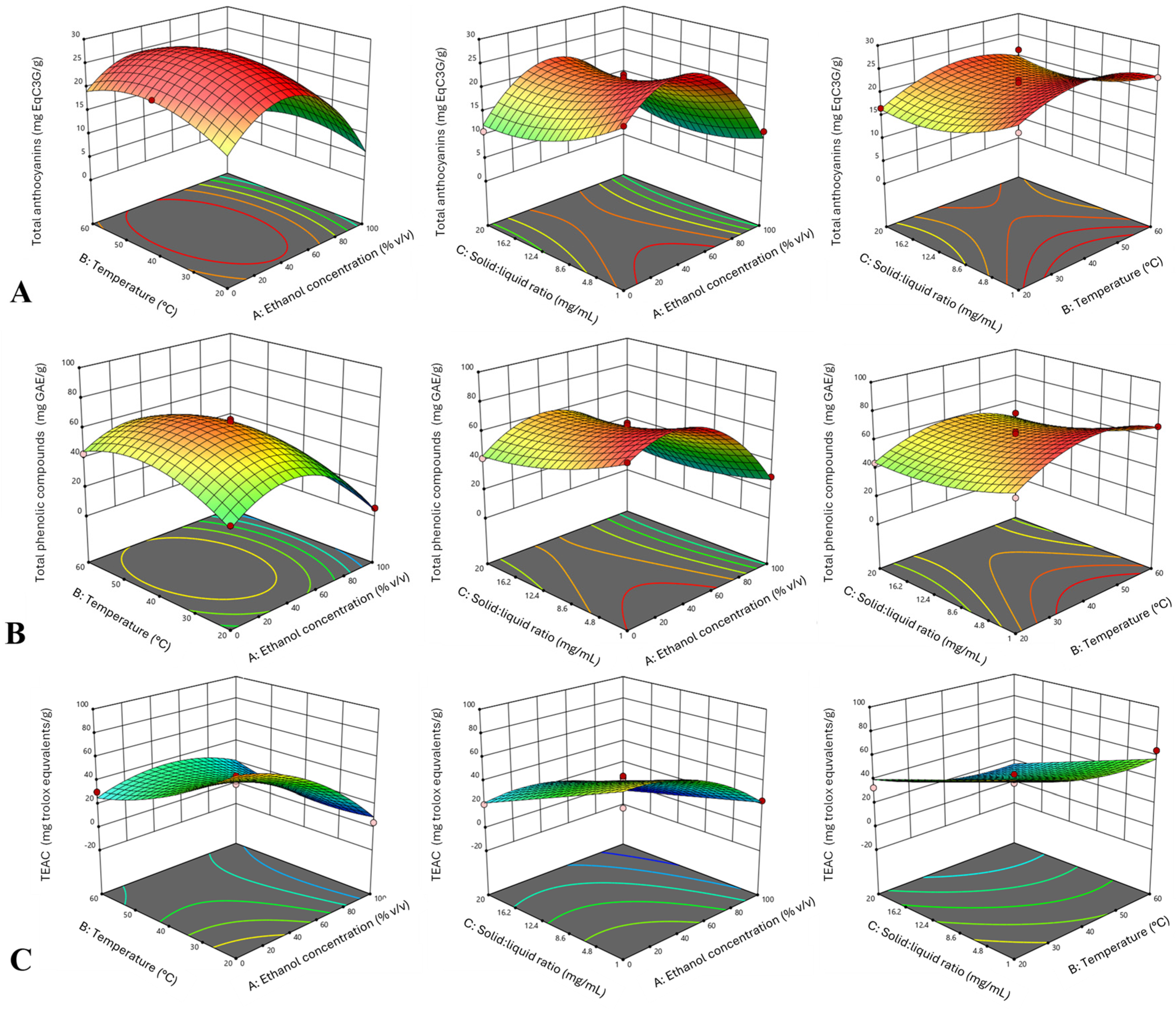
Figure 1. The results indicate that both temperature and ethanol concentration significantly influenced the recovery of these compound groups. For total anthocyanins (
Figure 1A) and total phenolic compounds (
Figure 1B), a quadratic model provided the best fit to the experimental data, with coefficients of determination (R
2) of 0.9825 and 0.9918 and adjusted R
2 values of 0.9510 and 0.9764, respectively. In contrast, antioxidant capacity (
Figure 1C) was best described by a linear model, with an R
2 value of 0.9369 and an adjusted R
2 of 0.82. In all cases, the lack-of-fit test was not statistically significant (
p > 0.05), indicating that the models provided an adequate predictive performance.
It is important to note that the proposed linear model for antioxidant capacity, as measured by the DPPH assay, had a lower adjusted coefficient of determination (adjusted R2 = 0.82) compared to the quadratic models for total phenols and total anthocyanins, which had adjusted R2 values greater than 0.95. Despite this difference, the linear model’s R2 value is still acceptable for process optimization studies involving complex plant matrices.
This disparity suggests that antioxidant activity, as determined by the DPPH assay, may be influenced by experimental factors in a nonlinear way or by interactions among bioactive compounds that the linear model does not fully capture. Additionally, the inherent variability of the DPPH assay and the potential contribution of non-phenolic compounds with antioxidant properties could account for some of the observed variability.
Nonetheless, the model was statistically significant (p < 0.05), and the lack-of-fit test yielded a non-significant result (p > 0.05), which supports its predictive validity within the range of experiments conducted. This observation underscores the need to account for matrix complexity and the diversity of compounds present when interpreting the antioxidant capacity of agricultural by-product extracts.
The highest concentrations of phenolic compounds and anthocyanins were obtained with ethanol–water mixtures containing 40–60% (
v/
v) ethanol, particularly for anthocyanins (
Figure 1A). This finding is consistent with previous reports showing that the highest anthocyanin recovery from berries was achieved at ethanol concentrations near 60% (
v/
v) [
39]. The presence of water in the extraction solvent promotes hydration of the plant matrix, thereby facilitating the release of phenolic compounds. Meanwhile, ethanol enhances the solubility of anthocyanins and other polyphenols that are intermediate in polarity.
Temperature had a significant impact on extraction efficiency (
p < 0.05). As the temperature increased, extraction efficiency improved due to enhanced diffusion and reduced viscosity, while the endothermic dissolution process raised the equilibrium solubility of phenolic compounds [
40]. However, when the temperature reached or exceeded 60 °C, anthocyanin concentrations began to decline due to thermal degradation, including processes such as glycosidic bond hydrolysis, pyrylium ring opening, and chalcone formation [
41]. The optimal extraction temperature was approximately 45 °C, as this level balanced improved extraction with the risk of thermal degradation.
In contrast, although the solid-to-solvent ratio also significantly affected the concentrations of the extracted compounds (
p < 0.05), it had the smallest effect among the factors evaluated. The highest concentrations of phenolic compounds and anthocyanins were observed at low solid-to-solvent ratios (1:1,
w/
v), corresponding to a larger volume of solvent per unit mass of solid. This trend can be explained by the fact that increasing the solvent volume enhances the concentration gradient between the plant matrix and the liquid phase. This enhancement facilitates the diffusion of target compounds from the matrix into the solvent and accelerates mass transfer. However, it is important to note that the solvent volume does not affect the thermodynamic solubility of anthocyanins; rather, it influences the driving force for diffusion, as described by Fick’s law. A larger solvent volume creates a steeper concentration gradient, which promotes faster diffusion of solutes from the solid matrix into the bulk solution until equilibrium is reached. Consequently, this increases the overall extraction yield within a given time [
40]. This principle has been extensively documented in the literature on solid–liquid extraction of phenolic compounds and anthocyanins [
40].
A key finding was that radical-scavenging activity (
Figure 1C) did not correlate directly with anthocyanin concentration in the extracts. The highest antioxidant activity was observed in aqueous extracts obtained at low temperatures, particularly in the region of
Figure 1C corresponding to low ethanol concentrations (20–30%
v/
v). These results indicate that compounds preferentially extracted with water, such as organic acids, simple phenolic acids, and other hydrophilic constituents, exhibit a greater ability to inhibit the DPPH radical than compounds solubilized in hydroalcoholic mixtures. These molecules may act as highly effective electron- or hydrogen-donating agents, potentially exceeding the antioxidant effects typically attributed to anthocyanins and total phenolic compounds (determined by the Folin–Ciocalteu method, which estimates the overall reducing capacity of phenolic compounds and other reductants present in the extract). Similar observations have been reported in plant matrices, where non-anthocyanin constituents contribute substantially to the overall antioxidant activity [
42].
The optimal extraction conditions for maximizing anthocyanin concentration were an extraction temperature of 45.21 °C, an ethanol concentration of 55.56% (v/v), and a solid-to-solvent ratio of 1.86 mg/mL. Under these conditions, the model predicted a maximum anthocyanin concentration of 25.48 mg C3GE g−1 dry sample. Experimental validation yielded an anthocyanin concentration of 23.29 mg C3GE g−1 dry sample, corresponding to a model predictive accuracy of 90.6%. This optimized extract was subsequently selected for phytochemical characterization and stability studies in liquid systems.
2.2. Phytochemical Study of Red Corn Chaff Extract
Table 1 presents the metabolomic profile of the optimized red maize chaff extract, obtained by flow injection coupled with electrospray ionization Fourier transform ion cyclotron resonance mass spectrometry (FIA-ESI-FTICR-MS).
The analysis revealed a rich and diverse composition of phenolic compounds, dominated by flavonols such as kaempferol, quercitrin, and isorhamnetin, together with their glycosylated derivatives. In addition, flavones such as chrysoeriol and flavanones such as eriodictyol were identified, along with a wide variety of anthocyanins derived primarily from cyanidin, pelargonidin, and malvidin. This metabolomic profile is consistent with previous reports on pigmented maize varieties and other cereal crops [
43,
44].
The relative abundances shown in
Table 1 represent ESI signal intensities rather than absolute concentrations, as ionization efficiency is dependent on structure. While these values facilitate qualitative comparisons of detection intensity, they should not be interpreted as molar or mass concentrations. Nevertheless, the profile offers valuable insights into the chemical diversity and relative abundance of phenolic families present in the extract [
45,
46,
47,
48].
Among the identified compounds, flavonols were the most prevalent group, with kaempferol showing the strongest presence (100%), followed by quercitrin (65.76%) and isorhamnetin (14.40%). The presence of these compounds in the red corn chaff extract aligns with its tissue origin, which includes crushed leaves, cuticles, and cob fragments. Flavonols are known to play a protective role against UV radiation and oxidative stress in light-exposed tissues [
45].
From a functional perspective, the coexistence of kaempferol, quercitrin, isorhamnetin, and their glycosylated derivatives in the extract is particularly noteworthy. These compounds have been individually linked to antioxidant, anti-inflammatory, and cardioprotective activities [
45,
46,
47,
48]. However, the true value of the extract lies not just in the properties of each isolated compound, but also in its complex and diverse composition. The potential synergistic or additive effects among flavonols, anthocyanins, and other phenolics could enhance their functionality as natural ingredients. Overall, the phytochemical profile of red corn chaff extract, an underutilized agro-industrial byproduct, suggests a significant potential as a source of bioactive compounds for applications in food or nutraceutical products.
The presence of isorhamnetin (3′-
O-methylquercetin) and its glycosylated derivatives, such as isorhamnetin-3-
O-galactoside and isorhamnetin-3-
O-rhamnoside, further increases the chemical diversity of the extract. The coexistence of these compounds may contribute to additive or synergistic antioxidant and anti-inflammatory effects [
49].
Chrysoeriol (3′-
O-methylluteolin) was identified as one of the most abundant flavonoids, accounting for 35.40% of the relative abundance. This methoxylated derivative of luteolin is commonly found in phenolic-rich vegetables such as basil, celery, and chili peppers, and is particularly prevalent in pigmented maize and other members of the
Poaceae family [
37]. Chrysoeriol has been reported to exhibit antioxidant and antiproliferative activities, as well as protective effects against oxidative DNA damage [
50,
51].
In addition, eriodictyol, a flavanone, and its glycosylated derivative, eriodictyol-7-
O-glucoside, were detected, together accounting for 15.54% of the extract’s relative abundance. Flavanones have been associated with anti-inflammatory and hepatoprotective properties, and their presence further enhances the extract’s functional diversity [
52].
The extract exhibited substantial structural diversity in its anthocyanin composition, particularly among cyanidin derivatives, including cyanidin-3-(sinapoyl)-glucoside-5-glucoside, cyanidin-3-(6-malonylglucoside)-7-(6-caffeoylglucoside)-3′-glucoside, and cyanidin-3-(3″,6″-dimalonylglucoside). Derivatives of pelargonidin, such as pelargonidin-3-
O-3″,6″-
O-dimalonylglucoside, and malvidin, such as malvidin-3-glucoside-5-(6‴-malonyl-2‴-sulfatoglucoside), were also identified. Although not included in
Table 1, which lists the 25 most abundant compounds, petunidin and delphinidin derivatives were likewise detected, albeit at lower abundances.
Relative abundance analysis showed that cyanidins and their derivatives accounted for 20.63% of the total extract abundance, whereas all identified anthocyanins collectively represented 30.19%. These results confirm that anthocyanins constitute a substantial fraction of the extract. Nevertheless, the total phenolic content was higher due to the presence of other non-anthocyanin flavonoids, including kaempferol, quercitrin, chrysoeriol, eriodictyol, and various phenolic acids, which collectively exhibited greater signal intensities.
The presence of highly acylated anthocyanins, containing malonyl, sinapoyl, caffeoyl, and sulfate groups, is a distinctive feature of pigmented maize and has important implications for both color expression and extract stability. Cyanidin-derived anthocyanins, which contain two hydroxyl groups on the B ring, produce more intense red and blue hues due to greater electron delocalization than pelargonidin derivatives, which possess a single hydroxyl group and are typically associated with bright red or orange coloration [
53].
From a technological perspective, anthocyanin acylation confers enhanced stability through intramolecular copigmentation. In this mechanism, the acyl group forms π-π stacking interactions with the flavylium nucleus, shielding it from nucleophilic attack by water and thereby reducing the rate of colorless chalcone formation [
54]. This phenomenon is particularly relevant for food applications, as non-acylated anthocyanins are highly susceptible to degradation induced by changes in pH, temperature, and light exposure. Therefore, the predominance of acylated cyanidin derivatives in the red maize chaff extract suggests that this material may represent a promising source of stabilized natural pigments with intense blue-violet coloration.
This pigmentation pattern is consistent with that reported previously, indicating that cyanidin-derived anthocyanins predominate in red maize, whereas pelargonidin derivatives are the major pigments in pink maize [
53]. The detection of multiple mono- and diacylated anthocyanins in the red maize chaff extract not only explains the observed color intensity and stability but also supports its potential application as a functional natural colorant in food matrices with varying acidity and subjected to thermal processing.
2.3. Interaction of Anthocyanins with Zein in Liquid Medium
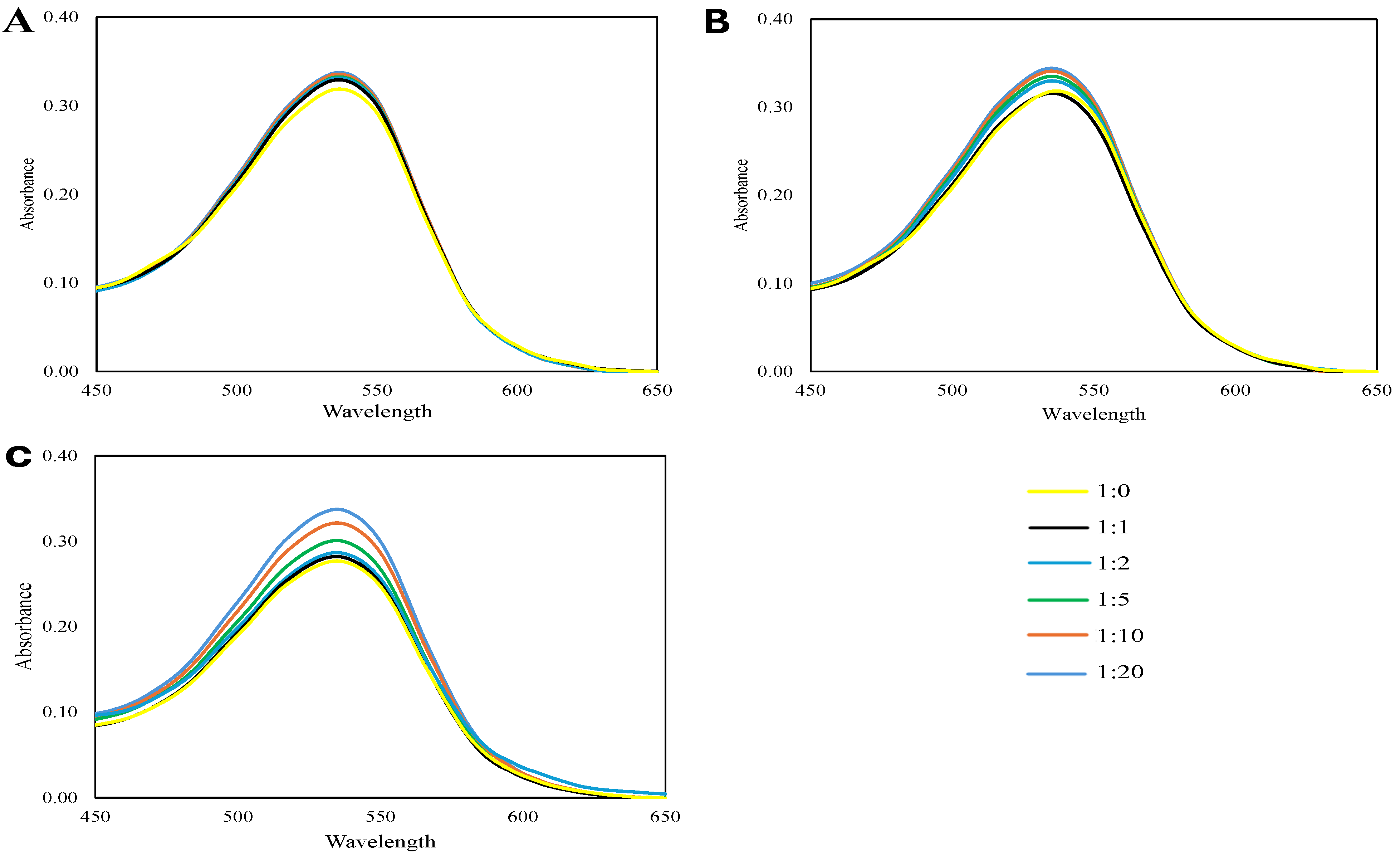
Figure 2 presents the visible absorption spectra (λ = 400–700 nm) of anthocyanin extracts obtained from red maize chaff and mixed with zein at different anthocyanin-to-zein ratios (1:0, 1:1, 1:5, 1:10, and 1:20). The spectra were recorded at three temperatures (5, 20, and 35 °C) and at pH 3. Under all conditions, a maximum absorption peak centered at 520 nm was observed, which is characteristic of anthocyanins in their flavylium cation form, the predominant species under acidic conditions [
55].
At 5 °C (
Figure 2A), increasing the zein proportion (up to an anthocyanin-to-zein ratio of 1:20) resulted in a progressive increase in absorbance at 520 nm, while the position of the absorption maximum remained unchanged. This behavior suggests the formation of anthocyanin–zein copigmentation complexes via noncovalent interactions, such as hydrophobic interactions and hydrogen bonding, without altering the chromophore’s structure [
56]. This hyperchromic effect indicates that zein acts as an effective copigment, enhancing color intensity without affecting the wavelength of maximum absorption.
At 20 °C (
Figure 2B) and 35 °C (
Figure 2C), a similar trend was observed, although the increase in absorbance was less pronounced at higher temperatures, particularly at the 1:20 anthocyanin-to-zein ratio. This behavior can be attributed to two factors: the temperature-dependent interplay between hydrophobic interactions and other non-covalent forces. Within the temperature range studied (5–35 °C), hydrophobic interactions are expected to increase with temperature, as the free energy of transferring nonpolar solutes from a nonpolar environment to water reaches its peak around ~110 °C [
57], and the potential partial aggregation of zein near its glass transition temperature, which may reduce the availability of binding sites [
38]. However, the observed decrease in the hyperchromic effect at higher temperatures suggests that other factors, such as conformational changes in zein or aggregation, may counteract the strengthening of hydrophobic interactions. This limitation affects the accessibility of binding sites and ultimately reduces the overall copigmentation effect. In all cases, the 1:20 ratio yielded the greatest increase in absorbance, suggesting that a higher zein concentration promotes greater saturation of anthocyanin-binding sites.
It is important to note that, at 20 °C, the spectra for the 1:0 and 1:1 anthocyanin-to-zein ratios are nearly identical. This phenomenon can be explained by the low concentration of zein in the 1:1 ratio (approximately 0.0125 mg mL−1), resulting in minimal occupancy of the binding sites. Additionally, at this temperature, hydrophobic interactions are weakened, and there may be some partial aggregation of zein. The difference in absorbance between the two spectra falls within the experimental margin of error (±0.005 absorbance units), indicating that the observed overlap is consistent with the system’s inherent variability and does not affect the interpretation of the results.
No significant bathochromic (towards longer wavelengths) or hypsochromic (towards shorter wavelengths) shifts were observed, indicating that zein does not alter the fundamental electronic structure of anthocyanins. Instead, it exerts an exclusively hyperchromatic stabilizing effect. This behavior is typical of intermolecular copigmentation with proteins, whereas copigmentation with flavonoids often produces bathochromic shifts [
28].
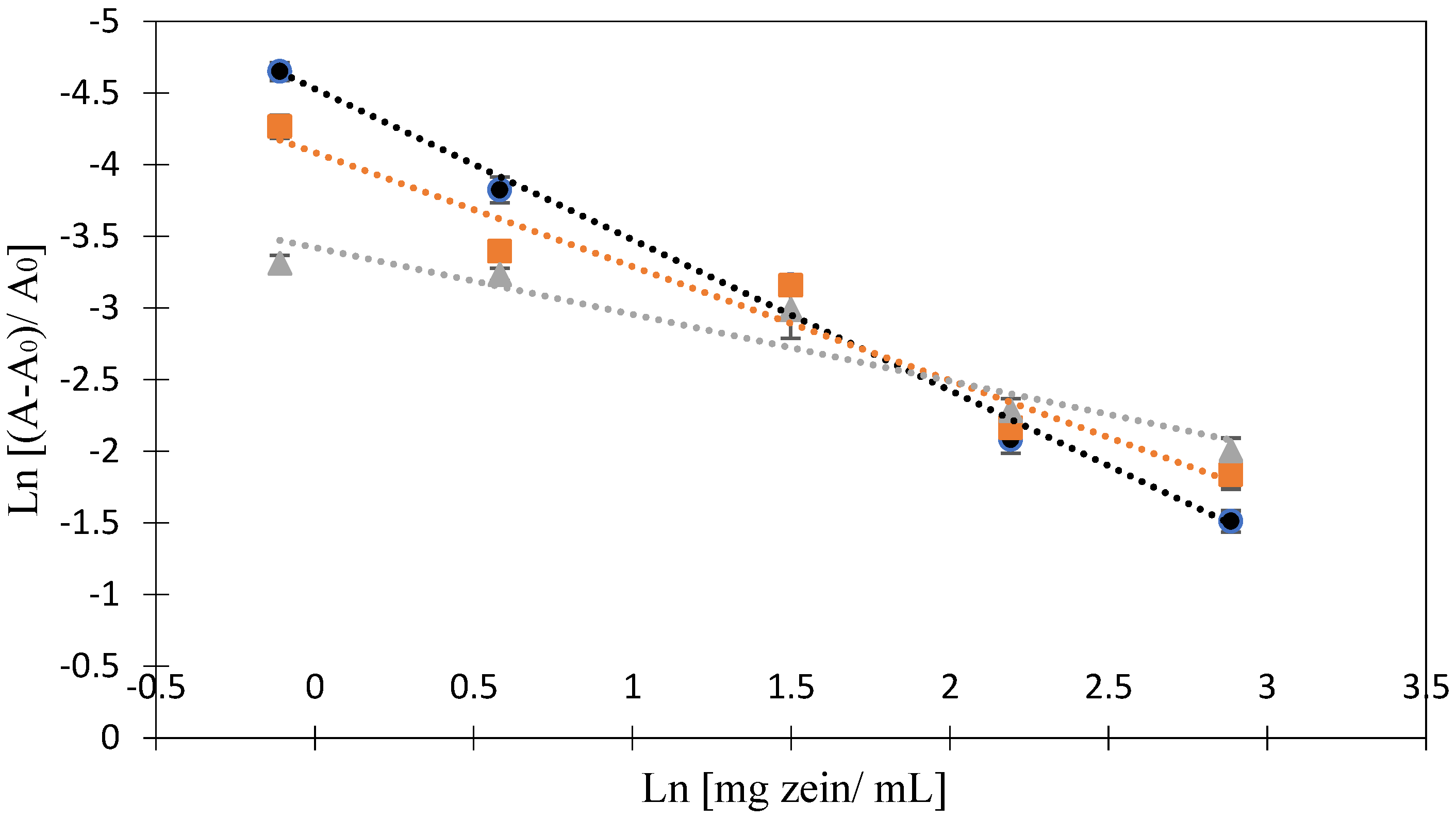
The Hill model effectively described the interaction at all temperatures (R
2 > 0.97). The slopes represent the Hill coefficient (
n), while the intercepts were used to calculate the binding constant (k) (
Table 2).
The results are summarized in
Table 2. The binding constant (k) increased with temperature, reaching values of 0.011, 0.017, and 0.033 (mg mL
−1)
−1 at 277.15, 293.15, and 318.15 K, respectively. This trend suggests that the association between zein and anthocyanins is thermodynamically favored at higher temperatures. However, this observation appears to contradict the behavior observed in the absorption spectra (
Figure 2), where the hyperchromic effect was less pronounced at 35 °C. This apparent discrepancy can be explained by recognizing that the binding constant (k) indicates the intrinsic affinity of the interaction at equilibrium. In contrast, absorption spectra taken at a fixed temperature are affected by the equilibrium concentration of the anthocyanin–zein complex and the molar absorptivity of the species present. The observed decrease in absorbance at higher temperatures, despite an increase in the binding constant, may be attributed to possible aggregation or partial precipitation of zein. This phenomenon reduces the effective concentration of zein available for complex formation and may also alter the local microenvironment of the anthocyanins, thereby affecting their molar absorptivity [
38]. Furthermore, temperature-induced conformational changes in zein could alter the binding stoichiometry and the optical properties of the formed complexes.
Furthermore, the number of binding sites (
n) progressively decreased with increasing temperature: 1.05 (277.15 K), 0.79 (293.15 K), and 0.47 (318.15 K) (see
Figure 3). This trend indicates that at lower temperatures, zein exhibits greater binding capacity, likely due to a more exposed, flexible conformation that enables multiple interactions with anthocyanins. At higher temperatures, zein may undergo conformational changes that hinder access to its hydrophobic sites and hydrogen-bonding networks, thereby decreasing the number of anthocyanins bound per protein molecule [
58]. The
n values close to 1 suggest that, on average, each zein molecule binds to one or two anthocyanin molecules, which is consistent with a simple, non-cooperative, or weakly cooperative stoichiometric interaction.
It is important to note that the Hill coefficient (n) at 318.15 K was measured to be 0.465, which is less than 1. While the Hill model is typically used to describe systems with multiple binding sites, in this study, it was used as a phenomenological approximation to characterize the interaction between zein and anthocyanins. The value of n < 1 should not be interpreted as indicating a fractional number of binding sites per zein molecule; instead, it suggests that the system deviates from ideal single-site binding behavior.
This deviation can be attributed to several factors: (i) temperature-induced conformational changes in zein that reduce the accessibility of its binding sites [
38]; (ii) partial aggregation of zein near its glass transition temperature, which decreases the effective availability of those sites; (iii) heterogeneity within the zein population, as it includes different subunits (α, β, γ, and δ) that have distinct affinities for anthocyanins [
37]; and (iv) negative cooperativity effects, where binding of one anthocyanin reduces the affinity of the remaining sites.
Together, these factors explain the progressive decrease in n with increasing temperature, dropping from 1.05 at 277.15 K to 0.465 at 318.15 K. Therefore, the n value should be understood as an empirical parameter that reflects the effective stoichiometry and degree of cooperativity of the interaction under specific experimental conditions, rather than as an absolute count of binding sites.
The thermodynamic parameters were calculated using the Van’t Hoff equation from the equilibrium constants measured at various temperatures. The results are summarized in
Table 2. The Gibbs free energy (ΔG) values were negative at all analyzed temperatures: −3.63 kJ mol
−1 at 277.15 K, −4.92 kJ mol
−1 at 293.15 K, and −7.08 kJ mol
−1 at 318.15 K. These negative ΔG values indicate that the interaction between zein and anthocyanin is thermodynamically spontaneous across the entire temperature range studied [
57]. Furthermore, as the temperature increases, ΔG becomes more negative, suggesting that the binding process is favored at higher temperatures, consistent with the observed increase in the equilibrium constant (K).
The entropy change (ΔS) was positive, with a value of 84.5 J mol
−1 K
−1. A positive and relatively high entropy contribution is generally associated with the release of structured water molecules from the interaction interface during complex formation, a phenomenon commonly observed in systems where hydrophobic interactions play an important role [
59]. In the present study, the association between hydrophobic regions of zein and the aromatic rings of anthocyanins may promote the displacement of water molecules from the protein hydration layer, thereby increasing the number of accessible molecular arrangements in the system and contributing favorably to the entropy gain observed upon binding [
59]. The combination of positive ΔH and ΔS values suggests that the interaction is primarily driven by entropic contributions, consistent with hydrophobic interactions, although other non-covalent forces may also contribute to complex formation.
The combination of positive ΔH and ΔS values indicates that the zein–anthocyanin interaction is predominantly driven by favorable entropic contributions, which compensate for the unfavorable enthalpic contribution associated with the endothermic binding process. This entropy gain contributes favorably to the Gibbs free energy term, and positive ΔH and ΔS values have previously been associated with interaction processes dominated by hydrophobic forces [
59]. Furthermore, the positive entropy value (ΔS = 84.5 J mol
−1 K
−1) suggests that complex formation is thermodynamically favored by solvent reorganization, particularly through the release of structured water molecules from the interaction interface.
These findings are consistent with previous reports on anthocyanin interactions with proteins and copigments. Positive enthalpy (ΔH = 18.45 kJ mol
−1) and entropy (ΔS = 149.72 J mol
−1 K
−1) values, together with negative Gibbs free energy values, have been reported for the interaction between anthocyanins from
Aronia melanocarpa and bovine serum albumin (BSA), indicating that complex formation was spontaneous and primarily driven by hydrophobic interactions [
60]. Similar thermodynamic behavior has been observed during anthocyanin copigmentation processes. For example, a ΔG value of −3.06 kJ mol
−1 was reported for the interaction between blackberry anthocyanins and ferulic acid, indicating a spontaneous copigmentation process, whereas vanillin exhibited a positive ΔG value of 2.00 kJ mol
−1, suggesting a thermodynamically less favorable and weaker interaction with anthocyanins [
61].
The results suggest that zein interacts with anthocyanins in red corn chaff via a mixed mechanism, driven primarily by hydrophobic interactions (indicated by ΔH > 0 and ΔS > 0), with contributions from hydrogen bonds and van der Waals forces. This interaction pattern has already been described in the context of the relationship between plant proteins and flavonoids [
62].
Higher temperatures increased both the binding constant and the spontaneity of the interaction, while reducing the Hill coefficient, suggesting a temperature-dependent balance between binding affinity and the interaction pattern between zein and anthocyanins [
41].
From a technological perspective, zein’s ability to co-pigment and stabilize anthocyanins at pH 3, a value commonly encountered in beverages and food products, highlights its potential for developing more stable natural colorants. The favorable thermodynamic parameters obtained in this study, together with the observed interaction between zein and anthocyanins, support the use of zein as a promising stabilizing agent for anthocyanin-based systems. Future studies should focus on elucidating the molecular mechanisms underlying the zein–anthocyanin interaction and evaluating the formation of colloidal aggregates and their impact on color stability during long-term storage. In addition, the performance of these complexes should be assessed in real food matrices and under gastrointestinal conditions to determine their effects on anthocyanin stability and bioaccessibility.
2.4. Effect of pH on the Anthocyanin/Zein Interaction
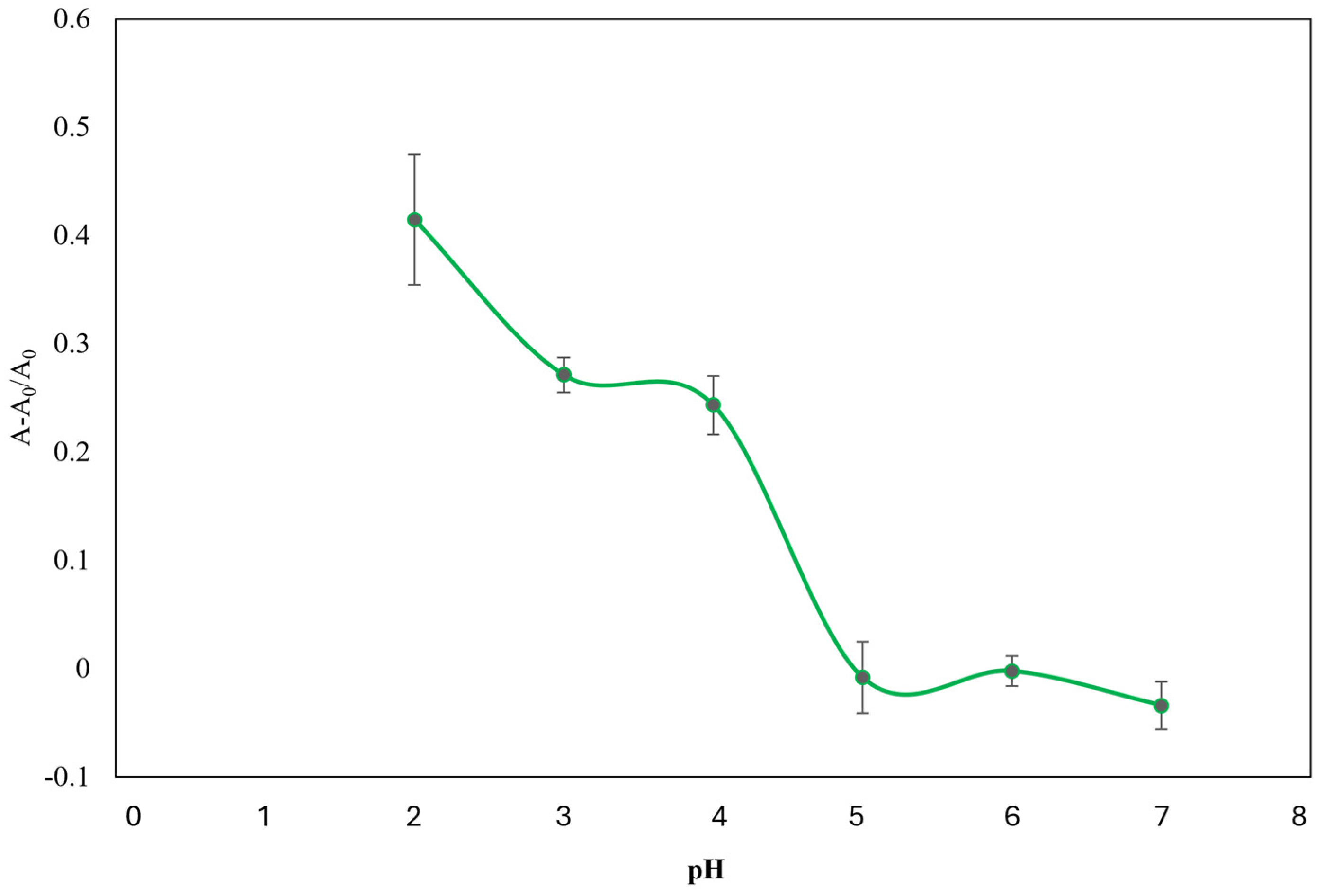
Figure 4 shows how the (A − A
0)/A
0 ratio varies with pH, where A
0 represents the absorbance of the extract without zein and A the absorbance of the extract in the presence of zein (with an anthocyanin-zein ratio of 1:20). Both measurements were performed at 520 nm and 20 °C (293.15 K). This ratio indicates the degree of copigmentation, or the relative increase in absorbance due to the presence of the protein.
The copigmentation effect is strongly dependent on pH. The most significant increase in absorbance is observed under strongly acidic conditions (pH 2), with an (A − A0)/A0 value close to 0.70. As pH increases, the copigmentation effect gradually decreases; at pH 4, it is reduced by almost half, while at pH 6 and 7 it approaches zero or even becomes slightly negative. This indicates a possible loss of absorbance in the presence of zein, under both neutral and slightly acidic conditions.
With respect to anthocyanin equilibria, at pH 2, these compounds are present predominantly in the flavylium cation form (AH
+). This species is intensely colored, exhibiting red to red hues, and is generally the most stable form under acidic conditions. Its planar aromatic structure favors interactions with copigments through π-π stacking and hydrogen bonding, thereby promoting copigmentation phenomena [
63]. As the pH increases to approximately 4, the equilibrium progressively shifts toward the formation of quinoidal bases, while a fraction of the flavylium cation remains present. Quinoidal bases retain color, typically displaying red to bluish tones, although their relative abundance depends on the pH and anthocyanin structure. At pH 6 and 7, quinoidal base species become increasingly dominant, together with the formation of pseudobase carbinol and chalcone forms. The latter species are weakly colored or colorless and generally less effective in copigmentation interactions, contributing to decreased color intensity and stability observed at near-neutral pH values [
54].
Zein, a prolaminin derived from maize, has an estimated isoelectric point around pH 6.2 [
37]. At pH 2, zein carries a positive charge due to the protonation of its amino groups. This positive charge increases its solubility and its electrostatic interactions with anthocyanins, which can carry partial positive or negative charges depending on the pH. Furthermore, at acidic pH, zein adopts a more extended conformation, exposing its hydrophobic regions and increasing the accessibility of anthocyanin-binding sites [
64].
As the pH approaches its isoelectric point (around pH 6), zein loses its net charge, causing it to aggregate and precipitate. This aggregation significantly reduces its ability to interact with anthocyanins. At pH 7, although zein acquires a net negative charge, its solubility remains limited, and the protein conformation may be less favorable for binding.
The maximum copigmentation effect at pH 2 results from a synergistic combination of interactions: π-π stacking between the aromatic ring of the anthocyanin (in its flavylium cation form) and the aromatic amino acid rings (phenylalanine, tyrosine, tryptophan) of zein, hydrogen bonds between the hydroxyl groups of the anthocyanins and the carbonyl or amide groups of zein, and electrostatic interactions between the positively charged zein and the sulfate or malonyl groups of the acylated anthocyanins (which have a partial negative charge). These interactions further stabilize the complex.
As the pH increases above 4, the concentration of the flavylium form decreases, and the zein begins to lose its positive charge, progressively reducing all these interactions until the copigmentation effect is negligible at neutral pH. Similar findings have been reported on the interaction between anthocyanins and other proteins present in foods. For example, β-lactoglobulin exhibited the greatest hyperchromic effect on grape anthocyanins at pH 3.0, whereas a significant decrease was observed at pH 5.0, and no effect was detected at pH 7.0 [
65].
Similar observations have been reported for other protein–anthocyanin systems. Casein has been shown to protect black rice anthocyanins against thermal degradation only at pH values below 4, whereas no protective effect was observed under neutral pH conditions [
66]. Regarding zein, previous studies have demonstrated that its ability to form complexes with polyphenols, such as catechins and gallic acid, is greatest at pH 2–3 and becomes nearly negligible at pH 6–7 [
32].
The findings suggest that zein is an effective copigment for anthocyanins in acidic food matrices at pH 4 or lower, exhibiting the most pronounced effects in the 2–3 pH range. Although the copigmentation effect decreases by about half at a pH of 4 (
Figure 4), the value of (A − A
0)/A
0 is approximately 0.35, indicating a considerable increase in absorbance. This improvement can lead to enhanced color stability and intensity in practical applications.
This pH range is relevant for a variety of food products, including fruit juices (pH 3.0–4.0), fruit yogurts (pH 3.8–4.2), gelatins (pH 3.0–4.0), fermented beverages, and certain acidic dairy products. In contrast, in products with a pH closer to neutral, such as milk, meat products, and some baked goods, zein may not aid in color stabilization and could even result in a slight loss of absorbance. This is likely due to the adsorption or precipitation of pigments.
However, its strong copigmenting effect at pH 2–3 suggests that zein could be a promising additive to produce stabilized natural colorants for acidic foods. This offers a plant-based alternative to whey protein or gum arabic, with the added advantage of being a byproduct of the corn industry.
2.5. Stability of Anthocyanins in Liquid Medium
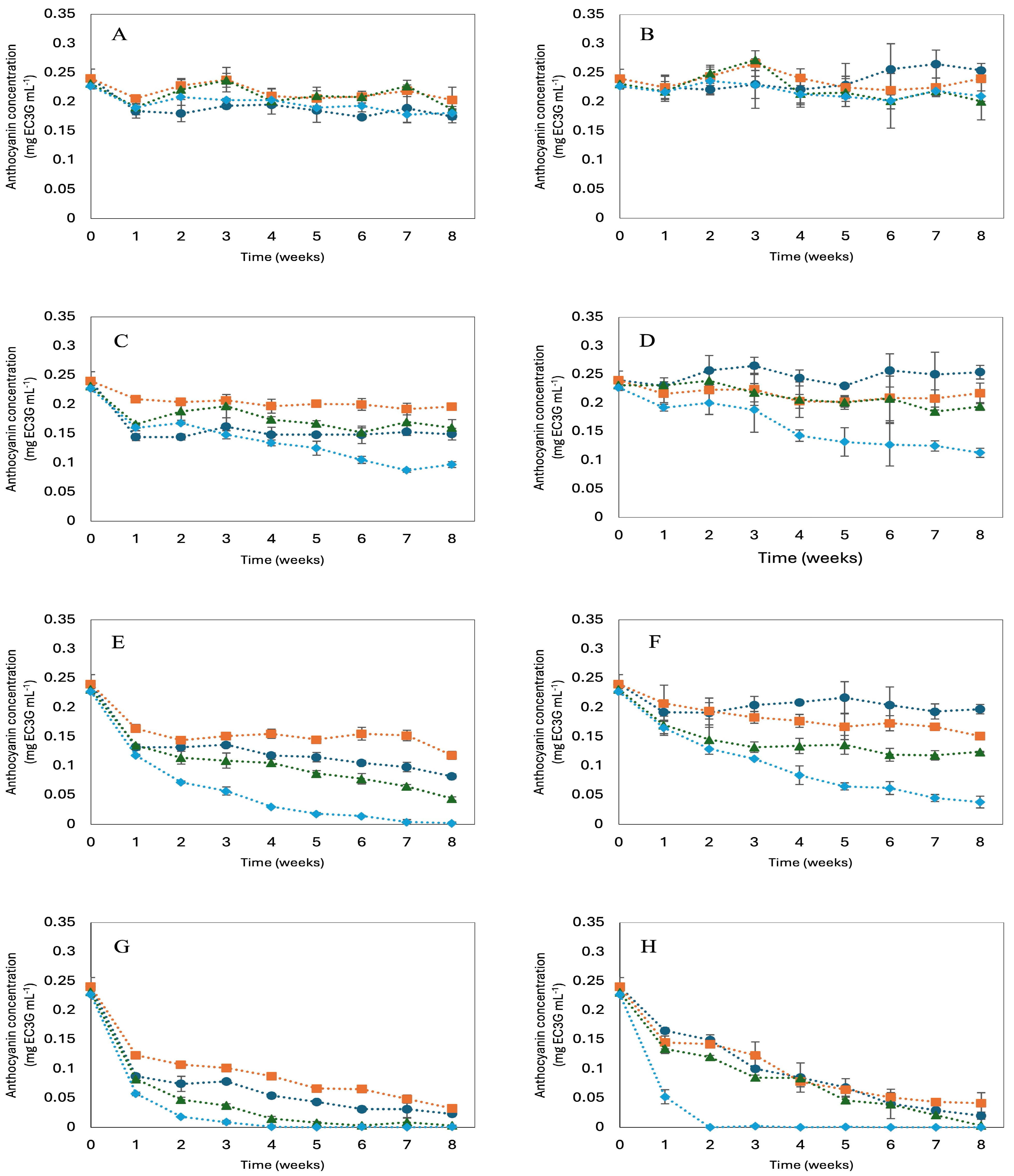
The thermal stability of anthocyanins extracted from red corn cob, with and without zein, was evaluated at different temperatures: 4, 20, 35, 50, and 70 °C (equivalent to 277.15, 293.15, 308.15, 323.15, and 343.15 K), and at different pH values (2, 4, 6, and 7) during eight weeks of storage. The results indicate that the zein–anthocyanin complexes exhibited significantly greater stability than the extract without zein across all evaluated conditions. This highlights the protective role of plant protein zein.
Figure 5 shows that, at 4 °C, the presence of zein maintains relatively stable anthocyanin concentrations at pH 2 for 8 weeks. This finding suggests that zein provides significant protection to anthocyanins under acidic and low-temperature conditions, where these compounds exist primarily in their stable flavylium cation form [
54].
In contrast, at pH 6 and 7, although a slight decrease in anthocyanin concentration was observed, it was considerably smaller than that detected in the extracts without zein. These results indicate that zein can interact with anthocyanins even under near-neutral pH conditions, where these compounds tend to undergo structural transformations toward quinoidal and chalcone forms, which are less stable and more susceptible to degradation [
63]. Furthermore, the extracts without zein stored at 4 °C showed a more pronounced decrease in anthocyanin concentration across all pH levels, reinforcing the conclusion that zein exerts a protective effect even at low temperatures.
At 20 °C, the protective effect of zein became more evident. Anthocyanin extracts without zein underwent a substantial reduction in anthocyanin concentration after 8 weeks of storage at all pH levels evaluated, particularly at pH 6 and 7, where degradation occurred more rapidly. In contrast, extracts containing zein also exhibited a gradual decline in anthocyanin concentration, but at a significantly slower rate than those without zein. These results indicate that zein effectively delays anthocyanin degradation, likely through the formation of non-covalent complexes that enhance anthocyanin stability and reduce their susceptibility to degradation reactions [
23].
At 35 °C, zein exhibited its most pronounced protective effect at pH 2, 4, and 6. Notably, at pH 4, anthocyanin stability in the liquid system was greater than that observed at pH 2. This finding is particularly relevant from a technological perspective, as pH 4 is common in a variety of food products, including fruit juices, yogurt, and gelatin-based desserts. These results suggest that combining zein with moderately acidic conditions may be a suitable strategy for improving the stability of anthocyanin-based natural colorants.
The greater stability observed at pH 4 in the presence of zein may be attributed to a favorable balance between the physicochemical properties of both components. At this pH, zein remains positively charged, as the medium is below its isoelectric point (pI: 6.2), allowing electrostatic interactions to occur. In addition, the anthocyanin equilibrium at pH 4 includes substantial fractions of both flavylium cations and quinoidal base species, which may promote hydrophobic interactions and π-π stacking with zein more effectively than under the highly acidic conditions found at pH 2 [
32].
Finally, at 50 °C, the extracts with and without zein experienced a rapid decrease in anthocyanin concentration over time, although the values were slightly higher in the samples with zein. At this temperature, the thermal energy is sufficient to overcome the energy barriers of noncovalent interactions, leading to complex dissociation and subsequent pigment degradation. However, the fact that the zein-containing samples maintained slightly higher concentrations suggests that, even at elevated temperatures, some residual protection persists, possibly due to steric hindrance or the formation of hydrophobic microenvironments that slow hydrolysis.
It is important to note that within the temperature range of this study (4–50 °C), hydrophobic interactions are expected to strengthen with increasing temperature. However, the protective effect of zein is more pronounced at lower temperatures (4 and 20 °C). This is likely because, at higher temperatures, thermal energy can overcome the energy barriers of non-covalent interactions. As a result, this leads to complex dissociation and subsequent pigment degradation, despite the strengthening of hydrophobic interactions.
The thermoprotective effect of zein on anthocyanins has been attributed to several complementary mechanisms reported in the literature. First, carboxyl-containing amino acid residues, particularly glutamic and aspartic acid residues, may interact with the hydroxyl groups of anthocyanins via hydrogen bonding, thereby stabilizing the colored forms of these pigments. Second, hydrophobic interactions between the aromatic rings of anthocyanins and nonpolar amino acid residues present in zein, such as phenylalanine, leucine, isoleucine, and valine, may promote the formation of non-covalent complexes that reduce the accessibility of water molecules to the anthocyanin chromophore. Such interactions may hinder hydration reactions associated with anthocyanin degradation and color loss [
63]. Finally, zein may contribute to anthocyanin stabilization by acting as a physical barrier that limits oxygen diffusion toward the pigment molecules, thereby reducing oxidative degradation [
26].
It is important to note that anthocyanins are particularly unstable at near-neutral pH due to their tendency to tautomerize between quinoidal and chalcone forms. These compounds are susceptible to degradation by thermal rupture, oxidation, or hydrolysis [
62]. However, the results of this study show that zein can form stable interactions with anthocyanins even at pH 6 and 7, improving overall stability compared to protein-free extracts. This finding is significant, as most studies on protein copigmentation have focused on acidic pH, and there is limited information on zein–anthocyanin interactions at neutral pH [
32].
Table 3 presents a comparative analysis of the degradation rate constants (k, h
−1), coefficients of determination (R
2), half-life values (t
1/2, h), and activation energies (E
a, kJ mol
−1) obtained for anthocyanin extracts with and without zein under different pH and temperature conditions. In all cases, R
2 values exceeded 0.70 and were close to or greater than 0.90 in most treatments. These results indicate that the degradation data were adequately described by a first-order kinetic model, in agreement with previous studies on anthocyanins from various plant sources [
67,
68].
At pH 2 and 277.15 K (4 °C), the extract without zein exhibited a degradation rate constant (k) of 9 × 10⁻⁵ h−1 and a half-life (t1/2) of 7702 h (approximately 321 days), indicating a high degree of stability even in the absence of protein. In the presence of zein, however, the degradation rate constant decreased to 1 × 10⁻⁵ h−1, while the half-life increased to 69,315 h (approximately 7.9 years). This result corresponds to an approximately nine-fold increase in half-life, demonstrating a substantial improvement in anthocyanin stability. As the temperature increased to 293.15, 308.15, and 323.15 K, k values progressively increased in both systems, reflecting an acceleration of thermal degradation. Nevertheless, across all evaluated temperature conditions, samples containing zein consistently exhibited lower k values and higher t1/2 values than those without zein, demonstrating the protein’s persistent protective effect at pH 2.
At pH 4 and 277.15 K (4 °C), the extracts without zein exhibited a degradation rate constant (k) of 4 × 10⁻⁵ h−1 and a half-life (t1/2) of 17,329 h (approximately 722 days). Under the same conditions, the presence of zein resulted in a similar k value (4 × 10⁻⁵ h−1), indicating that the protective effect was not evident at this temperature. However, significant differences emerged at higher temperatures. For example, at 308.15 K (35 °C), the extract without zein exhibited a k value of 5 × 10⁻⁴ h−1 and a half-life of 1386 h, whereas the zein-containing extract showed a lower k value of 3 × 10⁻⁴ h−1 and a longer half-life of 2311 h, corresponding to an increase in half-life of approximately 67%. This finding is particularly relevant from a technological perspective, as pH 4 is commonly encountered in beverages and fermented food products, while 35 °C represents a typical storage temperature in warm climates. The enhanced stability observed at pH 4 in the presence of zein suggests that moderately acidic conditions may be particularly favorable for stabilizing anthocyanins in food systems.
At pH 6, clear differences were observed between extracts with and without zein. At 277.15 K, the extract without zein exhibited a degradation rate constant (k) of 6 × 10
−5 h
−1 and a half-life (t
1/2) of 11,552 h, whereas the zein-containing extract showed a slightly higher k value of 1 × 10
−4 h
−1. However, at elevated temperatures (308.15 and 323.15 K), samples containing zein exhibited substantially lower k values than the corresponding protein-free extracts. For example, at 308.15 K (35 °C), the extract without zein showed a k value of 1.0 × 10
−3 h
−1 and a half-life of 693 h, whereas the zein-containing extract exhibited a k value of 4 × 10
−4 h
−1 and a half-life of 1733 h, corresponding to a 2.5-fold increase in half-life. This finding is particularly relevant because pH 6 represents a near-neutral condition under which free anthocyanins are generally unstable due to equilibrium shifts toward quinoidal base, pseudobase carbinol, and chalcone species, which are more susceptible to degradation [
63]. The ability of zein to enhance anthocyanin stability even at pH 6 suggests that non-covalent interactions remain effective under these conditions and is consistent with the contribution of hydrophobic and π-π interactions to complex formation and stabilization.
At pH 7, free anthocyanins are highly unstable, particularly at elevated temperatures. At 323.15 K (50 °C), the degradation rate constant (k) is 7.2 × 10
−3 h
−1, and the half-life (t
1/2) is only 96 h (4 days). However, in the presence of zein, the degradation rate constant decreases to 6.2 × 10
−3 h
−1, and the half-life increases to 112 h (4.7 days). Although this improvement is modest in absolute terms, it represents a 16% increase in half-life under extremely unfavorable conditions. This finding suggests that even at neutral pH, zein can form stable interactions that slow down the degradation of anthocyanins, possibly through steric hindrance that impedes the nucleophilic attack of water on the pyrylium ring [
58].
The activation energy (E
a), calculated using the Arrhenius equation, indicates the sensitivity of anthocyanin degradation rates to temperature changes. As shown in
Table 3, extracts without zein exhibited higher E
a values than those containing zein at all pH conditions evaluated. These results indicate that the temperature dependence of anthocyanin degradation was generally greater in the absence of zein, whereas zein reduced the degradation process’s sensitivity to temperature variations.
A higher Ea value indicates that the degradation rate is more strongly temperature-dependent, suggesting that the system is more susceptible to thermal acceleration. In contrast, the lower Ea values observed for the zein-containing samples indicate a reduced thermal sensitivity of the degradation process. These results suggest that interactions between zein and anthocyanins modify the degradation pathway, thereby reducing the temperature dependence of the degradation rate. Consequently, anthocyanin degradation in the presence of zein is less affected by temperature fluctuations than in protein-free systems.
For example, at pH 2, the activation energy (E
a) decreased from 57.21 kJ mol
−1 in the absence of zein to 35.6 kJ mol
−1 in its presence. Similarly, E
a decreased from 59.36 to 39.17 kJ mol
−1 at pH 4 and from 64.44 to 43.88 kJ mol
−1 at pH 6, corresponding to a reduction of approximately 26%. This latter decrease is particularly noteworthy, as it coincided with a 2.5-fold increase in half-life at pH 6 and 308.15 K in the zein-containing samples compared with the protein-free extracts. The E
a values obtained in this study are within the range previously reported for blackcurrant anthocyanins (60–85 kJ mol
−1) and
Hibiscus sabdariffa anthocyanins (approximately 70–90 kJ mol
−1) [
67,
68].
Overall, the results indicate that the presence of zein modifies the temperature dependence of anthocyanin degradation and reduces the degradation process’s sensitivity to temperature fluctuations during storage. Together with the lower degradation rate constants and longer half-lives observed in the zein-containing systems, these findings support the role of zein as an effective stabilizing agent for anthocyanins.
As shown in
Table 3, zein, a low-cost and widely available byproduct of the corn industry, can be used as a natural stabilizer for anthocyanins in liquid media, especially at pH 4 and when stored at refrigeration (4 °C) or room temperature (20 °C). The longer half-life (t
1/2) and lower activation energy (E
a) in the presence of zein highlight its potential to extend the shelf life of natural pigments in food applications. This characteristic could lead to the development of more stable natural food colorants, thereby reducing reliance on synthetic additives or expensive microencapsulation systems.
2.6. Evolution of Antioxidant Capacity During Storage
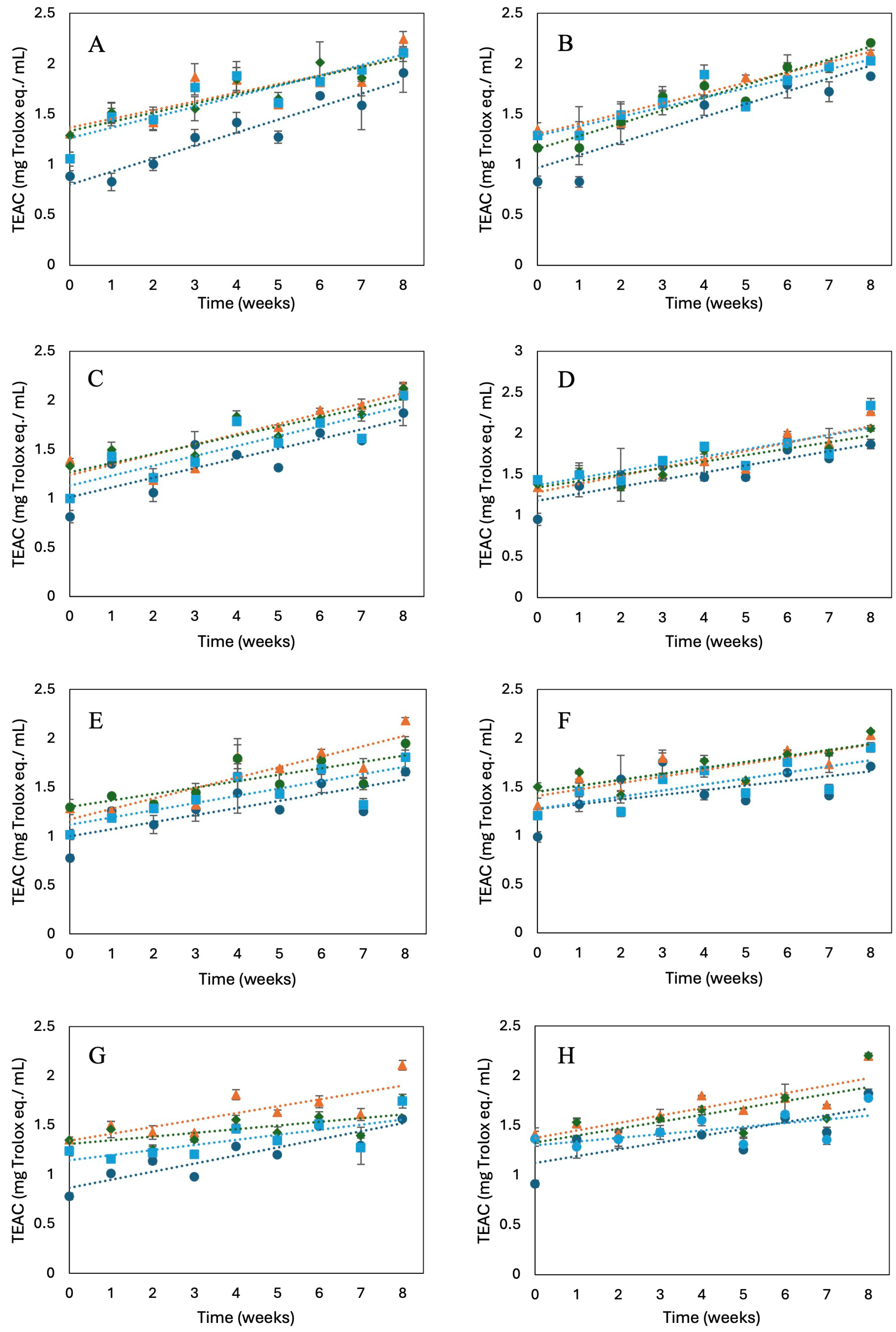
Figure 6 illustrates the evolution of antioxidant capacity, expressed as milligrams of Trolox equivalents per milliliter of extract (mg Trolox mL
−1), during 8 weeks of storage under different temperature (5, 20, 35, and 50 °C) and pH (2, 4, 6, and 7) conditions, in the presence and absence of zein.
Figure 6A,C,E,G correspond to extracts containing zein, whereas
Figure 6B,D,F,H correspond to extracts without zein at the respective temperatures.
Interestingly, antioxidant capacity remained stable or even increased over time across all evaluated temperature and pH conditions, despite the progressive decline in anthocyanin concentration observed during storage (
Figure 5). The increase in antioxidant capacity was particularly pronounced at pH 6 and 7, conditions under which anthocyanin degradation was most extensive in the liquid system. At 5 °C (
Figure 6A,B), both zein-containing and protein-free samples exhibited nearly constant antioxidant capacity throughout the 8-week storage period, regardless of pH, with no significant differences observed between treatments. At 20 °C (
Figure 6C,D), a slight increase in antioxidant capacity became evident after the fourth week of storage, particularly at pH 6 and 7. This increase was more pronounced in the samples without zein (
Figure 6D) than in those containing zein (
Figure 6C). These results suggest that the presence of zein may slow anthocyanin degradation, as shown in
Figure 5, thereby reducing the rate of formation of degradation products that retain or contribute to antioxidant activity.
At 35 °C (
Figure 6E,F), the differences became more evident: in the samples without zein (
Figure 6F), antioxidant capacity increased progressively from the second week, reaching peak levels between weeks 6 and 8, especially at pH 6 and 7 (with increases of up to 2.5 times the initial value). In contrast, the samples with zein (
Figure 6E) showed a more moderate increase, reaching a maximum of approximately 1.5 times the initial value.
At 50 °C (
Figure 6G,H), the most dynamic changes were documented. In the samples without zein (
Figure 6H), antioxidant capacity increased rapidly during the first 2 to 4 weeks, particularly at pH 6 and 7 (up to 3.5-fold), then stabilized or slightly decreased around the eighth week, possibly due to degradation of secondary phenolic compounds. In the samples containing zein (
Figure 6G), the increase was more gradual and less pronounced, reaching a maximum of approximately 2 times the initial value, indicating greater stability at the achieved levels.
The effect of pH on antioxidant capacity was evident throughout the storage period. At pH 2 and 4, antioxidant capacity remained relatively stable across all temperatures evaluated, with only slight increases observed at 50 °C toward the end of the storage period. This behavior is consistent with the greater stability of anthocyanins under acidic conditions, which limits their degradation during storage. In contrast, the most pronounced increases in antioxidant capacity were observed at pH 6 and 7, particularly at elevated temperatures (35 and 50 °C) and in the absence of zein. Notably, these conditions coincided with the highest anthocyanin degradation rates reported in
Table 3. For example, at pH 6 and 323.15 K, the degradation rate constant reached 0.0039 h
−1 in the absence of zein, with a half-life of 178 h, whereas at pH 7 the corresponding values were 0.0072 h
−1 and 96 h, respectively. The association between increased antioxidant capacity and enhanced anthocyanin degradation suggests that degradation products may contribute to the overall antioxidant activity of the extracts.
Several mechanisms may explain this apparently paradoxical behavior. First, the hydrolytic or thermal degradation of anthocyanins can release acylating groups from their structures, including phenolic acids such as sinapic, caffeic, and ferulic acids, as well as malonic acid (
Table 1). The released phenolic acids exhibit well-documented antioxidant activity and may help maintain or even enhance the extracts’ overall antioxidant capacity during storage.
A second possible mechanism involves the copigmentation of the remaining anthocyanins with phenolic acids released during degradation. These compounds may form non-covalent complexes through π-π stacking and hydrogen-bonding interactions, thereby stabilizing anthocyanins and providing additional antioxidant activity. As a result, synergistic effects between anthocyanins and phenolic acids may contribute to the antioxidant capacity of the extracts [
15,
63].
From a molecular recognition perspective, the interaction between anthocyanins and phenolic acids is governed by structural and electronic complementarity between both molecules. Anthocyanins, in their flavylium or quinoidal base forms, possess a delocalized π system that acts as an electron acceptor, while phenolic acids (such as caffeic, ferulic, or sinapic acid) have aromatic rings with hydroxyl and methoxyl groups that donate electron density. This complementarity favors π-π stacking and the formation of hydrogen bonds between the hydroxyl groups of phenolic acids and the carbonyl or hydroxyl groups of anthocyanins, resulting in supramolecular complexes that are more stable than individual anthocyanin aggregates [
53].
Previous studies have demonstrated that copigmentation with phenolic acids not only improves the thermal and photochemical stability of anthocyanins but also modulates their antioxidant activity. For example, Sendri et al. [
69] demonstrated that copigmentation of cyanidin-3-
O-glucoside with chlorogenic acid and caffeic acid significantly increases the antioxidant capacity of the system, an effect attributed to the formation of supramolecular complexes that facilitate electron and hydrogen atom transfer. Similarly, it has been reported that the presence of phenolic acids can modify the tautomeric equilibrium of anthocyanins toward more stable forms with higher antioxidant activity [
15].
Furthermore, Zhao et al. [
70] investigated the interaction between black rice anthocyanins and phenolic acids using computational and experimental approaches, demonstrating that binding affinity depends on both the phenolic acid’s structure (number and position of hydroxyl groups) and the medium’s pH. Their findings revealed that phenolic acids with more hydroxyl and methoxyl groups exhibit higher binding constants and more pronounced copigmentation effects, which correlate with greater protection against thermal degradation. These results are consistent with the composition of the red corn chaff extract analyzed in the present study, in which sinapic, caffeic, and ferulic acids were identified (
Table 1), which could exert a copigmentation effect like that observed in the systems.
In the context of our study, the release of phenolic acids during the thermal degradation of acylated anthocyanins could generate an “auto-copigmentation” effect, in which the degradation products themselves act as copigments for the remaining anthocyanins. This phenomenon would explain why the antioxidant capacity of the extract is maintained or even increases despite the decrease in anthocyanin concentration (
Figure 6). Furthermore, the presence of zein could modulate this process by selectively stabilizing certain molecular species or by creating a microenvironment that favors copigmentation interactions [
32]. These findings highlight the importance of molecular recognition in stabilization and suggest that the design of anthocyanin-based antioxidant systems should consider not only pigment concentration but also the composition of endogenous and exogenous copigments, which can enhance their functionality.
Another contributing factor may be the formation of degradation intermediates, including chalcones and phenolic aldehyde derivatives, some of which have been reported to retain or even exhibit higher antioxidant activity than the parent anthocyanins. In this regard, Nayak et al. [
71] reported that thermally treated sweet potato anthocyanins exhibited a significant increase in the Trolox equivalent antioxidant capacity (TEAC)-to-anthocyanin ratio, indicating that degradation products contributed substantially to the measured antioxidant capacity.
Finally, a fourth possible mechanism involves the protective effect exerted by zein. Previous studies have suggested that zein may stabilize anthocyanins through hydrophobic interactions and hydrogen bonding [
72]. This protection may slow anthocyanin degradation and modulate the increase in antioxidant capacity observed during storage. Purified sweet potato anthocyanins subjected to thermal treatments above 100 °C have been reported to maintain their antioxidant capacity and, in some cases, to exhibit an increase when expressed as the TEAC-to-anthocyanin ratio. This increase was attributed to the formation of thermal degradation intermediates with enhanced antioxidant activity [
71]. Similarly, yeast-derived protein has been shown to improve anthocyanin stability, resulting in comparable antioxidant capacity values before and after thermal treatment. Furthermore, this protein protected anthocyanins during heating at 80 °C, providing additional evidence that protein–anthocyanin interactions can enhance anthocyanin stability [
73].
The discrepancy between anthocyanin concentration and antioxidant capacity has important methodological and technological implications. On the one hand, while anthocyanin concentration (measured by differential pH) is a direct indicator of the pigment’s structural integrity, it does not necessarily reflect the extract’s antioxidant functionality. On the other hand, while anthocyanins can degrade during storage (especially at pH 6–7 and elevated temperatures), the extract may maintain or even increase its antioxidant capacity. This suggests that such materials could continue to function as functional ingredients (sources of natural antioxidants) even after significant pigment loss, particularly in applications where color is not a critical attribute.
2.7. Color Stability
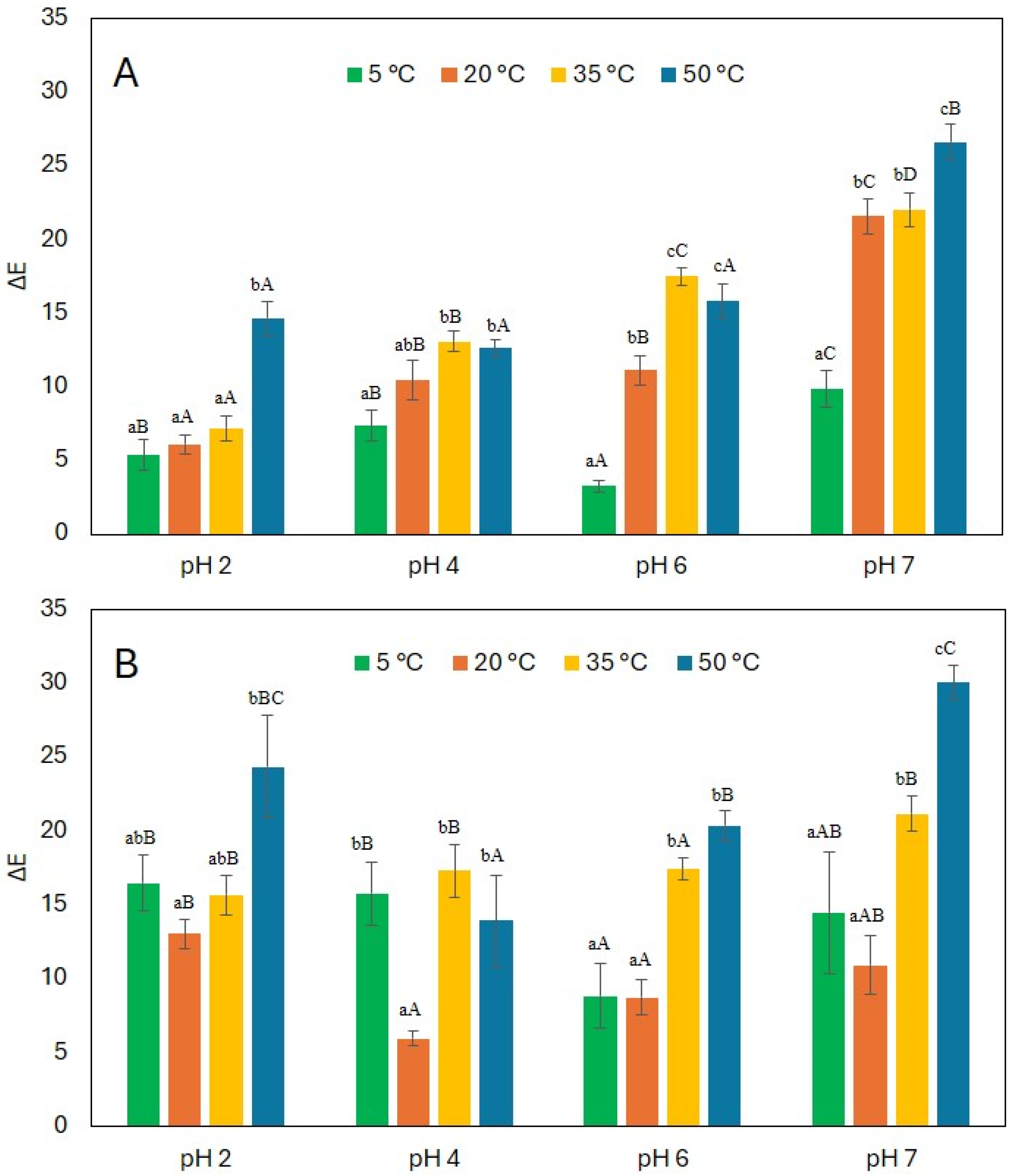
Color changes in concentrated red corn chaff extracts were evaluated under different storage temperatures (4, 20, 35, and 50 °C) and pH conditions (2, 4, 6, and 7), in both the presence and absence of zein. The results are summarized in
Table 4, which presents the CIELAB color coordinates (L*, a*, and b*), and in
Figure 6, which shows the total color difference (ΔE) during storage.
The untreated extract exhibited pH-dependent color characteristics. At pH 2, the CIELAB coordinates were L* = 20.50, a* = 35.50, and b* = 3.68, indicating the intense red-purple coloration typically associated with the flavylium cation. At pH 4, the values were a* = 29.00 and b* = −2.52, corresponding to violet hues. At pH 6, a* decreased to 27.42, while b* decreased to −5.56, resulting in a more bluish coloration. At pH 7, the coordinates were a* = 17.28 and b* = −11.35, producing a pale blue-violet color consistent with the predominance of quinoidal base species and the increased contribution of hydrated and chalcone forms.
At 4 °C, extracts lacking zein maintained their initial color values, whereas the addition of zein caused significant changes (p < 0.05). For instance, at pH 7, the a* coordinate, which indicates red color intensity, increased from 18.66 to 32.73, while the b* coordinate, which represents blue color, decreased from −8.33 to 1.33. These changes suggest a notable enhancement in red coloration and a reduction in blue tones, indicating that zein modified the color expression of the anthocyanin system through interactions between the protein and anthocyanins.
Chemically, these effects can be explained by several concurrent molecular mechanisms. Firstly, at pH 7, anthocyanins mainly exist as quinoidal bases, which retain a planar aromatic structure. Zein, a protein rich in hydrophobic amino acids (such as leucine, alanine, proline, and phenylalanine), has nonpolar regions that can interact with the delocalized π system of quinoidal bases via π-π stacking. These interactions stabilize the colored form of anthocyanins, shifting the equilibrium toward quinoidal species and decreasing the formation of colorless forms (such as the carbinol pseudobase and chalcone) [
63,
73].
Moreover, the hydrophobic environment created by zein around anthocyanins lowers the local dielectric constant, discouraging hydration of the pyrylium ring—the reaction responsible for producing carbinol pseudobase—and stabilizing charged or partially charged species by reducing solvation [
54,
71].
Additionally, the phenolic hydroxyl groups of quinoidal bases can form hydrogen bonds with the carbonyl groups (–C=O) in the zein peptide chain, as well as with the hydroxyl groups of serine and threonine residues and the amino groups (–NH
2) of lysine residues. While these hydrogen bonds are weak individually, they act cooperatively to enhance the stability of the protein–anthocyanin complex [
32,
62].
Despite pH 7 being close to the isoelectric point of zein (pI ≈ 6.2), local charges remain on the protein surface due to the uneven distribution of acidic and basic residues. These charges can interact electrostatically with the sulfate and malonyl groups of the acylated anthocyanins found in this extract, further stabilizing the complex [
54].
Finally, zein’s binding to anthocyanins creates steric hindrance that restricts water molecules’ access to the C-2 carbon of the pyrylium ring, a critical site for the hydration reaction that leads to the formation of the colorless carbinol pseudobase. This physical protection significantly reduces the degradation rate [
23,
58].
In summary, these mechanisms explain why zein can provide a moderate but significant stabilizing effect on anthocyanins, even at pH 7 (a condition that is typically unfavorable for free anthocyanins). This effect is reflected in an increase in the a* coordinate (indicating a stronger red hue) and a decrease in the b* coordinate (indicating a weaker blue hue), suggesting a shift toward more stable and colorful forms of anthocyanins.
On the other hand, at 20 °C, samples without zein exhibited reductions in both L* and a* values. For example, at pH 6, a* decreased from 27.42 to 25.00, likely because of anthocyanin degradation (
Table 4). In contrast, the zein-containing samples exhibited higher lightness and red coloration. At pH 6, L* increased from 15.67 to 21.29, and a* increased from 25.00 to 29.60, while b* values remained relatively stable (from −10.31 to −3.33). These results suggest that zein helps preserve color characteristics and may reduce color deterioration associated with storage and temperature exposure [
22,
72].
At 35 °C, the increases in a* and b* values were more pronounced in the samples containing zein. For example, at pH 2, the color coordinates reached L* = 24.66, a* = 44.45, and b* = 15.51, indicating a brighter red-orange coloration than that observed in the control samples. A similar trend was observed at pH 4 (a* = 34.32, b* = 14.33) and pH 6 (a* = 28.71, b* = 5.66). These color changes are consistent with enhanced intermolecular interactions between zein and anthocyanins and may reflect copigmentation under moderate heating conditions.
The most pronounced color changes were observed at 50 °C. Although anthocyanin concentrations decreased substantially under these conditions (
Table 4; for example, at pH 2 and 323.15 K, k = 0.0018 h
−1 and t
1/2 = 385 h in the presence of zein), the zein-containing samples exhibited the highest a* value recorded in the entire study, reaching 62.66 at pH 2. These samples also displayed L* and b* values of 18.43 and 14.00, respectively. This apparent contradiction may be explained by several complementary mechanisms. First, the formation of zein–anthocyanin complexes may help preserve color expression through non-covalent interactions [
30].
Second, the release of phenolic acids from acylated anthocyanins during thermal degradation may promote copigmentation with the remaining anthocyanins, thereby enhancing color intensity [
32]. Third, thermal processing may favor the formation of more stable-colored derivatives, including polymeric pigments such as pyranoanthocyanin-like compounds, which have been associated with enhanced color stability and intensity [
74]. Finally, interactions between zein and anthocyanins may alter the local microenvironment surrounding the pigments, potentially shifting the equilibrium toward more intensely colored anthocyanin species [
41].
Figure 7 shows the total color difference (ΔE), which quantifies the visual perception of color changes relative to the untreated extract used as the reference sample, under different pH (2, 4, 6, and 7) and temperature (4, 20, 35, and 50 °C) conditions for extracts with and without zein. In the samples without zein (
Figure 7A), a gradual increase in ΔE was observed, with both pH and temperature influencing the magnitude of the color change. Notably, the greatest overall color differences were observed at pH 6 and 7, whereas significantly smaller changes were detected at pH 2 and 4. This behavior is consistent with the lower stability of anthocyanins under near-neutral conditions. At pH 6 and 7, equilibrium shifts toward quinoidal base, hydrated, and chalcone species have been associated with a progressive loss of the original color characteristics of anthocyanin extracts, resulting in larger overall color differences [
54,
63].
Temperature also had a pronounced effect on ΔE at all pH levels. The highest ΔE values were observed in samples exposed simultaneously to elevated pH and temperature, highlighting the combined influence of these factors on anthocyanin degradation and associated changes in color properties during storage [
67].
The addition of zein to the extracts (
Figure 7B) produced noticeable changes in overall color variation, particularly in samples stored at low temperature (4 °C). In these instances, the systems containing zein exhibited higher ΔE values than the corresponding protein-free extracts. It is essential to understand that ΔE measures the extent of perceived color change relative to a reference point but does not indicate whether this change signifies deterioration (loss of color) or enhancement (intensification or modification of color). Since ΔE was calculated based on the untreated control for each system, these differences suggest that zein influenced the color evolution of the anthocyanin extracts during storage. At low temperatures, the increase in ΔE observed with the addition of zein does not indicate pigment degradation. Instead, it reflects a positive change in color coordinates, consistent with the increases in a* (red hue) and b* (yellow hue) shown in
Table 4. This indicates a copigmentation effect that enhances and modifies the color towards more vibrant red-orange tones. This behavior is likely related to interactions between proteins and anthocyanins, including hydrophobic interactions and hydrogen bonding, which can alter the system’s optical response and improve its color stability over time [
72]. This effect was observed across all pH levels but was most pronounced at acidic pH (2 and 4), where the largest increases in ΔE were observed.
During these conditions, zein displays its maximum copigmenting effect. Conversely, at higher temperatures (35 and 50 °C), the ΔE values in zein-containing systems were more moderate than in the protein-free extracts, particularly at pH 4. Under these conditions, the presence of zein moderates the increase in ΔE observed during storage, indicating a stabilizing effect on the system’s color properties. This dual behavior of zein, characterized by an initial modification of color characteristics followed by a reduction in the magnitude of thermally induced color changes, suggests that protein–anthocyanin interactions influence the system’s response to environmental conditions.
It is important to note that a high ΔE value does not necessarily indicate pigment degradation; variations in ΔE should be interpreted as changes in overall color perception. In the presence of zein, the increase in ΔE observed at low temperatures was associated with intensified red coloration, as evidenced by the higher positive a* and b* values reported in
Table 4. At elevated temperatures, the color changes observed in zein-containing systems may reflect not only anthocyanin degradation but also the formation of new molecular associations among zein, residual anthocyanins, and phenolic acids released during thermal degradation [
15,
71].
These results demonstrate that zein significantly affects the color properties of the extracts, helping mitigate color changes across different environmental conditions. Zein exhibited protective effects at intermediate pH (4) and low storage temperatures (4–20 °C), reducing the extent of color degradation during storage. At higher temperatures (35–50 °C), although greater color changes were observed, these changes remained controlled and were associated with the development of red-orange hues that may be technologically desirable. Therefore, zein may serve as an effective color-modulating and chroma-stabilizing agent in anthocyanin-containing systems. Its behavior is influenced by both pH and temperature, making it a promising low-cost, plant-derived alternative for applications involving thermally processed foods.




 ,
,