Apigenin Protects Against Cisplatin-Induced Cardiotoxicity: Potential Involvement of CD38-Sirt3 Signaling in Rats

 , and
, and
Abstract
1. Introduction
2. Results
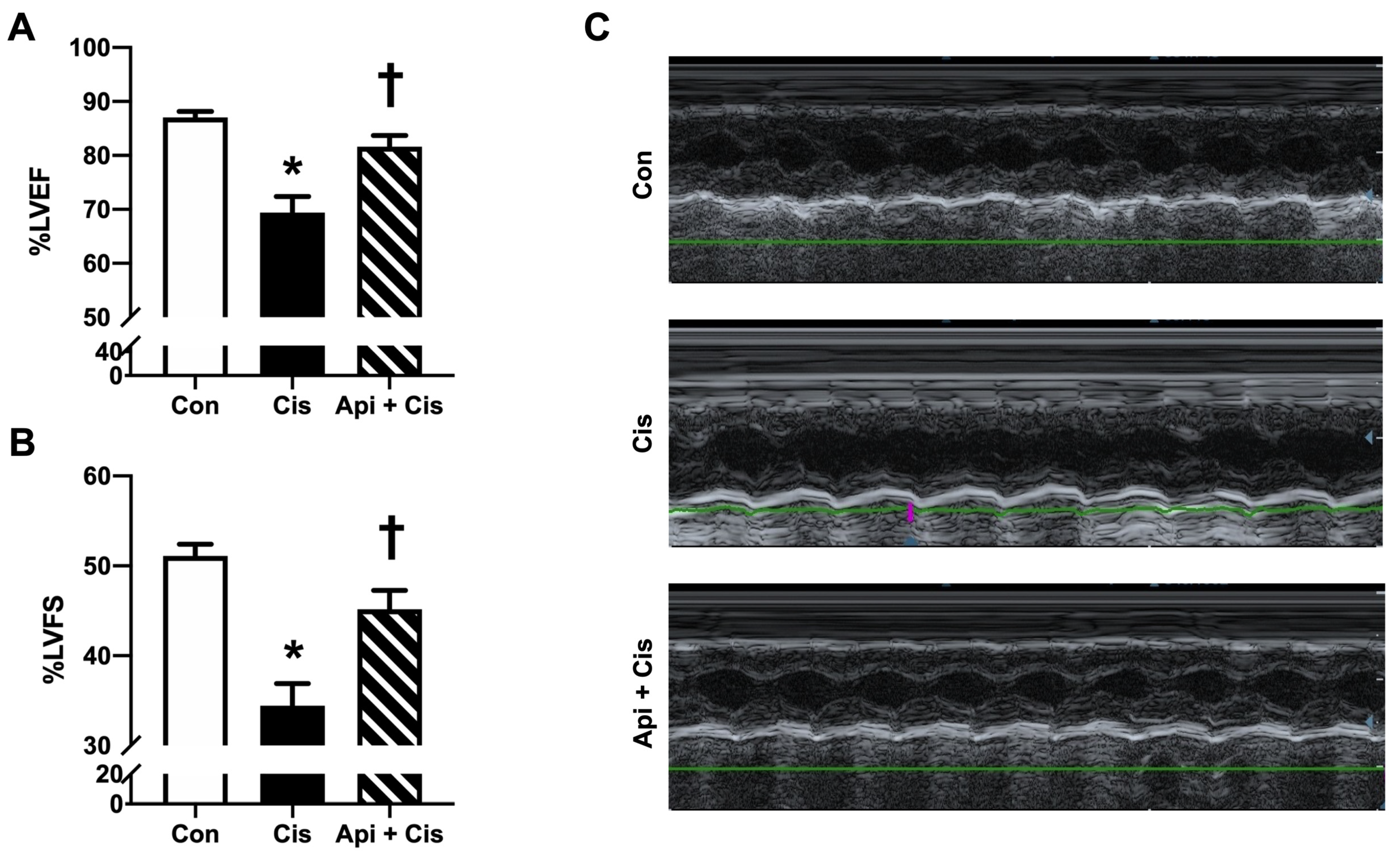
2.1. Apigenin Protected LV Function in Rats with Cisplatin-Induced Cardiotoxicity
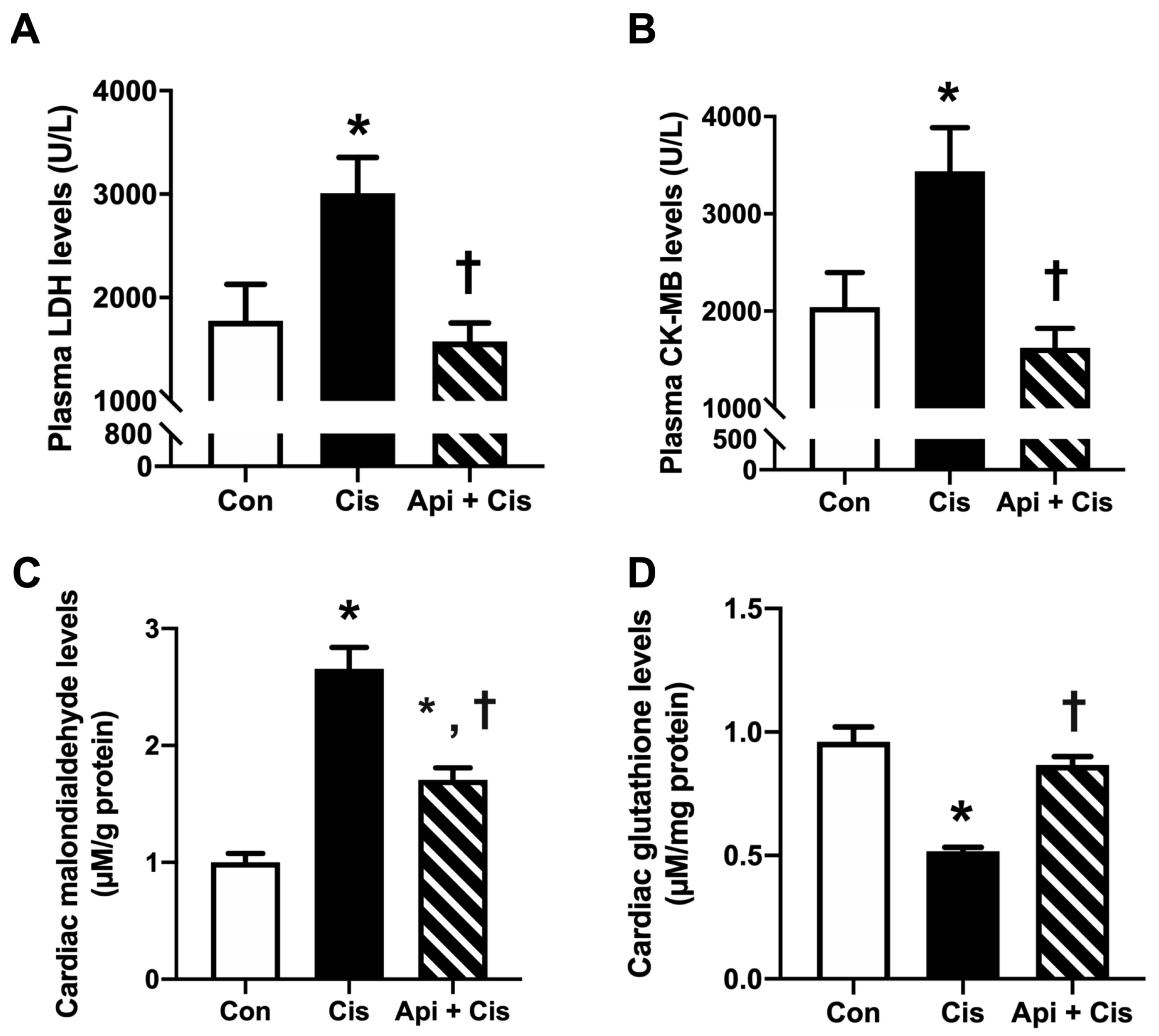
2.2. Apigenin Attenuated Cardiac Injury and Oxidative Stress in Rats with Cisplatin-Induced Cardiotoxicity
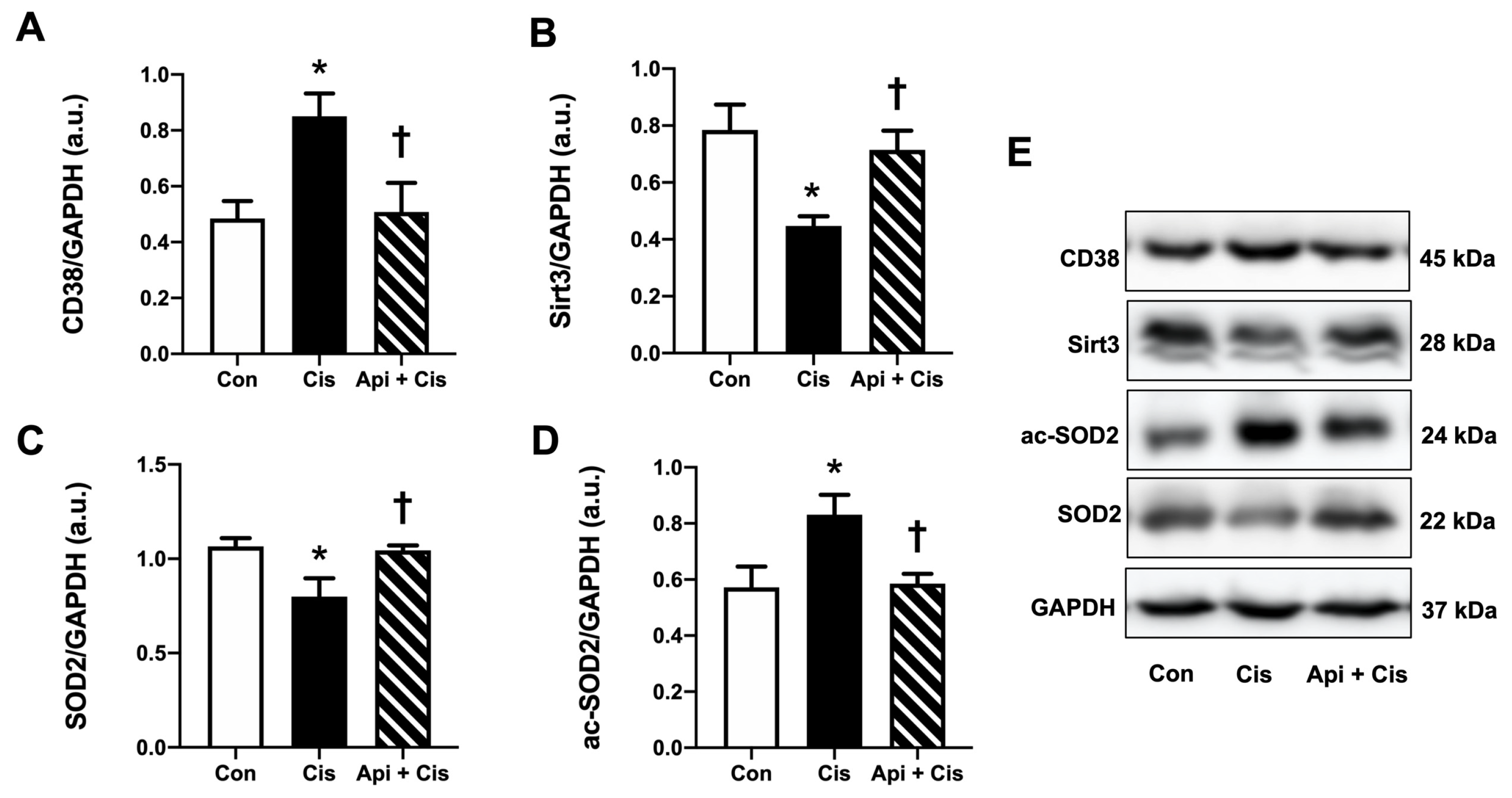
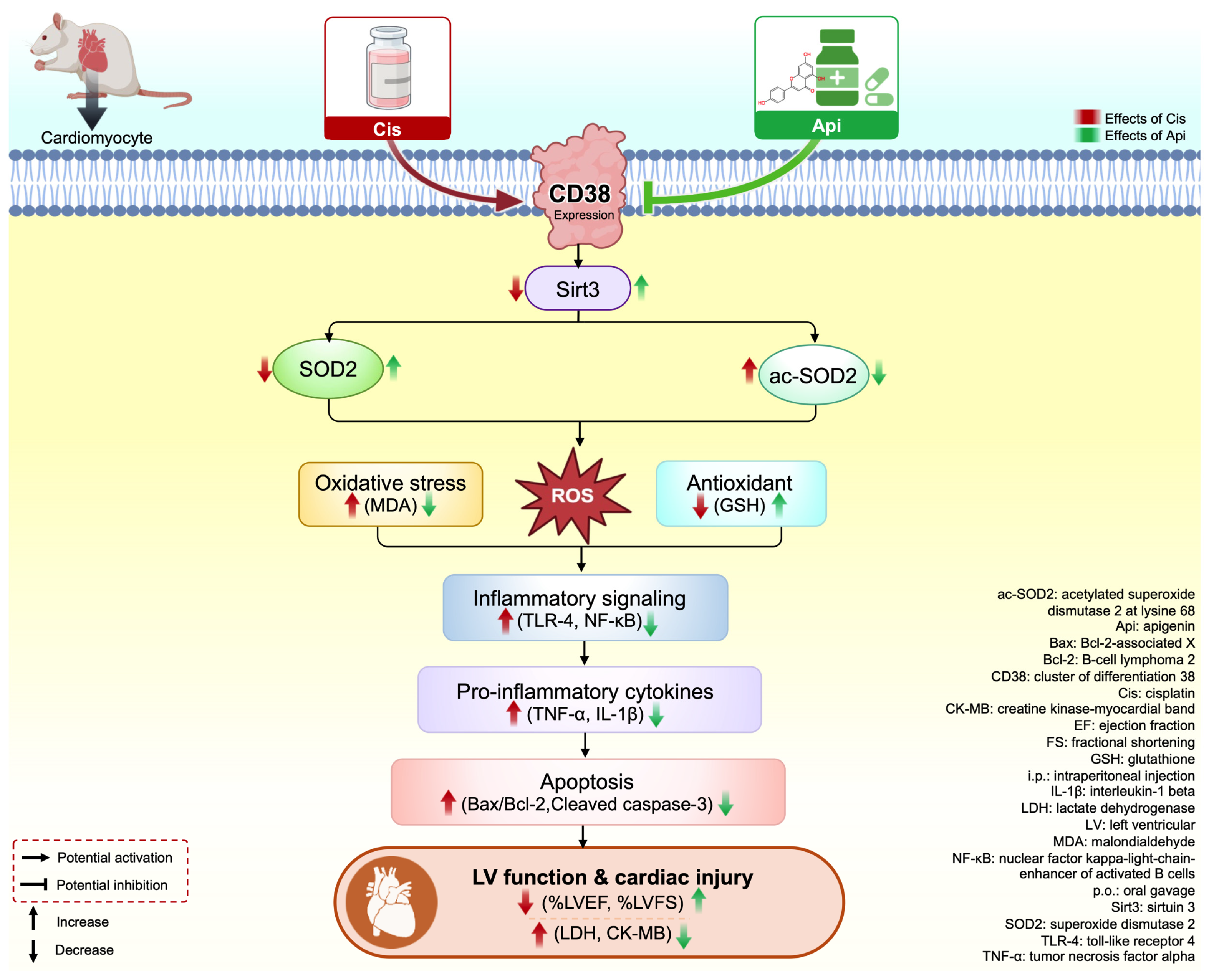
2.3. Apigenin Was Associated with Modulation of Cardiac CD38-Sirt3 Antioxidant Signaling Pathway in Rats with Cisplatin-Induced Cardiotoxicity
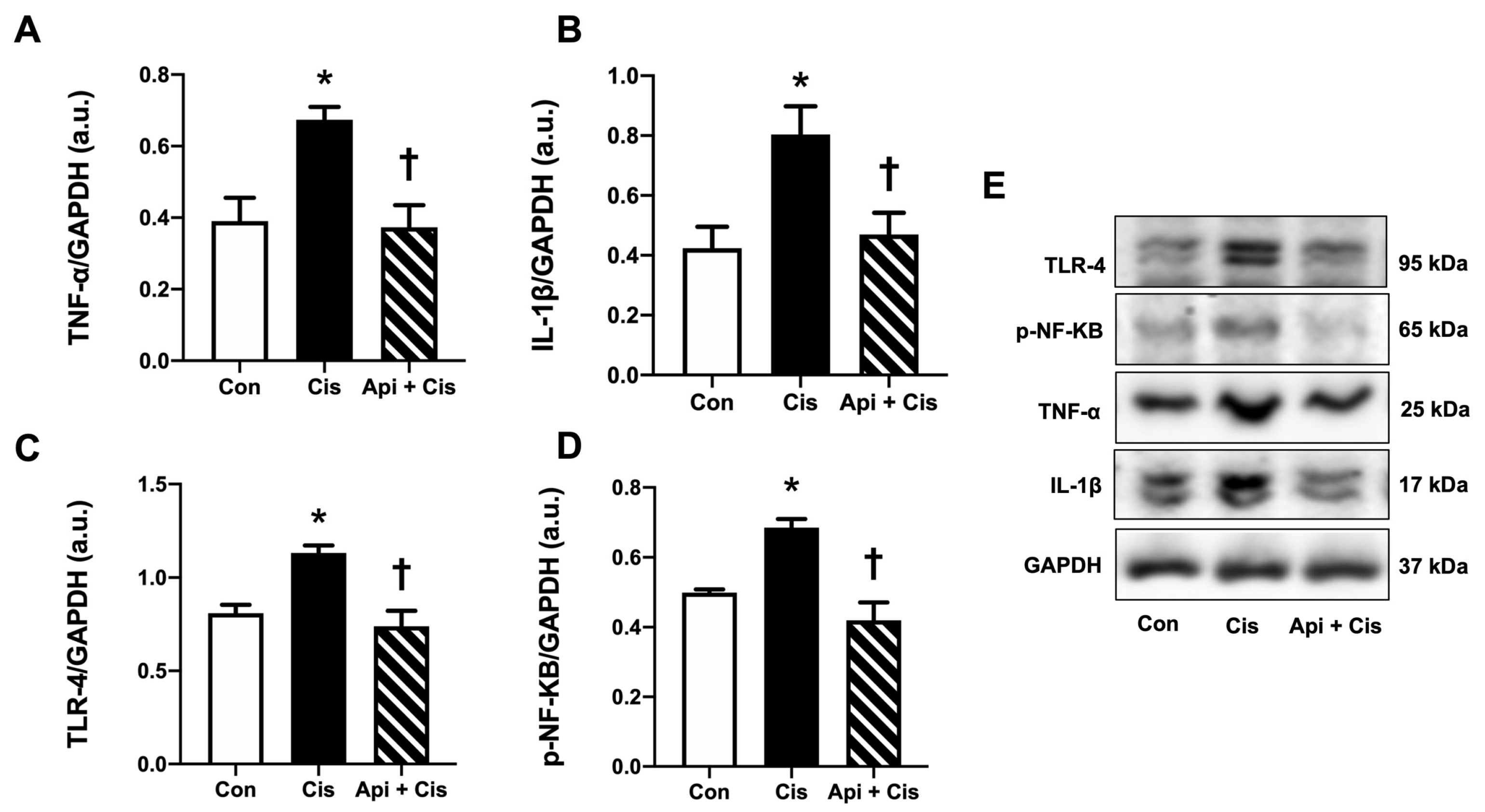
2.4. Apigenin Reduced Cardiac Inflammation in Rats with Cisplatin-Induced Cardiotoxicity
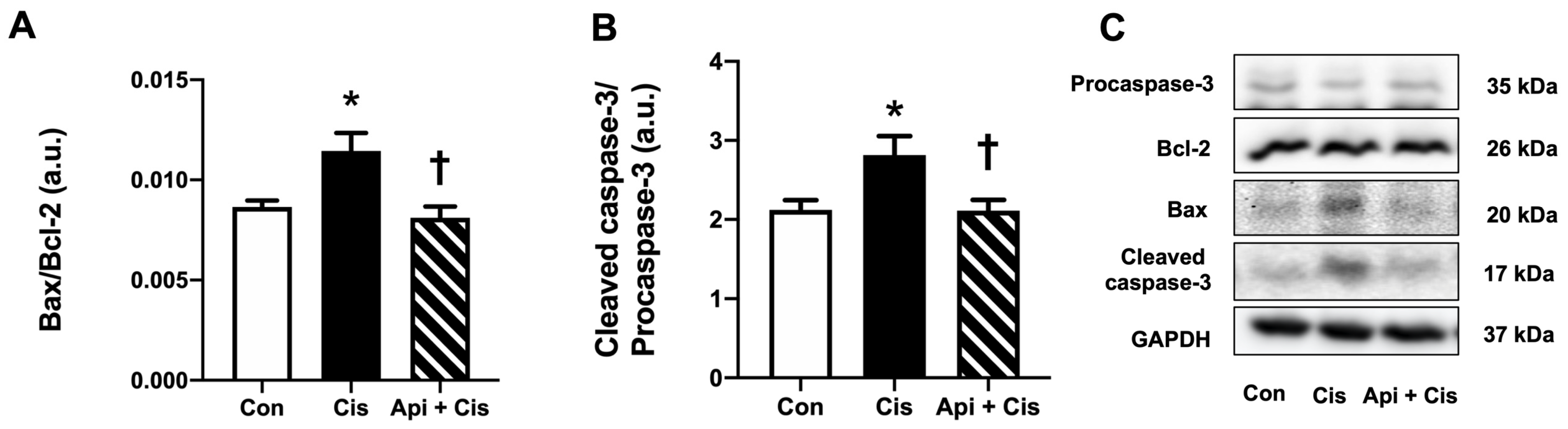
2.5. Apigenin Alleviated Cardiac Apoptosis in Rats with Cisplatin-Induced Cardiotoxicity
3. Discussion
4. Materials and Methods
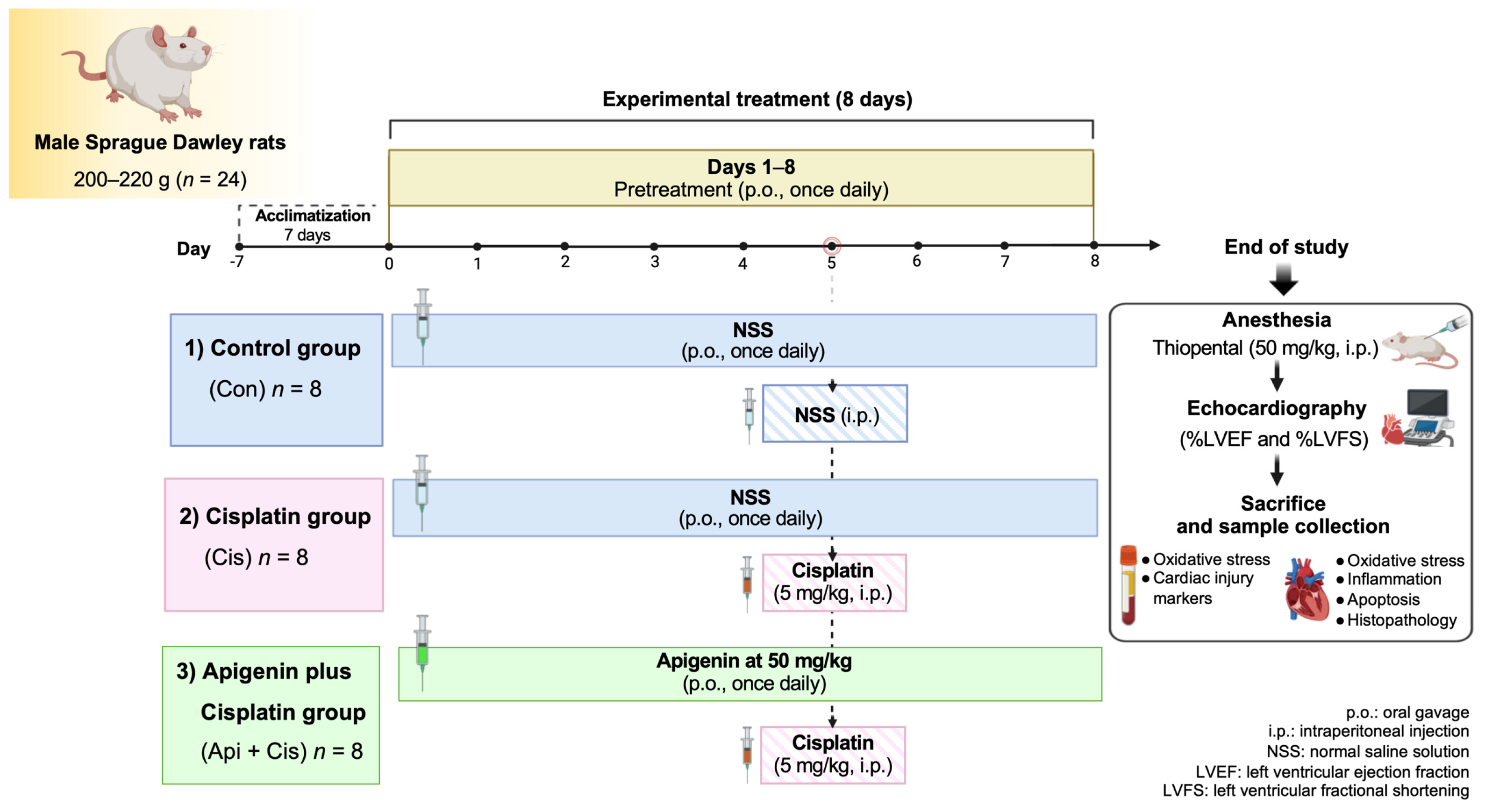
4.1. Experimental Animals
4.2. Assessment of LV Function
4.3. Assessment of Cardiac Injury
4.4. Assessment of Cardiac Oxidative Stress
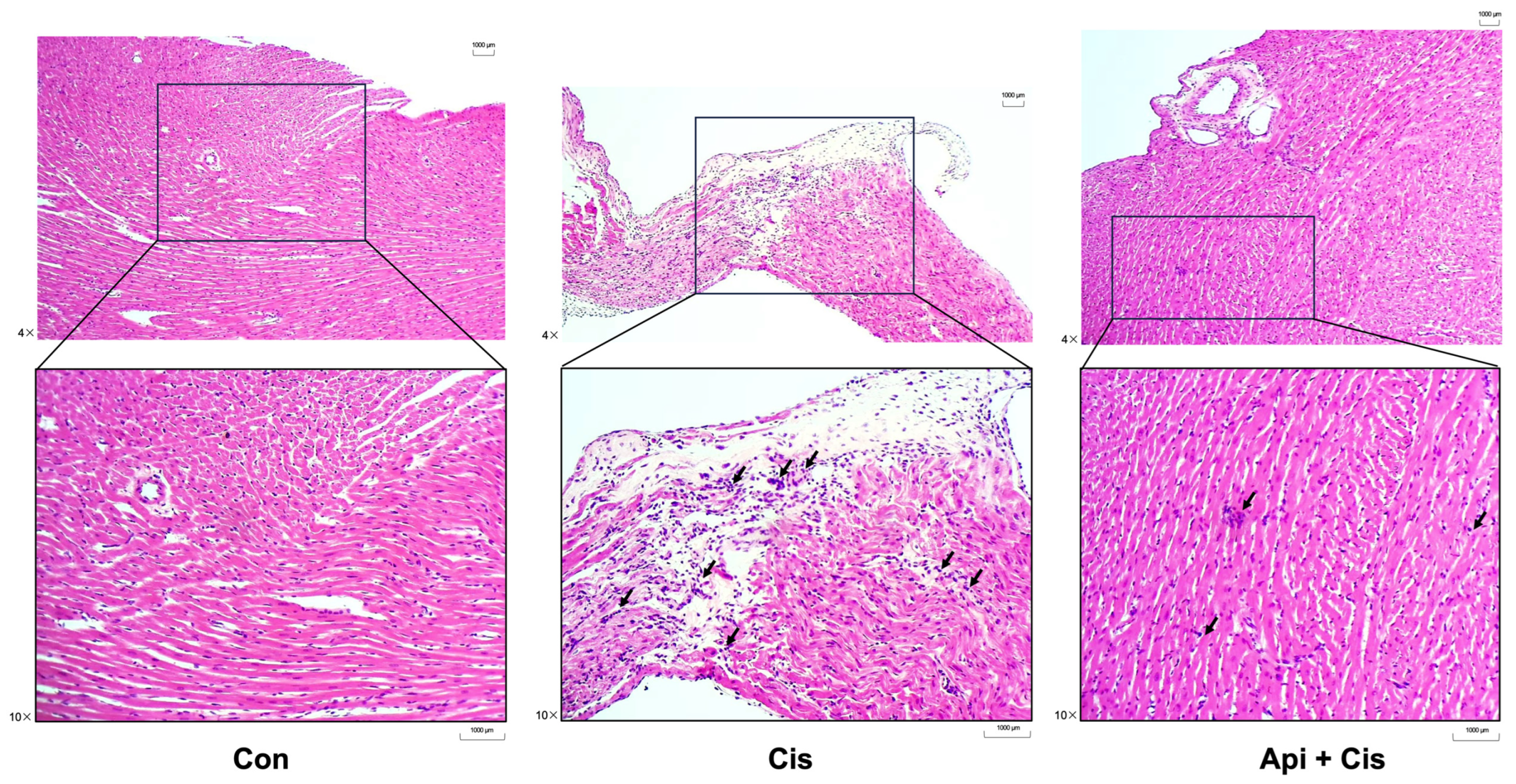
4.5. Assessment of Cardiac Histopathology
4.6. Western Blot Analysis
4.7. Statistical Analysis
5. Conclusions
Author Contributions
Funding
Institutional Review Board Statement
Informed Consent Statement
Data Availability Statement
Conflicts of Interest
Abbreviations
| ac-SOD2 | acetylated superoxide dismutase 2 at lysine 68 |
| Api + Cis | rats pretreated with apigenin at 50 mg/kg plus cisplatin 5 mg/kg |
| Bax | Bcl-2-associated X |
| Bcl-2 | B-cell lymphoma 2 |
| CD38 | cluster of differentiation 38 |
| Cis | rats treated with cisplatin at 5 mg/kg |
| CK-MB | creatine kinase-myocardial band |
| Con | rats treated with vehicle |
| DNA | deoxyribonucleic acid |
| GSH | glutathione |
| H&E | hematoxylin and eosin |
| IL-1β | Interleukin-1 beta |
| LDH | lactate dehydrogenase |
| MDA | malondialdehyde |
| NAD+ | nicotinamide adenine dinucleotide |
| NF-κB | nuclear factor kappa-light-chain-enhancer of activated B cells |
| ROS | reactive oxygen species |
| Sirt3 | sirtuin 3 |
| TLR-4 | toll-like receptor 4 |
| TNF-α | tumor necrosis factor alpha |
References
- Basu, A.; Krishnamurthy, S. Cellular responses to Cisplatin-induced DNA damage. J. Nucleic Acids 2010, 2010, 201367. [Google Scholar] [CrossRef] [PubMed]
- El-Awady, E.-S.E.; Moustafa, Y.M.; Abo-Elmatty, D.M.; Radwan, A. Cisplatin-induced cardiotoxicity: Mechanisms and cardioprotective strategies. Eu. J. Pharmacol. 2011, 650, 335–341. [Google Scholar] [CrossRef] [PubMed]
- Dugbartey, G.J.; Peppone, L.J.; de Graaf, I.A. An integrative view of cisplatin-induced renal and cardiac toxicities: Molecular mechanisms, current treatment challenges and potential protective measures. Toxicology 2016, 371, 58–66. [Google Scholar] [CrossRef] [PubMed]
- Xia, J.; Hu, J.-n.; Zhang, R.-b.; Liu, W.; Zhang, H.; Wang, Z.; Jiang, S.; Wang, Y.-p.; Li, W. Icariin exhibits protective effects on cisplatin-induced cardiotoxicity via ROS-mediated oxidative stress injury in vivo and in vitro. Phytomedicine 2022, 104, 154331. [Google Scholar] [CrossRef] [PubMed]
- Abdellatif, M.; Sedej, S.; Kroemer, G. NAD+ Metabolism in Cardiac Health, Aging, and Disease. Circulation 2021, 144, 1795–1817. [Google Scholar] [CrossRef] [PubMed]
- Hirschey, M.D.; Shimazu, T.; Goetzman, E.; Jing, E.; Schwer, B.; Lombard, D.B.; Grueter, C.A.; Harris, C.; Biddinger, S.; Ilkayeva, O.R.; et al. SIRT3 regulates mitochondrial fatty-acid oxidation by reversible enzyme deacetylation. Nature 2010, 464, 121–125. [Google Scholar] [CrossRef] [PubMed]
- Liu, Y.; Wei, H.; Li, J. A review on SIRT3 and its natural small molecule activators as a potential Preventive and therapeutic target. Eur. J. Pharmacol. 2024, 963, 176155. [Google Scholar] [CrossRef] [PubMed]
- Sundaresan, N.R.; Gupta, M.; Kim, G.; Rajamohan, S.B.; Isbatan, A.; Gupta, M.P. Sirt3 blocks the cardiac hypertrophic response by augmenting Foxo3a-dependent antioxidant defense mechanisms in mice. J. Clin. Investig. 2009, 119, 2758–2771. [Google Scholar] [PubMed]
- Liu, R.; Fan, M.; Candas, D.; Qin, L.; Zhang, X.; Eldridge, A.; Zou, J.X.; Zhang, T.; Juma, S.; Jin, C.; et al. CDK1-Mediated SIRT3 Activation Enhances Mitochondrial Function and Tumor Radioresistance. Mol. Cancer Ther. 2015, 14, 2090–2102. [Google Scholar] [CrossRef] [PubMed]
- van de Ven, R.A.H.; Santos, D.; Haigis, M.C. Mitochondrial Sirtuins and Molecular Mechanisms of Aging. Trends. Mol. Med. 2017, 23, 320–331. [Google Scholar] [CrossRef] [PubMed]
- Yusri, K.; Jose, S.; Vermeulen, K.S.; Tan, T.C.M.; Sorrentino, V. The role of NAD(+) metabolism and its modulation of mitochondria in aging and disease. npj Metab. Health Dis. 2025, 3, 26. [Google Scholar] [CrossRef] [PubMed]
- Wen, K.; Zhang, Y.-T.; Zhao, Q.-H.; Li, Q.; Zhao, J.-L.; Ding, Q.; Xiao, Y.-F.; Guan, X.-H.; Jiang, M.-X.; Qian, Y.-S.; et al. Cardiomyocyte specific CD38 deletion protects heart from acute myocardial infarction by activating Sirt3 signaling pathway. Sci. Rep. 2025, 15, 17165. [Google Scholar] [CrossRef] [PubMed]
- Liu, J.; Liu, N.; Qi, C.; Dong, D.; Liu, B. The Sirt3–CD38 axis induces mitochondrial dysfunction in hypertrophied heart by regulating mitochondrial calcium overload. Eur. J. Med. Res. 2025, 30, 967. [Google Scholar] [CrossRef] [PubMed]
- Silaghi, C.N.; Farcaș, M.; Crăciun, A.M. Sirtuin 3 (SIRT3) Pathways in Age-Related Cardiovascular and Neurodegenerative Diseases. Biomedicines 2021, 9, 1574. [Google Scholar] [CrossRef] [PubMed]
- Kitada, M.; Araki, S.I.; Koya, D. The Role of CD38 in the Pathogenesis of Cardiorenal Metabolic Disease and Aging, an Approach from Basic Research. Cells 2023, 12, 595. [Google Scholar] [CrossRef] [PubMed]
- Chini, E.N.; Chini, C.C.S.; Espindola Netto, J.M.; de Oliveira, G.C.; van Schooten, W. The Pharmacology of CD38/NADase: An Emerging Target in Cancer and Diseases of Aging. Trends Pharmacol. Sci. 2018, 39, 424–436. [Google Scholar] [CrossRef] [PubMed]
- Malavasi, F.; Deaglio, S.; Funaro, A.; Ferrero, E.; Horenstein, A.L.; Ortolan, E.; Vaisitti, T.; Aydin, S. Evolution and function of the ADP ribosyl cyclase/CD38 gene family in physiology and pathology. Physiol. Rev. 2008, 88, 841–886. [Google Scholar] [CrossRef] [PubMed]
- Zhang, X.; Li, L.; Zhang, Q.; Wei, Q.; Lin, J.; Jia, J.; Zhang, J.; Yan, T.; Lv, Y.; Jiang, X.; et al. CD38 Causes Autophagic Flux Inhibition and Cardiac Dysfunction Through a Transcriptional Inhibition Pathway Under Hypoxia/Ischemia Conditions. Front. Cell Dev. Biol. 2020, 8, 191. [Google Scholar] [CrossRef] [PubMed]
- Agorrody, G.; Peclat, T.R.; Peluso, G.; Gonano, L.A.; Santos, L.; van Schooten, W.; Chini, C.C.S.; Escande, C.; Chini, E.N.; Contreras, P. Benefits in cardiac function by CD38 suppression: Improvement in NAD(+) levels, exercise capacity, heart rate variability and protection against catecholamine-induced ventricular arrhythmias. J. Mol. Cell. Cardiol. 2022, 166, 11–22. [Google Scholar] [CrossRef] [PubMed]
- El-Hamoly, T.; El-Sharawy, D.M.; El Refaye, M.S.; Abd El-Rahman, S.S. L-thyroxine modifies nephrotoxicity by regulating the apoptotic pathway: The possible role of CD38/ADP-ribosyl cyclase-mediated calcium mobilization. PLoS ONE 2017, 12, e0184157. [Google Scholar] [CrossRef] [PubMed]
- Salehi, B.; Venditti, A.; Sharifi-Rad, M.; Kręgiel, D.; Sharifi-Rad, J.; Durazzo, A.; Lucarini, M.; Santini, A.; Souto, E.B.; Novellino, E.; et al. The Therapeutic Potential of Apigenin. Int. J. Mol. Sci. 2019, 20, 1305. [Google Scholar] [CrossRef] [PubMed]
- Thomas, S.D.; Jha, N.K.; Jha, S.K.; Sadek, B.; Ojha, S. Pharmacological and Molecular Insight on the Cardioprotective Role of Apigenin. Nutrients 2023, 15, 385. [Google Scholar] [CrossRef] [PubMed]
- Wang, F.; Yan, X.; Yue, A.; Zhang, K.; Li, P.; Xu, J.; Sun, K.; Zhang, Q.; Li, Y. Apigenin alleviates doxorubicin-induced myocardial pyroptosis by inhibiting glycogen synthase kinase-3β in vitro and in vivo. Drug. Dev. Res. 2024, 85, e22196. [Google Scholar] [CrossRef] [PubMed]
- Hu, Z.; Li, Y.; Yao, N.; Gan, H.; Zeng, Q.; Huang, X.; Huang, D.; Cai, D.; Chen, Y. Apigenin attenuates the atherosclerotic lesions through enhancing selective autophagy/lipophagy and promoting RCT process. Pharm. Biol. 2025, 63, 387–401. [Google Scholar] [CrossRef] [PubMed]
- Liu, C.; Zhang, X.; Yang, H.; Zhao, M.; Liu, Y.; Zhao, R.; Li, Z.; Sun, M. PEG-modified nano liposomes co-deliver Apigenin and RAGE-siRNA to protect myocardial ischemia injury. Int. J. Pharm. 2024, 649, 123673. [Google Scholar] [CrossRef] [PubMed]
- Chen, X.; Xu, H.; Yu, X.; Wang, X.; Zhu, X.; Xu, X. Apigenin inhibits in vitro and in vivo tumorigenesis in cisplatin-resistant colon cancer cells by inducing autophagy, programmed cell death and targeting m-TOR/PI3K/Akt signalling pathway. J. Buon. 2019, 24, 488–493. [Google Scholar] [PubMed]
- Choudhury, D.; Ganguli, A.; Dastidar, D.G.; Acharya, B.R.; Das, A.; Chakrabarti, G. Apigenin shows synergistic anticancer activity with curcumin by binding at different sites of tubulin. Biochimie 2013, 95, 1297–1309. [Google Scholar] [CrossRef] [PubMed]
- Caltagirone, S.; Rossi, C.; Poggi, A.; Ranelletti, F.O.; Natali, P.G.; Brunetti, M.; Aiello, F.B.; Piantelli, M. Flavonoids apigenin and quercetin inhibit melanoma growth and metastatic potential. Int. J. Cancer 2000, 87, 595–600. [Google Scholar] [CrossRef]
- Escande, C.; Nin, V.; Price, N.L.; Capellini, V.; Gomes, A.P.; Barbosa, M.T.; O’Neil, L.; White, T.A.; Sinclair, D.A.; Chini, E.N. Flavonoid apigenin is an inhibitor of the NAD+ ase CD38: Implications for cellular NAD+ metabolism, protein acetylation, and treatment of metabolic syndrome. Diabetes 2013, 62, 1084–1093. [Google Scholar] [CrossRef] [PubMed]
- Ogura, Y.; Kitada, M.; Xu, J.; Monno, I.; Koya, D. CD38 inhibition by apigenin ameliorates mitochondrial oxidative stress through restoration of the intracellular NAD(+)/NADH ratio and Sirt3 activity in renal tubular cells in diabetic rats. Aging 2020, 12, 11325–11336. [Google Scholar] [CrossRef] [PubMed]
- Elmorsy, E.A.; Saber, S.; Hamad, R.S.; Abdel-Reheim, M.A.; El-kott, A.F.; AlShehri, M.A.; Morsy, K.; Salama, S.A.; Youssef, M.E. Advances in understanding cisplatin-induced toxicity: Molecular mechanisms and protective strategies. Eur. J. Pharm. Sci. 2024, 203, 106939. [Google Scholar] [CrossRef] [PubMed]
- Rachma, B.; Savitri, M.; Sutanto, H. Cardiotoxicity in platinum-based chemotherapy: Mechanisms, manifestations, and management. Cancer Pathog. Ther. 2025, 3, 101–108. [Google Scholar] [CrossRef] [PubMed]
- Hu, Y.; Sun, B.; Zhao, B.; Mei, D.; Gu, Q.; Tian, Z. Cisplatin-induced cardiotoxicity with midrange ejection fraction: A case report and review of the literature. Medicine 2018, 97, e13807. [Google Scholar] [CrossRef] [PubMed]
- Kim, H.J.; Oh, G.S.; Shen, A.; Lee, S.B.; Choe, S.K.; Kwon, K.B.; Lee, S.; Seo, K.S.; Kwak, T.H.; Park, R.; et al. Augmentation of NAD+ by NQO1 attenuates cisplatin-mediated hearing impairment. Cell Death Dis. 2014, 5, e1292. [Google Scholar] [CrossRef] [PubMed]
- Xie, N.; Zhang, L.; Gao, W.; Huang, C.; Huber, P.E.; Zhou, X.; Li, C.; Shen, G.; Zou, B. NAD(+) metabolism: Pathophysiologic mechanisms and therapeutic potential. Signal. Transduct. Target Ther. 2020, 5, 227. [Google Scholar] [CrossRef] [PubMed]
- Camacho-Pereira, J.; Tarragó, M.G.; Chini, C.C.S.; Nin, V.; Escande, C.; Warner, G.M.; Puranik, A.S.; Schoon, R.A.; Reid, J.M.; Galina, A.; et al. CD38 Dictates Age-Related NAD Decline and Mitochondrial Dysfunction through an SIRT3-Dependent Mechanism. Cell Met. 2016, 23, 1127–1139. [Google Scholar] [CrossRef] [PubMed]
- Xiong, Y.; Guan, K.L. Mechanistic insights into the regulation of metabolic enzymes by acetylation. J. Cell Biol. 2012, 198, 155–164. [Google Scholar] [CrossRef] [PubMed]
- Wu, C.H.; Chou, W.C.; Jou, I.M.; Tu, Y.K.; Ma, C.H.; Tsai, K.L. Cisplatin-induced oxidative stress, apoptosis, and pro-inflammatory responses in chondrocytes through modulating LOX-1. J. Orthop. Surg. Res. 2025, 20, 206. [Google Scholar] [CrossRef] [PubMed]
- Hsieh, P.-L.; Tsai, K.-L.; Chou, W.-C.; Wu, C.-H.; Jou, I.M.; Tu, Y.-K.; Ma, C.-H. Cisplatin triggers oxidative stress, apoptosis and pro-inflammatory responses by inhibiting the SIRT1-mediated Nrf2 pathway in chondrocytes. Environ. Toxicol. 2023, 38, 2476–2486. [Google Scholar] [CrossRef] [PubMed]
- Kawasaki, T.; Kawai, T. Toll-like receptor signaling pathways. Front. Immunol. 2014, 5, 461. [Google Scholar] [CrossRef] [PubMed]
- Sumneang, N.; Tanajak, P.; Oo, T.T. Toll-like Receptor 4 Inflammatory Perspective on Doxorubicin-Induced Cardiotoxicity. Molecules 2023, 28, 4294. [Google Scholar] [CrossRef] [PubMed]
- Babolmorad, G.; Latif, A.; Domingo, I.K.; Pollock, N.M.; Delyea, C.; Rieger, A.M.; Allison, W.T.; Bhavsar, A.P. Toll-like receptor 4 is activated by platinum and contributes to cisplatin-induced ototoxicity. EMBO Rep. 2021, 22, e51280. [Google Scholar] [CrossRef] [PubMed]
- Mushtaq, Z.; Sadeer, N.B.; Hussain, M.; Mahwish; Alsagaby, S.A.; Imran, M.; Mumtaz, T.; Umar, M.; Tauseef, A.; Al Abdulmonem, W.; et al. Therapeutical properties of apigenin: A review on the experimental evidence and basic mechanisms. Int. J. Food Prop. 2023, 26, 1914–1939. [Google Scholar] [CrossRef]
- Abudalo, R.; Gammoh, O.; Altaber, S.; Bseiso, Y.; Qnais, E.; Wedyan, M.; Oqal, M.; Alqudah, A. Mitigation of cisplatin-induced cardiotoxicity by Isorhamnetin: Mechanistic insights into oxidative stress, inflammation, and apoptosis modulation. Toxicol. Rep. 2024, 12, 564–573. [Google Scholar] [CrossRef] [PubMed]
- Rahmani, S.; Naraki, K.; Roohbakhsh, A.; Hayes, A.W.; Karimi, G. The protective effects of rutin on the liver, kidneys, and heart by counteracting organ toxicity caused by synthetic and natural compounds. Food Sci. Nutr. 2023, 11, 39–56. [Google Scholar] [CrossRef] [PubMed]
- Ciumărnean, L.; Milaciu, M.V.; Runcan, O.; Vesa, Ș.C.; Răchișan, A.L.; Negrean, V.; Perné, M.G.; Donca, V.I.; Alexescu, T.G.; Para, I.; et al. The Effects of Flavonoids in Cardiovascular Diseases. Molecules 2020, 25, 4320. [Google Scholar] [CrossRef] [PubMed]
- Zare, M.F.R.; Rakhshan, K.; Aboutaleb, N.; Nikbakht, F.; Naderi, N.; Bakhshesh, M.; Azizi, Y. Apigenin attenuates doxorubicin induced cardiotoxicity via reducing oxidative stress and apoptosis in male rats. Life Sci. 2019, 232, 116623. [Google Scholar] [CrossRef] [PubMed]
- Kashyap, P.; Shikha, D.; Thakur, M.; Aneja, A. Functionality of apigenin as a potent antioxidant with emphasis on bioavailability, metabolism, action mechanism and in vitro and in vivo studies: A review. J. Food Biochem. 2022, 46, e13950. [Google Scholar] [CrossRef] [PubMed]
- Kim, A.; Lee, C.S. Apigenin reduces the Toll-like receptor-4-dependent activation of NF-κB by suppressing the Akt, mTOR, JNK, and p38-MAPK. Naunyn-Schmiedeberg’s Arch. Pharmacol. 2018, 391, 271–283. [Google Scholar] [CrossRef] [PubMed]
- Xiao, S.; Zhang, P.; Zhang, G.; Li, W.; Lin, H.; Hu, X. Inhibition of toll-like receptor 4 activation by apigenin and chrysin via competition for sites and conformational changes. Int. J. Biol. Macromol. 2023, 252, 126415. [Google Scholar] [CrossRef] [PubMed]
- Liu, H.J.; Fan, Y.L.; Liao, H.H.; Liu, Y.; Chen, S.; Ma, Z.G.; Zhang, N.; Yang, Z.; Deng, W.; Tang, Q.Z. Apigenin alleviates STZ-induced diabetic cardiomyopathy. Mol. Cell. Biochem. 2017, 428, 9–21. [Google Scholar] [CrossRef] [PubMed]
- de Castro, J.M.; da Silva Melo, A.; Silveira, B.L.; Martins, I.A.S.; Marçal, M.M.; Bosco, T.D.; Keingeski, M.B.; Oliveira, E.C.L.; Alvares-da-Silva, M.R.; Türck, P.; et al. Oral apigenin prevents obesity-related muscular atrophy, but not obesity itself, in middle-aged rats fed a high-calorie diet. Biomed. Pharmacother. 2025, 189, 118342. [Google Scholar] [CrossRef] [PubMed]
- Zeng, Y.; Zhao, Y.; Dai, S.; Liu, Y.; Zhang, R.; Yan, H.; Zhao, M.; Wang, Y. Impact of lactate dehydrogenase on prognosis of patients undergoing cardiac surgery. BMC Cardiovasc. Disord. 2022, 22, 404. [Google Scholar] [CrossRef] [PubMed]
- Sumneang, N.; Kobroob, A.; Phungphong, S.; Boonhoh, W.; Punsawad, C.; Kangwan, N. Fermented Houttuynia cordata Juice Exerts Cardioprotective Effects by Alleviating Cardiac Inflammation and Apoptosis in Rats with Lipopolysaccharide-Induced Sepsis. Nutrients 2025, 17, 501. [Google Scholar] [CrossRef] [PubMed]



| Antibody | Manufacturer | Host | Dilution |
|---|---|---|---|
| ac-SOD2 | Abcam | Rabbit | 1:1000 |
| Bax | Cell signaling | Rabbit | 1:1000 |
| Bcl-2 | Cell signaling | Rabbit | 1:1000 |
| CD38 | Santa Cruz | Rabbit | 1:1000 |
| Cleaved caspase-3 | Cell signaling | Rabbit | 1:1000 |
| GAPDH | Cell signaling | Mouse | 1:2000 |
| IL-1β | Merck | Rabbit | 1:1000 |
| Phosphorylation of NF-κB | Cell signaling | Rabbit | 1:1000 |
| Procaspase-3 | Cell signaling | Rabbit | 1:1000 |
| Sirt3 | Cell signaling | Rabbit | 1:1000 |
| SOD2 | Cell signaling | Rabbit | 1:1000 |
| TLR-4 | Abcam | Rabbit | 1:1000 |
| TNF-α | Abcam | Rabbit | 1:1000 |
Disclaimer/Publisher’s Note: The statements, opinions and data contained in all publications are solely those of the individual author(s) and contributor(s) and not of MDPI and/or the editor(s). MDPI and/or the editor(s) disclaim responsibility for any injury to people or property resulting from any ideas, methods, instructions or products referred to in the content. |
© 2026 by the authors. Licensee MDPI, Basel, Switzerland. This article is an open access article distributed under the terms and conditions of the Creative Commons Attribution (CC BY) license.
Share and Cite
Sumneang, N.; Intakhad, J.; Boonhoh, W.; Pudgerd, A.; Wongmekiat, O.; Kobroob, A. Apigenin Protects Against Cisplatin-Induced Cardiotoxicity: Potential Involvement of CD38-Sirt3 Signaling in Rats. Molecules 2026, 31, 2300. https://doi.org/10.3390/molecules31132300
Sumneang N, Intakhad J, Boonhoh W, Pudgerd A, Wongmekiat O, Kobroob A. Apigenin Protects Against Cisplatin-Induced Cardiotoxicity: Potential Involvement of CD38-Sirt3 Signaling in Rats. Molecules. 2026; 31(13):2300. https://doi.org/10.3390/molecules31132300
Chicago/Turabian StyleSumneang, Natticha, Jannarong Intakhad, Worakan Boonhoh, Arnon Pudgerd, Orawan Wongmekiat, and Anongporn Kobroob. 2026. "Apigenin Protects Against Cisplatin-Induced Cardiotoxicity: Potential Involvement of CD38-Sirt3 Signaling in Rats" Molecules 31, no. 13: 2300. https://doi.org/10.3390/molecules31132300
APA StyleSumneang, N., Intakhad, J., Boonhoh, W., Pudgerd, A., Wongmekiat, O., & Kobroob, A. (2026). Apigenin Protects Against Cisplatin-Induced Cardiotoxicity: Potential Involvement of CD38-Sirt3 Signaling in Rats. Molecules, 31(13), 2300. https://doi.org/10.3390/molecules31132300