Monoterpene-Rich Nanoemulsion from Thymus vulgaris as a Promising Acaricidal Strategy Against Tetranychus mexicanus: Effects on Survival and Fecundity
 ,
,
Abstract
1. Introduction
2. Results and Discussion
2.1. Chemical Profile and Physicochemical Characterization of TVEO-NE
Formulation and Physicochemical Properties of TVEO-Nanoemulsion (NE)
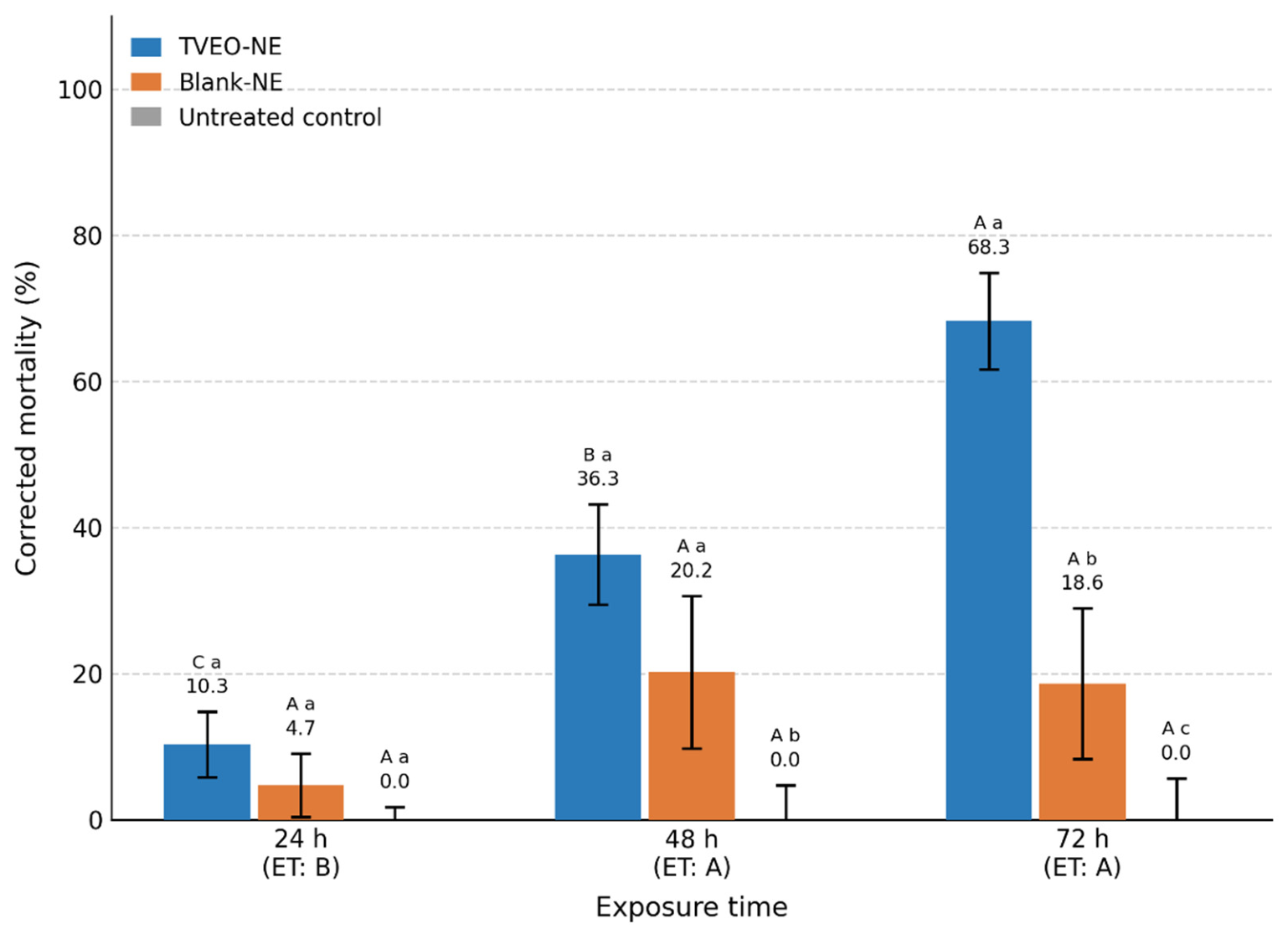
2.2. Mortality of Tetranychus Mexicanus Exposed to TVEO-NE
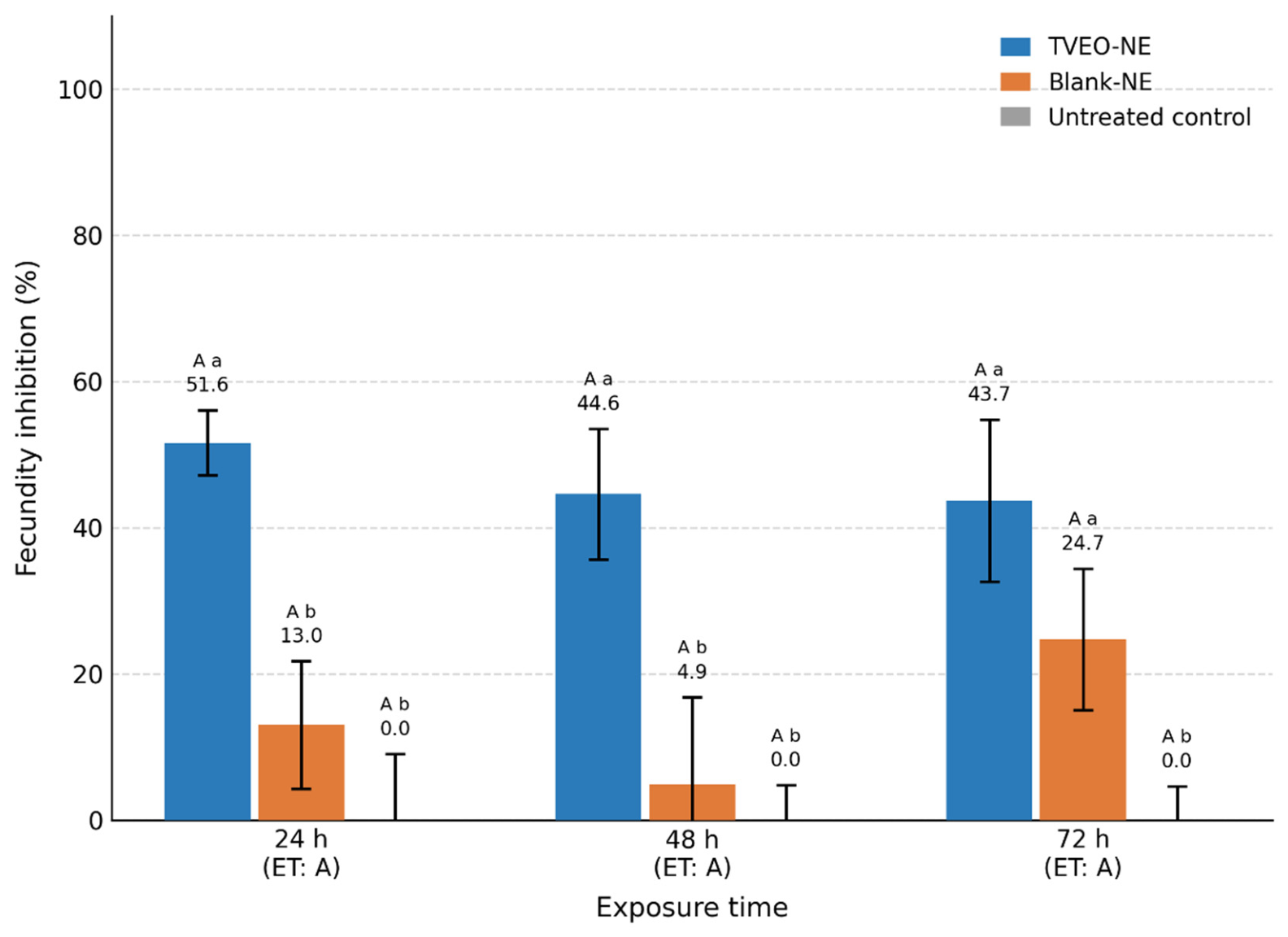
2.3. Inhibition of Fecundity and Sublethal Reproductive Effects
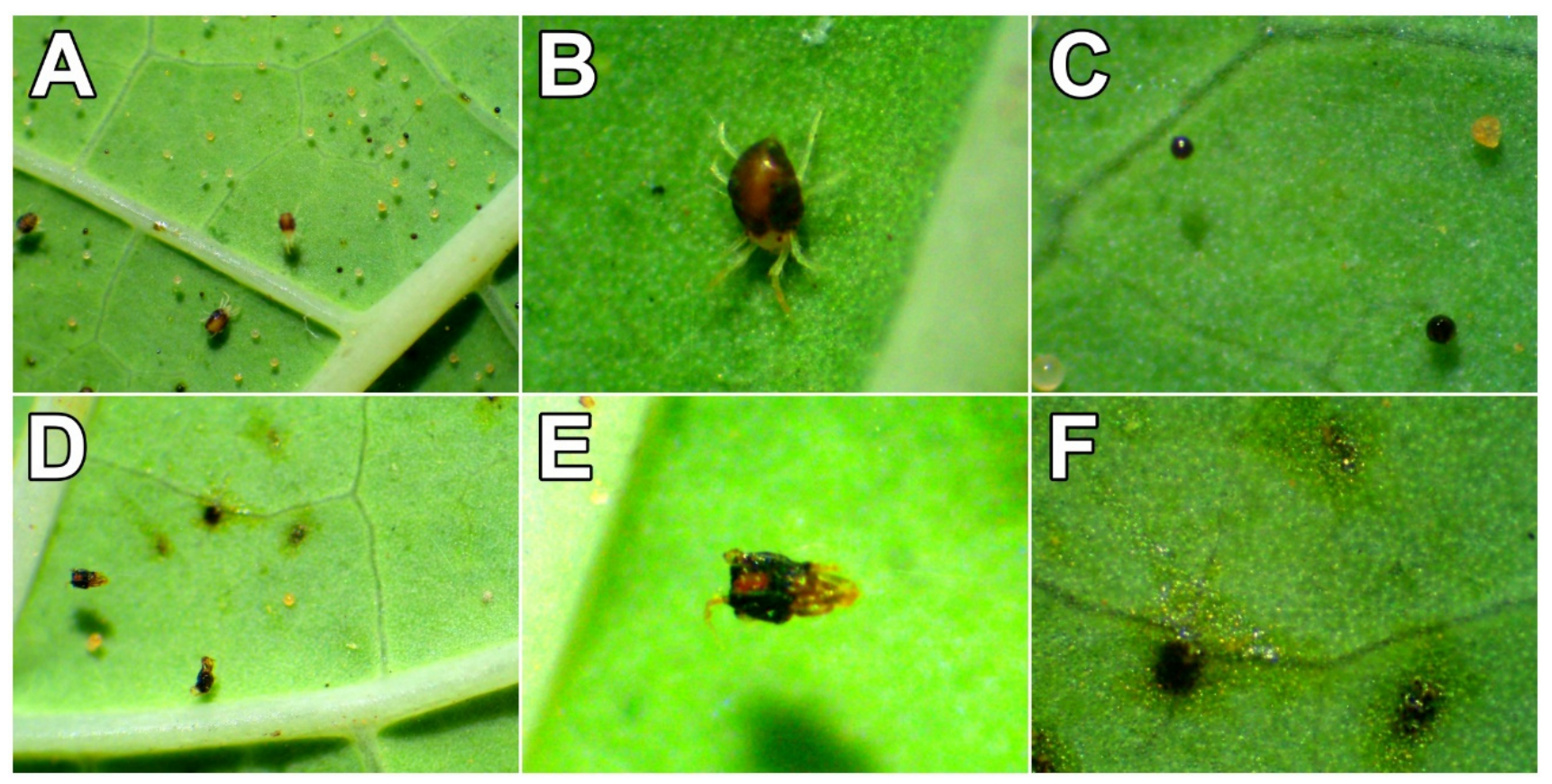
2.4. Morphological Observations on Treated Colonies
2.4.1. Structural Model Quality and Validation
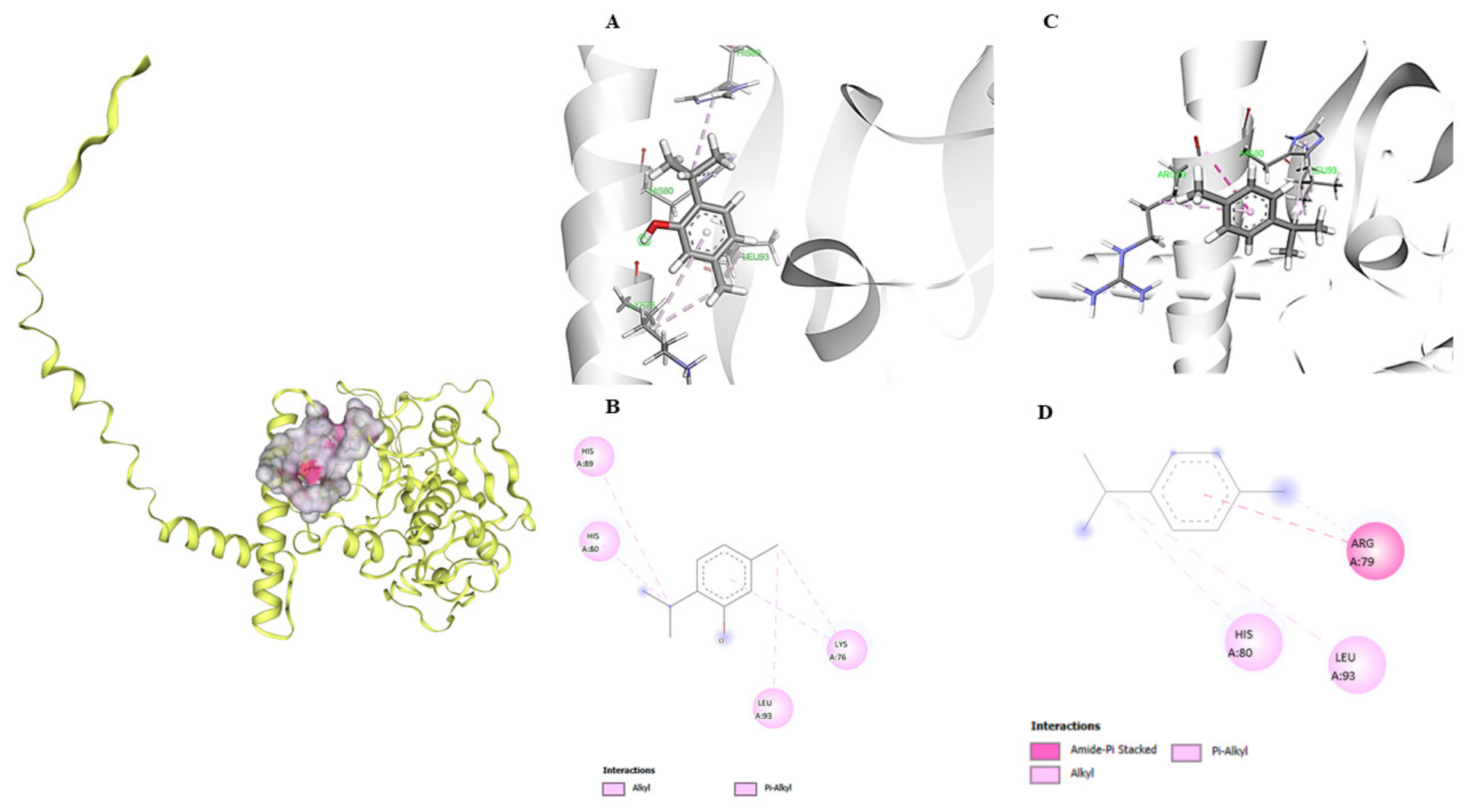
2.4.2. Molecular Docking of Tveo Principal Constituents Against Cathepsin L
2.4.3. Molecular Dynamics Simulation of Cathepsin L Complexes
3. Materials and Methods
3.1. Plant Material and Essential Oil Extraction
3.2. Preparation of Nanoemulsion and Particle Characterization
3.3. Analytical Methods
3.4. Mite Colony
3.5. Bioassay with Mites
3.6. In Silico Analysis
3.6.1. Sequence Retrieval and Homology Modeling
3.6.2. Model Quality Assessment
3.6.3. Selection and Construction of 3D Ligand Structures
3.6.4. Binding Site Identification and Molecular Docking
3.6.5. Analysis of Intermolecular Interactions and Figure Construction
3.7. Data Analysis
4. Conclusions
Supplementary Materials
Author Contributions
Funding
Institutional Review Board Statement
Informed Consent Statement
Data Availability Statement
Acknowledgments
Conflicts of Interest
References
- Mirza, J.H.; Kamran, M.; Alatawi, F.J. Webbing life type and behavioral response of the date palm mite, Oligonychus afrasiaticus, to webbing residues on leaves and fruits of date palm. Exp. Appl. Acarol. 2018, 76, 197–207. [Google Scholar] [CrossRef] [PubMed]
- Hong, P.; Dash, C.K.; Ghafar, M.A.; Haq, I.U.; Lu, L.; Zhou, C.; Wu, Q.; Wang, L. Demography and population projection of Tetranychus urticae (Tetranychidae) on Phaseolus vulgaris (Fabaceae) colonized by entomopathogenic fungal endophytes. Insects 2024, 15, 73. [Google Scholar] [CrossRef] [PubMed]
- Saito, Y.; Sato, Y. Diversity in life types of spider mites. Front. Arachn. Sci. 2024, 3, 1436082. [Google Scholar] [CrossRef]
- Chiaradia, L.A.; Milanez, J.M.; Nesi, C.N. Influência de fatores climáticos e de ácaros predadores na população de ácaros tetraniquídeos em citros. Agropec. Catarin. 2009, 22, 52–56. [Google Scholar] [CrossRef]
- Barroncas, J.F.; Silva, N.M.; Vasconcelos, G.J.N. Biologia de Tetranychus mexicanus (McGregor) (Acari: Tetranychidae) em mamoeiro e maracujazeiro. Pesq. Agropec. Trop. 2022, 52, e72154. [Google Scholar] [CrossRef]
- Santos, R.S.; Ferla, N.J.; Ferla, J.J.; Silva, W. Record of Tetranychus mexicanus (McGregor) (Acari: Tetranychidae) in papaya plant (Carica papaya L.) in the Acre State, Brazil. EntomoBrasilis 2018, 11, 147–150. [Google Scholar] [CrossRef][Green Version]
- El-Sayed, M.A.; El-Gohary, L.R.; Saleh, A.; Said, A. Effectiveness of plant extracts and traditional compounds against Tetranychus urticae Koch, under field conditions in squash. J. Plant Prot. Pathol. 2023, 14, 31–34. [Google Scholar] [CrossRef]
- Susurluk, H. Potential use of essential oils from Origanum vulgare and Syzygium aromaticum to control Tetranychus urticae Koch (Acari: Tetranychidae) on two host plant species. PeerJ 2023, 11, e14475. [Google Scholar] [CrossRef] [PubMed]
- Van Leeuwen, T.; Vontas, J.; Tsagkarakou, A.; Dermauw, W.; Tirry, L. Acaricide resistance mechanisms in the two-spotted spider mite Tetranychus urticae and other important Acari: A review. Insect Biochem. Mol. Biol. 2010, 40, 563–572. [Google Scholar] [CrossRef] [PubMed]
- Jakubowska, M.; Dobosz, R.; Zawada, D.; Kowalska, J. A review of crop protection methods against the twospotted spider mite—Tetranychus urticae Koch (Acari: Tetranychidae)—With special reference to alternative methods. Agriculture 2022, 12, 898. [Google Scholar] [CrossRef]
- De Rouck, S.; İnak, E.; Dermauw, W.; Van Leeuwen, T. A review of the molecular mechanisms of acaricide resistance in mites and ticks. Insect Biochem. Mol. Biol. 2023, 159, 103981. [Google Scholar] [CrossRef] [PubMed]
- Attia, S.; Grissa, K.L.; Lognay, G.; Bitume, E.; Hance, T.; Mailleux, A.C. A review of the major biological approaches to control the worldwide pest Tetranychus urticae (Acari: Tetranychidae) with special reference to natural pesticides. J. Pest Sci. 2013, 86, 361–386. [Google Scholar] [CrossRef]
- Alfaro-Valle, E.; Martínez-Hernández, A.; Otero-Colina, G.; Lara-Reyna, J. High susceptibility of Tetranychus merganser (Acari: Tetranychidae), an emergent pest of the tropical crop Carica papaya, towards Metarhizium anisopliae s.l. and Beauveria bassiana strains. PeerJ 2022, 10, e14064. [Google Scholar] [CrossRef] [PubMed]
- Fidelis de Santana, M.; Ferla, N.J.; Dionisio, L.F.S.; de Lima Santos, N.; da Silva Pedreira, L.H.; Poltronieri, A.S. Bioactivity of essential oils for the management of Tetranychus urticae Koch and selectivity on its natural enemy Neoseiulus californicus (McGregor). Acarologia 2021, 61, 642–654. [Google Scholar] [CrossRef]
- Bakkali, F.; Averbeck, S.; Averbeck, D.; Idaomar, M. Biological effects of essential oils—A review. Food Chem. Toxicol. 2008, 46, 446–475. [Google Scholar] [CrossRef] [PubMed]
- de Sousa, D.P.; Damasceno, R.O.S.; Amorati, R.; Elshabrawy, H.A.; de Castro, R.D.; Bezerra, D.P.; Nunes, V.R.V.; Gomes, R.C.; Lima, T.C. Essential oils: Chemistry and pharmacological activities. Biomolecules 2023, 13, 1144. [Google Scholar] [CrossRef] [PubMed]
- Pavela, R.; Benelli, G. Essential oils as ecofriendly biopesticides? Challenges and constraints. Trends Plant Sci. 2016, 21, 1000–1007. [Google Scholar] [CrossRef] [PubMed]
- Isman, M.B. Botanical insecticides in the twenty-first century—Fulfilling their promise? Annu. Rev. Entomol. 2020, 65, 233–249. [Google Scholar] [CrossRef] [PubMed]
- Musa, A.; Međo, I.; Marić, I.; Marčić, D. Acaricidal and sublethal effects of a Chenopodium-based biopesticide on the two-spotted spider mite (Acari: Tetranychidae). Exp. Appl. Acarol. 2017, 71, 211–226. [Google Scholar] [CrossRef] [PubMed]
- Badawy, M.E.I.; Abdelgaleil, S.A.M.; Mahmoud, N.F.; Marei, A.E.-S.M. Preparation and characterizations of essential oil and monoterpene nanoemulsions and acaricidal activity against two-spotted spider mite (Tetranychus urticae Koch). Int. J. Acarol. 2018, 44, 330–340. [Google Scholar] [CrossRef]
- Mossa, A.H.; Afia, S.I.; Mohafrash, S.M.M.; Abou-Awad, B.A. Rosemary essential oil nanoemulsion, formulation, characterization and acaricidal activity against the two-spotted spider mite Tetranychus urticae Koch (Acari: Tetranychidae). J. Plant Prot. Res. 2019, 59, 102–112. [Google Scholar] [CrossRef]
- Ribeiro, N.C.; Camara, C.A.G.; Melo, J.P.R.; Moraes, M.M. Effect of the essential oil from the latex of the fruit Mangifera indica L. on Tetranychus urticae Koch (Acari, Tetranychidae). Acarologia 2019, 59, 335–347. [Google Scholar] [CrossRef]
- An, H.; Tak, J.-H. Miticidal and repellent activity of thirty essential oils and their synergistic interaction with vanillin against Tetranychus urticae Koch (Acari: Tetranychidae). Ind. Crops Prod. 2022, 182, 114872. [Google Scholar] [CrossRef]
- Ebadollahi, A.; Ziaee, M.; Palla, F. Essential oils extracted from different species of the Lamiaceae plant family as prospective bioagents against several detrimental pests. Molecules 2020, 25, 1556. [Google Scholar] [CrossRef] [PubMed]
- Modarres-Najafabadi, S.S.; Taji, M.; Hajihassani, A. Study on Thymus vulgaris, Lavandula officinalis and Eucalyptus camaldulensis extracts on the two-spotted spider mite. Int. J. AgriScience 2012, 2, 228–236. [Google Scholar] [CrossRef]
- Wu, L.; Huo, X.; Zhou, X.; Zhao, D.; He, W.; Liu, S.; Liu, H.; Feng, T.; Wang, C. Acaricidal activity and synergistic effect of thyme oil constituents against carmine spider mite (Tetranychus cinnabarinus (Boisduval)). Molecules 2017, 22, 1873. [Google Scholar] [CrossRef] [PubMed]
- Hammoudi Halat, D.; Krayem, M.; Khaled, S.; Younes, S. A focused insight into thyme: Biological, chemical, and therapeutic properties of an indigenous Mediterranean herb. Nutrients 2022, 14, 2104. [Google Scholar] [CrossRef] [PubMed]
- Gupta, P.; Preet, S.; Ananya; Singh, N. Preparation of Thymus vulgaris (L.) essential oil nanoemulsion and its chitosan encapsulation for controlling mosquito vectors. Sci. Rep. 2022, 12, 4335. [Google Scholar] [CrossRef] [PubMed]
- Turek, C.; Stintzing, F.C. Stability of essential oils: A review. Compr. Rev. Food Sci. Food Saf. 2013, 12, 40–53. [Google Scholar] [CrossRef]
- Alibeigi, Z.; Rakhshandehroo, E.; Saharkhiz, M.J.; Alavi, A.M. The acaricidal and repellent activity of the essential and nano essential oil of Thymus vulgaris against the larval and engorged adult stages of the brown dog tick, Rhipicephalus sanguineus (Acari: Ixodidae). BMC Vet. Res. 2025, 21, 135. [Google Scholar] [CrossRef] [PubMed]
- Satyal, P.; Murray, B.L.; McFeeters, R.L.; Setzer, W.N. Essential oil characterization of Thymus vulgaris from various geographical locations. Foods 2016, 5, 70. [Google Scholar] [CrossRef] [PubMed]
- Patil, S.M.; Ramu, R.; Shirahatti, P.S.; Shivamallu, C.; Amachawadi, R.G. A systematic review on ethnopharmacology, phytochemistry and pharmacological aspects of Thymus vulgaris Linn. Heliyon 2021, 7, e07054. [Google Scholar] [CrossRef] [PubMed]
- Németh-Zámboriné, É. Natural variability of essential oil components. In Essential Oils in Food Preservation, Flavor and Safety; Preedy, V.R., Ed.; Academic Press: London, UK, 2016; pp. 119–130. [Google Scholar]
- Gholamzadeh-Chitgar, M.; Khosravi, R.; Jalali-Sendi, J.; Ghadamyari, M. Sublethal effects of Thymus vulgaris essential oil on life-table parameters of two-spotted spider mite, Tetranychus urticae Koch (Acari: Tetranychidae). Arch. Phytopathol. Plant Prot. 2013, 46, 781–788. [Google Scholar] [CrossRef]
- Pavoni, L.; Perinelli, D.R.; Bonacucina, G.; Cespi, M.; Palmieri, G.F. An overview of micro- and nanoemulsions as vehicles for essential oils: Formulation, preparation and stability. Nanomaterials 2020, 10, 135. [Google Scholar] [CrossRef] [PubMed]
- Al-Asmary, F.; Koirala, P.; Rathod, N.B.; Alnemr, T.M.; Asiri, S.A.; Babeker, M.Y.; Li, L.; Nirmal, N.P. Antimicrobial activity of formulated Origanum and thyme essential oil nanoemulsions—A comparative study. Curr. Nutr. Food Sci. 2024, 20, 757–766. [Google Scholar] [CrossRef]
- Zhao, S.; Wang, Z.; Wang, X.; Kong, B.; Liu, Q.; Xia, X.; Liu, H. Characterization of nanoemulsions stabilized with different emulsifiers and their encapsulation efficiency for oregano essential oil: Tween 80, soybean protein isolate, tea saponin, and soy lecithin. Foods 2023, 12, 3183. [Google Scholar] [CrossRef] [PubMed]
- Pavoni, L.; Pavela, R.; Cespi, M.; Bonacucina, G.; Maggi, F.; Zeni, V.; Canale, A.; Lucchi, A.; Bruschi, F.; Benelli, G. Green Micro- and Nanoemulsions for Managing Parasites, Vectors and Pests. Nanomaterials 2019, 9, 1285. [Google Scholar] [CrossRef] [PubMed]
- Stepanycheva, E.A.; Petrova, M.O.; Chermenskaya, T.D. Biological activity of Litsea cubeba essential oil and citral against the two-spotted spider mite Tetranychus urticae Koch (Acarina, Tetranychidae). Entomol. Rev. 2023, 103, 152–158. [Google Scholar] [CrossRef]
- Abouelmaaty, H.G.; Fukushi, M.; Abouelmaaty, A.G.; Ghazy, N.A.; Suzuki, T. Leaf disc-mediated oral delivery of small molecules in the absence of surfactant to the two-spotted spider mite, Tetranychus urticae. Exp. Appl. Acarol. 2019, 77, 1–10. [Google Scholar] [CrossRef] [PubMed]
- Desneux, N.; Decourtye, A.; Delpuech, J.-M. The sublethal effects of pesticides on beneficial arthropods. Annu. Rev. Entomol. 2007, 52, 81–106. [Google Scholar] [CrossRef] [PubMed]
- McEnroe, W.D. Guanine excretion by the two-spotted spider mite (Tetranychus telarius (L.)). Ann. Entomol. Soc. Am. 1961, 54, 925–926. [Google Scholar] [CrossRef]
- Wiesmann, R. Untersuchungen über die Verdauungsvorgänge bei der gemeinen Spinnmilbe, Tetranychus urticae Koch. Z. Angew. Entomol. 1968, 61, 457–465. [Google Scholar] [CrossRef]
- Mothes-Wagner, U. Fine structure of the ‘hindgut’ of the two-spotted spider mite, Tetranychus urticae, with special reference to origin and function. Exp. Appl. Acarol. 1985, 1, 253–272. [Google Scholar] [CrossRef]
- Chen, V.B.; Arendall, W.B., III; Headd, J.J.; Keedy, D.A.; Immormino, R.M.; Kapral, G.J.; Murray, L.W.; Richardson, J.S.; Richardson, D.C. MolProbity: All-atom structure validation for macromolecular crystallography. Acta Crystallogr. D. Biol. Crystallogr. 2010, 66, 12–21. [Google Scholar] [CrossRef] [PubMed]
- Wiederstein, M.; Sippl, M.J. ProSA-web: Interactive web service for the recognition of errors in three-dimensional structures of proteins. Nucleic Acids Res. 2007, 35, W407–W410. [Google Scholar] [CrossRef] [PubMed]
- Benkert, P.; Biasini, M.; Schwede, T. Toward the estimation of the absolute quality of individual protein structure models. Bioinformatics 2011, 27, 343–350. [Google Scholar] [CrossRef] [PubMed]
- Studer, G.; Rempfer, C.; Waterhouse, A.M.; Gumienny, R.; Haas, J.; Schwede, T. QMEANDisCo—Distance constraints applied on model quality estimation. Bioinformatics 2020, 36, 1765–1771. [Google Scholar] [CrossRef] [PubMed]
- Waterhouse, A.; Bertoni, M.; Bienert, S.; Studer, G.; Tauriello, G.; Gumienny, R.; Heer, F.T.; de Beer, T.A.P.; Rempfer, C.; Bordoli, L.; et al. SWISS-MODEL: Homology modelling of protein structures and complexes. Nucleic Acids Res. 2018, 46, W296–W303. [Google Scholar] [CrossRef] [PubMed]
- Bensoussan, N.; Zhurov, V.; Yamakawa, S.; O’Neil, C.H.; Suzuki, T.; Grbić, M.; Grbić, V. The digestive system of the two-spotted spider mite, Tetranychus urticae Koch, in the context of the mite–plant interaction. Front. Plant Sci. 2018, 9, 1206. [Google Scholar] [CrossRef] [PubMed]
- Santamaría, M.E.; González-Cabrera, J.; Martínez, M.; Grbic, V.; Castañera, P.; Díaz, L.; Ortego, F. Digestive proteases in bodies and faeces of the two-spotted spider mite, Tetranychus urticae. J. Insect Physiol. 2015, 78, 69–77. [Google Scholar] [CrossRef] [PubMed]
- El-Sayed, S.M.; Ahmed, N.; Selim, S.; Al-Khalaf, A.A.; El Nahhas, N.; Abdel-Hafez, S.H.; Sayed, S.; Emam, H.M.; Ibrahim, M.A.R. Acaricidal and antioxidant activities of anise oil (Pimpinella anisum) and the oil’s effect on protease and acetylcholinesterase in the two-spotted spider mite (Tetranychus urticae Koch). Agriculture 2022, 12, 224. [Google Scholar] [CrossRef]
- Turk, V.; Stoka, V.; Vasiljeva, O.; Renko, M.; Sun, T.; Turk, B.; Turk, D. Cysteine cathepsins: From structure, function and regulation to new frontiers. Biochim. Biophys. Acta Proteins Proteom. 2012, 1824, 68–88. [Google Scholar] [CrossRef] [PubMed]
- Mondragón-Suárez, A.K.; Martí, S.; Moliner, V. Impact of the warhead of dipeptidyl keto Michael acceptors on the inhibition mechanism of cysteine protease cathepsin L. ACS Catal. 2023, 13, 13660–13673. [Google Scholar] [CrossRef] [PubMed]
- Isman, M.B. Botanical insecticides, deterrents, and repellents in modern agriculture and an increasingly regulated world. Annu. Rev. Entomol. 2006, 51, 45–66. [Google Scholar] [CrossRef] [PubMed]
- Regnault-Roger, C.; Vincent, C.; Arnason, J.T. Essential oils in insect control: Low-risk products in a high-stakes world. Annu. Rev. Entomol. 2012, 57, 405–424. [Google Scholar] [CrossRef] [PubMed]
- Brazil. Brazilian Pharmacopoeia, 6th ed.; ANVISA: Brasília, Brazil, 2019. [Google Scholar]
- Ostertag, F.; Weiss, J.; McClements, D.J. Low-energy formation of edible nanoemulsions: Factors influencing droplet size produced by emulsion phase inversion. J. Colloid Interface Sci. 2012, 388, 95–102. [Google Scholar] [CrossRef] [PubMed]
- Adams, R. Identification of Essential Oil Components by Gas Chromatography/Mass Spectrometry; Allured Pub Corp: Carol Stream, IL, USA, 2009. [Google Scholar]
- Amaral, A.C.F.; Ramos, A.S.; Pena, M.R.; Ferreira, J.L.P.; Menezes, J.M.S.; Vasconcelos, G.J.N.; Silva, N.M.; Silva, J.R.A. Acaricidal activity of Derris floribunda essential oil and its main constituent. Asian Pac. J. Trop. Biomed. 2017, 7, 791–796. [Google Scholar] [CrossRef]
- Mascarin, G.M.; Quintela, E.D.; Silva, E.G.; Arthurs, S.P. Precision micro-spray tower for application of entomopathogens. BioAssay 2013, 8, 1–4. [Google Scholar] [CrossRef]
- Spence, E.L.; Chandler, D.; Edgington, S.; Berry, S.D.; Martin, G.; O’Sullivan, C.; Svendsen, C.; Hesketh, H. A standardised bioassay method using a bench-top spray tower to evaluate entomopathogenic fungi for control of the greenhouse whitefly, Trialeurodes vaporariorum. Pest Manag. Sci. 2020, 76, 3502–3513. [Google Scholar] [CrossRef] [PubMed]
- Apolinário, R.V.C.; Cruz, J.D.; Neto, W.S.M.F.; Soares, J.M.C.; Mpalantinos, M.A.; Gomes, S.A.O.; Feder, D.; Ferreira, J.L.P.; Vasconcelos, G.J.N.; Silva, J.R.A.; et al. Insecticidal and Ovicidal Activity of Cymbopogon citratus Essential Oil and Its Nanoemulsion Against Hemipteran Crop Pests with Mortality, Antennal Malformations, and Volatile Alterations. Insects 2025, 16, 1254. [Google Scholar] [CrossRef] [PubMed]
- Biasini, M.; Bienert, S.; Waterhouse, A.; Bertoni, M.; Bordoli, L.; Studer, G.; Tiwari, S.; Schwede, T. SWISS-MODEL: Modelling protein tertiary and quaternary structure using evolutionary information. Nucleic Acids Res. 2014, 42, W252–W258. [Google Scholar] [CrossRef] [PubMed]
- Zhang, Y. I-TASSER server for protein 3D structure prediction. BMC Bioinform. 2008, 9, 40. [Google Scholar] [CrossRef] [PubMed]
- Powell, H.R.; Islam, S.A.; David, A.; Sternberg, M.J.E. Phyre2.2: A community resource for template-based protein structure prediction. J. Mol. Biol. 2025, 437, 168960. [Google Scholar] [CrossRef] [PubMed]
- Schneider-Orelli, O. Entomologisches Praktikum — Einführung in die land- und forstwirtschaftliche Insektenkunde; Sauerländer and Co: Aarau, Switzerland, 1947; p. 237. [Google Scholar]
- Box, G.E.P.; Cox, D.R. An analysis of transformations. J. R. Stat. Soc. Ser. B 1964, 26, 211–252. [Google Scholar] [CrossRef]
- Scott, A.J.; Knott, M. A cluster analysis method for grouping means in the analysis of variance. Biometrics 1974, 30, 507–512. [Google Scholar] [CrossRef]



| Compounds(CAS) | RI Lit. a | RI Cal. b | Area (%) |
|---|---|---|---|
| α-pinene80-56-8 | 932 | 933 | 0.34 |
| camphene79-92-5 | 946 | 942 | 0.21 |
| 1-octen-3-ol3391-86-4 | 972 | 973 | 0.66 |
| eucalyptol470-82-6 | 1026 | 1025 | 1.06 |
| γ-terpinene99-85-4 | 1054 | 1052 | 1.0 |
| p-cymene99-87-6 | 1089 | 1089 | 37.0 |
| linalool78-70-6 | 1095 | 1094 | 1.69 |
| endo-borneol507-70-0 | 1155 | 1153 | 1.18 |
| terpinen-4-ol562-74-3 | 1174 | 1174 | 1.0 |
| α-terpineol98-55-5 | 1186 | 1185 | 0.45 |
| thymyl methyl ether1076-56-8 | 1232 | 1233 | 1.23 |
| D-carvone2244-16-8 | 1239 | 1238 | 0.59 |
| carvacrol methyl ether6379-73-3 | 1241 | 1241 | 0.82 |
| thymol89-83-8 | 1289 | 1287 | 45.86 |
| 4-isopropyl-3-methylphenol3228-02-2 | 1332 | 1330 | 4.30 |
| caryophyllene87-44-5 | 1417 | 1420 | 0.48 |
| caryophyllene oxide1139-30-6 | 1582 | 1580 | 0.69 |
| Total | 98.56 | ||
| Parameter | TVEO-NE | Blank-NE |
|---|---|---|
| Tween 20 (g) | 0.0512 | 0.0512 |
| Essential oil, TVEO (g) | 0.0509 | 0.0000 |
| Ultrapure water (g) | 0.9047 | 0.9556 * |
| HLB | 16.7 | 16.7 |
| Particle size (nm) | 200.70 ± 8.9 | 209.4 ± 2.7 |
| Polydispersity index (PDI) | 0.237 | 0.245 |
| Zeta potential (mV) | −22.2 ± 0.9 | −20.1 ± 0.6 |
| Model | MolProbity Score | Clash Score | Ramachan-Dran Favored (%) | Ramachan-Dran Outliers (%) | Rotamer Outliers (%) | Cβ Deviations (n) | QMEAN6 | Z-QMEAN | ProSA Z-Score |
|---|---|---|---|---|---|---|---|---|---|
| SWISS-MODEL | 1.49 | 0.37 | 92.84 | 2.29 | 3.33 | 4 | 0.734 | −1.06 | −7.57 |
| Phyre2.2 | 2.58 | 50.08 | 93.97 | 1.27 | 0.00 | 0 | 0.734 | −1.06 | −7.79 |
| I-TASSER | 5.11 | 361.45 | 76.22 | 9.17 | 54.33 | 313 | 0.439 | −8.32 | −8.09 |
| Ligand | Best PLP.Fitness | Key Interacting Residues | H-Bond Score (Best Pose) |
|---|---|---|---|
| E64 (control) | 63.84 | GLU A:276, GLU A:288, GLU A:290, SER A:277, PRO A:289, HIS A:89 | 5.38 |
| Tween 20 | 69.20 | ARG A:79, ARG A:83, ILE A:82, LYS A:76, GLU A:276, SER A:277, HIS A:103, SER A:274, GLU A:290 | 2.25 |
| Thymol | 36.13 | HIS A:80, HIS A:89, LYS A:76, LEU A:93 | 0.00 |
| p-Cymene | 35.46 | ARG A:79, HIS A:80, LEU A:93 | 0.00 |
Disclaimer/Publisher’s Note: The statements, opinions and data contained in all publications are solely those of the individual author(s) and contributor(s) and not of MDPI and/or the editor(s). MDPI and/or the editor(s) disclaim responsibility for any injury to people or property resulting from any ideas, methods, instructions or products referred to in the content. |
© 2026 by the authors. Licensee MDPI, Basel, Switzerland. This article is an open access article distributed under the terms and conditions of the Creative Commons Attribution (CC BY) license.
Share and Cite
Vasconcelos, G.J.N.; Apolinário, R.V.C.; Cardoso, T.M.S.; Cruz, J.D.; F., W.S.M., Neto; Mpalantinos, M.A.; Silva, J.R.A.; Amaral, A.C.F. Monoterpene-Rich Nanoemulsion from Thymus vulgaris as a Promising Acaricidal Strategy Against Tetranychus mexicanus: Effects on Survival and Fecundity. Molecules 2026, 31, 2167. https://doi.org/10.3390/molecules31122167
Vasconcelos GJN, Apolinário RVC, Cardoso TMS, Cruz JD, F. WSM Neto, Mpalantinos MA, Silva JRA, Amaral ACF. Monoterpene-Rich Nanoemulsion from Thymus vulgaris as a Promising Acaricidal Strategy Against Tetranychus mexicanus: Effects on Survival and Fecundity. Molecules. 2026; 31(12):2167. https://doi.org/10.3390/molecules31122167
Chicago/Turabian StyleVasconcelos, Geraldo J. N., Raul V. C. Apolinário, Tatiane M. S. Cardoso, Jefferson D. Cruz, Walter S. M. F., Neto, Maria A. Mpalantinos, Jefferson R. A. Silva, and Ana Claudia F. Amaral. 2026. "Monoterpene-Rich Nanoemulsion from Thymus vulgaris as a Promising Acaricidal Strategy Against Tetranychus mexicanus: Effects on Survival and Fecundity" Molecules 31, no. 12: 2167. https://doi.org/10.3390/molecules31122167
APA StyleVasconcelos, G. J. N., Apolinário, R. V. C., Cardoso, T. M. S., Cruz, J. D., F., W. S. M., Neto, Mpalantinos, M. A., Silva, J. R. A., & Amaral, A. C. F. (2026). Monoterpene-Rich Nanoemulsion from Thymus vulgaris as a Promising Acaricidal Strategy Against Tetranychus mexicanus: Effects on Survival and Fecundity. Molecules, 31(12), 2167. https://doi.org/10.3390/molecules31122167