Brewing-Method-Dependent Changes in the Bioactive Compound Profile and Antioxidant Potential of Coffee Beverages




Abstract
1. Introduction
2. Results and Discussion
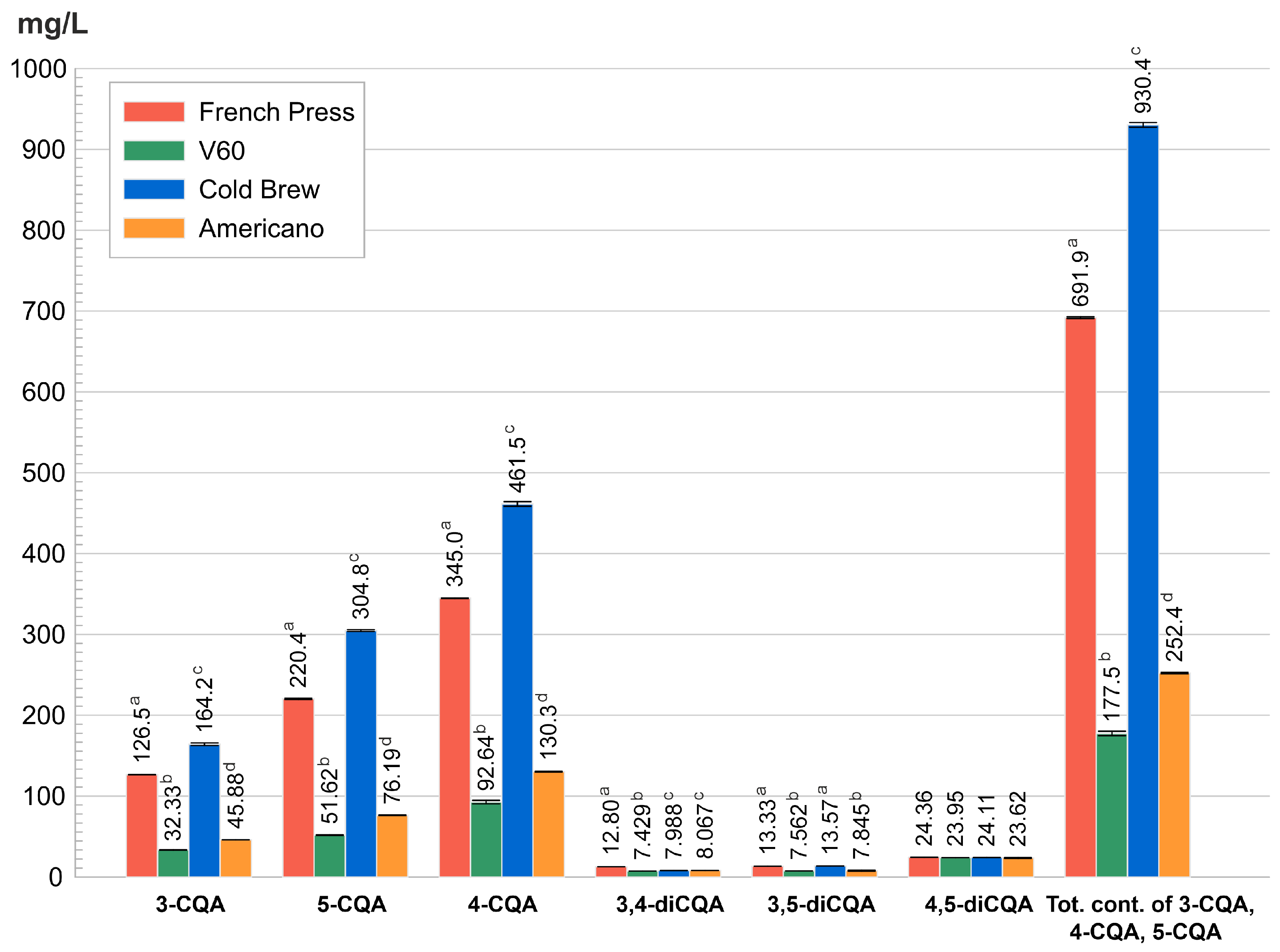
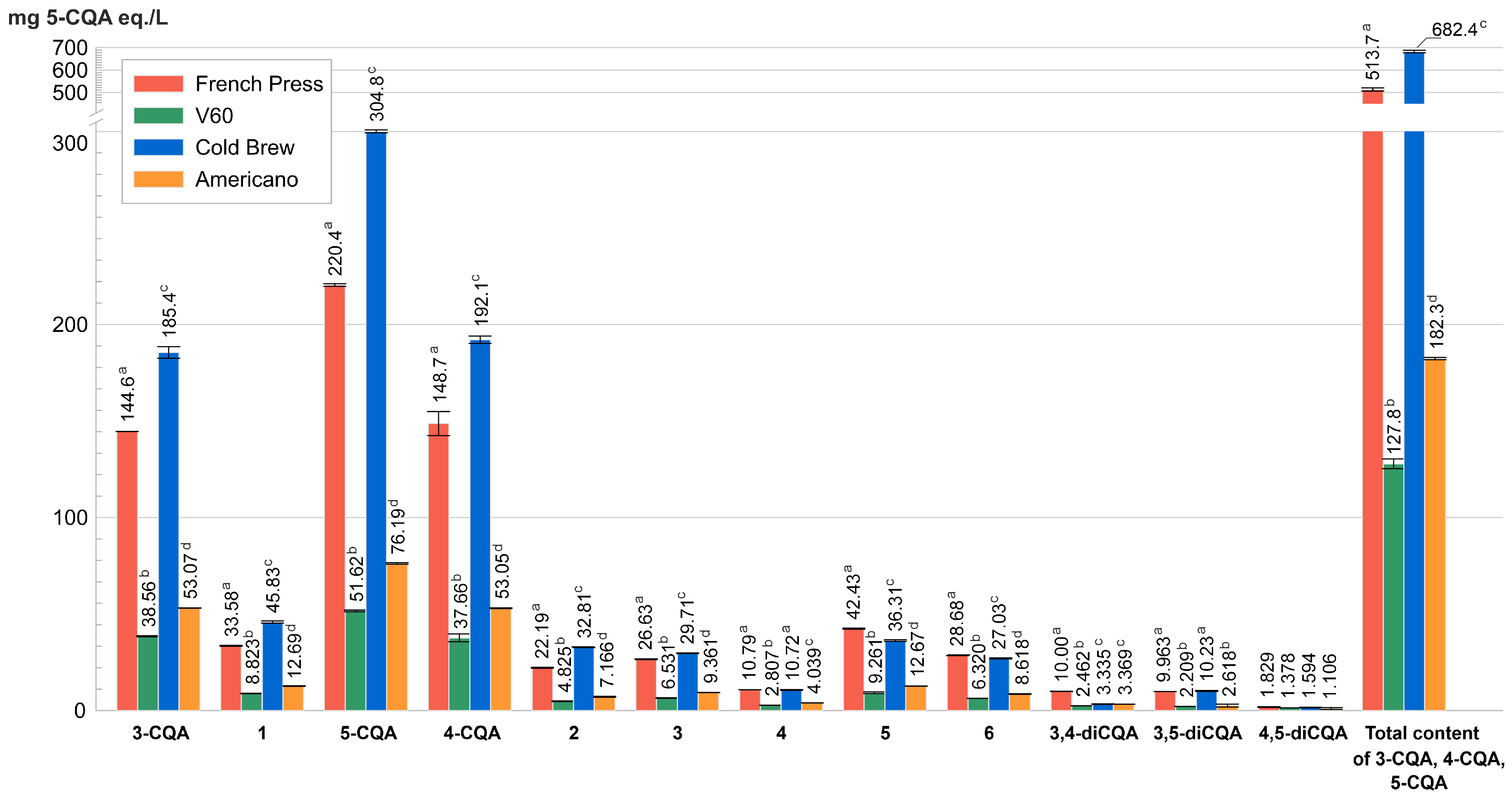
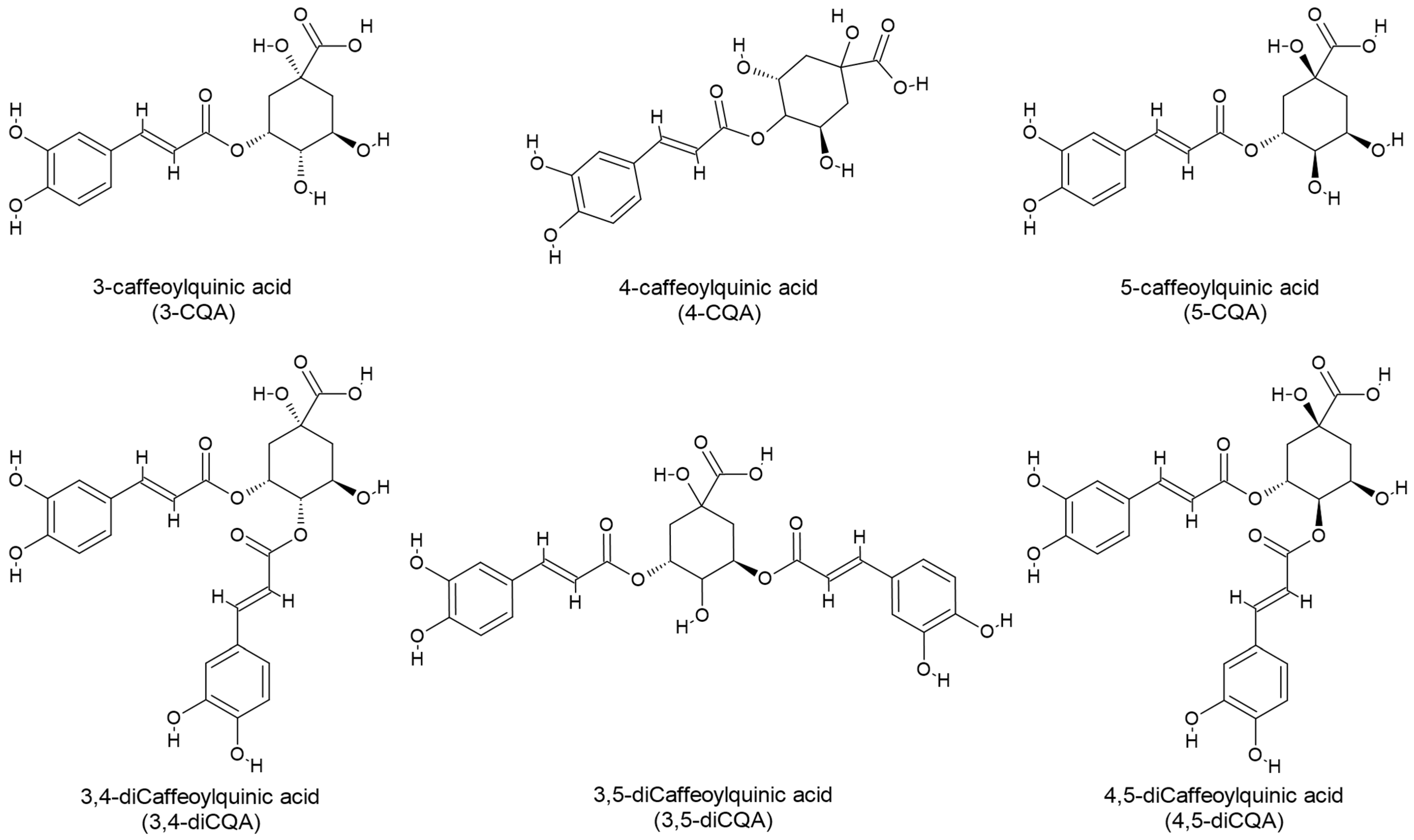
2.1. Effect of Brewing Method on the Physicochemical Properties and Bioactive Compound Profile of Coffee Beverages
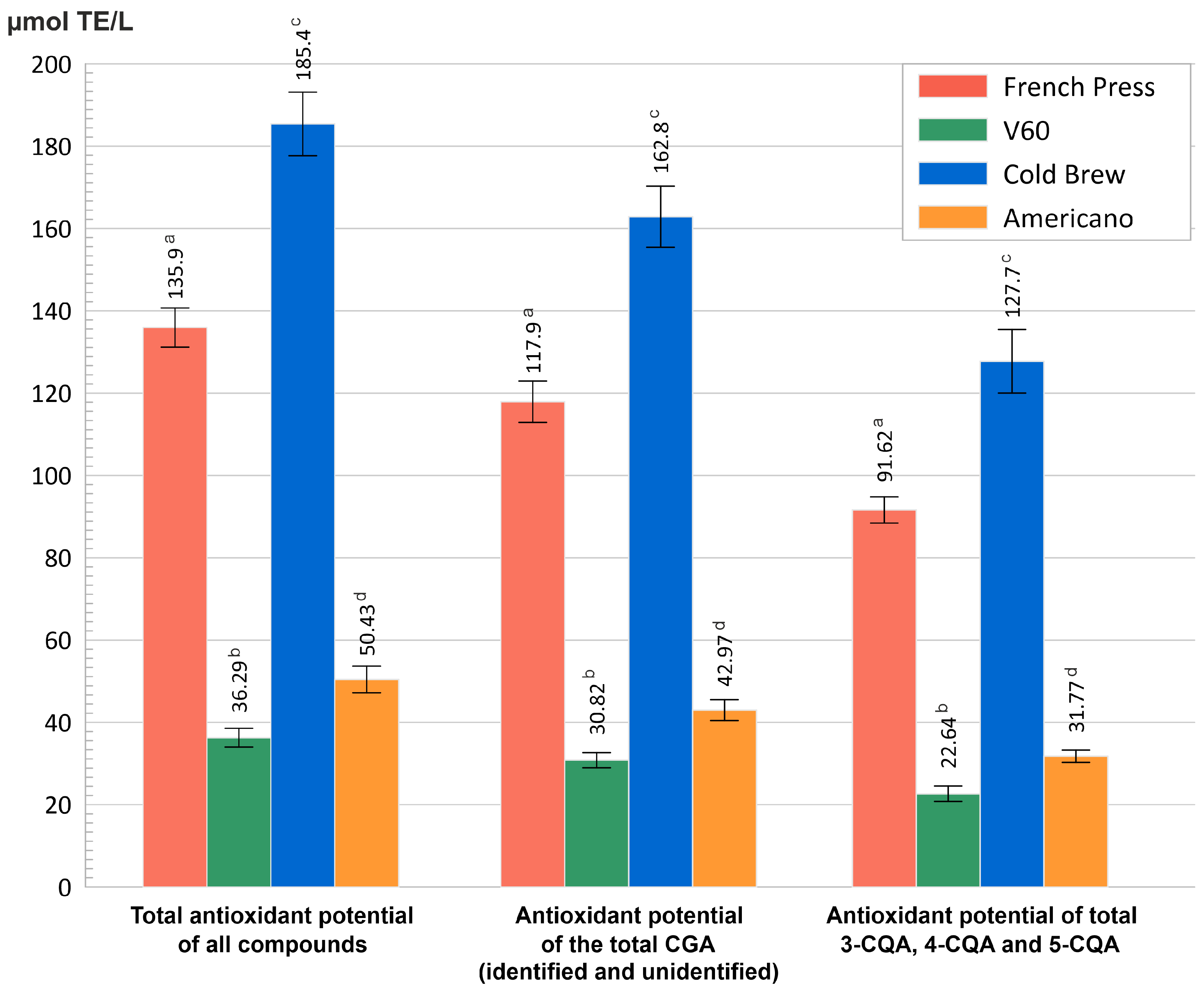
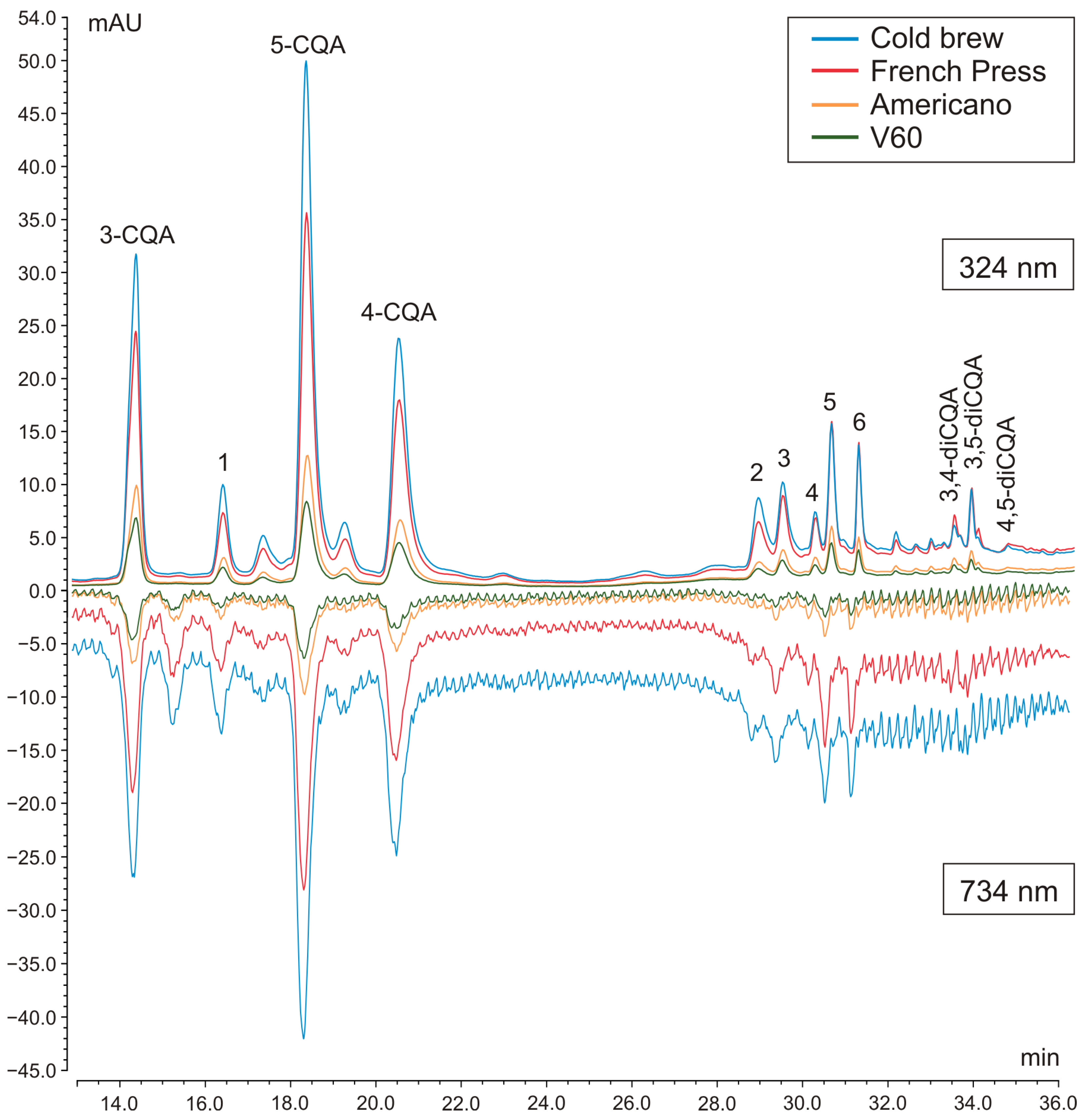
2.2. Effect of Brewing Method on the Antioxidant Activity and Chlorogenic Acid Contribution to the Antioxidant Potential of Coffee Beverages
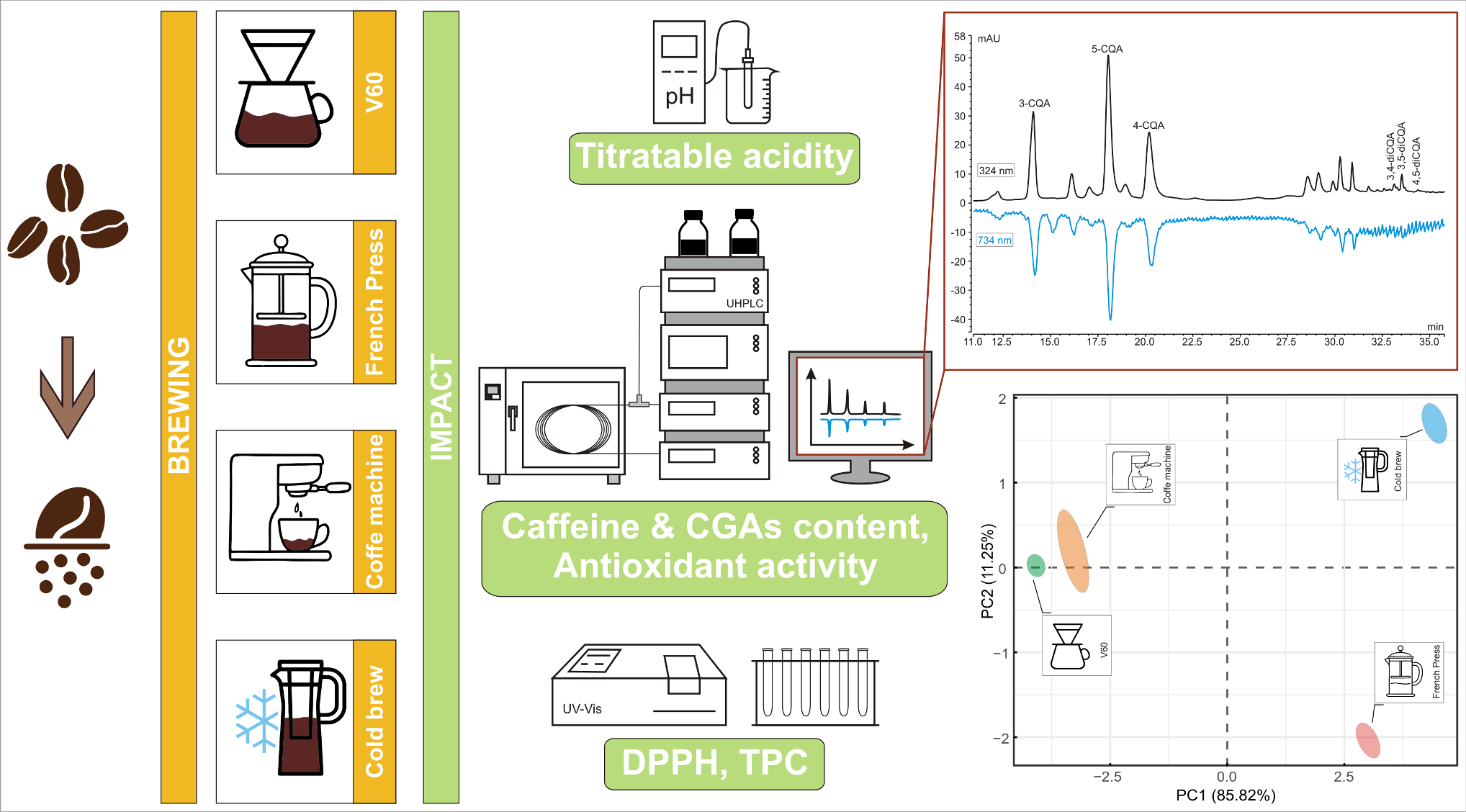
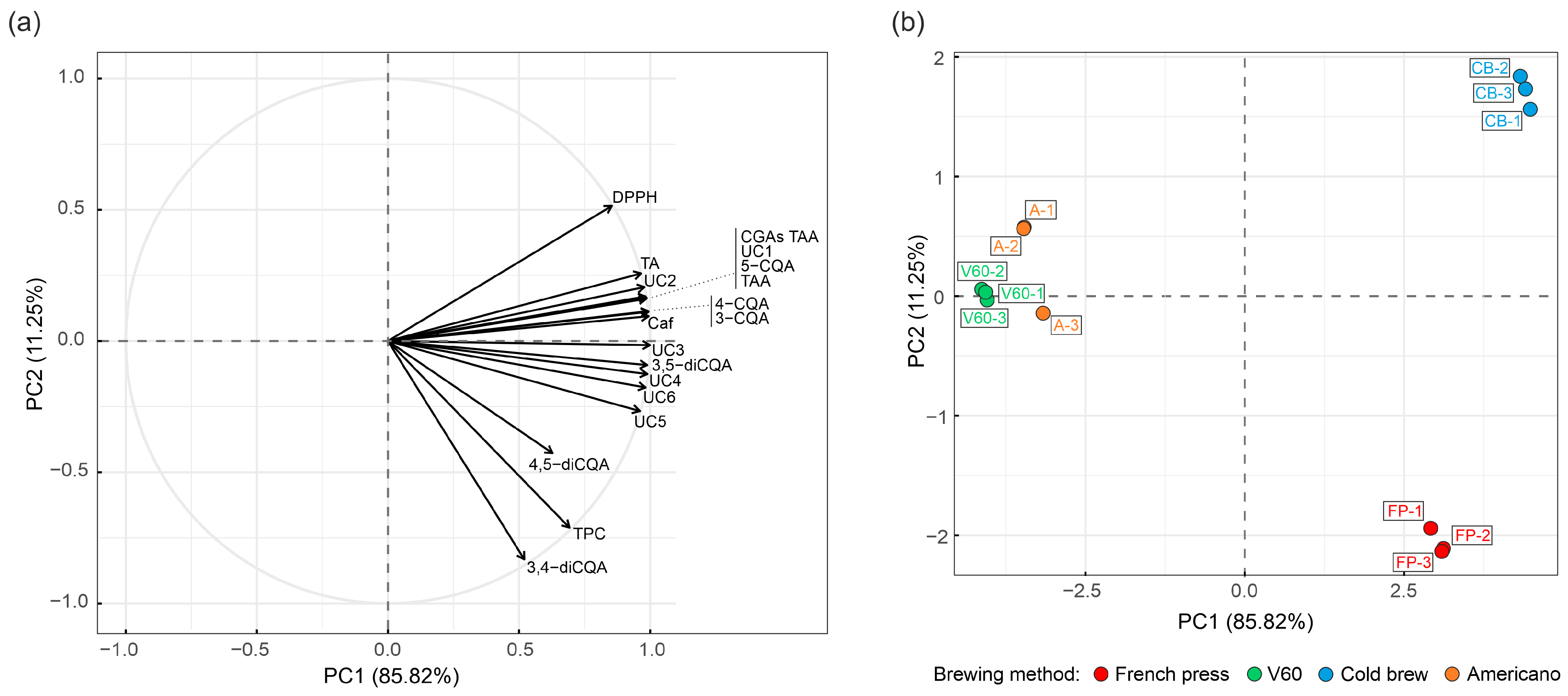
2.3. Principal Component Analysis of Coffee Beverages Prepared Using Different Brewing Methods
3. Materials and Methods
3.1. Preparation of Coffee Brews
3.2. Titratable Acidity
3.3. DPPH Radical Scavenging Assay
3.4. Total Polyphenol Content (TPC)
3.5. Chlorogenic Acid Content and Antioxidant Activity
3.6. Caffeine
3.7. Statistical Analysis
4. Conclusions
Supplementary Materials
Author Contributions
Funding
Institutional Review Board Statement
Informed Consent Statement
Data Availability Statement
Acknowledgments
Conflicts of Interest
References
- Cornelis, M.C. Coffee intake. In Progress in Molecular Biology and Translational Science; Elsevier: Amsterdam, The Netherlands, 2012; Volume 108, pp. 293–322. [Google Scholar] [CrossRef] [PubMed]
- Butt, M.S.; Sultan, M.T. Coffee and its consumption: Benefits and risks. Crit. Rev. Food Sci. Nutr. 2011, 51, 363–373. [Google Scholar] [CrossRef] [PubMed]
- Chavez, S.G.; Mendoza, M.M.; Caetano, A.C. Antioxidants, phenols, caffeine content and volatile compounds in coffee beverages obtained by different methods. Food Sci. Technol. 2022, 42, e47022. [Google Scholar] [CrossRef]
- Akter, S.; Madhuvilakku, R.; Kar, A.K.; Nila, I.S.; Liu, P.; Inuzuka, H.; Hong, Y. Reactive oxygen species (ROS) in cancer: From mechanism to therapeutic implications. Signal Transduct. Target. Ther. 2026, 11, 111. [Google Scholar] [CrossRef] [PubMed]
- Jomova, K.; Raptova, R.; Alomar, S.Y.; Alwasel, S.H.; Nepovimova, E.; Kuca, K.; Valko, M. Reactive oxygen species, toxicity, oxidative stress, and antioxidants: Chronic diseases and aging. Arch. Toxicol. 2023, 97, 2499–2574. [Google Scholar] [CrossRef] [PubMed]
- Moris, D.; Spartalis, M.; Spartalis, E.; Karachaliou, G.S.; Karaolanis, G.I.; Tsourouflis, G.; Tsilimigras, D.I.; Tzatzaki, E.; Theocharis, S. The role of reactive oxygen species in the pathophysiology of cardiovascular diseases and the clinical significance of myocardial redox. Ann. Transl. Med. 2017, 5, 326. [Google Scholar] [CrossRef] [PubMed]
- Schneider, C.D.; Bock, P.M.; Becker, G.F.; Moreira, J.C.F.; Bello-Klein, A.; Oliveira, A.R. Comparison of the effects of two antioxidant diets on oxidative stress markers in triathletes. Biol. Sport 2018, 35, 181–189. [Google Scholar] [CrossRef] [PubMed]
- Yang, J.; Luo, J.; Tian, X.; Zhao, Y.; Li, Y.; Wu, X. Progress in understanding oxidative stress, aging, and aging-related diseases. Antioxidants 2024, 13, 394. [Google Scholar] [CrossRef] [PubMed]
- Hanafi, I.S.C.; Saravanan, C.; Mydin, R.B.S. Oxidative stress: Insights into nutrition, psychological stress, environmental exposure, and antioxidants roles. J. Angiother. 2024, 8, 1–6. [Google Scholar] [CrossRef]
- Safe, S.; Kothari, J.; Hailemariam, A.; Upadhyay, S.; Davidson, L.A.; Chapkin, R.S. Health benefits of coffee consumption for cancer and other diseases and mechanisms of action. Int. J. Mol. Sci. 2023, 24, 2706. [Google Scholar] [CrossRef] [PubMed]
- Halliwell, B.; Gutteridge, J.M. Free Radicals in Biology and Medicine, 5th ed.; Oxford University Press: Oxford, UK, 2015. [Google Scholar]
- Liczbiński, P.; Bukowska, B. Tea and coffee polyphenols and their biological properties based on the latest in vitro investigations. Ind. Crops Prod. 2022, 175, 114265. [Google Scholar] [CrossRef] [PubMed]
- Perrone, D.; Farah, A.; Donangelo, C.M. Influence of coffee roasting on free and melanoidin-bound phenolic compounds and their relationship with the brews’ antioxidant activity. J. Agric. Food Chem. 2012, 60, 4265–4275. [Google Scholar] [CrossRef] [PubMed]
- Farah, A.; Donangelo, C.M. Phenolic compounds in coffee. Braz. J. Plant Physiol. 2006, 18, 23–36. [Google Scholar] [CrossRef]
- Wierzejska, R.E.; Gielecińska, I.; Hallmann, E.; Wojda, B. Polyphenols vs. caffeine in coffee from franchise coffee shops: Which serving of coffee provides the optimal amount of these compounds to the body. Molecules 2024, 29, 2231. [Google Scholar] [CrossRef] [PubMed]
- Liang, N.; Kitts, D.D. Antioxidant property of coffee components: Assessment of methods that define mechanisms of action. Molecules 2014, 19, 19180–19208. [Google Scholar] [CrossRef] [PubMed]
- Campa, C.; Doulbeau, S.; Dussert, S.; Hamon, S.; Noirot, M. Qualitative relationship between caffeine and chlorogenic acid contents among wild Coffea species. Food Chem. 2005, 93, 135–139. [Google Scholar] [CrossRef]
- Sijko-Szpańska, M.; Mystkowska, I.; Dmitrowicz, A. Influence of brewing methods on the bioactive and mineral composition of coffee beverages. Molecules 2025, 30, 4080. [Google Scholar] [CrossRef] [PubMed]
- Muzykiewicz-Szymańska, A.; Nowak, A.; Wira, D.; Klimowicz, A. The effect of brewing process parameters on antioxidant activity and caffeine content in infusions of roasted and unroasted Arabica coffee beans originated from different countries. Molecules 2021, 26, 3681. [Google Scholar] [CrossRef] [PubMed]
- Angeloni, G.; Guerrini, L.; Masella, P.; Bellumori, M.; Daluiso, S.; Parenti, A.; Innocenti, M. What kind of coffee do you drink? An investigation on effects of eight different extraction methods. Food Res. Int. 2019, 116, 1327–1335. [Google Scholar] [CrossRef] [PubMed]
- Jeon, J.S.; Kim, H.T.; Jeong, I.H.; Hong, S.R.; Oh, M.S.; Park, K.H.; Shim, J.H.; Abd El-Aty, A.M. Determination of chlorogenic acids and caffeine in homemade brewed coffee prepared under various conditions. J. Chromatogr. B 2017, 1064, 115–123. [Google Scholar] [CrossRef] [PubMed]
- Caprioli, G.; Cortese, M.; Odello, L.; Ricciutelli, M.; Sagratini, G.; Tomassoni, G.; Torregiani, E.; Vittori, S. Importance of espresso coffee machine parameters on the extraction of chlorogenic acids in a certified Italian Espresso by using SPE-HPLC-DAD. J. Food Res. 2013, 2, 55–65. [Google Scholar] [CrossRef]
- Ludwig, I.A.; Sanchez, L.; Caemmerer, B.; Kroh, L.W.; De Peña, M.P.; Cid, C. Extraction of coffee antioxidants: Impact of brewing time and method. Food Res. Int. 2012, 48, 57–64. [Google Scholar] [CrossRef]
- Anh-Dao, L.-T.; Chi-Thien, T.; Nhut-Truong, N.; Tu-Chi, T.; Minh-Huy, D.; Thanh-Nho, N.; Cong-Hau, N. Changes in the total phenolic contents, chlorogenic acid, and caffeine of coffee cups regarding different brewing methods. Food Res. 2024, 8, 71–79. [Google Scholar] [CrossRef] [PubMed]
- Stanek, N.; Zarębska, M.; Biłos, Ł.; Barabosz, K.; Nowakowska-Bogdan, E.; Semeniuk, I.; Błaszkiewicz, J.; Kulesza, R.; Matejuk, R.; Szkutnik, K. Influence of coffee brewing methods on the chromatographic and spectroscopic profiles, antioxidant and sensory properties. Sci. Rep. 2021, 11, 21377. [Google Scholar] [CrossRef] [PubMed]
- Rao, N.Z.; Fuller, M. Acidity and antioxidant activity of cold brew coffee. Sci. Rep. 2018, 8, 16030. [Google Scholar] [CrossRef] [PubMed]
- Jung, S.; Gu, S.; Lee, S.-H.; Jeong, Y. Effect of Roasting Degree on the Antioxidant Properties of Espresso and Drip Coffee Extracted from Coffea arabica cv. Java. Appl. Sci. 2021, 11, 7025. [Google Scholar] [CrossRef]
- Janda, K.; Jakubczyk, K.; Baranowska-Bosiacka, I.; Kapczuk, P.; Kochman, J.; Rębacz-Maron, E.; Gutowska, I. Mineral composition and antioxidant potential of coffee beverages depending on the brewing method. Foods 2020, 9, 121. [Google Scholar] [CrossRef] [PubMed]
- Grigoriou, C.; Karavoltsos, S.; Kaliora, A.C.; Sakellari, A.; Plavšić, M.; Dassenakis, M.; Kalogeropoulos, N. Electrochemical, photometric, and chromatographic methods for the evaluation of organic matter and bioactive compounds in coffee brews. Eur. Food Res. Technol. 2018, 244, 1953–1961. [Google Scholar] [CrossRef]
- Pérez-Martínez, M.; Caemmerer, B.; Peña, M.P.D.; Cid, C.; Kroh, L.W. Influence of brewing method and acidity regulators on the antioxidant capacity of coffee brews. J. Agric. Food Chem. 2010, 58, 2958–2965. [Google Scholar] [CrossRef] [PubMed]
- Li, A.; La, M.; Wang, H.; Zhao, J.; Wang, Y.; Mian, R.; He, F.; Wang, Y.; Yang, T.; Zou, D. Target-Guided Isolation and Purification of Antioxidants from Urtica laetevirens Maxim. by HSCCC Combined with Online DPPH-HPLC Analysis. Molecules 2023, 28, 7332. [Google Scholar] [CrossRef] [PubMed]
- Qian, Z.-M.; Fang, B.-W.; Chen, H.-M.; Li, C.-H.; Huang, Q.; Chen, L.; Li, W.-J.; Li, D.-Q. Online liquid microextraction coupled with HPLC-ABTS for rapid screening of natural antioxidants: Case study of three different teas. J. Chromatogr. Sci. 2020, 58, 875–879. [Google Scholar] [CrossRef] [PubMed]
- Burnaz, N.A.; Küçük, M.; Akar, Z. An on-line HPLC system for detection of antioxidant compounds by comparing three different methods (ABTS/DPPH/FRAP). J. Chromatogr. B 2017, 1052, 66–72. [Google Scholar] [CrossRef] [PubMed]
- Yan, R.; Cao, Y.; Yang, B. HPLC-DPPH Screening Method for Evaluation of Antioxidant Compounds Extracted from Semen oroxyli. Molecules 2014, 19, 4409–4417. [Google Scholar] [CrossRef] [PubMed]
- Stalmach, A.; Mullen, W.; Nagai, C.; Crozier, A. On-line HPLC analysis of the antioxidant activity of phenolic compounds in brewed, paper-filtered coffee. Braz. J. Plant Physiol. 2006, 18, 253–262. [Google Scholar] [CrossRef]
- Pellegrini, N.; Del Rio, D.; Colombi, B.; Bianchi, M.; Brighenti, F. Application of the 2,2′-azinobis(3-ethylbenzothiazoline-6-sulfonic acid) radical cation assay to a flow injection system for the evaluation of antioxidant activity of some pure compounds and beverages. J. Agric. Food Chem. 2003, 51, 260–264. [Google Scholar] [CrossRef] [PubMed]
- Baranowska, M.; Koziara, Z.; Suliborska, K.; Chrzanowski, W.; Wormstone, M.; Namieśnik, J.; Bartoszek, A. Interactions between polyphenolic antioxidants quercetin and naringenin dictate the distinctive redox-related chemical and biological behaviour of their mixtures. Sci. Rep. 2021, 11, 12282. [Google Scholar] [CrossRef] [PubMed]
- Herawati, D.; Armawan, M.S.; Nurhaliza, N.; Mu’arij, F.A.; Yulianti; Hunaefi, D.; Noviasari, S. Impact of bean origin and brewing methods on bioactive compounds, bioactivities, nutrition, and sensory perception in coffee brews: An Indonesian coffee gastronomy study. Int. J. Gastron. Food Sci. 2024, 35, 100892. [Google Scholar] [CrossRef]
- Tfouni, S.A.V.; Carreiro, L.B.; Teles, C.R.A.; Furlani, R.P.Z.; Cipolli, K.M.V.A.B.; Camargo, M.C.R. Caffeine and chlorogenic acids intake from coffee brew: Influence of roasting degree and brewing procedure. Int. J. Food Sci. Technol. 2014, 49, 747–752. [Google Scholar] [CrossRef]
- Olechno, E.; Puścion-Jakubik, A.; Markiewicz-Żukowska, R.; Socha, K. Impact of Brewing Methods on Total Phenolic Content (TPC) in Various Types of Coffee. Molecules 2020, 25, 5274. [Google Scholar] [CrossRef] [PubMed]
- Derossi, A.; Ricci, I.; Caporizzi, R.; Fiore, A.; Severini, C. How grinding level and brewing method (Espresso, American, Turkish) could affect the antioxidant activity and bioactive compounds in a coffee cup. J. Sci. Food Agric. 2018, 98, 3198–3207. [Google Scholar] [CrossRef] [PubMed]
- Pastoriza, S.; Pérez-Burillo, S.; Rufián-Henares, J.Á. How brewing parameters affect the healthy profile of tea. Curr. Opin. Food Sci. 2017, 14, 7–12. [Google Scholar] [CrossRef]
- Moeenfard, M.; Rocha, L.; Alves, A. Quantification of caffeoylquinic acids in coffee brews by HPLC-DAD. J. Anal. Methods Chem. 2014, 2014, 965353. [Google Scholar] [CrossRef] [PubMed]
- Bork, L.V.; Stobernack, T.; Rohn, S.; Kanzler, C. Browning reactions of hydroxycinnamic acids and heterocyclic Maillard reaction intermediates—Formation of phenol-containing colorants. Food Chem. 2024, 449, 139189. [Google Scholar] [CrossRef] [PubMed]
- Vuong, Q.V.; Golding, J.B.; Nguyen, M.; Roach, P.D. Extraction and isolation of catechins from tea. J. Sep. Sci. 2010, 33, 3415–3428. [Google Scholar] [CrossRef] [PubMed]
- Czarniecka-Skubina, E.; Korzeniowska-Ginter, R.; Pielak, M.; Sałek, P.; Owczarek, T.; Kozak, A. Consumer Choices and Habits Related to Tea Consumption by Poles. Foods 2022, 11, 2873. [Google Scholar] [CrossRef] [PubMed]
- Zakaria, N.H.; Whanmek, K.; Thangsiri, S.; Chathiran, W.; Srichamnong, W.; Suttisansanee, U.; Santivarangkna, C. Optimization of Cold Brew Coffee Using Central Composite Design and Its Properties Compared with Hot Brew Coffee. Foods 2023, 12, 2412. [Google Scholar] [CrossRef] [PubMed]
- Smrke, S.; Opitz, S.E.; Vovk, I.; Yeretzian, C. How does roasting affect the antioxidants of a coffee brew? Exploring the antioxidant capacity of coffee via on-line antioxidant assays coupled with size exclusion chromatography. Food Funct. 2013, 4, 1082–1092. [Google Scholar] [CrossRef] [PubMed]
- Vignoli, J.A.; Bassoli, D.G.; Benassi, M.T. Antioxidant activity, polyphenols, caffeine and melanoidins in soluble coffee. Food Chem. 2011, 124, 863–868. [Google Scholar] [CrossRef]
- Miłek, M.; Kloc, M.; Dżugan, M. The content of polyphenols and caffeine in spent coffee grounds obtained from various home brewing methods. Żywn. Nauka Technol. Jakość 2023, 30, 40–52. [Google Scholar] [CrossRef]
- Várady, M.; Hrušková, T.; Popelka, P. Effect of preparation method and roasting temperature on total polyphenol content in coffee beverages. Czech J. Food Sci. 2020, 38, 417–421. [Google Scholar] [CrossRef]
- AOAC. Official Methods of Analysis of AOAC International, 21st ed.; AOAC International: Washington, DC, USA, 2019. [Google Scholar]
- Riehle, P.; Vollmer, M.; Rohn, S. Phenolic compounds in Cistus incanus herbal infusions—Antioxidant capacity and thermal stability during the brewing process. Food Res. Int. 2013, 53, 891–899. [Google Scholar] [CrossRef]
- ISO 20481; Coffee and Coffee Products. Determination of the Caffeine Content Using High Performance Liquid Chromatography (HPLC). Reference Method. ISO: Geneva, Switzerland, 2008.
- R Core Team. R: A Language and Environment for Statistical Computing; R Foundation for Statistical Computing: Vienna, Austria, 2026; Available online: https://www.R-project.org/ (accessed on 16 June 2026).



| Parameter | Brewing Method | Mean ± SD | p |
|---|---|---|---|
| Titratable acidity (°) | French press | 21.33 ± 0.76 | p < 0.001 * CB > FP > A > V60 |
| V60 | 3.50 ± 0.50 | ||
| Cold brew | 34.83 ± 0.29 | ||
| Americano | 6.17 ± 0.29 | ||
| Caffeine (mg/L) | French press | 759.20 ± 1.72 | p < 0.001 * CB > FP > A > V60 |
| V60 | 217.57 ± 5.05 | ||
| Cold brew | 939.28 ± 10.29 | ||
| Americano | 321.06 ± 6.95 | ||
| DPPH radical scavenging activity (%) | French press | 19.85 ± 0.27 | p < 0.001 * CB > FP > A > V60 |
| V60 | 15.31 ± 0.20 | ||
| Cold brew | 30.74 ± 0.35 | ||
| Americano | 16.02 ± 0.20 | ||
| TPC (mg GAE/L) | French press | 1039.51 ± 9.85 | p < 0.001 * FP > CB > V60 > A |
| V60 | 654.51 ± 4.53 | ||
| Cold brew | 752.45 ± 6.15 | ||
| Americano | 620.74 ± 5.85 |
| Brewing Method | Cold Brew | French Press | Americano | V60 |
|---|---|---|---|---|
| Total antioxidant potential − all compounds (µmol TE/L) * | 185.40 | 135.94 | 50.43 | 36.29 |
| Total antioxidant potential − all CGAs (µmol TE/L) * | 162.84 | 117.89 | 42.97 | 30.82 |
| Contribution of CGAs to total antioxidant potential (%) | 87.83 | 86.72 | 85.20 | 84.92 |
| Total antioxidant potential − 3-CQA + 4-CQA + 5-CQA (µmol TE/L) * | 127.73 | 91.62 | 31.77 | 22.64 |
| Contribution of 3-CQA + 4-CQA + 5-CQA to total antioxidant potential (%) | 68.89 | 67.40 | 63.00 | 62.39 |
| Contribution of 3-CQA + 4-CQA + 5-CQA to the antioxidant potential of all CGAs (%) | 78.44 | 77.72 | 73.94 | 73.46 |
Disclaimer/Publisher’s Note: The statements, opinions and data contained in all publications are solely those of the individual author(s) and contributor(s) and not of MDPI and/or the editor(s). MDPI and/or the editor(s) disclaim responsibility for any injury to people or property resulting from any ideas, methods, instructions or products referred to in the content. |
© 2026 by the authors. Licensee MDPI, Basel, Switzerland. This article is an open access article distributed under the terms and conditions of the Creative Commons Attribution (CC BY) license.
Share and Cite
Sęk, M.; Cięciel, U.; Tkacz, M.; Rohn, S.; Halagarda, M. Brewing-Method-Dependent Changes in the Bioactive Compound Profile and Antioxidant Potential of Coffee Beverages. Molecules 2026, 31, 2163. https://doi.org/10.3390/molecules31122163
Sęk M, Cięciel U, Tkacz M, Rohn S, Halagarda M. Brewing-Method-Dependent Changes in the Bioactive Compound Profile and Antioxidant Potential of Coffee Beverages. Molecules. 2026; 31(12):2163. https://doi.org/10.3390/molecules31122163
Chicago/Turabian StyleSęk, Magdalena, Urszula Cięciel, Małgorzata Tkacz, Sascha Rohn, and Michał Halagarda. 2026. "Brewing-Method-Dependent Changes in the Bioactive Compound Profile and Antioxidant Potential of Coffee Beverages" Molecules 31, no. 12: 2163. https://doi.org/10.3390/molecules31122163
APA StyleSęk, M., Cięciel, U., Tkacz, M., Rohn, S., & Halagarda, M. (2026). Brewing-Method-Dependent Changes in the Bioactive Compound Profile and Antioxidant Potential of Coffee Beverages. Molecules, 31(12), 2163. https://doi.org/10.3390/molecules31122163