Advances in Nano-Drug Delivery Systems for Chronic Autoimmune Diseases: A Focus on Diabetes Mellitus, Inflammatory Bowel Disease, and Rheumatoid Arthritis

 , ,
, ,
Abstract
1. Introduction
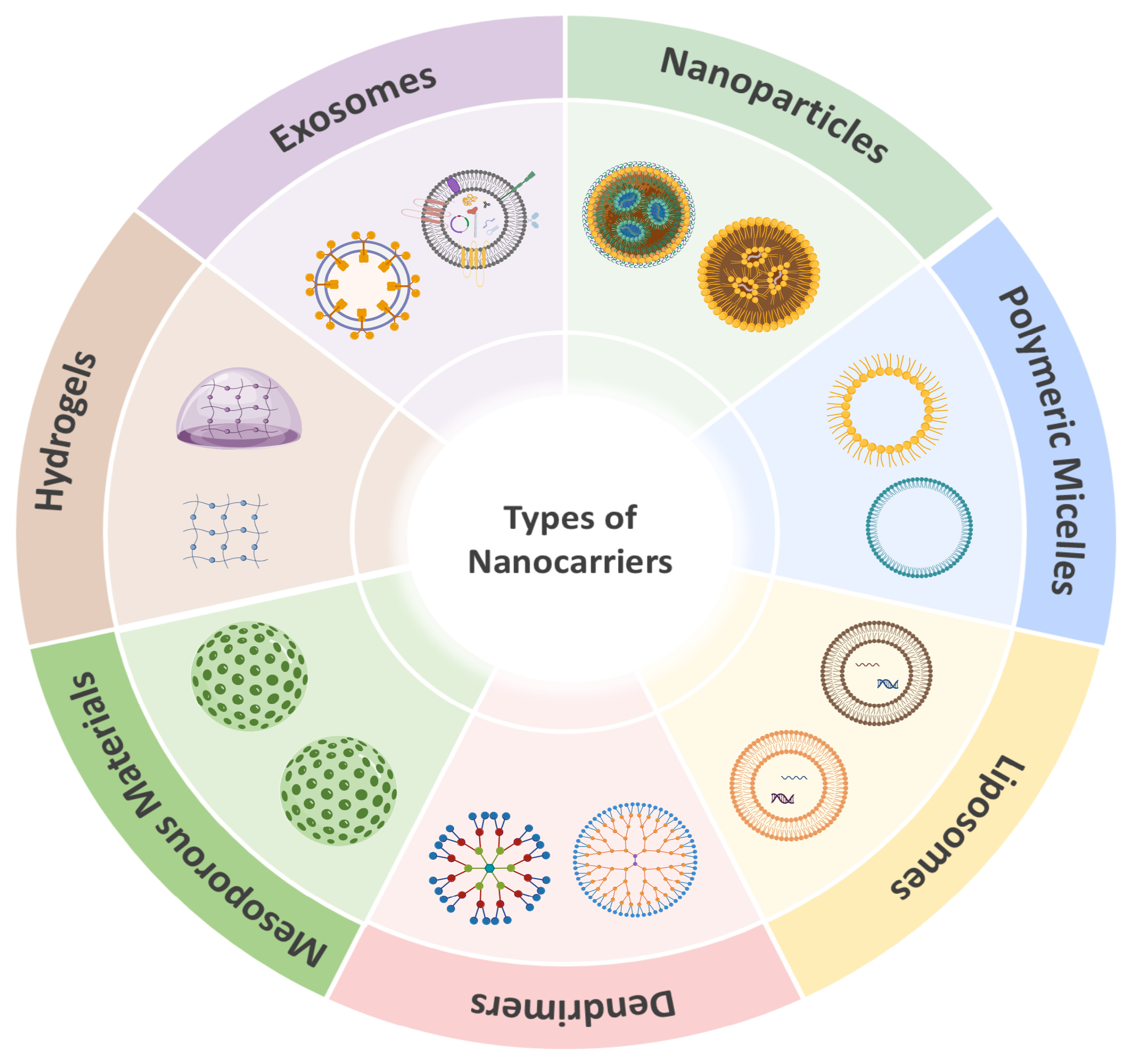
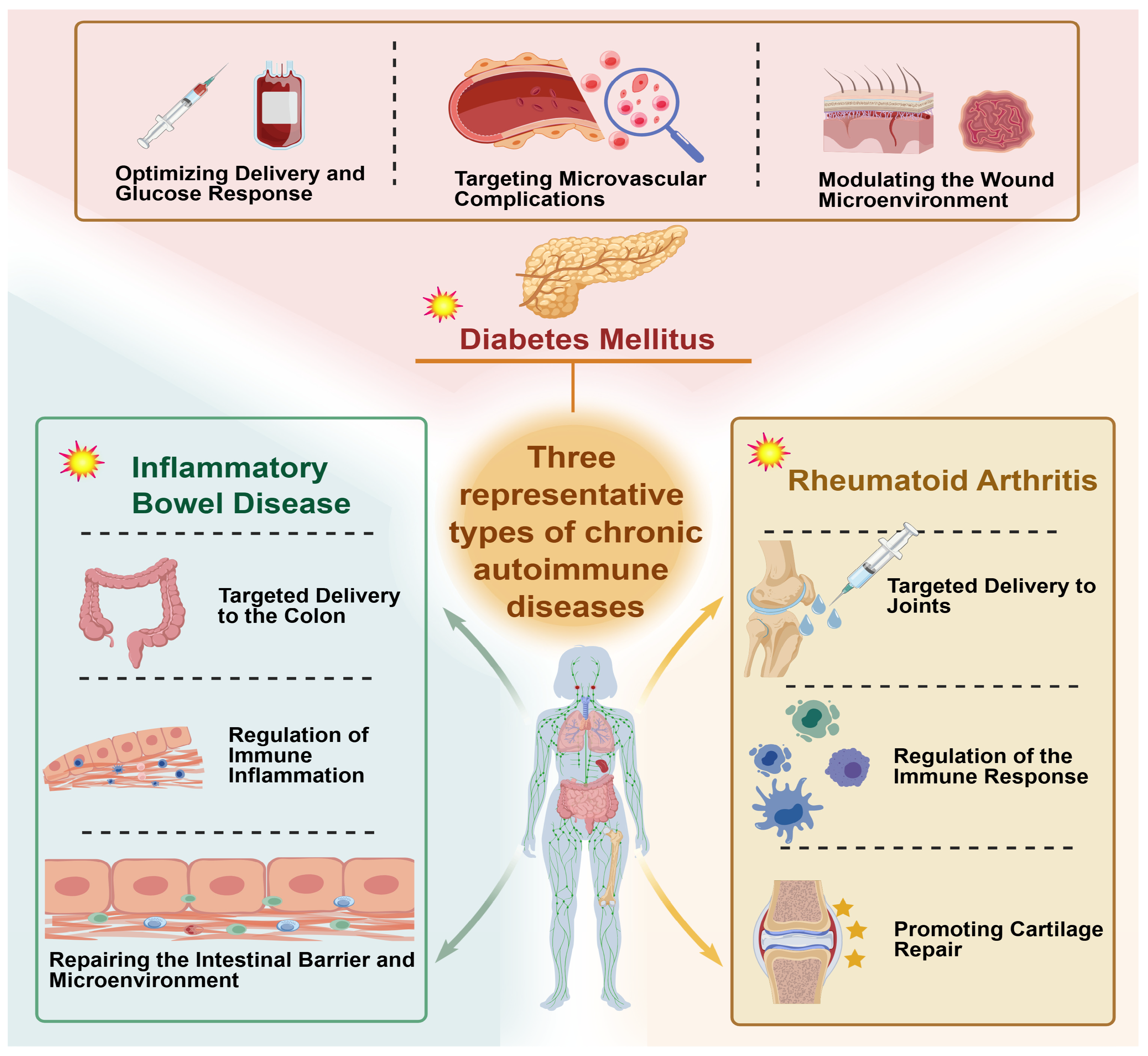
2. Applications of Various Nanocarriers in Three Representative Chronic Autoimmune Diseases: DM, IBD, and RA
2.1. Applications of Nano-Drug Delivery Systems in DM
2.1.1. Optimizing Delivery and Glucose Response
2.1.2. Targeting Microvascular Complications
2.1.3. Modulating the Wound Microenvironment

| Therapeutic Strategies | Types of Nanocarriers | Surface Finishing | Drug-Loaded | Animal Models | Function | References |
|---|---|---|---|---|---|---|
| Optimizing Delivery and Glucose Response | Nanoparticle | ANG | INS | STZ, DM rats | LRP1-mediated transport ↑, BG ↓ | [34] |
| Nanoparticle | n/a | INS + GOx + CAT | STZ, DM mice | Glucose-responsive release, BG ↓ | [35] | |
| Nanoparticle | n/a | MET | STZ, DM rats | Sustained release, BG ↓, islet repair ↑ | [52] | |
| Liposome | n/a | MET | STZ, DM mice | Liver mitochondrial targeting, glucose catabolism ↑, BG ↓ | [53] | |
| Dendrimer | Glucose-binding motif | MitoPBN | STZ, DM mice, DM pigs | Glucose-responsive release, BG ↓ | [54] | |
| Mesoporous material | Amino | Modified INS | HFD, IR mice | Co-delivery, hepatic IR and BG ↓ | [55] | |
| Mesoporous material | FcBP | pFGF21 + Lira | STZ, DM mice | Pro-inflammatory cytokines ↓, macrophage polarization balance ↑, hyperglycemia ↓ | [56] | |
| Exosome | n/a | Exe | STZ, DM mice | Fibroblast proliferation/collagen deposition/fibrosis ↓ | [57] | |
| Targeting microvascular complications | Liposome | GA | CY | DN rats | ROS-responsive release, autophagy ↑,M1 polarization ↓ | [44] |
| Mesoporous material | FN | EGCG | STZ, DM mice | Renal targeting, NF-κB/NLRP3 ↓, renal function ↑ | [48] | |
| Liposome | CS | TAX | STZ, DM mice | ROS ↓,Akt signaling and cell migration ↑ | [58] | |
| Regulating the wound microenvironment | Hydrogel | PF127/PEI | DMY | STZ, DM mice | Inflammation ↓,angiogenesis/flap survival ↑ | [50] |
| Exosome | BMSC-EXO | MET@MSNs | STZ, DM rats | Inflammation/bacteria ↓, angiogenesis ↑ | [51] | |
| Nanoparticle | HA | ORI micelles + Cu(II)-PDA NPs | STZ, DM mice | Pro-inflammatory cytokines ↓, macrophage polarization balance ↑, hyperglycemia ↓ | [59] | |
| Hydrogel | GelMA/DA | MSC-EXOs + MC-EXOs | STZ, DM mice | Inflammation/oxidative stress ↓, angiogenesis ↑, macrophage polarization balance ↑ | [60] | |
| Hydrogel | Fc/CD | BBR-micelles | STZ, DM mice | M2 polarization ↑, inflammation ↓ | [61] | |
| Hydrogel | GelMA/DAS | Lemon-EXOs | STZ, DM rats | Macrophage reprogramming/fibroblast proliferation ↑, sustained release | [62] | |
| Hydrogel | F127/Gel-BA | CUR-FCHO + Mg micromotors | STZ, DM mice | pH-responsive release, inflammation ↓, angiogenesis/collagen deposition ↑ | [63] | |
| Hydrogel | QCS-BA/KGM | Sanqi EVs | STZ, DM mice | pH-responsive release, angiogenesis/collagen deposition ↑ | [64] |
2.2. Controlling IBD Using Nanocarriers
2.2.1. Targeted Delivery to the Colon
2.2.2. Regulation of Immune Inflammation
2.2.3. Repairing the Intestinal Barrier and Microenvironment
| Therapeutic Strategies | Types of Nanocarriers | Surface Finishing | Drug-Loaded | Animal Models | Function | References |
|---|---|---|---|---|---|---|
| Targeted delivery to the colon | Liposome | n/a | CUR | DSS, UC mice | Colon targeting, oxidative stress ↓, inflammation ↓ | [71] |
| Nanoparticle | n/a | 5-ASA | DSS, UC mice | Inflamed-colon targeting, inflammation ↓, histopathology ↑ | [72] | |
| Hydrogel | Cat-CS | SSZ | UC mice | Rectal delivery, colon retention ↑, systemic toxicity ↓ | [73] | |
| Mesoporous material | n/a | MDC | DSS, UC mice | Colon targeting, inflammation ↓, oxidative stress ↓, microbiota homeostasis ↑ | [85] | |
| Nanoparticle | ES100 | 5-ASA | DSS, UC mice | Colon targeting, inflammation ↓, mucosal barrier ↑ | [86] | |
| Nanoparticle | HA/PEI | RH | DSS, UC mice | Colon targeting, macrophage uptake ↑, inflammation ↓ | [87] | |
| Nanoparticle | n/a | 6-Shogaol + M2/M13 | DSS, UC mice | Colon targeting, sustained release, inflammation ↓ | [88] | |
| Liposome | CH/PT | Psoralen | DSS, UC mice | Colon targeting, inflammation ↓, oxidative stress ↓, mucosal barrier ↑ | [89] | |
| Liposome | PT/TMC | Celastrol | DSS, UC mice | Colon retention ↑, inflammation ↓ | [90] | |
| Mesoporous material | Azo-urea | Safranin O + HC | TNBS, UC mice | Colon targeting, inflammation ↓, retention ↑ | [91] | |
| Hydrogel | n/a | 5-ASA | UC mice | Colon targeting, retention ↑, colitis symptoms ↓ | [92] | |
| Regulate immune inflammation | Nanoparticle | FA | 6-Shogaol | DSS, UC mice | Inflamed-colon targeting, uptake ↑, ulcer healing ↑ | [75] |
| Liposome | n/a | siCD98 | UC mice | CD98 ↓, inflammation ↓ | [76] | |
| Nanoparticle | n/a | Tpl | UC mice | Colon targeting, ROS ↓, inflammation ↓ | [93] | |
| Nanoparticle | n/a | LMWH | UC mice | Tissue targeting, macrophage cytokines ↓, drug protection ↑ | [94] | |
| Nanoparticle | ATP-CMI | BUD | Colitis mice | Lesion accumulation ↑, redox-triggered release | [95] | |
| Micelle | GC-boronate | Que | Colitis mice | Lesion accumulation ↑, pH/ROS-responsive release, inflammation ↓ | [96] | |
| Liposome | n/a | SOD | DSS, UC mice | Oxidative stress ↓, inflammation ↓, barrier protection ↑ | [97] | |
| Nanoparticle | n/a | Dex + butyrate | DSS, UC mice | Cell adhesion ↓, pro-inflammatory factors ↓, anti-inflammatory effect ↑ | [98] | |
| Nanoparticle | Man | n/a | Colitis mice | Macrophage targeting ↑, imaging/therapy integration ↑ | [99] | |
| Exosome | n/a | NAI | DSS, acute colitis mice | Pro-inflammatory factors ↓, anti-inflammatory factors ↑ | [100] | |
| Exosome | EphB2 | NAI | DSS, UC mice | Immune balance ↑, inflammation ↓ | [101] | |
| Restoring the Barrier and the Microbiome | Hydrogel | CMCHD/HP-β-CD | RNs + Kae | UC mice | Inflammation ↓, oxidative stress ↓, intestinal barrier ↑ | [82] |
| Exosome | n/a | NAI | DSS, colitis mice | Microbiota homeostasis ↑, T-cell response ↑ | [83] | |
| Exosome | n/a | NAI | DSS, UC mice | Microbiota homeostasis ↑, SCFAs ↑, bile acid metabolism ↑ | [84] | |
| Nanoparticle | n/a | Natural cargo | DSS, IBD mice | IEC survival/proliferation ↑, intestinal repair ↑, inflammation balance ↑ | [102] | |
| Hydrogel | PAA | CeO2 NPs | IBD mice | Free radicals ↓, oxidative inflammation ↓ | [103] | |
| Hydrogel | PCLGA-PEG-PCLGA | 5-ASA + CUR | UC mice | Sustained release, inflammation ↓, mucosal barrier ↑ | [104] | |
| Exosome | n/a | NAI | UC mice | Microbiota homeostasis ↑, tryptophan metabolism ↑, barrier protection ↑ | [105] | |
| Exosome | n/a | NAI | DSS, colitis mice | NETs ↓, zinc homeostasis ↑ | [106] | |
| Exosome | n/a | NAI | DSS, UC mice | Microbiota/tryptophan metabolism ↑, oxidative stress ↓, inflammation ↓ | [107] | |
| Exosome | n/a | NAI | DSS, colitis mice | NLRP3 signaling ↓, microbiota homeostasis ↑ | [108] | |
| Exosome | n/a | CX5461 | DSS, colitis mice | Pro-inflammatory factors ↓, M2 polarization ↑ | [109] | |
| Exosome | n/a | NAI | DSS, colitis mice | IEC protection ↑, colitis ↓ | [110] | |
| Exosome | n/a | NAI | DSS, colitis mice | Microbiota homeostasis ↑, M2 polarization ↑ | [111] |
2.3. Applications of Nano-Drug Delivery Systems in RA
2.3.1. Targeted Delivery to Joints
2.3.2. Regulation of the Immune Response
2.3.3. Promoting Cartilage Repair
| Therapeutic Strategies | Types of Nanocarriers | Surface Finishing | Drug-Loaded | Animal Models | Function | References |
|---|---|---|---|---|---|---|
| Targeted delivery to joints | Exosome | Oligolysine + MMP-cleavable PEG | Exosomes + cfDNA scavenging | CIA mice | Joint targeting, cfDNA ↓, M2 polarization ↑ | [120] |
| Nanoparticle | CS/FA | Lef | AIA rats | FR targeting, sustained release, joint repair ↑ | [121] | |
| Nanoparticle | HSA | MTX | CIA rats | Ankle targeting, ROS/inflammation ↓, synoviocyte proliferation ↓ | [122] | |
| Nanoparticle | MSC membrane (LFA-1/ICAM-1) | Dex | CIA mice | Joint targeting, inflammation ↓, cartilage protection ↑ | [136] | |
| Liposome | CK | Dex | CIA mice | Joint targeting, anti-inflammation ↑ | [137] | |
| Liposome | HA | DSP nanogel | CIA rats | Joint targeting, inflammation ↓, cartilage repair ↑ | [138] | |
| Liposome | PDA | MTX + O2 generator | AIA rats | Joint targeting, hypoxia/ROS ↓, synergistic therapy ↑ | [139] | |
| Nanoparticle | HA + mixed membranes | IND | AIA rats | Joint targeting, pH-responsive release, inflammation ↓ | [140] | |
| Exosome | CD90 Ab | PB | CIA mice | Inflammation ↓, joint swelling ↓ | [141] | |
| Regulate the immune response | Micelle | FA | PPI | CIA rats | JAK2/STAT3 ↓, M2 polarization ↑ | [126] |
| Dendrimer | FP | miR-23b | AIA rats | Macrophage apoptosis ↑, NF-kB signaling ↓ | [130] | |
| Exosome | n/a | IL-10 pDNA + BSP | CIA mice | M1-to M2 reprogramming ↑, inflammation ↓ | [131] | |
| Hydrogel | n/a | SIN + GA | AIA mice | Neutrophil overactivation ↓, apoptosis normalization ↑ | [142] | |
| Mesoporous material | n/a | Zn-Cur | AIA mice | Antioxidant activity ↑, M2 polarization ↑, mineralization ↑ | [143] | |
| Nanoparticle | PCL-AC | GA + Bud | CIA rats | Inflammation ↓, bone/cartilage damage ↓, joint histology ↑ | [144] | |
| Nanoparticle | CD44/FR ligand | RBA | AIA rats | Targeted delivery, ERK/HIF-1alpha/GLUT1 ↓ | [145] | |
| Nanoparticle | n/a | miR-124 + Ket | AIA rats | Acid-responsive release, inflammation ↓, arthritis progression ↓ | [146] | |
| Nanoparticle | RGD + MMP-9-cleavable PEG | CEL | AIA rats | Macrophage/osteoclast targeting, apoptosis ↑ | [147] | |
| Nanoparticle | n/a | IL-10 pDNA + DSP | CIA rats | Synovial macrophage targeting, M1 to M2 polarization ↑ | [148] | |
| Micelle | n/a | TP + VP | CIA mice | Inflammation/oxidative stress ↓, swelling/bone erosion ↓ | [149] | |
| Dendrimer | FP | miR-30a | CIA mice | NF-kB/MAPK ↓, arthritis ↓ | [150] | |
| Dendrimer | n/a | n/a | CIA rats | cfDNA ↓, joint inflammation ↓ | [151] | |
| Hydrogel | n/a | DNase I | CIA mice | Inflammatory factors ↓, arthritis symptoms ↓ | [152] | |
| Exosome | M2 exosome membrane | CuS + CitP + RapA | CIA mice | T-cell apoptosis ↑, immune tolerance ↑ | [153] | |
| Exosome | n/a | IkBalpha inhibitor | SKG and CIA mice | NF-kB ↓, inflammation ↓, cartilage damage ↓ | [154] | |
| Exosome | FA | GDEV cargo | CIA mice | M1 macrophage targeting, PI3K-AKT modulation | [155] | |
| Exosome | n/a | PD-L1 cargo | CIA mice | Joint targeting, T-cell activity ↓ | [156] | |
| Nanoparticle | n/a | NAI | CIA mice | anti-inflammatory, MAPK ↓ | [157] | |
| Exosome | n/a | NAI | CAIA mice | attenuated synovitis, arthritis severity ↓ | [158] | |
| Exosome | n/a | CTLA-4Ig cargo | CIA mice | Immune modulation ↑, cartilage protection ↑ | [159] | |
| Promotes cartilage repair | Hydrogel | TAT (DSPE-PEG2K-TAT) | Que | CIA rats | Pyroptosis/necroptosis ↓, inflammation/synovial hyperplasia ↓ | [133] |
| Exosome | n/a | ICA | CIA rats | M1 to M2 polarization ↑, synovitis ↓, cartilage protection ↑ | [134] | |
| Exosome | n/a | gma-miR4412 | CIA mice | NETs ↓, arthritis ↓, cartilage protection ↑ | [135] | |
| Hydrogel | n/a | MTX NP + PEITC NE | AIA rats | Anti-inflammation/chondroprotection ↑, cartilage degradation ↓ | [160] | |
| Hydrogel | n/a | MTX | AIA rats | Cartilage repair ↑, hyperalgesia ↓ | [161] | |
| Exosome | n/a | SiO2-MTX | AIA and CIA mice | M2 polarization ↑, cartilage protection ↑ | [162] | |
| Exosome | LMWH (ROS-responsive linker) | Dex | CIA mice | Neutrophil apoptosis ↑, oxidative damage ↓ | [163] |
3. Conclusions and Future Prospects
Author Contributions
Funding
Institutional Review Board Statement
Informed Consent Statement
Data Availability Statement
Acknowledgments
Conflicts of Interest
Abbreviations
| BSP | Betamethasone sodium phosphate |
| Cat-CS | Catechol-modified chitosan |
| CD | Crohn’s disease |
| CUR-LPs | Curcumin-loaded anionic liposomes |
| DC | Deoxycholic acid |
| DMARDs | Disease-modifying antirheumatic drugs |
| DR | Diabetic retinopathy |
| FN | Fibronectin |
| FP | Fluorinated polyamidine dendrimer |
| GA | Glycyrrhetinic acid |
| GelMA | Gelatin Methacryloyl |
| GDLVs | Ginger-derived lipid vesicles |
| HNVs | Honeysuckle-derived nanovesicles |
| HSA | Human serum albumin |
| IBD | Inflammatory bowel disease |
| ICA | Icariin |
| Kae | Kaempferol |
| MMP | Matrix metalloproteinase |
| MSNs | Mesoporous silica nanoparticles |
| M2-Exos | Exosomes derived from M2 macrophages |
| MN | Microneedle |
| MTX | Methotrexate |
| pDNA | plasmid DNA |
| PEA | Phenylethylamine |
| PEG | Polyethylene glycol |
| PELNs | Exosome-like nanoparticles isolated from edible Portulaca oleracea L |
| PPI | Polyphyllin I |
| Pu-ELNs | Pueraria lobata-derived exosome-like nanovesicles |
| RA | Rheumatoid arthritis |
| RNs | Rhubarb-derived nanovesicles |
| ROS | Reactive oxygen species |
| SLNs | Solid lipid nanoparticles |
| SSZ | Sulfasalazine |
| UC | Ulcerative colitis |
References
- Wang, L.; Wang, F.-S.; Gershwin, M.E. Human Autoimmune Diseases: A Comprehensive Update. J. Intern. Med. 2015, 278, 369–395. [Google Scholar] [CrossRef] [PubMed]
- Abend, A.H.; He, I.; Bahroos, N.; Christianakis, S.; Crew, A.B.; Wise, L.M.; Lipori, G.P.; He, X.; Murphy, S.N.; Herrick, C.D.; et al. Estimation of Prevalence of Autoimmune Diseases in the United States Using Electronic Health Record Data. J. Clin. Invest. 2025, 135, e178722. [Google Scholar] [CrossRef]
- Pisetsky, D.S. Pathogenesis of Autoimmune Disease. Nat. Rev. Nephrol. 2023, 19, 509–524. [Google Scholar] [CrossRef]
- Bieber, K.; Hundt, J.E.; Yu, X.; Ehlers, M.; Petersen, F.; Karsten, C.M.; Köhl, J.; Kridin, K.; Kalies, K.; Kasprick, A.; et al. Autoimmune Pre-Disease. Autoimmun. Rev. 2023, 22, 103236. [Google Scholar] [CrossRef]
- Rosenblum, M.D.; Remedios, K.A.; Abbas, A.K. Mechanisms of Human Autoimmunity. J. Clin. Invest. 2015, 125, 2228–2233. [Google Scholar] [CrossRef]
- Fugger, L.; Jensen, L.T.; Rossjohn, J. Challenges, Progress, and Prospects of Developing Therapies to Treat Autoimmune Diseases. Cell 2020, 181, 63–80. [Google Scholar] [CrossRef] [PubMed]
- Wang, B.; Hu, S.; Teng, Y.; Chen, J.; Wang, H.; Xu, Y.; Wang, K.; Xu, J.; Cheng, Y.; Gao, X. Current Advance of Nanotechnology in Diagnosis and Treatment for Malignant Tumors. Signal Transduct. Target. Ther. 2024, 9, 201–264. [Google Scholar] [CrossRef] [PubMed]
- Wakaskar, R.R. General Overview of Lipid–Polymer Hybrid Nanoparticles, Dendrimers, Micelles, Liposomes, Spongosomes and Cubosomes. J. Drug Target. 2018, 26, 311–318. [Google Scholar] [CrossRef]
- Tenchov, R.; Hughes, K.J.; Ganesan, M.; Iyer, K.A.; Ralhan, K.; Lotti Diaz, L.M.; Bird, R.E.; Ivanov, J.M.; Zhou, Q.A. Transforming Medicine: Cutting-Edge Applications of Nanoscale Materials in Drug Delivery. ACS Nano 2025, 19, 4011–4038. [Google Scholar] [CrossRef] [PubMed]
- Sykes, E.A.; Dai, Q.; Sarsons, C.D.; Chen, J.; Rocheleau, J.V.; Hwang, D.M.; Zheng, G.; Cramb, D.T.; Rinker, K.D.; Chan, W.C.W. Tailoring Nanoparticle Designs to Target Cancer Based on Tumor Pathophysiology. Proc. Natl. Acad. Sci. USA 2016, 113, E1142–E1151. [Google Scholar] [CrossRef]
- Batty, C.J.; Bachelder, E.M.; Ainslie, K.M. Historical Perspective of Clinical Nano and Microparticle Formulations for Delivery of Therapeutics. Trends Mol. Med. 2021, 27, 516–519. [Google Scholar] [CrossRef]
- Gagliardi, A.; Giuliano, E.; Venkateswararao, E.; Fresta, M.; Bulotta, S.; Awasthi, V.; Cosco, D. Biodegradable Polymeric Nanoparticles for Drug Delivery to Solid Tumors. Front. Pharmacol. 2021, 12, 601626. [Google Scholar] [CrossRef]
- Li, Z.; Wang, X.; Wan, W.; Zhang, N.; Zhang, L.; Wang, X.; Lin, K.; Yang, J.; Hao, J.; Tian, F. Rational Design of pH-Responsive Nano-Delivery System with Improved Biocompatibility and Targeting Ability from Cellulose Nanocrystals via Surface Polymerization for Intracellular Drug Delivery. Int. J. Biol. Macromol. 2024, 281, 136435. [Google Scholar] [CrossRef] [PubMed]
- Jalalvand, A.R.; Karami, M.M. Roles of Nanotechnology in Electrochemical Sensors for Medical Diagnostic Purposes: A Review. Sens. Bio-Sens. Res. 2025, 47, 100733. [Google Scholar] [CrossRef]
- Al-Thani, A.N.; Jan, A.G.; Abbas, M.; Geetha, M.; Sadasivuni, K.K. Nanoparticles in Cancer Theragnostic and Drug Delivery: A Comprehensive Review. Life Sci. 2024, 352, 122899. [Google Scholar] [CrossRef]
- Petrikaite, V.; D’Avanzo, N.; Celia, C.; Fresta, M. Nanocarriers Overcoming Biological Barriers Induced by Multidrug Resistance of Chemotherapeutics in 2D and 3D Cancer Models. Drug Resist. Updat. 2023, 68, 100956. [Google Scholar] [CrossRef]
- Gao, X.; Liu, X.; Wang, N.; Cui, C.; Liu, W.; Yang, M.; Li, Q.; Ou, Y.; Ning, A.; Wei, X.; et al. Nanoparticles Hijack Calvarial Immune Cells for CNS Drug Delivery and Stroke Therapy. Cell 2026, 189, 1341–1355.e17. [Google Scholar] [CrossRef] [PubMed]
- Moghimipour, E.; Handali, S. Functionalized Liposomes as a Potential Drug Delivery Systems for Colon Cancer Treatment: A Systematic Review. Int. J. Biol. Macromol. 2024, 269, 132023. [Google Scholar] [CrossRef]
- Eczacioglu, N.; Postina, A.; Ebert, M.; Laffleur, F.; Kali, G.; Seybold, A.; Bernkop-Schnürch, A. Self-Emulsifying Drug Delivery Systems: A Comparison of Dry and Wet Reverse Micelles. Acta Biomater. 2025, 202, 545–558. [Google Scholar] [CrossRef]
- Hao, X.; Wang, S.; Wang, L.; Li, J.; Li, Y.; Liu, J. Exosomes as Drug Delivery Systems in Glioma Immunotherapy. J. Nanobiotechnol. 2024, 22, 341–364. [Google Scholar] [CrossRef]
- Larrañeta, E.; Domínguez-Robles, J. Long-Acting Drug Delivery Systems: Current Landscape and Future Prospects. Drug Discov. Today 2025, 30, 104447. [Google Scholar] [CrossRef]
- Jiang, S.; Li, H.; Zhang, L.; Mu, W.; Zhang, Y.; Chen, T.; Wu, J.; Tang, H.; Zheng, S.; Liu, Y.; et al. Generic Diagramming Platform (GDP): A Comprehensive Database of High-Quality Biomedical Graphics. Nucleic Acids Res. 2025, 53, D1671–D1676. [Google Scholar] [CrossRef]
- Mohd, S.; Kumar, L.L.; Harish, V.; Kumar, R.; Chaudhary, A.; Sharma, V. Diabetes Mellitus: Complications, Emerging Therapeutic Targets, and Evolving Treatment Approaches. Obes. Med. 2025, 58, 100652. [Google Scholar] [CrossRef]
- Wen, S.; Yuan, Y.; Li, Y.; Xu, C.; Chen, L.; Ren, Y.; Wang, C.; He, Y.; Li, X.; Gong, M.; et al. The Effects of Non-Insulin Anti-Diabetic Medications on the Diabetic Microvascular Complications: A Systematic Review and Meta-Analysis of Randomized Clinical Trials. BMC Endocr. Disord. 2025, 25, 179. [Google Scholar] [CrossRef]
- Pinto, S.F.T.; Santos, H.A.; Sarmento, B.F.C.C. New Insights into Nanomedicines for Oral Delivery of Glucagon-like Peptide-1 Analogs. WIREs Nanomed. Nanobiotechnol. 2024, 16, e1952. [Google Scholar] [CrossRef]
- Umar, M.; Sherazi, T.A.; Talha, M.; Ramadan, M.F.; Ahmed, A.E.; Taha, R.; Naqvi, S.A.R. Nanoliposome-Based Drug Delivery Systems for the Treatment of Diabetes Mellitus: A Review. RSC Adv. 2025, 15, 49119–49143. [Google Scholar] [CrossRef]
- Liang, J.; Bai, M.; Bi, Y.; Jian, X.; Wang, S.; Jiang, S.; Zhao, Y.; Ma, W.; Yin, S.; Zhang, W. Heyndrickxia Coagulans Spore-Based Nanoparticle Generator for Improved Oral Insulin Delivery and Hypoglycemic Therapy. J. Control. Release 2025, 378, 103–115. [Google Scholar] [CrossRef]
- Chu, C.; Wei, M.; Bian, C.; Bi, X.; Deng, Y.; Xiao, P.; Zhao, J.; Wang, Y.; He, H.; Gou, J.; et al. Oral Dosed Organo-Silica Nanoparticles Restore Glucose Homeostasis and β-Cell Function in Diabetes Rats. Adv. Funct. Mater. 2025, 36, e19628. [Google Scholar] [CrossRef]
- Xia, B.; Xu, F.; Chen, J.; Shan, S.; Shen, J.; Zhang, Y.; Wang, J.; Zhou, Z.; Sun, W.; Jia, Y.; et al. Site-Specific Adaptive Nanovesicles for Oral Insulin Delivery. Sci. Adv. 2025, 11, eady6386. [Google Scholar] [CrossRef]
- Liang, Y.; Duan, L.; Lu, J.; Xia, J. Engineering Exosomes for Targeted Drug Delivery. Theranostics 2021, 11, 3183–3195. [Google Scholar] [CrossRef] [PubMed]
- Ashique, S.; Sandhu, N.K.; Chawla, V.; Chawla, P.A. Targeted Drug Delivery: Trends and Perspectives. Curr. Drug Deliv. 2021, 18, 1435–1455. [Google Scholar] [CrossRef] [PubMed]
- Pulingam, T.; Foroozandeh, P.; Chuah, J.-A.; Sudesh, K. Exploring Various Techniques for the Chemical and Biological Synthesis of Polymeric Nanoparticles. Nanomaterials 2022, 12, 576. [Google Scholar] [CrossRef]
- Beach, M.A.; Nayanathara, U.; Gao, Y.; Zhang, C.; Xiong, Y.; Wang, Y.; Such, G.K. Polymeric Nanoparticles for Drug Delivery. Chem. Rev. 2024, 124, 5505–5616. [Google Scholar] [CrossRef]
- Liu, X.; Wu, R.; Li, Y.; Wang, L.; Zhou, R.; Li, L.; Xiang, Y.; Wu, J.; Xing, L.; Huang, Y. Angiopep-2-Functionalized Nanoparticles Enhance Transport of Protein Drugs across Intestinal Epithelia by Self-Regulation of Targeted Receptors. Biomater. Sci. 2021, 9, 2903–2916. [Google Scholar] [CrossRef] [PubMed]
- Volpatti, L.R.; Matranga, M.A.; Cortinas, A.B.; Delcassian, D.; Daniel, K.B.; Langer, R.; Anderson, D.G. Glucose-Responsive Nanoparticles for Rapid and Extended Self-Regulated Insulin Delivery. ACS Nano 2020, 14, 488–497. [Google Scholar] [CrossRef]
- Ahmad, Z.; Salman, S.; Khan, S.A.; Amin, A.; Rahman, Z.U.; Al-Ghamdi, Y.O.; Akhtar, K.; Bakhsh, E.M.; Khan, S.B. Versatility of Hydrogels: From Synthetic Strategies, Classification, and Properties to Biomedical Applications. Gels 2022, 8, 167. [Google Scholar] [CrossRef]
- Koetting, M.C.; Peters, J.T.; Steichen, S.D.; Peppas, N.A. Stimulus-Responsive Hydrogels: Theory, Modern Advances, and Applications. Mater. Sci. Eng. R Rep. 2015, 93, 1–49. [Google Scholar] [CrossRef] [PubMed]
- Ren, C.; Zhong, D.; Qi, Y.; Liu, C.; Liu, X.; Chen, S.; Yan, S.; Zhou, M. Bioinspired pH-Responsive Microalgal Hydrogels for Oral Insulin Delivery with Both Hypoglycemic and Insulin Sensitizing Effects. ACS Nano 2023, 17, 14161–14175. [Google Scholar] [CrossRef]
- Li, Y.; Liu, Y.; Liu, S.; Gao, M.; Wang, W.; Chen, K.; Huang, L.; Liu, Y. Diabetic Vascular Diseases: Molecular Mechanisms and Therapeutic Strategies. Signal Transduct. Target. Ther. 2023, 8, 152–180. [Google Scholar] [CrossRef]
- Li, J.; Liu, Y.; Geng, K.; Lu, X.; Shen, X.; Guo, Q. ROS-Responsive Nanoparticles with Antioxidative Effect for the Treatment of Diabetic Retinopathy. J. Biomater. Sci. Polym. Ed. 2025, 36, 441–461. [Google Scholar] [CrossRef]
- Guimarães, D.; Cavaco-Paulo, A.; Nogueira, E. Design of Liposomes as Drug Delivery System for Therapeutic Applications. Int. J. Pharm. 2021, 601, 120571. [Google Scholar] [CrossRef] [PubMed]
- Li, M.; Du, C.; Guo, N.; Teng, Y.; Meng, X.; Sun, H.; Li, S.; Yu, P.; Galons, H. Composition Design and Medical Application of Liposomes. Eur. J. Med. Chem. 2019, 164, 640–653. [Google Scholar] [CrossRef]
- Sobol, Ż.; Chiczewski, R.; Wątróbska-Świetlikowska, D. Advances in Liposomal Drug Delivery: Multidirectional Perspectives on Overcoming Biological Barriers. Pharmaceutics 2025, 17, 885. [Google Scholar] [CrossRef]
- Wang, Y.; He, W.; Ren, P.; Zhao, L.; Zheng, D.; Jin, J. Carthamin Yellow-Loaded Glycyrrhetinic Acid Liposomes Alleviate Interstitial Fibrosis in Diabetic Nephropathy. Ren. Fail. 2025, 47, 2459356. [Google Scholar] [CrossRef]
- Zhao, H.; Li, Y.; Chen, J.; Zhang, J.; Yang, Q.; Cui, J.; Shi, A.; Wu, J. Environmental Stimulus-Responsive Mesoporous Silica Nanoparticles as Anticancer Drug Delivery Platforms. Colloids Surf. B 2024, 234, 113758. [Google Scholar] [CrossRef]
- Escriche-Navarro, B.; Escudero, A.; Lucena-Sánchez, E.; Sancenón, F.; García-Fernández, A.; Martínez-Máñez, R. Mesoporous Silica Materials as an Emerging Tool for Cancer Immunotherapy. Adv. Sci. 2022, 9, 2200756. [Google Scholar] [CrossRef] [PubMed]
- Nguyen, T.L.; Choi, Y.; Kim, J. Mesoporous Silica as a Versatile Platform for Cancer Immunotherapy. Adv. Mater. 2019, 31, 1803953. [Google Scholar] [CrossRef]
- Li, C.; Zhang, P.; Cheng, Q.; Fu, S.; Qiu, R.; Wang, R.; Xiong, X. Fibronectin-Assisted Reactive Oxygen Species-Responsive Mesoporous Silica-Loaded Epigallocatechin-3-Gallate for Treating Diabetic Nephropathy by Enhancing Autophagy and Regulating M1-Type Macrophage Polarization. Int. J. Biol. Macromol. 2025, 321, 146353. [Google Scholar] [CrossRef]
- Qin, W.; Wu, Y.; Liu, J.; Yuan, X.; Gao, J. A Comprehensive Review of the Application of Nanoparticles in Diabetic Wound Healing: Therapeutic Potential and Future Perspectives. Int. J. Nanomed. 2022, 17, 6007–6029. [Google Scholar] [CrossRef]
- Li, H.; Wen, H.; Zhang, H.; Cao, X.; Li, L.; Hu, X.; Zhang, Y.; Shen, X.; Shubhra, Q.T.H.; Yang, H.; et al. A Multifunctional Dihydromyricetin-Loaded Hydrogel for the Sequential Modulation of Diabetic Wound Healing and Glycemic Control. Burn. Trauma 2025, 13, tkaf024. [Google Scholar] [CrossRef] [PubMed]
- Sun, C.; Su, J.; Wang, Z.; Liu, C.; Yi, X.; Chen, W.; Zhang, D.; Yu, A. Engineering Stem Cell Exosomes Promotes the Survival of Multi-Territory Perforator Flap in Diabetes via Regulating Anti-Inflammatory and Angiogenesis. Regen. Biomater. 2025, 12, rbaf075. [Google Scholar] [CrossRef]
- Lari, A.S.; Zahedi, P.; Ghourchian, H.; Khatibi, A. Microfluidic-Based Synthesized Carboxymethyl Chitosan Nanoparticles Containing Metformin for Diabetes Therapy: In Vitro and in Vivo Assessments. Carbohydr. Polym. 2021, 261, 117889. [Google Scholar] [CrossRef] [PubMed]
- Wu, M.; Liao, L.; Jiang, L.; Zhang, C.; Gao, H.; Qiao, L.; Liu, S.; Shi, D. Liver-Targeted Nano-MitoPBN Normalizes Glucose Metabolism by Improving Mitochondrial Redox Balance. Biomaterials 2019, 222, 119457. [Google Scholar] [CrossRef] [PubMed]
- Xian, S.; Xiang, Y.; Liu, D.; Fan, B.; Mitrová, K.; Ollier, R.C.; Su, B.; Alloosh, M.A.; Jiráček, J.; Sturek, M.; et al. Insulin–Dendrimer Nanocomplex for Multi-Day Glucose-Responsive Therapy in Mice and Swine. Adv. Mater. 2024, 36, 2308965. [Google Scholar] [CrossRef]
- Geng, S.; Qin, L.; He, Y.; Li, X.; Yang, M.; Li, L.; Liu, D.; Li, Y.; Niu, D.; Yang, G. Effective and Safe Delivery of GLP-1AR and FGF-21 Plasmids Using Amino-Functionalized Dual-Mesoporous Silica Nanoparticles in Vitro and in Vivo. Biomaterials 2021, 271, 120763. [Google Scholar] [CrossRef]
- Wang, J.; Zhang, Z.; Zhang, Z.; Zou, Z.; Zhuo, Y.; Liu, C.; Nie, D.; Gan, Y.; Yu, M. Enhanced Gut-to-Liver Oral Drug Delivery via Ligand-Modified Nanoparticles by Attenuating Protein Corona Adsorption. ACS Nano 2024, 18, 35311–35324. [Google Scholar] [CrossRef]
- Chen, X.; An, H.; Du, Y.; Zhong, H.; Zhang, F.; Zeng, X.; Lv, F.; Tian, Z.; Jiang, Z.; Peng, Q.; et al. hucMSC-Derived Exosomes Targeting Macrophage Polarization Attenuate Systemic Inflammation in T1DM via INS/SOD1 Delivery. Stem Cell Res. Ther. 2025, 16, 384–401. [Google Scholar] [CrossRef]
- Zhao, Y.; Ding, Q.; He, Q.; Zu, T.; Rong, Z.; Wu, Y.; Shmanai, V.V.; Jiao, J.; Zheng, R. Reno Protective Potential of Taxifolin Liposomes Modified by Chitosan in Diabetic Mice. Int. J. Biol. Macromol. 2025, 306, 141464. [Google Scholar] [CrossRef]
- Nan, W.; Wang, H.; Li, L.; Du, J.; Wei, X.; Wang, D.; Yang, Y.; Wang, Y.; Ding, D.; Chen, H. Microneedles Incorporating Oridonin Micelles and Cu(II)-Polydopamine Provide Effective Inflammatory Regulation and Antibacterial Effects for the Healing of Infected Diabetic Wounds. Colloids Surf. B Biointerfaces 2025, 254, 114814. [Google Scholar] [CrossRef]
- Weng, J.; Chen, Y.; Zeng, Y.; Jin, W.; Ji, Y.; Zhang, W.; Wang, S.; Li, H.; Yi, M.; Niu, X.; et al. A Novel Hydrogel Loaded with Plant Exosomes and Stem Cell Exosomes as a New Strategy for Treating Diabetic Wounds. Mater. Today Bio 2025, 32, 101810. [Google Scholar] [CrossRef] [PubMed]
- Liang, X.; Chen, H.; Zhang, R.; Xu, Z.; Zhang, G.; Xu, C.; Li, Y.; Zhang, L.; Xu, F.-J. Herbal Micelles-Loaded ROS-Responsive Hydrogel with Immunomodulation and Microenvironment Reconstruction for Diabetic Wound Healing. Biomaterials 2025, 317, 123076. [Google Scholar] [CrossRef]
- Jin, E.; Yang, Y.; Cong, S.; Chen, D.; Chen, R.; Zhang, J.; Hu, Y.; Chen, W. Lemon-Derived Nanoparticle-Functionalized Hydrogels Regulate Macrophage Reprogramming to Promote Diabetic Wound Healing. J. Nanobiotechnol. 2025, 23, 68. [Google Scholar] [CrossRef]
- Zhang, T.; Cheng, X.; Xiu, J.; Liu, M.; Liu, S.; Zhang, B.; Miao, Q.; Cun, D.; Yang, C.; Li, K.; et al. pH-Responsive Injectable Multifunctional Pluronic F127/Gelatin-Based Hydrogels with Hydrogen Production for Treating Diabetic Wounds. ACS Appl. Mater. Interfaces 2023, 15, 55392–55408. [Google Scholar] [CrossRef]
- Xia, F.; Li, X.; Wen, X.; Chen, B.; Wu, G.; Ye, X.; Sun, Y.; Liu, X.; Fan, L.; Wang, Y.; et al. Targeting Single-Cell Multiomics-Identified Vascular Impairment: Panax Notoginseng Extracellular Vesicles-Loaded Adhesive QBK-2/EVs Promotes Angiogenesis in Diabetic Wound Healing. Mater. Today Bio 2026, 36, 102714. [Google Scholar] [CrossRef]
- Zhang, Y.-Z. Inflammatory Bowel Disease: Pathogenesis. World J. Gastroenterol. 2014, 20, 91–100. [Google Scholar] [CrossRef]
- Calvez, V.; Puca, P.; Di Vincenzo, F.; Del Gaudio, A.; Bartocci, B.; Murgiano, M.; Iaccarino, J.; Parand, E.; Napolitano, D.; Pugliese, D.; et al. Novel Insights into the Pathogenesis of Inflammatory Bowel Diseases. Biomedicines 2025, 13, 305. [Google Scholar] [CrossRef]
- Kaplan, G.G.; Windsor, J.W. The Four Epidemiological Stages in the Global Evolution of Inflammatory Bowel Disease. Nat. Rev. Gastroenterol. Hepatol. 2021, 18, 56–66. [Google Scholar] [CrossRef]
- Chen, F.; Liu, Q.; Xiong, Y.; Xu, L. Current Strategies and Potential Prospects of Nanomedicine-Mediated Therapy in Inflammatory Bowel Disease. Int. J. Nanomed. 2021, 16, 4225–4237. [Google Scholar] [CrossRef]
- Nedelcu, A.; Mosteanu, O.; Pop, T.; Mocan, T.; Mocan, L. Recent Advances in Nanoparticle-Mediated Treatment of Inflammatory Bowel Diseases. Appl. Sci. 2021, 11, 438. [Google Scholar] [CrossRef]
- Dos Santos, A.M.; Carvalho, S.G.; Meneguin, A.B.; Sábio, R.M.; Gremião, M.P.D.; Chorilli, M. Oral Delivery of Micro/Nanoparticulate Systems Based on Natural Polysaccharides for Intestinal Diseases Therapy: Challenges, Advances and Future Perspectives. J. Control. Release 2021, 334, 353–366. [Google Scholar] [CrossRef]
- Wang, C.; Han, Z.; Wu, Y.; Lu, X.; Tang, X.; Xiao, J.; Li, N. Enhancing Stability and Anti-Inflammatory Properties of Curcumin in Ulcerative Colitis Therapy Using Liposomes Mediated Colon-Specific Drug Delivery System. Food Chem. Toxicol. 2021, 151, 112123. [Google Scholar] [CrossRef]
- Tang, H.; Xiang, D.; Wang, F.; Mao, J.; Tan, X.; Wang, Y. 5-ASA-Loaded SiO2 Nanoparticles-a Novel Drug Delivery System Targeting Therapy on Ulcerative Colitis in Mice. Mol. Med. Rep. 2017, 15, 1117–1122. [Google Scholar] [CrossRef]
- Xu, J.; Tam, M.; Samaei, S.; Lerouge, S.; Barralet, J.; Stevenson, M.M.; Cerruti, M. Mucoadhesive Chitosan Hydrogels as Rectal Drug Delivery Vessels to Treat Ulcerative Colitis. Acta Biomater. 2017, 48, 247–257. [Google Scholar] [CrossRef]
- Zhao, Y.; Yin, W.; Yang, Z.; Sun, J.; Chang, J.; Huang, L.; Xue, L.; Zhang, X.; Zhi, H.; Chen, S.; et al. Nanotechnology-Enabled M2 Macrophage Polarization and Ferroptosis Inhibition for Targeted Inflammatory Bowel Disease Treatment. J. Control. Release 2024, 367, 339–353. [Google Scholar] [CrossRef]
- Zhang, M.; Xu, C.; Liu, D.; Han, M.K.; Wang, L.; Merlin, D. Oral Delivery of Nanoparticles Loaded with Ginger Active Compound, 6-Shogaol, Attenuates Ulcerative Colitis and Promotes Wound Healing in a Murine Model of Ulcerative Colitis. J. Crohn’s Colitis 2018, 12, 217–229. [Google Scholar] [CrossRef]
- Zhang, M.; Wang, X.; Han, M.K.; Collins, J.F.; Merlin, D. Oral Administration of Ginger-Derived Nanolipids Loaded with siRNA as a Novel Approach for Efficient siRNA Drug Delivery to Treat Ulcerative Colitis. Nanomedicine 2017, 12, 1927–1943. [Google Scholar] [CrossRef]
- Gurung, S.; Perocheau, D.; Touramanidou, L.; Baruteau, J. The Exosome Journey: From Biogenesis to Uptake and Intracellular Signalling. Cell Commun. Signal. 2021, 19, 47. [Google Scholar] [CrossRef]
- Wang, X.; Tian, L.; Lu, J.; Ng, I.O.-L. Exosomes and Cancer - Diagnostic and Prognostic Biomarkers and Therapeutic Vehicle. Oncogenesis 2022, 11, 54–65. [Google Scholar] [CrossRef]
- Kalluri, R.; LeBleu, V.S. The Biology , Function , and Biomedical Applications of Exosomes. Science 2020, 367, eaau6977. [Google Scholar] [CrossRef]
- Zhou, M.; Pei, B.; Cai, P.; Yi, C.; Akanyibah, F.A.; Lyu, C.; Mao, F. Human Umbilical Cord Mesenchymal Stem Cell-Derived Exosomes Repair IBD by Activating the SIRT1-FXR Pathway in Macrophages. Stem Cell Res. Ther. 2025, 16, 233–249. [Google Scholar] [CrossRef]
- Lee, Y.; Sugihara, K.; Gillilland, M.G.; Jon, S.; Kamada, N.; Moon, J.J. Hyaluronic Acid–Bilirubin Nanomedicine for Targeted Modulation of Dysregulated Intestinal Barrier, Microbiome and Immune Responses in Colitis. Nat. Mater. 2020, 19, 118–126. [Google Scholar] [CrossRef]
- Tang, X.; Wang, K.; Liu, Z.; Luo, X.; Wu, M.; Ding, H.; Liu, G.; Du, Q. Functional Chitosan/HP-β-CD Hydrogel for Targeted Co-Delivery of Rhubarb-Derived Nanovesicles and Kaempferol for Alleviating Ulcerative Colitis. Carbohydr. Polym. 2025, 352, 123206. [Google Scholar] [CrossRef] [PubMed]
- Zhu, M.; Xu, H.; Liang, Y.; Xu, J.; Yue, N.; Zhang, Y.; Tian, C.; Yao, J.; Wang, L.; Nie, Y.; et al. Edible Exosome-like Nanoparticles from Portulaca Oleracea L Mitigate DSS-Induced Colitis via Facilitating Double-Positive CD4+CD8+T Cells Expansion. J. Nanobiotechnol. 2023, 21, 309. [Google Scholar] [CrossRef]
- Wang, Y.; Zhou, Y.; Wu, Q.; Li, Y.; Huang, Y.; Yu, K.; Li, P.; Lv, Z.; Liu, H.; Zou, H.; et al. Honeysuckle-Derived Nanovesicles Regulate Gut Microbiota for the Treatment of Inflammatory Bowel Disease. Adv. Sci. 2025, 12, e05208. [Google Scholar] [CrossRef] [PubMed]
- Zhang, L.; Gui, S.; Xu, Y.; Zeng, J.; Wang, J.; Chen, Q.; Su, L.; Wang, Z.; Deng, R.; Chu, F.; et al. Colon Tissue-Accumulating Mesoporous Carbon Nanoparticles Loaded with Musca Domestica Cecropin for Ulcerative Colitis Therapy. Theranostics 2021, 11, 3417–3438. [Google Scholar] [CrossRef] [PubMed]
- Ahmad, A.; Ansari, M.M.; Mishra, R.K.; Kumar, A.; Vyawahare, A.; Verma, R.K.; Raza, S.S.; Khan, R. Enteric-Coated Gelatin Nanoparticles Mediated Oral Delivery of 5-Aminosalicylic Acid Alleviates Severity of DSS-Induced Ulcerative Colitis. Mater. Sci. Eng. C 2021, 119, 111582. [Google Scholar] [CrossRef]
- Chen, Q.; Luo, R.; Han, X.; Zhang, J.; He, Y.; Qi, S.; Pu, X.; Nie, W.; Dong, L.; Xu, H.; et al. Entrapment of Macrophage-Target Nanoparticles by Yeast Microparticles for Rhein Delivery in Ulcerative Colitis Treatment. Biomacromolecules 2021, 22, 2754–2767. [Google Scholar] [CrossRef]
- Yang, C.; Zhang, M.; Lama, S.; Wang, L.; Merlin, D. Natural-Lipid Nanoparticle-Based Therapeutic Approach to Deliver 6-Shogaol and Its Metabolites M2 and M13 to the Colon to Treat Ulcerative Colitis. J. Control. Release 2020, 323, 293–310. [Google Scholar] [CrossRef]
- Su, L.; Song, G.; Zhou, T.; Tian, H.; Xin, H.; Zou, X.; Xu, Y.; Jin, X.; Gui, S.; Lu, X. Colon-Targeted Oral Nanoliposomes Loaded with Psoralen Alleviate DSS-Induced Ulcerative Colitis. Biomater. Sci. 2024, 12, 3212–3228. [Google Scholar] [CrossRef]
- Xian, J.; Zhong, X.; Gu, H.; Wang, X.; Li, J.; Li, J.; Wu, Y.; Zhang, C.; Zhang, J. Colonic Delivery of Celastrol-Loaded Layer-by-Layer Liposomes with Pectin/Trimethylated Chitosan Coating to Enhance Its Anti-Ulcerative Colitis Effects. Pharmaceutics 2021, 13, 2005. [Google Scholar] [CrossRef]
- Teruel, A.H.; Pérez-Esteve, É.; González-Álvarez, I.; González-Álvarez, M.; Costero, A.M.; Ferri, D.; Parra, M.; Gaviña, P.; Merino, V.; Martínez-Mañez, R.; et al. Smart Gated Magnetic Silica Mesoporous Particles for Targeted Colon Drug Delivery: New Approaches for Inflammatory Bowel Diseases Treatment. J. Control. Release 2018, 281, 58–69. [Google Scholar] [CrossRef]
- Xu, W.; Su, W.; Xue, Z.; Pu, F.; Xie, Z.; Jin, K.; Polyakov, N.E.; Dushkin, A.V.; Su, W. Research on Preparation of 5-ASA Colon-Specific Hydrogel Delivery System without Crosslinking Agent by Mechanochemical Method. Pharm. Res. 2021, 38, 693–706. [Google Scholar] [CrossRef]
- Zhang, Q.; Tao, H.; Lin, Y.; Hu, Y.; An, H.; Zhang, D.; Feng, S.; Hu, H.; Wang, R.; Li, X.; et al. A Superoxide Dismutase/Catalase Mimetic Nanomedicine for Targeted Therapy of Inflammatory Bowel Disease. Biomaterials 2016, 105, 206–221. [Google Scholar] [CrossRef]
- Yazeji, T.; Moulari, B.; Beduneau, A.; Stein, V.; Dietrich, D.; Pellequer, Y.; Lamprecht, A. Nanoparticle-Based Delivery Enhances Anti-Inflammatory Effect of Low Molecular Weight Heparin in Experimental Ulcerative Colitis. Drug Deliv. 2017, 24, 811–817. [Google Scholar] [CrossRef]
- Sun, Q.; Luan, L.; Arif, M.; Li, J.; Dong, Q.-J.; Gao, Y.; Chi, Z.; Liu, C.-G. Redox-Sensitive Nanoparticles Based on 4-Aminothiophenol-Carboxymethyl Inulin Conjugate for Budesonide Delivery in Inflammatory Bowel Diseases. Carbohydr. Polym. 2018, 189, 352–359. [Google Scholar] [CrossRef] [PubMed]
- Shen, C.; Zhao, L.; Du, X.; Tian, J.; Yuan, Y.; Jia, M.; He, Y.; Zeng, R.; Qiao, R.; Li, C. Smart Responsive Quercetin-Conjugated Glycol Chitosan Prodrug Micelles for Treatment of Inflammatory Bowel Diseases. Mol. Pharm. 2021, 18, 1419–1430. [Google Scholar] [CrossRef] [PubMed]
- Zhang, C.; Hu, Y.; Yuan, Y.; Guo, J.; Li, H.; Li, Q.; Liu, S. Liposome-Embedded SOD Attenuated DSS-Induced Ulcerative Colitis in Mice by Ameliorating Oxidative Stress and Intestinal Barrier Dysfunction. Food Funct. 2023, 14, 4392–4405. [Google Scholar] [CrossRef] [PubMed]
- Dianzani, C.; Foglietta, F.; Ferrara, B.; Rosa, A.C.; Muntoni, E.; Gasco, P.; Della Pepa, C.; Canaparo, R.; Serpe, L. Solid Lipid Nanoparticles Delivering Anti-Inflammatory Drugs to Treat Inflammatory Bowel Disease: Effects in an in Vivo Model. World J. Gastroenterol. 2017, 23, 4201–4210. [Google Scholar] [CrossRef]
- Sun, Q.; Arif, M.; Chi, Z.; Li, G.; Liu, C.-G. Macrophages-Targeting Mannosylated Nanoparticles Based on Inulin for the Treatment of Inflammatory Bowel Disease (IBD). Int. J. Biol. Macromol. 2021, 169, 206–215. [Google Scholar] [CrossRef]
- Heidari, N.; Abbasi-Kenarsari, H.; Namaki, S.; Baghaei, K.; Zali, M.R.; Ghaffari Khaligh, S.; Hashemi, S.M. Adipose-Derived Mesenchymal Stem Cell-Secreted Exosome Alleviates Dextran Sulfate Sodium-Induced Acute Colitis by Treg Cell Induction and Inflammatory Cytokine Reduction. J. Cell. Physiol. 2021, 236, 5906–5920. [Google Scholar] [CrossRef]
- Yu, T.; Chu, S.; Liu, X.; Li, J.; Chen, Q.; Xu, M.; Wu, H.; Li, M.; Dong, Y.; Zhu, F.; et al. Extracellular Vesicles Derived from EphB2-Overexpressing Bone Marrow Mesenchymal Stem Cells Ameliorate DSS-Induced Colitis by Modulating Immune Balance. Stem Cell Res. Ther. 2021, 12, 181. [Google Scholar] [CrossRef]
- Zhang, M.; Viennois, E.; Prasad, M.; Zhang, Y.; Wang, L.; Zhang, Z.; Han, M.K.; Xiao, B.; Xu, C.; Srinivasan, S.; et al. Edible Ginger-Derived Nanoparticles: A Novel Therapeutic Approach for the Prevention and Treatment of Inflammatory Bowel Disease and Colitis-Associated Cancer. Biomaterials 2016, 101, 321–340. [Google Scholar] [CrossRef]
- Xiong, Z.; Feng, C.; Tang, J.; Sun, X.; Yang, Y.; Zhou, H.; Wang, T.; Wang, X.; Liu, S.; Lei, P.; et al. Rationally Constructing the Theranostics Hydrogels for Targeted CT Imaging and Healing of Inflammatory Bowel Disease. Chem. Eng. J. 2025, 513, 162986. [Google Scholar] [CrossRef]
- Chen, S.; Gao, W.; Ge, P.; Chang, S.; Wang, T.; Zhao, Q.; He, B. Negatively Charged Thermosensitive Hydrogel Loaded with Pectin Microspheres to Recover the Mucosal Barrier for Ulcerative Colitis Therapy. Biomacromolecules 2024, 25, 6801–6813. [Google Scholar] [CrossRef]
- Tan, X.; Gao, B.; Xu, Y.; Zhao, Q.; Jiang, J.; Sun, D.; Zhang, Y.; Zhou, S.; Fan, J.-B.; Zhang, M.; et al. Atractylodes Macrocephala-Derived Extracellular Vesicles-like Particles Enhance the Recovery of Ulcerative Colitis by Remodeling Intestinal Microecological Balance. J. Nanobiotechnol. 2025, 23, 433. [Google Scholar] [CrossRef] [PubMed]
- Yang, Y.; Yang, L.; Deng, H.; Liu, Y.; Wu, J.; Yang, Y.; Su, J.; Su, S.; Xu, J.; Wei, J.; et al. Coptis Chinensis-Derived Extracellular Vesicle-like Nanoparticles Delivered miRNA-5106 Suppresses NETs by Restoring Zinc Homeostasis to Alleviate Colitis. J. Nanobiotechnol. 2025, 23, 444–463. [Google Scholar] [CrossRef]
- Wu, H.; Pang, M.; Li, Y.; Huang, J.; Geng, S.; Hong, J.; Liu, P.; Yang, J. Flos Sophorae Immaturus Exosome-like Nanovesicles Alleviate Ulcerative Colitis by Attenuating Intestinal Oxidative Stress and Inflammation through Activating Aryl Hydrocarbon Receptor via Gut Microbiota and Tryptophan Metabolism Regulation. J. Nanobiotechnol. 2026, 24, 132–156. [Google Scholar] [CrossRef]
- Li, J.-H.; Xu, J.; Huang, C.; Hu, J.-X.; Xu, H.-M.; Guo, X.; Zhang, Y.; Xu, J.-K.; Peng, Y.; Zhang, Y.; et al. Houttuynia Cordata-Derived Exosome-like Nanoparticles Mitigate Colitis in Mice via Inhibition of the NLRP3 Signaling Pathway and Modulation of the Gut Microbiota. Int. J. Nanomed. 2024, 19, 13991–14018. [Google Scholar] [CrossRef]
- Zhang, M.; Xu, X.; Su, L.; Zeng, Y.; Lin, J.; Li, W.; Zou, Y.; Li, S.; Lin, B.; Li, Z.; et al. Oral Administration of Sophora Flavescens-Derived Exosomes-like Nanovesicles Carrying CX5461 Ameliorates DSS-Induced Colitis in Mice. J. Nanobiotechnol. 2024, 22, 607. [Google Scholar] [CrossRef] [PubMed]
- Kim, K.-U.; Kim, J.; Jang, H.; Dan, K.B.; Kim, B.K.; Ji, Y.W.; Yi, D.Y.; Min, H. Protective Effects of Human Breast Milk-Derived Exosomes on Inflammatory Bowel Disease through Modulation of Immune Cells. npj Sci. Food 2025, 9, 34. [Google Scholar] [CrossRef] [PubMed]
- Gao, C.; Zhou, Y.; Chen, Z.; Li, H.; Xiao, Y.; Hao, W.; Zhu, Y.; Vong, C.T.; Farag, M.A.; Wang, Y.; et al. Turmeric-Derived Nanovesicles as Novel Nanobiologics for Targeted Therapy of Ulcerative Colitis. Theranostics 2022, 12, 5596–5614. [Google Scholar] [CrossRef]
- Di Matteo, A.; Bathon, J.M.; Emery, P. Rheumatoid Arthritis. Lancet 2023, 402, 2019–2033. [Google Scholar] [CrossRef] [PubMed]
- Finckh, A.; Gilbert, B.; Hodkinson, B.; Bae, S.-C.; Thomas, R.; Deane, K.D.; Alpizar-Rodriguez, D.; Lauper, K. Global Epidemiology of Rheumatoid Arthritis. Nat. Rev. Rheumatol. 2022, 18, 591–602. [Google Scholar] [CrossRef] [PubMed]
- Scott, I.C.; Whittle, R.; Bailey, J.; Twohig, H.; Hider, S.L.; Mallen, C.D.; Muller, S.; Jordan, K.P. Rheumatoid Arthritis, Psoriatic Arthritis, and Axial Spondyloarthritis Epidemiology in England from 2004 to 2020: An Observational Study Using Primary Care Electronic Health Record Data. Lancet Reg. Health Eur. 2022, 23, 100519. [Google Scholar] [CrossRef] [PubMed]
- Romão, V.C.; Fonseca, J.E. Etiology and Risk Factors for Rheumatoid Arthritis: A State-of-the-Art Review. Front. Med. 2021, 8, 689698. [Google Scholar] [CrossRef]
- Ben Mrid, R.; Bouchmaa, N.; Ainani, H.; El Fatimy, R.; Malka, G.; Mazini, L. Anti-Rheumatoid Drugs Advancements: New Insights into the Molecular Treatment of Rheumatoid Arthritis. Biomed. Pharmacother. 2022, 151, 113126. [Google Scholar] [CrossRef]
- Conn, D.L. The Story behind the Use of Glucocorticoids in the Treatment of Rheumatoid Arthritis. Semin. Arthritis Rheum. 2021, 51, 15–19. [Google Scholar] [CrossRef]
- Zhang, Q.; Dehaini, D.; Zhang, Y.; Zhou, J.; Chen, X.; Zhang, L.; Fang, R.H.; Gao, W.; Zhang, L. Neutrophil Membrane-Coated Nanoparticles Inhibit Synovial Inflammation and Alleviate Joint Damage in Inflammatory Arthritis. Nat. Nanotechnol. 2018, 13, 1182–1190. [Google Scholar] [CrossRef]
- Li, S.; Su, J.; Cai, W.; Liu, J. Nanomaterials Manipulate Macrophages for Rheumatoid Arthritis Treatment. Front. Pharmacol. 2021, 12, 699245. [Google Scholar] [CrossRef]
- Wang, Z.; Zhang, C.; Meng, J.; Jiao, Z.; Bao, W.; Tian, H.; Wu, C.; Chai, W.; Li, R.; Liu, Z.; et al. A Targeted Exosome Therapeutic Confers Both CfDNA Scavenging and Macrophage Polarization for Ameliorating Rheumatoid Arthritis. Adv. Mater. 2023, 35, 2302503. [Google Scholar] [CrossRef]
- Zewail, M. Folic Acid Decorated Chitosan-Coated Solid Lipid Nanoparticles for the Oral Treatment of Rheumatoid Arthritis. Ther. Deliv. 2021, 12, 297–310. [Google Scholar] [CrossRef] [PubMed]
- Jia, M.; Ren, W.; Wang, M.; Liu, Y.; Wang, C.; Zhang, Z.; Xu, M.; Ding, N.; Li, C.; Yang, H. Surface Saturation of Drug-Loaded Hollow Manganese Dioxide Nanoparticles with Human Serum Albumin for Treating Rheumatoid Arthritis. Drug Deliv. 2024, 31, 2380538. [Google Scholar] [CrossRef]
- Facchinatto, W.M.; Galante, J.; Mesquita, L.; Silva, D.S.; Martins Dos Santos, D.; Moraes, T.B.; Campana-Filho, S.P.; Colnago, L.A.; Sarmento, B.; Das Neves, J. Clotrimazole-Loaded N-(2-Hydroxy)-Propyl-3-Trimethylammonium, O-Palmitoyl Chitosan Nanoparticles for Topical Treatment of Vulvovaginal Candidiasis. Acta Biomater. 2021, 125, 312–321. [Google Scholar] [CrossRef]
- Roy, S.; Zhang, K.; Roth, T.; Vinogradov, S.; Kao, R.S.; Kabanov, A. Reduction of Fibronectin Expression by Intravitreal Administration of Antisense Oligonucleotides. Nat. Biotechnol. 1999, 17, 476–479. [Google Scholar] [CrossRef] [PubMed]
- Thotakura, N.; Parashar, P.; Raza, K. Assessing the Pharmacokinetics and Toxicology of Polymeric Micelle Conjugated Therapeutics. Expert Opin. Drug Metab. Toxicol. 2021, 17, 323–332. [Google Scholar] [CrossRef]
- Yu, Y.; Kong, L.; Guo, R.; Zhang, Y.; Li, S.; Zhang, F.; Wang, X.; Liu, Y.; Li, X.-Y.; Li, X. Engineered Panax Notoginseng Polysaccharide Micelles Inhibit Macrophage Polarization and Delay the Progression of Rheumatoid Arthritis via JAK2-STAT3 Signaling Pathway. J. Nanobiotechnol. 2025, 23, 509–532. [Google Scholar] [CrossRef]
- Li, H.; Zha, S.; Li, H.; Liu, H.; Wong, K.-L.; All, A.H. Polymeric Dendrimers as Nanocarrier Vectors for Neurotheranostics. Small 2022, 18, 2203629. [Google Scholar] [CrossRef]
- Samad, A.; Alam, M.; Saxena, K. Dendrimers: A Class of Polymers in the Nanotechnology for the Delivery of Active Pharmaceuticals. Curr. Pharm. Des. 2009, 15, 2958–2969. [Google Scholar] [CrossRef]
- Pérez-Ferreiro, M.; M. Abelairas, A.; Criado, A.; Gómez, I.J.; Mosquera, J. Dendrimers: Exploring Their Wide Structural Variety and Applications. Polymers 2023, 15, 4369. [Google Scholar] [CrossRef]
- Han, H.; Xing, J.; Chen, W.; Jia, J.; Li, Q. Fluorinated Polyamidoamine Dendrimer-Mediated miR-23b Delivery for the Treatment of Experimental Rheumatoid Arthritis in Rats. Nat. Commun. 2023, 14, 944. [Google Scholar] [CrossRef]
- Li, H.; Feng, Y.; Zheng, X.; Jia, M.; Mei, Z.; Wang, Y.; Zhang, Z.; Zhou, M.; Li, C. M2-Type Exosomes Nanoparticles for Rheumatoid Arthritis Therapy via Macrophage Re-Polarization. J. Control. Release 2022, 341, 16–30. [Google Scholar] [CrossRef] [PubMed]
- Cheng, D.; Wang, Q.; Long, J.; Ou, X.; Shi, S. Nanomaterials in Osteoarthritis Therapy: Advances in Drug Delivery, Tissue Regeneration, and Implant Engineering. Front. Med. 2026, 13, 1775067. [Google Scholar] [CrossRef] [PubMed]
- Zheng, Q.; Lin, R.; Chen, R.; Xu, W. Biomimetic Dual-Crosslinked GelMA-SilMA Hydrogel Microneedle for Delivering DSPE-PEG2K-TAT-Modified Quercetin Liposomes to Treat Rheumatoid Arthritis via the Caspase-8/Caspase-3/GSDME Pathway. J. Nanobiotechnol. 2025, 23, 787–818. [Google Scholar] [CrossRef]
- Yan, Q.; Liu, H.; Sun, S.; Yang, Y.; Fan, D.; Yang, Y.; Zhao, Y.; Song, Z.; Chen, Y.; Zhu, R.; et al. Adipose-Derived Stem Cell Exosomes Loaded with Icariin Alleviates Rheumatoid Arthritis by Modulating Macrophage Polarization in Rats. J. Nanobiotechnol. 2024, 22, 423. [Google Scholar] [CrossRef] [PubMed]
- Han, B.; Jiang, Y.; Liu, H.; Zhang, F.; Xu, Y.; Li, Z.; Zheng, S.; Ma, F.; Shi, H.; Jia, X.; et al. Pueraria Lobata-Derived Exosome-like Nanovesicles Alleviate Rheumatoid Arthritis via Targeting Ruminococcus Gnavus Phenylethylamine Production. Gut 2025, 75, 1123–1135. [Google Scholar] [CrossRef]
- Ma, L.; Wu, H.; Cao, J.; Zhang, N.; Li, Y.; Zheng, J.; Jiang, X.; Gao, J. Mesenchymal Stem Cell-Based Biomimetic Liposome for Targeted Treatment of Rheumatoid Arthritis. ACS Appl. Mater. Interfaces 2024, 16, 47206–47215. [Google Scholar] [CrossRef]
- Zhang, M.; Zhang, R.; Feng, C.; Jiang, X.; Xu, X.; Wang, J. Ginsenoside Compound K-Based Multifunctional Liposomes for the Treatment of Rheumatoid Arthritis. Drug Deliv. 2025, 32, 2464190. [Google Scholar] [CrossRef]
- Zhang, Z.; Wang, G.; Zhang, Z.; Liang, X.; Wang, G.; Xu, M.; Yang, X.; Zhong, X.; Li, C.; Zhou, M. Locally Administered Liposomal Drug Depot Enhances Rheumatoid Arthritis Treatment by Inhibiting Inflammation and Promoting Cartilage Repair. J. Nanobiotechnol. 2025, 23, 69–83. [Google Scholar] [CrossRef]
- Fu, X.; Song, Y.; Feng, X.; Liu, Z.; Gao, W.; Song, H.; Zhang, Q. Synergistic Chemotherapy/PTT/Oxygen Enrichment by Multifunctional Liposomal Polydopamine Nanoparticles for Rheumatoid Arthritis Treatment. Asian J. Pharm. Sci. 2024, 19, 100885. [Google Scholar] [CrossRef]
- Hu, S.; Lin, Y.; Tong, C.; Huang, H.; Yi, O.; Dai, Z.; Su, Z.; Liu, B.; Cai, X. A pH-Driven Indomethacin-Loaded Nanomedicine for Effective Rheumatoid Arthritis Therapy by Combining with Photothermal Therapy. J. Drug Target. 2022, 30, 737–752. [Google Scholar] [CrossRef]
- Yang, H.; Hu, X.; Zhu, F.; Zhao, B.; Wang, Y.; Deng, Y.; Jin, F.; Zhang, Y.; Lin, S.; Mei, X. Targeted Delivery of Prussian Blue Modified Exosomes to CD90-Expressing Synovial Fibroblasts for Rheumatoid Arthritis Immunotherapy. Mater. Today Bio 2025, 35, 102580. [Google Scholar] [CrossRef]
- Jiang, H.; Lu, Q.; Huang, X.; Zhang, H.; Zeng, J.; Wang, M.; Xu, J.; Yuan, Z.; Wei, Q.; Xiao, E.; et al. Sinomenine-Glycyrrhizic Acid Self-Assembly Enhanced the Anti-Inflammatory Effect of Sinomenine in the Treatment of Rheumatoid Arthritis. J. Control. Release 2025, 382, 113718. [Google Scholar] [CrossRef]
- Yang, J.; Yang, B.; Shi, J. A Nanomedicine-Enabled Ion-Exchange Strategy for Enhancing Curcumin-Based Rheumatoid Arthritis Therapy. Angew. Chem. Int. Ed. 2023, 62, e202310061. [Google Scholar] [CrossRef] [PubMed]
- Ansari, M.M.; Ahmad, A.; Kumar, A.; Alam, P.; Khan, T.H.; Jayamurugan, G.; Raza, S.S.; Khan, R. Aminocellulose-Grafted-Polycaprolactone Coated Gelatin Nanoparticles Alleviate Inflammation in Rheumatoid Arthritis: A Combinational Therapeutic Approach. Carbohydr. Polym. 2021, 258, 117600. [Google Scholar] [CrossRef]
- Jia, N.; Gao, Y.; Li, M.; Liang, Y.; Li, Y.; Lin, Y.; Huang, S.; Lin, Q.; Sun, X.; He, Q.; et al. Metabolic Reprogramming of Proinflammatory Macrophages by Target Delivered Roburic Acid Effectively Ameliorates Rheumatoid Arthritis Symptoms. Signal Transduct. Target. Ther. 2023, 8, 281–294. [Google Scholar] [CrossRef]
- Zhao, M.; Yao, J.; Meng, X.; Cui, Y.; Zhu, T.; Sun, F.; Li, Y.; Teng, L. Polyketal Nanoparticles Co-Loaded with miR-124 and Ketoprofen for Treatment of Rheumatoid Arthritis. J. Pharm. Sci. 2021, 110, 2233–2240. [Google Scholar] [CrossRef] [PubMed]
- Deng, C.; Zhang, Q.; He, P.; Zhou, B.; He, K.; Sun, X.; Lei, G.; Gong, T.; Zhang, Z. Targeted Apoptosis of Macrophages and Osteoclasts in Arthritic Joints Is Effective against Advanced Inflammatory Arthritis. Nat. Commun. 2021, 12, 2174. [Google Scholar] [CrossRef]
- Zheng, X.; Yu, X.; Wang, C.; Liu, Y.; Jia, M.; Lei, F.; Tian, J.; Li, C. Targeted Co-Delivery Biomimetic Nanoparticles Reverse Macrophage Polarization for Enhanced Rheumatoid Arthritis Therapy. Drug Deliv. 2022, 29, 1025–1037. [Google Scholar] [CrossRef] [PubMed]
- Li, M.; Wang, G.; Yan, Y.; Jiang, M.; Wang, Z.; Zhang, Z.; Wu, X.; Zeng, H. Triptolide and l-Ascorbate Palmitate Co-Loaded Micelles for Combination Therapy of Rheumatoid Arthritis and Side Effect Attenuation. Drug Deliv. 2022, 29, 2751–2758. [Google Scholar] [CrossRef]
- Xing, J.; Jia, J.; Zhang, H.; Han, H.; Li, Q. Fluorinated Dendrimer-Mediated miR-30a Delivery Regulates the Inflammation of Macrophages and Mitigates the Symptoms of Rheumatoid Arthritis. J. Control. Release 2024, 376, 1143–1159. [Google Scholar] [CrossRef]
- Peng, B.; Liang, H.; Li, Y.; Dong, C.; Shen, J.; Mao, H.-Q.; Leong, K.W.; Chen, Y.; Liu, L. Tuned Cationic Dendronized Polymer: Molecular Scavenger for Rheumatoid Arthritis Treatment. Angew. Chem. Int. Ed. 2019, 58, 4254–4258. [Google Scholar] [CrossRef] [PubMed]
- Wang, N.; Ma, J.; Song, W.; Zhao, C. An Injectable Hydrogel to Disrupt Neutrophil Extracellular Traps for Treating Rheumatoid Arthritis. Drug Deliv. 2023, 30, 2173332. [Google Scholar] [CrossRef]
- Wu, G.; Su, T.; Zhou, P.; Tang, R.; Zhu, X.; Wang, J.; Chao, M.; Fan, L.; Yan, H.; Ye, P.; et al. Engineering M2 Macrophage-Derived Exosomes Modulate Activated T Cell Cuproptosis to Promote Immune Tolerance in Rheumatoid Arthritis. Biomaterials 2025, 315, 122943. [Google Scholar] [CrossRef]
- Lee, H.-I.; Ahn, M.-J.; Yoo, J.-K.; Ahn, S.-H.; Park, S.Y.; Seo, H.; Kim, M.-J.; Lee, Y.J.; Jang, H.H.; Shim, S.C.; et al. Exosome-Mediated Delivery of Super-Repressor IκBα Alleviates Inflammation and Joint Damages in Rheumatoid Arthritis. Arthritis Res. Ther. 2024, 26, 2–14. [Google Scholar] [CrossRef]
- Han, R.; Zhou, D.; Ji, N.; Yin, Z.; Wang, J.; Zhang, Q.; Zhang, H.; Liu, J.; Liu, X.; Liu, H.; et al. Folic Acid-Modified Ginger-Derived Extracellular Vesicles for Targeted Treatment of Rheumatoid Arthritis by Remodeling Immune Microenvironment via the PI3K-AKT Pathway. J. Nanobiotechnol. 2025, 23, 41–56. [Google Scholar] [CrossRef]
- Wang, S.; Zhang, K.; Wang, L.; Guo, Y. Stem Cell-Derived Exosomes with High Expression of PD-L1 as Nanotherapeutics in Rheumatoid Arthritis Model Mice. Int. J. Nanomed. 2025, 20, 8935–8949. [Google Scholar] [CrossRef] [PubMed]
- Wang, X.; Liu, H.; Fan, H.; Han, B.; Ye, H.; Ye, X.; Zhang, D.; Ma, F.; Huang, Q.; Cheng, L.; et al. Ginseng Exosomal miRNA Ameliorates Rheumatoid Arthritis by Mediating KRAS-MAPK Signaling. Int. Immunopharmacol. 2025, 161, 115046. [Google Scholar] [CrossRef]
- Kaneta, H.; Nakasa, T.; Yimiti, D.; Moriwaki, D.; Kawasaki, R.; Ogura, T.; Miyaki, S.; Adachi, N. Oral Ginger-Derived Extracellular Vesicles Ameliorate Arthritis via Anti-Inflammatory Actions of microRNA-149 and 6-Gingerol. Mol. Ther. Nucleic Acids 2026, 37, 102840. [Google Scholar] [CrossRef]
- Choi, E.W.; Lim, I.-R.; Park, J.H.; Song, J.; Choi, B.; Kim, S. Therapeutic Effects of CTLA4Ig-Overexpressing Mesenchymal Stem Cell-Derived Extracellular Vesicles in a Mouse Model of Rheumatoid Arthritis. Stem Cell Res. Ther. 2025, 16, 374. [Google Scholar] [CrossRef]
- Haloi, P.; Lokesh, B.S.; Chawla, S.; Konkimalla, V.B. Formulation of a Dual Drug-Loaded Nanoparticulate Co-Delivery Hydrogel System and Its Validation in Rheumatoid Arthritis Animal Model. Drug Deliv. 2023, 30, 2184307. [Google Scholar] [CrossRef] [PubMed]
- Agostini, S.B.N.; Malta, I.H.S.; Rodrigues, R.F.; Freitas, J.T.J.; de Sousa Lino, M.E.; Dos Santos, R.S.; Elisei, L.S.; Moraes, T.R.; Giusto, L.A.D.R.; de Oliveira, M.K.; et al. Preclinical Evaluation of Methotrexate-Loaded Polyelectrolyte Complexes and Thermosensitive Hydrogels as Treatment for Rheumatoid Arthritis. Eur. J. Pharm. Sci. 2021, 163, 105856. [Google Scholar] [CrossRef] [PubMed]
- Zhu, Q.; Chen, R.; Wu, X.; Zhou, Y.; Wang, Z.; Zhang, H.; Zhu, H.; Sun, L.; Shuai, Z. Bioinspired Exosome-SiO2 Nanohybrid Therapeutic for Rheumatoid Arthritis Treatment. Theranostics 2025, 15, 6553–6571. [Google Scholar] [CrossRef] [PubMed]
- Kang, Y.; Han, X.; Zhou, S.; Wang, X.; Wang, Y.; Song, P.; Su, X.; Qin, M.; Qian, D.; Meng, H.; et al. Engineered Apoptotic Extracellular Vesicles for Programmable Regulation of Neutrophil-Macrophage-ROS Pathogenic Axis to Reconstruct Rheumatoid Arthritis Microenvironment. Adv. Mater. 2026, 38, e08072. [Google Scholar] [CrossRef] [PubMed]


Disclaimer/Publisher’s Note: The statements, opinions and data contained in all publications are solely those of the individual author(s) and contributor(s) and not of MDPI and/or the editor(s). MDPI and/or the editor(s) disclaim responsibility for any injury to people or property resulting from any ideas, methods, instructions or products referred to in the content. |
© 2026 by the authors. Licensee MDPI, Basel, Switzerland. This article is an open access article distributed under the terms and conditions of the Creative Commons Attribution (CC BY) license.
Share and Cite
Hu, M.; Zhou, Y.; Yang, L.; Zhou, L.; Liu, X.; Ma, T.; Xiao, Z. Advances in Nano-Drug Delivery Systems for Chronic Autoimmune Diseases: A Focus on Diabetes Mellitus, Inflammatory Bowel Disease, and Rheumatoid Arthritis. Molecules 2026, 31, 2094. https://doi.org/10.3390/molecules31122094
Hu M, Zhou Y, Yang L, Zhou L, Liu X, Ma T, Xiao Z. Advances in Nano-Drug Delivery Systems for Chronic Autoimmune Diseases: A Focus on Diabetes Mellitus, Inflammatory Bowel Disease, and Rheumatoid Arthritis. Molecules. 2026; 31(12):2094. https://doi.org/10.3390/molecules31122094
Chicago/Turabian StyleHu, Mengqing, Yimiao Zhou, Lin Yang, Liquan Zhou, Xiao Liu, Tianjin Ma, and Zuowei Xiao. 2026. "Advances in Nano-Drug Delivery Systems for Chronic Autoimmune Diseases: A Focus on Diabetes Mellitus, Inflammatory Bowel Disease, and Rheumatoid Arthritis" Molecules 31, no. 12: 2094. https://doi.org/10.3390/molecules31122094
APA StyleHu, M., Zhou, Y., Yang, L., Zhou, L., Liu, X., Ma, T., & Xiao, Z. (2026). Advances in Nano-Drug Delivery Systems for Chronic Autoimmune Diseases: A Focus on Diabetes Mellitus, Inflammatory Bowel Disease, and Rheumatoid Arthritis. Molecules, 31(12), 2094. https://doi.org/10.3390/molecules31122094