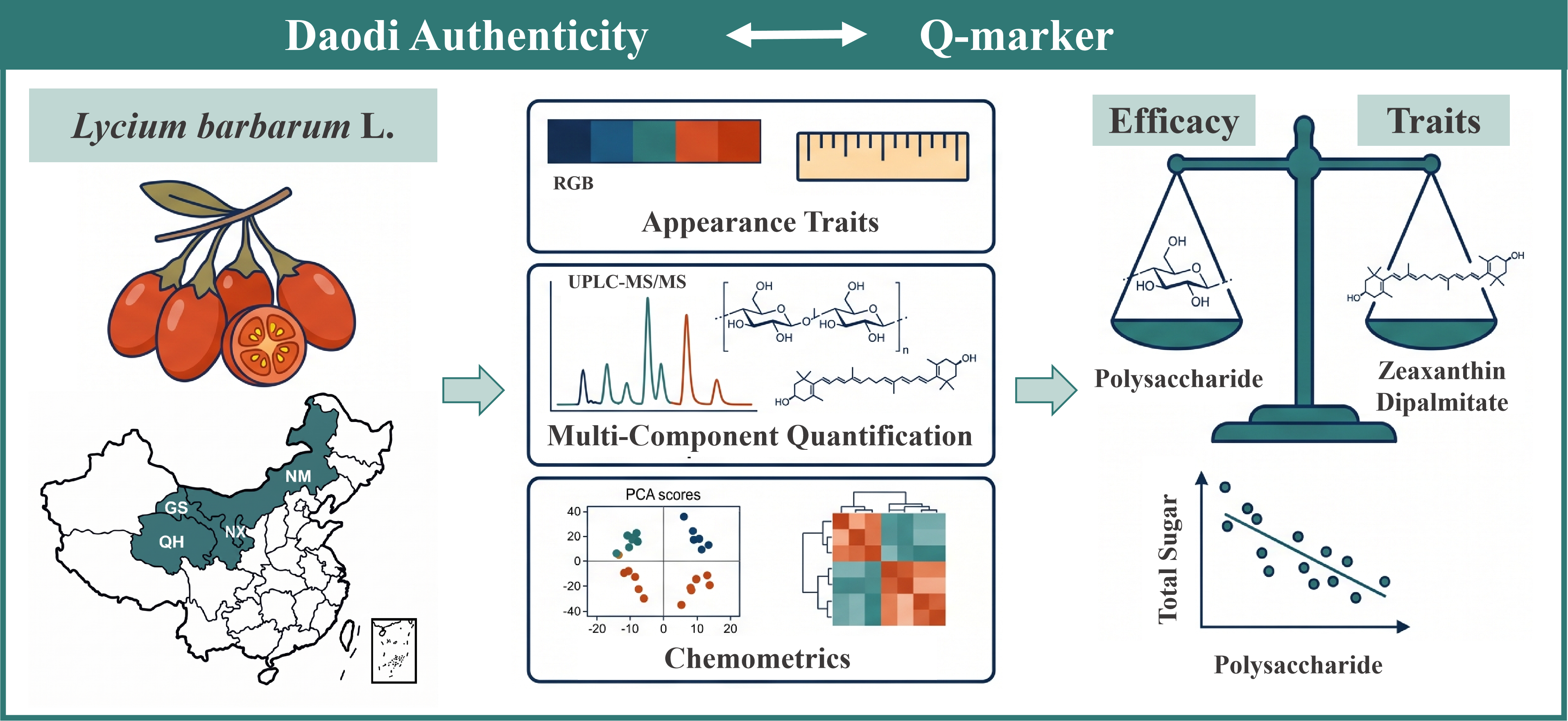
Screening and Validation of Q-Markers for Daodi Authenticity of Lycium barbarum L. Using Multi-Component Quantification and Chemometrics


Abstract
1. Introduction
2. Results
2.1. External Traits of Samples
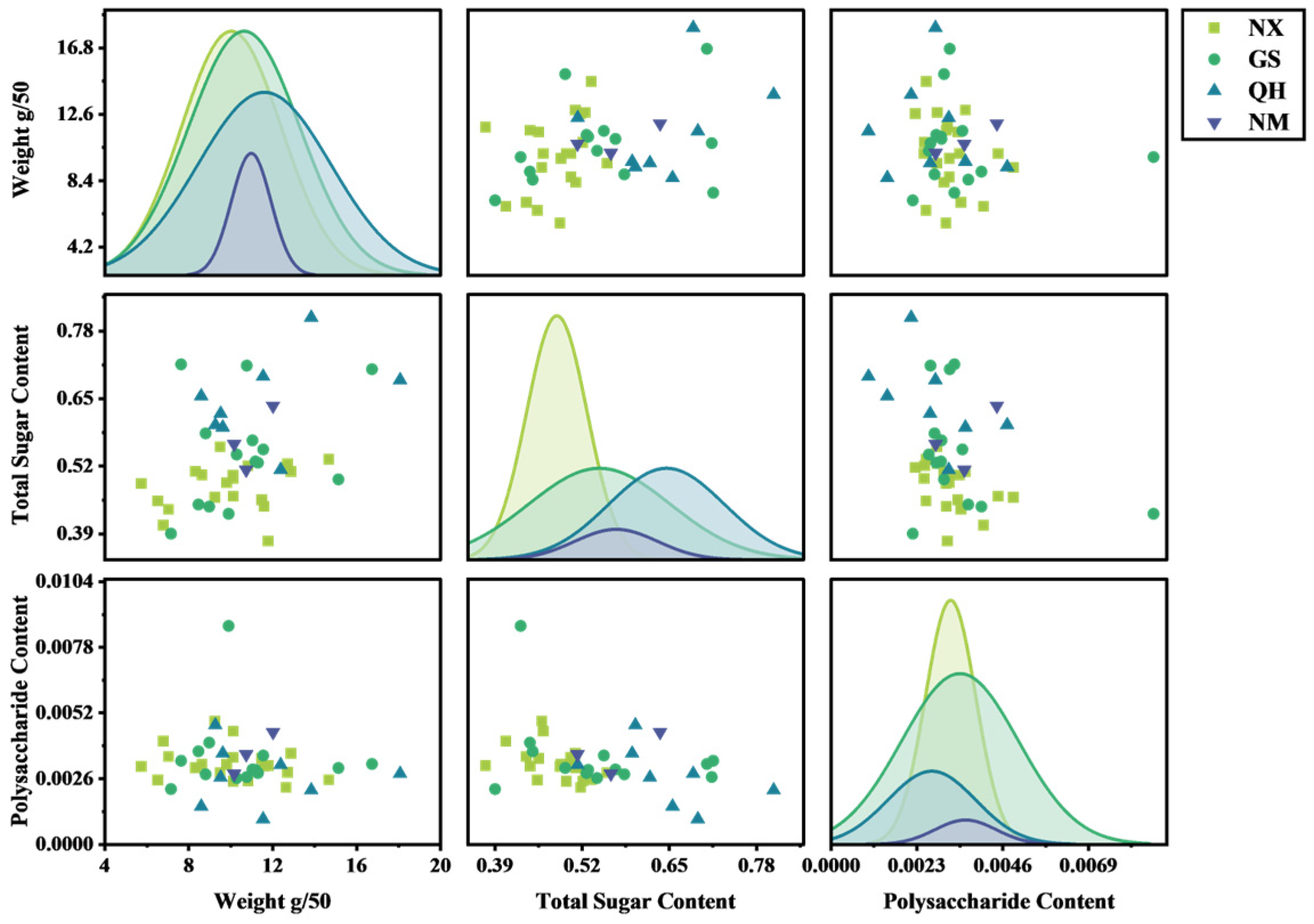
2.2. Contents of Polysaccharide and Total Sugar
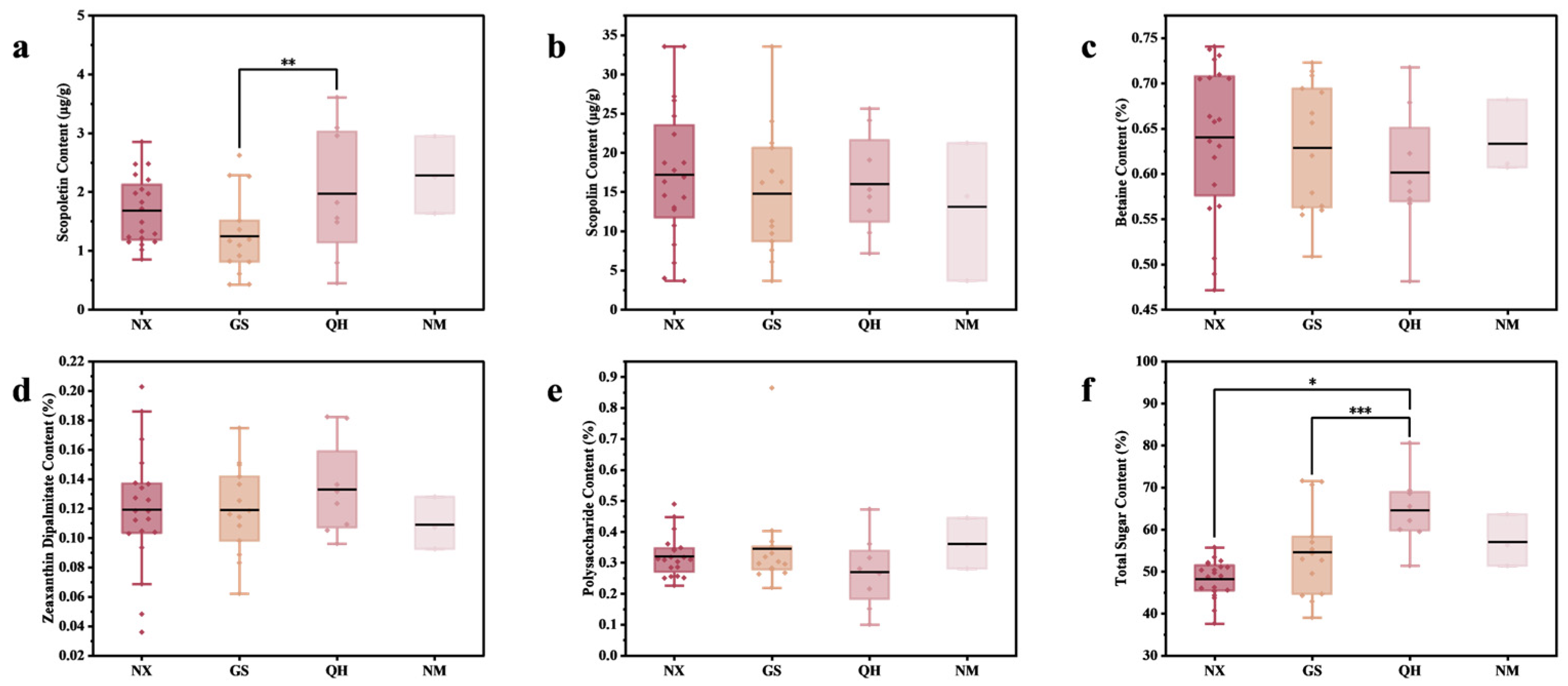
2.3. Contents of Betaine and Zeaxanthin Dipalmitate
2.4. Multi-Component Profiling of Secondary Metabolites
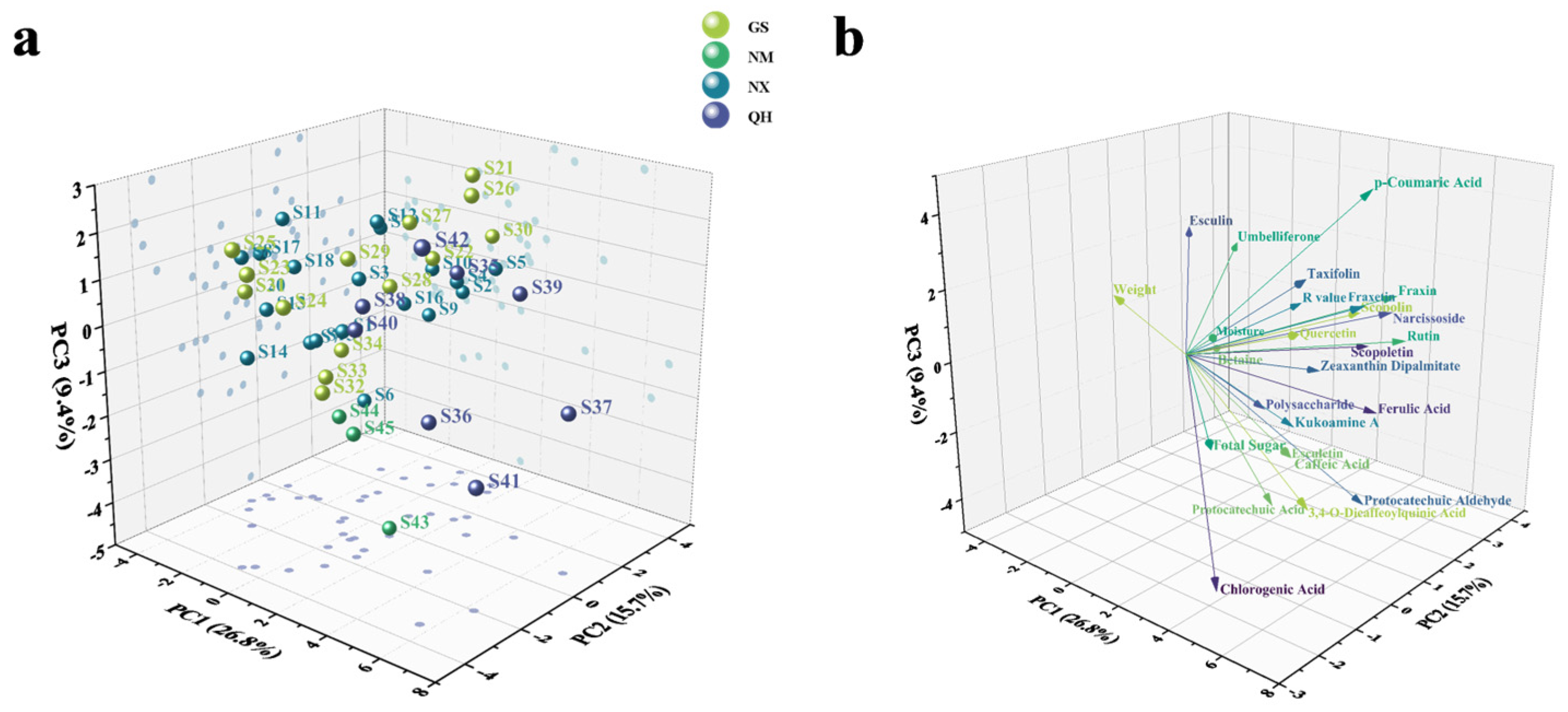
2.5. Chemometric Differentiation Among Producing Areas
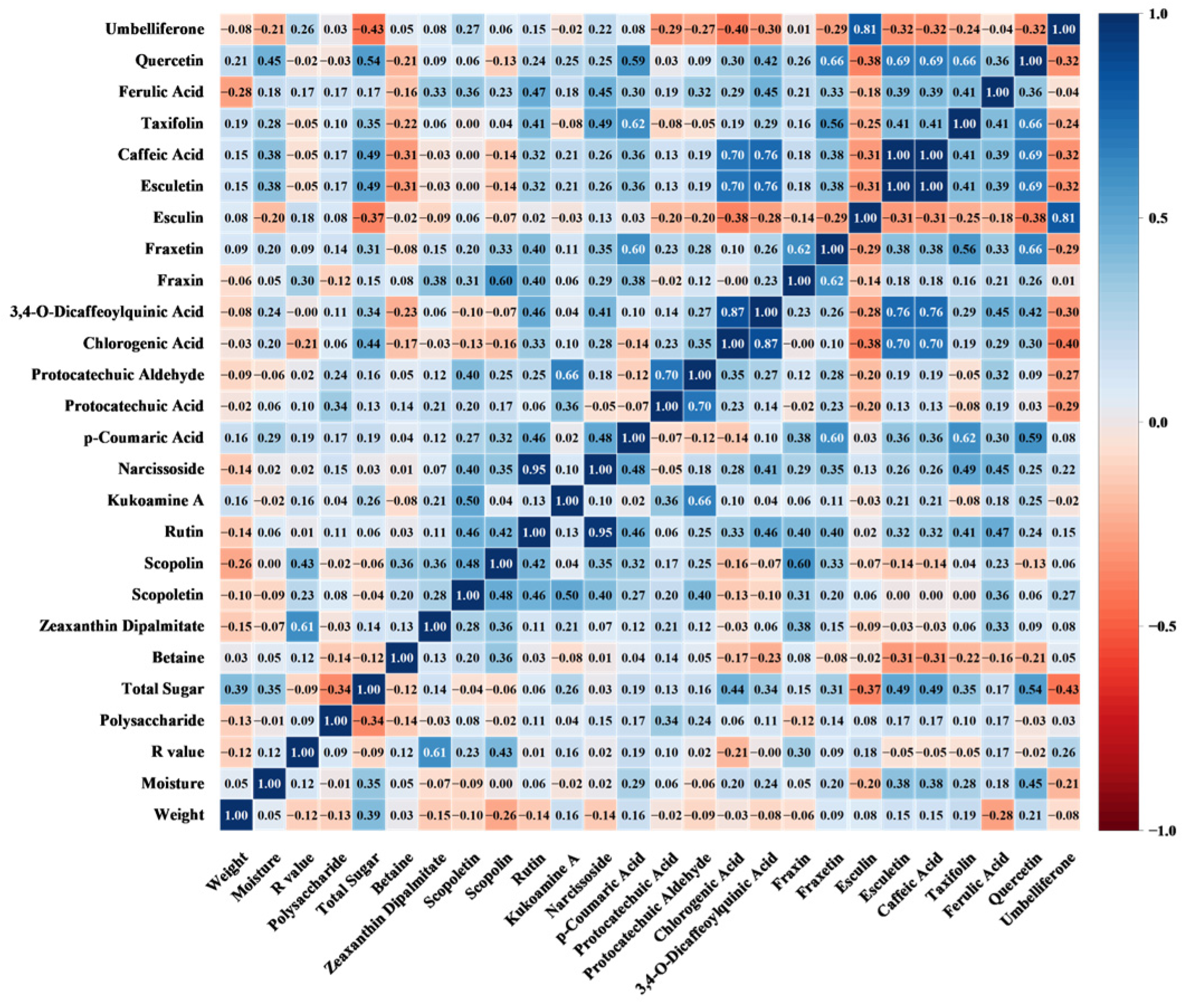
2.5.1. Pearson Correlation Analysis
2.5.2. One-Way Analysis of Variance (ANOVA)
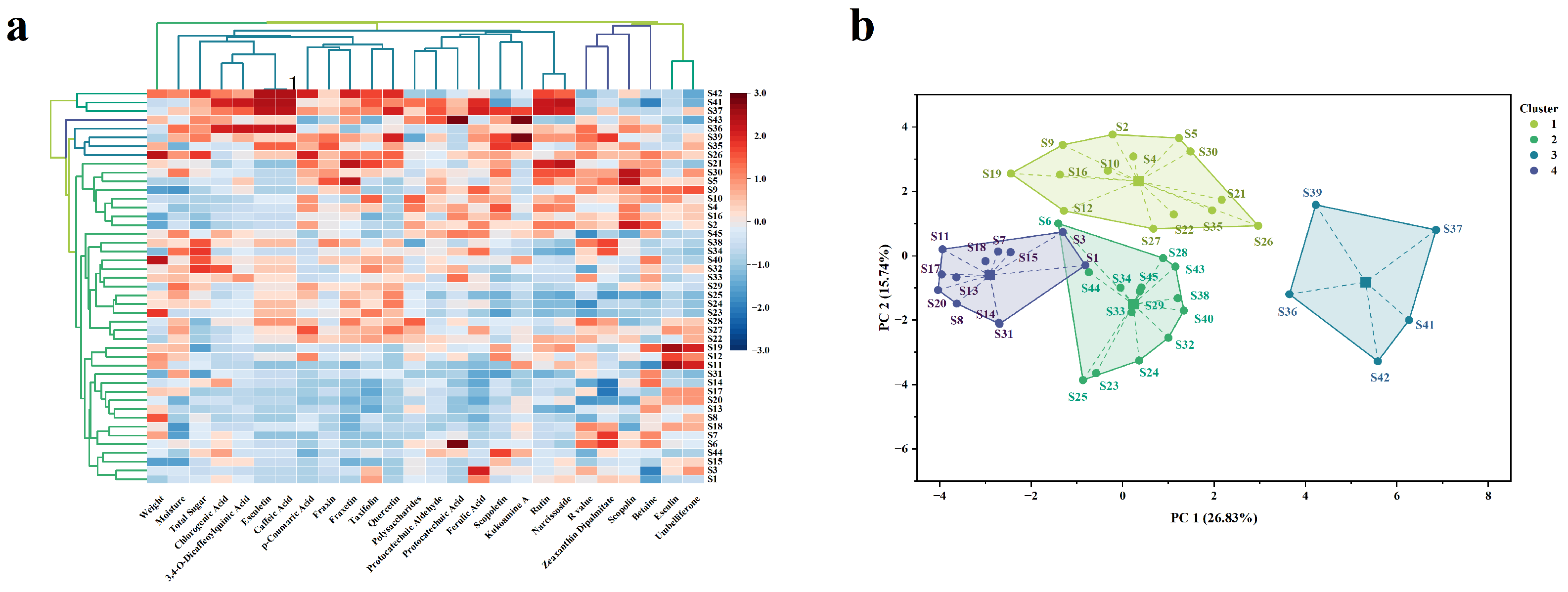
2.5.3. Principal Component Analysis (PCA)
2.5.4. Cluster Analysis
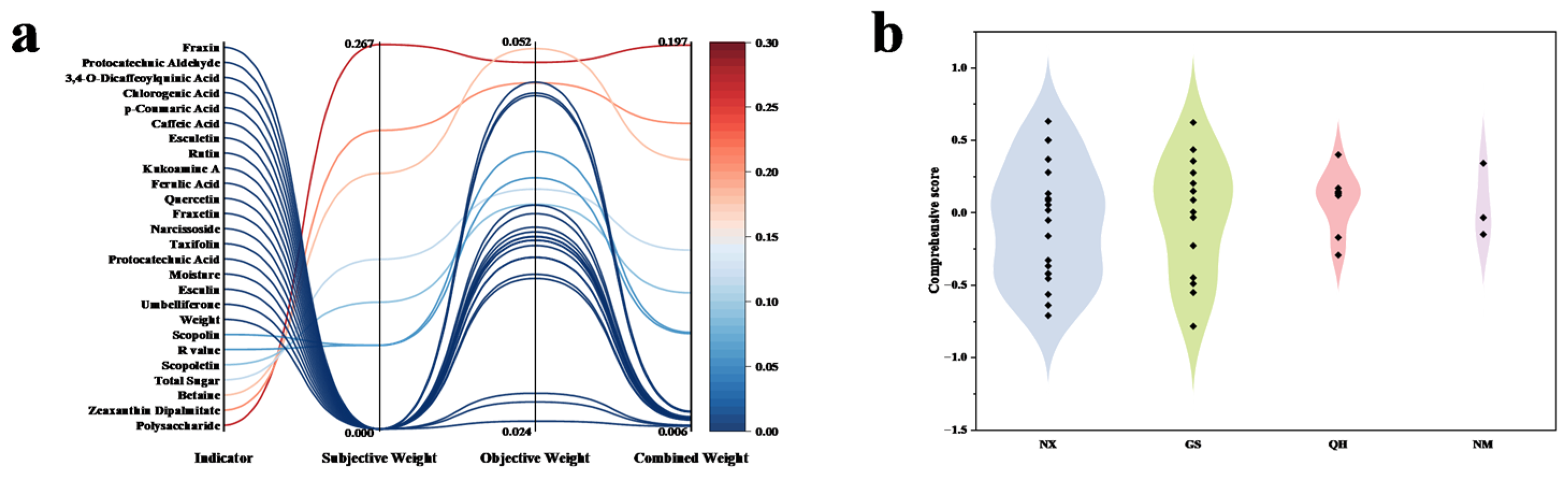
2.6. Comprehensive Evaluation and Candidate Q-Markers
3. Discussion
4. Materials and Methods
4.1. Samples, Reagents, and Instruments
4.2. Determination of External Traits
4.3. Determination of Polysaccharide and Total Sugar
4.4. Determination of Betaine
4.5. Determination of Zeaxanthin Dipalmitate
4.6. Multi-Component LC-MS/MS Analysis
4.6.1. Chromatographic Conditions
4.6.2. Mass Spectrometry Conditions
4.6.3. Preparation of the Mixed Reference Solution
4.6.4. Preparation of the Test Solution
4.6.5. Determination Method
4.7. Chemometric and Statistical Analysis
5. Conclusions
Supplementary Materials
Author Contributions
Funding
Institutional Review Board Statement
Informed Consent Statement
Data Availability Statement
Conflicts of Interest
References
- Pharmacopoeia Commission Executive Committee. Pharmacopoeia of the People’s Republic of China, 2025th ed.; China Medical Science Press: Beijing, China, 2025. [Google Scholar]
- Liu, X.; Zhang, Y.; Wu, M.; Ma, Z.; Huang, Z.; Tian, F.; Dong, S.; Luo, S.; Zhou, Y.; Zhang, J.; et al. The scientific elucidation of daodi medicinal materials. Chin. Med. 2020, 15, 86. [Google Scholar] [CrossRef]
- Li, J.; Deng, C.; Duan, G.; Wang, Z.; Zhang, Y.; Fan, G. Potentially suitable habitats of Daodi Goji berry in China under climate change. Front. Plant Sci. 2024, 14, 1279019. [Google Scholar] [CrossRef]
- Hong, Y.; Chen, Y.; Su, Y.; Dong, G.; Song, X.; Zhang, J.; Wang, H.; Sun, Z.; Guo, L.; Yang, J.; et al. A new framework for evaluating land suitability for Goji (Lycium barbarum L.) cultivation across China. J. Environ. Manag. 2025, 392, 126908. [Google Scholar] [CrossRef]
- Ju, Y.; Liu, H.; Niu, S.; Kang, L.; Ma, L.; Li, A.; Zhao, Y.; Yuan, Y.; Zhao, D. Optimizing geographical traceability models of Chinese Lycium barbarum: Investigating effects of region, cultivar, and harvest year on nutrients, bioactives, elements and stable isotope composition. Food Chem. 2025, 467, 142286. [Google Scholar] [CrossRef]
- Liu, C.; Cheng, Y.; Guo, D.; Zhang, T.; Li, Y.; Hou, W.; Huang, L.; Xu, H. A New Concept on Quality Marker for Quality Assessment and Process Control of Chinese Medicines. Chin. Herb. Med. 2017, 9, 3–13. [Google Scholar] [CrossRef]
- Yang, W.; Zhang, Y.; Wu, W.; Huang, L.; Guo, D.; Liu, C. Approaches to establish Q-markers for the quality standards of traditional Chinese medicines. Acta Pharm. Sin. B 2017, 7, 439–446. [Google Scholar] [CrossRef]
- Zhang, T.; Bai, G.; Chen, C.; Xu, J.; Han, Y.; Gong, S.; Zhang, H.; Liu, C. Research approaches of quality marker (Q-marker) of Chinese materia medica formula based on “five principles”. Chin. Tradit. Herb. Drugs 2018, 49, 1–13. [Google Scholar] [CrossRef]
- Ren, J.; Zhang, A.; Kong, L.; Han, Y.; Yan, G.; Sun, H.; Wang, X. Analytical strategies for the discovery and validation of quality-markers of traditional Chinese medicine. Phytomedicine 2020, 67, 153165. [Google Scholar] [CrossRef] [PubMed]
- He, M.; Zhou, Y. How to identify material basis-quality markers more accurately in Chinese herbal medicines from modern chromatography-mass spectrometry data-sets: Opportunities and challenges of chemometric tools. Chin. Herb. Med. 2021, 13, 2–16. [Google Scholar] [CrossRef] [PubMed]
- Chen, H.; He, Y. Machine learning approaches in traditional Chinese medicine: A systematic review. Am. J. Chin. Med. 2022, 50, 91–131. [Google Scholar] [CrossRef]
- Kucharska-Ambrożej, K.; Karpińska, J. The application of spectroscopic techniques in combination with chemometrics for detection adulteration of some herbs and spices. Microchem. J. 2020, 153, 104278. [Google Scholar] [CrossRef]
- Li, Y.; Fan, J.; Cheng, X.; Jin, H.; Wang, Y.; Wei, F.; An, F.; Ma, S. New revolution for quality control of TCM in industry 4.0: Focus on artificial intelligence and bioinformatics. Trends Anal. Chem. 2024, 181, 118023. [Google Scholar] [CrossRef]
- Wang, Y.; Jin, H.; Dong, X.; Yang, S.; Ma, S.; Ni, J. Quality evaluation of Lycium barbarum (wolfberry) from different regions in China based on polysaccharide structure, yield and bioactivities. Chin. Med. 2019, 14, 49. [Google Scholar] [CrossRef]
- Gong, H.; Rehman, F.; Li, Z.; Liu, J.; Yang, T.; Liu, J.; Li, H.; Hu, Z.; Ma, Q.; Wu, Z.; et al. Discrimination of geographical origins of wolfberry (Lycium barbarum L.) fruits using stable isotopes, earth elements, free amino acids, and saccharides. J. Agric. Food Chem. 2022, 70, 2984–2997. [Google Scholar] [CrossRef] [PubMed]
- Duan, W.; Zhang, Z.; Zhu, J.; Zhang, D.; Qian, D.; Teng, F.; Zhao, Y.; Chen, F.; Li, R.; Yang, J. Comparative analysis of the phenolic profile of Lycium barbarum L. fruits from different regions in China. Molecules 2022, 27, 5842. [Google Scholar] [CrossRef] [PubMed]
- Wang, Y.; Li, M.; Zhang, L.; Chen, Y.; Liu, X. Evaluation of the quality of Codonopsis radix in different growth years by the AHP-CRITIC method. Chem. Biodivers. 2023, 20, e202201108. [Google Scholar] [CrossRef]
- Ma, Y.F.; Feng, Y.; Yao, L.L.; Feng, P.S.; Zhou, W.K.; Fang, L.X.; Tao, Y.; Wang, P. Optimization of the Zhou Tian Formula extraction technology based on AHP-CRITIC method and analysis of transfer efficiency of key components based on HPLC fingerprinting. Phytochem. Anal. 2024, 35, 873–888. [Google Scholar] [CrossRef]
- Azami, N.L.B.; Sun, M. Zeaxanthin dipalmitate in the treatment of liver disease. Evid.-Based Complement. Altern. Med. 2019, 2019, 1475163. [Google Scholar] [CrossRef]
- Xu, J.; Wang, R.; Liu, J.; Cheng, H.; Peng, D.; Xing, L.; Shi, S.; Yu, N. Determination of monosaccharides in Lycium barbarum fruit polysaccharide by an efficient UHPLC-QTRAP-MS/MS method. Phytochem. Anal. 2021, 32, 785–793. [Google Scholar] [CrossRef]
- Zhang, J.; Alseekh, S.; Fernie, A.R.; Qian, D.; Huang, L. Chemical characterization of lipids provides new insights into Goji berry metabolism. ACS Food Sci. Technol. 2025, 5, 761–769. [Google Scholar] [CrossRef]
- Hammond, B.R.; Renzi-Hammond, L. The influence of the macular carotenoids on women’s eye and brain health. Nutr. Neurosci. 2023, 26, 720–726. [Google Scholar] [CrossRef]
- Hu, W.; Nie, Y.; Huang, L.; Qian, D. Contribution of phenolamides to the quality evaluation in Lycium spp. J. Ethnopharmacol. 2024, 331, 118220. [Google Scholar] [CrossRef] [PubMed]
- Jurikova, T.; Tinakova, S.M.; Ziarovska, J.; Szekeres, L.; Mlcek, J.; Fatrcova-Sramkova, K.; Knazicka, Z.; Skrovankova, S. Polyphenolic spectrum of goji berries and their health-promoting activity. Foods 2025, 14, 1387. [Google Scholar] [CrossRef]
- Vasa, L.; Garlaschelli, D.; Kobayashi, T.; Masuda, N.; Radicchi, F.; Young, J.-G. Introduction to correlation networks: Interdisciplinary approaches beyond thresholding. Phys. Rep. 2025, 1136, 1–39. [Google Scholar] [CrossRef]
- Chatzi, A.; Doody, O. The one-way ANOVA test explained. Nurse Res. 2023, 31, 8–14. [Google Scholar] [CrossRef]
- Yao, Y.; Li, M.; Zhang, L.; Meng, J.; Liu, L.; Li, W.; Zhang, J. Fingerprinting combined with chemometrics: New strategies and advances in quality evaluation of traditional Chinese medicine. Anal. Methods 2026, 18, 774–785. [Google Scholar] [CrossRef] [PubMed]
- Liu, Y.; Zhang, L.; Zhang, X.; Bian, X.; Tian, W. Modern spectroscopic techniques combined with chemometrics for process quality control of traditional Chinese medicine: A review. Microchem. J. 2025, 213, 113605. [Google Scholar] [CrossRef]
- Yik, B.J.; Zhang, Y.; Nylund-Gibson, K.; Ing, M.; Krawiec, L.; Houck, J.D.; Nacsa, E.D. Exploring heterogeneity in chemistry education research: Comparing cluster analysis and latent profile analysis. Chem. Educ. Res. Pract. 2026. Advance Article. [Google Scholar] [CrossRef]
- Xue, Y.; Han, B.; Xue, Y.; Yi, G.; Wu, M.; Moss, A.S.; Huang, X.; Wang, W. Comprehensive evaluation of individual and combined dietary carotenoids in Penaeus vannamei and response surface analysis for optimizing combinations. Front. Immunol. 2025, 16, 1688761. [Google Scholar] [CrossRef] [PubMed]
- Tian, Y.; Yao, J.; Gao, Q.; Zou, L.; Lu, P.; Guan, T.; Liu, X.; Zhou, S.; Jin, X. Holistic concept guided quality control of traditional Chinese medicines for optimizing bioavailability. Chin. Med. 2025, 20, 202. [Google Scholar] [CrossRef]
- Zhang, J.; Chen, W.; Gong, R.; Deng, J.; Sun, Q.; Yang, H. Unlocking the anti-aging potential of Lycium barbarum polysaccharides: Structure-activity insights, mechanisms, and future therapeutics. Int. J. Biol. Macromol. 2026, 343, 150242. [Google Scholar] [CrossRef]
- Chen, Y.; Li, L.; Zhang, R.; Liu, F. A review of Lycium barbarum polysaccharides: Structural characteristics, antitumor molecular mechanism and transformation application. Int. J. Biol. Macromol. 2025, 333, 148743. [Google Scholar] [CrossRef] [PubMed]
- Wang, J.; Li, S.; Zhang, H.; Zhang, X. A review of Lycium barbarum polysaccharides: Extraction, purification, structural-property relationships, and bioactive molecular mechanisms. Carbohydr. Res. 2024, 544, 109230. [Google Scholar] [CrossRef]
- Metibemu, D.S.; Ogungbe, I.V. Carotenoids in drug discovery and medicine: Pathways and molecular targets implicated in human diseases. Molecules 2022, 27, 6005. [Google Scholar] [CrossRef]
- Bernstein, P.S.; Li, B.; Vachali, P.P.; Gorusupudi, A.; Shyam, R.; Henriksen, B.S.; Nolan, J.M. Lutein, zeaxanthin, and meso-zeaxanthin: The basic and clinical science underlying carotenoid-based nutritional interventions against ocular disease. Prog. Retin. Eye Res. 2016, 50, 34–66. [Google Scholar] [CrossRef]
- Li, X.; Holt, R.R.; Keen, C.L.; Morse, L.S.; Zivkovic, A.M.; Yiu, G.; Hackman, R.M. Potential roles of dietary zeaxanthin and lutein in macular health and function. Nutr. Rev. 2023, 81, 670–683. [Google Scholar] [CrossRef]
- Ma, R.; Zhang, X.; Ni, Z.; Thakur, K.; Wang, W.; Yan, Y.; Cao, Y.; Zhang, J.; Rengasamy, K.R.R.; Wei, Z. Lycium barbarum (Goji) as functional food: A review of its nutrition, phytochemical structure, biological features, and food industry prospects. Crit. Rev. Food Sci. Nutr. 2022, 63, 10621–10635. [Google Scholar] [CrossRef]
- Yao, N.; Xie, C.; Yang, Q. Therapeutic potential of Lycium barbarum polysaccharide on diabetes and its associated complications: A narrative review. Front. Nutr. 2026, 12, 1642252. [Google Scholar] [CrossRef] [PubMed]
- Wang, L.-H.; Wen, Y.-J.; Wang, W.-X.; Zhai, M.; Li, S.-F.; Zheng, Q.-X.; Liu, P.-P.; Zhang, Y.; Lv, Y.; Zhou, H.-N.; et al. A combination of automatic untargeted metabolic profiling analysis with targeted metabolomics to enhance geographical discrimination of Goji berry. Food Chem. X 2026, 33, 103549. [Google Scholar] [CrossRef] [PubMed]
- Cui, J.; Wu, C.; Pan, S.; Li, K.; Liu, S.; Lv, Y.; Wang, S.; Luo, R. Determining the geographical origins of Goji berries using the Twin-Tower model for multi-feature. Comput. Electron. Agric. 2024, 227, 109571. [Google Scholar] [CrossRef]
- Zhang, Y.; Ma, L.; Yi, W.; Wu, L. Research on the adulteration of Lycium barbarum based on hyperspectral imaging technology combined with deep learning algorithm. J. Food Compos. Anal. 2024, 136, 106765. [Google Scholar] [CrossRef]
- Zhao, H.; Wang, L.; Yu, Y.; Yang, J.; Zhang, X.; Zhao, Z.; Ma, F.; Hu, M.; Wang, X. Comparison of Lycium barbarum fruits polysaccharide from different regions of China by acidic hydrolysate fingerprinting-based HILIC-ELSD-ESI-TOF-MS combined with chemometrics analysis. Phytochem. Anal. 2023, 34, 186–197. [Google Scholar] [CrossRef] [PubMed]
- Shi, X.; Fan, B.; Zheng, Y.; Wang, X.; Zhang, Y.; Fu, L. Feasibility study on the geographical indication of Lycium barbarum based on electrochemical fingerprinting technique. Int. J. Electrochem. Sci. 2021, 16, 210714. [Google Scholar] [CrossRef]
- Jarouche, M.; Suresh, H.; Hennell, J.; Sullivan, S.; Lee, S.; Singh, S.; Power, D.; Xu, C.; Khoo, C. The quality assessment of commercial Lycium berries using LC-ESI-MS/MS and chemometrics. Plants 2019, 8, 604. [Google Scholar] [CrossRef]
- Liu, W.; Xu, J.; Zhu, R.; Zhu, Y.; Zhao, Y.; Chen, P.; Pan, C.; Yao, W.; Gao, X. Fingerprinting profile of polysaccharides from Lycium barbarum using multiplex approaches and chemometrics. Int. J. Biol. Macromol. 2015, 78, 230–237. [Google Scholar] [CrossRef]
- Huang, W.; Sun, J.; Liu, T.; Zhao, T.; Dong, X.; Xu, X.; Lu, Y.; Lin, X.; Gong, G. Fingerprint and chemometric analysis of arabinogalactan derived from Lycium barbarum fruit. Nat. Prod. Commun. 2023, 18, 1934578X231168467. [Google Scholar] [CrossRef]




| No. | Weight g/50 | Moisture % | HEX | R Value | G Value | B Value |
|---|---|---|---|---|---|---|
| S1 | 8.307 | 8 | #953D34 | 149 | 61 | 52 |
| S2 | 6.777 | 8.04 | #A63B2D | 166 | 59 | 45 |
| S3 | 9.807 | 8.16 | #A84635 | 168 | 70 | 53 |
| S4 | 10.121 | 7.1 | #94372F | 148 | 55 | 47 |
| S5 | 8.632 | 7.44 | #AA372A | 170 | 55 | 42 |
| S6 | 10.116 | 8.56 | #B53829 | 181 | 56 | 41 |
| S7 | 12.641 | 6.56 | #A53B2D | 165 | 59 | 45 |
| S8 | 14.678 | 7.38 | #793029 | 121 | 48 | 41 |
| S9 | 6.52 | 6.36 | #AF4B37 | 175 | 75 | 55 |
| S10 | 9.242 | 7.64 | #99352C | 153 | 53 | 44 |
| S11 | 12.705 | 8.04 | #9F362C | 159 | 54 | 44 |
| S12 | 12.868 | 9.05 | #A1382A | 161 | 56 | 42 |
| S13 | 11.477 | 7.63 | #902B23 | 144 | 43 | 35 |
| S14 | 9.5 | 8.35 | #752C22 | 117 | 44 | 34 |
| S15 | 5.73 | 6.52 | #83382D | 131 | 56 | 45 |
| S16 | 7.032 | 7.71 | #A3372D | 163 | 55 | 45 |
| S17 | 11.591 | 8.97 | #9D3728 | 157 | 55 | 40 |
| S18 | 10.827 | 6.43 | #B05C39 | 176 | 92 | 57 |
| S19 | 11.788 | 9.34 | #8E332C | 142 | 51 | 44 |
| S20 | 10.123 | 6.81 | #6F3329 | 111 | 51 | 41 |
| S21 | 11.3 | 8.52 | #961E1A | 150 | 30 | 26 |
| S22 | 8.465 | 8.95 | #A93228 | 169 | 50 | 40 |
| S23 | 15.139 | 7.86 | #772720 | 119 | 39 | 32 |
| S24 | 11.043 | 8.91 | #6C1A17 | 108 | 26 | 23 |
| S25 | 11.177 | 9.65 | #8B372D | 139 | 55 | 45 |
| S26 | 16.74 | 9.69 | #B04131 | 176 | 65 | 49 |
| S27 | 8.976 | 9.63 | #A02F26 | 160 | 47 | 38 |
| S28 | 9.896 | 9.3 | #B64C3F | 182 | 76 | 63 |
| S29 | 8.803 | 10.29 | #922D1F | 146 | 45 | 31 |
| S30 | 10.287 | 10.04 | #AA3B2D | 170 | 59 | 45 |
| S31 | 7.153 | 9.66 | #9C2E22 | 156 | 46 | 34 |
| S32 | 10.767 | 9.26 | #77261D | 119 | 38 | 29 |
| S33 | 11.549 | 9.26 | #AE422D | 174 | 66 | 45 |
| S34 | 7.635 | 10.29 | #9F4234 | 159 | 66 | 52 |
| S35 | 12.373 | 6.89 | #AA4D39 | 170 | 77 | 57 |
| S36 | 9.515 | 12.83 | #BB4336 | 187 | 67 | 54 |
| S37 | 9.617 | 9.09 | #81322E | 129 | 50 | 46 |
| S38 | 11.538 | 8.79 | #B3463B | 179 | 70 | 59 |
| S39 | 8.587 | 9.44 | #B7463D | 183 | 70 | 61 |
| S40 | 18.08 | 8.63 | #9C3E32 | 156 | 62 | 50 |
| S41 | 12.017 | 8.23 | #9E4A3F | 158 | 74 | 63 |
| S42 | 10.164 | 7.35 | #794541 | 121 | 69 | 65 |
| S43 | 10.737 | 9.85 | #5D1E19 | 93 | 30 | 25 |
| S44 | 9.264 | 7.93 | #862825 | 134 | 40 | 37 |
| S45 | 13.842 | 9.9 | #7B2D29 | 123 | 45 | 41 |
| No. | Polysaccharide Content (%) | Total Sugar Content (%) | No. | Polysaccharide Content (%) | Total Sugar Content (%) |
|---|---|---|---|---|---|
| S1 | 0.3030 | 51.05 | S24 | 0.2963 | 56.97 |
| S2 | 0.4086 | 40.65 | S25 | 0.2951 | 52.92 |
| S3 | 0.3170 | 48.87 | S26 | 0.3181 | 70.62 |
| S4 | 0.4480 | 46.20 | S27 | 0.4029 | 44.23 |
| S5 | 0.3168 | 50.34 | S28 | 0.8642 | 42.84 |
| S6 | 0.3439 | 50.29 | S29 | 0.2774 | 58.29 |
| S7 | 0.2258 | 51.78 | S30 | 0.2622 | 54.24 |
| S8 | 0.2555 | 53.36 | S31 | 0.2189 | 39.03 |
| S9 | 0.2548 | 45.32 | S32 | 0.2668 | 71.32 |
| S10 | 0.4887 | 45.99 | S33 | 0.3518 | 55.23 |
| S11 | 0.2849 | 52.49 | S34 | 0.3304 | 71.57 |
| S12 | 0.3598 | 50.98 | S35 | 0.3153 | 51.34 |
| S13 | 0.3396 | 45.52 | S36 | 0.2652 | 62.10 |
| S14 | 0.2837 | 55.73 | S37 | 0.3599 | 59.48 |
| S15 | 0.3082 | 48.69 | S38 | 0.1000 | 69.27 |
| S16 | 0.3479 | 43.68 | S39 | 0.1503 | 65.49 |
| S17 | 0.3093 | 44.26 | S40 | 0.2799 | 68.55 |
| S18 | 0.2506 | 52.09 | S41 | 0.4441 | 63.62 |
| S19 | 0.3117 | 37.62 | S42 | 0.2801 | 56.29 |
| S20 | 0.2495 | 49.64 | S43 | 0.3571 | 51.31 |
| S21 | 0.2821 | 52.66 | S44 | 0.4723 | 59.94 |
| S22 | 0.3680 | 44.63 | S45 | 0.2147 | 80.57 |
| S23 | 0.3028 | 49.47 |
| No. | Betaine Content (%) | Zeaxanthin Dipalmitate Content (%) | No. | Betaine Content (%) | Zeaxanthin Dipalmitate Content (%) |
|---|---|---|---|---|---|
| S1 | 0.507 | 0.137 | S24 | 0.555 | 0.098 |
| S2 | 0.741 | 0.134 | S25 | 0.509 | 0.062 |
| S3 | 0.472 | 0.118 | S26 | 0.723 | 0.142 |
| S4 | 0.588 | 0.113 | S27 | 0.620 | 0.136 |
| S5 | 0.658 | 0.167 | S28 | 0.563 | 0.150 |
| S6 | 0.710 | 0.186 | S29 | 0.657 | 0.089 |
| S7 | 0.706 | 0.203 | S30 | 0.714 | 0.151 |
| S8 | 0.631 | 0.112 | S31 | 0.709 | 0.108 |
| S9 | 0.731 | 0.137 | S32 | 0.667 | 0.118 |
| S10 | 0.705 | 0.126 | S33 | 0.694 | 0.116 |
| S11 | 0.489 | 0.105 | S34 | 0.579 | 0.175 |
| S12 | 0.618 | 0.103 | S35 | 0.591 | 0.132 |
| S13 | 0.705 | 0.118 | S36 | 0.679 | 0.123 |
| S14 | 0.727 | 0.036 | S37 | 0.581 | 0.136 |
| S15 | 0.564 | 0.104 | S38 | 0.567 | 0.181 |
| S16 | 0.660 | 0.127 | S39 | 0.623 | 0.182 |
| S17 | 0.562 | 0.048 | S40 | 0.718 | 0.109 |
| S18 | 0.636 | 0.151 | S41 | 0.607 | 0.107 |
| S19 | 0.738 | 0.093 | S42 | 0.611 | 0.128 |
| S20 | 0.664 | 0.069 | S43 | 0.682 | 0.092 |
| S21 | 0.690 | 0.114 | S44 | 0.481 | 0.105 |
| S22 | 0.560 | 0.125 | S45 | 0.572 | 0.096 |
| S23 | 0.565 | 0.083 |
| Compound | Region | Range | Mean | Compound | Region | Range | Mean |
|---|---|---|---|---|---|---|---|
| Scopoletin | NX | 0.4287–3.0952 | 1.612 | Fraxin | NX | 0.0212–0.4613 | 0.146 |
| GS | 0.4287–2.6232 | 1.370 | GS | 0.0237–0.3453 | 0.156 | ||
| QH | 0.4510–3.6106 | 1.672 | QH | 0.0425–0.4085 | 0.194 | ||
| NM | 1.6361–2.9506 | 2.282 | NM | 0.1825–0.2401 | 0.213 | ||
| Scopolin | NX | 3.523–42.104 | 17.08 | Fraxetin | NX | 0.0135–0.0659 | 0.034 |
| GS | 7.582–37.399 | 16.72 | GS | 0.0164–0.0492 | 0.034 | ||
| QH | 7.183–25.640 | 15.01 | QH | 0.0198–0.0485 | 0.035 | ||
| NM | 3.585–21.257 | 13.10 | NM | 0.0320–0.0608 | 0.045 | ||
| Rutin | NX | 15.470–75.381 | 36.05 | Esculin | NX | 0.2764–7.3093 | 1.910 |
| GS | 19.448–71.724 | 36.42 | GS | 0.4604–5.1785 | 1.716 | ||
| QH | 25.686–75.381 | 40.05 | QH | 0.2764–1.0520 | 0.744 | ||
| NM | 49.691–74.963 | 63.40 | NM | 0.5300–0.7011 | 0.626 | ||
| Kukoamine A | NX | 14.930–79.559 | 37.79 | Esculetin | NX | 0.2381–1.8231 | 0.728 |
| GS | 24.350–76.669 | 44.03 | GS | 0.2381–1.4429 | 0.800 | ||
| QH | 29.204–132.865 | 59.58 | QH | 0.5939–1.8231 | 1.044 | ||
| NM | 27.154–48.354 | 37.95 | NM | 0.7456–2.1856 | 1.261 | ||
| Narcissoside | NX | 0.9029–4.0814 | 2.198 | Caffeic Acid | NX | 0.4761–3.6462 | 1.470 |
| GS | 1.3317–3.6465 | 2.167 | GS | 0.4761–2.8858 | 1.471 | ||
| QH | 1.4285–4.0814 | 2.297 | QH | 0.8150–3.6462 | 2.099 | ||
| NM | 2.2653–4.2965 | 3.042 | NM | 1.4912–4.3713 | 2.523 | ||
| p-Coumaric Acid | NX | 4.6633–20.8018 | 10.13 | Taxifolin | NX | 0.0505–0.2061 | 0.113 |
| GS | 4.6284–14.4122 | 9.826 | GS | 0.0668–0.2516 | 0.132 | ||
| QH | 3.1244–12.4258 | 8.795 | QH | 0.0620–0.1705 | 0.112 | ||
| NM | 5.4579–16.7853 | 10.47 | NM | 0.0761–0.1961 | 0.126 | ||
| Protocatechuic Acid | NX | 0.2080–0.6923 | 0.409 | Ferulic Acid | NX | 6.551–24.352 | 14.69 |
| GS | 0.2486–0.5108 | 0.394 | GS | 6.551–19.363 | 11.52 | ||
| QH | 0.3117–1.1861 | 0.528 | QH | 11.987–24.352 | 15.70 | ||
| NM | 0.3731–0.6628 | 0.528 | NM | 13.881–21.931 | 18.02 | ||
| Protocatechuic Aldehyde | NX | 0.1364–0.5164 | 0.268 | Quercetin | NX | 0.0063–0.2115 | 0.059 |
| GS | 0.1795–0.3374 | 0.256 | GS | 0.0546–0.1461 | 0.091 | ||
| QH | 0.2513–1.0207 | 0.405 | QH | 0.0282–0.2115 | 0.093 | ||
| NM | 0.1430–0.4818 | 0.336 | NM | 0.0258–0.1217 | 0.072 | ||
| Chlorogenic Acid | NX | 3.967–93.013 | 21.77 | Umbelliferone | NX | 0.0458–0.1683 | 0.091 |
| GS | 4.855–52.805 | 18.96 | GS | 0.04996–0.1139 | 0.083 | ||
| QH | 19.325–52.805 | 28.80 | QH | 0.0144–0.0992 | 0.072 | ||
| NM | 28.386–93.013 | 52.58 | NM | 0.0458–0.06697 | 0.060 | ||
| 3,4-O-Dicaffeoylquinic Acid | NX | 0.0149–0.7440 | 0.142 | ||||
| GS | 0.0269–0.1958 | 0.101 | |||||
| QH | 0.0888–0.7440 | 0.274 | |||||
| NM | 0.2311–1.4827 | 0.702 |
| Correlation Coefficient (r) | Polysaccharide Content | Weight | Total Sugar Content |
|---|---|---|---|
| Polysaccharide Content | 1 | −0.125 | −0.344 * |
| Weight | −0.125 | 1 | 0.391 ** |
| Total Sugar Content | −0.344 * | 0.391 ** | 1 |
| Rank | No. | Origin | Score | Rank | No. | Origin | Score | Rank | No. | Origin | Score |
|---|---|---|---|---|---|---|---|---|---|---|---|
| 1 | S10 | NX | 0.628523 | 16 | S41 | QH | 0.136371 | 31 | S38 | QH | −0.172235 |
| 2 | S26 | GS | 0.620369 | 17 | S16 | NX | 0.130483 | 32 | S29 | GS | −0.229711 |
| 3 | S6 | NX | 0.499524 | 18 | S40 | QH | 0.128044 | 33 | S42 | QH | −0.294443 |
| 4 | S2 | NX | 0.497138 | 19 | S35 | QH | 0.116018 | 34 | S1 | NX | −0.329982 |
| 5 | S28 | GS | 0.433101 | 20 | S9 | NX | 0.095453 | 35 | S3 | NX | −0.369673 |
| 6 | S37 | QH | 0.39792 | 21 | S21 | GS | 0.08501 | 36 | S8 | NX | −0.420986 |
| 7 | S5 | NX | 0.366532 | 22 | S7 | NX | 0.082826 | 37 | S15 | NX | −0.424222 |
| 8 | S30 | GS | 0.354169 | 23 | S12 | NX | 0.052872 | 38 | S24 | GS | −0.450536 |
| 9 | S43 | NM | 0.339069 | 24 | S19 | NX | 0.015716 | 39 | S14 | NX | −0.456429 |
| 10 | S4 | NX | 0.275823 | 25 | S22 | GS | 0.002534 | 40 | S31 | GS | −0.491653 |
| 11 | S27 | GS | 0.273037 | 26 | S32 | GS | −0.034608 | 41 | S23 | GS | −0.552592 |
| 12 | S34 | GS | 0.200797 | 27 | S45 | NM | −0.036019 | 42 | S11 | NX | −0.565467 |
| 13 | S36 | QH | 0.166899 | 28 | S13 | NX | −0.053914 | 43 | S20 | NX | −0.641047 |
| 14 | S33 | GS | 0.146947 | 29 | S44 | NM | −0.151614 | 44 | S17 | NX | −0.711731 |
| 15 | S39 | QH | 0.143853 | 30 | S18 | NX | −0.162417 | 45 | S25 | GS | −0.785049 |
Disclaimer/Publisher’s Note: The statements, opinions and data contained in all publications are solely those of the individual author(s) and contributor(s) and not of MDPI and/or the editor(s). MDPI and/or the editor(s) disclaim responsibility for any injury to people or property resulting from any ideas, methods, instructions or products referred to in the content. |
© 2026 by the authors. Licensee MDPI, Basel, Switzerland. This article is an open access article distributed under the terms and conditions of the Creative Commons Attribution (CC BY) license.
Share and Cite
Hu, Y.; He, K.; Luo, Q.; Wang, Y.; Jin, H.; Wei, F.; Lin, Y. Screening and Validation of Q-Markers for Daodi Authenticity of Lycium barbarum L. Using Multi-Component Quantification and Chemometrics. Molecules 2026, 31, 2059. https://doi.org/10.3390/molecules31122059
Hu Y, He K, Luo Q, Wang Y, Jin H, Wei F, Lin Y. Screening and Validation of Q-Markers for Daodi Authenticity of Lycium barbarum L. Using Multi-Component Quantification and Chemometrics. Molecules. 2026; 31(12):2059. https://doi.org/10.3390/molecules31122059
Chicago/Turabian StyleHu, Yuying, Kai He, Qun Luo, Ying Wang, Hongyu Jin, Feng Wei, and Yongqiang Lin. 2026. "Screening and Validation of Q-Markers for Daodi Authenticity of Lycium barbarum L. Using Multi-Component Quantification and Chemometrics" Molecules 31, no. 12: 2059. https://doi.org/10.3390/molecules31122059
APA StyleHu, Y., He, K., Luo, Q., Wang, Y., Jin, H., Wei, F., & Lin, Y. (2026). Screening and Validation of Q-Markers for Daodi Authenticity of Lycium barbarum L. Using Multi-Component Quantification and Chemometrics. Molecules, 31(12), 2059. https://doi.org/10.3390/molecules31122059