Article

Facile Assembly of Structurally Diverse 2H-Pyrans Enabled by Chloropalladation-Initiated Carboetherification of Alkenes

1
Key Laboratory of Functional Molecular Engineering of Guangdong Province, School of Chemistry and Chemical Engineering, South China University of Technology, Guangzhou 510640, China
2
Jiangxi Provincial Key Laboratory of Synthetic Pharmaceutical Chemistry, Gannan Normal University, Ganzhou 341000, China
3
College of Chemistry and Civil Engineering, Shaoguan University, Shaoguan 512005, China
*
Authors to whom correspondence should be addressed.
Molecules 2026, 31(11), 1778; https://doi.org/10.3390/molecules31111778
Submission received: 8 May 2026 / Revised: 18 May 2026 / Accepted: 19 May 2026 / Published: 22 May 2026

Abstract

3,6-Dihydro-2H-pyran heterocyclic framework is one of the currently developed heterocyclic building blocks in both pharmaceutical chemistry and organic synthesis, but with significant challenges. To overcome these challenges, herein, we report a robust synthetic methodology of palladium-catalyzed carboetherification of alkenes with alkynols for accessing polyfunctionalized 3,6-dihydro-2H-pyrans under aerobic oxidative conditions. In particular, this synthetic approach features excellent functional group compatibility, mild reaction conditions, and good step- and atom-economy. Additionally, an array of functional groups such as halogen group, ester, nitrile, aldehyde, phenoxy, and aromatic heterocycles were nicely tolerated, affording the synthetically challenging 2H-pyran derivatives in moderate-to-good yields. Notably, the practicability of this protocol is further verified by gram-scale synthesis and the late-stage diversification of pharmaceuticals and biologically active molecules.

1. Introduction

The development of original and diversified synthetic strategy for the assembly of useful heterocyclic molecules in a convenient manner is fundamental for vibrant fields in both academic and industrial provinces [1,2,3,4,5]. Among the family of six-membered oxygen heterocycles, 3,6-dihydro-2H-pyrans are attractive structural scaffolds owing to their significant biologically active and potential for becoming pharmaceuticals (Scheme 1a) [6]. For instance, the natural product (S, S, S)-Bejarols is the essential oil composition of Achillea clusiana [7]. Of particular significance is the (+)-Tsaokopyranol M, which has been recognized as the α-glucosidase inhibitor for the treatment of diabetes [8]. Rapamycin is a MTOR inhibitor, which has the potential for treating Alzheimer disease [9]. As a result, considerable achievements have been exploited for assembling structurally diverse 3,6-dihydro-2H-pyrans in the past few years. Generically, ring-closing metathesis reaction [10,11], Prins-type cyclization reaction [12,13], hetero-Diels–Alder reaction [14,15,16], and transition-metal-free cyclization reaction [17,18,19] have emerged as the efficient synthetic protocols. Moreover, transition metal-catalyzed tandem cyclization approaches have also been well-established for the preparation of synthetically challenging 2H-pyran motifs [20,21,22,23]. Despite these advances, some of these approaches suffer from certain limitations, such as multistep synthetic procedures, prefunctionalized substrates, and/or complicated operation and handling. As a consequence, the development of an expeditious and practical catalytic approach for the preparation of structurally diverse 2H-pyrans is still highly desirable.
Notably, palladium-catalyzed tandem annulation approaches of unsaturated hydrocarbon have emerged as the guiding tactic for the construction of more elaborated poly- and heterocyclic architectures with high atom and step economy [24,25,26,27]. In this regard, the group of Bäckvall [28,29,30,31], Werz [32,33,34,35], Zhu [36,37,38], Eycken [39,40,41], and Liang [42,43] independently described many elegant palladium-catalyzed regioselective cascade annulation of alkenes, alkynes, and allenes to assembly of bioactive compounds and functional molecules. On the basis of their easy accessibility and distinctive bifunctional nature, functionalized alkynes, such as propargylic alcohols and propargylic amines as the important synthons, play an exceptionally vital role in organic synthesis chemistry and pharmaceutical chemistry [44,45,46]. More importantly, among various nucleopalladation protocols, chloropalladation-initiated cascade cyclization/ functionalization reactions of propargylic compounds with alkenes are especially attractive because they always offered oxygen- and nitrogen-containing heterocycle scaffolds in “one pot” manners. A wide array of aryl alkenes, acrylic derivatives, unactivated straight-chain alkenes, and cycloalkenes were adequately investigated to access five-membered α-methylene-γ-lactones [47,48,49,50], γ-lactams [51,52,53,54] and tetrahydrofuran derivatives [55,56,57,58] (Scheme 1b). However, to the best of our knowledge, there is no report for assembling structurally diverse 3,6-dihydro-2H-pyrans via chloropalladation-initiated cascade approach from propargylic alcohol derivatives with alkenes. Motivated by our longstanding research interests in palladium-catalyzed heterocyclic chemistry [59,60,61,62,63,64], we herein disclose a novel palladium-catalyzed intermolecular regioselective carboetherification of alkenes with alkynols for the construction of diversified 3,6-dihydro-2H-pyran derivatives (Scheme 1c).

2. Results and Discussion

In our preliminary experiments, 2-methyl-4-phenylbut-3-yn-2-ol (1a) and styrene (2a) were selected as the model substrates to screen these carboetherification conditions. After evaluating a variety of reaction parameters, the reaction of 1a (0.1 mmol) with 2a (0.15 mmol) in the presence of 10 mol% of Pd(CH3CN)2Cl2, 6 equiv. of CuCl2, 1.5 equiv. of LiCl, 60 mol% of DIPEA in acetone at 30 °C for 12 h, the desired product 3a was detected in 78% GC yield along with 72% isolated yield (Table 1, entry 1). Additionally, we also studied several changes to the “standard conditions” by exploring the different parameters, including palladium catalysts, additives, bases, and solvents, to further understand the boundaries of this catalytic system. Initially, the use of the others palladium catalysts such as PdCl2, Pd(CH3CN)2(BF4)2, and Pd(PhCN)2Cl2 instead of Pd(CH3CN)2Cl2 resulted the desired product 3a only in 41–56% yield (Table 1, entries 2–4). Further explorations indicated that both Pd(COD)2Cl2 and Pd(dppp)2Cl2 showed low efficiencies for this approach (Table 1, entry 5). Subsequently, different kinds of solvents such as CH3CN, HOAc, DMSO, and DMF were tested instead of acetone, and acetone proved to be the best choice for this transformation (Table 1, entries 6–7). Furthermore, DCE and THF also seemed to be less efficient compared with the acetone under the same catalytic conditions (Table 1, entry 8). Further examination of the bases revealed that DIPEA was the most suitable base, while the others organic and inorganic bases did not show apparent positive effects for this carboetherification reaction (Table 1, entries 9–10). Replacement of the LiCl by MgCl2 showed lower reactivity, and the desired product 3a was detected in 54% GC yield (Table 1, entry 11). Reducing the additive LiCl loading to 1 equivalent could also efficiently promote this reaction, though the yield of 3a decreased to some extent (Table 1, entry 12). When the reaction was conducted at 40 °C, the yield of 3a slightly decreased (Table 1, entry 13). Control experiments unequivocally confirmed that both Pd(CH3CN)2Cl2, and CuCl2 are essential for this cascade carboetherification reaction (Table 1, entries 14–15).
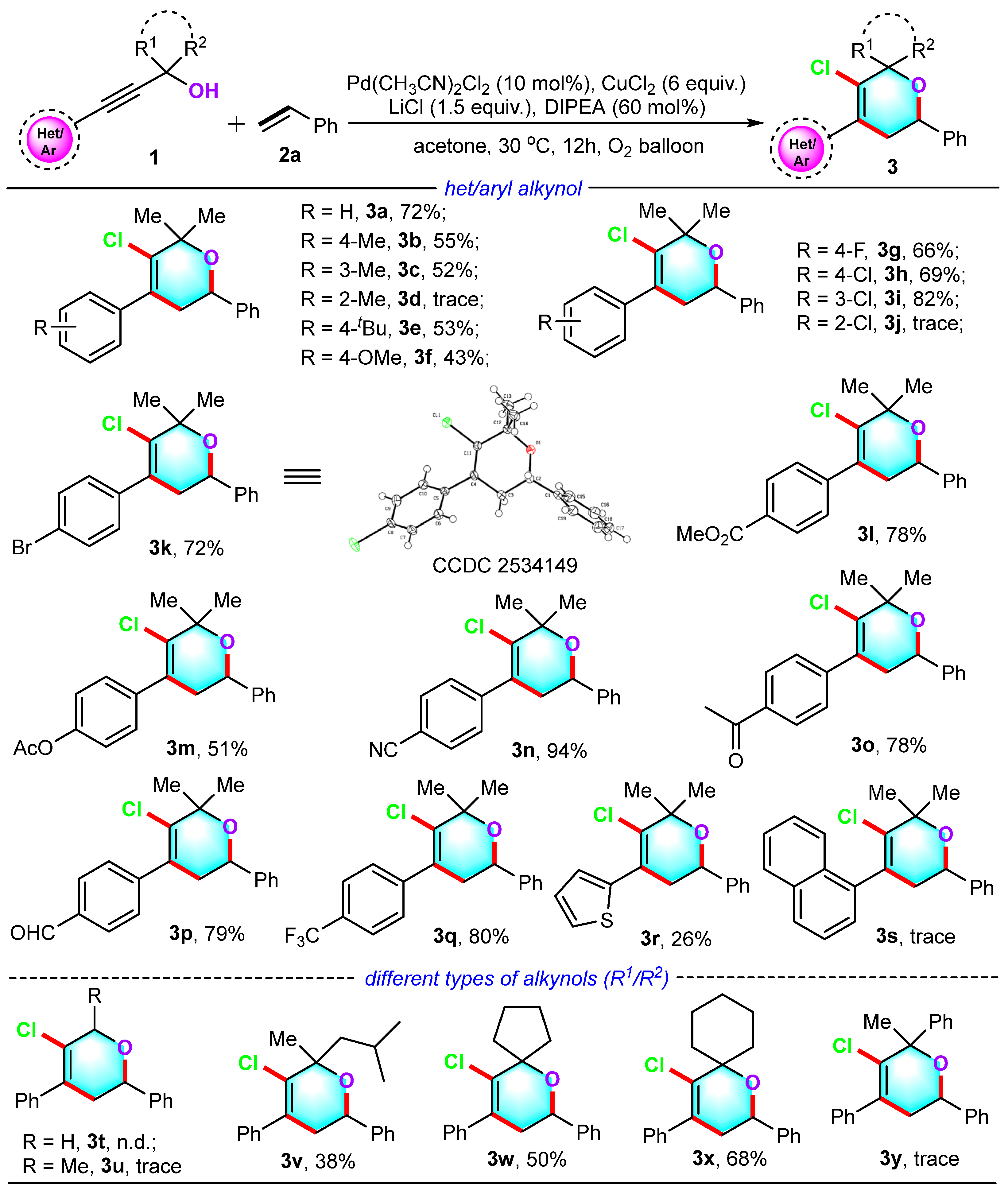
With the optimized reaction conditions in hand, the substrate scope of this palladium-catalyzed carboetherification was firstly investigated by employing different alkynols, and the representative experimental results were displayed in Figure 1. It is noteworthy that a variety of alkynols bearing electron-neutral (3a3e), electron-donating (3f), and electron-withdrawing (3g3q) substituents on the phenyl ring were well compatible with the optimized reaction conditions, delivering the corresponding 3,6-dihydro-2H-pyran derivatives in yields ranging from 43% to 94%. Thus, the reaction of aryl alkynols carrying the substituents at the para- or meta-positions of the phenyl ring is well tolerated under the optimized catalytic systems, affording the corresponding products 3b and 3c in 55% and 52% yields, respectively. However, ortho-substituted substrates were the sterically hindered ones for this transformation, and failed to deliver the desired products 3d and 3j. Delightfully, various halogen groups on the aromatic ring were also tolerated to this catalytic transformation, generating the expected products 3g3i in good yields respectively. Moreover, the absolute configuration of products 3k (CCDC 2534149) was determined unambiguously by single-crystal X-ray diffraction analysis. Notably, an impressive feature of this protocol is its high tolerance for functional groups. Representative examples include aryl alkynols with carboxylate ester group (3l), phenol ester group (3m), nitrile group (3n), acetyl (3o), aldehyde group (3p), and trifluoromethyl (3q), which were nicely accommodated, offering the corresponding products in good to excellent yields. It is worth mentioning that heterocyclic group, such as thiophene ring, was also amenable to this catalytic system, yielded the expected product 3r in a low yield. As for the different kinds of classification of alkynols, primary alcohol and one methyl, which substituted secondary alcohol, were not participated under our catalytic conditions, and failed to furnish the desired products 3t and 3u. Particularly, tertiary alcohol expect for the dimethyl group, 3,5-dimethyl-1-phenylhex-1-yn-3-ol (1v), 1-(phenylethynyl)cyclopentan-1-ol (1w), and 1-(phenylethynyl)cyclohexan-1-ol (1x) were possible coupling partners, producing the corresponding products 3v, 3w and 3x in moderate yields.
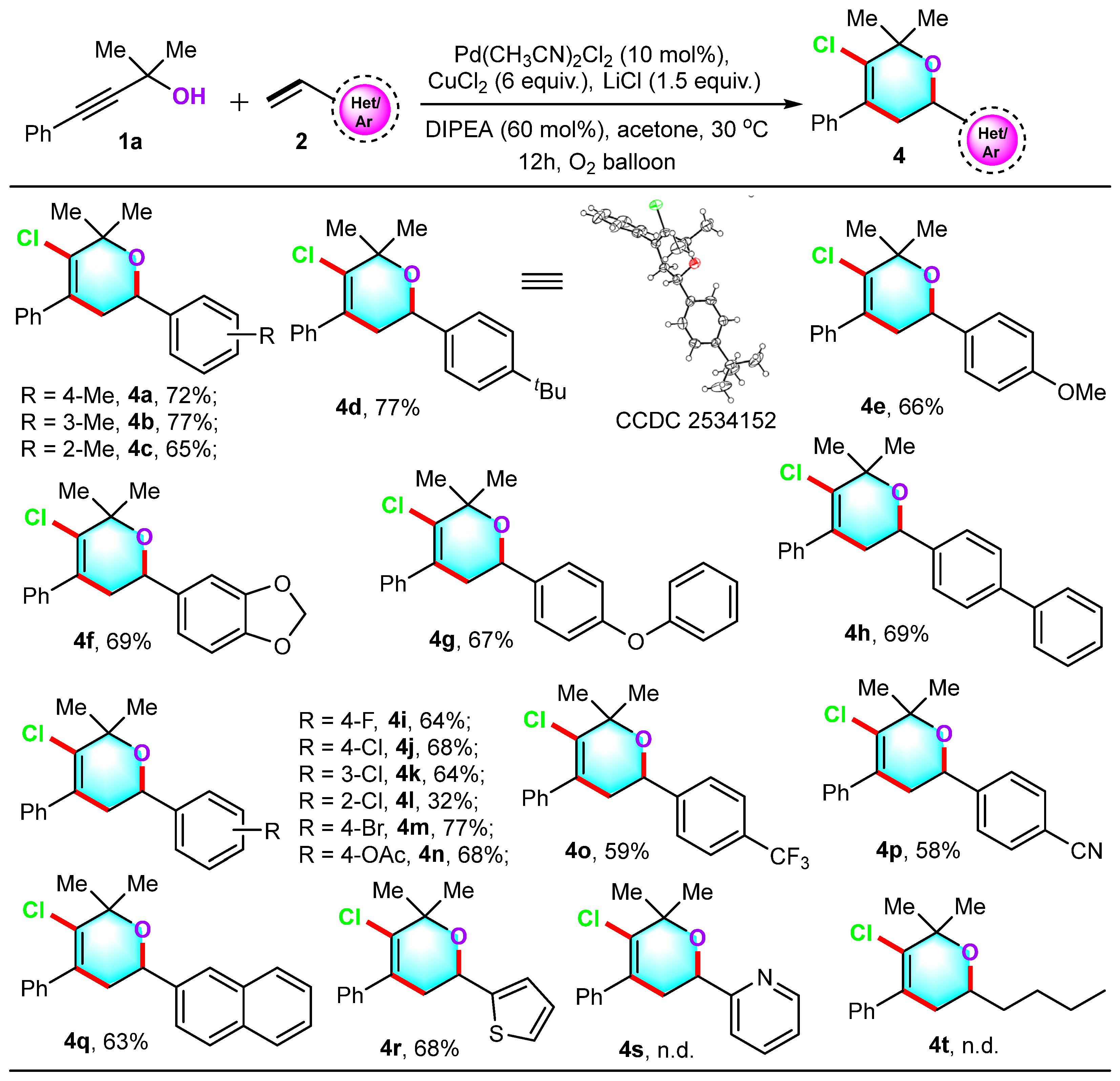
Subsequently, for further demonstrating the synthetic potential of this approach, the substrate scope with regard to alkenes were next evaluated. As summarized in Figure 2, both electron-donating and electron-withdrawing substituents at para-, meta-, or ortho-position on the phenyl ring of the alkenes were compatible with the current catalytic system, giving the corresponding products in 32–77% yields. The absolute configuration of 4d (CCDC 2534152) was also confirmed by X-ray diffraction analysis. Exemplified by 1-methoxy-4-vinylbenzene, 5-vinylbenzo[d][1,3]dioxole, and 1-phenoxy-4-vinylbenzene also worked well, producing the corresponding 2H-pyran derivatives 4e, 4f, and 4g in 66%, 69%, and 67% yields, respectively. Additionally, substrate bearing a phenyl group proved viable in this reaction, furnishing the functionalized 2H-pyran derivative 4h in good yield (69%). More importantly, the substrates containing a bulky substituent (4g and 4h, 67% and 69%%) did not affect the yields. Diverse halo substituents also proved to be the effective coupling partners in this tandem annulation approach, affording structurally diverse 2H-pyran derivatives in high yields (up to 77%), which may provide the opportunity for further transformation and modification via palladium-catalyzed coupling protocol [65,66,67]. This tandem annulation proceeded even with a p-acetoxyphenyl alkene, furnishing the corresponding product 4n in 68% yield. Additionally, as for the electron-deficient styrene derivatives 1o and 1p, the reaction gave the corresponding products 4o and 4p in similar yields. Especially, 2-vinylnaphthalene and heteroaromatic alkene could also be converted into the corresponding products 4q and 4r in good yields as well. However, alkyl alkene, such as hex-1-ene, proved completely ineffective, and failed to generate the desired product 4t.
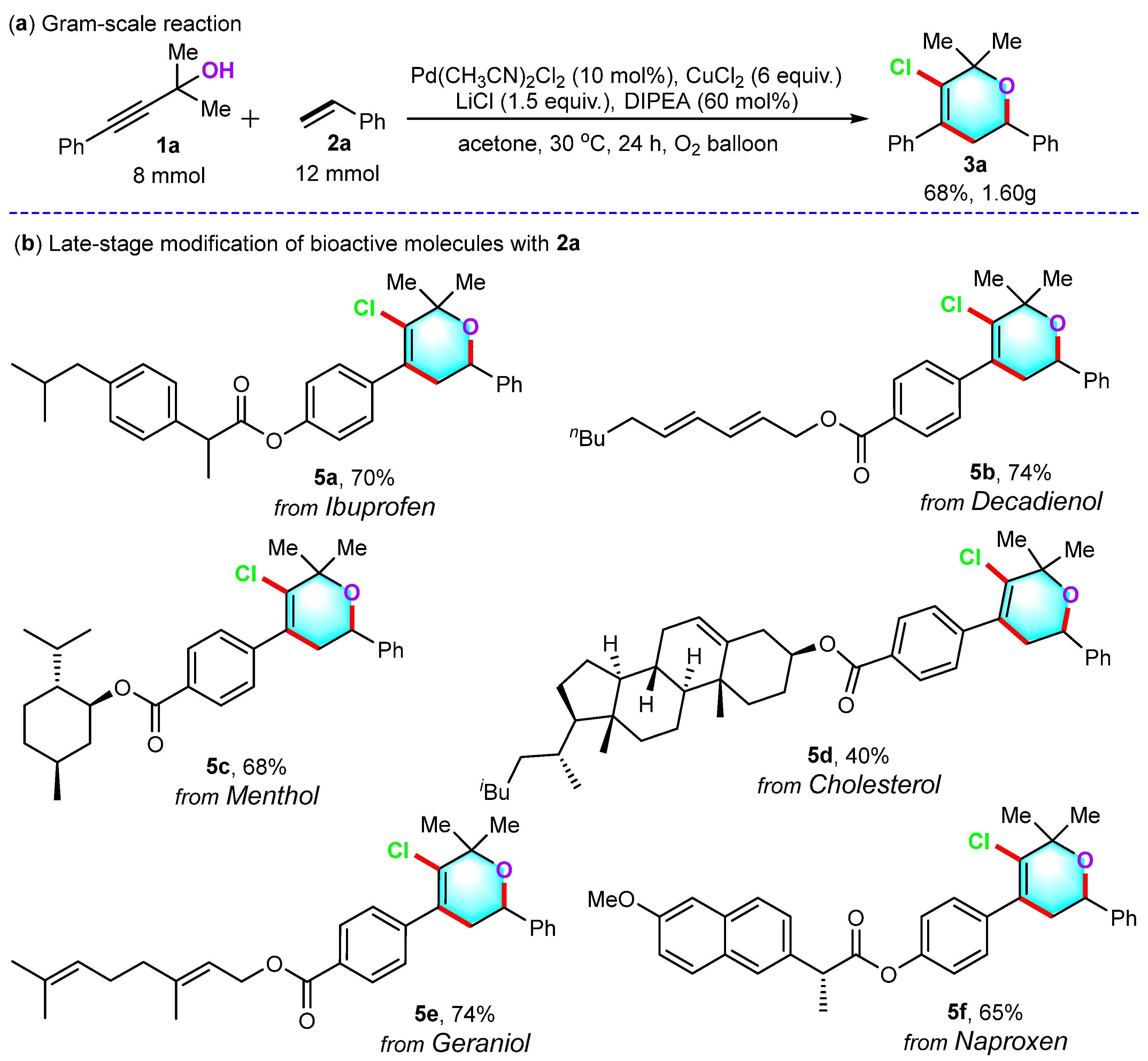
To further demonstrate the practicality and scalability of the current catalytic strategy, gram-scale synthesis and synthetic transformations were then conducted in Figure 3. It is particularly noteworthy that this cascade annulation reaction was scalable by the isolation of 1.60 g of 3a (68% yield) from 8 mmol scale reaction of 1a under the modified reaction conditions (Figure 3a). It is rather remarkable that this method can be successfully applied to an array of natural product derivatives and pharmaceutical analogs for late-stage functionalization. In particular, several styrene derived from Ibuprofen (5a), Decadienol (5b), Menthol (5c), Cholesterol (5d), Geraniol (5e), and Naproxen (5f) smoothly provided the corresponding 2H-pyran derivatives in good yields under the optimized reaction conditions (Figure 3b). Therefore, this synthetic strategy not only presents a straightforward and step-economical synthesis but also provides a versatile opportunity for the derivatization and late-stage functionalization.
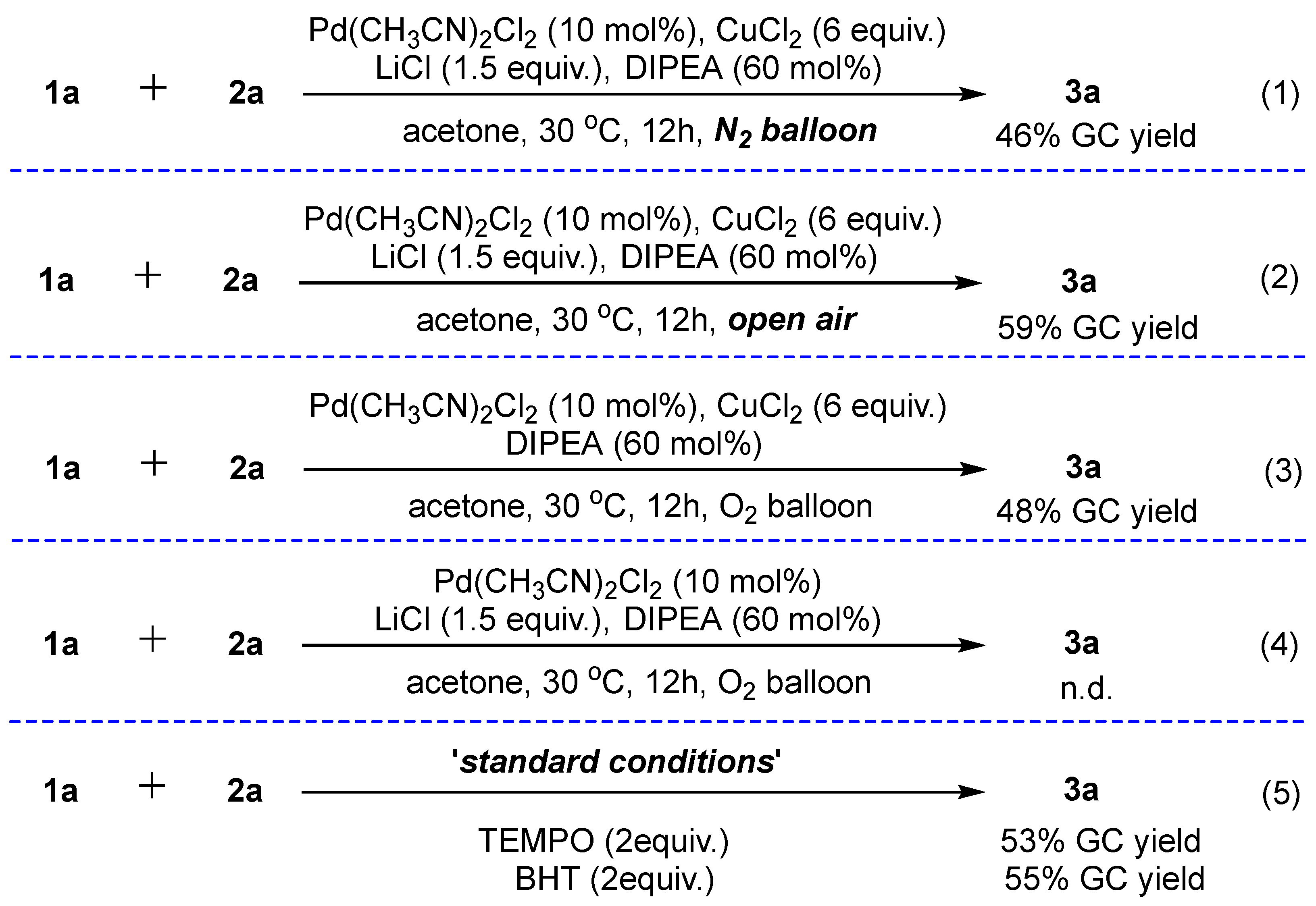
To elucidate the possible reaction mechanism of this catalytic system, several control experiments were further performed (Scheme 2). When 1a with 2a was employed under the N2 atmosphere condition, the efficiency of this carboetherification approach was significantly decreased, and the product 3a was detected in 46% GC yield by GC-MS analysis ((1) in Scheme 2). As expected, when the reaction was carried out in an air atmosphere, the yield of 3a was slightly increased ((2) in Scheme 2). These observations suggested that oxidative conditions may play a crucial role for this cascade carboetherification reaction. It is interesting to note that the yield of 3a was significantly decreased in the absence of LiCl under the optimized reaction conditions. Previous work supports that the lithium halides can significantly promote halopalladation-initiated tandem reactions [68,69,70]. In addition, when 1a with 2a was allowed to react in the absence of CuCl2, the desired product 3a was not detected by GC-MS analysis ((3) in Scheme 2). This result indicated that the Cu2+ as the oxidant played an irreplaceable role in this carboetherification reaction ((4) in Scheme 2). Furthermore, when TEMPO (2,2,6,6-tetramethylpiperidinooxy) and BHT (2,6-di-tbutyl-4-methylphenol) were employed as radical trapping reagents under the “standard conditions”, the formation of 3a in 53% and 55% yields, respectively. These results revealed that the radical intermediate was unlikely to be involved in this cascade reaction ((5) in Scheme 2).
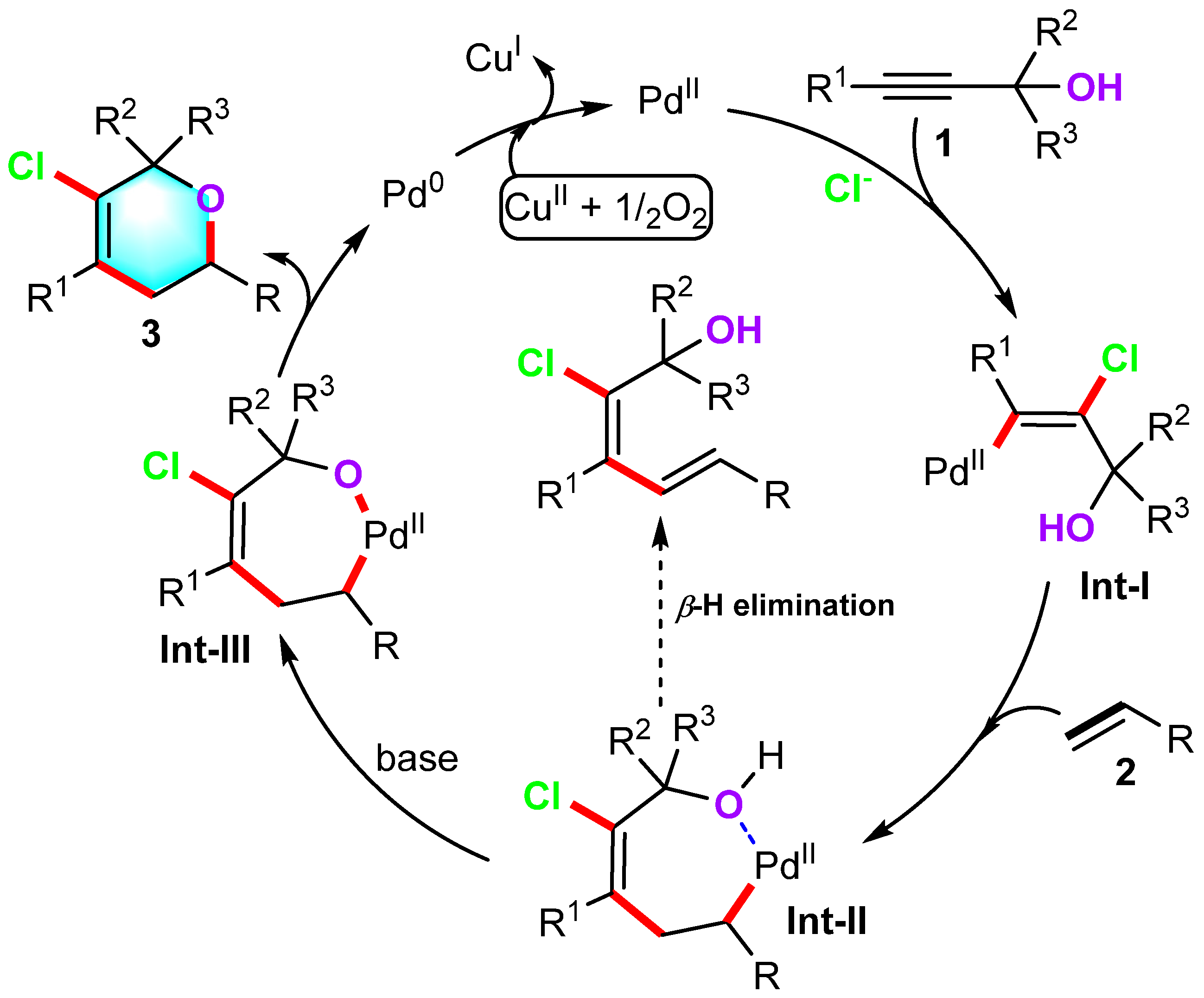
On the basis of our experimental observations and the relevant literature precedents, a tentative reaction mechanism for this palladium-catalyzed carboetherification of alkenes is presented in Scheme 3. Initially, in the presence of excess chloride ions, trans-chloropalladation of alkynols affords the vinylpalladium intermediate Int-I [71,72]. Subsequently, the catalytic species of Int-I was then captured by the alkene through the migratory insertion process to give σ-alkyl-Pd catalytic-active species Int-II [73]. In our previous studies, we found that the C(sp3)-Pd bond would undergo β-H elimination reaction in the absence of a coordinating group (the dashed-line arrows) [74,75,76]. The hydroxyl group of alkynols chelates with the PdII catalytic center to achieve coordination saturation, which may effectively suppress the elimination process [77]. As a result, the coordination interaction of hydroxyl group with palladium produces the seven-membered ring palladacycle intermediate Int-III with the assistance of the base. Then, a reductive elimination process of palladacycle intermediate Int-III generates the desired product 3 and zero-valent palladium active species. Finally, the PdII active species is regenerated by the oxidation with the CuII and O2, completing this catalytic cycle.

3. Materials and Methods

3.1. Materials

All the reagents were obtained from commercial sources and used directly without further purification. Melting points were measured on an Electrothemal SGW-X4 microscopy digital melting point apparatus (Wagner and Münz, Munich, Germany) and are uncorrected. The IR spectra were measured with an Agilent Cary 630 FT-IR spectrometer (Agilent Technologies, Santa Clara, CA, USA) using potassium bromide (KBr) pellet. 1H NMR and 13C NMR spectra were recorded on a Bruker AVANCE III 400 MHz (Bruker, Billerica, MA, USA) using CDCl3 as a solvent. The chemical shifts are referenced to signals at 0 or 7.26 and 77.0 ppm and chloroform as the solvent, with TMS as the internal standard. Chemical shifts (δ) are reported in ppm and coupling constants (J) are reported in Hertz (Hz). 19F NMR spectra were collected at 376 MHz on the same instrument and are referenced to internal C6H5F at δ −113.15. GC-MS data were obtained with a Thermo Scientific TRACE (Milan, Italy) 1300 and ISQ QD system equipped with a TG-5MS column. MS (ESI) was taken with a Varian 500-MS LC Ion Trap (Varian, Inc., Walnut Creek, CA, USA). High-resolution mass spectra (HRMS) were recorded on a JEOL JMS-600 spectrometer (Waters Corporation, Beijing, China). X-ray diffraction was measured on a ‘Bruker APEX-II CCD’ diffractometer (Bruker, Billerica, MA, USA) with Cu-Kα radiation. TLC analysis was performed on pre-coated, glass-backed silica gel plates (Qingdao Haiyang, Qingdao, China) and visualized with UV light. Flash column chromatography was performed on silica gel (200–300 mesh), with petroleum ether and ethyl acetate (Guanghua Corporation, Guangzhou, China) as eluents.

3.2. General Methods for the Preparation of Functionalized 2H-Pyran Derivatives

A mixture of Pd(CH3CN)Cl2 (0.02 mmol, 10 mol %), CuCl2 (1.2 mmol, 6 equiv.), LiCl (0.2 mmol, 1.5 equiv.), propargyl alcohol (1, 0.2 mmol), and acetone (2 mL) was added to a tube equipped with a stir-bar. Then, DIPEA (1.2 mmol, 60 mol %), and alkenes (2, 0.3 mmol, 1.5 equiv.) were added to the tube under oxygen and stirred at 30°C for 12 h. After the reaction was finished, the reaction was quenched by saturated aqueous NH4Cl and extracted with EtOAc three times. The combined organic layers were dried over anhydrous Na2SO4 and evaporated under vacuum. The residue was purified by flash column chromatography on silica gel (hexanes/ethyl acetate) to afford the desired functionalized 2H-pyran derivatives.
5-Chloro-6,6-dimethyl-2,4-diphenyl-3,6-dihydro-2H-pyran (3a): Alkynol 1a (0.20 mmol) with styrene 2a (0.30 mmol, 1.5 equiv.) gave compound 3a (72%, 42.9 mg) as a yellow solid, mp = 60.5–61.0 °C; 1H NMR (400 MHz, CDCl3) δ 7.47–7.43 (m, 2H), 7.38 (td, J = 7.5, 4.4 Hz, 4H), 7.35–7.27 (m, 4H), 4.96 (dd, J = 10.7, 3.2 Hz, 1H), 2.78 (dd, J = 16.9, 10.6 Hz, 1H), 2.60 (dd, J = 16.9, 3.1 Hz, 1H), 1.62 (d, J = 2.1 Hz, 6H); 13C NMR (100 MHz, CDCl3) δ 141.6, 139.9, 133.5, 131.9, 128.5, 128.2, 128.2, 127.7, 127.5, 126.1, 70.3, 40.9, 28.6, 24.3; νmax(KBr)/cm−1 2989, 1953, 1645, 1450, 1079, 962, 698, 578; MS (EI) m/z 77, 91, 129, 142, 157, 177, 192, 202, 219, 247, 263, 283, 298; HRMS-APCI (m/z): cal for C19H20ClO, [M + H]+: 299.1197, found 299.1199.
5-Chloro-6,6-dimethyl-2-phenyl-4-(p-tolyl)-3,6-dihydro-2H-pyran (3b): Alkynol 1b (0.20 mmol) with styrene 2a (0.30 mmol, 1.5 equiv.) gave compound 3b (55%, 34.3 mg) as a white solid, mp = 65.3–66.0 °C; 1H NMR (400 MHz, CDCl3) δ 7.34 (d, J = 7.6 Hz, 2H), 7.26 (t, J = 7.1 Hz, 2H), 7.21–7.14 (m, 2H), 7.05–6.99 (m, 3H), 4.84 (dd, J = 10.7, 2.9 Hz, 1H), 2.65 (ddt, J = 16.6, 10.7, 3.0 Hz, 1H), 2.52–2.45 (m, 1H), 2.27 (d, J = 5.5 Hz, 3H), 1.52 (d, J = 4.3 Hz, 6H); 13C NMR (100 MHz, CDCl3) δ 141.7, 139.9, 137.9, 133.3, 132.0, 128.7, 128.5, 128.2, 128.2, 127.7, 126.1, 125.2, 70.3, 41.0, 28.6, 24.3, 21.5; νmax(KBr)/cm−1 2076, 1619, 1355, 1070, 958, 698, 620; MS (EI) m/z 77, 91, 105, 141, 156, 171, 206, 219, 243, 261, 297, 312; HRMS-APCI (m/z): calcd for C20H22ClO, [M + H]+: 313.1354, found 313.1360.
5-Chloro-6,6-dimethyl-2-phenyl-4-(m-tolyl)-3,6-dihydro-2H-pyran (3c): Alkynol 1c (0.20 mmol) with styrene 2a (0.30 mmol, 1.5 equiv.) gave compound 3c (52%, 32.4 mg) as a white solid, mp = 55.2–56.4 °C; 1H NMR (400 MHz, CDCl3) δ 7.46 (d, J = 7.3 Hz, 2H), 7.39 (t, J = 7.6 Hz, 2H), 7.34–7.26 (m, 2H), 7.18–7.11 (m, 3H), 4.96 (dd, J = 10.6, 3.3 Hz, 1H), 2.78 (dd, J = 16.9, 10.8 Hz, 1H), 2.60 (dd, J = 16.9, 3.1 Hz, 1H), 2.39 (s, 3H), 1.63 (d, J = 3.0 Hz, 6H); 13C NMR (100 MHz, CDCl3) δ 155.8, 141.7, 139.9, 137.9, 133.3, 132.0, 128.7, 128.5, 128.2, 128.2, 127.7, 126.1, 125.2, 70.3, 41.0, 28.6, 24.3, 21.5; νmax(KBr)/cm−1 2980, 1618, 1369, 1070, 964, 623; MS (EI) m/z 77, 91, 105, 141, 156, 171, 206, 219, 243, 261, 297, 312; HRMS-APCI (m/z): calcd for C20H22ClO, [M + H]+: 313.1354, found 313.1364.
4-(4-(Tert-butyl)phenyl)-5-chloro-6,6-dimethyl-2-phenyl-3,6-dihydro-2H-pyran (3e): Alkynol 1e (0.20 mmol) with styrene 2a (0.30 mmol, 1.5 equiv.) gave compound 3e (53%, 37.5 mg) as a yellow solid, mp = 61.2–61.7; 1H NMR (400 MHz, CDCl3) δ 7.37–7.31 (m, 2H), 7.31–7.24 (m, 4H), 7.18 (d, J = 8.4 Hz, 3H), 4.85 (dd, J = 10.8, 3.1 Hz, 1H), 2.67 (dd, J = 16.9, 10.8 Hz, 1H), 2.51 (dd, J = 16.9, 3.1 Hz, 1H), 1.52 (d, J = 2.9 Hz, 6H), 1.24 (s, 9H); 13C NMR (100 MHz, CDCl3) δ 150.3, 141.7, 136.8, 133.1, 131.6, 128.5, 127.8, 127.7, 126.1, 125.1, 77.4, 70.3, 40.9, 34.6, 31.4, 28.6, 24.3; νmax(KBr)/cm−1 2963, 1617, 1360, 1069, 962, 621; MS (EI) m/z 77, 91, 105, 141, 157, 192, 205, 248, 283, 339, 354; HRMS-APCI (m/z): calcd for C23H28ClO, [M + H]+: 355.1823, found 355.1816.
5-Chloro-4-(4-methoxyphenyl)-6,6-dimethyl-2-phenyl-3,6-dihydro-2H-pyran (3f): Alkynol 1f (0.20 mmol) with styrene 2a (0.30 mmol, 1.5 equiv.) gave compound 3f (43%, 28.3 mg) as a white solid, mp = 62.5–63.2; 1H NMR (400 MHz, CDCl3) δ 7.44 (d, J = 7.2 Hz, 2H), 7.37 (dd, J = 8.5, 6.7 Hz, 2H), 7.32–7.26 (m, 3H), 6.94–6.88 (m, 2H), 4.94 (dd, J = 10.7, 3.1 Hz, 1H), 3.83 (s, 3H), 2.75 (dd, J = 16.8, 10.7 Hz, 1H), 2.58 (dd, J = 16.9, 3.2 Hz, 1H), 1.61 (d, J = 2.7 Hz, 6H); 13C NMR (100 MHz, CDCl3) δ 158.8, 141.7, 133.1, 132.1, 131.3, 129.4, 128.5, 127.7, 126.1, 113.6, 77.4, 70.3, 55.3, 41.0, 28.6, 24.3; νmax(KBr)/cm−1 2918, 1619, 1354, 1071, 964, 619; MS (EI) m/z 77, 91, 105, 141, 172, 207, 249, 293, 313, 328; HRMS-APCI (m/z): calcd for C20H22ClO, [M + H]+: 329.1303, found 329.1301.
5-Chloro-4-(4-fluorophenyl)-6,6-dimethyl-2-phenyl-3,6-dihydro-2H-pyran (3g): Alkynol 1g (0.20 mmol) with styrene 2a (0.30 mmol, 1.5 equiv.) gave compound 3g (66%, 41.5 mg) as a yellow solid, mp = 77.3–77.8; 1H NMR (400 MHz, CDCl3) δ 7.47–7.42 (m, 2H), 7.41–7.36 (m, 2H), 7.34–7.28 (m, 3H), 7.11–7.03 (m, 2H), 4.95 (dd, J = 10.6, 3.1 Hz, 1H), 2.76 (dd, J = 16.9, 10.8 Hz, 1H), 2.57 (dd, J = 16.9, 3.1 Hz, 1H), 1.62 (d, J = 2.4 Hz, 6H); 13C NMR (100 MHz, CDCl3) δ 162.0 (d, J = 246.7 Hz), 141.5, 135.7 (d, J = 3.3 Hz), 133.9, 130.9, 129.9 (d, J = 8.4 Hz), 128.5, 127.8, 126.1, 115.2 (d, J = 21.4 Hz), 77.4, 70.3, 41.0, 28.5, 24.2; 19F NMR (376 MHz, CDCl3) δ −114.3; νmax(KBr)/cm−1 2981, 2096, 1640, 1077, 697, 647; MS (EI) m/z 77, 91, 105, 133, 160, 175, 210, 247, 266, 301, 316; HRMS-APCI (m/z): calcd for C19H17ClFO, [M-H]: 315.0946, found 315.0943.
5-Chloro-4-(4-chlorophenyl)-6,6-dimethyl-2-phenyl-3,6-dihydro-2H-pyran (3h): Alkynol 1h (0.20 mmol) with styrene 2a (0.30 mmol, 1.5 equiv.) gave compound 3h (69%, 45.8 mg) as a yellow solid, mp = 66.6–67.2; 1H NMR (400 MHz, CDCl3) δ 7.41 (d, J = 7.3 Hz, 2H), 7.37–7.30 (m, 4H), 7.30–7.22 (m, 3H), 4.92 (dd, J = 10.7, 3.2 Hz, 1H), 2.72 (dd, J = 16.8, 10.7 Hz, 1H), 2.52 (dd, J = 16.9, 3.1 Hz, 1H), 1.59 (d, J = 3.4 Hz, 6H); 13C NMR (100 MHz, CDCl3) δ 141.5, 138.2, 134.2, 133.3, 130.8, 129.6, 128.5, 128.5, 127.8, 126.1, 77.4, 70.3, 40.8, 28.5, 24.3; νmax(KBr)/cm−1 2981, 1637, 1082, 576; MS (EI) m/z 77, 91, 105, 141, 156, 191, 226, 239, 263, 282, 317, 332; HRMS-APCI (m/z): calcd for C19H19Cl2O, [M + H]+: 333.0807, found 333.0802.
5-Chloro-4-(3-chlorophenyl)-6,6-dimethyl-2-phenyl-3,6-dihydro-2H-pyran (3i): Alkynol 1i (0.20 mmol) with styrene 2a (0.30 mmol, 1.5 equiv.) gave compound 3i (82%, 54.5 mg) as a yellow solid, mp = 53.6–54.3; 1H NMR (400 MHz, CDCl3) δ 7.45–7.41 (m, 2H), 7.37 (td, J = 7.4, 1.2 Hz, 2H), 7.34–7.26 (m, 4H), 7.21 (dt, J = 7.1, 1.7 Hz, 1H), 4.93 (dd, J = 10.6, 3.1 Hz, 1H), 2.75 (dd, J = 16.9, 10.6 Hz, 1H), 2.55 (dd, J = 16.9, 3.1 Hz, 1H), 1.61 (d, J = 1.8 Hz, 6H); 13C NMR (100 MHz, CDCl3) δ 141.6, 141.4, 134.4, 134.1, 130.7, 129.6, 128.5, 128.4, 127.8, 127.6, 126.4, 126.0, 77.4, 70.2, 40.7, 28.5, 24.2; νmax(KBr)/cm−1 2982, 1618, 1508, 1069, 836, 621, 512; MS (EI) m/z 77, 91, 105, 141, 156, 191, 226, 239, 263, 282, 317, 332; HRMS-APCI (m/z): calcd for C19H19Cl2O, [M + H]+: 333.0807, found 333.0800.
4-(4-Bromophenyl)-5-chloro-6,6-dimethyl-2-phenyl-3,6-dihydro-2H-pyran (3k): Alkynol 1k (0.20 mmol) with styrene 2a (0.30 mmol, 1.5 equiv.) gave compound 3k (72%, 54.1 mg) as a yellow solid, mp = 113.4–113.9; 1H NMR (400 MHz, CDCl3) δ 7.40–7.36 (m, 2H), 7.34–7.30 (m, 2H), 7.29–7.24 (m, 2H), 7.21–7.16 (m, 1H), 7.11–7.07 (m, 2H), 4.82 (dd, J = 10.7, 3.2 Hz, 1H), 2.63 (dd, J = 16.8, 10.7 Hz, 1H), 2.43 (dd, J = 16.9, 3.1 Hz, 1H), 1.50 (d, J = 4.3 Hz, 6H); 13C NMR (100 MHz, CDCl3) δ 141.5, 138.7, 134.2, 131.5, 130.9, 130.0, 128.6, 127.8, 126.1, 121.5, 77.4, 70.3, 40.7, 28.5, 24.3; νmax(KBr)/cm−1 2926, 2091, 1639, 1074, 753, 574; MS (EI) m/z 77, 91, 105, 141, 156, 176, 191, 203, 272, 343, 363, 376; HRMS-APCI (m/z): calcd for C19H19BrClO, [M + H]+: 377.0302, found 377.0297.
Methyl 4-(5-chloro-6,6-dimethyl-2-phenyl-3,6-dihydro-2H-pyran-4-yl)benzoate (3l): Alkynol 1l (0.20 mmol) with styrene 2a (0.30 mmol, 1.5 equiv.) gave compound 3l (78%, 55.5 mg) as a yellow solid, mp = 81.3–82.4; 1H NMR (400 MHz, CDCl3) δ 8.10–8.05 (m, 2H), 7.47–7.42 (m, 3H), 7.42–7.36 (m, 3H), 7.33–7.28 (m, 1H), 4.97 (dd, J = 10.6, 3.1 Hz, 1H), 3.93 (s, 3H), 2.79 (dd, J = 16.9, 10.6 Hz, 1H), 2.59 (dd, J = 16.9, 3.1 Hz, 1H), 1.63 (d, J = 3.0 Hz, 6H); 13C NMR (100 MHz, CDCl3) δ 166.8, 144.6, 141.4, 134.5, 131.2, 129.6, 129.2, 128.5, 128.3, 127.8, 126.1, 77.4, 70.3, 52.2, 40.6, 28.5, 24.3; νmax(KBr)/cm−1 2960, 2983, 2074, 1639, 1022, 702, 576; MS (EI) m/z 77, 91, 105, 141, 156, 191, 215, 235, 263, 309, 325, 341, 356; HRMS-APCI (m/z): calcd for C21H22ClO3, [M + H]+: 357.1252, found 357.1247.
4-(5-Chloro-6,6-dimethyl-2-phenyl-3,6-dihydro-2H-pyran-4-yl)phenyl acetate (3m): Alkynol 1m (0.20 mmol) with styrene 2a (0.30 mmol, 1.5 equiv.) gave compound 3m (51%, 38.0 mg) as a colorless oil; 1H NMR (400 MHz, CDCl3) δ 7.47–7.43 (m, 2H), 7.41–7.35 (m, 4H), 7.34–7.30 (m, 1H), 7.14–7.09 (m, 2H), 4.95 (dd, J = 10.7, 3.1 Hz, 1H), 2.77 (dd, J = 16.9, 10.7 Hz, 1H), 2.60 (dd, J = 16.9, 3.1 Hz, 1H), 2.33 (s, 3H), 1.62 (s, 6H); 13C NMR (100 MHz, CDCl3) δ 169.5, 149.8, 141.5, 137.3, 133.9, 131.0, 129.4, 128.5, 128.5, 127.8, 126.0, 126.0, 121.3, 77.4, 70.2, 40.8, 28.5, 24.3, 21.2; νmax(KBr)/cm−1 3673, 2986, 2902, 1758, 1507, 1391, 1204, 1167, 1053, 911; MS (EI) m/z 77, 91, 105, 173, 193, 235, 263, 299, 321, 341, 356; HRMS-APCI (m/z): calcd for C21H25ClO3N1, [M + NH3 + H]+: 374.1517, found 374.1516.
4-(5-Chloro-6,6-dimethyl-2-phenyl-3,6-dihydro-2H-pyran-4-yl)benzonitrile (3n): Alkynol 1n (0.20 mmol) with styrene 2a (0.30 mmol, 1.5 equiv.) gave compound 3n (94%, 60.7 mg) as a white solid, mp = 148.2–148.8 °C; 1H NMR (400 MHz, CDCl3) δ 7.69–7.64 (m, 2H), 7.46–7.40 (m, 4H), 7.40–7.35 (m, 2H), 7.33–7.28 (m, 1H), 4.94 (dd, J = 10.6, 3.1 Hz, 1H), 2.76 (dd, J = 16.8, 10.6 Hz, 1H), 2.54 (dd, J = 16.8, 3.1 Hz, 1H), 1.61 (s, 6H); 13C NMR (100 MHz, CDCl3) δ 144.5, 141.2, 135.4, 132.1, 130.5, 129.1, 128.6, 127.9, 126.0, 118.7, 111.3, 77.4, 70.2, 40.4, 28.4, 24.2; νmax(KBr)/cm−1 2926, 2220, 1602, 1167, 1074, 958, 839, 767, 694; MS (EI) m/z 77, 91, 105, 140, 167, 182, 202, 217, 244, 288, 308, 323; HRMS-APCI (m/z): calcd for C20H19ClNO, [M + H]+: 324.1150, found 324.1145.
1-(4-(5-Chloro-6,6-dimethyl-2-phenyl-3,6-dihydro-2H-pyran-4-yl)phenyl)ethan-1-one (3o): Alkynol 1o (0.20 mmol) with styrene 2a (0.30 mmol, 1.5 equiv.) gave compound 3o (78%, 53.0 mg) as a yellow oil; 1H NMR (400 MHz, CDCl3) δ 7.97 (d, J = 8.4 Hz, 2H), 7.47–7.41 (m, 4H), 7.37 (t, J = 7.5 Hz, 2H), 7.30 (dd, J = 8.4, 5.9 Hz, 1H), 4.96 (dd, J = 10.7, 3.2 Hz, 1H), 2.78 (dd, J = 16.9, 10.6 Hz, 1H), 2.62 (s, 3H), 2.60–2.55 (m, 1H), 1.62 (d, J = 1.9 Hz, 6H); 13C NMR (100 MHz, CDCl3) δ 197.7, 144.7, 141.4, 136.0, 134.6, 131.1, 128.6, 128.5, 128.4, 127.9, 126.1, 77.4, 70.2, 40.6, 28.5, 26.7, 24.3; νmax(KBr)/cm−1 2989, 2093, 1682, 1266, 1090, 604; MS (EI) m/z 77, 91, 105, 141, 156, 176, 199, 234, 283, 305, 325, 340; HRMS-APCI (m/z): calcd for C21H22ClO2, [M + H]+: 341.1303, found 341.1302.
4-(5-Chloro-6,6-dimethyl-2-phenyl-3,6-dihydro-2H-pyran-4-yl)benzaldehyde (3p): Alkynol 1p (0.20 mmol) with styrene 2a (0.30 mmol, 1.5 equiv.) gave compound 3p (79%, 51.5 mg) as a yellow oil; 1H NMR (400 MHz, CDCl3) δ 10.04 (s, 1H), 7.92 (d, J = 6.3 Hz, 2H), 7.52 (d, J = 8.3 Hz, 2H), 7.46 (dd, J = 8.4, 1.5 Hz, 2H), 7.42–7.37 (m, 2H), 7.35–7.30 (m, 1H), 4.98 (dd, J = 10.6, 3.1 Hz, 1H), 2.81 (dd, J = 16.8, 10.7 Hz, 1H), 2.60 (dd, J = 16.8, 3.1 Hz, 1H), 1.64 (s, 6H); 13C NMR (100 MHz, CDCl3) δ 191.8, 146.1, 141.3, 135.3, 134.9, 131.0, 129.8, 129.0, 128.6, 127.9, 126.0, 77.5, 70.2, 40.5, 28.4, 24.2; νmax(KBr)/cm−1 2984, 1636, 1170, 838, 576; MS (EI) m/z 77, 91, 105, 141, 157, 192, 247, 275, 311, 326; HRMS-APCI (m/z): calcd for C20H20ClO2, [M + H]+: 327.1146, found 327.1141.
Chloro-6,6-dimethyl-2-phenyl-4-(4-(trifluoromethyl)phenyl)-3,6-dihydro-2H-pyran (3q): Alkynol 1q (0.20 mmol) with styrene 2a (0.30 mmol, 1.5 equiv.) gave compound 3q (80%, 58.6mg) as a yellow solid, mp = 68.4–69.6 °C; 1H NMR (400 MHz, CDCl3) δ 7.66 (d, J = 8.3 Hz, 2H), 7.47 (d, J = 8.1 Hz, 4H), 7.43–7.37 (m, 2H), 7.36–7.30 (m, 1H), 4.99 (dd, J = 10.6, 3.1 Hz, 1H), 2.80 (dd, J = 16.9, 10.6 Hz, 1H), 2.59 (dd, J = 16.8, 3.2 Hz, 1H), 1.65 (d, J = 2.3 Hz, 6H); 13C NMR (100 MHz, CDCl3) δ 143.5, 141.4, 134.8, 130.9, 129.6 (q, J = 33.1 Hz), 128.7, 128.6, 127.9, 126.1, 125.3 (q, J = 4.0 Hz), 124.2 (q, J = 271.9 Hz), 77.4, 70.2, 40.7, 28.5, 24.2; 19F NMR (376 MHz, CDCl3) δ −62.5; νmax(KBr)/cm−1 2983, 1616, 1325, 1167, 1065, 608; MS (EI) m/z 77, 91, 105, 141, 156, 191, 210, 225, 245, 260, 287, 315, 351, 366; HRMS-APCI (m/z): calcd for C20H19ClF3O, [M + H]+: 367.1071, found 367.1064.
5-Chloro-6,6-dimethyl-2-phenyl-4-(thiophen-2-yl)-3,6-dihydro-2H-pyran (3r): Alkynol 1r (0.20 mmol) with styrene 2a (0.30 mmol, 1.5 equiv.) gave compound 3r (26%, 15.8mg) as a brown solid, mp = 43.8–44.5 °C; 1H NMR (400 MHz, CDCl3) δ 7.48–7.44 (m, 2H), 7.43–7.37 (m, 2H), 7.36–7.29 (m, 3H), 7.05 (dd, J = 5.3, 3.8 Hz, 1H), 4.92 (dd, J = 8.5, 5.4 Hz, 1H), 2.89–2.83 (m, 2H), 1.62 (d, J = 0.9 Hz, 6H); 13C NMR (100 MHz, CDCl3) δ 141.6, 140.6, 133.0, 128.6, 127.9, 126.8, 126.3, 126.2, 126.1, 124.2, 77.9, 70.3, 39.9, 28.9, 24.5; νmax(KBr)/cm−1 2928, 1619, 1071, 961, 620; MS (EI) m/z 77, 91, 105, 148, 165, 198, 225, 269, 289, 304; HRMS-APCI (m/z): calcd for C17H18ClOS, [M + H]+: 305.0761, found 305.0757.
5-Chloro-6-isobutyl-6-methyl-2,4-diphenyl-3,6-dihydro-2H-pyran (3v): Alkynol 1v (0.20 mmol) with styrene 2a (0.30 mmol, 1.5 equiv.) gave compound 3v (38%, 25.8mg) as a white oil; 1H NMR (400 MHz, CDCl3) δ 7.44 (d, J = 7.1 Hz, 2H), 7.41–7.34 (m, 4H), 7.34–7.27 (m, 4H), 4.99–4.92 (m, 1H), 2.74 (ddd, J = 16.0, 10.6, 5.4 Hz, 1H), 2.63–2.55 (m, 1H), 2.05–1.89 (m, 2H), 1.76–1.63 (m, 1H), 1.58 (d, J = 11.1 Hz, 3H), 1.17–0.97 (m, 6H); 13C NMR (100 MHz, CDCl3) δ 142.0, 141.7, 140.1, 140.0, 134.5, 133.3, 132.6, 131.5, 128.5, 128.4, 128.3, 128.2, 128.1, 128.1, 127.6, 127.5, 127.5, 127.4, 126.0, 125.9, 80.1, 79.6, 77.3, 70.6, 69.7, 48.5, 42.9, 41.5, 41.0, 25.6, 25.3, 24.9, 24.7, 24.7, 24.3, 24.0, 23.9; νmax(KBr)/cm−1 2954, 1618, 1071, 962, 622; MS (EI) m/z 77, 91, 105, 141, 156, 191, 205, 247, 283, 325, 340; HRMS-APCI (m/z): calcd for C22H26ClO, [M + H]+: 341.1667, found 341.1669.
10-Chloro-7,9-diphenyl-6-oxaspiro[4.5]dec-9-ene (3w): Alkynol 1w (0.20 mmol) with styrene 2a (0.30 mmol, 1.5 equiv.) gave compound 3w (50%, 32.4mg) as a white solid, mp = 70.4–71.2 °C; 1H NMR (400 MHz, CDCl3) δ 7.46–7.34 (m, 8H), 7.34–7.27 (m, 2H), 4.86 (dd, J = 10.6, 3.3 Hz, 1H), 2.79 (dd, J = 16.8, 10.6 Hz, 1H), 2.65 (dd, J = 16.9, 3.3 Hz, 1H), 2.43 (qd, J = 10.3, 6.0 Hz, 1H), 2.18–2.02 (m, 2H), 2.01–1.90 (m, 2H), 1.89–1.70 (m, 3H); 13C NMR (100 MHz, CDCl3) δ 141.8, 140.1, 132.8, 132.1, 128.4, 128.2, 127.5, 127.4, 125.9, 88.0, 70.8, 40.5, 39.3, 35.7, 25.5, 25.3; νmax(KBr)/cm−1 2960, 1360, 1167, 1080, 1019, 961, 839, 760, 697, 562; MS (EI) m/z 77, 91, 115, 141, 167, 183, 218, 246, 271, 289, 306, 324; HRMS-APCI (m/z): calcd for C21H22ClO, [M + H]+: 325.1354, found 325.1347.
5-Chloro-2,4-diphenyl-1-oxaspiro[5.5]undec-4-ene (3x): Alkynol 1x (0.20 mmol) with styrene 2a (0.30 mmol, 1.5 equiv.) gave compound 3x (68%, 46.0mg) as a white solid, mp = 92.3–93.2 °C; 1H NMR (400 MHz, CDCl3) δ 7.53–7.48 (m, 2H), 7.43–7.36 (m, 4H), 7.36–7.28 (m, 4H), 4.94 (dd, J = 9.7, 4.2 Hz, 1H), 2.79–2.66 (m, 2H), 2.24–2.09 (m, 2H), 1.98–1.86 (m, 2H), 1.82 (dd, J = 12.9, 2.4 Hz, 1H), 1.76–1.64 (m, 3H), 1.63–1.21 (m, 3H); 13C NMR (100 MHz, CDCl3) δ 142.1, 140.3, 134.2, 132.4, 128.4, 128.2, 128.2, 127.4, 127.4, 125.7, 77.8, 68.6, 40.8, 35.8, 29.9, 25.3, 21.4, 21.2; νmax(KBr)/cm−1 3061, 2930, 1601, 1069, 946, 697, 541; MS (EI) m/z 77, 91, 115, 155, 197, 232, 246, 281, 303, 338; HRMS-APCI (m/z): calcd for C22H24ClO, [M + H]+: 339.1510, found 339.1511.
5-Chloro-6,6-dimethyl-4-phenyl-2-(p-tolyl)-3,6-dihydro-2H-pyran (4a): Alkynol 1a (0.20 mmol) with 1-methyl-4-vinylbenzene 2b (0.30 mmol, 1.5 equiv.) gave compound 4a (72%, 44.9mg) as a yellow oil; 1H NMR (400 MHz, CDCl3) δ 7.36 (dd, J = 17.0, 7.4 Hz, 7H), 7.19 (d, J = 7.8 Hz, 2H), 4.92 (dd, J = 10.7, 3.1 Hz, 1H), 2.79 (dd, J = 16.9, 10.7 Hz, 1H), 2.58 (dd, J = 16.8, 3.1 Hz, 1H), 2.36 (s, 3H), 1.62 (s, 6H); 13C NMR (100 MHz, CDCl3) δ 140.0, 138.6, 137.4, 133.5, 131.9, 129.2, 128.2, 128.2, 127.4, 126.1, 77.4, 70.2, 40.9, 28., 24.3, 21.2; νmax(KBr)/cm−1 2944, 2891, 2865, 1713, 1465, 1444, 1267, 1117, 1093, 998, 771, 747, 694; MS (EI) m/z 77, 91, 105, 115, 142, 157, 177, 192, 205, 233, 262, 297, 312; HRMS-APCI (m/z): calcd for C20H22ClO, [M + H]+: 313.1354, found 313.1351.
5-Chloro-6,6-dimethyl-4-phenyl-2-(m-tolyl)-3,6-dihydro-2H-pyran (4b): Alkynol 1a (0.20 mmol) with 1-methyl-3-vinylbenzene 2c (0.30 mmol, 1.5 equiv.) gave compound 4b (77%, 48.0mg) as a yellow oil; 1H NMR (400 MHz, CDCl3) δ 7.29–7.24 (m, 2H), 7.24–7.18 (m, 3H), 7.17–7.11 (m, 3H), 7.00 (d, J = 7.0 Hz, 1H), 4.81 (dd, J = 10.7, 3.2 Hz, 1H), 2.67 (dd, J = 16.9, 10.8 Hz, 1H), 2.47 (dd, J = 16.9, 3.1 Hz, 1H), 2.27 (s, 3H), 1.52 (d, J = 4.8 Hz, 6H); 13C NMR (100 MHz, CDCl3) δ 141.6, 140.0, 138.2, 133.5, 132.0, 128.5, 128.4, 128.3, 128.2, 127.5, 126.8, 123.2, 77.4, 70.4, 41.0, 28.6, 24.3, 21.6; νmax(KBr)/cm−1 2076, 2860, 2141, 1719, 1616, 1489, 1380, 1279, 1101, 1081, 980, 942, 889, 869, 627; MS (EI) m/z 77, 91, 105, 115, 142, 157, 177, 192, 205, 233, 262, 297, 312; HRMS-APCI (m/z): calcd for C20H22ClO, [M + H]+: 313.1354, found 313.1354.
5-Chloro-6,6-dimethyl-4-phenyl-2-(o-tolyl)-3,6-dihydro-2H-pyran (4c): Alkynol 1a (0.20 mmol) with 1-methyl-2-vinylbenzene 2d (0.30 mmol, 1.5 equiv.) gave compound 4c (65%, 40.6mg) as a yellow oil; 1H NMR (400 MHz, CDCl3) δ 7.52 (d, J = 7.5 Hz, 1H), 7.40–7.28 (m, 5H), 7.24–7.13 (m, 3H), 5.11 (dd, J = 10.8, 3.1 Hz, 1H), 2.80 (dd, J = 16.9, 10.8 Hz, 1H), 2.51 (dd, J = 16.9, 3.0 Hz, 1H), 2.40 (s, 3H), 1.61 (d, J = 6.1 Hz, 6H); 13C NMR (100 MHz, CDCl3) δ 139.9, 139.4, 135.0, 133.4, 132.1, 130.5, 128.2, 128.2, 127.7, 127.5, 126.5, 126.0, 77.5, 67.4, 39.5, 28.6, 24.3, 19.4; νmax(KBr)/cm−1 3020, 2836, 2052, 1637, 1376, 1079, 751, 624; MS (EI) m/z 77, 91, 105, 115, 142, 157, 177, 192, 205, 233, 262, 297, 312; HRMS-APCI (m/z): calcd for C20H22ClO, [M + H]+: 313.1354, found 313.1363.
2-(4-(tert-Butyl)phenyl)-5-chloro-6,6-dimethyl-4-phenyl-3,6-dihydro-2H-pyran (4d): Alkynol 1a (0.20 mmol) with 1-(tert-butyl)-4-vinylbenzene 2e (0.30 mmol, 1.5 equiv.) gave compound 4d (77%, 54.5mg) as a white solid, mp = 93.4–94.0 °C; 1H NMR (400 MHz, CDCl3) δ 7.41–7.33 (m, 6H), 7.33–7.27 (m, 3H), 4.91 (dd, J = 10.8, 3.1 Hz, 1H), 2.79 (dd, J = 16.8, 10.7 Hz, 1H), 2.56 (dd, J = 16.9, 3.1 Hz, 1H), 1.59 (s, 6H), 1.30 (s, 9H); 13C NMR (100 MHz, CDCl3) δ 150.7, 140.0, 138.5, 133.5, 132.0, 128.2, 128.2, 127.4, 125.9, 125.4, 77.4, 70.2, 40.7, 34.6, 31.4, 28.6, 24.3; νmax(KBr)/cm−1 2963, 1637, 1368, 1084, 622; MS (EI) m/z 77, 91, 105, 115, 142, 157, 192, 205, 247, 263, 283, 319, 339, 354; HRMS-APCI (m/z): calcd for C23H28ClO, [M + H]+: 355.1823, found 355.1816.
5-Chloro-2-(4-methoxyphenyl)-6,6-dimethyl-4-phenyl-3,6-dihydro-2H-pyran (4e): Alkynol 1a (0.20 mmol) with 1-methoxy-4-vinylbenzene 2f (0.30 mmol, 1.5 equiv.) gave compound 4e (66%, 43.3mg) as a white solid, mp = 72.2–72.7 °C; 1H NMR (400 MHz, CDCl3) δ 7.43–7.39 (m, 2H), 7.38–7.35 (m, 3H), 7.35–7.29 (m, 2H), 6.95–6.90 (m, 2H), 4.92 (dd, J = 10.8, 3.1 Hz, 1H), 3.82 (s, 3H), 2.80 (dd, J = 16.9, 10.6 Hz, 1H), 2.58 (dd, J = 16.9, 3.1 Hz, 1H), 1.63 (d, J = 2.0 Hz, 6H); 13C NMR (100 MHz, CDCl3) δ 159.2, 140.0, 133.8, 133.5, 132.0, 128.2, 128.2, 127.5, 113.9, 77.4, 70.0, 55.4, 40.9, 28.6, 24.3; νmax(KBr)/cm−1 2918, 1616, 1248, 1082, 623; MS (EI) m/z 77, 91, 121, 142, 157, 192, 205, 249, 291, 313, 328; HRMS-APCI (m/z): calcd for C20H22ClO, [M + H]+: 329.1128, found 329.1122.
5-(5-Chloro-6,6-dimethyl-4-phenyl-3,6-dihydro-2H-pyran-2-yl)benzo[d][1,3]dioxole (4f): Alkynol 1a (0.20 mmol) with 5-vinylbenzo[d][1,3]dioxole 2g (0.30 mmol, 1.5 equiv.) gave compound 4f (69%, 47.2 mg) as a yellow oil; 1H NMR (400 MHz, CDCl3) δ 7.43–7.37 (m, 2H), 7.36–7.29 (m, 3H), 6.99 (d, J = 1.9 Hz, 1H), 6.89 (dd, J = 8.0, 1.8 Hz, 1H), 6.81 (d, J = 8.0 Hz, 1H), 5.95 (q, J = 1.5 Hz, 2H), 4.88 (dd, J = 10.6, 3.1 Hz, 1H), 2.77 (dd, J = 16.9, 10.6 Hz, 1H), 2.56 (dd, J = 16.9, 3.1 Hz, 1H), 1.62 (s, 6H); 13C NMR (100 MHz, CDCl3) δ 147.9, 147.1, 139.9, 135.6, 133.4, 131.8, 128.3, 128.2, 127.5, 119.6, 108.2, 106.9, 101.1, 77.5, 70.2, 41.0, 28.6, 24.3; νmax(KBr)/cm−1 2980, 1617, 1248, 1039, 626; MS (EI) m/z 77, 91, 115, 142, 157, 192, 205, 219, 248, 291, 327, 342; HRMS-APCI (m/z): calcd for C20H20ClO3, [M + H]+: 343.1095, found 343.1091.
5-Chloro-6,6-dimethyl-2-(4-phenoxyphenyl)-4-phenyl-3,6-dihydro-2H-pyran (4g): Alkynol 1a (0.20 mmol) with 1-phenoxy-4-vinylbenzene 2h (0.30 mmol, 1.5 equiv.) gave compound 4g (67%, 52.3 mg) as a yellow oil; 1H NMR (400 MHz, CDCl3) δ 7.48–7.42 (m, 4H), 7.41–7.33 (m, 5H), 7.16 (tt, J = 7.0, 1.1 Hz, 1H), 7.07 (ddd, J = 8.6, 2.7, 1.6 Hz, 4H), 5.00 (dd, J = 10.6, 3.1 Hz, 1H), 2.84 (dd, J = 16.9, 10.8 Hz, 1H), 2.65 (dd, J = 16.9, 3.1 Hz, 1H), 1.68 (s, 6H); 13C NMR (100 MHz, CDCl3) δ 157.3, 156.7, 139.9, 136.6, 133.5, 131.9, 129.8, 128.3, 128.2, 127.7, 127.5, 123.3, 119.0, 118.8, 77.5, 70.0, 41.0, 28.6, 24.3; νmax(KBr)/cm−1 2980, 2032, 1592, 1488, 1240, 628; MS (EI) m/z 77, 91, 115, 142, 157, 192, 202, 245, 281, 297, 311, 339, 375, 390; HRMS-APCI (m/z): calcd for C25H24ClO2, [M + H]+: 391,1459, found 391.1465.
2-([1,1’-Biphenyl]-4-yl)-5-chloro-6,6-dimethyl-4-phenyl-3,6-dihydro-2H-pyran (4h): Alkynol 1a (0.20 mmol) with 4-vinyl-1,1’-biphenyl 2i (0.30 mmol, 1.5 equiv.) gave compound 4h (69%, 51.6mg) as a gray solid, mp = 108.3–108.9 °C; 1H NMR (400 MHz, CDCl3) δ 7.65–7.60 (m, 4H), 7.56–7.52 (m, 2H), 7.47 (td, J = 6.7, 1.7 Hz, 2H), 7.44–7.31 (m, 6H), 5.03 (dd, J = 10.8, 3.1 Hz, 1H), 2.85 (dd, J = 16.8, 10.7 Hz, 1H), 2.66 (dd, J = 16.9, 3.1 Hz, 1H), 1.67 (d, J = 2.0 Hz, 6H);13C NMR (100 MHz, CDCl3) δ 141.0, 140.8, 140.7, 139.9, 133.6, 131.9, 128.8, 128.3, 128.2, 127.5, 127.3, 127.2, 126.6, 77.5, 70.2, 40.9, 28.6, 24.3; νmax(KBr)/cm−1 2984, 2928, 2891, 1617, 1355, 1072, 624; MS (EI) m/z 77, 91, 115, 141, 157, 177, 192, 205, 265, 324, 359, 374; HRMS-APCI (m/z): calcd for C25H24ClO, [M + H]+: 375.1510, found 375.1499.
5-Chloro-2-(4-fluorophenyl)-6,6-dimethyl-4-phenyl-3,6-dihydro-2H-pyran (4i): Alkynol 1a (0.20 mmol) with 1-fluoro-4-vinylbenzene 2j (0.30 mmol, 1.5 equiv.) gave compound 4i (64%, 40.2 mg) as a white solid, mp = 70.0–71.2 °C; 1H NMR (400 MHz, CDCl3) δ 7.44–7.36 (m, 4H), 7.35–7.28 (m, 3H), 7.09–7.03 (m, 2H), 4.94 (dd, J = 10.6, 3.1 Hz, 1H), 2.74 (dd, J = 16.9, 10.6 Hz, 1H), 2.58 (dd, J = 16.8, 3.2 Hz, 1H), 1.62 (d, J = 1.3 Hz, 6H); 13C NMR (100 MHz, CDCl3) δ 162.3 (d, J = 245.5 Hz), 139.8, 137.4 (d, J = 3.1 Hz), 133.5, 128.3, 128.1, 127.8 (d, J = 8.0 Hz), 127.5, 115.3 (d, J = 21.3 Hz), 77.5, 69.7, 41.0, 28.5, 24.3. 19F NMR (376 MHz, CDCl3) δ −114.8; νmax(KBr)/cm−1 2984, 2902, 1510, 1394, 1225, 1156, 1080, 1051, 908, 834, 757; MS (EI) m/z 77, 95, 109, 123, 142, 157, 177, 192, 220, 237, 266, 281, 301, 316; HRMS-APCI (m/z): calcd for C19H17ClFO, [M-H]: 315.0957, found 315.0961.
5-Chloro-2-(4-chlorophenyl)-6,6-dimethyl-4-phenyl-3,6-dihydro-2H-pyran (4j): Alkynol 1a (0.20 mmol) with 1-chloro-4-vinylbenzene 2k (0.30 mmol, 1.5 equiv.) gave compound 4j (68%, 44.9 mg) as a white solid, mp = 68.1–69.2 °C; 1H NMR (400 MHz, CDCl3) δ 7.41–7.35 (m, 4H), 7.35–7.28 (m, 5H), 4.92 (dd, J = 10.6, 3.3 Hz, 1H), 2.71 (dd, J = 16.8, 10.6 Hz, 1H), 2.57 (dd, J = 16.9, 3.3 Hz, 1H), 1.60 (d, J = 3.3 Hz, 6H); 13C NMR (100 MHz, CDCl3) δ 140.2, 139.7, 133.5, 133.4, 131.6, 128.6, 128.3, 128.1, 127.5, 127.4, 77.5, 69.6, 40.8, 28.5, 24.3; νmax(KBr)/cm−1 2981, 2902, 1391, 1227, 1080, 1051, 900, 723; MS (EI) m/z 77, 115, 125, 141, 157, 177, 192, 202, 282, 297, 317, 332; HRMS-APCI (m/z): calcd for C19H17Cl2O, [M − H]+: 331.0651, found 331.0646.
5-Chloro-2-(3-chlorophenyl)-6,6-dimethyl-4-phenyl-3,6-dihydro-2H-pyran (4k): Alkynol 1a (0.20 mmol) with 1-chloro-3-vinylbenzene 2l (0.30 mmol, 1.5 equiv.) gave compound 4k (64%, 44.9 mg) as a white oil; 1H NMR (400 MHz, CDCl3) δ 7.47 (d, J = 1.8 Hz, 1H), 7.42–7.37 (m, 2H), 7.35–7.27 (m, 6H), 4.94 (dd, J = 10.5, 3.3 Hz, 1H), 2.73 (dd, J = 16.8, 10.6 Hz, 1H), 2.60 (dd, J = 16.8, 3.3 Hz, 1H), 1.63 (d, J = 8.1 Hz, 6H);13C NMR (100 MHz, CDCl3) δ 143.7, 139.7, 134.4, 133.5, 131.6, 129.8, 128.3, 128.1, 127.8, 127.6, 126.3, 124.2, 77.5, 69.6, 40.8, 28.5, 24.3; νmax(KBr)/cm−1 2984, 2902, 1394, 1225, 1051; MS (EI) m/z 77, 115, 157, 192, 218, 253, 281, 297, 317, 332; HRMS-APCI (m/z): calcd for C19H19Cl2O, [M + H]+: 333.0807, found 333.0793.
5-Chloro-2-(2-chlorophenyl)-6,6-dimethyl-4-phenyl-3,6-dihydro-2H-pyran (4l): Alkynol 1a (0.20 mmol) with 1-chloro-2-vinylbenzene 2m (0.30 mmol, 1.5 equiv.) gave compound 4l (32%, 21.2mg) as a yellow oil; 1H NMR (400 MHz, CDCl3) δ 7.69 (d, J = 7.8 Hz, 1H), 7.37 (p, J = 7.8 Hz, 7H), 7.29–7.24 (m, 1H), 5.35 (dd, J = 10.6, 3.2 Hz, 1H), 2.79 (dd, J = 16.9, 3.3 Hz, 1H), 2.59 (dd, J = 16.9, 10.5 Hz, 1H), 1.65 (d, J = 4.6 Hz, 6H); 13C NMR (100 MHz, CDCl3) δ 139.7, 139.3, 133.2, 131.9, 131.8, 129.3, 128.7, 128.2, 127.5, 127.4, 127.3, 77.6, 67.2, 39.4, 28.5, 24.3; νmax(KBr)/cm−1 2981, 2902, 1394, 1230, 1053, 752, 702; MS (EI) m/z 77, 115, 157, 192, 218, 253, 281, 297, 317, 332; HRMS-APCI (m/z): calcd for C19H19Cl2O, [M + H]+: 333.0807, found 333.0796.
4-Bromo-4’-chloro-5’,5’-dimethyl-1’,2’,5’,6’-tetrahydro-1,1’:3’,1’’-terphenyl (4m): Alkynol 1a (0.20 mmol) with 1-bromo-4-vinylbenzene 2n (0.30 mmol, 1.5 equiv.) gave compound 4m (77%, 57.6 mg) as a white solid, mp = 77.2–78.2 °C; 1H NMR (400 MHz, CDCl3) δ 7.50 (d, J = 8.5 Hz, 2H), 7.39 (t, J = 7.5 Hz, 2H), 7.36–7.29 (m, 5H), 4.92 (dd, J = 10.5, 3.4 Hz, 1H), 2.72 (dd, J = 16.8, 10.6 Hz, 1H), 2.58 (dd, J = 16.9, 3.4 Hz, 1H), 1.62 (d, J = 4.8 Hz, 6H); 13C NMR (100 MHz, CDCl3) δ 140.7, 139.7, 133.5, 131.6, 131.6, 128.3, 128.1, 127.8, 127.6, 121.5, 77.5, 69.7, 40.8, 28.5, 24.3; νmax(KBr)/cm−1 2989, 2226, 1513, 1243, 1167, 1022, 961, 823, 755, 694; MS (EI) m/z 77, 115, 142, 157, 177, 192, 202, 229, 341, 362, 376; HRMS-APCI (m/z): calcd for C19H17BrCl1O, [M-H]+: 375.0146, found 375.0146.
4-(5-Chloro-6,6-dimethyl-4-phenyl-3,6-dihydro-2H-pyran-2-yl)phenyl acetate (4n): Alkynol 1a (0.20 mmol) with 4-vinylphenyl acetate 2o (0.30 mmol, 1.5 equiv.) gave compound 4n (68%, 48.4 mg) as a white oil; 1H NMR (400 MHz, CDCl3) δ 7.45 (d, J = 8.5 Hz, 2H), 7.38 (t, J = 7.3 Hz, 2H), 7.34–7.29 (m, 3H), 7.09 (d, J = 8.6 Hz, 2H), 4.95 (dd, J = 10.7, 3.3 Hz, 1H), 2.75 (dd, J = 16.8, 10.7 Hz, 1H), 2.59 (dd, J = 16.9, 3.3 Hz, 1H), 2.30 (s, 3H), 1.61 (d, J = 3.3 Hz, 6H); 13C NMR (100 MHz, CDCl3) δ 169.5, 150.1, 139.8, 139.3, 133.5, 131.7, 128.3, 128.1, 127.5, 127.2, 121.6, 77.4, 69.8, 40.9, 28.5, 24.3, 21.2; νmax(KBr)/cm−1 2976, 2868, 1759, 1592, 1488, 1367, 1190, 1163, 1082, 909, 855, 761, 698; MS (EI) m/z 77, 91, 107, 115, 142, 157, 192, 205, 235, 263, 299, 341, 356; HRMS-APCI (m/z): calcd for C21H22ClO3, [M + H]+: 357.1252, found 357.1247.
5-Chloro-6,6-dimethyl-4-phenyl-2-(4-(trifluoromethyl)phenyl)-3,6-dihydro-2H-pyran (4o): Alkynol 1a (0.20 mmol) with 1-(trifluoromethyl)-4-vinylbenzene 2p (0.30 mmol, 1.5 equiv.) gave compound 4o (59%, 42.9 mg) as a yellow oil; 1H NMR (400 MHz, CDCl3) δ 7.64 (d, J = 8.3 Hz, 2H), 7.57 (d, J = 8.3 Hz, 2H), 7.39 (d, J = 7.3 Hz, 2H), 7.33 (d, J = 7.4 Hz, 3H), 5.02 (dd, J = 10.4, 3.6 Hz, 1H), 2.73 (dd, J = 16.9, 10.5 Hz, 1H), 2.63 (dd, J = 16.8, 3.6 Hz, 1H), 1.63 (d, J = 7.5 Hz, 6H); 13C NMR (100 MHz, CDCl3) δ 145.6, 139.6, 133.5, 131.5, 129.9 (q, J = 32.3 Hz), 128.3, 128.1, 127.6, 126.3, 125.4 (q, J = 3.8 Hz), 124.2 (q, J = 271.0 Hz), 77.5, 69.7, 40.8, 28.5, 24.3; 19F NMR (376 MHz, CDCl3) δ −62.5; νmax(KBr)/cm−1 2929, 1622, 1492, 1413, 1322, 1163, 1065, 1017, 965, 850, 830, 760, 697; MS (EI) m/z 77, 91, 115, 142, 157, 177, 192, 202, 233, 287, 331, 351, 366; HRMS-APCI (m/z): calcd for C20H17ClF3O, [M − H]+: 365.0915, found 365.0909.
4-(5-Chloro-6,6-dimethyl-4-phenyl-3,6-dihydro-2H-pyran-2-yl)benzonitrile (4p): Alkynol 1a (0.20 mmol) with 4-vinylbenzonitrile 2q (0.30 mmol, 1.5 equiv.) gave compound 4p (58%, 37.5 mg) as a white solid, mp = 73.5–74.2 °C; 1H NMR (400 MHz, CDCl3) δ 7.68 (d, J = 8.4 Hz, 2H), 7.57 (d, J = 8.4 Hz, 2H), 7.44–7.37 (m, 2H), 7.36–7.30 (m, 3H), 5.03 (dd, J = 9.8, 4.3 Hz, 1H), 2.73–2.61 (m, 2H), 1.64 (d, J = 9.5 Hz, 6H); 13C NMR (100 MHz, CDCl3) δ 147.0, 139.5, 133.5, 132.3, 131.3, 128.3, 128.1, 127.7, 126.6, 118.9, 111.4, 77.6, 69.5, 40.7, 28.5, 24.3; νmax(KBr)/cm−1 2926, 2223, 1365, 1169, 1082, 1019, 963, 834, 760, 697, 559; MS (EI) m/z 77, 102, 116, 157, 192, 230, 266, 288, 308, 323; HRMS-APCI (m/z): calcd for C20H19ClNO, [M + H]+: 324.1150, found 324.1147.
5-Chloro-6,6-dimethyl-2-(naphthalen-2-yl)-4-phenyl-3,6-dihydro-2H-pyran (4q): Alkynol 1a (0.20 mmol) with 2-vinylnaphthalene 2r (0.30 mmol, 1.5 equiv.) gave compound 4q (63%, 43.8 mg) as a white solid, mp = 104.0–105.2 °C; 1H NMR (400 MHz, CDCl3) δ 7.95 (s, 1H), 7.93–7.87 (m, 3H), 7.62 (dd, J = 8.5, 1.9 Hz, 1H), 7.53 (dt, J = 6.0, 2.6 Hz, 2H), 7.46–7.35 (m, 5H), 5.18 (dd, J = 10.7, 3.2 Hz, 1H), 2.93 (dd, J = 16.8, 10.7 Hz, 1H), 2.75 (dd, J = 16.9, 3.3 Hz, 1H), 1.73 (d, J = 4.1 Hz, 6H); 13C NMR (100 MHz, CDCl3) δ 140.0, 139.0, 133.6, 133.4, 133.1, 131.9, 128.3, 128.2, 128.1, 127.7, 127.5, 126.2, 125.9, 124.8, 124.3, 77.5, 70.4, 40.9, 28.6, 24.4; νmax(KBr)/cm−1 2928, 1362, 1161, 1072, 1029, 958, 821, 763, 699, 567; MS (EI) m/z 77, 91, 127, 141, 157, 192, 205, 239, 252, 269, 297, 333, 348; HRMS-APCI (m/z): calcd for C23H22ClO, [M + H]+: 349.1354, found 349.1353.
5-Chloro-6,6-dimethyl-4-phenyl-2-(thiophen-2-yl)-3,6-dihydro-2H-pyran (4r): Alkynol 1a (0.20 mmol) with 2-vinylthiophene 2s (0.30 mmol, 1.5 equiv.) gave compound 4r (68%, 41.3 mg) as a white solid, mp = 58.2–58.9 °C; 1H NMR (400 MHz, CDCl3) δ 7.42–7.37 (m, 2H), 7.33 (d, J = 7.4 Hz, 3H), 7.28 (dd, J = 5.0, 1.3 Hz, 1H), 7.06–6.97 (m, 2H), 5.21 (dd, J = 10.6, 3.1 Hz, 1H), 2.94 (dd, J = 16.8, 10.6 Hz, 1H), 2.70 (dd, J = 16.8, 3.1 Hz, 1H), 1.62 (d, J = 10.1 Hz, 6H); 13C NMR (100 MHz, CDCl3) δ 144.8, 139.7, 133.5, 131.5, 128.3, 128.2, 127.6, 126.6, 125.0, 124.1, 77.8, 66.8, 40.9, 28.5, 24.3; νmax(KBr)/cm−1 2931, 1656, 1167, 1072, 1014, 963, 905, 757, 694; MS (EI) m/z 77, 97, 115, 142, 157, 192, 205, 225, 253, 269, 289, 304; HRMS-APCI (m/z): calcd for C17H18ClOS, [M + H]+: 305.0761, found 305.0755.
4-(5-Chloro-6,6-dimethyl-2-phenyl-3,6-dihydro-2H-pyran-4-yl)phenyl 2-(4-isobutylphenyl)propanoate (5a): Alkynol 1a (0.20 mmol) with styrene derivative 2t (0.30 mmol, 1.5 equiv.) gave compound 5a (70%, 70.4 mg) as a colorless oil; 1H NMR (400 MHz, CDCl3) δ 7.45 (dd, J = 8.4, 1.4 Hz, 2H), 7.42–7.36 (m, 2H), 7.32 (dt, J = 8.6, 6.4 Hz, 5H), 7.20–7.16 (m, 2H), 7.07–7.02 (m, 2H), 4.95 (dd, J = 10.6, 3.1 Hz, 1H), 3.97 (q, J = 7.1 Hz, 1H), 2.76 (dd, J = 16.9, 10.6 Hz, 1H), 2.58 (dd, J = 16.9, 3.3 Hz, 1H), 2.51 (d, J = 7.1 Hz, 2H), 1.91 (dp, J = 13.6, 6.8 Hz, 1H), 1.67–1.60 (m, 9H), 0.95 (d, J = 6.6 Hz, 6H); 13C NMR (100 MHz, CDCl3) δ 173.2, 150.0, 141.6, 140.9, 137.3, 137.2, 133.9, 131.1, 129.6, 129.3, 128.5, 127.8, 127.3, 126.1, 121.2, 77.4, 70.3, 45.3, 45.1, 40.8, 30.2, 28.6, 24.3, 22.5, 18.5; νmax(KBr)/cm−1 3068, 2984, 2902, 1391, 1080, 1053, 752, 702;HRMS-APCI (m/z): calcd for C32H36ClO3, [M + H]+: 503.2347, found 503.2343.
(2E,4E)-Deca-2,4-dien-1-yl 4-(5-chloro-6,6-dimethyl-2-phenyl-3,6-dihydro-2H-pyran-4-yl)benzoate (5b): Alkynol 1a (0.20 mmol) with styrene derivative 2u (0.30 mmol, 1.5 equiv.) gave compound 5b (74%, 70.7 mg) as a colorless oil; 1H NMR (400 MHz, CDCl3) δ 8.11–8.04 (m, 2H), 7.48–7.36 (m, 6H), 7.34–7.28 (m, 1H), 5.53–5.46 (m, 1H), 5.12 (tt, J = 6.8, 1.4 Hz, 1H), 4.97 (dd, J = 10.6, 3.1 Hz, 1H), 4.87 (d, J = 7.0 Hz, 2H), 2.78 (dd, J = 16.9, 10.6 Hz, 1H), 2.59 (dd, J = 16.8, 3.2 Hz, 1H), 2.12 (tq, J = 9.4, 4.7 Hz, 4H), 1.79 (d, J = 1.4 Hz, 3H), 1.70 (d, J = 1.4 Hz, 3H), 1.63 (d, J = 2.8 Hz, 8H), 1.38–1.28 (m, 1H); 13C NMR (100 MHz, CDCl3) δ 166.3, 144.4, 142.4, 141.4, 134.5, 131.9, 131.3, 129.6, 129.6, 128.5, 128.2, 127.8, 126.1, 123.8, 118.5, 77.4, 70.3, 62.0, 40.6, 39.6, 28.5, 26.4, 25.7, 24.3, 17.8, 16.6; νmax(KBr)/cm−1 3064, 2984, 2899, 1391, 1230, 1082, 1051, 755, 697; HRMS-APCI (m/z): calcd for C30H36ClO3, [M + H]+: 479.2347, found 479.2341.
(1S,2R,5S)-2-Isopropyl-5-methylcyclohexyl 4-(5-chloro-6,6-dimethyl-2-phenyl-3,6-dihydro-2H-pyran-4-yl)benzoate (5c): Alkynol 1a (0.20 mmol) with styrene derivative 2v (0.30 mmol, 1.5 equiv.) gave compound 5c (68%, 65.2 mg) as a colorless oil; 1H NMR (400 MHz, CDCl3) δ 8.07 (d, J = 8.3 Hz, 2H), 7.53–7.27 (m, 7H), 4.96 (ddd, J = 10.8, 6.9, 3.8 Hz, 2H), 2.78 (ddd, J = 16.9, 10.7, 2.5 Hz, 1H), 2.62–2.53 (m, 1H), 2.15 (dd, J = 10.4, 6.0 Hz, 1H), 1.99 (pd, J = 7.0, 2.8 Hz, 1H), 1.75 (dd, J = 14.2, 3.1 Hz, 2H), 1.66–1.54 (m, 8H), 1.20–1.07 (m, 2H), 0.94 (dd, J = 6.8, 3.2 Hz, 7H), 0.82 (d, J = 7.0 Hz, 3H); 13C NMR (100 MHz, CDCl3) δ 165.7, 144.4, 141.4, 134.5, 131.3, 131.3, 129.9, 129.6, 128.5, 128.2, 127.8, 126.1, 126.0, 77.4, 74.9, 70.2, 47.3, 41.0, 40.7, 40.6, 34.4, 31.5, 28.5, 26.5, 24.3, 23.7, 22.1, 20.8, 16.6; νmax(KBr)/cm−1 3056, 2981, 2897, 1705, 1407, 1262, 1051, 734; HRMS-APCI (m/z): calcd for C30H38ClO3, [M + H]+: 481.2504, found 481.2494.
(3S,8S,9S,10R,13R,14S,17R)-10,13-dimethyl-17-((R)-6-methylheptan-2-yl)-–2,3,4,7,8,9,10,11,12,13,14,15,16,17-tetradecahydro-1H-cyclopenta[a]phenanthren-3-yl 4-(5-chloro-6,6-dimethyl-2-phenyl-3,6-dihydro-2H-pyran-4-yl)benzoate (5d): Alkynol 1a (0.20 mmol) with styrene derivative 2w (0.30 mmol, 1.5 equiv.) gave compound 5d (40%, 56.8 mg) as a yellow solid, mp = 158.6–159.2 °C; 1H NMR (400 MHz, CDCl3) δ 8.08–8.02 (m, 2H), 7.43 (d, J = 7.2 Hz, 2H), 7.41–7.31 (m, 5H), 5.45–5.41 (m, 1H), 4.95 (dd, J = 10.6, 3.1 Hz, 1H), 4.87 (dtd, J = 12.4, 8.3, 4.5 Hz, 1H), 2.77 (dd, J = 16.8, 10.7 Hz, 1H), 2.57 (dd, J = 16.9, 3.1 Hz, 1H), 2.47 (d, J = 8.0 Hz, 2H), 2.06–2.00 (m, 2H), 1.98 (d, J = 4.7 Hz, 1H), 1.92 (dt, J = 13.6, 3.4 Hz, 1H), 1.78–1.68 (m, 2H), 1.61 (s, 6H), 1.56–1.50 (m, 3H), 1.47 (d, J = 4.6 Hz, 1H), 1.35 (d, J = 7.6 Hz, 3H), 1.28 (dd, J = 11.0, 3.1 Hz, 2H), 1.23–1.18 (m, 2H), 1.17–1.10 (m, 4H), 1.08 (s, 3H), 1.06–0.99 (m, 3H), 0.93 (d, J = 6.5 Hz, 3H), 0.88 (dd, J = 6.6, 1.8 Hz, 6H), 0.70 (s, 3H); 13C NMR (100 MHz, CDCl3) δ 165.7, 144.3, 141.4, 139.7, 134.5, 131.3, 129.9, 129.6, 129.5, 128.5, 128.2, 127.8, 126.0, 122.8, 77.4, 74.7, 70.2, 56.7, 56.2, 50.1, 42.4, 40.6, 39.8, 39.6, 38.3, 37.1, 36.7, 36.2, 35.8, 32.0, 31.9, 28.5, 28.3, 28.0, 27.9, 24.3, 24.3, 23.9, 22.9, 22.6, 21.1, 19.4, 18.8, 11.9; νmax(KBr)/cm−1 2944, 1713, 1267, 768, 691; HRMS-APCI (m/z): calcd for C47H64ClO3, [M + H]+: 711.4539, found 711.4536.
(E)-3,7-Dimethylocta-2,6-dien-1-yl 4-(5-chloro-6,6-dimethyl-2-phenyl-3,6-dihydro-2H-pyran-4-yl)benzoate (5e): Alkynol 1a (0.20 mmol) with styrene derivative 2x (0.30 mmol, 1.5 equiv.) gave compound 5e (74%, 70.6 mg) as a colorless oil; 1H NMR (400 MHz, CDCl3) δ 8.08 (d, J = 8.5 Hz, 2H), 7.47–7.36 (m, 6H), 7.34–7.28 (m, 1H), 5.50 (tt, J = 7.1, 1.3 Hz, 1H), 5.16–5.10 (m, 1H), 4.97 (dd, J = 10.6, 3.1 Hz, 1H), 4.87 (d, J = 7.1 Hz, 2H), 2.79 (dd, J = 16.9, 10.6 Hz, 1H), 2.59 (dd, J = 16.9, 3.1 Hz, 1H), 2.19–2.07 (m, 4H), 1.80 (d, J = 1.4 Hz, 3H), 1.71 (d, J = 1.3 Hz, 3H), 1.64 (d, J = 3.1 Hz, 9H); 13C NMR (100 MHz, CDCl3) δ 166.3, 144.4, 142.4, 141.4, 134.5, 131.9, 131.3, 129.6, 129.6, 128.6, 128.3, 127.8, 126.1, 123.8, 118.5, 77.4, 70.3, 62.0, 40.6, 39.6, 28.5, 26.4, 25.8, 24.3, 17.8, 16.6; νmax(KBr)/cm−1 3076, 2986, 2902, 1391, 1259, 1061, 755, 697; HRMS-APCI (m/z): calcd for C30H36ClO3, [M + H]+: 479.2347, found 479.2342.
4-(5-chloro-6,6-dimethyl-2-phenyl-3,6-dihydro-2H-pyran-4-yl)phenyl (S)-2-(6-methoxynaphthalen-2-yl)propanoate (5f): Alkynol 1a (0.20 mmol) with styrene derivative 2y (0.30 mmol, 1.5 equiv.) gave compound 5f (65%, 68.4 mg) as a colorless oil; 1H NMR (400 MHz, CDCl3) δ 7.84–7.77 (m, 3H), 7.56 (dd, J = 8.4, 1.9 Hz, 1H), 7.46 (d, J = 7.2 Hz, 2H), 7.41 (t, J = 7.5 Hz, 2H), 7.36–7.31 (m, 3H), 7.24–7.18 (m, 2H), 7.09–7.02 (m, 2H), 4.96 (dd, J = 10.7, 3.1 Hz, 1H), 4.15 (q, J = 7.1 Hz, 1H), 3.96 (s, 3H), 2.77 (dd, J = 16.9, 10.7 Hz, 1H), 2.58 (dd, J = 16.9, 3.1 Hz, 1H), 1.75 (d, J = 7.1 Hz, 3H), 1.64 (d, J = 3.1 Hz, 6H); 13C NMR (100 MHz, CDCl3) δ 173.2, 157.8, 150.0, 141.5, 137.3, 135.1, 133.9, 133.9, 131.1, 129.4, 129.3, 129.0, 128.5, 127.8, 127.5, 126.2, 126.2, 126.1, 121.2, 119.2, 105.7, 77.4, 70.3, 55.4, 45.6, 40.8, 28.5, 24.3, 18.6; νmax(KBr)/cm−1 2980, 1754, 1605, 1167, 1070, 541; HRMS-APCI (m/z): calcd for C33H32ClO4, [M + H]+: 527.1984, found 527.1978.

4. Conclusions

In conclusion, we have established a robust and novel palladium-catalyzed intermolecular carboetherification of alkenes with alkynols under aerobic oxidative conditions for accessing structurally diverse 3,6-dihydro-2H-pyrans. To the best of our knowledge, this catalytic system presented the first example in which the aryl alkenes can directly couple with alkynols through the formation of new C-Cl, C-C and, C-O bonds. Under the optimized conditions, an array of functional groups such as halogen group, ester, nitrile, aldehyde, phenoxy, aromatic heterocycles, etc., were suitable in the developed synthetic strategy with moderate to good yields and good regioselectivities. Of particular significance is that the 1-(phenylethynyl)cyclopentan-1-ol and 1-(phenylethynyl)- cyclohexan-1-ol could also be compatible with the developed catalytic system. More importantly, this catalytic approach is further verified by gram-scale experiment and the late-stage derivatization of pharmaceuticals and biologically active molecules. Studies of asymmetric synthesis for the rapid assembly of chirality 3,6-dihydro-2H-pyrans is ongoing in our laboratory.

Supplementary Materials

The following supporting information can be downloaded at https://www.mdpi.com/article/10.3390/molecules31111778/s1, X-ray Crystallographic analysis of 3k and 4d; the NMR spectra, IR spectra, and HR-MS spectra of the desired products.

Author Contributions

Conceptualization, F.M., H.J. and J.L.; methodology, F.M. and B.W.; investigation, F.M. and B.W.; writing—original draft preparation, F.M. and B.W.; writing—review and editing, Y.-L.L., J.L. and H.J.; supervision, H.J. and J.L.; project administration, J.L.; funding acquisition, Y.-L.L., Z.C. and J.L. All authors have read and agreed to the published version of the manuscript.

Funding

We thank the Basic and Applied Basic Research Foundation of Guangdong Province (2026A1515010288), the Key-Area Research and Development Program of Guangdong Province (2020B010188001), Guangdong Provincial Key Areas Special Project for General Colleges and Universities (2025ZDZX2072), and the Opening Fund of Jiangxi Provincial Key Laboratory of Synthetic Pharmaceutical Chemistry for financial support.

Institutional Review Board Statement

Not applicable.

Informed Consent Statement

Not applicable.

Data Availability Statement

Data are contained within the article and Supplementary Materials.

Conflicts of Interest

The authors declare no conflicts of interest.

References

  1. Guo, L.-N.; Duan, X.-H.; Liang, Y.-M. Palladium-Catalyzed Cyclization of Propargylic Compounds. Acc. Chem. Res. 2011, 44, 111–122. [Google Scholar] [CrossRef]
  2. Gulevich, A.V.; Dudnik, A.S.; Chernyak, N.; Gevorgyan, V. Transition Metal-Mediated Synthesis of Monocyclic Aromatic Heterocycles. Chem. Rev. 2013, 113, 3084–3213. [Google Scholar] [CrossRef] [PubMed]
  3. Xuan, J.; He, X.-K.; Xiao, W.-J. Visible Light-Promoted Ring-Opening Functionalization of Three-Membered Carbo- and Heterocycles. Chem. Soc. Rev. 2020, 49, 2546–2556. [Google Scholar] [CrossRef]
  4. Wang, Y.; Bao, Z.-P.; Mao, X.-D.; Hou, M.; Wu, X.-F. Intermolecular 1,2-Difunctionalization of Alkenes. Chem. Soc. Rev. 2025, 54, 9530–9573. [Google Scholar] [CrossRef] [PubMed]
  5. Ma, Y.; Dai, T.; Shen, C. A Theoretical Study of Positively Curved Circulenes Embedded with Five-Membered Heterocycles: Structures and Inversions. Molecules 2024, 29, 5335. [Google Scholar] [CrossRef] [PubMed]
  6. Tejedor, D.; Delgado-Hernández, S.; Diana-Rivero, R.; Díaz-Díaz, A.; García-Tellado, F. Recent Advances in the Synthesis of 2H-Pyrans. Molecules 2019, 24, 2904. [Google Scholar] [CrossRef]
  7. Trendafilova, A.; Todorova, M.; Vitkova, A. Essential Oil Composition of Achillea clusiana from Bulgaria. Nat. Prod. Comm. 2010, 5, 129–132. [Google Scholar] [CrossRef]
  8. He, X.-F.; Zhang, X.-K.; Geng, C.-A.; Hu, J.; Zhang, X.-M.; Guo, Y.-Q.; Chen, J.-J. Tsaokopyranols A-M, 2,6-Epoxydiarylheptanoids from Amomum Tsao-Ko and Their α-Glucosidase Inhibitory Activity. Bioorg. Chem. 2020, 96, 103638. [Google Scholar] [CrossRef]
  9. Carosi, J.M.; Sargeant, T.J. Rapamycin and Alzheimer Disease: A Hypothesis for the Effective Use of Rapamycin for Treatment of Neurodegenerative Disease. Autophagy 2023, 19, 2386–2390. [Google Scholar] [CrossRef]
  10. Fu, G.C.; Grubbs, R.H. The Application of Catalytic Ring-Closing Olefin Metathesis to the Synthesis of Unsaturated Oxygen Heterocycles. J. Am. Chem. Soc. 1992, 114, 5426–5427. [Google Scholar] [CrossRef]
  11. Lee, H.W.; Jeong, C.-S.; Yoon, S.H.; Lee, I.-Y.C. Synthesis of 3,6-Dihydro-2H-Pyran Subunits of Laulimalide Using Olefinic Ring Closing Metathesis. Part I Bull. Korean Chem. Soc. 2001, 22, 791–792. [Google Scholar]
  12. Saikia, A.K.; Ghosh, P.; Kautarya, A.K. Synthesis of 4-Trifluoromethanesulfonate Substituted 3,6-Dihydropyrans and Their Application in Various C-C Coupling Reactions. RSC Adv. 2016, 6, 44774–44781. [Google Scholar] [CrossRef]
  13. Han, Y.; Tang, X.; Cheng, J.; Ma, S. Indium(III) Triflate-Catalyzed Efficient Prins-Type Cyclization of β-Allenols and Aldehydes. Adv. Synth. Catal. 2016, 358, 4019–4029. [Google Scholar] [CrossRef]
  14. Zou, X.; Yang, L.; Liu, X.; Sun, H.; Lu, H. Silver Tetrafluoroborate-Catalyzed Oxa-Diels-Alder Reaction Between Electrically Neutral Dienes and Aldehydes. Adv. Synth. Catal. 2015, 357, 3040–3046. [Google Scholar] [CrossRef]
  15. Jian, W.-J.; Qian, B.; Bao, H.-L.; Li, D.-L. AlCl3 Catalyzed Oxa-Diels-Alder Reaction of Aromatic Aldehydes with Simple Dienes. Tetrahedron 2017, 73, 4039–4044. [Google Scholar] [CrossRef]
  16. Liu, L.; Kim, H.; Xie, Y.; Farès, C.; Kaib, P.S.J.; Goddard, R.; List, B. Catalytic Asymmetric [4+2]-Cycloaddition of Dienes with Aldehydes. J. Am. Chem. Soc. 2017, 139, 13656–13659. [Google Scholar] [CrossRef]
  17. Yu, H.; Lee, R.; Kim, H.; Lee, D. Diastereoselective Construction of trans-2-Alkyl-6-Aryl-3,6-Dihydro-2H-Pyrans via Dehydrogenative Cycloetherification Promoted by DDQ. Org. Lett. 2021, 23, 1135–1140. [Google Scholar] [CrossRef]
  18. Kumar, P.; Kaur, N.; Kumar, R.; Banerjee, P. α,β-Unsaturated Carbonyls for One-Pot Transition-Metal-Free Access to 3,6-Dihydro-2H-Pyrans. J. Org. Chem. 2022, 87, 7167–7178. [Google Scholar] [CrossRef]
  19. Hu, Y.; Chen, S.; Huang, N.; Chen, Q. Visible-Light-Induced Cycloisomerization of O-Tethered 1,6-Enynes to Phosphinylated 3,6-Dihydropyrans. Tetrahedron Lett. 2025, 163, 155628. [Google Scholar] [CrossRef]
  20. Zriba, R.; Gandon, V.; Aubert, C.; Fensterbank, L.; Malacria, M. Alkyne versus Allene Activation in Platinum- and Gold-Catalyzed Cycloisomerization of Hydroxylated 1,5-Allenynes. Chem. Eur. J. 2008, 14, 1482–1491. [Google Scholar] [CrossRef]
  21. Xin, X.; Pan, X.; Meng, Z.; Liu, X.; Liu, L. Catalytic Enantioselective Cross-Dehydrogenative Coupling of 3,6-Dihydro-2H-Pyrans with Aldehydes. Org. Chem. Front. 2019, 6, 1448–1452. [Google Scholar] [CrossRef]
  22. Zhao, R.; Feng, G.; Xin, X.; Guan, H.; Hua, J.; Wan, R.; Li, W.; Liu, L. Oxidative C-H Alkynylation of 3,6-Dihydro-2H-Pyrans. Chin. Chem. Lett. 2019, 30, 1432–1434. [Google Scholar] [CrossRef]
  23. Zhang, E.; Sun, M.; Gao, L. Rh(III)-Catalyzed Double Annulation of 3-Phenyl-1,2,4-oxadiazoles with 2-Diazo-1,3-diketones: Access to Pyran-Fused Isoquinolines. Molecules 2025, 30, 149. [Google Scholar] [CrossRef]
  24. Magano, J.; Dunetz, J.R. Large-Scale Applications of Transition Metal-Catalyzed Couplings for the Synthesis of Pharmaceuticals. Chem. Rev. 2011, 111, 2177–2250. [Google Scholar] [CrossRef]
  25. Wu, X.-F.; Neumann, H.; Beller, M. Synthesis of Heterocycles via Palladium-Catalyzed Carbonylations. Chem. Rev. 2013, 113, 1–35. [Google Scholar] [CrossRef] [PubMed]
  26. Li, M.-B.; Bäckvall, J.-E. Efficient Heterogeneous Palladium Catalysts in Oxidative Cascade Reactions. Acc. Chem. Res. 2021, 54, 2275–2286. [Google Scholar] [CrossRef] [PubMed]
  27. Bede, F.; Takács, A.; Kollár, L.; Pongrácz, P. Palladium-Catalyzed Selective Carbonylation Reactions of Ortho-Phenylene Dihalides with Bifunctional N, O-Nucleophiles. Molecules 2024, 29, 5620. [Google Scholar] [CrossRef]
  28. Li, M.-B.; Posevins, D.; Geoffroy, A.; Zhu, C.; Bäckvall, J.-E. Efficient Heterogeneous Palladium-Catalyzed Oxidative Cascade Reactions of Enallenols to Furan and Oxaborole Derivatives. Angew. Chem. Int. Ed. 2020, 59, 1992–1996. [Google Scholar] [CrossRef] [PubMed]
  29. Li, M.-B.; Yang, J.; Yang, Y.; Xu, G.-Y.; Luo, G.; Yang, J.; Bäckvall, J.-E. Amino-Supported Palladium Catalyst for Chemo- and Stereoselective Domino Reactions. Angew. Chem. Int. Ed. 2021, 60, 670–674. [Google Scholar] [CrossRef]
  30. Kong, W.-J.; Wu, H.; Chen, J.-Y.; Liao, R.-Z.; Liu, Y.; Luo, Z.; Vilela, I.P.; Fang, P.; Himo, F.; Bäckvall, J.-E. Palladium-Catalyzed Site-Selective Regiodivergent Carbocyclization of Di- and Trienallenes: A Switch Between Substituted Cyclohexene and Cyclobutene. J. Am. Chem. Soc. 2025, 147, 9909–9918. [Google Scholar] [CrossRef]
  31. Wu, H.; Pan, Q.; Grill, J.; Johansson, M.J.; Qiu, Y.; Bäckvall, J.-E. Palladium-Catalyzed Oxidative Allene-Allene Cross-Coupling. J. Am. Chem. Soc. 2025, 147, 4338–4348. [Google Scholar]
  32. Milde, B.; Leibeling, M.; Pawliczek, M.; Grunenberg, J.; Jones, P.G.; Werz, D.B. π-Helicenes Truncated to A Minimum: Access Through a Domino Approach Involving Multiple Carbopalladations and A Stille Coupling. Angew. Chem. Int. Ed. 2015, 54, 1331–1335. [Google Scholar]
  33. Düfert, A.; Werz, D.B. Carbopalladation Cascades Using Carbon-Carbon Triple Bonds: Recent Advances to Access Complex Scaffolds. Chem. Eur. J. 2016, 22, 16718–16732. [Google Scholar] [CrossRef] [PubMed]
  34. Reding, A.; Jones, P.G.; Werz, D.B. trans-Carbocarbonation of Internal Alkynes Through a Formal anti-Carbopalladation/C-H Activation Cascade. Angew. Chem. Int. Ed. 2018, 57, 10610–10614. [Google Scholar] [CrossRef] [PubMed]
  35. Kalvani, P.; Werz, D.B. anti-Carbopalladation Cascades of Internal Alkynes Terminated by Intermolecular Suzuki and Sonogashira Reactions. Org. Lett. 2024, 26, 10404–10408. [Google Scholar] [CrossRef]
  36. Feng, Q.; Wang, Q.; Zhu, J. Oxidative Rearrangement of 1,1-Disubstituted Alkenes to Ketones. Science 2023, 379, 1363–1368. [Google Scholar] [CrossRef]
  37. Yang, B.; Yang, G.; Wang, Q.; Zhu, J. Pd-Catalyzed Strain-Releasing Dyotropic Rearrangement: Ring-Expanding Amidofluorination of Methylenecyclobutanes. J. Am. Chem. Soc. 2025, 147, 8969–8977. [Google Scholar] [PubMed]
  38. Gong, J.; Wang, Q.; Zhu, J. Concerted 1,3-Migration Through Regiodivergent Consecutive 1,2-Rearrangements Using Palladium Catalysis. Nat. Synth. 2026, 5, 721–729. [Google Scholar] [CrossRef]
  39. Peshkov, V.A.; Pereshivko, O.P.; Nechaev, A.A.; Peshkovc, A.A.; Van der Eycken, E.V. Reactions of Secondary Propargylamines with Heteroallenes for the Synthesis of Diverse Heterocycles. Chem. Soc. Rev. 2018, 47, 3861–3898. [Google Scholar] [CrossRef]
  40. Xu, X.; Feng, H.; Van der Eycken, E.V. Microwave-Assisted Palladium-Catalyzed Reductive Cyclization/Ring-Opening/Aromatization Cascade of Oxazolidines to Isoquinolines. Org. Lett. 2021, 23, 6578–6582. [Google Scholar] [CrossRef]
  41. Tang, X.; Jiang, Y.; Song, L.; Van der Eycken, E.V. Metal Nanoparticle-Catalyzed Alkyne Cyclization for the Synthesis of Heterocycles. Adv. Synth. Catal. 2024, 366, 3085–3104. [Google Scholar] [CrossRef]
  42. Zhang, X.-S.; Han, Y.-P.; Liang, Y.-M. Recent Advances in the Cascade Cyclization Reactions of 1,7-Enynes. Adv. Synth. Catal. 2024, 366, 324–356. [Google Scholar] [CrossRef]
  43. Zhang, B.-S.; Liang, Y.-M. Pd/smNBE(D) Chemistry Meets the Amino Group: Catalytic Cycle and Chemoselectivity. Acc. Chem. Res. 2026, 59, 992–1011. [Google Scholar] [CrossRef] [PubMed]
  44. Xue, Z.-H.; Liu, Q.-H.; Liu, G.; Sun, Z.; Qin, T.; Bian, S.-W.; Han, Y.-P.; Liang, Y.-M. Recent Synthetic Transformation of Propargylic Alcohols. Asian J. Org. Chem. 2025, 14, e70209. [Google Scholar] [CrossRef]
  45. Lauder, K.; Toscani, A.; Scalacci, N.; Castagnolo, D. Synthesis and Reactivity of Propargylamines in Organic Chemistry. Chem. Rev. 2017, 117, 14091–14200. [Google Scholar] [CrossRef]
  46. Pawar, G.P.; Barve, I.J.; Shen, L.-C.; Sun, C.-M. Base-Mediated Four-Component Intramolecular Cyclization Reaction: One-Pot Access to Imidazole-4-(2H)-Ones. Adv. Synth. Catal. 2025, 367, e202401433. [Google Scholar] [CrossRef]
  47. Baldwin, J.E.; Adlington, R.M.; Sweeney, J.B. Improved Synthesis of α-Methylene-γ-Lactones via Organotin Reagents. Tetrahedron Lett. 1986, 27, 5423–5424. [Google Scholar] [CrossRef]
  48. Choudhury, P.K.; Foubelo, F.; Yus, M. Direct Indium-Promoted Preparation of α-Methylene-γ-Lactones from 2-(Bromomethyl)acrylic Acid and Carbonyl Compounds. Tetrahedron 1999, 55, 10779–10788. [Google Scholar]
  49. Crestia, D.; Guérard, C.; Veschambre, H.; Hecquet, L.; Demuynck, C.; Bolte, J. Chemoenzymatic Synthesis of Chiral Substituted Acrylate and Acrylonitrile Precursors for the Synthesis of 3-Deoxy-2-Ulosonic Acids and α-Methylene-γ-Lactones. Tetrahedron Asymmetry 2001, 12, 869–876. [Google Scholar] [CrossRef]
  50. Wang, W.; He, H.; Gan, M.; Wang, H.; Wang, Y.; Jiang, X. Enantioselective Syntheses of α-exo-Methylene-Lactones via Organocatalytic Halolactonization. Adv. Synth. Catal. 2019, 361, 4797–4804. [Google Scholar] [CrossRef]
  51. Shen, A.; Liu, M.; Jia, Z.-S.; Xu, M.-H.; Lin, G.-Q. One-Pot Synthesis of Chiral α-Methylene-γ-Lactams with Excellent Diastereoselectivities and Enantioselectivities. Org. Lett. 2010, 12, 5154–5157. [Google Scholar] [CrossRef]
  52. Shu, C.; Liu, M.-Q.; Wang, S.-S.; Li, L.; Ye, L.-W. Gold-Catalyzed Oxidative Cyclization of Chiral Homopropargyl Amides: Synthesis of Enantioenriched γ-Lactams. J. Org. Chem. 2013, 78, 3292–3299. [Google Scholar] [CrossRef]
  53. Mukthapuram, P.R.; Natarajan, A. Domino Reactions Enable Zn-Mediated Direct Synthesis of Spiro-Fused 2-Oxindole-α-Methylene-γ-Butyrolactones/Lactams from Isatin Derivatives and 2-(Bromomethyl)acrylates. Molecules 2024, 29, 3612. [Google Scholar] [CrossRef]
  54. Xue, Q.; Fu, Z.-L.; Zhang, W.-Y.; Cheng, X.-L.; Li, Y.; Cai, H.; Li, J.-H. Palladium-Catalyzed Multicomponent [4 + 2] Cycloaddition of 1,4-Enynes with CO and Arylamines to Access Polycyclic γ-Lactams via Dearomative Rearrangement. Org. Chem. Front. 2025, 12, 1827–1832. [Google Scholar] [CrossRef]
  55. Semmelhack, M.F.; Bodurow, C. Intramolecular Alkoxypalladation/Carbonylation of Alkenes. J. Am. Chem. Soc. 1984, 106, 1496–1498. [Google Scholar] [CrossRef]
  56. Caumes, X.; Jeanne-Julien, L.; Khelifi, C.; Gandon, V.; Roulland, E. Diastereoselective Synthesis of 2,5-Disubstituted-3-Hydroxy-Tetrahydrofurans Through a Counterion-Directed Tsuji-Trost Reaction. Org. Chem. Front. 2016, 3, 1462–1466. [Google Scholar] [CrossRef]
  57. Liu, J.; Li, M.-M.; Qu, B.-L.; Lu, L.-Q.; Xiao, W.-J. A Photoinduced Wolff Rearrangement/Pd-Catalyzed [3+2] Cycloaddition Sequence: An Unexpected Route to Tetrahydrofurans. Chem. Commun. 2019, 55, 2031–2034. [Google Scholar] [CrossRef]
  58. Lai, Y.-L.; Niu, Y.; Zeng, K.; Jiang, H.; Guo, H.; Zhang, S.-L.; Li, J. Assembly of Diverse 3-Methylenetetrahydrofurans via Palladium-Catalyzed Cascade Carboetherification of Buta-1,3-dienes with Alkynols. Molecules 2025, 30, 4244. [Google Scholar] [CrossRef]
  59. Li, J.; Lin, Z.; Wu, W.; Jiang, H. Recent Advances in Metal Catalyzed or Mediated Cyclization/Functionalization of Alkynes to Construct Isoxazoles. Org. Chem. Front. 2020, 7, 2325–2348. [Google Scholar] [CrossRef]
  60. Huang, L.; Wang, Q.; Liu, X.; Jiang, H. Switch of Selectivity in the Synthesis of α-Methylene-γ-Lactones: Palladium-Catalyzed Intermolecular Carboesterification of Alkenes with Alkynes. Angew. Chem. Int. Ed. 2012, 51, 5696–5700. [Google Scholar] [CrossRef]
  61. Li, J.; Yang, W.; Yang, S.; Huang, L.; Wu, W.; Sun, Y.; Jiang, H. Palladium-Catalyzed Cascade Annulation to Construct Functionalized β- and γ-Lactones in Ionic Liquids. Angew. Chem. Int. Ed. 2014, 53, 7219–7222. [Google Scholar] [CrossRef]
  62. Li, J.; Lin, Z.; He, D.; Wu, W.; Jiang, H. Palladium-Catalyzed Sequential Cyclization/Functionalization of Oxime Ethers with Unactivated Vinyl Ethers for Tunable Assembly of Structurally Diverse Isoxazoles. Chin. J. Chem. 2021, 39, 3285–3291. [Google Scholar] [CrossRef]
  63. Li, J.; He, D.; Lin, Z.; Cen, L.; Wu, W.; Jiang, H. NHC-Palladium-Catalyzed Ionic Liquid-Accelerated Regioselective Oxyarylation of Alkynes with Diaryl Ethers. Green Chem. 2022, 24, 1983–1988. [Google Scholar] [CrossRef]
  64. Li, J.; Wu, Z.; Zeng, K.; Wang, B.; Jiang, H. Palladium-Catalyzed Intermolecular Carboamidation of Alkenes with Alkynamides for the Assembly of Structurally Diverse γ-Lactams. Chin. J. Chem. 2025, 43, 2393–2399. [Google Scholar] [CrossRef]
  65. Ning, X.; Chen, Y.; Hu, F.; Xia, Y. Palladium-Catalyzed Carbene Coupling Reactions of Cyclobutanone N-Sulfonylhydrazones. Org. Lett. 2021, 23, 8348–8352. [Google Scholar] [CrossRef]
  66. Li, J.; Yang, S.; Wu, W.; Jiang, H. Recent Developments in Palladium-Catalyzed C-S Bond Formation. Org. Chem. Front. 2020, 7, 1395–1417. [Google Scholar] [CrossRef]
  67. Teng, Y.; Xue, Y.-T.; Cai, M.-Q.; Zhong, Y.-D.; Li, H.-S. Palladium-Catalyzed Defluorinative Chalcogenation of gem-Difluorocyclopropanes. Adv. Synth. Catal. 2026, 368, e70360. [Google Scholar]
  68. Ji, J.; Zhang, C.; Lu, X. Palladium-Templated Regio- and Stereoselective Cyclization of 2′-Alkenyl 2-Alkynoates and Its Synthetic Applications. J. Org. Chem. 1995, 60, 1160–1169. [Google Scholar] [CrossRef]
  69. Ji, X.; Huang, H.; Wu, W.; Jiang, H. Palladium-Catalyzed Intermolecular Dehydrogenative Aminohalogenation of Alkenes Under Molecular Oxygen: An Approach to Brominated Enamines. J. Am. Chem. Soc. 2013, 135, 5286–5289. [Google Scholar] [CrossRef]
  70. Han, X.; Lu, X. Palladium(II)-Catalyzed Redox-Neutral Cyclizations of Alkynes Containing Alkenyl or Electrophilic Functional Groups: A Convenient Synthesis of Carbocycles and Heterocycles. Synlett 2018, 29, 2461. [Google Scholar] [CrossRef]
  71. Dong, Y.; Guo, X.; Yu, Y.-Y.; Liu, G. Highly Stereoselective Synthesis of (Z)- and (E)-Chloro-Substituted-α-Methylene-γ-Butyrolactone by Possibly Controlling cis- and trans-Chloropalladation. Mol. Divers. 2013, 17, 1–7. [Google Scholar]
  72. Zhang, Q.H.; Lu, X. Highly Enantioselective Palladium(II)-Catalyzed Cyclization of (Z)-4-Acetoxy-2-Butenyl-2-Alkynoates: An Efficient Synthesis of Optically Active γ-Butyrolactones. J. Am. Chem. Soc. 2000, 122, 7604–7605. [Google Scholar] [CrossRef]
  73. Li, Y.; Jardine, K.J.; Tan, R.; Song, D.; Dong, V.M. Palladium-Catalyzed Intramolecular Carboesterification of Olefins. Angew. Chem. Int. Ed. 2009, 48, 9690–9692. [Google Scholar] [CrossRef]
  74. Rakshit, S.; Grohmann, C.; Besset, T.; Glorius, F. Rh(III)-Catalyzed Directed C-H Olefination Using an Oxidizing Directing Group: Mild, Efficient, and Versatile. J. Am. Chem. Soc. 2011, 133, 2350–2353. [Google Scholar]
  75. Wang, H.; Glorius, F. Mild Rhodium(III)-Catalyzed C-H Activation and Intermolecular Annulation with Allenes. Angew. Chem. Int. Ed. 2012, 51, 7318–7322. [Google Scholar] [CrossRef]
  76. Huang, L.; Wang, Q.; Wu, W.; Jiang, H. Hydroxyl Group-Assisted Palladium-Catalyzed Lactonization of Homoallylic Alcohols. ChemCatChem 2014, 6, 561–566. [Google Scholar]
  77. Hartwig, J. Organotransition Metal Chemistry—From Bonding to Catalysis; University Science Books: Sausolito, CA, USA, 2010. [Google Scholar]
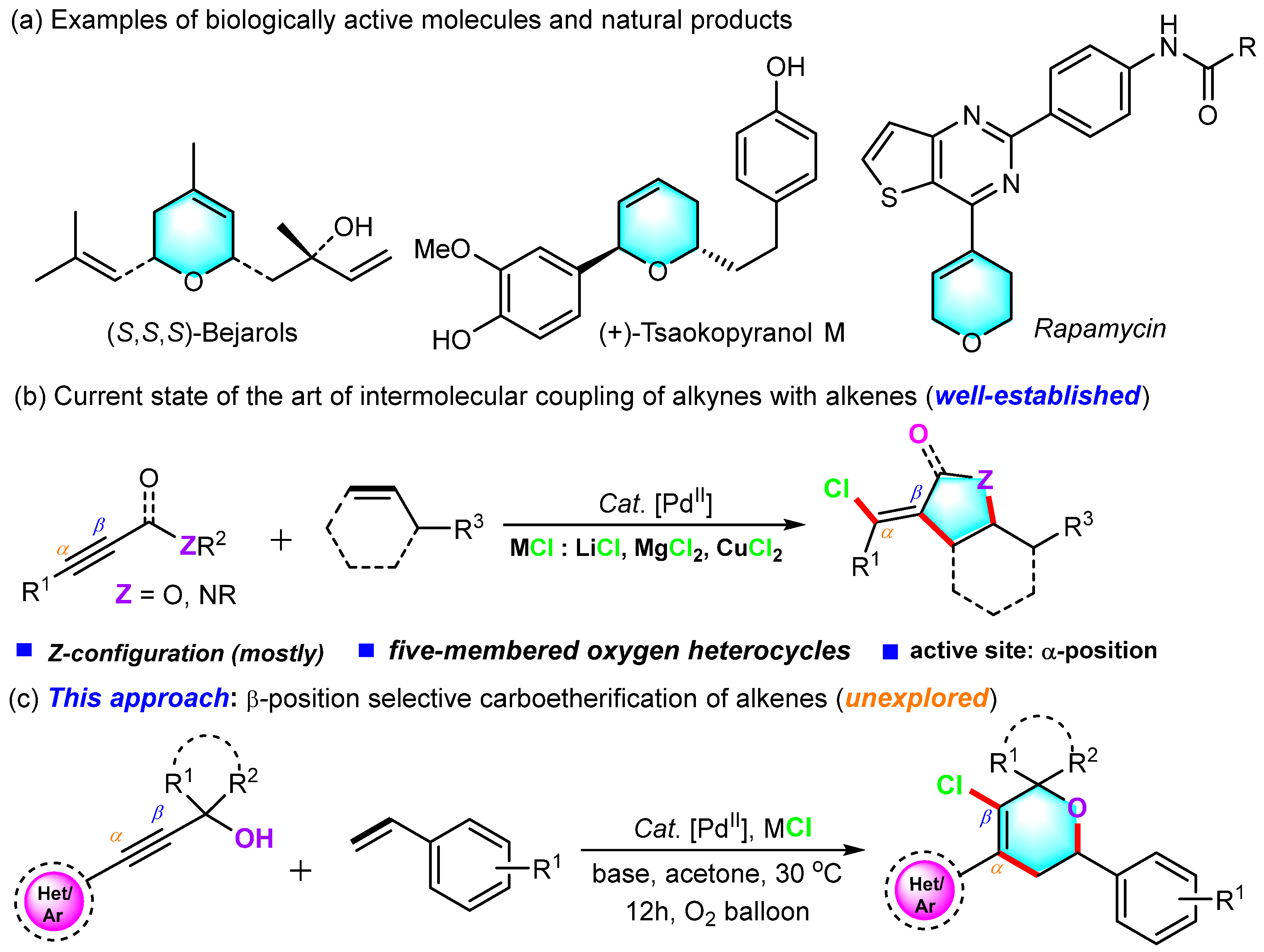
Scheme 1. Research background of 2H-pyrans and our hypothesis.
Molecules 31 01778 sch001
Figure 1. Substrate scope of alkynols.
Molecules 31 01778 g001
Figure 2. Substrate scope of alkenes.
Molecules 31 01778 g002
Figure 3. Gram-scale synthesis and late-stage modification of bioactive molecules with 2a.
Molecules 31 01778 g003
Scheme 2. Control experiments.
Molecules 31 01778 sch002
Scheme 3. Plausible mechanistic pathways.
Molecules 31 01778 sch003
Table 1. Optimization of the reaction conditions a.
Molecules 31 01778 i001
EntryVariation from Standard ConditionsYield b
1none78 (72)
2PdCl2 instead of Pd(CH3CN)2Cl241
3Pd(CH3CN)2(BF4)2 instead of Pd(CH3CN)2Cl256
4Pd(PhCN)2Cl2 instead of Pd(CH3CN)2Cl247
5Pd(COD)2Cl2 or Pd(dppp)2Cl2 instead of Pd(CH3CN)2Cl2trace
6CH3CN or HOAc instead of acetonetrace
7DMSO or DMF instead of acetoneN.D.
8DCE/THF instead of acetone36/28
9tBuOK/TMG instead of DIPEA68/68
10Cs2CO3/DBU/DABCO instead of DIPEA51/65/43
11MgCl2 instead of LiCl54
12LiCl (1 equiv.)/LiCl (2 equiv.)70/78
1340 °C instead of 30 °C72
14Without Pd(CH3CN)2Cl2N.D.
15Without CuCl2N.D.
a Conditions: All reactions were performed with 1a (0.10 mmol), 2a (0.15 mmol), Pd(CH3CN)2Cl2 (10 mol%), CuCl2 (6 equiv.), LiCl (1.5 equiv.), DIPEA (60 mol%), acetone (1 mL) at 30°C for 12 h. N.D. = not detected. b Determined by GC-MS using dodecane as the internal standard. The value in parentheses is the yield of the isolated product.
Disclaimer/Publisher’s Note: The statements, opinions and data contained in all publications are solely those of the individual author(s) and contributor(s) and not of MDPI and/or the editor(s). MDPI and/or the editor(s) disclaim responsibility for any injury to people or property resulting from any ideas, methods, instructions or products referred to in the content.