


Electrochemical Sensors for Pesticide Residue Detection
Abstract
1. Introduction
2. Pesticide Classification, Toxicity, and Maximum Permitted Limits
2.1. Classification
2.2. Toxicity and Exposure Characteristics
2.3. Permitted Limits
3. Electrochemical Sensing
3.1. Introduction to Electrochemical Sensors
3.2. Classification
3.3. Challenges
4. Applications of Active Materials in Electrochemical Sensing for Pesticide Residue Detection
4.1. Carbon-Based Materials
4.2. MOFs and Their Derivatives
4.3. Metal Nanoparticles
4.4. Metal Compound-Based Materials
4.5. Conducting Polymers
4.6. MXene-Based Composites
4.7. Others
5. Conclusions and Outlook
Author Contributions
Funding
Institutional Review Board Statement
Informed Consent Statement
Data Availability Statement
Conflicts of Interest
References
- Xu, L.; Abd El-Aty, A.M.; Eun, J.-B.; Shim, J.-H.; Zhao, J.; Lei, X.; Gao, S.; She, Y.; Jin, F.; Wang, J.; et al. Recent Advances in Rapid Detection Techniques for Pesticide Residue: A Review. J. Agric. Food Chem. 2022, 70, 13093–13117. [Google Scholar] [CrossRef] [PubMed]
- Fabregat-Safont, D.; Otoukesh, M.; Pitarch-Motellón, J.; Marín, J.M.; Pitarch, E.; Hernández, F. Critical Review on Analytical Methodologies for Highly Polar Organophosphate Pesticides in Environmental Samples. Trends Environ. Anal. Chem. 2025, 45, e00266. [Google Scholar] [CrossRef]
- Dube, A.; Malode, S.J.; Alshehri, M.A.; Shetti, N.P. Recent Advances in the Development of Electrochemical Sensors for Detecting Pesticides. J. Ind. Eng. Chem. 2025, 144, 77–99. [Google Scholar] [CrossRef]
- Han, Y.; Zhu, L.; Wen, R.; Liao, J.; Li, B.; Wu, L. Innovative Electrochemical Sensors for Pesticide Residue Detection: Nanomaterials, Miniaturization, and Intelligent Data Analysis. Chem. Rec. 2025, 25, e202500070. [Google Scholar] [CrossRef]
- Zheng, A.L.T.; Teo, E.Y.L.; Hung, Y.P.; Saad, J.M.; Zamakshshari, N.H.; Chung, E.L.T.; Ahmad Farid, M.A.; Andou, Y. Recent Progress in Functional Materials for Electrochemical Detection of Pesticides: Modification Strategies, Performance, and Future Challenges. Anal. Sci. 2025, 41, 1585–1606. [Google Scholar] [CrossRef]
- Wang, W.; Wang, X.; Cheng, N.; Luo, Y.; Lin, Y.; Xu, W.; Du, D. Recent Advances in Nanomaterials-Based Electrochemical (Bio)Sensors for Pesticides Detection. TrAC Trends Anal. Chem. 2020, 132, 116041. [Google Scholar] [CrossRef]
- Aslam, M.; Raman, A.P.S.; Sharma, U.; Nand, B.; Ebenso, E.E.; Pandey, G.; Singh, P.; Kumari, K. Carbon Nanocomposites in Electrochemical Sensing of Pesticides: Trends, Materials, and Applications. Chem. Biodivers. 2025, 23, e02490. [Google Scholar] [CrossRef]
- Yang, L.; Liu, S.-T.; Wang, Y.-Z.; Zhan, Y.-Q.; Niu, Y.-L. Metal-Organic Frameworks (MOFs) and Their Derivatives as Electrochemical Sensors for the Detection of Pesticide Residues in Environmental and Food Samples: A Review. Polyhedron 2025, 280, 117704. [Google Scholar] [CrossRef]
- Maheshwaran, S.; Chen, W.-H.; Lin, S.-L.; Ghorbani, M.; Hoang, A.T. Metal Oxide-Based Electrochemical Sensors for Pesticide Detection in Water and Food Samples: A Review. Environ. Sci. Adv. 2024, 3, 154–176. [Google Scholar] [CrossRef]
- Dube, A.; Malode, S.J.; Alodhayb, A.N.; Mondal, K.; Shetti, N.P. Conducting Polymer-Based Electrochemical Sensors: Progress, Challenges, and Future Perspectives. Talanta Open 2025, 11, 100395. [Google Scholar] [CrossRef]
- Li, X.; Zhang, Z.-Y.; Li, F. Flexible Electrochemical Sensors Based on Nanomaterials: Constructions, Applications and Prospects. Chem. Eng. J. 2025, 504, 158101. [Google Scholar] [CrossRef]
- Nehru, R.; Chen, C.-W.; Dong, C.-D. A Review of Smart Electrochemical Devices for Pesticide Detection in Agricultural Food and Runoff Contaminants. Sci. Total Environ. 2024, 935, 173360. [Google Scholar] [CrossRef] [PubMed]
- Kim, H.; Park, Y.; Yanamala, P.; Yang, Y.; Ghoreishian, S.M.; Lee, E.-S.; Gupta, V.K.; Oh, M.-H.; Huh, Y.S. Recent Advances in On-Site Sensing Systems for Detecting Pesticide Positive List System (PLS) Violations in Agricultural Products. Food Chem. 2025, 500, 147489. [Google Scholar] [CrossRef]
- Ejigu, A.; Tefera, M.; Guadie, A. Electrochemical Detection of Pesticides: A Comprehensive Review on Voltammetric Determination of Malathion, 2,4-D, Carbaryl, and Glyphosate. Electrochem. Commun. 2024, 169, 107839. [Google Scholar] [CrossRef]
- Zhang, C.; Li, Y.; Yang, N.; You, M.; Hao, J.; Wang, J.; Li, J.; Zhang, M. Electrochemical Sensors of Neonicotinoid Insecticides Residues in Food Samples: From Structure to Analysis. Talanta 2024, 267, 125254. [Google Scholar] [CrossRef]
- Ding, L.; Guo, J.; Chen, S.; Wang, Y. Electrochemical Sensing Mechanisms of Neonicotinoid Pesticides and Recent Progress in Utilizing Functional Materials for Electrochemical Detection Platforms. Talanta 2024, 273, 125937. [Google Scholar] [CrossRef] [PubMed]
- Bi, R.; Ou, M.; Zhou, S.; Geng, S.; Zheng, Y.; Chen, J.; Mo, R.; Li, Y.; Xiao, G.; Chen, X.; et al. Degradation Strategies of Pesticide Residue: From Chemicals to Synthetic Biology. Synth. Syst. Biotechnol. 2023, 8, 302–313. [Google Scholar] [CrossRef]
- Li, F.; Xiong, W.; Zhang, C.; Wang, D.; Zhou, C.; Li, W.; Zeng, G.; Song, B.; Zeng, Z. Neonicotinoid Insecticides in Non-Target Organisms: Occurrence, Exposure, Toxicity, and Human Health Risks. J. Environ. Manag. 2025, 383, 125432. [Google Scholar] [CrossRef] [PubMed]
- Vulpe, C.B.; Iachimov-Datcu, A.D.; Pujicic, A.; Agachi, B.V. A Systematic Review on the Toxicology of European Union-Approved Triazole Fungicides in Cell Lines and Mammalian Models. J. Xenobiot. 2025, 15, 208. [Google Scholar] [CrossRef]
- Ambrus, Á.; Yang, Y.Z. Global Harmonization of Maximum Residue Limits for Pesticides. J. Agric. Food Chem. 2016, 64, 30–35. [Google Scholar] [CrossRef]
- World Health Organization. Principles and Methods for the Risk Assessment of Chemicals in Food; Environmental Health Criteria 240; WHO: Geneva, Switzerland, 2009. [Google Scholar]
- European Parliament and Council. Regulation (EC) No 396/2005 of 23 February 2005 on Maximum Residue Levels of Pesticides in or on Food and Feed of Plant and Animal Origin. Off. J. Eur. Union 2005, L70, 1–16. [Google Scholar]
- Neff, R.A.; Hartle, J.C.; Laestadius, L.I.; Dolan, K.; Rosenthal, A.C.; Nachman, K.E. A Comparative Study of Allowable Pesticide Residue Levels on Produce in the United States. Glob. Health 2012, 8, 2. [Google Scholar] [CrossRef]
- European Food Safety Authority (EFSA). The 2023 European Union Report on Pesticide Residues in Food. EFSA J. 2025, 23, e9398. [Google Scholar]
- Barhoum, A.; Hamimed, S.; Slimi, H.; Othmani, A.; Abdel-Haleem, F.M.; Bechelany, M. Modern Designs of Electrochemical Sensor Platforms for Environmental Analyses: Principles, Nanofabrication Opportunities, and Challenges. Trends Environ. Anal. Chem. 2023, 38, e00199. [Google Scholar] [CrossRef]
- Guo, X.; Chen, L.; He, B.; Liu, S.; Liu, L.; Wang, S.; Hu, H. Preparation of Electrodes by Molecular Imprinting Technique for Pesticide Detection. Water Environ. Res. 2025, 97, e70162. [Google Scholar] [CrossRef]
- Abedeen, M.Z.; Sharma, M.; Kushwaha, H.S.; Gupta, R. Sensitive Enzyme-Free Electrochemical Sensors for the Detection of Pesticide Residues in Food and Water. TrAC Trends Anal. Chem. 2024, 176, 117729. [Google Scholar] [CrossRef]
- Vrabelj, T.; Finšgar, M. Recent Progress in Non-Enzymatic Electroanalytical Detection of Pesticides Based on the Use of Functional Nanomaterials as Electrode Modifiers. Biosensors 2022, 12, 263. [Google Scholar] [CrossRef]
- Almenhali, A.Z.; Kanagavalli, P.; Abd-Ellah, M.; Khazaal, S.; El Darra, N.; Eissa, S. Reduced Graphene Oxide-Based Electrochemical Aptasensor for the Multiplexed Detection of Imidacloprid, Thiamethoxam, and Clothianidin in Food Samples. Sci. Rep. 2025, 15, 10329. [Google Scholar] [CrossRef] [PubMed]
- Ceylan, E.; Ozoglu, O.; Ipekci, H.H.; Tor, A.; Uzunoglu, A. Non-Enzymatic Detection of Methyl Parathion in Water Using CeO2-CuO-Decorated Reduced Graphene Oxide. Microchem. J. 2024, 199, 110261. [Google Scholar] [CrossRef]
- Ryu, H.; Thompson, D.; Jin, L.; He, J.; Lei, Y. rGO/HfO2 Nanocomposite-Enabled Electrochemical Sensor for High-Performance Pesticide Detection. Talanta 2025, 287, 127606. [Google Scholar] [CrossRef] [PubMed]
- Lerdsri, J.; Upan, J.; Jakmunee, J. Nafion Mixed Carbon Nanotube Modified Screen-Printed Carbon Electrode as a Disposable Electrochemical Sensor for Quantification of Amitraz in Honey and Longan Samples. Electrochimica Acta 2022, 410, 140050. [Google Scholar] [CrossRef]
- Tümay, S.O.; Şenocak, A.; Sarı, E.; Şanko, V.; Durmuş, M.; Demirbas, E. A New Perspective for Electrochemical Determination of Parathion and Chlorantraniliprole Pesticides via Carbon Nanotube-Based Thiophene-Ferrocene Appended Hybrid Nanosensor. Sens. Actuators B 2021, 345, 130344. [Google Scholar] [CrossRef]
- Zahirifar, F.; Rahimnejad, M.; Abdulkareem, R.A.; Najafpour, G. Determination of Diazinon in Fruit Samples Using Electrochemical Sensor Based on Carbon Nanotubes Modified Carbon Paste Electrode. Biocatal. Agric. Biotechnol. 2019, 20, 101245. [Google Scholar] [CrossRef]
- Luo, L.; Jiang, C.; Li, H.; Ning, D.; Lao, S.; Liang, Z.; Tang, L.; Chen, W.; Ya, Y. An Electrochemical Aptasensor for Detection of Carbofuran Using Gold Nanoparticles Decorated Hierarchical Porous Carbon as an Effective Sensing Platform. Chemosphere 2023, 341, 140033. [Google Scholar] [CrossRef] [PubMed]
- Wei, L.; Huang, X.; Yang, J.; Wang, Y.; Huang, K.; Xie, L.; Yan, F.; Luo, L.; Jiang, C.; Liang, J.; et al. A High Performance Electrochemical Sensor for Carbendazim Based on Porous Carbon with Intrinsic Defects. J. Electroanal. Chem. 2022, 915, 116370. [Google Scholar] [CrossRef]
- Liu, R.; Chang, Y.; Li, F.; Dubovyk, V.; Li, D.; Ran, Q.; Zhao, H. Highly Sensitive Detection of Carbendazim in Juices Based on Mung Bean-Derived Porous Carbon@Chitosan Composite Modified Electrochemical Sensor. Food Chem. 2022, 392, 133301. [Google Scholar] [CrossRef]
- Bilge, S.; Aftab, S.; Donar, Y.O.; Özoylumlu, B.; Sınağ, A. Waste Biomass Derived Carbon-Based Materials for Electrochemical Detection of Pesticides from Real Samples. Inorg. Chem. Commun. 2025, 171, 113649. [Google Scholar] [CrossRef]
- ReddyPrasad, P.; Naidoo, E.B.; Sreedhar, N.Y. Electrochemical Preparation of a Novel Type of C-Dots/ZrO2 Nanocomposite onto Glassy Carbon Electrode for Detection of Organophosphorus Pesticide. Arab. J. Chem. 2019, 12, 2300–2309. [Google Scholar] [CrossRef]
- Xu, J.; Yu, C.; Feng, T.; Liu, M.; Li, F.; Wang, Y.; Xu, J. N-Carbamoylmaleimide-Treated Carbon Dots: Stabilizing the Electrochemical Intermediate and Extending It for the Ultrasensitive Detection of Organophosphate Pesticides. Nanoscale 2018, 10, 19390–19398. [Google Scholar] [CrossRef]
- Ghiasi, T.; Ahmadi, S.; Ahmadi, E.; Olyai, M.R.T.B.; Khodadadi, Z. Novel Electrochemical Sensor Based on Modified Glassy Carbon Electrode with Graphene Quantum Dots, Chitosan and Nickel Molybdate Nanocomposites for Diazinon and Optimal Design by the Taguchi Method. Microchem. J. 2021, 160, 105628. [Google Scholar] [CrossRef]
- Huang, P.; Wu, W.; Li, M.; Li, Z.; Pan, L.; Ahamad, T.; Alshehri, S.M.; Bando, Y.; Yamauchi, Y.; Xu, X. Metal-Organic Framework-Based Nanoarchitectonics: A Promising Material Platform for Electrochemical Detection of Organophosphorus Pesticides. Coord. Chem. Rev. 2024, 501, 215534. [Google Scholar] [CrossRef]
- Cao, Y.; Wang, L.; Shen, C.; Wang, C.; Hu, X.; Wang, G. An Electrochemical Sensor on the Hierarchically Porous Cu-BTC MOF Platform for Glyphosate Determination. Sens. Actuators B 2019, 283, 487–494. [Google Scholar] [CrossRef]
- Wu, Q.; Wang, Y.; Wang, L.; Su, Y.; He, G.; Chen, X.; Hou, L.; Zhang, W.; Wang, Y.-Y. A Portable Electrochemical Biosensor Based on an Amino-Modified Ionic Metal-Organic Framework for the One-Site Detection of Multiple Organophosphorus Pesticides. ACS Appl. Mater. Interfaces 2024, 16, 55802–55812. [Google Scholar] [CrossRef]
- Duan, S.; Wu, X.; Shu, Z.; Xiao, A.; Chai, B.; Pi, F.; Wang, J.; Dai, H.; Liu, X. Curcumin-Enhanced MOF Electrochemical Sensor for Sensitive Detection of Methyl Parathion in Vegetables and Fruits. Microchem. J. 2023, 184, 108182. [Google Scholar] [CrossRef]
- Zhang, Y.; Jin, S.; Gong, L.; Zhang, L.; Zhao, T.; Chen, S.; Niu, L.; Fa, H.; Yin, W. A New Portable Electrochemical Detection Sensor Based on Molecularly Imprinted Polymer-Modified MOF-808/AB for the Highly Sensitive and Selective Determination of Dimethoate. Microchem. J. 2024, 206, 111436. [Google Scholar] [CrossRef]
- Tan, Y.; Yang, D.; Wang, Z.; Zou, Q.; Qin, J.; Liu, B. The Construction of Acetylcholinesterase Immobilization on MnMOF Platform for Electrochemical Detection of Organophosphorus Pesticides Based on Charge Repulsion. J. Food Compos. Anal. 2025, 148, 108241. [Google Scholar] [CrossRef]
- Guo, L.; Zhao, B.; Hao, L.; Zhang, Y.; Wang, C. An Electrochemical Sensor Based on MOF-Derived Porous Carbon/Graphene Composite for Sensitive Determination of Carbendazim. Microchim. Acta 2022, 189, 454. [Google Scholar] [CrossRef]
- Maji, B.; Sahoo, S.J.; Rout, V.; Barik, B.; Behera, N.; Dash, P. Highly Sensitive and Selective Nonenzymatic Sensing of Glyphosate Using FTO-Modified MOF-Derived CuCo2O4 Nanostructures Intercalated in Protonated-g-C3N4 and 3D-Graphene Oxide Sheets. Ind. Eng. Chem. Res. 2023, 62, 3477–3491. [Google Scholar] [CrossRef]
- Zhao, Y.; Zuo, X.; Lu, X.; Li, Z.; Gao, F. Hierarchical Porous Hollow N-Doped Cu-Based MOF Derivatives as Highly Sensitive Electrochemical Sensing Platform for Pesticides Detection. Sens. Actuators B 2022, 362, 131749. [Google Scholar] [CrossRef]
- Sun, Y.-H.; Yang, L.; Ji, X.-X.; Wang, Y.-Z.; Liu, Y.-L.; Fu, Y.; Ye, F. Efficient Detection of Flusilazole by an Electrochemical Sensor Derived from MOF MIL-53(Fe) for Food Safety. Food Chem. 2024, 440, 138244. [Google Scholar] [CrossRef] [PubMed]
- Yang, L.; Sun, Y.-H.; Ji, X.-X.; Wang, Y.-Z.; Liu, Y.-L.; Fu, Y.; Ye, F. A New Strategy for Efficient Detection of Triflumuron Residues in Food: An Electrochemical Sensor Derived from a Cu/Fe-BTC MOF-Polymer. Ind. Crops Prod. 2024, 218, 118954. [Google Scholar] [CrossRef]
- Dindar, C.K.; Erkmen, C.; Uslu, B. Electroanalytical Methods Based on Bimetallic Nanomaterials for Determination of Pesticides: Past, Present, and Future. Trends Environ. Anal. Chem. 2021, 32, e00145. [Google Scholar] [CrossRef]
- Chang, H.-W.; Chen, C.-L.; Chen, Y.-H.; Chang, Y.-M.; Liu, F.-J.; Tsai, Y.-C. Electrochemical Organophosphorus Pesticide Detection Using Nanostructured Gold-Modified Electrodes. Sensors 2022, 22, 9938. [Google Scholar] [CrossRef]
- Talan, A.; Mishra, A.; Eremin, S.A.; Narang, J.; Kumar, A.; Gandhi, S. Ultrasensitive Electrochemical Immuno-Sensing Platform Based on Gold Nanoparticles Triggering Chlorpyrifos Detection in Fruits and Vegetables. Biosens. Bioelectron. 2018, 105, 14–21. [Google Scholar] [CrossRef] [PubMed]
- Porto, L.S.; Ferreira, L.F.; dos Santos, W.T.P.; Pereira, A.C. Determination of Organophosphorus Compounds in Water and Food Samples Using a Non-Enzymatic Electrochemical Sensor Based on Silver Nanoparticles and Carbon Nanotubes Nanocomposite Coupled with Batch Injection Analysis. Talanta 2022, 246, 123477. [Google Scholar] [CrossRef]
- Zahran, M.M.M.; Khalifa, Z.; Zahran, M.A.-H.; Abdel Azzem, M. Abiotic Sensor for Electrochemical Determination of Chlorpyrifos in Natural Water Based on the Inhibition of Silver Nanoparticles Oxidation. Microchem. J. 2021, 165, 106173. [Google Scholar] [CrossRef]
- Bahamon-Pinzon, D.; Moreira, G.; Obare, S.; Vanegas, D. Development of a Nanocopper-Decorated Laser-Scribed Sensor for Organophosphorus Pesticide Monitoring in Aqueous Samples. Microchim. Acta 2022, 189, 254. [Google Scholar] [CrossRef] [PubMed]
- Wahyuni, W.T.; Putra, B.R.; Rahman, H.A.; Anindya, W.; Hardi, J.; Rustami, E.; Ahmad, S.N. Electrochemical Sensors Based on Gold-Silver Core-Shell Nanoparticles Combined with a Graphene/PEDOT:PSS Composite Modified Glassy Carbon Electrode for Paraoxon-Ethyl Detection. ACS Omega 2024, 9, 2896–2910. [Google Scholar] [CrossRef]
- Sreedhar, N.Y.; Sunil Kumar, M.; Krishnaveni, K. Sensitive Determination of Chlorpyrifos Using Ag/Cu Alloy Nanoparticles and Graphene Composite Paste Electrode. Sens. Actuators B 2015, 210, 475–482. [Google Scholar] [CrossRef]
- Killedar, L.; Ilager, D.; Malode, S.J.; Shetti, N.P. Fast and Facile Electrochemical Detection and Determination of Fungicide Carbendazim at Titanium Dioxide Designed Carbon-Based Sensor. Mater. Chem. Phys. 2022, 285, 126131. [Google Scholar] [CrossRef]
- Rajaji, U.; Chinnapaiyan, S.; Chen, S.-M.; Govindasamy, M.; de Oliveira Filho, J.I.; Khushaim, W.; Mani, V. Design and Fabrication of Yttrium Ferrite Garnet-Embedded Graphitic Carbon Nitride: A Sensitive Electrocatalyst for Smartphone-Enabled Point-of-Care Pesticide (Mesotrione) Analysis in Food Samples. ACS Appl. Mater. Interfaces 2021, 13, 24865–24876. [Google Scholar] [CrossRef] [PubMed]
- Ganesan, M.; Keerthika Devi, R.; Liao, A.-H.; Lee, K.-Y.; Gopalakrishnan, G.; Chuang, H.-C. 3D-Flower-Like Porous Neodymium Molybdate Nanostructure for Trace Level Detection of Organophosphorus Pesticide in Food Samples. Food Chem. 2022, 396, 133722. [Google Scholar] [CrossRef]
- Balaji, R.; Maheshwaran, S.; Chen, S.-M.; Tamilalagan, E.; Chandrasekar, N.; Samuel, M.S. Fabricating BiOI Nanostructures Armed Catalytic Strips for Selective Electrochemical and SERS Detection of Pesticide in Polluted Water. Environ. Pollut. 2022, 296, 118754. [Google Scholar] [CrossRef]
- Sasikumar, R.; Alagumalai, K.; Kim, B.; Kim, S.-C. Nickel Cerium Oxide-Modified Disposable and Portable Sensor for the Rapid Monitoring Environmentally Hazardous Organophosphate Pesticide in Water and Vegetable Samples. Chem. Eng. J. 2024, 497, 154809. [Google Scholar] [CrossRef]
- Khan, M.; Sameer, S.; Ahmad, S.; Wageh, S.; Khan, S.B. Comprehensive Investigation of Zinc and Tin-Based Metal Oxides for Advanced Electrochemical Detection of Organophosphate Pesticides. J. Ind. Eng. Chem. 2025, 144, 754–769. [Google Scholar] [CrossRef]
- Khan, M.; Ahmad, S.; Kamal, T.; Sameer, S.; Khan, S.B. Development of a Co3O4:SnO2 Nanocomposite-Modified GCE for Sensitive and Stable Electrochemical Detection of Organophosphate Pesticides. Environ. Technol. Innov. 2025, 38, 104081. [Google Scholar] [CrossRef]
- Zheng, X.; Guo, L.; Zhu, C.; Hu, T.; Gong, X.; Wu, C.; Wang, G.; Dong, H.; Hou, Y. A Robust Electrochemical Sensor Based on AgNWs@MoS2 for Highly Sensitive Detection of Thiabendazole Residues in Food Samples. Food Chem. 2024, 433, 137304. [Google Scholar] [CrossRef]
- Wang, F.; Zhu, Y.; Qian, L.; Yin, Y.; Yuan, Z.; Dai, Y.; Zhang, T.; Yang, D.; Qiu, F. Lamellar Ti3C2 MXene Composite Decorated with Platinum-Doped MoS2 Nanosheets as Electrochemical Sensing Functional Platform for Highly Sensitive Analysis of Organophosphorus Pesticides. Food Chem. 2024, 459, 140379. [Google Scholar] [CrossRef] [PubMed]
- Karuppusamy, N.; Jeyaraman, A.; Chen, T.-W.; Chen, S.-M.; Francis Packiaraj, D.D.; Al-Mohaimeed, A.M.; Al-onazi, W.A.; Elshikh, M.S.; Yu, J. Synergistic Manganese Cobalt Phosphide Core-Shell for the Electrochemical Detection of Methyl Parathion in Food Sample. Food Chem. 2024, 450, 139152. [Google Scholar] [CrossRef] [PubMed]
- Sohrabi, H.; Arbabzadeh, O.; Falaki, M.; Majidi, M.R.; Han, N.; Yoon, Y.; Khataee, A. Electrochemical Layered Double Hydroxide (LDH)-Based Biosensors for Pesticides Detection in Food and Environment Samples: A Review of Status and Prospects. Food Chem. Toxicol. 2022, 164, 113010. [Google Scholar] [CrossRef] [PubMed]
- John, A.J.V.; Disouza, F.P.D.; Chen, S.-M. Sn-Integrated NiFe-Layered Double Hydroxide with Cation and Oxygen Vacancy Engineering for Simultaneous Electrochemical Detection of Carbamate Pesticides in Foods and Environmental Samples. Food Chem. 2026, 498, 147113. [Google Scholar] [CrossRef] [PubMed]
- Anirudhan, T.S.; Athira, V.S.; Nair, S.S. Detection of Chlorpyrifos Based on Molecular Imprinting with a Conducting Polythiophene Copolymer Loaded on Multi-Walled Carbon Nanotubes. Food Chem. 2022, 381, 132010. [Google Scholar] [CrossRef] [PubMed]
- Zamora, R.; Masís-Meléndez, F.; Phillips, H.; Alvarado-Marchena, L.A.; Starbird, R. Development of Poly(3,4-ethylenedioxythiophene)(PEDOT)/Carbon Nanotube Electrodes for Electrochemical Detection of Mancozeb in Water. Int. J. Electrochem. Sci. 2018, 13, 1931–1944. [Google Scholar] [CrossRef]
- Du, D.; Ye, X.; Cai, J.; Liu, J.; Zhang, A. Acetylcholinesterase Biosensor Design Based on Carbon Nanotube-Encapsulated Polypyrrole and Polyaniline Copolymer for Amperometric Detection of Organophosphates. Biosens. Bioelectron. 2010, 25, 2503–2508. [Google Scholar] [CrossRef]
- Zhang, C.; Zhang, W.; Bai, J.; Ying, Y.; Wang, S. A Highly Selective Electrochemical Sensor Based on Molecularly Imprinted Polypyrrole-Modified Gold Electrode for the Determination of Glyphosate in Cucumber and Tap Water. Anal. Bioanal. Chem. 2017, 409, 7133–7144. [Google Scholar] [CrossRef]
- Ding, S.; Lyu, Z.; Li, S.; Ruan, X.; Fei, M.; Zhou, Y.; Niu, X.; Zhu, W.; Du, D.; Lin, Y. Molecularly Imprinted Polypyrrole Nanotubes Based Electrochemical Sensor for Glyphosate Detection. Biosens. Bioelectron. 2021, 191, 113434. [Google Scholar] [CrossRef]
- Balčiūnas, D.; Plausinaitis, D.; Ratautaite, V.; Ramanaviciene, A.; Ramanavicius, A. Towards Electrochemical Surface Plasmon Resonance Sensor Based on the Molecularly Imprinted Polypyrrole for Glyphosate Sensing. Talanta 2022, 241, 123252. [Google Scholar] [CrossRef] [PubMed]
- Goswami, B.; Mahanta, D. Fe3O4-Polyaniline Nanocomposite for Non-Enzymatic Electrochemical Detection of 2,4-Dichlorophenoxyacetic Acid. ACS Omega 2021, 6, 17239–17246. [Google Scholar] [CrossRef]
- Sudharsan, S.; Rajaram, R.; Kumar, S.; Swaminathan, P.; Ramanujam, K.; Neelakantan, L. Copper Oxide Anchored Polyaniline Modified Glassy Carbon Electrode: A New Sensor Platform for the Amperometric Determination of Chlorpyrifos. Electrochim. Acta 2023, 471, 143305. [Google Scholar] [CrossRef]
- Nontipichet, N.; Khumngern, S.; Lomae, A.; Maneeratanachot, S.; Thammakhet-Buranachai, C.; Thavarungkul, P.; Numnuam, A. A Metal-Free Nanocomposite of Polyaniline-Decorated S-Doped Graphitic Carbon Nitride Nanosheets for a Flexible and Disposable Carbendazim Sensor in Fruit Samples. Food Chem. 2025, 498, 147227. [Google Scholar] [CrossRef]
- Migliorini, F.L.; Sanfelice, R.C.; Mercante, L.A.; Facure, M.H.M.; Correa, D.S. Electrochemical Sensor Based on Polyamide 6/Polypyrrole Electrospun Nanofibers Coated with Reduced Graphene Oxide for Malathion Pesticide Detection. Mater. Res. Express 2020, 7, 015601. [Google Scholar] [CrossRef]
- Nagabooshanam, S.; John, A.T.; Wadhwa, S.; Mathur, A.; Krishnamurthy, S.; Bharadwaj, L.M. Electro-Deposited Nano-Webbed Structures Based on Polyaniline/Multi Walled Carbon Nanotubes for Enzymatic Detection of Organophosphates. Food Chem. 2020, 323, 126784. [Google Scholar] [CrossRef]
- Wang, Q.; Han, N.; Shen, Z.; Li, X.; Chen, Z.; Cao, Y.; Si, W.; Wang, F.; Ni, B.-J.; Thakur, V.K. MXene-Based Electrochemical (Bio)Sensors for Sustainable Applications: Roadmap for Future Advanced Materials. Nano Mater. Sci. 2023, 5, 39–52. [Google Scholar] [CrossRef]
- Zhao, Y.; Yang, W.; Lin, X.; Wang, Q. MXene-Based Intelligent Sensors in Food Safety Monitoring: Synthesis Strategies, On-Site Applications and Novel Insights into Prospects. Food Chem. 2025, 493, 145976. [Google Scholar] [CrossRef]
- Yola, B.B.; Kotan, G.; Akyıldırım, O.; Atar, N.; Yola, M.L. Electrochemical Determination of Fenitrothion Pesticide Based on Ultrathin Manganese Oxide Nanowires/Molybdenum Titanium Carbide MXene Ionic Nanocomposite and Molecularly Imprinting Polymer. Microchim. Acta 2024, 191, 230. [Google Scholar] [CrossRef]
- Tu, X.; Gao, F.; Ma, X.; Zou, J.; Yu, Y.; Li, M.; Qu, F.; Huang, X.; Lu, L. MXene/Carbon Nano-Horn/β-Cyclodextrin-Metal-Organic Frameworks as High-Performance Electrochemical Sensing Platform for Sensitive Detection of Carbendazim Pesticide. J. Hazard. Mater. 2020, 396, 122776. [Google Scholar] [CrossRef]
- Zhong, W.; Gao, F.; Zou, J.; Liu, S.; Li, M.; Gao, Y.; Yu, Y.; Wang, X.; Lu, L. MXene@Ag-Based Ratiometric Electrochemical Sensing Strategy for Effective Detection of Carbendazim in Vegetable Samples. Food Chem. 2021, 360, 130006. [Google Scholar] [CrossRef]
- Zhao, F.; Yao, Y.; Jiang, C.; Shao, Y.; Barceló, D.; Ying, Y.; Ping, J. Self-Reduction Bimetallic Nanoparticles on Ultrathin MXene Nanosheets as Functional Platform for Pesticide Sensing. J. Hazard. Mater. 2020, 384, 121358. [Google Scholar] [CrossRef]
- Zhong, W.; Zou, J.; Yu, Q.; Gao, Y.; Qu, F.; Liu, S.; Zhou, H.; Lu, L. Ultrasensitive Indirect Electrochemical Sensing of Thiabendazole in Fruit and Water by the Anodic Stripping Voltammetry of Cu2+ with Hierarchical Ti3C2Tx-TiO2 for Signal Amplification. Food Chem. 2023, 402, 134379. [Google Scholar] [CrossRef]
- Guo, W.; Chen, Z.; Zhao, Y.; Zhao, C.; Lu, X.; Gao, F. Hierarchical Cu3V2O8/Cu6Mo5O18/MXene Nanostructures by Ultrathin Nanosheets for Highly Sensitive Electrochemical Detection of Organophosphorus Pesticides. Microchem. J. 2024, 201, 110601. [Google Scholar] [CrossRef]
- Zhong, W.; Zou, J.; Xie, Y.; Yang, J.; Li, M.; Liu, S.; Gao, Y.; Wang, X.; Lu, L. Three-Dimensional Nano-CuxO-MWCNTs-COOH/MXene Heterostructure: An Efficient Electrochemical Platform for Highly Sensitive and Selective Sensing of Benomyl in Fruit Samples. J. Electroanal. Chem. 2022, 920, 116586. [Google Scholar] [CrossRef]
- Wang, Q.; Jiu, R.; Wang, Y.; Li, Z.; Chen, J.; Liu, H.; Liu, J.; Cao, J. Degradation and Detection of Organophosphorus Pesticides Based on Peptides and MXene-Peptide Composite Materials. Analyst 2024, 149, 3951–3960. [Google Scholar] [CrossRef]
- Wang, Z.; Liu, M.; Shi, S.; Zhou, X.; Wu, C.; Wu, K. Ti3C2Tx/Laser-Induced Graphene-Based Micro-Droplet Electrochemical Sensing Platform for Rapid and Sensitive Detection of Benomyl. Anal. Chim. Acta 2024, 1304, 342526. [Google Scholar] [CrossRef]
- Sharma, R.; Bhat, G.P.; Gandhi, S. MXene-rGO Nanocomposite Based Electrochemical Immunosensor for Detection of Endosulfan—An Organochlorine Pesticide. Chemosphere 2025, 370, 143997. [Google Scholar] [CrossRef]
- Yao, Y.; Li, X.; Sisican, K.M.; Ramos, R.M.C.; Judicpa, M.; Qin, S.; Zhang, J.; Yao, J.; Razal, J.M.; Usman, K.A.S. Progress towards Efficient MXene Sensors. Commun. Mater. 2025, 6, 210. [Google Scholar] [CrossRef]
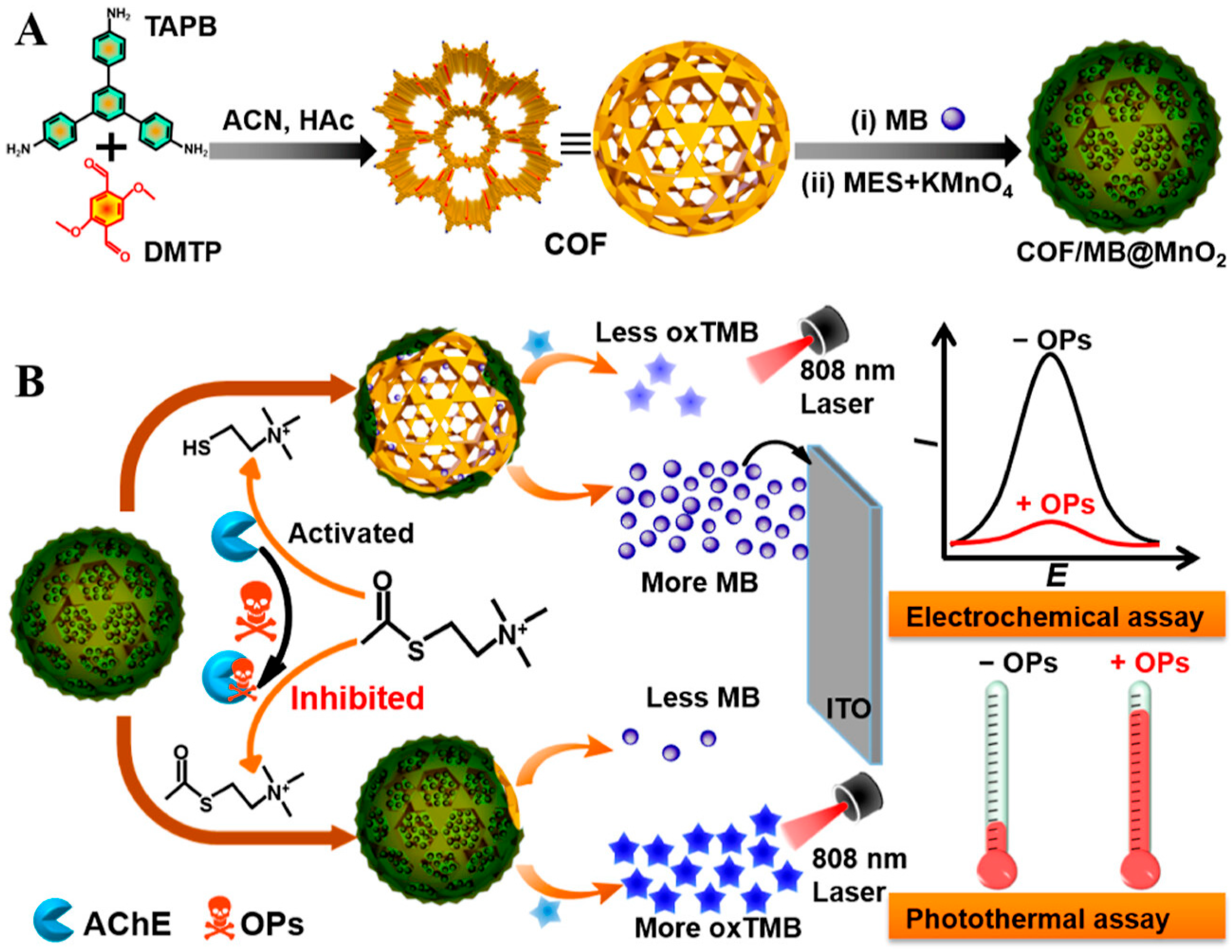
- Wen, S.H.; Zhang, H.; Yu, S.; Ma, J.; Zhu, J.J.; Zhou, Y. Complementary Homogeneous Electrochemical and Photothermal Dual-Modal Sensor for Highly Sensitive Detection of Organophosphorus Pesticides via Stimuli-Responsive COF/Methylene Blue@MnO2 Composite. Anal. Chem. 2023, 95, 14914–14924. [Google Scholar] [CrossRef]
- Xue, R.; Liu, Y.-S.; Huang, S.-L.; Yang, G.-Y. Recent Progress of Covalent Organic Frameworks Applied in Electrochemical Sensors. ACS Sens. 2023, 8, 2124–2148. [Google Scholar] [CrossRef]
- Cao, Y.; Wu, R.; Gao, Y.-Y.; Zhou, Y.; Zhu, J.-J. Advances of Electrochemical and Electrochemiluminescent Sensors Based on Covalent Organic Frameworks. Nano-Micro Lett. 2024, 16, 37. [Google Scholar] [CrossRef]
- Guo, Y.; Di, W.; Qin, C.; Liu, R.; Cao, H.; Gao, X. Covalent Organic Framework-Involved Sensors for Efficient Enrichment and Monitoring of Food Hazards: A Systematic Review. J. Agric. Food Chem. 2024, 72, 23053–23081. [Google Scholar] [CrossRef]
- Zhu, Q.; Luo, Y.; Liang, H.; Song, Y.; Ma, G. A Sensitive Electrochemical Biosensor for Detection of Carbaryl Based on Hollow Covalent-Organic Frameworks-Gold Nanoparticles Nanospheres. J. Environ. Chem. Eng. 2024, 12, 112681. [Google Scholar] [CrossRef]
- Wei, M.-J.; Wei, Z.-Q.; Zhang, R.; Wang, W. A Free-Metal Single Covalent Organic Framework Electrochemical Detective Platform for Sensitive Sensing of Carbendazim. Food Chem. 2025, 467, 142306. [Google Scholar] [CrossRef]
- Devi, W.S.; Kaur, R.; Sharma, A.; Thakur, S.; Mehta, S.K.; Raja, V.; Ataya, F.S. Non-Enzymatic g-C3N4 Supported CuO Derived-Biochar Based Electrochemical Sensors for Trace Level Detection of Malathion. Biosens. Bioelectron. 2025, 267, 116808. [Google Scholar] [CrossRef]
- Banglani, T.H.; Soomro, F.; Jamali, A.A.; Memon, A.A.; Hyder, A.; Mahar, N.; Khan, Z.U.; Kazi, M.; Alhuzeri, M.R.; Rashid, M.A. Trace Detection of Carbaryl Pesticide in Food Samples via a Highly Efficient and Novel g-C3N4/MXene-Based Electrochemical Sensor. Food Chem. 2026, 512, 148902. [Google Scholar] [CrossRef]
- Han, W.; Wei, P.; Xie, L.; Zhu, L.; He, B.; Cao, X. Functional Black Phosphorus-Based Sensors for Food Safety Applications: A Review. Food Res. Int. 2024, 192, 114775. [Google Scholar] [CrossRef]
- He, X.; Luo, X.; Chen, L.; Li, Y.; Wang, S.; Xiong, J.; Liao, X. Gold Nanoparticles and Carboxylated Carbon Nanotubes Co-Functionalized Black Phosphorene for Ultrasensitive Electrochemical Detection of Benomyl Residues. J. Food Compos. Anal. 2025, 147, 108043. [Google Scholar] [CrossRef]
- Liu, R.; Li, B.; Li, F.; Dubovyk, V.; Chang, Y.; Li, D.; Ding, K.; Ran, Q.; Wang, G.; Zhao, H. A Novel Electrochemical Sensor Based on β-Cyclodextrin Functionalized Carbon Nanosheets@Carbon Nanotubes for Sensitive Detection of Bactericide Carbendazim in Apple Juice. Food Chem. 2022, 384, 132573. [Google Scholar] [CrossRef]
- Mei, X.; Wang, X.; Huang, W.; Zhu, J.; Liu, K.; Wang, X.; Cai, W.; He, R. A Novel Polycaprolactone/Polypyrrole/β-Cyclodextrin Electrochemical Flexible Sensor for Dinotefuran Pesticide Detection. Food Chem. 2024, 434, 137194. [Google Scholar] [CrossRef]
- Li, T.; Liu, Y.; Zhao, F.; Zeng, B. Preparation of Ratiometric Electrochemical Sensor Based on Molecular Imprinting Copolymer and β-Cyclodextrin Recognition for the Reliable Detection of Dinotefuran. Food Chem. 2025, 466, 142237. [Google Scholar] [CrossRef]
- Dong, S.; Zhang, J.; Huang, G.; Wei, W.; Huang, T. Conducting Microporous Organic Polymer with -OH Functional Groups: Special Structure and Multi-Functional Integrated Property for Organophosphorus Biosensor. Chem. Eng. J. 2021, 405, 126682. [Google Scholar] [CrossRef]
- Xiao, Y.; Wu, N.; Wang, L.; Chen, L. A Novel Paper-Based Electrochemical Biosensor Based on N,O-Rich Covalent Organic Frameworks for Carbaryl Detection. Biosensors 2022, 12, 899. [Google Scholar] [CrossRef]
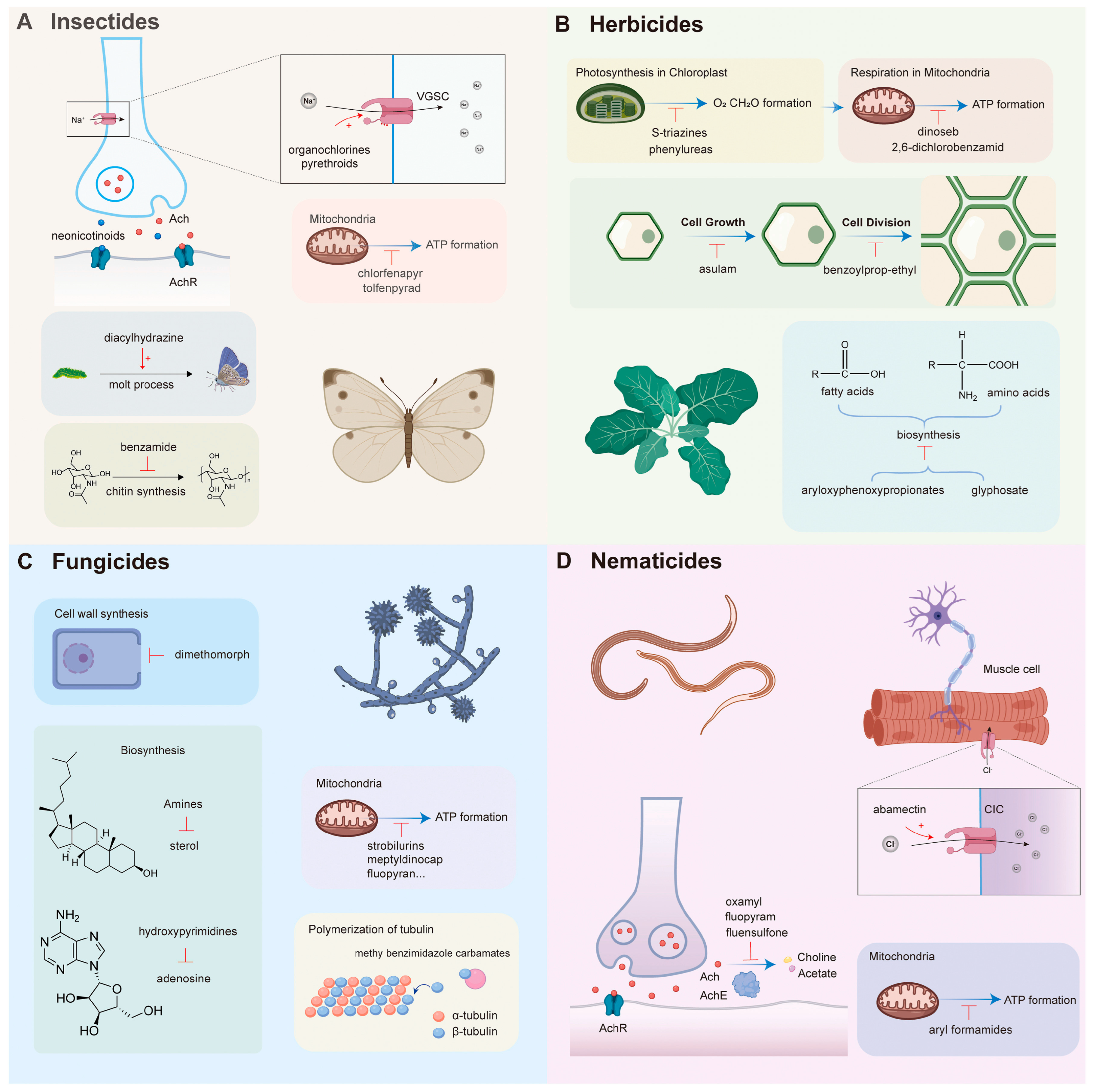

| Pesticides Classification | Examples | General Formulas | Functions |
|---|---|---|---|
| Organophosphorus | Chlorpyrifos (C9H11Cl3NO3PS) Methyl parathion (C8H10NO5PS) Malathion (C10H19O6PS2) Diazinon (C12H21N2O3PS) Dimethoate (C5H12NO3PS2) Fenitrothion (C9H12NO5PS) Paraoxon-ethyl (C10H14NO6P) | (R1O)(R2O)P(=X)-Y; X=O or S; Y = leaving group | Mainly insecticides (some also acaricidal/nematicidal); typically acetylcholinesterase (AChE) inhibitors |
| Carbamates | Carbaryl (C12H11NO2) Carbofuran (C12H15NO3) Methomyl (C5H10N2O2S) Methiocarb (C11H15NO2S) | R1O-C(=O)-NR2R3; common N-methyl carbamates: R-O-C(=O)-NHCH3 | Mainly insecticides; some also nematicidal; typically reversible AChE inhibitors |
| Pyrethroids | Cypermethrin (C22H19Cl2NO3) Deltamethrin (C22H19Br2NO3) Permethrin (C21H20Cl2O3) | Classical ester pyrethroid motif: R-C(=O)O-CH2-Ar; Type II often: Ar-CH(CN)-O-C(=O)-R | Insecticides; fast-acting neurotoxicants, mainly voltage-gated sodium channel modulators |
| Neonicotinoids | Imidacloprid (C9H10ClN5O2) Clothianidin (C6H8ClN5O2S) Thiamethoxam (C8H10ClN5O3S) Dinotefuran (C7H14N4O3) | Heteroaryl + pharmacophore motif, commonly Het-CH2-[nitroguanidine/cyanoamidine/nitromethylene] | Mostly systemic insecticides, especially for sucking pests; nicotinic AChR agonists/modulators |
| Phosphonate herbicides | Glyphosate (C3H8NO5P) Glufosinate (C5H12NO4P) | Representative structure of glyphosate: HOOC-CH2-NH-CH2-P(=O)(OH)2; broader aminophosphonate motif: R-NH-CH2-P(=O)(OH)2 | Broad-spectrum systemic herbicides; glyphosate inhibits EPSPS in the shikimate pathway |
| Bipyridylium herbicides | Paraquat (C12H14Cl2N2) Diquat (C12H12Br2N2) | Quaternary bipyridinium motif: [(C5H4N)2R]2+; paraquat=1,1′-dimethyl-4, 4′-bipyridinium | Non-selective contact herbicides; Photosystem I electron diverters, causing reactive oxygen species formation |
| Benzimidazole fungicides | Benomyl (C14H18N4O3) Carbendazim (C9H9N3O2) Thiabendazole (C10H7N3S) | Benzimidazole ring core (fused benzene + imidazole scaffold) | Systemic fungicides; mainly interfere with β-tubulin/tubulin polymerization |
| Triazole fungicides | Tebuconazole (C16H22ClN3O) Propiconazole (C15H17Cl2N3O2) Difenoconazole (C19H17Cl2N3O3) Myclobutanil (C15H17ClN4) | 1,2,4-triazole ring-containing scaffold | Systemic fungicides; DMI fungicides targeting C14-demethylase (CYP51) |
| Material Category | Materials | Analyte (s) | Electrochemical Performance | Refs. |
|---|---|---|---|---|
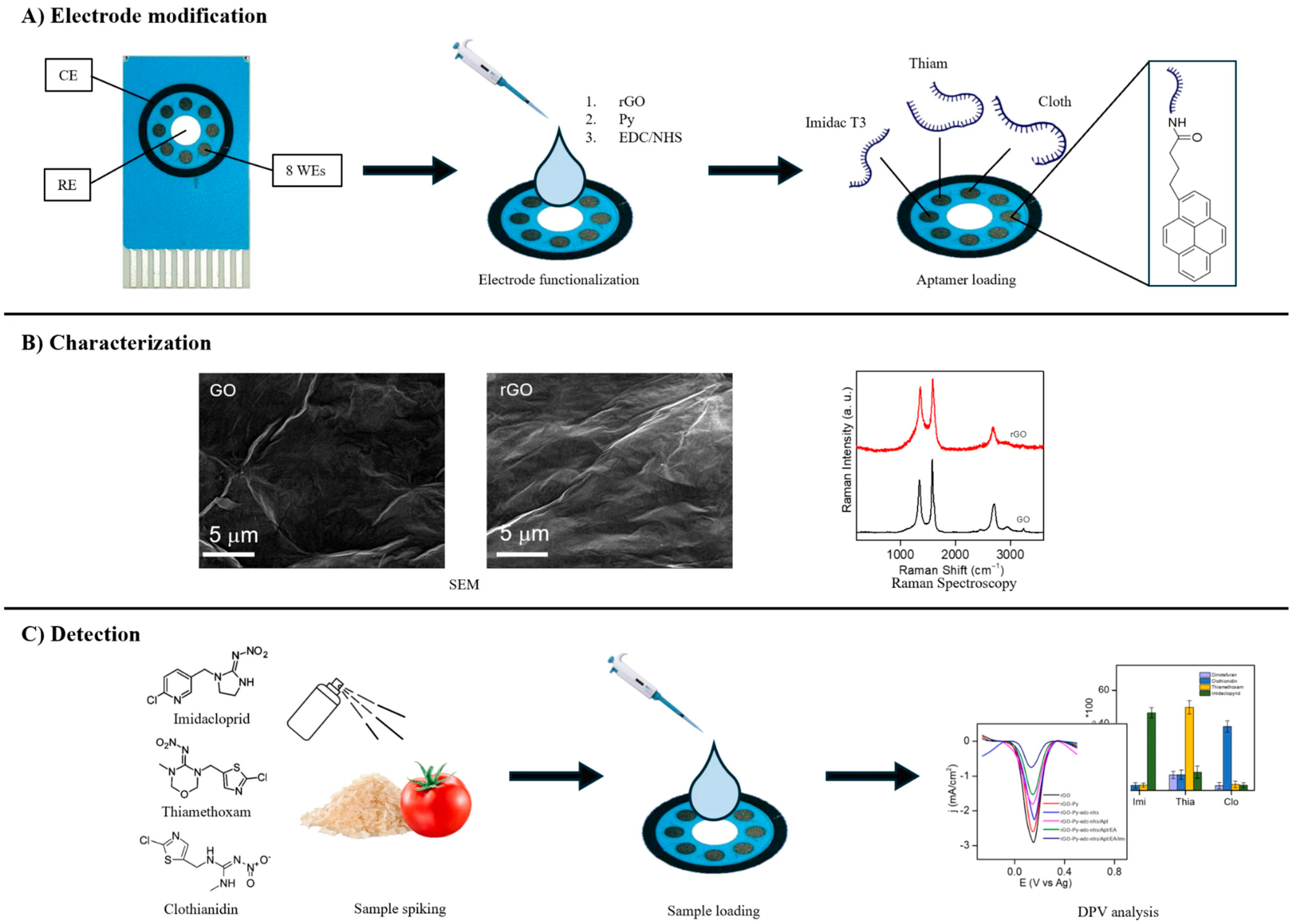
| Carbon-based materials | Reduced graphene oxide/1-pyrenebutyric acid/aptamer/screen-printed carbon electrode (SPCE) | Imidacloprid Thiamethoxam Clothianidin | DPV; linear range: 0.01–100 ng·mL−1; Limit of detection (LOD): 6.30 pg·mL−1 (imidacloprid), 6.80 pg·mL−1 (clothianidin), 7.10 pg·mL−1 (thiamethoxam); Tomatoes and rice, Recovery rate: 99.0–100.8%; Relative standard deviation (RSD): 1.01–3.39% | [29] |
| CNT and Nafion (a conductive polymer)/SPCE | Amitraz | Square wave voltammetric (SWV); Linear range: 0.005–1.00 µg mL−1; LOD: 1.0 ng mL−1; Honey and longan fruits, Recovery rate: 80.26–103.63%; RSD: 0.62–11.81% | [32] | |
| Aptamer/Au@HPC (hierarchical porous carbon)/Chit/GCE | Carbofuran (CF) | CV; Linear range: 1.0–100,000 pg/L; LOD: 0.5 pg/L; Celery and rape, Recovery rate: 95.8–99.3%; RSD: 2.6–3.3% | [35] | |
| hierarchically porous carbon enriched with intrinsic defects/GCE | CBZ | SWV; Linear range: 0.010–1.0 μM; LOD: 0.0061 μM; River water, lettuce, and soil, Recovery rate: 99.3–102.0%; RSD: 1.2–8.3% | [36] | |
| Mung bean-derived porous carbon@chitosan (CS) composite/GCE | CBZ | DPV; Linear range: 0.1–20 μM; LOD: 20 nM; Apple juice; Recovery rate: 99.4–100.9%; RSD: 2.4–3.4%; Tomato juice, Recovery rate: 98.8–103.2%; RSD: 3.2–4.2% | [37] | |
| Graphene quantum dots/CS/NiMoO4 nanocomposite/GCE | Diazinon (DZN) | DPV; Linear range: 0.1–330 μM; LOD: 27 nM; Cucumber, Recovery rate: 101.3–106.0%; RSD: 1.93–2.16%; Tomato, Recovery rate: 101.0–102.0%; RSD: 2.01–2.85% | [41] | |
| MOFs and derivatives | Hierarchically porous Cu-BTC MOF platform | Gly | DPV; Linear range: 1.0 × 10⁻⁶–1.0 × 10⁻³ μM and 1.0 × 10⁻³–10 μM; LOD: 1.4 ×10⁻⁷ μM; Soybean, Recovery rate: 98.0–105.0%; RSD: 2.4–3.7% | [43] |
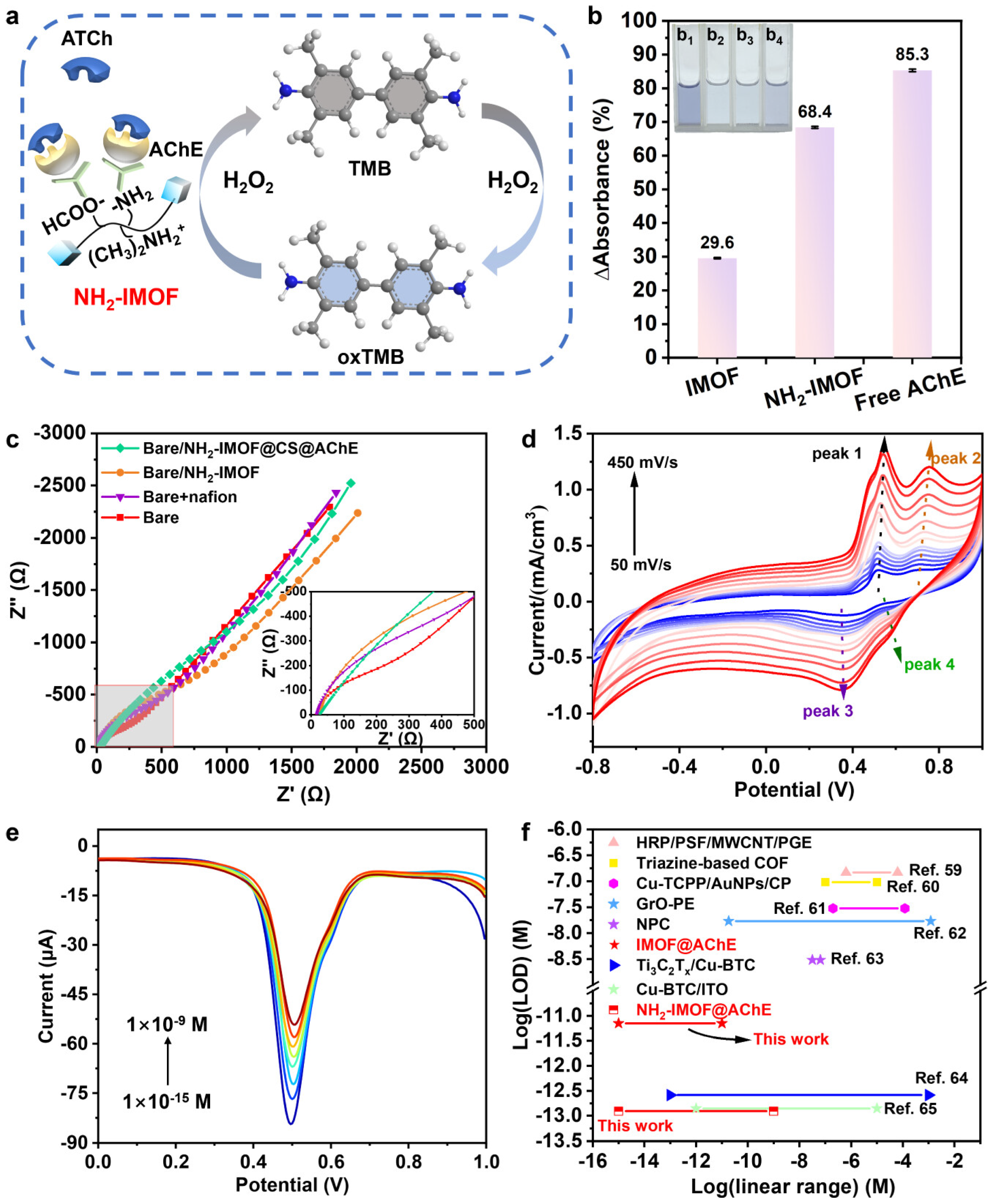
| Amino-modified ionic MOF@CS/AChE | Gly | DPV; Linear range: 1.0 × 10⁻⁹–1.0 × 10⁻³ μM; LOD: 1.24 × 10⁻⁷ μM; Strawberries, cucumbers, oilseed rape, and tomatoes, Recovery rate: 87.1–109.6%; RSD: 2.85% | [44] | |
| Curcumin/UiO-66/GCE | MP | DPV; Linear range: 0.076–76 μM LOD: 0.0037 μM; Tomato, cucumber, peach, Recovery rate: 95.00–111.73%, 95.70–114.80%, 98.69–111.81%; RSD: 3.63–6.91%, 4.40–6.28%, 3.56–8.36% | [45] | |
| Molecularly imprinted polymer-modified MOF-808/acetylene black/GCE | Dimethoate | DPV; Linear range: 1 × 10⁻¹–1 × 10⁴ μM; LOD: 43.05 pM; Tomato, cucumber, peach, Recovery rate: 83.23–100.58%; RSD: 5% | [46] | |
| Ni-doping nanoporous carbon-graphene composite/GCE | CBZ | DPV; Linear range: 0.04–10.0 µM; LOD: 8.9 nM; Pond water, peach, lemon juices, Recovery rate: 91.3–111%; RSD: 5.7% | [48] | |
| MOF-derived copper-cobalt oxide decorated on a protonated-gC3N4 and graphene oxide nanocomposite/FTO | CBZ | SWV; Linear range: 12 mM–10 pM; LOD: 0.63 × 10⁻¹² M; Sweet lime and pomegranate, Recovery rate: 98–101%; RSD: 3.8% | [49] | |
| Metal nanoparticles | FTO-AuNPs-anti-chlorpyrifos antibodies | Chlorpyrifos (CLPF) | DPV; Linear range: 1 fM–1 μM; LOD: 10 fM; Apple, pomegranate and cabbage | [55] |
| CNT-AgNP/PGE | DZN Malathion (MLT) CLPF | DPV; Linear range: 0.1–20 μM (DZN), 1.0–30 μM (MLT), 0.25–50 μM (CLPF), LOD: 0.354 μM (DZN), 0.894 μM (MLT), 0.533μM (CLPF); Tap water, orange juice, and apple fruit, Recovery rate: 77.0–124.0% | [56] | |
| Mucilage-AgNP/glassy carbon | CLPF | SWV; Linear range: 0.4–0.62 μM; LOD: 0.049 μM; River water, Recovery rate: 99% | [57] | |
| Laser-inscribed graphene-Cu | Gly | DC-potential amperometry (DCPA); Linear range: 4–24 µM; LOD: 3.42 ± 1.69 µM; Environmental water, Recovery rate: 98.6–124.8%; RSD: 5.5–37.8%; | [58] | |
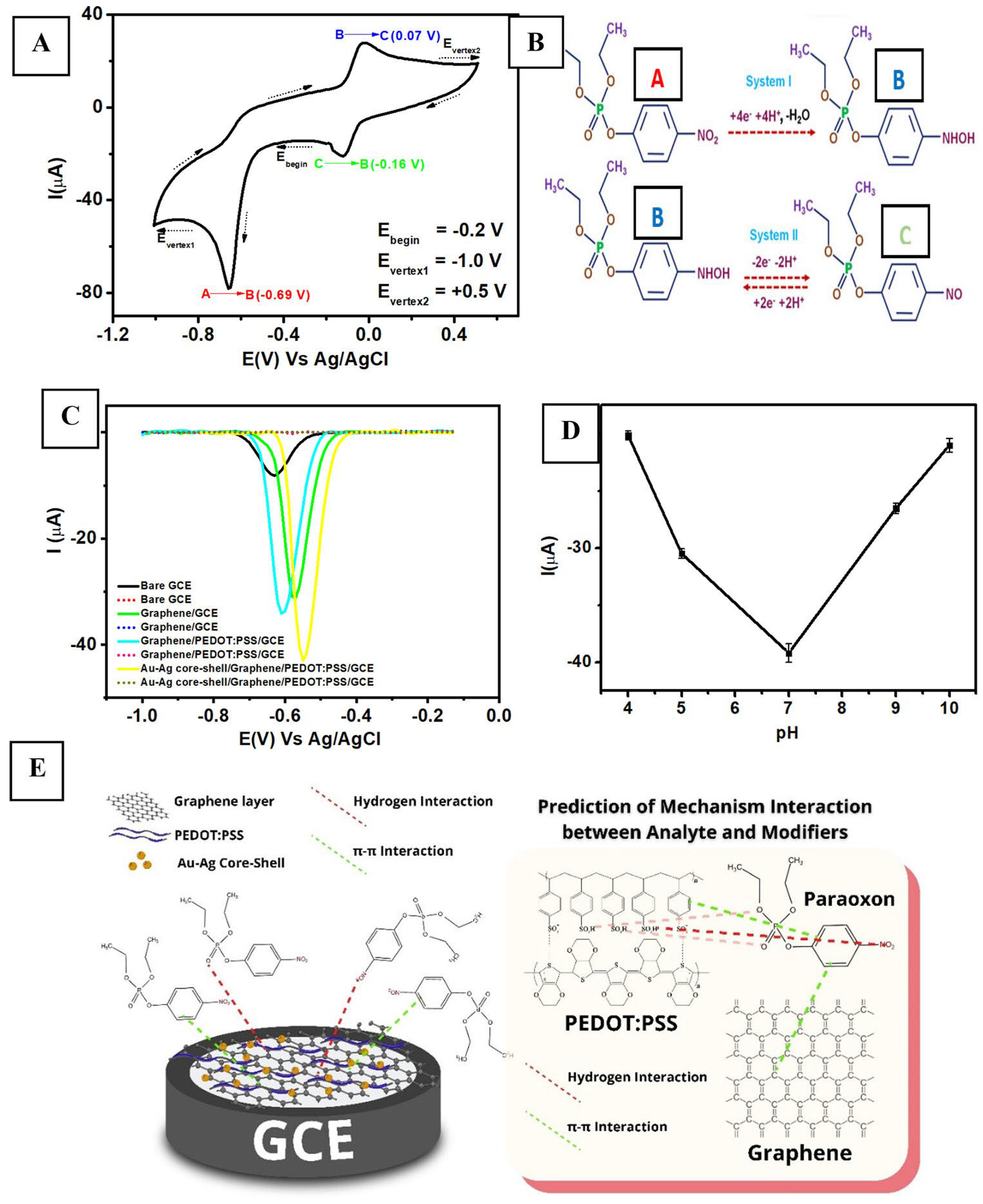
| Au-Ag core–shell/graphene/PEDOT:PSS composite/GCE | Paraoxon-ethyl | DPV; Linear range: 0.2–100 μM; LOD: 10 nM; Chinese cabbage and pear fruit | [59] | |
| Ag/Cu-graphene/graphene paste electrode | CLPF | DPV; Linear range: 0.01–100 nM; LOD: 400 µM; Well water, Recovery rate: 86.4–95.3%; RSD: 3.8–5.6%; Soil, Recovery rate: 85.6–93.4%; RSD: 3.9–6.2% | [60] | |
| Metal compound-based materials | TiO2/CPE | CBZ | SWV; Linear range: 10–420 μM; LOD: 0.017μM; Soil, Recovery rate: 92.5–98.5%; RSD: 2.49–2.69%; Water, Recovery rate: 91–95%; RSD: 2.57–2.75% | [61] |
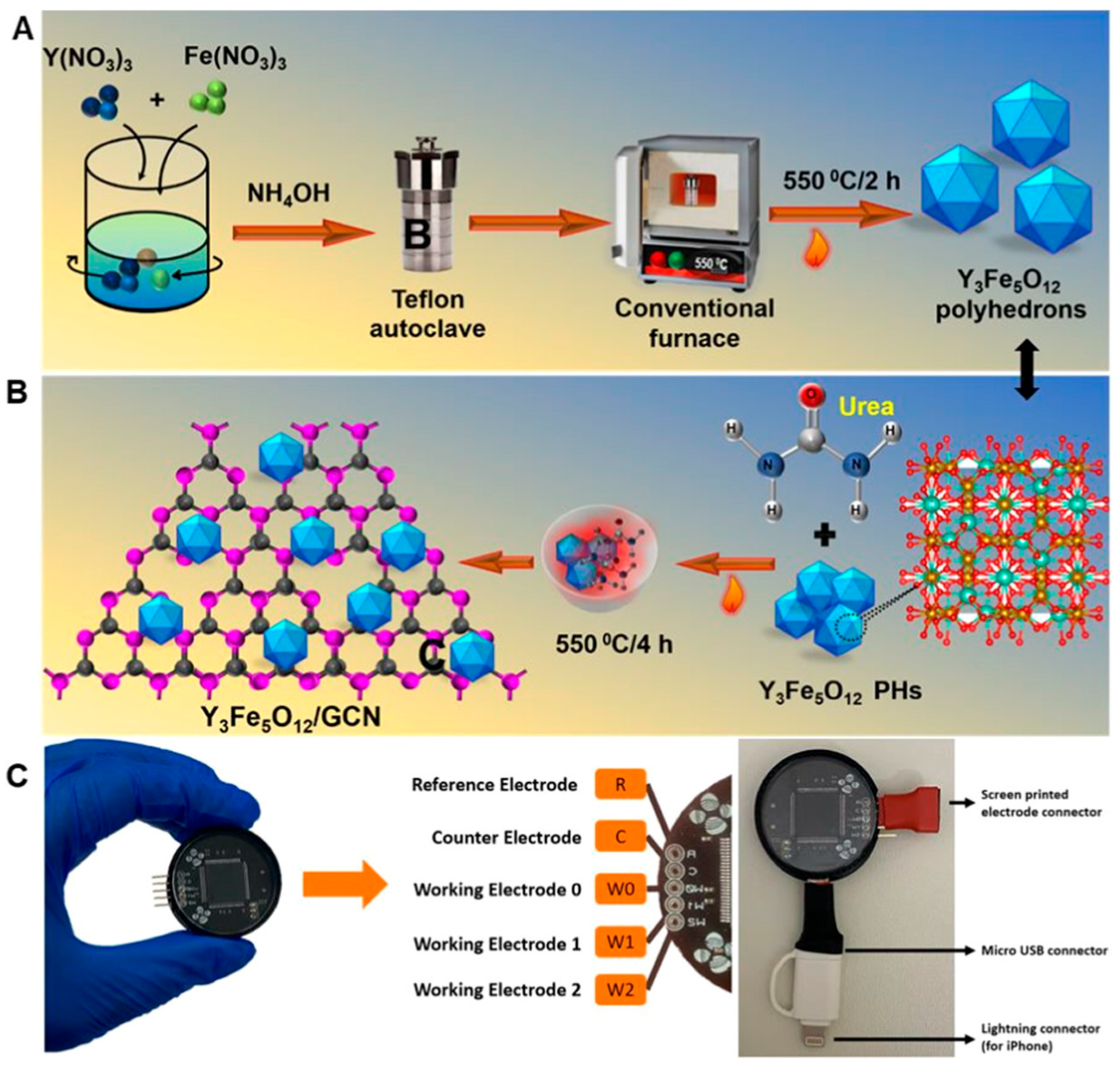
| Yttrium iron garnet/graphitic carbon nitride/SPCE | Mesotrione | DPV; Linear range: 0.005–751.8 μM; LOD: 0.95 nM; Grapes, orange, tomato, guava, and mango, Recovery rate: 95% | [62] | |
| 3D flower-like neodymium molybdate nanosheets/GCE | MP | DPV; Linear range: 0.5–300 μM; LOD: 5.7 nM; Tomato and paddy grain, Recovery rate: 98%; RSD: 2.1% | [63] | |
| 2D BiOI nanostructures/SPCE | Trichlorophenol | DPV; Linear range: 0.01–116 μM; LOD: 0.0019 μM; River Water, Recovery rate: 97.83–98.47%; RSD: 2.40–2.61% | [64] | |
| NiCeO/GCE | FEN | DPV; Linear range: 1–5747.3 μM; LOD: 1.8 nM; Recovery rates in pond water (96–99%), lake water (92–98%), brinjal (95–99%), and bitter gourd (96–99%); RSD: 3% | [65] | |
| Ag NWs@MoS2/GCE | TBZ | DPV; Linear range: 0.05–10 μM; LOD: 1.75 nM; Pear and apple, Recovery rate: 95.5–103.6%; RSD: 1.98–3.25% | [68] | |
| Sn-integrated NiFe-LDH/GCE | CF Methiocarb (MTC) | DPV; Linear range: 1–136 μM (CF), 1–171 μM (MTC); LOD: 9.31 nM (CF), 10.71 nM (MTC); Beans, carrots, spinach, cabbage, pond water, and soil, Recovery rate: 96.35–99.96% (CF), 97.01–99.60% (MTC) | [72] | |
| Conducting polymers | surface imprinted conducting polymer@MWCNT/GCE | CLPF | DPV; Linear range: 0.02–1000 nM; LOD: 0.004 nM; Tap water and cucumber, RSD: 1.6–3.2% | [73] |
| Molecularly imprinted polypyrrole-modified gold electrode | Gly | DPV; Linear range: 0.03–4.7 nM; LOD: 0.00158 nM; Cucumber and tap water, Recovery rate: 72.7–98.96%; RSD: 1.07–4.48% | [76] | |
| Molecularly imprinted polypyrrole nanotubes/SPE | Gly | DPV; Linear range: 0.00588–2.06 μM; LOD: 0.114 μM; Recovery rate: 97.45–101.69% (Orange juice), 94.54–102.70% (rice) | [77] | |
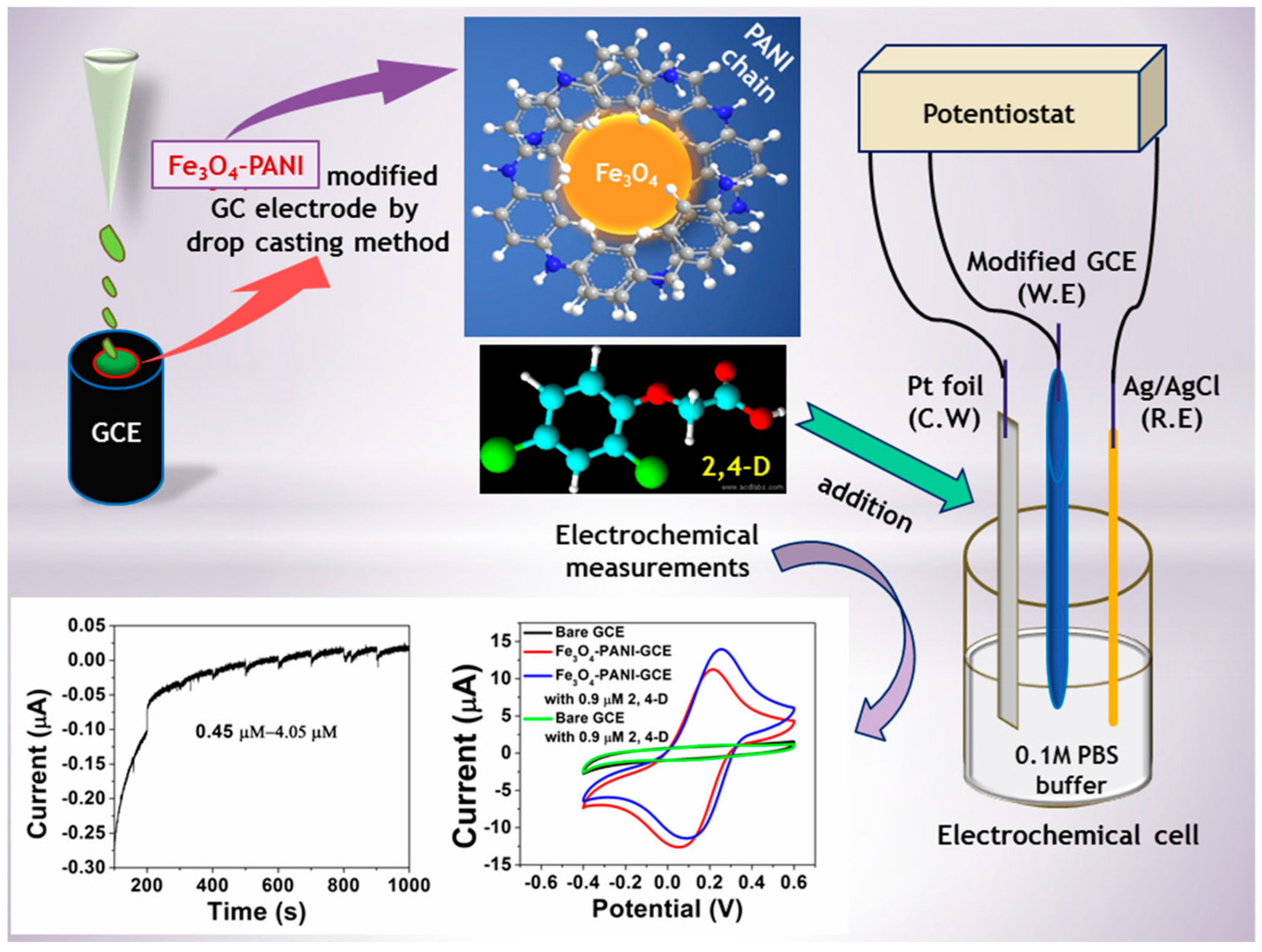
| Fe3O4-PANI-GCE | 2, 4-dichlorophenoxyacetic acid | CV; Linear range: 1.35–2.7 μM; LOD: 0.21 μM; Tomato and paddy grain, Recovery rate: 98%; RSD: 2.1% | [79] | |
| CuxO-PANI/GCE | CLPF | CV; Linear range: 0.05–12.50 μM; LOD: 9.0 nM; Honey, Recovery rate: 97.84–103%; RSD: 0.24H–2.59% | [80] | |
| PANI@sulfur-doped graphitic carbon nitride nanosheets/SPE | CBZ | DPV; Linear range: 1–11 pM; LOD: 0.54 pM; Fruit including apple, Chinese pear, guava, and tomato, Recovery rate: 84.6–108.6%; RSD: 0.2–4.1% | [81] | |
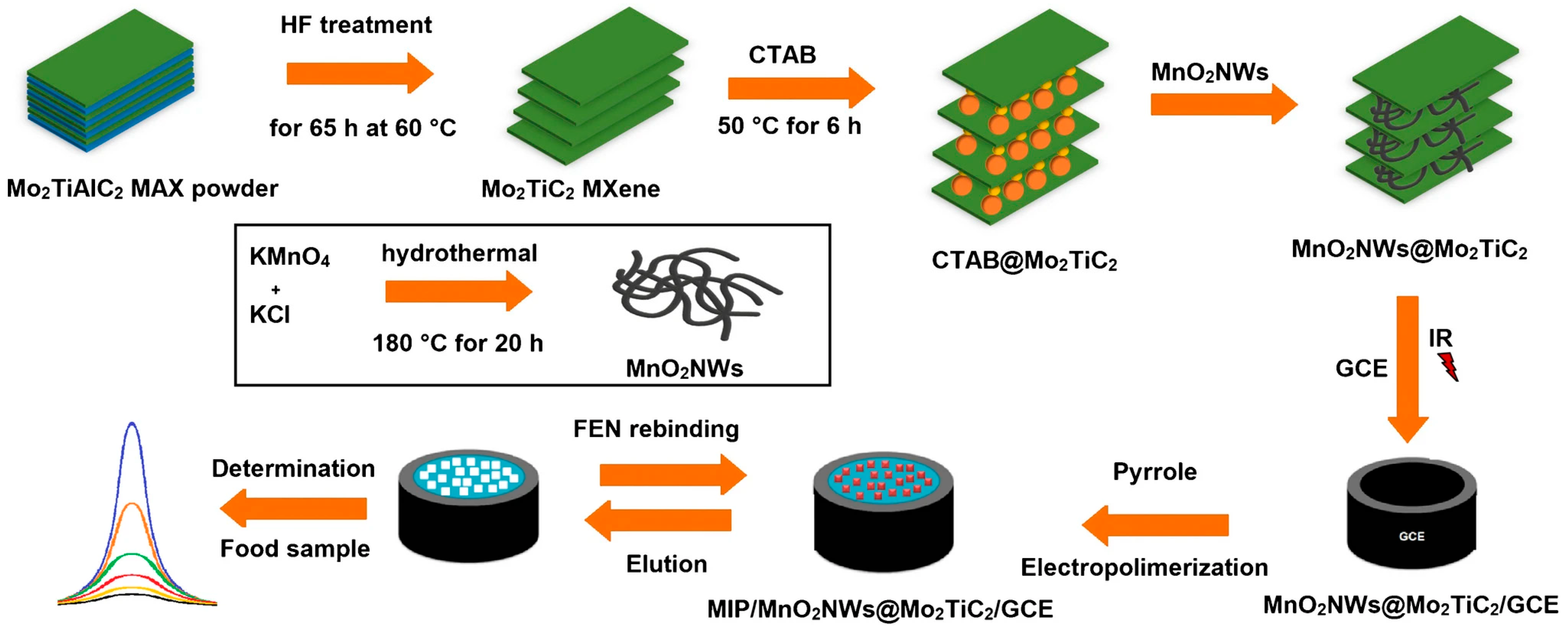
| MXene-based composites | MIP/MnO2 nanowires/Mo2TiC2 MXene ionic nanocomposite | FEN | EIS and CV; Linear range: 1.0 × 10⁻³–2.0 × 10⁻² μM; LOD: 3.0 × 10⁻⁴ μM; LOQ: 1.0 × 10⁻³μM | [86] |
| Mxene/carbon nanohorns/β-cyclodextrin-Metal–organic frameworks/GCE | CBZ | DPV; Linear range: 3.0 nM–10.0 μM; LOD: 1.0 nM; Tomato, Recovery rate: 97.77–102.01%; RSD: 2.7–4.1% | [87] | |
| MXene@AgNCs/NH2-MWCNTs | CBZ | DPV; Linear range: 0.3 × 10⁻³–10.0 μM; LOD: 0.1 nM; Lettuces, Recovery rate: 96.8–100.7%; RSD: 3.6% | [88] | |
| Ti3C2Tx-TiO2/GCE | TBZ | DPV; Linear range: 0.3–100.0 nM; LOD: 0.1 nM; Strawberry and paddy water, Recovery rate: 96.4–102.1%; RSD: 4.1% | [90] | |
| AChE-CS/Cu3V2O8/Cu6Mo5O18/MXene/GCE | MP MLT FEN | DPV; Linear range: 7.6 × 10⁻⁶–7.6 × 10⁻¹ nM, LOD: 3.2 × 10⁻⁷ nM (MP); Linear range: 3.1 × 10⁻⁵–3.1 × 10⁻³ nM, LOD: 3.0 × 10⁻⁶ nM (MLT); Linear range: 3.6 × 10⁻⁴–36 nM, LOD: 2.3 × 10⁻⁵ nM; tap water, Recovery rate: 96.6–103.5%; RSD: 0.83–3.61% | [91] | |
| Hierarchical nano-CuxO decorated MWCNTs-COOH/MXene/GCE | BEN | DPV; Linear range: 10.0 nM to 10.0 μM; LOD: 3.0 nM; apple, Recovery rate: 99.7% to 102.2%; RSD: 3.4% | [92] | |
| Ti3C2Tx/LIG | BEN | DPV; Linear range: 10–6000 nM; LOD: 5.8 nM; Apple, pear, mushroom and environmental water in the fruit and vegetable garden, Recovery rate: 91.6–108.0% | [94] | |
| MXene-rGO/antibodies against Ed | Endosulfan | DPV; Linear range: 0.0001–1 μM; LOD: 0.497 nM; Leaf extract, root extract and spiked water, Recovery rate: 78.00–94.47%; RSD: 0.50–7.02% | [95] | |
| Others | COF/methylene blue@MnO2 | CLPF | DPV; Linear range: 0.0014–0.57 nM; LOD: 0.00018 nM; River water and vegetables and apples, Recovery rate: 96.92–104.6%; RSD: 1.58–3.12% | [97] |
| AChE/hollow COFTFPB-DBD-AuNPs/GCE | Carbaryl | CV; Linear range: 1.10 μM–40.0 μM; LOD: 0.38 μM; Orange juice, Recovery rate: 99.9–101.3%; RSD: 1.6–2.2% | [101] | |
| TT-COF/GCE | CBZ | DPV; Linear range: 0.005–5 μM; LOD: 2.21 nM; Apple, tomato and pear juice, Recovery rate: 101.8–108.8%; RSD: 0.538–3.359% | [102] | |
| B-CuO/g-C3N4/GCE | MLT | DPV; Linear range: 0.000055–0.017 nM; LOD: 0.00363 nM; Apple, tomato, Recovery rate: 87.64–120.59%; RSD: 1.19–2.28% | [103] | |
| g-C3N4-Ti3C2/GCE | MLT | DPV; Linear range: 0.5–90 μM; LOD: 0.07 μM; Potato and tomato, Recovery rate: 96.0–100.2% | [104] | |
| BP-Au/MWCNTs-COOH/GCE | MLT | DPV; Linear range: 0.007–1.000 µM; LOD: 1.54 × 10⁻³ µM; Apples and grapes, Recovery rate: 97.36–114.3%; RSD: 0.5–5.3% | [106] | |
| β-cyclodextrin/carbon nanosheets@carbon nanotubes/GCE | CBZ | DPV; Linear range: 0.03–30 μM; LOD: 9.4 nM; Apple, apple juice, Recovery rate: 97.1–99.4%; RSD: 5% | [107] | |
| Polycaprolactone/polypyrrole/β-cyclodextrin | DNF | DPV; Linear range: 0.2–50 μM; LOD: 0.05 μM; rice, Recovery rate: 96.67–103.65%; RSD: 0.56–1.63% | [108] | |
| MIP/β-cyclodextrin/activated mung bean-derived carbon/GCE | DNF | DPV; Linear range: 0.05–10 μM; LOD: 0.016 μM; Tea leaves, pear skin, lettuce leaves and insecticidal spray, Recovery rate: 92.0–102%; RSD: 3.2–4.8% | [109] |
Disclaimer/Publisher’s Note: The statements, opinions and data contained in all publications are solely those of the individual author(s) and contributor(s) and not of MDPI and/or the editor(s). MDPI and/or the editor(s) disclaim responsibility for any injury to people or property resulting from any ideas, methods, instructions or products referred to in the content. |
© 2026 by the authors. Licensee MDPI, Basel, Switzerland. This article is an open access article distributed under the terms and conditions of the Creative Commons Attribution (CC BY) license.
Share and Cite
Sun, J.; Song, X.; Zhang, Y. Electrochemical Sensors for Pesticide Residue Detection. Molecules 2026, 31, 1743. https://doi.org/10.3390/molecules31101743
Sun J, Song X, Zhang Y. Electrochemical Sensors for Pesticide Residue Detection. Molecules. 2026; 31(10):1743. https://doi.org/10.3390/molecules31101743
Chicago/Turabian StyleSun, Jiabin, Xinjian Song, and Yuan Zhang. 2026. "Electrochemical Sensors for Pesticide Residue Detection" Molecules 31, no. 10: 1743. https://doi.org/10.3390/molecules31101743
APA StyleSun, J., Song, X., & Zhang, Y. (2026). Electrochemical Sensors for Pesticide Residue Detection. Molecules, 31(10), 1743. https://doi.org/10.3390/molecules31101743

