GIS-Based Temporal and Spatial Analysis of Industrial Wastewater Pollution in the Konya Municipal Sewer System


Abstract
1. Introduction
1.1. Classification of Wastewater and the Use of GIS in Municipalities
Definition and Classification of Wastewater

| Parameters | Sewage Systems Wastewater Infrastructure Facilities Resulting in Biological or Equivalent Treatment (2 h Composite Sample) | For Facilities with a Wastewater Flow Rate ≤ 5m3/Day (2 h Composite Sample) | For Facilities with Wastewater Flow Rates > 5 m3/Day ≤ 50 m3/Day (2 h Composite Sample) |
|---|---|---|---|
| Temperature (°C) | 40 | 40 | 40 |
| pH | 6–10 | 6–10 | 6–10 |
| Conductivity (mS) | 4.000 | 6000 | 5000 |
| Suspended solids (SS) (mg/L) | 400 | 1000 | 600 |
| Oil and grease (mg/L) | 150 | 300 | 200 |
| Tar and petroleum-based oils (mg/L) | 50 | 120 | 75 |
| Chemical oxygen demand (COD) (mg/L) | 800 | 4000 | 1800 |
| Phenol (mg/L) | 20 | 30 | 25 |
| Sulfate (SO42−) (mg/L) | 1700 | 2200 | 2000 |
| Arsenic (As) (mg/L) | 3 | 10 | 5 |
| Total lead (Pb) (mg/L) | 3 | 10 | 5 |
| Total mercury (Hg) (mg/L) | 0.2 | 0.4 | 0.3 |
| Total cadmium (Cd) (mg/L) | 2 | 5 | 4 |
| Total cyanide (CN−) (mg/L) | 10 | 20 | 15 |
| Total chromium (Cr) (mg/L) | 5 | 10 | 7 |
| Free chlorine (mg/L) | 5 | 10 | 7 |
| Total sulfur (S) (mg/L) | 2 | 5 | 4 |
| Total copper (Cu) (mg/L) | 2 | 5 | 4 |
| Total nickel (Ni) (mg/L) | 5 | 10 | 7 |
| Total zinc (Zn) (mg/L) | 10 | 20 | 15 |
| Total tin (Sn) (mg/L) | 5 | 10 | 7 |
| Total silver (Ag) (mg/L) | 5 | 10 | 7 |
| Total iron (Fe) (mg/L) | 5 | 10 | 7 |
| Total aluminum (Al) (mg/L) | 5 | 10 | 7 |
| Chloride (Cl−) (mg/L) | 10.000 | 15.000 | 12.000 |
1.2. Use of Geographic Information Systems (GISs) in Municipalities
2. Results and Discussion
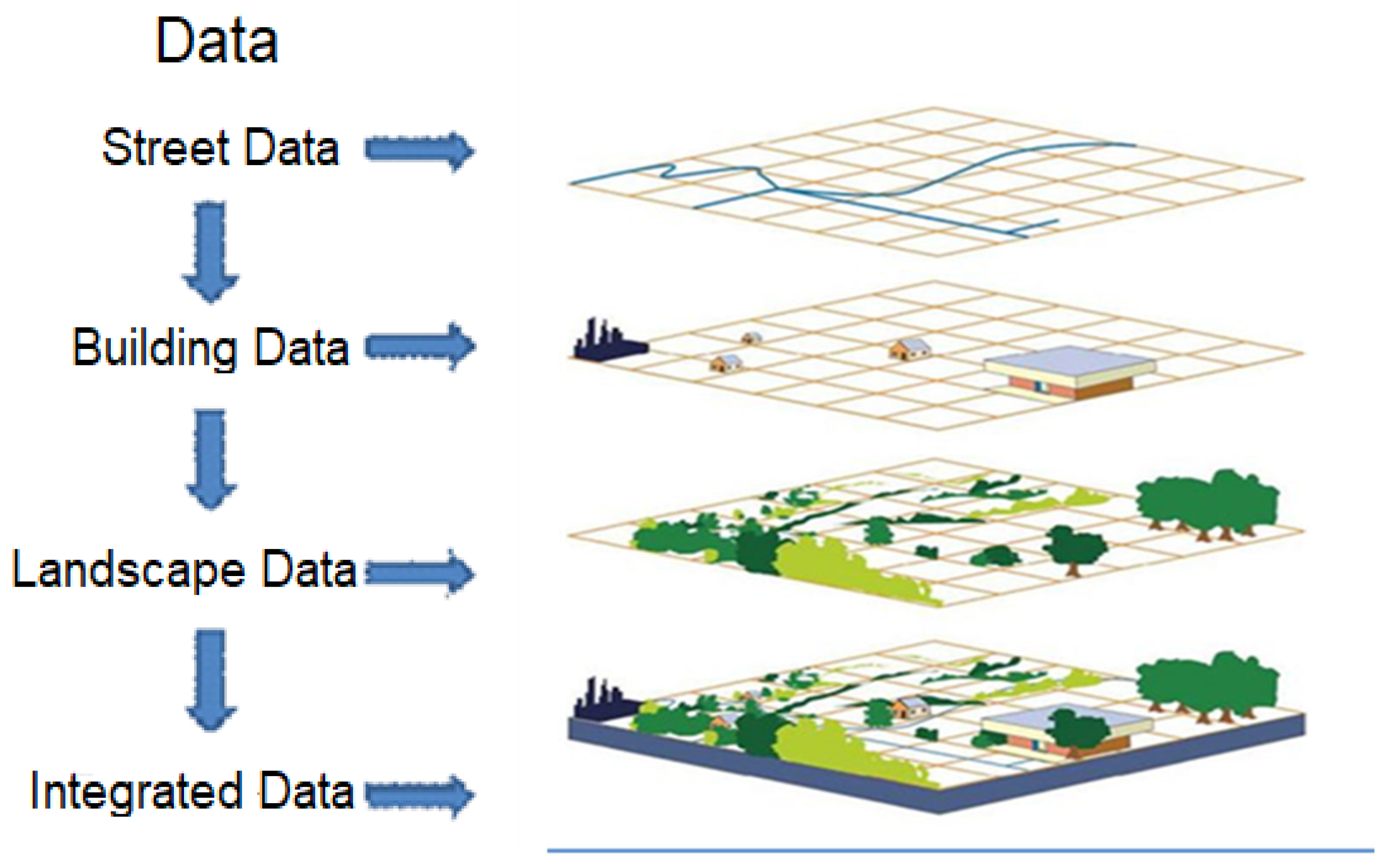
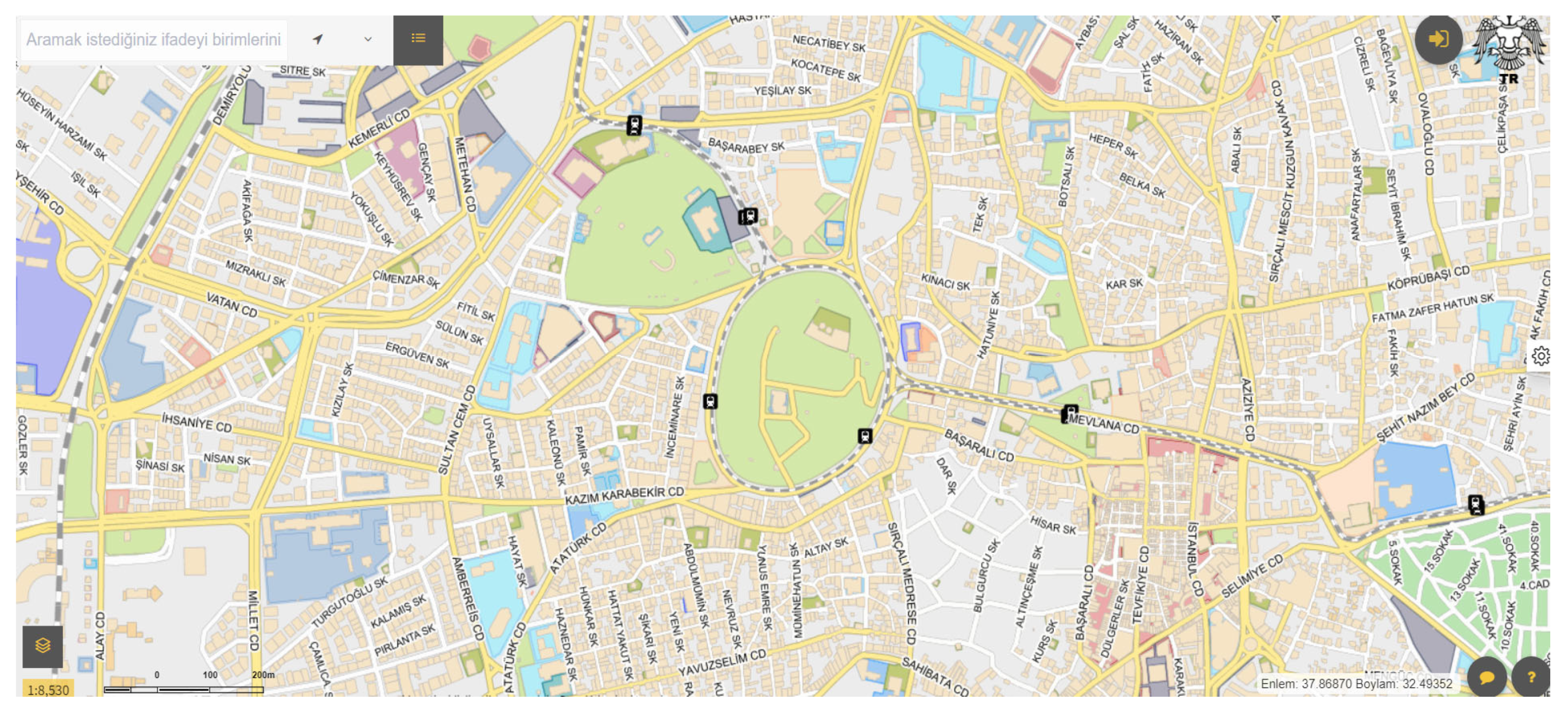
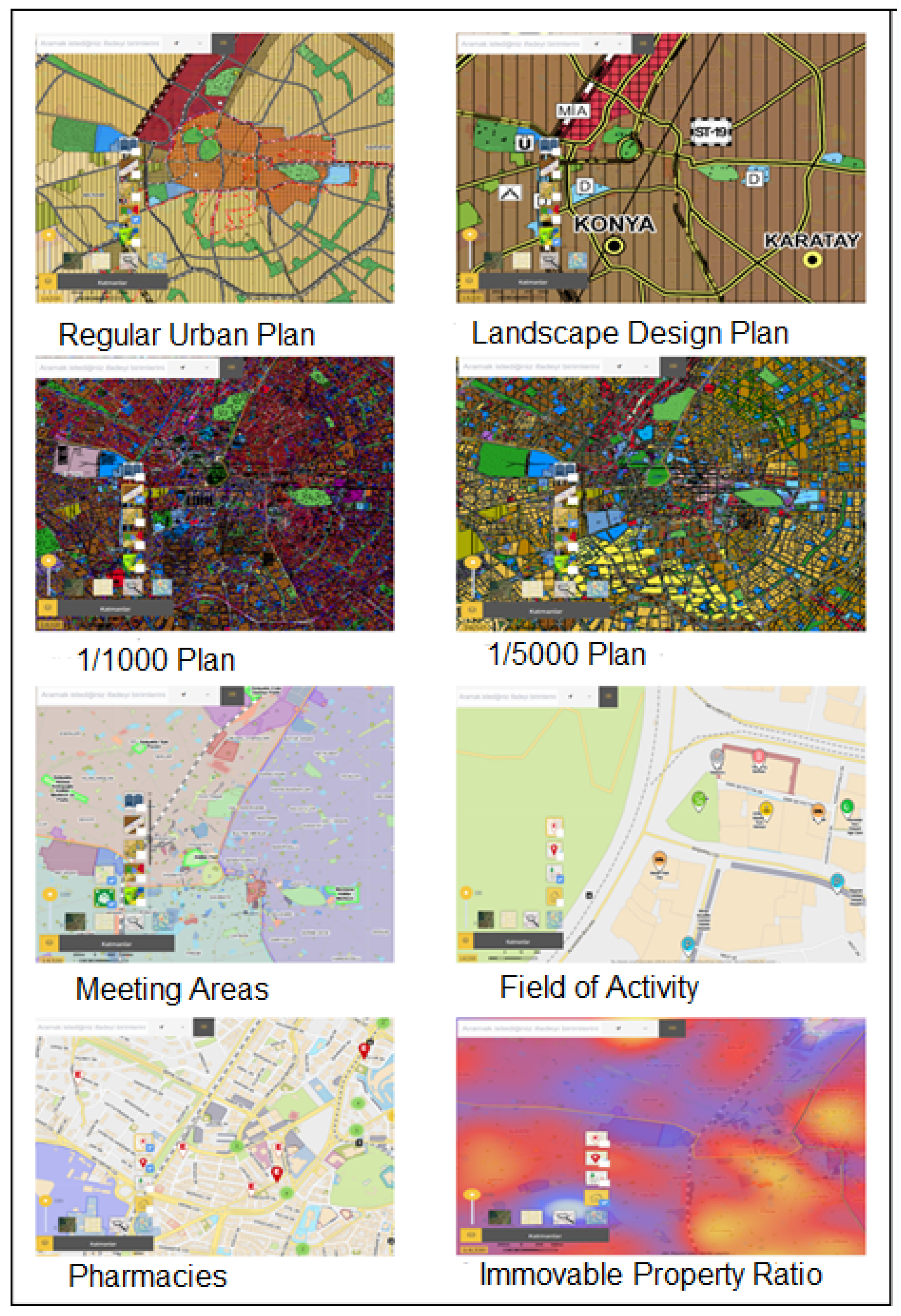
2.1. Urban Information System in Konya
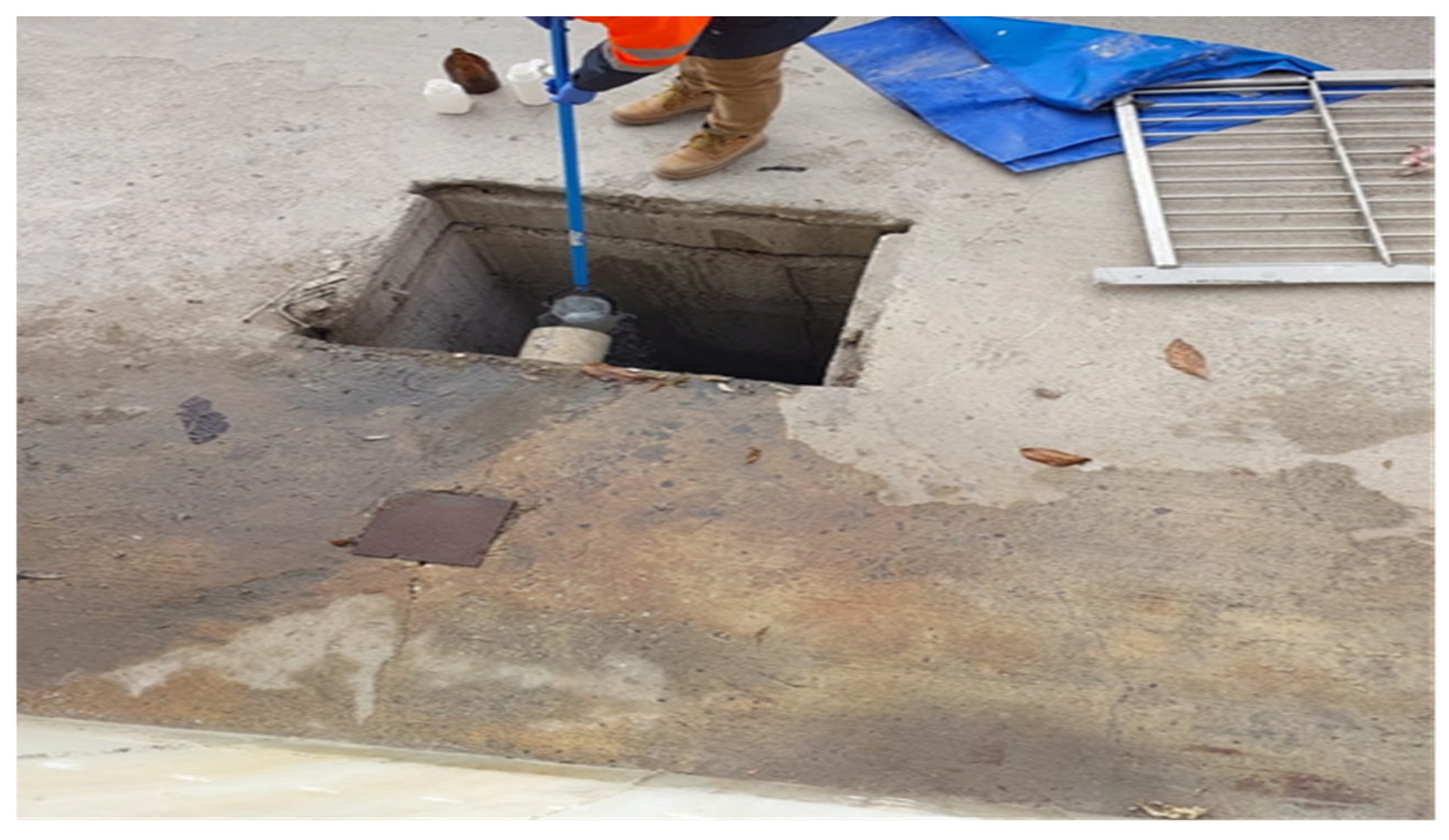
2.2. Sample Point Analyses
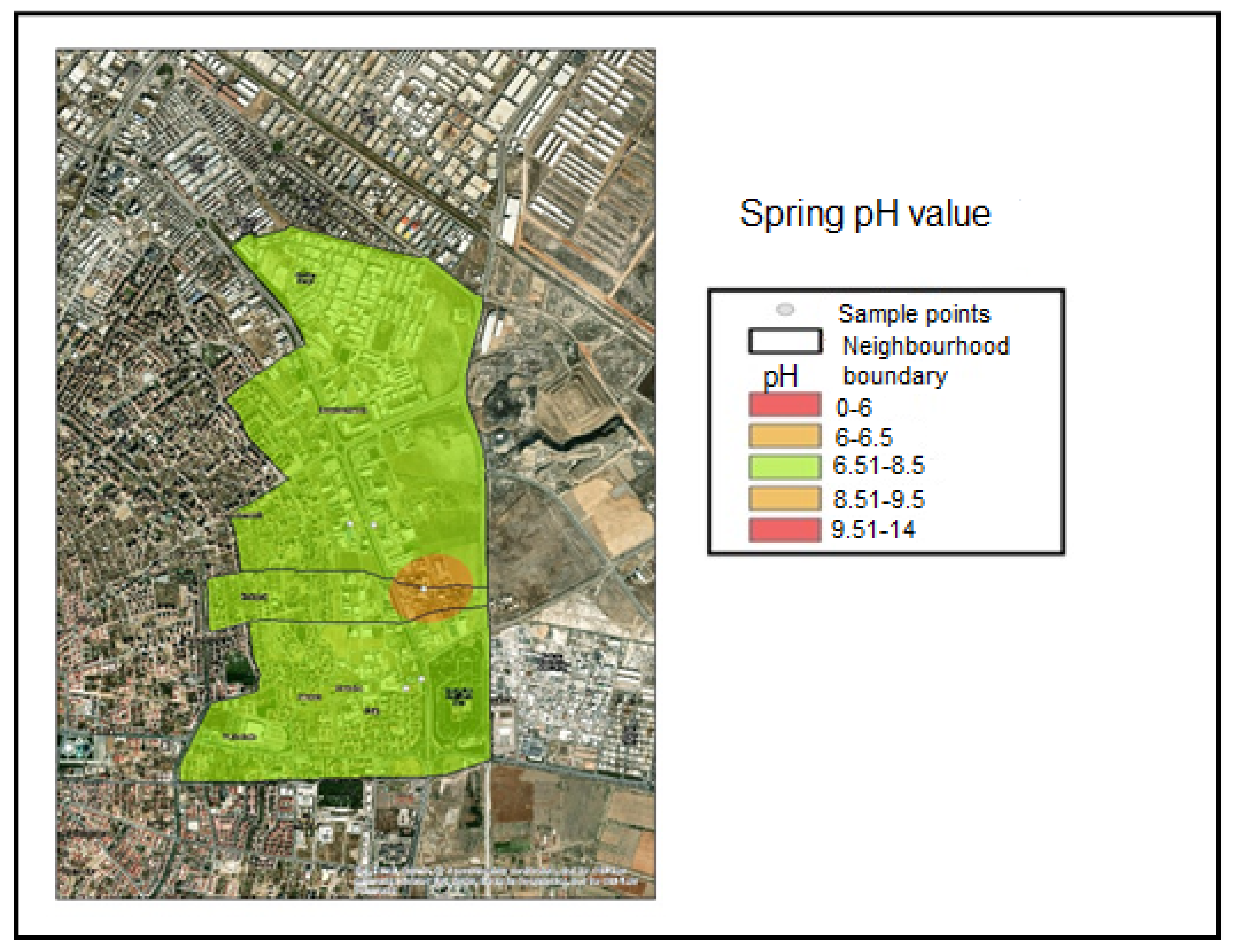
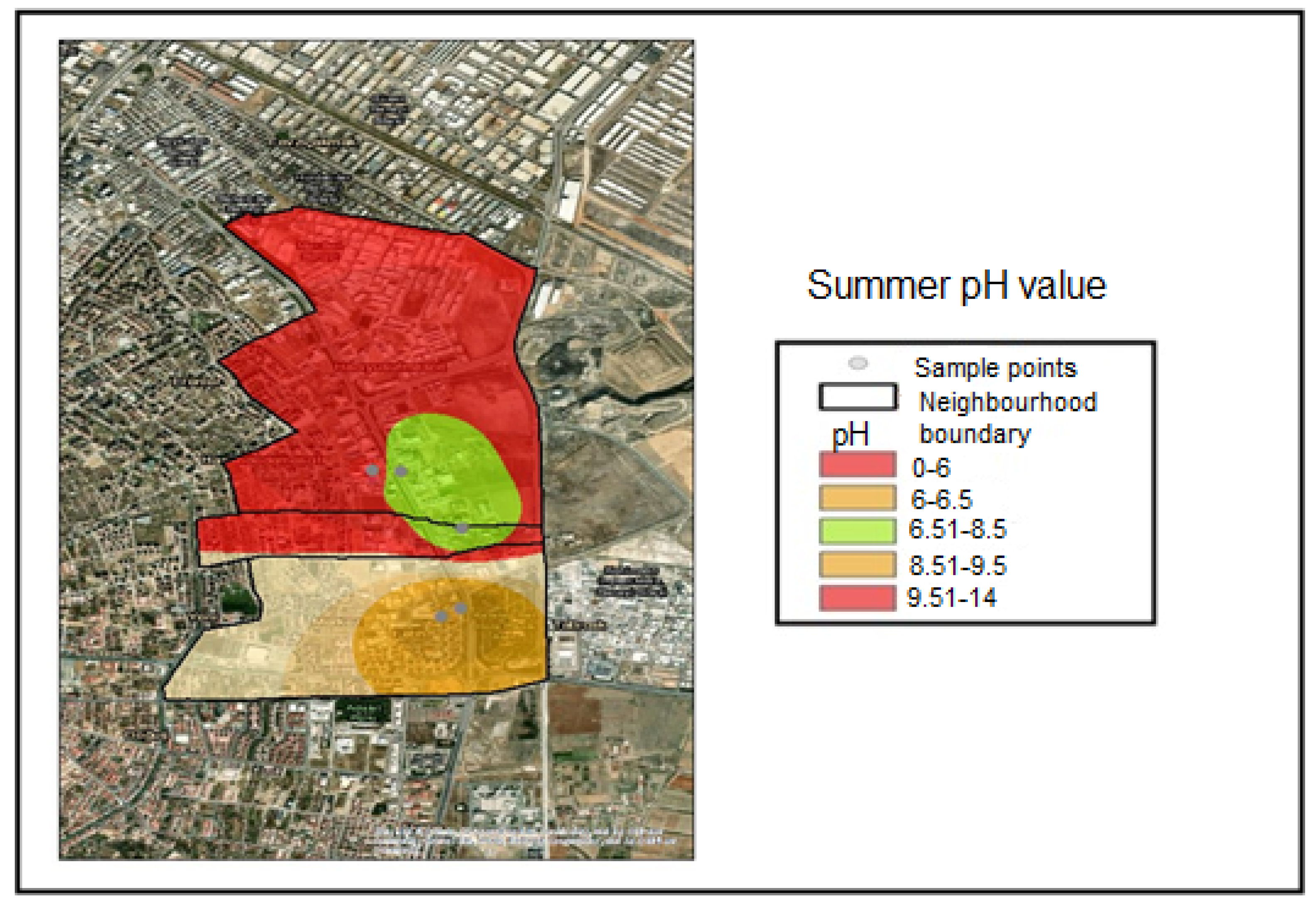
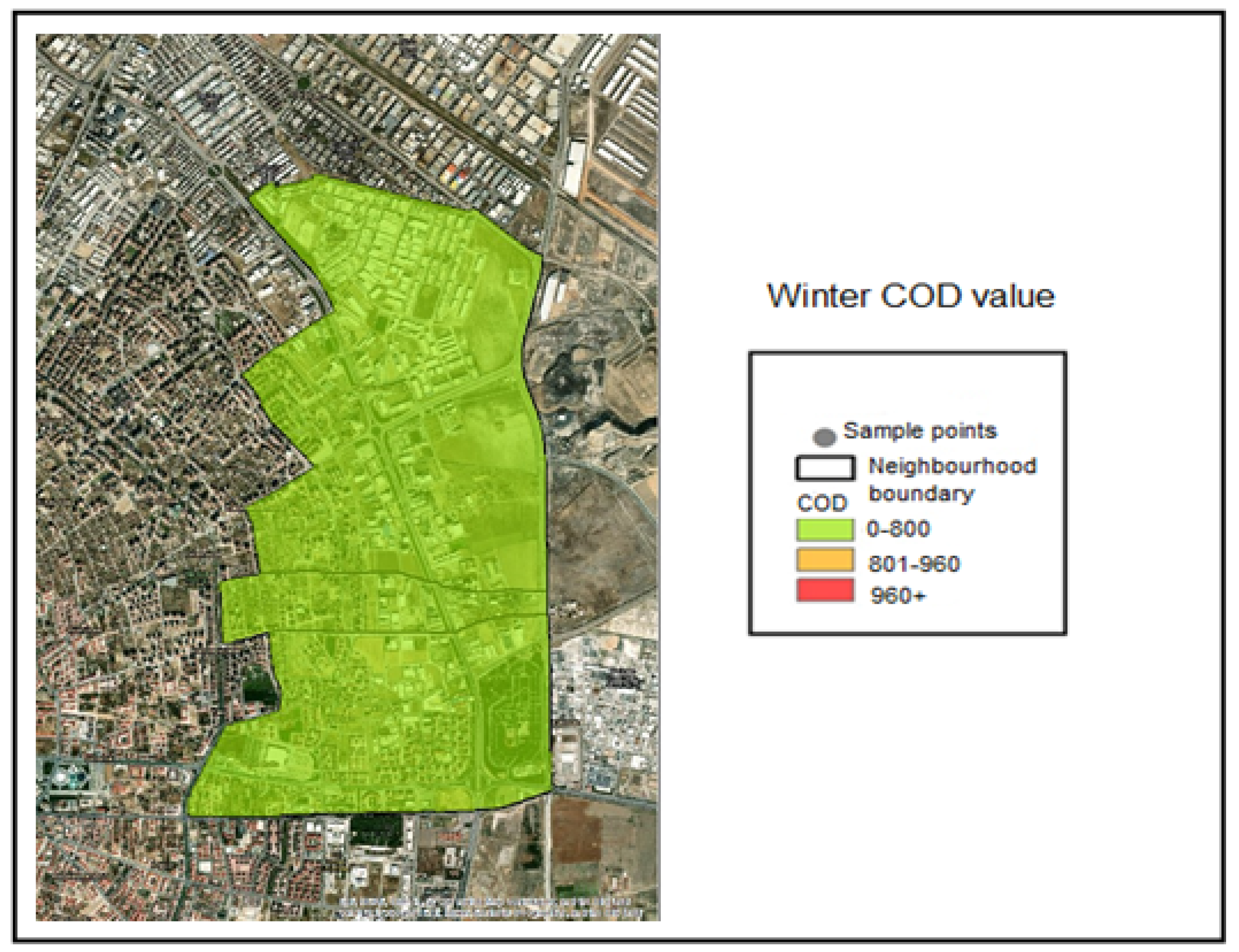
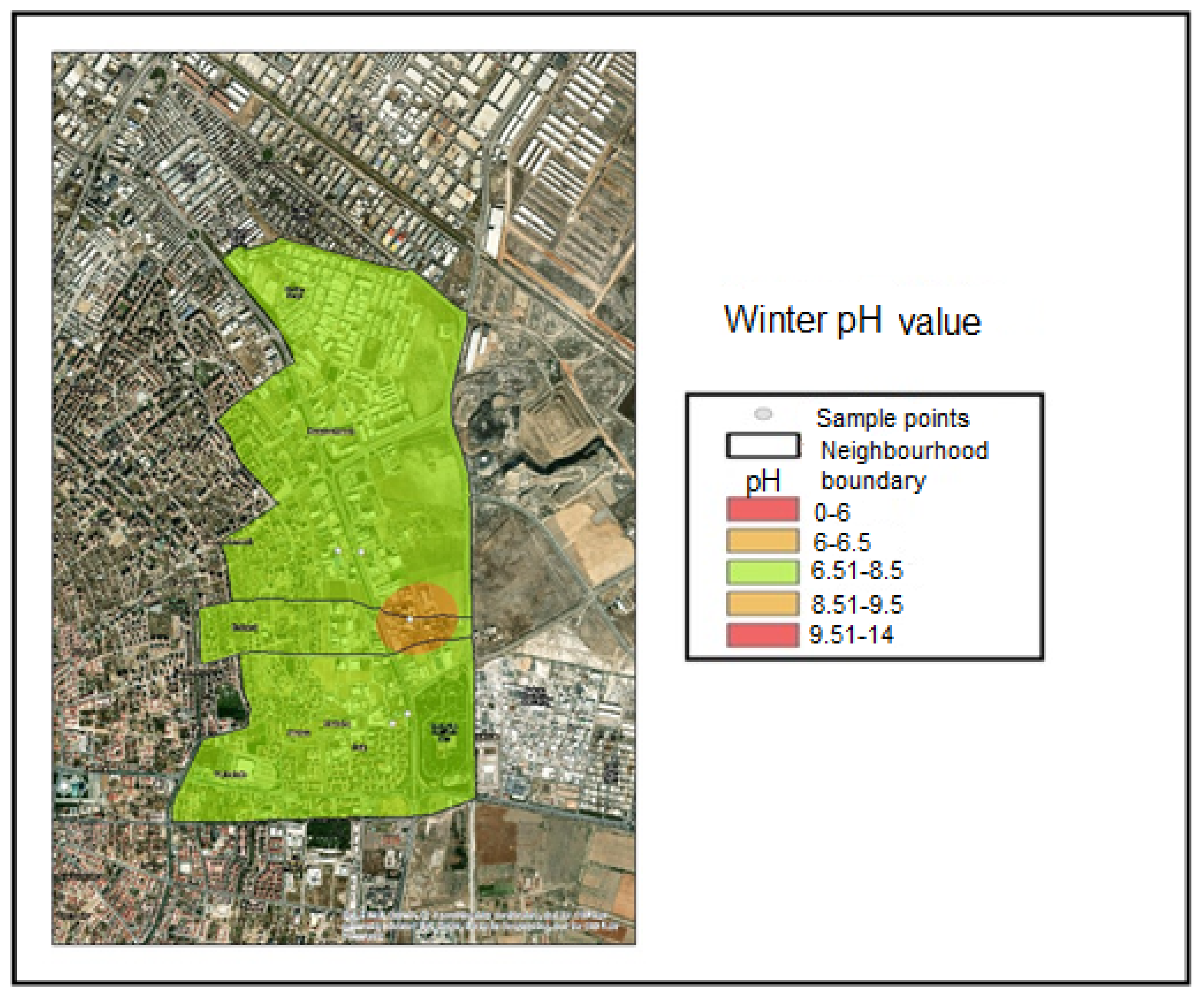
2.3. Temporal and Spatial Mapping of Analysis Results
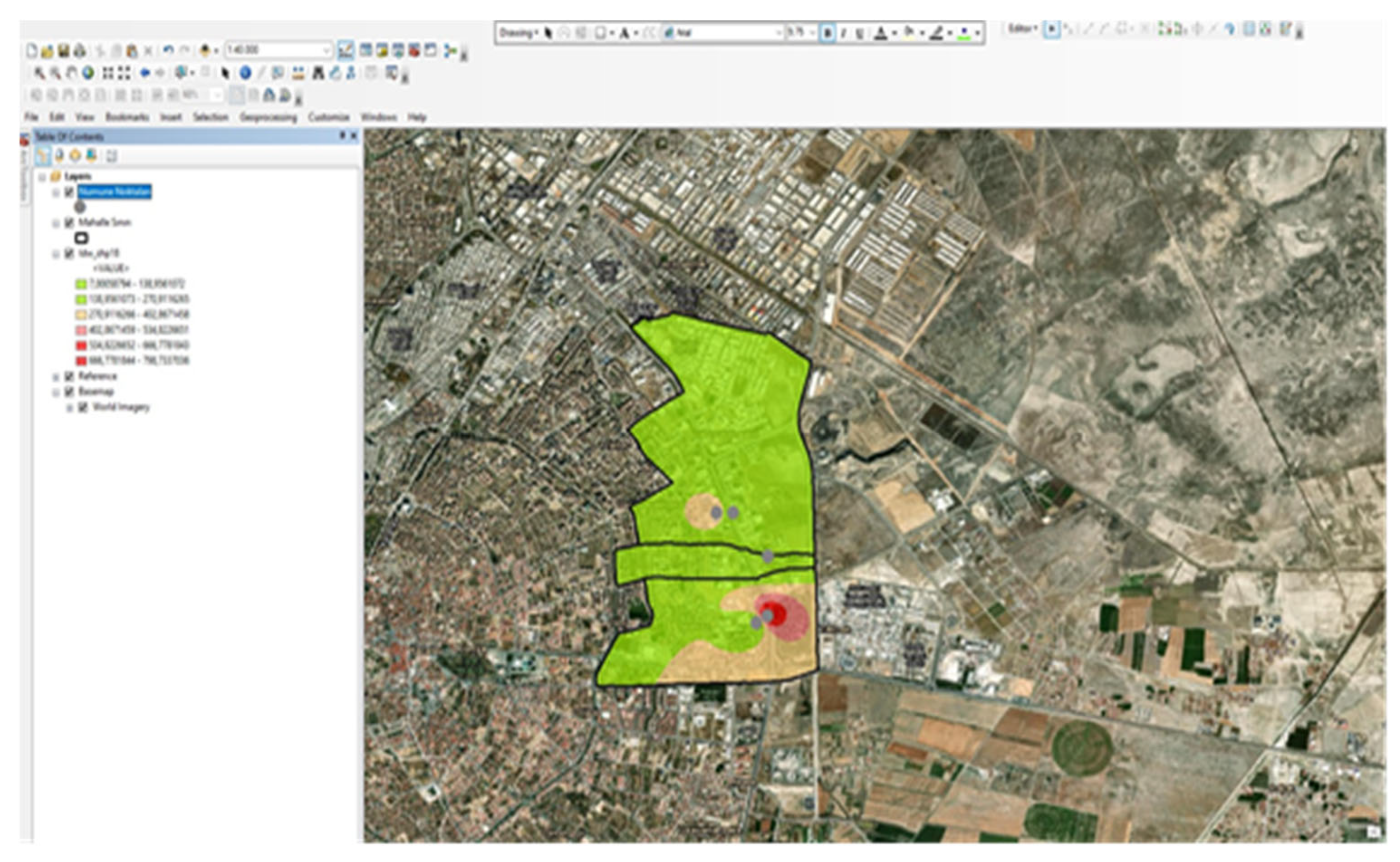
- pH < 6.00—Noncompliant (Red);
- 6.00 ≤ pH ≤ 6.50—Threshold-adjacent (Yellow);
- 6.51 ≤ pH ≤ 8.50—Compliant range (Green);
- 8.51 ≤ pH ≤ 9.50—Threshold-adjacent (Yellow);
- pH > 9.50—Noncompliant (Red).
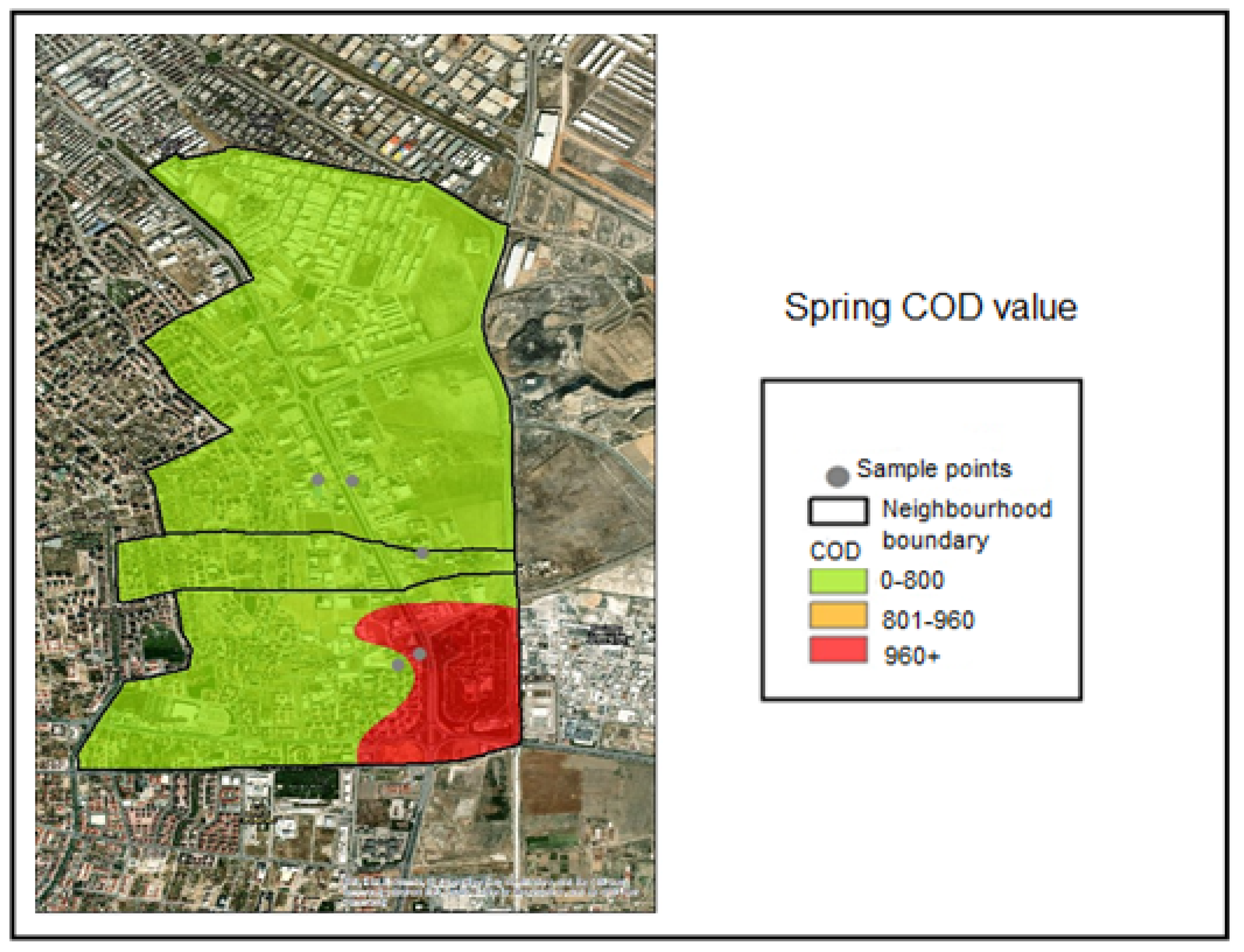
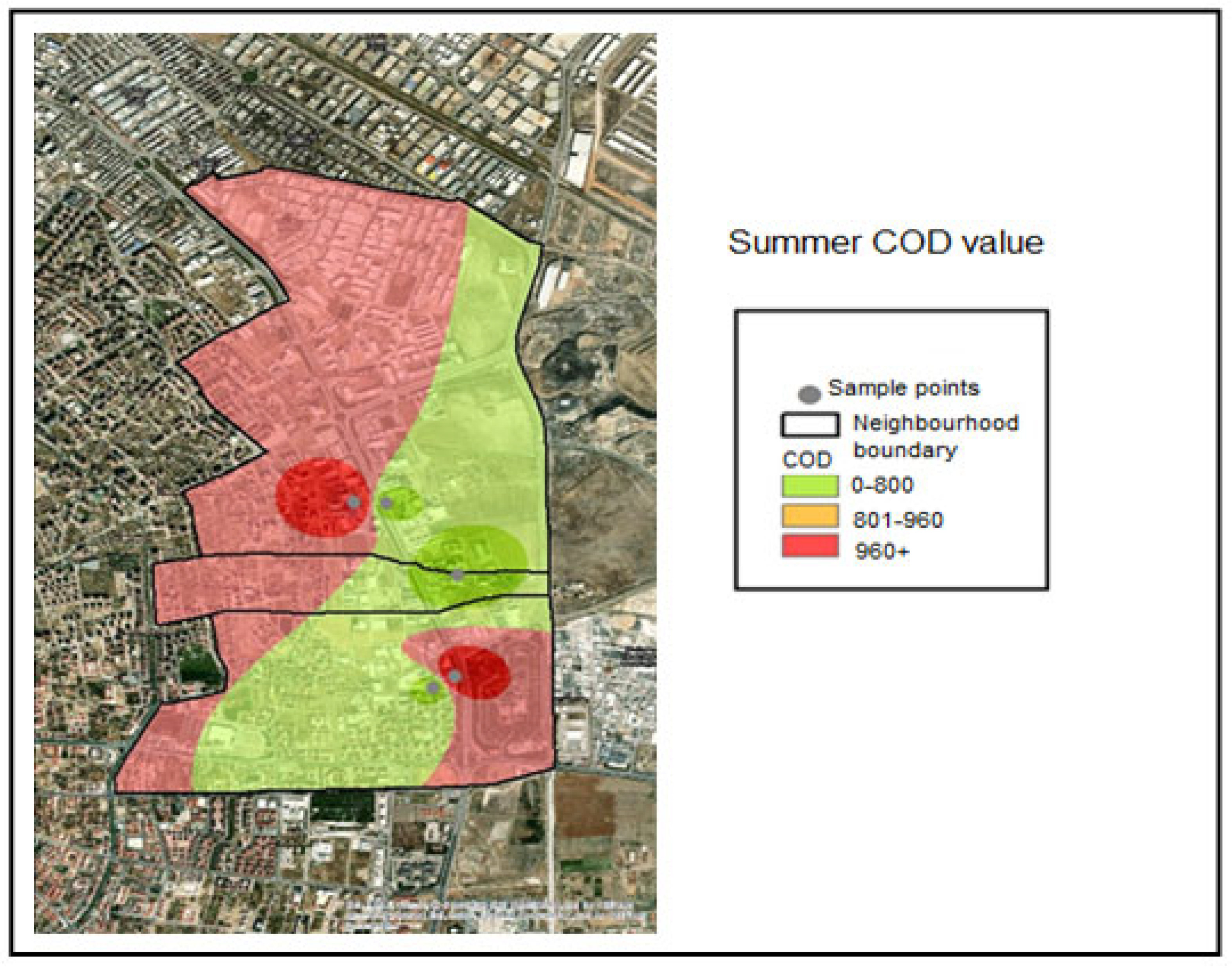
- COD ≤ 800 mg/L—Compliant range (Green);
- 801–960 mg/L—Threshold-adjacent range (Yellow);
- COD > 960 mg/L—Noncompliant (Red).
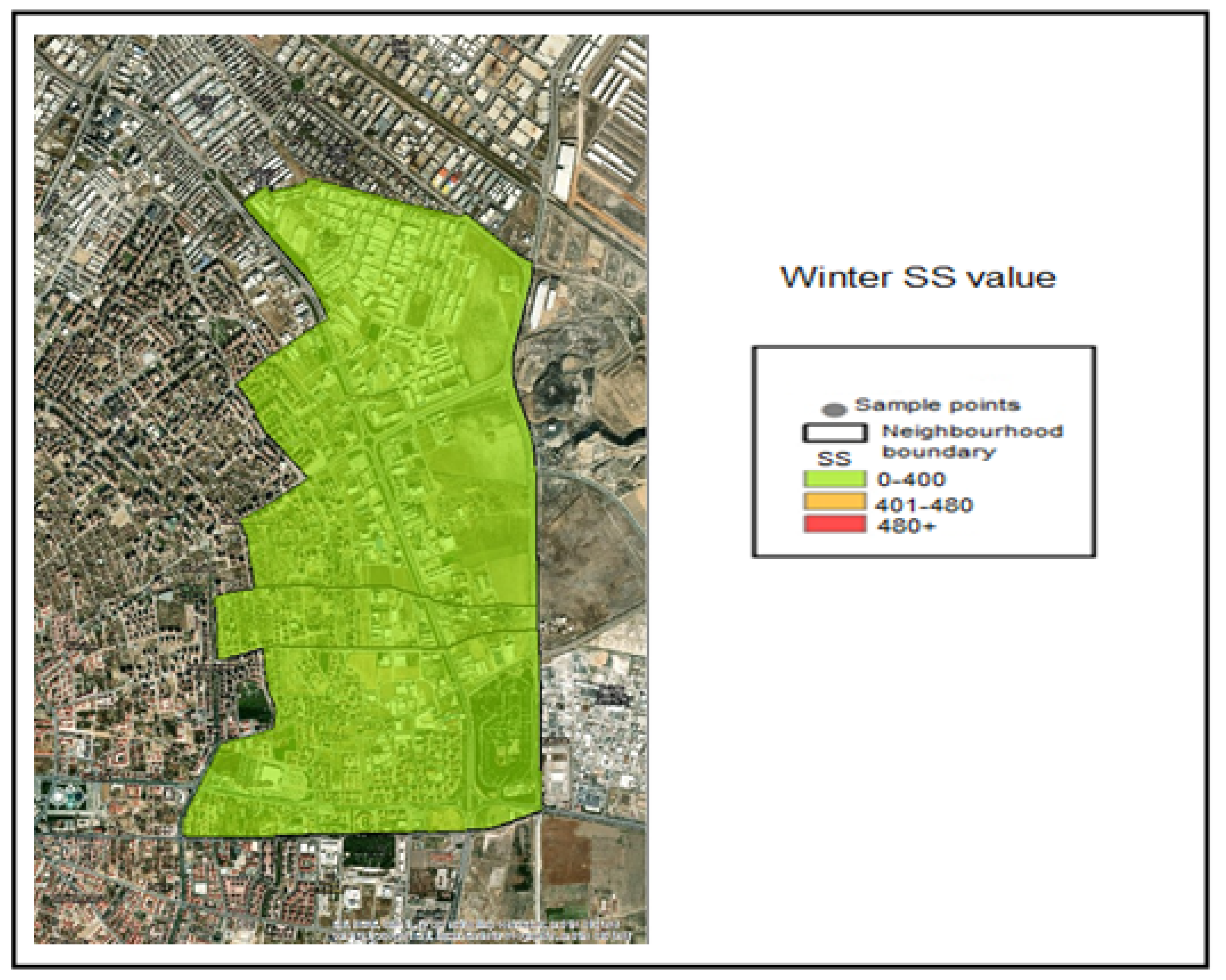
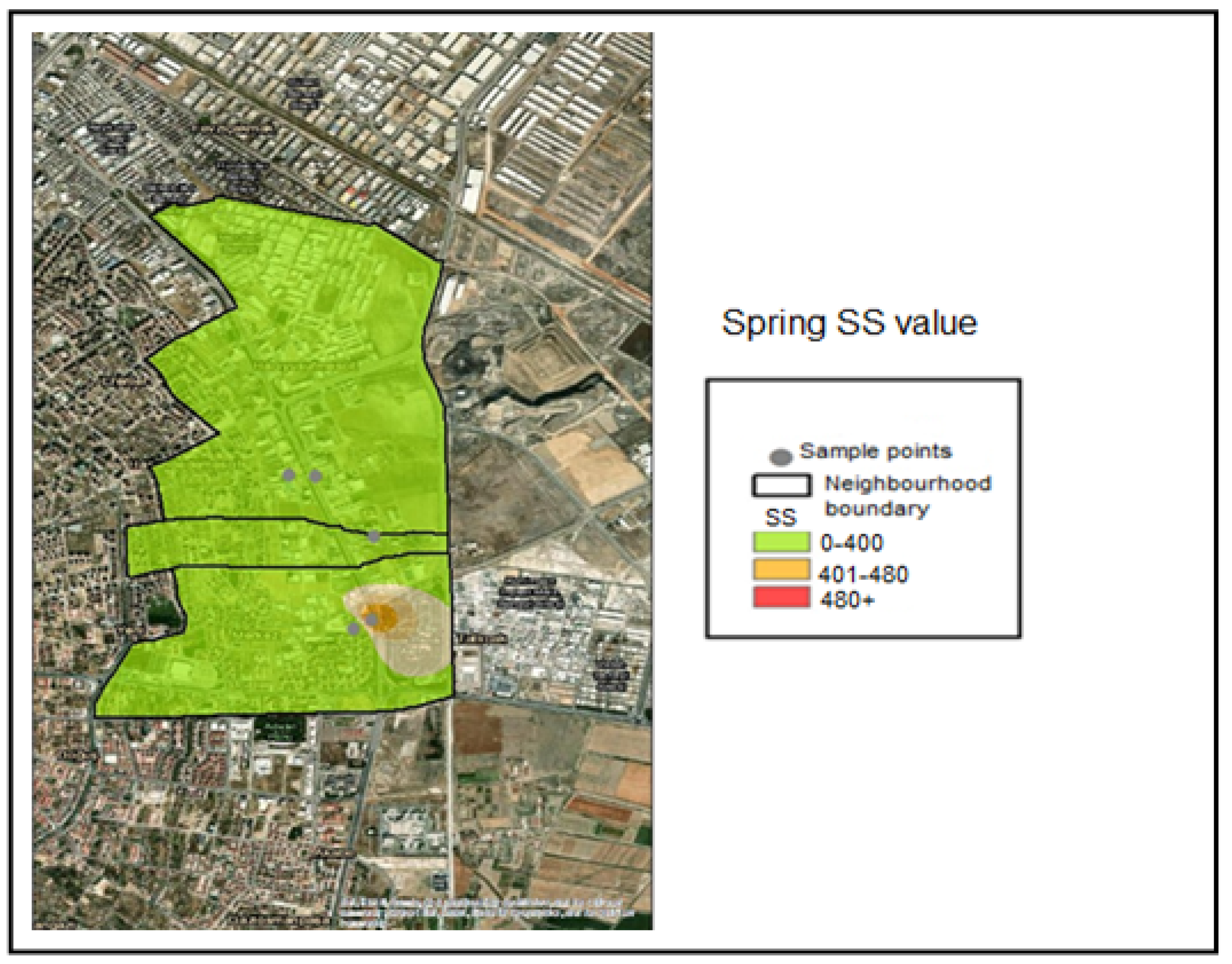
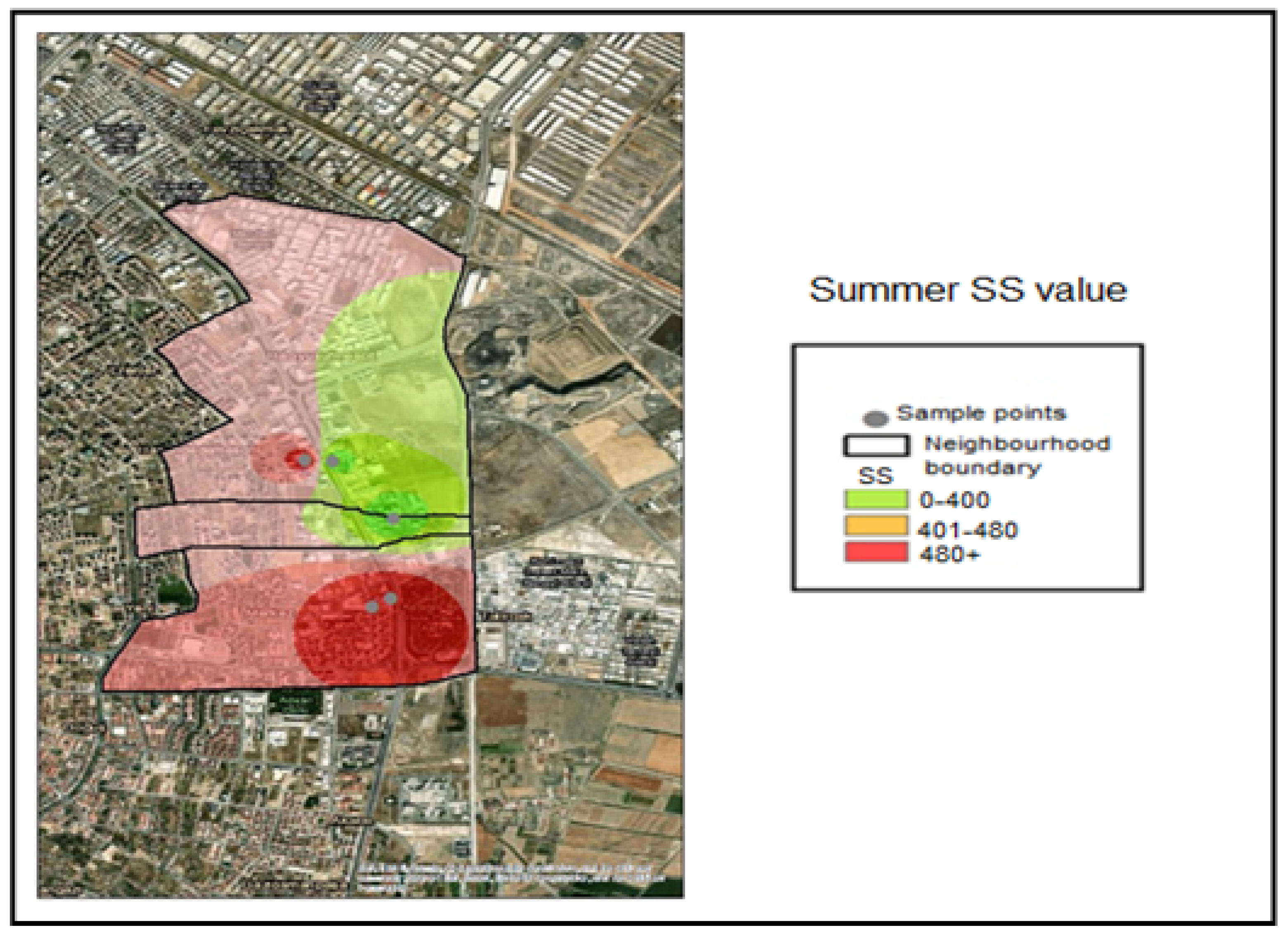
- SS ≤ 400 mg/L—Compliant range (Green);
- 401–480 mg/L—Threshold-adjacent range (Yellow);
- SS > 480 mg/L—Noncompliant (Red).
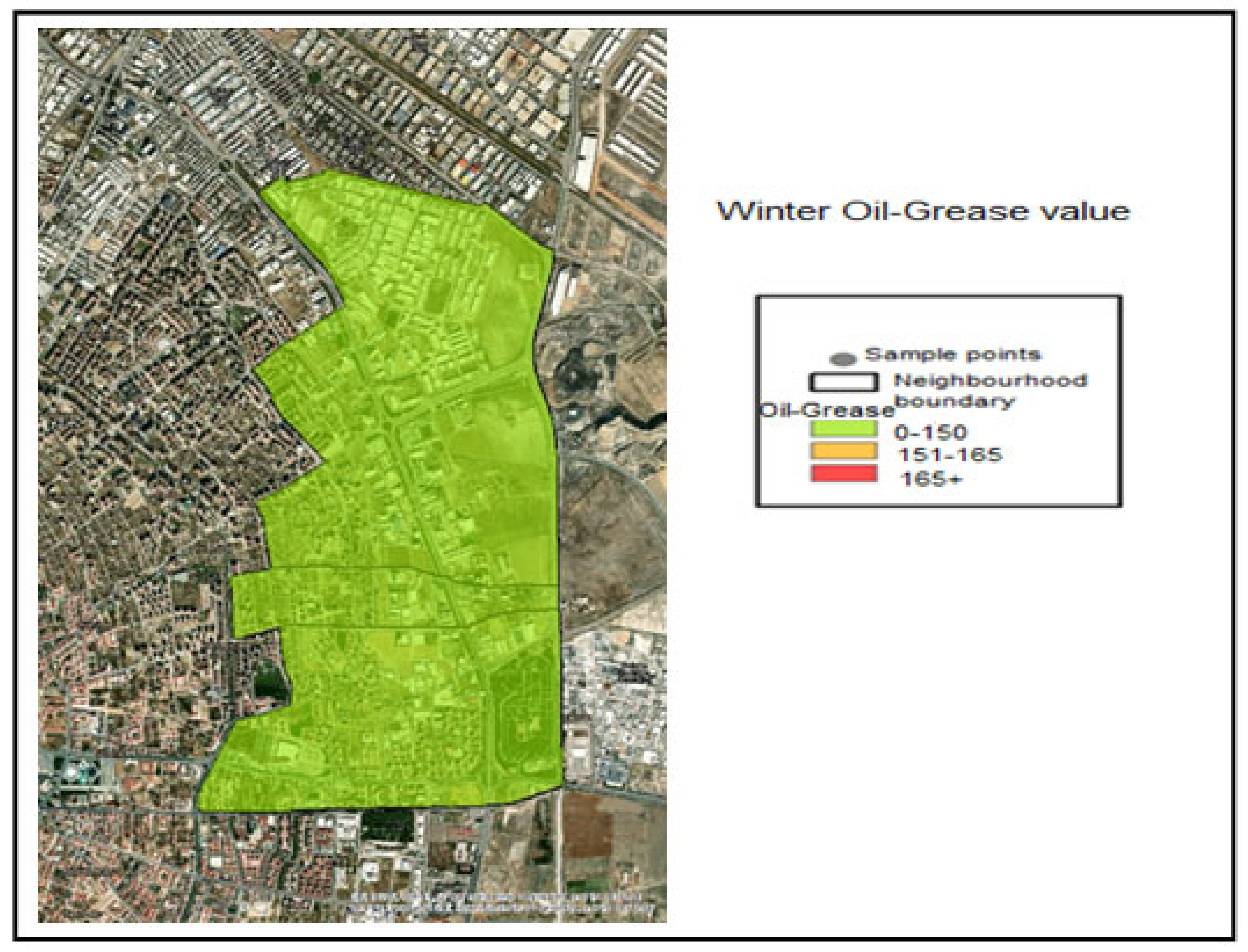
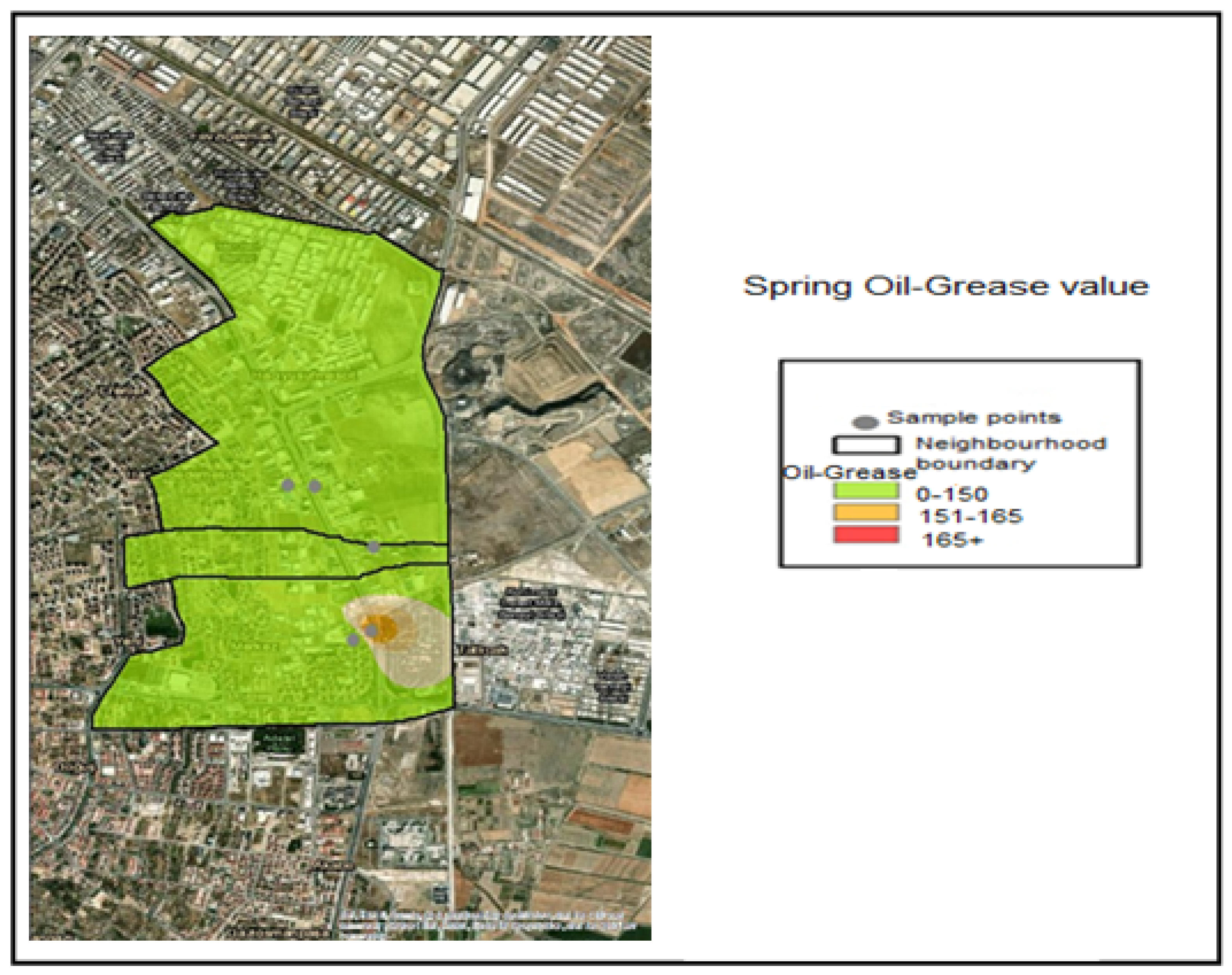
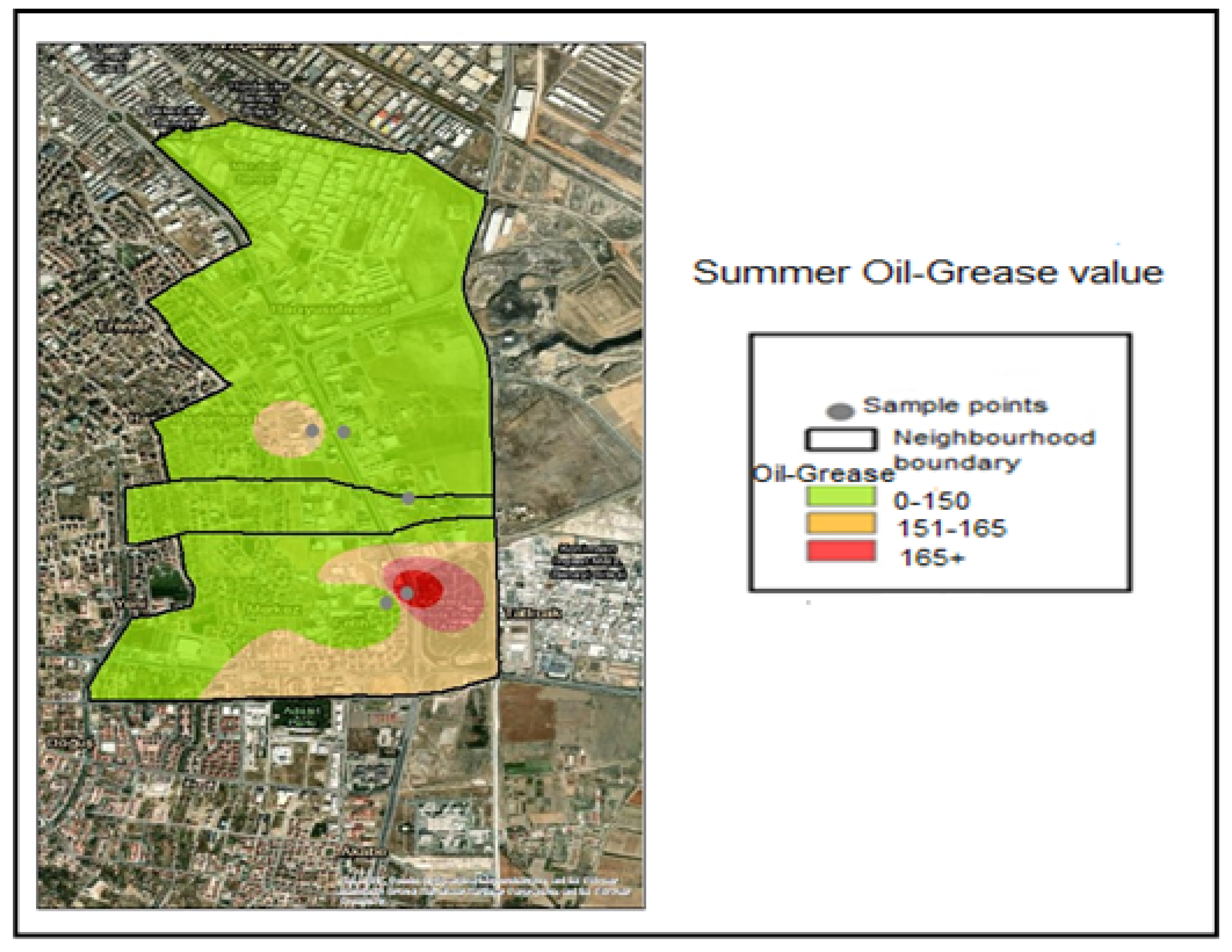
- Oil–Grease ≤ 150 mg/L —Compliant range (Green);
- 151–165 mg/L—Threshold-adjacent range (Yellow);
- Oil–Grease> 165 Noncompliant (Red).
3. Materials and Methods
3.1. Determination of the Study Area
3.2. Sample Collection and Analysis Processes
3.3. Stages of Temporal and Spatial Analysis in a GIS Environment
4. Conclusions
Author Contributions
Funding
Data Availability Statement
Conflicts of Interest
References
- Çetin, S. Mapping of Pollution Levels in Wastewater in the Konya Sewerage System Using GIS for Temporal and Spatial Analysis. M.Sc. Thesis, Konya Technical University, Institute of Graduate Studies, Konya, Türkiye, 2023. [Google Scholar]
- Anonymous. What Is Wastewater? Types? Emaa Atık Taşımacılığı, 2020. Available online: https://www.emaendustriyel.com/blog/icerik/atik-su-cekvalfi-ema-endustriyel-guvenli-ve-etkin-cozumler (accessed on 6 November 2021).
- Anonymous. Laboratory/Wastewater Sampling Guide; Eskişehir Water and Sewerage Administration (ESKİ): Eskisehir, Türkiye, 2020. Available online: https://www.eskisehir-eski.gov.tr/laboratuar.php?sayfa=Atik-Sulardan-Nunume-Alma-Klavuzu (accessed on 2 November 2021).
- Konya Water and Sewerage Administration (KOSKİ). Regulation on the Discharge of Wastewater into the Sewerage System.; KOSKİ General Directorate: Konya, Türkiye, 2021. Available online: https://www.koski.gov.tr (accessed on 5 October 2021).
- Ban, S.; Devkota, S.; Kim, H.; Sharma, S.; Shrestha, R.; Tiwari, A.; Joshi, R.; Kim, H. Technological trends in heavy metals removal from industrial wastewater: A review. Heliyon 2021, 7, e07682. [Google Scholar]
- Tchobanoglous, G.; Stensel, H.D.; Tsuchihashi, R.; Burton, F.L.; Abu-Orf, M.; Bowden, G.; Pfrang, W. Wastewater Engineering: Treatment and Resource Recovery, 5th ed.; McGraw-Hill Education: New York, NY, USA, 2014. [Google Scholar]
- Başar, T. Urban Information System: Examples from Turkey and Around the World . Expert Thesis, İlbank A.Ş., Ankara, Türkiye, 2016. [Google Scholar]
- Baycan, N.; Büyükkamacı, N. Management of Industrial Wastewater; Dokuz Eylül University Faculty of Engineering Publications: İzmir, Türkiye, 2019; pp. 2–8. [Google Scholar]
- Bhandari, M.; Ranade, V.V. Industrial Wastewater Treatment, Recycling and Reuse; Butterworth-Heinemann (Elsevier): Oxford, UK, 2014. [Google Scholar]
- Calkins, H.; Marble, D.; Tomlinson, R. Computer Handling of Geographic Data; UNESCO Press: Paris, France, 1976. [Google Scholar]
- Chrisman, N.R. The role of quality information in the long-term functioning of a geographic information system. In Proceedings of the Auto-Carto VI Conference, Ottawa, Canada, 16–21 October 1983; Volume 2, pp. 303–321. [Google Scholar]
- Clarke, K.C. Advances in geographic information systems. Comput. Environ. Urban Syst. 1986, 10, 175–184. [Google Scholar] [CrossRef] [Scilit]
- Republic of Türkiye Ministry of Environment. Urbanisation and Climate Change. Municipalities Providing Wastewater Treatment Plant Services. Environmental Indicators, 2021. Available online: https://cevreselgostergeler.csb.gov.tr/atiksu-aritma-tesisi-ile-hizmet-verilen-belediyeler-i-85746 (accessed on 5 October 2021).
- Dustdar, S.; Nastic, S.; Šcekic, O. Smart Cities: The Internet of Things, People and Systems; Springer: Cham, Switzerland, 2017. [Google Scholar]
- Edelson, D.C. Geographic Information Systems: The Missing Educational Technology. National Geographic Society, National Geographic Education Blog. 2014. Available online: https://blog.education.nationalgeographic.org/ (accessed on 25 February 2026).
- O’Looney, J. GIS and Decision Making in Local Government; ESRI Press: Redlands, CA, USA, 2000; pp. 4–7. [Google Scholar]
- Green, D.R. GIS: A Sourcebook for Schools; Taylor & Francis: London, UK, 2001; pp. 156–172. [Google Scholar]
- Gunatilake, S.K. Methods of removing heavy metals from industrial wastewater. J. Multidiscip. Eng. Sci. Stud. 2015, 1, 12–18. [Google Scholar]
- Kentel, E.; Yanmaz, A.M. Evaluation of Problems Related to the Operation of Sewerage Systems. In Proceedings of the Water and Wastewater Congress; Chamber of Civil Engineers (TMMOB): Ankara, Türkiye, 2007; pp. 64–76. [Google Scholar]
- Koçak, H. The effects of geographic information systems on improving urban quality of life. In Proceedings of the 1st GIS Days Symposium, Ankara, Türkiye, 19–21 November 2008. [Google Scholar]
- Köroğlu, F. A Study on the Establishment of a City Information System. Master’s Thesis, Gazi University, Ankara, Türkiye, 2002. [Google Scholar]
- Kumar, V. Geographic Information System for Smart Cities; Copal Publishing Group: New Delhi, India, 2014; pp. 13–18. [Google Scholar]
- Langran, G. Time in Geographic Information Systems; Taylor & Francis: London, UK, 1993. [Google Scholar]
- Öztürk, M. Operation of Domestic Wastewater Sewerage Systems; Ministry of Environment and Urbanisation: Ankara, Türkiye, 2017. [Google Scholar]
- Robert, W. Selling a Geographical Information System to Government Policymakers. In Proceedings of the Annual Conference of the Urban and Regional Information Systems Association; Urban and Regional Information Systems Association (URISA): Washington, DC, USA, 1987. [Google Scholar]
- Official Gazette No. 27372; Regulation on Water Pollution Control: Circular on Sampling and Analysis Methods. Republic of Türkiye: Ankara, Türkiye, 2009.
- Şengül, F. Properties and Treatment of Industrial Wastewater; Dokuz Eylül University Faculty of Engineering and Architecture Publications: İzmir, Türkiye, 1989. [Google Scholar]
- Tarhan, Ç.; Tecim, V. Criteria for establishing an ideal urban information system in Turkey and evaluation of ongoing studies. In Proceedings of the 3rd Geographic Information Systems Days; Fatih University: Istanbul, Türkiye, 1999. [Google Scholar]
- Yomralıoğlu, T. Geographic Information Systems: Basic Concepts and Applications; Seçil Ofset: İstanbul, Türkiye, 2000. [Google Scholar]
- Burrough, P.A.; McDonnell, R.A. Principles of Geographical Information Systems; Oxford University Press: Oxford, UK, 1998. [Google Scholar]
- Goodchild, M.F. Citizens as sensors: The world of volunteered geography. GeoJournal 2007, 69, 211–221. [Google Scholar] [CrossRef] [Scilit]
- Malczewski, J. GIS-based land-use suitability analysis: A critical overview. Prog. Plan. 2004, 62, 3–65. [Google Scholar] [CrossRef] [Scilit]
- Solmaz, S.; Üstün, G. Control of industrial wastewater and evaluation of preliminary treatment: The case of Bursa Province. Uludağ Univ. J. Eng. Archit. 2014, 19, 79–88. [Google Scholar]
- Masser, I. Managing our urban future: The role of remote sensing and geographic information systems. Cities 2001, 18, 503–512. [Google Scholar] [CrossRef] [Scilit]
- Tongur, S.; Atmaca, H. A battery of simple bioassays for domestic and industrial wastewater treatment plants in Konya, Turkey. Sustainability 2024, 16, 316. [Google Scholar] [CrossRef] [Scilit]
- Fu, F.; Wang, Q. Removal of heavy metal ions from wastewaters: A review. J. Environ. Manag. 2011, 92, 407–418. [Google Scholar] [CrossRef] [Scilit] [PubMed]
- Barakat, M.A. New trends in removing heavy metals from industrial wastewater. Arab. J. Chem. 2011, 4, 361–377. [Google Scholar] [CrossRef] [Scilit]
- Babel, S.; Kurniawan, T.A. Low-cost adsorbents for heavy metals uptake from contaminated water. J. Hazard. Mater. 2003, 97, 219–243. [Google Scholar] [CrossRef] [Scilit] [PubMed]
- Crini, G.; Lichtfouse, E. Advantages and disadvantages of techniques used for wastewater treatment. Environ. Chem. Lett. 2019, 17, 145–155. [Google Scholar] [CrossRef] [Scilit]
- Abdel-Fatah, M.A. Statistical interpolation for mapping wastewater-derived pollutants in environmental systems: A GIS-based critical review and meta-analysis. Environments 2026, 13, 194–233. [Google Scholar] [CrossRef] [Scilit]
- Himat, H. GIS-Based Assessment of Wastewater Pollution in Afghanistan’s Major Cities. Sci. Res. Commun. 2025, 5, 104–117. [Google Scholar] [CrossRef] [Scilit]



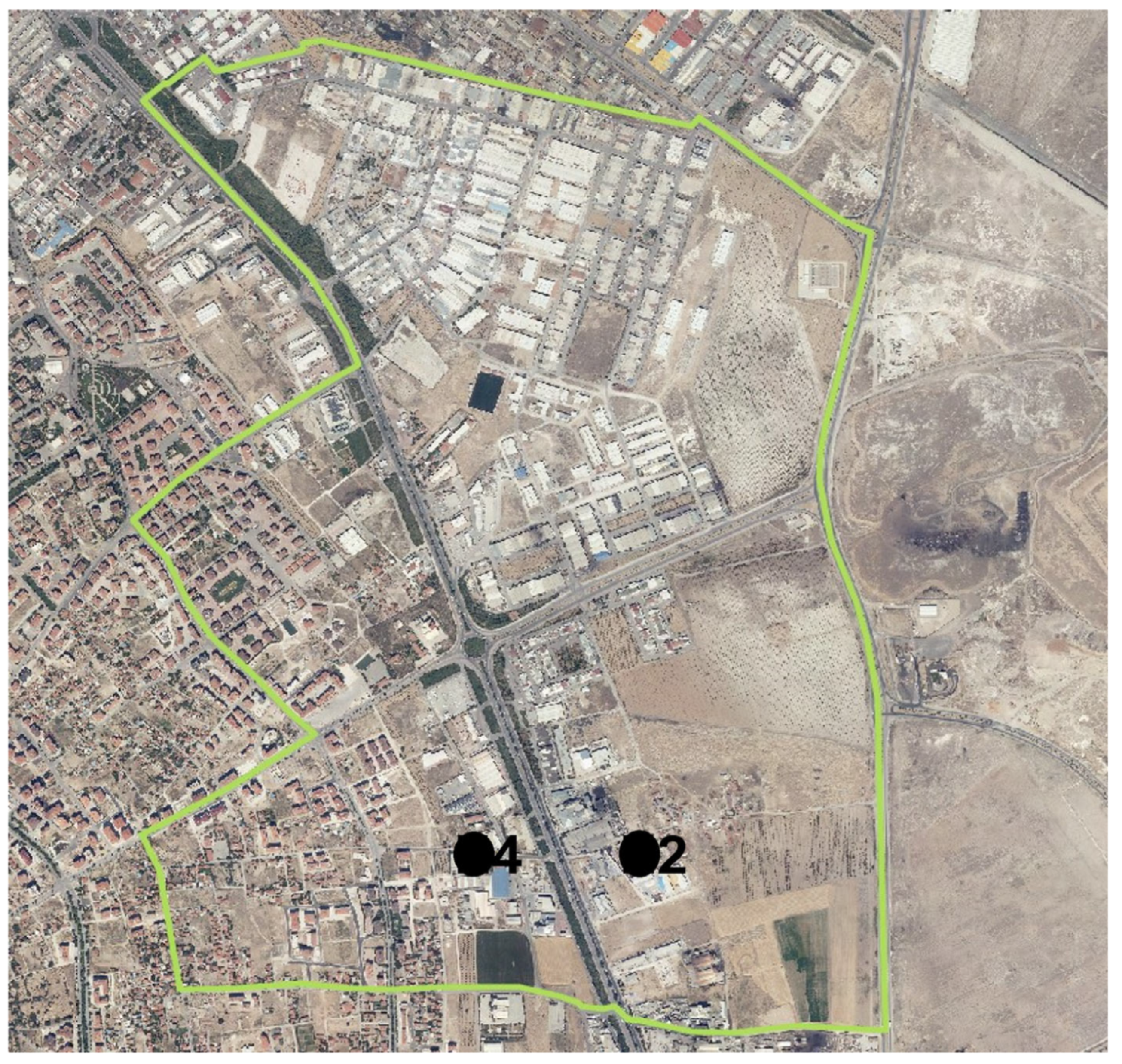

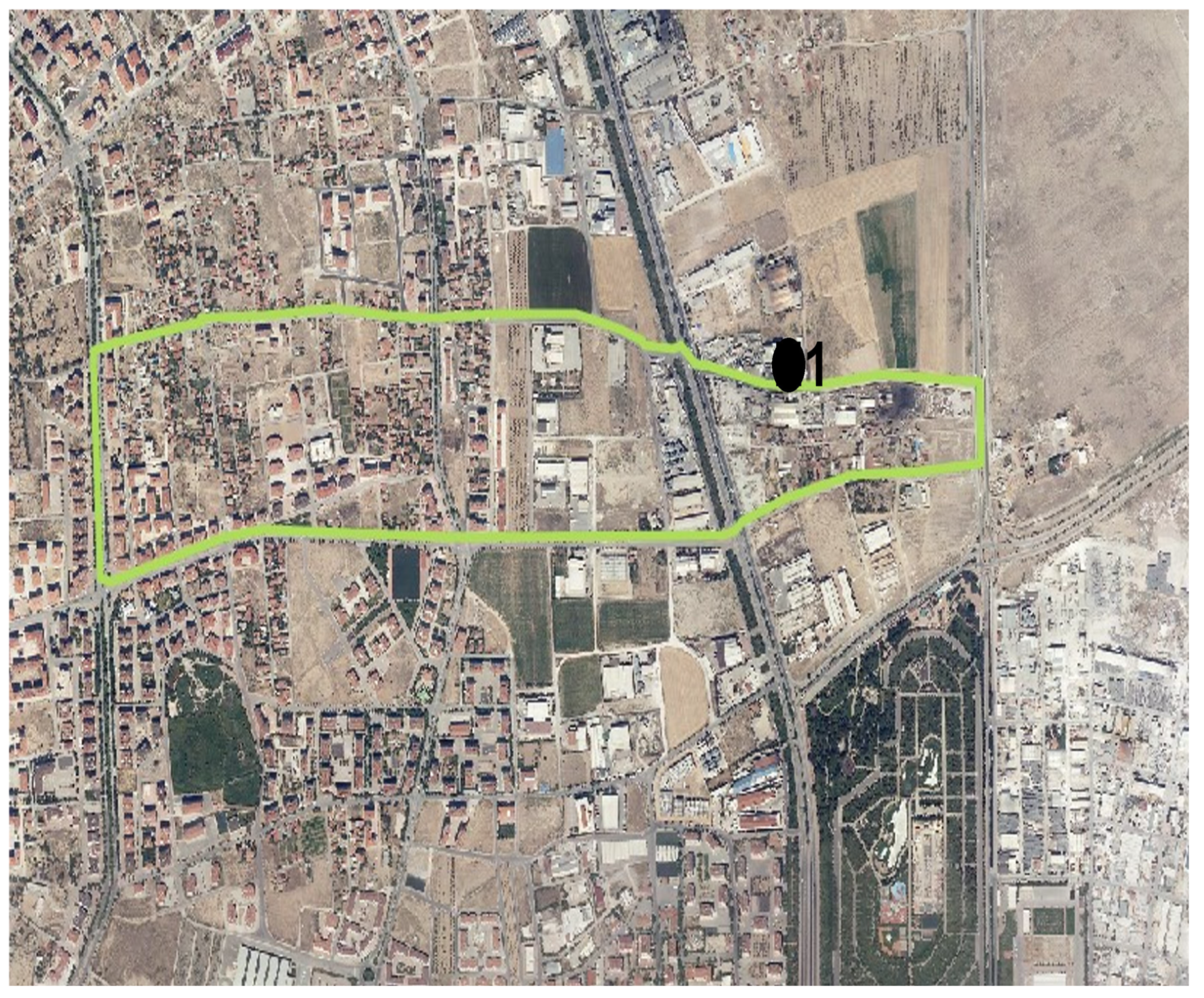

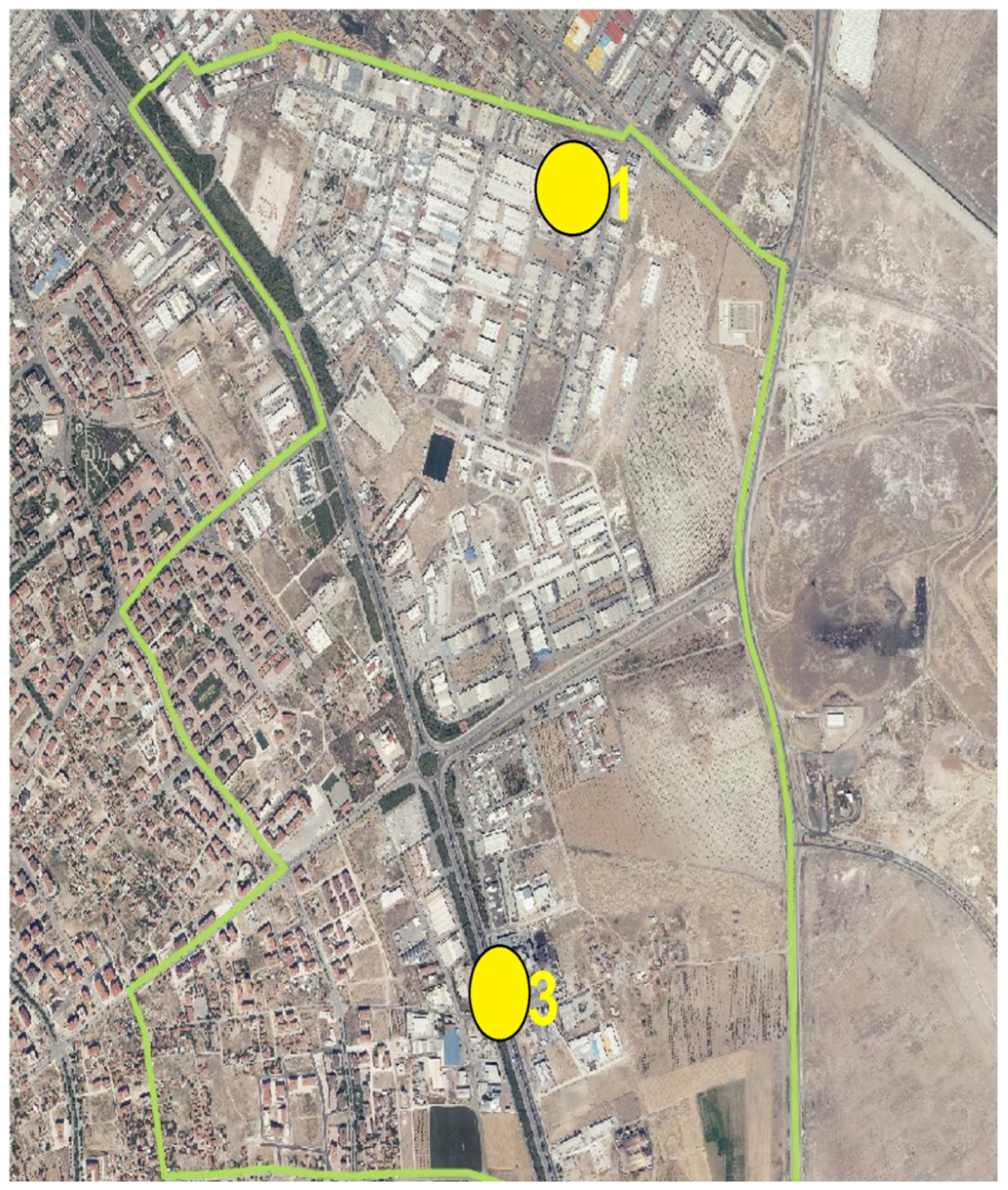

| Parameters (mg/L) | Winter (Mean Value) | Spring (Mean Value) | Summer (Mean Value) |
|---|---|---|---|
| pH | 6.42 | 6.58 | 7.26 |
| COD | 369.60 | 585.50 | 89.60 |
| SS | 182.90 | 196.85 | 9.20 |
| Oil–Grease | 94.40 | 89.60 | 18 |
| Parameters (mg/L) | Winter (Mean Value) | Spring (Mean Value) | Summer (Mean Value) |
|---|---|---|---|
| pH | 7.86 | 7.01 | 7.89 |
| COD | 432.90 | 521.62 | 70.40 |
| SS | 353.70 | 272.60 | 45.70 |
| Oil–Grease | 83.60 | 88.80 | 54.20 |
| Parameters (mg/L) | Winter (Mean Value) | Spring (Mean Value) | Summer (Mean Value) |
|---|---|---|---|
| pH | 7.63 | 8.07 | 8.68 |
| COD | 98.20 | 511 | 400 |
| SS | 22.40 | 279.60 | 835 |
| Oil–Grease | 96.50 | 116.80 | 67 |
| Parameters (mg/L) | Winter (Mean Value) | Spring (Mean Value) | Summer (Mean Value) |
|---|---|---|---|
| pH | 7.45 | 6.89 | 5.87 |
| COD | 68.20 | 638.70 | 15,680 |
| SS | 47.40 | 310.40 | 860 |
| Oil–Grease | 62 | 101.60 | 154 |
| Parameters (mg/L) | Winter (Mean Value) | Spring (Mean Value) | Summer (Mean Value) |
|---|---|---|---|
| pH | 7.41 | 8.40 | 6.1 |
| COD | 385.4 | 1216 | 24,960 |
| SS | 133.5 | 406 | 2970 |
| Oil–Grease | 118 | 170 | 254 |
| Parameters | S1-Winter (Mean Value) | S2-Winter (Mean Value) | S3-Spring (Mean Value) | S4-Spring (Mean Value) |
|---|---|---|---|---|
| pH | 7.93 | 7.9 | 7.81 | 8.4 |
| COD (mg/L) | 1370.11 | 772.41 | 2776.86 | 4575.21 |
| SS (mg/L) | 232 | 236 | 477 | 2520 |
| Oil–Grease (mg/L) | 110 | 86 | - | - |
| Temperature °C | 16.2 | 16.3 | 14.3 | 15.1 |
| Conductivity (mS) | 1816 | 1831 | 4540 | 2510 |
| Ammonium nitrogen (NH4-N) (mg/L) | 52.2 | 66.3 | 23.6 | 78 |
| Nitrate nitrogen (NO3−N) (mg/L) | 2.79 | 3.93 | 7.3 | 6.2 |
| Total Nitrogen (TN) (mg/L) | 99.3 | 103.8 | 109.2 | 297 |
| Total Phosphorus (TP) (mg/L) | 10.62 | 11.85 | 50.22 | 96.1 |
| Aluminum (Al) (mg/L) | <0.0475 | <0.01 | 0.031 | 0.532 |
| Cadmium (Cd) (mg/L) | <0.01 | <0.01 | <0.001 | <0.001 |
| Chromium (Cr) (mg/L) | 0.8778 | 0.9053 | <0.002 | <0.002 |
| Copper (Cu) (mg/L) | 0.1125 | 0.0391 | 0.0052 | <0.002 |
| Iron (Fe) (mg/L) | 2.504 | 0.8929 | 0.095 | 0.053 |
| Nickel (Ni) (mg/L) | 0.0143 | <0.01 | <0.004 | <0.004 |
| Lead (Pb) (mg/L) | <0.0371 | <0.0371 | <0.005 | <0.005 |
| Zinc (Zn) (mg/L) | 0.3817 | 0.1694 | 0.216 | 0.015 |
Disclaimer/Publisher’s Note: The statements, opinions and data contained in all publications are solely those of the individual author(s) and contributor(s) and not of MDPI and/or the editor(s). MDPI and/or the editor(s) disclaim responsibility for any injury to people or property resulting from any ideas, methods, instructions or products referred to in the content. |
© 2026 by the authors. Licensee MDPI, Basel, Switzerland. This article is an open access article distributed under the terms and conditions of the Creative Commons Attribution (CC BY) license.
Share and Cite
Tongur, S.; Çetin, S. GIS-Based Temporal and Spatial Analysis of Industrial Wastewater Pollution in the Konya Municipal Sewer System. Molecules 2026, 31, 1738. https://doi.org/10.3390/molecules31101738
Tongur S, Çetin S. GIS-Based Temporal and Spatial Analysis of Industrial Wastewater Pollution in the Konya Municipal Sewer System. Molecules. 2026; 31(10):1738. https://doi.org/10.3390/molecules31101738
Chicago/Turabian StyleTongur, Süheyla, and Sefa Çetin. 2026. "GIS-Based Temporal and Spatial Analysis of Industrial Wastewater Pollution in the Konya Municipal Sewer System" Molecules 31, no. 10: 1738. https://doi.org/10.3390/molecules31101738
APA StyleTongur, S., & Çetin, S. (2026). GIS-Based Temporal and Spatial Analysis of Industrial Wastewater Pollution in the Konya Municipal Sewer System. Molecules, 31(10), 1738. https://doi.org/10.3390/molecules31101738