Review

Plastic-Degrading Microorganisms: Biodegradation Pathways and Habitat Origins

by
Martyna Jowita Żarska
1,
Marcin Damian Jasiak
1,
Patryk Mierzejewski
1,
Klaudiusz Tomczyk
1,
Jakub Małecki
1,
Roksana Gudz
1,
Aneta Krystyna Urbanek
2,
Katarzyna Ewa Kosiorowska
3 and
Julia Alicja Dybka
1,*
1
BIOSUS Student’s Scientific Club, Laboratory for Biosustainability, Institute of Biology, Wrocław University of Environmental and Life Sciences, Kożuchowska 5b, 51-631 Wrocław, Poland
2
Laboratory for Biosustainability, Institute of Biology, Wrocław University of Environmental and Life Sciences, Kożuchowska 5b, 51-631 Wrocław, Poland
3
Department of Applied Bioeconomy, Wrocław University of Environmental and Life Sciences, 37a, Chełmońskiego Str., 51-630 Wrocław, Poland
*
Author to whom correspondence should be addressed.
Molecules 2026, 31(10), 1638; https://doi.org/10.3390/molecules31101638

Submission received: 2 April 2026 / Revised: 7 May 2026 / Accepted: 11 May 2026 / Published: 13 May 2026
(This article belongs to the Special Issue 30th Anniversary of Molecules—Recent Advances in Green Chemistry)

Abstract

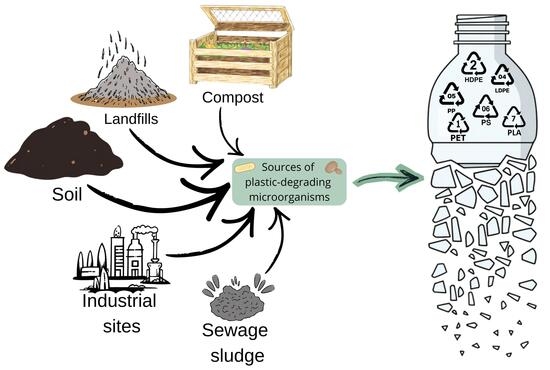
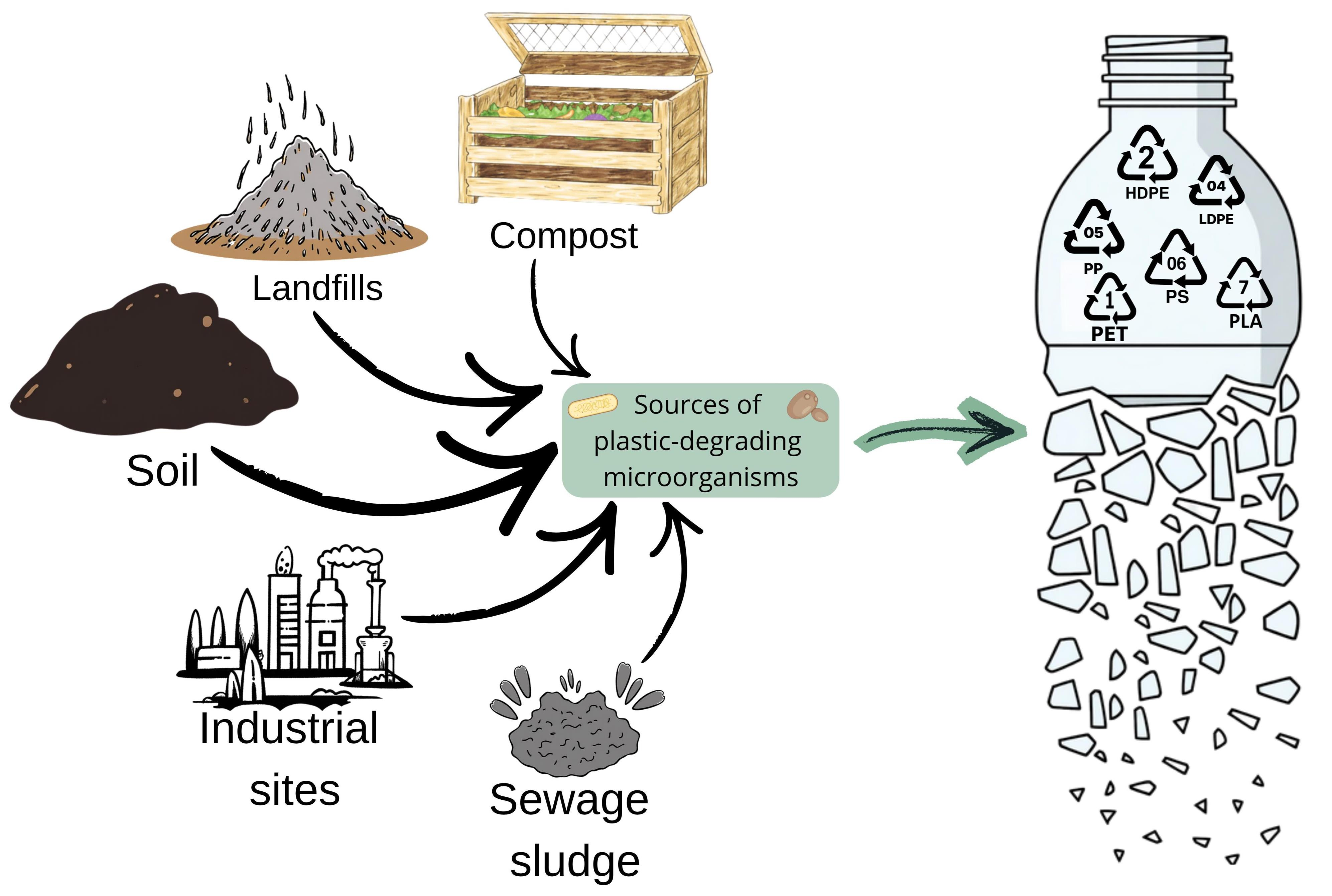
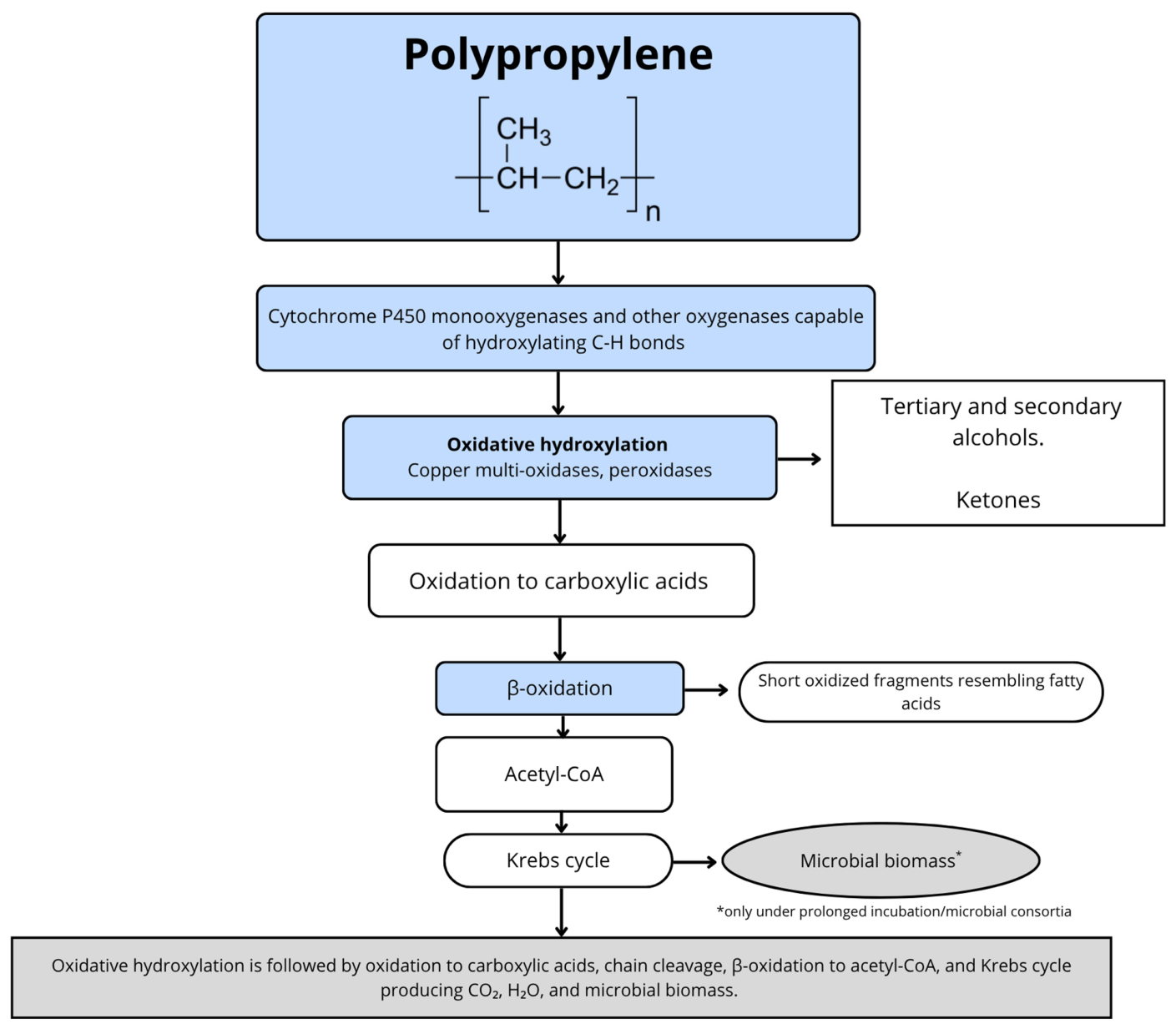
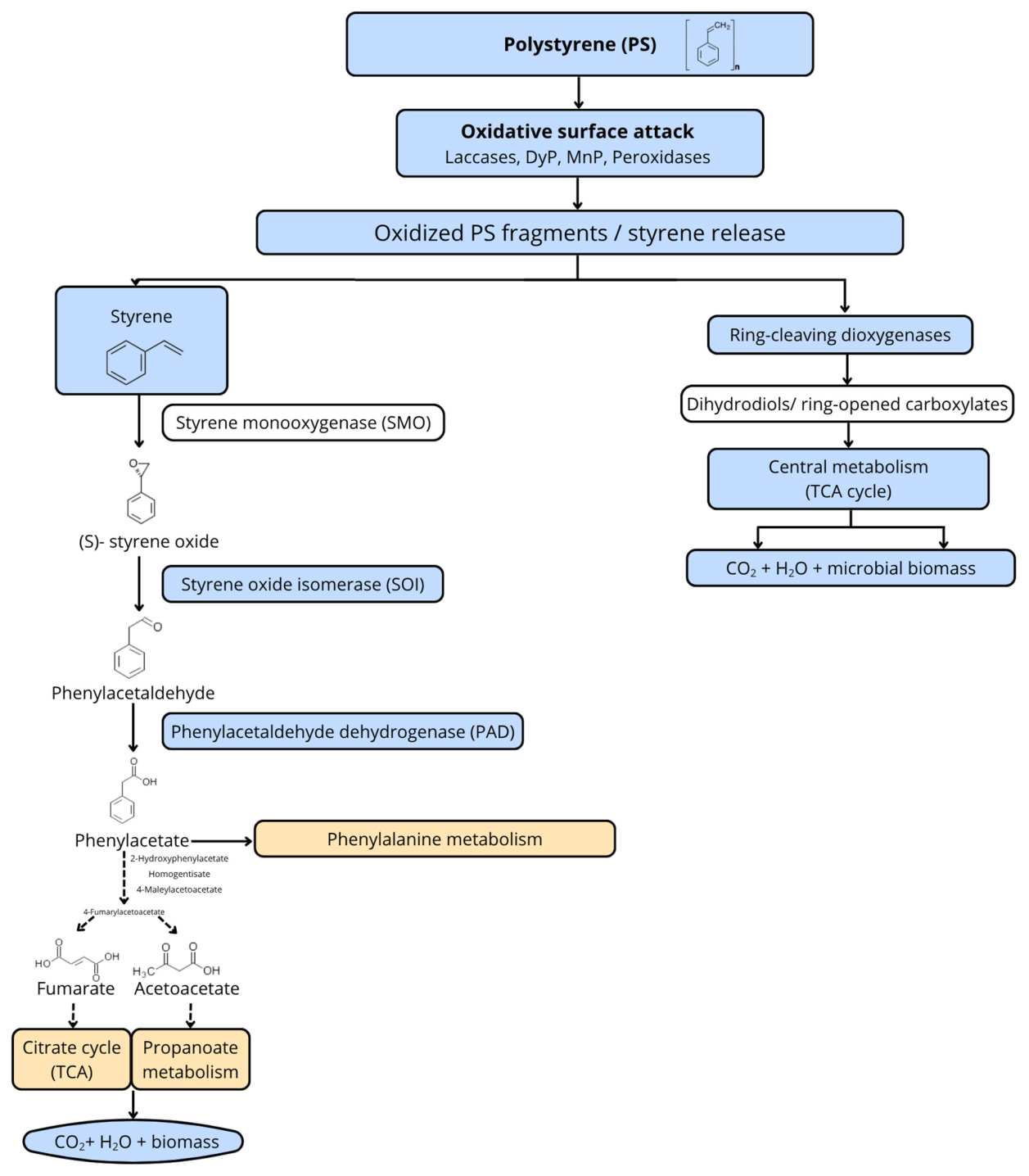
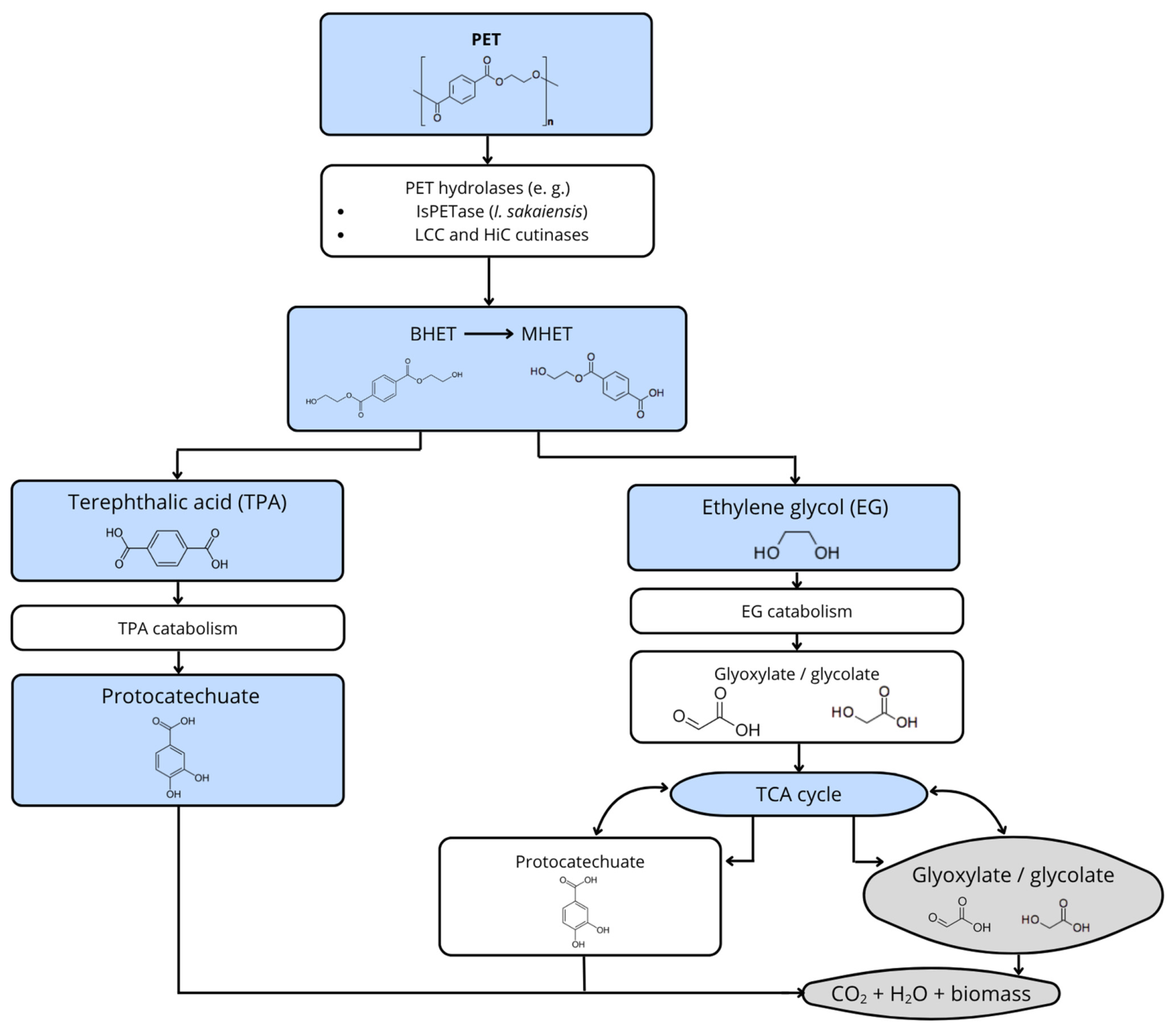
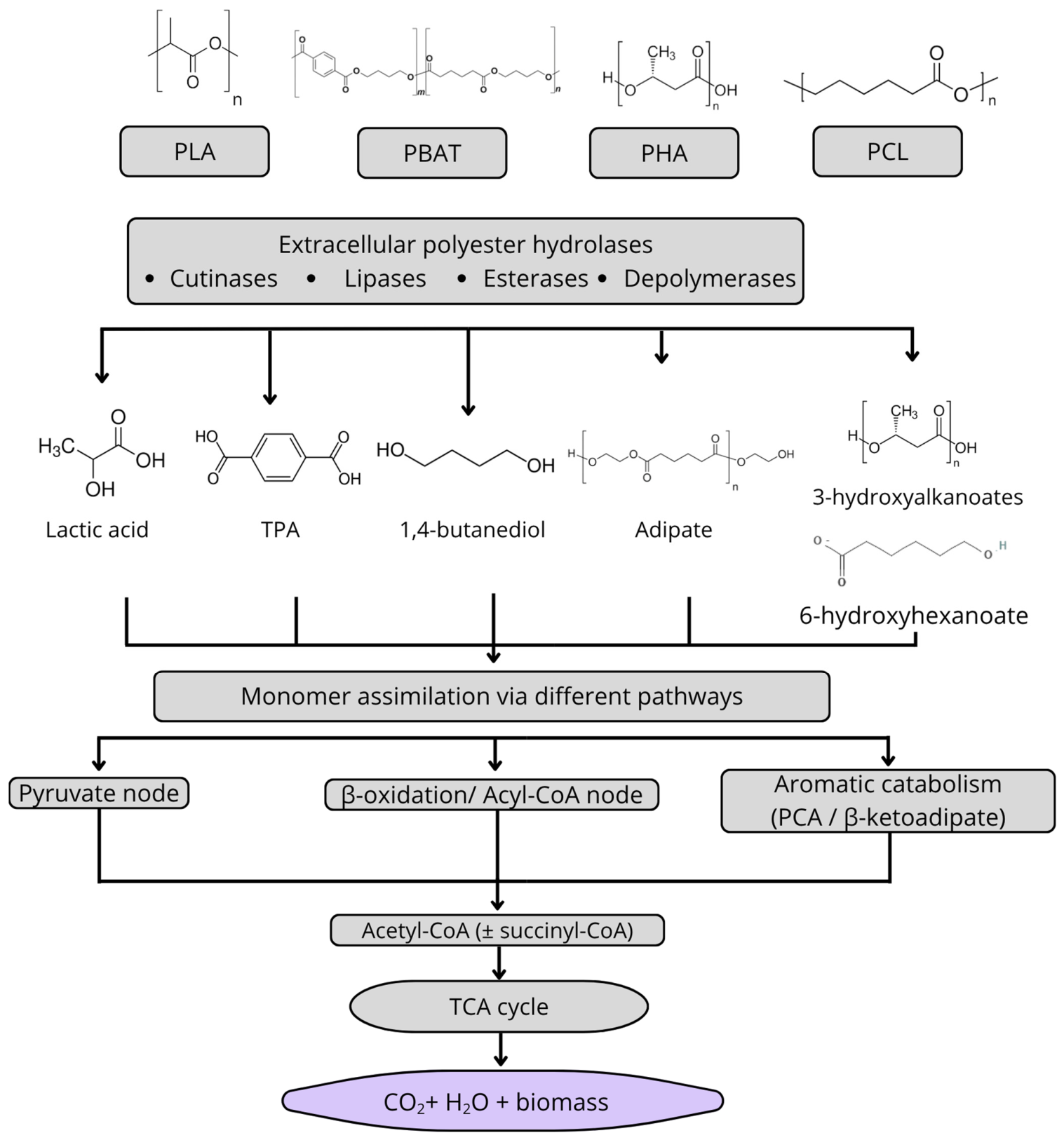
Microbial biodegradation represents a promising approach to addressing global plastic pollution, yet the metabolic pathways and environmental origins of polymer-degrading microorganisms remain incompletely characterized. This review synthesizes current knowledge on biodegradation mechanisms across major polymer classes and identifies key environmental reservoirs harboring native plastic-degrading microbiota. Biodegradation pathways differ fundamentally according to polymer chemistry. Polyesters such as PET undergo hydrolytic cleavage by PETases and MHETases, releasing terephthalic acid and ethylene glycol for assimilation via the β-ketoadipate pathway and the TCA cycle. Biodegradable polyesters (PLA, PBAT, PHAs, PCL) are similarly hydrolyzed by cutinases, lipases, and depolymerases. In contrast, polyolefins (PE, PP) and polystyrene lack hydrolyzable bonds and require oxidative attack by laccases, peroxidases, and alkane monooxygenases, followed by β-oxidation to acetyl-CoA. Three principal environmental reservoirs supply plastic-degrading microorganisms: contaminated ecosystems including landfills and the plastisphere; soil microbiota contributing ligninolytic fungi and actinomycetes; and compost environments yielding thermostable enzymes such as leaf-branch compost cutinase. Across all environments, microbial consortia demonstrate superior degradation efficiency compared to single-species cultures, reflecting the enzymatic complexity required for complete polymer mineralization. Understanding these pathways and their environmental origins provides a foundation for biological plastic waste management strategies.
Keywords: plastic biodegradation; polymer-degrading microorganisms; plastisphere; compost microbiota; soil microbiota; enzymatic degradation; PETase; polyolefins; polyesters; microbial consortia plastic biodegradation; polymer-degrading microorganisms; plastisphere; compost microbiota; soil microbiota; enzymatic degradation; PETase; polyolefins; polyesters; microbial consortia
Graphical Abstract