Structural Determinants of PARP1 Selectivity from Molecular Dynamics Analysis of PARP1 and PARP2 Complexes

 , and
, and
Abstract
1. Introduction
2. Results
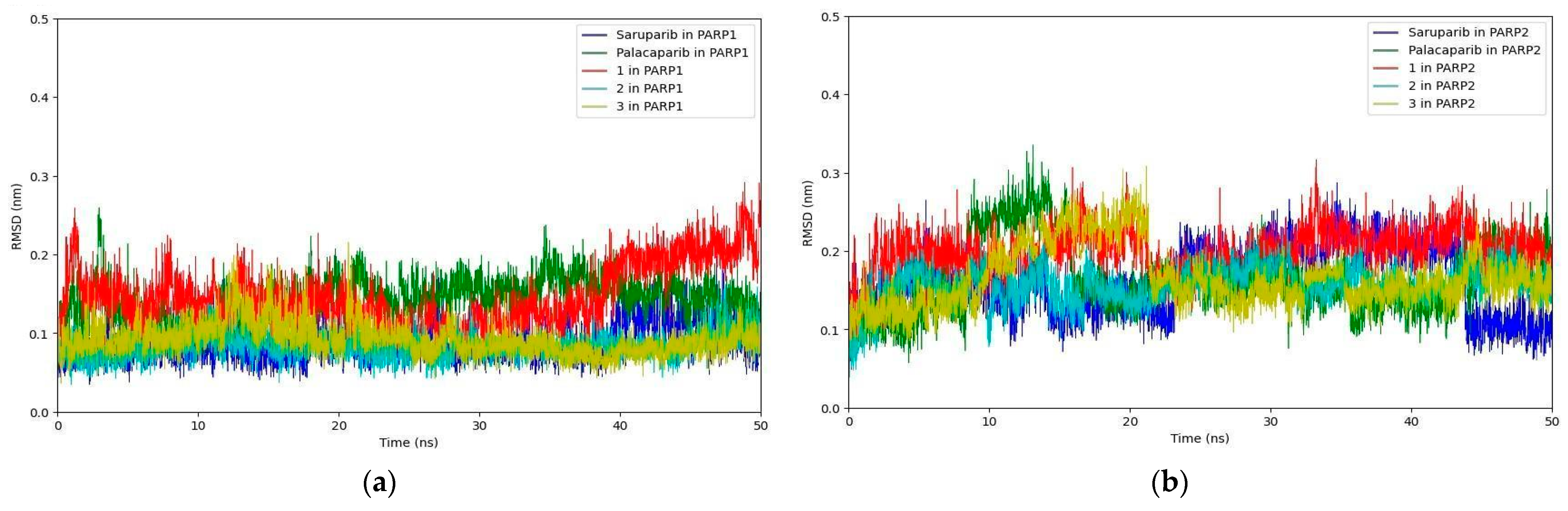
2.1. RMSD of Ligand-Protein Complexes
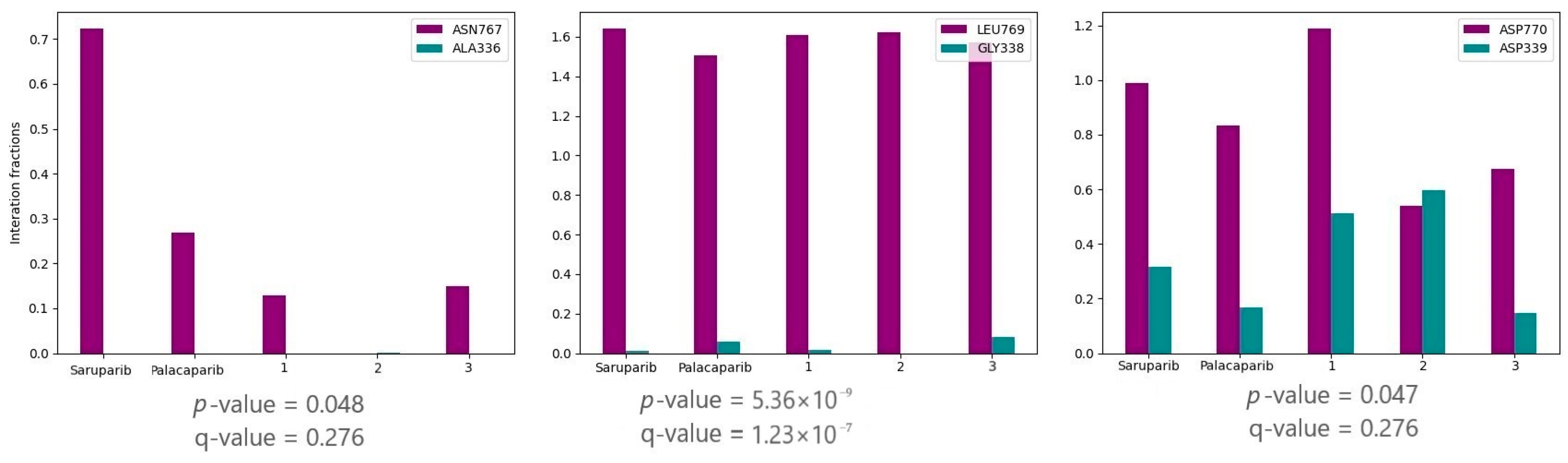
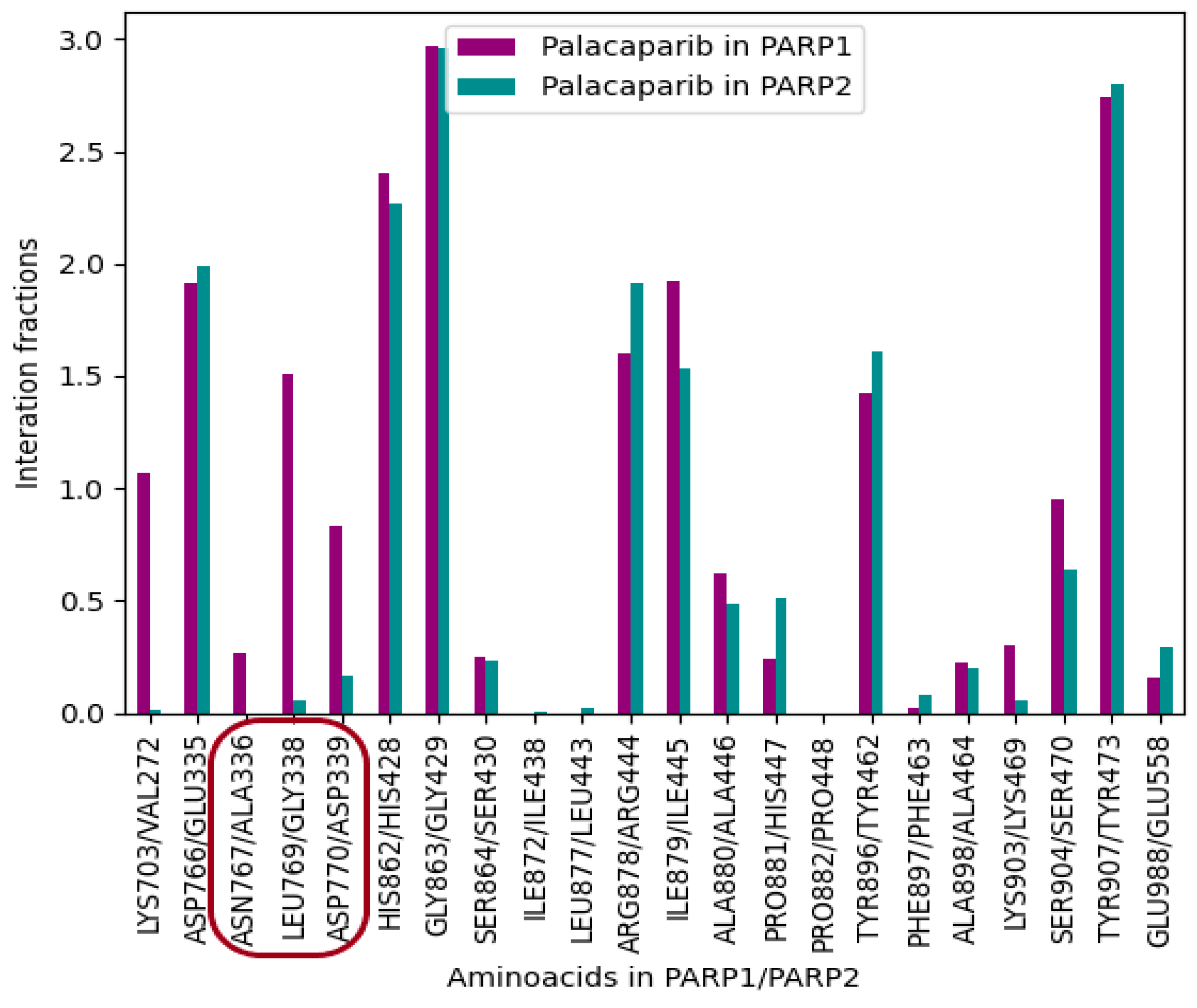
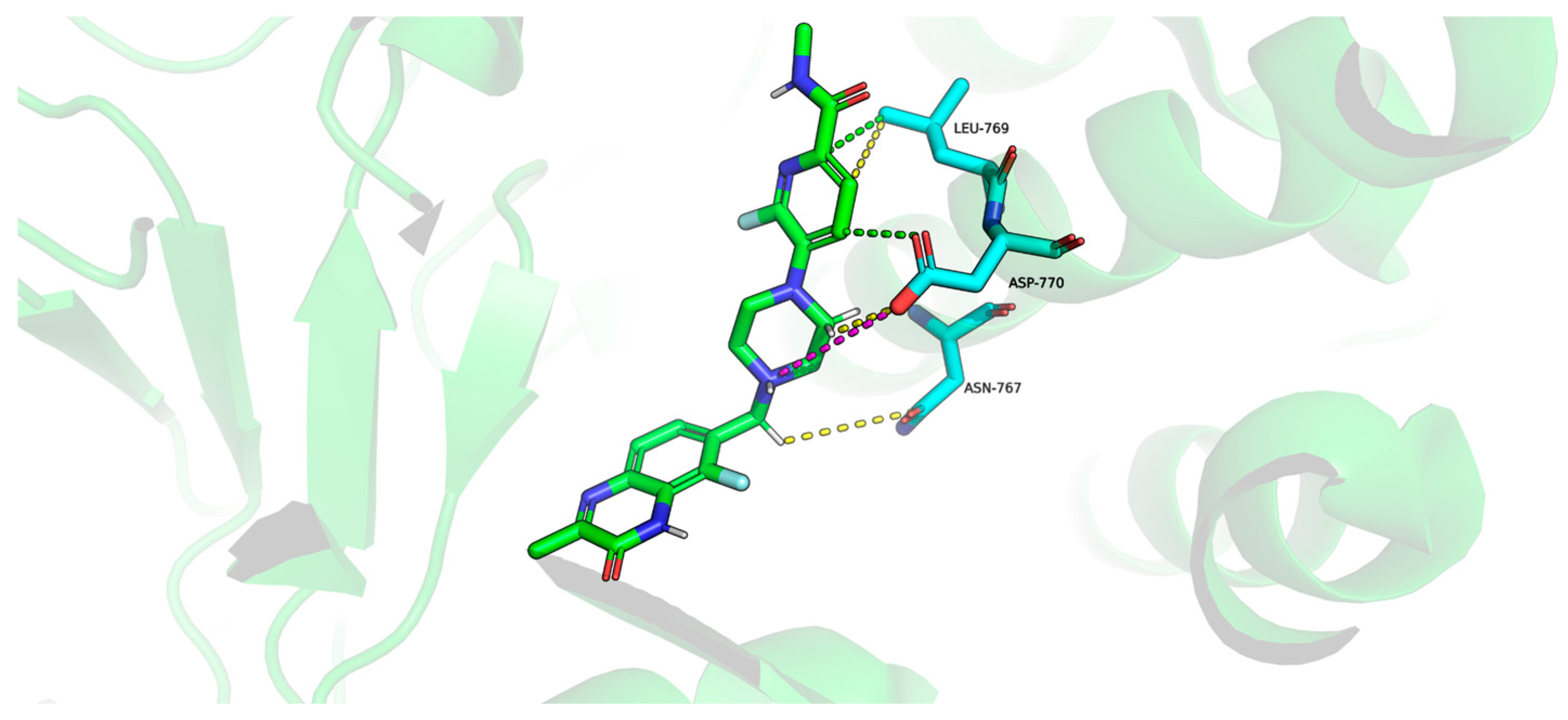
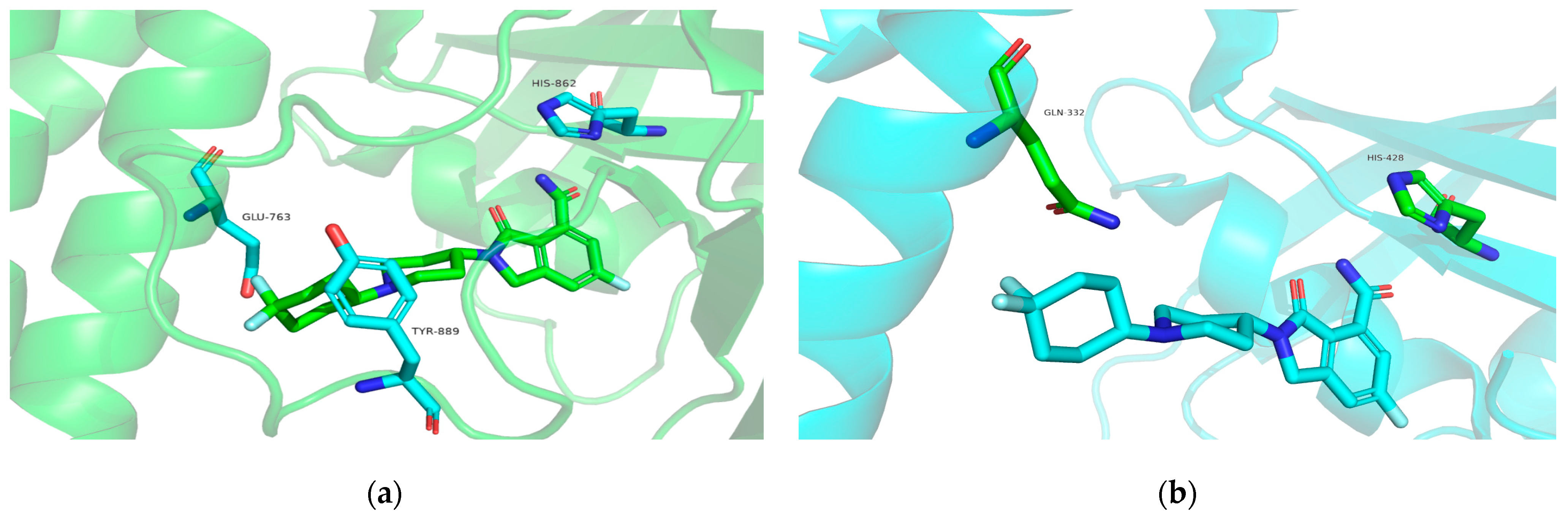
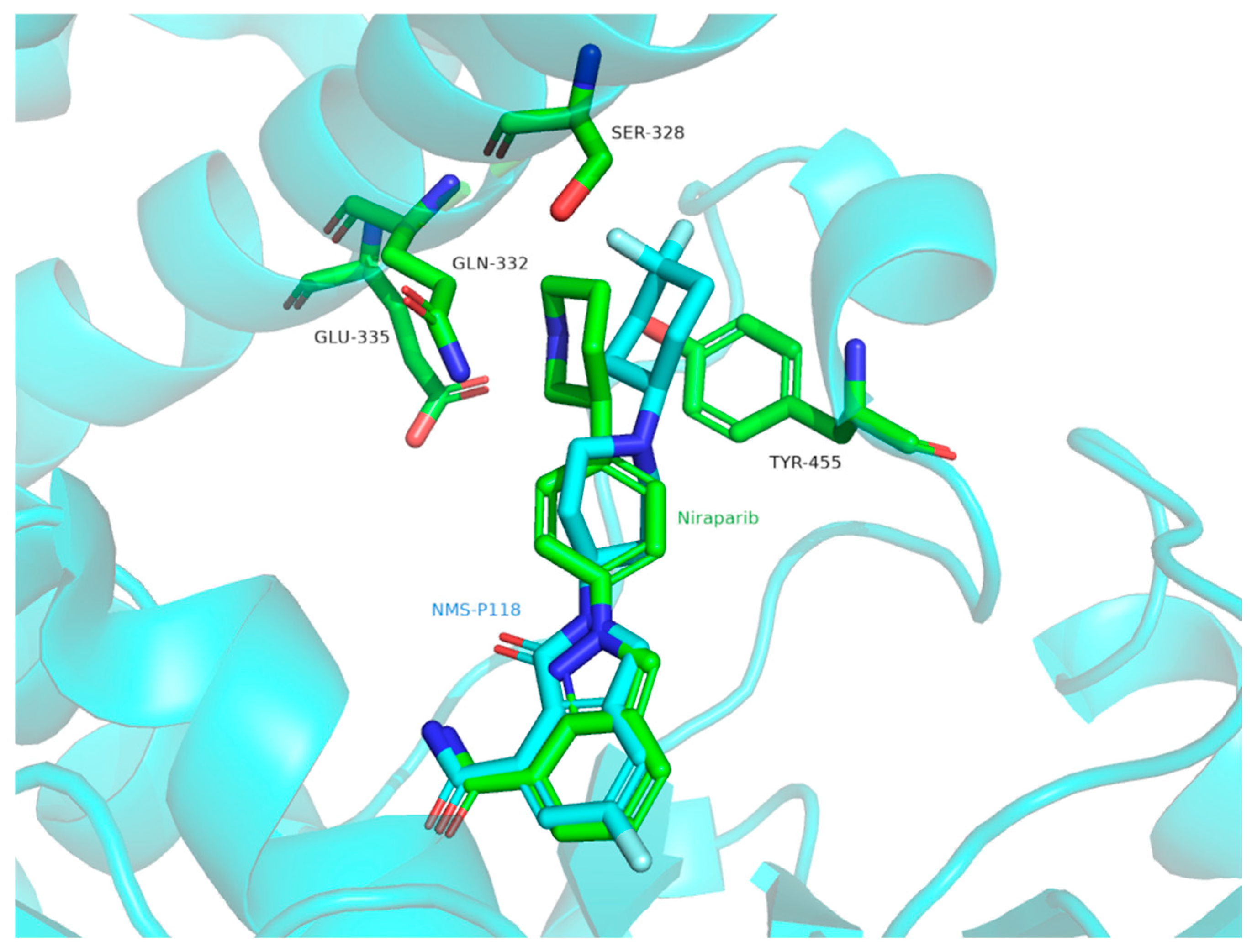
2.2. Statistical Analysis of Molecular Dynamics Trajectories
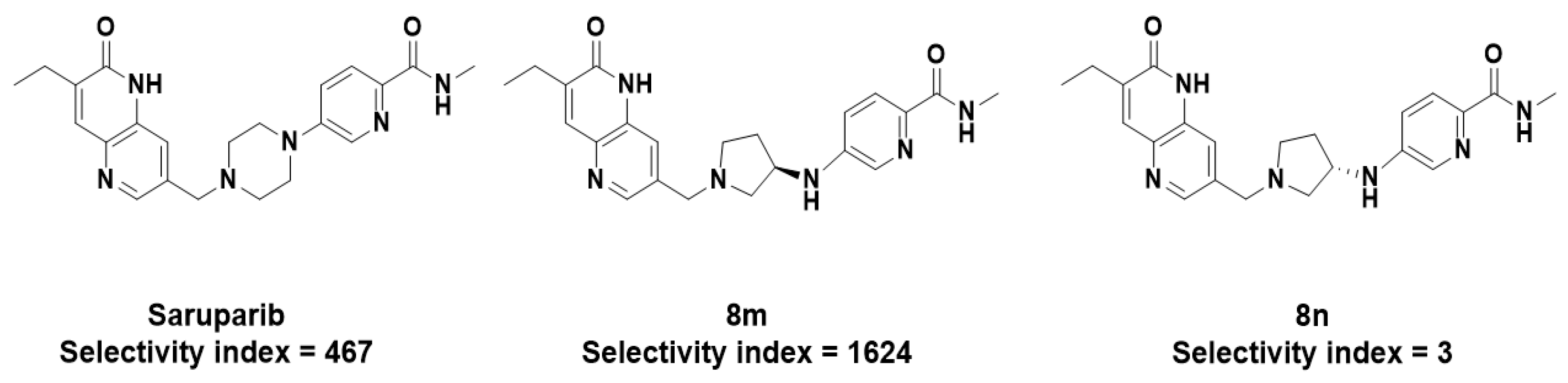
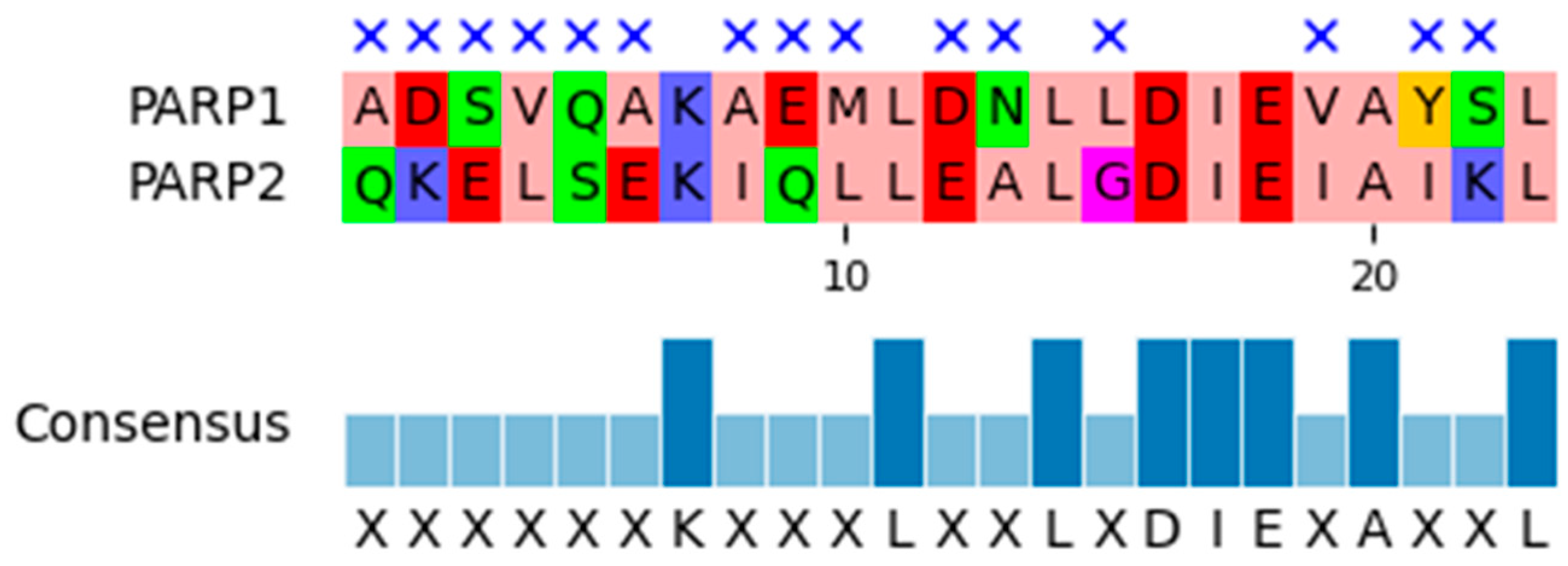
3. Discussion
4. Materials and Methods
5. Conclusions
Author Contributions
Funding
Institutional Review Board Statement
Informed Consent Statement
Data Availability Statement
Conflicts of Interest
References
- Morales, J.; Li, L.; Fattah, F.J.; Dong, Y.; Bey, E.A.; Patel, M.; Gao, J.; Boothman, D.A. Review of poly (ADP-ribose) polymerase (PARP) mechanisms of action and rationale for targeting in cancer and other diseases. Crit. Rev. Eukaryot. Gene Expr. 2014, 24, 15–28. [Google Scholar] [CrossRef]
- Skidmore, C.J.; Davies, M.I.; Goodwin, P.M.; Halldorsson, H.; Lewis, P.J.; Shall, S.; Zia’ee, A.A. The involvement of poly(ADP-ribose) polymerase in the degradation of NAD caused by gamma-radiation and N-methyl-N-nitrosourea. Eur. J. Biochem. 1979, 101, 135–142. [Google Scholar] [CrossRef]
- Vyas, S.; Chesarone-Cataldo, M.; Todorova, T.; Huang, Y.-H.; Chang, P. A systematic analysis of the PARP protein family identifies new functions critical for cell physiology. Nat. Commun. 2013, 4, 2240. [Google Scholar] [CrossRef]
- Amé, J.-C.; Spenlehauer, C.; de Murcia, G. The PARP superfamily. BioEssays 2004, 26, 882–893. [Google Scholar] [CrossRef]
- Lei, P.; Li, W.; Luo, J.; Xu, N.; Wang, Y.; Xie, D.; Guan, H.; Huang, B.; Huang, X.; Zhou, P. PARP (Poly ADP-ribose Polymerase) family in health and disease. MedComm 2025, 6, e70314. [Google Scholar] [CrossRef]
- NIAID Visual & Medical Arts. BioArt Image Resources. Available online: https://bioart.niaid.nih.gov (accessed on 5 April 2026).
- Zhu, T.; Zheng, J.-Y.; Huang, L.-L.; Wang, Y.-H.; Yao, D.-F.; Dai, H.-B. Human PARP1 substrates and regulators of its catalytic activity: An updated overview. Front. Pharmacol. 2023, 14, 1137151. [Google Scholar] [CrossRef]
- Steffen, J.D.; Brody, J.R.; Armen, R.S.; Pascal, J.M. Structural implications for selective targeting of PARPs. Front. Oncol. 2013, 3, 301. [Google Scholar] [CrossRef]
- Ko, H.L.; Ren, E.C. Functional aspects of PARP1 in DNA repair and transcription. Biomolecules 2012, 2, 524–548. [Google Scholar] [CrossRef] [PubMed]
- Gopal, A.A.; Fernandez, B.; Delano, J.; Weissleder, R.; Dubach, J.M. PARP trapping is governed by the PARP inhibitor dissociation rate constant. Cell Chem. Biol. 2024, 31, 1373–1382.e10. [Google Scholar] [CrossRef] [PubMed]
- Bryant, H.E.; Schultz, N.; Thomas, H.D.; Parker, K.M.; Flower, D.; Lopez, E.; Kyle, S.; Meuth, M.; Curtin, N.J.; Helleday, T. Specific killing of BRCA2-deficient tumours with inhibitors of poly(ADP-ribose) polymerase. Nature 2005, 434, 913–917. [Google Scholar] [CrossRef] [PubMed]
- Pommier, Y.; O’Connor, M.J.; de Bono, J. Laying a trap to kill cancer cells: PARP inhibitors and their mechanisms of action. Sci. Transl. Med. 2016, 8, 362ps17. [Google Scholar] [CrossRef]
- Huang, Y.; Chen, S.; Yao, N.; Lin, S.; Zhang, J.; Chen, G.; Zhou, D. Molecular mechanism of PARP inhibitor resistance. Oncoscience 2024, 11, 69–91. [Google Scholar] [CrossRef]
- Murai, J.; Huang, S.-Y.N.; Das, B.B.; Renaud, A.; Zhang, Y.; Doroshow, J.H.; Ji, J.; Takeda, S.; Pommier, Y. Trapping of PARP1 and PARP2 by clinical PARP inhibitors. Cancer Res. 2012, 72, 5588–5599. [Google Scholar] [CrossRef]
- Lorusso, D.; Tripodi, E.; Maltese, G.; Lepori, S.; Sabatucci, I.; Bogani, G.; Raspagliesi, F. Spotlight on olaparib in the treatment of BRCA-mutated ovarian cancer: Design, development and place in therapy. Drug Des. Dev. Ther. 2018, 12, 1501–1509. [Google Scholar] [CrossRef]
- Zuo, H.; Yang, D.; Yang, Q.; Tang, H.; Fu, Y.-X.; Wan, Y. Differential regulation of breast cancer bone metastasis by PARP1 and PARP2. Nat. Commun. 2020, 11, 1578. [Google Scholar] [CrossRef] [PubMed]
- El Hassab, M.A.; Eldehna, W.M.; Hassan, G.S.; Abou-Seri, S.M. Multi-stage structure-based virtual screening approach combining 3D pharmacophore, docking and molecular dynamic simulation towards the identification of potential selective PARP-1 inhibitors. BMC Chem. 2025, 19, 30. [Google Scholar] [CrossRef]
- Pilié, P.G.; Gay, C.M.; Byers, L.A.; O’Connor, M.J.; Yap, T.A. PARP inhibitors: Extending benefit beyond BRCA-mutant cancers. Clin. Cancer Res. 2019, 25, 3759–3771. [Google Scholar] [CrossRef] [PubMed]
- Guo, T.; Yuan, Y.; Zou, Y.; Guo, Z.; Yang, T.; Tang, M.; Ma, Z.; Fu, Z.; Bo, W.; Wang, P.; et al. Design, synthesis, and pharmacodynamic evaluation of highly selective PARP1 inhibitors with brain penetrance. J. Med. Chem. 2025, 68, 1731–1754. [Google Scholar] [CrossRef]
- Shall, S.; de Murcia, G. Poly(ADP-ribose) polymerase-1: What have we learned from the deficient mouse model? Mutat. Res. 2000, 460, 1–15. [Google Scholar] [CrossRef]
- Ménissier de Murcia, J.; Ricoul, M.; Tartier, L.; Niedergang, C.; Huber, A.; Dantzer, F.; Schreiber, V.; Amé, J.-C.; Dierich, A.; LeMeur, M.; et al. Functional interaction between PARP-1 and PARP-2 in chromosome stability and embryonic development in mouse. EMBO J. 2003, 22, 2255–2263. [Google Scholar] [CrossRef]
- Farrés, J.; Llacuna, L.; Martin-Caballero, J.; Martínez, C.; Lozano, J.J.; Ampurdanés, C.; López-Contreras, A.J.; Florensa, L.; Navarro, J.; Ottina, E.; et al. PARP-2 sustains erythropoiesis in mice by limiting replicative stress in erythroid progenitors. Cell Death Differ. 2015, 22, 1144–1157. [Google Scholar] [CrossRef]
- Papeo, G.; Posteri, H.; Borghi, D.; Busel, A.A.; Caprera, F.; Casale, E.; Ciomei, M.; Cirla, A.; Corti, E.; D’anello, M.; et al. Discovery of 2-[1-(4,4-Difluorocyclohexyl)piperidin-4-yl]-6-fluoro-3-oxo-2,3-dihydro-1H-isoindole-4-carboxamide (NMS-P118): A potent, orally available, and highly selective PARP-1 inhibitor for cancer therapy. J. Med. Chem. 2015, 58, 6875–6898. [Google Scholar] [CrossRef] [PubMed]
- Montagnoli, A.; Rainoldi, S.; Ciavolella, A.; Ballinari, D.; Caprera, F.; Ceriani, L.; Lupi, R.; Ciomei, M.; Felder, E.; Isacchi, A.; et al. NMS-P293, a novel potent and selective PARP-1 inhibitor with high antitumor efficacy and tolerability. Cancer Res. 2016, 76, 1223. [Google Scholar] [CrossRef]
- Montagnoli, A.; Papeo, G.; Rainoldi, S.; Caprera, F.; Ciomei, M.; Felder, E.; Donati, D.; Isacchi, A.; Galvani, A. NMS-P293, a PARP-1 selective inhibitor with no trapping activity and high CNS penetration, possesses potent in vivo efficacy and represents a novel therapeutic option for brain localized metastases and glioblastoma. Cancer Res. 2018, 78, 4843. [Google Scholar] [CrossRef]
- Johannes, J.W.; Balazs, A.; Barratt, D.; Bista, M.; Chuba, M.D.; Cosulich, S.; Critchlow, S.E.; Degorce, S.L.; Di Fruscia, P.; Edmondson, S.D.; et al. Discovery of 5-{4-[(7-Ethyl-6-oxo-5,6-dihydro-1,5-naphthyridin-3-yl)methyl]piperazin-1-yl}-N-methylpyridine-2-carboxamide (AZD5305): A PARP1–DNA trapper with high selectivity for PARP1 over PARP2 and other PARPs. J. Med. Chem. 2021, 64, 14498–14512. [Google Scholar] [CrossRef]
- Yap, T.A.; Im, S.-A.; Schram, A.M.; Sharp, A.; Balmaña, J.; Baird, R.D.; Brown, J.S.; Schwaederle, M.; Pilling, E.A.; Moorthy, G.; et al. PETRA: First-in-human phase 1/2a trial of the PARP1-selective inhibitor saruparib (AZD5305) in patients with advanced solid tumors with BRCA1/2, PALB2, or RAD51C/D mutations. In Proceedings of the AACR Annual Meeting 2024, San Diego, CA, USA, 5–10 April 2024. [Google Scholar]
- Zhou, T.; Zhang, J. Therapeutic advances and application of PARP inhibitors in breast cancer. Transl. Oncol. 2025, 57, 102410. [Google Scholar] [CrossRef]
- Sun, C.; Chu, A.; Song, R.; Liu, S.; Chai, T.; Wang, X.; Liu, Z. PARP inhibitors combined with radiotherapy: Are we ready? Front. Pharmacol. 2023, 14, 1234973. [Google Scholar] [CrossRef]
- Johannes, J.W.; Balazs, A.Y.S.; Barratt, D.; Bista, M.; Chuba, M.D.; Cosulich, S.; Critchlow, S.E.; Degorce, S.L.; Di Fruscia, P.; Edmondson, S.D.; et al. Discovery of 6-Fluoro-5-{4-[(5-fluoro-2-methyl-3-oxo-3,4-dihydroquinoxalin-6-yl)methyl]piperazin-1-yl}-N-methylpyridine-2-carboxamide (AZD9574): A CNS-penetrant, PARP1-selective inhibitor. J. Med. Chem. 2024, 67, 21717–21728. [Google Scholar] [CrossRef] [PubMed]
- Staniszewska, A.D.; Pilger, D.; Gill, S.J.; Jamal, K.; Bohin, N.; Guzzetti, S.; Gordon, J.; Hamm, G.; Mundin, G.; Illuzzi, G.; et al. Preclinical characterization of AZD9574, a blood–brain barrier penetrant inhibitor of PARP1. Clin. Cancer Res. 2024, 30, 1338–1351. [Google Scholar] [CrossRef]
- Shkil, D.O.; Fokina, A.S.; Asainov, D.T.; Petersen, E.V.; Ivashchenko, A.A.; Maximov, P.Y. Selectivity analysis of CDK2 inhibitors via molecular dynamics of CDK1 and CDK2. J. Mol. Graph. Model. 2026, 144, 109266. [Google Scholar] [CrossRef]
- Rogovoy, B.; Shkil, D.; Karapetian, R.; Ryakhovskiy, A.; Bulanova, E.; Shevyakov, S.; Savchuk, N.; Dukes, I.; Burd, A. Abstract C114: Discovery of a novel, selective brain-penetrant CDK2 inhibitor for targeted cancer therapy. Mol. Cancer Ther. 2025, 24, C114. [Google Scholar] [CrossRef]
- Shkil, D.O.; Alasheev, A.Y.; Ivashchenko, A.A.; Ivashchenko, A.A.; Maximov, P.Y. Lack of interactions of SERMs with Asp351 and Phe404 of the oestrogen receptor alpha correlates with endometrial cancer development in patients. Mol. Simul. 2025, 51, 311–327. [Google Scholar] [CrossRef]
- Wang, R.; Cong, Y.; Li, M.; Bao, J.; Qi, Y.; Zhang, J.Z.H. Molecular mechanism of selective binding of NMS-P118 to PARP-1 and PARP-2: A computational perspective. Front. Mol. Biosci. 2020, 7, 50. [Google Scholar] [CrossRef] [PubMed]
- Hu, H.; Chen, B.; Zheng, D.; Huang, G. Revealing the selective mechanisms of inhibitors to PARP-1 and PARP-2 via multiple computational methods. PeerJ 2020, 8, e9241. [Google Scholar] [CrossRef]
- Ren, J.; Quan, X.; Liu, Y.; Li, J.; Zhang, X.; Li, Z.; Zhang, X. Synthesis and in vitro biological evaluation of 3-ethyl-1,5-naphthyridin-2(1H)-one derivatives as potent PARP-1 selective inhibitors and PARP-1 DNA trappers. Bioorg. Med. Chem. Lett. 2022, 78, 129046. [Google Scholar] [CrossRef]
- Zhang, Y.; Li, X.; Liu, F.; Bai, X.; Liu, X.; Sun, H.; Gao, C.; Lin, Y.; Xing, P.; Zhu, J.; et al. Design of selective PARP-1 inhibitors and antitumor studies. J. Med. Chem. 2024, 67, 8877–8901. [Google Scholar] [CrossRef]
- Ferreira de Freitas, R.; Schapira, M. A systematic analysis of atomic protein–ligand interactions in the PDB. Med. Chem. Commun. 2017, 8, 1970–1981. [Google Scholar] [CrossRef] [PubMed]
- Patil, R.; Das, S.; Stanley, A.; Yadav, L.; Sudhakar, A.; Varma, A.K. Optimized hydrophobic interactions and hydrogen bonding at the target-ligand interface leads the pathways of drug-designing. PLoS ONE 2010, 5, e12029. [Google Scholar] [CrossRef]
- Sievers, F.; Wilm, A.; Dineen, D.; Gibson, T.J.; Karplus, K.; Li, W.; Lopez, R.; McWilliam, H.; Remmert, M.; Söding, J.; et al. Fast, scalable generation of high-quality protein multiple sequence alignments using Clustal Omega. Mol. Syst. Biol. 2011, 7, 539. [Google Scholar] [CrossRef] [PubMed]
- Shimoyama, Y. pyMSAviz: MSA Visualization Python Package for Sequence Analysis. Available online: https://github.com/moshi4/pyMSAviz (accessed on 5 April 2026).
- Schrödinger, LLC. PyMOL. Available online: https://www.pymol.org/ (accessed on 5 April 2026).
- Berman, H.M.; Westbrook, J.; Feng, Z.; Gilliland, G.; Bhat, T.N.; Weissig, H.; Shindyalov, I.N.; Bourne, P.E. The Protein Data Bank. Nucleic Acids Res. 2000, 28, 235–242. [Google Scholar] [CrossRef]
- Trott, O.; Olson, A.J. AutoDock Vina: Improving the speed and accuracy of docking with a new scoring function, efficient optimization, and multithreading. J. Comput. Chem. 2010, 31, 455–461. [Google Scholar] [CrossRef]
- Berendsen, H.J.C.; van der Spoel, D.; van Drunen, R. GROMACS: A message-passing parallel molecular dynamics implementation. Comput. Phys. Commun. 1995, 91, 43–56. [Google Scholar] [CrossRef]
- Wang, J.; Wolf, R.M.; Caldwell, J.W.; Kollman, P.A.; Case, D.A. Development and testing of a general AMBER force field. J. Comput. Chem. 2004, 25, 1157–1174. [Google Scholar] [CrossRef]
- Bouysset, C.; Fiorucci, S. ProLIF: A library to encode molecular interactions as fingerprints. J. Cheminform. 2021, 13, 72. [Google Scholar] [CrossRef] [PubMed]
- Hunter, J.D. Matplotlib: A 2D graphics environment. Comput. Sci. Eng. 2007, 9, 90–95. [Google Scholar] [CrossRef]
- Virtanen, P.; Gommers, R.; Oliphant, T.E.; Haberland, M.; Reddy, T.; Cournapeau, D.; Burovski, E.; Peterson, P.; Weckesser, W.; Bright, J.; et al. SciPy 1.0: Fundamental algorithms for scientific computing in Python. Nat. Methods 2020, 17, 261–272. [Google Scholar] [CrossRef]
- RDKit: Open-Source Cheminformatics. Available online: https://www.rdkit.org (accessed on 5 April 2026).
- JGraph Ltd. draw.io (diagrams.net). Available online: https://github.com/jgraph/drawio (accessed on 5 April 2026).


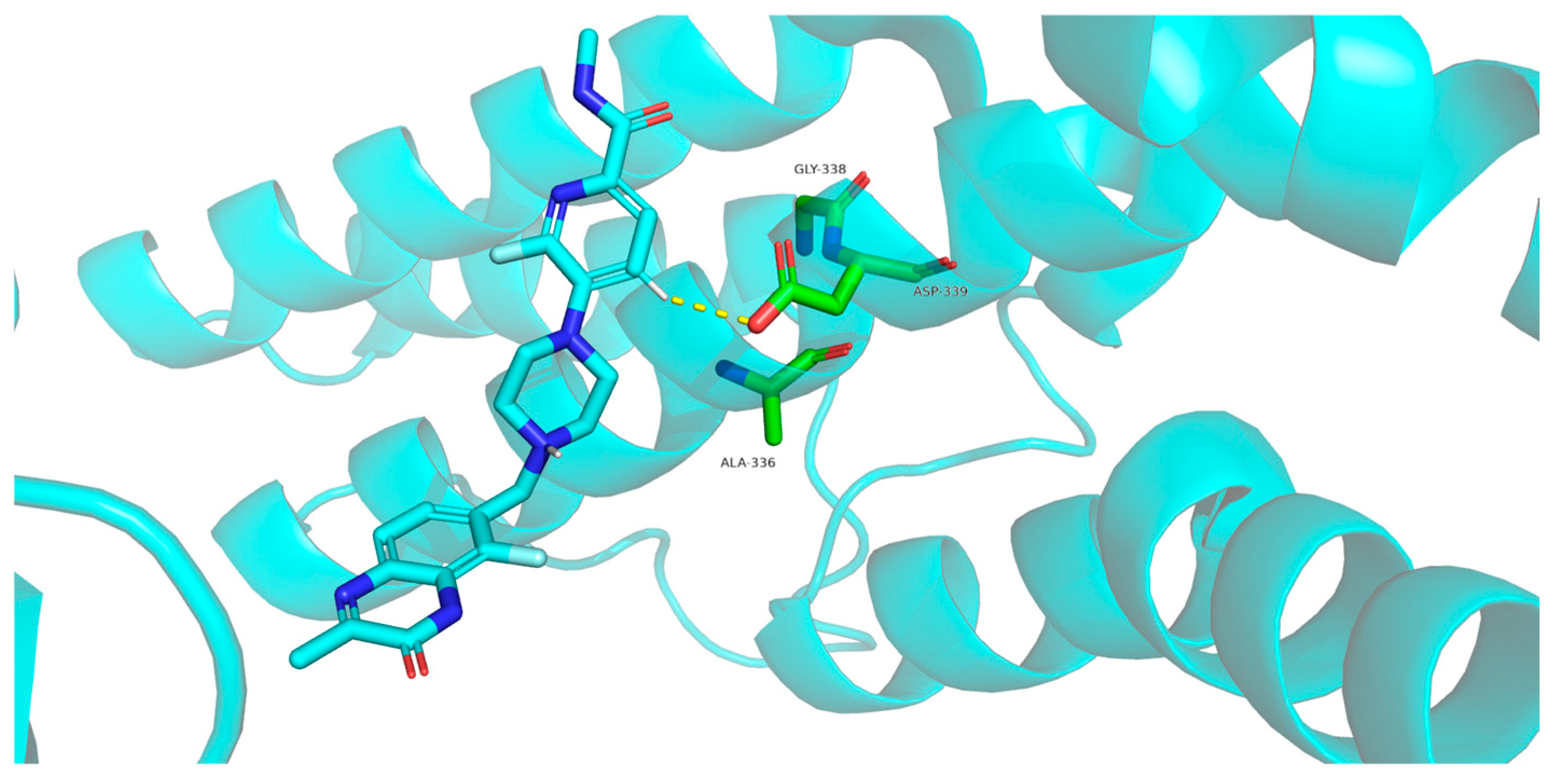



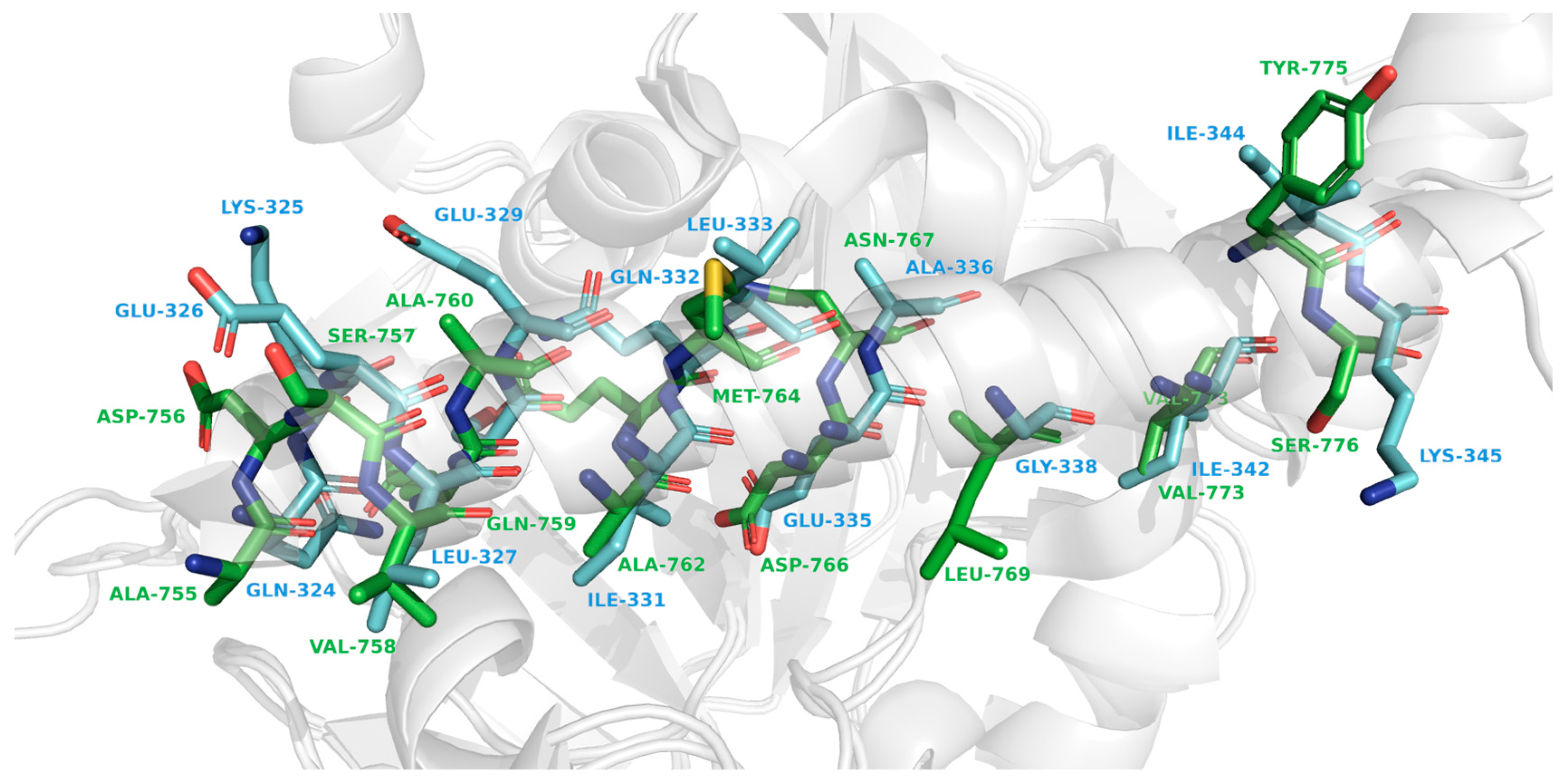
| Amino Acid Pair | Type of Interaction | Interaction Fraction in PARP1 | Interaction Fraction in PARP2 |
|---|---|---|---|
| Asn767/Ala336 | Van der Waals contact | 0.269 | 0 |
| Leu769/Gly338 | Hydrophobic contact | 0.994 | 0 |
| Leu769/Gly338 | Van der Waals contact | 0.513 | 0.058 |
| Asp770/Asp339 | Hydrophobic contact | 0.044 | 0 |
| Asp770/Asp339 | Cationic contact | 0.136 | 0 |
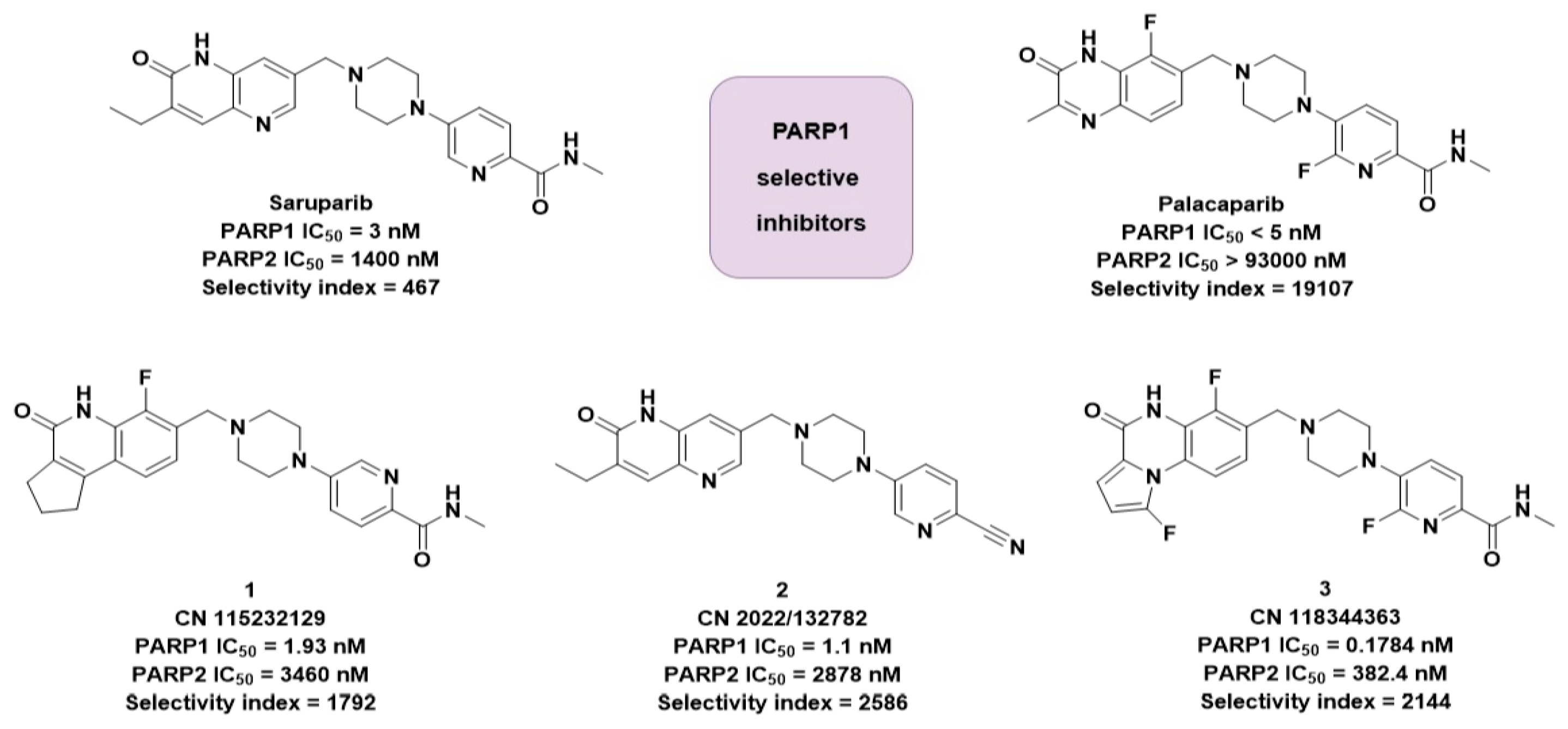
| Compound | Tanimoto Coefficient |
|---|---|
| Palacaparib | 0.605 |
| 1 | 0.667 |
| 2 | 0.692 |
| 3 | 0.568 |
Disclaimer/Publisher’s Note: The statements, opinions and data contained in all publications are solely those of the individual author(s) and contributor(s) and not of MDPI and/or the editor(s). MDPI and/or the editor(s) disclaim responsibility for any injury to people or property resulting from any ideas, methods, instructions or products referred to in the content. |
© 2026 by the authors. Licensee MDPI, Basel, Switzerland. This article is an open access article distributed under the terms and conditions of the Creative Commons Attribution (CC BY) license.
Share and Cite
Shkil, D.O.; Chesnokova, N.A.; Ivashchenko, A.A.; Petersen, E.V.; Maximov, P.Y. Structural Determinants of PARP1 Selectivity from Molecular Dynamics Analysis of PARP1 and PARP2 Complexes. Molecules 2026, 31, 1592. https://doi.org/10.3390/molecules31101592
Shkil DO, Chesnokova NA, Ivashchenko AA, Petersen EV, Maximov PY. Structural Determinants of PARP1 Selectivity from Molecular Dynamics Analysis of PARP1 and PARP2 Complexes. Molecules. 2026; 31(10):1592. https://doi.org/10.3390/molecules31101592
Chicago/Turabian StyleShkil, Dmitrii O., Natalia A. Chesnokova, Andrey A. Ivashchenko, Elena V. Petersen, and Philipp Y. Maximov. 2026. "Structural Determinants of PARP1 Selectivity from Molecular Dynamics Analysis of PARP1 and PARP2 Complexes" Molecules 31, no. 10: 1592. https://doi.org/10.3390/molecules31101592
APA StyleShkil, D. O., Chesnokova, N. A., Ivashchenko, A. A., Petersen, E. V., & Maximov, P. Y. (2026). Structural Determinants of PARP1 Selectivity from Molecular Dynamics Analysis of PARP1 and PARP2 Complexes. Molecules, 31(10), 1592. https://doi.org/10.3390/molecules31101592