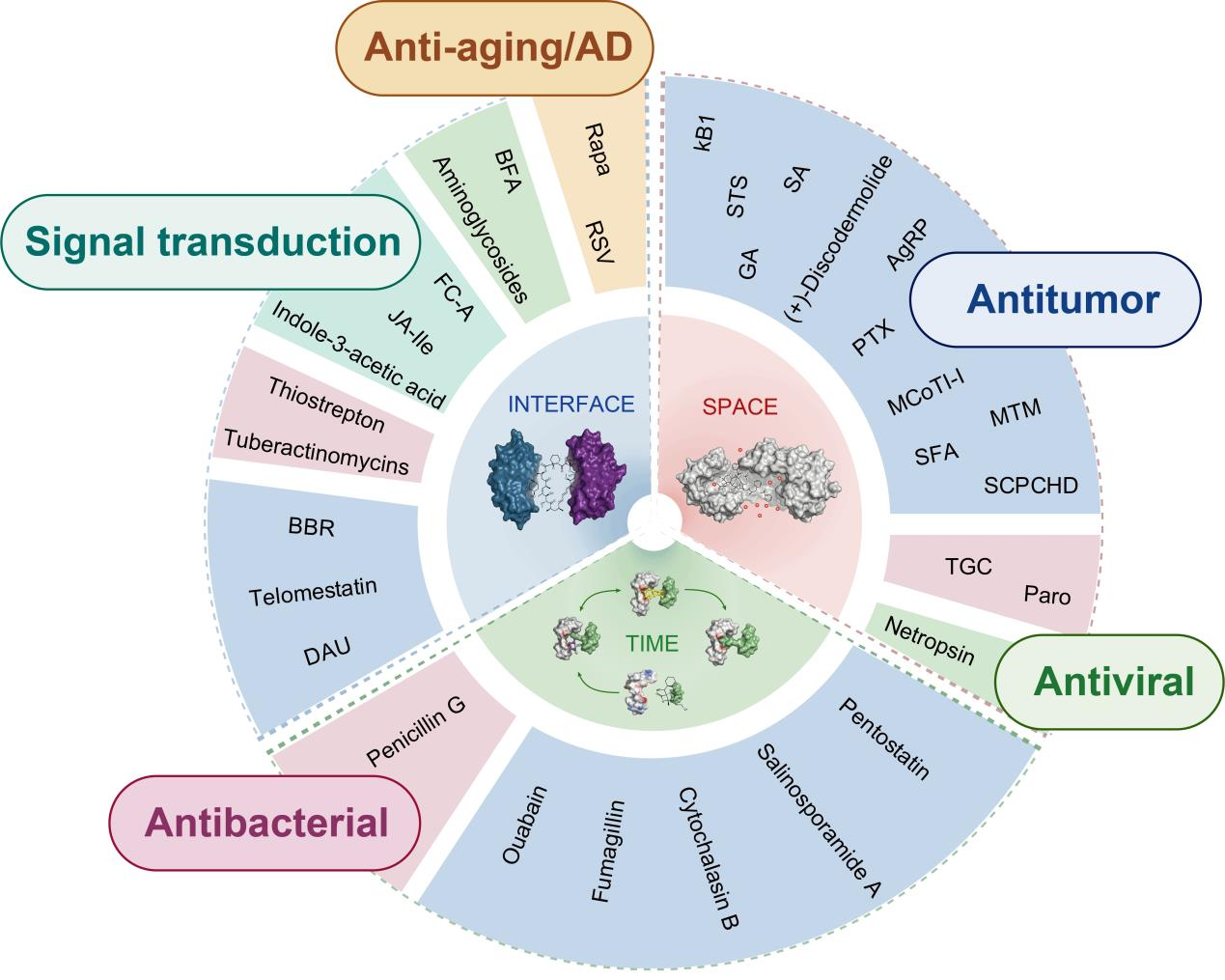
Natural Products Beyond Inhibition: A Mechanistic Framework Spanning Pockets, Interfaces, and Kinetic Barriers
 , ,
, ,
Abstract
1. Introduction
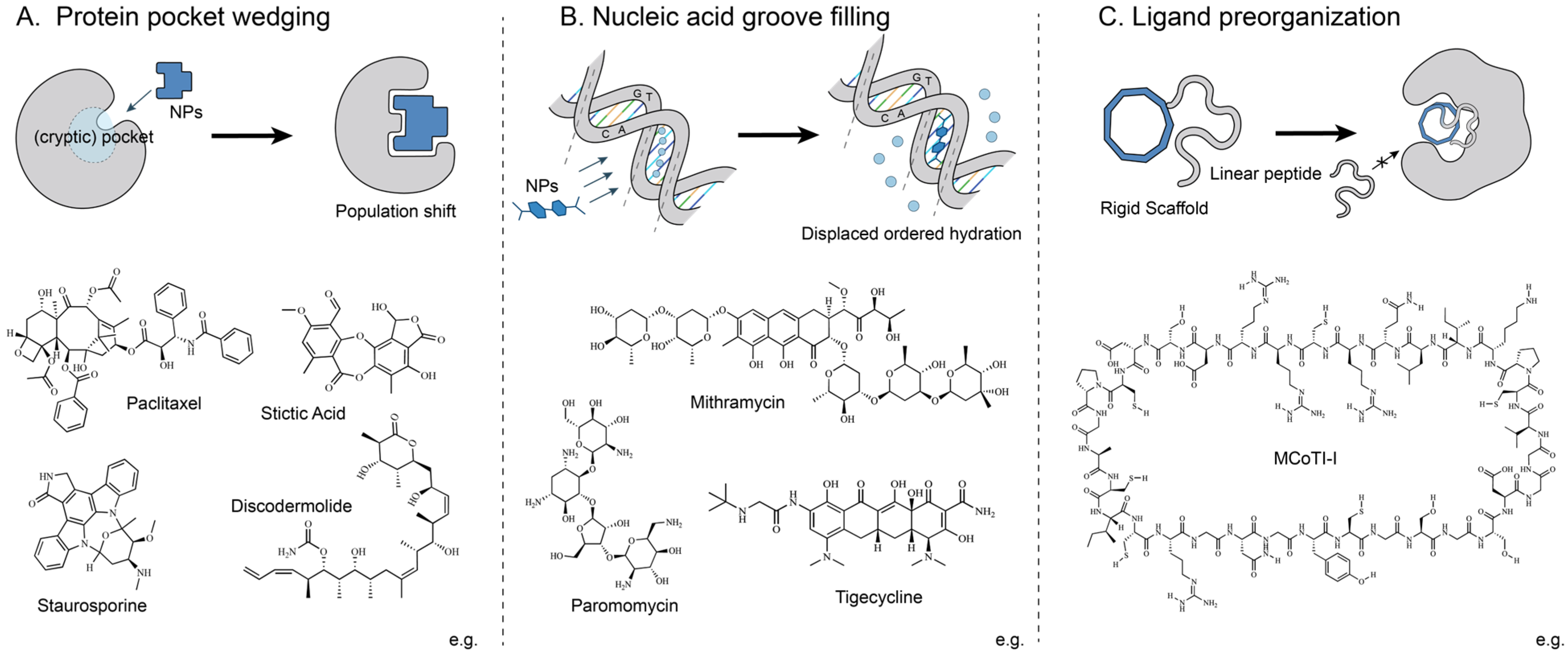
2. Space-Based Strategies
2.1. Protein Pocket Wedging by Natural Products
2.1.1. Paclitaxel
2.1.2. (+)-Discodermolide
2.1.3. Staurosporine
2.1.4. Geldanamycin
2.1.5. Stictic Acid
2.2. Nucleic Acid Groove Filling by Natural Products
2.2.1. Netropsin
2.2.2. Spirocyclopropylcyclohexadienone
2.2.3. Mithramycin
2.2.4. Paromomycin
2.2.5. Tigecycline
2.3. Ligand Preorganization by Natural Products
2.3.1. Kalata B1
2.3.2. Momordica Cochinchinensis Trypsin Inhibitor-I
2.3.3. Agouti-Related Peptide
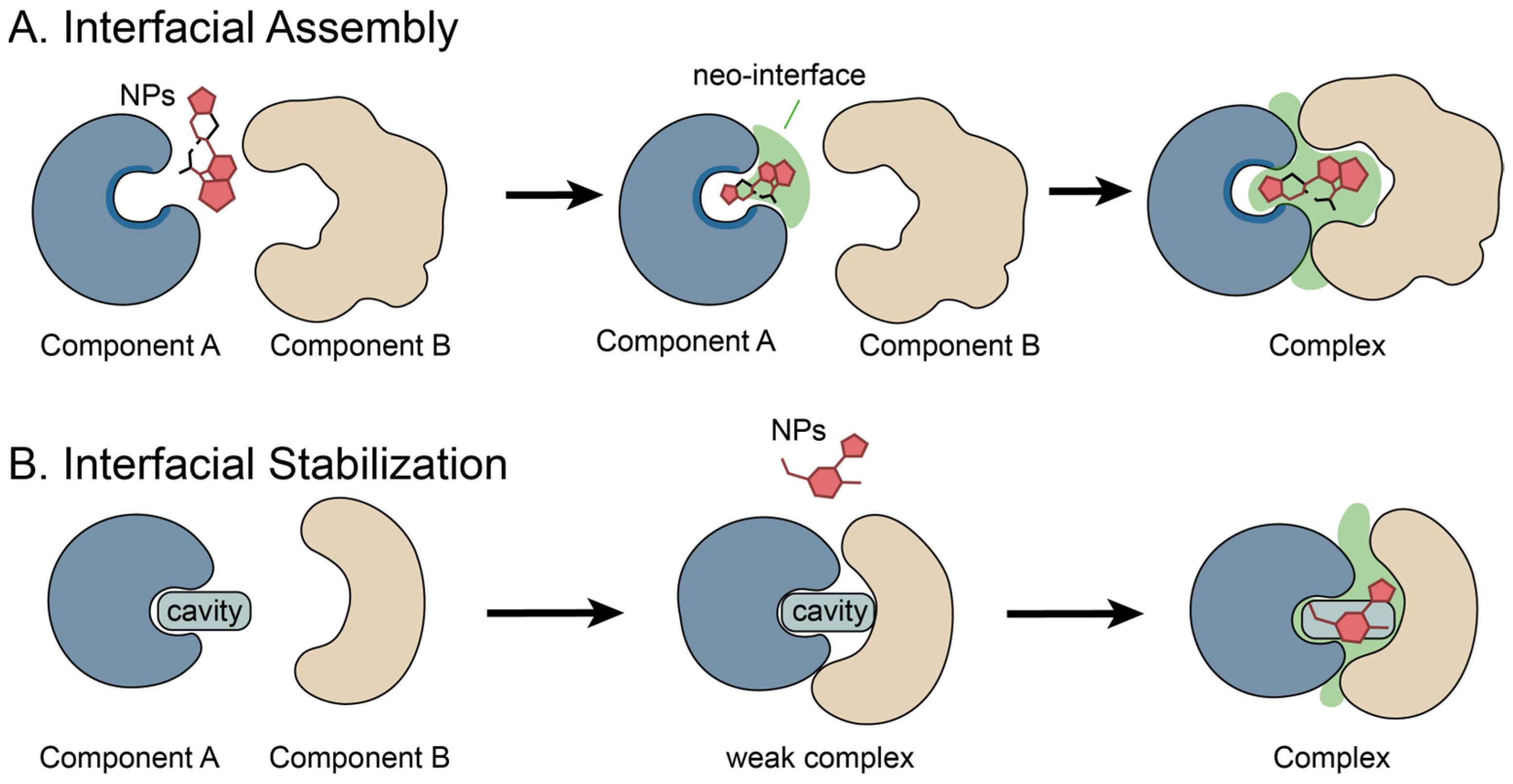
3. Interface-Based Strategies
3.1. Protein Interfacial Assembly by Natural Products
3.1.1. Rapamycin
3.1.2. Indole-3-Acetic Acid
3.1.3. (3R,7S)-Jasmonoyl-L-Isoleucine
3.1.4. Sanglifehrin A
3.2. Protein Interfacial Stabilization by Natural Products
3.2.1. Resveratrol
3.2.2. Brefeldin A
3.2.3. Fusicoccin A
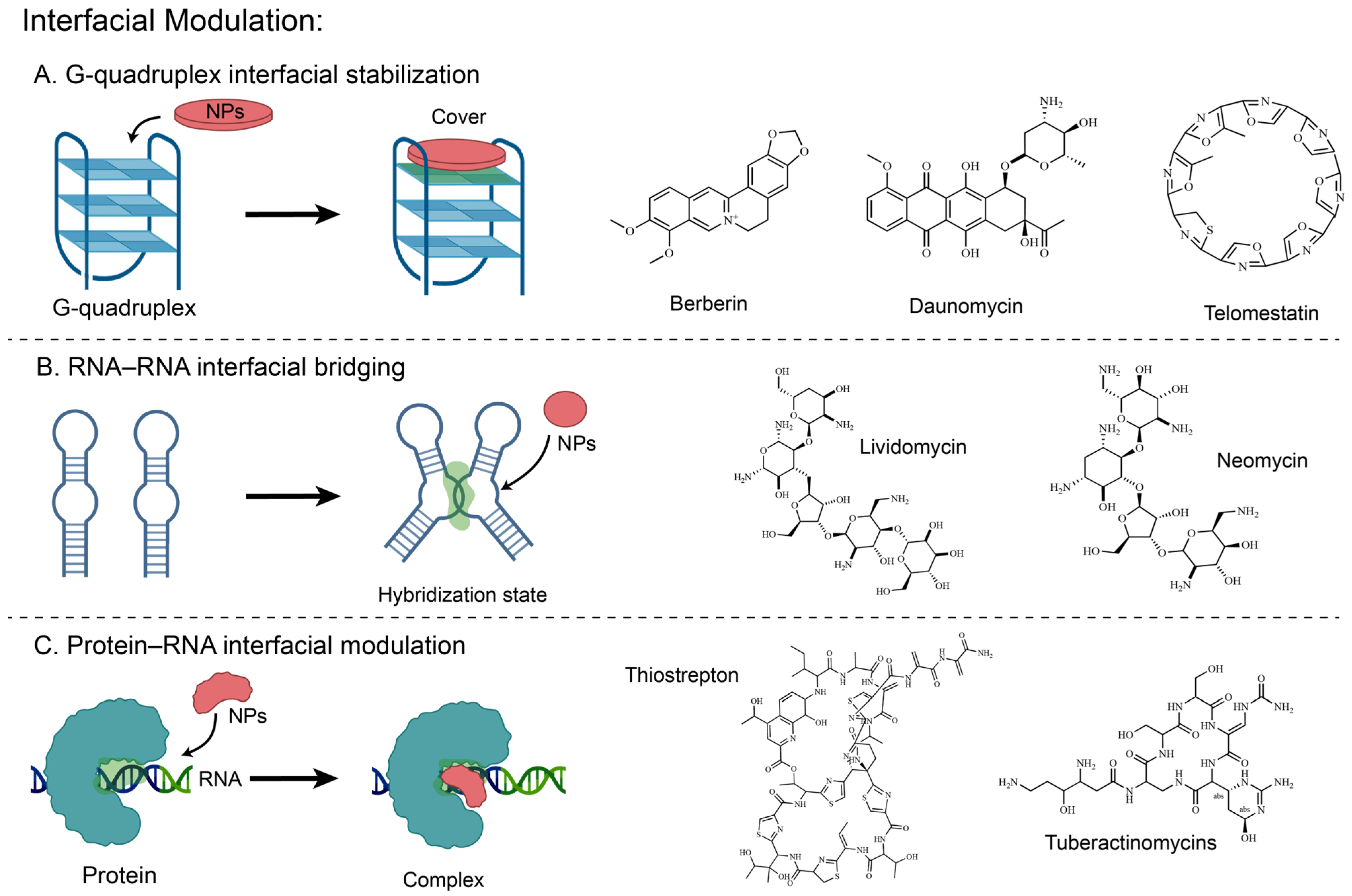
3.3. Nucleic Acid Interfacial Modulation by Natural Products
3.3.1. Daunomycin
3.3.2. Berberine
3.3.3. Telomestatin
3.3.4. Aminoglycosides
3.3.5. Tuberactinomycins
3.3.6. Thiopeptides
4. Time-Based Strategies
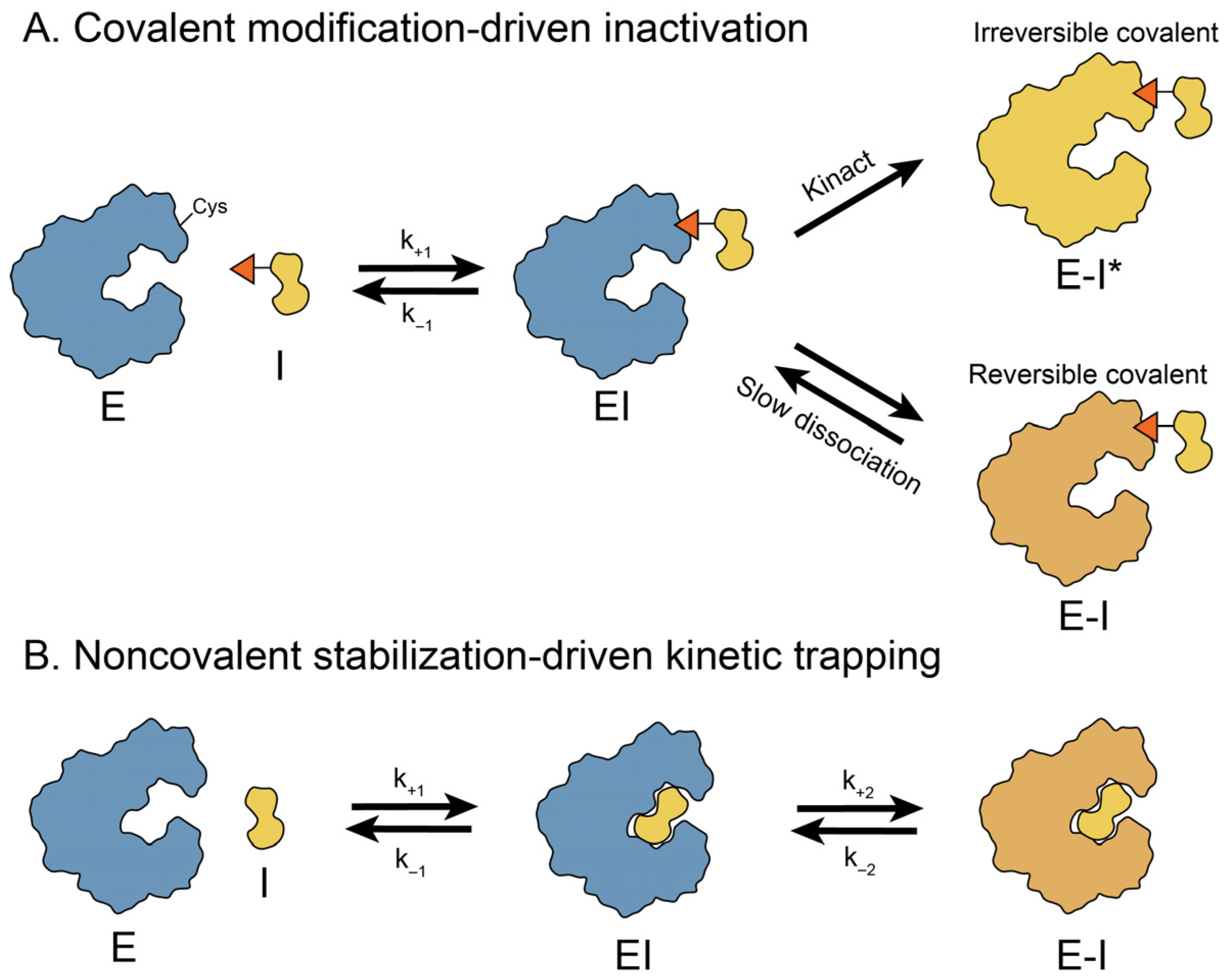
4.1. Covalent Modification-Driven Inactivation
4.1.1. Salinosporamide A
4.1.2. Penicillin G
4.1.3. Fumagillin
4.2. Noncovalent Stabilization-Driven Reversible Inhibition
4.2.1. Pentostatin
4.2.2. Ouabain
4.2.3. Cytochalasin B
5. Conceptual Boundaries and Practical Utility of the SIT Framework
5.1. Conceptual Position and Boundaries of the SIT Framework
5.2. Practical Utility of the SIT Framework
6. Outlook and Perspectives
Author Contributions
Funding
Institutional Review Board Statement
Informed Consent Statement
Data Availability Statement
Conflicts of Interest
Abbreviations
| APBS | Adaptive Poisson–Boltzmann solver |
| CD | Circular dichroism |
| Co-IP | Co-immunoprecipitation |
| cryo-EM | Cryo-electron microscopy |
| DSC | Differential scanning calorimetry |
| DSF | Differential scanning fluorimetry |
| FA | Fluorescence anisotropy |
| FL | Fluorescence spectroscopy |
| FP | Fluorescence polarization |
| FRET | Fluorescence resonance energy transfer |
| Hdm2/HdmX | Human double minute 2/Human double minute X |
| HDX-MS | Hydrogen–deuterium exchange mass spectrometry |
| HPLC | High-performance liquid chromatography |
| IHC | Immunohistochemistry |
| ITC | Isothermal titration calorimetry |
| IVTT | In vitro transcription/translation |
| kon/koff | Association rate constant/Dissociation rate constant |
| KRAS G12C | A mutant form of KRAS in which glycine at position 12 is replaced by cysteine |
| MD | Molecular dynamics |
| MTS | MTS cell viability assay |
| native PAGE | Native polyacrylamide gel electrophoresis |
| NMR | Nuclear magnetic resonance |
| PAL | Photoaffinity labeling |
| QM/MM | Quantum mechanics/Molecular mechanics |
| RGD | Arg-Gly-Asp |
| RP-HPLC | Reversed-Phase high-performance liquid chromatography |
| RQF | Rapid-Quench Flow |
| SAR | Structure-Activity Relationship |
| SDS-PAGE | Sodium dodecyl sulfate polyacrylamide gel electrophoresis |
| SIRAS | Single isomorphous replacement with anomalous scattering |
| smFRET | Single-molecule FRET |
| split-luc | Split luciferase assay |
| SPR | Surface plasmon resonance |
| ThT | Thioflavin T fluorescence assay |
| TR-FRET | Time-resolved FRET |
| UV-Vis | Ultraviolet-visible spectroscopy |
| X-ray | X-ray crystallography |
| Y2H | Yeast two-hybrid |
References
- Robinson, S.; Co, J.; Banik, S. Molecular Glues and Induced Proximity: An Evolution of Tools and Discovery. Cell Chem. Biol. 2024, 31, 1089–1100. [Google Scholar] [CrossRef]
- Nussinov, R.; Liu, Y.; Zhang, W.; Jang, H. Protein Conformational Ensembles in Function: Roles and Mechanisms. RSC Chem. Biol. 2023, 4, 850–864. [Google Scholar] [CrossRef]
- Newman, D.; Cragg, G. Natural Products as Sources of New Drugs over the Nearly Four Decades from 01/1981 to 09/2019. J. Nat. Prod. 2020, 83, 770–803. [Google Scholar] [CrossRef] [PubMed]
- Harvey, A.L.; Edrada-Ebel, R.; Quinn, R.J. The Re-emergence of Natural Products for Drug Discovery in the Genomics Era. Nat. Rev. Drug Discov. 2015, 14, 111–129. [Google Scholar] [CrossRef] [PubMed]
- Konstantinidou, M.; Arkin, M.R. Molecular Glues for Protein-Protein Interactions: Progressing toward a New Dream. Cell Chem. Biol. 2024, 31, 1064–1088. [Google Scholar] [CrossRef] [PubMed]
- Schreiber, S.L. The Rise of Molecular Glues. Cell 2021, 184, 3–9. [Google Scholar] [CrossRef]
- Rodrigues, T.; Reker, D.; Schneider, P.; Schneider, G. Counting on Natural Products for Drug Design. Nat. Chem. 2016, 8, 531–541. [Google Scholar] [CrossRef]
- Knockenhauer, K.E.; Copeland, R.A. The Importance of Binding Kinetics and Drug–target Residence Time in Pharmacology. Br. J. Pharmacol. 2023, 181, 4103–4116. [Google Scholar] [CrossRef]
- Copeland, R.A. The Drug–Target Residence Time Model: A 10-Year Retrospective. Nat. Rev. Drug Discov. 2015, 15, 87–95. [Google Scholar] [CrossRef]
- Liu, H.; Zhang, H.; Ijzerman, A.; Guo, D. The Translational Value of Ligand-receptor Binding Kinetics in Drug Discovery. Br. J. Pharmacol. 2024, 181, 4117–4129. [Google Scholar] [CrossRef]
- Motlagh, H.N.; Wrabl, J.O.; Li, J.; Hilser, V.J. The ensemble nature of allostery. Nature 2014, 508, 331–339. [Google Scholar] [CrossRef]
- Boehr, D.D.; Nussinov, R.; Wright, P.E. The Role of Dynamic Conformational Ensembles in Biomolecular Recognition. Nat. Chem. Biol. 2009, 5, 789–796. [Google Scholar] [CrossRef] [PubMed]
- Frauenfelder, H.; Sligar, S.G.; Wolynes, P.G. The Energy Landscapes and Motions of Proteins. Science 1991, 254, 1598–1603. [Google Scholar] [CrossRef]
- Bauer, A.; Bronstrup, M. Industrial Natural Product Chemistry for Drug Discovery and Development. Nat. Prod. Rep. 2014, 31, 35–60. [Google Scholar] [CrossRef]
- Mossessova, E.; Corpina, R.; Goldberg, J. Crystal Structure of ARF1•Sec7 Complexed with Brefeldin A and Its Implications for The Guanine Nucleotide Exchange Mechanism. Mol. Cell 2003, 12, 1403–1411. [Google Scholar] [CrossRef] [PubMed]
- Rui, H.; Ashton, K.S.; Min, J.; Wang, C.; Potts, P.R. Protein-protein Interfaces in Molecular Glue-induced Ternary Complexes: Classification, Characterization, and Prediction. RSC Chem. Biol. 2023, 4, 192–215. [Google Scholar] [CrossRef] [PubMed]
- Bozdaganyan, M.; Fedorov, V.; Kholina, E.; Kovalenko, I.; Gudimchuk, N.; Orekhov, P. Exploring Tubulin-paclitaxel Binding Modes through Extensive Molecular Dynamics Simulations. Sci. Rep. 2025, 15, 8378. [Google Scholar] [CrossRef]
- Alushin, G.; Lander, G.; Kellogg, E.; Zhang, R.; Baker, D.; Nogales, E. High-Resolution Microtubule Structures Reveal the Structural Transitions in αβ-Tubulin upon GTP Hydrolysis. Cell 2014, 157, 1117–1129. [Google Scholar] [CrossRef]
- Nogales, E.; Wolf, S.; Downing, K. Structure of the αβ-tubulin Dimer by Electron Crystallography. Nature 1998, 391, 199–203. [Google Scholar] [CrossRef]
- Borys, F.; Joachimiak, E.; Krawczyk, H.; Fabczak, H. Intrinsic and Extrinsic Factors Affecting Microtubule Dynamics in Normal and Cancer Cells. Molecules 2020, 25, 3705. [Google Scholar] [CrossRef]
- Prota, A.E.; Bargsten, K.; Redondo-Horcajo, M.; Smith, A.B., III; Yang, C.-P.H.; McDaid, H.M.; Paterson, I.; Horwitz, S.B.; Fernando Díaz, J.; Steinmetz, M.O. Structural Basis of Microtubule Stabilization by Discodermolide. ChemBioChem 2017, 18, 905–909. [Google Scholar] [CrossRef] [PubMed]
- Huang, G.S.; Lopez-Barcons, L.; Freeze, B.S.; Smith, A.B., III; Goldberg, G.L.; Horwitz, S.B.; McDaid, H.M. Potentiation of Taxol Efficacy by Discodermolide in Ovarian Carcinoma Xenograft-Bearing Mice. Clin. Cancer Res. 2006, 12, 298–304. [Google Scholar] [CrossRef]
- Alam, K.A.; Gani, O.; Engh, R.A. Inhibitor Binding to Mutants of Protein Kinase A with GGGxxG and GxGxxA Glycine-Rich Loop Motifs. J. Mol. Recognit. 2021, 34, e2882. [Google Scholar] [CrossRef]
- Sen, B.; Johnson, F.M. Regulation of Src Family Kinases in Human Cancers. J. Signal Transduct. 2011, 2011, 865819. [Google Scholar] [CrossRef]
- Zhu, X.; Kim, J.; Newcomb, J.; Rose, P.; Stover, D.; Toledo, L.; Zhao, H.; Morgenstern, K. Structural Analysis of the Lymphocyte-Specific Kinase Lck in Complex with Non-selective and Src Family Selective Kinase Inhibitors. Structure 1999, 7, 651–661. [Google Scholar] [CrossRef]
- Stebbins, C.; Russo, A.; Schneider, C.; Rosen, N.; Hartl, F.; Pavletich, N. Crystal Structure of An Hsp90-Geldanamycin Complex: Targeting of a Protein Chaperone by an Antitumor Agent. Cell 1997, 89, 239–250. [Google Scholar] [CrossRef]
- Sanchez, J.; Carter, T.R.; Cohen, M.S.; Blagg, B.S.J. Old and New Approaches to Target the Hsp90 Chaperone. Curr. Cancer Drug Targets 2020, 20, 253–270. [Google Scholar] [CrossRef]
- Wassman, C.D.; Baronio, R.; Demir, Ö.; Wallentine, B.D.; Chen, C.-K.; Hall, L.V.; Salehi, F.; Lin, D.-W.; Chung, B.P.; Wesley Hatfield, G.; et al. Computational Identification of a Transiently Open L1/S3 Pocket for Reactivation of Mutant p53. Nat. Commun. 2013, 4, 1407. [Google Scholar] [CrossRef]
- Tsukamoto, S. Natural Products that Target p53 for Cancer Therapy. J. Nat. Med. 2025, 79, 725–737. [Google Scholar] [CrossRef] [PubMed]
- Kopka, M.L.; Yoon, C.; Goodsell, D.; Pjura, P.; Dickerson, R.E. The Molecular Origin of DNA-Drug Specificity in Netropsin and Distamycin. Proc. Natl. Acad. Sci. USA 1985, 82, 1376–1380. [Google Scholar] [CrossRef] [PubMed]
- Wang, S.; Kumar, A.; Aston, K.; Nguyen, B.; Bashkin, J.K.; Boykin, D.W.; Wilson, W.D. Different Thermodynamic Signatures for DNA Minor Groove Binding with Changes in Salt Concentration and Temperature. Chem. Commun. 2013, 49, 8543–8545. [Google Scholar] [CrossRef][Green Version]
- Andronova, V.L.; Grokhovsky, S.L.; Surovaya, A.N.; Arkhipova, V.S.; Gursky, G.V.; Galegov, G.A. Antiviral and Cytotoxic Activity of Netropsin Derivatives in Vero Cells Infected with Vaccinia Virus and Herpes Simplex Virus Type I. Dokl. Biochem. Biophys. 2008, 422, 296–301. [Google Scholar] [CrossRef]
- Mullins, E.A.; Dorival, J.; Tang, G.L.; Boger, D.L.; Eichman, B.F. Structural Evolution of A DNA Repair Self-resistance Mechanism Targeting Genotoxic Secondary Metabolites. Nat. Commun. 2021, 12, 6942. [Google Scholar] [CrossRef]
- Mullins, E.A.; Shi, R.; Eichman, B.F. Toxicity and Repair of DNA Adducts Produced by the Natural Product Yatakemycin. Nat. Chem. Biol. 2017, 13, 1002–1008. [Google Scholar] [CrossRef]
- Hou, C.; Bhosale, S.; Yasuda, K.; Yetirajam, R.; Leggas, M.; Rohr, J.; Tsodikov, O.V. The Position of Indole Methylation Controls the Structure, DNA Binding, and Cellular Functions of Mithramycin SA-Trp Analogues. ChemBioChem 2025, 26, e202401084. [Google Scholar] [CrossRef] [PubMed]
- Hou, C.; Weidenbach, S.; Cano, K.E.; Wang, Z.; Mitra, P.; Ivanov, D.N.; Rohr, J.; Tsodikov, O.V. Structures of Mithramycin Analogues Bound to DNA and Implications for Targeting Transcription Factor FLI1. Nucleic Acids Res. 2016, 44, 8990–9004. [Google Scholar] [CrossRef]
- Mohamad-Ramshan, R.; Ande, C.; Matsushita, T.; Haldimann, K.; Vasella, A.; Hobbie, S.; Crich, D. Synthesis of 4-O-(4-Amino-4-deoxy-β-D-xylopyranosyl)paromomycin and 4-S-(β-D-Xylopyranosyl)-4-deoxy-4′-thio-paromomycin and Evaluation of their Antiribosomal and Antibacterial Activity. Tetrahedron 2023, 135, 133330. [Google Scholar] [CrossRef] [PubMed]
- Vicens, Q.; Westhof, E. Crystal Structure of Paromomycin Docked into the Eubacterial Ribosomal Decoding A Site. Structure 2001, 9, 647–658. [Google Scholar] [CrossRef] [PubMed]
- Jenner, L.; Starosta, A.L.; Terry, D.S.; Mikolajka, A.; Filonava, L.; Yusupov, M.; Blanchard, S.C.; Wilson, D.N.; Yusupova, G. Structural Basis for Potent Inhibitory Activity of the Antibiotic Tigecycline During Protein Synthesis. Proc. Natl. Acad. Sci. USA 2013, 110, 3812–3816. [Google Scholar] [CrossRef]
- Wang, Z.; Li, H. The Tigecycline Resistance Mechanisms in Gram-negative Bacilli. Front. Cell. Infect. Microbiol. 2024, 14, 1471469. [Google Scholar] [CrossRef]
- Hruby, V.J. Conformational Restrictions of Biologically Active Peptides Via Amino Acid Side Chain Groups. Life Sci. 1982, 31, 189–199. [Google Scholar] [CrossRef]
- Gunasekera, S.; Foley, F.; Clark, R.; Sando, L.; Fabri, L.; Craik, D.; Daly, N. Engineering Stabilized Vascular Endothelial Growth Factor-A Antagonists: Synthesis, Structural Characterization, and Bioactivity of Grafted Analogues of Cyclotides. J. Med. Chem. 2008, 51, 7697–7704. [Google Scholar] [CrossRef]
- Mehta, L.; Dhankhar, R.; Gulati, P.; Kapoor, R.; Mohanty, A.; Kumar, S. Natural and Grafted Cyclotides in Cancer Therapy: An Insight. J. Pept. Sci. 2020, 26, e3246. [Google Scholar] [CrossRef]
- Ji, Y.; Majumder, S.; Millard, M.; Borra, R.; Bi, T.; Elnagar, A.Y.; Neamati, N.; Shekhtman, A.; Camarero, J.A. In Vivo Activation of the p53 Tumor Suppressor Pathway by an Engineered Cyclotide. J. Am. Chem. Soc. 2013, 135, 11623–11633. [Google Scholar] [CrossRef]
- Nieberler, M.; Reuning, U.; Reichart, F.; Notni, J.; Wester, H.-J.; Schwaiger, M.; Weinmüller, M.; Räder, A.; Steiger, K.; Kessler, H. Exploring the Role of RGD-Recognizing Integrins in Cancer. Cancers 2017, 9, 116. [Google Scholar] [CrossRef]
- Silverman, A.; Levin, A.; Lahti, J.; Cochran, J. Engineered Cystine-Knot Peptides that Bind αvβ3 Integrin with Antibody-Like Affinities. J. Mol. Biol. 2009, 385, 1064–1075. [Google Scholar] [CrossRef]
- Pang, B.; Graziani, E.I.; Keasling, J.D. Acyltransferase Domain Swap in Modular Type I Polyketide Synthase to Adjust the Molecular Gluing Strength of Rapamycin. Tetrahedron Lett. 2022, 112, 154229. [Google Scholar] [CrossRef]
- Choi, J.; Chen, J.; Schreiber, S.; Clardy, J. Structure of the FKBP12-Rapamycin Complex Interacting with the Binding Domain of Human FRAP. Science 1996, 273, 239–242. [Google Scholar] [CrossRef] [PubMed]
- Mannick, J.; Lamming, D. Targeting the Biology of Aging with mTOR Inhibitors. Nat. Aging 2023, 3, 642–660. [Google Scholar] [CrossRef] [PubMed]
- Tan, X.; Calderon-Villalobos, L.I.; Sharon, M.; Zheng, C.; Robinson, C.V.; Estelle, M.; Zheng, N. Mechanism of Auxin Perception by the TIR1 Ubiquitin Ligase. Nature 2007, 446, 640–645. [Google Scholar] [CrossRef] [PubMed]
- Calderón Villalobos, L.I.; Lee, S.; De Oliveira, C.; Ivetac, A.; Brandt, W.; Armitage, L.; Sheard, L.B.; Tan, X.; Parry, G.; Mao, H.; et al. A Combinatorial TIR1/AFB-Aux/IAA Co-receptor System for Differential Sensing of Auxin. Nat. Chem. Biol. 2012, 8, 477–485. [Google Scholar] [CrossRef]
- Kwon, S.H.; Jeong, M.Y.; Park, K.C.; Youn, S.W.; Huh, C.H.; Na, J.I. A New Therapeutic Option for Facial Seborrhoeic Dermatitis: Indole-3-Acetic Acid Photodynamic Therapy. J. Eur. Acad. Dermatol. Venereol. 2014, 28, 94–99. [Google Scholar] [CrossRef] [PubMed]
- Sheard, L.; Tan, X.; Mao, H.; Withers, J.; Ben-Nissan, G.; Hinds, T.; Kobayashi, Y.; Hsu, F.; Sharon, M.; Browse, J.; et al. Jasmonate Perception by Inositol-Phosphate-Potentiated COI1-JAZ Co-receptor. Nature 2010, 468, 400–405. [Google Scholar] [CrossRef]
- Monte, I.; Caballero, J.; Zamarreño, A.; Fernández-Barbero, G.; García-Mina, J.; Solano, R. JAZ is Essential for Ligand Specificity of the COI1/JAZ Co-receptor. Proc. Natl. Acad. Sci. USA 2022, 119, e2212155119. [Google Scholar] [CrossRef]
- Garrido-Bigotes, A.; Valenzuela-Riffo, F.; Torrejón, M.; Solano, R.; Morales-Quintana, L.; Figueroa, C. A New Functional JAZ Degron Sequence in Strawberry JAZ1 Revealed by Structural and Interaction Studies on the COI1-JA-Ile/COR-JAZs Complexes. Sci. Rep. 2020, 10, 11310. [Google Scholar] [CrossRef]
- Schulze, C.; Seamon, K.; Zhao, Y.; Yang, Y.; Cregg, J.; Kim, D.; Tomlinson, A.; Choy, T.; Wang, Z.; Sang, B.; et al. Chemical Remodeling of a Cellular Chaperone to Target the Active State of Mutant KRAS. Science 2023, 381, 794–799. [Google Scholar] [CrossRef] [PubMed]
- Holderfield, M.; Lee, B.J.; Jiang, J.; Tomlinson, A.; Seamon, K.J.; Mira, A.; Patrucco, E.; Goodhart, G.; Dilly, J.; Gindin, Y.; et al. Concurrent Inhibition of Oncogenic and Wild-type RAS-GTP for Cancer Therapy. Nature 2024, 629, 919–926. [Google Scholar] [CrossRef] [PubMed]
- Yokoyama, T.; Kusaka, K.; Mizuguchi, M.; Nabeshima, Y.; Fujiwara, S. Resveratrol Derivatives Inhibit Transthyretin Fibrillization: Structural Insights into the Interactions between Resveratrol Derivatives and Transthyretin. J. Med. Chem. 2023, 66, 15511–15523. [Google Scholar] [CrossRef]
- Corino, C.; Aimo, A.; Luigetti, M.; Ciccone, L.; Ferrari Chen, Y.F.; Panichella, G.; Musetti, V.; Castiglione, V.; Vergaro, G.; Emdin, M.; et al. Tetrameric Transthyretin as a Protective Factor Against Alzheimer’s Disease. Mol. Neurobiol. 2025, 62, 2945–2954. [Google Scholar] [CrossRef]
- Jermusek, F.A., Jr.; Webb, L.J. Electrostatic Impact of Brefeldin A on Thiocyanate Probes Surrounding the Interface of Arf1-BFA-ARNO4M, a Protein-Drug-Protein Complex. Biochemistry 2024, 63, 27–41. [Google Scholar] [CrossRef]
- Zhang, L.; Wang, T.; Yi, Y.; Song, M.; Jin, M.; Guo, K.; Zhang, Y. ARF1 with Sec7 Domain-Dependent GBF1 Activates Coatomer Protein I To Support Classical Swine Fever Virus Entry. J. Virol. 2022, 96, e0219321. [Google Scholar] [CrossRef]
- Paiardini, A.; Aducci, P.; Cervoni, L.; Cutruzzola, F.; Di Lucente, C.; Janson, G.; Pascarella, S.; Rinaldo, S.; Visconti, S.; Camoni, L. The Phytotoxin Fusicoccin Differently Regulates 14-3-3 Proteins Association to Mode III Targets. IUBMB Life 2014, 66, 52–62. [Google Scholar] [CrossRef]
- Kiriyama, H.; Kinoshita, S.N.; Hayashi, Y.; Honda, R.; Kasuga, S.; Kinoshita, T.; Irieda, H.; Ohkanda, J. Fungal Toxin Fusicoccin Enhances Plant Growth by Upregulating 14-3-3 Interaction with Plasma Membrane H(+)-ATPase. Sci. Rep. 2024, 14, 23431. [Google Scholar] [CrossRef]
- Tariq, Z.; Barthwal, R. Affinity of Anticancer Drug Daunomycin toward Tetrahymena Telomeric G-Quadruplex DNA D-[GGGG(TTGGGG)3]. ACS Omega 2019, 4, 6347–6359. [Google Scholar] [CrossRef]
- Ghazaey Zidanloo, S.; Hosseinzadeh Colagar, A.; Ayatollahi, H.; Bagheryan, Z. G-quadruplex Forming Region within WT1 Promoter is Selectively Targeted by Daunorubicin and Mitoxantrone: A Possible Mechanism for Anti-leukemic Effect of Drugs. J. Biosci. 2019, 44, 12. [Google Scholar] [CrossRef]
- Samad, M.; Saiman, M.; Abdul Majid, N.; Karsani, S.; Yaacob, J. Berberine Inhibits Telomerase Activity and Induces Cell Cycle Arrest and Telomere Erosion in Colorectal Cancer Cell Line, HCT 116. Molecules 2021, 26, 376. [Google Scholar] [CrossRef]
- Arora, A.; Balasubramanian, C.; Kumar, N.; Agrawal, S.; Ojha, R.P.; Maiti, S. Binding of Berberine to Human Telomeric Quadruplex-spectroscopic, Calorimetric and Molecular Modeling Studies. FEBS J. 2008, 275, 3971–3983. [Google Scholar] [CrossRef]
- Mostafavi, M.; Hassani, L.; Khoshkam, M. Interaction of Berberine with Different Forms of DNA in Human Telomeric Region. J. Struct. Biol. 2025, 217, 108175. [Google Scholar] [CrossRef]
- Chung, W.; Heddi, B.; Tera, M.; Iida, K.; Nagasawa, K.; Phan, A. Solution Structure of an Intramolecular (3+1) Human Telomeric G-Quadruplex Bound to a Telomestatin Derivative. J. Am. Chem. Soc. 2013, 135, 13495–13501. [Google Scholar]
- Kim, M.-Y.; Vankayalapati, H.; Shin-ya, K.; Wierzba, K.; Hurley, L.H. Telomestatin, A Potent Telomerase Inhibitor that Interacts Quite Specifically with the Human Telomeric Intramolecular G-quadruplex. J. Am. Chem. Soc. 2002, 124, 2098–2099. [Google Scholar] [CrossRef]
- Figueiredo, J.; Mergny, J.L.; Cruz, C. G-quadruplex Ligands in Cancer Therapy: Progress, Challenges, and Clinical Perspectives. Life Sci. 2024, 340, 122481. [Google Scholar] [CrossRef]
- Shammas, M.A.; Shmookler Reis, R.J.; Li, C.; Koley, H.; Hurley, L.H.; Anderson, K.C.; Munshi, N.C. Telomerase Inhibition and Cell Growth Arrest after Telomestatin Treatment in Multiple Myeloma. Clin. Cancer Res. 2004, 10, 770–776. [Google Scholar] [CrossRef]
- Ennifar, E.; Paillart, J.; Bodlenner, A.; Walter, P.; Weibel, J.; Aubertin, A.; Pale, P.; Dumas, P.; Marquet, R. Targeting the Dimerization Initiation Site of HIV-1 RNA with Aminoglycosides: From Crystal to Cell. Nucleic Acids Res. 2006, 34, 2328–2339. [Google Scholar] [CrossRef]
- Bernacchi, S.; Freisz, S.; Maechling, C.; Spiess, B.; Marquet, R.; Dumas, P.; Ennifar, E. Aminoglycoside Binding to the HIV-1 RNA Dimerization Initiation Site: Thermodynamics and Effect on the Kissing-loop to Duplex Conversion. Nucleic Acids Res. 2007, 35, 7128–7139. [Google Scholar] [CrossRef]
- Nandi, S.; Dey, D.; Srinivas, P.; Dunham, C.M.; Conn, G.L. Distant Ribose 2′-O-Methylation of 23S rRNA Helix 69 Pre-orders the Capreomycin Drug Binding Pocket at the Ribosome Subunit Interface. Nucleic Acids Res. 2025, 53, gkaf618. [Google Scholar] [CrossRef]
- Stanley, R.E.; Blaha, G.; Grodzicki, R.L.; Strickler, M.D.; Steitz, T.A. The Structures of the Anti-tuberculosis Antibiotics Viomycin and Capreomycin Bound to the 70S ribosome. Nat. Struct. Mol. Biol. 2010, 17, 289–293. [Google Scholar] [CrossRef]
- Walter, J.D.; Hunter, M.; Cobb, M.; Traeger, G.; Spiegel, P.C. Thiostrepton Inhibits Stable 70S Ribosome Binding and Ribosome-dependent GTPase Activation of Elongation Factor G and Elongation Factor 4. Nucleic Acids Res. 2012, 40, 360–370. [Google Scholar] [CrossRef]
- Harms, J.M.; Wilson, D.N.; Schluenzen, F.; Connell, S.R.; Stachelhaus, T.; Zaborowska, Z.; Spahn, C.M.; Fucini, P. Translational Regulation Via L11: Molecular Switches on the Ribosome Turned on and off by Thiostrepton and Micrococcin. Mol. Cell 2008, 30, 26–38. [Google Scholar] [CrossRef]
- Serrano-Aparicio, N.; Moliner, V.; Świderek, K. Nature of Irreversible Inhibition of Human 20S Proteasome by Salinosporamide A. The Critical Role of Lys–Asp Dyad Revealed from Electrostatic Effects Analysis. ACS Catal. 2021, 11, 3575–3589. [Google Scholar] [CrossRef]
- Serrano-Aparicio, N.; Moliner, V.; Świderek, K. On the Origin of the Different Reversible Characters of Salinosporamide A and Homosalinosporamide A in the Covalent Inhibition of the Human 20S Proteasome. ACS Catal. 2021, 11, 11806–11819. [Google Scholar] [CrossRef]
- Groll, M.; Huber, R.; Potts, B. Crystal Structures of Salinosporamide A (NPI-0052) and B (NPI-0047) in Complex with the 20S Proteasome Reveal Important Consequences of β-lactone Ring Opening and a Mechanism for Irreversible Binding. J. Am. Chem. Soc. 2006, 128, 5136–5141. [Google Scholar] [CrossRef]
- Villamil, V.; Brusoni, L.S.; Prati, F.; Caselli, E.; Santi, N. Boronate-Based Inhibitors of Penicillin-Binding Proteins: An Underestimated Avenue for Antibiotic Discovery? Pharmaceuticals 2025, 18, 1325. [Google Scholar] [CrossRef]
- Lu, W.P.; Kincaid, E.; Sun, Y.; Bauer, M.D. Kinetics of β-lactam Interactions with Penicillin-susceptible and -resistant Penicillin-binding Protein 2x Proteins from Streptococcus pneumoniae: Involvement of Acylation and Deacylation in β-lactam Resistance. J. Biol. Chem. 2001, 276, 31494–31501. [Google Scholar] [CrossRef]
- Lim, D.; Strynadka, N.C. Structural Basis for the β-Lactam Resistance of PBP2a from Methicillin-resistant Staphylococcus aureus. Nat. Struct. Biol. 2002, 9, 870–876. [Google Scholar] [CrossRef] [PubMed]
- Addlagatta, A.; Matthews, B.W. Structure of the Angiogenesis Inhibitor Ovalicin Bound to Its Noncognate Target, Human Type 1 Methionine Aminopeptidase. Protein Sci. 2006, 15, 1842–1848. [Google Scholar] [CrossRef] [PubMed]
- Liu, S.; Widom, J.; Kemp, C.; Crews, C.; Clardy, J. Structure of Human Methionine Aminopeptidase-2 Complexed with Fumagillin. Science 1998, 282, 1324–1327. [Google Scholar] [CrossRef] [PubMed]
- Moon, D. MetAP2 as a Therapeutic Target for Obesity and Type 2 Diabetes: Structural Insights, Mechanistic Roles, and Inhibitor Development. Biomolecules 2024, 14, 1572. [Google Scholar] [CrossRef]
- Kutryb-Zajac, B.; Mierzejewska, P.; Slominska, E.M.; Smolenski, R.T. Therapeutic Perspectives of Adenosine Deaminase Inhibition in Cardiovascular Diseases. Molecules 2020, 25, 4652. [Google Scholar] [CrossRef]
- Wang, Z.; Quiocho, F. Complexes of Adenosine Deaminase with Two Potent Inhibitors: X-ray Structures in four Independent Molecules at pH of Maximum Activity. Biochemistry 1998, 37, 8314–8324. [Google Scholar] [CrossRef]
- Ho, A.; Hensel, M. Pentostatin for the Treatment of Indolent Lymphoproliferative Disorders. Semin. Hematol. 2006, 43, S2–S10. [Google Scholar] [CrossRef]
- Agarwal, R.P.; Spector, T.; Parks, R.E. Tight-binding Inhibitors—IV. Inhibition of Adenosine Deaminases by Various Inhibitors. Biochem. Pharmacol. 1977, 26, 359–367. [Google Scholar] [CrossRef]
- Abe, K.; McDermott, J.; Valia Madapally, H.; Marimuthu, P.; Gopalasingam, C.C.; Gerle, C.; Shigematsu, H.; Khandelia, H.; Blanco, G. Molecular Structure of the Na+,K+-ATPase α4β1 Isoform in Its Ouabain-Bound Conformation. Int. J. Mol. Sci. 2024, 25, 12397. [Google Scholar] [CrossRef]
- Laursen, M.; Yatime, L.; Nissen, P.; Fedosova, N. Crystal Structure of the High-Affinity Na+,K+-ATPase-Ouabain Complex with Mg2+ Bound in the Cation Binding Site. Proc. Natl. Acad. Sci. USA 2013, 110, 10958–10963. [Google Scholar] [CrossRef]
- Xiao, Y.; Meng, C.; Lin, J.; Huang, C.; Zhang, X.; Long, Y.; Huang, Y.; Lin, Y. Ouabain Targets the Na+/K+-ATPase α3 Isoform to Inhibit Cancer Cell Proliferation and Induce Apoptosis. Oncol. Lett. 2017, 14, 6678–6684. [Google Scholar] [CrossRef]
- Kapoor, K.; Finer-Moore, J.S.; Pedersen, B.P.; Caboni, L.; Waight, A.; Hillig, R.C.; Bringmann, P.; Heisler, I.; Muller, T.; Siebeneicher, H.; et al. Mechanism of Inhibition of Human Glucose Transporter GLUT1 is Conserved between Cytochalasin B and Phenylalanine Amides. Proc. Natl. Acad. Sci. USA 2016, 113, 4711–4716. [Google Scholar] [CrossRef]
- Garcia, J.C.; Strube, M.; Leingang, K.; Keller, K.; Mueckler, M.M. Amino Acid Substitutions at Tryptophan 388 and Tryptophan 412 of the HepG2 (Glut1) Glucose Transporter Inhibit Transport Activity and Targeting to the Plasma Membrane in Xenopus Oocytes. J. Biol. Chem. 1992, 267, 7770–7776. [Google Scholar] [CrossRef] [PubMed]
- Craik, D.J.; Fairlie, D.P.; Liras, S.; Price, D. The Future of Peptide-based Drugs. Chem. Biol. Drug Des. 2013, 81, 136–147. [Google Scholar] [CrossRef] [PubMed]
- Ji, X.; Nielsen, A.; Heinis, C. Cyclic Peptides for Drug Development. Angew. Chem. Int. Ed. 2024, 63, e202308251. [Google Scholar] [CrossRef] [PubMed]
- Vogt, A.D.; Di Cera, E. Conformational Selection is a Dominant Mechanism of Ligand Binding. Biochemistry 2013, 52, 5723–5729. [Google Scholar] [CrossRef]
- Wenthur, C.J.; Gentry, P.R.; Mathews, T.P.; Lindsley, C.W. Drugs for Allosteric Sites on Receptors. Annu. Rev. Pharmacol. Toxicol. 2014, 54, 165–184. [Google Scholar] [CrossRef]
- Vithani, N.; Zhang, S.; Thompson, J.P.; Patel, L.A.; Demidov, A.; Xia, J.; Balaeff, A.; Mentes, A.; Arnautova, Y.A.; Kohlmann, A.; et al. Exploration of Cryptic Pockets Using Enhanced Sampling Along Normal Modes: A Case Study of KRAS G12D. J. Chem. Inf. Model. 2024, 64, 8258–8273. [Google Scholar] [CrossRef]
- Meller, A.; Ward, M.; Borowsky, J.; Kshirsagar, M.; Lotthammer, J.M.; Oviedo, F.; Ferres, J.L.; Bowman, G.R. Predicting Locations of Cryptic Pockets from Single Protein Structures Using the PocketMiner Graph Neural Network. Nat. Commun. 2023, 14, 1177. [Google Scholar] [CrossRef]
- Vajda, S.; Beglov, D.; Wakefield, A.E.; Egbert, M.; Whitty, A. Cryptic Binding Sites on Proteins: Definition, Detection, and Druggability. Curr. Opin. Chem. Biol. 2018, 44, 1–8. [Google Scholar] [CrossRef]
- Bemelmans, M.; Cournia, Z.; Damm-Ganamet, K.; Gervasio, F.; Pande, V. Computational Advances in Discovering Cryptic Pockets for Drug Discovery. Curr. Opin. Struct. Biol. 2025, 90, 102975. [Google Scholar] [CrossRef]
- Prota, A.E.; Bargsten, K.; Zurwerra, D.; Field, J.J.; Díaz, J.F.; Altmann, K.-H.; Steinmetz, M.O. Molecular Mechanism of Action of Microtubule-Stabilizing Anticancer Agents. Science 2013, 339, 587–590. [Google Scholar] [CrossRef]
- Changeux, J.P.; Edelstein, S. Conformational Selection or Induced Fit? 50 Years of Debate Resolved. F1000 Biol. Rep. 2011, 3, 19. [Google Scholar] [CrossRef]
- Kar, G.; Keskin, O.; Gursoy, A.; Nussinov, R. Allostery and Population Shift in Drug Discovery. Curr. Opin. Pharmacol. 2010, 10, 715–722. [Google Scholar] [CrossRef] [PubMed]
- Csermely, P.; Palotai, R.; Nussinov, R. Induced Fit, Conformational Selection and Independent Dynamic Segments: An Extended View of Binding Events. Trends Biochem. Sci. 2010, 35, 539–546. [Google Scholar] [CrossRef] [PubMed]
- Guarnera, E.; Berezovsky, I.N. Allosteric Sites: Remote Control in Regulation of Protein Activity. Curr. Opin. Struct. Biol. 2016, 37, 1–8. [Google Scholar] [CrossRef] [PubMed]
- Schug, A.; Onuchic, J.N. From Protein Folding to Protein Function and Biomolecular Binding by Energy Landscape Theory. Curr. Opin. Pharmacol. 2010, 10, 709–714. [Google Scholar] [CrossRef]
- Vogt, A.D.; Di Cera, E. Conformational Selection or Induced Fit? a Critical Appraisal of the Kinetic Mechanism. Biochemistry 2012, 51, 5894–5902. [Google Scholar] [CrossRef]
- Di Cera, E. Mechanisms of Ligand Binding. Biophys. Rev. 2020, 1, 011303. [Google Scholar] [CrossRef]
- Nussinov, R.; Tsai, C.J. Allostery in Disease and in Drug Discovery. Cell 2013, 153, 293–305. [Google Scholar] [CrossRef]
- Bailly, C.; Chessari, G.; Carrasco, C.; Joubert, A.; Mann, J.; Wilson, W.D.; Neidle, S. Sequence-specific Minor Groove Binding by Bis-benzimidazoles: Water Molecules in Ligand Recognition. Nucleic Acids Res. 2003, 31, 1514–1524. [Google Scholar] [CrossRef]
- Gao, M.; Skolnick, J. The Distribution of Ligand-Binding Pockets around Protein-Protein Interfaces Suggests A General Mechanism for Pocket Formation. Proc. Natl. Acad. Sci. USA 2012, 109, 3784–3789. [Google Scholar] [CrossRef]
- Neidle, S. DNA Minor-groove Recognition by Small Molecules. Nat. Prod. Rep. 2001, 18, 291–309. [Google Scholar] [CrossRef] [PubMed]
- Feng, Y.; Yan, Y.; He, J.; Tao, H.; Wu, Q.; Huang, S.Y. Docking and Scoring for Nucleic Acid-Ligand Interactions: Principles and Current Status. Drug Discov. Today 2022, 27, 838–847. [Google Scholar] [CrossRef] [PubMed]
- Frezza, E.; Laage, D.; Duboue-Dijon, E. Molecular Origin of Distinct Hydration Dynamics in Double Helical DNA and RNA Sequences. J. Phys. Chem. Lett. 2024, 15, 4351–4358. [Google Scholar] [CrossRef] [PubMed]
- Ghosh, S.; Takahashi, S.; Ohyama, T.; Liu, L.; Sugimoto, N. Elucidating the Role of Groove Hydration on Stability and Functions of Biased DNA Duplexes in Cell-Like Chemical Environments. J. Am. Chem. Soc. 2024, 146, 32479–32497. [Google Scholar] [CrossRef]
- Lane, A.; Jenkins, T. Thermodynamics of Nucleic Acids and their Interactions with Ligands. Q. Rev. Biophys. 2000, 33, 255–306. [Google Scholar] [CrossRef]
- Das, S. Decoding the Mechanistic Landscape of Protein-DeoxyriboNucleic Acid Recognition: A Comprehensive Review. ES Chem. Sustain. 2025, 4, 1610. [Google Scholar] [CrossRef]
- Hou, C.; Rohr, J.; Parkin, S.; Tsodikov, O.V. How Mithramycin Stereochemistry Dictates Its Structure and DNA Binding Function. MedChemComm 2019, 10, 735–741. [Google Scholar] [CrossRef]
- O’Sullivan, M.E.; Poitevin, F.; Sierra, R.G.; Gati, C.; Dao, E.H.; Rao, Y.; Aksit, F.; Ciftci, H.; Corsepius, N.; Greenhouse, R.; et al. Aminoglycoside Ribosome Interactions Reveal Novel Conformational States at Ambient Temperature. Nucleic Acids Res. 2018, 46, 9793–9804. [Google Scholar] [CrossRef]
- Sanbonmatsu, K. Energy Landscape of the Ribosomal Decoding Center. Biochimie 2006, 88, 1053–1059. [Google Scholar] [CrossRef]
- Prokhorova, I.; Altman, R.; Djumagulov, M.; Shrestha, J.; Urzhumtsev, A.; Ferguson, A.; Chang, C.; Yusupov, M.; Blanchard, S.; Yusupova, G. Aminoglycoside Interactions and Impacts on the Eukaryotic Ribosome. Proc. Natl. Acad. Sci. USA 2017, 114, E10899–E10908. [Google Scholar] [CrossRef] [PubMed]
- Bostock-Smith, C.; Harris, S.; Laughton, C.; Searle, M. Induced Fit DNA Recognition by a Minor Groove Binding Analogue of Hoechst 33258: Fluctuations in DNA a tract Structure Investigated by NMR and Molecular Dynamics Simulations. Nucleic Acids Res. 2001, 29, 693–702. [Google Scholar] [CrossRef][Green Version]
- Tateishi-Karimata, H.; Sugimoto, N. Chemical Biology of Non-canonical Structures of Nucleic Acids for Therapeutic Applications. Chem. Commun. 2020, 56, 2379–2390. [Google Scholar] [CrossRef]
- Krugh, T.R. Drug-DNA Interactions. Curr. Opin. Struct. Biol. 1994, 4, 351–364. [Google Scholar] [CrossRef]
- Kligun, E.; Mandel-Gutfreund, Y. Conformational Readout of RNA by Small Ligands. RNA Biol. 2013, 10, 981–989. [Google Scholar] [CrossRef] [PubMed]
- Al-Hashimi, H.; Walter, N. RNA dynamics: It is about Time. Curr. Opin. Struct. Biol. 2008, 18, 321–329. [Google Scholar] [CrossRef]
- Ding, J.; Lee, Y.T.; Bhandari, Y.; Schwieters, C.D.; Fan, L.; Yu, P.; Tarosov, S.G.; Stagno, J.R.; Ma, B.; Nussinov, R.; et al. Visualizing RNA Conformational and Architectural Heterogeneity in Solution. Nat. Commun. 2023, 14, 714. [Google Scholar] [CrossRef]
- Vaiana, A.C.; Sanbonmatsu, K.Y. Stochastic Gating and Drug-Ribosome Interactions. J. Mol. Biol. 2009, 386, 648–661. [Google Scholar] [CrossRef]
- Galburt, E.A.; Tomko, E.J. Conformational Selection and Induced Fit as a Useful Framework for Molecular Motor Mechanisms. Biophys. Chem. 2017, 223, 11–16. [Google Scholar] [CrossRef]
- Ganser, L.R.; Kelly, M.L.; Patwardhan, N.N.; Hargrove, A.E.; Al-Hashimi, H.M. Demonstration that Small Molecules can Bind and Stabilize Low-abundance Short-lived RNA Excited Conformational States. J. Mol. Biol. 2020, 432, 1297–1304. [Google Scholar] [CrossRef]
- Yudin, A.K. Macrocycles: Lessons from the Distant Past, Recent Developments, and Future Directions. Chem. Sci. 2015, 6, 30–49. [Google Scholar] [CrossRef]
- Craik, D.J.; Du, J. Cyclotides as Drug Design Scaffolds. Curr. Opin. Chem. Biol. 2017, 38, 8–16. [Google Scholar] [CrossRef]
- Wang, C.K.; Craik, D.J. Designing Macrocyclic Disulfide-Rich Peptides for Biotechnological Applications. Nat. Chem. Biol. 2018, 14, 417–427. [Google Scholar] [CrossRef]
- Driggers, E.; Hale, S.; Lee, J.; Terrett, N. The Exploration of Macrocycles for Drug Discovery—An Underexploited Structural Class. Nat. Rev. Drug Discov. 2008, 7, 608–624. [Google Scholar] [CrossRef]
- Warner, K.D.; Hajdin, C.E.; Weeks, K.M. Principles for Targeting RNA with Drug-Like Small Molecules. Nat. Rev. Drug Discov. 2018, 17, 547–558. [Google Scholar] [CrossRef]
- Konstantinidou, M.; Virta, J.M.; Arkin, M.R. Stabilization of Native Protein-protein Interactions with Molecular Glues: A 14-3-3 Case Study. Acc. Chem. Res. 2025, 58, 2840–2851. [Google Scholar] [CrossRef]
- Salcius, M.; Tutter, A.; Fouche, M.; Koc, H.; King, D.; Dhembi, A.; Golosov, A.; Jahnke, W.; Henry, C.; Argoti, D.; et al. Identification and Characterization of Ternary Complexes Consisting of FKBP12, MAPRE1 and Macrocyclic Molecular Glues. RSC Chem. Biol. 2025, 6, 788–799. [Google Scholar] [CrossRef]
- Stanton, B.; Chory, E.; Crabtree, G. Chemically Induced Proximity in Biology and Medicine. Science 2018, 359, eaao5902. [Google Scholar] [CrossRef]
- Andrei, S.; Sijbesma, E.; Hann, M.; Davis, J.; O’Mahony, G.; Perry, M.; Karawajczyk, A.; Eickhoff, J.; Brunsveld, L.; Doveston, R.; et al. Stabilization of Protein-protein Interactions in Drug Discovery. Expert Opin. Drug Discov. 2017, 12, 925–940. [Google Scholar] [CrossRef]
- Thiel, P.; Kaiser, M.; Ottmann, C. Small-Molecule Stabilization of Protein-protein Interactions: An Underestimated Concept in Drug Discovery? Angew. Chem. Int. Ed. 2012, 51, 2012–2018. [Google Scholar] [CrossRef]
- Chen, S.Y.; Zacharias, M. What Makes a Good Protein-Protein Interaction Stabilizer: Analysis and Application of the Dual-Binding Mechanism. ACS Cent. Sci. 2023, 9, 969–979. [Google Scholar] [CrossRef]
- Hermann, T. Strategies for the Design of Drugs Targeting RNA and RNA–Protein Complexes. Angew. Chem. Int. Ed. 2000, 39, 1890–1904. [Google Scholar] [CrossRef]
- Bou-Nader, C.; Zhang, J. Structural Insights into RNA Dimerization: Motifs, Interfaces and Functions. Molecules 2020, 25, 2881. [Google Scholar] [CrossRef]
- Palumbo, S.; Ebbinghaus, S.; Hurley, L. Formation of a Unique End-to-End Stacked Pair of G-Quadruplexes in the hTERT Core Promoter with Implications for Inhibition of Telomerase by G-Quadruplex-Interactive Ligands. J. Am. Chem. Soc. 2009, 131, 10878–10891. [Google Scholar] [CrossRef]
- Pavan, M.; Menin, S.; Bassani, D.; Sturlese, M.; Moro, S. Qualitative Estimation of Protein-Ligand Complex Stability through Thermal Titration Molecular Dynamics Simulations. J. Chem. Inf. Model. 2022, 62, 5715–5728. [Google Scholar] [CrossRef]
- Das, A.; Gur, M.; Cheng, M.H.; Jo, S.; Bahar, I.; Roux, B. Exploring the Conformational Transitions of Biomolecular Systems Using a Simple Two-State Anisotropic Network Model. PLoS Comput. Biol. 2014, 10, e1003521. [Google Scholar] [CrossRef]
- Ghosh, A.K.; Samanta, I.; Mondal, A.; Liu, W.R. Covalent Inhibition in Drug Discovery. ChemMedChem 2019, 14, 889–906. [Google Scholar] [CrossRef]
- Johnson, D.; Weerapana, E.; Cravatt, B. Strategies for Discovering and Derisking Covalent, Irreversible Enzyme Inhibitors. Future Med. Chem. 2010, 2, 949–964. [Google Scholar] [CrossRef]
- Dee, D.R.; Yada, R.Y. The Prosegment Catalyzes Pepsin Folding to a Kinetically Trapped Native State. Biochemistry 2010, 49, 365–371. [Google Scholar] [CrossRef]
- Zhang, J.; Li, C.; Chen, K.; Zhu, W.; Shen, X.; Jiang, H. Conformational Transition Pathway in the Allosteric Process of Human Glucokinase. Proc. Natl. Acad. Sci. USA 2006, 103, 13368–13373. [Google Scholar] [CrossRef]
- Dixon, N.; Wong, L.S.; Geerlings, T.H.; Micklefield, J. Cellular Targets of Natural Products. Nat. Prod. Rep. 2007, 24, 1288–1310. [Google Scholar] [CrossRef]
- Davison, E.K.; Brimble, M.A. Natural Product Derived Privileged Scaffolds in Drug Discovery. Curr. Opin. Chem. Biol. 2019, 52, 1–8. [Google Scholar] [CrossRef]
- Wang, Y.; Wang, F.; Liu, W.; Geng, Y.; Shi, Y.; Tian, Y.; Zhang, B.; Luo, Y.; Sun, X. New Drug Discovery and Development from Natural Products: Advances and Strategies. Pharmacol. Ther. 2024, 264, 108752. [Google Scholar] [CrossRef]
- Nussinov, R.; Ma, B.; Tsai, C.J. Multiple Conformational Selection and Induced Fit Events Take Place in Allosteric Propagation. Biophys. Chem. 2014, 186, 22–30. [Google Scholar] [CrossRef]
- Hammes, G.G.; Chang, Y.-C.; Oas, T.G. Conformational Selection or Induced Fit: A Flux Description of Reaction Mechanism. Proc. Natl. Acad. Sci. USA 2009, 106, 13737–13741. [Google Scholar] [CrossRef]
- Pinto, M.F.; Sirina, J.; Holliday, N.D.; McWhirter, C.L. High-throughput Kinetics in Drug Discovery. SLAS Discov. 2024, 29, 100170. [Google Scholar] [CrossRef]
- Davis, R.L. Mechanism of Action and Target Identification: A Matter of Timing in Drug Discovery. iScience 2020, 23, 101487. [Google Scholar] [CrossRef] [PubMed]
- Cebi, E.; Lee, J.; Subramani, V.K.; Bak, N.; Oh, C.; Kim, K.K. Cryo-electron Microscopy-based Drug Design. Front. Mol. Biosci. 2024, 11, 1342179. [Google Scholar] [CrossRef]
- Platzer, G.; Mayer, M.; McConnell, D.B.; Konrat, R. NMR-driven Structure-based Drug Discovery by Unveiling Molecular Interactions. Commun. Chem. 2025, 8, 167. [Google Scholar]
- Kuzmanic, A.; Bowman, G.R.; Juarez-Jimenez, J.; Michel, J.; Gervasio, F.L. Investigating Cryptic Binding Sites by Molecular Dynamics Simulations. Acc. Chem. Res. 2020, 53, 654–661. [Google Scholar] [CrossRef]
- Banari, A.; Samanta, A.K.; Munke, A.; Laugks, T.; Bajt, S.; Grunewald, K.; Marlovits, T.C.; Kupper, J.; Maia, F.; Chapman, H.N.; et al. Advancing Time-resolved Structural Biology: Latest Strategies in Cryo-EM and X-ray Crystallography. Nat. Methods 2025, 22, 1420–1435. [Google Scholar] [CrossRef]
- Meller, A.; Bhakat, S.; Solieva, S.; Bowman, G.R. Accelerating Cryptic Pocket Discovery Using AlphaFold. J. Chem. Theory Comput. 2023, 19, 4355–4363. [Google Scholar] [CrossRef]
- Uri, A.; Nonga, O.E. What is the Current Value of Fluorescence Polarization Assays in Small Molecule Screening? Expert Opin. Drug Discov. 2020, 15, 131–133. [Google Scholar]
- Jug, A.; Bratkovič, T.; Ilas, J. Biolayer Interferometry and Its Applications in Drug Discovery and Development. TrAC. Trends Anal. Chem. 2024, 176, 117741. [Google Scholar] [CrossRef]
- Collette, D.; Dunlap, D.; Finzi, L. Macromolecular Crowding and DNA: Bridging the Gap between In Vitro and In Vivo. Int. J. Mol. Sci. 2023, 24, 17502. [Google Scholar] [CrossRef]
- Nakashima, K.K.; Vibhute, M.A.; Spruijt, E. Biomolecular Chemistry in Liquid Phase Separated Compartments. Front. Mol. Biosci. 2019, 6, 00021. [Google Scholar] [CrossRef] [PubMed]
- Mamer, S.B.; Page, P.; Murphy, M.; Wang, J.; Gallerne, P.; Ansari, A.; Imoukhuede, P.I. The Convergence of Cell-Based Surface Plasmon Resonance and Biomaterials: The Future of Quantifying Bio-molecular Interactions—A Review. Ann. Biomed. Eng. 2020, 48, 2078–2089. [Google Scholar] [CrossRef]
- Assuncao, H.C.; Silva, P.M.A.; Bousbaa, H.; Cidade, H. Recent Advances in Microtubule Targeting Agents for Cancer Therapy. Molecules 2025, 30, 3314. [Google Scholar] [CrossRef] [PubMed]
- Rastogi, S.; Joshi, A.; Sato, N.; Lee, S.; Lee, M.J.; Trepel, J.B.; Neckers, L. An update on the Status of HSP90 Inhibitors in Cancer Clinical Trials. Cell Stress Chaperones 2024, 29, 519–539. [Google Scholar] [CrossRef]
- Maurer, C.K.; Fang, Z.; Schindler, C.; Pohl, G.; Machrouhi-Porcher, F.; Lecomte, M.; Petersson, C.; Duevel, H.M. In Vitro and in Vivo ADME of Heterobifunctional Degraders: A Tailored Approach to Optimize DMPK Properties of PROTACs©. RSC Med. Chem. 2025, 16, 1746–1757. [Google Scholar] [CrossRef] [PubMed]
- Bonomi, M.; Vendruscolo, M. Determination of Protein Structural Ensembles Using Cryo-Electron Microscopy. Curr. Opin. Struct. Biol. 2019, 56, 37–45. [Google Scholar] [CrossRef] [PubMed]
- Skopintsev, P.; Ehrenberg, D.; Weinert, T.; James, D.; Kar, R.K.; Johnson, P.J.M.; Ozerov, D.; Furrer, A.; Martiel, I.; Dworkowski, F.; et al. Femtosecond-to-millisecond Structural Changes in a Light-Driven Sodium Pump. Nature 2020, 583, 314–318. [Google Scholar] [CrossRef]


| Paradigm | Organizing Principle | Strengths | Limitations |
|---|---|---|---|
| Target-based | Grouped by biomolecular targets | Intuitive and compatible with current drug discovery workflows | Prioritizes the target over the mechanism and polypharmacology |
| Phenotype-based | Grouped by dominant phenotypic outcomes | Useful when targets are unknown and can link phenotypic screening to disease | Obscures mechanistic differences behind similar phenotypes |
| Structure-based | Grouped by chemical scaffolds or biosynthetic origin | Valuable for scaffold organization, SAR analysis, and structural optimization. | Fails to reliably predict mechanism or function from structural similarity |
| SIT Framework | Grouped by spatial, interfacial, and temporal modes of action | Effective for cross-system comparison and mechanistic analysis beyond specific structures or diseases | Requires detailed evidence and may involve coupled effects across dimensions |
| Dimension | Natural Product | Biomolecular System | Key Evidence | Mechanistic Outcome | Refs. |
|---|---|---|---|---|---|
| Space | Paclitaxel | Protein (tubulin/microtubule) | structural analysis (X-ray/cryo-EM), mutagenesis | taxane pocket occupancy, microtubule stabilization | [17,18,19,20] |
| (+)-Discodermolide | Protein (tubulin/microtubule) | structural analysis (X-ray/NMR), binding analysis (PAL/radioligand competition), dynamics analysis (HDX-MS) | taxane pocket occupancy, microtubule stabilization | [21,22] | |
| Staurosporine | Protein (Lck) | structural analysis (X-ray), binding analysis (SPR), mutagenesis | ATP-binding site occupancy, Lck kinase inhibition | [23,24,25] | |
| Geldanamycin | Protein (Hsp90) | structural analysis (X-ray), binding analysis (HPLC), mutagenesis | ATP-binding site occupancy, Hsp90 refolding disruption, client protein degradation | [26,27] | |
| Stictic acid | Protein (p53) | dynamics analysis (MD), binding analysis (DSF), mutagenesis, functional assays (luciferase reporter) | L1/S3 pocket occupancy, Wild-type-like conformational refolding, p53 reactivation | [28,29] | |
| Netropsin | Nucleic acid (minor groove of A/T-rich DNA) | structural analysis (X-ray) | minor-groove binding, blockade of DNA unwinding | [30,31,32] | |
| SCPCHD | Nucleic acid (minor groove of A/T-rich DNA) | structural analysis (X-ray/NMR/fiber-diffraction/CD) | minor-groove binding, blockade of DNA unwinding | [33,34] | |
| Mithramycin | Nucleic acid (minor groove of G/C-rich DNA) | structural analysis (X-ray/NMR), binding analysis (FP) | minor-groove binding, EWS–FLI1 transcriptional inhibition | [35,36] | |
| Paromomycin | Nucleic acid (decoding A site in ribosome) | structural analysis (X-ray) | 16S rRNA A-site occupancy, induction of a decoding-like switch, translational misreading | [37,38] | |
| Tigecycline | Nucleic acid (tetracycline-binding site in ribosome) | structural analysis (X-ray), binding analysis (radioligand competition), dynamics analysis (smFRET), functional assays (IVTT) | 16S rRNA binding, disruption of tRNA recognition, steric evasion of TetM rescue | [39,40] | |
| Kalata B1 | Protein (VEGF-R2) | structural analysis (RP-HPLC/NMR), functional assays (MTS), stability assay (serum) | epitope stabilization, VEGF-A antagonism | [41,42,43] | |
| MCoTI-I | Protein (Hdm2/HdmX) | structural analysis (NMR), binding analysis (FP/FRET/Co-IP), functional assays (IHC) | epitope stabilization, Hdm2/HdmX pocket binding, Hdm2/HdmX antagonism | [44] | |
| AgRP | Protein (αvβ3 integrin) | computational analysis (modeling), functional assays (yeast-display/FACS/cell adhesion) | epitope stabilization, αvβ3 integrin antagonism | [45,46] | |
| Interface | Rapamycin | Protein (FKBP12-mTOR FRB interface) | structural analysis (X-ray/SIRAS), binding analysis (SPR) | FKBP12–rapamycin–FRB stabilization, mTORC1 inhibition | [47,48,49] |
| IAA | Protein (TIR1-Aux/IAA interface) | structural analysis (X-ray), binding analysis (radioligand competition/SPR), mutagenesis | TIR1–Aux/IAA stabilization, Aux/IAA degradation | [50,51,52] | |
| JA-Ile | Protein (COI1–JAZ interface) | structural analysis (X-ray), binding analysis (radioligand competition), mutagenesis, functional assays (Y2H) | Co-receptor surface stabilization, JAZ degradation, | [53,54,55] | |
| Sanglifehrin A | Protein (CYPA-KRAS G12C interface) | structural analysis (X-ray/native PAGE), dynamics analysis (TR-FRET/split-luc), mutagenesis | CYPA/RMC-4998/KRAS G12C assembly, CYPA-mediated steric blockade, KRAS pathway inhibition | [56,57] | |
| Resveratrol | Protein (transthyretin dimer-dimer interface) | structural analysis (X-ray), binding analysis (ITC), functional assays (ThT/Turbidity) | tetrameric interface stabilization, subunit dissociation blockade, inhibition of amyloid fibrillation | [58,59] | |
| Brefeldin A | Protein (ARF1•GDP–Sec7 interface) | structural analysis (X-ray), computational analysis (APBS), binding analysis (FA), mutagenesis | ARF1•GDP–Sec7-BFA stabilization, GEF inhibition/ARF1 blockade | [15,60,61] | |
| Fusicoccin A | Protein (14-3-3-PM H+-ATPase interface) | structural analysis (X-ray), computational analysis (docking), binding analysis (ITC/FP/Co-IP) | 14-3-3-PM H+-ATPase stabilization, H+-ATPase activation | [62,63] | |
| Daunomycin | Nucleic acid (terminal G-quartet surface) | structural analysis (NMR/UV-Vis/FL/CD), computational analysis (docking), binding analysis (SPR), stability assay (DSC) | G-quadruplex stabilization, telomerase interference, WT1 repression | [64,65] | |
| Berberine | Nucleic acid (terminal G-quartet surface) | conformational analysis (UV-Vis/FL/CD), binding analysis (ITC/osmotic stress), computational analysis (docking) | selective G-quadruplex stabilization | [66,67,68] | |
| Telomestatin | Nucleic acid (terminal G-quartet surface) | structural analysis (native PAGE/mutant control), computational analysis (docking) | G-quadruplex stabilization, primer sequestration, telomerase inhibition | [69,70,71,72] | |
| Aminoglycosides | Nucleic acid (HIV-1 DIS RNA interface) | structural analysis (X-ray), binding analysis (ITC/footprinting), stability assay (UV-melting) | DIS kissing-loop stabilization, impair RNA packaging and reverse transcription | [73,74] | |
| Tuberactinomycins | Nucleic acid (16S–23S rRNA interface) | structural analysis (X-ray/cryo-EM), dynamics analysis (MD), comparative structural analysis | inter-subunit interface stabilization, pretranslocation-state stabilization, protein synthesis inhibition | [75,76] | |
| Thiopeptides | RNA–protein complex (23S rRNA-L11 interface) | structural analysis (X-ray), binding analysis (footprinting/SDS-PAGE), mutagenesis, functional assays (GTP hydrolysis), comparative structural analysis | L11-rRNA interface stabilization, EF-G turnover inhibition, translation elongation blockade | [77,78] | |
| Time | Salinosporamide A | Protein (20S proteasome β5 peptidase) | structural analysis (X-ray), dynamics analysis (MD/QM/MM), comparative structural analysis | deacylation-resistant kinetic trapping, irreversible proteasome inhibition | [79,80,81] |
| Penicillin G | Protein (PBP transpeptidase) | structural analysis (X-ray), dynamics analysis (RQF), comparative structural analysis | acyl-PBP intermediate trapping, irreversible PBP inhibition | [82,83,84] | |
| Fumagillin | Protein (MetAP2) | structural analysis (X-ray), comparative structural analysis | covalent C-N bond formation irreversible MetAP-2 inhibition | [85,86,87] | |
| Pentostatin | Protein (ADA) | structural analysis (X-ray), dynamics analysis (kon/koff) comparative structural analysis | transition-state mimicry, long-residence ADA inhibition | [88,89,90,91] | |
| Ouabain | Protein (Na+,K+-ATPase) | structural analysis (X-ray/cryo-EM), dynamics analysis (kon/koff) | E2P intermediate trapping, slowed dephosphorylation, Na+,K+-ATPase inhibition | [92,93,94] | |
| Cytochalasin B | Protein (GLUT1) | structural analysis (X-ray), computational analysis (docking), mutagenesis, functional assays (inhibition/glucose competition) | inward-open state trapping, alternating-access cycle blockade, Glucose transport inhibition | [95,96] |
Disclaimer/Publisher’s Note: The statements, opinions and data contained in all publications are solely those of the individual author(s) and contributor(s) and not of MDPI and/or the editor(s). MDPI and/or the editor(s) disclaim responsibility for any injury to people or property resulting from any ideas, methods, instructions or products referred to in the content. |
© 2026 by the authors. Licensee MDPI, Basel, Switzerland. This article is an open access article distributed under the terms and conditions of the Creative Commons Attribution (CC BY) license.
Share and Cite
Miao, S.; Zhao, H.; Liu, A.; Xu, N.; Liu, X.; Wang, X. Natural Products Beyond Inhibition: A Mechanistic Framework Spanning Pockets, Interfaces, and Kinetic Barriers. Molecules 2026, 31, 1577. https://doi.org/10.3390/molecules31101577
Miao S, Zhao H, Liu A, Xu N, Liu X, Wang X. Natural Products Beyond Inhibition: A Mechanistic Framework Spanning Pockets, Interfaces, and Kinetic Barriers. Molecules. 2026; 31(10):1577. https://doi.org/10.3390/molecules31101577
Chicago/Turabian StyleMiao, Shuo, Huadong Zhao, Aizhe Liu, Ning Xu, Xiangsheng Liu, and Xie Wang. 2026. "Natural Products Beyond Inhibition: A Mechanistic Framework Spanning Pockets, Interfaces, and Kinetic Barriers" Molecules 31, no. 10: 1577. https://doi.org/10.3390/molecules31101577
APA StyleMiao, S., Zhao, H., Liu, A., Xu, N., Liu, X., & Wang, X. (2026). Natural Products Beyond Inhibition: A Mechanistic Framework Spanning Pockets, Interfaces, and Kinetic Barriers. Molecules, 31(10), 1577. https://doi.org/10.3390/molecules31101577