Mapping the Convergence of Frontier Technologies for Major Environmental Challenges: A Chemical and Molecular Perspective on the Use of AI for Climate Action and Antimicrobial Resistance

 ,
,  ,
,
Abstract
1. Introduction
2. Results and Analysis
3. Discussion
4. Future Research Trends
4.1. Deep Technological Convergence: From Parallel Platforms to Intelligent Hybrid Systems
4.1.1. Intelligent Biosensors and Real-Time Environmental Monitoring
4.1.2. Causal Predictive Modeling and Digital Twins
4.2. New Conceptual Frameworks: From One Health to Planetary Health and Circular Economy
4.2.1. Integrating AMR into Planetary Health Frameworks
4.2.2. Closing Cycles and the Pharmaceutical Circular Bioeconomy
4.3. Governance, Ethics, and Collaboration in a Globalized Science
4.3.1. Open, Federated, and Ethical Data Science
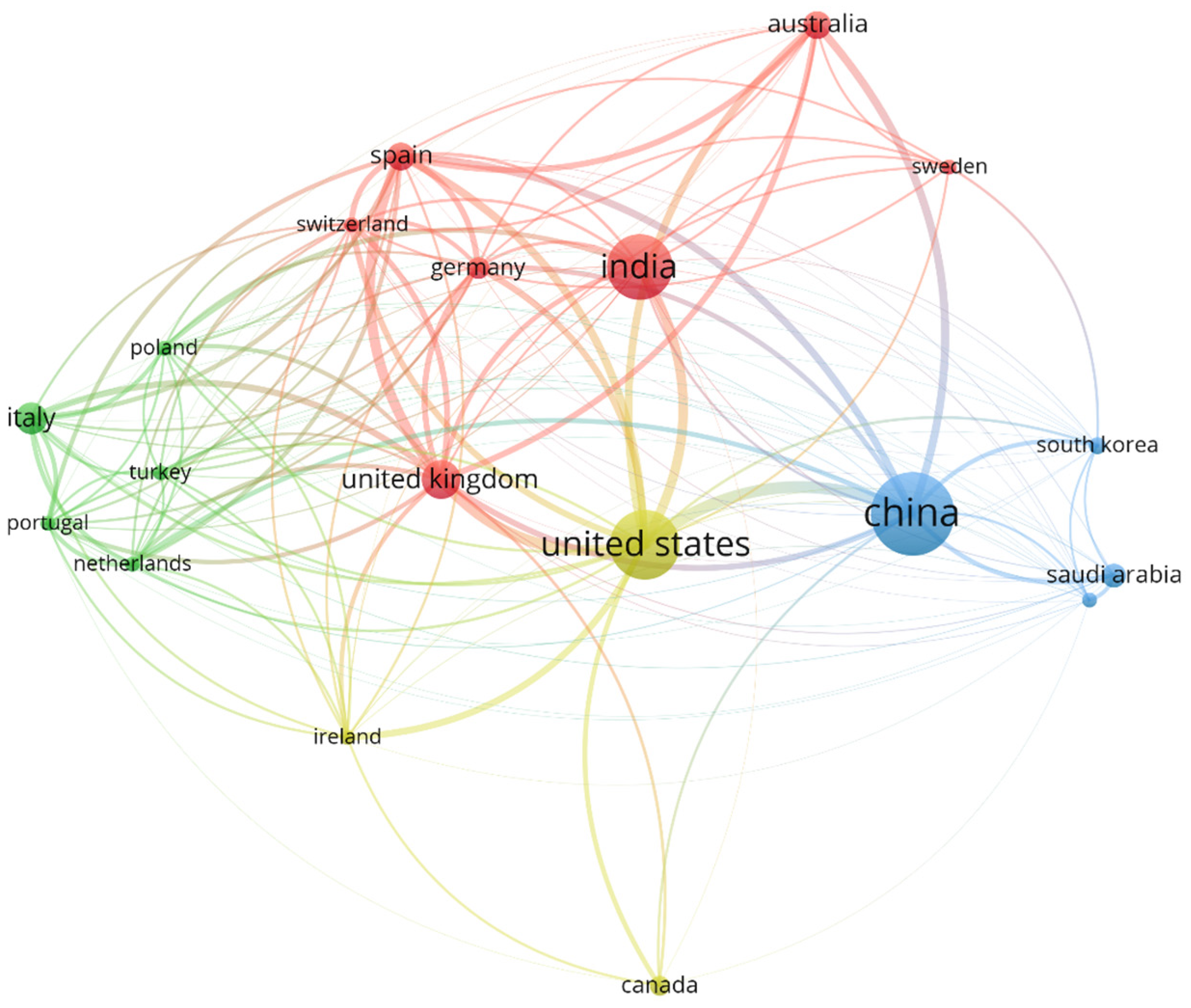
4.3.2. Inclusive Collaboration Networks and Scientific Diplomacy
4.4. Emerging Cross-Cutting Research Lines
- Development of Climate Smart Antimicrobials: The use of AI for the in silico design of new antimicrobials and phage therapies, considering from the outset their efficacy, low propensity to generate resistance, biodegradability, and minimal carbon footprint in production [59].
- Precision Agriculture for AMR Mitigation: The integration of remote sensors, satellite imagery analyzed with AI, and soil molecular profiles to optimize antimicrobial use in livestock and aquaculture, reducing emissions and selective pressure [60].
- Early Warning Systems for Epidemiological–Environmental Risk: The development of platforms that merge seasonal climate models, antimicrobial sales data, and environmental metagenomic surveillance to predict and geolocate outbreaks of resistant infections associated with extreme climate events [61,62].
4.5. Qualitative Synthesis of Key Chemical and Molecular Advances
4.5.1. Chemical Compounds and Families
4.5.2. Analytical Techniques and Molecular Methods
4.5.3. Nanomaterials and Advanced Materials
4.5.4. Integration of Artificial Intelligence with Chemical Data
4.5.5. Research Gaps and Opportunities
4.6. Genotypic Versus Phenotypic Methods for AMR Detection: Complementary Advantages and Application Scenarios
- Metabolic activity-based assays: These detect changes in bacterial metabolism (e.g., ATP production and redox activity) in the presence of antibiotics, enabling susceptibility determination within hours. A notable example is the development of microfluidic platforms that monitor bacterial growth at the single-cell level [59].
- DNA quantification following antibiotic exposure: Methods such as the one described in [64] quantify bacterial DNA via digital PCR after a brief incubation period with antibiotics, enabling phenotypic susceptibility determination in under 30 min.
- Microfluidic platforms and biosensors: Microfluidics has emerged as a key technology for integrating multiple functions (culture, antibiotic exposure, and detection) into compact devices, enabling high-throughput rapid phenotypic assays with minimal sample volumes [65,66]. These systems can be coupled with optical, electrochemical, or spectrometric detection to quantify bacterial response in real time.
5. Materials and Methods
5.1. Data Sources and Search Strategy
5.2. Data Extraction and Analysis
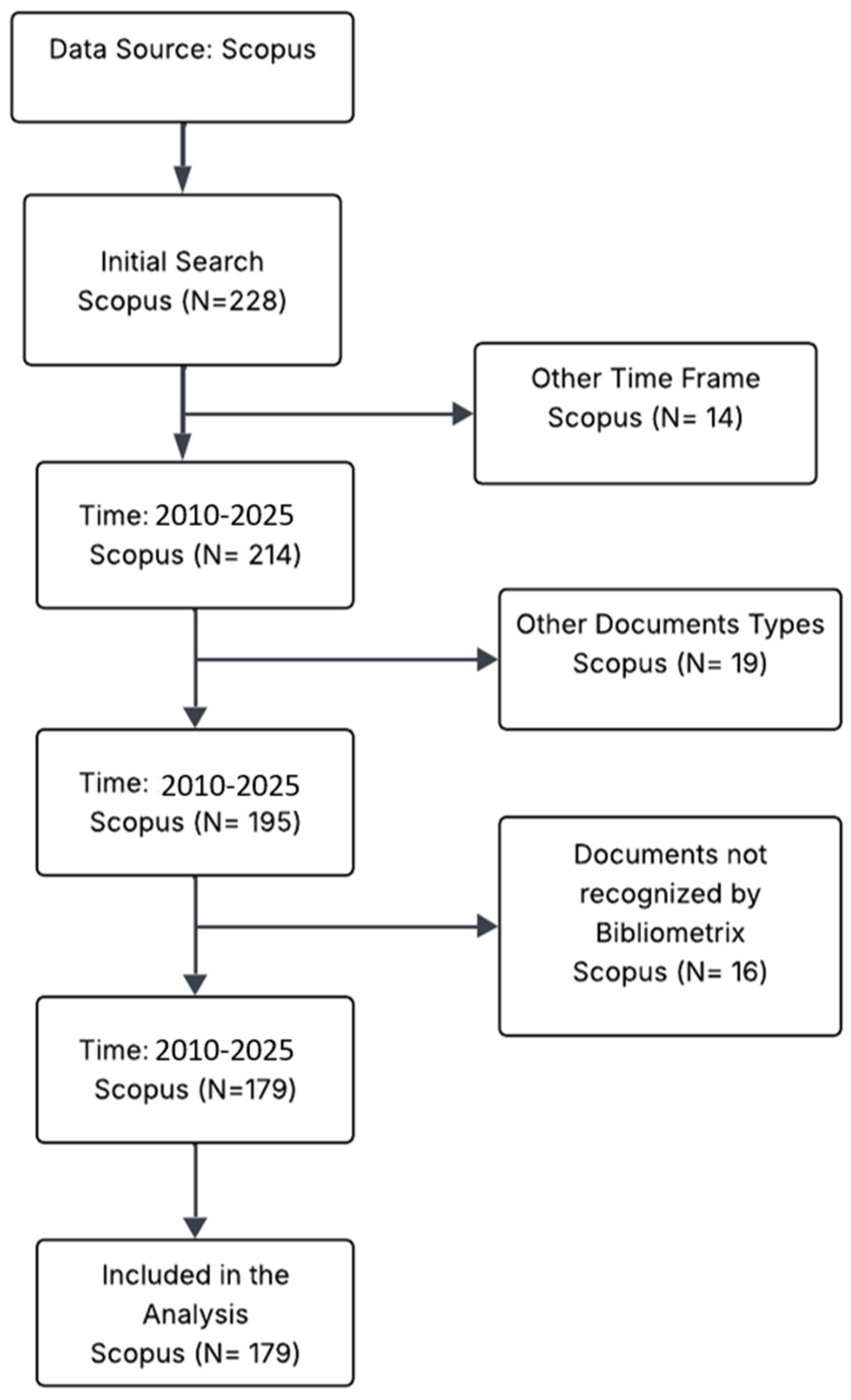
5.3. Selection of Documents for Impact Analysis
5.4. Eligibility Criteria and Quality Filtering
- Explicit chemical characterization: The use of analytical techniques (e.g., LC-MS/MS and GC-MS) for the identification and quantification of specific antimicrobial compounds or their transformation products in environmental matrices.
- Application of advanced molecular methods: The use of metagenomics, metatranscriptomics, or targeted qPCR for the profiling of antibiotic resistance genes (ARGs) and microbial communities.
- Validation of AI methodologies: A clear description of the AI/ML algorithms used, including validation strategies (e.g., cross-validation and independent test sets) for tasks such as resistance prediction or data integration.
- Integration of AI with chemical or molecular data: Studies that demonstrate a concrete fusion of AI techniques with chemical analysis (e.g., QSAR models and spectral analysis) or molecular datasets (e.g., multi-omics integration).
- Reproducibility and data availability: The inclusion of open-source code, data repositories, or detailed experimental protocols that enable replication of the computational or analytical workflow.
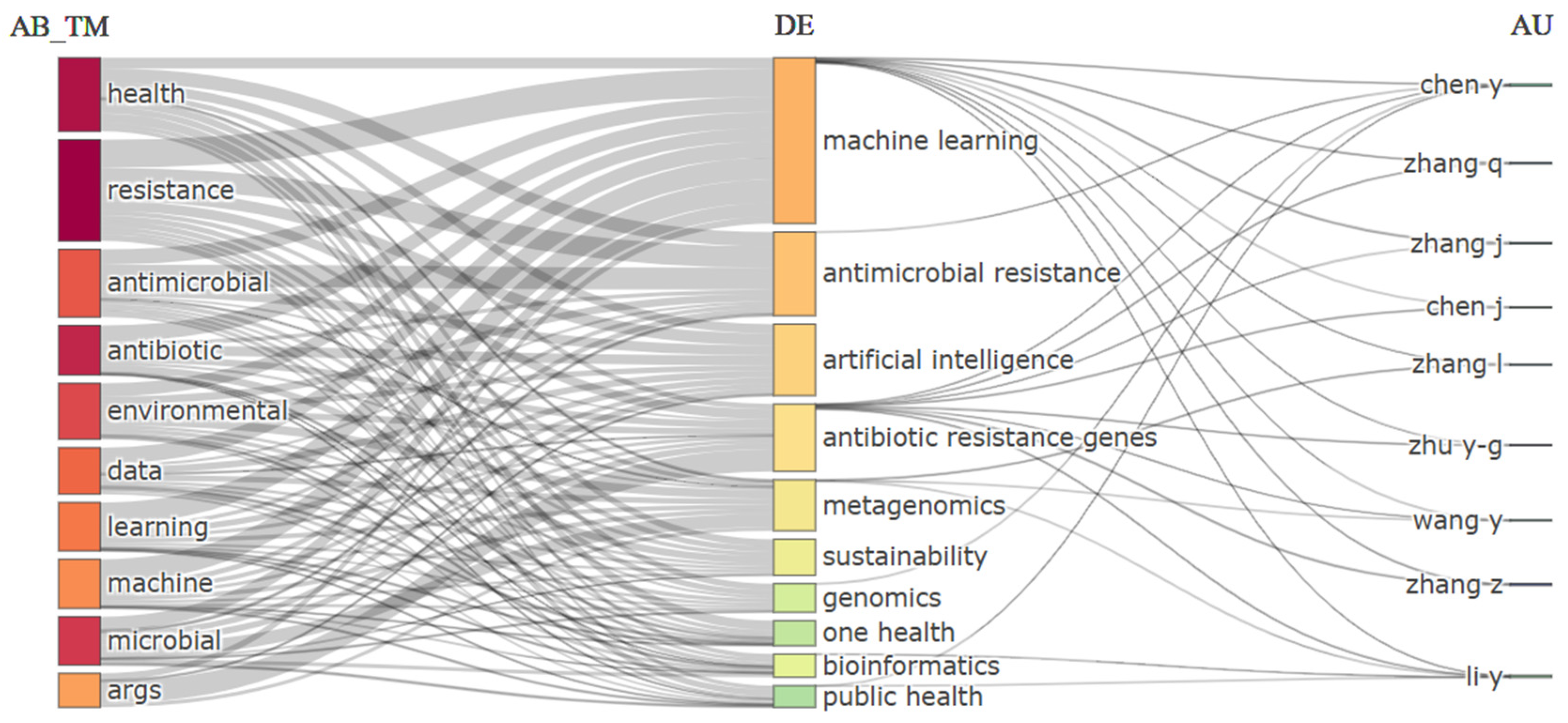
5.5. Construction of the Importance Matrix of Concepts (Figure 3)
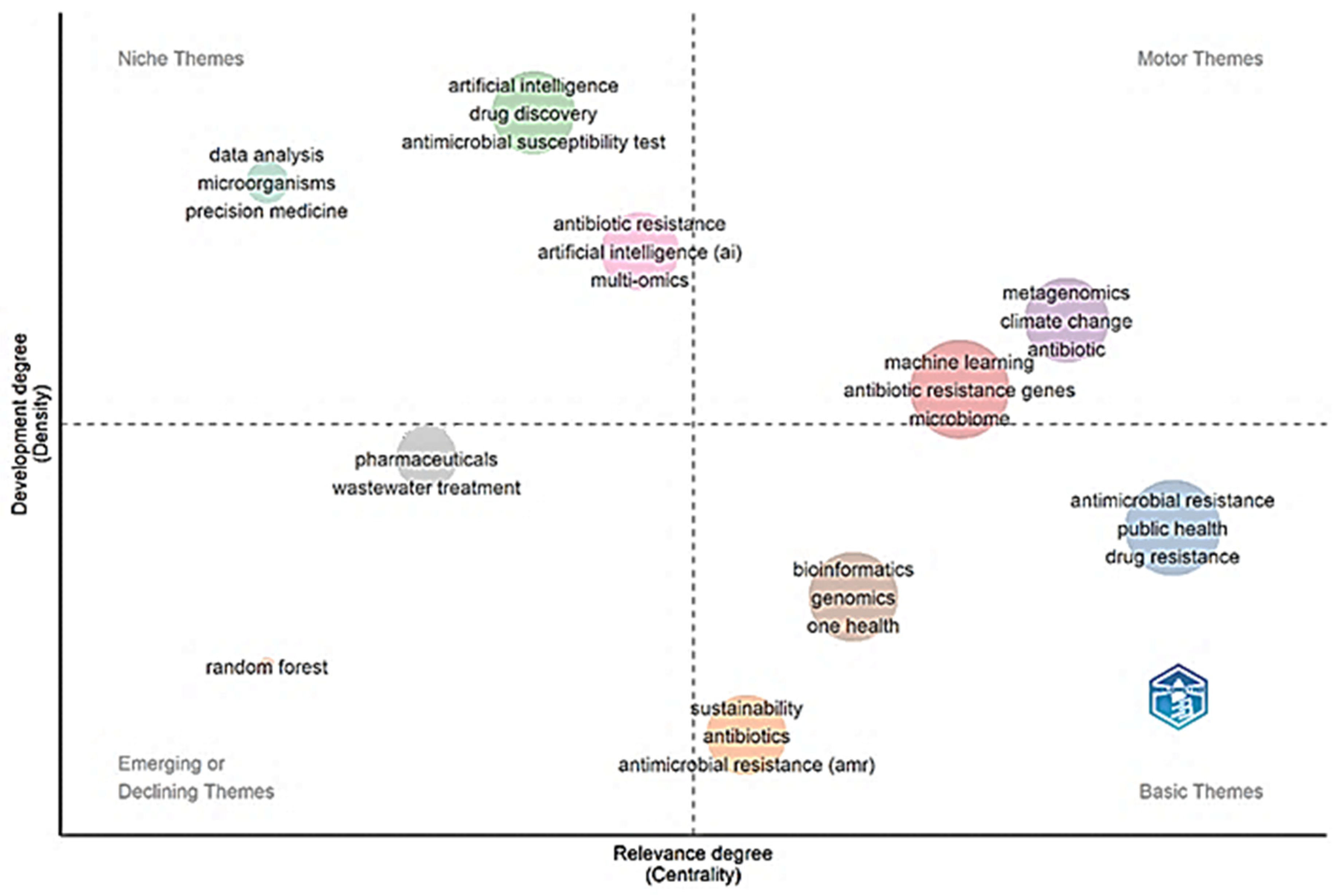
5.6. Construction of the Strategic Map of Topics (Figure 4)
- Centrality (relevance): The sum of the normalized co-occurrence links between keywords in a given cluster and keywords in all other clusters. This metric indicates the extent to which a topic connects to other research areas.
- Density (development): The average strength of the co-occurrence links within a cluster. This metric reflects the internal cohesion and maturity of a research topic.
- Lower right (high centrality and low density): Basic and transversal themes.
- Upper left (low centrality and high density): Niche themes (highly specialized).
- Lower left (low centrality and low density): Emerging or declining themes.
6. Conclusions
Supplementary Materials
Author Contributions
Funding
Institutional Review Board Statement
Informed Consent Statement
Data Availability Statement
Conflicts of Interest
References
- Lawal, O.P.; Opara, I.J.; Ayo-Ige, A.; Eboh, N.A.; Cos-Ibe, U.; Forson, K.A.A.M.; Mensah, E.K.; Olaitan, O.F.; Nii-Okai, E.; Forson, K.; et al. Artificial Intelligence-Integrated Biosensors for Antimicrobial Resistance Detection and Surveillance: A Review and Future Perspectives for Global Biosecurity. Cureus 2025, 17, e98098. [Google Scholar] [CrossRef]
- Taha, B.A.; Ahmed, N.M.; Talreja, R.K.; Haider, A.J.; Al Mashhadany, Y.; Al-Jubouri, Q.; Huddin, A.B.; Mokhtar, M.H.H.; Rustagi, S.; Arsad, N.; et al. Synergizing nanomaterials and artificial intelligence in advanced optical biosensors for precision antimicrobial resistance diagnosis. ACS Synth. Biol. 2024, 13, 1600–1620. [Google Scholar] [CrossRef] [PubMed]
- Sharma, P. Designing tomorrow’s antibiotics: Cutting-edge strategies and technologies. In Bacterial Enzymes as Targets for Drug Discovery; Academic Press: Cambridge, MA, USA, 2025; pp. 171–185. [Google Scholar]
- Alhassan, M.Y.; Ahmad, A.A. Antimicrobial resistance in a changing climate: A one health approach for adaptation and mitigation. Bull. Natl. Res. Cent. 2025, 49, 26. [Google Scholar] [CrossRef]
- Duan, C.; Cao, H.; Zhang, L.H.; Xu, Z. Harnessing the CRISPR-Cas systems to combat antimicrobial resistance. Front. Microbiol. 2021, 12, 716064. [Google Scholar] [CrossRef]
- Mohammed, A.M.; Oleiwi, J.K.; Osman, A.F.; Adam, T.; Betar, B.O.; Gopinath, S.C.; Ihmedee, F.H. Enhancing antimicrobial resistance strategies: Leveraging artificial intelligence for improved outcomes. S. Afr. J. Chem. Eng. 2025, 51, 272–286. [Google Scholar] [CrossRef]
- Xavier, S.P. An urgent call to combat antimicrobial resistance in Sub-Saharan Africa through integrated and innovative solutions. Discov. Public Health 2025, 22, 673. [Google Scholar] [CrossRef]
- Patra, M.; Dubey, S.K. Antimicrobial resistance transmission in environmental matrices: Current prospects and future directions. Rev. Environ. Contam. Toxicol. 2025, 263, 20. [Google Scholar] [CrossRef]
- Sen, D.; Mukhopadhyay, P. Antimicrobial resistance (AMR) management using CRISPR-Cas based genome editing. Gene Genome Ed. 2024, 7, 100031. [Google Scholar] [CrossRef]
- Vitale, M. Antibiotic Resistance: Do We Need Only Cutting-Edge Methods, or Can New Visions Such as One Health Be More Useful for Learning from Nature? Antibiotics 2023, 12, 1694. [Google Scholar] [CrossRef]
- Getahun, Y.A.; Ali, D.A.; Taye, B.W.; Alemayehu, Y.A. Multidrug-resistant microbial therapy using antimicrobial peptides and the CRISPR/Cas9 system. Vet. Med. Res. Rep. 2022, 13, 173–190. [Google Scholar] [CrossRef]
- Gupta, Y.D.; Bhandary, S. Artificial intelligence for understanding mechanisms of antimicrobial resistance and antimicrobial discovery: A new age model for translational research. Artif. Intell. Mach. Learn. Drug Des. Dev. 2024, 117–156. [Google Scholar] [CrossRef]
- Islam, S.I.; Ahammad, F.; Mohammed, H. Cutting-edge technologies for detecting and controlling fish diseases: Current status, outlook, and challenges. J. World Aquac. Soc. 2024, 55, e13051. [Google Scholar] [CrossRef]
- Nayak, D.S.; Pati, A.; Panigrahi, A.; Moharana, B.; Rath, A.; Sahoo, S.K.; Swarnkar, T. Artificial intelligence in battle against antimicrobial resistance: Opportunities and challenges. Int. J. Recent Innov. Trends Comput. Commun. 2023, 11, 427–437. [Google Scholar] [CrossRef]
- Ahlawat, U.; Naruka, A.; Changdeo, W.B.; Rehsawla, R.; Sansanwal, R.; Mishra, R.; Kiran; Singh, V.K. A review of cutting-edge Biotechnological solutions for next-generation farming. J. Exp. Agric. Int. 2024, 46, 1187–1204. [Google Scholar] [CrossRef]
- Rana, S. Integrated Approaches to Infectious Disease Control: Antimicrobial Resistance, Enzyme Technologies, and Nanomedicine Applications. Biosens. Nanotheranostics 2022, 1, 1–10. [Google Scholar]
- Asad, M.; Ahmed, I.A.; Zafar, F.; Imran, A.; Khan, M.A.; Akhtar, N.; Athar, M.; Shafiq, Z. Machine Learning Optimized Synthesis of Ag/Nitrodopamine-MWCNT Hybrid for Durable and High-Performance OER Catalysis. Electrochim. Acta 2025, 541, 147398. [Google Scholar] [CrossRef]
- Pandey, R.P.; Chang, C.M.; Raj, V.S. (Eds.) Artificial Intelligence in Managing Antimicrobial Resistance; CRC Press: Boca Raton, FL, USA, 2025. [Google Scholar]
- Kumari, R.; Saraogi, I. Navigating Antibiotic Resistance in GAMR-Negative Bacteria: Current Challenges and Emerging Therapeutic Strategies. Chemphyschem 2025, 26, e202401057. [Google Scholar] [CrossRef]
- Susilawati, A.; Al-Obaidi, A.S.M.; Abduh, A.; Irwansyah, F.S.; Nandiyanto, A.B.D. How to do research methodology: From literature review, bibliometric, step-by-step research stages, to practical examples in science and engineering education. Indones. J. Sci. Technol. 2025, 10, 1–40. [Google Scholar] [CrossRef]
- Bhattacharya, R.; Bose, D.; Siddique, K.R.; Rodriguez, R.V.; Ray, A. Artificial intelligence for sustainable solutions in combating antimicrobial resistance through data driven health innovations. Discov. Public Health 2026, 23, 10. [Google Scholar] [CrossRef]
- Howard, A.; Reza, N.; Green, P.L.; Yin, M.; Duffy, E.; Mwandumba, H.C.; Gerada, A.; Hope, W. Artificial intelligence and infectious diseases: Tackling antimicrobial resistance, from personalised care to antibiotic discovery. Lancet Infect. Dis. 2026, 26, e181–e192. [Google Scholar] [CrossRef] [PubMed]
- AMRos Cordeiro, E.; Lermen, F.H.; Mello, C.M.; Ferraris, A.; Valaskova, K. Knowledge management in small and medium enterprises: A systematic literature review, bibliometric analysis, and research agenda. J. Knowl. Manag. 2024, 28, 590–612. [Google Scholar] [CrossRef]
- Vågsholm, I.; Arzoomand, N.S.; Boqvist, S. Food security, safety, and sustainability—Getting the trade-offs right. Front. Sustain. Food Syst. 2020, 4, 487217. [Google Scholar] [CrossRef]
- Zhang, Q.; Zhang, Z.; Lu, T.; Yu, Y.; Penuelas, J.; Zhu, Y.G.; Qian, H. Gammaproteobacteria, a core taxon in the guts of soil fauna, are potential responders to environmental concentrations of soil pollutants. Microbiome 2021, 9, 196. [Google Scholar] [CrossRef]
- Arango-Argoty, G.A.; Dai, D.; Pruden, A.; Vikesland, P.; Heath, L.S.; Zhang, L. NanoARG: A web service for detecting and contextualizing antimicrobial resistance genes from nanopore-derived metagenomes. Microbiome 2019, 7, 88. [Google Scholar] [CrossRef]
- Chen, H.; Bai, X.; Li, Y.; Jing, L.; Chen, R.; Teng, Y. Source identification of antibiotic resistance genes in a peri-urban river using novel crAssphage marker genes and metagenomic signatures. Water Res. 2019, 167, 115098. [Google Scholar] [CrossRef]
- Gupta, S.; Aga, D.; Pruden, A.; Zhang, L.; Vikesland, P. Data analytics for environmental science and engineering research. Environ. Sci. Technol. 2021, 55, 10895–10907. [Google Scholar] [CrossRef]
- Decouttere, C.; De Boeck, K.; Vandaele, N. Advancing sustainable development goals through immunization: A literature review. Glob. Health 2021, 17, 95. [Google Scholar] [CrossRef]
- Moreno-Indias, I.; Lahti, L.; Nedyalkova, M.; Elbere, I.; Roshchupkin, G.; Adilovic, M.; Aydemir, O.; Bakir-Gungor, B.; Pau, E.C.-D.S.; Claesson, M.J.; et al. Statistical and machine learning techniques in human microbiome studies: Contemporary challenges and solutions. Front. Microbiol. 2021, 12, 635781. [Google Scholar] [CrossRef] [PubMed]
- Liu, Z.T.; Ma, R.A.; Zhu, D.; Konstantinidis, K.T.; Zhu, Y.G.; Zhang, S.Y. Organic fertilization co-selects genetically linked antibiotic and metal (loid) resistance genes in global soil microbiome. Nat. Commun. 2024, 15, 5168. [Google Scholar] [CrossRef]
- Buelow, E.; Rico, A.; Gaschet, M.; Lourenço, J.; Kennedy, S.P.; Wiest, L.; Ploy, M.-C.; Dagot, C. Hospital discharges in urban sanitation systems: Long-term monitoring of wastewater resistome and microbiota in relationship to their eco-exposome. Water Res. X 2020, 7, 100045. [Google Scholar] [CrossRef]
- Mahfuz, S.; Mun, H.S.; Dilawar, M.A.; Yang, C.J. Applications of smart technology as a sustainable strategy in modern swine farming. Sustainability 2022, 14, 2607. [Google Scholar] [CrossRef]
- Olatunji, A.O.; Olaboye, J.A.; Maha, C.C.; Kolawole, T.O.; Abdul, S. Next-Generation strategies to combat antimicrobial resistance: Integrating genomics, CRISPR, and novel therapeutics for effective treatment. Eng. Sci. Technol. J. 2024, 5, 2284–2303. [Google Scholar] [CrossRef]
- Jiang, J.; Cienfuegos-Gallet, A.V.; Long, T.; Peirano, G.; Chu, T.; Pitout, J.D.; Kreiswirth, B.N.; Chen, L. Intricate interplay of CRISPR-Cas systems, anti-CRISPR proteins, and antimicrobial resistance genes in a globally successful multi-drug resistant Klebsiella pneumoniae clone. Genome Med. 2025, 17, 9. [Google Scholar] [CrossRef] [PubMed]
- Wan, F.; Draz, M.S.; Gu, M.; Yu, W.; Ruan, Z.; Luo, Q. Novel strategy to combat antibiotic resistance: A sight into the combination of CRISPR/Cas9 and nanoparticles. Pharmaceutics 2021, 13, 352. [Google Scholar] [CrossRef] [PubMed]
- Cunha-Ferreira, I.C.; Vizzotto, C.S.; Peixoto, J.; Krüger, R.H. Antibiotic Resistance Crisis: From Bacterial Bioprospecting to Artificial Intelligence. Environ. Microbiol. Rep. 2025, 17, e70267. [Google Scholar] [CrossRef] [PubMed]
- Wang, Z.; Zhu, G.; Li, S. Mapping knowledge landscapes and emerging trends in artificial intelligence for antimicrobial resistance: Bibliometric and visualization analysis. Front. Med. 2025, 12, 1492709. [Google Scholar] [CrossRef]
- Karnwal, A.; Jassim, A.Y.; Mohammed, A.A.; Al-Tawaha, A.R.M.S.; Selvaraj, M.; Malik, T. Addressing the global challenge of bacterial drug resistance: Insights, strategies, and future directions. Front. Microbiol. 2025, 16, 1517772. [Google Scholar] [CrossRef]
- Oladipo, E.K.; Adeyemo, S.F.; Oluwasanya, G.J.; Adarola, E.O.; Akintola, S.B.; Afolabi, V.O.; Ajagbe, J.D.; Ojo, O.H.; Kolapo, E.P.; Onyeaka, H.; et al. Novel antibacterial agents and emerging therapies in the fight against multidrug-resistant Acinetobacter baumannii. Microb. Pathog. 2025, 200, 107361. [Google Scholar] [CrossRef]
- Guo, J.; Huang, Z.; Wang, Q.; Wang, M.; Ming, Y.; Chen, W.; Huang, Y.; Tang, Z.; Huang, M.; Jia, B.; et al. Opportunities and challenges of bacterial extracellular vesicles in regenerative medicine. J. Nanobiotechnol. 2025, 23, 4. [Google Scholar] [CrossRef]
- Shen, M.; Wang, Q.; Luo, Q.; Zhao, J.; Shen, F. Recent advances in phenotypic antimicrobial susceptibility testing enabled by microfluidic technologies. Sens. Diagn. 2026, 5, 26–41. [Google Scholar] [CrossRef]
- Yan, W.; Bai, R.; Zhang, Q.; Jiang, Y.; Chen, G.; Zhang, Y.; Wu, Y.; Guo, X.; Xiao, Y.; Zhao, F. Metagenomic insights into ecological risk of antibiotic resistome and mobilome in riverine plastisphere under impact of urbanization. Environ. Int. 2024, 190, 108946. [Google Scholar] [CrossRef]
- Chen, C.; Li, S.L.; So, A.D.; Xu, Y.Y.; Guo, Z.F.; Wang, X.; Graham, D.W.; Zhu, Y.G. Using large language models to assist antimicrobial resistance policy development: Integrating the environment into health protection planning. Environ. Sci. Technol. 2025, 59, 1243–1252. [Google Scholar] [CrossRef] [PubMed]
- Alexa, M.; Kovacevic, A.; Pimenta, M.; Mabandza, D.B.; Ahmed, I.; Breurec, S.; Dagot, C.; Huynh, B.-T.; Opatowski, L. Impacts of wastewater treatment and the exposome on antibiotic resistance gene dynamics: Insights from Guadeloupe, a French Caribbean Island. Water Res. X 2026, 30, 100506. [Google Scholar] [CrossRef]
- Wu, R.; Veličković, M.; Burnum-Johnson, K.E. From single cell to spatial multi-omics: Unveiling molecular mechanisms in dynamic and heterogeneous systems. Curr. Opin. Biotechnol. 2024, 89, 103174. [Google Scholar] [CrossRef]
- Hou, Q.; Xu, X.; Sun, Z.; Wang, J.; Singh, V.P. Physics informed neural network for forward and inverse multispecies contaminant transport with variable parameters. J. Hydrol. 2025, 655, 132977. [Google Scholar] [CrossRef]
- Coronado-Contreras, S.A.; Ibarra-Manzanares, Z.G.; Casas-Rodríguez, A.D.; Pastrana-Pastrana, Á.J.; Sepúlveda, L.; Rodríguez-Herrera, R. Bio-Circular Economy and Digitalization: Pathways for Biomass Valorization and Sustainable Biorefineries. Biomass 2025, 6, 1. [Google Scholar] [CrossRef]
- Nneoma, U.C.; Chukwudi, O.F.; Nnenna, U.J.; Paul-Chima, U.O. Hybrid biofactories: Integrating microalgae and engineered microbiomes for enhanced biofuel production in circular carbon systems. Front. Energy Res. 2025, 13, 1654079. [Google Scholar] [CrossRef]
- Behera, B.; Singh, R.; Sharma, K.; Rai, A.; Singh, S.; Balan, B. A comprehensive review of advanced strategies to combat antimicrobial resistance. Arch. Microbiol. 2025, 207, 281. [Google Scholar] [CrossRef]
- Angeles Flores, G.; Cusumano, G.; Venanzoni, R.; Angelini, P. Advancements in Antibacterial Therapy: Feature Papers. Microorganisms 2025, 13, 557. [Google Scholar] [CrossRef]
- Chambial, P.; Thakur, N.; Bhukya, P.L.; Subbaiyan, A.; Kumar, U. Frontiers in superbug management: Innovating approaches to combat antimicrobial resistance. Arch. Microbiol. 2025, 207, 60. [Google Scholar] [CrossRef] [PubMed]
- Abidharini, J.D.; Manoj, M.; Arthi, G.; AMRya, R.; Kumar, A.S.; Robert, A.A.; Antony Prabhu, J.P.; Anand, A.V. AI Technologies and Molecular Diagnostics for Managing Infectious Diseases. In AI and Precision Medicine in Infectious Disease Management; CRC Press: Boca Raton, FL, USA, 2025; pp. 118–136. [Google Scholar]
- Singh, S.; Kumar, M.; Sarma, D.K.; Kumawat, M.; Verma, V.; Kriti, M.; Tiwari, R. Advancing AMR Surveillance: Confluence of One Health and Big Data Integration: S. Singh, et al. EcoHealth 2025, 22, 403–414. [Google Scholar] [CrossRef] [PubMed]
- Ortiz-Gómez, V.; Maldonado-Hernández, R. Challenges and Opportunities: Interplay between Infectious Disease and Antimicrobial Resistance in Medical Device Surface Applications. ACS Omega 2025, 10, 20968–20983. [Google Scholar] [CrossRef]
- Vashishth, T.K.; Sharma, V.; Sharma, K.K.; Vidyant, S.; Bhardwaj, A. Future Trends and Challenges in Pharmaceutical Microbiology with the Integration of Artificial Intelligence. AI-Powered Adv. Pharmacol. 2025, 315–344. [Google Scholar] [CrossRef]
- Jain, R. Cutting-Edge Developments in Science, Engineering and Technology: A Multidisciplinary Review. Int. J. Cur. Res. Sci. Eng. Tech. 2025, 8, 219–225. [Google Scholar] [CrossRef]
- Syed, M.A.; Ali, S.; Hussain, T. (Eds.) Microbiology in the Era of Artificial Intelligence: Nanotechnology, Quantum, and Next Generation Sequencing; CRC Press: Boca Raton, FL, USA, 2025. [Google Scholar]
- Wu, W.; Cai, G.; Liu, Y.; Suo, Y.; Zhang, B.; Jin, W.; Yu, Y.; Mu, Y. Direct single-cell antimicrobial susceptibility testing of Escherichia coli in urine using a ready-to-use 3D microwell array chip. Lab Chip 2023, 23, 2399–2410. [Google Scholar] [CrossRef]
- Wu, W.; Zhang, B.; Yin, W.; Xia, L.; Suo, Y.; Cai, G.; Liu, Y.; Jin, W.; Zhao, Q.; Mu, Y. Enzymatic antimicrobial susceptibility testing with bacteria identification in 30 min. Anal. Chem. 2023, 95, 16426–16432. [Google Scholar] [CrossRef]
- Wu, W.; Suo, Y.; Zhao, Q.; Cai, G.; Liu, Y.; Jin, W.; Mu, Y.; Zhang, B. Inoculum size-insensitive susceptibility determination of urine sample based on in-situ measurement of inducible enzyme activity after 20 min of antibiotic exposure. Anal. Chim. Acta 2023, 1282, 341858. [Google Scholar] [CrossRef]
- Schoepp, N.G.; Schlappi, T.S.; Curtis, M.S.; Butkovich, S.S.; Miller, S.; Humphries, R.M.; Ismagilov, R.F. Rapid pathogen-specific phenotypic antibiotic susceptibility testing using digital LAMP quantification in clinical samples. Sci. Transl. Med. 2017, 9, eaal3693. [Google Scholar] [CrossRef] [PubMed]
- Marčetić, M.; Samardžić, S.; Ilić, T.; Božić, D.D.; Vidović, B. Phenolic composition, antioxidant, anti-enzymatic, antimicrobial and prebiotic properties of Prunus spinosa L. Fruits Foods 2022, 11, 3289. [Google Scholar] [CrossRef]
- Shelef, O.; Kopp, T.; Tannous, R.; Arutkin, M.; Jospe-Kaufman, M.; Reuveni, S.; Shabat, D.; Fridman, M. Enzymatic activity profiling using an ultrasensitive array of chemiluminescent probes for bacterial classification and characterization. J. Am. Chem. Soc. 2024, 146, 5263–5273. [Google Scholar] [CrossRef]
- Giorgi, V.; Botto, E.; Fontana, C.; Della Mea, L.; Vaz, S., Jr.; Menéndez, P.; Rodríguez, P. Enzymatic production of lauroyl and stearoyl monoesters of D-xylose, L-arabinose, and D-glucose as potential lignocellulosic-derived products, and their evaluation as antimicrobial agents. Catalysts 2022, 12, 610. [Google Scholar] [CrossRef]
- Naveed, M.; Wang, Y.; Yin, X.; Chan, M.W.H.; Aslam, S.; Wang, F.; Xu, B.; Ullah, A. Purification, characterization and bactericidal action of lysozyme, isolated from Bacillus subtillis BSN314: A disintegrating effect of lysozyme on Gram-positive and Gram-negative bacteria. Molecules 2023, 28, 1058. [Google Scholar] [CrossRef]
- Nazir, A.; Nazir, A.; Zuhair, V.; Aman, S.; Sadiq, S.U.R.; Hasan, A.H.; Tariq, M.; Rehman, L.U.; Mustapha, M.J.; Bulimbe, D.B. The global challenge of antimicrobial resistance: Mechanisms, case studies, and mitigation approaches. Health Sci. Rep. 2025, 8, e71077. [Google Scholar] [CrossRef] [PubMed]
- Azeem, K.; Fatima, S.; Ali, A.; Ubaid, A.; Husain, F.M.; Abid, M. Biochemistry of bacterial biofilm: Insights into antibiotic resistance mechanisms and therapeutic intervention. Life 2025, 15, 49. [Google Scholar] [CrossRef] [PubMed]



| Title | Year | Cited By | Source Title | Authors | Document Type | Abstract | |
|---|---|---|---|---|---|---|---|
| 1 | Food Security, Safety, and Sustainability—Getting the Trade-Offs Right [24]. | 2020 | 275 | Frontiers in Sustainable Food Systems | Vågholm, L. et al. | Review | The United Nations’ Sustainable Development Goals include eradicating hunger and ensuring food security for an estimated 10 billion people by 2050 |
| 2 | Gammaproteobacteria, a core taxon in the guts of soil fauna, are potential responders to environmental concentrations of soil pollutants [25]. | 2021 | 95 | Microbiome | Zhang, Q. et al. | Article | Ubiquitous members of the gut microbiota are acquired from the environment and contribute to host health, and the gut microbiota of soil invertebrates is gradually assembled |
| 3 | NanoARG: A web service for detecting and contextualizing antimicrobial resistance genes from nanopore-derived metagenomes [26]. | 2019 | 92 | Microbiome | Arango-Argoty, G.A.; Dai, D. | Article | Direct and indirect selection pressures imposed by antibiotics as selective agents and horizontal gene transfer are fundamental drivers of evolution |
| 4 | Source identification of antibiotic resistance genes in a peri-urban river using novel crAssphage marker genes and metagenomic signatures [27]. | 2019 | 88 | Water Research | Chen, H.; Bai, X.; Li, Y.; Jin, M. | Article | Antimicrobial resistance is a growing public health concern, and the environment is regarded as an important reservoir for the dissemination of antibiotic resistance genes |
| 5 | Data Analytics for Environmental Science and Engineering Research [28]. | 2021 | 84 | Environmental Science and Technology | Gupta, S.; Aga, D.; Pruden, A. | Article | The advent of new data acquisition handling techniques has opened the door to alternative comprehensive approaches to environmental monitoring, thus improving our understanding |
| 6 | Advancing sustainable development goals through immunization: a literature review [29]. | 2021 | 84 | Globalization and Health | Decouttere, C.; De Boeck, K. | Article | Immunization directly impacts health (SDG3) and contributes to achieving Sustainable Development Goals (SDGs) 14 and 17 |
| 7 | Statistical and machine learning techniques in human microbiome studies: contemporary challenges and solutions [30]. | 2021 | 82 | Frontiers in Microbiology | Moreno-Indias, I.; Lahti, L. | Review | The human microbiome has emerged as a central research topic in human biology and biomedicine, and current microbiome studies have generated high-throughput data |
| 8 | Organic fertilization co-selects genetically linked antibiotic and metal(loid) resistance genes in global soil microbiome [31]. | 2024 | 78 | Nature Communications | Liu, Z.-T.; Ma, A.; Zhu, Y.-G. | Article | Antibiotic resistance genes (ARGs) and metal(loid) resistance genes (MRGs) coexist in organic fertilizer-based agroecosystems |
| 9 | Hospital discharges in urban sanitation systems: Long-term monitoring of wastewater resistome and microbiota in relationship to their eco-exposome [32]. | 2020 | 74 | Water Research X | Buelow, E.; Rico, A.; Gasco, L. | Article | Wastewaters are important sources of the dissemination of antimicrobial resistance (AMR) genes in the environment, and hospital wastewater contains high loads of micro-pollutants |
| 10 | Applications of Smart Technology as a Sustainable Strategy in Modern Swine Farming [33]. | 2022 | 72 | Sustainability (Switzerland) | Mahfuz, S.; Mun, H.-S.; D’Souza, D. | Article | The size of the pork market is increasing globally to meet the demand for animal protein, resulting in larger-sized swine farms |
| Author | ID Scopus | Primary Affiliation | Total Citations | Citations of Most Cited Document | Average Citations per Article | Number of Contributors |
|---|---|---|---|---|---|---|
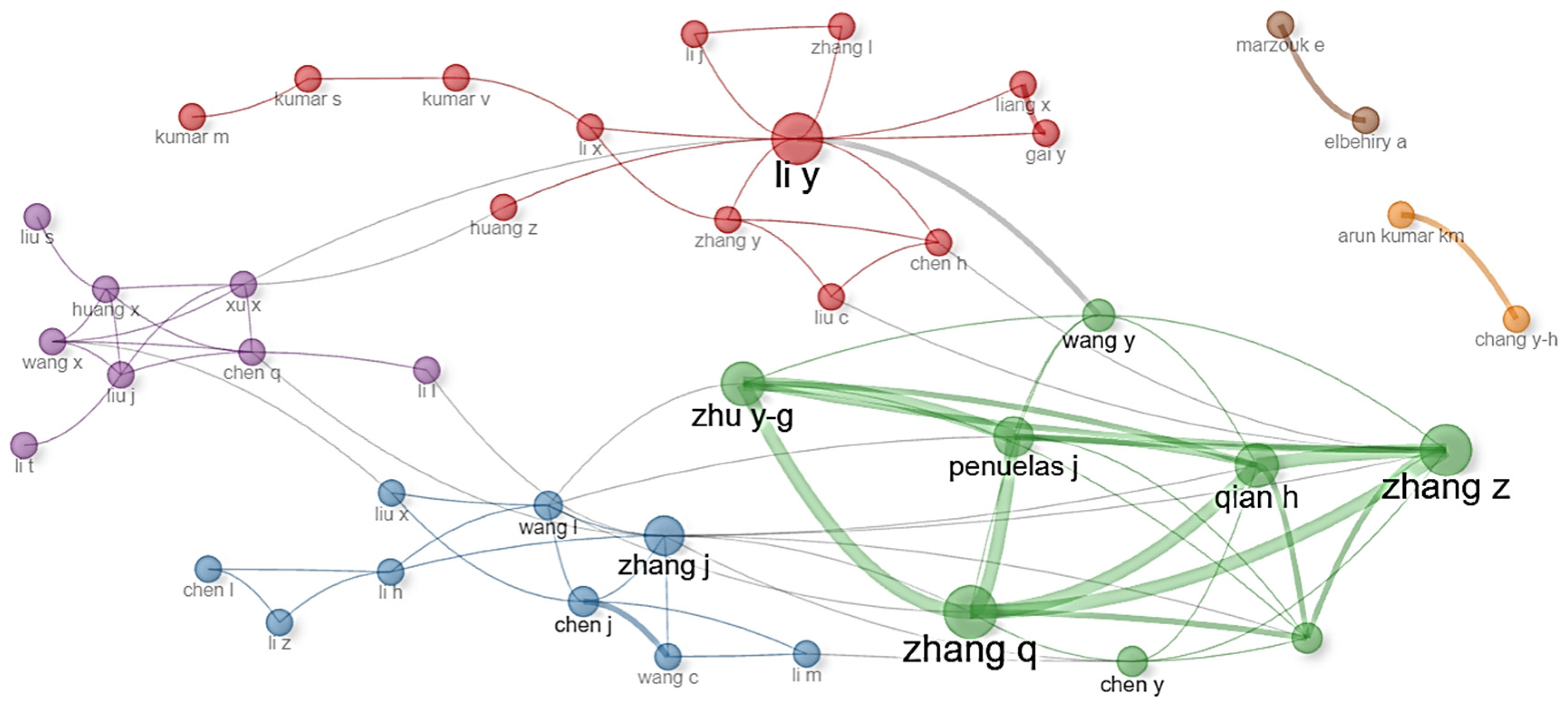
| Zhu, Yongguan | 7406073704 | Institute of Urban Environment, Chinese Academy of Sciences, Beijing, China | 240 | 95 | 60 | 28 |
| Zhang, Qi | 55699339400 | ARC Centre of Excellence in Synthetic Biology, Macquarie University, Sydney, Australia | 185 | 95 | 46.25 | 29 |
| Zhang, Zhenyan | 57194409451 | Centre de Recerca Ecològica i Aplicacions Forestals (CREAF-CERCA), Barcelona, Spain | 172 | 95 | 57.33 | 19 |
| Qian, Haifeng | 35235046800 | Unknown | 172 | 95 | 57.33 | 19 |
| Peñuelas, Josep J. | 7006747772 | Research Center for Eco-Environmental Sciences, Chinese Academy of Sciences, Beijing | 162 | 95 | 54 | 24 |
| Pruden, Amy J. | 57049332700 | Virginia Tech College of Engineering, Blacksburg, VA, United States | 176 | 92 | 88 | 7 |
| Zhang, Liqing | 55709248500 | Virginia Tech College of Engineering, Blacksburg, VA, United States | 176 | 92 | 88 | 7 |
| Vikesland, Peter J. | 6603770862 | Virginia Tech College of Engineering, Blacksburg, VA, United States | 176 | 92 | 88 | 7 |
| Lu, Tao | 57224808283 | Universitat Autònoma de Barcelona, Barcelona, Spain | 118 | 95 | 59 | 12 |
| Zhu, Dong | 57190734423 | Universitat Autònoma de Barcelona, Barcelona, Spain | 91 | 78 | 45.5 | 16 |
| Country | Papers | Total Citations | Average Citations | Affiliations | Funded Papers | Funders | Impact (Citations/Paper) | |
|---|---|---|---|---|---|---|---|---|
| 1 | United States | 67 | 1116 | 16.66 | 67 | 45 | 14 | 16.66 |
| 2 | China | 48 | 651 | 13.56 | 48 | 39 | 5 | 13.56 |
| 3 | India | 33 | 180 | 5.45 | 33 | 15 | 5 | 5.45 |
| 4 | United Kingdom | 26 | 701 | 26.96 | 26 | 18 | 11 | 26.96 |
| 5 | Italy | 12 | 157 | 13.08 | 12 | 4 | 1 | 13.08 |
| 6 | Spain | 10 | 328 | 32.8 | 10 | 8 | 5 | 32.8 |
| 7 | Australia | 10 | 128 | 12.8 | 10 | 7 | 4 | 12.8 |
| 8 | Saudi Arabia | 8 | 93 | 11.62 | 8 | 6 | 1 | 11.62 |
| 9 | Germany | 8 | 172 | 21.5 | 8 | 6 | 5 | 21.5 |
| 10 | Canada | 6 | 120 | 20 | 6 | 5 | 6 | 20 |
| Source | Articles | H-Index | G-Index | M-Index | TC | NP | PY Start | Quartile (JCR 2024) |
|---|---|---|---|---|---|---|---|---|
| Science of the Total Environment | 12 | 9 | 12 | 1.5 | 450 | 12 | 2015 | Q1 |
| Frontiers in Microbiology | 10 | 7 | 10 | 1.0 | 320 | 10 | 2016 | Q1 |
| Antibiotics | 9 | 6 | 9 | 1.2 | 210 | 9 | 2018 | Q2 |
| Environmental Science & Technology | 8 | 7 | 8 | 1.0 | 580 | 8 | 2014 | Q1 |
| Water Research | 7 | 6 | 7 | 0.9 | 390 | 7 | 2013 | Q1 |
| Nature Communications | 5 | 5 | 5 | 0.8 | 620 | 5 | 2017 | Q1 |
| ACS Synthetic Biology | 4 | 4 | 4 | 0.8 | 185 | 4 | 2019 | Q1 |
| Microbiome | 4 | 4 | 4 | 0.6 | 210 | 4 | 2016 | Q1 |
| Journal of Hazardous Materials | 4 | 3 | 4 | 0.5 | 98 | 4 | 2018 | Q1 |
| Chemosphere | 3 | 3 | 3 | 0.4 | 76 | 3 | 2015 | Q2 |
| Aspect | Genotypic Methods | Rapid Phenotypic Methods |
|---|---|---|
| What they detect | Genetic potential for resistance | Functional expressed resistance |
| Main advantage | Identification of resistance mechanisms, molecular epidemiology, surveillance of emerging genes | Direct susceptibility determination, immediate clinical relevance |
| Limitation | Does not inform about expression; may yield false positives/negatives | May require prior culture; less mechanistic information |
| Optimal scenario | Epidemiological surveillance, environmental studies, detection of novel genes | Rapid clinical diagnosis, treatment guidance, point-of-care susceptibility testing |
| Integration with AI | Resistance prediction from genomic data (QSAR models, machine learning) | Image analysis, sensor signal processing, assay condition optimization |
Disclaimer/Publisher’s Note: The statements, opinions and data contained in all publications are solely those of the individual author(s) and contributor(s) and not of MDPI and/or the editor(s). MDPI and/or the editor(s) disclaim responsibility for any injury to people or property resulting from any ideas, methods, instructions or products referred to in the content. |
© 2026 by the authors. Licensee MDPI, Basel, Switzerland. This article is an open access article distributed under the terms and conditions of the Creative Commons Attribution (CC BY) license.
Share and Cite
Rojas-Flores, S.J.; Liza, R.; Nazario-Naveda, R.; Díaz, F.; Delfin-Narciso, D.; Cardenas, M.G.; Cabanillas-Chirinos, L. Mapping the Convergence of Frontier Technologies for Major Environmental Challenges: A Chemical and Molecular Perspective on the Use of AI for Climate Action and Antimicrobial Resistance. Molecules 2026, 31, 1571. https://doi.org/10.3390/molecules31101571
Rojas-Flores SJ, Liza R, Nazario-Naveda R, Díaz F, Delfin-Narciso D, Cardenas MG, Cabanillas-Chirinos L. Mapping the Convergence of Frontier Technologies for Major Environmental Challenges: A Chemical and Molecular Perspective on the Use of AI for Climate Action and Antimicrobial Resistance. Molecules. 2026; 31(10):1571. https://doi.org/10.3390/molecules31101571
Chicago/Turabian StyleRojas-Flores, Segundo Jonathan, Rafael Liza, Renny Nazario-Naveda, Félix Díaz, Daniel Delfin-Narciso, Moisés Gallozzo Cardenas, and Luis Cabanillas-Chirinos. 2026. "Mapping the Convergence of Frontier Technologies for Major Environmental Challenges: A Chemical and Molecular Perspective on the Use of AI for Climate Action and Antimicrobial Resistance" Molecules 31, no. 10: 1571. https://doi.org/10.3390/molecules31101571
APA StyleRojas-Flores, S. J., Liza, R., Nazario-Naveda, R., Díaz, F., Delfin-Narciso, D., Cardenas, M. G., & Cabanillas-Chirinos, L. (2026). Mapping the Convergence of Frontier Technologies for Major Environmental Challenges: A Chemical and Molecular Perspective on the Use of AI for Climate Action and Antimicrobial Resistance. Molecules, 31(10), 1571. https://doi.org/10.3390/molecules31101571