Article

Preliminary Evaluation of Gemini-Surfactant-Based Formulations for Antifungal Seed Treatment in Wheat


1
Institute of Fermentation Technology and Microbiology, Faculty of Biotechnology and Food Sciences, Lodz University of Technology, 90-530 Lodz, Poland
2
Interdisciplinary Doctoral School, Lodz University of Technology, 90-530 Lodz, Poland
3
Department of Bioactive Products, Faculty of Chemistry, Adam Mickiewicz University Poznan, 61-614 Poznan, Poland
*
Authors to whom correspondence should be addressed.
Molecules 2026, 31(10), 1568; https://doi.org/10.3390/molecules31101568

Submission received: 24 March 2026 / Revised: 29 April 2026 / Accepted: 6 May 2026 / Published: 8 May 2026
(This article belongs to the Special Issue Research Progress of Gemini Surfactants)

Abstract

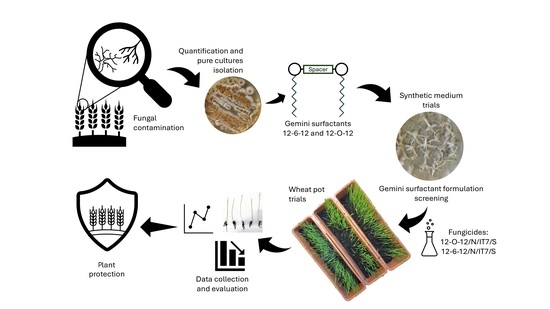
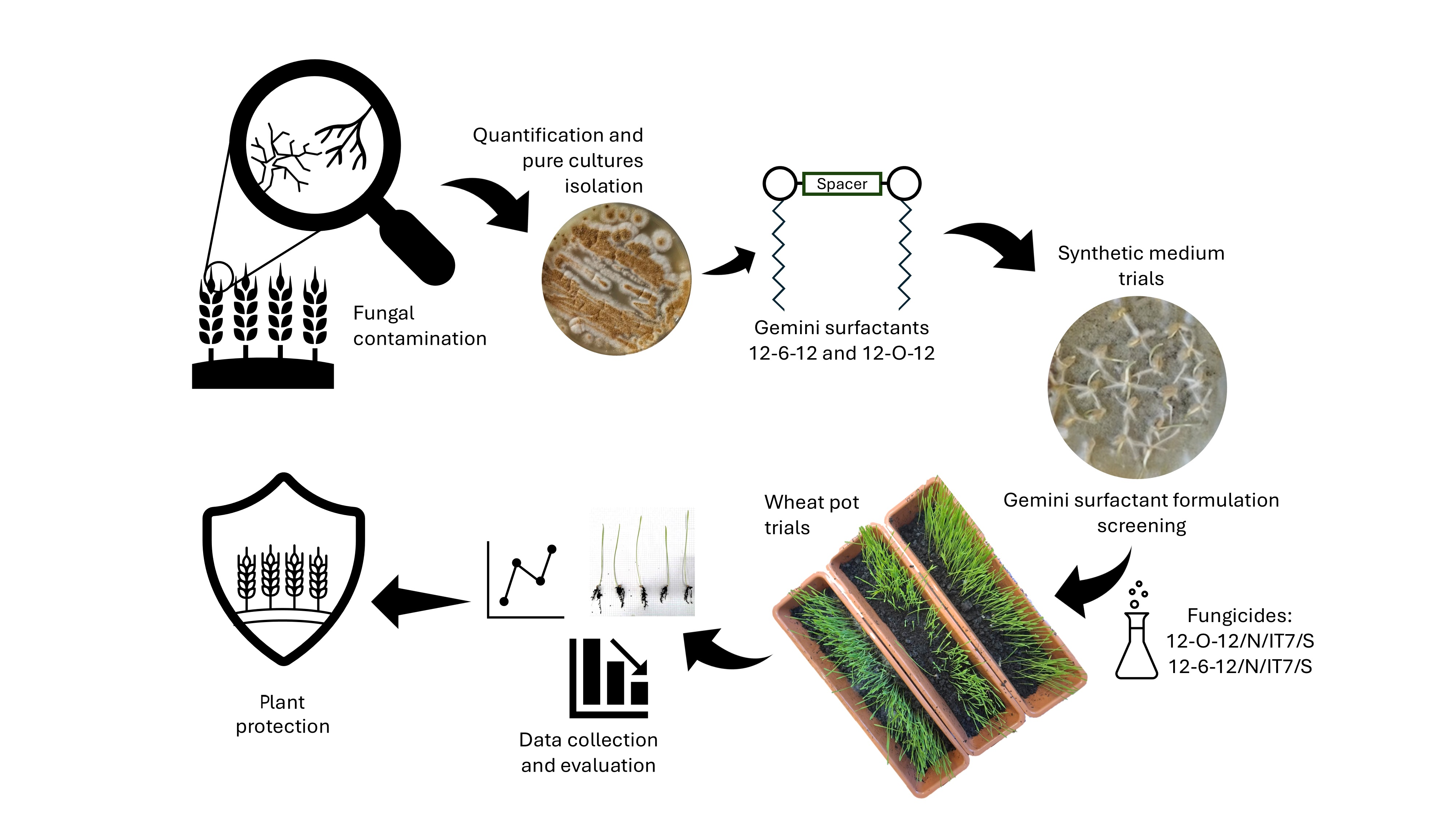
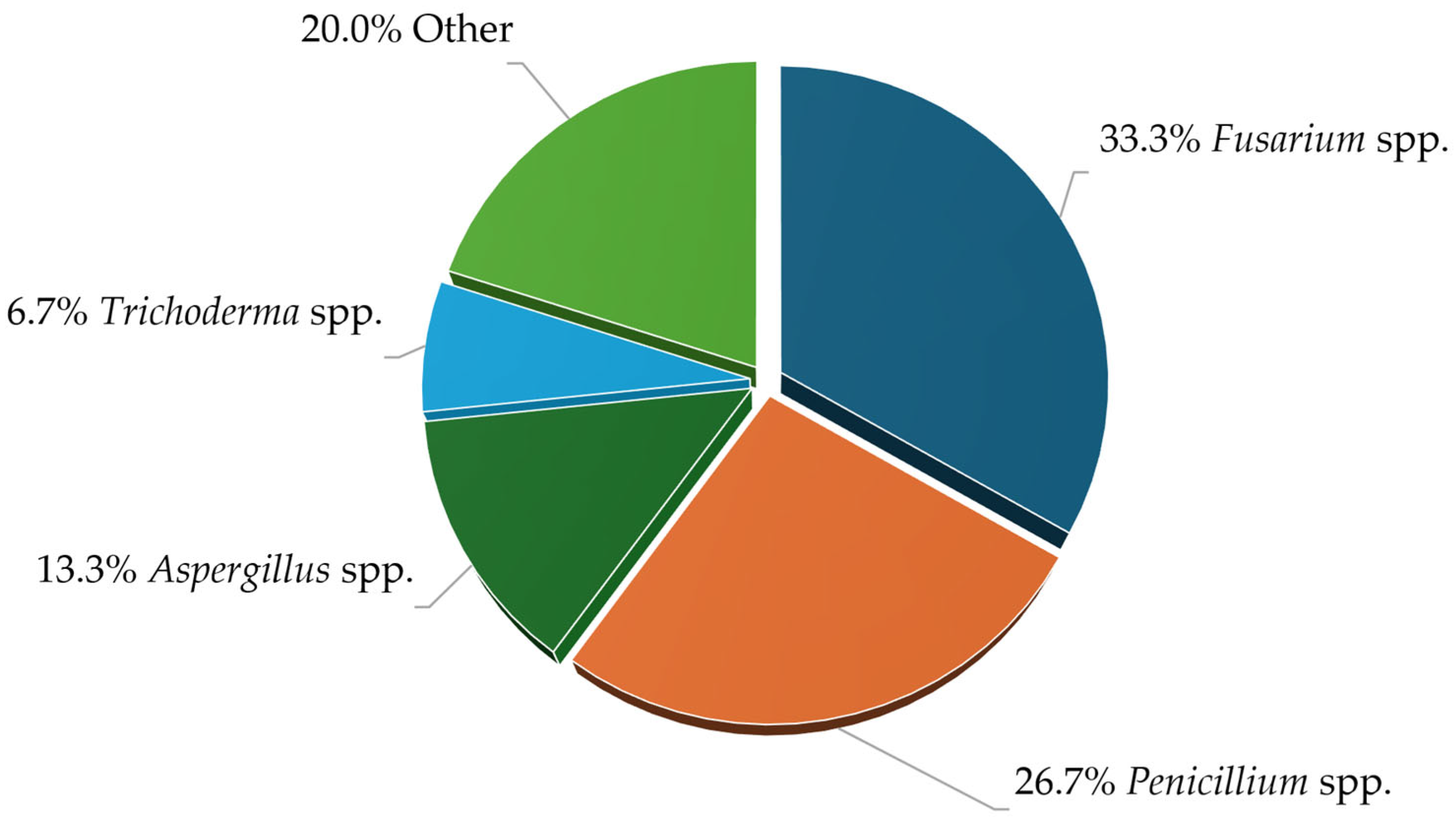
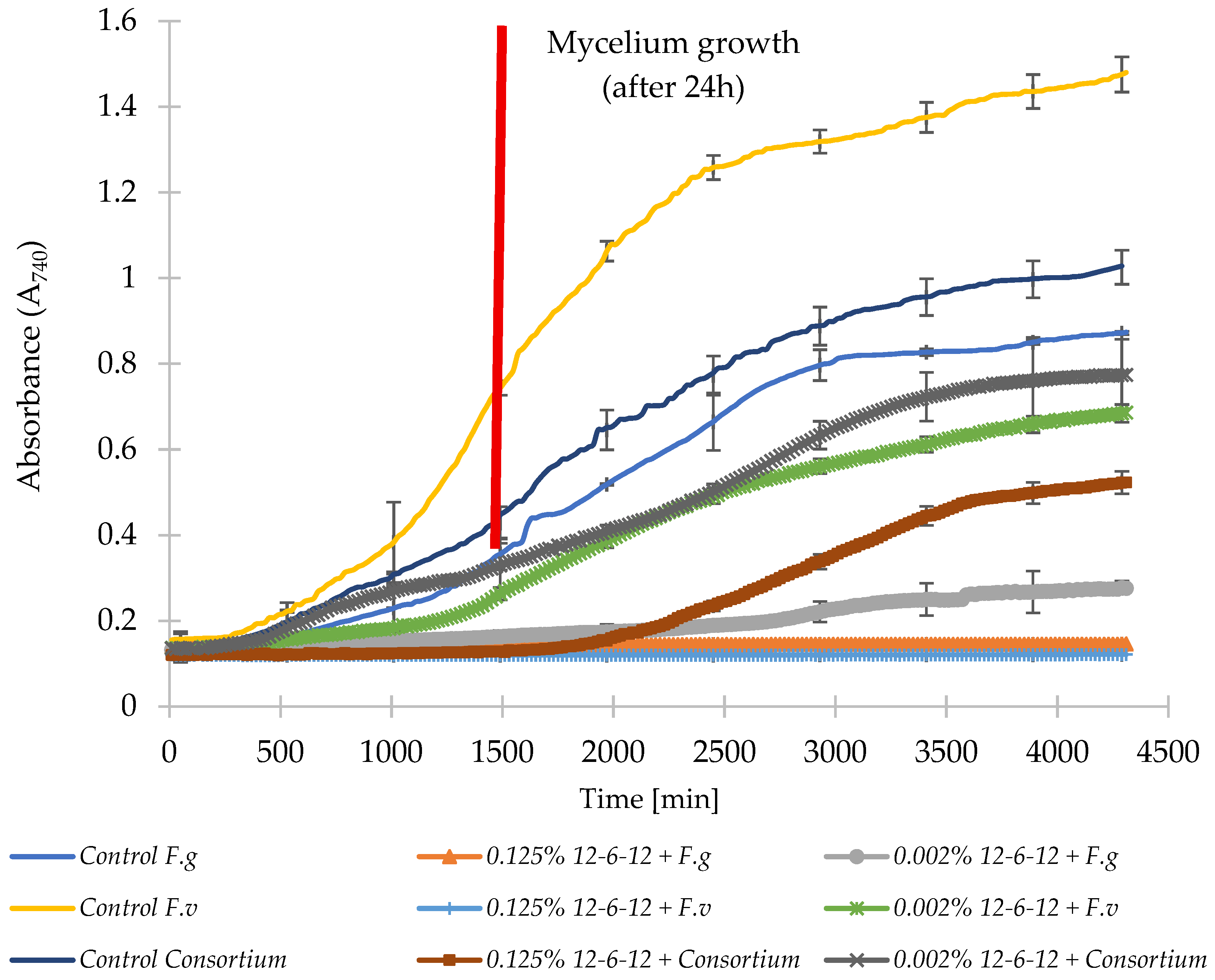
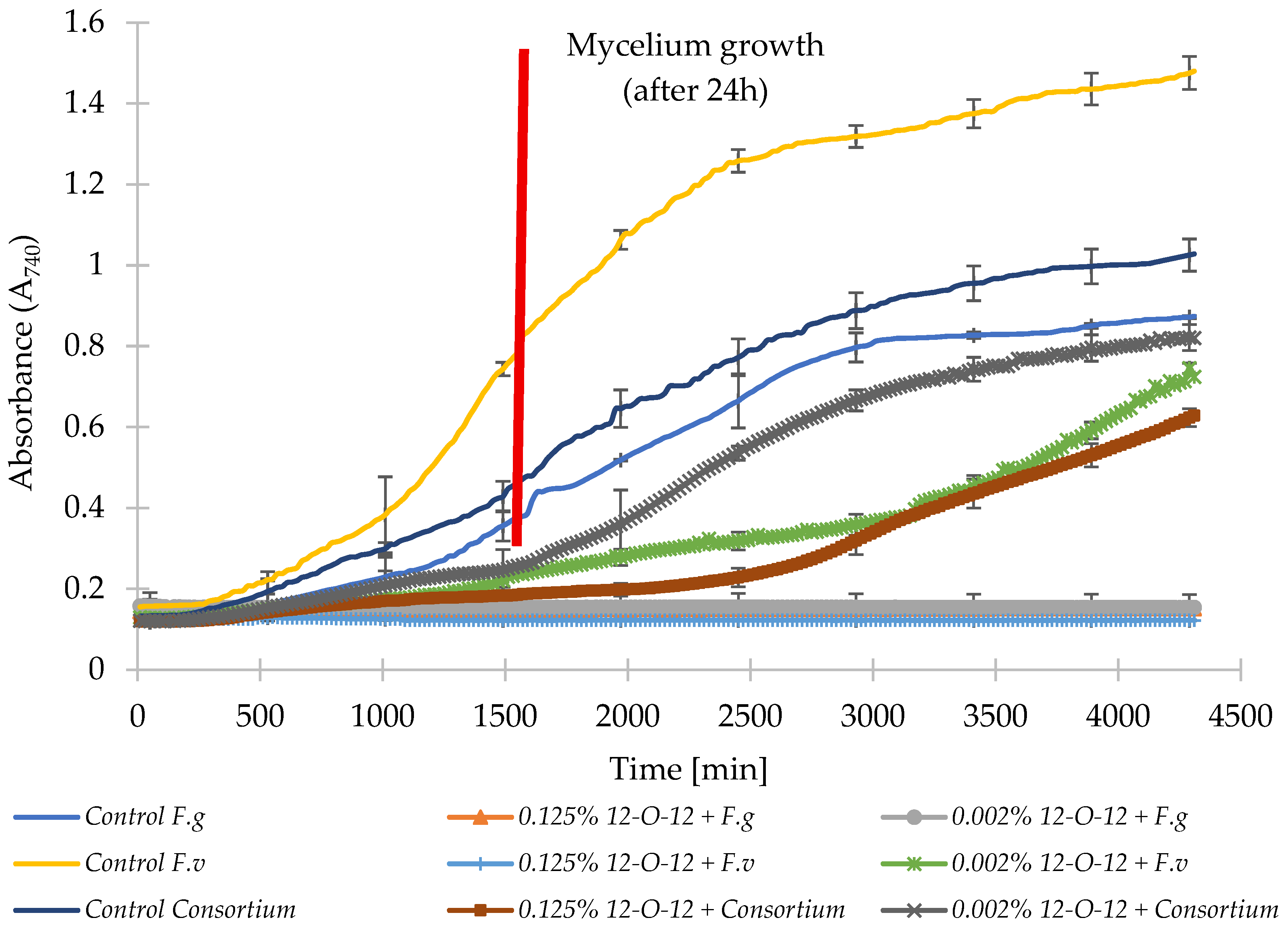
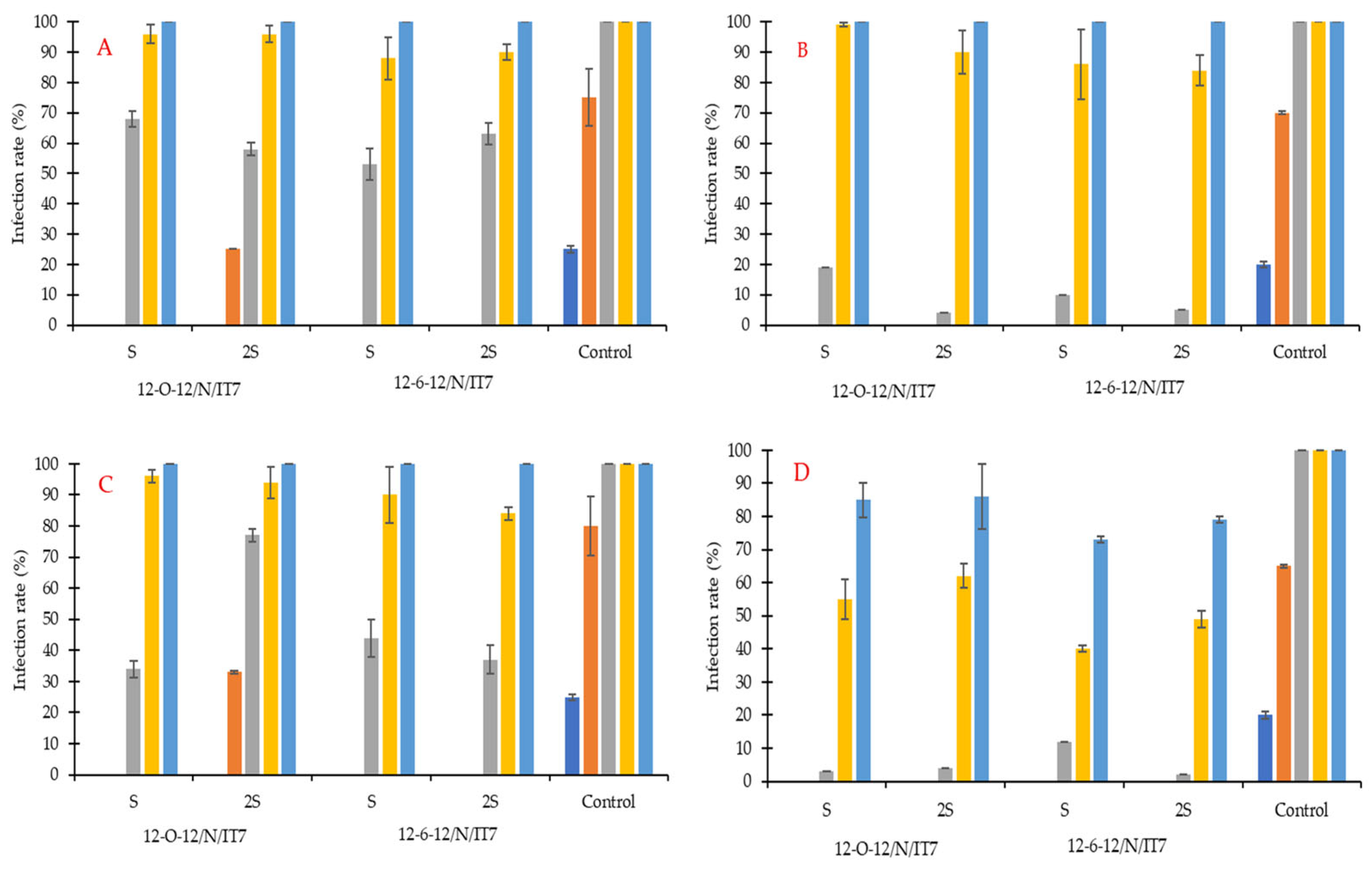
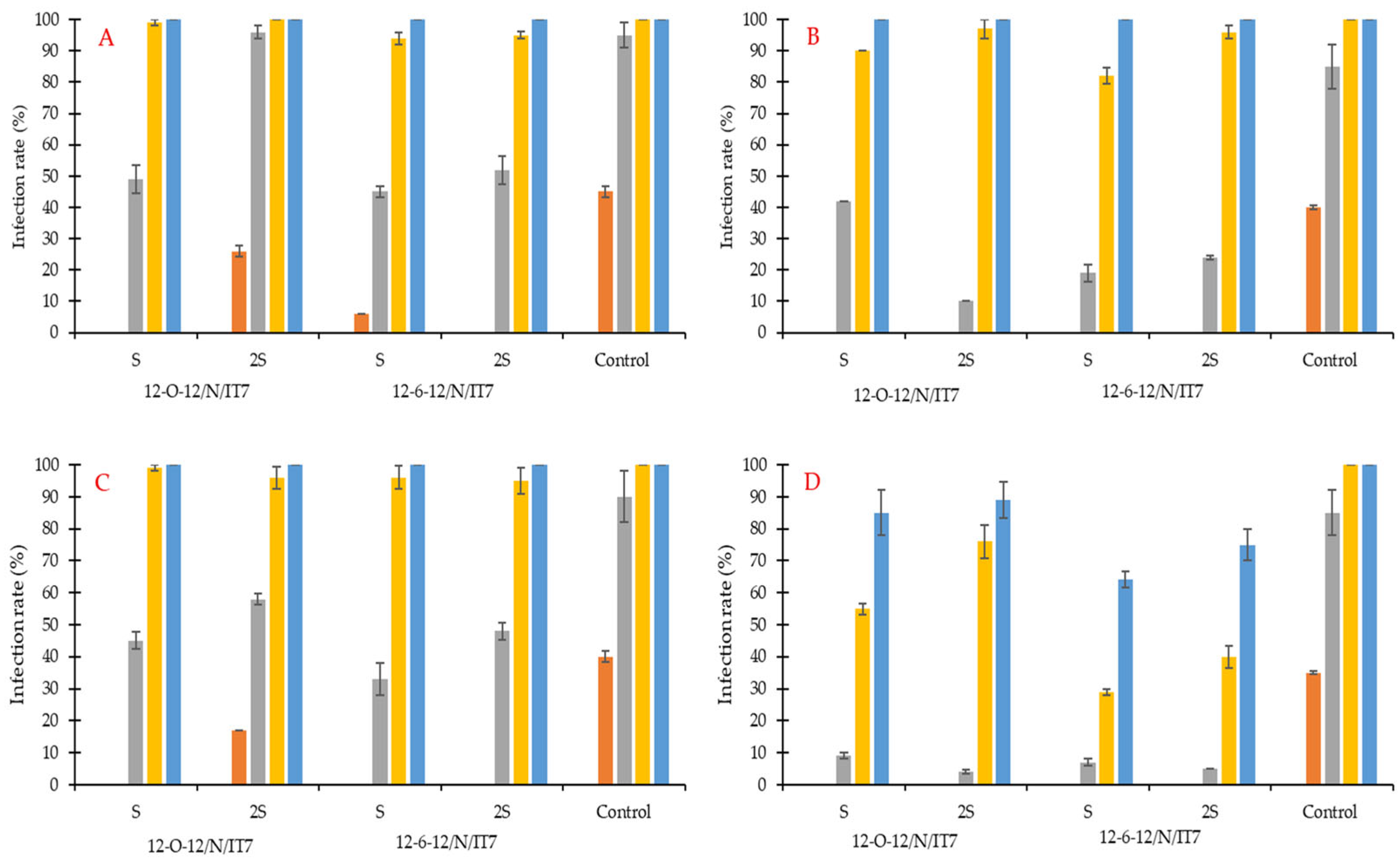
This study analyzed the degree of fungal contamination of cereal grains and assessed the potential of gemini surfactants as antifungal agents used in seed dressing. Identification analysis based on the ITS region showed that representatives of the genera Penicillium and Fusarium were most frequently identified among the isolated microorganisms. The sensitivity testing of the gemini surfactants—12-6-12 hexamethylene-1,6-bis(N-dodecyl-N,N-dimethylammonium bromide) and 12-O-12 3-oxa-1,5-pentane-bis(N-dodecyl-N,N-dimethylammonium bromide), as well as formulations derived from them—showed that the growth of mold monocultures was inhibited at concentrations <0.0005–0.0016%. A consortium containing a mixture of five different strains inhibited the growth at concentrations of 0.031–0.125%. In studies of treated grains, both on synthetic media and in pot tests, the following parameters were considered: the type of gemini surfactant in the fungicide, the coating agent concentration, and various filamentous fungi. It was found that wheat grains showed comparatively lower infection levels under the tested conditions for the 12-6-12/N/IT7/S formulation, containing the main active ingredient, hexamethylene-1,6-bis(N,N-dimethyl-N-dodecylammonium) dibromide, and a single concentration of the coating agent. Fusarium sp. monocultures colonized treated grain more quickly than a consortium of five strains. The results indicate that seed coatings based on gemini surfactants may represent a potentially useful approach under controlled conditions; however, further studies including toxicity assessment, environmental impact evaluation, and field validation are required.
Keywords: gemini surfactants; seed coating; Fusarium; antifungal activity; wheat seed; sustainable plant protection gemini surfactants; seed coating; Fusarium; antifungal activity; wheat seed; sustainable plant protection
Graphical Abstract