Bioactive Compounds and Therapeutic Potential of Plant Buds: Current Evidence and Future Perspectives of Gemmotherapy

Abstract
1. Introduction
2. Chemical Composition of Plant Buds
3. Technologies for Obtaining Gemmotherapeutic Extracts
4. Biological Activity of Gemmotherapeutic Preparations
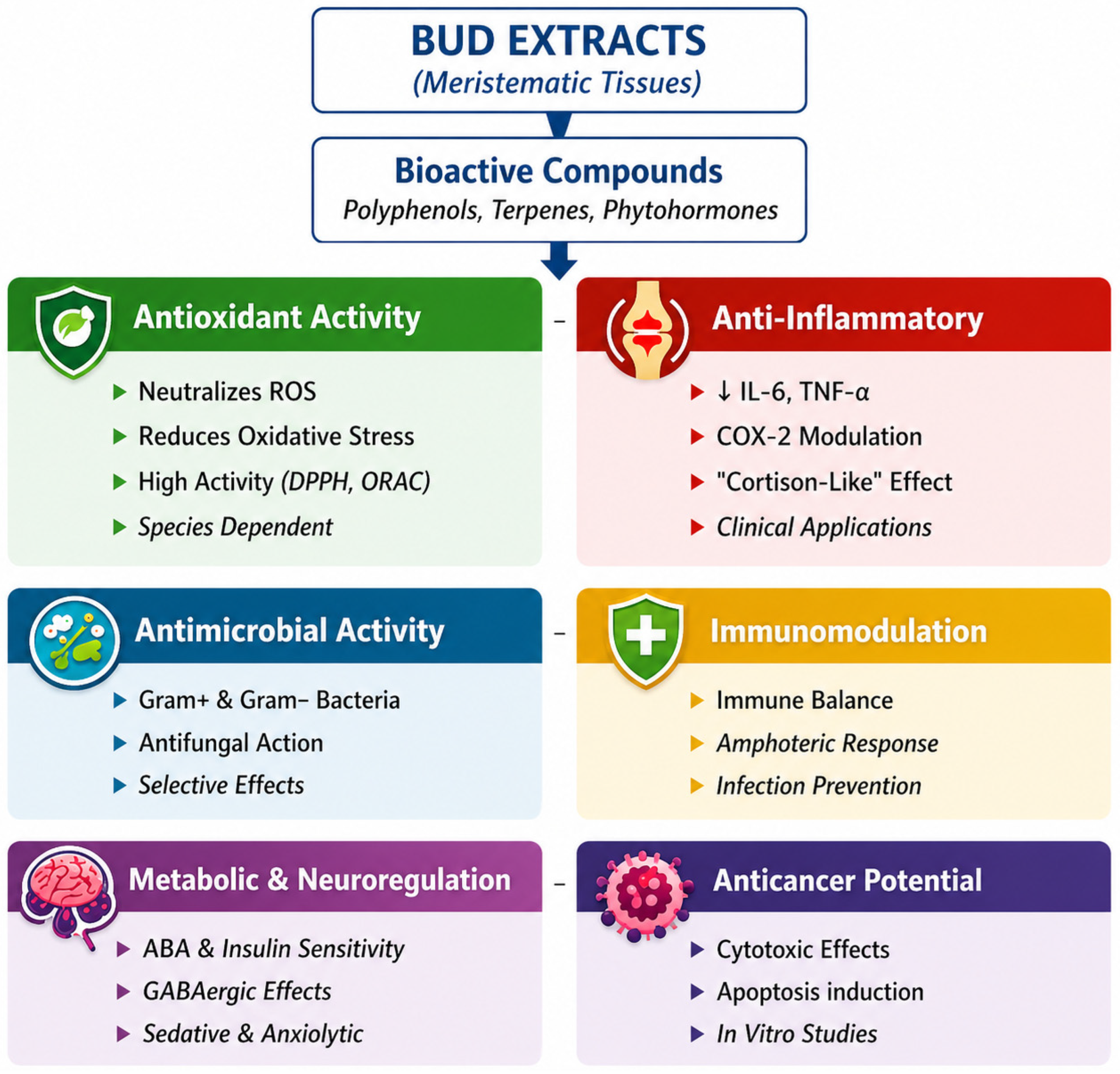
4.1. Antioxidant and Anti-Inflammatory Activity
4.2. Antibacterial Activity
4.3. Anticancer Potential
5. Safety and Limitations of Gemmotherapy
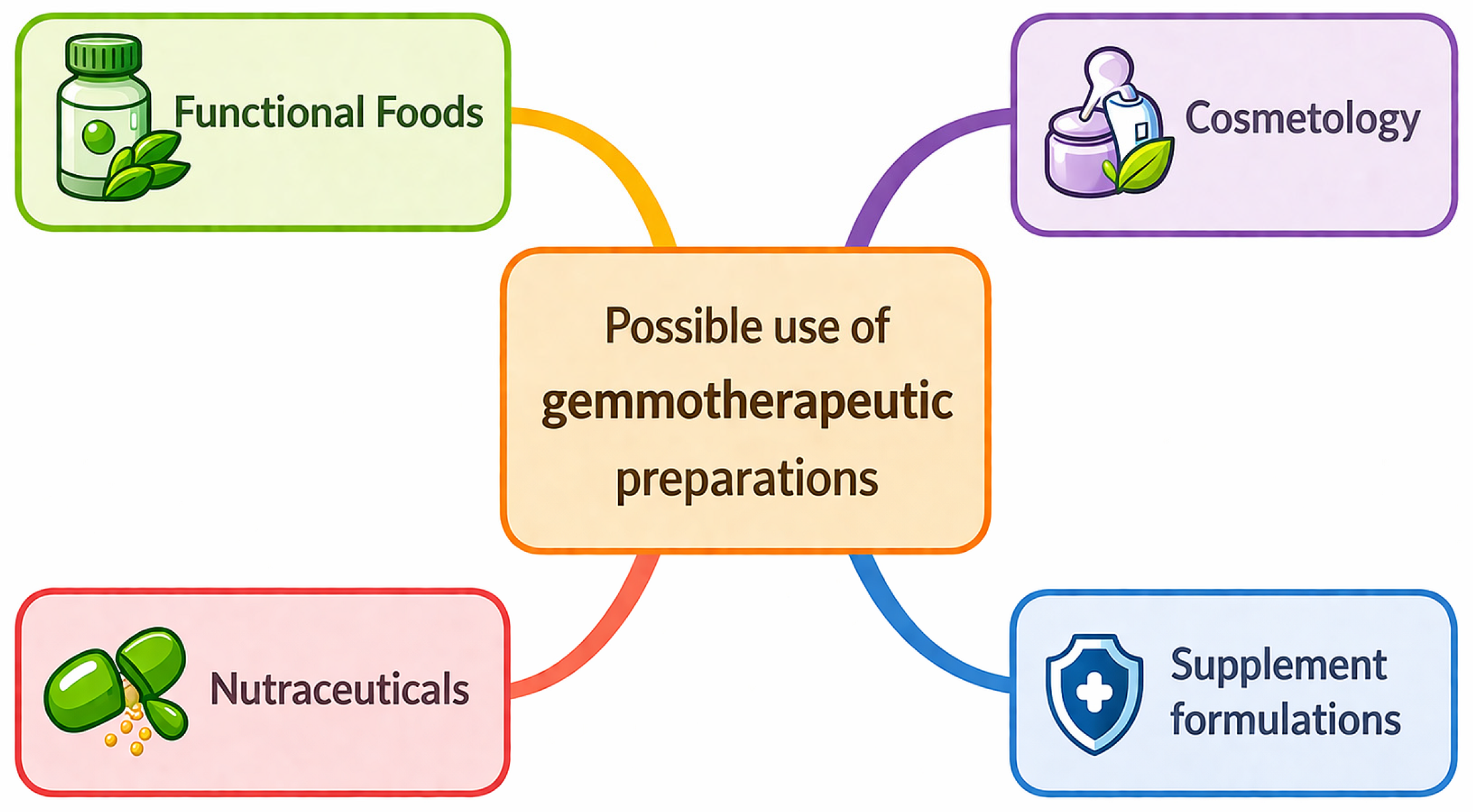
6. Future Perspectives of Gemmotherapy Applications
7. Conclusions
Author Contributions
Funding
Institutional Review Board Statement
Informed Consent Statement
Data Availability Statement
Conflicts of Interest
Abbreviations
| GM | glicerin macerate |
| SOD | superoxide dismutase |
| POD | peroxidase |
| CAT | catalase |
| GPx | glutathione peroxidase |
| PPO | polyphenol oxidase |
| CL | cellulase |
| NEX | neutral xylanase |
| 1DH | first decimal Hahnemannian potency |
| NADES | natural deep eutectic solvents |
| PUAE | pulsed ultrasound-assisted extraction |
| GAE | gallic acid equivalents |
| TBCC | total bioactive compounds content |
| TPC | total phenolics content |
| DW | dry weight |
| FW | fresh weight |
| RE | rutin equivalent |
| DPPH | 2,2-difenylo-1-pikrylohydrazyl |
| ORAC | Oxygen Radical Absorbance Capacity |
| TE | trolox equivalent |
| IL-6 | interleukin 6 |
| TNF-α | tumor necrosis factor-alpha |
| COX-2 | cyclooxygenase |
| RA | rheumatoid arthritis |
| JRA | juvenile rheumatoid arthritis |
| NSAIDs | nonsteroidal anti-inflammatory drugs |
| DMARDs | disease-modifying antirheumatic drugs |
| ABA | abscisic acid |
| GABA | gamma-aminobutyric acid |
| BD | buds derivates |
References
- Charpentier, T.; Boisard, S.; Le Ray, A.-M.; Bréard, D.; Chabrier, A.; Esselin, H.; Guilet, D.; Ripoll, C.; Richomme, P. A Descriptive Chemical Composition of Concentrated Bud Macerates through an Optimized SPE-HPLC-UV-MS2 Method—Application to Alnus glutinosa, Ribes nigrum, Rosa canina, Rosmarinus officinalis and Tilia tomentosa. Plants 2022, 11, 144. [Google Scholar] [CrossRef] [PubMed]
- Donno, D.; Beccaro, G.L.; Cerutti, A.K.; Mellano, M.G.; Bounous, G. Bud Extracts as New Phytochemical Source for Herbal Preparations—Quality Control and Standardization by Analytical Fingerprint. In Phytochemicals—Isolation, Characterisation and Role in Human Health; Rao, A.V., Rao, L.G., Eds.; IntechOpen: London, UK, 2015; pp. 187–218. [Google Scholar] [CrossRef]
- Krzepiłko, A.; Prażak, R.; Skwaryło-Bednarz, B.; Święciło, A. Buds, leaves, and seeds of blackcurrant—Source of bioactive substances with pro-health properties. ŻYWNOŚĆ Nauka Technol. Jakość 2018, 25, 24–33. (In Polish) [Google Scholar] [CrossRef]
- Phillipson, J.D. Phytochemistry and pharmacognosy. Phytochemistry 2007, 68, 2960–2972. [Google Scholar] [CrossRef]
- Di Vito, M.; Gentile, M.; Mattarelli, P.; Barbanti, L.; Micheli, L.; Mazzuca, C.; Garzoli, S.; Titubante, M.; Vitali, A.; Cacaci, M.; et al. Phytocomplex Influences Antimicrobial and Health Properties of Concentrated Glycerine Macerates. Antibiotics 2020, 9, 858. [Google Scholar] [CrossRef]
- Nicoletti, M.; Piterà di Clima, F. Gemmotherapy, and the Scientific Foundations of a Modern Meristemotherapy; Cambridge Scholars Publishing: Newcastle upon Tyne, UK, 2020; pp. 1–468. [Google Scholar]
- Raiciu, A.-D. Gemmotherapy—Modern Medicine. Proceedings 2019, 29, 117. [Google Scholar] [CrossRef]
- Andrianne, F. Treatise on Gemmotherapy: The Therapeutic Use of Buds; Editions Amyris: Bruxelles, Belgium, 2012. [Google Scholar]
- Chișe, E.; Ardelean, M.; Cuc-Hepcal, I.; Deme, P.; Ardelean, S.; Moș, L.; Morgovan, C.; Olah, N.-K. The Research in Meristemotherapy—Past and Perspectives. J. Med. Arad. 2016, 19, 21–25. [Google Scholar]
- Wojdyło, A.; Nowicka, P.; Grimalt, M.; Legua, P.; Almansa, M.S.; Amorós, A.; Carbonell-Barrachina, Á.A.; Hernández, F. Polyphenol Compounds and Biological Activity of Caper (Capparis spinosa L.) Flowers Buds. Plants 2019, 8, 539. [Google Scholar] [CrossRef]
- Donno, D.; Mellano, M.G.; Cerutti, A.K.; Beccaro, G.L. Biomolecules and Natural Medicine Preparations: Analysis of New Sources of Bioactive Compounds from Ribes and Rubus spp. Buds. Pharmaceuticals 2016, 9, 7. [Google Scholar] [CrossRef]
- Donno, D.; Boggia, R.; Zunin, P.; Cerutti, A.K.; Guido, M.; Mellano, M.G.; Prgomet, Z.; Beccaro, G.L. Phytochemical fingerprint and chemometrics for natural food preparation pattern recognition: An innovative technique in food supplement quality control. J. Food Sci. Technol. 2015, 53, 1071–1083. [Google Scholar] [CrossRef]
- Ieri, F.; Innocenti, M.; Possieri, L.; Gallori, S.; Mulinacci, N. Phenolic composition of “bud extracts” of Ribes nigrum L., Rosa canina L. and Tilia tomentosa M. J. Pharm. Biomed. Anal. 2015, 115, 1–9. [Google Scholar] [CrossRef]
- Raiciu, A.D.; Vrabie, D.C.; Negreş, S.; Popescu, M.; Crișan, I.; Manea, Ş.; Dima, Ş.-O. Hystopathological and clinical investigations of five gemmo-derivatives from plants and their biotherapeutical properties. Acad. Res. J. Agric. Sci. Res. 2016, 4, 85–92. [Google Scholar] [CrossRef]
- Liu, P.; Kallio, H.; Yang, B. Flavonol glycosides and other phenolic compounds in buds and leaves of different varieties of black currant (Ribes nigrum L.) and changes during growing season. Food Chem. 2014, 160, 180–189. [Google Scholar] [CrossRef]
- Turrini, F.; Donno, D.; Beccaro, G.L.; Pittaluga, A.; Grilli, M.; Zunin, P.; Boggia, R. Bud-Derivatives, a Novel Source of Polyphenols and How Different Extraction Processes Affect Their Composition. Foods 2020, 9, 1343. [Google Scholar] [CrossRef]
- El-Saadony, M.T.; Saad, A.M.; Mohammed, D.M.; Alkafaas, S.S.; Abd El-Mageed, T.A.; Fahmy, M.A.; Ezzat Ahmed, A.; Algopishi, U.B.; Abu-Elsaoud, A.M.; Mosa, W.F.A.; et al. Plant bioactive compounds: Extraction, biological activities, immunological, nutritional aspects, food application, and human health benefits-A comprehensive review. Front. Nutr. 2025, 12, 1659743. [Google Scholar] [CrossRef] [PubMed]
- Negreanu-Pirjol, B.-S.; Negreanu-Pirjol, T.; Busuricu, F.; Jurja, S.; Craciunescu, O.; Oprea, O.; Motelica, L.; Oprita, E.I.; Roncea, F.N. The Role of Antioxidant Plant Extracts’ Composition and Encapsulation in Dietary Supplements and Gemmo-Derivatives, as Safe Adjuvants in Metabolic and Age-Related Conditions: A Review. Pharmaceuticals 2024, 17, 1738. [Google Scholar] [CrossRef] [PubMed]
- Bréard, D.; Esselin, H.; Bugeia, L.; Boisard, S.; Guilet, D.; Richomme, P.; Le Ray, A.M.; Ripoll, C. Influence of Maceration Solvent on Chemical Composition of Gemmotherapy Macerates—A Case Study on Olea europaea Young Shoots. Nutraceuticals 2023, 3, 574–590. [Google Scholar] [CrossRef]
- Héjja, M.; Mihok, E.; Alaya, A.; Jolji, M.; György, É.; Meszaros, N.; Turcus, V.; Oláh, N.K.; Máthé, E. Specific Antimicrobial Activities Revealed by Comparative Evaluation of Selected Gemmotherapy Extracts. Antibiotics 2024, 13, 181. [Google Scholar] [CrossRef]
- Héjja, M.; György, É.; Lóga, F.Á.; Nagy, R.; Pacza, T.; Sipos, P.; Tankó, G.; Laslo, É.; Mészáros, N.; Turcuș, V.; et al. Gemmotherapy Extracts Like the Dog Rose, Lingonberry, Sea Buckthorn, Blackthorn, Common Grape, Hawthorn, Raspberry and Boxwood Feature Variable Yet Excelling Antimicrobial Effects. Antibiotics 2025, 14, 1052. [Google Scholar] [CrossRef]
- Stanciu, G.; Aonofriesei, F.; Lupsor, S.; Oancea, E.; Mititelu, M. Chemical Composition, Antioxidant Activity, and Antibacterial Activity of Black Poplar Buds’ Hydroalcoholic Macerates from Dobrogea Area. Molecules 2023, 28, 4920. [Google Scholar] [CrossRef]
- Peev, C.; Dehelean, C.; Antal, D.; Feflea, S.; Olariu, L.; Toma, C. Tilia tomentosa foliar bud extract: Phytochemical analysis and dermatological testing. Stud. Univ. Vasile Goldiş Ser. Ştiinţele Vieţii 2009, 19, 163–165. [Google Scholar]
- Krauze-Baranowska, M.; Głód, D.; Kula, M.; Majdan, M.; Hałasa, R.; Matkowski, A.; Kozłowska, W.; Kawiak, A. Chemical composition and biological activity of Rubus idaeus shoots—A traditional herbal remedy of Eastern Europe. BMC Complement. Altern. Med. 2014, 14, 480. [Google Scholar] [CrossRef]
- Donno, D.; Beccaro, G.L.; Mellano, M.G.; Bonvegna, L.; Bounous, G. Castanea spp. buds as a phytochemical source for herbal preparations: Botanical fingerprint for nutraceutical identification and functional food standardization. J. Sci. Food Agric. 2014, 94, 2863–2873. [Google Scholar] [CrossRef] [PubMed]
- Donno, D.; Turrini, F.; Boggia, R.; Guido, M.; Mellano, M.G.; Beccaro, G.L. Phytochemicals from Castanea spp. buds and green extraction technologies: The Finnover project. Italus Hortus 2020, 27, 19–29. [Google Scholar] [CrossRef]
- Raiciu, A.D.; Mihele, D.E.; Ioniţă, C.; Nistorică, V.; Manea, Ş. Antimicrobial activity of Ribes nigrum, Rosmarinus officinalis, Betula pubescens, Salix alba, Vaccinium myrtillus gemoderivatives. Farmacia 2010, 58, 735–747. [Google Scholar]
- Götz, K.; Chmielewski, F.; Tarkowská, D.; Pěnčík, A.; Novák, O. Phytohormones in Sweet Cherry Buds During Winter Rest and Bud Development. J. Plant Growth Regul. 2022, 42, 2519–2529. [Google Scholar] [CrossRef]
- Toma, C.C.; Casacchia, T.; D’Ippolito, C.; Statti, G. Ficus carica SSP Dottato Buds by Intercropping Different Species: Metabolites, Antioxidant Activity and Endogenous Plant Hormones (IAA, ABA). Rev. Chim. 2017, 68, 1628–1631. [Google Scholar] [CrossRef]
- Hussain, S.; Liu, G.; Liu, D.; Ahmed, M.; Hussain, N.; Teng, Y. Study on the expression of dehydrin genes and activities of antioxidative enzymes in floral buds of two sand pear (Pyrus pyrifolia Nakai) cultivars requiring different chilling hours for bud break. Turk. J. Agric. For. 2015, 39, 930–939. [Google Scholar] [CrossRef]
- Tan, G.-F.; Zhao, Q.; Wang, F.; Li, S.-Y.; Liu, Z.-Y.; Zhang, X.-Q.; Zhong, X.-L.; Zhu, S.-H.; Lei, X.-J.; Han, Z.-M.; et al. Mechanistic insights into nutrient profiles, cellulose, and hemicellulose dynamics in red and green Toona sinensis buds during cold storage. Front. Plant Sci. 2025, 16, 1518924. [Google Scholar] [CrossRef]
- Téglás, T.; Mihok, E.; Cziáky, Z.; Oláh, N.-K.; Nyakas, C.; Máthé, E. The Flavonoid Rich Black Currant (Ribes nigrum) Ethanolic Gemmotherapy Extract Elicits Neuroprotective Effect by Preventing Microglial Body Swelling in Hippocampus and Reduces Serum TNF-α Level: Pilot Study. Molecules 2023, 28, 3571. [Google Scholar] [CrossRef]
- Donno, D.; Beccaro, G.L.; Mellano, M.G.; Cerutti, A.K.; Marconi, V.; Bounous, G. Botanicals in Ribes nigrum bud-preparations: An analytical fingerprinting to evaluate the bioactive contribution to total phytocomplex. Pharm. Biol. 2013, 51, 1282–1292. [Google Scholar] [CrossRef]
- Theodosis-Nobelos, P.; Rekka, E.A. The Antioxidant Potential of Vitamins and Their Implication in Metabolic Abnormalities. Nutrients 2024, 16, 2740. [Google Scholar] [CrossRef]
- Rabeea, H.; Fadhil, F.; Fayyad, H. Broad-Spectrum Antibacterial Activity of the Buds Rosa Damascena Bud Extracts Against Pathogens Isolated Clinically. In Proceedings of the 13th International Conference on Appliedon Applied Innovations in IT (ICAIIT), Koethen, Germany, 26 April 2025. [Google Scholar]
- Azmir, J.; Zaidul, I.S.M.; Rahman, M.M.; Sharif, K.M.; Mohamed, A.; Sahena, F.; Jahurul, M.H.A.; Ghafoor, K.; Norulaini, N.A.N.; Omar, A.K.M. Techniques for extraction of bioactive compounds from plant materials: A review. J. Food Eng. 2013, 117, 426–436. [Google Scholar] [CrossRef]
- Chemat, F.; Vian, M.A.; Cravotto, G. Green Extraction of Natural Products: Concept and Principles. Int. J. Mol. Sci. 2012, 13, 8615–8627. [Google Scholar] [CrossRef] [PubMed]
- Dai, Y.; van Spronsen, J.; Witkamp, G.-J.; Verpoorte, R.; Choi, Y.H. Natural deep eutectic solvents as new potential media for green technology. Anal. Chim. Acta 2013, 766, 61–68. [Google Scholar] [CrossRef]
- Turrini, F.; Donno, D.; Beccaro, G.L.; Zunin, P.; Pittaluga, A.; Boggia, R. Pulsed Ultrasound-Assisted Extraction as an Alternative Method to Conventional Maceration for the Extraction of the Polyphenolic Fraction of Ribes nigrum Buds: A New Category of Food Supplements Proposed by The FINNOVER Project. Foods 2019, 8, 466. [Google Scholar] [CrossRef]
- Turrini, F.; Donno, D.; Boggia, R.; Beccaro, G.L.; Zunin, P.; Leardi, R.; Pittaluga, A.M. An innovative green extraction and re-use strategy to valorize food supplement by-products: Castanea sativa bud preparations as case study. Food Res. Int. 2019, 115, 276–282. [Google Scholar] [CrossRef] [PubMed]
- Chișe, E.; Olah, N.K.; Burtescu, R.F.; Hanganu, D.; Mirel, S.; Dărăban, A.; Cuc, I.H.; Jolj, M.; Héjja, M.; Bota, V.B.; et al. Gemmotherapy extracts with quercetin and its derivatives. Stud. Univ. Vasile Goldiş Ser. Ştiinţele Vieţii 2023, 33, 109–115. [Google Scholar]
- Nițu, S. The effectiveness of gemmotherapy in current medical practice. Arad. Med. J. 2015, 18, 72–74. [Google Scholar]
- Mungwari, P.C.; King’ondu, C.K.; Sigauke, P.; Obadele, B.A. Conventional and modern techniques for bioactive compounds recovery from plants: Review. Sci. Afr. 2025, 27, e02509. [Google Scholar] [CrossRef]
- Tabart, J.; Kevers, C.; Sipel, A.; Pincemail, J.; Defraigne, J.-O.; Dommes, J. Optimisation of Extraction of Phenolics and Antioxidants from Black Currant Leaves and Buds and of Stability during Storage. Food Chem. 2007, 105, 1268–1275. [Google Scholar] [CrossRef]
- Seyyedi-Mansour, S.; Donn, P.; Carpena, M.; Chamorro, F.; Barciela, P.; Perez-Vazquez, A.; Jorge, A.O.S.; Prieto, M.A. Utilization of Ultrasonic-Assisted Extraction for Bioactive Compounds from Floral Sources. Biol. Life Sci. Forum 2024, 40, 15. [Google Scholar] [CrossRef]
- Galanakis, C.M. Recovery of high added-value components from food wastes: Conventional, emerging technologies and commercialized applications. Trends Food Sci. Technol. 2012, 26, 68–87. [Google Scholar] [CrossRef]
- Garland, S.M.; Menary, R.C.; Claye, C.J. Variation during dormancy and the effect of freezing and postharvest incubation on the chemical composition of blackcurrant buds (Ribes nigrum L.). J. Hortic. Sci. Biotechnol. 2002, 77, 489–497. [Google Scholar] [CrossRef]
- Vagiri, M.; Ekholm, A.; Andersson, S.; Johansson, E.; Rumpunen, K. An Optimized Method for Analysis of Phenolic Compounds in Buds, Leaves, and Fruits of Black Currant (Ribes nigrum L.). J. Agric. Food Chem. 2012, 60, 10501–10510. [Google Scholar] [CrossRef]
- Wagner, H.; Ulrich-Merzenich, G. Synergy research: Approaching a new generation of phytopharmaceuticals. Phytomedicine 2009, 16, 97–110. [Google Scholar] [CrossRef] [PubMed]
- Thanh, D.T.; Oanh, V.K.; Nguyen, H.C.; Ngan, L.T.M.; Hieu, T.T. Phytochemical composition, antioxidant, antibacterial, and enzyme inhibitory activities of organic extracts from flower buds of Cleistocalyx operculatus (Roxb.) Merr. et Perry. BioTechnologia 2024, 105, 137–147. [Google Scholar] [CrossRef] [PubMed]
- Orbán, C.; Kis, É.; Albert, C.; Molnos, É. Antioxidant Capacity of Blackcurrant (Ribes nigrum L.) Leaves and Buds. Acta Univ. Sapientiae Aliment. 2021, 14, 117–130. [Google Scholar]
- Abaza, L.; Taamalli, A.; Nsir, H.; Zarrouk, M. Olive Tree (Olea europeae L.) Leaves: Importance and Advances in the Analysis of Phenolic Compounds. Antioxidants 2015, 4, 682–698. [Google Scholar] [CrossRef]
- Tekin, Z.; Küçükbay, F. Pomegranate Leaves, Buds, and Flowers: Phytochemical, Antioxidant, and Comparative Solvent Analyzes. Foods Raw Mater. 2025, 13, 155–171. [Google Scholar] [CrossRef]
- Manach, C.; Scalbert, A.; Morand, C.; Rémésy, C.; Jiménez, L. Polyphenols: Food sources and bioavailability. Am. J. Clin. Nutr. 2004, 79, 727–747. [Google Scholar] [CrossRef] [PubMed]
- Dai, J.; Mumper, R.J. Plant Phenolics: Extraction, Analysis and Their Antioxidant and Anticancer Properties. Molecules 2010, 15, 7313–7352. [Google Scholar] [CrossRef] [PubMed]
- Militaru, A.V.; Simedrea, I.; Alexoi, I.; Peev, C.; Bernad, E.; Toma, C.C. Plant extracts from meristematic tissues (foliar buds and shoots): Antioxidant and therapeutic action. Stud. Univ. Vasile Goldiş Ser. Ştiinţele Vieţii 2010, 20, 45–47. [Google Scholar]
- Albano, G.D.; Gagliardo, R.P.; Montalbano, A.M.; Profita, M. Overview of the Mechanisms of Oxidative Stress: Impact in Inflammation of the Airway Diseases. Antioxidants 2022, 11, 2237. [Google Scholar] [CrossRef]
- Muscolo, A.; Mariateresa, O.; Giulio, T.; Mariateresa, R. Oxidative Stress: The Role of Antioxidant Phytochemicals in the Prevention and Treatment of Diseases. Int. J. Mol. Sci. 2024, 25, 3264. [Google Scholar] [CrossRef]
- Kalogerakou, T.; Antoniadou, M. The Role of Dietary Antioxidants, Food Supplements and Functional Foods for Energy Enhancement in Healthcare Professionals. Antioxidants 2024, 13, 1508. [Google Scholar] [CrossRef]
- Prata, C.; Angeloni, C.; Maraldi, T. Strategies to Counteract Oxidative Stress and Inflammation in Chronic-Degenerative Diseases 2.0. Int. J. Mol. Sci. 2024, 25, 5026. [Google Scholar] [CrossRef]
- Prior, R.L.; Wu, X.; Schaich, K. Standardized methods for the determination of antioxidant capacity and phenolics in foods and dietary supplements. J. Agric. Food Chem. 2005, 53, 4290–4302. [Google Scholar] [CrossRef]
- Gălăţanu, M.L.; Panţuroiu, M.; Cima, L.M.; Neculai, A.M.; Pănuş, E.; Bleotu, C.; Enescu, C.M.; Mircioiu, I.; Gavriloaia, R.M.; Aurică, S.N.; et al. Polyphenolic Composition, Antioxidant Activity, and Cytotoxic Effect of Male Floral Buds from Three Populus Species Growing in the South of Romania. Molecules 2025, 30, 913. [Google Scholar] [CrossRef] [PubMed]
- Garbacki, N.; Angenot, L.; Bassleer, C.; Damas, J.; Tits, M. Effects of prodelphinidins isolated from Ribes nigrum on chondrocyte metabolism and COX activity. Naunyn-Schmiedeberg’s Arch. Pharmacol. 2002, 365, 434–441. [Google Scholar] [CrossRef]
- Ohanme, E.; Uzochukwu, O.; Orofuke, N.; Ogbuagu, E.; Ekenjoku, J.; Nwadum, S.; Nwakelu, B.; Eze, C. Phytotherapy in the treatment of infectious diseases. Glob. J. Clin. Med. Med. Res. 2024, 2, 12–22. [Google Scholar]
- Sturla, L.; Fresia, C.; Guida, L.; Bruzzone, S.; Scarfì, S.; Usai, C.; Fruscione, F.; Magnone, M.; Millo, E.; Basile, G.; et al. LANCL2 Is Necessary for Abscisic Acid Binding and Signaling in Human Granulocytes and in Rat Insulinoma Cells. J. Biol. Chem. 2009, 284, 28045–28057. [Google Scholar] [CrossRef]
- Magnone, M.; Ameri, P.; Salis, A.; Andraghetti, G.; Emionite, L.; Murialdo, G.; De Flora, A.; Zocchi, E. Microgram Amounts of Abscisic Acid in Fruit Extracts Improve Glucose Tolerance and Reduce Insulinemia in Rats and in Humans. FASEB J. 2015, 29, 4783–4793. [Google Scholar] [CrossRef]
- Allio, A.; Calorio, C.; Franchino, C.; Gavello, D.; Carbone, E.; Marcantoni, A. Bud extracts from Tilia tomentosa Moench inhibit hippocampal neuronal firing through GABAA and benzodiazepine receptors activation. J. Ethnopharmacol. 2015, 172, 288–296. [Google Scholar] [CrossRef]
- Möhler, H. The GABA system in anxiety and depression and its therapeutic potential. Neuropharmacology 2012, 62, 42–53. [Google Scholar] [CrossRef]
- Nazzaro, F.; Fratianni, F.; De Martino, L.; Coppola, R.; De Feo, V. Effect of Essential Oils on Pathogenic Bacteria. Pharmaceuticals 2013, 6, 1451–1474. [Google Scholar] [CrossRef]
- Dinu, L.; Popescu, C.; Atitieni, A. The Effect of Gemmoderivatives on Probiotic and Pathogenic Microorganisms. Anim. Sci. Biotechnol. 2019, 52, 74–77. [Google Scholar]
- Okińczyc, P.; Widelski, J.; Nowak, K.; Radwan, S.; Włodarczyk, M.; Kuś, P.M.; Susniak, K.; Korona-Głowniak, I. Phytochemical Profiles and Antimicrobial Activity of Selected Populus spp. Bud Extracts. Molecules 2024, 29, 437. [Google Scholar] [CrossRef] [PubMed]
- Burt, S. Essential oils: Their antibacterial properties and potential applications in foods—A review. Int. J. Food Microbiol. 2004, 94, 223–253. [Google Scholar] [CrossRef]
- Isidorov, V.; Szoka, Ł.; Nazaruk, J. Cytotoxicity of white birch bud extracts: Perspectives for therapy of tumours. PLoS ONE 2018, 13, e0201949. [Google Scholar] [CrossRef] [PubMed]
- Jia, N.; Xiong, Y.L.; Kong, B.; Liu, Q.; Xia, X. Radical scavenging activity of black currant (Ribes nigrum L.) extract and its inhibitory effect on gastric cancer cell proliferation via induction of apoptosis. J. Funct. Foods 2012, 4, 382–390. [Google Scholar] [CrossRef]
- Chaudhry, G.-S.; Md Akim, A.; Sung, Y.Y.; Sifzizul, T.M.T. Cancer and apoptosis: The apoptotic activity of plant and marine natural products and their potential as targeted cancer therapeutics. Front. Pharmacol. 2022, 13, 842376. [Google Scholar] [CrossRef]
- Banerjee, S.; Nau, S.; Hochwald, S.N.; Xie, H.; Zhang, J. Anticancer properties and mechanisms of botanical derivatives. Phytomed. Plus 2023, 3, 100396. [Google Scholar] [CrossRef]
- Kangra, K.; Kakkar, S.; Mittal, V.; Kumar, V.; Aggarwal, N.; Chopra, H.; Malik, T.; Garg, V. Incredible use of plant-derived bioactives as anticancer agents. RSC Adv. 2025, 15, 1721–1746. [Google Scholar] [CrossRef] [PubMed]
- Ekor, M. The growing use of herbal medicines: Issues relating to adverse reactions and challenges in monitoring safety. Front. Pharmacol. 2014, 4, 177. [Google Scholar] [CrossRef] [PubMed]
- Ziemlewska, A.; Zagórska-Dziok, M.; Nizioł-Łukaszewska, Z. Assessment of cytotoxicity and antioxidant properties of berry leaves as by-products with potential application in cosmetic and pharmaceutical products. Sci. Rep. 2021, 11, 3240. [Google Scholar] [CrossRef]
- Beer, A.D.; Padayachee, N.; Booth, Z.; Leuschner, M. The pharmacovigilance of complementary medicines: Unpacking the complexities. S. Afr. Pharm. J. 2025, 92, 6. [Google Scholar] [CrossRef]
- Santini, A.; Cammarata, S.M.; Capone, G.; Ianaro, A.; Tenore, G.C.; Pani, L.; Novellino, E. Nutraceuticals: Opening the debate for a regulatory framework. Br. J. Clin. Pharmacol. 2018, 84, 659–672. [Google Scholar] [CrossRef]
- Espín, J.C.; García-Conesa, M.T.; Tomás-Barberán, F.A. Nutraceuticals: Facts and fiction. Phytochemistry 2007, 68, 2986–3008. [Google Scholar] [CrossRef] [PubMed]
- Johnson, C.H.; Ivanisevic, J.; Siuzdak, G. Metabolomics: Beyond biomarkers and towards mechanisms. Nat. Rev. Mol. Cell Biol. 2016, 17, 451–459. [Google Scholar] [CrossRef]
- Wishart, D.S. Metabolomics for Investigating Physiological and Pathophysiological Processes. Physiol. Rev. 2019, 99, 1819–1875. [Google Scholar] [CrossRef]
- Turrini, F.; Donno, D.; Grasso, F.; Mustorgi, E.; Beccaro, G.L.; Guido, M.; Fior, T.; Grilli, M.; Pittaluga, A.; Boggia, R. EEM Fluorescence Spectroscopy Coupled with HPLC-DAD Analysis for the Characterization of Bud Derivative Dietary Supplements: A Preliminary Introduction to GEMMAPP, the Free Data-Repository from the FINNOVER Project. Appl. Sci. 2023, 13, 8679. [Google Scholar] [CrossRef]
- Michalak, M. Plant Extracts as Skin Care and Therapeutic Agents. Int. J. Mol. Sci. 2023, 24, 15444. [Google Scholar] [CrossRef]
- Gǎlbǎu, C.-Ş.; Irimie, M.; Neculau, A.E.; Dima, L.; Pogačnik da Silva, L.; Vârciu, M.; Badea, M. The Potential of Plant Extracts Used in Cosmetic Product Applications—Antioxidants Delivery and Mechanism of Actions. Antioxidants 2024, 13, 1425. [Google Scholar] [CrossRef]
- Ziemlewska, A.; Nizioł-Łukaszewska, Z.; Zagórska-Dziok, M.; Bujak, T.; Wójciak, M.; Sowa, I. Evaluation of Cosmetic and Dermatological Properties of Kombucha-Fermented Berry Leaf Extracts Considered to Be By-Products. Molecules 2022, 27, 2345. [Google Scholar] [CrossRef] [PubMed]
- Salazar, J.; Ortega, Á.; Pérez, J.L.; Garrido, B.; Santeliz, R.; Galbán, N.; Díaz, M.P.; Cano, R.; Cano, G.; Contreras-Velasquez, J.C.; et al. Role of Polyphenols in Dermatological Diseases: Exploring Pharmacotherapeutic Mechanisms and Clinical Implications. Pharmaceuticals 2025, 18, 247. [Google Scholar] [CrossRef]
- Domagała, B.; Orlińska, J.; Duda, M.; Setkowicz-Janeczko, Z.; Starzyk, M.; Piasna-Słupecka, E.; Drozdowska, M.; Godos, E. Natural Phytotherapeutics in Dermatology and Cosmetology: Bioactive Potential of Grape Pomace on Human Skin Fibroblasts. Molecules 2025, 30, 4679. [Google Scholar] [CrossRef] [PubMed]



| Plant Species | The Most Important Chemical Compounds | Reference |
|---|---|---|
| Ribes nigrum (blackcurrant) | Essential oils (sabinene, α-pinene, terpinolene), polyphenols (rutin, epicatechin, quercetin glycosides), vitamin C, diterpenic acids, amino acids (arginine, proline), unique phloridzin | [1,3,5,13] |
| Rosa canina (dog rose) | Tannins (gallotannins and ellagitannins), flavonols (quercetin and kaempferol glycosides, including tiliroside), phenolic acids (chlorogenic acid), vitamin C | [1,13] |
| Tilia tomentosa (silver linden) | Phytohormones (auxins, cytokinins, gibberellins), flavonoids (quercetin, apigenin and kaempferol glycosides, tiliroside), essential oils (pinene, limonene), hemolytic saponins, mucilage and mineral salts | [13,23] |
| Rubus idaeus (raspberry) | Ellagitannins (mainly sanguiin H-6), ellagic acid, flavonoids (epicatechin, hyperoside, isoquercetin, quercetin glucuronide), phenolic acids | [11,24] |
| Castanea sativa (sweet chestnut) | Tannins (castalagin, vescalagin), monoterpenes (limonene, phellandrene, γ-terpinene), organic acids (citric, malic, quinic), vitamin C, catechins and flavonols (rutin, quercetin) | [25,26] |
| Alnus glutinosa (black alder) | Phenolic acids (coumaroylquinic, caffeoylquinic), flavonol glycosides (quercetin, kaempferol) and aglycones such as centaureidin and dihydroxy-dimethoxyflavone | [1] |
| Betula pubescens (downy birch) | Reported mainly in the context of antimicrobial activity of macerates; generally attributed properties of meristematic tissues rich in phytohormones and polyphenols | [27] |
| Maceration Method | Composition of the Extractant | Extraction Time | Limitations | Reference |
|---|---|---|---|---|
| Classic three-component maceration (Pol Henry method) | Water, ethanol (96%), and glycerol (1:1:1 v/v/v); raw material ratio 1:20 (based on dry weight) | 21 days | Time-consuming, risk of unstable component degradation, microbiological contamination, | [1,5,19] |
| Cold maceration (French Pharmacopoeia VIII/European Pharmacopoeia) | Ethanol (95%) and glycerol (1:1 w/w); raw material to solvent ratio 1:20 (based on dry weight) | 21 days | Time-consuming, risk of microbiological contamination, limited recovery of highly polar compounds due to lack of water | [2,16] |
| Two-stage maceration | Stage 1: ethanol (90°); Stage 2: after 4–5 days, addition of a water–glycerol mixture (1:1) to achieve a final ratio of 1:20 | 3 weeks (total) | Complexity of the process, lack of full standardization, long extraction time, risk of microbiological contamination | [27,29] |
| Pulsed Ultrasound-Assisted Extraction (PUAE) | Glycerol–ethanol mixtures (1:1 w/w) or ternary mixtures (water/ethanol/glycerol); ratio 1:20 (dry weight basis) | 15–20 min | Requires specialized equipment, precise power and time optimization, risk of local overheating | [39] |
| Plant Species | Type of Meristematic Tissue | Main Class of Secondary Metabolites | Total Content of Bioactive Compounds | Dominant Chemical Compounds | Confirmed Therapeutic Properties | Reference |
|---|---|---|---|---|---|---|
| Ribes nigrum | Buds | Phenolic compounds (flavonols, catechins, phenolic acids), monoterpenes, organic acids | 175 mg RE/L (flavonoids); 0.829–2.781 mg/mL flavonoids (myricetin, quercetin); 11.81–15.27 mg/g FW (TBCC); 34.79–65.07 mg/g FW (TBCC); 4.27–8.56 mg/g FW (TPC) | Rutin, epicatechin, catechin, quercetin, ferulic acid, myricetin, limonene, phellandrene, sabinene, terpinolene | Antioxidant, anti-inflammatory, antibacterial, antifungal, immunomodulatory; treatment of skin diseases (eczema, psoriasis), liver, respiratory, and circulatory disorders | [1,2,3,5,11,33] |
| Rosa canina | Buds and young shoots | Flavonoids and tannins | 809 mg RE/L (flavonoids) | Quercetin and kaempferol glycosides, gallotannins, chlorogenic acid | Very high antioxidant activity | [1] |
| Alnus glutinosa | Buds and young shoots | Phenolic acids, flavonoids (flavonols), fatty acids | 470 mg RE/L (flavonoids); 0.504–1.39 mg/mL quercetin | Caffeoylquinic acids, quercetin, kaempferol, centaureidin, myricetin, linolenic acid, palmitic acid | Antioxidant and antimicrobial activity (especially S. pyogenes) | [1,5] |
| Rosmarinus officinalis | Young shoots | Flavonoids and diterpenes | 332 mg RE/L (flavonoids) | Rosmarinic acid, hesperidin, hispidulin, isorhamnetin, rosmanol | Antioxidant and antibacterial activity | [1] |
| Tilia tomentosa | Buds and leaf buds | Flavonoids (polyphenols), hemolytic saponins, essential oils | 219 mg RE/L (flavonoids); 3.80 mg/g (polyphenols); 52.1 mg/g (saponins) | Quercetin and kaempferol glycosides, apigenin, tiliroside, auxins, cytokinins, gibberellins, pinene, limonene | High antioxidant activity; anxiolytic, antispasmodic, sedative effects; skin regeneration | [1,16,56] |
| Rubus ulmifolius | Young shoots | Polyphenols (flavonols, phenolic acids), organic acids | 9.35–10.39 mg/g FW (TBCC); 2.11–3.84 mg/g FW (TPC) | Catechins, ellagic acid, ferulic acid, hyperoside, isoquercitrin, gallic acid, quercitrin | Antioxidant, anti-inflammatory, antidiarrheal, antihemorrhoidal activity | [11] |
| Populus nigra | Buds | Phenolic compounds | 13.87–19.89 mg/g DW (TPC) | Gallic acid, chlorogenic acid, cinnamic acid, methyl gallate | Antioxidant and antibacterial activity (Staphylococcus, Enterococcus) | [22] |
| Castanea sativa | Buds | Tannins, organic acids, flavonols, cinnamic acids | 12.76 mg/g FW (TBCC) | Castalagin, vescalagin, citric acid, malic acid, quercetin, gallic acid, ellagic acid | Effects on vascular circulation; anti-inflammatory (e.g., cystitis); antioxidant activity | [26] |
| Rubus idaeus | Young shoots | Ellagitannins, flavonoids, phenolic acids | 2.77–8.33 mg/g DW (polyphenol sum) | Sanguiin H-6, ellagic acid, epicatechin | Strong antioxidant, antibacterial (C. diphtheriae), cytotoxic (HL-60) activity | [24] |
| Ficus carica | Buds | Flavonols, fatty acids | 1.06–1.39 mg/mL (quercetin and myricetin) | Quercetin, myricetin, palmitic acid | No strong antioxidant activity observed; traditionally used for anxiety and gastrointestinal disorders | [5] |
| Plant Species | Sensitive Bacterial Strains | Reference |
|---|---|---|
| Blackcurrant (Ribes nigrum L.) | Staphylococcus aureus (30 mm) *, Escherichia coli (18 mm) *, Pseudomonas aeruginosa (21 mm) * | [3,27] |
| Raspberry (Rubus idaeus) | Corynebacterium diphtheriae (MIC: 0.06 mg/mL), Staphylococcus aureus (MIC: 0.5 mg/mL), Moraxella catarrhalis (MIC: 0.5 mg/mL), Clostridium sporogenes (MIC: 0.2 mg/mL), Staphylococcus epidermidis (MIC: 1.9 mg/mL), Helicobacter pylori (MIC: 7.4 mg/mL), Klebsiella pneumoniae (MIC: 60 mg/mL) | [24] |
| Damask rose (Rosa damascena) | Staphylococcus aureus (11–21 mm) *, Pseudomonas aeruginosa (12–17 mm) *, Klebsiella pneumoniae (10–18 mm) *, Proteus spp. (0–12 mm) *, Escherichia coli (0–17 mm) * | [27] |
| Black poplar (Populus nigra) | Enterococcus (8.6–10 mm) *, Staphylococcus (8.2–9.4 mm) * | [22] |
| Rosemary (Rosmarinus officinalis) | Staphylococcus aureus (31 mm) *, Pseudomonas aeruginosa (22 mm) *, Escherichia coli (19 mm) * | [27] |
Disclaimer/Publisher’s Note: The statements, opinions and data contained in all publications are solely those of the individual author(s) and contributor(s) and not of MDPI and/or the editor(s). MDPI and/or the editor(s) disclaim responsibility for any injury to people or property resulting from any ideas, methods, instructions or products referred to in the content. |
© 2026 by the authors. Licensee MDPI, Basel, Switzerland. This article is an open access article distributed under the terms and conditions of the Creative Commons Attribution (CC BY) license.
Share and Cite
Tomczyk, M.; Dżugan, M. Bioactive Compounds and Therapeutic Potential of Plant Buds: Current Evidence and Future Perspectives of Gemmotherapy. Molecules 2026, 31, 1559. https://doi.org/10.3390/molecules31101559
Tomczyk M, Dżugan M. Bioactive Compounds and Therapeutic Potential of Plant Buds: Current Evidence and Future Perspectives of Gemmotherapy. Molecules. 2026; 31(10):1559. https://doi.org/10.3390/molecules31101559
Chicago/Turabian StyleTomczyk, Monika, and Małgorzata Dżugan. 2026. "Bioactive Compounds and Therapeutic Potential of Plant Buds: Current Evidence and Future Perspectives of Gemmotherapy" Molecules 31, no. 10: 1559. https://doi.org/10.3390/molecules31101559
APA StyleTomczyk, M., & Dżugan, M. (2026). Bioactive Compounds and Therapeutic Potential of Plant Buds: Current Evidence and Future Perspectives of Gemmotherapy. Molecules, 31(10), 1559. https://doi.org/10.3390/molecules31101559