Preclinical Risk Assessment of Plant Lectins with Pharmacological Applications: A Narrative Review

 , ,
, , 
 , and
, and 
Abstract
1. Introduction
2. Lectins
3. Assessing the Safety of Natural Products
4. Toxicity Evaluation of Lectins
4.1. Assessment of In Vitro Cytotoxicity of Plant Lectins
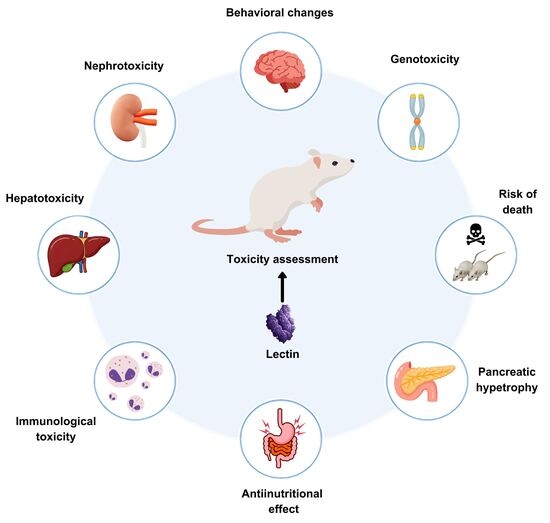
4.2. Assessment of In Vivo Toxicity of Plant Lectins
5. Limitations, Knowledge Gaps and Future Directions
6. Conclusions
Author Contributions
Funding
Institutional Review Board Statement
Informed Consent Statement
Data Availability Statement
Acknowledgments
Conflicts of Interest
References
- Wyk, A.S.; Prinsloo, G. Health, safety and quality concerns of plant-based traditional medicines and herbal remedies. S. Afr. J. Bot. 2020, 133, 54–62. [Google Scholar]
- Clemen-Pascual, L.M.; Macahig, R.A.S.; Rojas, N.R.L. Comparative toxicity, phytochemistry, and use of 53 Philippine medicinal plants. Toxicol. Rep. 2022, 9, 22–35. [Google Scholar] [CrossRef] [PubMed]
- World Health Organization. Traditional Medicine Has a Long History of Contributing to Conventional Medicine and Continues to Hold Promise. Available online: https://www.who.int/news-room/feature-stories/detail/traditional-medicine-has-a-long-history-of-contributing-to-conventional-medicine-and-continues-to-hold-promise (accessed on 23 November 2025).
- Chaachouay, N.; Zidane, L. Plant-Derived Natural Products: A Source for Drug Discovery and Development. Drugs Drug Candidates 2024, 3, 184–207. [Google Scholar] [CrossRef]
- Hudson, A.; Lopez, E.; Almalki, A.J.; Roe, A.L.; Calderón, A.I. A review of the toxicity of compounds found in herbal dietary supplements. Planta Med. 2018, 84, 613–626. [Google Scholar] [CrossRef]
- Kristanc, L.; Kreft, S. European medicinal and edible plants associated with subacute and chronic toxicity. Food Chem. Toxicol. 2016, 92, 150–164. [Google Scholar] [CrossRef]
- Boncler, M.; Golanski, J.; Lukasiak, M.; Redzynia, M.; Dastych, J.; Watala, C. A new approach for the assessment of the toxicity of polyphenol-rich compounds with the use of high content screening analysis. PLoS ONE 2017, 12, e0180022. [Google Scholar] [CrossRef]
- Srisittiratkul, P.; Limsuvan, S.; Pattanapholkornsakul, S.; Akarasereenont, P. Optimizing herbal drug use through multivariable standardization and precision approaches. Phytomed. Plus 2025, 5, 100907. [Google Scholar] [CrossRef]
- Parveen, A.; Parveen, B.; Parveen, R.; Ahmad, S. Challenges and guidelines for clinical trial of herbal drugs. J. Pharm. Bioallied Sci. 2015, 7, 329–333. [Google Scholar] [CrossRef]
- Du, B.; Haensch, R.; Alfarraj, S.; Rennenberg, H. Strategies of plants to overcome abiotic and biotic stresses. Biol. Rev. 2024, 99, 1524–1536. [Google Scholar] [CrossRef]
- Bozbuga, R.; Haydar, E.Ü.; Bülent, A.B.; Gök, G.P.; Arıdıcı, K.P.; Nilufer, Y.H.; Kahya, D. Symbiotic interactions among plant pests and pathogens–nematodes, bacteria, viroids, viruses, insects, and other organisms. In Symbiotic Interactions—From Mutualistic Alliances to Parasitic Exploits; Ali, H., Ed.; IntechOpen: London, UK, 2024. [Google Scholar]
- Weng, J.K.; Philippe, R.N.; Noel, J.P. The rise of chemodiversity in plants. Science 2012, 336, 1660–1677. [Google Scholar] [CrossRef]
- Cavada, B.S.; Osterne, V.J.S.; Oliveira, M.V.; Pinto-Junior, V.R.; Silva, M.T.L.; Bari, A.U.; Lima, L.D.; Lossio, C.F.; Nascimento, K.S. Reviewing Mimosoideae lectins: A group of under explored legume lectins. Int. J. Biol. Macromol. 2020, 154, 159–165. [Google Scholar] [CrossRef] [PubMed]
- Mazalovska, M.; Kouokam, J.C. Plant-derived lectins as potential cancer therapeutics and diagnostic tools. BioMed Res. Int. 2020, 2020, 1631394. [Google Scholar] [CrossRef] [PubMed]
- Napoleão, T.H.; Lira, T.L.S.; Pontual, E.V.; Ferreira, G.R.S.; Silva, P.M. Lectins as natural antibiofilm agents in the fight against antibiotic resistance: A review. Molecules 2025, 30, 3395. [Google Scholar] [CrossRef] [PubMed]
- Vasconcelos, I.M.; Oliveira, J.T. Antinutritional properties of plant lectins. Toxicon 2004, 44, 385–403. [Google Scholar] [CrossRef]
- Hamid, R.; Masood, A. Dietary lectins as disease causing toxicants. Pak. J. Nutr. 2009, 8, 293–303. [Google Scholar] [CrossRef]
- Choudhary, A.; Dhewa, T. Natural plant toxins in food: A comprehensive review of health implications, processing changes and regulatory challenges. Food Chem. Adv. 2025, 9, 101139. [Google Scholar] [CrossRef]
- Kocyigit, E.; Kocaadam-Bozkurt, B.; Bozkurt, O.; Ağagündüz, D.; Capasso, R. Plant Toxic Proteins: Their Biological Activities, Mechanism of Action and Removal Strategies. Toxins 2023, 15, 356. [Google Scholar] [CrossRef]
- Tsaneva, M.; Van Damme, E.J.M. 130 years of Plant Lectin Research. Glycoconj. J. 2020, 37, 533–551. [Google Scholar] [CrossRef]
- Van Damme, E.J.M. 35 years in plant lectin research: A journey from basic science to applications in agriculture and medicine. Glycoconj. J. 2022, 39, 83–97. [Google Scholar] [CrossRef]
- Fonseca, V.J.A.; Braga, A.L.; Ribeiro Filho, J.; Teixeira, C.S.; da Hora, G.C.A.; Morais-Braga, M.F.B. A review on the antimicrobial properties of lectins. Int. J. Biol. Macromol. 2022, 195, 163–178. [Google Scholar] [CrossRef]
- Gupta, A.; Yadav, K.; Yadav, A.; Ahmad, R.; Srivastava, A.; Kumar, D.; Khan, M.A.; Dwivedi, U.N. Mannose-specific plant and microbial lectins as antiviral agents: A review. Glycoconj. J. 2024, 41, 1–33. [Google Scholar] [CrossRef] [PubMed]
- Costa, A.R.; Roma, R.R.; Bisneto, A.V.d.M.; De Paiva, F.E.A.; Véras, J.H.; De Curcio, J.S.; Silva, L.C.; Chen-Chen, L.; Cardoso, C.G.; Silveira-Lacerda, E.d.P.; et al. Lectin from Vatairea macrocarpa (Benth.) Ducke exhibits selective cytotoxicity and angiogenesis inhibition in lung cancer cells. ACS Omega 2025, 10, 49148–49157. [Google Scholar] [CrossRef] [PubMed]
- Bisneto, A.V.M.; Fernandes, A.S.; Silva, L.C.; Silva, L.S.; Araújo, D.P.; Santos, I.C.; Melo, M.R.; Silva, R.R.S.; Franchi, L.P.; Cardoso, C.G.; et al. Dioclea violacea lectin inhibits tumorigenesis and tumor angiogenesis in vivo. Biochimie 2024, 222, 18–27. [Google Scholar] [CrossRef] [PubMed]
- Patriota, L.L.S.; Brito, J.S.; Barboza, B.R.; Paiva, P.M.G.; Melo, C.M.L.; Napoleão, T.H. A review on the immunomodulatory effects of plant lectins. In Hemagglutinins: Structures, Functions and Mechanisms; Ng, T.B., Wong, J., Tse, R., Tse, T.F., Chan, H., Eds.; Nova Science Publishers, Inc.: New York, NY, USA, 2019; pp. 53–82. [Google Scholar]
- Idries, A.H.; Naser, E.H.; Dafalla, M.B.; Elmubarak, S.A.A.; Abdelrahim, Y.E.; Abdalrhman, E.A.; Alwali, S.M.; Ahmed, B.M.; Yousef, B.A.; Ebrahim, R.M.A.; et al. Biological activity and characterization of leaf and seed lectins from Terminalia brownii: Insights into their analgesic and antiulcer properties. Heliyon 2024, 10, e39351. [Google Scholar] [CrossRef]
- Lima, B.R.F.; Patriota, L.L.S.; Albuquerque, L.P.; Ramos, D.B.M.; Paiva, P.M.G.; Pontual, E.V.; Rosa, M.M.; Napoleão, T.H. Can plant lectins be alternatives to treat anxiety and depressive disorders? Adv. Res. 2020, 21, 102–112. [Google Scholar] [CrossRef]
- Nascimento, K.S.; Cunha, A.I.; Nascimento, K.S.; Cavada, B.S.; Azevedo, A.M.; Aires-Barros, M.R. An overview of lectins purification strategies. J. Mol. Recognit. 2012, 25, 527–541. [Google Scholar] [CrossRef]
- Anand, U.; Jacobo-Herrera, N.; Altemimi, A.; Lakhssassi, N. A comprehensive review on medicinal plants as antimicrobial therapeutics: Potential avenues of biocompatible drug discovery. Metabolites 2019, 9, 258. [Google Scholar] [CrossRef]
- Pan, S.T.; Li, Z.L.; He, Z.X.; Qiu, J.X.; Zhou, S.F. Molecular mechanisms for tumour resistance to chemotherapy. Clin. Exp. Pharmacol. Physiol. 2016, 43, 723–737. [Google Scholar] [CrossRef]
- Kharchoufa, L.; Merrouni, I.A.; Yamani, A.; Elachouri, M. Profile on medicinal plants used by the people of North Eastern Morocco: Toxicity concerns. Toxicon 2018, 154, 90–113. [Google Scholar] [CrossRef]
- Maag, D.; Erb, M.; Köllner, T.G.; Gershenzon, J. Defensive weapons and defense signals in plants: Some metabolites serve both roles. BioEssays 2015, 37, 167–174. [Google Scholar] [CrossRef]
- DiPietro, M.A.; Mondie, C. Toxicity of herbal medications suggested as treatment for COVID-19: A narrative review. J. Am. Coll. Emerg. Physicians Open 2021, 31, e12411. [Google Scholar] [CrossRef] [PubMed]
- Mensah, M.L.K.; Komlaga, G.; Forkuo, A.D.; Firempong, C.; Anning, A.K.; Dickson, R.A. Toxicity and safety implications of herbal medicines used in Africa. In Herbal Medicine; Builders, P.F., Ed.; IntechOpen: London, UK, 2019; pp. 64–86. [Google Scholar]
- Chebaibi, M.; Bousta, D.; Chbani, L.; Ezzoubi, Y.; Touiti, N.; Achour, S. Acute toxicity of plants mixture used in traditional treatment of edema and colic renal in Morocco. Sci. Afr. 2019, 6, e00152. [Google Scholar] [CrossRef]
- Singh, M.; Routledge, P.A. Poisoning by toxic plants and fungi. Medicine 2020, 48, 218–219. [Google Scholar] [CrossRef]
- Coulson, J.; Keymer, N. Poisoning by toxic plants and fungi. Medicine 2024, 52, 394–395. [Google Scholar] [CrossRef]
- Sumantran, V.N. Cellular chemosensitivity assays: An overview. Methods 2011, 731, 219–236. [Google Scholar]
- Bunel, V.; Ouedraogo, M.; Nguyen, A.T.; Stevigny, C.; Duez, P. Methods applied to the in vitro primary toxicology testing of natural products: State of the art, strengths, and limits. Planta Med. 2014, 80, 1210–1226. [Google Scholar] [CrossRef]
- McGaw, L.J.; Elgorashi, E.E.; Eloff, J.N. Cytotoxicity of African medicinal plants against normal animal and human cells. In Toxicological Survey of African Medicinal Plants, 1st ed.; Kuete, V., Ed.; Elsevier: London, UK, 2014; pp. 181–233. [Google Scholar]
- OECD. Test No. 423: Acute Oral Toxicity—Acute Toxic Class Method; OECD Guidelines for the Testing of Chemicals, Section 4; OECD Publishing: Paris, France, 2002. [Google Scholar]
- OECD. Test No. 407: Repeated Dose 28-Day Oral Toxicity Study in Rodents; OECD Guidelines for the Testing of Chemicals, Section 4; OECD Publishing: Paris, France, 2025. [Google Scholar]
- OECD. Test No. 408: Repeated Dose 90-Day Oral Toxicity Study in Rodents; OECD Guidelines for the Testing of Chemicals, Section 4; OECD Publishing: Paris, France, 2025. [Google Scholar]
- OECD. Test No. 452: Chronic Toxicity Studies; OECD Guidelines for the Testing of Chemicals, Section 4; OECD Publishing: Paris, France, 2018. [Google Scholar]
- OECD. Test No. 421: Reproduction/Developmental Toxicity Screening Test; OECD Guidelines for the Testing of Chemicals, Section 4; OECD Publishing: Paris, France, 2025. [Google Scholar]
- OECD. Test No. 422: Combined Repeated Dose Toxicity Study with the Reproduction/Developmental Toxicity Screening Test; OECD Guidelines for the Testing of Chemicals, Section 4; OECD Publishing: Paris, France, 2025. [Google Scholar]
- OECD. Test No. 474: Mammalian Erythrocyte Micronucleus Test; OECD Guidelines for the Testing of Chemicals, Section 4; OECD Publishing: Paris, France, 2016. [Google Scholar]
- Doncheva, N.T.; Palasca, O.; Yarani, R.; Litman, T.; Anthon, C.; Groenen, M.A.M.; Stadler, P.F.; Pociot, F.; Jensen, L.J.; Gorodkin, J. Human pathways in animal models: Possibilities and limitations. Nucleic Acids Res. 2021, 49, 1859–1871. [Google Scholar] [CrossRef]
- Brubaker, D.K.; Lauffenburger, D.A. Translating preclinical models to humans: Computational models for cross-species translation could improve drug development. Science 2020, 367, 742–743. [Google Scholar] [CrossRef]
- Cai, H.; Scott, E.; Kholghi, A.; Andreadi, C.; Rufini, A.; Karmokar, A.; Britton, R.G.; Horner-Glister, E.; Greaves, P.; Jawad, D.; et al. Cancer chemoprevention: Evidence of a nonlinear dose response for the protective effects of resveratrol in humans and mice. Sci. Transl. Med. 2015, 7, 298ra117. [Google Scholar] [CrossRef]
- Bohn, T.; McDougall, G.J.; Alegría, A.; Alminger, M.; Arrigoni, E.; Aura, A.M.; Brito, C.; Cilla, A.; El, S.N.; Karakaya, S.; et al. Mind the gap—Deficits in our knowledge of aspects impacting the bioavailability of phytochemicals and their metabolites—A position paper focusing on carotenoids and polyphenols. Mol. Nutr. Food Res. 2015, 59, 1307–1323. [Google Scholar] [CrossRef]
- Morishita, M.; Peppas, N.A. Is the oral route possible for peptide and protein drug delivery? Drug Discov. Today 2006, 11, 905–910. [Google Scholar] [CrossRef]
- Gupta, S.; Jain, A.; Chakraborty, M.; Sahni, J.K.; Ali, J.; Dang, S. Oral delivery of therapeutic proteins and peptides: A review on recent developments. Drug Deliv. 2013, 20, 237–246. [Google Scholar] [CrossRef] [PubMed]
- Lord, M.J.; Jolliffe, N.A.; Marsden, C.J.; Pateman, C.S.C.; Smith, D.C.; Spooner, R.A.; Watson, P.D.; Roberts, L.M. Ricin. Toxicol. Rev. 2003, 22, 53–64. [Google Scholar] [CrossRef] [PubMed]
- Franz, S.; Frey, B.; Sheriff, A.; Gaipl, U.S.; Beer, A.; Voll, R.E.; Kalden, J.R.; Herrmann, M. Lectins detect changes of the glycosylation status of plasma membrane constituents during late apoptosis. Cytom. Part A 2006, 69, 230–239. [Google Scholar] [CrossRef]
- Araújo, L.C.C.; Aguiar, J.S.; Napoleão, T.H.; Mota, F.V.B.; Barros, A.L.S.; Moura, M.C.; Coriolano, M.C.; Coelho, L.C.B.B.; Silva, T.G.; Paiva, P.M.G. Evaluation of cytotoxic and anti-inflammatory activities of extracts and lectins from Moringa oleifera seeds. PLoS ONE 2013, 8, e81973. [Google Scholar] [CrossRef] [PubMed]
- Taubenschmid, J.; Stadlmann, J.; Jost, M.; Klokk, T.I.; Rillahan, C.D.; Leibbrandt, A.; Mechtler, K.; Paulson, J.C.; Jude, J.; Zuber, J.; et al. A vital sugar code for ricin toxicity. Cell Res. 2017, 27, 1351–1364. [Google Scholar] [CrossRef]
- Patriota, L.L.S.; Procópio, T.F.; Souza, M.F.D.; Oliveira, A.P.S.; Carvalho, L.V.N.; Pitta, M.G.R.; Rego, M.J.B.M.; Paiva, P.M.G.; Pontual, E.V.; Napoleão, T.H. A trypsin inhibitor from Tecoma stans leaves inhibits growth and promotes ATP depletion and lipid peroxidation in Candida albicans and Candida krusei. Front. Microbiol. 2016, 7, 611. [Google Scholar] [CrossRef]
- Batista, J.E.C.; Ralph, M.T.; Vaz, R.V.; Souza, P.F.C.; Silva, A.B.; Nascimento, D.C.O.; Souza, L.T.; Ramos, M.V.; Mastroeni, P.; Lima-Filho, J.V. Plant lectins ConBr and CFL modulate expression toll-like receptors, pro-inflammatory cytokines and reduce the bacterial burden in macrophages infected with Salmonella enterica serovar Typhimurium. Phytomedicine 2017, 25, 52–60. [Google Scholar] [CrossRef]
- Patriota, L.L.S.; Procópio, T.F.; Brito, J.S.; Segab, V.; Oliveira, A.P.S.; Soares, A.K.A.; Moreira, L.R.; Lima, T.A.; Soares, T.; Silva, T.D.; et al. Microgramma vacciniifolia (Polypodiaceae) fronds contain a multifunctional lectin with immunomodulatory properties on human cells. Int. J. Biol. Macromol. 2017, 103, 36–46. [Google Scholar] [CrossRef]
- Procópio, T.F.; Patriota, L.L.S.; Barros, B.R.S.; Aguiar, L.M.S.; Lorena, V.M.B.; Paiva, P.M.G.; Melo, C.M.L.; Napoleão, T.H. Calliandra surinamensis lectin (CasuL) does not impair the functionality of mice splenocytes, promoting cell signaling and cytokine production. Biomed. Pharmacother. 2018, 107, 650–655. [Google Scholar] [CrossRef]
- Santos, A.J.C.A.; Barros, B.R.S.; Aguiar, L.M.S.; Patriota, L.L.S.; Lima, T.A.; Zingali, R.B.; Paiva, P.M.G.; Napoleão, T.H.; Melo, C.M.L.; Pontual, E.V. Schinus terebinthifolia leaf lectin (SteLL) is an immunomodulatory agent by altering cytokine release by mice splenocytes. 3 Biotech 2020, 10, 144. [Google Scholar] [CrossRef] [PubMed]
- Fu, L.-L.; Zhou, C.-C.; Yao, S.; Yu, J.-Y.; Liu, B.; Bao, J.-K. Plant lectins: Targeting programmed cell death pathways as antitumor agents. Int. J. Biochem. Cell Biol. 2011, 43, 1442–1449. [Google Scholar] [CrossRef] [PubMed]
- Shi, Z.; Li, W.-W.; Tang, Y.; Cheng, L.-J. A novel molecular model of plant lectin-induced programmed cell death in cancer. Biol. Pharm. Bull. 2017, 40, 1625–1629. [Google Scholar] [CrossRef] [PubMed]
- Patriota, L.L.S.; Brito, J.S.; Ramos, D.B.M.; Procópio, T.F.; Paiva, P.M.G.; Pontual, E.V.; Melo, C.M.L.; Napoleão, T.H. Plant-derived lectins: A review of their status as alternatives to anticancer chemotherapy. In Horizons in Cancer Research; Watanabe, H.S., Ed.; Nova Science Publishers: New York, NY, USA, 2019; Volume 73, pp. 171–205. [Google Scholar]
- Gomes, D.C.; Barros, M.R.; Menezes, T.M.; Neves, J.L.; Paiva, P.M.G.; Silva, T.G.; Napoleão, T.H.; Coriolano, M.C.; Correia, M.T.S. A new lectin from the floral capitula of Egletes viscosa (EgviL): Biochemical and biophysical characterization and cytotoxicity to human cancer cells. Int. J. Biol. Macromol. 2021, 168, 676–685. [Google Scholar] [CrossRef]
- Shivamadhu, M.C.; Srinivas, B.K.; Jayarama, S.; Sharada, A.C. Anti-cancer and anti-angiogenic effects of partially purified lectin from Praecitrullus fistulosus fruit on in vitro and in vivo model. Biomed. Pharmacother. 2017, 96, 1299–1309. [Google Scholar] [CrossRef]
- Brito, J.S.; Ferreira, G.R.S.; Klimczak, E.; Gryshuk, L.; Santos, N.D.L.; Patriota, L.L.S.; Moreira, L.R.; Soares, A.K.A.; Barboza, B.R.; Paiva, P.M.G.; et al. Lectin from inflorescences of ornamental crop Alpinia purpurata acts on immune cells to promote Th1 and Th17 responses, nitric oxide release, and lymphocyte activation. Biomed. Pharmacother. 2017, 94, 865–872. [Google Scholar] [CrossRef]
- Brito, J.S.; Marinho, A.O.; Patriota, L.L.S.; Gaião, W.D.C.; Torres, D.J.L.; Paiva, P.M.G.; Lorena, V.M.B.; Rodrigues, C.G.; Silva, M.B.; Napoleão, T.H. Effects of lectins from Alpinia purpurata inflorescence (ApuL) and Schinus terebinthifolia leaf (SteLL) on human leukemic cell lines and mesenchymal stem cells. Macromol 2023, 3, 290–302. [Google Scholar] [CrossRef]
- Procópio, T.F.; Patriota, L.L.S.; Moura, M.C.; Silva, P.M.; Oliveira, P.S.; Carvalho, L.V.N.; Lima, T.A.; Soares, T.; Silva, T.D.; Coelho, L.C.B.B.; et al. CasuL: A new lectin isolated from Calliandra surinamensis leaf pinnulae with cytotoxicity to cancer cells, antimicrobial activity and antibiofilm effect. Int. J. Biol. Macromol. 2017, 98, 419–429. [Google Scholar] [CrossRef]
- Albuquerque, L.P.; Pontual, E.V.; Santana, G.M.S.; Silva, L.R.S.; Aguiar, J.S.; Coelho, L.C.B.B.; Rêgo, M.J.B.M.; Pitta, M.G.R.; Silva, T.G.; Melo, A.M.M.A.; et al. Toxic effects of Microgramma vacciniifolia rhizome lectin on Artemia salina, human cells, and the schistosomiasis vector Biomphalaria glabrata. Acta Trop. 2014, 138, 23–27. [Google Scholar] [CrossRef]
- Monte, L.G.; Santi-Gadelha, T.; Reis, L.B.; Braganhol, E.; Prietsch, R.F.; Dellagostin, O.A.; Lacerda, R.R.; Gadelha, C.A.A.; Conceição, F.R.; Pinto, L.S. Lectin of Abelmoschus esculentus (okra) promotes selective antitumor effects in human breast cancer cells. Biotechnol. Lett. 2014, 36, 461–469. [Google Scholar] [CrossRef]
- Souza, L.P.F.D.; Ramos, E.L.P.; Santana, S.S.; Silva, M.V.; Santiago, F.M.; Mineo, T.W.P.; Mineo, J.R. Lectins from Synadenium carinatum (ScLL) and Artocarpus heterophyllus (ArtinM) are able to induce beneficial immunomodulatory effects in a murine model for treatment of Toxoplasma gondii infection. Front. Cell. Infect. Microbiol. 2016, 6, 164. [Google Scholar]
- Procópio, T.F.; Moura, M.C.; Bento, E.F.L.; Soares, T.; Coelho, L.C.B.B.; Bezerra, R.P.; Mota, R.A.; Porto, A.L.F.; Paiva, P.M.G.; Napoleão, T.H. Looking for alternative treatments for bovine and caprine mastitis: Evaluation of the potential of Calliandra surinamensis leaf pinnulae lectin (CasuL), both alone and in combination with antibiotics. Microbiol. Open 2019, 8, e869. [Google Scholar] [CrossRef] [PubMed]
- Madhu, C.S.; Balaji, K.S.; Shankar, J.; Sharada, A.C. Antitumor effects of chitin specific lectin from Praecitrullus fistulosus by targeting angiogenesis and apoptosis. Biochem. Biophys. Res. Commun. 2019, 518, 381–387. [Google Scholar] [CrossRef] [PubMed]
- Silva, P.M.; Moura, M.C.; Gomes, F.S.; Tretin, D.S.; Oliveira, A.P.S.; Melo, G.S.V.; Pitta, M.G.R.; Rêgo, M.J.B.M.; Coelho, L.C.B.B.; Macedo, A.J.; et al. PgTeL, uma lectin found in Punica granatum juice, is an antifungal agente against Candida albicans and Candida krusei. Int. J. Biol. Macromol. 2018, 108, 391–400. [Google Scholar] [CrossRef]
- Silva, P.M.; Silva, B.R.; Silva, J.N.O.; Moura, M.C.; Soares, T.; Feitosa, A.P.S.; Brayner, F.A.; Alves, L.C.; Paiva, P.M.G.; Damborg, P.; et al. Punica granatum sarcotesta lectin (PgTeL) has antibacterial activity and synergistic effects with antibiotics against β-lactamase-producing Escherichia coli. Int. J. Biol. Macromol. 2019, 135, 931–939. [Google Scholar] [CrossRef]
- Silva, P.M.; Baldry, M.; Peng, P.; Silva, J.N.O.; Soares, T.; Brayner, F.A.; Alves, L.C.; Feitosa, A.P.S.; Paiva, P.M.G.; Ingmer, H.; et al. Punica granatum sarcotesta lectin (PgTeL) impairs growth, structure, viability, aggregation, and biofilm formation ability of Staphylococcus aureus clinical isolates. Int. J. Biol. Macromol. 2019, 123, 600–608. [Google Scholar] [CrossRef]
- Silva, P.M.; Ferreira, G.R.S.; Silva, A.R.; Oliveira, W.F.; Correia, M.T.S.; Cabral Filho, P.E.; Fontes, A.; Napoleão, T.H.; Paiva, P.M.G. Punica granatum sarcotesta lectin (PgTeL) inhibits Pseudomonas aeruginosa replication, viability, aggregation, and biofilms. S. Afr. J. Bot. 2024, 165, 264–274. [Google Scholar] [CrossRef]
- Silva, A.R.; Alves, R.R.V.; Silva, S.P.; Branco, S.J.S.C.; Marinho, A.O.; Souza, T.G.S.; Chagas, C.A.; Paiva, P.M.G.; Oliveira, A.M.; Napoleão, T.H. Acute toxicity and genotoxicity assessment of PgTeL, a lectin from pomegranate sarcotesta, in mice. S. Afr. J. Bot. 2022, 151, 301–308. [Google Scholar] [CrossRef]
- Luz, L.A.; Rossato, F.A.; Costa, R.A.P.; Napoleão, T.H.; Paiva, P.M.G.; Coelho, L.C.B.B. Cytotoxicity of the coagulant Moringa oleifera lectin (cMoL) to B16-F10 melanoma cells. Toxicol. In Vitro 2017, 144, 94–99. [Google Scholar]
- Silva, S.P.; Silva, J.D.F.; Costa, C.B.L.; Silva, P.M.; Freitas, A.F.S.; Silva, C.E.S.; Silva, A.R.; Oliveira, A.M.; Sá, R.A.; Peixoto, A.R.; et al. Purification, characterization, and assessment of antimicrobial activity and toxicity of Portulaca elatior leaf lectin (PeLL). Probiotics Antimicrob. Proteins 2023, 15, 287–299. [Google Scholar] [CrossRef]
- Araújo, C.S.F.; Araújo, T.F.S.; Silva, C.B.; Campos, J.K.L.; Paiva, P.M.G.; Napoleão, T.H.; Albuquerque, P.B.S.; Lima, V.L.M.; Coelho, L.C.B.B. Evaluation of toxicity on mice and artemicidal activity of Bauhinia monandra leaf lectin (BmoLL). In Theory and Applications of Microbiology and Biotechnology; Elrefaei, A.H.A., Ed.; Book Publisher International: Hooghly, India, 2019; Volume 1, pp. 43–52. [Google Scholar]
- Sisenando, H.A.A.A.C.N.; Macedo, M.F.S.; Saturnino, A.C.R.D.; Coelho, L.C.B.B.; Medeiros, S.R.B. Evaluation of the genotoxic potential of Bauhinia monandra leaf lectin (BmoLL). Food Chem. Toxicol. 2009, 47, 303–308. [Google Scholar] [CrossRef]
- Campos, J.K.L.; Araújo, C.S.F.; Araújo, T.F.S.; Santos, A.F.S.; Teixeira, J.A.; Lima, V.L.M.; Coelho, L.C.B.B. Anti-inflammatory and antinociceptive activities of Bauhinia monandra leaf lectin. Biochimie Open 2016, 2, 62–68. [Google Scholar] [CrossRef] [PubMed]
- Lira, T.L.S.; Almeida, C.F.; Farias, L.A.S.; Santos, E.C.F.; Ferreira, M.R.A.; Soares, L.A.L.; Napoleão, T.H.; Paiva, P.M.G.; Coelho, L.C.B.B. Insecticidal activity of saline extract, protein fraction, and lectin (BmoLL) from Bauhinia monandra Kurz (Fabaceae) leaves on Sitophilus zeamais Motschulsky, 1855 (Coleoptera: Dryophthoridae). Biocatal. Agric. Biotechnol. 2026, 71, 103893. [Google Scholar] [CrossRef]
- Srinivas, B.K.; Shivamadhu, M.C.; Jayarama, S. Musa acuminata lectin exerts anti-cancer effects on HeLa and EAC cells via activation of caspase and inhibitions of Akt, Erk, and Jnk pathway expression and suppresses the neoangiogenesis in in-vivo models. Int. J. Biol. Macromol. 2021, 166, 1173–1187. [Google Scholar] [CrossRef] [PubMed]
- Srinivas, B.K.; Shivamadhu, M.C.; Jayarama, S. Angio-suppressive effect of partially purified lectin-like protein from Musa acuminata pseudostem by inhibition of VEGF-mediated neovascularization and induces apoptosis both in vitro and in vivo. Nutr. Cancer 2019, 71, 285–300. [Google Scholar] [CrossRef]
- Marinho, A.O.; Costa, J.A.; Santos, A.N.S.; Barros, M.C.; Pimentel, C.N.; Silva, A.A.; Paiva, P.M.G.; Napoleão, T.H.; Patriota, L.L.S. Assessment of acute toxicity, genotoxicity, and anti-inflammatory activity of SteLL, a lectin from Schinus terebinthifolia Raddi. leaves, in mice. J. Ethnopharmacol. 2024, 333, 118496. [Google Scholar] [CrossRef]
- Ramos, D.B.M.; Araujo, M.T.M.F.; Araujo, T.C.L.; Santos Neto, O.G.; Silva, M.G.; Silva, Y.A.; Torres, D.J.L.; Patriota, L.L.S.; Melo, C.M.L.; Lorena, V.M.B.; et al. Evaluation of antitumor activity and toxicity of Schinus terebinthifolia leaf extract and lectin (SteLL) in sarcoma 180-bearing mice. J. Ethnopharmacol. 2019, 233, 148–157. [Google Scholar] [CrossRef]
- Lima, B.R.F.; Patriota, L.L.S.; Marinho, A.O.; Lira, T.L.S.; Costa, J.A.; Ribeiro, B.G.; Napoleão, D.C.; Cavalcanti, J.V.F.L.; Pereira, M.C.; Rego, M.J.B.M.; et al. Schinus terebinthifolia Raddi leaf lectin (SteLL) demonstrates anxiolytic and antidepressant effects under monoaminergic deficiency induced by reserpine. Plants 2025, 14, 3048. [Google Scholar] [CrossRef]
- Kuku, A.; Togun, R.A.; Obuotor, E.M.; Adeyemi, D.O. Acute toxicity and histopathology study of a galactose-specific lectin from the seeds of Tetracarpidium conophorum (African walnut) (Hutch and Dalz). Toxicol. Environ. Chem. 2012, 94, 583–592. [Google Scholar] [CrossRef]
- Amorim, P.K.; Conde, H.F.; Silva, W.S.F.L.; Santana, N.C.; Silva, P.M.; Alves, R.R.V.; Silva, C.E.S.; Sá, R.A.; Peixoto, A.R.; Tenório, F.C.A.M.; et al. Purification, partial characterization, toxicity assessment, and antimicrobial activity of a lectin from Bixa orellana L. leaves. Ind. Crops Prod. 2024, 212, 118291. [Google Scholar] [CrossRef]
- Brito, J.S.; Marinho, A.O.; Coelho, L.C.B.B.; Oliveira, A.M.; Paiva, P.M.G.; Patriota, L.L.S.; Napoleão, T.H. Toxicity and antitumor activity of the water-soluble lectin from Moringa oleifera Lam. seeds (WSMoL) in sarcoma 180-bearing mice. Toxicon 2023, 234, 107306. [Google Scholar] [CrossRef]
- Silva, J.K.; Veras, A.C.C.; Sousa, S.M.; Albuquerque, J.S.S.; Ribeiro, F.P.B.; Lima, N.K.S.; Nascimento, L.B.S.; Alves, R.R.V.; Aires, R.S.; Coelho, L.C.B.B.; et al. The water extract and the lectin WSMoL from the seeds of Moringa oleifera prevent the hypertension onset by decreasing renal oxidative stress. Anais Acad. Bras. Ciênc. 2024, 96, e20231266. [Google Scholar] [CrossRef]
- Patriota, L.L.S.; Lima, B.R.F.; Marinho, A.O.; Costa, J.A.; Lucena, A.L.A.; Paiva, P.M.G.; Napoleão, D.C.; Cavalcanti, J.V.F.L.; Pereira, M.C.; Napoleão, T.H.; et al. Moringa oleifera Lam. seed lectin (WSMoL) reduces chronic stress-induced anxiety and depression in mice by lessening inflammation and balancing brain chemicals. Behav. Brain Res. 2025, 477, 115318. [Google Scholar] [CrossRef] [PubMed]
- Butle, A.B.; Talmale, S.A.; Jadhao, V.V.; Patil, M.B.; Lambat, T.L. Immunostimulatory and anti-allergic potential of novel heterotrimeric lectin from seeds of Zizyphus mauritiana Lam. Int. J. Biol. Macromol. 2021, 171, 389–397. [Google Scholar] [CrossRef] [PubMed]
- Pinto, I.R.; Chaves, H.V.; Vasconcelos, A.; Sousa, F.C.F.; Santi-Gadelha, T.; Lacerda, J.T.J.G.; Ribeiro, K.A.; Freitas, R.S.; Maciel, L.M.; Filho, S.M.P.; et al. Antiulcer and antioxidant activity of a lectin from Mucuna pruriens seeds on ethanol-induced gastropathy: Involvement of alpha-2 adrenoceptors and prostaglandins. Curr. Pharm. Des. 2019, 25, 1430–1439. [Google Scholar] [CrossRef] [PubMed]
- Pires, A.F.; Marques, G.F.O.; Alencar, N.M.N.M.; Maria, G.Q.; Silva, M.T.L.; Nascimento, K.S.; Cavada, B.S.; Assreuy, A.M.S. Inhibitory effect of Lonchocarpus araripensis lectin in rat acute models of inflammation. Anais Acad. Bras. Ciênc. 2019, 91, e20180991. [Google Scholar] [CrossRef]
- Balciunaite, G.; Haimi, P.J.; Mikniene, Z.; Savickas, G.; Ragazinskiene, O.; Juodziukyniene, N.; Baniulis, D.; Pangonyte, D. Identification of Echinacea purpurea (L.) Moench root LysM lectin with nephrotoxic properties. Toxins 2020, 12, 88. [Google Scholar] [CrossRef]
- Martínez, R.A.F.; García, K.G.; Arteaga, I.T.; Méndez, A.J.R.; Carrillo, M.J.G.; Celis, U.M.; Zaragoza, M.V.A.; Labra, A.B.; Corona, M.A.G.; Álvarez, J.P.R.; et al. Tolerability assessment of a lectin fraction from Tepary bean seeds (Phaseolus acutifolius) orally administered to rats. Toxicol. Rep. 2015, 2, 63–69. [Google Scholar] [CrossRef]
- Alatorre-Cruz, J.M.; López, W.P.; Reyes, R.G.L.; Martínez, R.A.F.; Jiménez, R.C.; Carrillo, M.J.G.; Vargas, P.J.A.; Herrera, G.L.; Méndez, A.J.R.; Arroyo, A.Z.; et al. Effects of intragastrically-administered Tepary bean lectins on digestive and immune organs: Preclinical evaluation. Toxicol. Rep. 2018, 5, 56–64. [Google Scholar] [CrossRef]
- Pita-López, W.; Gomez-Garay, M.; Blanco-Labra, A.; Aguilera-Barreyro, A.; Reis-de Souza, T.C.; Olvera-Ramírez, A.; Ferriz-Martinez, R.; García-Gasca, T. Tepary bean (Phaseolus acutifolius) lectin fraction provokes reversible adverse effects on rats’ digestive tract. Toxicol. Res. 2020, 9, 714–725. [Google Scholar] [CrossRef]
- Moreno-Celis, U.; López-Martínez, F.J.; Cervantes-Jiménez, R.; Ferríz-Martínez, R.A.; Blanco-Labra, A.; García-Gasca, T. Tepary bean (Phaseolus acutifolius) lectins induce apoptosis and cell arrest in G0/G1 by P53(Ser46) phosphorylation in colon cancer cells. Molecules 2020, 25, 1021. [Google Scholar] [CrossRef]



| Plant Tissue (Plant) | Lectin | Cell Type | Pharmacological Potential | References |
|---|---|---|---|---|
| Floral capitula (Egletes viscosa) Fronds (Microgramma vacciniifolia) | EgviL | PBMCs | Cytotoxic against tumor cells | [67] |
| MvFL | PBMCs | Immunomodulator | [61] | |
| Fruits (Praecitullus fistulosus) | PfL | PBMCs | Antitumor | [68] |
| Inflorescences (Alpinia purpurata) | ApuL | PBMCs, MSCs | Immunomodulator; cytotoxic against tumor cells | [69,70] |
| Leaf pinnulae (Calliandra surinamensis) | CasuL | PBMCs, Splenocytes | Antimicrobial, cytotoxic against tumor cells; immunomodulator | [62,71] |
| Leaves (Schinus terenbithifolia) | SteLL | Splenocytes; MSCs | Immunomodulator; cytotoxic against tumor cells | [63,69] |
| Rhizomes (Microgramma vacciniifolia) | MvRL | PBMCs | Cytotoxic against tumor cells | [72] |
| Seeds (Abelmoschus esculentus) | AEL | Fibroblasts | Cytotoxic against tumor cells | [73] |
| Seeds (Artocarpus heterophyllus) | ArtinM | Bone marrow macrophages | Immunomodulator | [74] |
| Seeds (Canavalia brasiliensis) | ConBr | Peritoneal macrophages | Immunomodulator | [60] |
| Seeds (Cratylia argentea) | CFL | Peritoneal macrophages | Immunomodulator | [60] |
| Seeds (Moringa oleifera) | WSMoL | PBMCs | Anti-inflammatory | [57] |
| Plant Tissue (Lectin) | Animal Model | Route and Regimen | Endpoint (Dose) | References |
|---|---|---|---|---|
| Bixa orellana leaves (BoLL) | Mice | Intraperitoneal and oral (single dose) | Kidney, spleen and liver damage (100 mg/kg) | [94] |
| Echinacea purpurea roots (LysM) | Mice | Intraperitoneal (repeated doses) | Kidney damage (250 µg/kg) | [101] |
| Moringa oleifera seeds (WSMoL) | Mice | Intraperitoneal (single dose) | Mortality (200 mg/kg) | [95] |
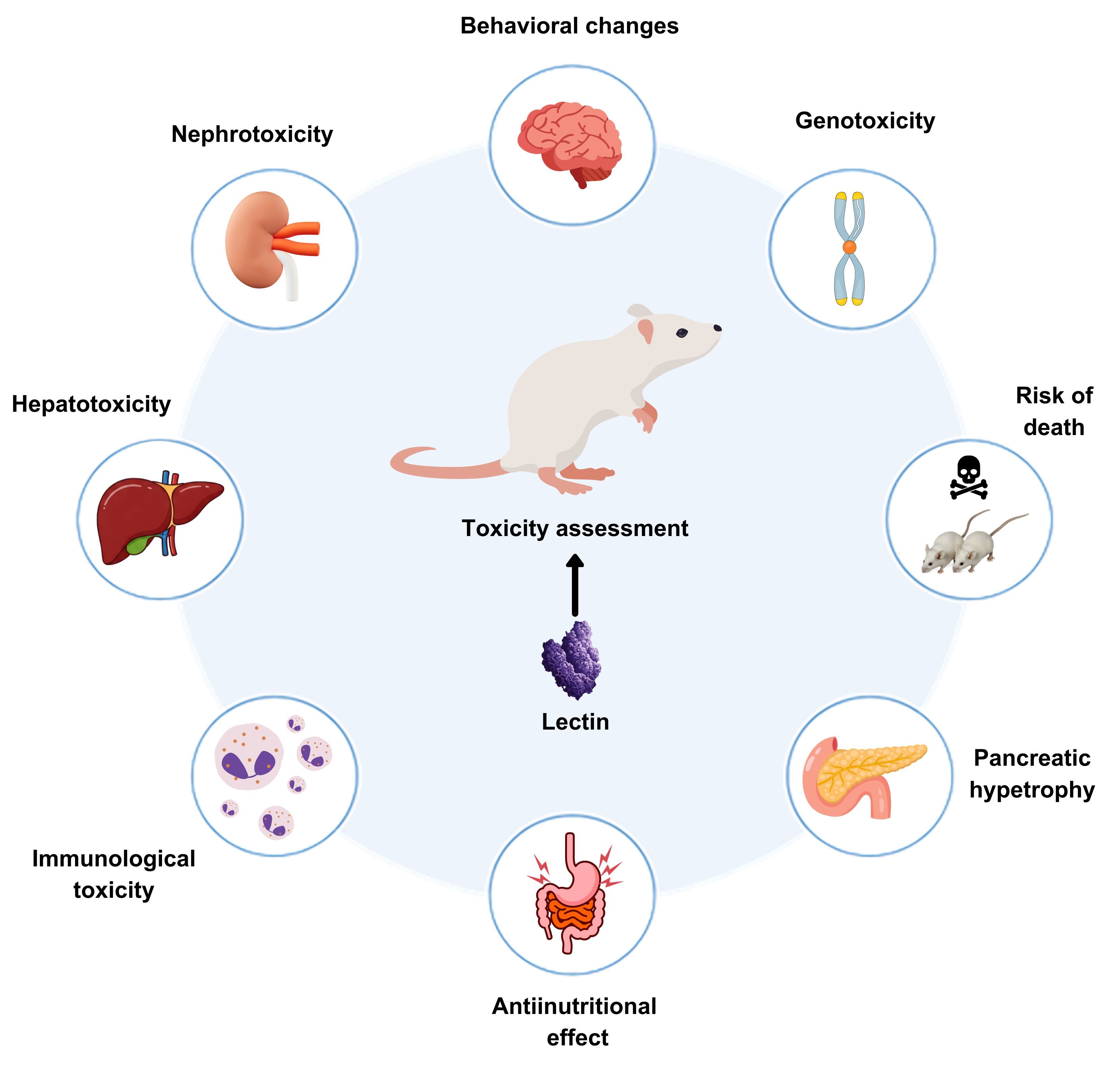
| Phaseolus acutifolius seeds (TBLF) | Rats | Oral (repeated doses) | Allergic response; pancreatic hypertrophy; intestinal lesions (50 mg/kg) | [103,104,105] |
| Tetracarpidium conophorum seeds (TCL) | Mice | Intraperitoneal (single dose) | Mortality (LD50: 50 mg/kg) | [93] |
| Zizyphus mauritiana seed (ZMSL) | Rats | Oral (single dose) | Mortality (1000 μg/kg) | [98] |
Disclaimer/Publisher’s Note: The statements, opinions and data contained in all publications are solely those of the individual author(s) and contributor(s) and not of MDPI and/or the editor(s). MDPI and/or the editor(s) disclaim responsibility for any injury to people or property resulting from any ideas, methods, instructions or products referred to in the content. |
© 2025 by the authors. Licensee MDPI, Basel, Switzerland. This article is an open access article distributed under the terms and conditions of the Creative Commons Attribution (CC BY) license.
Share and Cite
Marinho, A.d.O.; da Silva, M.N.B.; da Silva, S.P.; Nova, I.C.V.; Costa, J.A.d.; Paiva, P.M.G.; de Albuquerque, L.P.; Pontual, E.V.; Patriota, L.L.d.S.; Napoleão, T.H. Preclinical Risk Assessment of Plant Lectins with Pharmacological Applications: A Narrative Review. Molecules 2026, 31, 55. https://doi.org/10.3390/molecules31010055
Marinho AdO, da Silva MNB, da Silva SP, Nova ICV, Costa JAd, Paiva PMG, de Albuquerque LP, Pontual EV, Patriota LLdS, Napoleão TH. Preclinical Risk Assessment of Plant Lectins with Pharmacological Applications: A Narrative Review. Molecules. 2026; 31(1):55. https://doi.org/10.3390/molecules31010055
Chicago/Turabian StyleMarinho, Amanda de Oliveira, Maria Nívea Bezerra da Silva, Suéllen Pedrosa da Silva, Isabella Coimbra Vila Nova, Jainaldo Alves da Costa, Patrícia Maria Guedes Paiva, Lidiane Pereira de Albuquerque, Emmanuel Viana Pontual, Leydianne Leite de Siqueira Patriota, and Thiago Henrique Napoleão. 2026. "Preclinical Risk Assessment of Plant Lectins with Pharmacological Applications: A Narrative Review" Molecules 31, no. 1: 55. https://doi.org/10.3390/molecules31010055
APA StyleMarinho, A. d. O., da Silva, M. N. B., da Silva, S. P., Nova, I. C. V., Costa, J. A. d., Paiva, P. M. G., de Albuquerque, L. P., Pontual, E. V., Patriota, L. L. d. S., & Napoleão, T. H. (2026). Preclinical Risk Assessment of Plant Lectins with Pharmacological Applications: A Narrative Review. Molecules, 31(1), 55. https://doi.org/10.3390/molecules31010055