
Permeability of Phospholipid Membranes to Divalent Cations: The Effect of Pulsed Electric Field




Abstract
1. Introduction
2. Results and Discussion
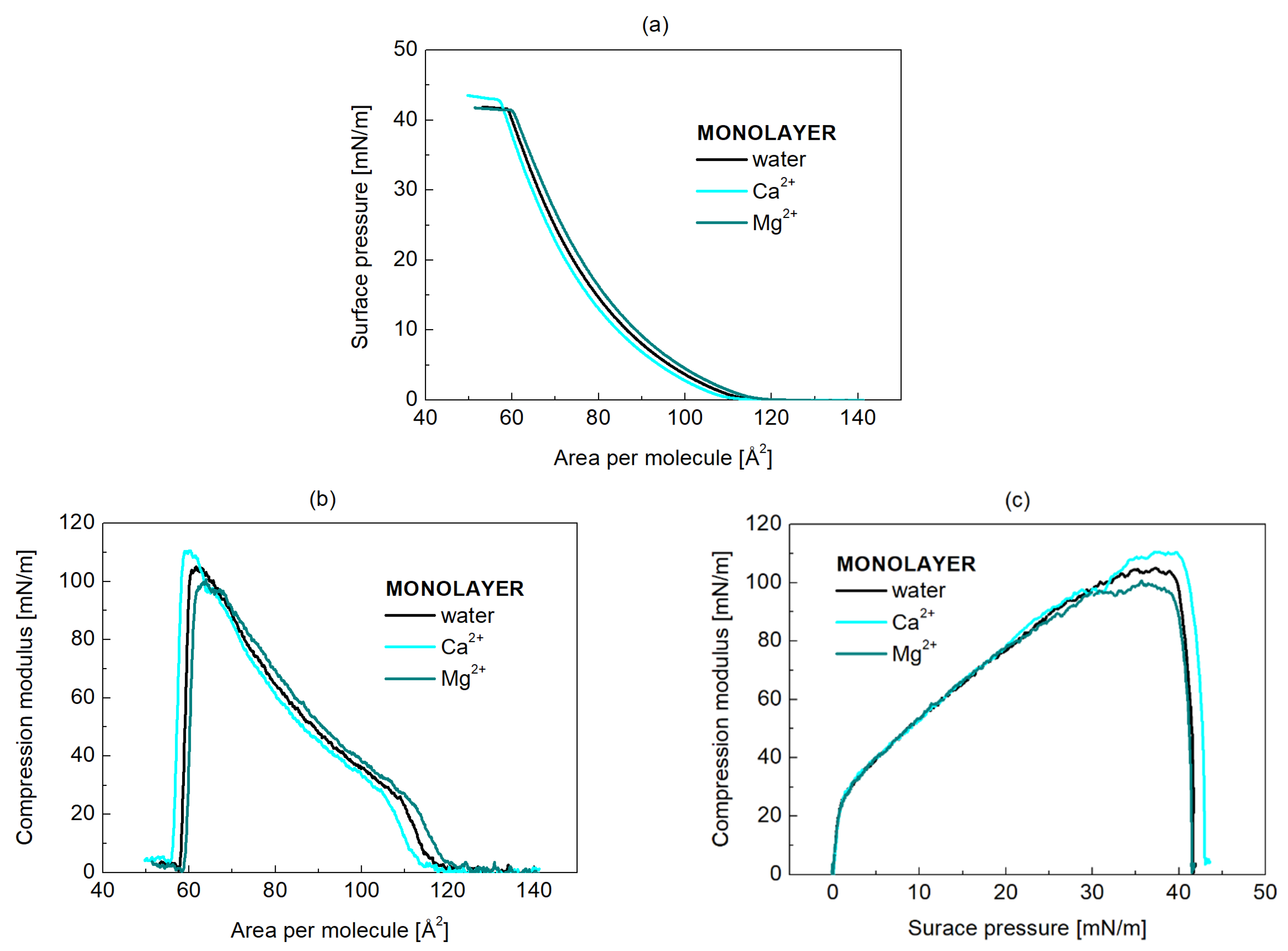
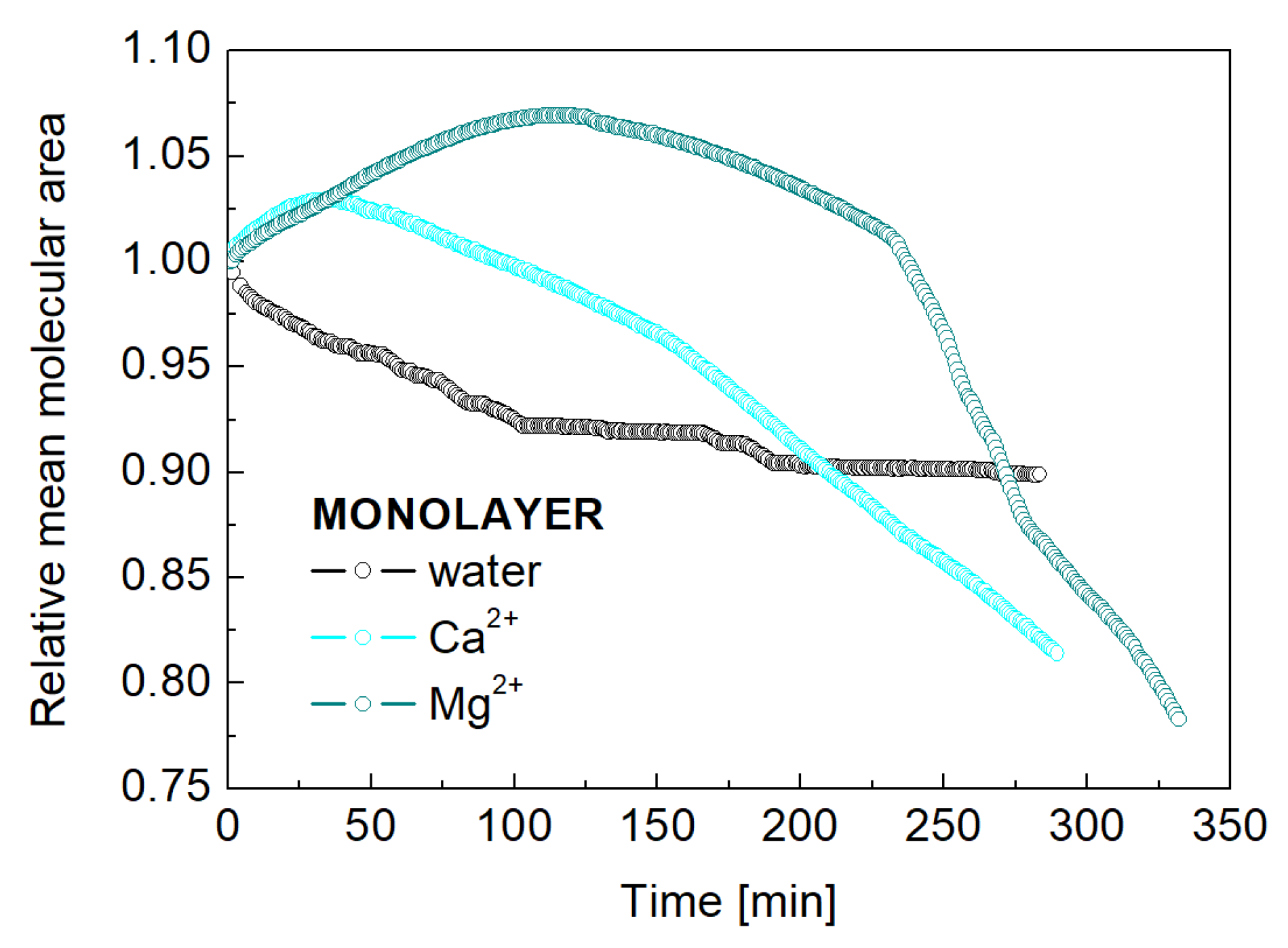
2.1. Langmuir Monolayers
2.2. Liposomes
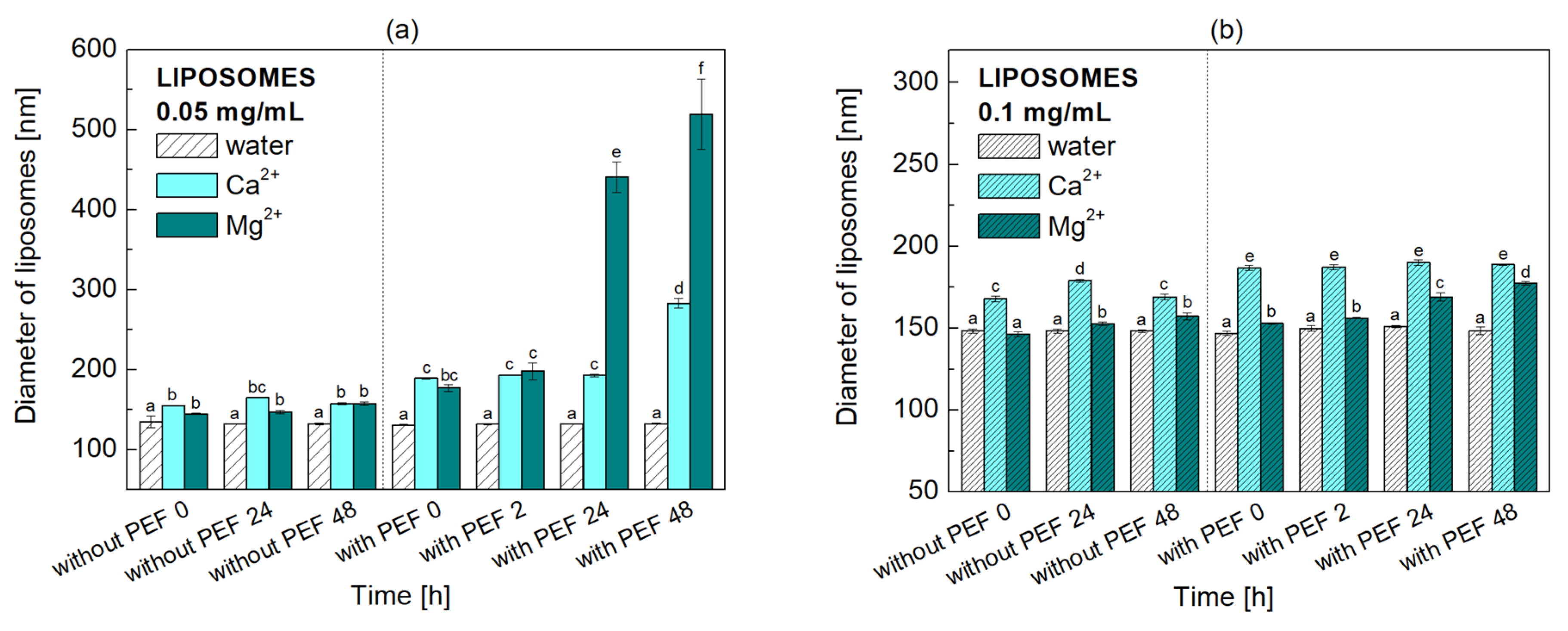
2.2.1. Particle Size Distribution and Polydispersity
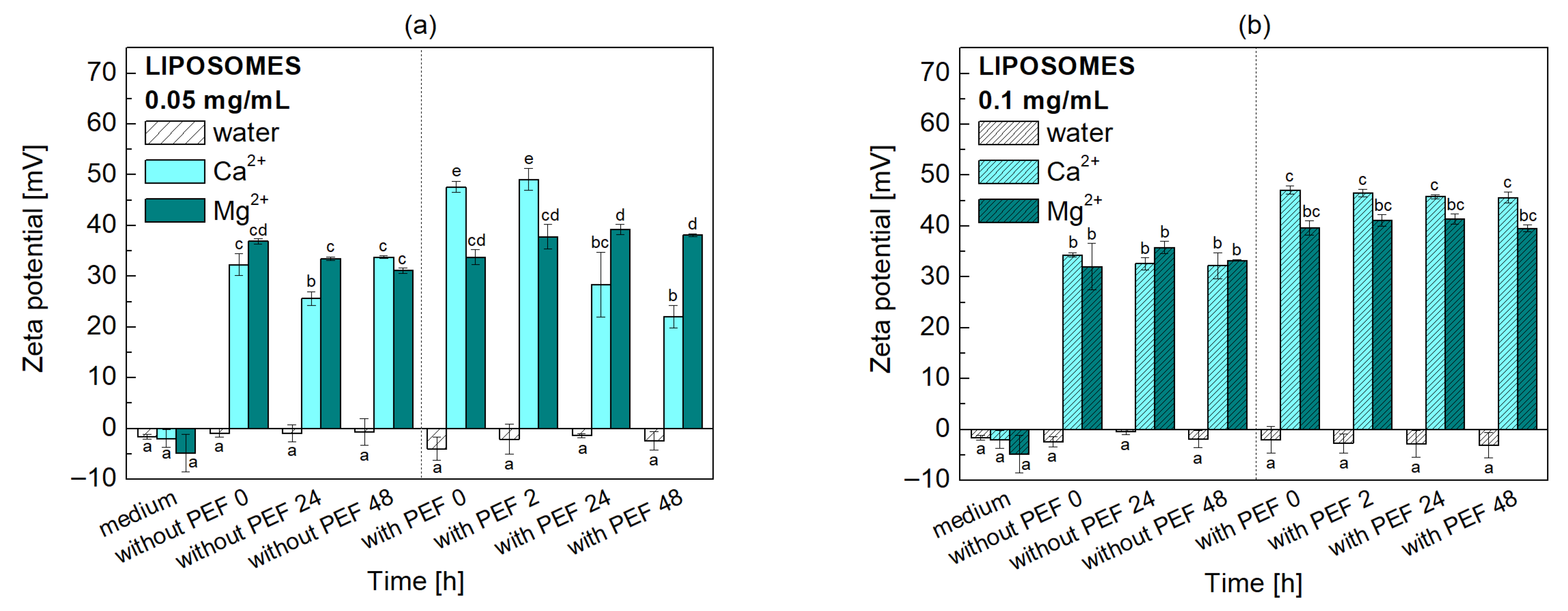
2.2.2. Zeta Potential
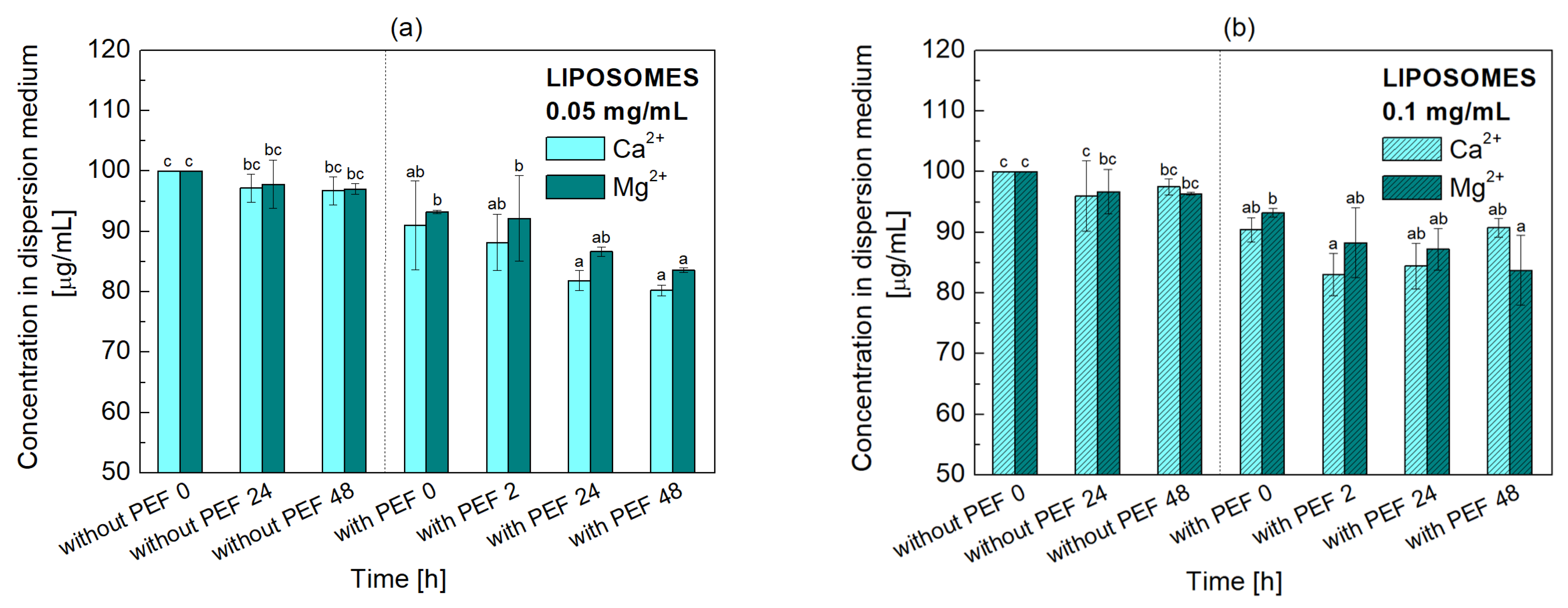
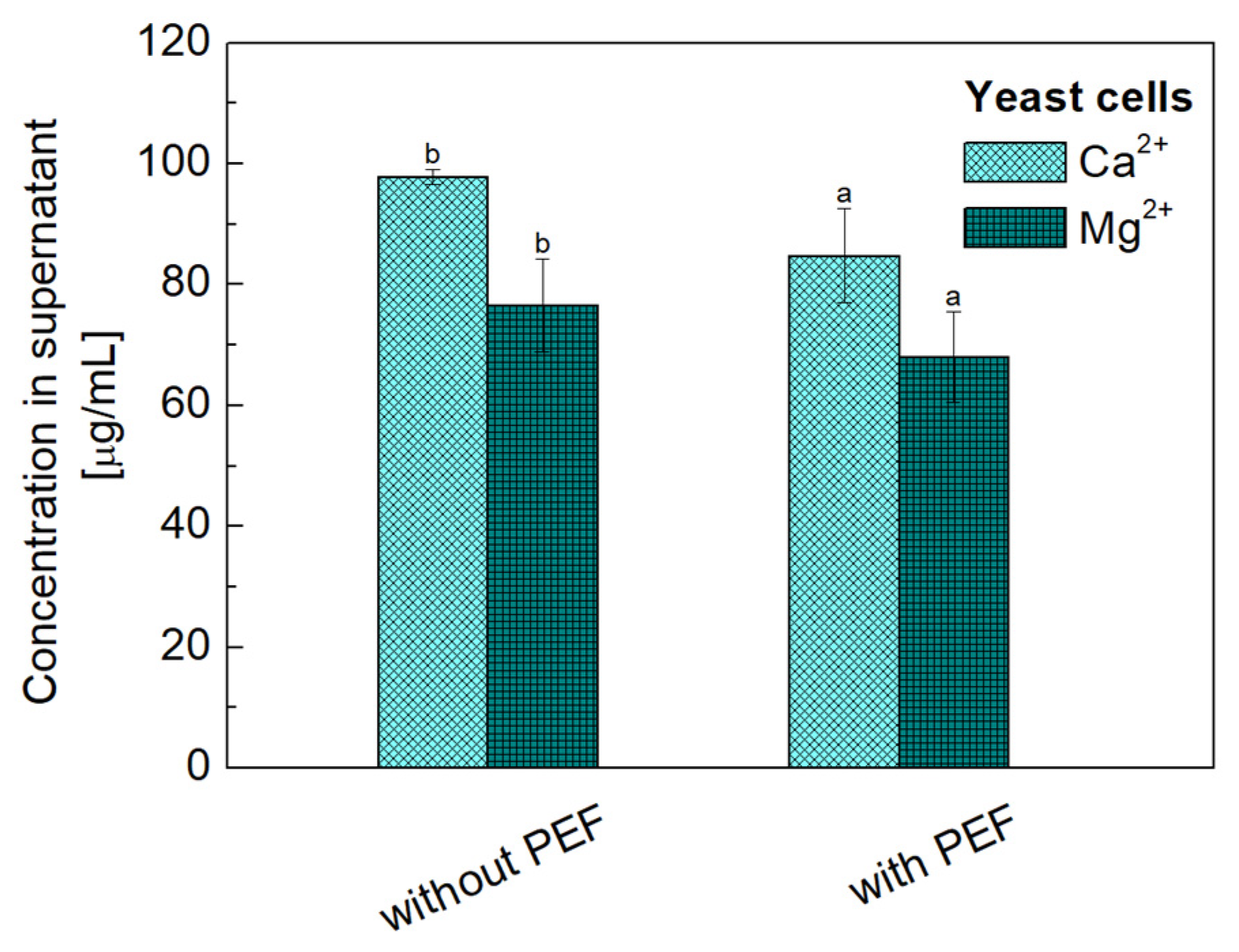
2.3. Penetration of Ions into Liposomes and Yeast Cells
3. Materials and Methods
3.1. Materials
3.2. Methods
3.2.1. Compression Isotherms
3.2.2. Monolayer Thickness
3.2.3. Adsorption Isotherms
3.2.4. Preparation of Liposome Dispersions
3.2.5. Yeast Cultivation
3.2.6. Optical Density Measurements
3.2.7. Stability of Liposome Dispersions
3.2.8. Electroporation of Samples
3.2.9. Spectrophotometric Measurements
3.2.10. Statistical Analysis
4. Conclusions
Supplementary Materials
Author Contributions
Funding
Institutional Review Board Statement
Informed Consent Statement
Data Availability Statement
Acknowledgments
Conflicts of Interest
References
- Lytras, F.; Psakis, G.; Gatt, R.; Cebrián, G.; Raso, J.; Valdramidis, V. Exploring the efficacy of pulsed electric fields (PEF) in microbial inactivation during food processing: A deep dive into the microbial cellular and molecular mechanisms. Innov. Food Sci. Emerg. Technol. 2024, 95, 103732. [Google Scholar] [CrossRef]
- Abdollahnejad, M.; Rahimnejad, M.; Ezoji, H. A systematic review in applications of pulsed electric field: Gaps in current studies for potential future research. Chem. Eng. Process. Process Intensif. 2025, 218, 110562. [Google Scholar] [CrossRef]
- Yarmush, M.L.; Golberg, A.; Serša, G.; Kotnik, T.; Miklavčič, D. Electroporation-based technologies for medicine: Principles, applications, and challenges. Annu. Rev. Biomed. Eng. 2014, 16, 295–320. [Google Scholar] [CrossRef]
- Marín-Sánchez, J.; Berzosa, A.; Álvarez, I.; Sánchez-Gimeno, C.; Raso, J. Pulsed electric fields effects on proteins: Extraction, structural modification, and enhancing enzymatic activity. Bioelectricity 2024, 6, 154–166. [Google Scholar] [CrossRef]
- Kotnik, T.; Rems, L.; Tarek, M.; Miklavčič, D. Membrane electroporation and electropermeabilization: Mechanisms and models. Annu. Rev. Biophys. 2019, 48, 63–91. [Google Scholar] [CrossRef] [PubMed]
- González-Cuevas, J.A.; Argüello, R.; Florentin, M.; André, F.M.; Mir, L.M. Experimental and theoretical brownian dynamics analysis of ion transport during cellular electroporation of E. coli bacteria. Ann. Biomed. Eng. 2024, 52, 103–123. [Google Scholar] [CrossRef] [PubMed]
- Pankiewicz, U.; Sujka, M.; Włodarczyk-Stasiak, M.; Mazurek, A.; Jamroz, J. Effect of pulse electric fields (PEF) on accumulation of magnesium and zinc ions in Saccharomyces cerevisiae cells. Food Chem. 2014, 157, 125–131. [Google Scholar] [CrossRef] [PubMed]
- Pankiewicz, U.; Sujka, M.; Jamroz, J. Bioaccumulation of the selected metal ions in Saccharomyces cerevisiae cells under treatment of the culture with pulsed electric field (PEF). J. Membr. Biol. 2015, 248, 943–949. [Google Scholar] [CrossRef]
- Kotnik, T.; Frey, W.; Sack, M.; Haberl, M.E.; Miklavčič, D. Electroporation-based applications in biotechnology. Trends Biotechnol. 2015, 33, 480–488. [Google Scholar] [CrossRef]
- Nowosad, K.; Sujka, M.; Pankiewicz, U.; Miklavčič, D.; Arczewska, M. Pulsed electric field (PEF) enhances iron uptake by the yeast Saccharomyces cerevisiae. Biomolecules 2021, 11, 850. [Google Scholar] [CrossRef]
- Sujka, M.; Pankiewicz, U.; Flisar, K.; Miklavčič, D.; Haberl-Meglič, Š. Effect of electroporation in a continuous flow system on bioaccumulation of magnesium, zinc and calcium ions in Lactobacillus rhamnosus B 442 cells. Bioelectrochemistry 2021, 140, 107769. [Google Scholar] [CrossRef]
- Guedert, R.; Andrade, D.L.; Silva, J.R.; Pintarelli, G.B.; Suzuki, D.O. Dynamic model of tissue electroporation based on biological dispersion and Joule heating. J. Appl. Phys. 2024, 135, 095109. [Google Scholar] [CrossRef]
- Sastry, S.K. Modeling of pulsed electric field processing. Food Innov. Adv. 2023, 2, 12. [Google Scholar] [CrossRef]
- Dutta, P.; Layton, A.T. Modeling calcium and magnesium balance: Regulation by calciotropic hormones and adaptations under varying dietary intake. iScience 2024, 27, 111077. [Google Scholar] [CrossRef] [PubMed]
- Pessina, G.P.; Aldinucci, C.; Palmi, M.; Sgaragli, G.; Benocci, A.; Meini, A.; Pessina, F. Pulsed electromagnetic fields affect the intracellular calcium concentrations in human astrocytoma cells. Bioelectromagnetics 2001, 22, 503–510. [Google Scholar] [CrossRef]
- Pall, M.L. Electromagnetic fields act via activation of voltage-gated calcium channels (VGCCs). J. Cell. Mol. Med. 2013, 17, 958–965. [Google Scholar] [CrossRef]
- Frandsen, S.K.; Vissing, M.; Gehl, J.A. Comprehensive review of calcium electroporation–A novel cancer treatment modality. Cancers 2020, 12, 290. [Google Scholar] [CrossRef]
- Luchini, A.; Vitiello, G. Mimicking the mammalian plasma membrane: An overview of lipid membrane models for biophysical studies. Biomimetics 2021, 6, 3. [Google Scholar] [CrossRef]
- Carman, G.M.; Han, G.-S. Regulation of phospholipid synthesis in the yeast Saccharomyces cerevisiae. Annu. Rev. Biochem. 2011, 80, 859–883. [Google Scholar] [CrossRef] [PubMed]
- Kučerka, N.; Ermakova, E.; Dushanov, E.; Kholmurodov, K.T.; Kurakin, S.; Želinská, K.; Uhríková, D. Cation–zwitterionic lipid interactions are affected by the lateral area per lipid. Langmuir 2021, 37, 278–288. [Google Scholar] [CrossRef]
- Kurakin, S.; Ivankov, O.; Skoi, V.; Kuklin, A.; Uhríková, D.; Kučerka, N. Cations do not alter the membrane structure of POPC–A lipid with an intermediate area. Front. Mol. Biosci. 2022, 9, 926591. [Google Scholar] [CrossRef] [PubMed]
- Dong, Y.; Fu, L.; Song, J.; Zhang, S.; Li, X.; Fang, W.; Cui, Q.; Gao, L. Thermodynamic driving forces for divalent cations binding to zwitterionic phospholipid membranes. J. Phys. Chem. Lett. 2022, 13, 11237–11244. [Google Scholar] [CrossRef] [PubMed]
- Sule, K.; Anikovskiy, M.; Prenner, E.J. Lipid structure determines the differential impact of single metal additions and binary mixtures of manganese, calcium and magnesium on membrane fluidity and liposome size. Int. J. Mol. Sci. 2023, 24, 1066. [Google Scholar] [CrossRef]
- Skeens, A.; Markle, J.M.; Petipas, G.; Frey, S.L.; Legleiter, J. Divalent cations promote huntingtin fibril formation on endoplasmic reticulum derived and model membranes. Biochim. Biophys. Acta-Biomembr. 2024, 1866, 184339. [Google Scholar] [CrossRef]
- Alam, P.; Kumar, P.; Sahu, H.; Sardana, D.; Kundu, P.; Chand, A.K.; Sen, S. Effect of divalent cations on polarity and hydration at the lipid/water interface probed by 4-aminophthalimide-based dyes. J. Phys. Chem. B 2025, 129, 930–941. [Google Scholar] [CrossRef]
- Jurak, M.; Miñones, J., Jr. Interactions of lauryl gallate with phospholipid components of biological membranes. Biochim. Biophys. Acta Biomembr. 2016, 1858, 1821–1832. [Google Scholar] [CrossRef]
- Davies, J.T.; Rideal, E.K. Chapter 5-Properties of monolayers. In Interfacial Phenomena, 2nd ed.; Davies, J.T., Rideal, E.K., Eds.; Academic Press: Amsterdam, The Netherlands, 1961; pp. 217–281. [Google Scholar] [CrossRef]
- Marsh, D. Lateral pressure in membranes. Biochim. Biophys. Acta-Biomembr. 1996, 1286, 183–223. [Google Scholar] [CrossRef]
- Cyert, M.S.; Philpott, C.C. Regulation of cation balance in Saccharomyces cerevisiae. Genetics 2013, 193, 677–713. [Google Scholar] [CrossRef]
- Miñones, J., Jr.; Rodríguez Patino, J.M.; Conde, O.; Carrera, C.; Seoane, R. The effect of polar groups on structural characteristics of phospholipid monolayers spread at the air–water interface. Colloids Surf. A Physicochem. Eng. Asp. 2002, 203, 273–286. [Google Scholar] [CrossRef]
- Burgess, J.; Raven, E. Calcium in biological systems. Adv. Inorg. Chem. 2009, 61, 251–366. [Google Scholar] [CrossRef]
- Liu, T.; Wang, L.; Pei, S.; Yang, S.; Wu, J.; Liu, W.; Wu, Q. Biological functions and detection strategies of magnesium ions: From basic necessity to precise analysis. Analyst 2025, 150, 2979–2999. [Google Scholar] [CrossRef] [PubMed]
- Nsairat, H.; Khater, D.; Sayed, U.; Odeh, F.; Al Bawab, A.; Alshaer, W. Liposomes: Structure, composition, types, and clinical applications. Heliyon 2022, 8, e09394. [Google Scholar] [CrossRef]
- Akashi, K.; Miyata, H.; Itoh, H.; Kinosita, K., Jr. Formation of giant liposomes promoted by divalent cations: Critical role of electrostatic repulsion. Biophys. J. 1998, 74, 2973–2982. [Google Scholar] [CrossRef]
- Roldán-Vargas, S.; Martín-Molina, A.; Quesada-Pérez, M.; Barnadas-Rodríguez, R.; Estelrich, J.; Callejas-Fernández, J. Aggregation of liposomes induced by calcium: A structural and kinetic study. Phys. Rev. E 2007, 75, 021912. [Google Scholar] [CrossRef]
- Marson, G.V.; Saturno, R.P.; Comunian, T.A.; Consoli, L.; Machado, M.T.d.C.; Hubinger, M.D. Maillard conjugates from spent brewer’s yeast by-product as an innovative encapsulating material. Food Res. Int. 2020, 136, 109365. [Google Scholar] [CrossRef]
- Dadkhodazade, E.; Mohammadi, A.; Shojaee-Aliabadi, S.; Mortazavian, A.M.; Mirmoghtadaie, L.; Hosseini, S.M. Yeast cell microcapsules as a novel carrier for cholecalciferol encapsulation: Development, characterization and release properties. Food Biophys. 2018, 13, 404–411. [Google Scholar] [CrossRef]
- Soto, E.R.; Rus, F.; Li, H.; Garceau, C.; Chicca, J.; Elfawal, M.; Gazzola, D.; Nielsen, M.K.; Urban, J.F., Jr.; Aroian, R.V.; et al. Yeast particle encapsulation of scaffolded terpene compounds for controlled terpene release. Foods 2021, 10, 1207. [Google Scholar] [CrossRef]
- Shi, G.; Rao, L.; Yu, H.; Xiang, H.; Pen, G.; Long, S.; Yang, C. Yeast-cell-based microencapsulation of chlorogenic acid as a water-soluble antioxidant. J. Food Eng. 2007, 80, 1060–1067. [Google Scholar] [CrossRef]
- Nakhaee Moghadam, M.; Jamshidi, A.; Fazly Bazzaz, B.S.; Azizzadeh, M.; Movaffagh, J. Saccharomyces cerevisiae as a delivery system of Zataria multiflora Boiss. essential oil as a natural preservative for food applications. J. Sci. Food Agric. 2021, 101, 2006–2013. [Google Scholar] [CrossRef]
- Nowosad, K.; Sujka, M.; Zielińska, E.; Pankiewicz, U. Accumulation of vitamin C in yeast under pulsed electric field (PEF) conditions. Appl. Sci. 2022, 12, 10206. [Google Scholar] [CrossRef]
- Nowosad, K.; Sujka, M.; Wyrostek, J. Preparation of yeast flakes enriched with iron and vitamin B12 using a pulsed electric field technology. J. Food Process Eng. 2023, 46, e14245. [Google Scholar] [CrossRef]
- Dimopoulos, G.; Katsimichas, A.; Tsimogiannis, D.; Oreopoulou, V.; Taoukis, P. Cell permeabilization processes for improved encapsulation of oregano essential oil in yeast cells. J. Food Eng. 2021, 294, 110408. [Google Scholar] [CrossRef]
- Klasczyk, B.; Knecht, V.; Lipowsky, R.; Dimova, R. Interactions of alkali metal chlorides with phosphatidylcholine vesicles. Langmuir 2010, 26, 18951–18958. [Google Scholar] [CrossRef]
- Jurkiewicz, P.; Cwiklik, L.; Vojtíšková, A.; Jungwirth, P.; Hof, M. Structure, dynamics, and hydration of POPC/POPS bilayers suspended in NaCl, KCl, and CsCl solutions. Biochim. Biophys. Acta Biomembr. 2012, 1818, 609–616. [Google Scholar] [CrossRef]
- Wiącek, A.E. Comparison of n-tetradecane/electrolyte emulsions properties stabilized by DPPC and DPPC vesicles in the electrolyte solution. Colloids Surf. B Biointerfaces 2011, 83, 108–115. [Google Scholar] [CrossRef] [PubMed]
- Perrier, D.L.; Rems, L.; Boukany, P.E. Lipid vesicles in pulsed electric fields: Fundamental principles of the membrane response and its biomedical applications. Adv. Colloid Interface Sci. 2017, 249, 248–271. [Google Scholar] [CrossRef]
- He, Z.; Cui, H.; Hao, S.; Wang, L.; Zhou, J. Electric-field effects on ionic hydration: A molecular dynamics study. J. Phys. Chem. B 2018, 122, 5991–5998. [Google Scholar] [CrossRef] [PubMed]
- Krassowska, W.; Filev, P.D. Modeling electroporation in a single cell. Biophys. J. 2007, 92, 404–417. [Google Scholar] [CrossRef]
- Jara-Quijada, E.; Pérez-Won, M.; Tabilo-Munizaga, G.; González-Cavieres, L.; Lemus-Mondaca, L. An overview focusing on food liposomes and their stability to electric fields. Food Eng. Rev. 2022, 14, 292–306. [Google Scholar] [CrossRef]
- Ortiz, A.; Killian, J.A.; Verkleij, A.J.; Wilschut, J. Membrane fusion and the lamellar-to-inverted-hexagonal phase transition in cardiolipin vesicle systems induced by divalent cations. Biophys. J. 1999, 77, 2003–2014. [Google Scholar] [CrossRef]
- Dacic, M.; Jackman, J.A.; Yorulmaz, S.; Zhdanov, V.P.; Kasemo, B.; Cho, N.-J. Influence of divalent cations on deformation and rupture of adsorbed lipid vesicles. Langmuir 2016, 32, 6486–6495. [Google Scholar] [CrossRef]
- Schoenbach, K.H.; Pakhomov, A.G.; Semenov, I.; Xiao, S.; Pakhomova, O.N.; Ibey, B.L. Ion transport into cells exposed to monopolar and bipolar nanosecond pulses. Bioelectrochemistry 2015, 103, 44–51. [Google Scholar] [CrossRef] [PubMed]
- Borah, B.J.; Yashonath, S. Ions in water: Role of attractive interactions in size dependent diffusivity maximum. J. Chem. Phys. 2010, 133, 114504. [Google Scholar] [CrossRef] [PubMed]
- Rodriguez Patino, J.M.; Carrera Sánchez, C.; Rodriguez Nińo, M.R. Morphological and structural characteristics of monoglyceride monolayers at the air-water interface observed by Brewster angle microscopy. Langmuir 1999, 15, 2484–2492. [Google Scholar] [CrossRef]
- Winsel, K.; Hönig, D.; Lunkenheimer, K.; Geggel, K.; Witt, C. Quantitative Brewster angle microscopy of the surface film of human broncho-alveolar lavage fluid. Eur. Biophys. J. 2003, 32, 544–552. [Google Scholar] [CrossRef]
- Sęk, A.; Perczyk, P.; Szcześ, A.; Machatschek, R.; Wydro, P. Studies on the interactions of tiny amounts of common ionic surfactants with unsaturated phosphocholine lipid model membranes. Chem. Phys. Lipids 2022, 248, 105236. [Google Scholar] [CrossRef] [PubMed]
- Soares, E.V. Flocculation in Saccharomyces cerevisiae: A review. J. Appl. Microbiol. 2011, 110, 1–18. [Google Scholar] [CrossRef]
- Heinz, V.; Toepfl, S.; Knorr, D. Impact of temperature on lethality and energy efficiency of apple juice pasteurization by pulsed electric fields treatment. Innov. Food Sci. Emerg. Technol. 2003, 4, 167–175. [Google Scholar] [CrossRef]



| Chemical Property | Ca2+ | Mg2+ | References |
|---|---|---|---|
| Ionic radii (Å) | 0.99 | 0.65 | [23] |
| 1.00 | 0.75 | [21] | |
| 1.00 | 0.72 | [25] | |
| Hydrated radii (Å) | 4.19 | 4.28 | [23] |
| Solvation energy (kcal/mol) | −354.7 | −433.3 | [23] |
| Electronegativity | 1.00 | 1.20 | [23] |
| POPC Monolayer | [Å2/molec.] | [mN/m] | [mN/m] | [Å2/molec.] | [Å] | [nm] |
|---|---|---|---|---|---|---|
| water | 111.7 | 41.7 | 97.7/105.0 | 61.6 | 8.86 | 2.73/2.90 |
| Ca2+ | 108.9 | 42.9 | 97.8/110.6 | 60.3 | 8.76 | 3.09/3.26 |
| Mg2+ | 114.5 | 41.4 | 96.3/100.6 | 63.9 | 9.02 | 2.29/2.49 |
| Time [h] | Polydispersity Index (PDI) ± Standard Deviation for 0.05 mg/mL Liposome Dispersions | ||
|---|---|---|---|
| in Water | in Ca2+ Solution | in Mg2+ Solution | |
| without PEF | |||
| 0 | 0.198 ± 0.028 c | 0.093 ± 0.009 a | 0.098 ± 0.013 a |
| 24 | 0.172 ± 0.005 bc | 0.121 ± 0.015 a | 0.103 ± 0.004 a |
| 48 | 0.226 ± 0.007 c | 0.159 ± 0.008 b | 0.142 ± 0.016 a |
| with PEF | |||
| 0 | 0.172 ± 0.005 bc | 0.202 ± 0.025 c | 0.240 ± 0.018 cd |
| 2 | 0.164 ± 0.016 b | 0.205 ± 0.015 c | 0.310 ± 0.058 d |
| 24 | 0.166 ± 0.013 b | 0.220 ± 0.017 c | 0.640 ± 0.042 f |
| 48 | 0.172 ± 0.023 bc | 0.394 ± 0.027 e | 0.670 ± 0.078 f |
| Time [h] | Polydispersity Index (PDI) ± Standard Deviation for 0.1 mg/mL Liposome Dispersions | ||
|---|---|---|---|
| in Water | in Ca2+ Solution | in Mg2+ Solution | |
| without PEF | |||
| 0 | 0.141 ± 0.020 b | 0.067 ± 0.005 a | 0.061 ± 0.002 a |
| 24 | 0.158 ± 0.019 b | 0.132 ± 0.013 b | 0.099 ± 0.013 a |
| 48 | 0.165 ± 0.006 bc | 0.078 ± 0.011 a | 0.146 ± 0.040 b |
| with PEF | |||
| 0 | 0.150 ± 0.023 b | 0.160 ± 0.002 b | 0.111 ± 0.009 a |
| 2 | 0.140 ± 0.020 b | 0.165 ± 0.015 bc | 0.140 ± 0.016 b |
| 24 | 0.175 ± 0.025 c | 0.169 ± 0.011 bc | 0.222 ± 0.012 d |
| 48 | 0.160 ± 0.012 b | 0.173 ± 0.020 c | 0.280 ± 0.023 e |
Disclaimer/Publisher’s Note: The statements, opinions and data contained in all publications are solely those of the individual author(s) and contributor(s) and not of MDPI and/or the editor(s). MDPI and/or the editor(s) disclaim responsibility for any injury to people or property resulting from any ideas, methods, instructions or products referred to in the content. |
© 2026 by the authors. Licensee MDPI, Basel, Switzerland. This article is an open access article distributed under the terms and conditions of the Creative Commons Attribution (CC BY) license.
Share and Cite
Jurak, M.; Sujka, M.; Wiącek, A.E.; Pankiewicz, U. Permeability of Phospholipid Membranes to Divalent Cations: The Effect of Pulsed Electric Field. Molecules 2026, 31, 151. https://doi.org/10.3390/molecules31010151
Jurak M, Sujka M, Wiącek AE, Pankiewicz U. Permeability of Phospholipid Membranes to Divalent Cations: The Effect of Pulsed Electric Field. Molecules. 2026; 31(1):151. https://doi.org/10.3390/molecules31010151
Chicago/Turabian StyleJurak, Małgorzata, Monika Sujka, Agnieszka Ewa Wiącek, and Urszula Pankiewicz. 2026. "Permeability of Phospholipid Membranes to Divalent Cations: The Effect of Pulsed Electric Field" Molecules 31, no. 1: 151. https://doi.org/10.3390/molecules31010151
APA StyleJurak, M., Sujka, M., Wiącek, A. E., & Pankiewicz, U. (2026). Permeability of Phospholipid Membranes to Divalent Cations: The Effect of Pulsed Electric Field. Molecules, 31(1), 151. https://doi.org/10.3390/molecules31010151