Chitin-Assisted Fabrication of an Fe3O4/BiOCl Composite for Visible-Light Photocatalytic Degradation of Ciprofloxacin



Abstract
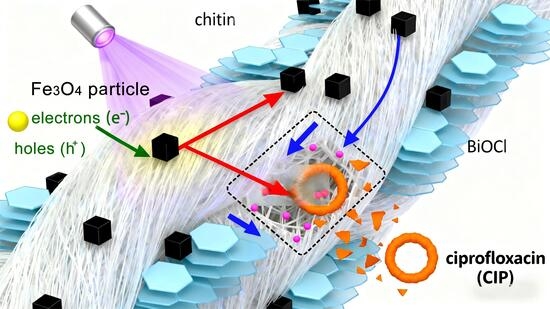
1. Introduction
2. Results and Discussion
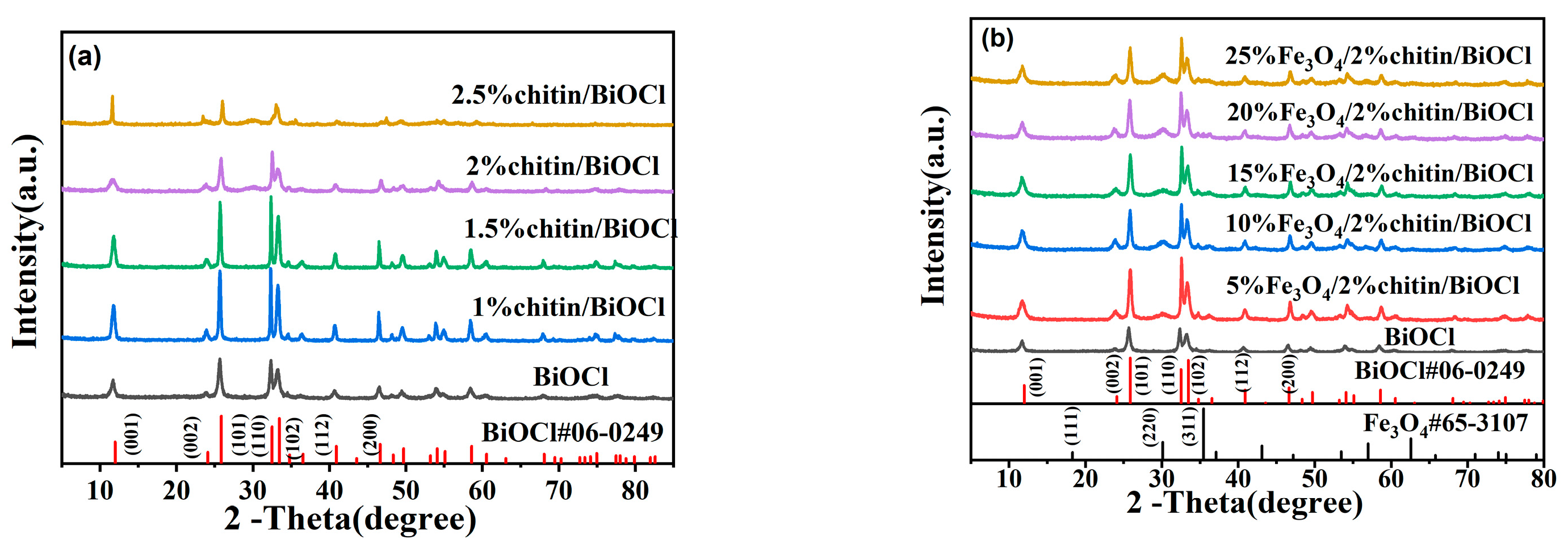
2.1. Crystal Structure (XRD) Analysis
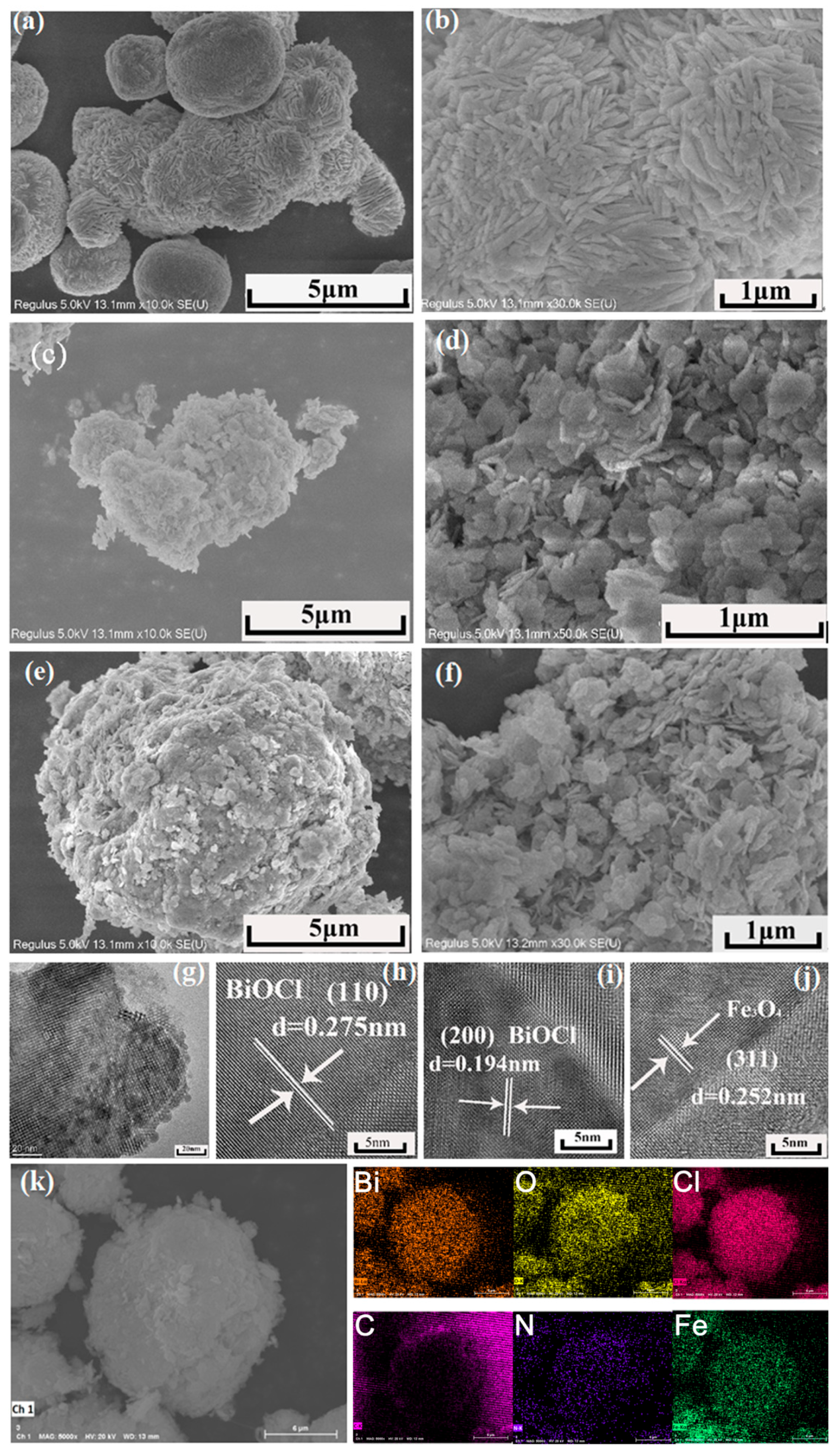
2.2. Morphological Analysis (SEM and TEM)
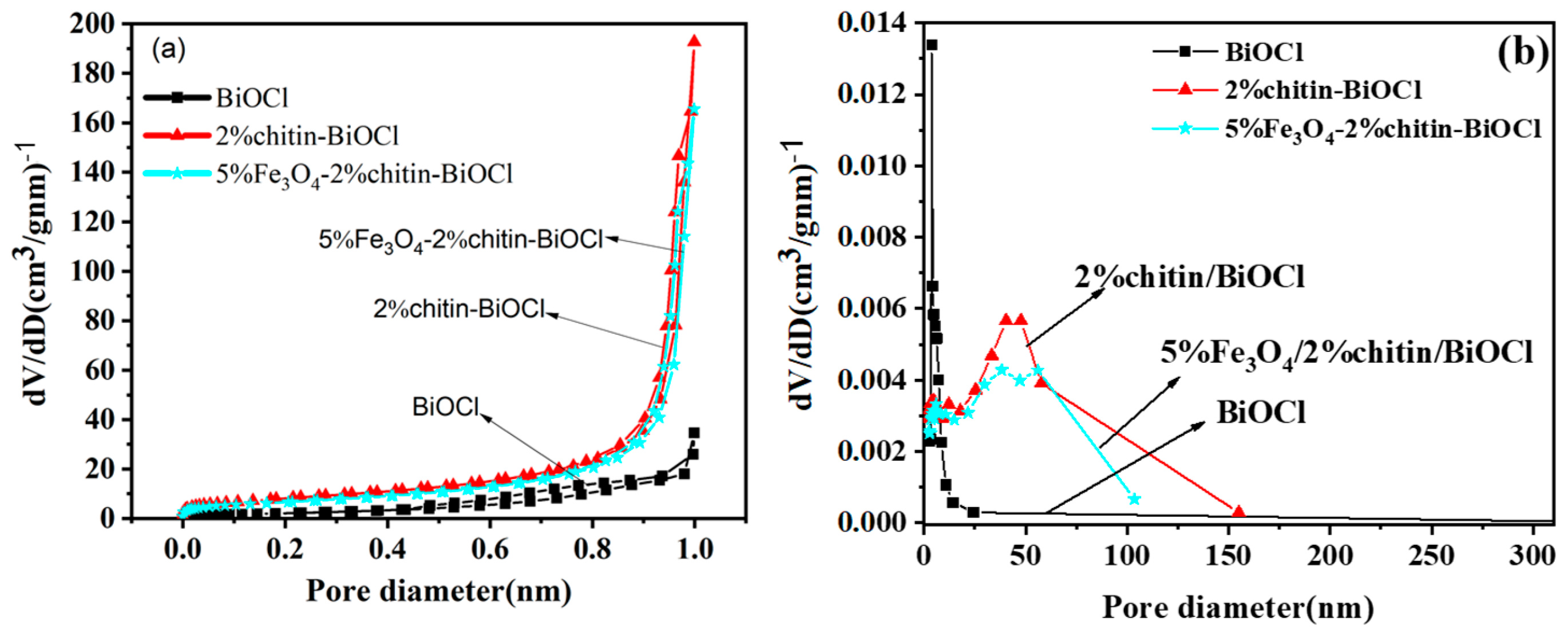
2.3. Surface Area (BET) Analysis
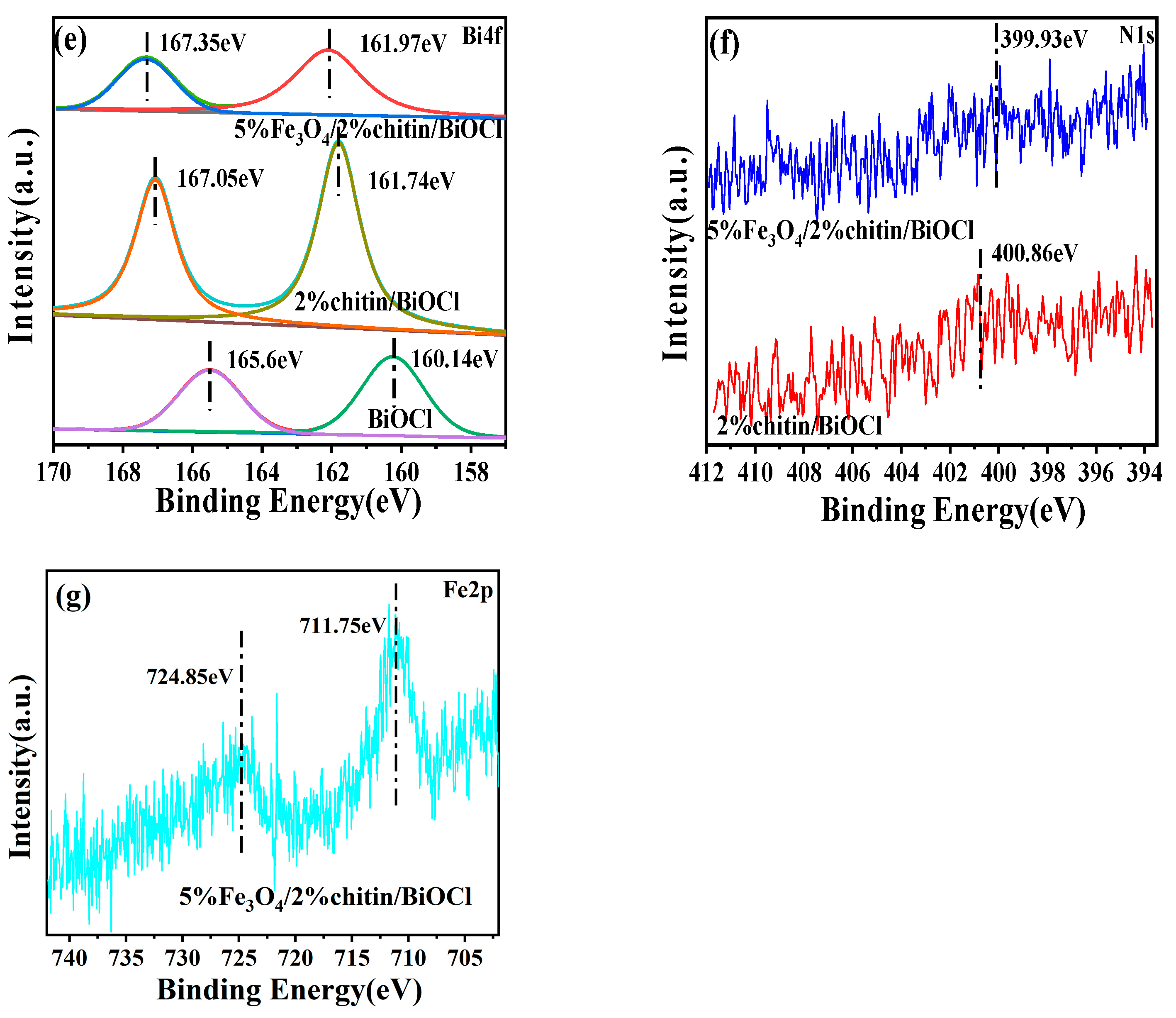
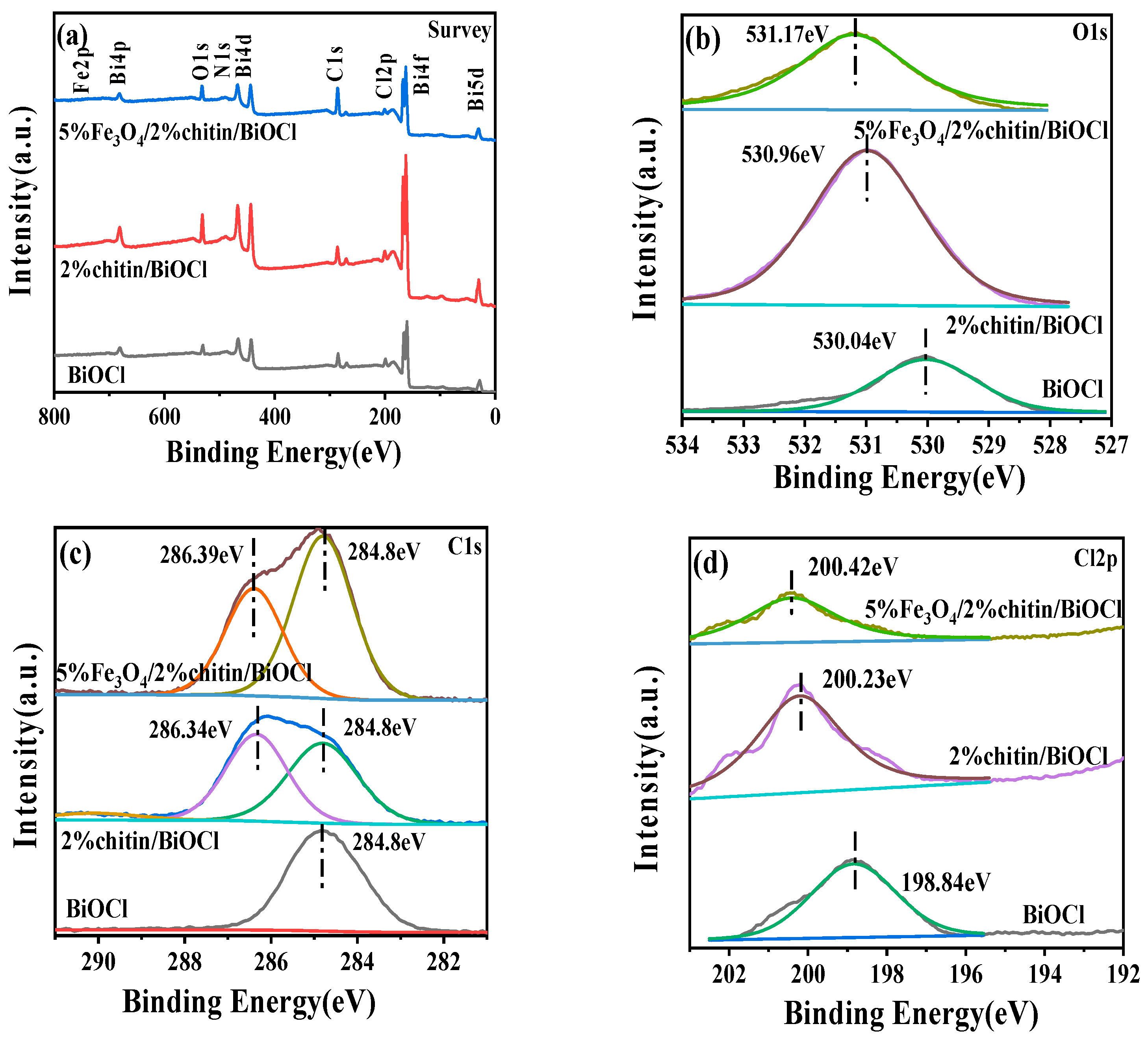
2.4. XPS Analysis
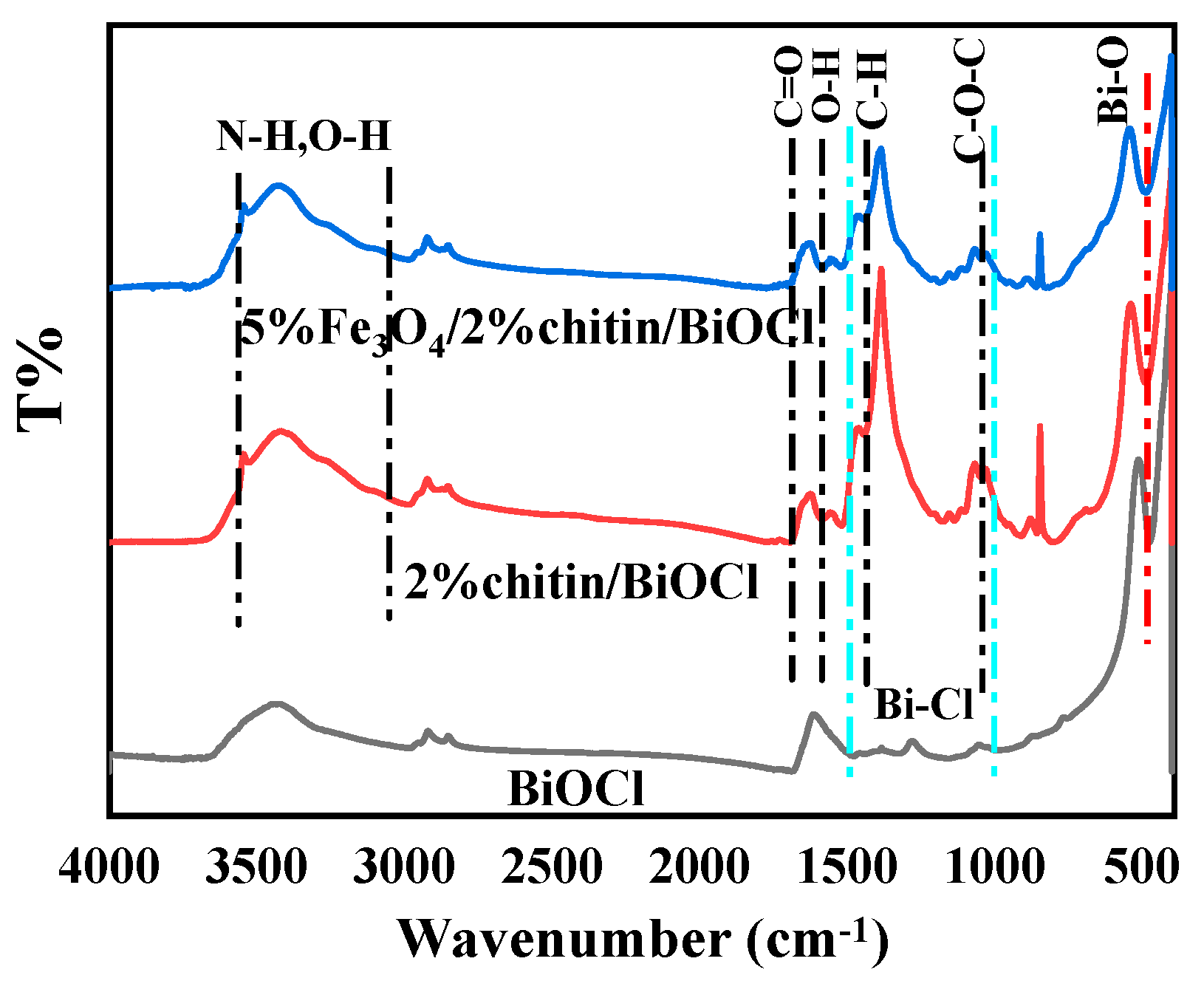
2.5. FT-IR Analysis
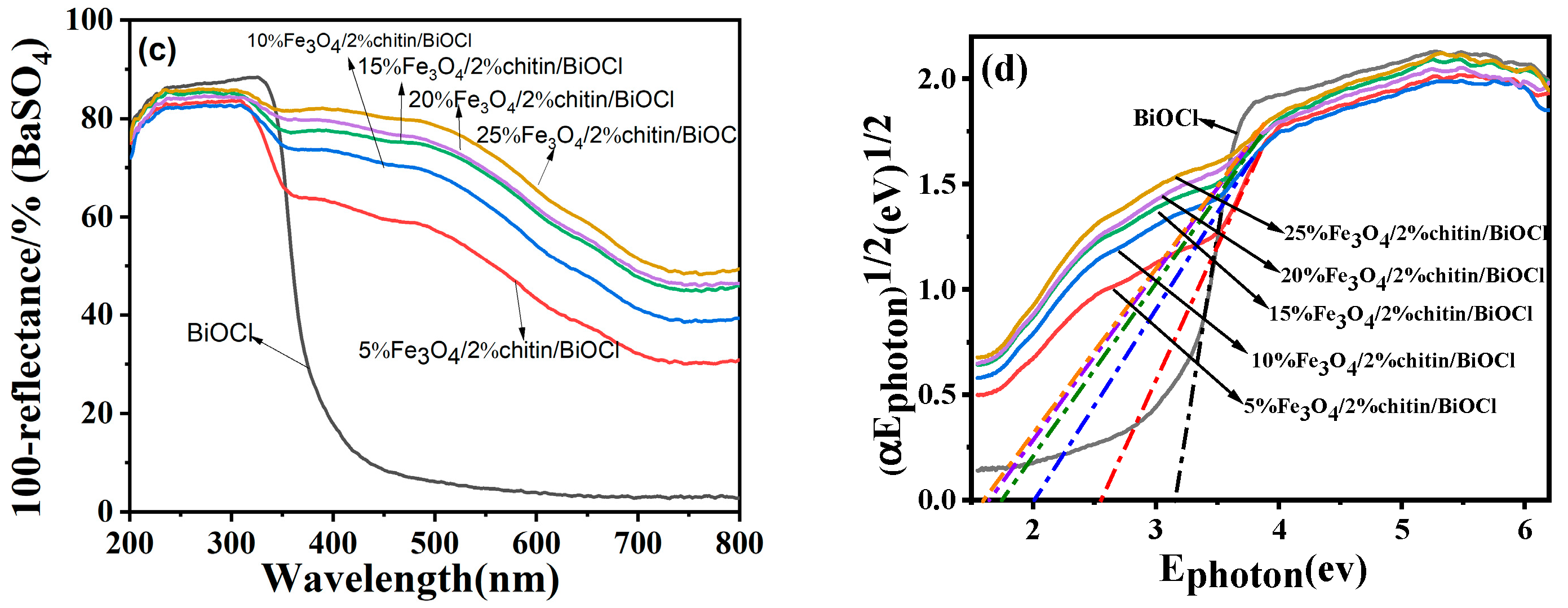
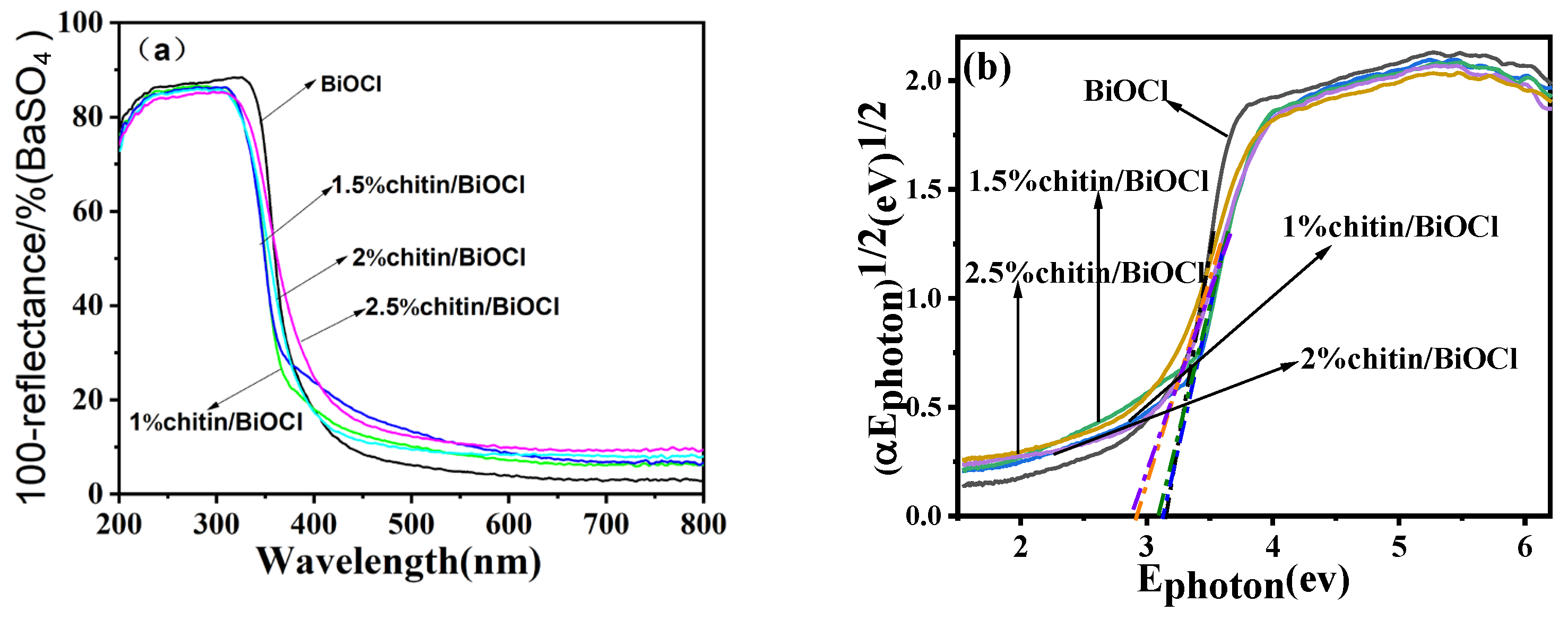
2.6. UV-Vis Diffuse Reflectance Spectroscopy Analysis
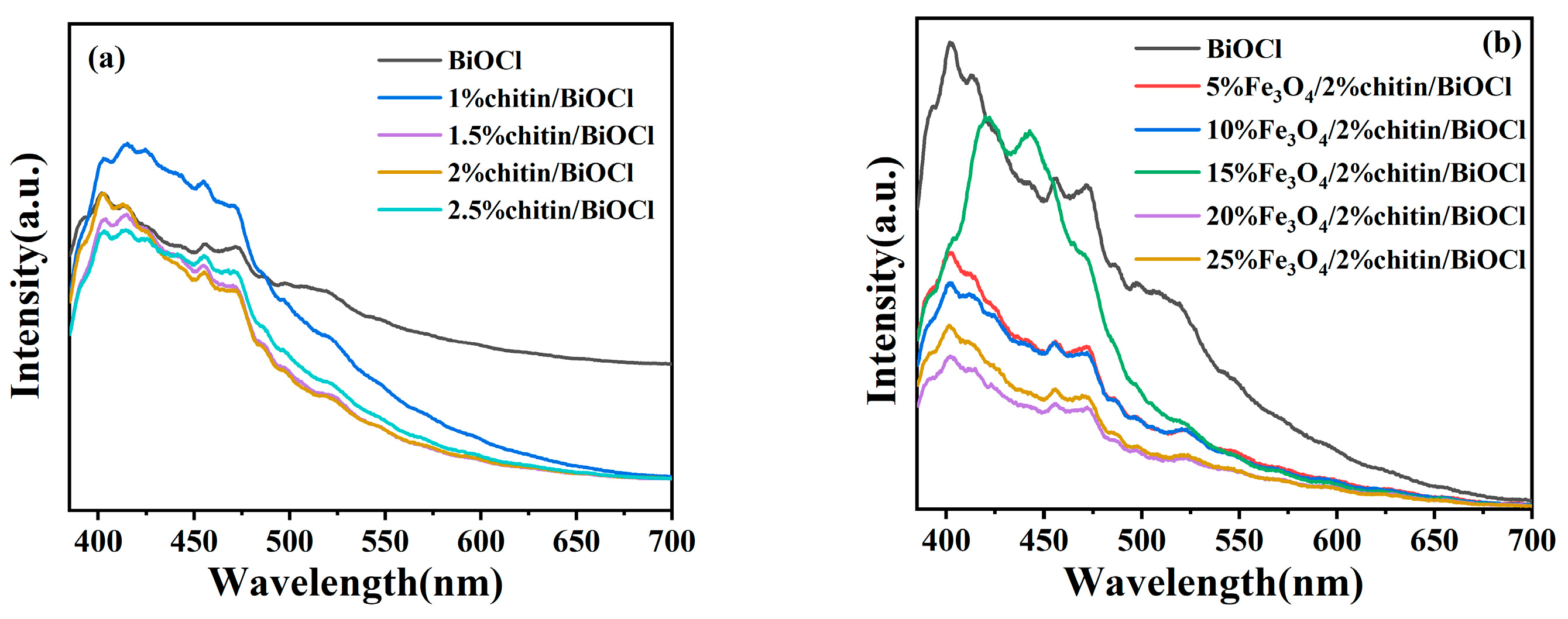
2.7. Photoluminescence (PL) Spectra Analysis
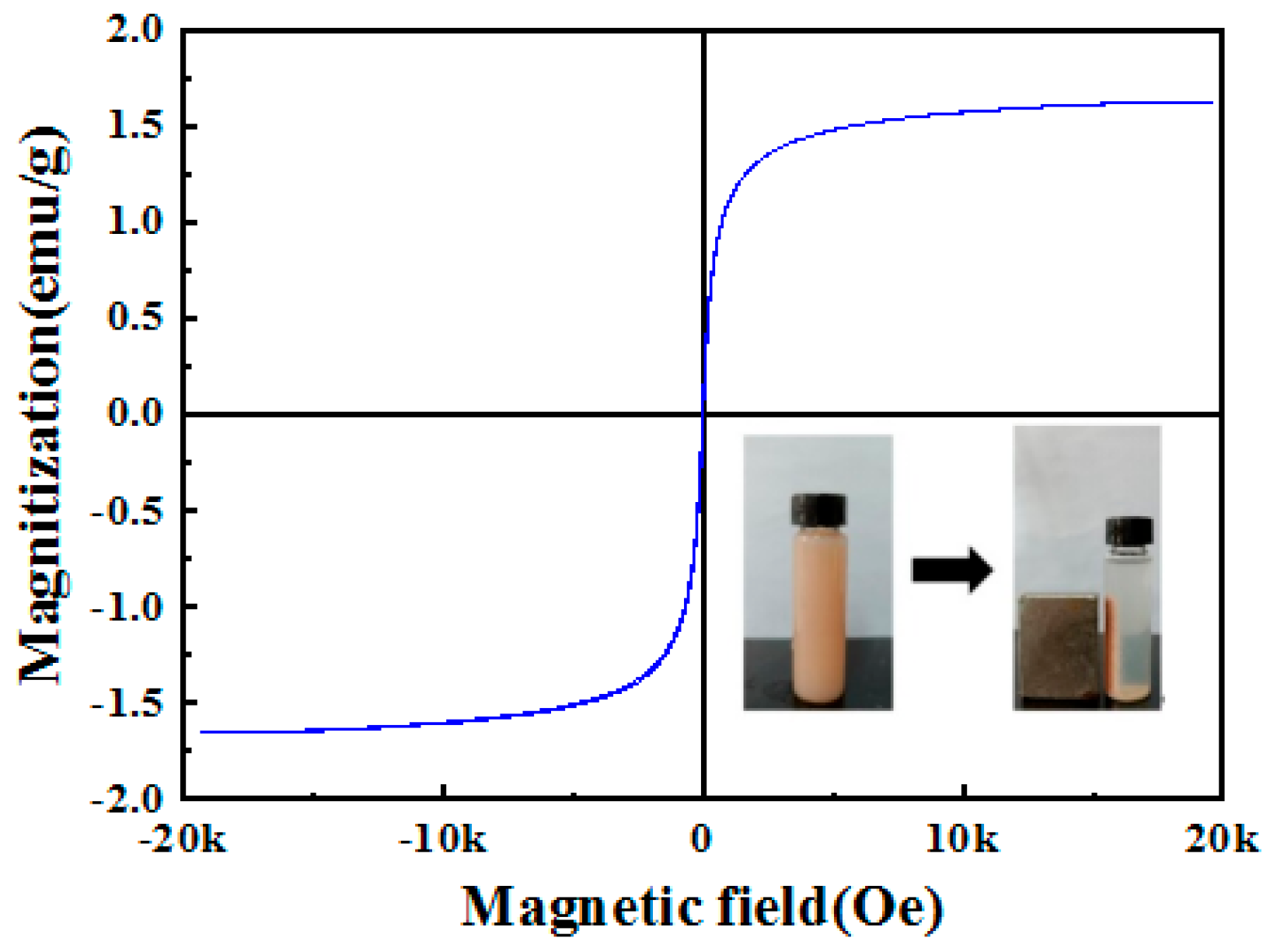
2.8. VSM Analysis
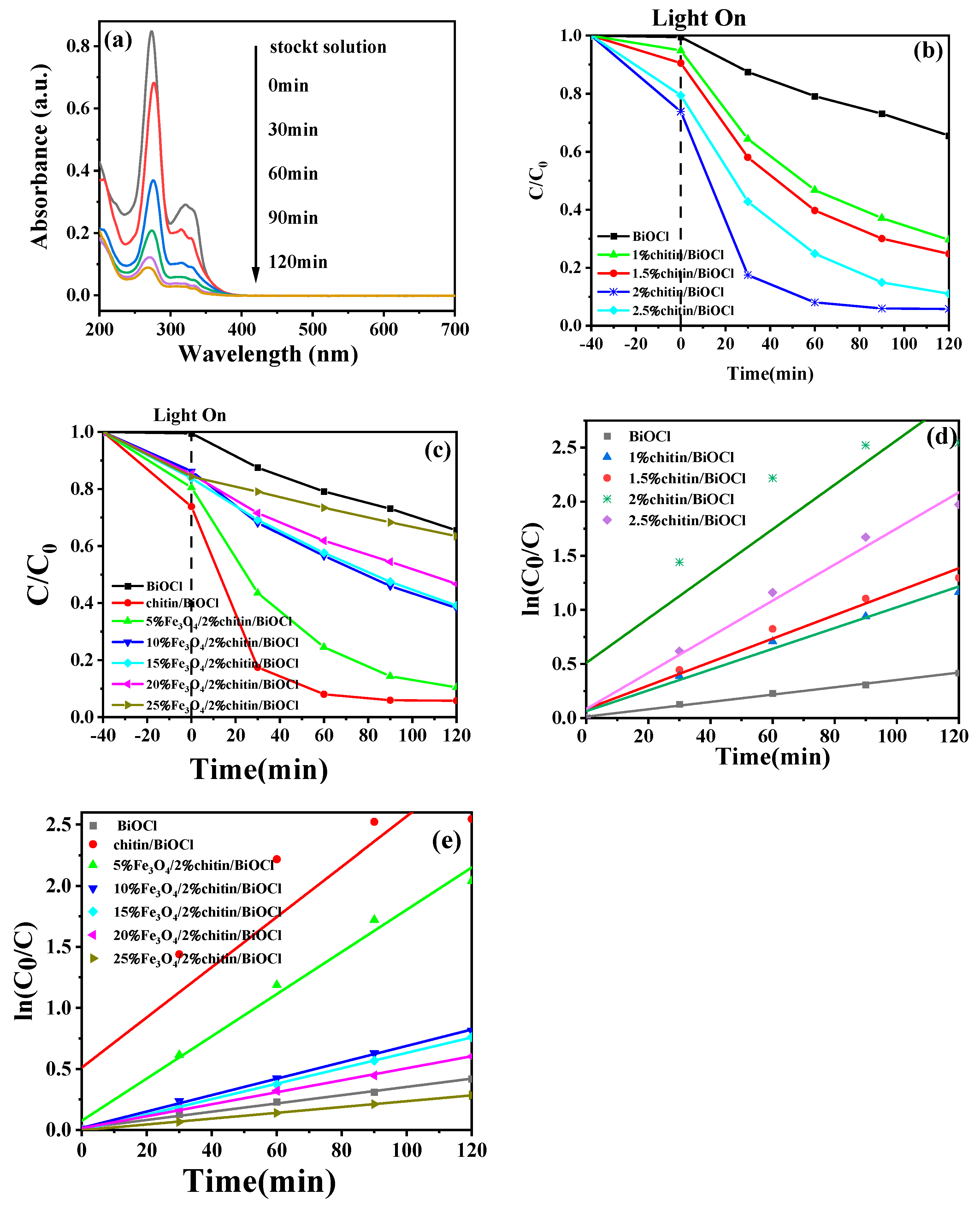
2.9. Photocatalytic Activity Analysis
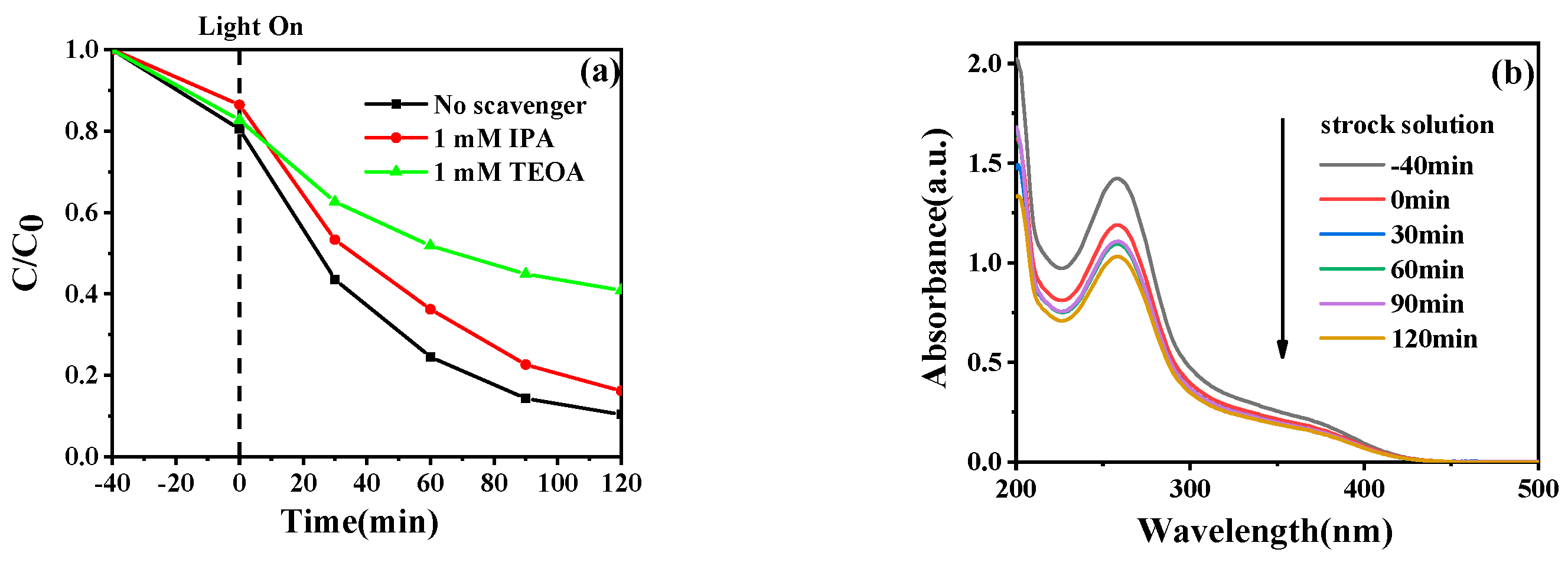
2.10. Active Species and Mechanistic Analysis
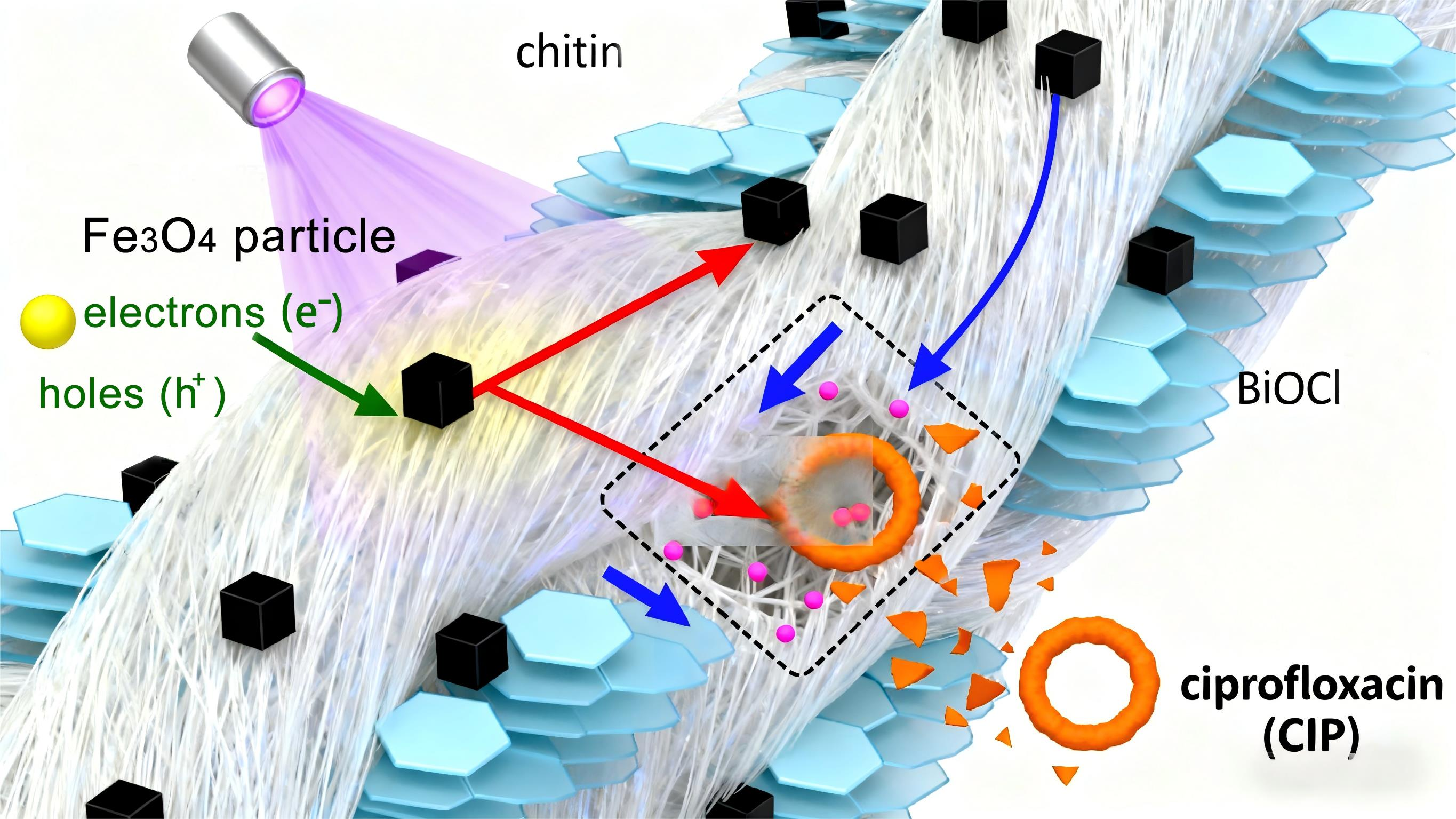
2.11. Photocatalytic Mechanism
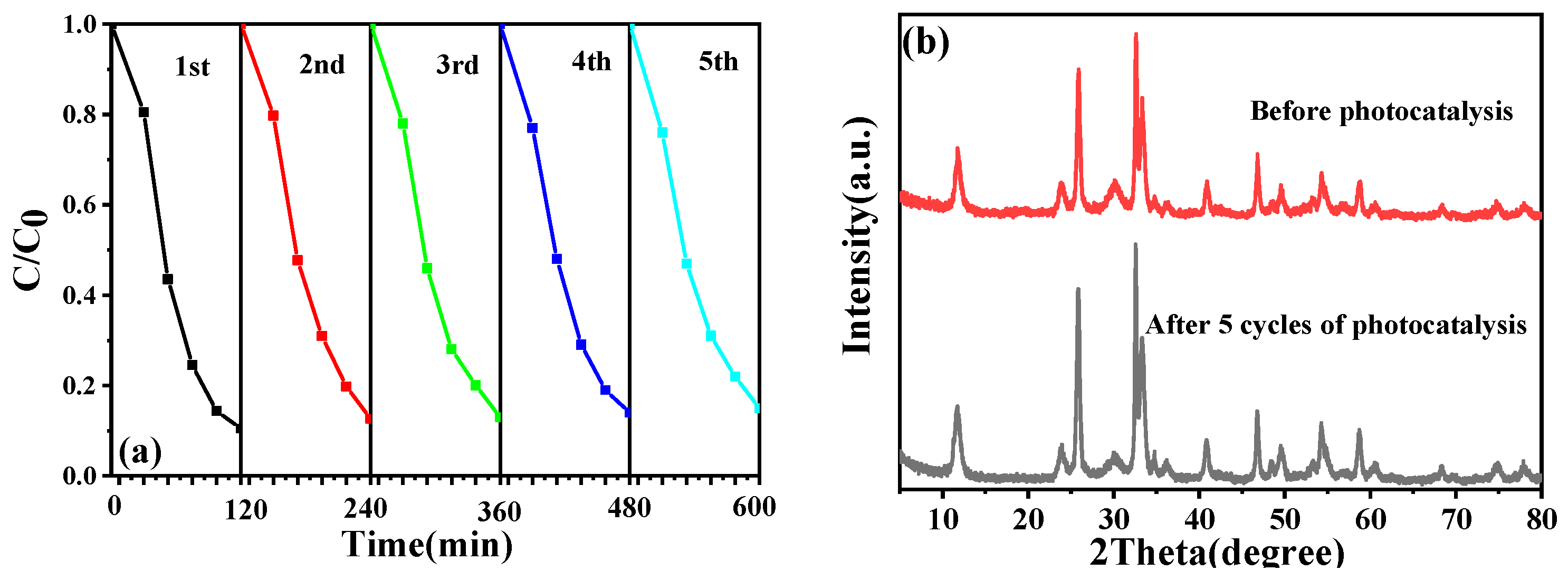
2.12. Reusability and Stability Analysis
3. Experimental Section
3.1. Materials and Chemicals
3.2. Fabrication of Chitin/BiOCl Composites
3.3. Fabrication of Fe3O4/Chitin/BiOCl Composites
3.4. Characterizations
3.5. Photocatalytic Experiments
3.6. Determination of Active Species
4. Conclusions
Author Contributions
Funding
Institutional Review Board Statement
Informed Consent Statement
Data Availability Statement
Conflicts of Interest
References
- Jones, K.C.; de Voogt, P. Persistent Organic Pollutants (POPs): State of the Science. Environ. Pollut. 1999, 100, 209–221. [Google Scholar] [CrossRef] [PubMed]
- Sharma, S.; Basu, S.; Shetti, N.P.; Nadagouda, M.N.; Aminabhavi, T.M. Microplastics in the environment: Occurrence, perils, and eradication. Chem. Eng. J. 2021, 408, 127317–127335. [Google Scholar] [CrossRef] [PubMed]
- Giannakis, S.; Lin, K.-Y.A.; Ghanbari, F. A review of the recent advances on the treatment of industrial wastewaters by Sulfate Radical-based Advanced Oxidation Processes (SR-AOPs). Chem. Eng. J. 2021, 406, 127083–127102. [Google Scholar] [CrossRef]
- Tantis, I.; Bousiakou, L.; Karikas, G.A.; Lianos, P. Photocatalytic and photoelectrocatalytic degradation of the antibacterial agent ciprofloxacin. Photochem. Photobiol. Sci. 2015, 14, 603–607. [Google Scholar] [CrossRef]
- Liang, W.X.; Mo, W.B. Research progress on the photocatalytic oxidation technology with semiconductors. New Chem. Mater. 2009, 37, 18–20. [Google Scholar]
- Li, Z.; Wang, W.; Chen, J. Bandgap Engineering of BiOCl Nanosheets for Enhanced Visible-Light Photocatalytic Activity. ACS Appl. Mater. Interfaces 2019, 11, 10955–10963. [Google Scholar]
- Zhang, K.-L.; Liu, C.-M.; Huang, F.-Q.; Zheng, C.; Wang, W.-D. Study of the electronic structure and photocatalytic activity of the BiOCl photocatalyst. Appl. Catal. B Environ. 2006, 68, 125–129. [Google Scholar] [CrossRef]
- Gong, S.; Rao, F.; Zhang, W.; Hassan, Q.-U.; Liu, Z.; Gao, J.; Lu, J.; Hojamberdiev, M.; Zhu, G. Au nanoparticles loaded on hollow BiOCl microstructures boosting CO2 photoreduction. Chin. Chem. Lett. 2022, 33, 4385–4388. [Google Scholar] [CrossRef]
- Zhang, N.; Li, L.; Shao, Q.; Zhu, T.; Huang, X.; Xiao, X. Fe-Doped BiOCl Nanosheets with Light-Switchable Oxygen Vacancies for Photocatalytic Nitrogen Fixation. ACS Appl. Energy Mater. 2019, 2, 8394–8398. [Google Scholar] [CrossRef]
- Ma, D.; Zhong, J.; Peng, R.; Li, J.; Duan, R. Effective photoinduced charge separation and photocatalytic activity of hierarchical microsphere-like C60/BiOCl. Appl. Surf. Sci. 2019, 465, 249–258. [Google Scholar] [CrossRef]
- Mokhtari, F.; Tahmasebi, N. Hydrothermal synthesis of W-doped BiOCl nanoplates for photocatalytic degradation of rhodamine B under visible light. J. Phys. Chem. Solids 2021, 149, 109804–109811. [Google Scholar] [CrossRef]
- Liu, G.; Chen, Y.L.; Liu, X.M. BiOCl microspheres with controllable oxygen vacancies: Synthesis and their enhanced photocatalytic performance. J. Solid State Chem. 2022, 306, 122751–122760. [Google Scholar] [CrossRef]
- Chen, L.; Huang, Z.; Wang, X. Chitin-Derived Carbon Nitride Nanosheets for Enhanced Photocatalytic H2 Evolution. ACS Sustain. Chem. Eng. 2022, 10, 3925–3934. [Google Scholar]
- He, B.; Feng, M.; Chen, X.Y. One-pot construction of chitin-derived carbon/g-C3N4 heterojunction for the improvement of visible-light photocatalysis. Appl. Surf. Sci. 2020, 527, 146737–146745. [Google Scholar] [CrossRef]
- Wang, W.; He, M.Y.; Zhang, H.; Dai, Y.T. Facile Synthesis of Flower-like Superparamagnetic Fe3O4/BiOCl Nanocomposites as High Effective Magnetic Recyclable Photocatalyst under Visible Light. J. Magn. 2016, 21, 179–182. [Google Scholar] [CrossRef]
- Peng, Y.; Xu, J.; Liu, T.; Mao, Y.G. Controlled synthesis of one-dimensional BiOBr with exposed (110) facets and enhanced photocatalytic activity. CrystEngComm 2017, 19, 6473–6480. [Google Scholar] [CrossRef]
- Gao, M.; Liang, H.; Bao, S.; Xu, T.; Zhang, Y.; Bai, J.; Li, C. Bifunctional BiOCl/TiO2 decorated membrane for antibiotic photodegradation and oil-water emulsion separation. Appl. Surf. Sci. 2022, 578, 151960–151970. [Google Scholar] [CrossRef]
- Ma, W.; Dong, X.; Wang, Y.; He, W.; Zhang, W.; Liang, Y.; Wang, Y.; Fu, W.; Liao, J.; Dong, F. Highly enhanced photocatalytic toluene degradation and in situ FT-IR investigation on designed Sn-doped BiOCl nanosheets. Appl. Surf. Sci. 2022, 578, 152002–152011. [Google Scholar] [CrossRef]
- Zhao, Y.; Guo, H.; Liu, J. Effective photodegradation of rhodamine B and levofloxacin over CQDs modified BiOCl and BiOBr composite: Mechanism and toxicity assessment. J. Colloid Interface Sci. 2022, 627, 180–193. [Google Scholar] [CrossRef]
- Zhang, W.; Dong, X.; Liang, Y.; Sun, Y.; Dong, F. Ag/AgCl nanoparticles assembled on BiOCl/Bi12O17Cl2 nanosheets: Enhanced plasmonic visible light photocatalysis and in situ DRIFTS investigation. Appl. Surf. Sci. 2018, 455, 236–243. [Google Scholar] [CrossRef]
- Wang, C.; Shi, H.; Yang, M.; Yan, Y.; Liu, E.; Ji, Z.; Fan, J. Facile synthesis of novel carbon quantum dots from biomass waste for highly sensitive detection of iron ions. Mater. Res. Bull. 2020, 124, 110730–110737. [Google Scholar] [CrossRef]
- Zhong, Y.; Wu, C.; Feng, Y.; Chen, D.; Wang, Y.; Hao, D.; Ding, H. Enriched surface oxygen vacancies of BiOCl boosting efficient charge separation, whole visible-light absorption, and photo to thermal conversion. Appl. Surf. Sci. 2022, 585, 152656–152666. [Google Scholar] [CrossRef]
- Li, M.; Zhang, S.X.-A. Reply to Comment on “Carbon Dots with Continuously Tunable Full-Color Emission and Their Application in Ratiometric pH Sensing”. Chem. Mater. 2014, 26, 6084. [Google Scholar] [CrossRef]
- Jin, X.; Tang, X.; Li, H.; Tang, X.; Li, J.; Zhong, J.; Zhang, S.; Ma, D. Visible-light driven efficient elimination of organic hazardous and Cr (VI) over BiOCl modified by Chinese Baijiu distillers’ grain-based biochar. J. Ind. Eng. Chem. 2022, 107, 472–482. [Google Scholar] [CrossRef]
- Xu, K.; Xu, D.; Li, Z.; Zhang, S.; Tong, L.; Peng, J.; Zhang, S.; Shen, J.; Chen, X. Enhanced visible-light photocatalytic degradation of ciprofloxacin hydrochloride by bulk iodine doped BiOCl with rich oxygen vacancy. Appl. Surf. Sci. 2022, 578, 152083–152091. [Google Scholar] [CrossRef]
- Duan, B.; Zheng, X.; Xia, Z.; Fan, X.; Guo, L.; Liu, J.; Wang, Y.; Ye, Q.; Zhang, L. Highly Biocompatible Nanofibrous Microspheres Self-Assembled from Chitin in NaOH/Urea Aqueous Solution as Cell Carriers. Angew. Chem. Int. Ed. 2015, 54, 5152–5156. [Google Scholar] [CrossRef]
- Xu, J.; Meng, W.; Zhang, Y.; Li, L.; Guo, C. Photocatalytic degradation of tetrabromobisphenol A by mesoporous BiOBr: Efficacy, products and pathway. Appl. Catal. B Environ. 2011, 107, 355–362. [Google Scholar] [CrossRef]






Disclaimer/Publisher’s Note: The statements, opinions and data contained in all publications are solely those of the individual author(s) and contributor(s) and not of MDPI and/or the editor(s). MDPI and/or the editor(s) disclaim responsibility for any injury to people or property resulting from any ideas, methods, instructions or products referred to in the content. |
© 2025 by the authors. Licensee MDPI, Basel, Switzerland. This article is an open access article distributed under the terms and conditions of the Creative Commons Attribution (CC BY) license.
Share and Cite
Zeng, X.; Wang, K.; Ye, H.; Gong, X.; Yao, Y.; Feng, F. Chitin-Assisted Fabrication of an Fe3O4/BiOCl Composite for Visible-Light Photocatalytic Degradation of Ciprofloxacin. Molecules 2026, 31, 134. https://doi.org/10.3390/molecules31010134
Zeng X, Wang K, Ye H, Gong X, Yao Y, Feng F. Chitin-Assisted Fabrication of an Fe3O4/BiOCl Composite for Visible-Light Photocatalytic Degradation of Ciprofloxacin. Molecules. 2026; 31(1):134. https://doi.org/10.3390/molecules31010134
Chicago/Turabian StyleZeng, Xiaoxing, Kunlei Wang, Hongting Ye, Xiaofeng Gong, Yanhong Yao, and Fei Feng. 2026. "Chitin-Assisted Fabrication of an Fe3O4/BiOCl Composite for Visible-Light Photocatalytic Degradation of Ciprofloxacin" Molecules 31, no. 1: 134. https://doi.org/10.3390/molecules31010134
APA StyleZeng, X., Wang, K., Ye, H., Gong, X., Yao, Y., & Feng, F. (2026). Chitin-Assisted Fabrication of an Fe3O4/BiOCl Composite for Visible-Light Photocatalytic Degradation of Ciprofloxacin. Molecules, 31(1), 134. https://doi.org/10.3390/molecules31010134