Article

Construction of Robust Electrothermal Superhydrophobic Surface via Femtosecond Laser for Anti-Icing and Deicing


by
Xuqiao Peng
,
Daqing Tian
,
Jingyang Li
,
Wenxuan Li
,
Ruisong Jiang
and
Chaolang Chen
*
School of Mechanical Engineering, Sichuan University, Chengdu 610065, China
*
Author to whom correspondence should be addressed.
These authors contributed equally to this work.
Molecules 2025, 30(8), 1741; https://doi.org/10.3390/molecules30081741

Submission received: 28 February 2025 / Revised: 3 April 2025 / Accepted: 11 April 2025 / Published: 13 April 2025
(This article belongs to the Special Issue Recent Advances in Superhydrophobic Materials and Their Application)

Abstract

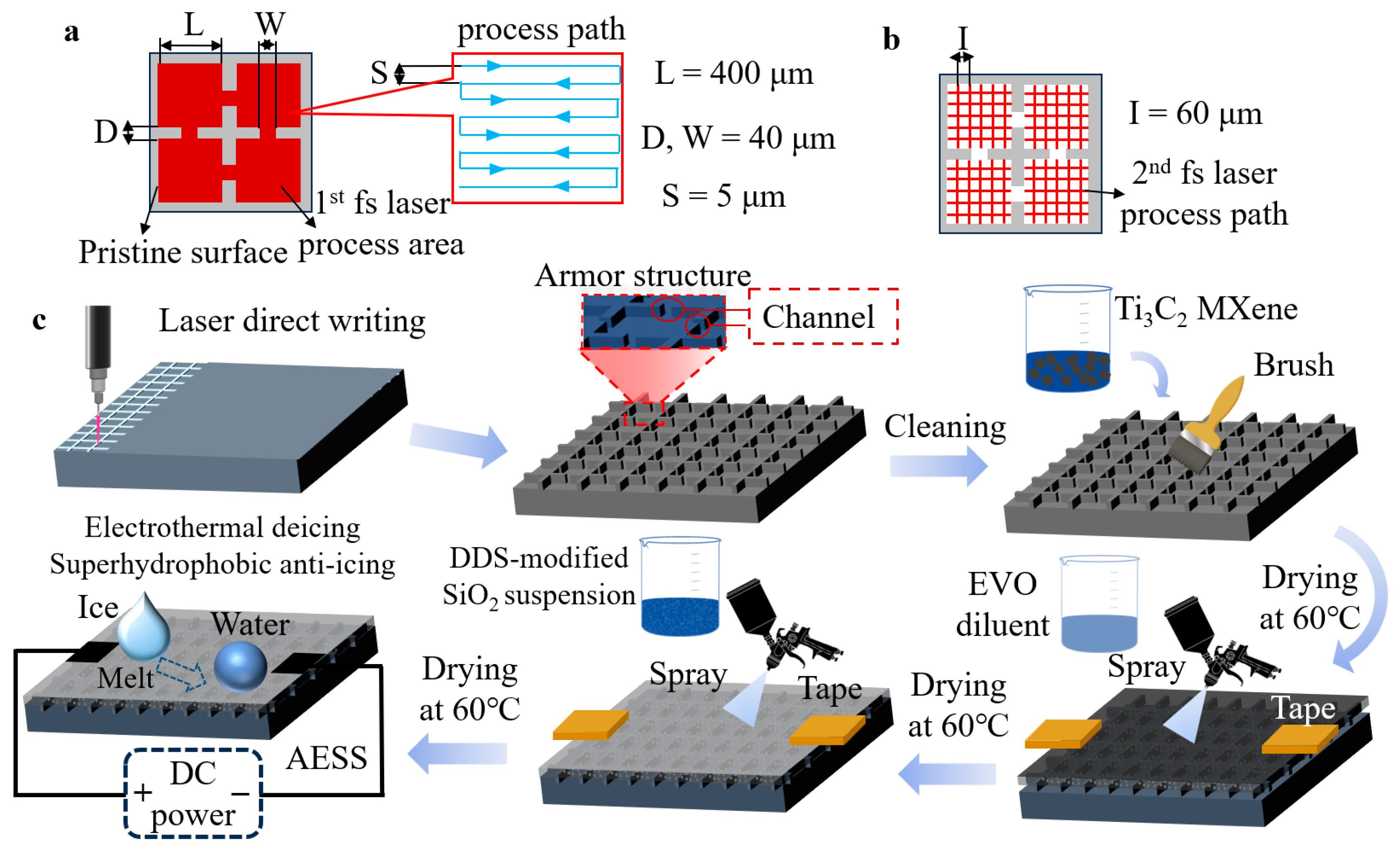
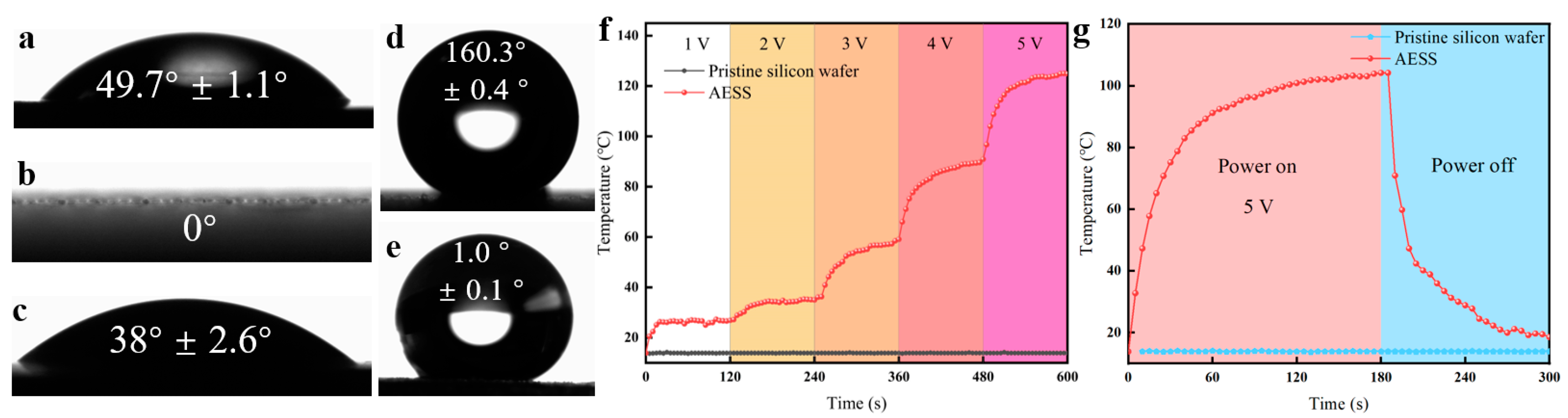
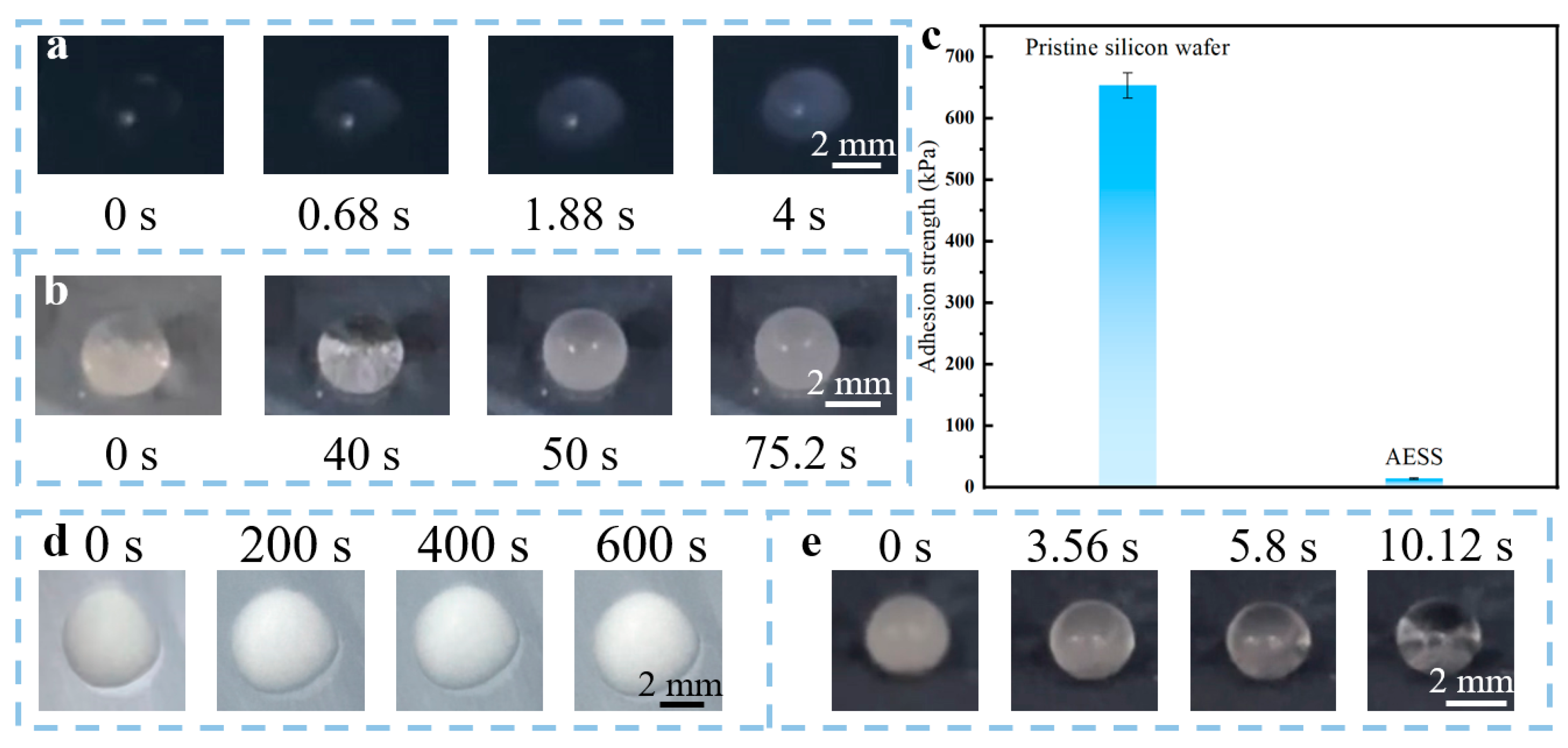
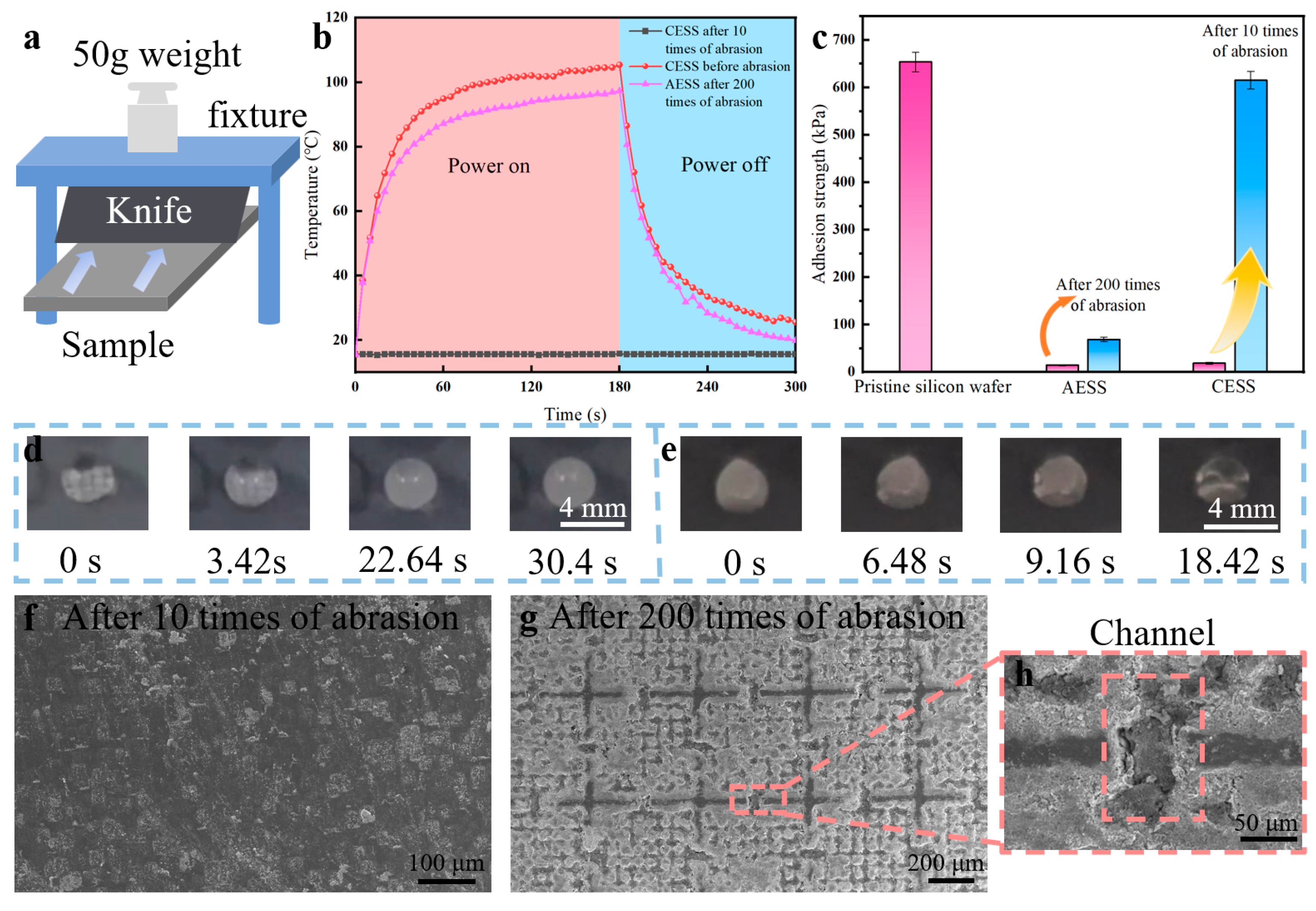
Electrothermal superhydrophobic surfaces are regarded as possessing significant potential in anti-icing applications. However, their limited mechanical durability has constrained practical implementation. Herein, this work fabricated a robust electrothermal superhydrophobic surface by femtosecond laser texturing combined with the filling of functional coatings of Ti3C2 MXene and hydrophobic SiO2 nanoparticles (modified with dimethyldichlorosilane), which shows great superhydrophobic anti-icing and electrothermal deicing properties, as well as outstanding mechanical durability. The as-prepared electrothermal superhydrophobic surface exhibited a water contact angle of 160.3° and achieved temperature elevation to 104.2 °C within 180 s under an applied voltage of 5 V. Furthermore, the as-prepared electrothermal superhydrophobic surface demonstrated exceptional anti-icing/deicing performance: ice formation time was prolonged to 75.2 s at −35 °C, ice adhesion strength was reduced to 14.65 kPa, and the frozen droplet on the surface melted rapidly within 10.12 s upon electrifying. Moreover, benefiting from the protection of the designed bionic armor structure (honeycomb-like structure), the as-prepared electrothermal superhydrophobic surface maintained outstanding electrothermal and anti-/deicing properties even after 200 times of blade abrasion. This work paves the way for designing robust electrothermal superhydrophobic surfaces in anti-/deicing applications.
Keywords: electrothermal superhydrophobic surface; anti-/deicing; femtosecond laser; Ti3C2 MXene; armor structure; mechanical durability electrothermal superhydrophobic surface; anti-/deicing; femtosecond laser; Ti3C2 MXene; armor structure; mechanical durability