


Abstract
This study presents the results on the composition of hydro-distilled essential oils and the antioxidant properties of extracts isolated with different polarity solvents from the leaves (GLEO) and roots (GREO) of wild-grown Lithuanian goutweed (Aegopodium podagraria L.). The yields of GLEO and GREO were 0.22% and 0.04%. The identified compounds numbered 117 and 88, which constituted 99.4 and 99.2% of the total integrated peak area, respectively. The major GLEO constituents were sesquiterpenes germacrene D (17.53%), (E)-β-bergamotene (11.75%), (E,E)-α-farnesene (7.23%), and (E)-caryophyllene (5.29%), while monoterpene α-pinene (19.24%) was quantitatively dominant in GREO, followed by sesquiterpenes germacrene B (4.59%), (E)-caryophyllene (4.51%), β-barbatene (4.26%), and β-bazzanene (4.10%). Polyacetylene (Z)-falcarinol, which is an important bioactive compound, constituted 4.60% in GREO. The antioxidant characteristics of water, methanol, and acetone extracts were evaluated by the TPC, DPPH•/ABTS•+ scavenging, and ORAC assays. The water and methanol extracts of the leaves were the strongest antioxidants; their TPC and ORAC values were 62.12 and 56.84 mg GAE/g, and 1426 and 1293 µM TE/g, respectively; the EC50 values of DPPH• and ABTS•+ scavenging were 1.18 and 2.48, and 2.45 and 3.57 mg/mL, respectively. The results obtained may assist in developing antioxidants, cosmeceuticals, nutraceuticals, and other health-beneficial preparations from A. podagraria extracts.
1. Introduction
Aegopodium podagraria L. (goutweed, ground elder) belongs to the carrot family, Apiaceae. The plant is spread throughout Europe, Asia, and North America, and is considered a “common weed”. It is widely distributed in shady, humid places and forms dense vegetation in deciduous forests, woodlands, bushes, clearings, fences, gardens, and parks. However, it is an edible plant: young leaves of goutweed can be used in soups, salads, in the spring, and in feed formulations as well [1,2].
A. podagraria has been traditionally used in Europe in folk and monastic medicine for gout and similar ailments, known as podagra, as well as joint pains [3] and arthritis [4]. For many years, A. podagraria has been used in traditional medicine, primarily to treat urinary and kidney diseases [5,6]. Recently, it has also been found to have potential benefits in the treatment of prostate cancer [7]. The health benefits of goutweed have been reported by many studies since the beginning of the 20th century. The chemical composition of A. podagraria shows that this plant is nutritious and rich in health-promoting compounds, making it a valuable addition to medicinal practices [1,2,3,4,8,9,10,11,12,13].
Goutweed leaves, stems, and flowers contain essential oils (EOs), flavonoids, nitrogen compounds, free amino acids, steroids, vitamins C and E, microelements, enzymes, and phytoncides; the roots are also rich in carbohydrates, proteins, nitrogen, and other organic compounds, as well as coumarins, phenols, and carboxylic acids [2,4,10,14]. The rhizomes of goutweed have been found to contain glycoproteins that bind carbohydrates, mainly glycoprotein lectin [15]. Polyphenols contributing to the antioxidative potential of this plant are phenolic acids (caffeic, ferulic, and chlorogenic), coumarins, flavonoids, and especially aliphatic C17-polyacetylenes [2,13]. Polyacetylenes (polyins), including falcarinol, falcarindiol, falcarinon, and falcarinolon, are among the most important bioactive compounds occurring in plants of the Apiaceae family [11]. Falcarinol possesses anti-inflammatory and anticoagulant properties by influencing prostaglandin metabolism [1] and is toxic against fungi, bacteria, viral infection agents, and mammalian cells [2]. EO is another important group of secondary metabolites of goutweed; it consists mainly of mono- and sesquiterpenes [1,2,4,5,16,17]. EOs, as a source of naturally occurring phytochemicals, are well known not only for their antimicrobial propensities [18], but also for their psychotherapeutic effects [19], making them potential alternatives to antibiotics and conventional medications for the treatment of anxiety and depression. Lipophilic antioxidants such as carotenoids, chlorophylls, and tocopherols have been reported to be present in comparatively high amounts in the leaves; lutein, neoxanthin, and α-tocopherol were the major compounds found from these groups [20]. Coumarins were also reported to be an essential group of goutweed’s bioactive compounds, including arterin (roots), angular furanocoumarins (leaves), and angelicin (leaves, fruits, and roots) [14]. The microelements such as potassium, chromium, zinc, copper, and manganese were among the significant elements in A. podagraria‘s leaves and stems [2,4].
It was reported that goutweed tinctures and extracts can be used to treat gout and metabolic diseases, including type 2 diabetes [14]. Nizioł-Łukaszewska et al. [12] suggested the potential of using A. podagraria in cosmetic and pharmaceutical preparations, as it demonstrated positive effects on the skin cells; A. podagraria extracts suppressed the activity of elastase and collagenase and stimulated the migration of keratinocytes and fibroblasts on model skin cells. The potential of this plant for drug development was highlighted by Prior et al. [13]. Leaves, roots, and flowers of A. podagraria inhibited cyclooxygenase-1 (COX-1) in vitro, and this effect was associated with polyacetylene falcarindiol, which was present in all plant parts and is responsible for anti-inflammatory and antimicrobial properties [13]. The antibacterial activity of an ethanol extract of goutweed was shown by Stefanovic et al. [10]. The antiviral activity in vitro of ethanol and aqueous extracts in an MDCK cell culture against the H3N2 and H5N1 subtypes of influenza A virus (IAV) was reported by Mazurkova et al. [9]. A. podagraria flower-derived EO possessed diuretic and uricosuric pharmacological activity in a dose of 1 mL/kg [5]. In general, the pharmacological activities of A. podagraria preparations are associated with hydroxycinnamic acids, flavonoids, coumarins, polyacetylenes, and micro- and macro-elements, and other bioactive compounds present in goutweed.
This study aimed to evaluate the phytochemical composition and antioxidant characteristics of A. podagraria using a more systematic approach, which has not been previously applied to this plant and may increase the sustainability of its processing. The main objectives were to determine the chemical composition of its EOs, to determine its total content of polyphenolics, and to evaluate the oxygen radical absorbance and radical scavenging capacities of extracts isolated from the leaves and roots of A. podagraria growing wild in Lithuania. To the best of our knowledge, this is the first report on goutweed to provide more comprehensive insights into its potential uses as a source of bioactive compounds.
2. Results and Discussion
2.1. The Composition of Essential Oils (EOs)
The yield and chemical composition of EOs depend on climatic conditions, growing site, harvesting time, country of origin, post-harvesting handling, processing procedures, and other factors [2,4,5,16,21,22]. The yield of EO isolated from goutweed leaves was 0.22 ± 0.01%, whereas that from the roots was very low, approximately 0.04%. Information on EO yields from goutweed is relatively scarce. EO yield was quite similar to that obtained from growing wild goutweed in Estonia: 1.7 and 3.8 mg/g from the leaves and stems, respectively [2]. A similar yield (0.22%) was obtained from goutweed flowers collected in the Kharkiv region of Ukraine [5]. The EO from A. podagraria from Kopaonik (Central Balkan) yielded 0.11% [16].
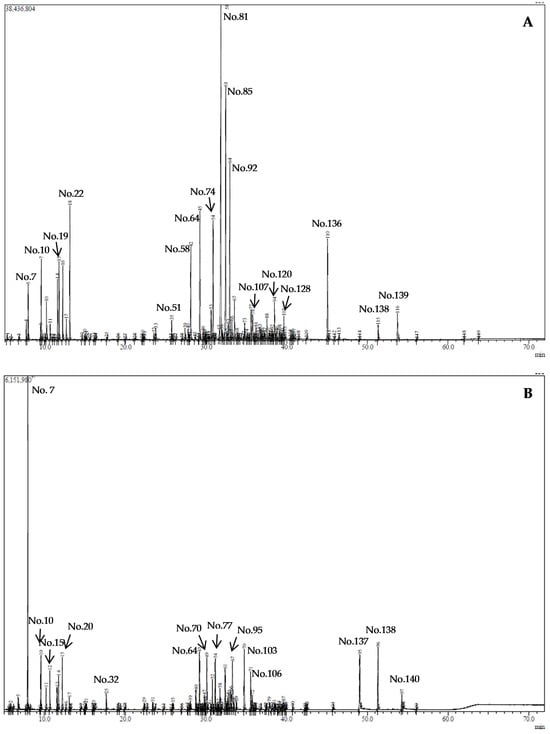
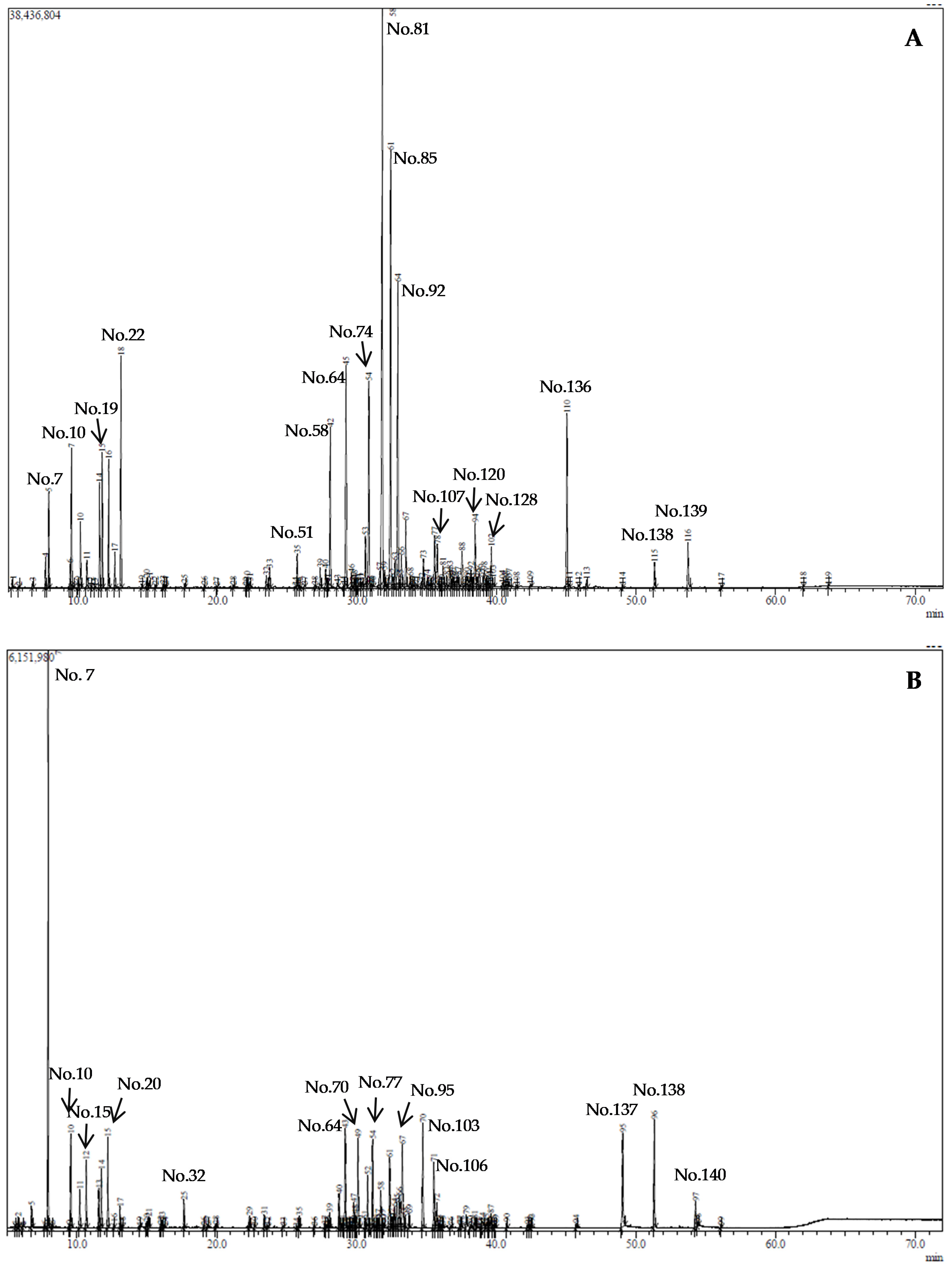
The detailed list of A. podagraria EOs volatile compounds, their percentage composition, as well as their odour descriptors, are presented in Table 1, and the representative GC-MS chromatograms are presented in Figure 1. In total, 144 different compounds were identified in the EOs from the leaves (117) and roots (88); they accounted for 99.4% and 99.2% of the total integrated GC peak area, respectively. To the best of our knowledge, 58 compounds have not been reported in A. podagraria previously.
Figure 1.
The GC-MS chromatograms of Aegopodium podagraria GLEO (A) and GREO (B) (The number of the major peaks marked as No. corresponds to the number of compounds presented in Table 1).
It is evident that the EOs of A. podagraria grown in Lithuania consist mostly of mono- and sesquiterpene hydrocarbons, and this agrees with other studies [1,2,5,16,17]. The major GLEO constituents were sesquiterpenes germacrene D (17.53 ± 0.13%), (E)-β-bergamotene (11.75 ± 0.02%), (E,E)-α-farnesene (7.23 ± 0.03%), (E)-caryophyllene (5.29 ± 0.02%), (E)-β-farnesene (4.83 ± 0.01%), and β-elemene (3.71 ± 0.03%); the major monoterpenes were γ-terpinene (4.54 ± 0.04%), β-pinene (2.42 ± 0.02%), limonene (2.45 ± 0.03%), and (Z)-β-ocimene (2.29 ± 0.01%) (Table 1). Higher diterpene alcohols, such as isophytol and (E)-phytol, were identified in GLEO and accounted for 4.06 ± 0.01% and 1.15 ± 0.06%, respectively; they are used in the flavour industry and also serve as precursors in the production of vitamins K and E.
To the best of our knowledge, the composition of A. podagraria roots has not been reported previously. The principal constituent, quantitatively, of GREO was monoterpene α-pinene (19.24 ± 0.09%), followed by β-pinene (3.22 ± 0.02%), limonene (2.04 ± 0.01%), (Z)-β-ocimene (3.11 ± 0.01%), and (E)-β-farnesesne (2.32 ± 0.03%). The major sesquiterpene hydrocarbons were germacrene B (4.59 ± 0.03%), (E)-caryophyllene (4.51 ± 0.03%), β-barbatene (4.26 ± 0.04%), β-bazzanene (4.10 ± 0.32%), β-acoradiene (3.77 ± 0.06%), and bicyclogermacrene (3.33 ± 0.01%), while spathulenol (2.94 ± 0.04%) was the dominant oxygenated sesquiterpene (Table 1). The contents of hexadecanoic and linoleic fatty acids were 4.89 ± 0.06% and 1.37 ± 0.11%, respectively, while n-octanal (2.35 ± 0.02%) was the major aldehyde. It may be observed that the compositional differences between GREO and GLEO were quite significant.
Another quantitatively important bioactive constituent determined in GREO was polyacetylene (Z)-falcarinol (4.60 ± 0.01%). The content of sesquiterpene hydrocarbon cuparene (0.89 ± 0.01%) and phenylpropanoid myristicin (0.61 ± 0.01%) was lower than 1%. Polyacetylenic oxylipin falcarinol was reported to possess antitumor, insecticidal, and other bioactivities [23], and it was highly toxic against bacteria, fungi, viral infection agents, and mammalian cells [2]. Myristicin is a major bioactive component in nutmeg EO and exhibits antioxidant, analgesic, anti-inflammatory, insecticidal, and anticancer activities [24].
Table 1.
Chemical composition of essential oils of Aegopodium podagraria L. isolated from leaves and roots, peak area percentage.
Sixty-nine volatiles were identified in the EOs of the leaves and stems of A. podagraria growing wild in Estonia. The major EO components were α-pinene (6.6%, 15.7%), β-pinene (11.1%, 29.4%), limonene (8.2%, 18.4%), γ-terpinene (8.2%, 15.5%), germacrene D (15.6%, 1.5%), and (E)-α-bergamotene (4.8%, 0.4%) in EOs obtained from leaves and stems, respectively [2]. A different content of terpene compounds was reported in A. podagraria from the Iglinskii region (Bashkortostan), where bicyclic monoterpene sabinene comprised 62.9% of total volatiles [17]. Volatile compounds from the flowers, buds, and leaves of Aegopodium podagraria from southern Sweden included monoterpenes limonene (33%), β-pinene (26%), γ-terpinene (11%), and the sesquiterpene γ-cadinene (10%) [26]. Of the thirty-six compounds identified in goutweed EO from the Kharkiv region (Ukraine), sesquiterpenes and monoterpenes amounted to 90.7% and 6.8%, respectively, of the total; (E)-β-farnesene (43.94%), α-bergamotene (15.32%), (E,E)-α-farnesene (8.84%), and 1,5,9,9-tetramethyl-1,4,7-cycloundecatrien (5.51%) were the principal components [5].
Fifty-eight volatile compounds with concentrations > 100 ppm were identified in the EO from A. podagraria (voucher no. AP6031) from Kopaonik (Central Balkan), accounting for 96.1% of the total oil. The major components were (+)-α-pinene (13.3%), p-cymene (8.8%), (+)-limonene (9.4%), (Z)-β-ocimene (5.2%), germacrene D (4.7%), (+)-spathulenol (4.4%), α-thujene (4.2%), and perilaldehyde (4.1%) [16].
2.2. Antioxidant Potential of A. podagraria Extracts
Some previous studies have demonstrated that the A. podagraria plant may be a promising source for the development of drugs, dietary supplements, functional foods, and/or cosmetics [1,5,8,10,12,14,20,27]. The phytochemical composition and antioxidant properties of plant preparations, among other factors, depend on the morphological part that was used and the extraction techniques; it is vital to select favourable processing conditions. The antioxidant activity of goutweed has been previously screened in vitro [12,27,28]; however, studies on its antioxidant activity, especially of extracts obtained with solvents of different polarities, are relatively scarce. PLE was not applied to this plant. Consequently, to receive more comprehensive data, in our study, conventional hydrodistillation techniques were used to recover EOs and boiling water extracts, which were generated as hydrodistillation residues (by-products). At the same time, PLE with highly polar methanol and medium polarity acetone was applied to the dried leaves and roots. The yields of EO isolated from many aromatic plants are typically lower than 1%; therefore, valorization of the non-volatile distillation residues may be an option for increasing the sustainability and effectiveness of EO-bearing plants processing, leading to the development of zero-waste industrial biorefining technologies for the complete recovery of higher-value substances. For this reason, the liquid fraction after hydro-distillation was separated from the solids, then freeze-dried to obtain WE containing boiling-water-soluble, non-volatile constituents, including polyphenolic antioxidants. Following the recommendation of experts [29], several methods (TPC, DPPH•, and ABTS•+ scavenging, and ORAC) were used to provide a more comprehensive in vitro evaluation of the antioxidant potential of the biomaterials.
The extraction yields, TPC, and antioxidant capacity of the different leaf and root extracts of goutweed and GLEO are presented in Table 2. Higher yields of WE and AE extracts were obtained from goutweed leaves than from roots, except for GRME; the lowest extract yields were obtained with acetone. The yields of extracts followed the following order: GLWE > GRME > GRWE > GLME > GLAE > GRAE (Table 2).
Table 2.
The yield, total phenolic content, and antioxidant capacity of the extracts and essential oil of Aegopodium podagraria.
The TPC values varied from 12.88 mg (GRME) to 62.12 mg GAE/g edw (GLWE). The TPC was more than twice as high in the extracts obtained from the leaves compared to those of the roots or GLEO (Table 2).
Nizioł-Łukaszewska et al. [12] reported that at the highest tested concentration, 10%, the content of TPC and flavonoids in their water–glycerin extract was 134 and 58 mg GA/g, and suggested that these could be primarily responsible for the antioxidant activity of the Apiaceae family’s extracts. The differences in TPC values could be explained by the efficiency of phenolic compound isolation from the plant, which depends on the sample matrix, molecular structure, concentration, and polarity. Due to the presence of hydroxyl groups and attached saccharides, most polyphenolic antioxidants are polar. The majority of the phenolic compounds present in A. podagraria leaves were dissolved in a protic solvent (boiling water) during the hydrodistillation procedure. However, the highest TPC from the roots was obtained with acetone, which differences in the composition of secondary metabolites in the roots and leaves could explain.
Pearson’s correlation between the TPC and antioxidant activity was calculated. The correlation analysis demonstrated that total phenolic content (TPC) is a major contributor to antioxidant capacity, particularly in assays that rely on hydrogen atom transfer and radical scavenging mechanisms. Strong positive correlations were observed between TPC and ORAC (r = 0.843, p = 0.035) and DPPH scavenging activity (r = 0.777, p = 0.040), both statistically significant, indicating that phenolic compounds substantially enhance antioxidant performance in these systems. Conversely, a strong negative correlation was found between TPC and DPPH EC50 (r = −0.841, p = 0.036), confirming that extracts with higher phenolic content require lower concentrations to achieve 50% radical inhibition. In contrast, ABTS assay results exhibited weaker associations with TPC (r = 0.627, p = 0.132 for ABTS values; r = −0.301, p = 0.562 for ABTS EC50), neither of which reached statistical significance. These findings suggest that while phenolic compounds are key determinants of antioxidant activity, the strength of their contribution varies across assay systems, with ORAC and DPPH being more sensitive indicators than ABTS. Additionally, it was observed that DPPH• scavenging was strongly correlated (r = 0.947, p = 0.001) with the ABTS•+ assay results.
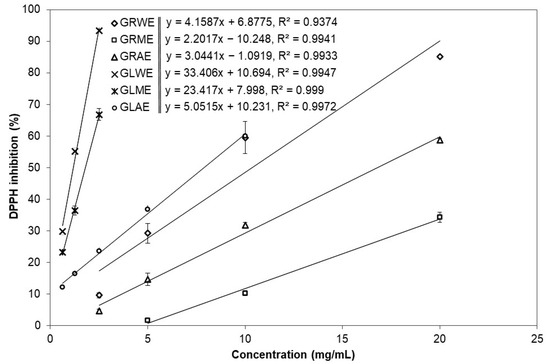
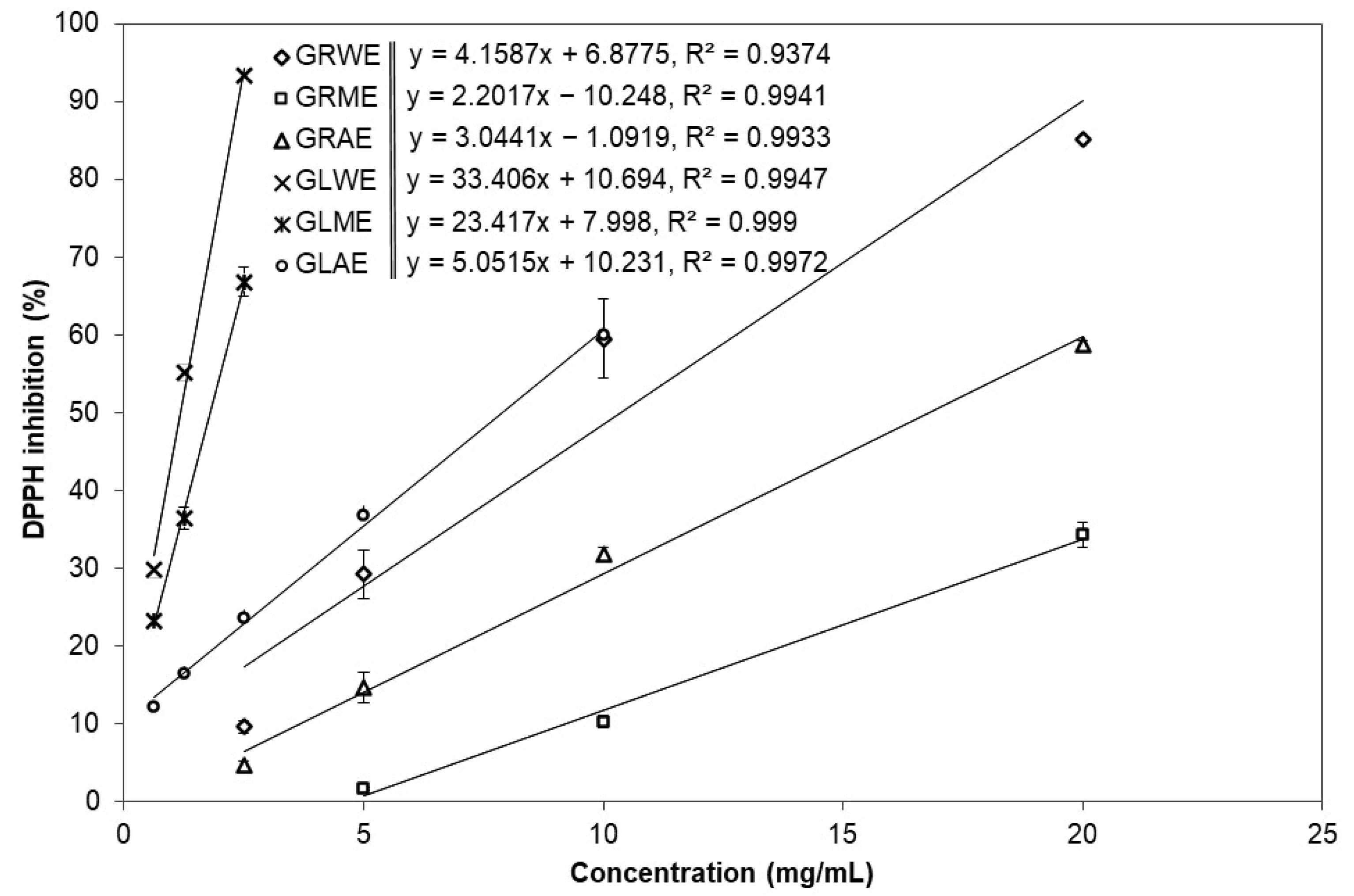
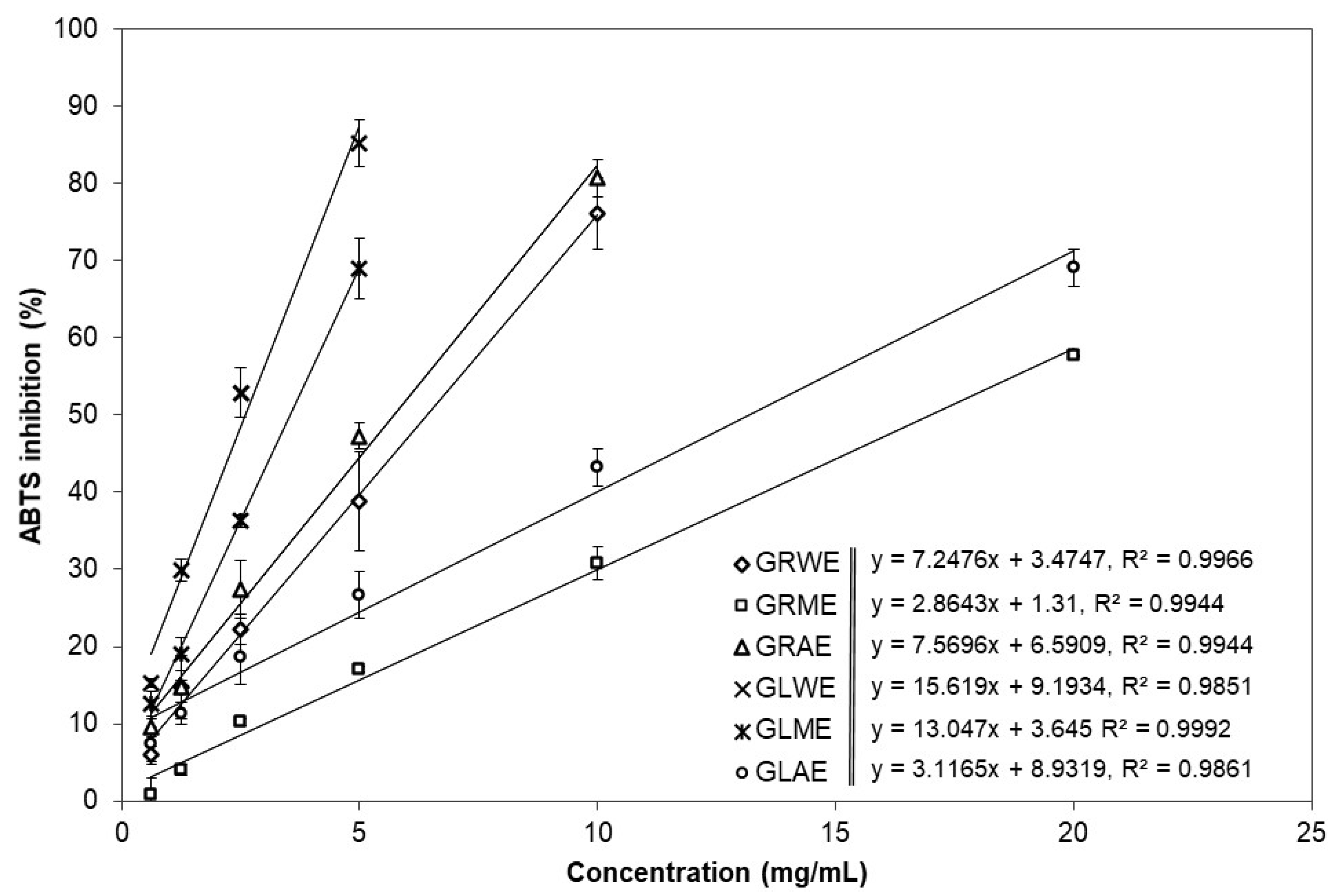
The chemical principles of the applied TPC, DPPH•, and ABTS•+ assays are somewhat similar; they are based on a single electron (SET) and or hydrogen atom (HAT) transfer [29]; however, the DPPH• scavenging assay is more applicable for hydrophilic antioxidants, while the ABTS•+ decolourisation assay is suitable for both lipophilic and hydrophilic antioxidants. The extracts of A. podagraria ‘s leaves were more potent antioxidants than those of the roots. EC50 values representing the concentration required to reduce 50% of the radicals were estimated from the curves shown in Figure 2 and Figure 3, which depict linear dose–response relationships between extract concentration and radical scavenging activity in the DPPH• and ABTS•+ assays, respectively. The individual regression lines for each extract illustrate apparent differences in their antioxidant effectiveness, and were used to calculate the corresponding EC50 values presented in Table 2. The steepness (slope) of these lines indicates how rapidly radical scavenging increases with increasing concentration; thus, steeper lines correspond to more effective extracts at a given concentration. In both assays, the curves of leaf extracts generally lie above those of root extracts at the same concentration range, visually confirming the higher antioxidant potency of A. podagraria leaves compared with its roots. Based on the DPPH• and ABTS•+ assays, and the EC50 and µM TE values, GLWE and GLME were the most potent antioxidants. The weakest antioxidants were GRME and GLEO, as measured by the ABTS•+ scavenging assay, while the lowest antioxidant activity, in GLAE, was determined by the ABTS•+ assay (Table 2).
Figure 2.
Effects of different concentrations of root water (GRWE), root methanol (GRME), root acetone (GRAE), leaf water (GLWE), leaf methanol (GLME), leaf acetone (GLAE) extracts of Aegopodium podagraria on DPPH• scavenging capacity.
Figure 3.
Effects of different concentrations of root water (GRWE), root methanol (GRME), root acetone (GRAE), leaf water (GLWE), leaf methanol (GLME), and leaf acetone (GLAE) extracts of Aegopodium podagraria on ABTS+• scavenging capacity.
In general, polar solvents—water and methanol—were more effective than acetone for extracting natural antioxidants from the goutweed plant; these solvents yielded the highest extract yields and possessed the best antioxidant properties. Nizioł-Łukaszewska et al. [12] reported that the EC50 of goutweed water–glycerin extract obtained by ultrasound-assisted extraction was 38 mg/mL in the DPPH• scavenging assay. Flieger et al. [28] optimized the DPPH-HPLC-DAD method for antioxidant activity determination in ethanol extracts of A. podagraria—the scavenging capacity was expressed by the percentage of peak inhibition and the IC50 parameters—and concluded that an extract prepared from dry plants in an ultrasonic bath exhibited the highest antioxidant potential (IC50 = 64.74 ± 0.22 µL/mL). Valyova et al. [30] reported that the ethanol extract of A. podagraria‘s aerial parts demonstrated the highest antioxidant capacity: Its IC50 value in a DPPH• assay was 66.135 ± 1.6 μg/mL, and in ABTS•+ was 73.9 ± 8.7 μg/mL.
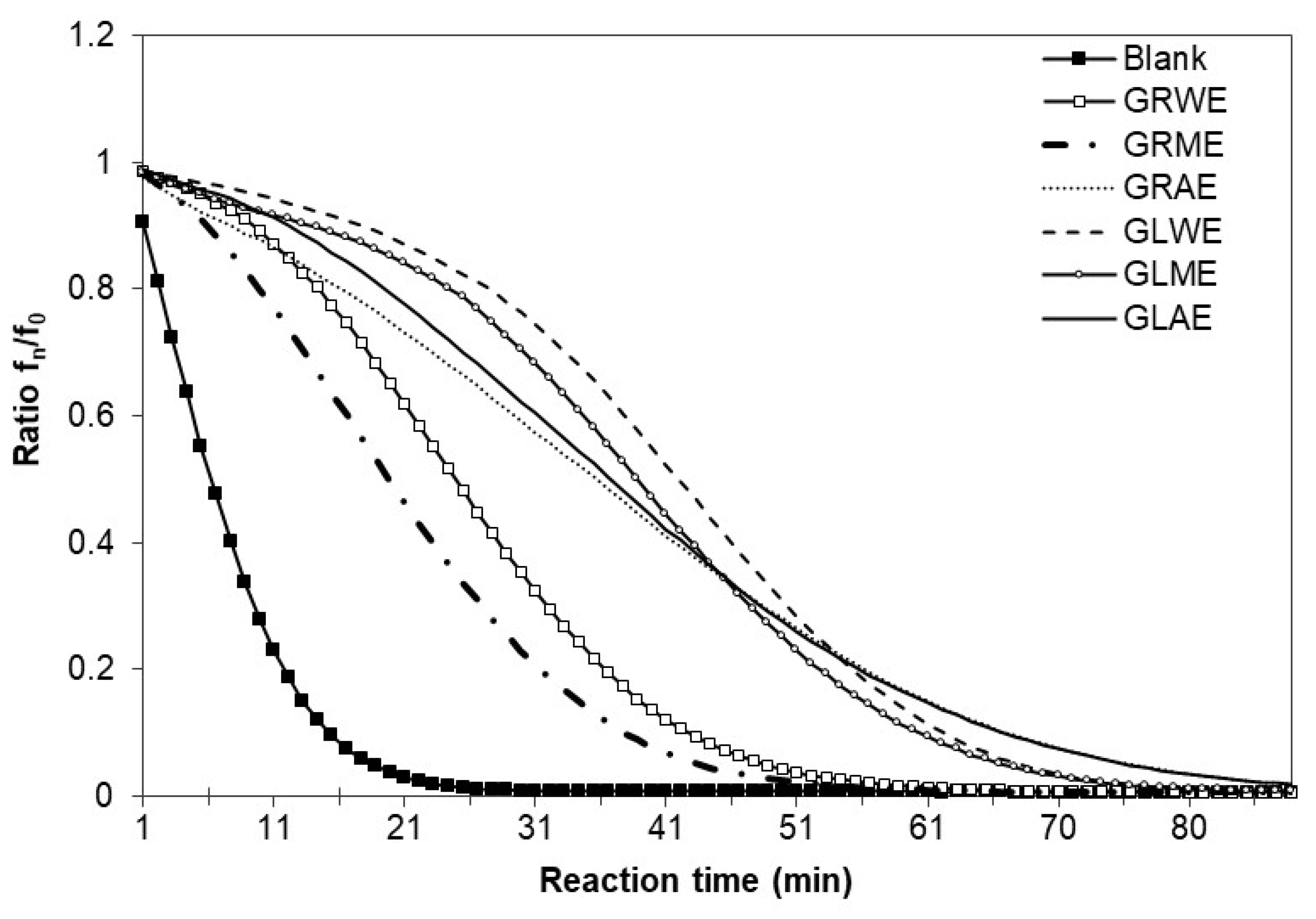
The ORAC assay is considered most closely related to oxidation in biological systems [31]. ORAC values were significantly higher than those determined by other methods (Table 2). The ORAC assay is based on radical chain-breaking by HAT and evaluates the inhibition of oxidation induced by peroxyl radicals. It is believable that the ORAC assay is more relevant to the expected antioxidant capacity of polyphenols in biological systems. ORAC values measured in our study varied from 484.2 ± 78.0 (GRME) to 1425 ± 56 µM TE/g edw (GLWE). In general, extracts with higher total phenolic content also exhibited higher ORAC values: the leaf water and methanol extracts (GLWE and GLME) combined the highest TPC with the strongest peroxyl radical-scavenging capacity, whereas the methanolic root extract (GRME), which contained the lowest amount of phenolics, showed the weakest ORAC response (Table 2). This relationship indicates that polyphenolic constituents—including hydroxycinnamic acids and flavonoids previously reported in A. podagraria—substantially contribute to the chain-breaking antioxidant activity measured by ORAC. Since peroxyl radicals are among the most abundant reactive oxygen species generated during lipid peroxidation in biological systems, the high ORAC values of goutweed leaf extracts suggest a relevant potential to protect biomolecules against oxidative damage and support their prospective use in nutraceutical and cosmeceutical formulations. The curves in Figure 4 represent the kinetics of oxygen absorbance capacity by the different extracts. These curves clearly indicate that qualitative and/or quantitative compositions of the antioxidants present in different A. podagraria leaf and root extracts are significantly different. Although the ORAC values were numerically higher than those obtained by DPPH• and ABTS•+ assays, the absolute values of the other methods cannot be directly compared, because they rely on different radicals, reaction mechanisms, and endpoints; therefore, only the relative trends among the extracts were considered when interpreting the data.
Figure 4.
The curves obtained using various extracts in the ORAC assay: f0 is the initial fluorescence, and fn is the fluorescence at time n.
3. Materials and Methods
3.1. Plant Material
Aegopodium podagraria L. (goutweed) was collected in 2022 in the Seniava district, Kaunas, Lithuania (54°50′45″ N of latitude, 23°54′39″ E of longitude, elevation altitude 84 m). The leaves were collected at the end of May–beginning of June (pre-flowering phase) and the roots at the end of October. The plant was dried at room temperature in a dark, ventilated room and stored in glass containers.
3.2. Chemicals and Solvents
2,2-Diphenyl-1-picrylhydrazyl (DPPH•, 95%), 2,2-azinobis-3 ethyl benzothiazoline-6-sulphonic acid (ABTS), 6-hydroxy-2,5,7,8-tetramethylchromane-2-carboxylic acid (Trolox, 97%), 2,2′-azobis(2-methylpropionamidine) dihydrochloride (97%), potassium persulfate (K2S2O8) (≥99%), sodium phosphate salts (99%), gallic acid (GA), Folin–Ciocalteu phenol reagent (2 M, 99%), anhydrous Na2CO3, NaCl, KCl, KH2PO4 were obtained from Sigma-Aldrich (St. Louis, MO, USA). Fluorescein sodium salt (FL) was obtained from Fluka Chemicals (Steinheim, Germany); the solvents acetone and methanol were obtained from Lachema (Brno, Czech Republic); and ethanol was obtained from JSC Stumbras (Kaunas, Lithuania). A standard mixture of C8-C32 n-alkanes (Supelco Analytical, Bellefonte, PA, USA) was used to determine Kováts retention indices (KI).
3.3. Isolation of Essential Oils (EOs) and Preparation of Goutweed Extracts
Dried leaves and roots were ground in an ultra-centrifugal mill ZM200 (Retsch, Haan, Germany) using a 1.0 mm sieve. The EOs were isolated from 100 g using hydro-distillation in a Clevenger-type apparatus (TECHNOSKLO s.r.o., Držkov, Czech Republic) for 3 h. After distillation, the liquid fraction residues were separated from the solids by filtration and freeze-dried in a Maxi Dry Lyo (Heto-Holton AIS, Allerod, Denmark), yielding the water extracts of the leaves (GLWE) and roots (GRWE). In addition, the ground leaves and roots were directly extracted with methanol and acetone using pressurized liquid extraction (PLE) on a Dionex ASE 350 system (Dionex, Sunnyvale, CA, USA). The ground roots or leaves (10 g) were mixed with 1 g of diatomaceous earth in 34 mL Dionex stainless-steel vessels. A three-cycle program for 5 min each was used for extraction (15 min total time) at 70 °C and 10 MPa [32], which represents compromise conditions widely used in the PLE of plant matrices, providing efficient extraction of medium- and high-polarity constituents while limiting the risk of thermal degradation of phenolic antioxidants. Three extraction cycles were applied to approach exhaustive extraction of the ground material without excessive solvent consumption or processing time. A flush volume of 100% and a 60s purge with nitrogen gas were set at the end of each extraction. The extracts were concentrated in a rotary vacuum evaporator Rotavapor® R-210 (BÜCHI Labortechnik AG, Flawil, Switzerland) at 40 °C and stored at −18 °C until analysis. All the extractions were performed in triplicate. The yield of EOs and extracts was expressed in % (w/w) of plant dry weight (pdw).
3.4. Gas Chromatography–Mass Spectrometry (GC-MS)
The EOs isolated from leaves and roots were diluted in pentane (5 μL/mL) and analyzed on a Shimadzu GC-2010 Plus gas chromatograph coupled to a GCMS-QP2010 Ultra Shimadzu mass selective detector (Shimadzu, Kyoto, Japan). The compounds were separated in a Rxi-5 MS (5% diphenyl, 95% dimethylpolysiloxane) capillary column, 30 m length, 0.25 mm i.d., 0.25 μm film thickness (Restek, Bellefonte, PA, USA) under the same method and conditions as reported by Baranauskienė et al. [21].
The components were identified by comparing their Kováts retention indices (KI) relative to C8–C32 n-alkanes with those provided in the literature [25] and by comparing their mass spectra (MS) with NIST standard reference database (NIST 08 library and NIST library search program version 2.0d). The mean values were calculated from triplicate injections. Identification was assumed when a good match of MS and KI was achieved.
3.5. Total Phenolic Content (TPC)
The Folin–Ciocalteu method with slight modifications [33] was used. A linear calibration curve was constructed by mixing 0.2 mL of gallic acid solutions in ethanol (0–0.5 mg/mL) with 2 mL of a diluted Folin–Ciocalteu reagent prepared with ultra-pure water (1:10) and 2 mL of a 7% Na2CO3 solution. The absorption was measured after 90 min at 765 nm on a Spectronic Genesys 8 spectrophotometer (Thermo Fisher Scientific, Rochester, NY, USA); a calibration curve was obtained with gallic acid solutions in ethanol over the concentration range 0–0.5 mg/mL (R2 = 0.9991). Similarly, 0.2 mL of 0.1–0.25% of WE in ultra-pure water, AE, ME in methanol, and distilled water as a blank were analyzed. Four replicate measurements were performed for each sample. The TPC was expressed in milligrams of gallic acid equivalents per gram of plant extract (mg GAE/g edw).
3.6. DPPH• Scavenging Capacity
The DPPH scavenging activity was measured using the method by Brand-Williams et al. [34]. A quantity of 7.5 μL of extract (concentrations were in the range of 0.00625–2%) or Trolox solution per sample was mixed in microplate wells with 300 μL of a methanolic solution containing 60 μM DPPH•. A blank sample was made with methanol. Absorbance was measured in a microplate reader FLUOstar Omega (BMG Labtech, Durham, NC, USA) at 517 nm at every minute until the absorption curve reached a plateau (total 35 min). The Trolox standard in concentrations of 0.06–1 mM was used to estimate a standard curve. The final results were expressed as effective concentrations (EC50), which denote the extract concentration required to decrease the initial DPPH• concentration in the reaction mixture by 50%, and as µM Trolox equivalents per gram of extract dry weight (µM TE/g edw)
3.7. ABTS•+ Scavenging Capacity
ABTS was measured according to the method by Re et al. [35]. The stock solution was prepared by dissolving two mM ABTS in 50 mL phosphate-buffered saline (pH 7.4). The ABTS•+ solution was prepared by reacting 50 mL of the ABTS stock solution with 200 μL of a 70 mM K2S2O8 solution, then incubating the mixture at room temperature in the dark for 15 h. The stock solution was then diluted with phosphate-buffered saline to a final absorbance of 0.70 (±0.02) at 734 nm. Spectrophotometric measurements were performed in 96-well microplates. A quantity of 3 μL of sample solution was mixed with 297 μL of the ABTS•+ solution, and the absorbance was measured in a microplate reader FLUOstar Omega (BMG Labtech, Durham, NC, USA). A 300 μL volume of PPB solution was used as a blank sample. The calibration curve was prepared using the Trolox standard in the concentration range of 0.6 to 2 mM. A sample concentration providing 50% inhibition of ABTS•+ (EC50) was determined from a graph of inhibition percentage versus extract concentration. The scavenging activity was also expressed as µM TE/g edw.
3.8. Oxygen Radical Absorbance Capacity
The rates of oxidative degradation of the fluorescent compound (fluorescein sodium salt) after exposure to an oxygen radical initiator, 2,2′-azobis(2-methylpropionamidine), were measured according to the method by Huang et al. [31], which represents the oxygen radical absorbance capacity (ORAC) of the extract. All solutions were prepared in 75 mM phosphate buffer at pH 7.4 (PBS). The measurements were carried out in 96-well black microplates. To each well, 25 μL of the sample was added, followed by 150 μL of fluorescein (96 mM). The mixture was incubated for 15 min at 37 °C in the built-in incubator. Afterward, 26 μL of 2,2′-azobis (2-methylpropionamidine) solution (240 mM) was manually added, and the microplate was shaken for 30 s. Fluorescence was recorded (λex = 493 nm, λem = 515 nm) every 66 s for 90 min in the fluorimeter microplate reader FLUOstar Omega (BMG Labtech, Durham, NC, USA). Trolox solutions at concentrations of 10–200 μM were prepared for a standard calibration curve. The ORAC values were calculated from differences in the areas under the fluorescence decay curves between the blank, samples, and standards. The area under the fluorescence decay curve (AUC) was calculated as follows: AUC = 1 + sum (f1/f0 + f2/f0 + f3/f0 + f4/f0 + f5/f0 + f6/f0 + f7/f0 + … + fn/f0), where AUC is the area under the FL decay curve (X). The f0 is the fluorescence reading at time 0 (initial fluorescence), and fn is the fluorescence reading at time n. Net AUC (standard + sample): AUC - AUC blank, where Net AUC is the net area under the FL decay curve (X). Finally, ORAC values were expressed as µM TE/g edw.
3.9. Statistical Analysis
Mean values ± standard deviations of extract yields, antioxidant capacity values, and percentage contents of EO components were calculated from 3 to 4 replicate determinations using MS Excel 2010 software. Statistical comparisons among different groups presented in Table 2 were performed by one-way analysis of variance (ANOVA) using Statgraphics Centurion XVIII package (Statgraphics Technologies, Inc., The Plains, VA, USA). Tukey’s HSD was performed as a post hoc analysis at a 95% confidence level.
4. Conclusions
Our study significantly expanded knowledge of the composition of the essential oils (EOs) of Aegopodium podagraria: 58 compounds of the 144 reported from the hydro-distilled volatile oils of the leaves and roots were tentatively or positively identified for the first time. Sesquiterpenes germacrene D and (E)-β-bergamotene were the major volatiles in the leaf EO, while α-pinene, germacrene B, (E)-caryophyllene, hexadecanoic acid, and (Z)-falcarinol were dominant in the root EO. The study demonstrated that hydrodistillation residue can be valorized to produce water-soluble natural antioxidants. At the same time, pressurized liquid extraction with solvents of different polarities can yield two distinct products from dried leaves and roots. High-polarity water and methanol extracts from goutweed leaves exhibited the highest total phenolic content (TPC) and oxygen radical absorbance capacity (ORAC). Consequently, the plant biorefining process for producing valuable aromatic and antioxidant fractions on a laboratory scale may be considered a first step toward developing new industrial ingredients for nutraceuticals, cosmeceuticals, flavour/fragrance, and other products. Further research should focus on a more comprehensive evaluation of the extract’s composition and bioactivities of its individual constituents. At the same time, life-cycle and techno-economic assessments would be essential for upscaling and commercialization of the processes and products obtained.
Author Contributions
Conceptualization, P.R.V. and R.B.; methodology, R.B. and I.R.; software, R.B. and I.R.; validation, P.R.V. and R.B.; formal analysis, R.B. and I.R.; investigation, R.B. and I.R.; resources, P.R.V.; data curation, R.B. and P.R.V.; writing—original draft preparation, R.B. and I.R.; writing—review and editing, P.R.V. and R.B.; visualization, R.B. and I.R.; supervision, P.R.V. All authors have read and agreed to the published version of the manuscript.
Funding
This research received no external funding.
Institutional Review Board Statement
Not applicable.
Informed Consent Statement
Not applicable.
Data Availability Statement
Data available from the authors upon request.
Conflicts of Interest
The authors declare no conflicts of interest.
References
- Jakubczyk, K.; Łukomska, A.; Czaplicki, S.; Wajs-Bonikowska, A.; Gutowska, I.; Czapla, N.; Tańska, M.; Janda-Milczarek, K. Bioactive Compounds in Aegopodium podagraria Leaf Extracts and Their Effects against Fluoride-Modulated Oxidative Stress in the THP-1 Cell Line. Pharmaceuticals 2021, 14, 1334. [Google Scholar] [CrossRef] [Scilit]
- Orav, A.; Viitak, A.; Vaher, M. Identification of bioactive compounds in the leaves and stems of Aegopodium podagraria by various analytical techniques. Procedia Chem. 2010, 2, 152–160. [Google Scholar] [CrossRef] [Scilit]
- Adams, M.; Berset, C.; Kessler, M.; Hamburger, M. Medicinal herbs for the treatment of rheumatic disorders—A survey of European herbals from the 16th and 17th century. J. Ethnopharmacol. 2009, 121, 343–359. [Google Scholar] [CrossRef] [Scilit]
- Dębia, K.; Dzięcioł, M.; Wroblewska, A.; Janda-Milczarek, K. Goutweed (Aegopodium podagraria L.)—An Edible Weed with Health-Promoting Properties. Molecules 2025, 30, 1603. [Google Scholar] [CrossRef] [Scilit]
- Koyro, O.O.; Tovchiga, O.V.; Stepanova, S.I.; Shtrygol, S.Y. Study of the composition of the goutweed flowers essential oil, its renal effects and influence on uric acid exchange. Phcog. Commn. 2012, 2, 46–49. [Google Scholar] [CrossRef] [Scilit]
- Olas, B.; Różański, W.; Urbańska, K.; Sławińska, N.; Bryś, M. Review. New Light on Plants and Their Chemical Compounds Used in Polish Folk Medicine to Treat Urinary Diseases. Pharmaceuticals 2024, 17, 435. [Google Scholar] [CrossRef] [Scilit]
- Sarıaltın, S.Y.; Polat, D.Ç.; Yalçın, C.Ö. Cytotoxic and antioxidant activities and phytochemical analysis of Smilax excelsa L. and Aegopodium podagraria L. Food Biosci. 2023, 52, 102359. [Google Scholar] [CrossRef] [Scilit]
- Mazzei, R.; Leonti, M.; Spadafora, S.; Patitucci, A.; Tagarelli, G. A review of the antimicrobial potential of herbal drugs used in popular Italian medicine (1850s–1950s) to treat bacterial skin diseases. J. Ethnopharmacol. 2020, 250, 112443. [Google Scholar] [CrossRef] [Scilit]
- Mazurkova, N.; Protsenko, M.; Lobanova, I.; Filippova, E.; Vysochina, G. Antiviral activity of Siberian wild and cultivated plants. BIO Web Conf. 2020, 24, 00051. [Google Scholar] [CrossRef] [Scilit]
- Stefanovic, O.; Comic, L.; Stanojevic, D.; Solujic-Sukdolak, S. Antibacterial Activity of Aegopodium podagraria L. Extracts and Interaction Between Extracts and Antibiotics. Turk. J. Biol. 2009, 33, 145–150. [Google Scholar] [CrossRef] [Scilit]
- Christensen, L.P.; Brandt, K. Bioactive Polyacetylenes in Food Plants of the Apiaceae Family: Occurrence, Bioactivity and Analysis. J. Pharm. Biomed. Anal. 2006, 41, 683–693. [Google Scholar] [CrossRef] [Scilit] [PubMed]
- Nizioł-Łukaszewska, Z.; Zagórska-Dziok, M.; Ziemlewska, A.; Bujak, T. Comparison of the Antiaging and Protective Properties of Plants from the Apiaceae Family. Oxidative Med. Cell. Longev. 2020, 2020, 5307614. [Google Scholar] [CrossRef] [Scilit] [PubMed]
- Prior, R.M.; Lundgaard, N.H.; Light, M.E.; Stafford, G.I.; van Staden, J.; Jäger, A.K. The polyacetylene falcarindiol with COX-1 activity isolated from Aegopodium podagraria L. J. Ethnopharmacol. 2007, 113, 176–178. [Google Scholar] [CrossRef] [Scilit] [PubMed]
- Jakubczyk, K.; Janda, K.; Styburski, D.; Lukomska, A. Goutweed (Aegopodium podagraria L.)—Botanical characteristics and prohealthy properties. Postępy Hig. Med. Dośw. 2020, 74, 28–35. [Google Scholar] [CrossRef] [Scilit]
- Leurentop, L.; Verbelen, J.P.; Peumans, W.J. Electron-microscopic analysis of ground elder (Aegopodium podagraria L.) lectin: Evidence for a new type of supra-molecular protein structure. Planta 1987, 172, 14–19. [Google Scholar] [CrossRef] [Scilit]
- Kapetanos, C.; Karioti, A.; Bojović, S.; Marin, P.; Veljić, M.; Skaltsa, H. Chemical and principal-component analyses of the essential oils of Apioideae taxa (Apiaceae) from Central Balkan. Chem. Biodivers. 2008, 5, 101–119. [Google Scholar] [CrossRef] [Scilit]
- Paramonov, E.A.; Khalilova, A.Z.; Odinokov, V.N.; Khalilov, L.M. Identification and biological activity of volatile organic compounds isolated from plants and insects. III. Chromatography-mass spectrometry of volatile compounds of Aegopodium podagraria. Chem. Nat. Compd. 2000, 36, 584–586. [Google Scholar] [CrossRef] [Scilit]
- Reddy, K.V.; Sree, N.R.S.; Ranjit, P.; Maddela, N.R.; Kumar, V.; Jha, P.; Prasad, R.; Radice, M. Essential oils, herbal extracts and propolis for alleviating Helicobacter pylori infections: A critical view. S. Afr. J. Bot. 2023, 157, 138–150. [Google Scholar] [CrossRef] [Scilit]
- Gandhi, G.R.; Hariharan, G.; Amalraj, S.; Hillary, V.E.; Araujo, H.C.S.; Montalvao, M.M.; Borges, L.P.; Gurgel, R.Q. Neuropharmacological mechanisms and psychotherapeutic effects of essential oils: A systematic review. S. Afr. J. Bot. 2025, 181, 90–104. [Google Scholar] [CrossRef] [Scilit]
- Šircelj, H.; Petkovsek, M.M.; Veberič, R.; Hudina, M.; Slatnar, A. Lipophilic antioxidants in edible weeds from agricultural areas. Turk. J. Agric. For. 2018, 42, 1–10. [Google Scholar] [CrossRef] [Scilit]
- Baranauskienė, R.; Venskutonis, P.R.; Ragažinskienė, O. Valorisation of Roman chamomile (Chamaemelum nobile L.) herb by comprehensive evaluation of hydrodistilled aroma and residual non-volatile fractions. Food Res. Int. 2022, 160, 111715. [Google Scholar] [CrossRef] [Scilit] [PubMed]
- Aqeel, U.; Aftab, T.; Khan, M.M.A.; Naeem, M. Regulation of essential oil in aromatic plants under changing environment. J. Appl. Res. Med. Aromat. Plants 2023, 32, 100441. [Google Scholar] [CrossRef] [Scilit]
- Xie, Q.; Wang, C. Polyacetylenes in herbal medicine: A comprehensive review of its occurrence, pharmacology, toxicology, and pharmacokinetics (2014–2021). Phytochemistry 2022, 201, 113288. [Google Scholar] [CrossRef] [Scilit] [PubMed]
- Warsito, M.F. A Review on Chemical Composition, Bioactivity, and Toxicity of Myristica fragrans Houtt. Essential Oil. Indones. J. Pharm. 2021, 32, 304–313. [Google Scholar] [CrossRef] [Scilit]
- Adams, R.P. Identification of Essential Oils Components by Gas Chromatography/Mass Spectrometry, 4th ed.; Allured Business Media: Carol Stream, IL, USA, 2017; p. 803. [Google Scholar]
- Borg-Karlson, A.-N.; Valterová, I.; Nilsson, L.A. Volatile compounds from flowers of six species in the family Apiaceae: Bouquets for different pollinators? Phytochemistry 1994, 35, 111–119. [Google Scholar] [CrossRef] [Scilit]
- Wróblewska, A.; Janda, K.; Makuch, E.; Walasek, M.; Miądlicki, P.; Jakubczyk, K. Effect of extraction method on the antioxidative activity of ground elder (Aegopodium podagraria L.). Pol. J. Chem. Technol. 2019, 21, 13–18. [Google Scholar] [CrossRef] [Scilit]
- Flieger, J.; Flieger, M. The [DPPH●/DPPH-H]-HPLC-DAD Method on Tracking the Antioxidant Activity of Pure Antioxidants and Goutweed (Aegopodium podagraria L.) Hydroalcoholic Extracts. Molecules 2020, 25, 6005. [Google Scholar] [CrossRef] [Scilit]
- Huang, D.; Ou, B.; Prior, R.L. The chemistry behind antioxidant capacity assays. J. Agric. Food Chem. 2005, 53, 1841–1856. [Google Scholar] [CrossRef] [Scilit]
- Valyova, M.; Tashev, A.N.; Stoyanov, S.; Yordanova, S.; Ganeva, Y. In vitro free-radical scavenging activity of Aegopodium podagraria L. and Orlaya grandiflora (L.) Hoffm. (Apiaceae). J. Chem. Technol. Metall. 2016, 51, 271–274. [Google Scholar]
- Huang, D.; Ou, B.; Hampsch-Woodill, M.; Flanagan, J.A.; Prior, R.L. High-throughput assay of oxygen radical absorbance capacity (ORAC) using a multichannel liquid handling system coupled with a microplate fluorescence reader in 96-well format. J. Agric. Food Chem. 2002, 50, 4437–4444. [Google Scholar] [CrossRef] [Scilit]
- Kryževičiūtė, N.; Kraujalis, P.; Venskutonis, P.R. Optimization of high pressure extraction processes for the separation of raspberry pomace into lipophilic and hydrophilic fractions. J. Supercrit. Fluids 2016, 108, 61–68. [Google Scholar] [CrossRef] [Scilit]
- Singleton, V.L.; Orthofer, R.; Lamuela-Raventos, R.M. Analysis of total phenols and other oxidation substrates and antioxidants by means of Folin-Ciocalteu reagent. Methods Enzymol. 1999, 299, 152–178. [Google Scholar] [CrossRef] [Scilit]
- Brand-Williams, W.; Cuvelier, M.E.; Berset, C. Use of a free radical method to evaluate antioxidant activity. LWT-Food Sci. Technol. 1995, 28, 25–30. [Google Scholar] [CrossRef] [Scilit]
- Re, R.; Pellegrini, N.; Proteggente, A.; Pannala, A.; Yang, M.; Rice-Evans, C. Antioxidant activity applying an improved ABTS radical cation decolorization assay. Free Radic. Biol. Med. 1999, 26, 1231–1237. [Google Scholar] [CrossRef] [Scilit]

Disclaimer/Publisher’s Note: The statements, opinions and data contained in all publications are solely those of the individual author(s) and contributor(s) and not of MDPI and/or the editor(s). MDPI and/or the editor(s) disclaim responsibility for any injury to people or property resulting from any ideas, methods, instructions or products referred to in the content. |
© 2025 by the authors. Licensee MDPI, Basel, Switzerland. This article is an open access article distributed under the terms and conditions of the Creative Commons Attribution (CC BY) license (https://creativecommons.org/licenses/by/4.0/).