Sustainable Activation of Persulfate Using Corn Cob Biochar for Pesticide Degradation in Wastewater Treatment
 , , , , and
Abstract
1. Introduction
2. Results and Discussion
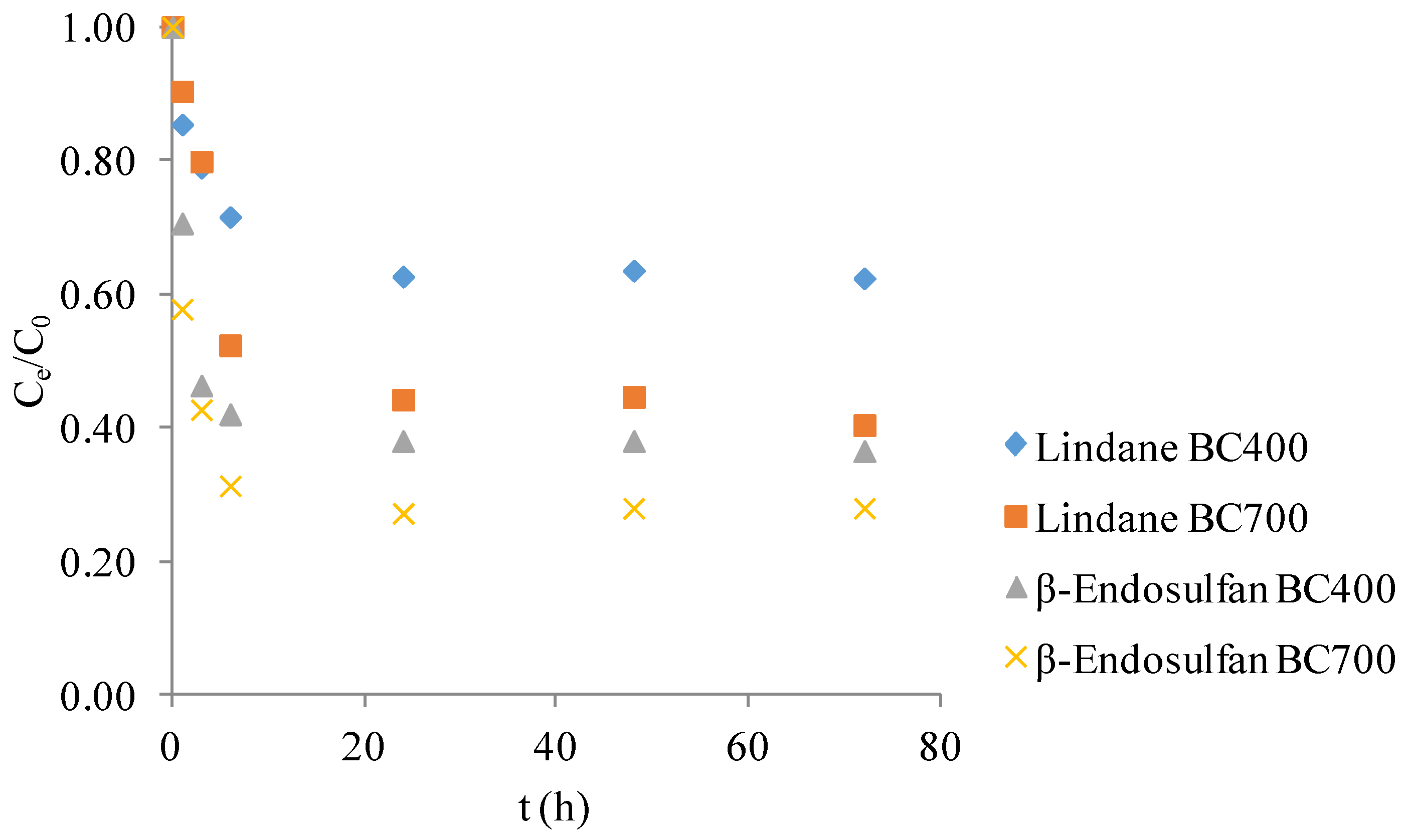
2.1. Adsorption by Corn Cob Biochar
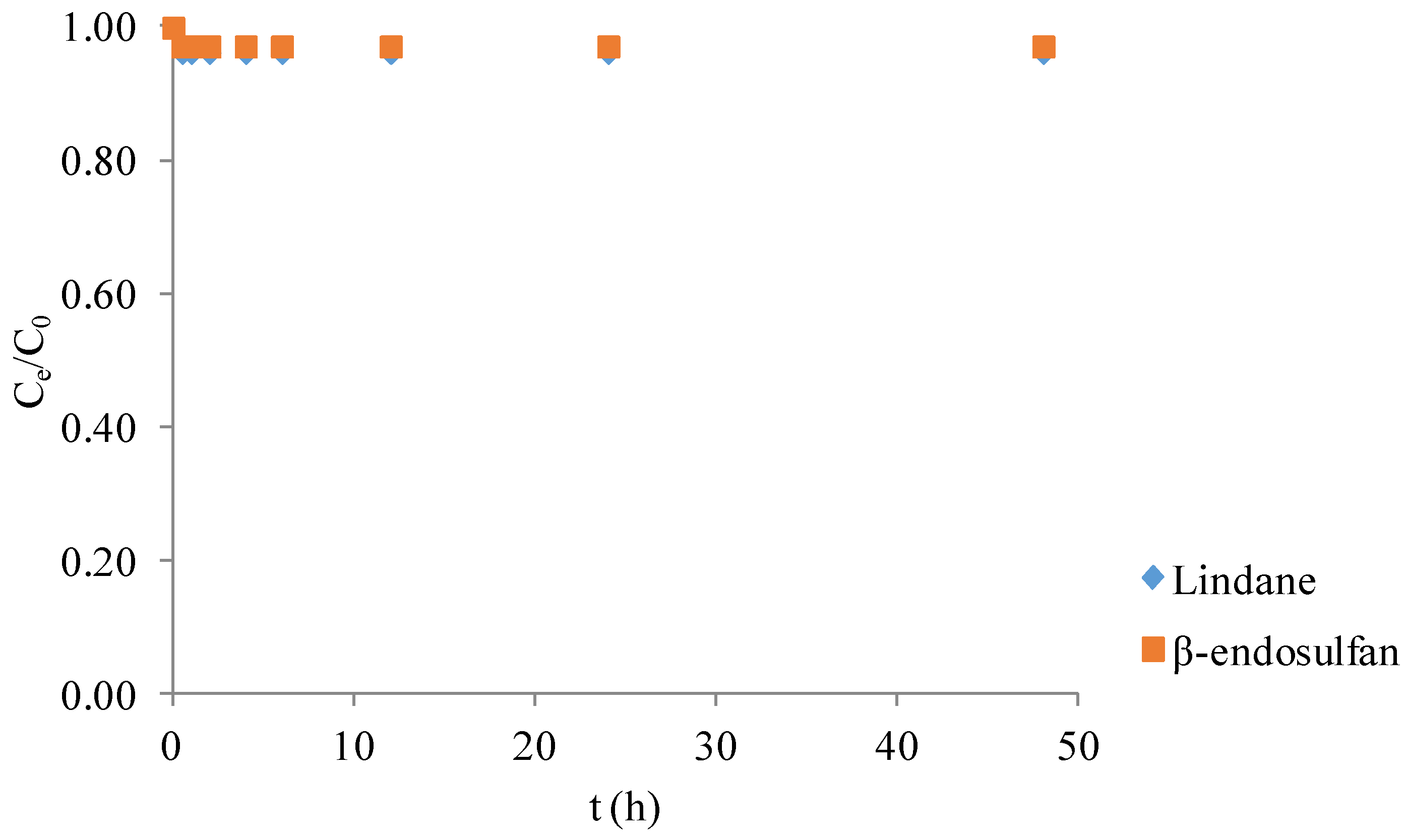
2.2. Degradation with Persulfate Without Catalyst
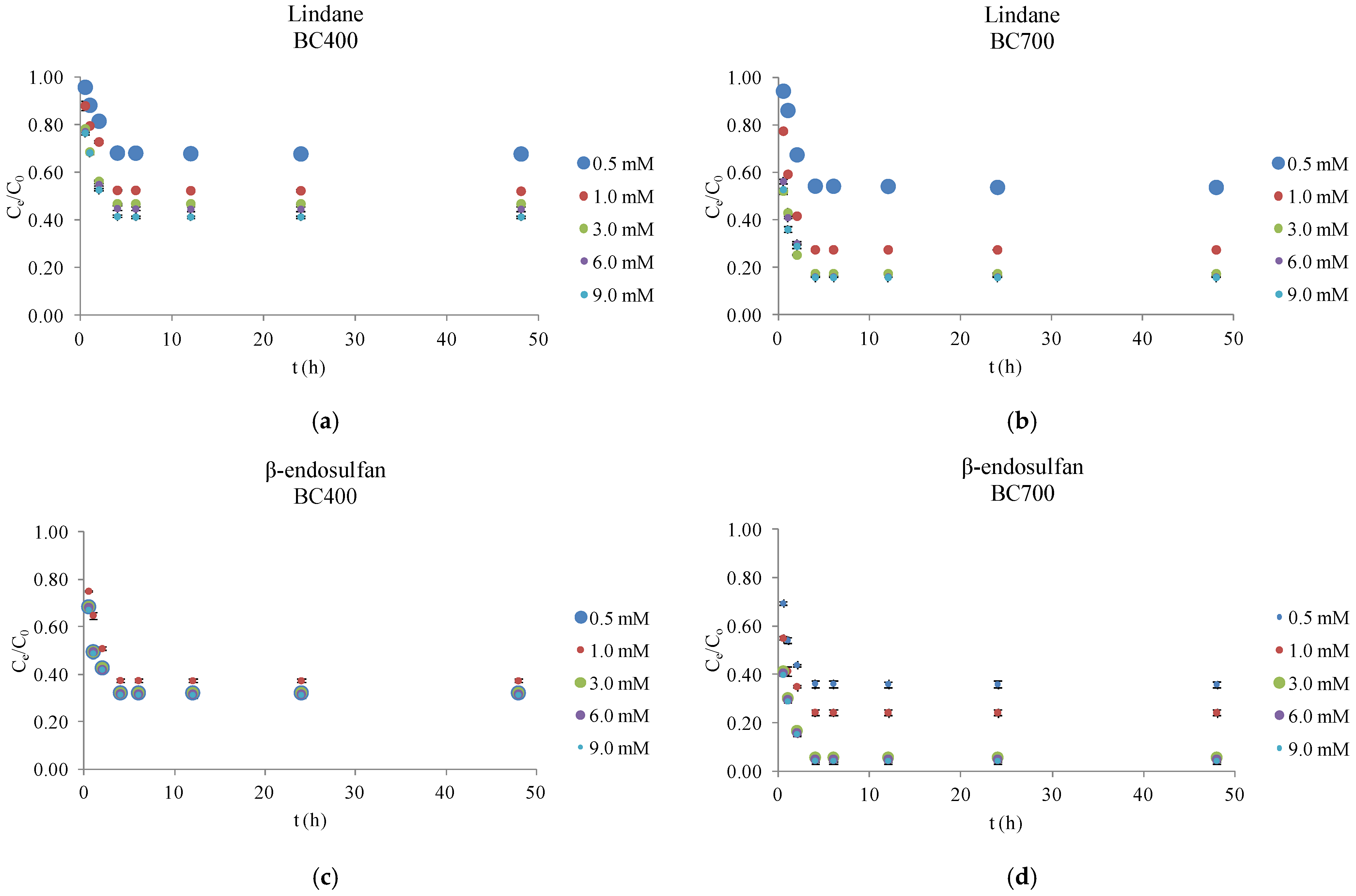
2.3. Optimization of Persulfate Concentration in the Biochar-Catalyzed Degradation of Pesticides
2.4. Scavenger Experiments for Identification of Reactive Species
2.5. Investigation of pH Influence on Persulfate Activation by Biochar
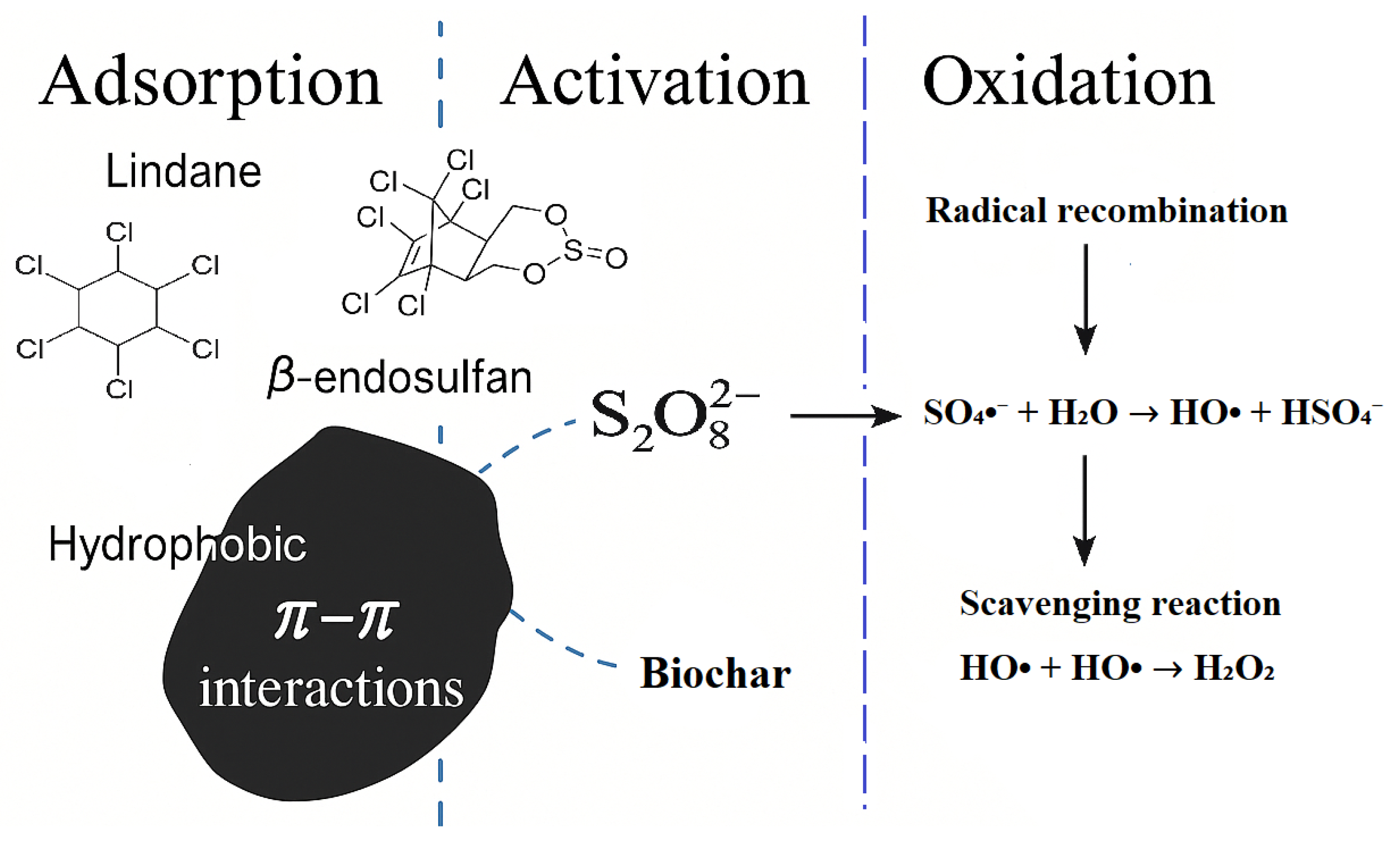
2.6. Possible Mechanism of Persulfate Activation and Pesticide Removal
2.7. Reusability of Biochar
2.8. Experiments in Real Water Matrix
3. Materials and Methods
3.1. Chemicals and Reagents
3.2. Preparation and Characterization of Biochar
4. Control Experiments
4.1. Adsorption with Corn Cob Biochar
4.2. Degradation with Persulfate Without Catalyst
4.3. Optimization of Persulfate Concentration in the Biochar Catalyzed Degradation of Pesticides
4.4. Investigation of pH Influence on Persulfate Activation by Biochar
4.5. Scavenger Experiments for Identification of Reactive Species
4.6. Reusability of Biochar
4.7. Experiments in Real Water Matrix
5. Analytical Methods
6. Conclusions
Supplementary Materials
Author Contributions
Funding
Institutional Review Board Statement
Informed Consent Statement
Data Availability Statement
Acknowledgments
Conflicts of Interest
References
- Benner, J.; Helbling, D.E.; Kohler, H.P.E.; Wittebol, J.; Kaiser, E.; Prasse, C.; Ternes, T.A.; Albers, C.N.; Aamand, J.; Horemans, B.; et al. Is Biological Treatment a Viable Alternative for Micropollutant Removal in Drinking Water Treatment Processes? Water Res. 2013, 47, 5955–5976. [Google Scholar] [CrossRef]
- Leusch, F.D.L.; Neale, P.A.; Busetti, F.; Card, M.; Humpage, A.; Orbell, J.D.; Ridgway, H.F.; Stewart, M.B.; van de Merwe, J.P.; Escher, B.I. Transformation of Endocrine Disrupting Chemicals, Pharmaceuticals, and Personal Care Products during Drinking Water Disinfection. Sci. Total Environ. 2019, 657, 1480–1490. [Google Scholar] [CrossRef]
- Brucker, N.; Menezes, C.; Charão, M.F.; Cé, L.; Stella, T.; Menezes, J.M.; Muller, I.; Gioda, A.; Rafaela, B.; De Carvalho, F.; et al. Bioassays to Screen the Toxicity in Drinking Water Samples Collected in Brazilian Rural Area. Toxicol. Res. 2021, 10, 856–867. [Google Scholar] [CrossRef]
- Montagner, C.C.; Sodré, F.F.; Acayaba, R.D.; Vidal, C.; Campestrini, I.; Locatelli, M.A.; Pescara, I.C.; Albuquerque, A.F.; Umbuzeiro, G.A.; Jardim, W.F. Ten Years-Snapshot of the Occurrence of Emerging Contaminants in Drinking, Surface and Ground Waters and Wastewaters from São Paulo State, Brazil. J. Braz. Chem. Soc. 2018, 30, 614–632. [Google Scholar] [CrossRef]
- Caldas, S.S.; Arias, J.L.O.; Rombaldi, C.; Mello, L.L.; Cerqueira, M.B.R.; Martins, A.F.; Primel, E.G. Occurrence of Pesticides and PPCPs in Surface and Drinking Water in Southern Brazil: Data on 4-Year Monitoring. J. Braz. Chem. Soc. 2018, 30, 71–80. [Google Scholar] [CrossRef]
- Almeida, M.B.; Madeira, T.B.; Watanabe, L.S.; Meletti, P.C.; Nixdorf, S.L. Pesticide Determination in Water Samples from a Rural Area by Multi-Target Method Applying Liquid Chromatography-Tandem Mass Spectrometry. J. Braz. Chem. Soc. 2019, 30, 1657–1666. [Google Scholar] [CrossRef]
- Masiá, A.; Campo, J.; Vázquez-Roig, P.; Blasco, C.; Picó, Y. Pesticide Occurrence in Water: A Review. J. Hazard. Mater. 2013, 263, 95. [Google Scholar] [CrossRef]
- Moreno-González, R.; Campillo, J.A.; García, V.; León, V.M. Occurrence of Pesticides in Aquatic Environments. Chemosphere 2013, 92, 247. [Google Scholar] [CrossRef] [PubMed]
- Kapsi, M.; Tsoutsi, C.; Paschalidou, A.; Albanis, T. Environmental Monitoring and Risk Assessment of Pesticide Residues in Surface Waters of the Louros River (N.W. Greece). Sci. Total Environ. 2019, 650, 2188–2198. [Google Scholar] [CrossRef] [PubMed]
- Eniola, J.O.; Kumar, R.; Barakat, M.A.; Rashid, J.A. A Review on Conventional and Advanced Hybrid Technologies for Pharmaceutical Wastewater Treatment. J. Clean. Prod. 2022, 356, 131826. [Google Scholar] [CrossRef]
- Tong, W.K.; Dai, C.; Jia, C.; Hu, J.; Gao, M.-T.; Li, J.; Zhang, J.B.; Tang, H.; Liang, Y.; Teng, W.; et al. Eco-Friendly and Stable Triclosan Removal from Groundwater Using Peroxyacetic Acid Activated with Biochar Produced from Saccharification Residues. Chem. Eng. J. 2024, 481, 148422. [Google Scholar] [CrossRef]
- Hung, C.-M.; Chen, C.-W.; Huang, C.-P.; Shiung Lam, S.; Dong, C.-D. Peroxymonosulfate Activation by a Metal-Free Biochar for Sulfonamide Antibiotic Removal in Water and Associated Bacterial Community Composition. Bioresour. Technol. 2022, 343, 126082. [Google Scholar] [CrossRef]
- Ma, D.; Wang, J.; Feng, K.; Liu, B.; Xie, G.; Xing, D. A Green Strategy from Waste Red Mud to Fe0-Based Biochar for Sulfadiazine Treatment by Peroxydisulfate Activation. Chem. Eng. J. 2022, 446, 136944. [Google Scholar] [CrossRef]
- Simetić, T.; Marjanović Srebro, T.; Apostolović, T.; Anojčić, J.; Đukanović, N.; Mutić, S.; Molnar Jazić, J.; Beljin, J. Biochar as a catalyst in persulfate activation: A sustainable approach to remove pesticides from water. Processes 2025, 13, 1856. [Google Scholar] [CrossRef]
- Drané, M.; Zbair, M.; Hajjar-Garreau, S.; Josien, L.; Michelin, L.; Bennici, S.; Limousy, L. Unveiling the Potential of Corn Cob Biochar: Analysis of Microstructure and Composition with Emphasis on Interaction with NO2. Materials 2024, 17, 159. [Google Scholar] [CrossRef] [PubMed]
- Kang, Z.; Jia, X.; Zhang, Y.; Kang, X.; Ge, M.; Liu, D.; Wang, C.; He, Z. A review on application of biochar in the removal of pharmaceutical pollutants through adsorption and persulfate based AOPs. Sustainability 2022, 14, 10128. [Google Scholar] [CrossRef]
- Shen, T.; Wang, P.; Hu, L.; Hu, Q.; Wang, X.; Zhang, G. Adsorption of 4-Chlorophenol by Wheat Straw Biochar and Its Regeneration with Persulfate under Microwave Irradiation. J. Environ. Chem. Eng. 2021, 9, 105353. [Google Scholar] [CrossRef]
- Liu, H.; Xu, G.; Li, G. The Characteristics of Pharmaceutical Sludge-Derived Biochar and Its Application for the Adsorption of Tetracycline. Sci. Total Environ. 2020, 747, 141492. [Google Scholar] [CrossRef]
- Jin, Z.; Xiao, S.; Dong, H.; Xiao, J.; Tian, R.; Chen, J.; Li, Y.; Li, L. Adsorption and Catalytic Degradation of Organic Contaminants by Biochar: Overlooked Role of Biochar’s Particle Size. J. Hazard. Mater. 2022, 422, 126928. [Google Scholar] [CrossRef] [PubMed]
- Oyekunle, D.T.; Wu, B.; Luo, F.; Ali, J.; Chen, Z. Synergistic effects of Co and N doped on graphitic carbon as an in situ surface-bound radical generation for the rapid degradation of emerging contaminants. Chem. Eng. J. 2021, 421, 129818. [Google Scholar] [CrossRef]
- Dai, C.; Zhang, J.B.; Gao, M.-T.; Zhang, Y.; Li, J.; Hu, J. Effects of Functional Group Loss on Biochar Activated Persulfate In-Situ Remediation of Phenol Pollution in Groundwater and Its Countermeasures. J. Environ. Manag. 2023, 341, 118076. [Google Scholar] [CrossRef] [PubMed]
- SRPS H.Z.1.111:1987; Pure Chemicals—Ammonium Acetate—Measurement of pH Value—Potentiometric Method. Institute for Standardization: Belgrade, Serbia, 1987.
- APHA. Standard Methods for the Examination of Water and Wastewater, 22nd ed.; American Public Health Association: Washington, DC, USA, 2012; ISBN 978-087553-013-0. [Google Scholar]
- US EPA. Nitrogen, Kjeldahl, Total (Colorimetric, Titrimetric, Potentiometric); Method 351.3; US EPA: Washington, DC, USA, 1978.
- SRPS EN ISO 6878:2008; Water Quality-Determination of Phosphorus—Spectrometric Method with Ammonium Molybdate. Institute for Standardization: Belgrade, Serbia, 2008.
- SRPS ISO H.ZI. 184:1974; Water Testing—Determination of Ammonia Content—Method Using Nessler’s Reagent. Institute for Standardization: Belgrade, Serbia, 1974.
- Wang, S.; Wang, J. Activation of Peroxymonosulfate by Sludge-Derived Biochar for the Degradation of Triclosan in Water and Wastewater. Chem. Eng. J. 2019, 356, 350–358. [Google Scholar] [CrossRef]
- Šolić, M.; Maletić, S.; Kragulj Isakovski, M.; Nikić, J.; Watson, M.; Kónya, Z.; Tricković, J. Comparing the Adsorption Performance of Multiwalled Carbon Nanotubes Oxidized by Varying Degrees for Removal of Low Levels of Copper, Nickel and Chromium (VI) from Aqueous Solutions. Water 2020, 12, 723. [Google Scholar] [CrossRef]
- Xing, S.; Li, W.; Liu, B.; Wu, Y.; Gao, Y. Removal of ciprofloxacin by persulfate activation with CuO: A pH-dependent mechanism. Chem. Eng. J. 2020, 382, 122837. [Google Scholar] [CrossRef]
- Li, Y.; Liu, G.; He, J.; Zhong, H. Activation of Persulfate for Groundwater Remediation: From Bench Studies to Application. Appl. Sci. 2023, 13, 1304. [Google Scholar] [CrossRef]


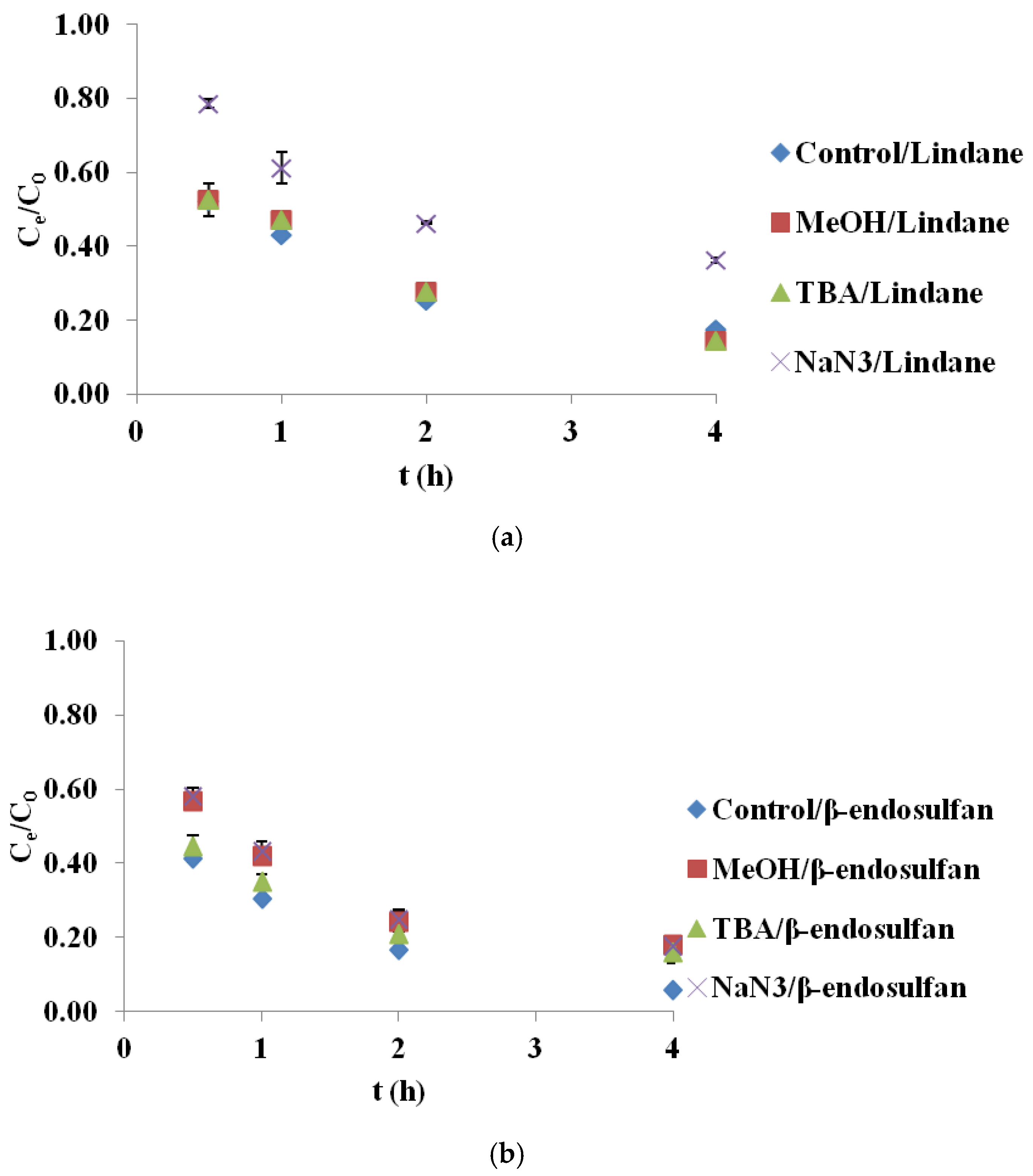
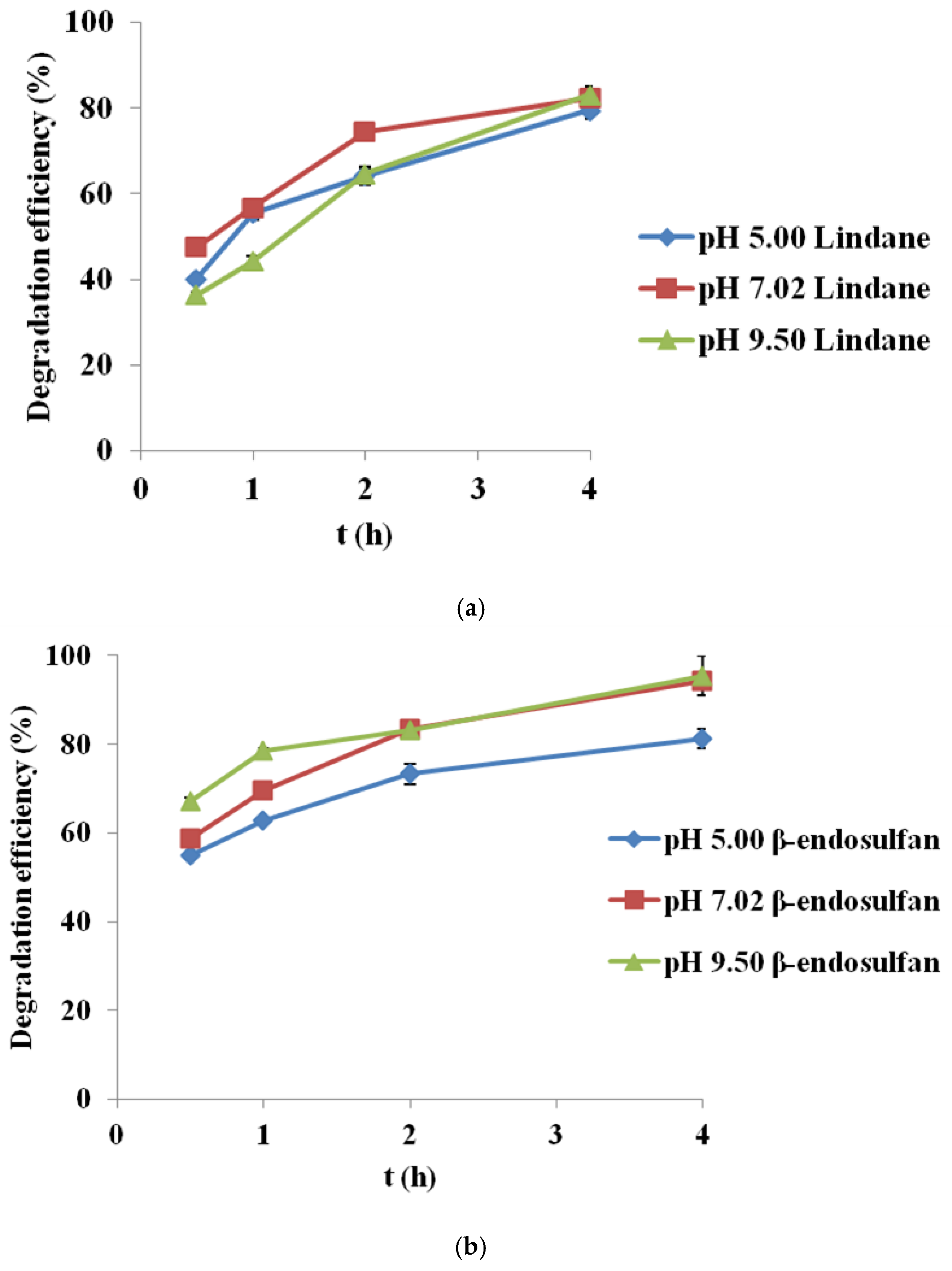

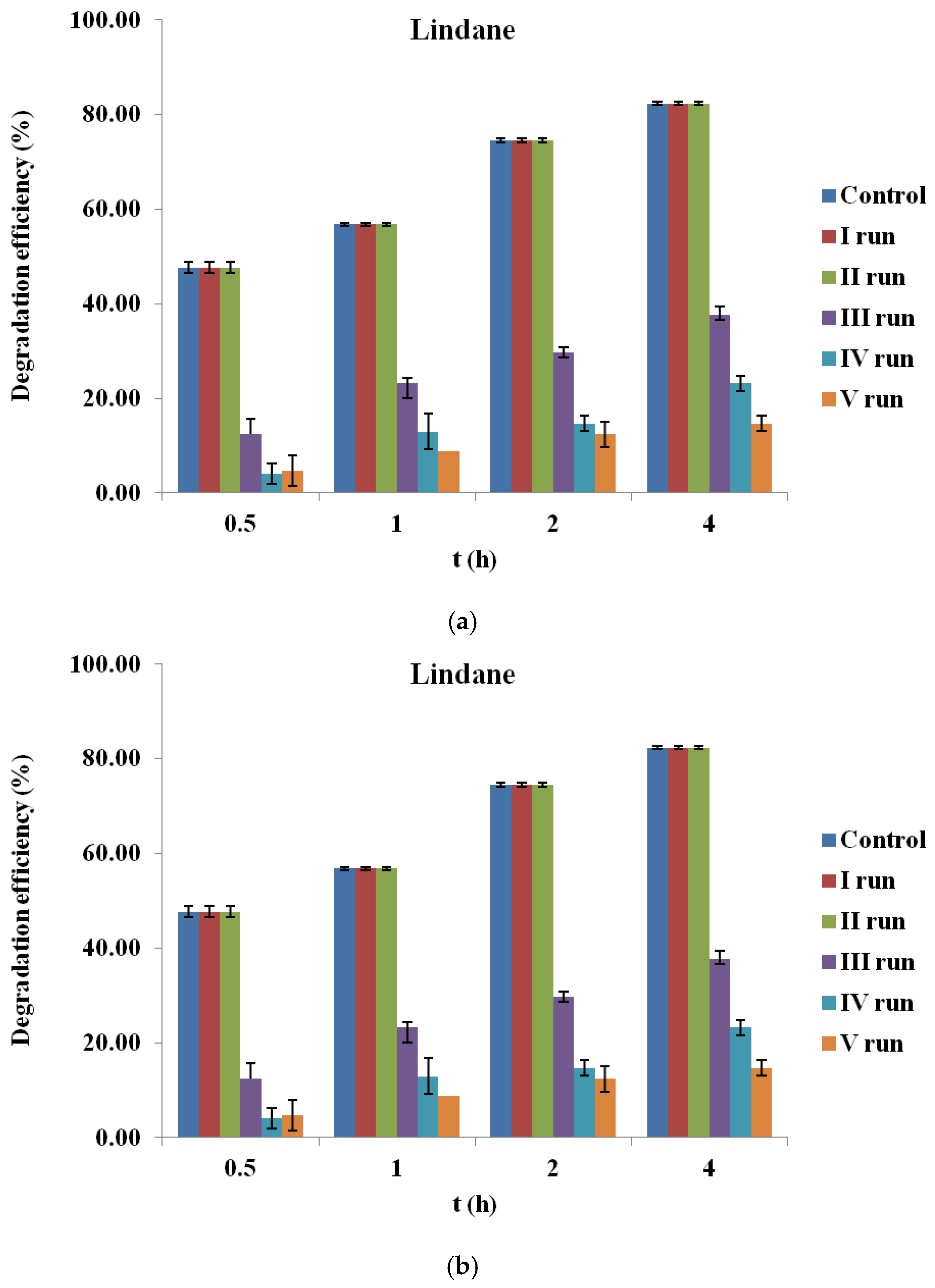
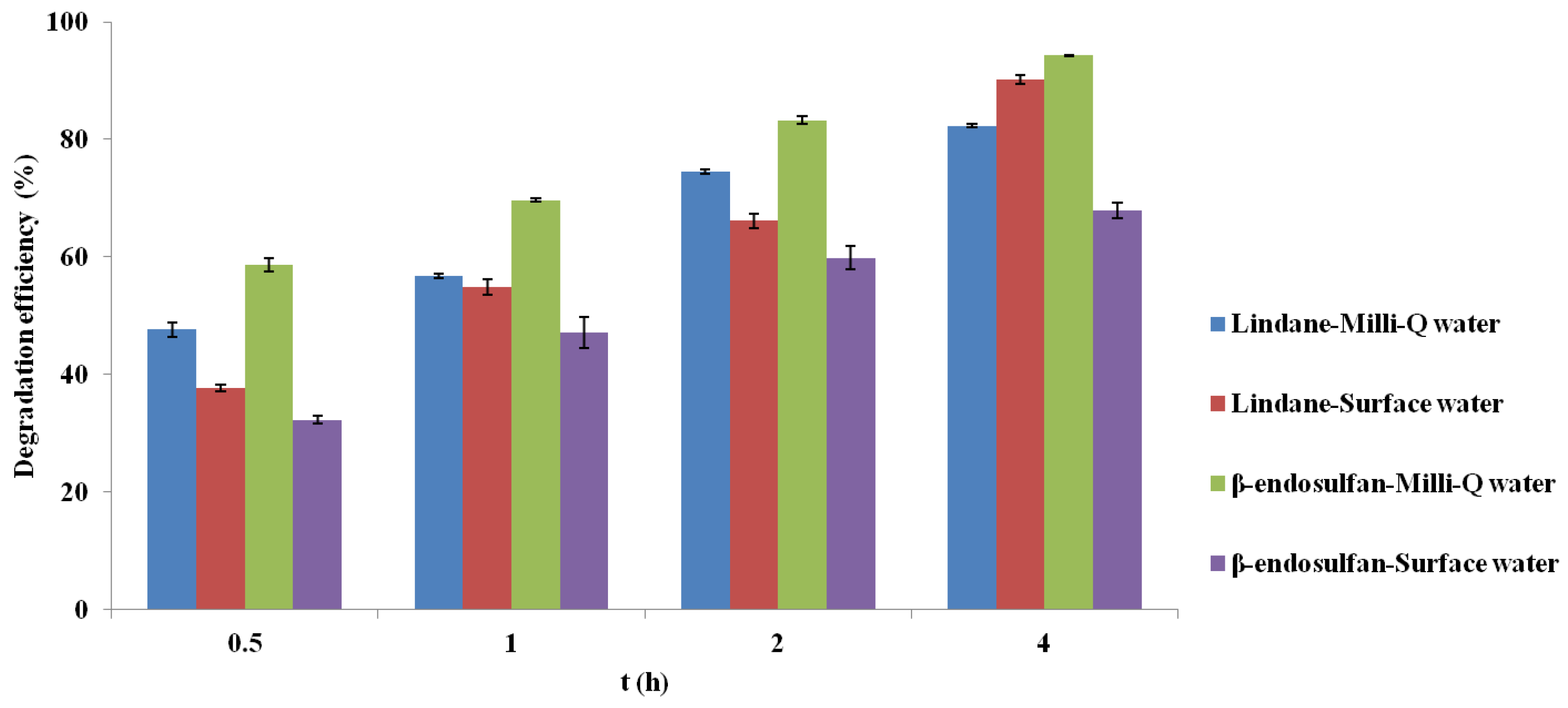

| Region | Time Period | Number of Pesticides Analyzed | Key Findings | Study |
|---|---|---|---|---|
| Brasil | Not specified | 57 | Dynamic pesticide occurrence related to agricultural activities. Most frequently detected: clomazone, atrazine, tebuconazole, metconazole, pyrimethanil, carbofuran-3-hydroxide. | [3] |
| Brasil | 2006–2018 | 17 | Carbendazim most abundant (max 4520 ng/L). Tebuconazole detected in 31% of samples (max 1071 ng/L). Atrazine detected up to 611 ng/L. | [4] |
| Brasil | 2011–2014 | 22 | Concentrations ranged from a few to several hundred ng/L. ≥4 compounds detected in >50% of samples. Triazines, triazoles, carbamates, strobilurins, and imidazolinones consistently present. Highlights high water vulnerability and need for monitoring. | [5] |
| Brasil | 2015 | 12 | Monitoring of nine water sources (including drinking water taps) revealed pesticide contamination across different water matrices. | [6] |
| Spain | 2010–2011 | 50 | Organophosphorus and triazine pesticides dominated water and sediments; transformation products exceeded parent compounds. Runoff identified as main source; low flow increased accumulation. | [7] |
| Spain | Spring 2009–Winter 2010 | 82 | Triazines, propyzamide, and chlorpyrifos most abundant. Seasonal pattern: insecticides peaked in summer, herbicides in winter. Flash floods accounted for >70% of annual input. | [8] |
| Greece | June 2011–May 2012 | 34 | 25 pesticides detected (13 herbicides, 9 insecticides, 3 fungicides). Most frequent: quizalofop-ethyl, trifluralin, pendimethalin. Tebufenpyrad detected at all sites, max 330 ng/L. | [9] |
| Parameters | BC400 | BC700 |
|---|---|---|
| C (%) | 71.9 ± 0.12 | 82.9 ± 0.42 |
| H (%) | 4.41 ± 0.14 | 1.61 ± 0.08 |
| N (%) | 0.64 ± 0.12 | 0.33 ± 0.01 |
| S (%) | 4.09 ± 0.14 | 4.36 ± 0.82 |
| O (%) | 5.21 ± 0.28 | 1.42 ± 1.34 |
| O/C (molar ratio) | 0.05 | 0.01 |
| H/C (molar ratio) | 0.73 | 0.23 |
| (O + N)/C (molar ratio) | 0.06 | 0.02 |
| BET m2/g | 20.87 | 306.87 |
Disclaimer/Publisher’s Note: The statements, opinions and data contained in all publications are solely those of the individual author(s) and contributor(s) and not of MDPI and/or the editor(s). MDPI and/or the editor(s) disclaim responsibility for any injury to people or property resulting from any ideas, methods, instructions or products referred to in the content. |
© 2025 by the authors. Licensee MDPI, Basel, Switzerland. This article is an open access article distributed under the terms and conditions of the Creative Commons Attribution (CC BY) license (https://creativecommons.org/licenses/by/4.0/).
Share and Cite
Marjanović Srebro, T.; Đukanović, N.; Simetić, T.; Apostolović, T.; Anojčić, J.; Mutić, S.; Beljin, J. Sustainable Activation of Persulfate Using Corn Cob Biochar for Pesticide Degradation in Wastewater Treatment. Molecules 2025, 30, 4764. https://doi.org/10.3390/molecules30244764
Marjanović Srebro T, Đukanović N, Simetić T, Apostolović T, Anojčić J, Mutić S, Beljin J. Sustainable Activation of Persulfate Using Corn Cob Biochar for Pesticide Degradation in Wastewater Treatment. Molecules. 2025; 30(24):4764. https://doi.org/10.3390/molecules30244764
Chicago/Turabian StyleMarjanović Srebro, Tijana, Nina Đukanović, Tajana Simetić, Tamara Apostolović, Jasmina Anojčić, Sanja Mutić, and Jelena Beljin. 2025. "Sustainable Activation of Persulfate Using Corn Cob Biochar for Pesticide Degradation in Wastewater Treatment" Molecules 30, no. 24: 4764. https://doi.org/10.3390/molecules30244764
APA StyleMarjanović Srebro, T., Đukanović, N., Simetić, T., Apostolović, T., Anojčić, J., Mutić, S., & Beljin, J. (2025). Sustainable Activation of Persulfate Using Corn Cob Biochar for Pesticide Degradation in Wastewater Treatment. Molecules, 30(24), 4764. https://doi.org/10.3390/molecules30244764