You are currently viewing a new version of our website. To view the old version click .
Molecules
  • Article
  • Open Access

27 November 2025

Ellagitannins and Other Polyphenols Along with Dietary Components of the Rosaceae Medicinal Plants


,
and
Institute of Food Technology and Analysis, Lodz University of Technology, Stefanowskiego 2/22, 90-537 Lodz, Poland
*
Author to whom correspondence should be addressed.
This article belongs to the Special Issue Nutritional and Bioactive Components of Edible Parts of Medicinal Plants

Abstract

The edible medicinal plants Sanguisorba officinalis L. (great burnet), Geum urbanum L. (wood avens), and Agrimonia procera Wallr. (fragrant agrimony) of the Rosaceae family are a several times richer source of tannins, especially ellagitannins, than berries containing 3.0, 2.1, and 3.4 g/100 g phenolics in fresh matter. The herbs are traditionally used as anti-bacterial, anti-diarrheal, and anti-inflammatory agents for the intestines. As a source of phenolics, mostly ellagitannins, the herbs have a potentially beneficial effect on the lipid profile of the blood by reducing total cholesterol, LDL-cholesterol, and triglycerides. They are also a good source of dietary fiber (6.5 for Sanguisorba, 8.2 for Geum, and 11.1 g/100 g fresh matter for Agrimonia) and vitamin C, all 0.1 g/100 g fresh matter. Due to their resistance to fungal diseases and pathogens, the medicinal plants are free from pesticide residues. Sanguisorba, Geum, and Agrimonia are tasty and aromatic and can be the basis of dishes, salads, or beverages.

1. Introduction

Nutritional studies show that regular fruit and vegetable intake can prevent the development of coronary heart disease [,,]. There is also moderate evidence that adequate nutrition has an impact on reducing the incidence of type 2 diabetes, some types of cancer [,,,], as well as overweight and obesity []. The microstructure of food plays a major role in the prevention and therapy of some chronic human diseases, as it determines the bioavailability of active ingredients, including their release from the intestines into the bloodstream []. The results of clinical trials and long-term observational studies show that the nutritional importance of fruits and vegetables is much larger than previously thought. The recommendations of dieticians are reflected in the latest healthy eating pyramid, where physical activity appears to be the most important factor for maintaining health. The need to change the diet to a balanced, healthier one entails searching for dishes with an increased share of ingredients considered to be beneficial for health. The increased number of vegetarians and a great interest in nutrition based primarily on plant food is also an important issue. New flavors and sources of nutrients rich in bioactive substances are sought after. Wild-growing and cultivated medicinal plants (herbs or spices) can meet these needs. Often, such perennial plants are characterized by high resistance to diseases and are free from plant protection product residues. Therefore, they have attributes that are appropriate for safe and ecological products. Herbs, fresh or dried, due to the presence of physiologically active substances, affect human metabolism and can be used for medicinal purposes, and some also as spices and ingredients of dishes. Edible herbs can form the basis of new dishes and enrich the taste and nutritional value of dishes already known []. Plants of the Rosaceae family, especially the burnet, agrimony, and avens, are used in medicine as anti-bacterial, anti-diarrheal, and anti-inflammatory herbs for the intestines. Their actions are related to the presence of a group of polyphenol compounds, called tannins, which are divided into hydrolysable and condensed tannins. The first includes ellagitannins (ETs) and the second includes proanthocyanidins (PCs). ETs are esters, usually β-D-glucose and hexahydroxydiphenic acid (HHDP), and can be divided into simple ETs, C-glycosidic ETs, complex tannins (condensates of C-glycosidic tannins with flavan-3-ol), and oligomers up to pentamers []. One of the features of ETs is their ability to hydrolyze in an acidic environment. The product of the hydrolysis of ETs in the gastrointestinal tract is ellagic acid, which is metabolized via the colonic microbiota to the derivatives of hydroxy-6H-dibenzopyran-6-one, called urolithins. The importance of ET metabolites is not fully understood. The results of the research show their antioxidant effect [], anti-inflammatory properties [,], and anti-estrogen/estrogen activity because of their structural analogy to estrogens []. ETs with their metabolites, urolithins, have been found to express potential against digestive diseases, such as irritable bowel syndrome, peptic ulcers, gastritis, colon cancer, esophageal cancer, and pancreatic cancer []. As a result, there is an increasing demand for the commercialization of nutraceuticals and dietary supplements containing ETs. However, there is still a lack of specific regulations to ensure the quality, efficacy, safety, and traceability of these products. The development and implementation of robust regulatory standards and guidelines are a top priority to protect consumers and ensure the high quality of these products [].
Herbs from the Rosaceae family, such as Sanguisorba officinalis, Agrimonia procera, and Geum urbanum, are a valuable, though still insufficiently studied, source of bioactive compounds. The selection of these three species was dictated by their shared taxonomic origin and similar chemical profile, which includes the presence of tannins, phenolic acids, flavonoids, and ETs. However, as indicated by available literature data, the quantitative and qualitative polyphenol composition of these plants varies [,,,,,,,,], making them an interesting subject for comparative research. An analysis of the nutritional and polyphenol profiles of Sanguisorba officinalis, Agrimonia procera, and Geum urbanum may provide new insights into the potential of these raw materials as components of herbal preparations, dietary supplements, or functional foods.
Existing research proves that the herbs are non-toxic. Sanguisorba is an edible plant considered safe for food in many parts of the world, and its industrial use is significant. The plant has many valuable biological properties, such as anti-cancer, antioxidative, antimicrobial, antiviral, anti-Alzheimer’s disease, and anti-inflammatory activity []. The lack of toxicity and strong biological activity of Sanguisorba spp. has already been proven, and this confirms that the plant can be a material for obtaining supplements []. Fragrant agrimony is a pharmacopeial plant material, being a source of ETs—agrimoniin []. It was found that Geum urbanum L. extract, containing ellagic acid, ETs, and other compounds, exhibited antiviral activity, promising anti-cancer effects, and, importantly, is characterized by favorable toxicological potential both in vitro and in vivo in H-albino mice, showing no signs of toxicity or pathological changes in the liver and kidneys after two weeks of oral administration [].
Although Sanguisorba officinalis, Agrimonia procera, and Geum urbanum have been previously investigated, comparative studies focusing simultaneously on their nutritional composition and polyphenolic profile are still scarce. Most available reports describe individual species or selected compound groups, often under non-comparable experimental conditions. Our study provides a systematic comparative evaluation of these three Rosaceae species, highlighting both quantitative and qualitative differences in their polyphenolic composition, and nutritional value.
The aim of the research was to prove that medicinal plants in the early stage of development are several times richer sources of ET than berries. As they are resistant to fungal diseases and pathogens, the medicinal plants are free from pesticides, and that is why the herbs can be the basis of tasty dishes, beverages, and salads, not only in the form of infusions or decoctions. As the herbs can be consumed directly, the nutritional as well as detailed phenolic composition of the edible medicinal plants Sanguisorba officinalis L. (great burnet), Geum urbanum L. (wood avens), and Agrimonia procera Wallr. (fragrant agrimony) was the aim of this research. We have also proven that these herbs are a good source of dietary fiber, which is a vital component of a healthy digestive system.

2. Results

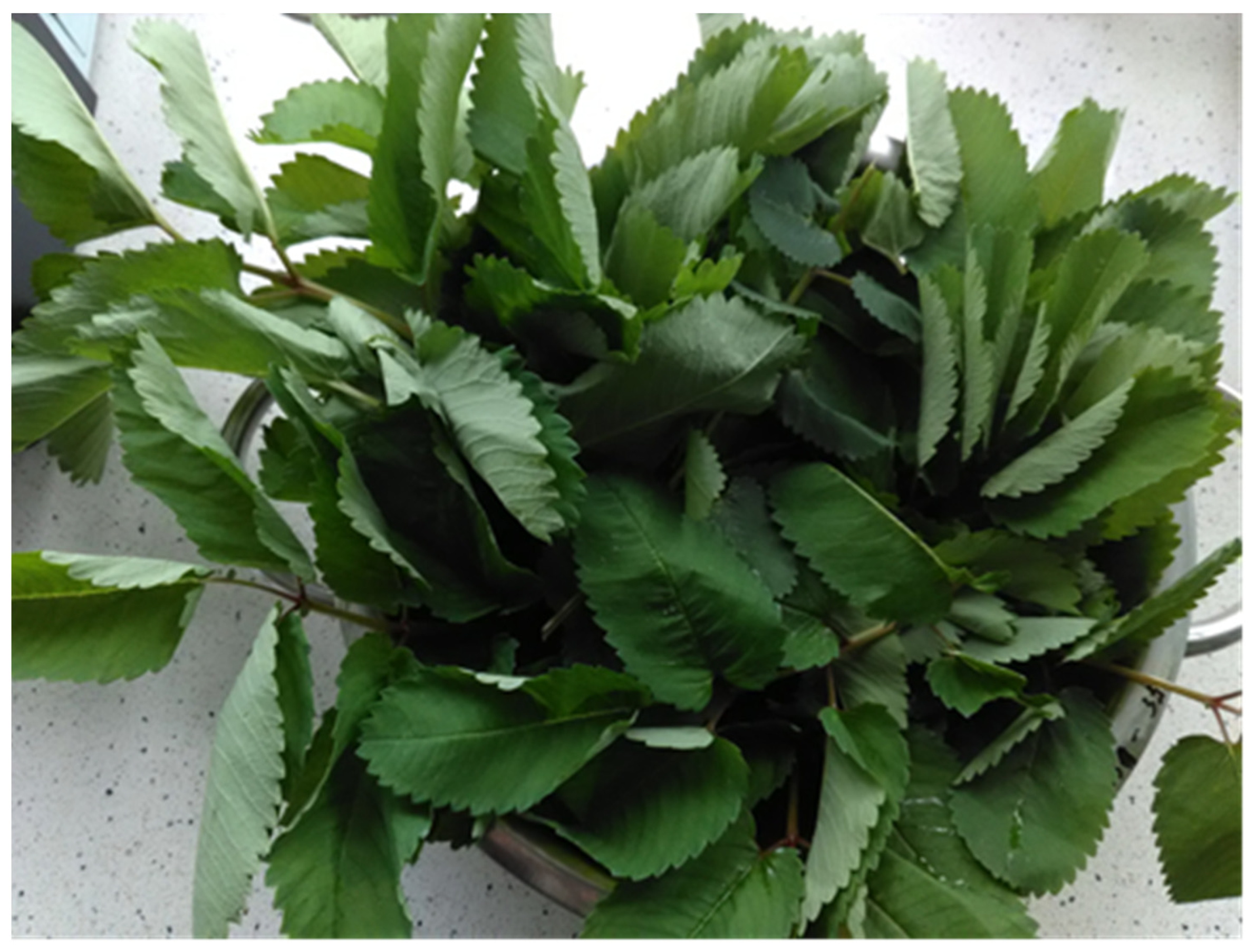
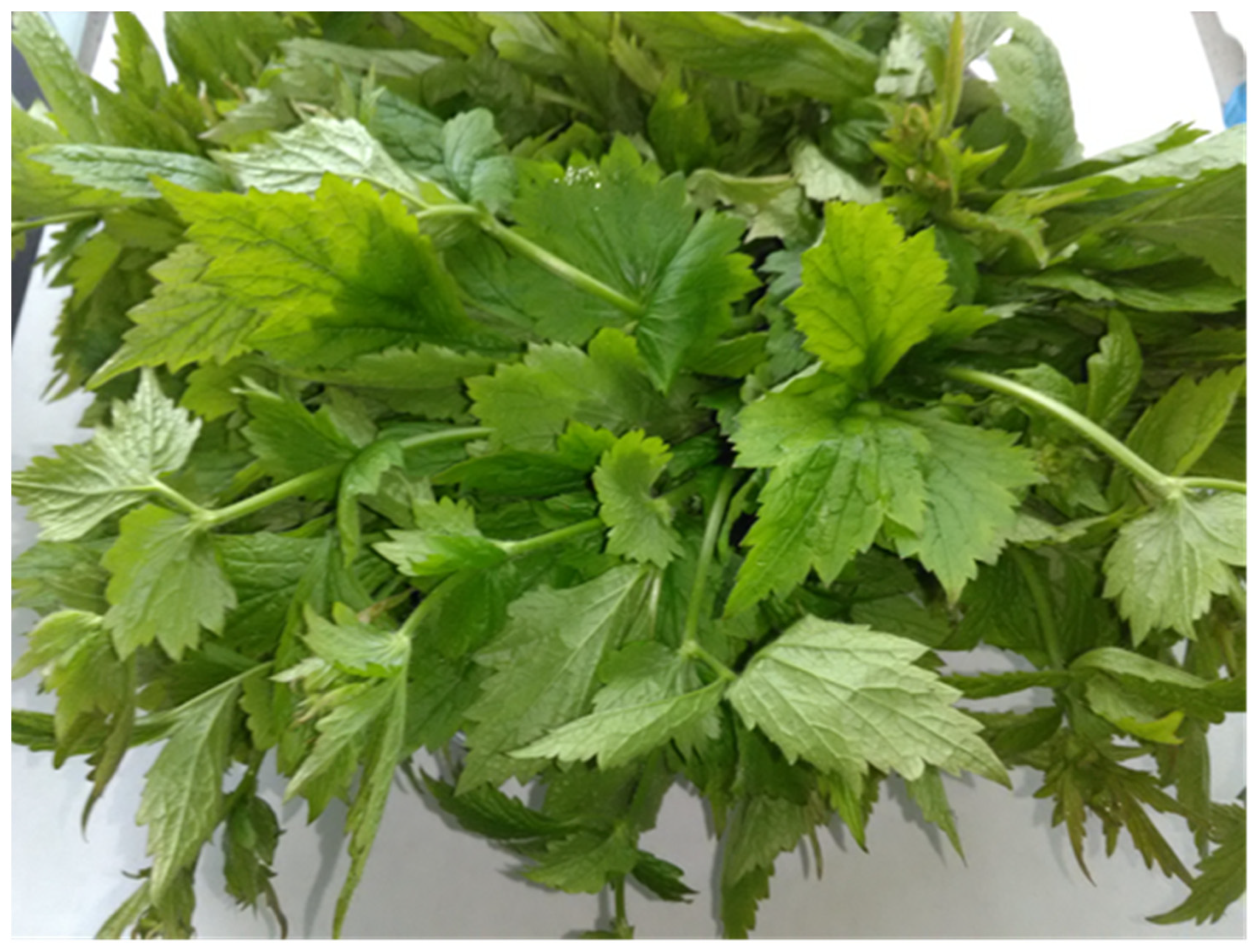
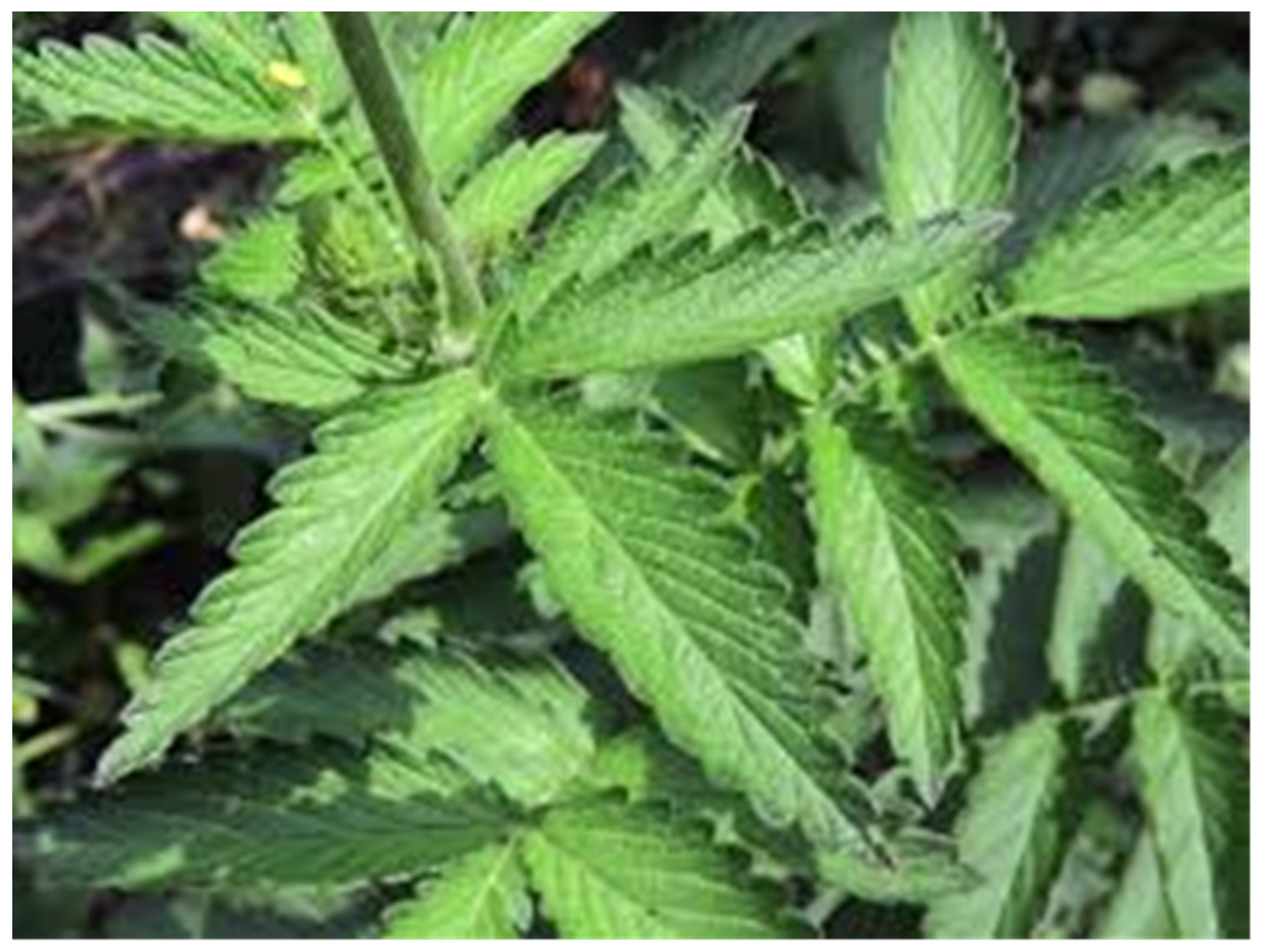
Among the substances found in herbs, proteins and nitrogen compounds, carbohydrates, fats, glycosides, alkaloids, tannins, flavonoids, organic acids, vitamins, and minerals should be mentioned []. Fresh leaves of the herbs, great burnet (Figure 1), wood avens (Figure 2), and fragrant agrimony (Figure 3), contain mainly water (dry weight: avens, 18.7, great burnet, 19.7, and fragrant agrimony, 24 g/100 g) (Table 1).
Figure 1. Sanguisorba officinalis L., great burnet.
Figure 2. Geum urbanum L., wood avens.
Figure 3. Agrimonia procera Wallr, fragrant agrimony.
Table 1. Composition of herbs, g/100 g fresh matter.
The herbs are a good source of total dietary fiber (TDF) (burnet, 6.5 g/100 g, avens, 8 g/100 g, and agrimony, 11.1 g/100 g), mainly the insoluble fraction (IDF), while soluble dietary fiber (SDF) was below 1 g/100 g. Such high fiber content is comparable to levels typical for legumes (green peas 6 g/100 g, dried peas 15 g/100 g, dried white beans 15.7 g/100 g, and green beans 3.9 g/100 g []. Among typical fruits and vegetables, only raspberry (6.7 g/100 g), black currant (7.9 g/100 g), and horseradish (7.3 g/100 g) [] have fiber content like the discussed herbs. Protein was 3–4 g/100 g. Ash content was about 2 g/100 g. The metabolized carbohydrates are 3.0–3.8 g/100. The content of vitamin C in fresh herbs Geum urbanum L., fragrant agrimony Agrimonia procera Wallr., and Sanguisorba officinalis L. was 0.1 g/100 g. The vitamin C content in fresh herbs is comparable to the values for strawberry fruit (66 mg/100 g), spinach (68 mg/100 g), and parsley (178 mg/100 g) []. Ceccanti et al. [] showed that wild and domesticated Sanguisorba minor Scop. plants contain, per 100 g of dry matter, appropriately, moisture 75.02 and 71.20, ash 7.80 and 10.10, proteins 18.80 and 23.10, fat 2.72 and 4.00, and carbohydrates 70.70 and 62.79.
Karlińska et al. [] also found that the aboveground parts of fragrant agrimony, especially the leaves, were characterized by a high content of protein and dietary fiber, with a relatively low-fat content. In the leaves of fragrant agrimony, the contents of protein and dietary fiber amounted to 12% and 55% DM, whereas in the stems, they amounted to 7% and 75% DM []. Other researchers also found that herb plants Sanguisorba, Geum, and Agrimonia of the Rosaceae family are rich in vitamin C and also polyphenols, especially ellagitannins [,,,,,,,,]. The polyphenol content in the fresh herbs ranged from 2.1 to 3.4 g/100 g fresh matter. Similar results were obtained by Karlińska et al. [] for fragrant agrimony leaves—10.5% of polyphenols DM, while DM was 30.45%. Analyzed herbs from the Rosaceae family are mainly the source of ETs (Table 2) [,,,,,].
Table 2. Phenolic composition of herbs, mg/100 g dry matter.
In the case of burnet, 86% of polyphenols are oligomeric ellagitannins (sanguiin H6 and lambertianin C) (Table 3). Other polyphenols include quercetin glycosides, flavan-3-ols, monomeric ellagitannins, and chlorogenic acids. Wood avens is a source of dimeric gemin A, which accounts for 72% of the total polyphenols, 8% of chlorogenic acids, 8% of monomeric ellagitannin, flavan-3-ols in a smaller amount, and quercetin glycosides in trace amounts (Table 4). In the case of agrimony, 41% of the total polyphenols are dimeric agrimoniin, 28% polyphenols of flavan-3-ols, the rest are rutin, quercetin, and luteolin glycosides, and tiliroside (Table 5). Fresh herbs of burnet and avens contain negligible amounts of flavan-3-ols compared to agrimony (0.95% in fresh weight) (Table 2).
Table 3. Sanguisorba officinalis L. phenolics identification.
Table 4. Geum urbanum L. phenolics identification.
Table 5. Agrimonia procera Wallr, phenolics identification.

3. Discussion

Plants of the genera, great burnet Sanguisorba, fragrant agrimony Agrimonia, and wood avens Geum, are also classified as edible plants and spices. The perennials are characterized by high frost and disease resistance. In addition to frost and disease resistance and high biomass productivity, plants of the genera Sanguisorba (S. officinalis, S. minor), Geum (G. urbanum, G. rivale), and Agrimonia (A. procera) are characterized by high content of ellagitannins. The burnet belonging to the genus Sanguisorba species S. officinalis L. (great burnet) is a perennial with a strong, thick rhizome, leaf rubella, and odd-stemmed stems up to 1 m high and ends with heads of tiny dark purple flowers []. Burnet blooms in the period from June to August. The fruit is an achene. In Poland, the plant is widespread on lowlands and pastures, and in the lower parts of the Tatra Mountains. The herbal raw material is a herb of great burnet—Herba Sanguisorbae and a great burnet rhizome—Radix Sanguisorbae. The herb is harvested at the beginning of flowering, while the rhizomes are harvested in autumn or in spring. After carefully cleaning, the rhizomes are cut into pieces and dried under natural conditions or in a dryer at a temperature of up to 60 °C. The herb, after milling, is stored in a dry and dark place. The great burnet rhizomes contain about 20% tannins, including ellagitannins, 2–4% triterpene saponins, flavonoids (rutin and kaempferol), phenolic acids, vitamin C and K (phytochinones), phytosterols, and phytoncides. Herbs with flowers contain less tannins; however, they additionally contain cyanidin glycosides (cyanidin-3-glucoside and cyanidin-3,5-diglucoside) as well as bitterness, sugars, ethereal oil, and quercetin. The ingredients of great burnet rhizomes and herb have anti-inflammatory, astringent, anti-exudative, anti-diarrheal, anti-edema, anti-hemorrhagic, inhibit menstrual bleeding, diuretic, antiseptic, antiulcer, and anti-seborrheic properties. Tannins have astringent, slightly disinfecting, and anti-hemorrhagic properties. Great burnet rhizomes and herbs used to be a popular tannin drug used for stopping bleeding. Stimulating milk production properties are additionally attributed to the herb. In some countries, young leaves are eaten raw like lettuce or prepared like spinach. The related species is small burnet S. minor []. The possibilities of its cultivation and its antioxidant activity have been described in []. In the article, it was shown that, among the two forms, Dutch has a lower leaf width compared to the German one, and the German form showed a higher content of vitamin C and total polyphenols determined by Folin–Ciocalteu’s method calculated as gallic acid. Small burnet is easy to grow from seeds to be used as a herbal raw material and as a vegetable. For this purpose, young leaves suitable for freezing are collected. There is no exact data on the polyphenolic composition of this species of small burnet, which additionally forms hybrids (forms, populations). Both small burnet S. minor and narrow-leaf burnet S. tenuifolia are related to great burnet []. Taking into account their usefulness as a herbal raw material, they are less valuable. Narrow-leaf burnet S. tanuifolia and Japanese burnet S. obtusa are widespread as long-blooming ornamental plants, giving numerous varieties with colorful flowers and nicely formed leaves. The composition and nutritional use of these species are unknown. G. urbanum L. (wood avens), belonging to the genus Geum, is a large rhizome perennial with many light brown fibrous roots, a stem height up to 1 m, and leaves placed alternately wedge-shaped []. The leaves are covered with spreading hairs, and their margins are toothed. The small yellow flowers with five roundish, spreading petals are placed on solitary, terminal stalks. Flowering period falls in June–August. It occurs commonly on wet shaded meadows, undergrowth, forests, and orchards. It has been known since antiquity due to its antitussive effect. A herbal raw material is avens rhizomes, Rhizoma Gei urbani, and, less frequently, leaves from Folium Gei urbani. Rhizomes are collected in the autumn in October–November or in spring, in March. After thorough washing and removal of green parts, they are dried at a maximum temperature of 35 °C. Avens rhizomes contain about 20% of tannins, including ellagitannins (gemin A), gein (eugenol glycoside), bitterness, flavonoids, phenolic acids, organic acids, and essential oils of 0.1%. The active components of avens rhizomes show strong astringent and choleretic as well as bactericidal, anti-inflammatory, and anti-cancer properties, and avens rhizomes are also used to treat the effects of chemotherapy. Avens stimulates the secretion of gastric juices and removes unpleasant smells from the mouth. Preparations (extracts, decoctions, and intracts) from avens rhizomes are used internally in diseases of the gastrointestinal tract. Decoctions and intractions (from fresh raw materials) are used externally in flu and angina conditions, in wounds difficult to heal, in mouth rinsing, seborrhea, dermatitis, and in fungal infections by Candida. Usually, the water avens species G. rivale L. is considered to be an equivalent herbal raw material. The plant reaches a height of up to 70 cm. The species occurs in alluvial forests and in wet meadows, in shaded positions. This avens has characteristic bell-shaped, overhanging flowers, growing on red-brown, long stems. The flowers are red-brown on the outside and yellow inside. Garden varieties with different colors are also known []. Agrimony belongs to the genus Agrimonia, A. eupatoria species (common agrimony, hepatica herb) []. It is a perennial plant with a short rhizome, rosette leaf, pinnate, and a straight stem, growing up to 1 m with leaves alternating. The stem ends with a loose ear with five-colored golden-yellow flowers. Agrimony blooms from June to September. Its fruit is an achene. In the natural environment, agrimony occurs mainly on dry meadows, pastures, forest glades, and on the edges of forests. Apart from common agrimony, there is also fragrant agrimony, A. procera Wallr. and hairy agrimony A. pilosa Ledeb. also obtained as a herbal raw material. A herbal raw material is agrimony herb—Herba Agrimoniae. The herb is harvested at the beginning of flowering, then the herb is dried under natural conditions in a shaded and well-ventilated place or in dryers at a temperature not exceeding 60 °C. The dried herb has a pleasant aroma and slightly bitter taste. Agrimony herb contains from 3 to 5% of tannins, flavonoids (quercetin, kaempferol, luteolin, apigenin), triterpene (ursolic acid), choline, phytosterols, and silica, as well as 0.2% of essential oils. Flavonoids and essential oils increase the production and flow of bile from the liver to the gall bladder and duodenum. Tannins and flavonoids inhibit inflammation and exudates in the gastrointestinal mucosa. Tannins have slightly astringent and antiseptic properties. Together, the components have confirmed antibacterial and anti-dandruff properties, and they inhibit excessive fermentation and putrefaction in the gut. Formerly, preparations of agrimony herb were recommended in the treatment of cholelithiasis and bile stasis. Agrimony was recommended even in jaundice. Due to the high content of tannins, agrimony herb is used to treat diarrhea and to rinse the mouth and throat in case of inflammation. Antiseptic and anti-inflammatory infusions from A. eupatoria are recommended to occupational voice users []. Agrimony also belongs to wild edible plants. In pharmacy, under the term tannins, a large group of polyphenol compounds, easily soluble in water, that form persistent combinations with proteins, alkaloids, and heavy metals, is meant. Tannins are divided into hydrolyzing tannins and condensed tannins. Their therapeutic value is based on astringent properties (they coagulate proteins of the mucous membrane and tissues), and, as a result, irritation and pain are reduced; they also inhibit minor bleeding. Decoctions of herbs rich in tannins (blackberry leaf, agrimony herb, burnet root, and others) are most often used externally against inflammation of the mouth, catarrhal mucosa, bronchitis, and local bleeding.
Appropriate analytical techniques and methods in accordance with the applicable standards and requirements provide an evaluation of the composition and quality of raw materials and medicinal preparations. In the case of the determination of certain groups of active substances, e.g., tannins, simple but not specific traditional methods are used, which are slowly supported by sophisticated instrumental methods. The phytochemical requirements for Herba Agrimoniae are contained in the European Pharmacopoeia [] using the traditional skin powder method. According to this method, agrimony should contain not less than 2% of total tannin content (TTC). Phytochemical and chromatographic research [] showed that common agrimony contains from 0.2 to 0.7% of agrimoniin, determined by HPLC. In turn, fragrant agrimony A. procera showed a TTC content of 2.7–3.5% m/m, and the agrimoniin content determined by HPLC was 2.1–3.7% m/m. This indicates that fragrant agrimony herb is a guarantor of the proper content of TTC, and may also be considered as a satisfactory source of agrimoniin and as an alternative raw material to dried strawberry leaves (Fragariae folium), in which the TTC content is about 1.0% m/m [], and silverweed herb Anserinae herba, in which TTC content is 1.5% m/m. Plants of the genus Agrimonia L., the common agrimony Agrimonia eupatoria L., and the fragrant agrimony Agrimonia procera Wallr. (synonym Agrimonia odorata Mill.) are sources of both ellagitannins and flavonoids []. The polyphenolic content of A. procera was found to be 3.9%, 3.2%, 2.9%, 1.8%, and 1.1%, and that of A. eupatoria was determined to be 1.3%, 0.3%, 0.9%, 0.6%, and 0.5% in the dry matter of leaves, stems, fruits, seeds, and hypanthia, respectively. Agrimoniin was the main polyphenolic compound in the aerial parts of the studied Agrimonia species, except for A. procera hypanthia. Both plants are also a valuable source of flavonoid glycosides, especially apigenin, luteolin, and quercetin [].
Karlińska et al. [] found that ellagitannins and flavan-3-ols are the dominant polyphenols of all morphological parts of fragrant agrimony. The ET content, calculated on dry matter, was almost 5% in leaves and stems, 8% in roots, and 16% in underground buds, with the agrimoniin accounting for about 98% of the determined sum of ETs. Flavan-3-ols, calculated on dry matter, were present in fragrant agrimony in amounts of almost 3.7% in leaves, over 2% in stems and underground buds, and 4.6% in roots. Flavonols and flavones in fragrant agrimony were present in total amounts not exceeding 2% of the dry mass of leaves, 1.5% of the mass of underground buds, and slightly more than 0.1% of the mass of stems. In our research, similar results were obtained.
The research by Lachowicz et al. [] on the content and profile of polyphenols in the leaves, flowers, roots, and stalks of the medicinal plant Sanguisorba officinalis L. revealed the presence of 130 phenolic compounds, with hydrolysable tannins constituting the dominant group. Flowers were the richest source of phenolic compounds, while stalks were the poorest. The leaves had the highest antiradical activity. The morphological parts studied contained tannins, flavan-3-ols, phenolic acids, flavonols, and anthocyanins in the case of flowers. Among the ellagitannins were pedunculagin and its isomers, tellimagrandin I, castalagin/vescalagin isomer, lambertianin C, galloyl-bis-HHDP-glucose (potentilin/casuarictin isomer), as well as ellagic acid derivatives and others. Among the flavonols, the presence of quercetin and kaempferol glycosides was found. In addition, the authors indicate that flowers and leaves have α-amylase, α-glucosidase, and pancreatic lipase, as well as antiproliferative activity, reflected in the inhibition of the survival of cancer cells of pancreatic duct adenocarcinoma, colon adenocarcinoma, and bladder cancer, as well as T-cell leukemia cells.
The Geum aleppicum Jacq. is used in many traditional medical systems to treat diabetes. Kashchenko et al. [] identified in Geum aleppicum ellagic acid derivatives, ETs, flavonoids, and triterpenoids. Gemin A, miquelianin, nigaichigoside F1, and 3,4 dihydroxybenzoic acid 4-O-glucoside were the dominant compounds in the G. aleppicum herb. The most pronounced inhibition of alfa-glucosidase was observed for gemin A and quercetin-3-O glucuronide. According to Quideau [], Herba Sanguisorbae contains sanguiin H-6 and H-11, while herb Herba Geum japonicum is rich in dimeric ellagitannins called gemin A, B, C, and both herbs have medicinal use. Tocai (Motoc) et al. [] identified in Sanguisorba ellagitannins, derivatives of ellagic acid, quercetin glycoside and quercetin glucuronide, kaempferol glucuronide, hydroxycinnamic acids, flavan-3-ols, and, only in flowers, cyanidin glucoside and cyanidin malonyl glucoside.
Comparing the herbs with berries, we can see that the herbs are richer sources of ellagitannins. In the fruit of strawberry (Fragaria ananassa Duchesne), raspberry (Rubus ideaus), and blackberry (Rubus fructicosus), there are ETs in the following quantities: 800 mg/kg, 3000 mg/kg, and 4000 mg/kg, with a predominant share of agrimoniin (in strawberry), and a mixture of lambertianin C and sanguiin H-6 (in raspberries and blackberries) [,,]. The use of fruit for the production of juices, mostly, is associated with the production of by-products in the form of a pomace, with a high proportion of seeds rich in dietary fiber, fatty acids, and a mixture of condensed tannins and ET. The amount of dried pomace of strawberry and raspberry, calculated as fresh fruits, is 2% and 6%, while the number of dried seeds, 1% and 5%. Dried raspberry pomace and raspberry seeds contain 3.9 and 3.2% of ETs with a predominant share of lambertianin C or sanguiin H-6 []. In turn, dried strawberry and strawberry seeds contain 1.6 and 1.0% of ETs, with a predominant share of agrimoniin []. Industrial strawberry and raspberry pomace, despite the high content of ETs, is not a satisfactory source of extracts rich in ETs to be used as a dietary supplement. That is because of the high health risk that the possible dietary supplements may cause due to the presence of pesticide residues, which accumulate in pomace, especially in the flesh [,]. Raspberry (Rubus ideaus), blackberry (Rubus fructicosus), and wild strawberry (Fragaria vesca) belong to medicinal plants, from which, especially from wild forms, dried plant materials are obtained: leaves Folium Rubi idaei and Folium Rubi fruticosii, and fruits Fructus Rubi idaei and Rubi fruticos. Dried blackberry and raspberry leaves collected during the flowering period contain almost 5% of tannins, as analyzed by the traditional method using leather dust. In phytotherapy, the therapeutic properties of blackberry and raspberry extracts are attributed to pirogal (ellagic) tannins. The use of blackberry leaves and fruits against bleeding, diarrhea, colds, and cough is known from the earliest times.
The structure and biological properties of phytochemicals of berries, pomegranates, nuts, and medicinal plants, especially hairy agrimony (Agrimonia pilosa L.) containing ETs is of interest to many world scientific centers, and in many cases, transformation of ETs into ellagic acid and urolithins occurring in the digestive tract of humans and experimental animals is the most studied subject [,,,,,,,,,,,,]. Research on ETs of berries such as strawberry, raspberry, and blackberry [,,,,] showed that they have a beneficial effect on the lipid profile of the blood by reducing total cholesterol, LDL-cholesterol, and triglycerides, preventing the adverse effects of a diet that is too rich in sugars [] or saturated fatty acids []. In the research by Juśkiewicz et al. [,], it was proven that strawberry ET reduced both the level of lipids and glucose in the blood. The effect of strawberry ET on lowering blood glucose was also demonstrated in Jarosławska et al. []. In turn, in Kosmala et al. [], it was shown that the blackberry fiber preparation containing ETs is less effective in reducing blood lipids compared to the raspberry fiber preparation []. There are also many indications that ETs have anti-inflammatory activity [,]. ETs in the host’s gastrointestinal tract modify the properties of the microbiota, including enzymatic activity, thus affecting the profile of secreted short-chain fatty acids []; increasing the proportion of propionic acid positively affects the metabolism of lipids in the liver and increasing the proportion of butyric acid has a potential anti-cancer effect in the large intestine. Much depends on the ET structure, mainly on their degree of polymerization [].
Large ET molecules cannot be absorbed directly into the bloodstream. They must be hydrolyzed, mainly by enzymes of the microbiota living in the large intestine; the host enzymes play a much smaller role here. ETs are hydrolyzed into urolithins, as follows: the ellagic acid or HHDP (Hexahydoxydiphenoyl) is released from the ET, then it is converted into poly-hydroxylated dibenzopyranone, and then 3,4,8,9,10-pentahydroxy-6H-dibenzo[b,d]pyran-6-one (Uro-M5). Sequential dehydroxylation leads to tetrahydroxy- (Uro-M6 and Uro-D), trihydroxy- (Uro-M7 and Uro-C), dihydroxy- (Uro-A and IsoUro-A), and monohydroxy- (Uro-B) dibenzopyranones. Only these metabolites can be absorbed and changed under the influence of phase II enzymes in the form of glucuronides and sulfate conjugates [,,,,,,,,]. Depending on the species and individual characteristics, the resulting ellagitannins may vary []. People can be divided into low and high urolithin producers []. Furthermore, some people will produce type A urolithins and other type B urolithins, while some individuals will not produce urolithins (UM-A, UM-B, and UM-0) [,]. The importance of the emerging ET metabolite, urolithins, still requires a lot of research. It is known that they show a weaker antioxidant effect than ETs []; they can activate phase II enzymes responsible for antioxidant activity and detoxification (thioredoxin reductase-1 or glutathione peroxidases) []; they have anti-inflammatory properties []; and thanks to the structural similarity to estrogens, they have anti-estrogenic/estrogenic properties [] and anti-cancer activity [,]. ETs that have not been absorbed and have not undergone hydrolysis may, in turn, affect the intestinal microbiota []. In our previous research, the ET extract obtained from strawberry pomace reinforced the prebiotic effect of fructooligosaccharides (FOS), which resulted in a decrease in the pH of the cecum digesta, and a decrease in the concentration of putrefactive fatty acids. In turn, FOS, by activating the enzyme microbiota, increased the proportion of formed ET metabolites, while the high-fat diet limited the metabolic activity of the microbiota of the large intestine []. It has been proven that the degree of polymerization of ETs affects their ability to reduce the level of glucose in the blood, with monomers being more effective than dimers []. Previously, we have proved that ellagic acid and monomeric ET are more easily metabolized to urolithins than dimeric ET []. In research on ETs from dimmers to heptamers obtained from rosebay willowherb (Epilobium angustifolium) flowers on ruminal fermentation in vitro, it has been proven that oligomeric ETs decreased gas production and total volatile fatty acid concentration proportionally to their degree of oligomerization []. One of the propositions to deliver oligomeric ETs to the body was a construction of double emulsion gels loaded with ETs (in this case, Rubus chingii Hu) to enhance their gastrointestinal digestion stability, the delivery efficiency, and absorption [].
As shown above, ETs have a significantly beneficial impact on human health. Analyzed medicinal plants (Sanguisorba, Geum, and Agrimony) are several times a richer source of ET than berries. The comparison with berry fruits such as Fragaria ananassa, Rubus idaeus, and Rubus fruticosus was intended to emphasize the shared phytochemical background within the Rosaceae family, particularly regarding the presence of ETs and other hydrolysable tannins. However, the analogy between the studied herbs and these fruits extends beyond ETs. The investigated medicinal herbs (Sanguisorba officinalis L., Agrimonia procera Wallr., and Geum urbanum L.) and the berry fruits contain other similar classes of polyphenolic compounds, including flavonols (e.g., quercetin and kaempferol derivatives), phenolic acids (ellagic acid), and proanthocyanidins.
Moreover, as the herbs are resistant to fungal diseases and pathogens, they do not need pesticides for protection. They are tasty and can be the basis of dishes and salads, being also a source of dietary fiber and vitamin C. They can also be used to prepare hot beverages. More research is needed to confirm whether herbs and their ETs have effects similar to the beneficial properties of berries in animal model studies and dietary studies involving human volunteers.

4. Materials and Methods

Medicinal plants (Sanguisorba officinalis L. (great burnet), Geum urbanum L. (wood avens), and Agrimonia procera Wallr. (fragrant agrimony)) were collected in the early stage of development (May). Analysis. Nutrients []: Protein content of fruit products—AOAC 920.152; Fat (Ether Extract of Plants) AOAC 930.09; dry matter—ash content of fruit—AOAC 940.26, total dietary fiber in foods (TDF) AOAC 985.29. Phenolics: Extraction of polyphenols was carried out in two steps: first with 70% methanol containing 0.1% HCOOH (three times in ultrasound bath), followed by 70% acetone containing 0.1% HCOOH (three times in ultrasound bath). The methanol and acetone extracts were combined before UHPLC analysis. UHPLC analysis: Dionex Ultimate 3000 UHPLC with DAD and MS detection (Q Exactive Orbitrap, Thermo Fisher Scientific, Waltham, MA, USA). Column Luna C18 (2) 100 Å (250 × 4.6 mm 5 µm) (Phenomenex, Torrance, CA, USA) with the same precolumn (4 × 3 mm), temperature 35 °C, detection at 250 nm, 280 nm, 320 nm, and 360 nm, flow 1 mL/min, inject volume 20 µL. Phase A: 1% (v/v) formic acid in water, phase B acetonitrile/methanol/water, v/v/v (83/20/17). Gradient: 0–6 min, 5% phase B; 6–36 min, 5–28% phase B; 36–73 min, 28–73% phase B; 48–54 min, 73% phase B; 54–60 min, 73–5% phase B; 60–70 min 5% phase B. MS detector parameters were as follows: Xcalibur™ 4.3 software (Thermo). Mass spectrometer Orbitrap with H-ESI probe in negative mode. Source parameters were evaporator temperature 500 °C, ion spraying voltage 4 kV, capillary temperature 400 °C, flow rate of protective gas and auxiliary gas 75 and 20 units. Full MS (m/z 200–2000) or full MS/dd-MS2 scanning modes were applied. Standards used were agrimoniin (for ET), quercetin glucoside, quercetin rhamnoside, quercetin-3-O-galactoside, apigenin glucoside, ellagic acid, chlorogenic acid, luteolin-7-O-glucuronide, kaemferol-3-O-β-d-(6″-E-p-coumaryl)-glucopyranoside, kaempferol-3-O-glucoside.
Flavan-3-ols: flavan-3-ols were determined by phloroglucinolysis. Briefly, to 20 mg of dried samples, 0.8 mL of reagent (75 g/L phloroglucinol and 15 g/L vitamin C in methanol) was added. Phloroglucinolysis was started by a 0.4 mL addition of 0.2 mol/L hydrochloric acid in anhydrous methanol. Incubation was 30 min at 50 °C with constant shaking. The reaction was stopped by placing the samples in an ice bath and adding 0.6 mL of 40 mmol/L sodium acetate. Separation was made on Gemini 5µ C18 110 Å (250 × 4.6 mm, 5 μm). Column temperature was 30 °C, Smartline chromatogram with P2800 UV–Vis detection and RF-10XL fluorescence detection (Shimadzu, Tokyo, Japan). Phase A was 2.5% aqueous solution of acetic acid, phase B 80% acetonitrile in water (v/v). Gradient 0–10 min, 4–5% phase B; 10–27 min, 7–30% phase B; 27–29 min, 30–70% phase B; 29–34 min, 70% phase B; 34–35 min, 70–4% phase B; 35–40 min, 4% phase B.
Vitamin C—extraction with 2.5% meta-phosphoric acid, detection by Knauer Smartline (Berlin, Germany) with DAD, column Phenomenex Gemini 5u C18 110A 250 × 4.60 mm; 5 μm (Phenomenex, Torrance, CA, USA). HPLC phase—KH2PO4 pH 2.5, temperature 25 °C, flow rate: 1 mL/min, detection at 254 nm.
Statistical analysis—one-way ANOVA with a statistical significance of p ≤ 0.05 was used (Statistica 12, Statsoft, Kraków, Poland).

5. Conclusions

Most of the research on Sanguisorba officinalis L., Geum urbanum L., and Agrimonia procera Wallr. concentrates on the medicinal properties of these herbs. A lot of research concentrates on rhizomes, which are concentrated sources of ellagitannins, but are difficult to eat in their direct form. In this research, we concentrated on plants in the early stage of development. They are a several times richer source of ETs than berries. The comparison with berry fruits such as Fragaria ananassa, Rubus idaeus, and Rubus fruticosus highlighted the shared phytochemical profile within the Rosaceae family, particularly the presence of ETs and other hydrolysable tannins. However, the similarity between the examined herbs and these fruits extends beyond ET. The medicinal herbs (Sanguisorba officinalis L., Agrimonia procera Wallr., and Geum urbanum L.) and the berry fruits contain other comparable classes of polyphenolic compounds, including flavonols, phenolic acids, and proanthocyanidins.
Due to their resistance to fungal diseases and pathogens, selected medicinal plants are free from pesticides. Herbs of Sanguisorba, Geum, and Agrimony are tasty and can be the basis of dishes and salads. All the herbs can also be used to prepare hot beverages. A limitation may be a bitter taste of fragrant agrimony. The bitter taste is connected to the high tannin content in the fragrant agrimony herb, but in the early stage of plant development (which was the stage investigated in the research), the bitter taste is not intense and does not limit the nutritional use of the plant. Moreover, a bitter taste can be sought after. It does not interfere with arugula, and hops are specifically added to beer for this purpose.
Fresh avens, burnet, and agrimony greens are also a good source of dietary fiber and vitamin C and can be used in a diet with potential beneficial effects on the human body. More research in model animal systems may contribute to understanding the impact of these on the fermentation functions of the large intestine and on biochemical parameters of blood, and whether the active ingredients have an impact on reducing the risk of civilization diseases, taking into account some components of metabolic syndrome.
Sensory analysis and consumer tests should also be conducted to confirm the food appeal of the studied herbs.

Author Contributions

Conceptualization, M.K.; methodology, M.K.; software, M.K.; validation, J.M. and E.K.; formal analysis, M.K.; investigation, M.K.; resources, M.K. and J.M.; data curation, M.K.; writing—original draft preparation, M.K.; writing—review and editing, J.M. and E.K.; visualization, M.K.; supervision, J.M. and E.K. All authors have read and agreed to the published version of the manuscript.

Funding

This work was financed from the statutory funds of the Institute of Food Technology and Analysis, Faculty of Biotechnology and Food Sciences, Lodz University of Technology, Poland.

Institutional Review Board Statement

Not applicable.

Data Availability Statement

The data presented in this study are available on request from the corresponding author.

Conflicts of Interest

The authors declare no conflicts of interest.

References

  1. Chiva-Blanch, G.; Urpi-Sarda, M.; Llorach, R.; Rotches-Ribalta, M.; Guillén, M.; Casas, R.; Arranz, S.; Valderas-Martinez, P.; Portoles, O.; Corella, D.; et al. Differential effects of polyphenols and alcohol of red wine on the expression of adhesion molecules and inflammatory cytokines related to atherosclerosis: A randomized clinical trial. Am. J. Clin. Nutr. 2012, 95, 326–334. [Google Scholar] [CrossRef]
  2. Alvarez-Suarez, J.M.; Giampieri, F.; Tulipani, S.; Casoli, T.; Di Stefano, G.; González-Paramás, A.M.; Santos-Buelga, C.; Busco, F.; Quiles, J.L.; Cordero, M.D.; et al. One-month strawberry-rich anthocyanin supplementation ameliorates cardiovascular risk, oxidative stress markers and platelet activation in humans. J. Nutr. Biochem. 2014, 25, 289–294. [Google Scholar] [CrossRef]
  3. Wang, D.; Özen, C.; Abu-Reidah, I.M.; Chigurupati, S.; Patra, J.K.; Horbanczuk, J.O.; Józwik, A.; Tzvetkov, N.T.; Uhrin, P.; Atanasov, A.G. Vasculoprotective effects of pomegranate (Punica granatum L.). Front. Pharmacol. 2018, 9, 544. [Google Scholar] [CrossRef]
  4. Heber, D. Multitargeted therapy of cancer by ellagitannins. Cancer Lett. 2008, 269, 262–268. [Google Scholar] [CrossRef]
  5. Nobili, S.; Lippi, D.; Witort, E.; Donnini, M.; Bausi, L.; Mini, E.; Capaccioli, S. Natural compounds for cancer treatment and prevention. Pharmacol. Res. 2009, 59, 365–378. [Google Scholar] [CrossRef]
  6. Espín, J.C.; González-Barrios, B.; Cerdá, B.; López-Bote, C.; Rey, A.I.; Tomás-Barberán, F.A. Iberian pig as a model to clarify obscure points in the bioavailability and metabolism of ellagitannins in humans. J. Agric. Food Chem. 2007, 55, 10476–10485. [Google Scholar] [CrossRef]
  7. Raya-Morquecho, E.M.; Aguilar-Zarate, P.; Sepúlveda, L.; Michel, M.R.; Iliná, A.; Aguilar, C.N.; Ascacio-Valdés, J.A. Ellagitannins and their derivatives: A review on the metabolization, absorption, and some benefits related to intestinal health. Microbiol. Res. 2025, 16, 113. [Google Scholar] [CrossRef]
  8. Arnotti, K.; Bamber, M. Fruit and vegetable consumption in overweight or obese individuals: A meta-analysis. West. J. Nurs. Res. 2020, 42, 306–314. [Google Scholar] [CrossRef]
  9. Saura-Calixto, F. Dietary fiber as a carrier of dietary antioxidants: An essentials physiological function. J. Agric. Food Chem. 2011, 59, 43–49. [Google Scholar] [CrossRef]
  10. Halarewicz, A. Atlas Ziół: 120 Jadalnych Gatunków; Wydawnictwo SBM: Warszawa, Poland, 2015; pp. 86–89. [Google Scholar]
  11. Yoshida, T.; Amakura, Y.; Yoshimura, M. Structural features and biological properties of ellagitannins in some plant families of the order Myrtales. Int. J. Mol. Sci. 2010, 11, 79–106. [Google Scholar] [CrossRef]
  12. Moilanen, J.; Karonen, M.; Tähtinen, P.; Jacquet, R.; Quideau, S.; Salminen, J.P. Biological activity of ellagitannins: Effects as anti-oxidants, pro-oxidants and metal chelators. Phytochemistry 2016, 125, 65–72. [Google Scholar] [CrossRef]
  13. Larrosa, M.; González-Sarrías, A.; Yáńez-Gascón, M.J.; Selma, M.V.; Azorín-Ortuńo, M.; Toti, S.; Tomás-Barberán, F.A.; Dolara, P.; Espín, J.C. Anti-inflammatory properties of a pomegranate extract and its metabolite urolithin-A in a colitis rat model and the effect of colon inflammation on the phenolic metabolism. J. Nutr. Biochem. 2010, 21, 717–725. [Google Scholar] [CrossRef]
  14. Sangiovanni, E.; Vrhovsek, U.; Rossoni, G.; Colombo, E.; Brunelli, C.; Brembati, L.; Trivulzio, S.; Gasperotti, M.; Mattivi, F.; Bosisio, E.; et al. Ellagitannins from Rubus berries for control of gastric inflammation: In vitro and in vivo studies. PLoS ONE 2013, 8, e71762. [Google Scholar] [CrossRef]
  15. Larrosa, M.; González-Sarrías, A.; García-Conesa, M.T.; Tomas-Barberan, F.A.; Espin, J.C. Urolithins, ellagic acid-derived metabolites produced by human colonic microflora, exhbit estrogenie and antiestrogenic activities. J. Agric. Food Chem. 2006, 54, 1611–1620. [Google Scholar] [CrossRef]
  16. Heidari, B.; Saeedi, M.; Khanavi, M. Phytochemistry and biological properties of Sanguisorba spp.: An updated review. Res. J. Pharmacogn. 2024, 11, 87–105. [Google Scholar] [CrossRef]
  17. Granica, S.; Kluge, H.; Horn, G.; Matkowski, A.; Kiss, A.K. The phytochemical investigation of Agrimonia eupatoria L. and Agrimonia procera Wallr. as valid sources of Agrimoniae herba—The pharmacopoeial plant material. J. Pharm. Biomed. Anal. 2015, 114, 272–279. [Google Scholar] [CrossRef]
  18. Zaharieva, M.M.; Dimitrova, L.L.; Philipov, S.; Nikolova, I.; Vilhelmova, N.; Grozdanov, P.; Nikolova, N.; Popova, M.; Bankova, V.; Konstantinov, S.M.; et al. In vitro antineoplastic and antiviral activity and in vivo toxicity of Geum urbanum L. extracts. Molecules 2021, 27, 245. [Google Scholar] [CrossRef]
  19. Lachowicz, S.; Oszmiański, J.; Rapak, A.; Ochmian, I. Profile and content of phenolic compounds in leaves, flowers, roots, and stalks of Sanguisorba officinalis L. determined with the LC-DAD-ESI-QTOF-MS/MS analysis and their in vitro antioxidant, antidiabetic, antiproliferative potency. Pharmaceuticals 2020, 13, 191. [Google Scholar] [CrossRef]
  20. Pukalskiene, M.; Slapsyte, G.; Dedonyte, V.; Lazutka, J.R.; Mierauskiene, J.; Venskutonis, P.R. Genotoxicity and antioxidant activity of five Agrimonia and Filipendula species plant extracts evaluated by comet and micronucleus assays in human lymphocytes and Ames Salmonella/microsome test. Food Chem. Toxicol. 2018, 113, 303–313. [Google Scholar] [CrossRef]
  21. Owczarek, A.; Olszewska, M.A.; Gudej, J. Quantitative determination of ellagic acid and gallic acid in Geum rivale L. and G. urbanum L. Acta Biol. Cracoviensia Ser. Bot. 2014, 56, 74–78. [Google Scholar] [CrossRef]
  22. Karlińska, E.; Kaczorowska, O.; Romanowska, B.; Kosmala, M. Nutritional and polyphenolic composition of Agrimonia procera Wallr. from experimental cultivation with different levels of nitrogen fertilization. Molecules 2022, 27, 7597. [Google Scholar] [CrossRef] [PubMed]
  23. Karlińska, E.; Romanowska, B.; Kosmala, M. The aerial parts of Agrimonia procera Wallr. and Agrimonia eupatoria L. as a source of polyphenols, and especially agrimoniin and flavonoids. Molecules 2021, 26, 7706. [Google Scholar] [CrossRef]
  24. Tocai, A.-C.; Ranga, F.; Teodorescu, A.G.; Pallag, A.; Vlad, A.M.; Bandici, L.; Vicas, S.I. Evaluation of polyphenolic composition and antimicrobial properties of Sanguisorba officinalis L. and Sanguisorba minor Scop. Plants 2022, 11, 3561. [Google Scholar] [CrossRef] [PubMed]
  25. Kunachowicz, H.; Nadolna, I.; Iwanow, K.; Przygoda, B. Wartość Odżywcza Wybranych Produktów Spożywczych i Typowych Potraw; Wydawnictwo Lekarskie PZWL: Warszawa, Poland, 2015. [Google Scholar]
  26. Ceccanti, C.; Finimundy, T.C.; Barros, L. Nutritional value of wild and domesticated Sanguisorba minor Scop. Plant. Horticult. 2023, 9, 560. [Google Scholar] [CrossRef]
  27. Fecka, I. Development of chromatographic methods for determination of agrimoniin and related polyphenols in pharmaceutical products. J. AOAC Int. 2009, 92, 410–418. [Google Scholar] [CrossRef] [PubMed]
  28. Grzeszczuk, M.; Jadczak, D. Comparison of the biological value for two types of salad burnet (Sanguisorba minor Scop.). Zesz. Probl. Postępów Nauk. Rol. 2009, 539, 215–220. [Google Scholar]
  29. Nguyen, D.H.; Seo, U.M.; Zhao, B.T.; Le, D.D.; Seong, S.H.; Choi, J.S.; Min, B.S.; Woo, M.H. Ellagitannin and flavonoid constituents from Agrimonia pilosa Ledeb. with their protein tyrosine phosphatase and acetylcholinesterase inhibitory activities. Bioorganic Chem. 2017, 72, 293–300. [Google Scholar] [CrossRef]
  30. Hager, T.J.; Howard, L.R.; Liyanage, R.; Lay, J.O.; Prior, R.L. Ellagitannin composition of blackberry as determined by HPLC-ESI-MS and MALDI-TOF-MS. J. Agric. Food Chem. 2008, 56, 661–669. [Google Scholar] [CrossRef]
  31. Finimundy, C.T.; Karkanisc, T.; Fernandes, A.; Petropoulosc, S.A.; Calhelha, R.; Petrović, J.; Soković, M.; Rosa, E.; Barros, L.; Ferreira, I.C.F.R. Bioactive properties of Sanguisorba minor L. cultivated in central Greece under different fertilization regimes. Food Chem. 2020, 327, 127043. [Google Scholar] [CrossRef]
  32. Bastow, K.; Bori, I.; Fukushima, Y.; Kashiwada, Y.; Tanaka, T.; Nonaka, G.; Nishioka, I.; Lee, K.-H. Inhibition of DNA topoisomerases by sanguiin H-6, a cytotoxic dimeric ellagitannin from Sanguisorba officinalis. Planta Medica 1993, 59, 240–245. [Google Scholar] [CrossRef]
  33. Kashchenko, N.I.; Olennikov, D.N.; Chirikova, N.K. Metabolites of Geum aleppicum and Sibbaldianthe bifurca: Diversity and α-Glucosidase inhibitory potential. Metabolites 2023, 13, 689. [Google Scholar] [CrossRef]
  34. Ożarowski, A.; Jaroniewski, W. Rośliny Lecznicze i Ich Praktyczne Zastosowanie; Instytut Wydawniczy Związków Zawodowych: Warszawa, Poland, 1987. [Google Scholar]
  35. Volak, J.; Stodola, J. Rośliny Lecznicze; Państwowe Wydawnictwo Rolnicze i Leśne: Warszawa, Poland, 1987. [Google Scholar]
  36. Kostryco, M.; Chwil, M. Biologically active compounds in Agrimoni eupatoria L. and their therapeutic effects. World Sci. News 2017, 89, 90–97. [Google Scholar]
  37. European Pharmacopoeia Ph. Eur, 8th ed.; European Directorate for the Quality of Medicines & HealthCare, EDQM: Strasburg, France, 2015.
  38. Quideau, S. Chemistry and Biology of Ellagitannins: An Underestimated Class of Bioactive Plant Polyphenols; World Scientific Publishing: Toh Tuck Link, Singapore, 2009. [Google Scholar]
  39. Milala, J.; Kosmala, M.; Karlińska, E.; Juśkiewicz, J.; Zduńczyk, Z.; Fotschki, B. Ellagitannins from strawberries with different degrees of polymerization showed different metabolism through gastrointestinal tract of rats. J. Agric. Food Chem. 2017, 65, 10738–10748. [Google Scholar] [CrossRef] [PubMed]
  40. Sójka, M.; Macierzyński, J.; Zaweracz, W.; Buczek, M. Transfer and mass balance of ellagitannins, anthocyanins, flavan-3-ols, and flavonols during the processing of red raspberries (Rubus idaeus L.) to juice. J. Agric. Food Chem. 2016, 64, 5549–5563. [Google Scholar] [CrossRef] [PubMed]
  41. Kosmala, M.; Jurgonśki, A.; Juśkiewicz, J.; Karlinśka, E.; Macierzyński, J.; Rój, E.; Zduńczyk, Z. Chemical composition of blackberry press cake, polyphenolic extract, and defatted seeds, and their effects on cecal fermentation, bacterial metabolites, and blood lipid profile in rats. J. Agric. Food Chem. 2017, 65, 5470–5479. [Google Scholar] [CrossRef]
  42. Kosmala, M.; Zduńczyk, Z.; Juśkiewicz, J.; Jurgoński, A.; Karlińska, E.; Macierzyński, J.; Jańczak, R.; Rój, E. Chemical composition of defatted strawberry and raspberry seeds and the effect of these dietary ingredients on polyphenol metabolites, intestinal function, and selected serum parameters in rats. J. Agric. Food Chem. 2015, 63, 2989–2996. [Google Scholar] [CrossRef]
  43. Sójka, M.; Artur Miszczak, A.; Sikorski, P.; Zagibajło, K.; Karlińska, E.; Kosmala, M. Pesticide residue levels in strawberry processing by-products that are rich in ellagitannins and an assessment of their dietary risk to consumers. NFS J. 2015, 1, 31–37. [Google Scholar] [CrossRef]
  44. Kosmala, M.; Sójka, M.; Miszczak, A.; Sikorski, P.; Zagibajło, K.; Włodarek, A.; Czajka, A.; Robak, J.; Król, B. Ocena potencjału aplikacyjnego wytłoków, pochodzących z przetwórstwa truskawek i malin na soki. Przemysł Ferment. Owocowo-Warzywny 2015, 5, 15–17. [Google Scholar] [CrossRef]
  45. Piwowarski, J.P.; Granica, S.; Stefańska, J.; Kiss, A.K. Differences in metabolism of ellagitannins by human gut microbiota ex vivo cultures. J. Nat. Prod. 2016, 79, 3022–3030. [Google Scholar] [CrossRef]
  46. Piwowarski, J.P.; Stanislawska, I.; Granica, S.; Stefańska, J.; Kiss, A.K. Phase II conjugates of urolithins isolated from human urine and potential role of β-glucuronidases in their disposition. Drug Metab. Dispos. 2017, 45, 657–665. [Google Scholar] [CrossRef]
  47. Espin, J.C.; Larrosa, M.; Garcia-Conesa, M.T.; Tomas-Barberán, F.A. Biological significance of urolithins, the gut microbial ellagic acid-derived metabolites: The evidence so far. Evid. Based Compl. Alt. Med. 2013, 2013, 2704. [Google Scholar] [CrossRef]
  48. García-Villalba, R.; Beltrán, D.; Espin, J.C.; Selma, M.V.; Tomás-Barberán, F.A. Time course production of urolithins from ellagic acid by human gut microbiota. J. Agric. Food Chem. 2013, 61, 8797–8806. [Google Scholar] [CrossRef]
  49. García-Villalba, R.; Espín, J.C.; Tomás-Barberán, F.A. Chromatographic and spectroscopic characterization of urolithins for their determination in biological samples after the intake of foods containing ellagitannins and ellagic acid. J. Chromatogr. A 2016, 1428, 162–175. [Google Scholar] [CrossRef] [PubMed]
  50. Bialonska, D.; Ramnani, P.; Kasimsetty, S.G.; Muntha, K.R.; Gibson, G.R.; Ferreira, D. The influence of pomegranate by-product and punicalagins on selected groups of human intestinal microbiota. Int. J. Food Microbol. 2010, 140, 175–182. [Google Scholar] [CrossRef]
  51. Pfundstein, B.; Haubner, R.; Würtele, G.; Gehres, N.; Ulrich, C.M.; Owen, R.W. Pilot walnut intervention study of urolithin bioavailability in human volunteers. J. Agric. Food Chem. 2014, 62, 10264–10273. [Google Scholar] [CrossRef] [PubMed]
  52. Bazylko, A.; Piwowarski, J.P.; Filipek, A.; Bonarewicz, J.; Tomczyk, M. In vitro antioxidant and antiinflammatory activities of extracts from Potentilla recta and its main ellagitannin, agrimoniin. J. Ethnopharmacol. 2013, 149, 222–227. [Google Scholar] [CrossRef] [PubMed]
  53. Selma, M.V.; Beltrán, D.; Luna, M.C.; Romo-Vaquero, M.; García-Villalba, R.; Mira, A.; Espín, J.C.; Tomás-Barberán, F.A. Isolation of human intestinal bacteria capable of producing the bioactive metabolite isourolithin A from ellagic acid. Front. Microbiol. 2017, 8, 1521. [Google Scholar] [CrossRef]
  54. Giampieri, F.; Tulipani, S.; Alvarez-Suarez, J.; Quiles, J.L.; Mezzetti, B.; Battino, M. The strawberry: Composition, nutritional quality, and impact on human health. Nutrition 2012, 28, 9–19. [Google Scholar] [CrossRef]
  55. Cerdá, B.; Tomás-Barberán, F.A.; Espín, J.C. Metabolism of antioxidant and chemopreventive ellagitannins from strawberries, raspberries, walnuts and oak-aged wine in humans: Identification of biomarkers and individual variability. J. Agric. Food Chem. 2005, 53, 227–235. [Google Scholar] [CrossRef]
  56. Kaume, L.; Howard, L.R.; Devareddy, L. The blackberry fruit: A review on its composition and chemistry, metabolism and bioavailability, and health benefits. J. Agric. Food Chem. 2012, 60, 5716–5727. [Google Scholar] [CrossRef]
  57. Fotschki, B.; Juśkiewicz, J.; Kołodziejczyk, K.; Jurgoński, A.; Kosmala, M.; Milala, J.; Ognik, K.; Zduńczyk, Z. Protective effects of ellagitannin-rich strawberry extracts on biochemical and metabolic disturbances in rats fed a diet high in fructose. Nutrients 2018, 10, 445. [Google Scholar] [CrossRef]
  58. Jurgoński, A.; Juśkiewicz, J.; Fotschki, B.; Kołodziejczyk, K.; Milala, J.; Kosmala, M.; Grzelak-Błaszczyk, K.; Markiewicz, L. Metabolism of strawberry mono- and dimeric ellagitannins in rats fed a diet containing fructo-oligosaccharides. Eur. J. Nutr. 2017, 56, 853–864. [Google Scholar] [CrossRef]
  59. Juśkiewicz, J.; Jurgoński, A.; Kołodziejczyk, K.; Kosmala, M.; Milala, J.; Zduńczyk, Z.; Fotschki, B.; Żary-Sikorska, E. Blood glucose lowering efficacy of strawberry extracts rich in ellagitannins with different degree of polymerization in rats. Pol. J. Food Nutr. Sci. 2016, 66, 109–117. [Google Scholar] [CrossRef]
  60. Juśkiewicz, J.; Król, B.; Kosmala, M.; Milala, J.; Zduńczyk, Z.; Żary-Sikorska, E. Physiological properties of dietary ellagitannin-rich preparations obtained from strawberry pomace using different extraction methods. Pol. J. Food Nutr. Sci. 2015, 65, 199–209. [Google Scholar] [CrossRef]
  61. Jaroslawska, J.; Juskiewicz, J.; Wroblewska, M.; Jurgowski, A.; Krol, B.; Zdunczyk, Z. Polyphenol-rich strawberry pomace reduces serum and liver lipids and alters gastrointestinal metabolite formation in fructose-fed rats. J. Nutr. 2011, 141, 1777–1783. [Google Scholar] [CrossRef] [PubMed]
  62. Giménez, J.A.; González-Sarrías, A.; Larrosa, M.; Tomás-Barberán, F.A.; Espín, J.C.; García-Conesa, M.T. Ellagitannin metabolites, urolithin A glucuronide and its aglycone urolithin A, ameliorate TNF-α-induced inflammation and associated molecular markers in human aortic endothelial cells. Mol. Nut. Food Res. 2012, 56, 784–796. [Google Scholar] [CrossRef] [PubMed]
  63. García-Villalba, R.; Giménez-Bastida, J.A.; Cortés-Martín, A.; Ávila Gálvez, M.Á.; Tomás-Barberán, F.A.; Selma, M.V.; Espín, J.C.; González-Sarrías, A. Urolithins: A comprehensive update on their metabolism, bioactivity, and associated gut microbiota. Mol. Nutr. Food Res. 2022, 66, 2101019. [Google Scholar] [CrossRef]
  64. González-Barrio, R.; Truchado, P.; Ito, H.; Espín, J.C.; Tomás-Barberan, F.A. UV and MS identification of urolithins and nasutins, the bioavailable metabolites of ellagitannins and ellagic acid in different mammals. J. Agric. Food Chem. 2011, 59, 1152–1162. [Google Scholar] [CrossRef] [PubMed]
  65. Cerdá, B.; Espín, J.C.; Parra, S.; Martínez, P.; Tomás-Barberán, F.A. The potent in vitro antioxidant ellagitannins from pomegranate juice are metabolised into bioavailable but poor antioxidant hydroxy-6H-dibenzopyran-6-one derivatives by the colonic microflora of healthy humans. Eur. J. Nutr. 2004, 43, 205–220. [Google Scholar] [CrossRef]
  66. Seeram, N.P.; Aronson, W.J.; Zhang, Y.; Henning, S.M.; Moro, A.; Lee, R.P.; Sartippour, M.; Harris, D.M.; Rettig, M.; Suchard, M.A.; et al. Pomegranate ellagitannin-derived metabolites inhibit prostate cancer growth and localize to the mouse prostate gland. J. Agric. Food Chem. 2007, 55, 7732–7737. [Google Scholar] [CrossRef] [PubMed]
  67. Fotschki, B.; Juśkiewicz, J.; Jurgoński, A.; Kołodziejczyk, K.; Milala, J.; Kosmala, M.; Zduńczyk, Z. Anthocyanins in strawberry polyphenolic extract enhance the beneficial effects of diets with fructooligosaccharides in the rat cecal environment. PLoS ONE 2016, 11, e0149081. [Google Scholar] [CrossRef] [PubMed]
  68. Baert, N.; Pellikaan, W.F.; Karoten, M.; Salminen, J.-P. A study of the structure-activity relationship of oligomeric ellagitannins on ruminal fermentation in vitro. J. Dairy Sci. 2016, 99, 8041–8052. [Google Scholar] [CrossRef] [PubMed]
  69. Hou, D.-J.; Xie, Q.; Chen, M.S.; Cheng, Y.-L.; Zhang, B.; Tu, Z.; Zhang, L. Fabrication of Rubus chingii Hu ellagitannins-loaded W/O/W double emulsion gels stabilized by WPI/pectin complexes: Physicochemical properties, digestion characteristics, and transformation of ellagitannins. Food Chem. 2025, 495, 146489. [Google Scholar] [CrossRef] [PubMed]
  70. Latimer, G.W. Official Methods of Analysis of AOAC International, 18th ed.; Association of Official Analytical Chemistry International: Rockville, MD, USA, 2012. [Google Scholar]
Disclaimer/Publisher’s Note: The statements, opinions and data contained in all publications are solely those of the individual author(s) and contributor(s) and not of MDPI and/or the editor(s). MDPI and/or the editor(s) disclaim responsibility for any injury to people or property resulting from any ideas, methods, instructions or products referred to in the content.

Article Metrics

Citations

Article Access Statistics

Multiple requests from the same IP address are counted as one view.