



Thymidine-Inosine Dimer Building Block for Reversible Modification of Synthetic Oligonucleotides

 , , and
Abstract
1. Introduction
2. Results and Discussion
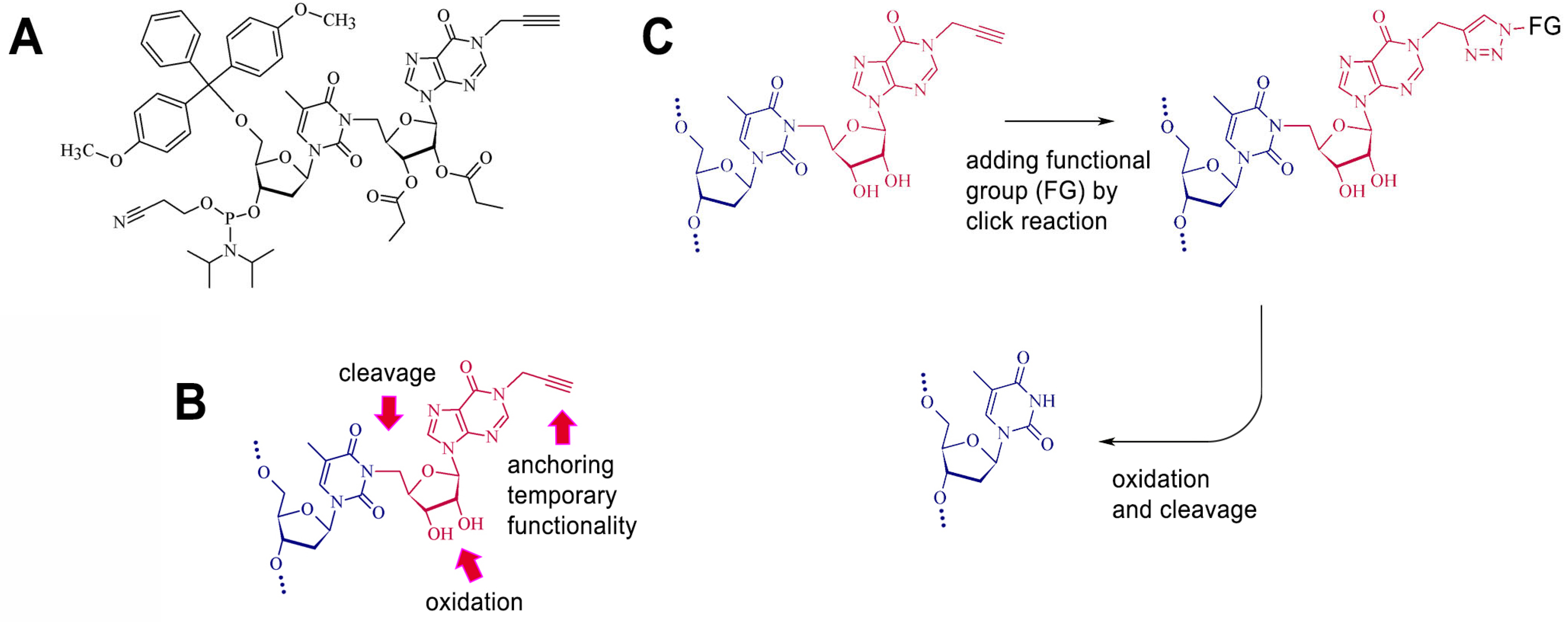
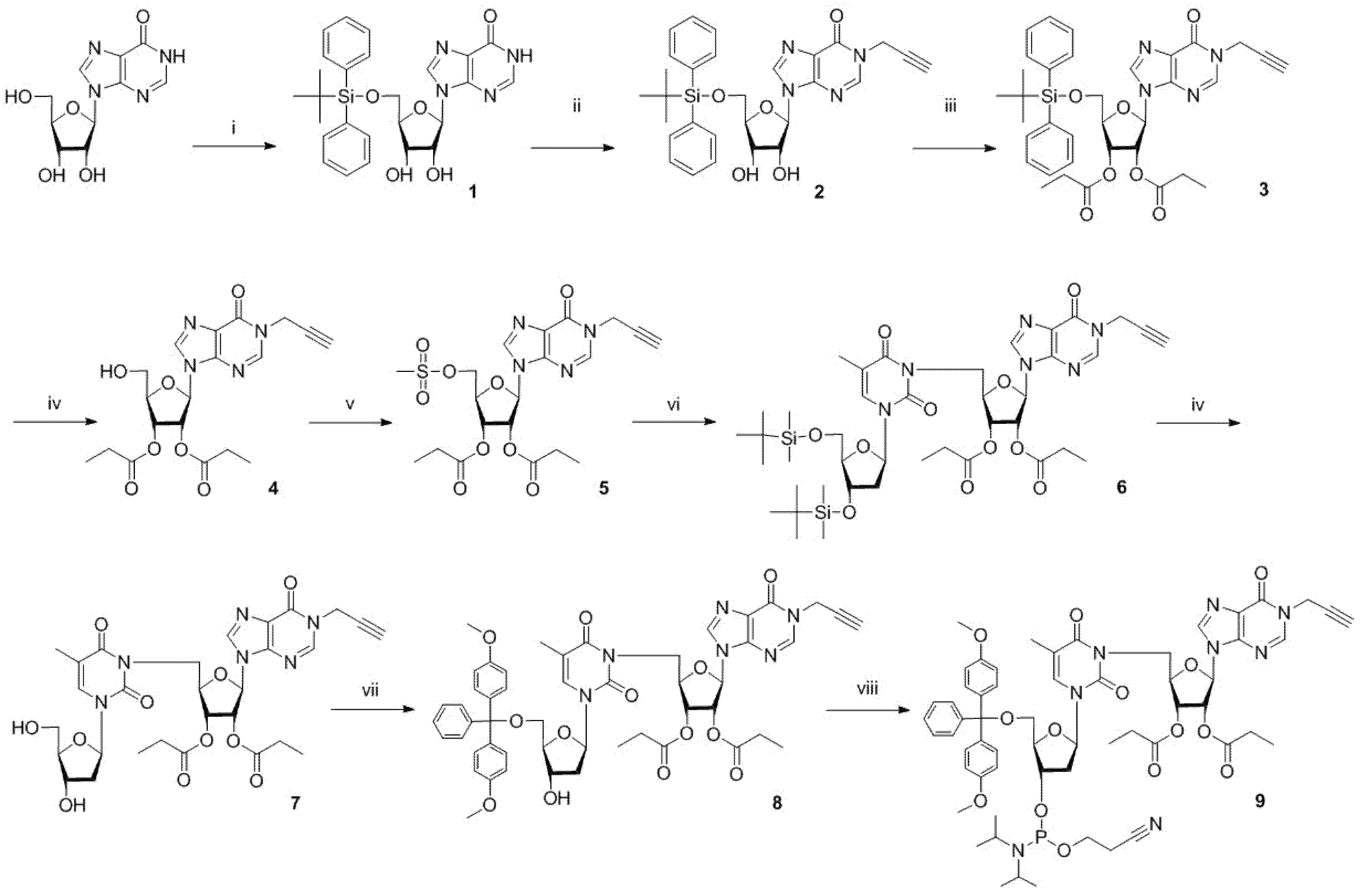
2.1. Design and Synthesis of the Cleavable Unit
2.2. Functional, Biophysical, and Biochemical Characterization of TID-Modified Oligonucleotides
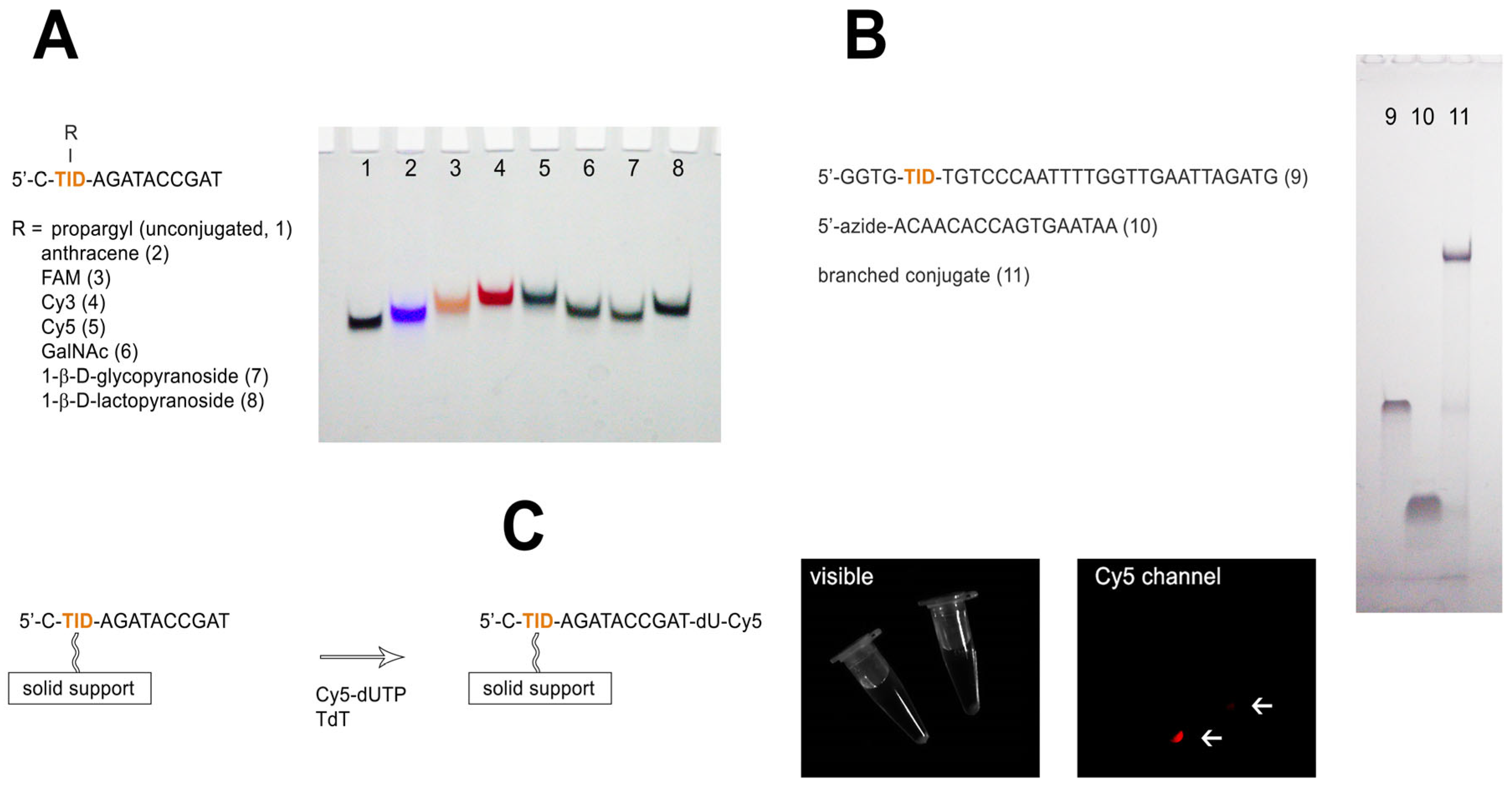
2.2.1. Synthesis of TID-Modified Oligonucleotides, Their Small-Molecule Conjugates, and Branched Oligonucleotides
2.2.2. Anchoring of TID-Modified Dodecamer to a Solid Support
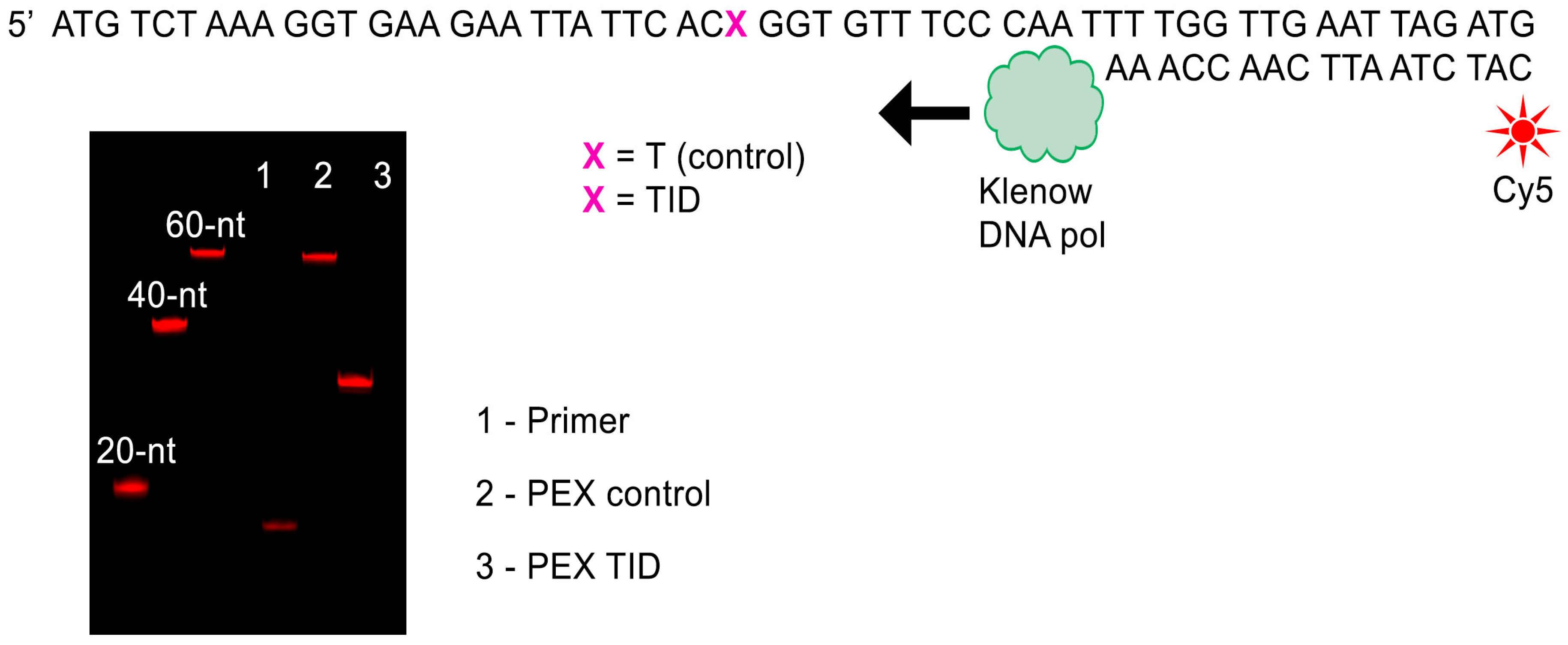
2.2.3. “Caging” Effect of the TID Modification in the Primer Extension Reaction
2.2.4. Effect of Internal TID Modification on DNA Duplex Stability
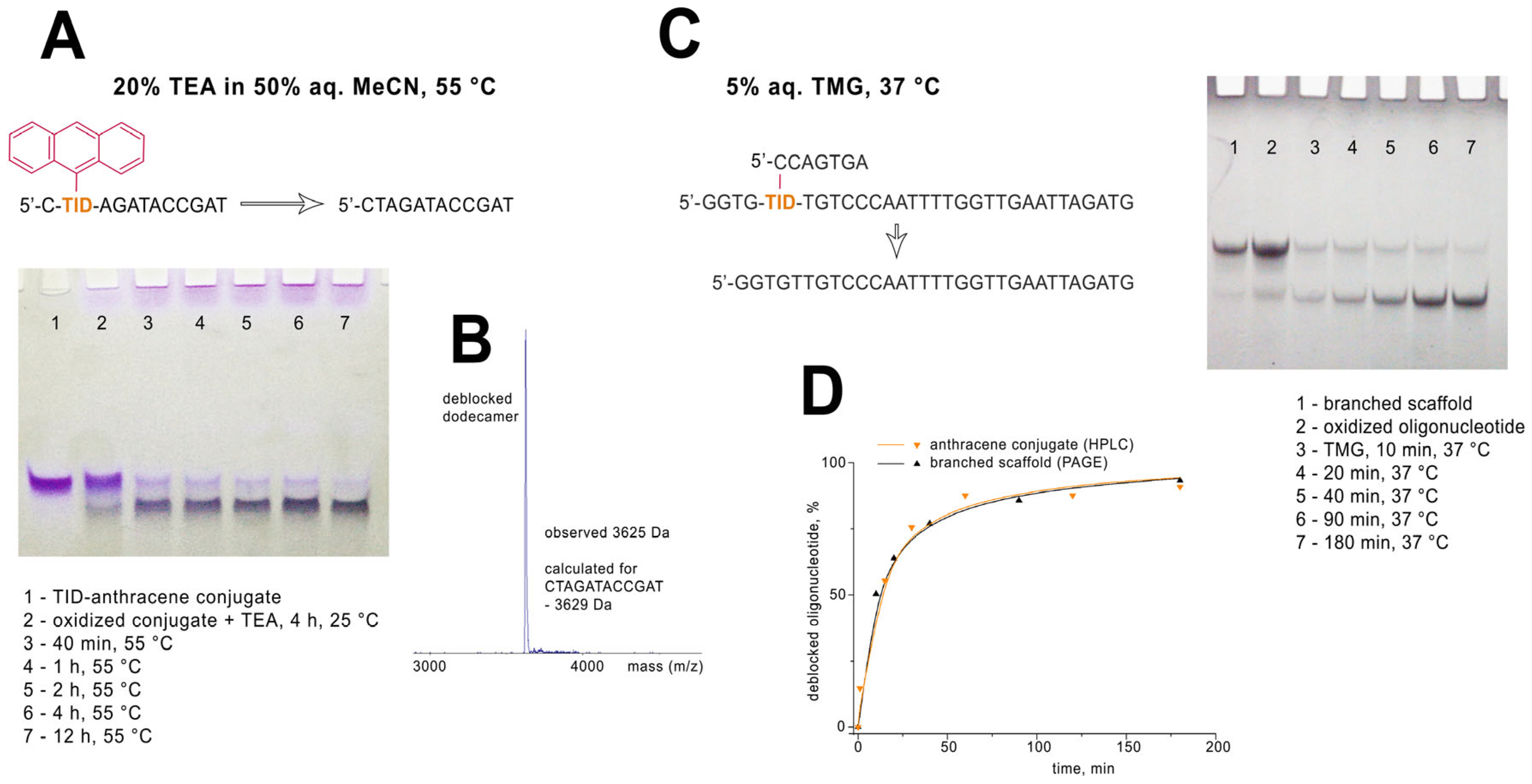
2.3. Oxidative Cleavage of the Inosine Subunit and Recovery of the Native DNA Strand
3. Conclusions
4. Experimental Section
4.1. General
4.2. Synthesis
4.2.1. 5′-O-Tert-Butyldiphenylsilyl Inosine (1)
4.2.2. N1-Propargyl-5′-O-Tert-Butyldiphenylsilyl Inosine (2)
4.2.3. N1-Propargyl-2′,3′-di-O-Propionyl, 5′-O-Tert-Butyldiphenylsilyl Inosine (3)
4.2.4. N1-Propargyl-2′,3′-di-O-Propionyl Inosine (4)
4.2.5. N1-Propargyl-5′-O-Methanesulfonyl-2′,3′-di-O-Propionyl Inosine (5)
4.2.6. 3′,5′-di-O-Tert Butyldimethylsilylthymidine, 2′,3′-di-O-Propionylinosine (N3-C5′) Dimer (6)
4.2.7. Thymidine, 2′,3′-di-O-Propionylinosine (N3-C5′) Dimer (7)
4.2.8. 5′-O-Dimethoxytrityl Thymidine, 2′,3′-di-O-Propionylinosine (N3-C5′) Dimer (8)
4.2.9. 5′-O-Dimethoxytritylthymidine-3′-O-(2-Cyanoethyl-N,N-Diisopropyl)phosphoramidite, 2′,3′-di-O-Propionylinosine (N3-C5′) Dimer (9)
4.3. Oligonucleotide Synthesis and Modifications
4.4. Oxidative Cleavage of TID Oligonucleotide Derivatives
4.5. Primer Extension Reaction
4.6. Anchoring of TID-Dodecanucleotide to HybCPG Support and Enzymatic Labeling with Cy5-dUTP
Supplementary Materials
Author Contributions
Funding
Institutional Review Board Statement
Informed Consent Statement
Data Availability Statement
Acknowledgments
Conflicts of Interest
References
- Egli, M.; Manoharan, M. Chemistry, structure and function of approved oligonucleotide therapeutics. Nucleic Acids Res. 2023, 51, 2529–2573. [Google Scholar] [CrossRef] [Scilit]
- Gubu, A.; Zhang, X.; Lu, A.; Zhang, B.; Ma, Y.; Zhang, G. Nucleic acid amphiphiles: Synthesis, properties, and applications. Mol. Ther. Nucleic Acids. 2023, 33, 144–163. [Google Scholar] [CrossRef] [Scilit]
- Shishparenok, A.N.; Furman, V.V.; Zhdanov, D.D. DNA-Based Nanomaterials as Drug Delivery Platforms for Increasing the Effect of Drugs in Tumors. Cancers 2023, 15, 2151. [Google Scholar] [CrossRef] [Scilit]
- Clavé, G.; Reverte, M.; Vasseur, J.J.; Smietana, M. Modified internucleoside linkages for nuclease-resistant oligonucleotides. RSC Chem. Biol. 2020, 2, 94–150. [Google Scholar] [CrossRef] [Scilit]
- Young, B.E.; Kundu, N.; Sczepanski, J.T. Mirror-Image Oligonucleotides: History and Emerging Applications. Chemistry 2019, 25, 7981–7990. [Google Scholar] [CrossRef] [Scilit]
- Benizri, S.; Gissot, A.; Martin, A.; Vialet, B.; Grinstaff, M.W.; Barthélémy, P. Bioconjugated Oligonucleotides: Recent Developments and Therapeutic Applications. Bioconjug. Chem. 2019, 30, 366–383. [Google Scholar] [CrossRef] [Scilit] [PubMed]
- Wang, X.; Wen, S.; Wu, Z.; Jiang, J.H. Orthogonal Control of Nucleic Acid Function via Chemical Caging-Decaging Strategies. Chembiochem 2024, 25, e202400516. [Google Scholar] [CrossRef] [Scilit] [PubMed]
- Yang, L.; Dmochowski, I.J. Conditionally Activated (“Caged”) Oligonucleotides. Molecules 2021, 26, 1481. [Google Scholar] [CrossRef] [Scilit]
- Liu, Q.; Deiters, A. Optochemical control of deoxyoligonucleotide function via a nucleobase-caging approach. Acc. Chem. Res. 2014, 47, 45–55. [Google Scholar] [CrossRef] [Scilit] [PubMed]
- O’Hagan, M.P.; Duan, Z.; Huang, F.; Laps, S.; Dong, J.; Xia, F.; Willner, I. Photocleavable Ortho-Nitrobenzyl-Protected DNA Architectures and Their Applications. Chem. Rev. 2023, 123, 6839–6887. [Google Scholar] [CrossRef] [Scilit]
- Leriche, G.; Chisholm, L.; Wagner, A. Cleavable linkers in chemical biology. Bioorg. Med. Chem. 2012, 20, 571–582. [Google Scholar] [CrossRef] [Scilit]
- Jin, C.; Li, S.; Vallis, K.A.; El-Sagheer, A.H.; Brown, T. Modular and Automated Synthesis of Oligonucleotide-Small Molecule Conjugates for Cathepsin B Mediated Traceless Release of Payloads. RSC Chem. Biol. 2024, 5, 738–744. [Google Scholar] [CrossRef] [Scilit] [PubMed]
- Ordoukhanian, P.; Taylor, J.-S. Design and Synthesis of a Versatile Photocleavable DNA Building Block. Application to Phototriggered Hybridization. J. Am. Chem. Soc. 1995, 117, 9570–9571. [Google Scholar] [CrossRef] [Scilit]
- Lusic, H.; Young, D.D.; Lively, M.O.; Deiters, A. Photochemical DNA activation. Org. Lett. 2007, 9, 1903–1906. [Google Scholar] [CrossRef] [Scilit]
- Lebedev, A.V.; Paul, N.; Yee, J.; Timoshchuk, V.A.; Shum, J.; Miyagi, K.; Kellum, J.; Hogrefe, R.I.; Zon, G. Hot start PCR with heat-activatable primers: A novel approach for improved PCR performance. Nucleic Acids Res. 2008, 36, e131. [Google Scholar] [CrossRef] [Scilit]
- Madaoui, M.; Meyer, A.; Vasseur, J.J.; Morvan, F. Thermolytic Reagents to Synthesize 5′- or 3′-Mono(thio)phosphate Oligodeoxynucleotides or 3′-modified oligodeoxynucleotides. Eur. J. Org. Chem. 2019, 17, 2832–2842. [Google Scholar] [CrossRef] [Scilit]
- Smirnov, I.; Kolganova, N.; Troisi, R.; Sica, F.; Timofeev, E. Expanding the recognition interface of the thrombin-binding aptamer HD1 through modification of residues T3 and T12. Mol. Ther. Nucleic Acids. 2021, 23, 863–871. [Google Scholar] [CrossRef] [Scilit] [PubMed]
- Tsvetkov, V.B.; Varizhuk, I.V.; Kurochkin, N.N.; Surzhikov, S.A.; Smirnov, I.P.; Stomakhin, A.A.; Kolganova, N.A.; Timofeev, E.N. Anticoagulant Oligonucleotide-Peptide Conjugates: Identification of Thrombin Aptamer Conjugates with Improved Characteristics. Int. J. Mol. Sci. 2022, 23, 3820. [Google Scholar] [CrossRef] [Scilit]
- Capaldi, D.; Ackley, K.; Brooks, D.; Carmody, J.; Draper, K.; Kambhampati, R.; Kretschmer, M.; Levin, D.; McArdle, J.; Noll, B.; et al. Quality Aspects of Oligonucleotide Drug Development: Specifications for Active Pharmaceutical Ingredients. Ther. Innov. Regul. Sci. 2012, 46, 611–626. [Google Scholar] [CrossRef] [Scilit]
- Kropacheva, N.O.; Golyshkin, A.A.; Vorobyeva, M.A.; Meschaninova, M.I. Convenient Solid-Phase Attachment of Small-Molecule Ligands to Oligonucleotides via a Biodegradable Acid-Labile P-N-Bond. Molecules 2023, 28, 1904. [Google Scholar] [CrossRef] [Scilit]
- Wahane, A.; Kasina, V.; Pathuri, M.; Marro-Wilson, C.; Gupta, A.; Slack, F.J.; Bahal, R. Development of bioconjugate-based delivery systems for nucleic acids. RNA 2024, 31, 1–13. [Google Scholar] [CrossRef] [Scilit] [PubMed]
- Fokina, A.; Poletaeva, Y.; Dukova, S.; Klabenkova, K.; Rad’kova, Z.; Bakulina, A.; Zatsepin, T.; Ryabchikova, E.; Stetsenko, D. Template-Assisted Assembly of Hybrid DNA/RNA Nanostructures Using Branched Oligodeoxy- and Oligoribonucleotides. Int. J. Mol. Sci. 2023, 24, 15978. [Google Scholar] [CrossRef] [Scilit] [PubMed]
- McKenna, M.; Soberon, F.; Ricco, A.J.; Daniels, S. Click chemistry as an immobilization method to improve oligonucleotide hybridization efficiency for nucleic acid assays. Sens. Actuators B Chem. 2016, 236, 286–293. [Google Scholar] [CrossRef] [Scilit]

| Y | Tm, °C, (X = T) | ΔTm * | Tm, °C, (X = TID) | ΔTm * |
|---|---|---|---|---|
| A | 48.7 ± 0.9 | 45.2 ± 0.6 | 3.5 | |
| G | 43.9 ± 0.6 | 4.8 | 44.7 ± 0.3 | 4.1 |
| C | 43.5 ± 1.4 | 5.3 | 43.6 ± 0.4 | 5.2 |
| T | 43.4 ± 0.4 | 5.3 | 44.0 ± 0.4 | 4.8 |
| average | 5.1 | average | 4.4 |
Disclaimer/Publisher’s Note: The statements, opinions and data contained in all publications are solely those of the individual author(s) and contributor(s) and not of MDPI and/or the editor(s). MDPI and/or the editor(s) disclaim responsibility for any injury to people or property resulting from any ideas, methods, instructions or products referred to in the content. |
© 2025 by the authors. Licensee MDPI, Basel, Switzerland. This article is an open access article distributed under the terms and conditions of the Creative Commons Attribution (CC BY) license (https://creativecommons.org/licenses/by/4.0/).
Share and Cite
Kolganova, N.A.; Varizhuk, I.V.; Stomakhin, A.A.; Khisamov, M.M.; Solyev, P.N.; Surzhikov, S.A.; Timofeev, E.N. Thymidine-Inosine Dimer Building Block for Reversible Modification of Synthetic Oligonucleotides. Molecules 2025, 30, 3769. https://doi.org/10.3390/molecules30183769
Kolganova NA, Varizhuk IV, Stomakhin AA, Khisamov MM, Solyev PN, Surzhikov SA, Timofeev EN. Thymidine-Inosine Dimer Building Block for Reversible Modification of Synthetic Oligonucleotides. Molecules. 2025; 30(18):3769. https://doi.org/10.3390/molecules30183769
Chicago/Turabian StyleKolganova, Natalia A., Irina V. Varizhuk, Andrey A. Stomakhin, Marat M. Khisamov, Pavel N. Solyev, Sergei A. Surzhikov, and Edward N. Timofeev. 2025. "Thymidine-Inosine Dimer Building Block for Reversible Modification of Synthetic Oligonucleotides" Molecules 30, no. 18: 3769. https://doi.org/10.3390/molecules30183769
APA StyleKolganova, N. A., Varizhuk, I. V., Stomakhin, A. A., Khisamov, M. M., Solyev, P. N., Surzhikov, S. A., & Timofeev, E. N. (2025). Thymidine-Inosine Dimer Building Block for Reversible Modification of Synthetic Oligonucleotides. Molecules, 30(18), 3769. https://doi.org/10.3390/molecules30183769

