Article

The Piezocatalytic Degradation of Sulfadiazine by Lanthanum-Doped Barium Titanate

Key Laboratory of Organic Compound Pollution Control Engineering (MOE), School of Environmental and Chemical Engineering, Shanghai University, Shanghai 200444, China
*
Author to whom correspondence should be addressed.
These authors contributed equally to this work.
These authors also contributed equally to this work.
Molecules 2024, 29(8), 1719; https://doi.org/10.3390/molecules29081719

Submission received: 22 February 2024 / Revised: 29 March 2024 / Accepted: 4 April 2024 / Published: 10 April 2024
(This article belongs to the Special Issue Advanced Oxidation Processes for Degradation of Antibiotics in Water)

Abstract

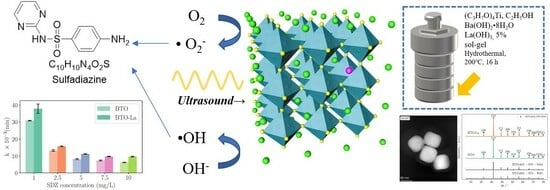
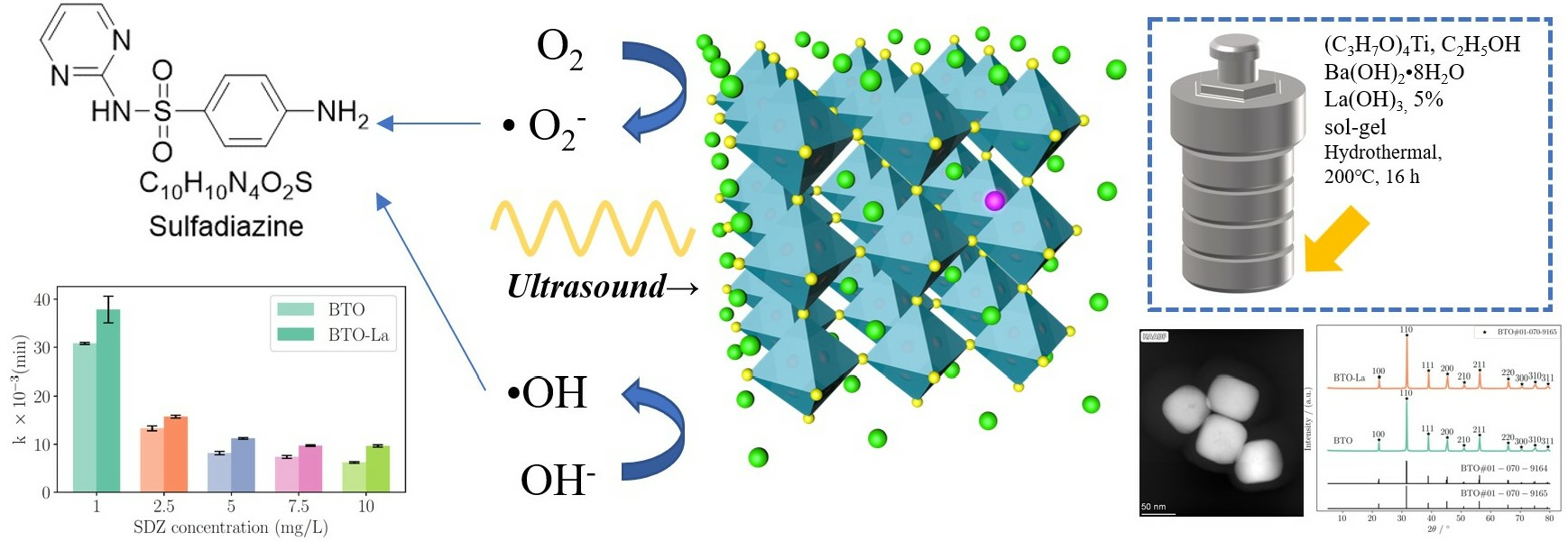
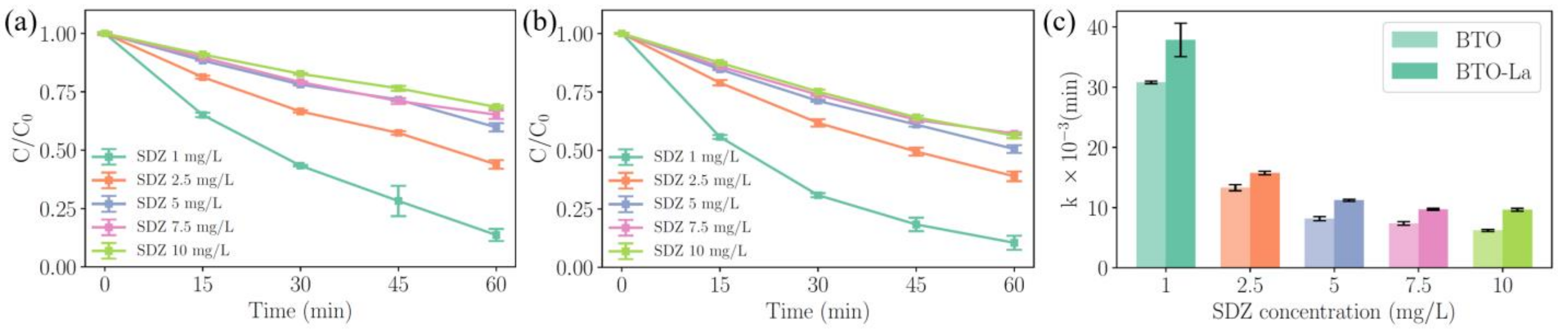
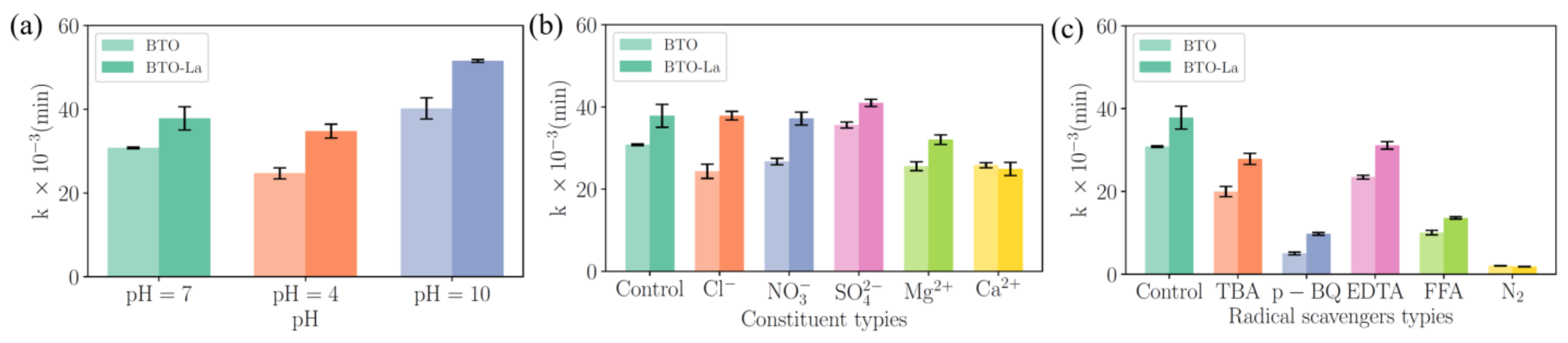
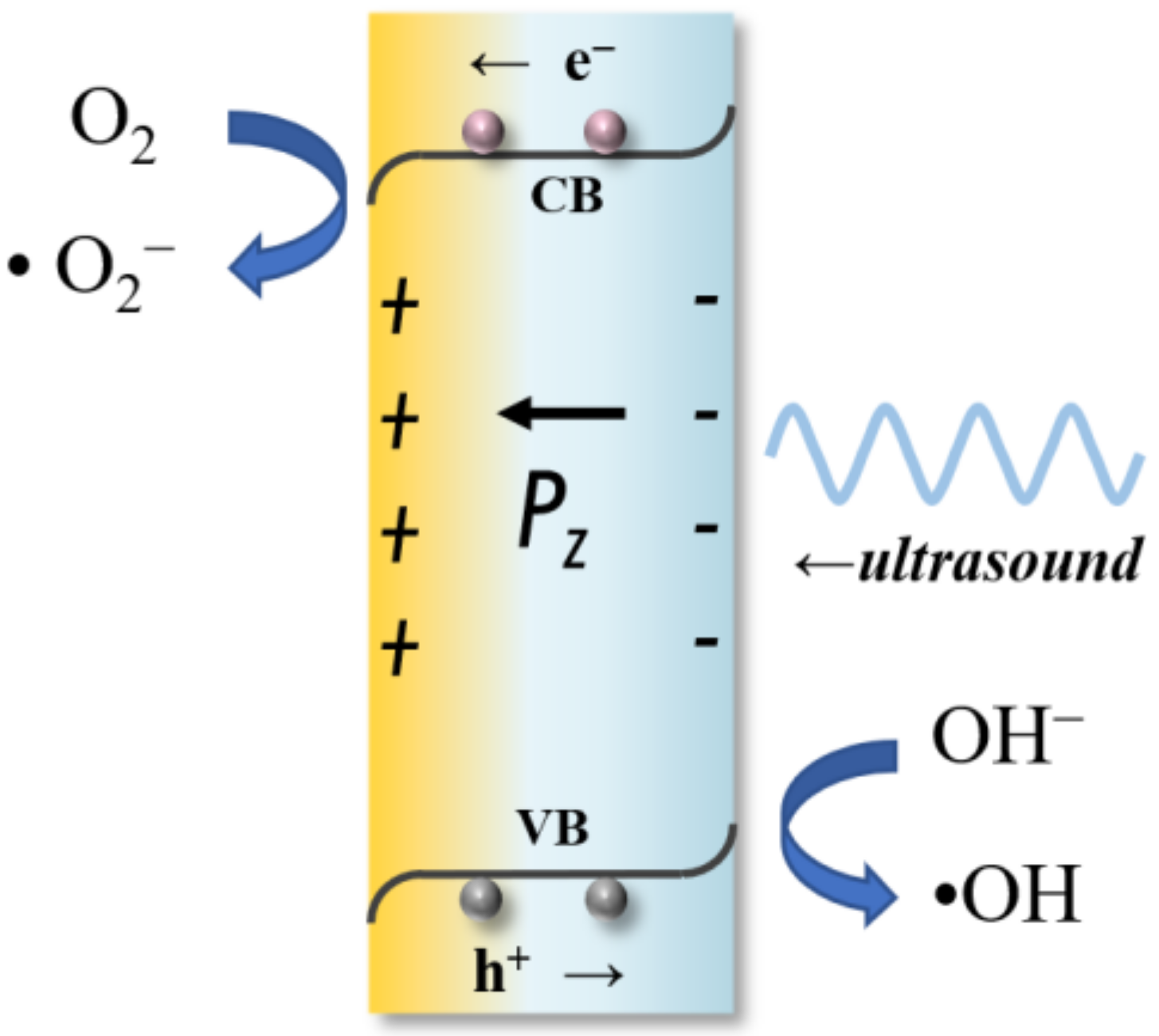
Piezocatalysis, a heterogeneous catalytic technique, leverages the periodic electric field changes generated by piezoelectric materials under external forces to drive carriers for the advanced oxidation of organic pollutants. Antibiotics, as emerging trace organic pollutants in water sources, pose a potential threat to animals and drinking water safety. Thus, piezoelectric catalysis can be used to degrade trace organic pollutants in water. In this work, BaTiO3 and La-doped BaTiO3 were synthesized using an improved sol–gel–hydrothermal method and used as piezocatalytic materials to degrade sulfadiazine (SDZ) with ultrasound activation. High-crystallinity products with nano cubic and spherical morphologies were successfully synthesized. An initial concentration of SDZ ranging from 1 to 10 mg/L, a catalysis dosage range from 1 to 2.5 mg/mL, pH, and the background ions in the water were considered as influencing factors and tested. The reaction rate constant was 0.0378 min−1 under the optimum working conditions, and the degradation efficiency achieved was 89.06% in 60 min. La-doped BaTiO3 had a better degradation efficiency, at 14.98% on average, compared to undoped BaTiO3. Further investigations into scavengers revealed a partially piezocatalytic process for the degradation of SDZ. In summary, our work provides an idea for green environmental protection in dealing with new types of environmental pollution.
Keywords: piezoelectric catalysis; advanced oxidation progress; antibiotics degradation piezoelectric catalysis; advanced oxidation progress; antibiotics degradation
Graphical Abstract