Synthesis and Physiochemical Properties of Sulphated Tamarind (Tamarindus indica L.) Seed Polysaccharide

 , ,
, , Abstract
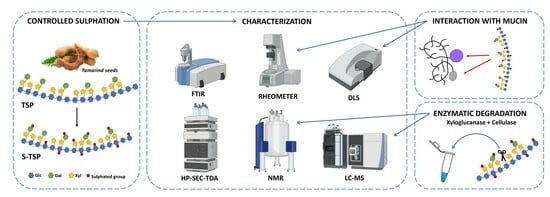
Share and Cite
Ziliani, S.; Alekseeva, A.; Antonini, C.; Esposito, E.; Neggiani, F.; Sansò, M.; Guerrini, M.; Bertini, S. Synthesis and Physiochemical Properties of Sulphated Tamarind (Tamarindus indica L.) Seed Polysaccharide. Molecules 2024, 29, 5510. https://doi.org/10.3390/molecules29235510
Ziliani S, Alekseeva A, Antonini C, Esposito E, Neggiani F, Sansò M, Guerrini M, Bertini S. Synthesis and Physiochemical Properties of Sulphated Tamarind (Tamarindus indica L.) Seed Polysaccharide. Molecules. 2024; 29(23):5510. https://doi.org/10.3390/molecules29235510
Chicago/Turabian StyleZiliani, Sabrina, Anna Alekseeva, Carlo Antonini, Emiliano Esposito, Fabio Neggiani, Marco Sansò, Marco Guerrini, and Sabrina Bertini. 2024. "Synthesis and Physiochemical Properties of Sulphated Tamarind (Tamarindus indica L.) Seed Polysaccharide" Molecules 29, no. 23: 5510. https://doi.org/10.3390/molecules29235510
APA StyleZiliani, S., Alekseeva, A., Antonini, C., Esposito, E., Neggiani, F., Sansò, M., Guerrini, M., & Bertini, S. (2024). Synthesis and Physiochemical Properties of Sulphated Tamarind (Tamarindus indica L.) Seed Polysaccharide. Molecules, 29(23), 5510. https://doi.org/10.3390/molecules29235510