Article

Ligand-Based Design of Novel Quinoline Derivatives as Potential Anticancer Agents: An In-Silico Virtual Screening Approach

1
Laboratory of Engineering, Systems and Applications, National School of Applied Sciences, Sidi Mohamed Ben Abdellah-Fez University, Fez 30000, Morocco
2
Laboratory for Oral Biology and Biotechnology Research, Department of Fundamental Sciences, Faculty of Medicine Dentistry, Mohammed V University, Rabat 10106, Morocco
3
Euromed Research Center, Euromed Faculty of Pharmacy, Euromed University of Fes (UEMF), Meknes Road, Fez 30000, Morocco
4
Laboratory of Analytical and Molecular Chemistry, Faculty of Sciences Ben M’Sik, Hassan II University of Casablanca, Casablanca P.O. Box 7955, Morocco
5
Department of Chemistry, College of Science, United Arab Emirates University, Al Ain P.O. Box 15551, United Arab Emirates
*
Authors to whom correspondence should be addressed.
Molecules 2024, 29(2), 426; https://doi.org/10.3390/molecules29020426

Submission received: 20 November 2023 / Revised: 3 January 2024 / Accepted: 9 January 2024 / Published: 15 January 2024
(This article belongs to the Special Issue In Silico Methods Applied in Drug and Pesticide Discovery)

Abstract

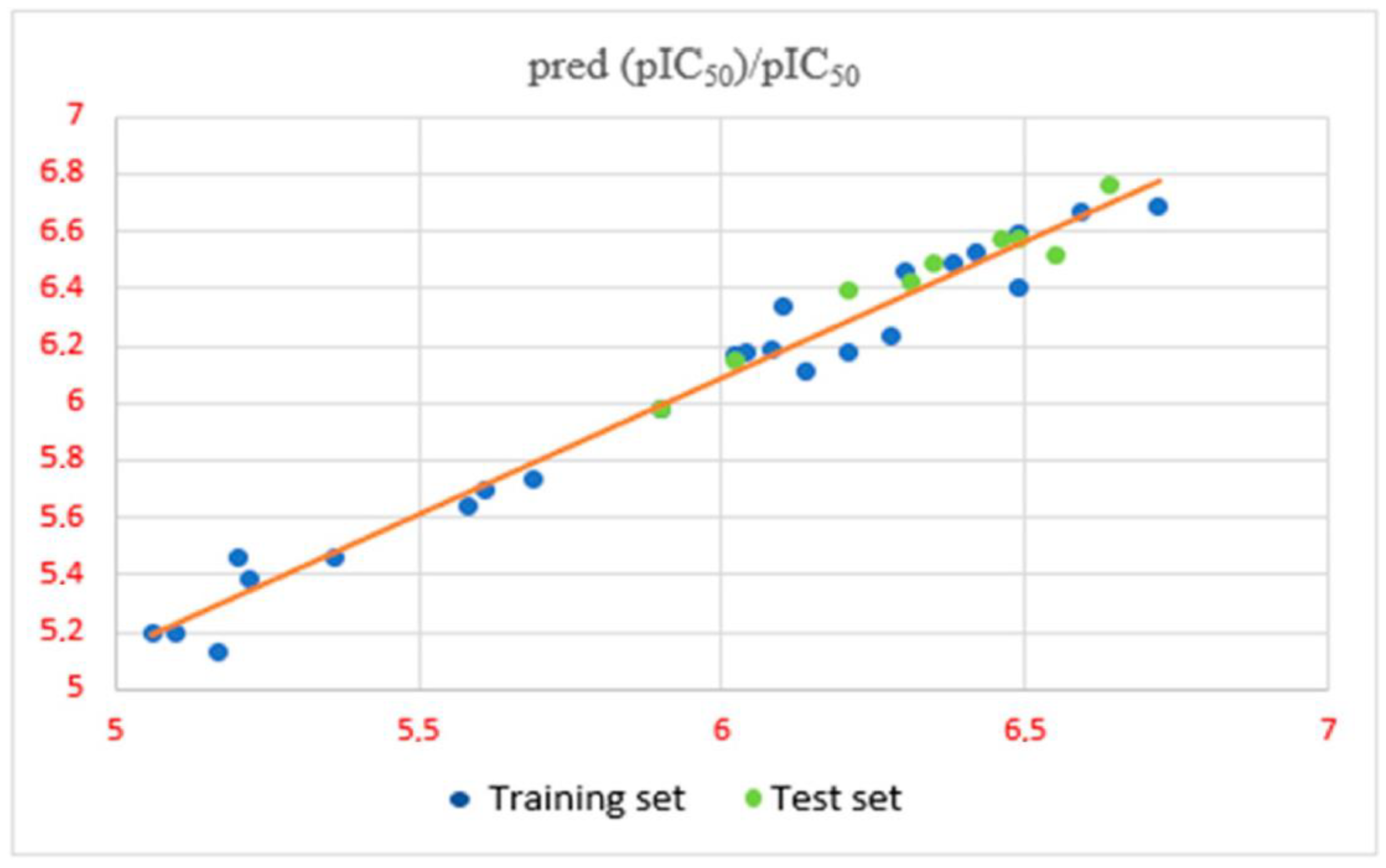
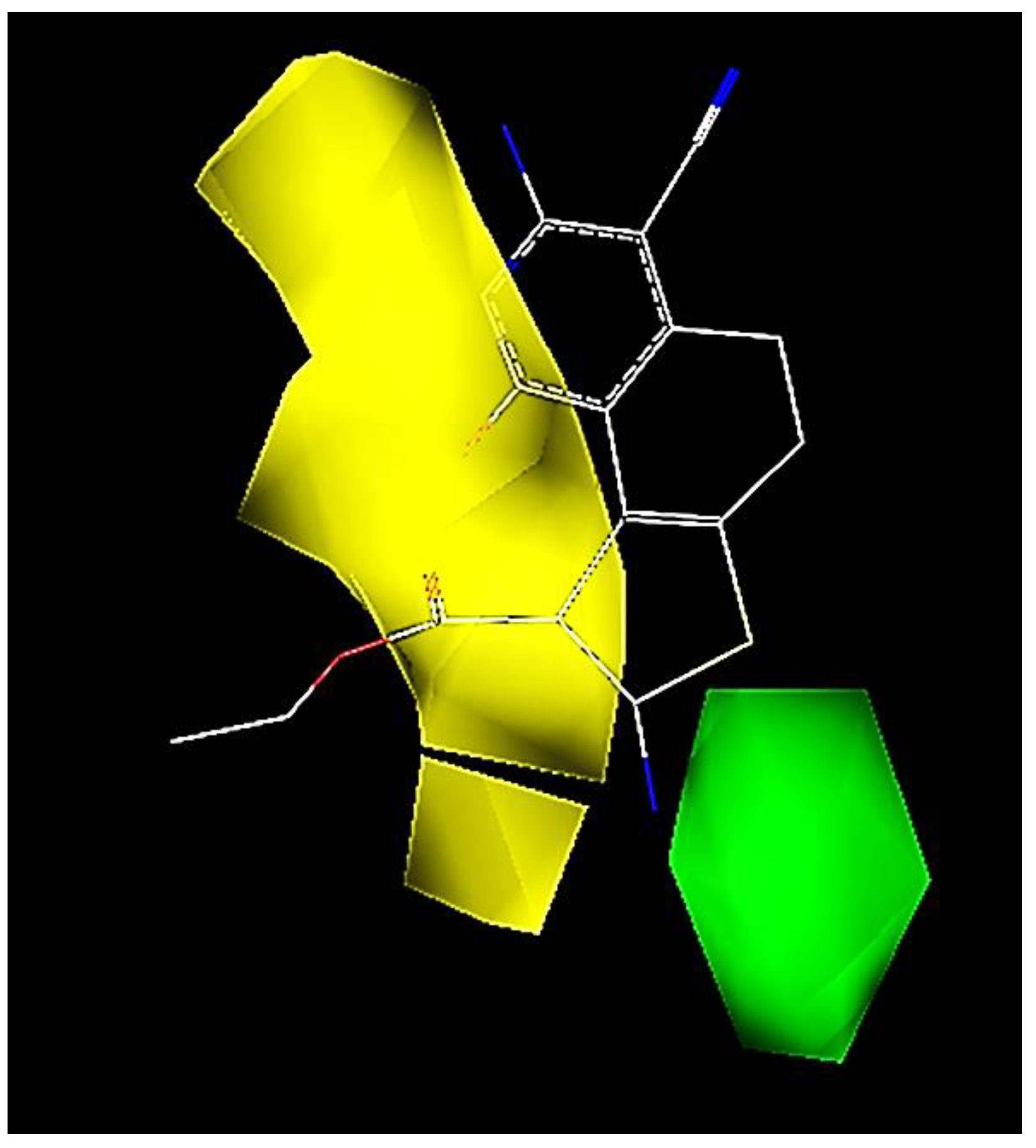
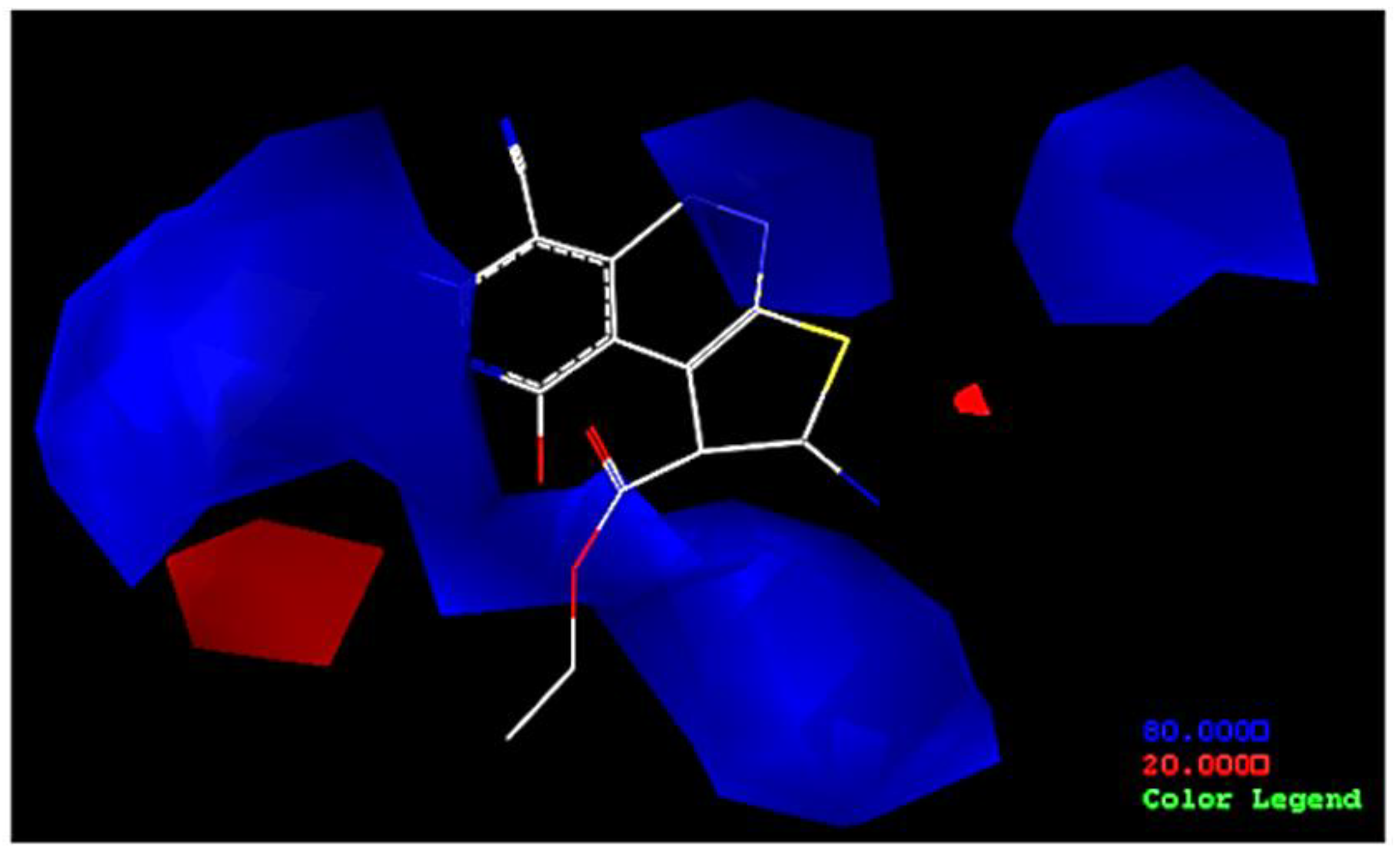
In this study, using the Comparative Molecular Field Analysis (CoMFA) approach, the structure-activity relationship of 33 small quinoline-based compounds with biological anti-gastric cancer activity in vitro was analyzed in 3D space. Once the 3D geometric and energy structure of the target chemical library has been optimized and their steric and electrostatic molecular field descriptions computed, the ideal 3D-QSAR model is generated and matched using the Partial Least Squares regression (PLS) algorithm. The accuracy, statistical precision, and predictive power of the developed 3D-QSAR model were confirmed by a range of internal and external validations, which were interpreted by robust correlation coefficients (RTrain2=0.931; Qcv2=0.625; RTest2=0.875). After carefully analyzing the contour maps produced by the trained 3D-QSAR model, it was discovered that certain structural characteristics are beneficial for enhancing the anti-gastric cancer properties of Quinoline derivatives. Based on this information, a total of five new quinoline compounds were developed, with their biological activity improved and their drug-like bioavailability measured using POM calculations. To further explore the potential of these compounds, molecular docking and molecular dynamics simulations were performed in an aqueous environment for 100 nanoseconds, specifically targeting serine/threonine protein kinase. Overall, the new findings of this study can serve as a starting point for further experiments with a view to the identification and design of a potential next-generation drug for target therapy against cancer.
Keywords: quinoline; anti-gastric cancer; 3D-QSAR; CoMFA; POM; ADME-Tox; molecular docking; molecular dynamics; MM-GBSA quinoline; anti-gastric cancer; 3D-QSAR; CoMFA; POM; ADME-Tox; molecular docking; molecular dynamics; MM-GBSA