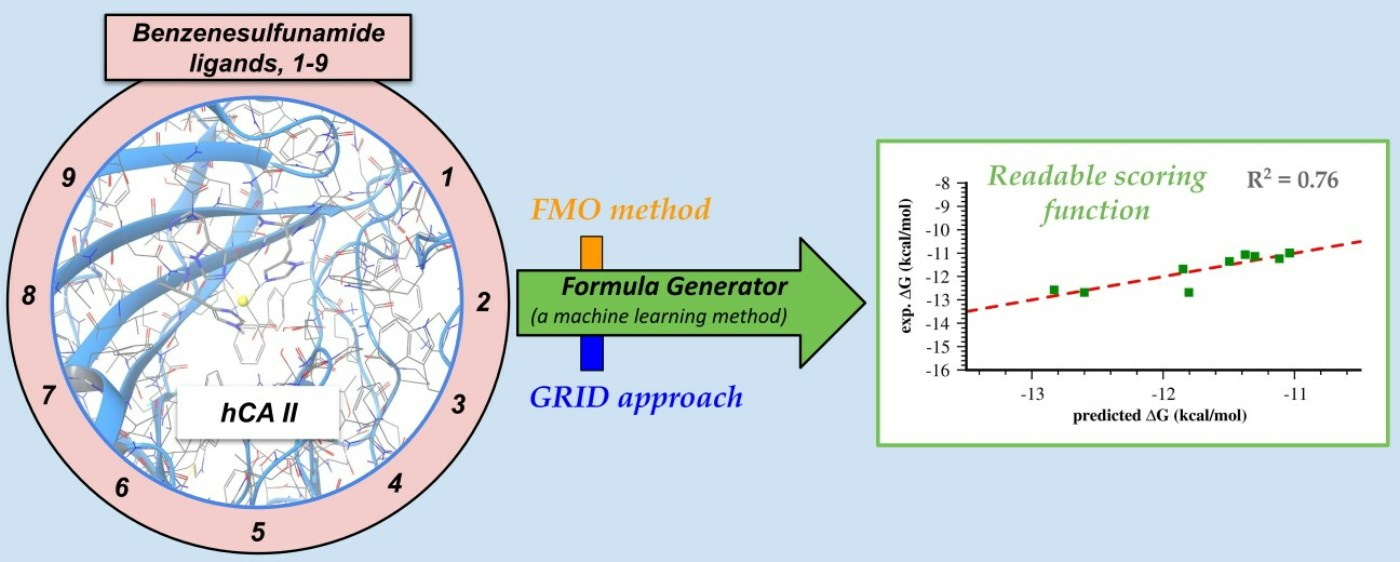
Combining the Fragment Molecular Orbital and GRID Approaches for the Prediction of Ligand–Metalloenzyme Binding Affinity: The Case Study of hCA II Inhibitors



Abstract
Share and Cite
Paciotti, R.; Re, N.; Storchi, L. Combining the Fragment Molecular Orbital and GRID Approaches for the Prediction of Ligand–Metalloenzyme Binding Affinity: The Case Study of hCA II Inhibitors. Molecules 2024, 29, 3600. https://doi.org/10.3390/molecules29153600
Paciotti R, Re N, Storchi L. Combining the Fragment Molecular Orbital and GRID Approaches for the Prediction of Ligand–Metalloenzyme Binding Affinity: The Case Study of hCA II Inhibitors. Molecules. 2024; 29(15):3600. https://doi.org/10.3390/molecules29153600
Chicago/Turabian StylePaciotti, Roberto, Nazzareno Re, and Loriano Storchi. 2024. "Combining the Fragment Molecular Orbital and GRID Approaches for the Prediction of Ligand–Metalloenzyme Binding Affinity: The Case Study of hCA II Inhibitors" Molecules 29, no. 15: 3600. https://doi.org/10.3390/molecules29153600
APA StylePaciotti, R., Re, N., & Storchi, L. (2024). Combining the Fragment Molecular Orbital and GRID Approaches for the Prediction of Ligand–Metalloenzyme Binding Affinity: The Case Study of hCA II Inhibitors. Molecules, 29(15), 3600. https://doi.org/10.3390/molecules29153600