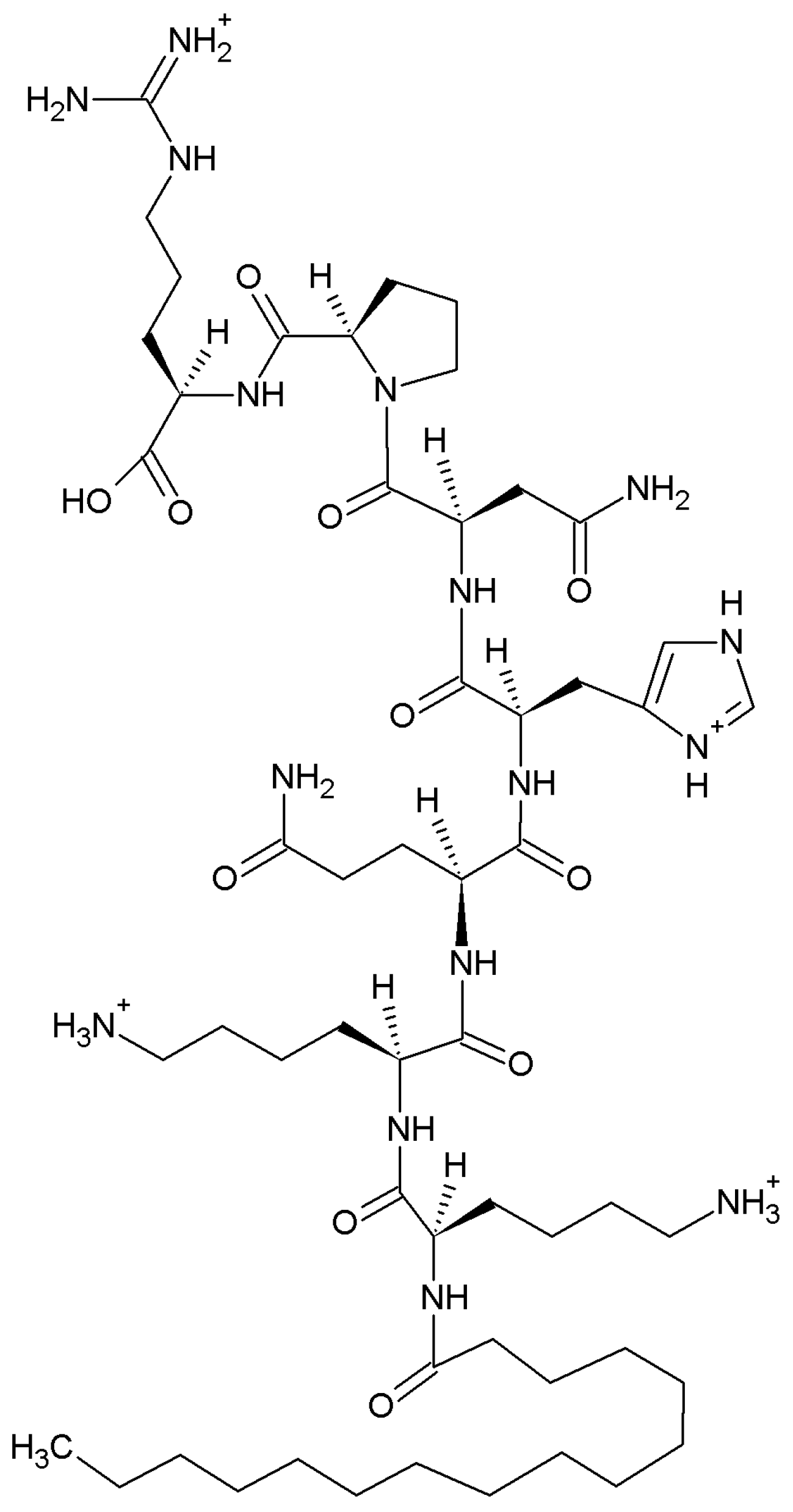
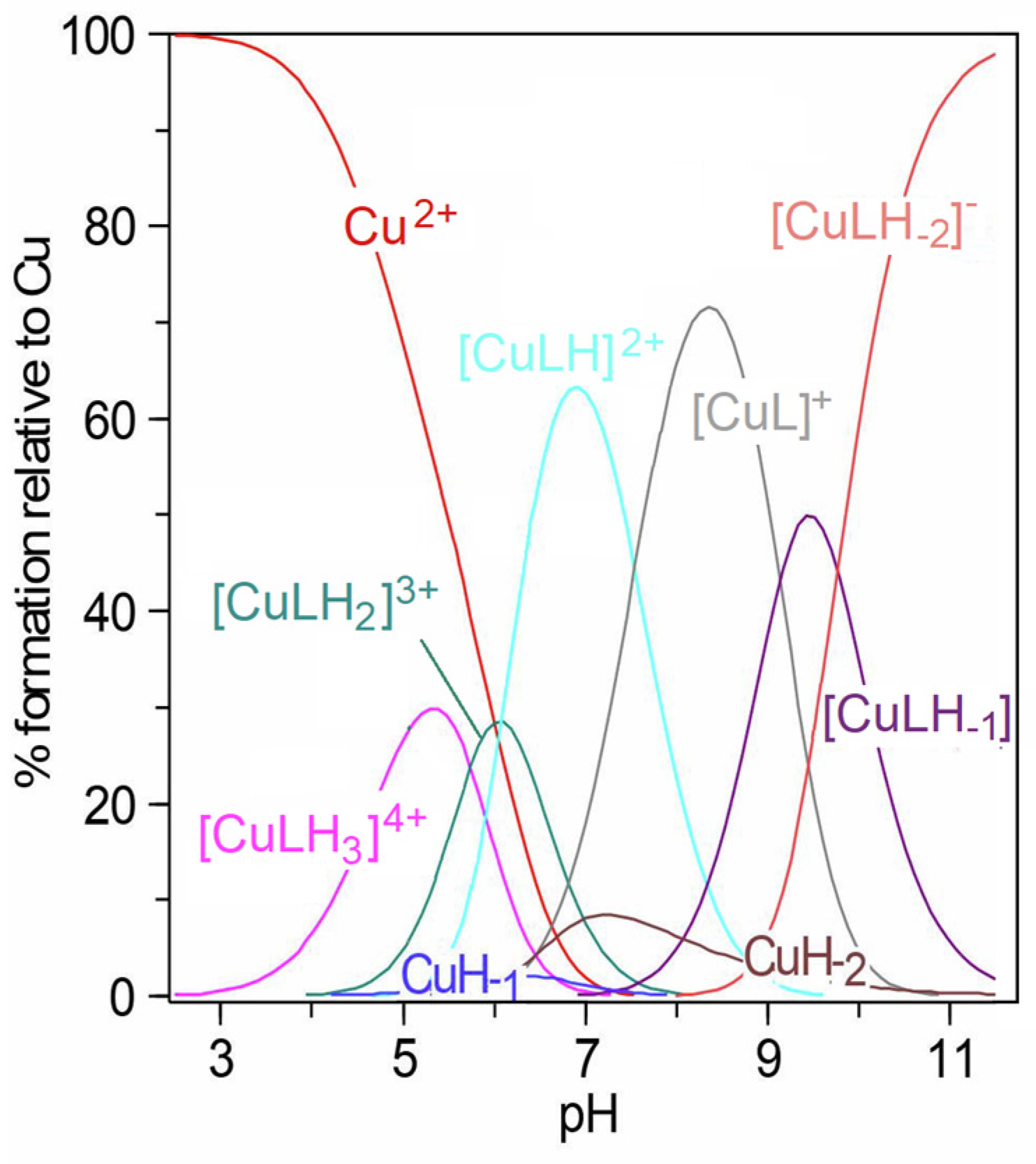
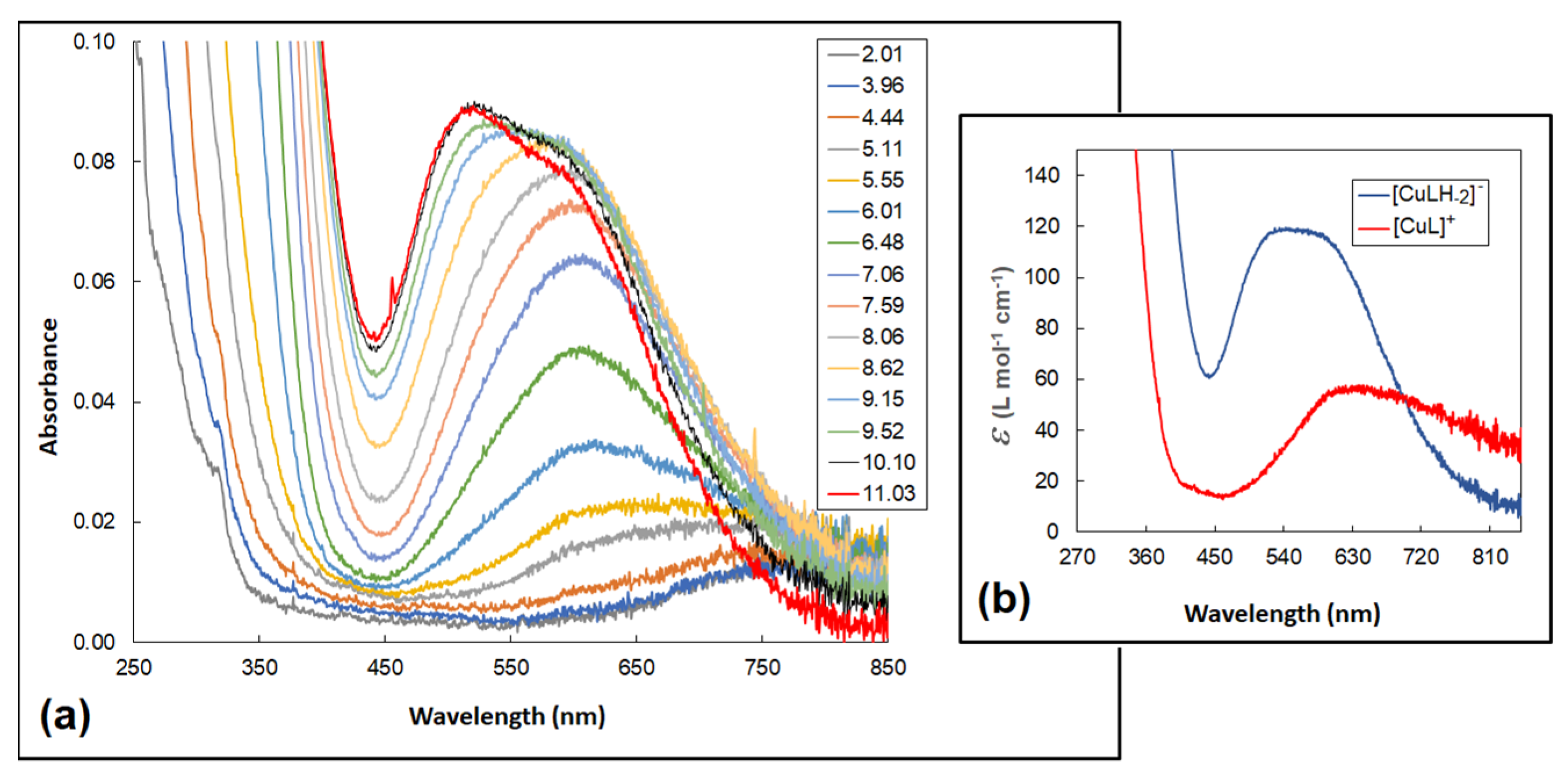
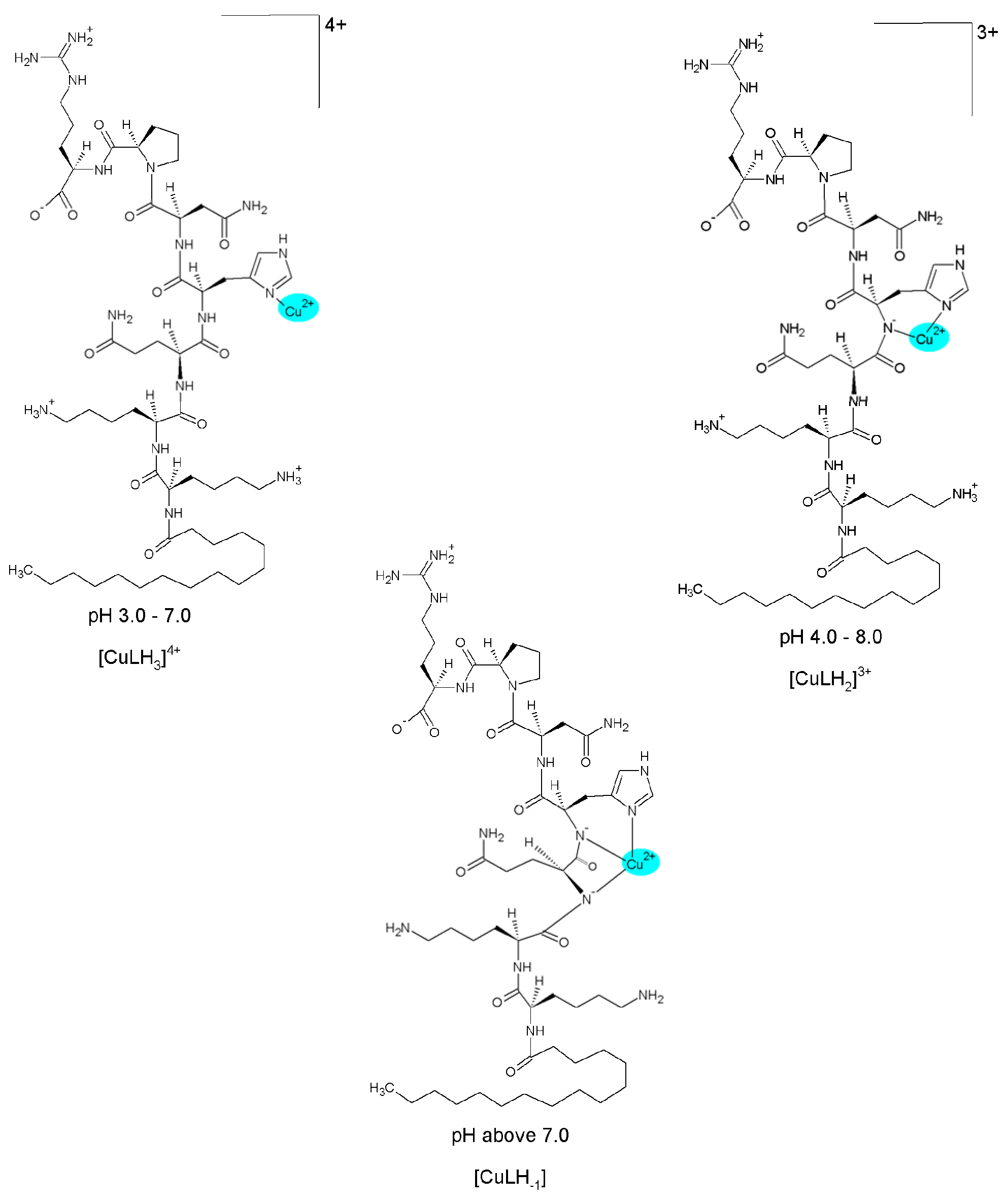
Complex-Forming Properties of the Anti-Inflammatory Sialorphin Derivative Palmitic Acid-Lysine-Lysine-Glutamine-Histidine-Asparagine-Proline-Arginine with Cu(II) Ions in an Aqueous Solution

Abstract
Share and Cite
Pająk, M.; Kamysz, E.; Sikora, K.; Fichna, J.; Woźniczka, M. Complex-Forming Properties of the Anti-Inflammatory Sialorphin Derivative Palmitic Acid-Lysine-Lysine-Glutamine-Histidine-Asparagine-Proline-Arginine with Cu(II) Ions in an Aqueous Solution. Molecules 2024, 29, 90. https://doi.org/10.3390/molecules29010090
Pająk M, Kamysz E, Sikora K, Fichna J, Woźniczka M. Complex-Forming Properties of the Anti-Inflammatory Sialorphin Derivative Palmitic Acid-Lysine-Lysine-Glutamine-Histidine-Asparagine-Proline-Arginine with Cu(II) Ions in an Aqueous Solution. Molecules. 2024; 29(1):90. https://doi.org/10.3390/molecules29010090
Chicago/Turabian StylePająk, Marek, Elżbieta Kamysz, Karol Sikora, Jakub Fichna, and Magdalena Woźniczka. 2024. "Complex-Forming Properties of the Anti-Inflammatory Sialorphin Derivative Palmitic Acid-Lysine-Lysine-Glutamine-Histidine-Asparagine-Proline-Arginine with Cu(II) Ions in an Aqueous Solution" Molecules 29, no. 1: 90. https://doi.org/10.3390/molecules29010090
APA StylePająk, M., Kamysz, E., Sikora, K., Fichna, J., & Woźniczka, M. (2024). Complex-Forming Properties of the Anti-Inflammatory Sialorphin Derivative Palmitic Acid-Lysine-Lysine-Glutamine-Histidine-Asparagine-Proline-Arginine with Cu(II) Ions in an Aqueous Solution. Molecules, 29(1), 90. https://doi.org/10.3390/molecules29010090