Article

Unraveling Bonding Mechanisms and Electronic Structure of Pyridine Oximes on Fe(110) Surface: Deeper Insights from DFT, Molecular Dynamics and SCC-DFT Tight Binding Simulations


1
Innovative Durable Building and Infrastructure Research Center, Center for Creative Convergence Education, Hanyang University ERICA, 55 Hanyangdaehak-ro, Sangrok-gu, Ansan-si 15588, Gyeonggi-do, Republic of Korea
2
Department of Architectural Engineering, Hanyang University-ERICA, 55 Hanyangdaehak-ro, San-grok-gu, Ansan-si 15588, Gyeonggi-do, Republic of Korea
3
Department of Pharmacy, Health Services Vocational School, Sivas Cumhuriyet University, Sivas 58140, Turkey
4
Laboratory of Applied Chemistry and Environment, Applied Science National School (ENSA), University Ibn Zohr, P.O. Box 1136, Agadir 80000, Morocco
5
Laboratoire de Génie Industriel, de l’Énergétique et de l’Environnement (LGI2E), SupMTI, Rabat 10000, Morocco
6
Department of Biochemistry, College of Science, King Saud University, P.O. Box 2455, Riyadh 11451, Saudi Arabia
7
Materials Electrochemistry Group, School of Materials Science and Engineering, Yeungnam University, Gyeongsan 38541, Gyeongsangbuk-do, Republic of Korea
*
Authors to whom correspondence should be addressed.
Molecules 2023, 28(8), 3545; https://doi.org/10.3390/molecules28083545

Submission received: 14 March 2023 / Revised: 7 April 2023 / Accepted: 13 April 2023 / Published: 18 April 2023
(This article belongs to the Special Issue Multiconfigurational and DFT Methods Applied to Chemical Systems)

Abstract

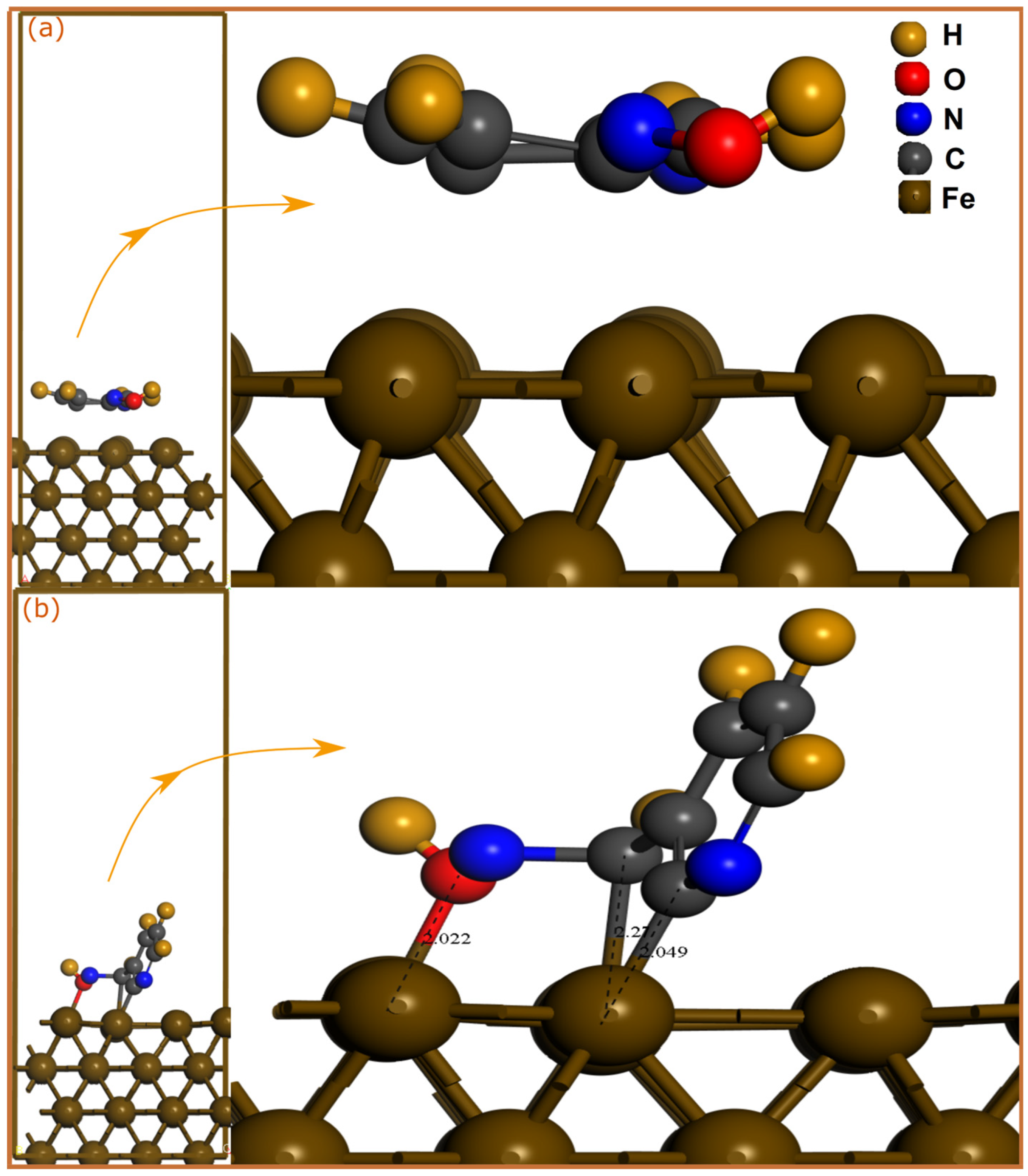
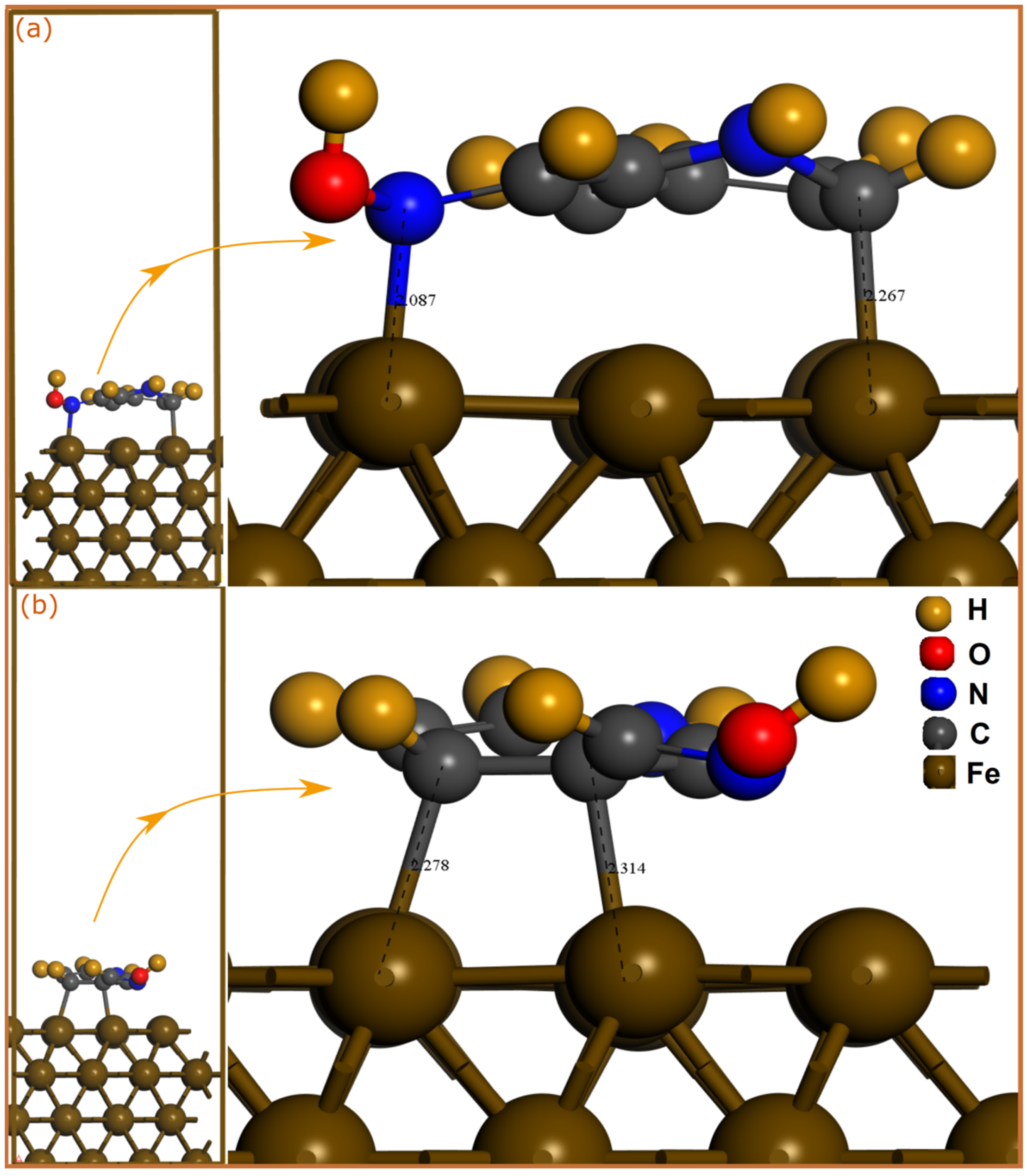
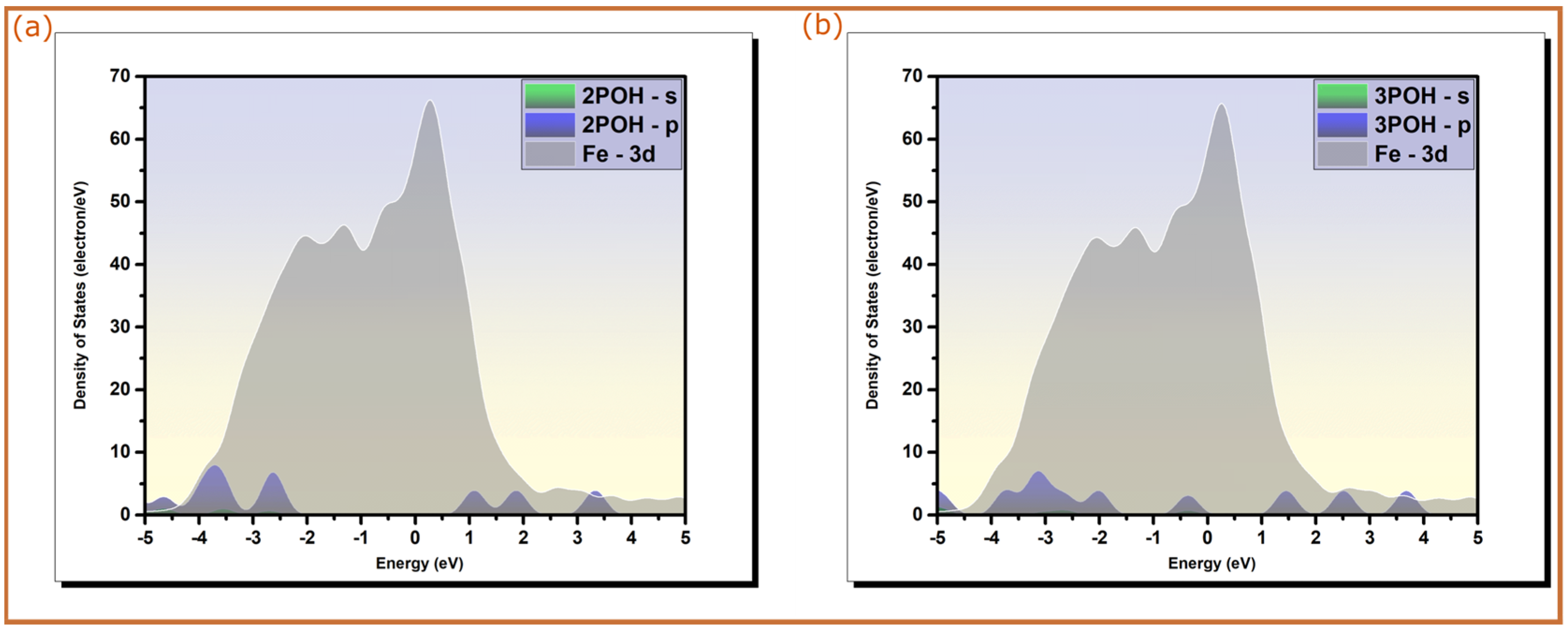
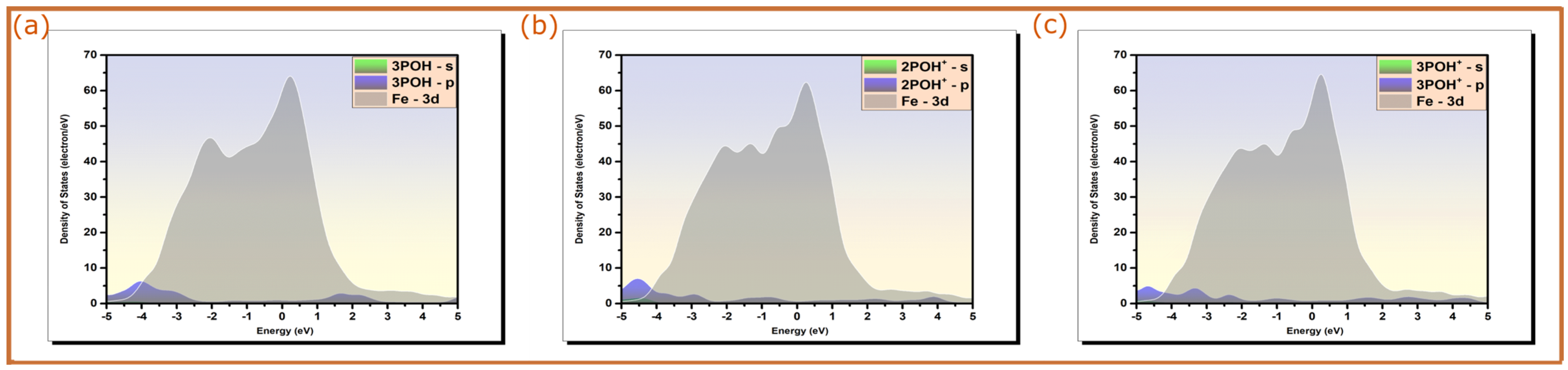
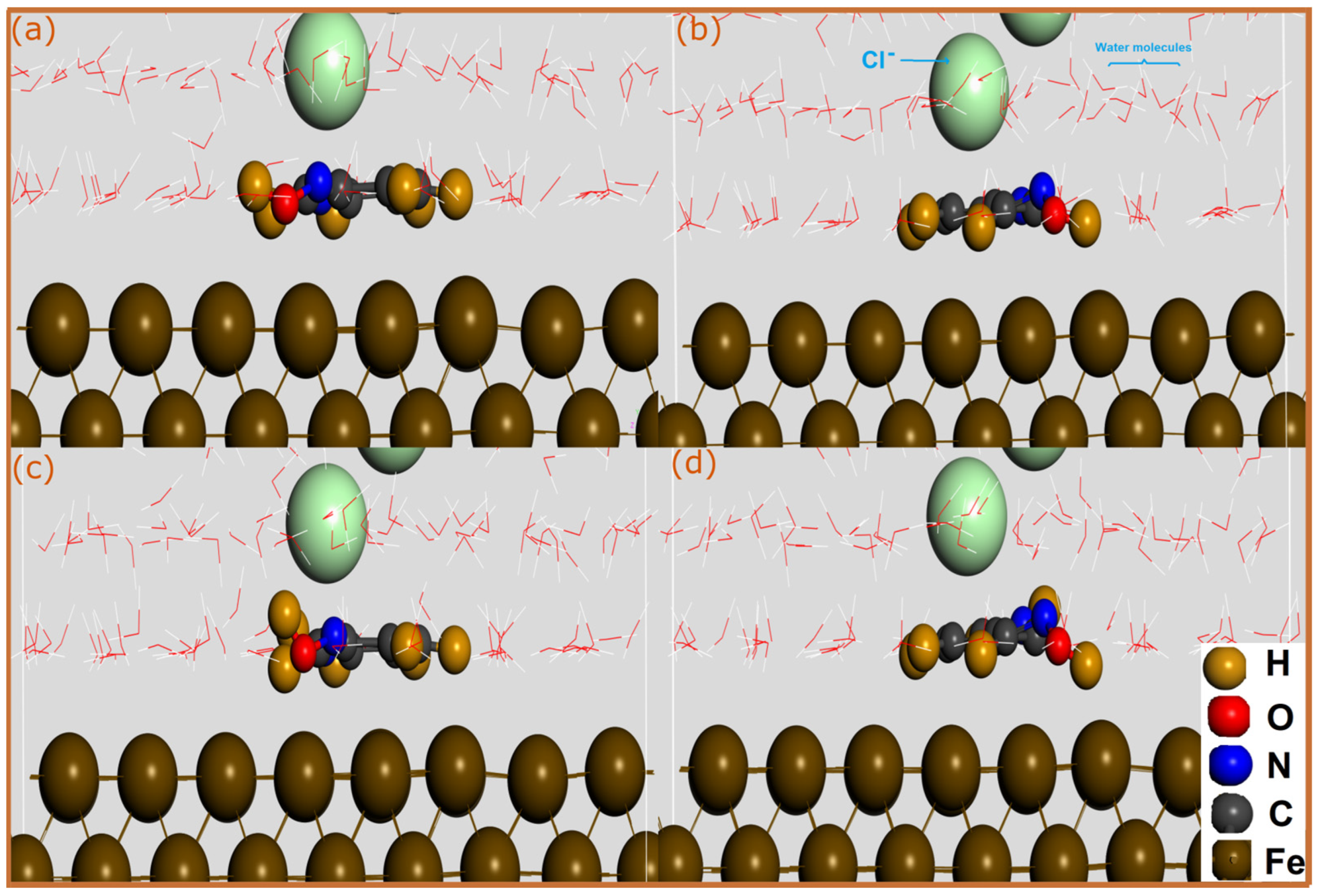
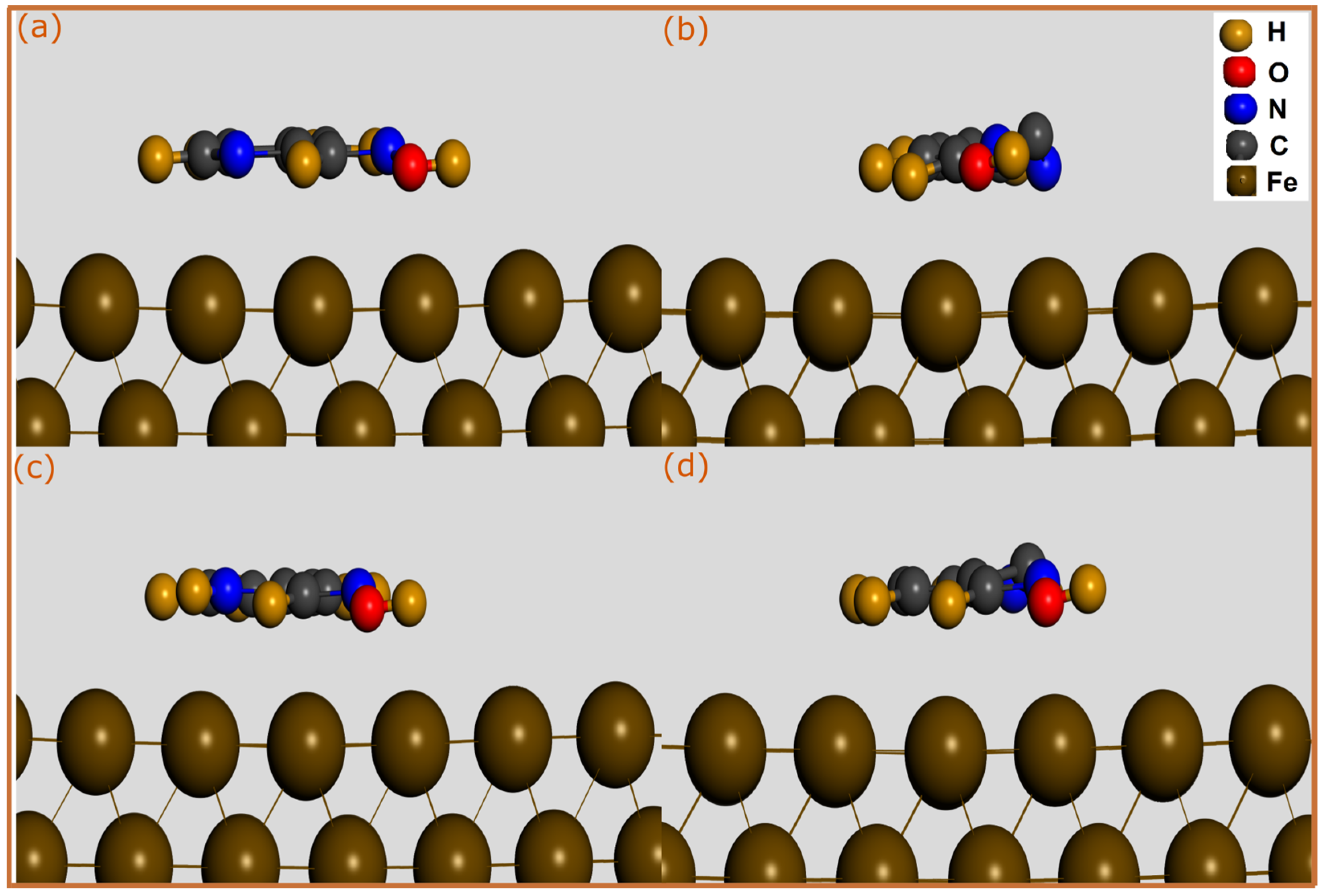
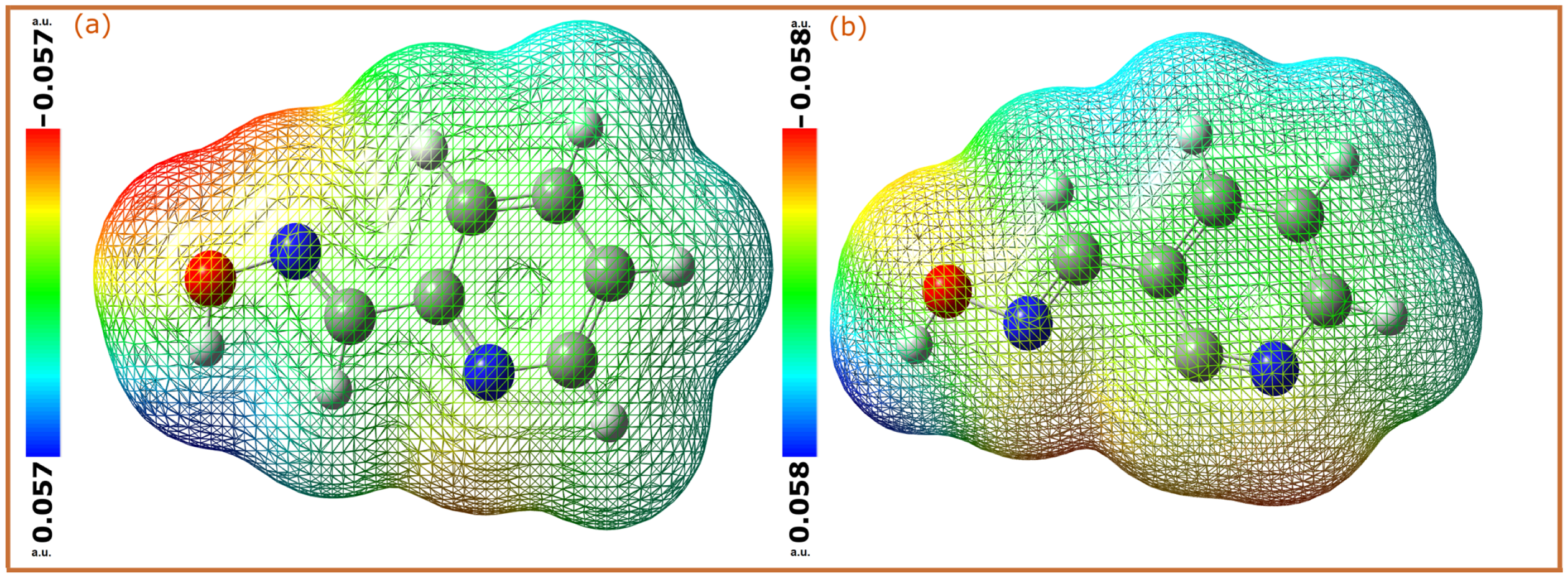
The development of corrosion inhibitors with outstanding performance is a never-ending and complex process engaged in by researchers, engineers and practitioners. The computational assessment of organic corrosion inhibitors’ performance is a crucial step towards the design of new task-specific materials. Herein, the electronic features, adsorption characteristics and bonding mechanisms of two pyridine oximes, namely 2-pyridylaldoxime (2POH) and 3-pyridylaldoxime (3POH), with the iron surface were investigated using molecular dynamics (MD), and self-consistent-charge density-functional tight-binding (SCC-DFTB) simulations. SCC-DFTB simulations revealed that the 3POH molecule can form covalent bonds with iron atoms in its neutral and protonated states, while the 2POH molecule can only bond with iron through its protonated form, resulting in interaction energies of −2.534, −2.007, −1.897, and −0.007 eV for 3POH, 3POH+, 2POH+, and 2POH, respectively. Projected density of states (PDOSs) analysis of pyridines–Fe(110) interactions indicated that pyridine molecules were chemically adsorbed on the iron surface. Quantum chemical calculations (QCCs) revealed that the energy gap and Hard and Soft Acids and Bases (HSAB) principles were efficient in predicting the bonding trend of the molecules investigated with an iron surface. 3POH had the lowest energy gap of 1.706 eV, followed by 3POH+ (2.806 eV), 2POH+ (3.121 eV), and 2POH (3.431 eV). In the presence of a simulated solution, MD simulation showed that the neutral and protonated forms of molecules exhibited a parallel adsorption mode on an iron surface. The excellent adsorption properties and corrosion inhibition performance of 3POH may be attributed to its low stability compared to 2POH molecules.
Keywords: pyridine; oxime; DFT; SCC-DFTB; computational methods; corrosion inhibitor; adsorption; density of states pyridine; oxime; DFT; SCC-DFTB; computational methods; corrosion inhibitor; adsorption; density of states