Bifacial Dye-Sensitized Solar Cells Utilizing Visible and NIR Dyes: Implications of Dye Adsorption Behaviour


Abstract
1. Introduction
2. Results and Discussions
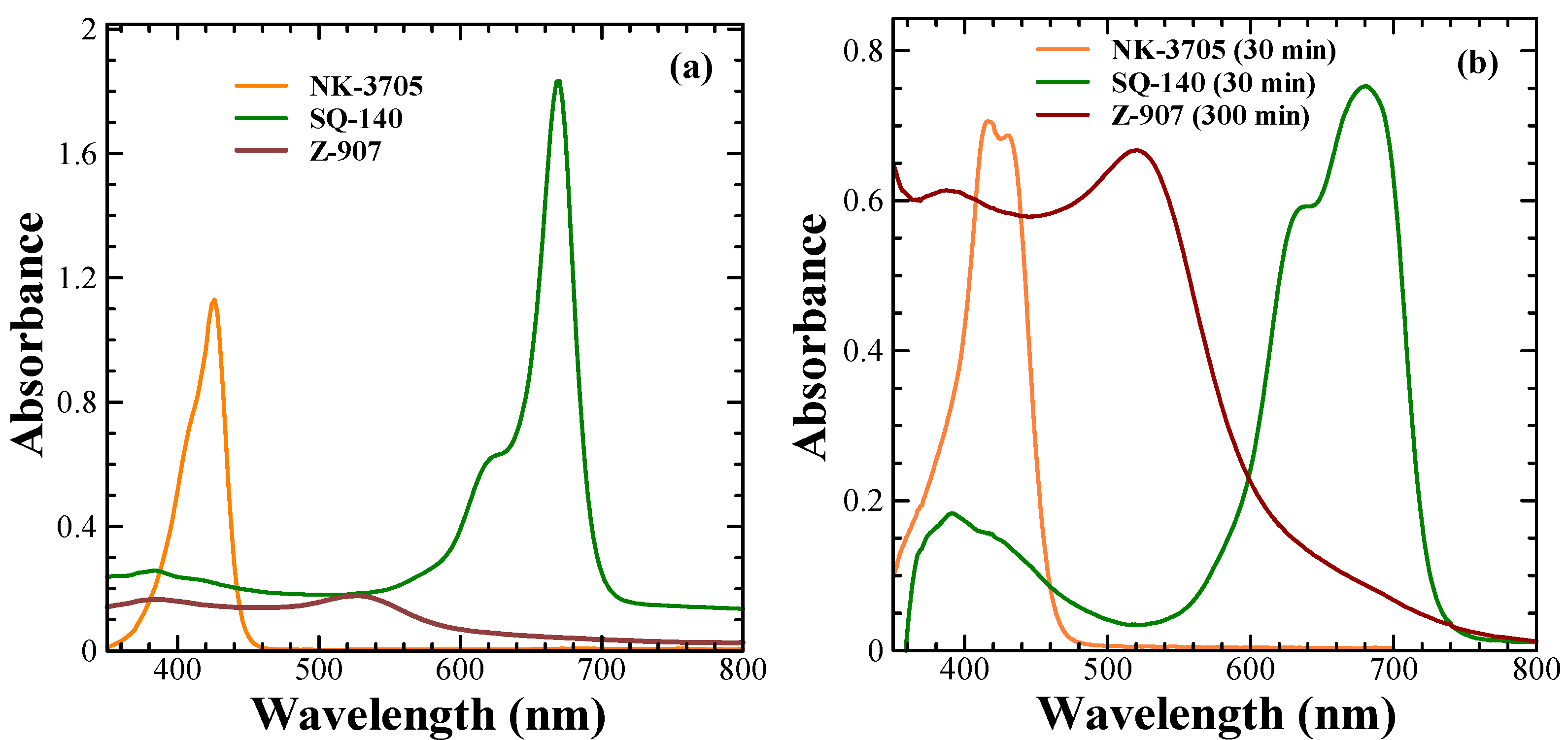
2.1. Optical Characterization
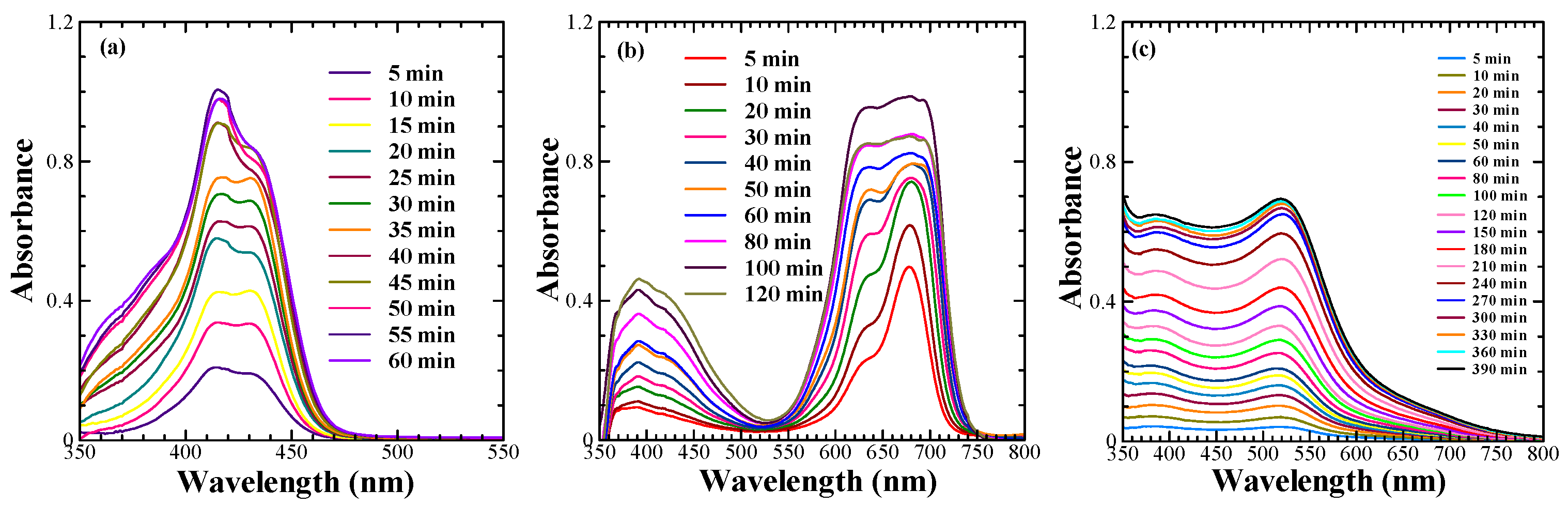
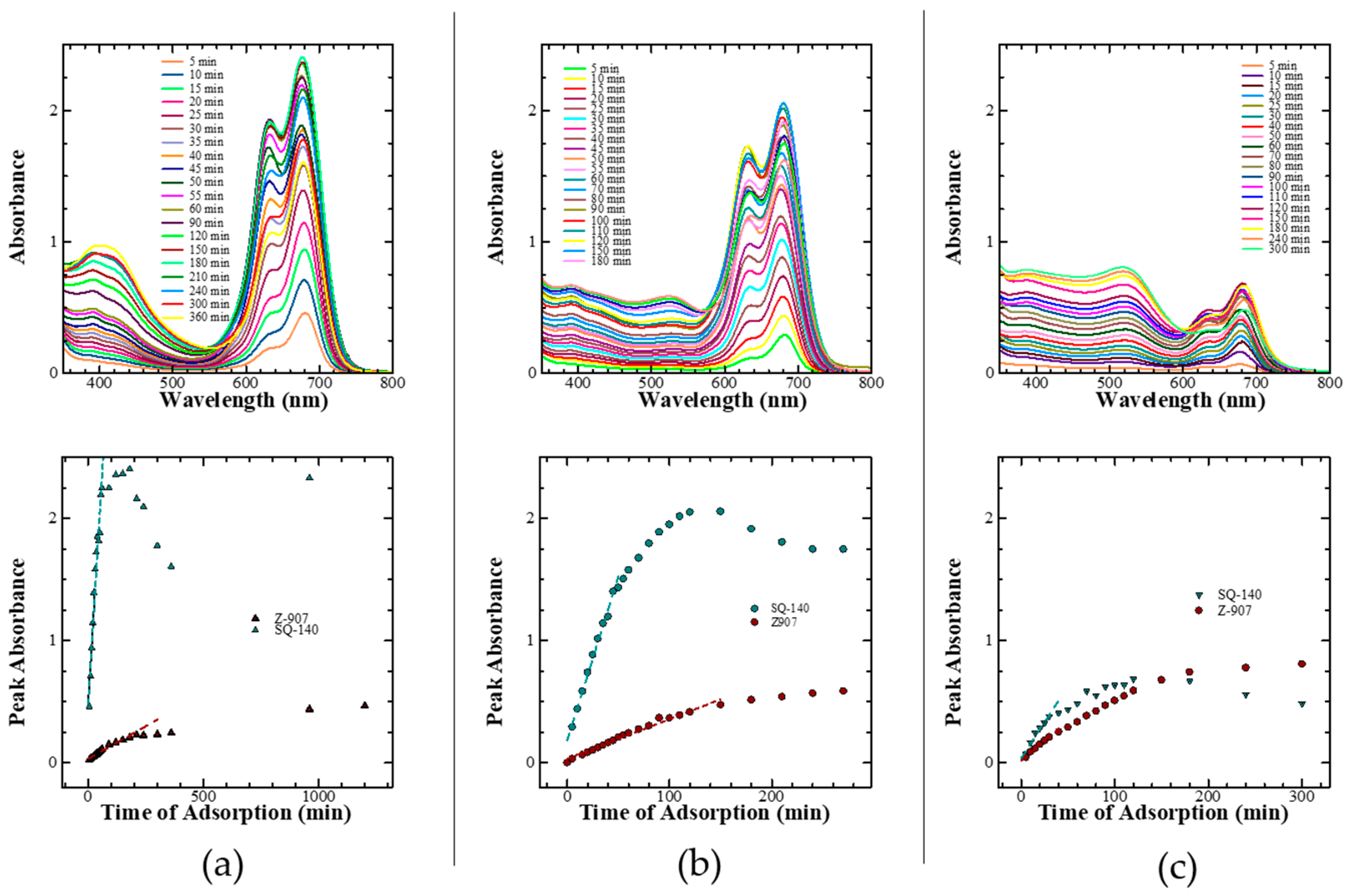
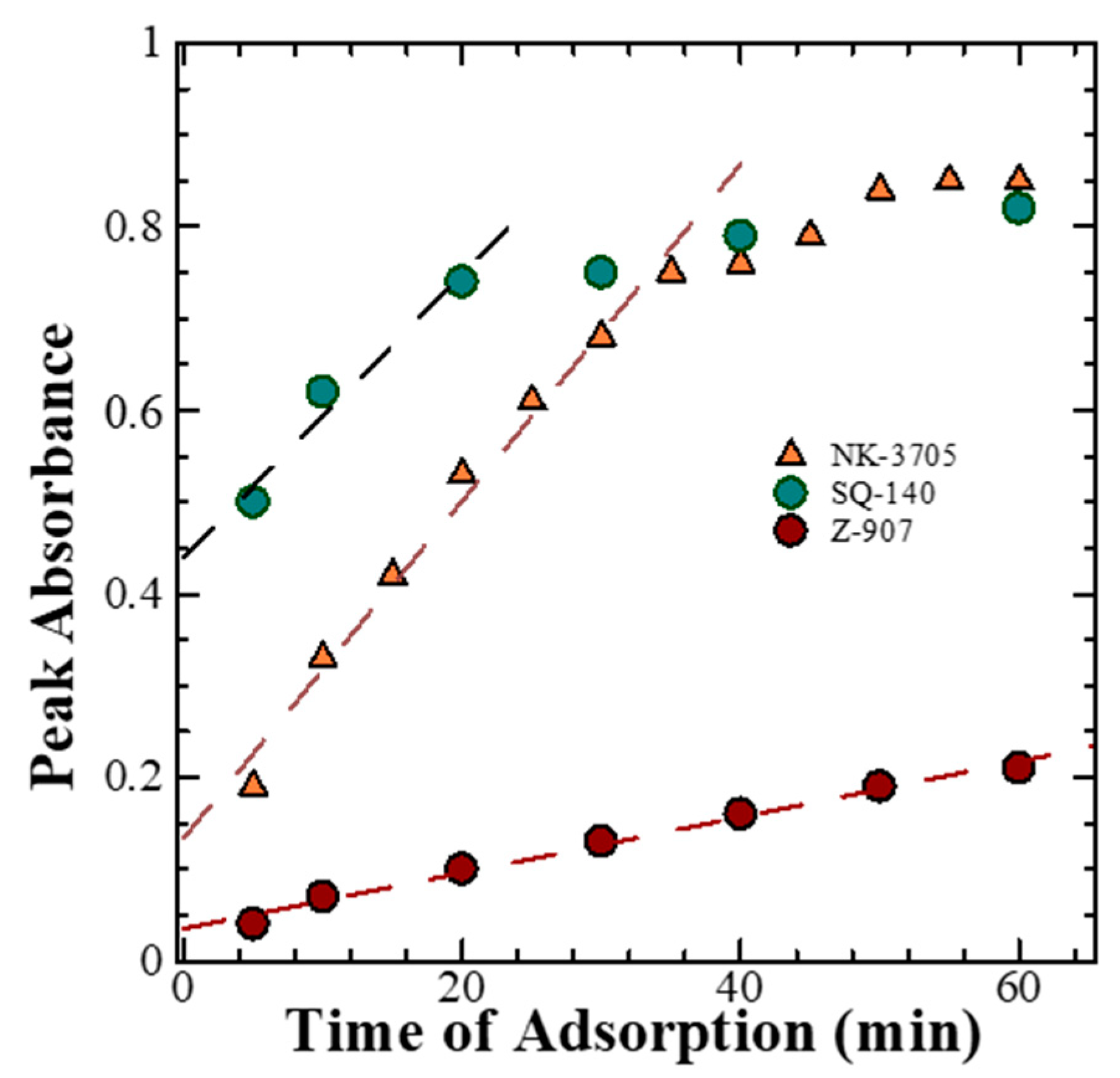
2.2. Adsorption Behaviour of Dyes on TiO2 Surface
2.3. Anchoring Stability of Dyes on Mesoporous TiO2
2.4. Photovoltaic Characterization
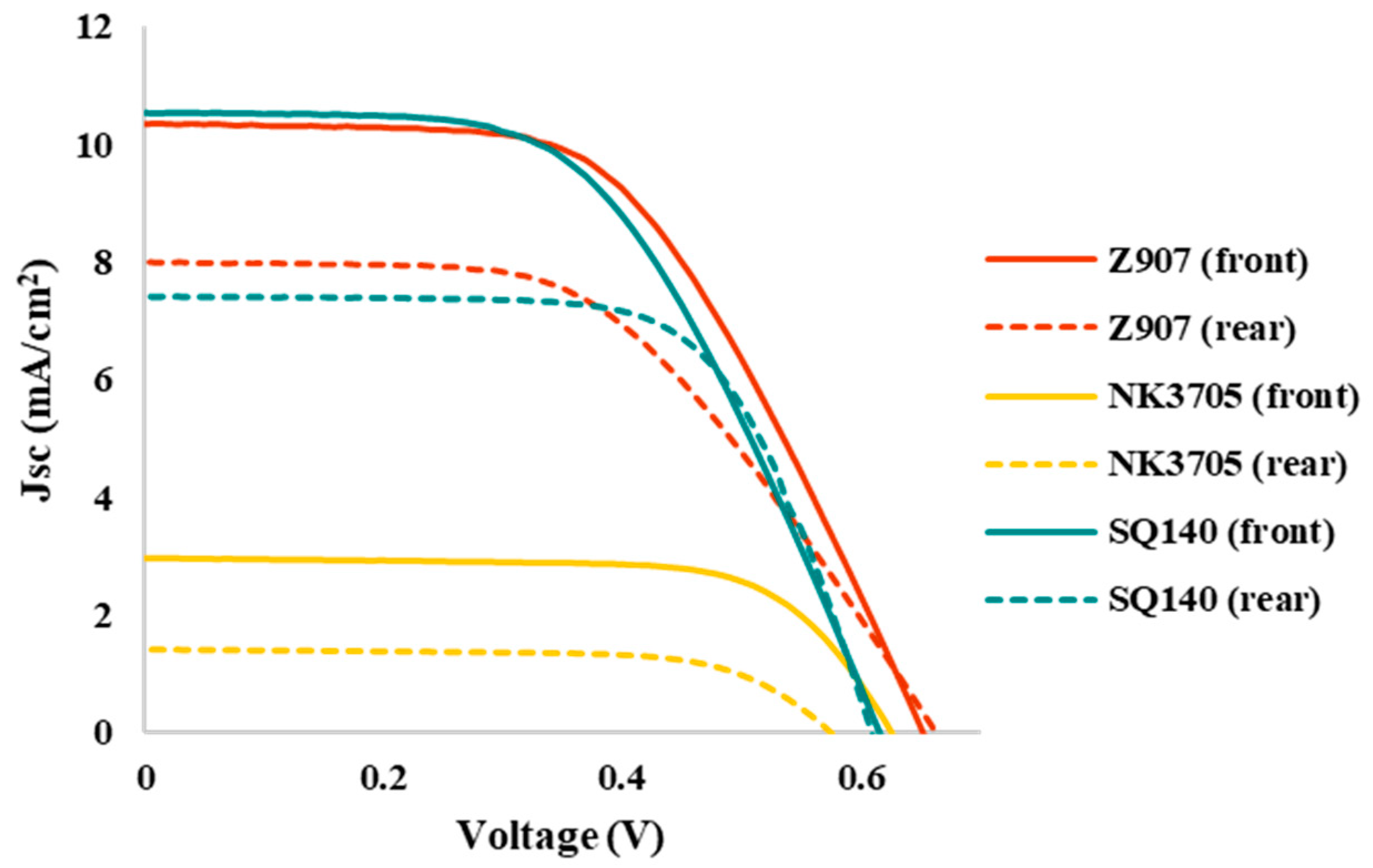
2.4.1. Bifacial DSSC Utilizing Single Dye
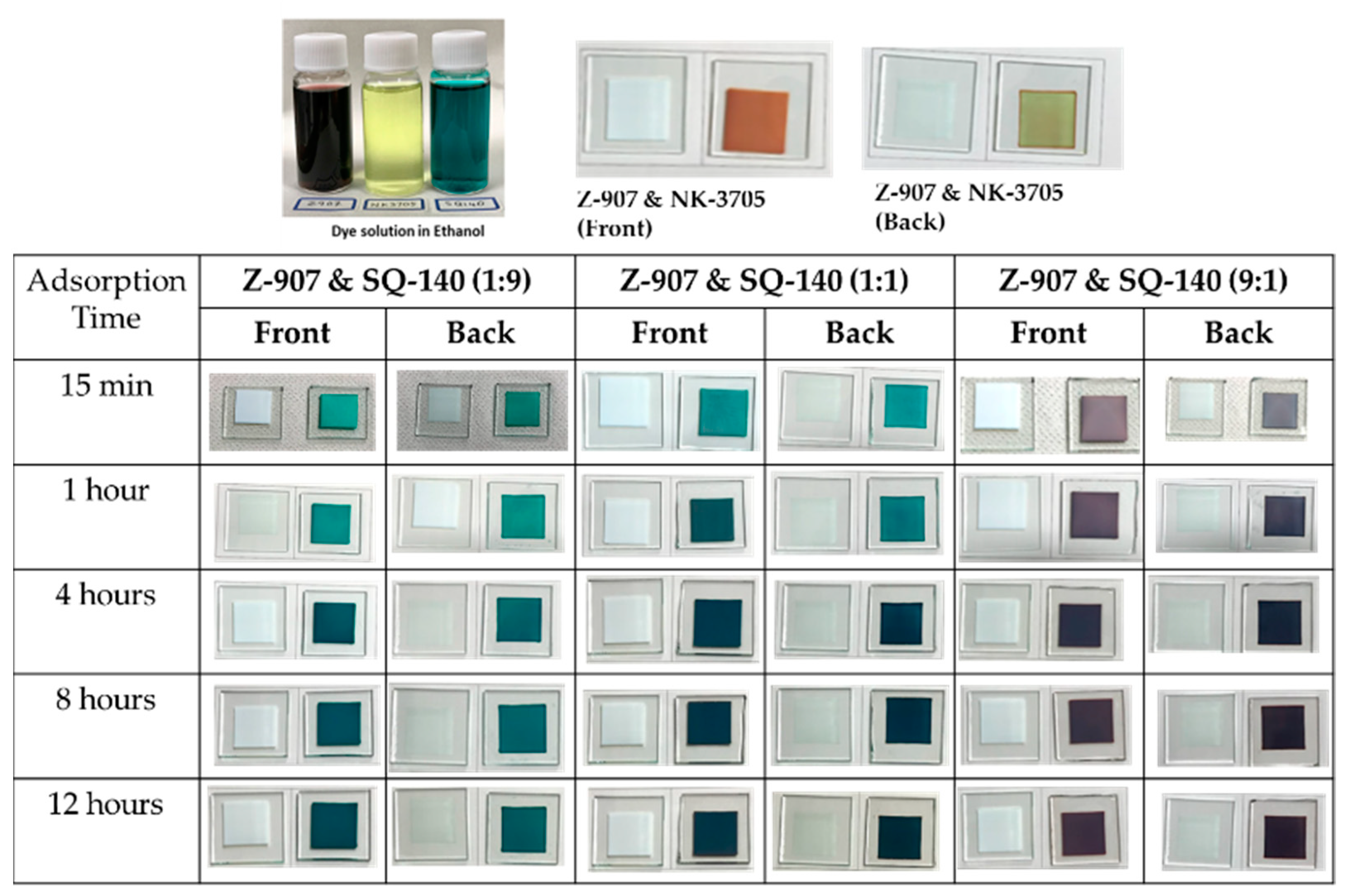
2.4.2. Dye Adsorption Behaviour Using Two Sensitizing Dyes
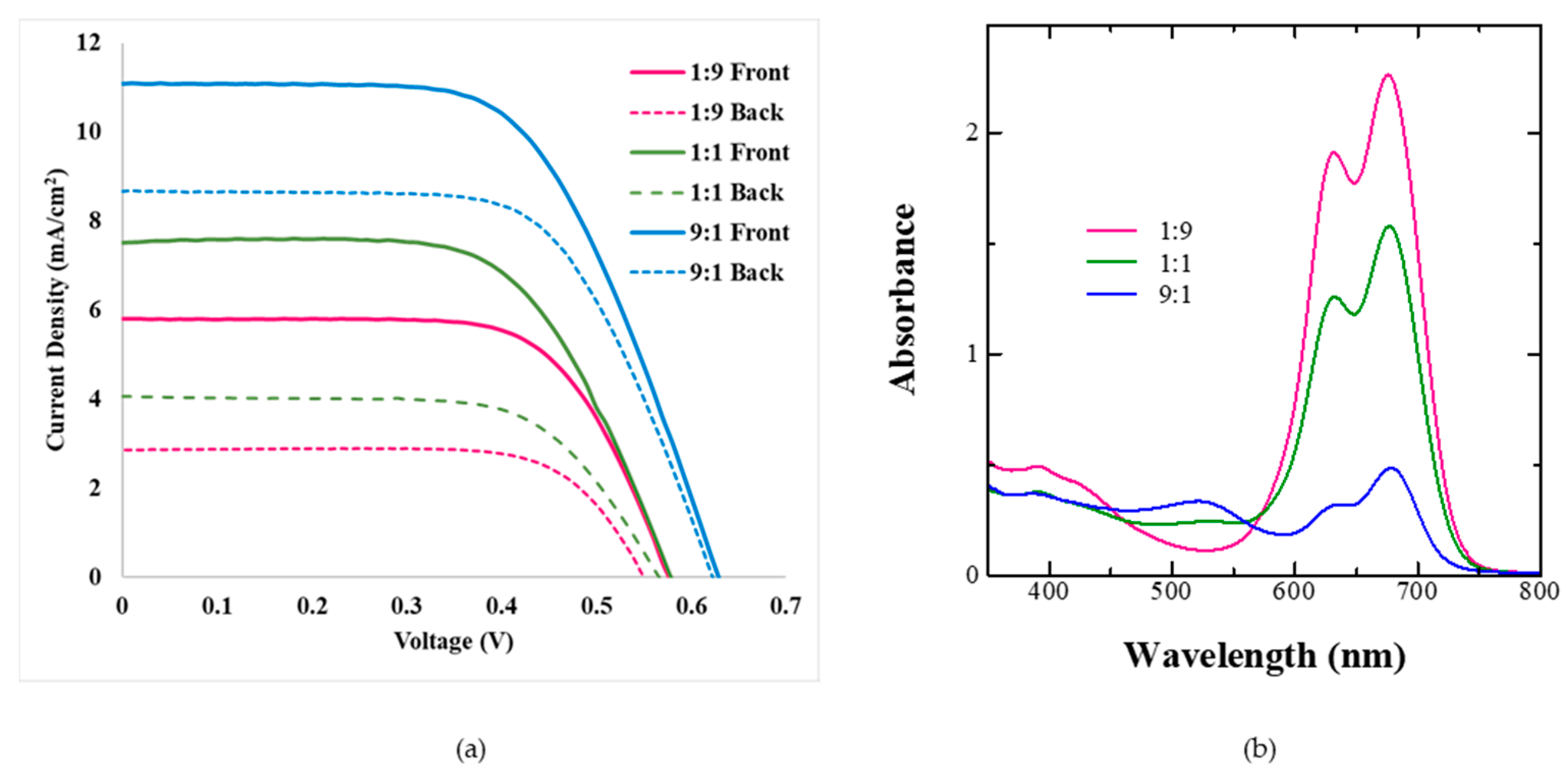
2.4.3. BF-DSSC Utilizing Dye Cocktails Z-907 and SQ-140 Dyes and 1 h of Dye Adsorption
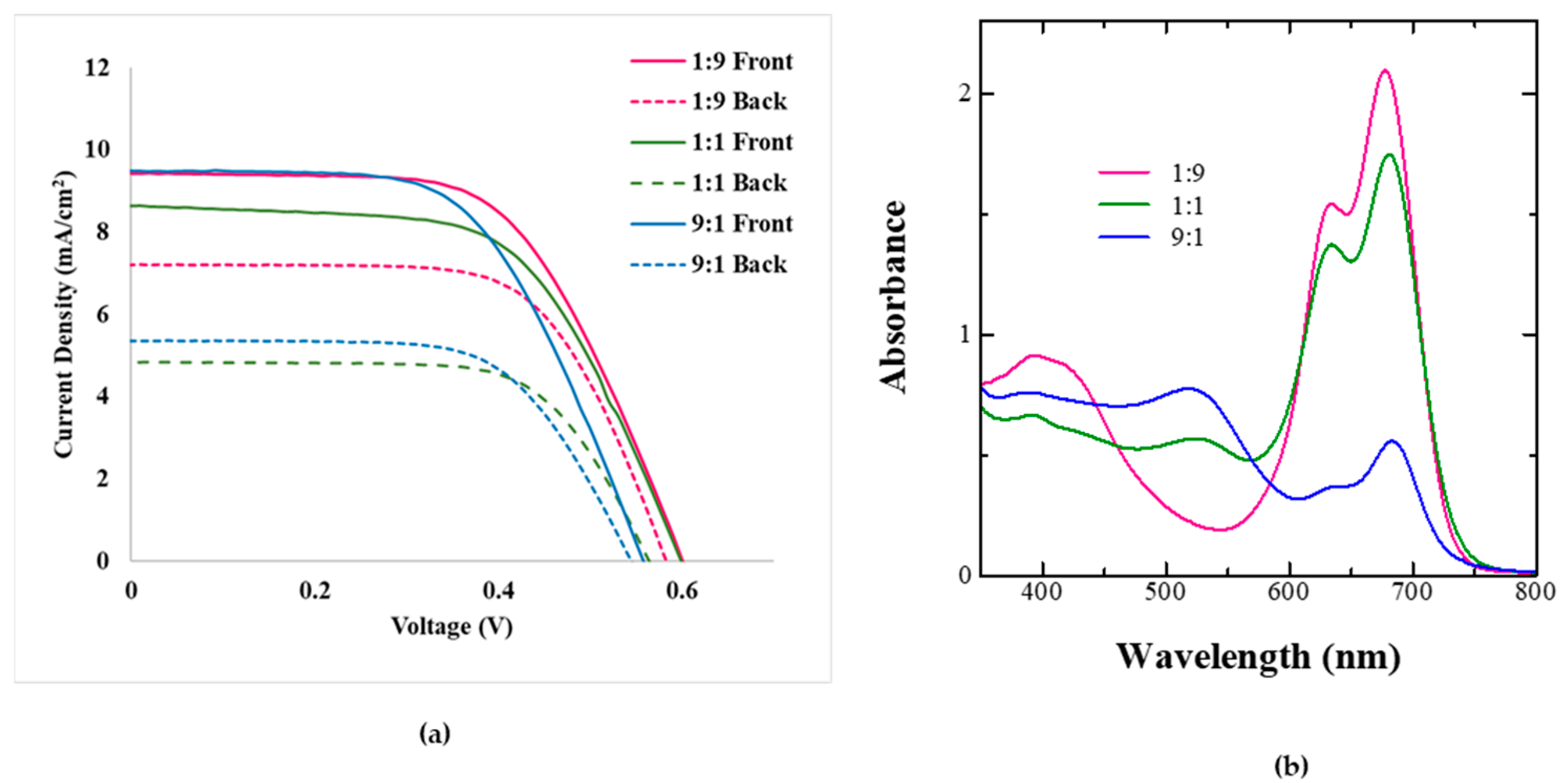
2.4.4. BF-DSSC Utilizing Dye Cocktails Z-907 and SQ-140 Dyes and 4 h of Dye Adsorption
3. Materials and Methods
3.1. Sensitizing Dyes
3.2. Dye Adsorption Behaviour and Its Binding Stability on TiO2 Surface
3.3. Fabrication of BF-DSSCs
3.4. Photovoltaic Characterization of the BF-DSSCs
4. Conclusions
Author Contributions
Funding
Data Availability Statement
Acknowledgments
Conflicts of Interest
References
- Ogura, R.Y.; Nakane, S.; Morooka, M.; Orihashi, M.; Suzuki, Y.; Noda, K. High-performance dye-sensitized solar cell with a multiple dye system. Appl. Phys. Lett. 2009, 94, 073308. [Google Scholar] [CrossRef]
- Gong, J.; Sumathy, K.; Qiao, Q.; Zhou, Z. Review on dye-sensitized solar cells (DSSCs): Advanced techniques and research trends. Renew. Sustain. Energy Rev. 2016, 68, 234–246. [Google Scholar] [CrossRef]
- Rajkumar, S.; Kumar, M.N.; Suguna, K.; Muthulakshmi, S.; Kumar, R.A. Enhanced performance of dye-senfigursitized solar cells using natural cocktail dye as sensitizer. Optik 2018, 178, 224–230. [Google Scholar] [CrossRef]
- Cai, H.; Tang, Q.; He, B.; Li, R.; Yu, L. Bifacial dye-sensitized solar cells with enhanced rear efficiency and power output. Nanoscale 2014, 6, 15127–15133. [Google Scholar] [CrossRef]
- Traverse, C.J.; Pandey, R.; Barr, M.C.; Lunt, R.R. Emergence of Highly Transparent Photovoltaics for Distributed Applications. Nat. Energy 2017, 2, 849–860. [Google Scholar] [CrossRef]
- Ibram, G. Solar Fuels Vis-à-Vis Electricity Generation from Sunlight: The Current State-of-the-Art (a Review). Renew. Sustain. Energy Rev. 2015, 44, 904–932. [Google Scholar]
- Shaban, S.; Roy, P.; Vats, A.K.; Shyam, P. Bifacial dye-sensitized solar cells utilizing green colored NIR sensitive unsymmetrical squaraine dye. Jpn. J. Appl. Phys. 2022, 61, SB1005. [Google Scholar] [CrossRef]
- Pelaez, S.A.; Deline, C.; Greenberg, P.; Stein, J.S.; Kostuk, R.K. Model and Validation of Single-Axis Tracking With Bifacial PV. IEEE J. Photovolt. 2019, 9, 715–721. [Google Scholar] [CrossRef]
- Chen, D.; Pang, S.; Zhou, L.; Li, X.; Su, A.; Zhu, W.; Chang, J.; Zhang, J.; Zhang, C.; Hao, Y. An efficient TeO2/Ag transparent top electrode for 20%-efficiency bifacial perovskite solar cells with a bifaciality factor exceeding 80%. J. Mater. Chem. A 2019, 7, 15156–15163. [Google Scholar] [CrossRef]
- Wu, J.; Lan, Z.; Lin, J.; Huang, M.; Huang, Y.; Fan, L.; Luo, G.; Lin, Y.; Xie, Y.; Wei, Y. Counter Electrodes in Dye-Sensitized Solar Cells. Chem. Soc. Rev. 2017, 46, 5975–6023. [Google Scholar] [CrossRef]
- Ito, S.; Zakeeruddin, S.M.; Comte, P.; Liska, P.; Kuang, D.; Grätzel, M. Bifacial dye-sensitized solar cells based on an ionic liquid electrolyte. Nat. Photonics 2008, 2, 693–698. [Google Scholar] [CrossRef]
- Tai, Q.; Chen, B.; Guo, F.; Xu, S.; Hu, H.; Sebo, B.; Zhao, X.-Z. In Situ Prepared Transparent Polyaniline Electrode and Its Application in Bifacial Dye-Sensitized Solar Cells. ACS Nano 2011, 5, 3795–3799. [Google Scholar] [CrossRef]
- Tian, H.; Yang, X.; Chen, R.; Hagfeldt, A.; Sun, L. A metal-free “black dye” for panchromatic dye-sensitized solar cells. Energy Environ. Sci. 2009, 2, 674–677. [Google Scholar] [CrossRef]
- Altobello, S.; Argazzi, R.; Caramori, S.; Contado, C.; Da Fré, S.; Rubino, P.; Choné, C.; Larramona, G.; Bignozzi, C.A. Sensitization of Nanocrystalline TiO2 with Black Absorbers Based on Os and Ru Polypyridine Complexes. J. Am. Chem. Soc. 2005, 127, 15342–15343. [Google Scholar] [CrossRef]
- Mozaffari, S.; Nateghi, M.R.; Zarandi, M.B. An overview of the Challenges in the commercialization of dye sensitized solar cells. Renew. Sustain. Energy Rev. 2017, 71, 675–686. [Google Scholar] [CrossRef]
- Ehret, A.; Stuhl, L.; Spitler, M.T. Spectral Sensitization of TiO2 Nanocrystalline Electrodes with Aggregated Cyanine Dyes. J. Phys. Chem. B 2001, 105, 9960–9965. [Google Scholar] [CrossRef]
- Noma, Y.; Iizuka, K.; Ogomi, Y.; Pandey, S.S.; Hayase, S. Preparation of Double Dye-Layer Structure of Dye-Sensitized Solar Cells from Cocktail Solutions for Harvesting Light in Wide Range of Wavelengths. Jpn. J. Appl. Phys. 2009, 48, 020213. [Google Scholar] [CrossRef]
- Inakazu, F.; Noma, Y.; Ogomi, Y.; Hayase, S. Dye-sensitized solar cells consisting of dye-bilayer structure stained with two dyes for harvesting light of wide range of wavelength. Appl. Phys. Lett. 2008, 93, 093304. [Google Scholar] [CrossRef]
- Choi, H.; Kim, S.; Kang, S.O.; Ko, J.; Kang, M.-S.; Clifford, J.N.; Forneli, A.; Palomares, E.; Nazeeruddin, M.K.; Grätzel, M. Stepwise Cosensitization of Nanocrystalline TiO2Films Utilizing Al2O3Layers in Dye-Sensitized Solar Cells. Angew. Chem. Int. Ed. 2008, 47, 8259–8263. [Google Scholar] [CrossRef]
- Ogomi, Y.; Pandey, S.S.; Kimura, S.; Hayase, S. Probing mechanism of dye double layer formation from dye-cocktail solution for dye-sensitized solar cells. Thin Solid Films 2010, 519, 1087–1092. [Google Scholar] [CrossRef]
- Park, K.-H.; Kim, T.-Y.; Han, S.; Ko, H.-S.; Lee, S.-H.; Song, Y.-M.; Kim, J.-H.; Lee, J.-W. Light harvesting over a wide range of wavelength using natural dyes of gardenia and cochineal for dye-sensitized solar cells. Spectrochim. Acta Part A Mol. Biomol. Spectrosc. 2014, 128, 868–873. [Google Scholar] [CrossRef] [PubMed]
- Kumar, D.; Thomas, K.R.J.; Lee, C.-P.; Ho, K.-C. Novel Pyrenoimidazole-Based Organic Dyes for Dye-Sensitized Solar Cells. Org. Lett. 2011, 13, 2622–2625. [Google Scholar] [CrossRef] [PubMed]
- Hua, Y.; Chang, S.; Wang, H.; Huang, D.; Zhao, J.; Chen, T.; Wong, W.-Y.; Zhu, X. New phenothiazine-based dyes for efficient dye-sensitized solar cells: Positioning effect of a donor group on the cell performance. J. Power Sources 2013, 243, 253–259. [Google Scholar] [CrossRef]
- Cheng, M.; Yang, X.; Zhao, J.; Chen, C.; Tan, Q.; Zhang, F.; Sun, L. Efficient Organic Dye-Sensitized Solar Cells: Molecular Engineering of Donor-Acceptor-Acceptor cationic dyes. Chemsuschem 2013, 6, 2322–2329. [Google Scholar] [CrossRef] [PubMed]
- Cheng, M.; Yang, X.; Chen, C.; Zhao, J.; Tan, Q.; Sun, L. Effect of the acceptor on the performance of dye-sensitized solar cells. Phys. Chem. Chem. Phys. 2013, 15, 17452–17459. [Google Scholar] [CrossRef]
- Fakis, M.; Hrobárik, P.; Yushchenko, O.; Sigmundová, I.; Koch, M.; Rosspeintner, A.; Stathatos, E.; Vauthey, E. Excited State and Injection Dynamics of Triphenylamine Sensitizers Containing a Benzothiazole Electron-Accepting Group on TiO2 and Al2O3 Thin Films. J. Phys. Chem. C 2014, 118, 28509–28519. [Google Scholar] [CrossRef]
- Bahng, H.-W.; Hagfeldt, A.; Moser, J.-E. Donor Effect on the Photoinduced Interfacial Charge Transfer Dynamics of D−π–A Diketopyrrolopyrrole Dye Sensitizers Adsorbed on Titanium Dioxide. J. Phys. Chem. C 2018, 122, 19359–19369. [Google Scholar] [CrossRef]
- Yum, J.-H.; Moon, S.J.; Humphry-Baker, R.; Walter, P.; Geiger, T.; Nüesch, F.; Grätzel, M.; Nazeeruddin, M.D.K. Effect of coadsorbent on the photovoltaic performance of squaraine sensitized nanocrystalline solar cells. Nanotechnology 2008, 19, 424005. [Google Scholar] [CrossRef]
- Morimoto, T.; Fujikawa, N.; Ogomi, Y.; Pandey, S.S.; Ma, T.; Hayase, S. Design of Far-Red Sensitizing Squaraine Dyes Aiming Towards the Fine Tuning of Dye Molecular Structure. J. Nanosci. Nanotechnol. 2016, 16, 3282–3288. [Google Scholar] [CrossRef]
- Topi, M.; Ampa, A.; Filipi, M.; Berginc, M.; Kraovec, U.O.; Smole, F. Optical and Electrical Modelling and Characterization of Dye-Sensitized Solar Cells. Curr. Appl. Phys. 2010, 10, S425–S430. [Google Scholar] [CrossRef]
- Vats, A.K.; Roy, P.; Tang, L.; Hayase, S.; Pandey, S.S. Unravelling the bottleneck of phosphonic acid anchoring groups aiming toward enhancing the stability and efficiency of mesoscopic solar cells. Front. Chem. Sci. Eng. 2021, 16, 1060–1078. [Google Scholar] [CrossRef]




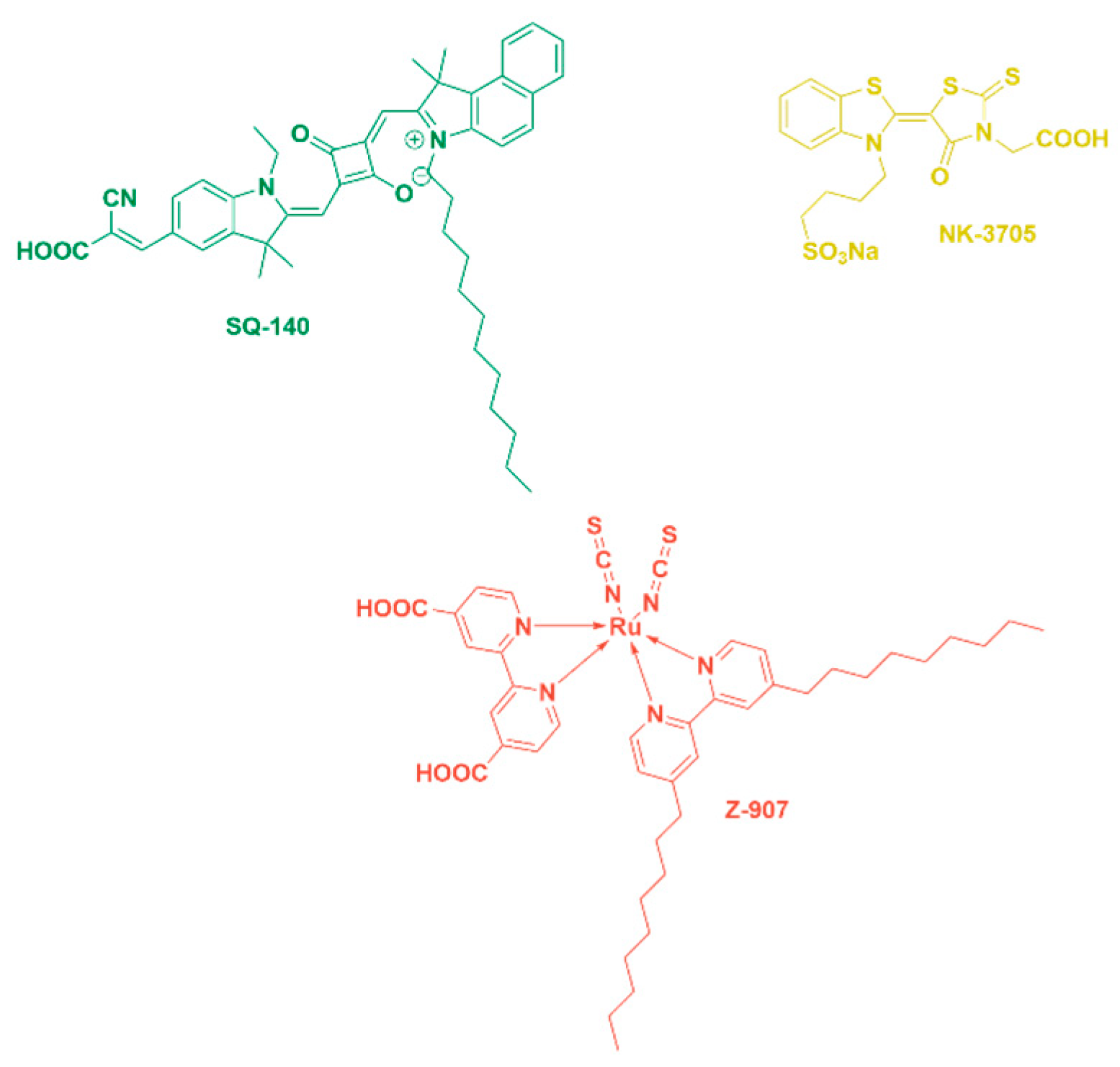
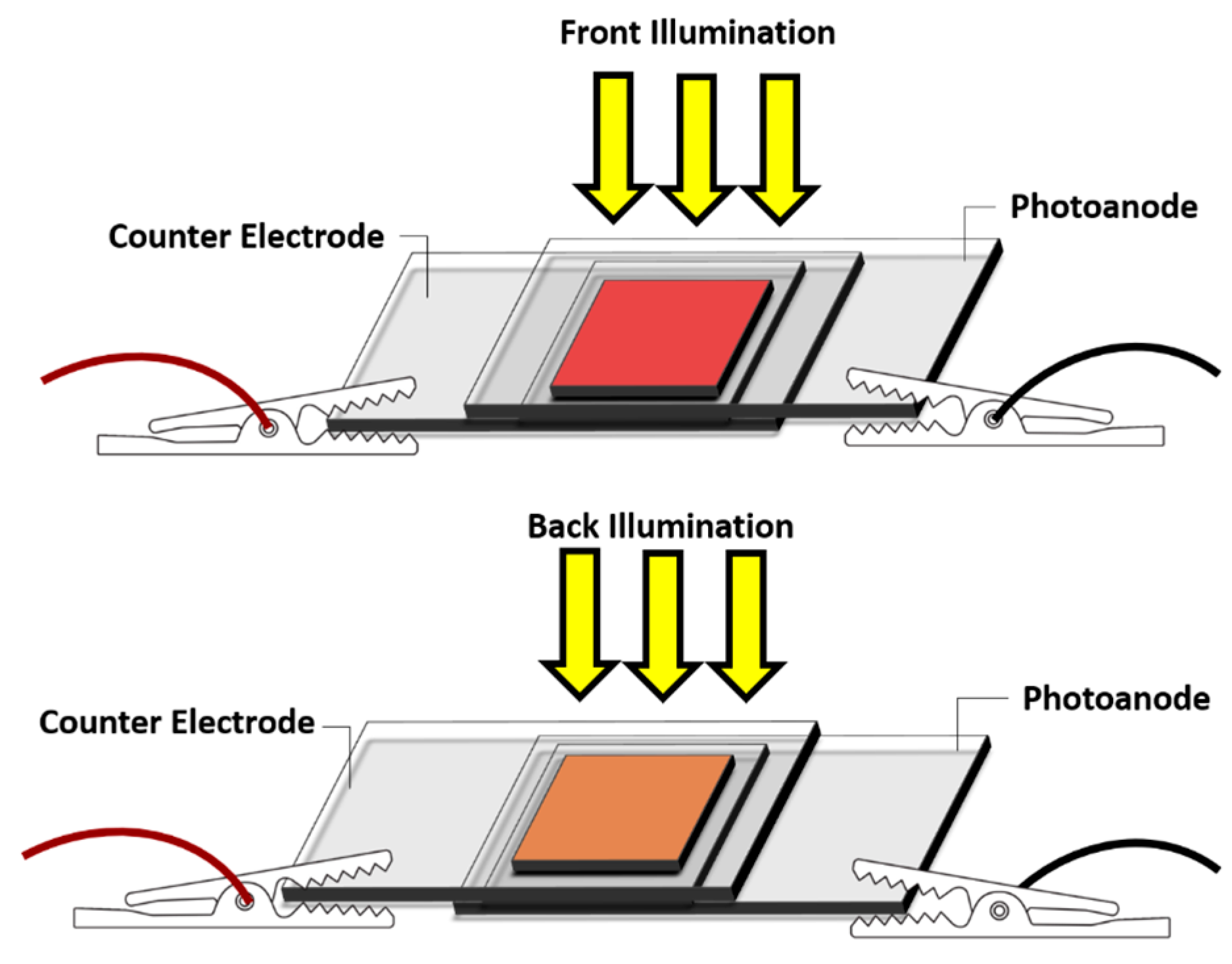

| Dye | Total Dye Loading (nmol/cm2) | Total Time for Complete Desorption (min) | Rate of Dye Desorption (nmol/cm2/min) |
|---|---|---|---|
| NK-3705 | 101.6 | 120 min | 0.85 |
| SQ-140 | 66.1 | 60 min | 1.10 |
| Z-907 | 69.3 | 180 min | 0.38 |
| Sensitizer | Illumination Side | Voc (V) | Jsc (mA/cm2) | FF | Efficiency (%) | Cumulative Efficiency (%) | BFF (%) |
|---|---|---|---|---|---|---|---|
| NK-3705 | Front | 0.63 | 2.99 | 0.69 | 1.30 | 1.86 | 43 |
| Back | 0.58 | 1.42 | 0.68 | 0.56 | |||
| Z-907 | Front | 0.66 | 10.37 | 0.54 | 3.71 | 6.50 | 75 |
| Back | 0.67 | 8.02 | 0.52 | 2.79 | |||
| SQ-140 | Front | 0.62 | 10.54 | 0.54 | 3.53 | 6.56 | 86 |
| Back | 0.62 | 7.44 | 0.66 | 3.03 |
| Dye Cocktail (Z-907: SQ-140) | Illumination Side | Voc (V) | Jsc (mA/cm2) | FF | Efficiency (%) | Cumulative Efficiency (%) | BFF (%) |
|---|---|---|---|---|---|---|---|
| 1:9 | Front | 0.58 | 5.80 | 0.67 | 2.26 | 3.39 | 50 |
| Back | 0.56 | 2.87 | 0.71 | 1.13 | |||
| 1:1 | Front | 0.58 | 7.52 | 0.63 | 2.74 | 4.26 | 56 |
| Back | 0.57 | 4.06 | 0.66 | 1.52 | |||
| 9:1 | Front | 0.63 | 11.09 | 0.60 | 4.23 | 7.71 | 83 |
| Back | 0.63 | 8.68 | 0.64 | 3.48 |
| Dye Cocktail (Z-907: SQ-140) | Illumination Side | Voc (V) | Jsc (mA/cm2) | FF | Efficiency (%) | Cumulative Efficiency (%) | BFF (%) |
|---|---|---|---|---|---|---|---|
| 1:9 | Front | 0.61 | 9.43 | 0.59 | 3.40 | 6.15 | 81 |
| Back | 0.59 | 7.20 | 0.65 | 2.75 | |||
| 1:1 | Front | 0.60 | 8.63 | 0.60 | 3.10 | 4.94 | 59 |
| Back | 0.57 | 4.83 | 0.67 | 1.84 | |||
| 9:1 | Front | 0.56 | 9.48 | 0.58 | 3.09 | 4.96 | 61 |
| Back | 0.63 | 8.68 | 0.64 | 3.48 |
Disclaimer/Publisher’s Note: The statements, opinions and data contained in all publications are solely those of the individual author(s) and contributor(s) and not of MDPI and/or the editor(s). MDPI and/or the editor(s) disclaim responsibility for any injury to people or property resulting from any ideas, methods, instructions or products referred to in the content. |
© 2023 by the authors. Licensee MDPI, Basel, Switzerland. This article is an open access article distributed under the terms and conditions of the Creative Commons Attribution (CC BY) license (https://creativecommons.org/licenses/by/4.0/).
Share and Cite
Shaban, S.; Vats, A.K.; Pandey, S.S. Bifacial Dye-Sensitized Solar Cells Utilizing Visible and NIR Dyes: Implications of Dye Adsorption Behaviour. Molecules 2023, 28, 2784. https://doi.org/10.3390/molecules28062784
Shaban S, Vats AK, Pandey SS. Bifacial Dye-Sensitized Solar Cells Utilizing Visible and NIR Dyes: Implications of Dye Adsorption Behaviour. Molecules. 2023; 28(6):2784. https://doi.org/10.3390/molecules28062784
Chicago/Turabian StyleShaban, Suraya, Ajendra K. Vats, and Shyam S. Pandey. 2023. "Bifacial Dye-Sensitized Solar Cells Utilizing Visible and NIR Dyes: Implications of Dye Adsorption Behaviour" Molecules 28, no. 6: 2784. https://doi.org/10.3390/molecules28062784
APA StyleShaban, S., Vats, A. K., & Pandey, S. S. (2023). Bifacial Dye-Sensitized Solar Cells Utilizing Visible and NIR Dyes: Implications of Dye Adsorption Behaviour. Molecules, 28(6), 2784. https://doi.org/10.3390/molecules28062784