Article

Insight into the Speciation of Heavy Metals in the Contaminated Soil Incubated with Corn Cob-Derived Biochar and Apatite


by
Truong Xuan Vuong
1,*,
Joseph Stephen
2,3,4,5,
Thi Thu Thuy Nguyen
1,
Viet Cao
6 and
Dung Thuy Nguyen Pham
7,8,*
1
Faculty of Chemistry, TNU-University of Science, Thai Nguyen City 24000, Vietnam
2
School of Materials Science and Engineering, University of NSW, Kensington, NSW 2052, Australia
3
Institute of Resources, Ecosystem and Environment of Agriculture, Center of Biochar and Green Agriculture, Nanjing Agricultural University, Nanjing 210095, China
4
School of Environmental and Rural Science, University of New England, Armidale, NSW 2351, Australia
5
ISEM and School of Physics, University of Wollongong, Wollongong, NSW 2522, Australia
6
Faculty of Natural Sciences, Hung Vuong University, Viet Tri City 35120, Vietnam
7
NTT Institute of Applied Technology and Sustainable Development, Nguyen Tat Thanh University, Ho Chi Minh City 70000, Vietnam
8
Faculty of Environmental and Food Engineering, Nguyen Tat Thanh University, Ho Chi Minh City 70000, Vietnam
*
Authors to whom correspondence should be addressed.
Molecules 2023, 28(5), 2225; https://doi.org/10.3390/molecules28052225

Submission received: 10 January 2023 / Revised: 10 February 2023 / Accepted: 24 February 2023 / Published: 27 February 2023

Abstract

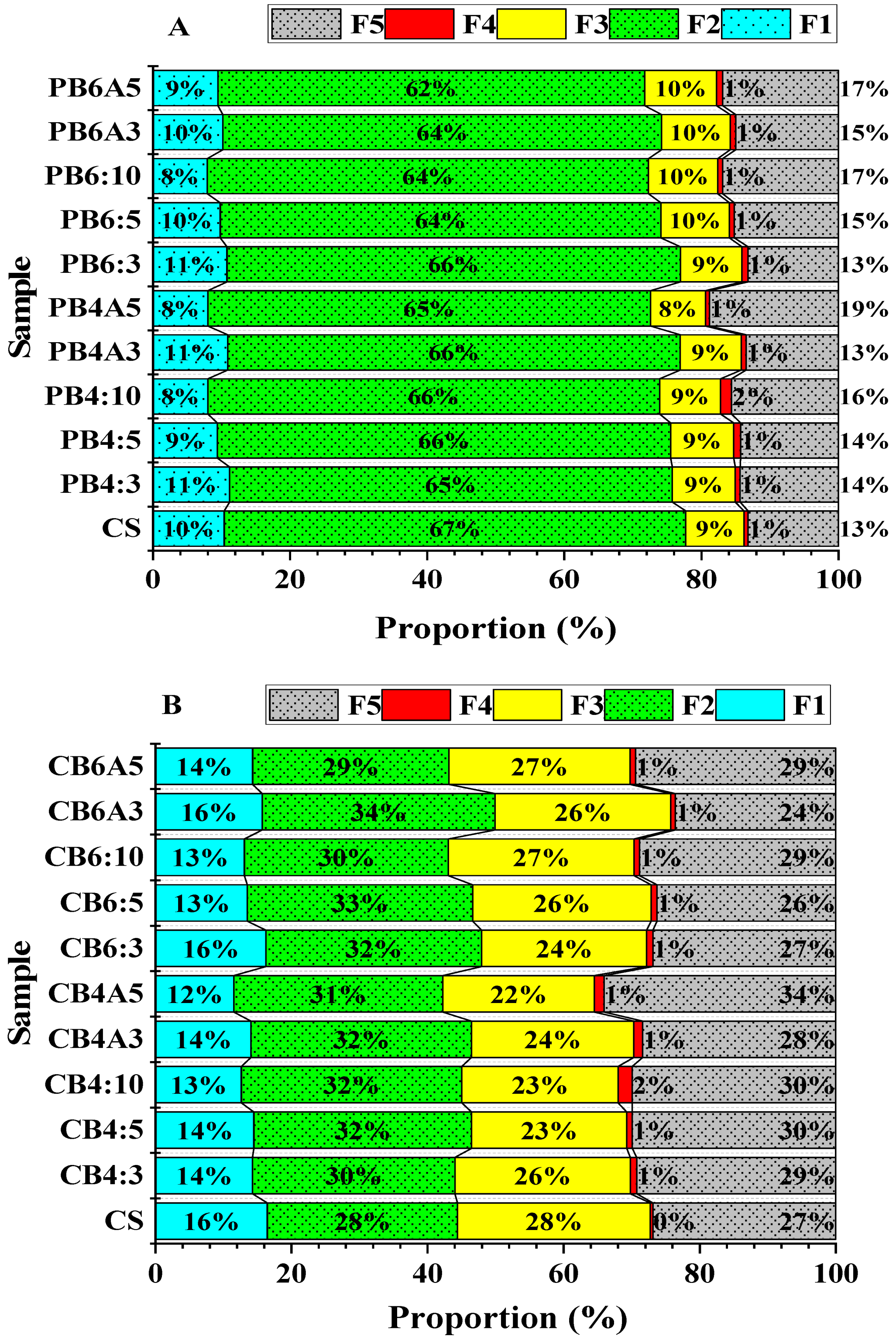
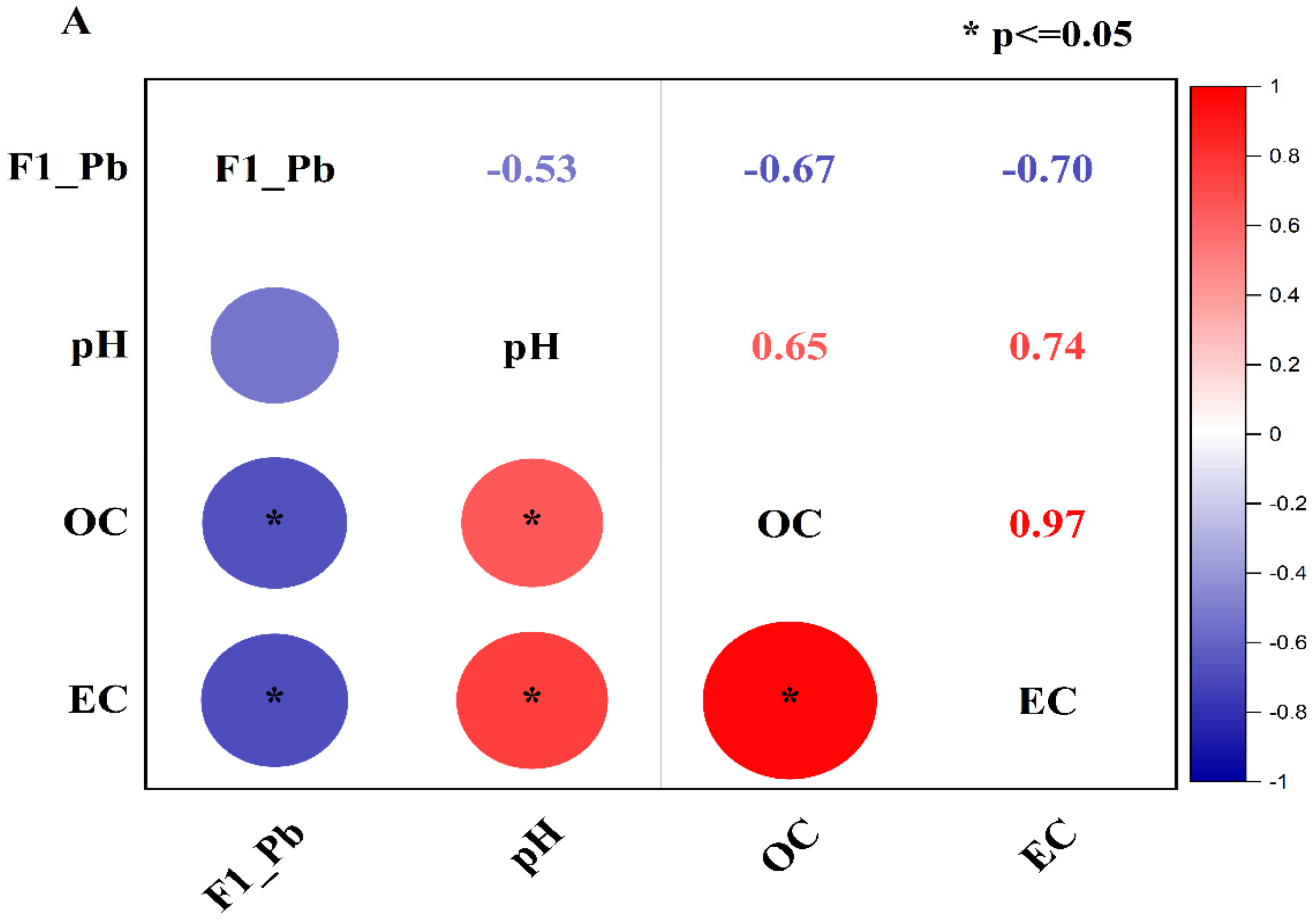
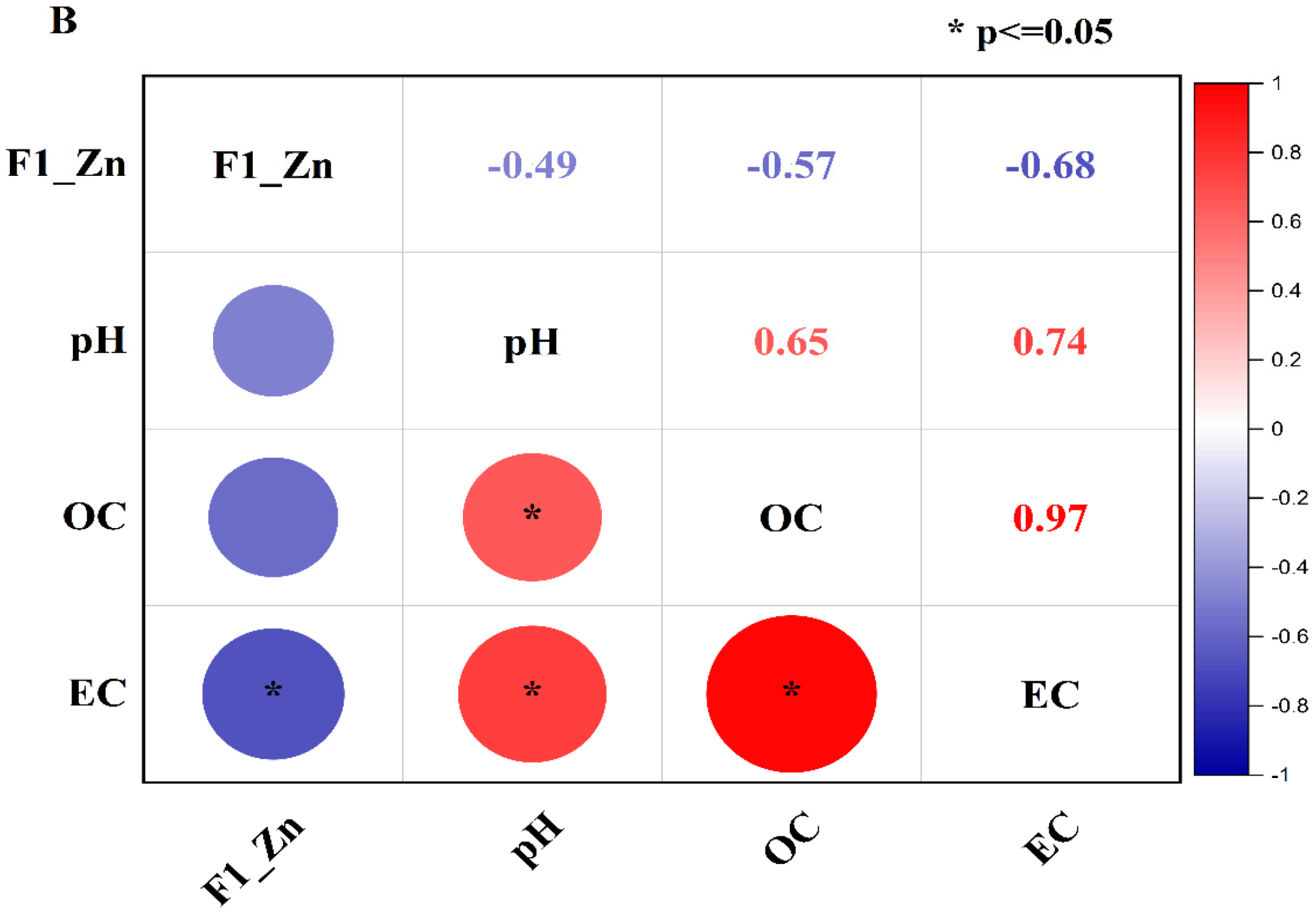
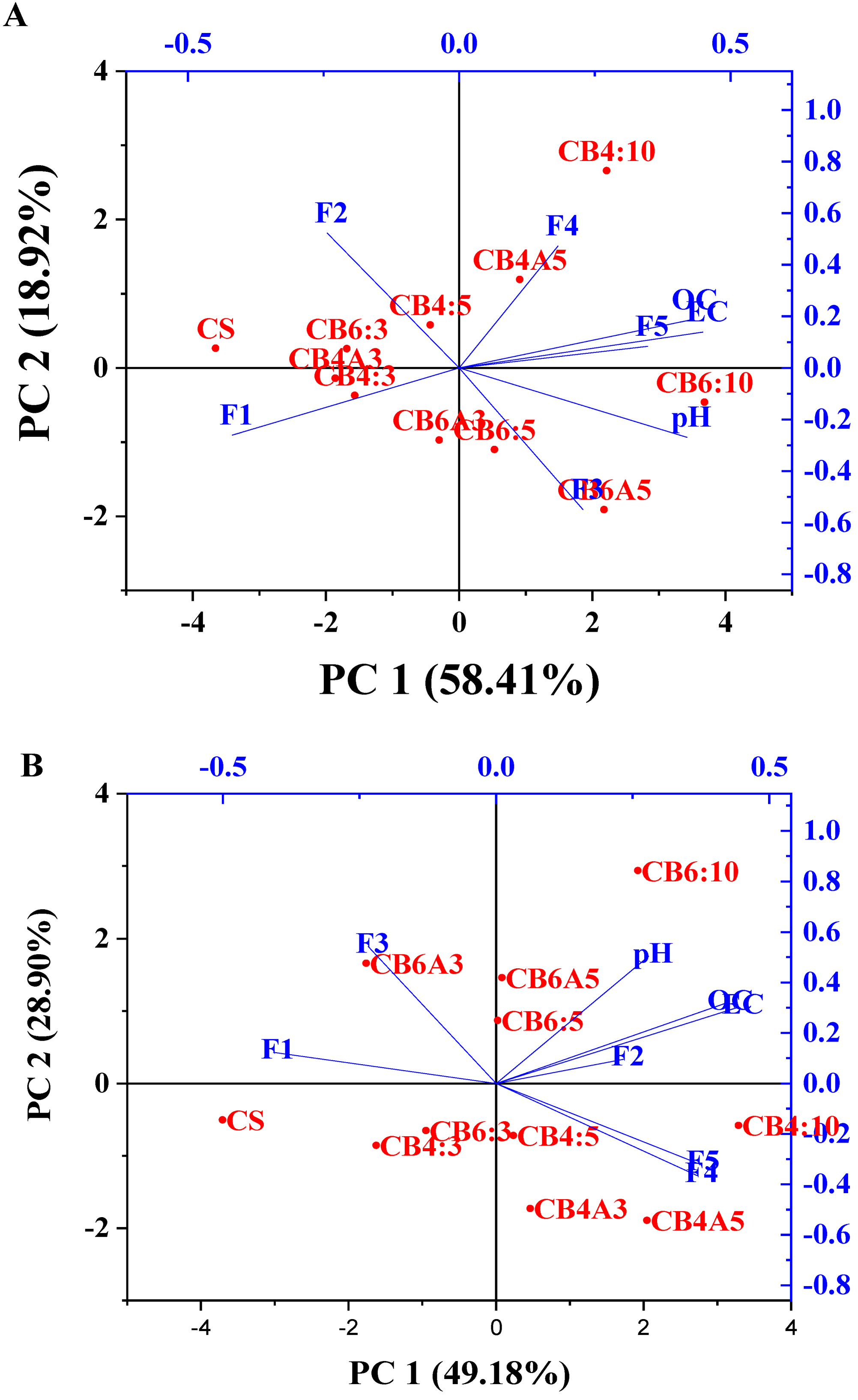
Soil heavy metal contamination is a severe issue. The detrimental impact of contaminated heavy metals on the ecosystem depends on the chemical form of heavy metals. Biochar produced at 400 °C (CB400) and 600 °C (CB600) from corn cob was applied to remediate Pb and Zn in contaminated soil. After a one month amendment with biochar (CB400 and CB600) and apatite (AP) with the ratio of 3%, 5%, 10%, and 3:3% and 5:5% of the weight of biochar and apatite, the untreated and treated soil were extracted using Tessier’s sequence extraction procedure. The five chemical fractions of the Tessier procedure were the exchangeable fraction (F1), carbonate fraction (F2), Fe/Mn oxide fraction (F3), organic matter (F4), and residual fraction (F5). The concentration of heavy metals in the five chemical fractions was analyzed using inductively coupled plasma mass spectroscopy (ICP-MS). The results showed that the total concentration of Pb and Zn in the soil was 3023.70 ± 98.60 mg kg−1 and 2034.33 ± 35.41 mg kg−1, respectively. These figures were 15.12 and 6.78 times higher than the limit standard set by the United States Environmental Protection Agency (U.S. EPA 2010), indicating the high level of contamination of Pb and Zn in the studied soil. The treated soil’s pH, OC, and EC increased significantly compared to the untreated soil (p > 0.05). The chemical fraction of Pb and Zn was in the descending sequence of F2 (67%) > F5 (13%) > F1 (10%) > F3 (9%) > F4 (1%) and F2~F3 (28%) > F5 (27%) > F1 (16%) > F4 (0.4%), respectively. The amendment of BC400, BC600, and apatite significantly reduced the exchangeable fraction of Pb and Zn and increased the other stable fractions including F3, F4, and F5, especially at the rate of 10% of biochar and a combination of 5:5% of biochar and apatite. The effects of CB400 and CB600 on the reduction in the exchangeable fraction of Pb and Zn were almost the same (p > 0.05). The results showed that CB400, CB600, and the mixture of these biochars with apatite applied at 5% or 10% (w/w) could immobilize lead and zinc in soil and reduce the threat to the surrounding environment. Therefore, biochar derived from corn cob and apatite could be promising materials for immobilizing heavy metals in multiple-contaminated soil.
Keywords: metal remediation; chemical fraction; heavy metal pollution metal remediation; chemical fraction; heavy metal pollution