Article

A Biological Feature and Heterogeneous Network Representation Learning-Based Framework for Drug–Target Interaction Prediction


1
College of Science, Dalian Jiaotong University, Dalian 116028, China
2
Key Laboratory of Computational Science and Application of Hainan Province, Hainan Normal University, Haikou 571158, China
3
College of Software, Dalian Jiaotong University, Dalian 116028, China
4
School of Computer Science and Software Engineering, University of Science and Technology Liaoning, Anshan 114051, China
*
Authors to whom correspondence should be addressed.
Molecules 2023, 28(18), 6546; https://doi.org/10.3390/molecules28186546

Submission received: 20 July 2023 / Revised: 6 September 2023 / Accepted: 7 September 2023 / Published: 9 September 2023

Abstract

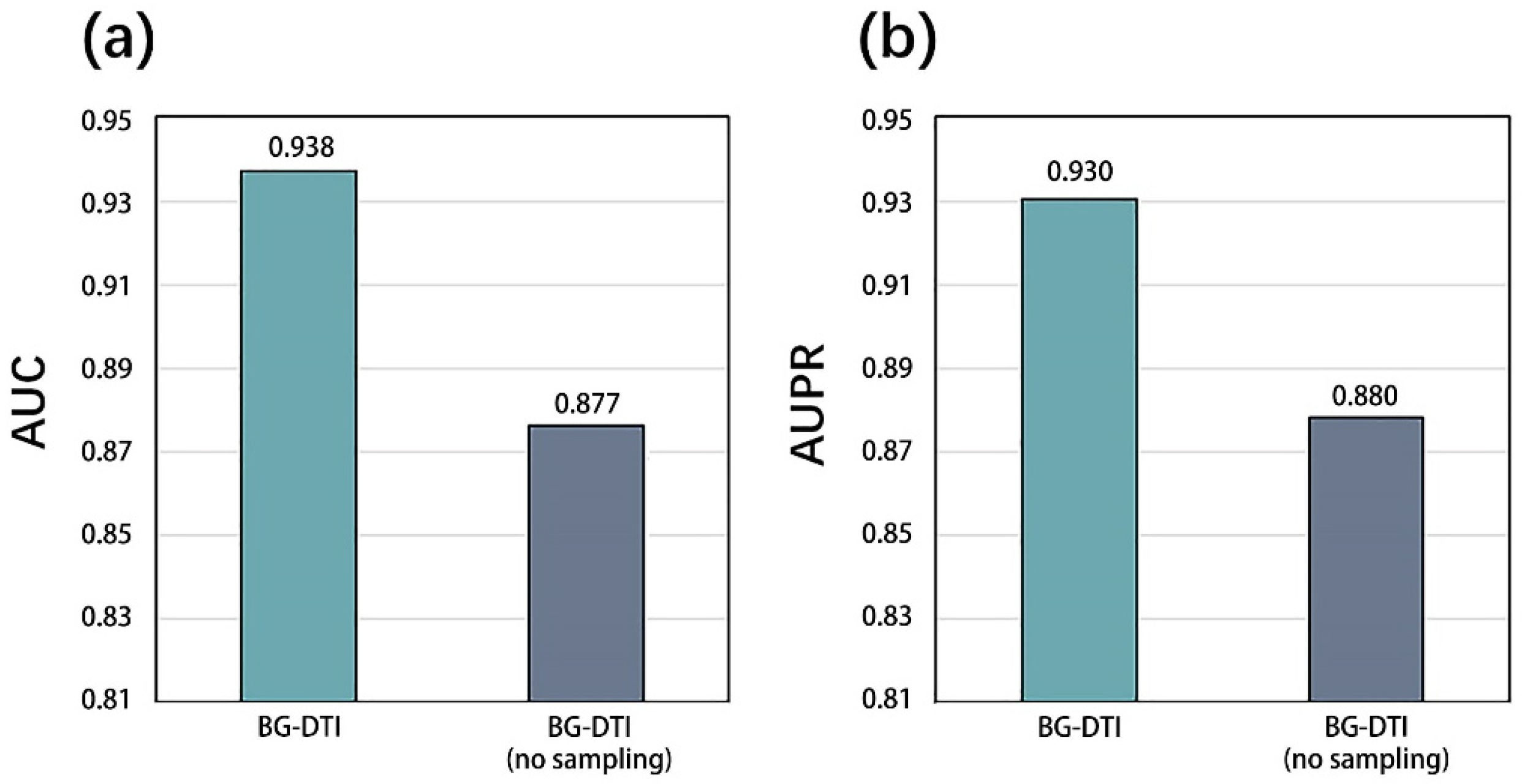
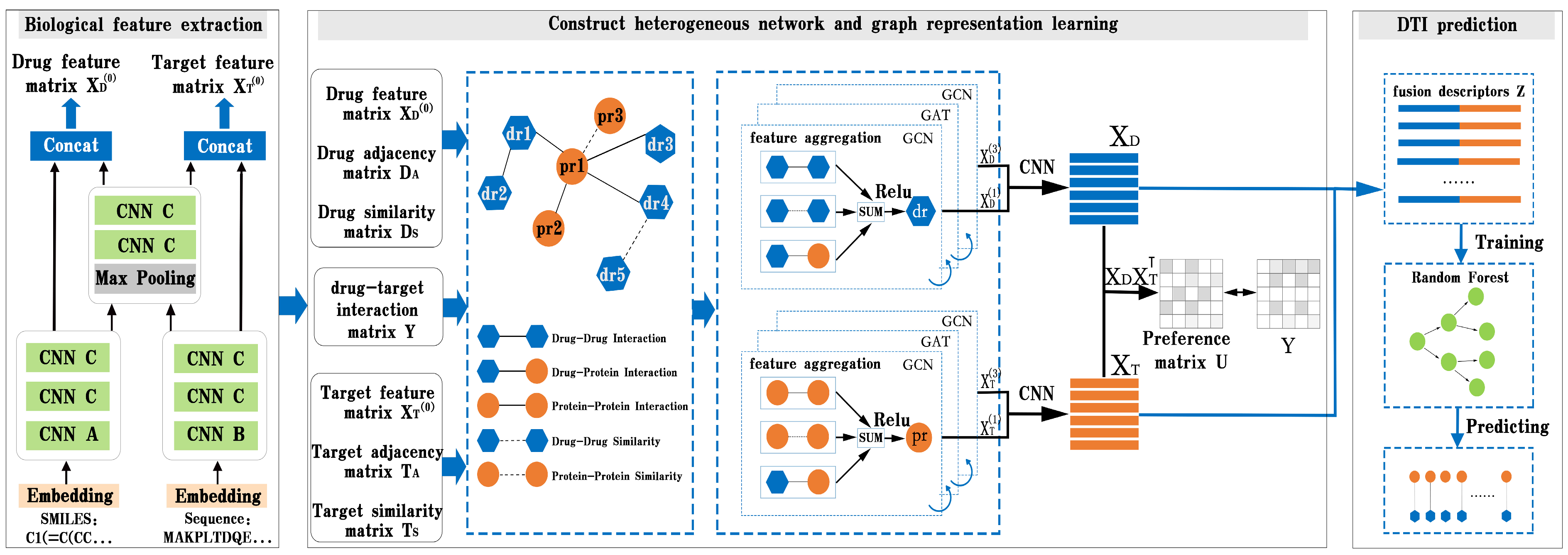
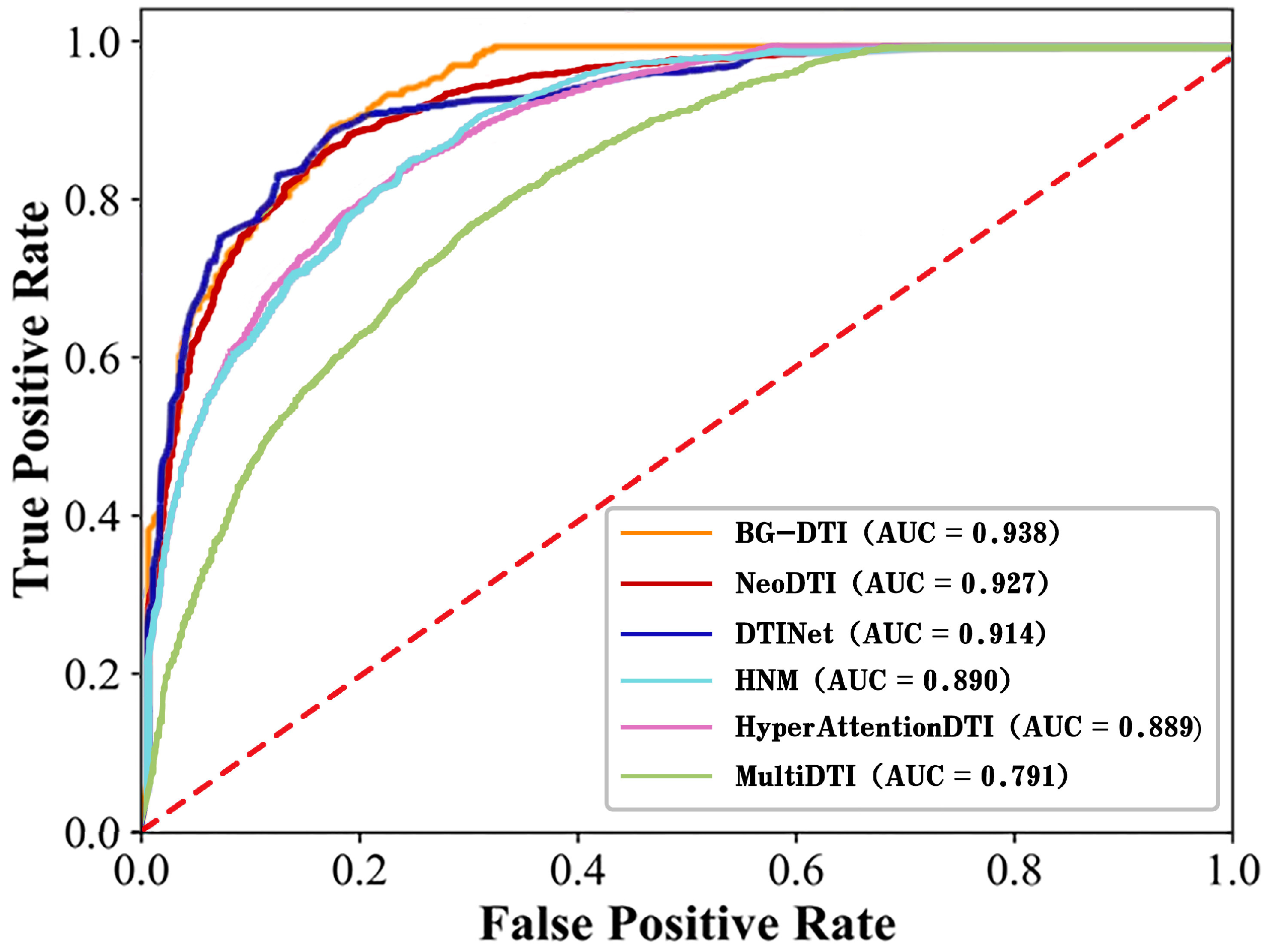
The prediction of drug–target interaction (DTI) is crucial to drug discovery. Although the interactions between the drug and target can be accurately verified by traditional biochemical experiments, the determination of DTI through biochemical experiments is a time-consuming, laborious, and expensive process. Therefore, we propose a learning-based framework named BG-DTI for drug–target interaction prediction. Our model combines two main approaches based on biological features and heterogeneous networks to identify interactions between drugs and targets. First, we extract original features from the sequence to encode each drug and target. Later, we further consider the relationships among various biological entities by constructing drug–drug similarity networks and target–target similarity networks. Furthermore, a graph convolutional network and a graph attention network in the graph representation learning module help us learn the features representation of drugs and targets. After obtaining the features from graph representation learning modules, these features are combined into fusion descriptors for drug–target pairs. Finally, we send the fusion descriptors and labels to a random forest classifier for predicting DTI. The evaluation results show that BG-DTI achieves an average AUC of 0.938 and an average AUPR of 0.930, which is better than those of five existing state-of-the-art methods. We believe that BG-DTI can facilitate the development of drug discovery or drug repurposing.
Keywords: drug–target interactions; graph convolutional network; graph attention network; representation learning; machine learning drug–target interactions; graph convolutional network; graph attention network; representation learning; machine learning