Article

Why Ortho- and Para-Hydroxy Metabolites Can Scavenge Free Radicals That the Parent Atorvastatin Cannot? Important Pharmacologic Insight from Quantum Chemistry


Theoretical Chemistry, Heidelberg University, Im Neuenheimer Feld 229, D-69120 Heidelberg, Germany
Molecules 2022, 27(15), 5036; https://doi.org/10.3390/molecules27155036

Submission received: 13 July 2022 / Revised: 31 July 2022 / Accepted: 2 August 2022 / Published: 8 August 2022
(This article belongs to the Special Issue A Commemorative Special Issue Honoring Professor Donald Truhlar)

Abstract

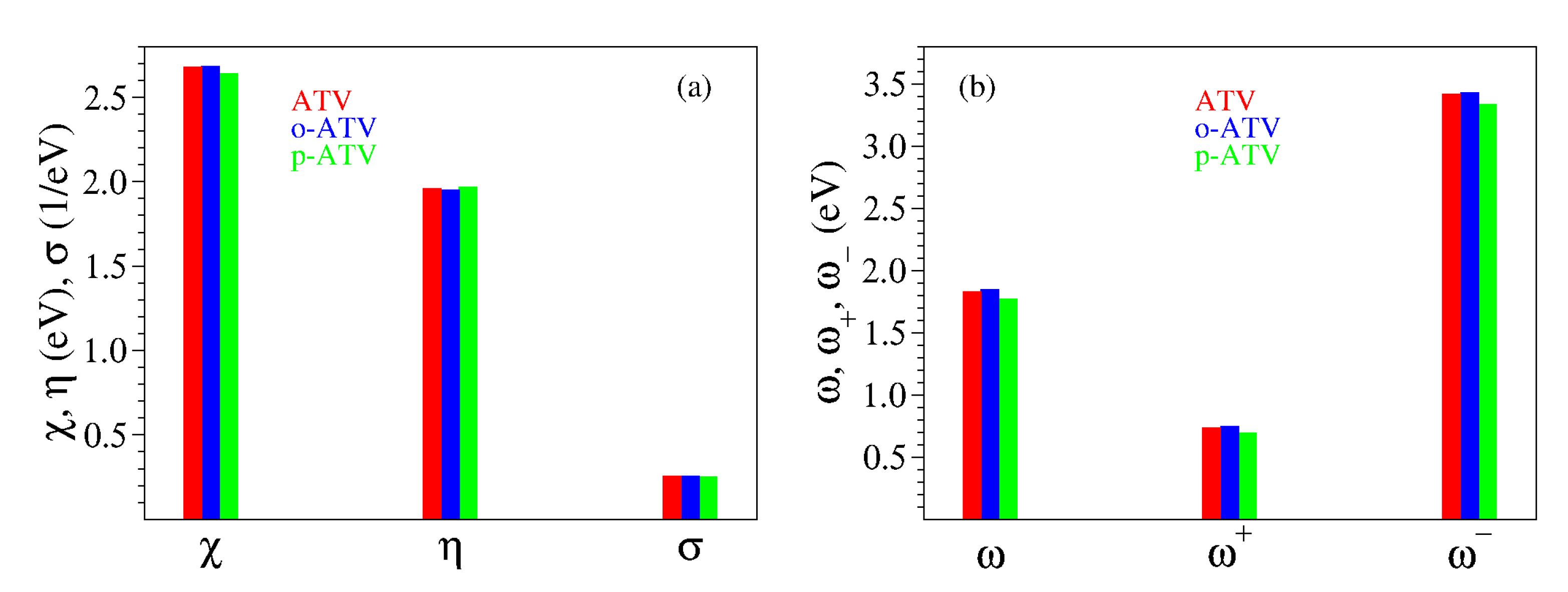
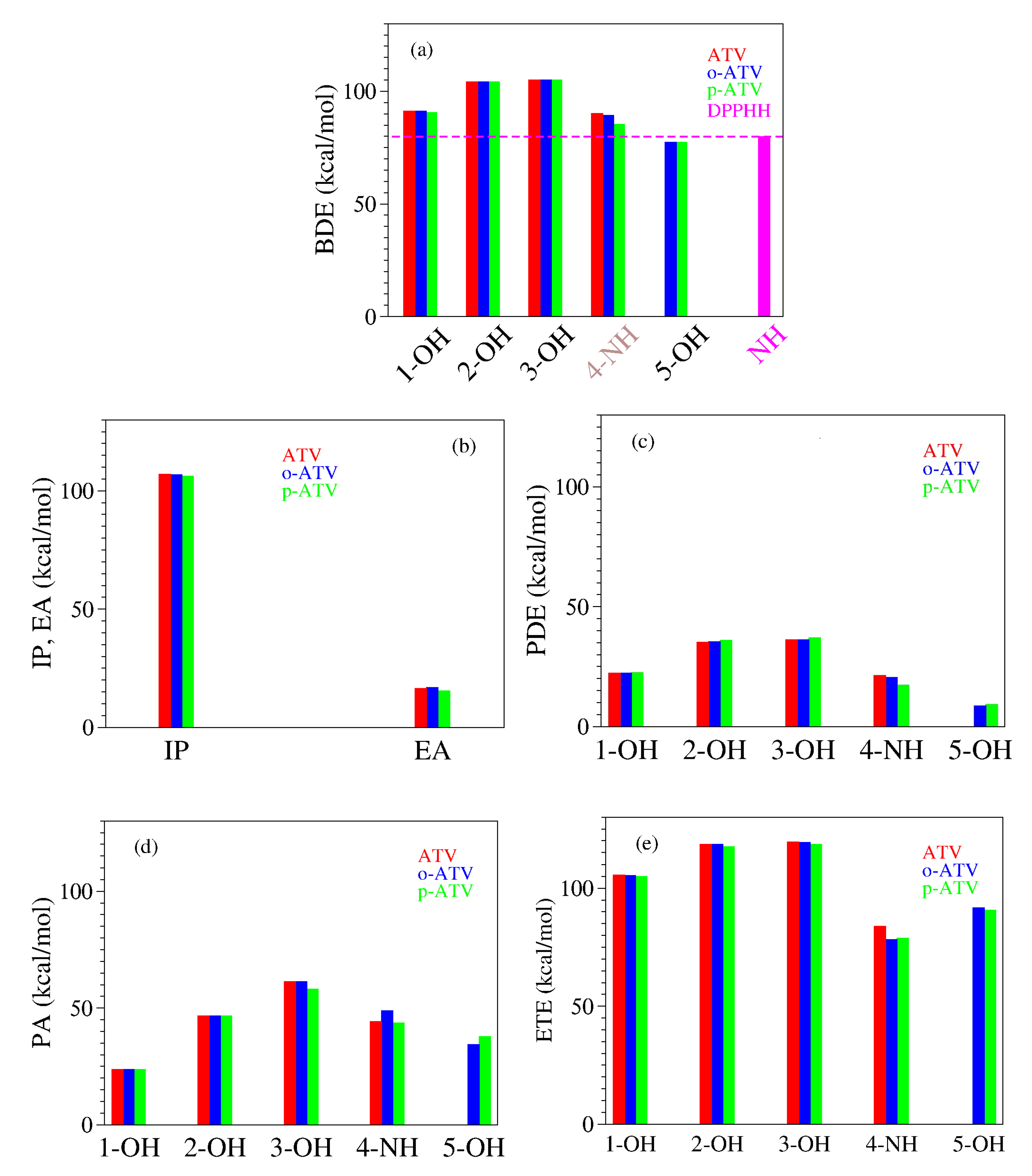
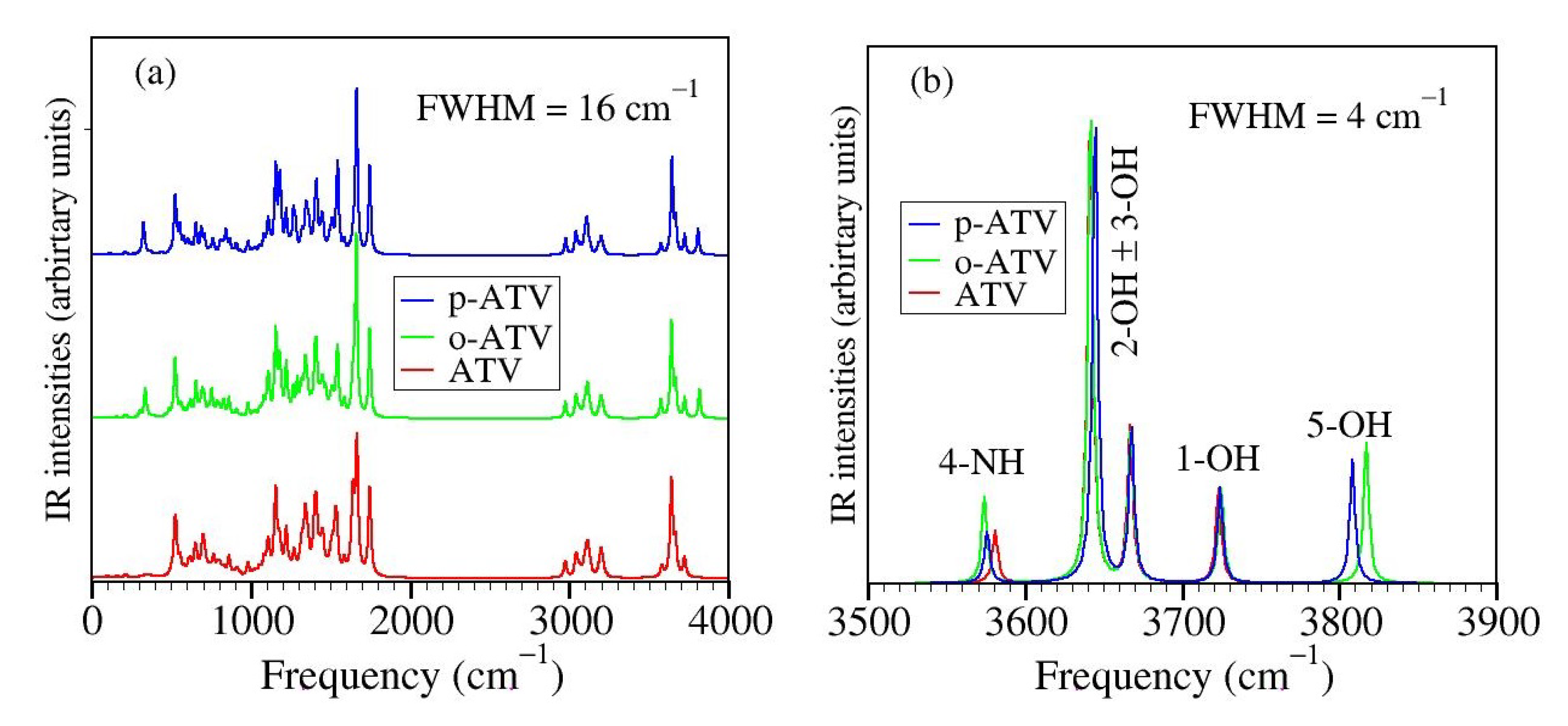
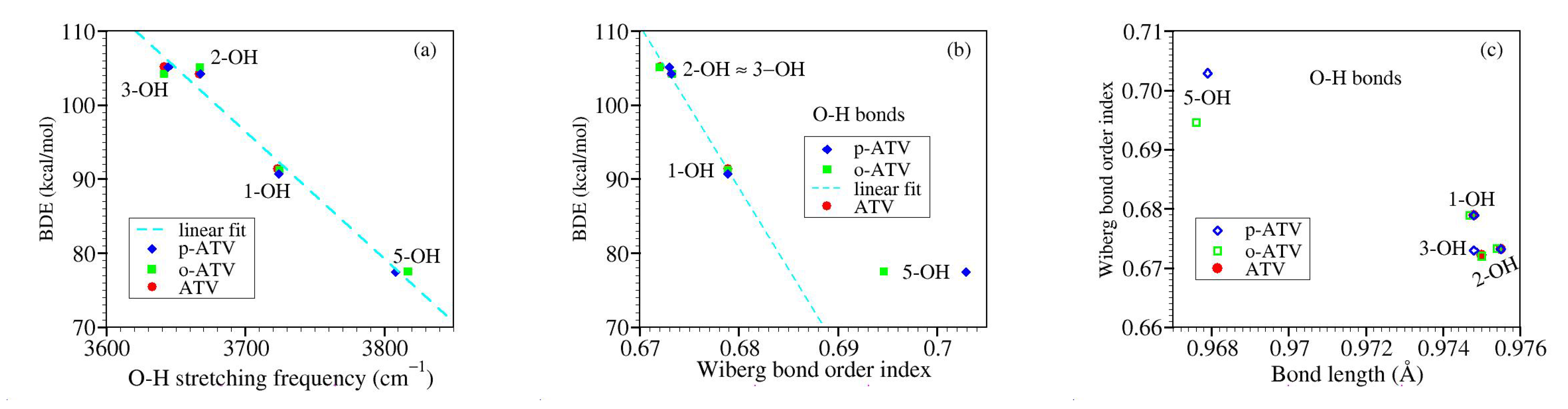
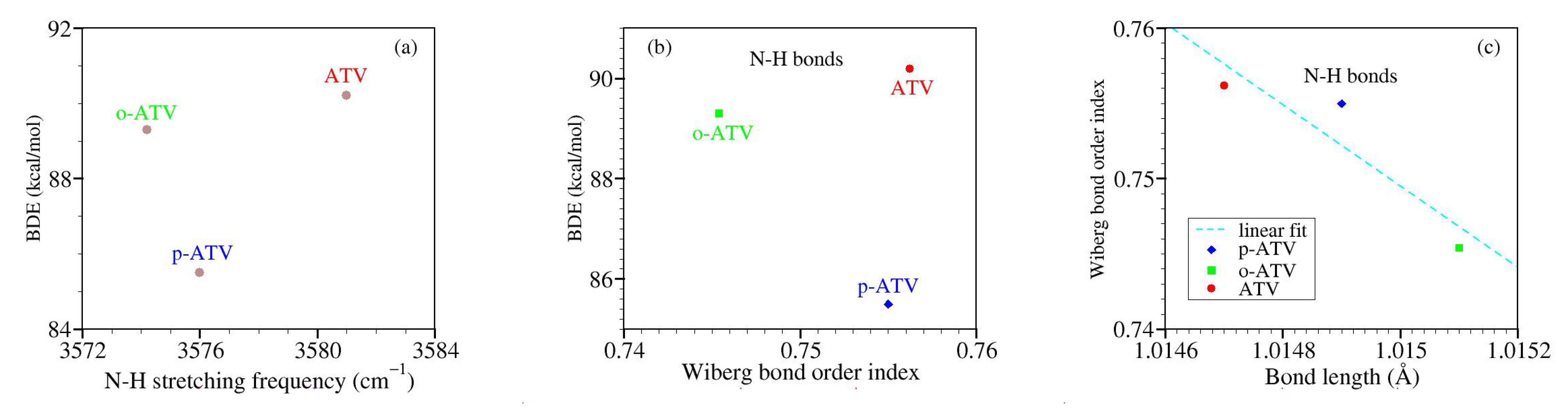
The pharmaceutical success of atorvastatin (ATV), a widely employed drug against the “bad” cholesterol (LDL) and cardiovascular diseases, traces back to its ability to scavenge free radicals. Unfortunately, information on its antioxidant properties is missing or unreliable. Here, we report detailed quantum chemical results for ATV and its ortho- and para-hydroxy metabolites (o-ATV, p-ATV) in the methanolic phase. They comprise global reactivity indices, bond order indices, and spin densities as well as all relevant enthalpies of reaction (bond dissociation BDE, ionization IP and electron attachment EA, proton detachment PDE and proton affinity PA, and electron transfer ETE). With these properties in hand, we can provide the first theoretical explanation of the experimental finding that, due to their free radical scavenging activity, ATV hydroxy metabolites rather than the parent ATV, have substantial inhibitory effect on LDL and the like. Surprisingly (because it is contrary to the most cases currently known), we unambiguously found that HAT (direct hydrogen atom transfer) rather than SPLET (sequential proton loss electron transfer) or SET-PT (stepwise electron transfer proton transfer) is the thermodynamically preferred pathway by which o-ATV and p-ATV in methanolic phase can scavenge DPPH (1,1-diphenyl-2-picrylhydrazyl) radicals. From a quantum chemical perspective, the ATV’s species investigated are surprising because of the nontrivial correlations between bond dissociation energies, bond lengths, bond order indices and pertaining stretching frequencies, which do not fit the framework of naive chemical intuition.
Keywords: radical-scavenging activity; atorvastatin; antioxidant mechanisms; HAT; SPLET; SET-PT; global chemical reactivity indices; DPPH radical; solvent effects; quantum chemistry radical-scavenging activity; atorvastatin; antioxidant mechanisms; HAT; SPLET; SET-PT; global chemical reactivity indices; DPPH radical; solvent effects; quantum chemistry