Review

Trends on CO2 Capture with Microalgae: A Bibliometric Analysis
by
Alejandra M. Miranda
1,
Fabian Hernandez-Tenorio
2,
David Ocampo
3,
Gabriel J. Vargas
4 and
Alex A. Sáez
1,*
1
Biological Sciences and Bioprocesses Group, School of Applied Sciences and Engineering, Universidad de EAFIT, Medellín 050022, Colombia
2
Process Engineering Department, School of Applied Sciences and Engineering, Universidad EAFIT, Medellín 050022, Colombia
3
Industrial and Chemical Processes Group, School of Engineering, Universidad de Antioquia, Medellín 050010, Colombia
4
I&D Cementos Argos S.A, Centro de Argos para la Innovación, Medellín 050022, Colombia
*
Author to whom correspondence should be addressed.
Molecules 2022, 27(15), 4669; https://doi.org/10.3390/molecules27154669

Submission received: 17 June 2022 / Revised: 6 July 2022 / Accepted: 11 July 2022 / Published: 22 July 2022
(This article belongs to the Special Issue The CO2 Economy: CO2 Capture and Reuse Technologies)

Abstract

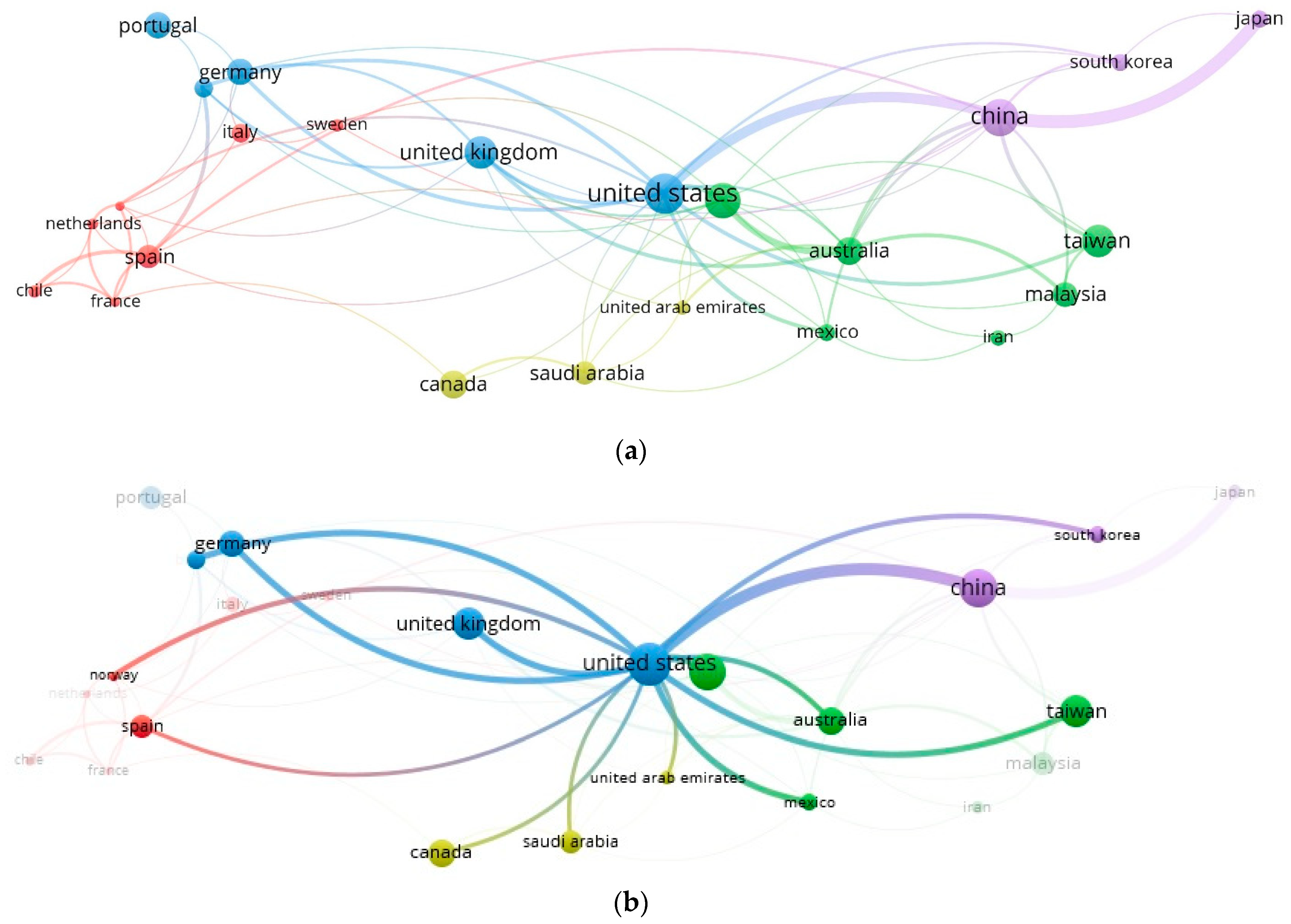
The alarming levels of carbon dioxide (CO2) are an environmental problem that affects the economic growth of the world. CO2 emissions represent penalties and restrictions due to the high carbon footprint. Therefore, sustainable strategies are required to reduce the negative impact that occurs. Among the potential systems for CO2 capture are microalgae. These are defined as photosynthetic microorganisms that use CO2 and sunlight to obtain oxygen (O2) and generate value-added products such as biofuels, among others. Despite the advantages that microalgae may present, there are still technical–economic challenges that limit industrial-scale commercialization and the use of biomass in the production of added-value compounds. Therefore, this study reviews the current state of research on CO2 capture with microalgae, for which bibliometric analysis was used to establish the trends of the subject in terms of scientometric parameters. Technological advances in the use of microalgal biomass were also identified. Additionally, it was possible to establish the different cooperation networks between countries, which showed interactions in the search to reduce CO2 concentrations through microalgae.
Keywords: microalgae; CO2; bibliometric analysis; CO2 capture; biofuel microalgae; CO2; bibliometric analysis; CO2 capture; biofuel