Review

Bioactive Peptides and Proteins from Centipede Venoms
1
Key Laboratory of Animal Models and Human Disease Mechanisms of the Chinese Academy of Sciences/Key Laboratory of Bioactive Peptides of Yunnan Province, KIZ-CUHK Joint Laboratory of Bioresources and Molecular Research in Common Diseases, National Resource Center for Non-Human Primates, Kunming Primate Research Center, National Research Facility for Phenotypic & Genetic Analysis of Model Animals (Primate Facility), Sino-African Joint Research Center, and Engineering Laboratory of Peptides, Kunming Institute of Zoology, Kunming 650107, China
2
University of Chinese Academy of Sciences, Beijing 100049, China
3
Center for Evolution and Conservation Biology, Southern Marine Science and Engineering Guangdong Laboratory (Guangzhou), Guangzhou 511458, China
*
Authors to whom correspondence should be addressed.
Molecules 2022, 27(14), 4423; https://doi.org/10.3390/molecules27144423

Submission received: 29 May 2022 / Revised: 5 July 2022 / Accepted: 7 July 2022 / Published: 11 July 2022
(This article belongs to the Special Issue Natural Products with Biological and Therapeutic Activity)

Abstract

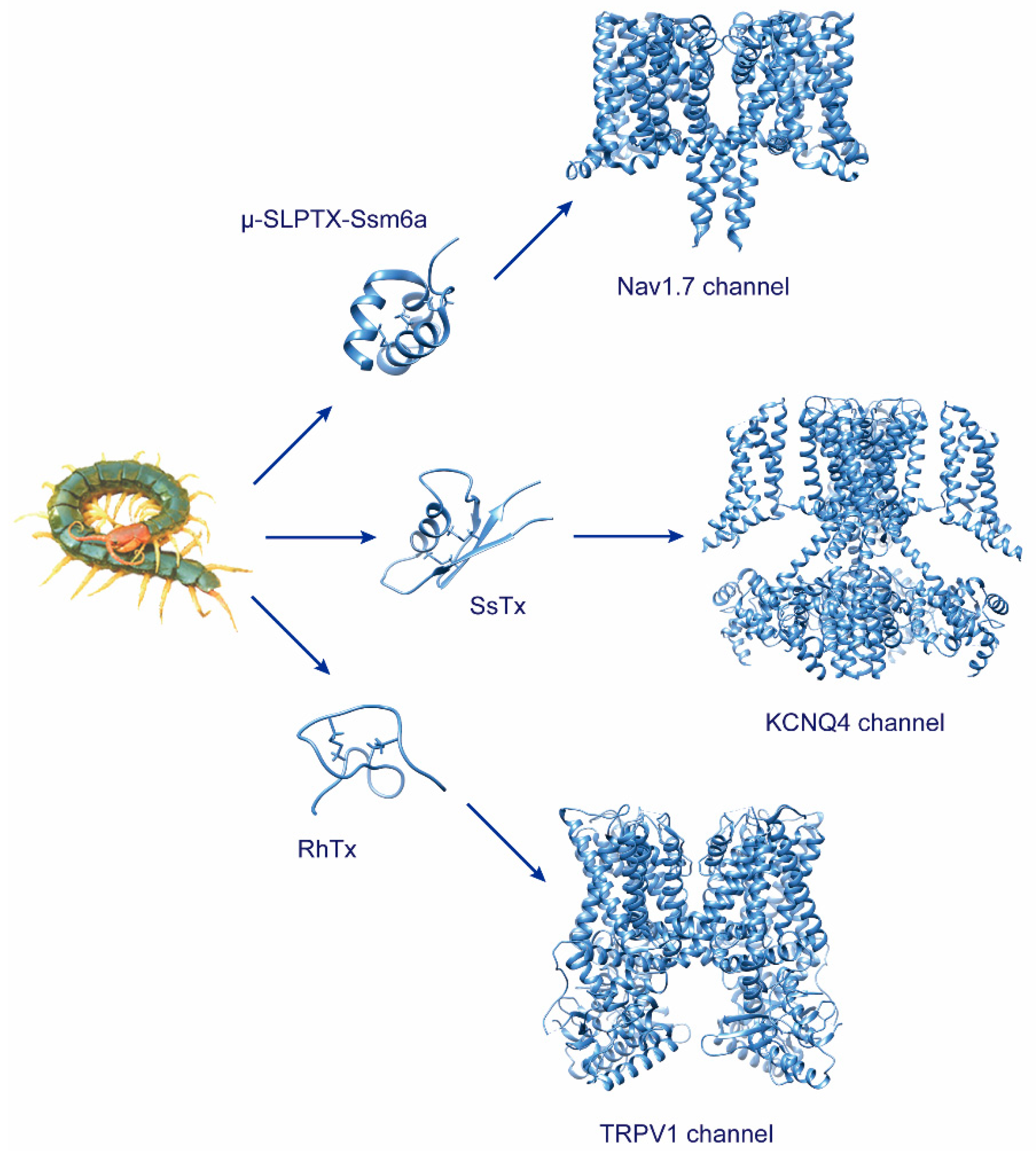
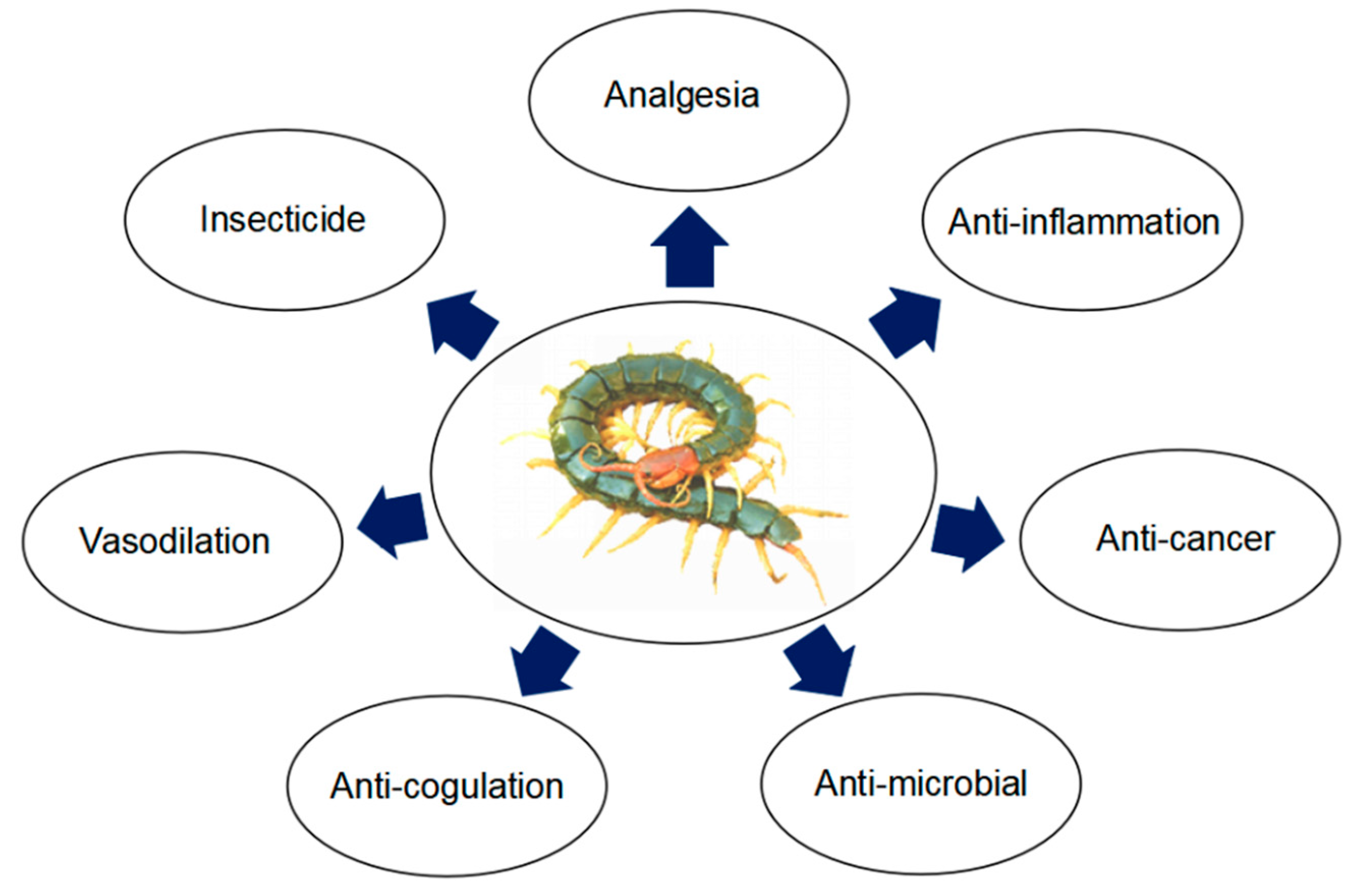
Venoms are a complex cocktail of biologically active molecules, including peptides, proteins, polyamide, and enzymes widely produced by venomous organisms. Through long-term evolution, venomous animals have evolved highly specific and diversified peptides and proteins targeting key physiological elements, including the nervous, blood, and muscular systems. Centipedes are typical venomous arthropods that rely on their toxins primarily for predation and defense. Although centipede bites are frequently reported, the composition and effect of centipede venoms are far from known. With the development of molecular biology and structural biology, the research on centipede venoms, especially peptides and proteins, has been deepened. Therefore, we summarize partial progress on the exploration of the bioactive peptides and proteins in centipede venoms and their potential value in pharmacological research and new drug development.
Keywords: venom; centipede; peptide; protein; drug development venom; centipede; peptide; protein; drug development