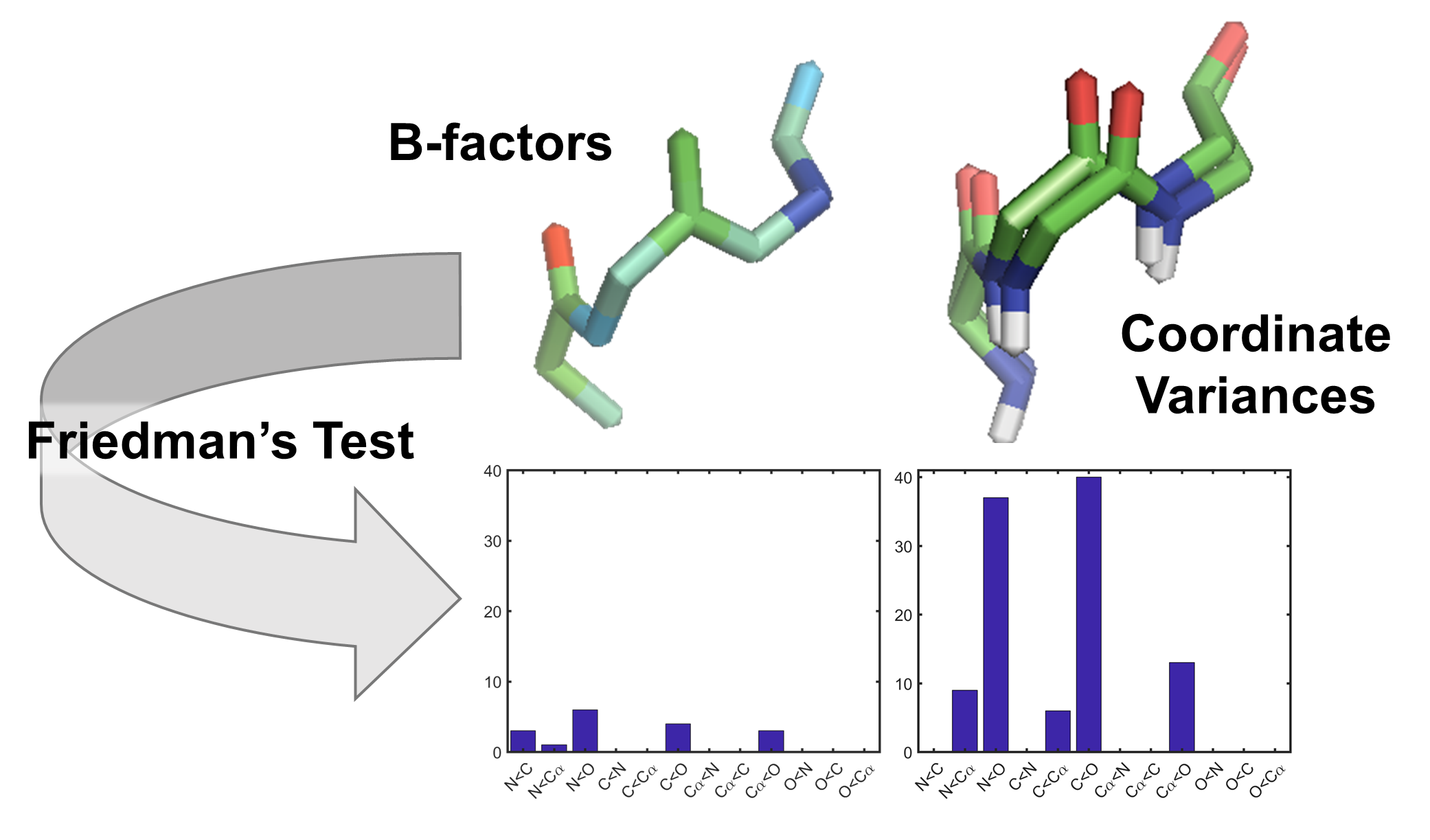
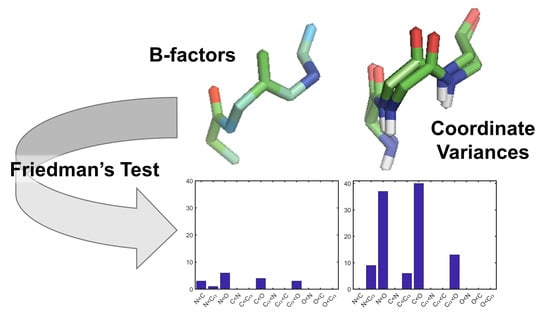
Patterns in Protein Flexibility: A Comparison of NMR “Ensembles”, MD Trajectories, and Crystallographic B-Factors


Abstract
Share and Cite
Reinknecht, C.; Riga, A.; Rivera, J.; Snyder, D.A. Patterns in Protein Flexibility: A Comparison of NMR “Ensembles”, MD Trajectories, and Crystallographic B-Factors. Molecules 2021, 26, 1484. https://doi.org/10.3390/molecules26051484
Reinknecht C, Riga A, Rivera J, Snyder DA. Patterns in Protein Flexibility: A Comparison of NMR “Ensembles”, MD Trajectories, and Crystallographic B-Factors. Molecules. 2021; 26(5):1484. https://doi.org/10.3390/molecules26051484
Chicago/Turabian StyleReinknecht, Christopher, Anthony Riga, Jasmin Rivera, and David A. Snyder. 2021. "Patterns in Protein Flexibility: A Comparison of NMR “Ensembles”, MD Trajectories, and Crystallographic B-Factors" Molecules 26, no. 5: 1484. https://doi.org/10.3390/molecules26051484
APA StyleReinknecht, C., Riga, A., Rivera, J., & Snyder, D. A. (2021). Patterns in Protein Flexibility: A Comparison of NMR “Ensembles”, MD Trajectories, and Crystallographic B-Factors. Molecules, 26(5), 1484. https://doi.org/10.3390/molecules26051484