Article

Molecular Mechanisms of Anticancer Activity of N-Glycosides of Indolocarbazoles LCS-1208 and LCS-1269

by
Roman G. Zenkov
1,*,
Olga A. Vlasova
1,
Varvara P. Maksimova
1,
Timur I. Fetisov
1,
Natalia Y. Karpechenko
1,
Lidiya V. Ektova
1,
Vera A. Eremina
1,
Valeriia G. Popova
1,2,
Olga G. Usalka
1,3,
Ekaterina A. Lesovaya
1,4,
Gennady A. Belitsky
1,
Marianna G. Yakubovskaya
1 and
Kirill I. Kirsanov
1,5
1
N. N. Blokhin Russian Cancer Research Center, 24 Kashirskoe Shosse, 115478 Moscow, Russia
2
Faculty of Biotechnology and Industrial Ecology, Mendeleev University of Chemical Technology of Russia, 9 Miusskaya Ploshchad, 125047 Moscow, Russia
3
International School “Medicine of the Future”, I.M. Sechenov First Moscow State Medical University, 8-2 Trubetskaya St., 119991 Moscow, Russia
4
Department of Oncology, I.P. Pavlov Ryazan State Medical University, 9 Vysokovoltnaya St., 390026 Ryazan, Russia
5
Institute of Medicine, RUDN University, 6 Miklukho-Maklaya St., 117198 Moscow, Russia
*
Author to whom correspondence should be addressed.
Molecules 2021, 26(23), 7329; https://doi.org/10.3390/molecules26237329

Submission received: 2 November 2021 / Revised: 24 November 2021 / Accepted: 30 November 2021 / Published: 2 December 2021
(This article belongs to the Special Issue Targeting of Signaling Pathways for Cancer Therapy)

Abstract

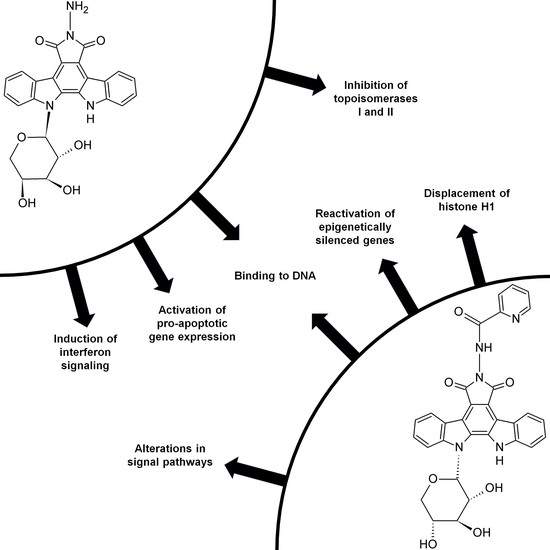
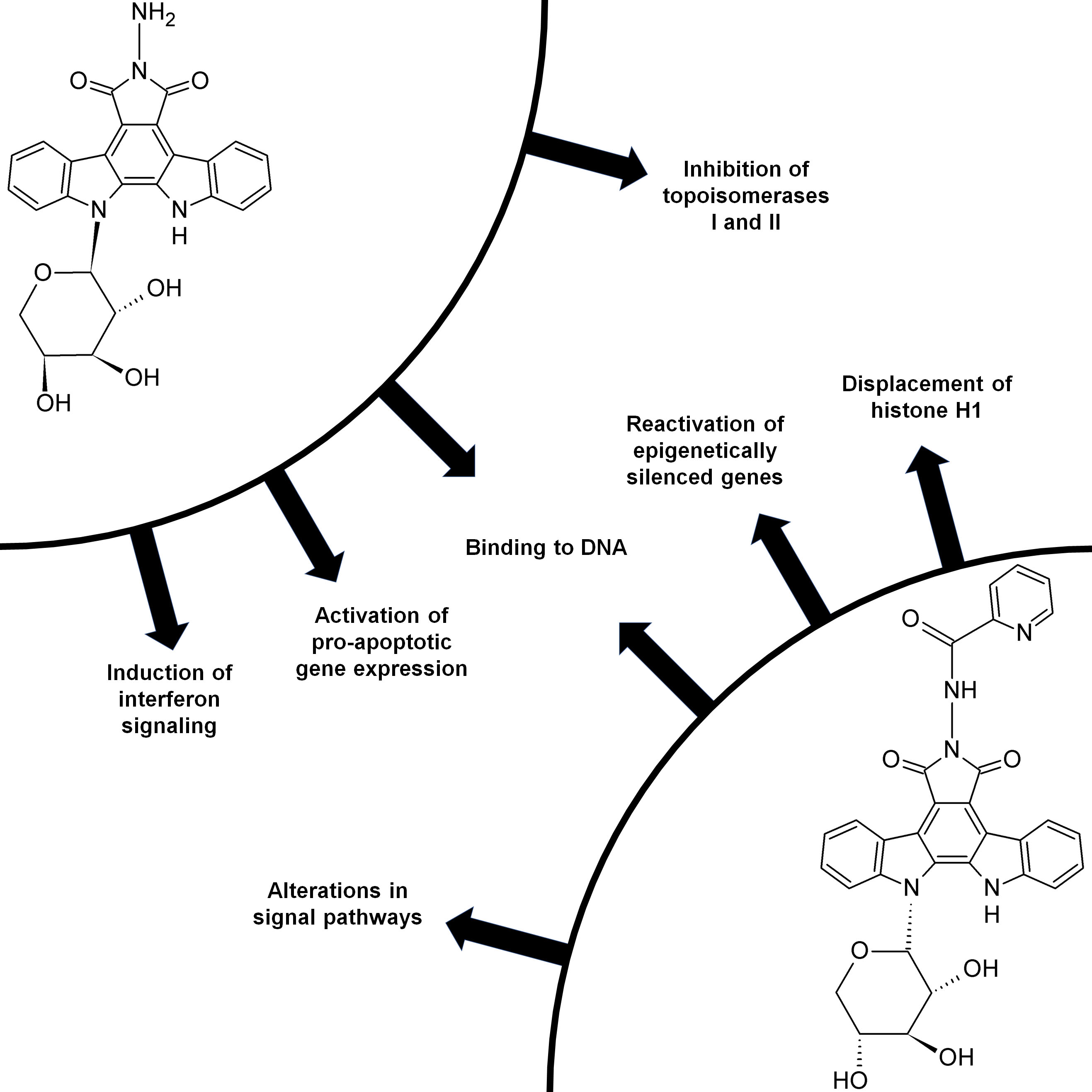
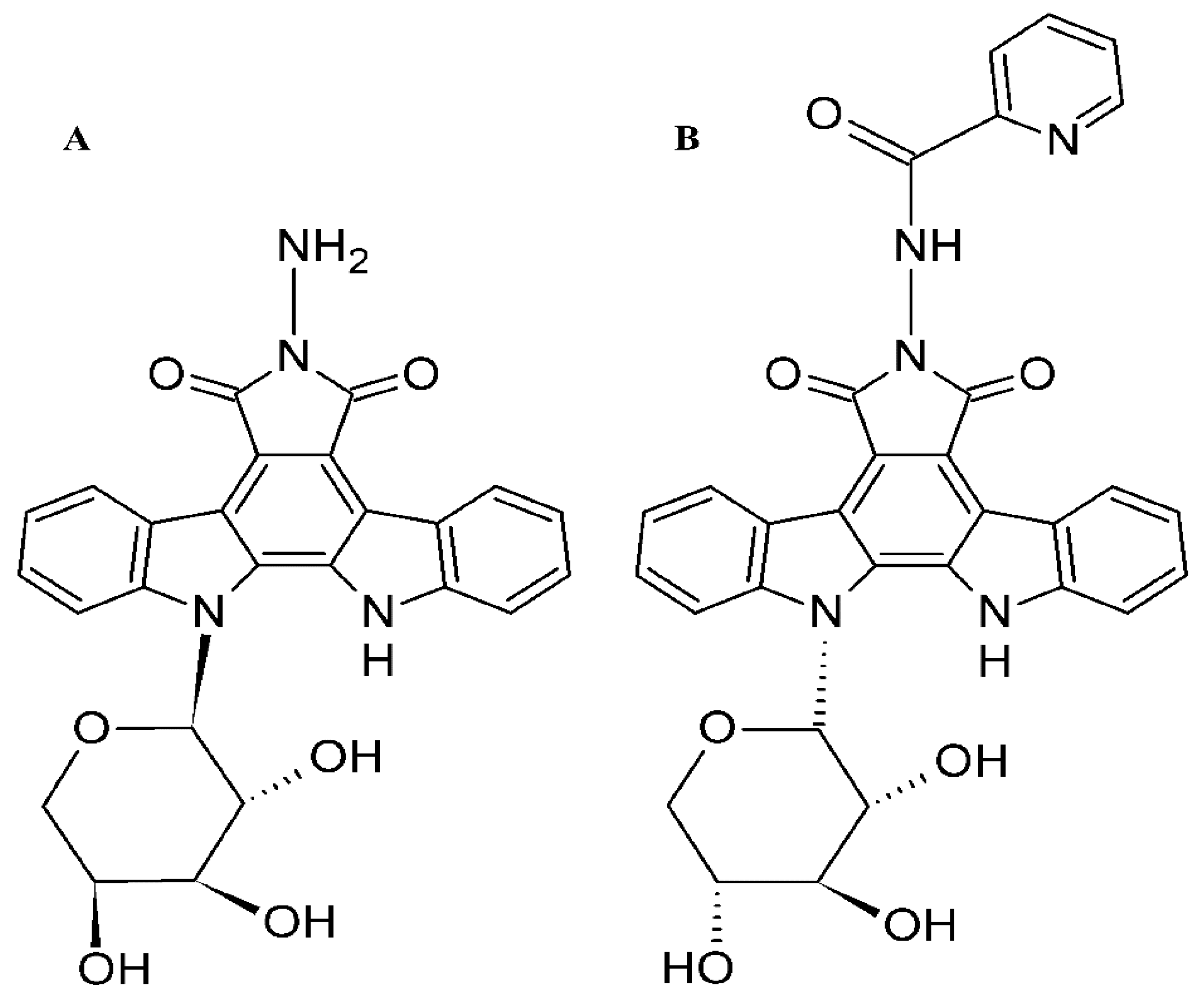
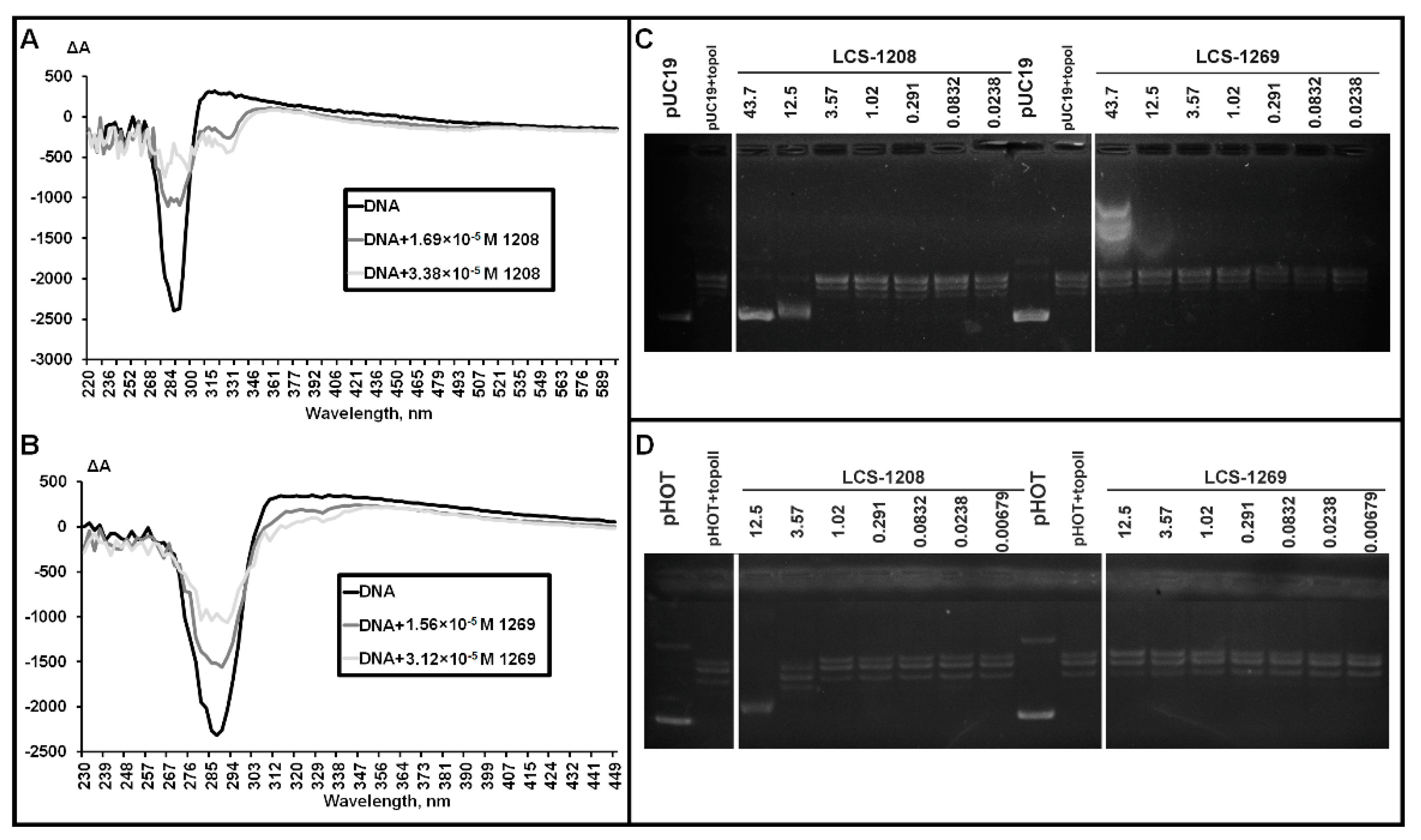
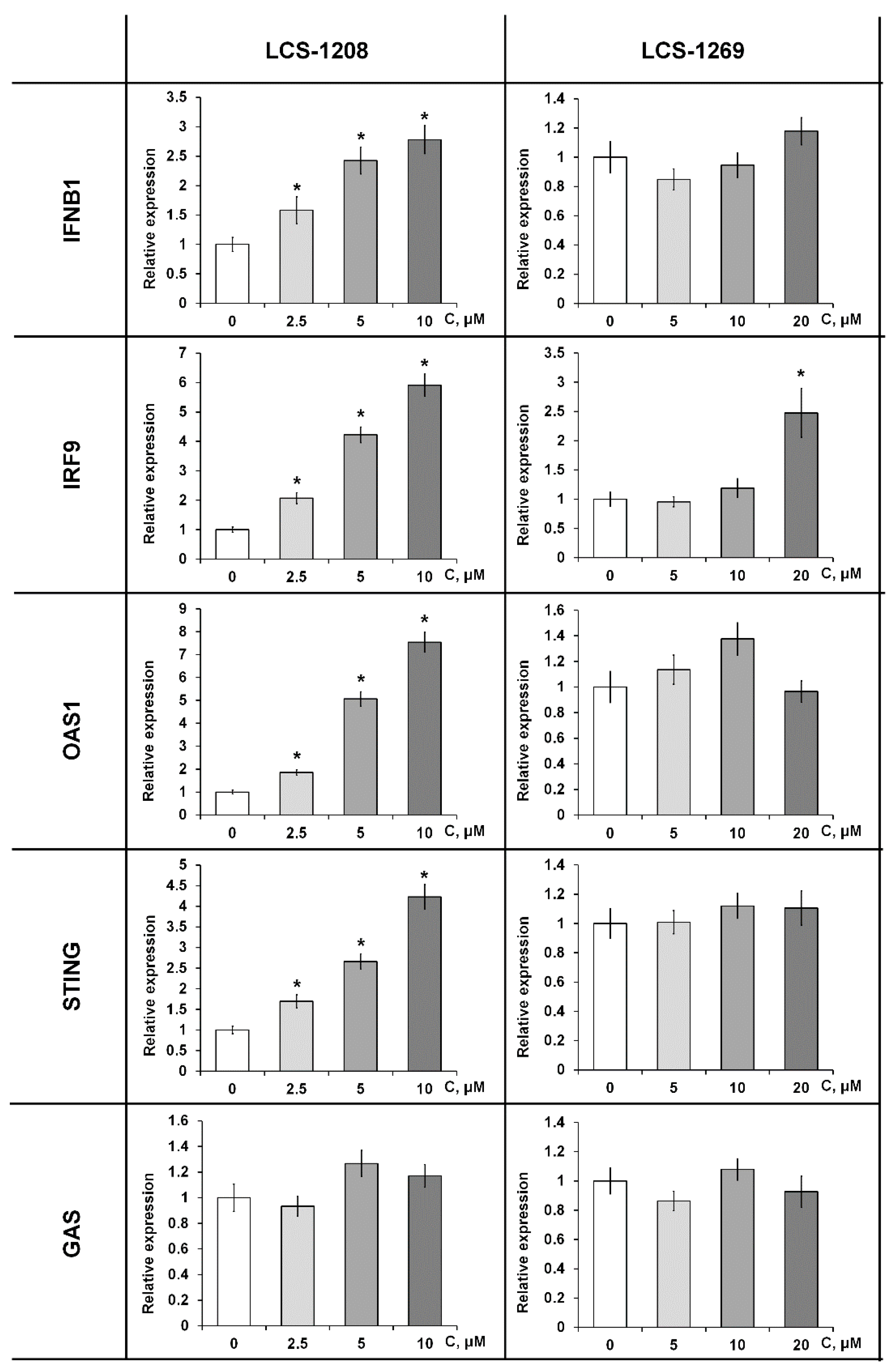
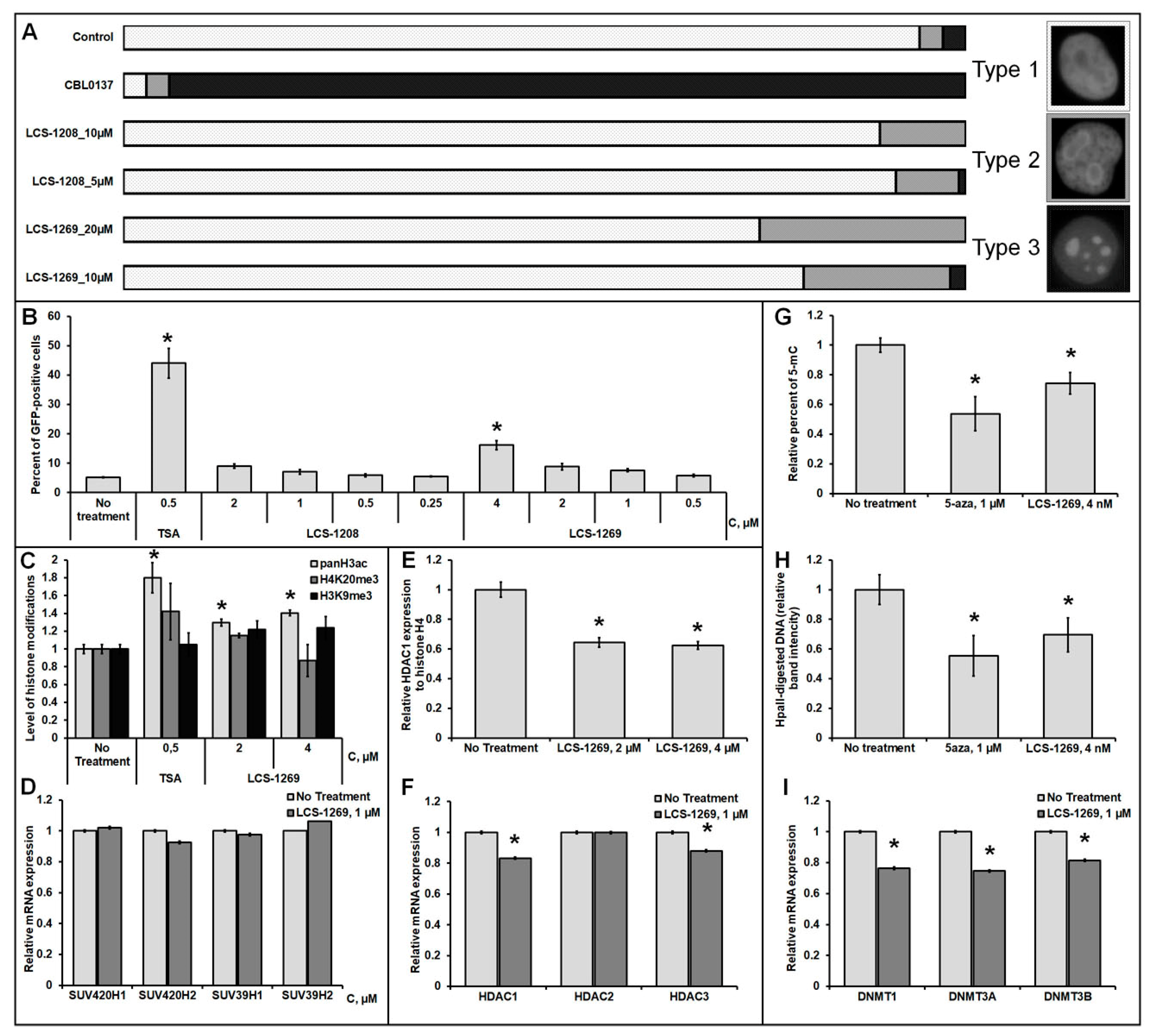
Novel indolocarbazole derivatives named LCS were synthesized by our research group. Two of them were selected as the most active anticancer agents in vivo. We studied the mechanisms of anticancer activity in accordance with the previously described effects of indolocarbazoles. Cytotoxicity was estimated by MTT assay. We analyzed LCS-DNA interactions by circular dichroism in cholesteric liquid crystals and fluorescent indicator displacement assay. The effect on the activity of topoisomerases I and II was studied by DNA relaxation assay. Expression of interferon signaling target genes was estimated by RT-PCR. Chromatin remodeling was analyzed–the effect on histone H1 localization and reactivation of epigenetically silenced genes. LCS-induced change in the expression of a wide gene set was counted by means of PCR array. Our study revealed the cytotoxic activity of the compounds against 11 cancer cell lines and it was higher than in immortalized cells. Both compounds bind DNA; binding constants were estimated—LCS-1208 demonstrated higher affinity than LCS-1269; it was shown that LCS-1208 intercalates into DNA that is typical for rebeccamycin derivatives. LCS-1208 also inhibits topoisomerases I and IIα. Being a strong intercalator and topoisomerase inhibitor, LCS-1208 upregulates the expression of interferon-induced genes. In view of LCSs binding to DNA we analyzed their influence on chromatin stability and revealed that LCS-1269 displaces histone H1. Our analysis of chromatin remodeling also included a wide set of epigenetic experiments in which LCS-1269 demonstrated complex epigenetic activity. Finally, we revealed that the antitumor effect of the compounds is based not only on binding to DNA and chromatin remodeling but also on alternative mechanisms. Both compounds induce expression changes in genes involved in neoplastic transformation and target genes of the signaling pathways in cancer cells. Despite of being structurally similar, each compound has unique biological activities. The effects of LCS-1208 are associated with intercalation. The mechanisms of LCS-1269 include influence on higher levels such as chromatin remodeling and epigenetic effects.
Keywords: LCS-1208; LCS-1269; indolocarbazoles; antitumor activity; intercalation; chromatin remodeling; interferon; epigenetics LCS-1208; LCS-1269; indolocarbazoles; antitumor activity; intercalation; chromatin remodeling; interferon; epigenetics
Graphical Abstract