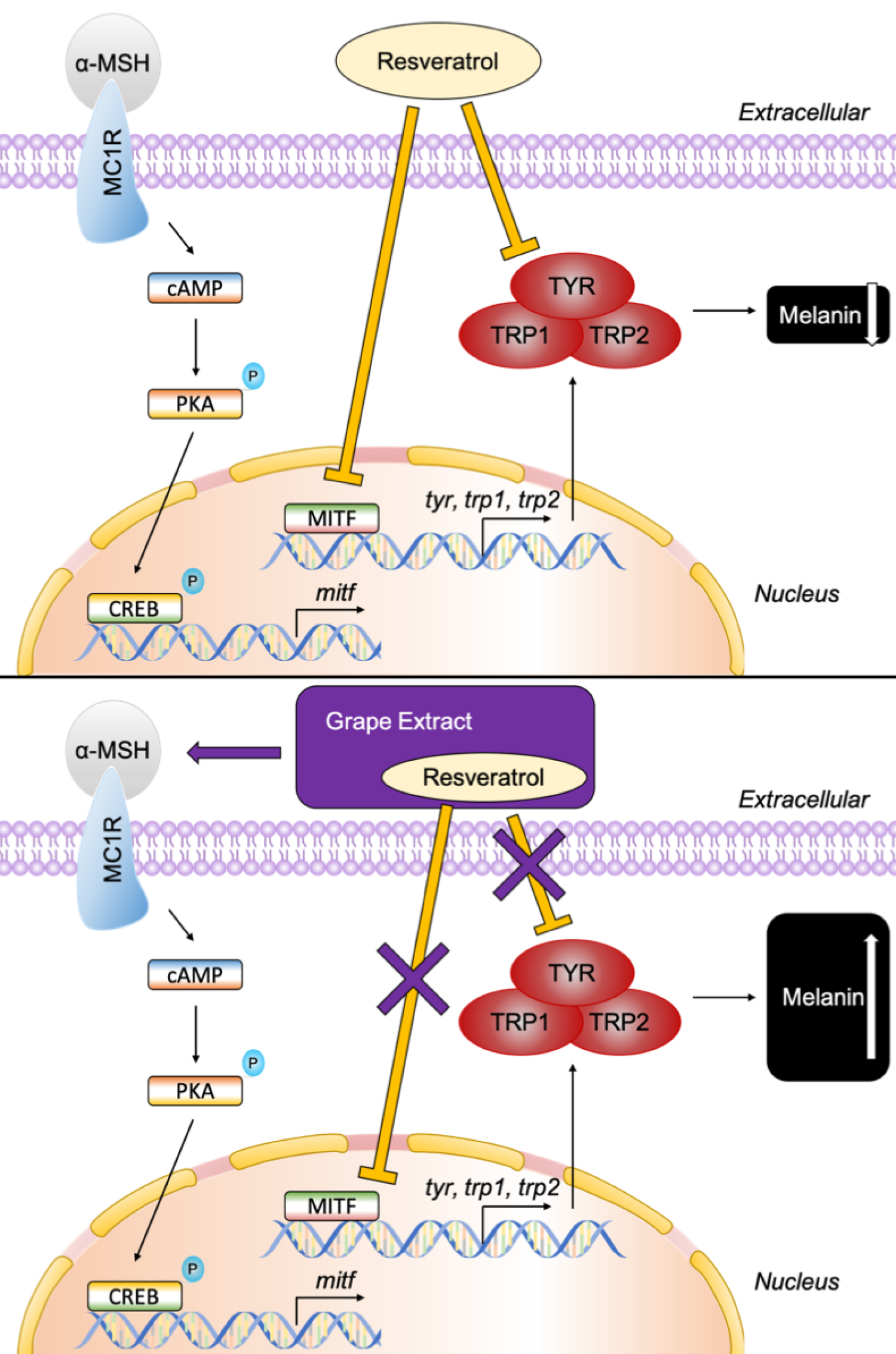
Grape Extract Promoted α-MSH-Induced Melanogenesis in B16F10 Melanoma Cells, Which Was Inverse to Resveratrol

Abstract
Share and Cite
Zhou, S.; Riadh, D.; Sakamoto, K. Grape Extract Promoted α-MSH-Induced Melanogenesis in B16F10 Melanoma Cells, Which Was Inverse to Resveratrol. Molecules 2021, 26, 5959. https://doi.org/10.3390/molecules26195959
Zhou S, Riadh D, Sakamoto K. Grape Extract Promoted α-MSH-Induced Melanogenesis in B16F10 Melanoma Cells, Which Was Inverse to Resveratrol. Molecules. 2021; 26(19):5959. https://doi.org/10.3390/molecules26195959
Chicago/Turabian StyleZhou, Siqi, Drira Riadh, and Kazuichi Sakamoto. 2021. "Grape Extract Promoted α-MSH-Induced Melanogenesis in B16F10 Melanoma Cells, Which Was Inverse to Resveratrol" Molecules 26, no. 19: 5959. https://doi.org/10.3390/molecules26195959
APA StyleZhou, S., Riadh, D., & Sakamoto, K. (2021). Grape Extract Promoted α-MSH-Induced Melanogenesis in B16F10 Melanoma Cells, Which Was Inverse to Resveratrol. Molecules, 26(19), 5959. https://doi.org/10.3390/molecules26195959