Review

Antimicrobial Compounds Isolated from Endolichenic Fungi: A Review
by
A. Nethma Wethalawe
1,
Y. Vindula Alwis
1,
Dinusha N. Udukala
1 and
Priyani A. Paranagama
2,*
1
Institute of Chemistry Ceylon, College of Chemical Sciences, Rajagiriya 10100, Sri Lanka
2
Department of Chemistry, University of Kelaniya, Kelaniya 11600, Sri Lanka
*
Author to whom correspondence should be addressed.
Molecules 2021, 26(13), 3901; https://doi.org/10.3390/molecules26133901

Submission received: 16 May 2021 / Revised: 2 June 2021 / Accepted: 5 June 2021 / Published: 25 June 2021

Abstract

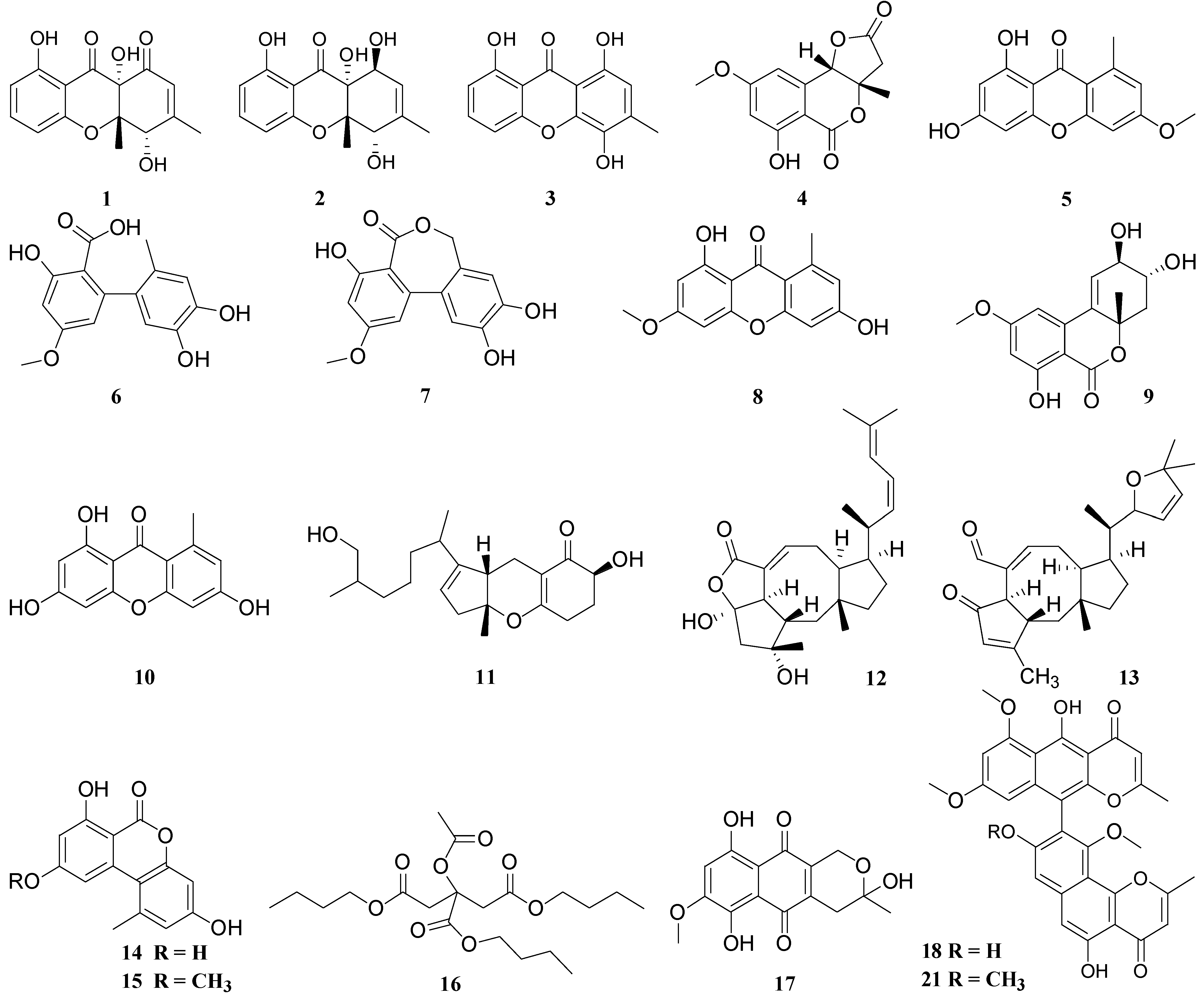
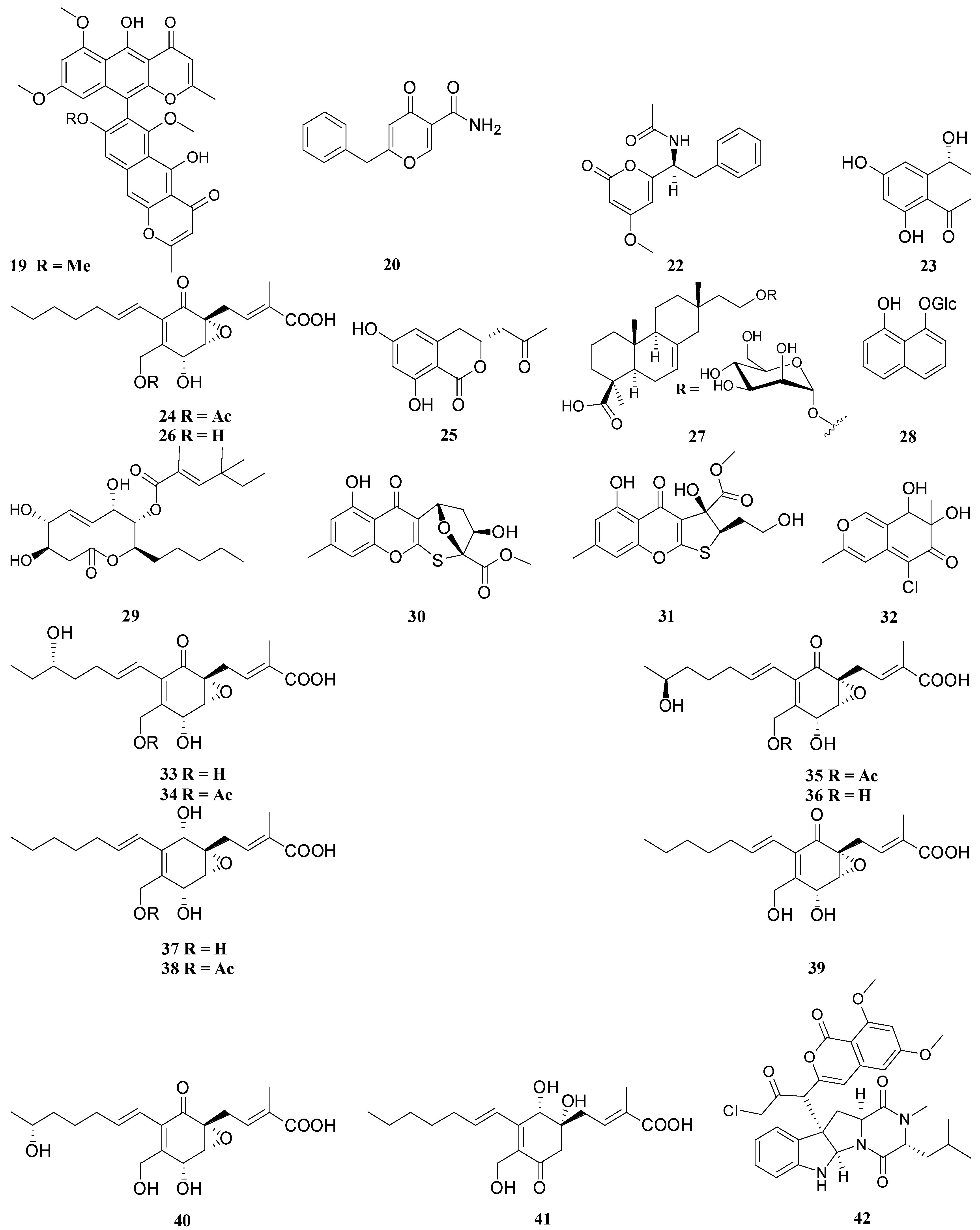
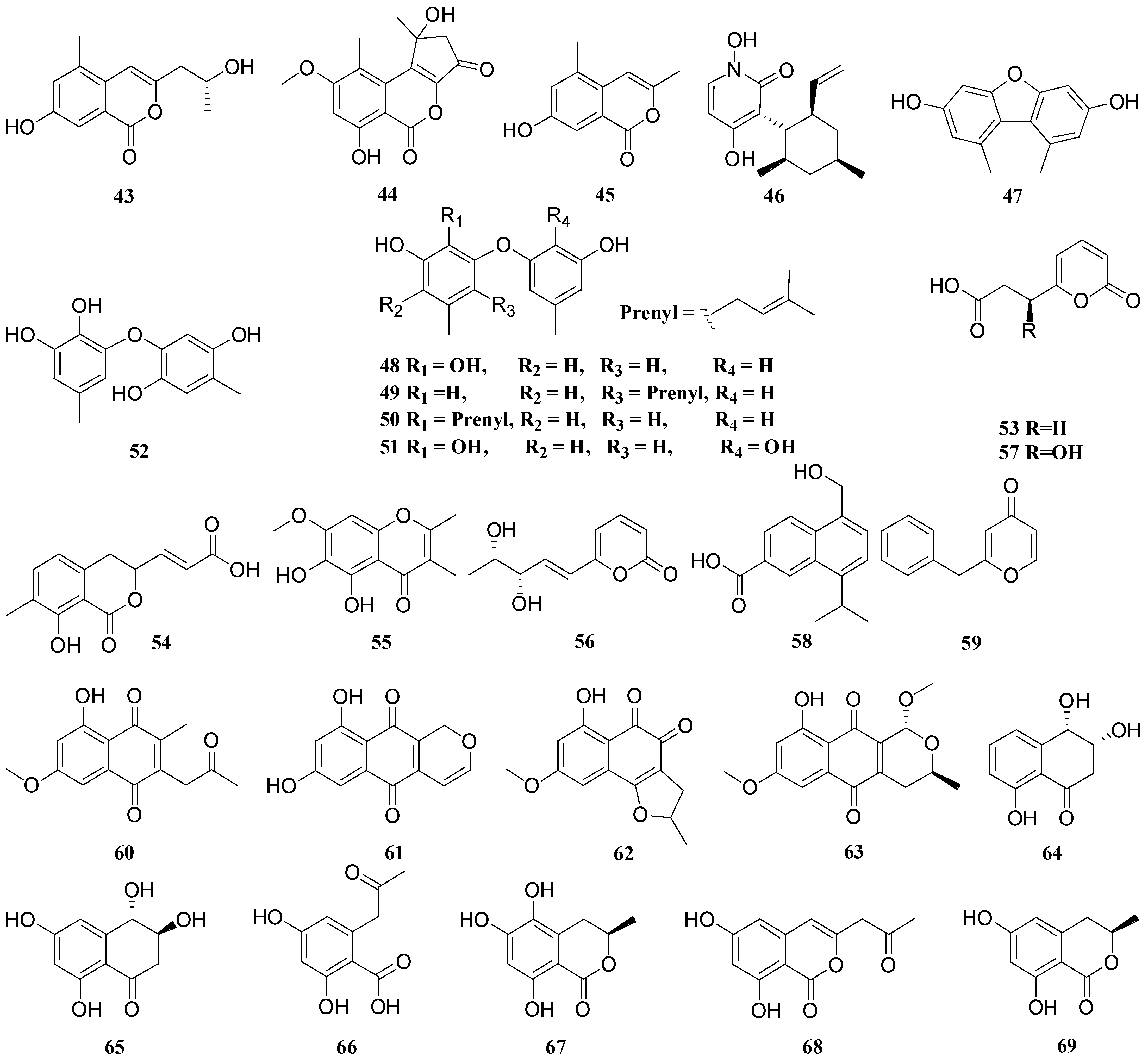
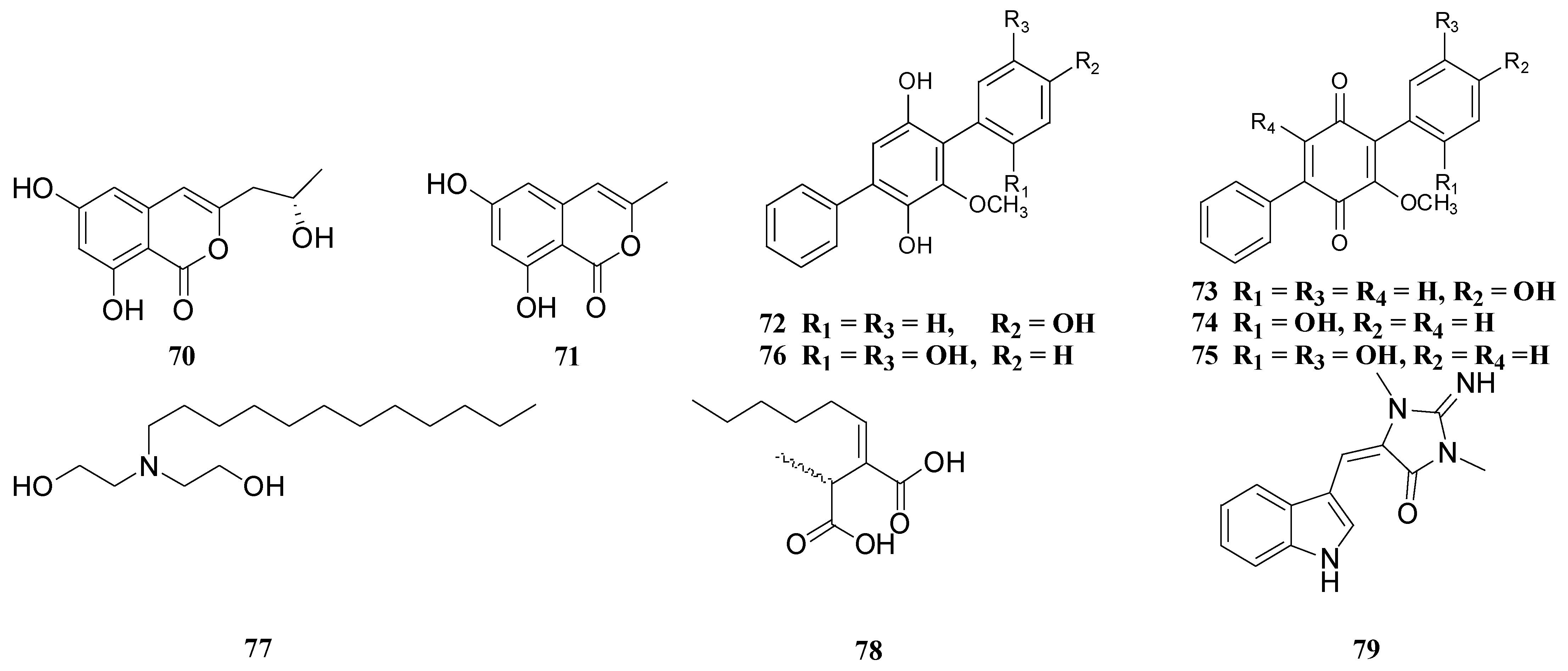
A lichen is a symbiotic relationship between a fungus and a photosynthetic organism, which is algae or cyanobacteria. Endolichenic fungi are a group of microfungi that resides asymptomatically within the thalli of lichens. Endolichenic fungi can be recognized as luxuriant metabolic artists that produce propitious bioactive secondary metabolites. More than any other time, there is a worldwide search for new antibiotics due to the alarming increase in microbial resistance against the currently available therapeutics. Even though a few antimicrobial compounds have been isolated from endolichenic fungi, most of them have moderate activities, implying the need for further structural optimizations. Recognizing this timely need and the significance of endolichenic fungi as a promising source of antimicrobial compounds, the activity, sources and the structures of 31 antibacterial compounds, 58 antifungal compounds, two antiviral compounds and one antiplasmodial (antimalarial) compound are summarized in this review. In addition, an overview of the common scaffolds and structural features leading to the corresponding antimicrobial properties is provided as an aid for future studies. The current challenges and major drawbacks of research related to endolichenic fungi and the remedies for them have been suggested.
Keywords: endolichenic fungi; antibacterial; antifungal; antiviral; antiplasmodial; secondary metabolites endolichenic fungi; antibacterial; antifungal; antiviral; antiplasmodial; secondary metabolites