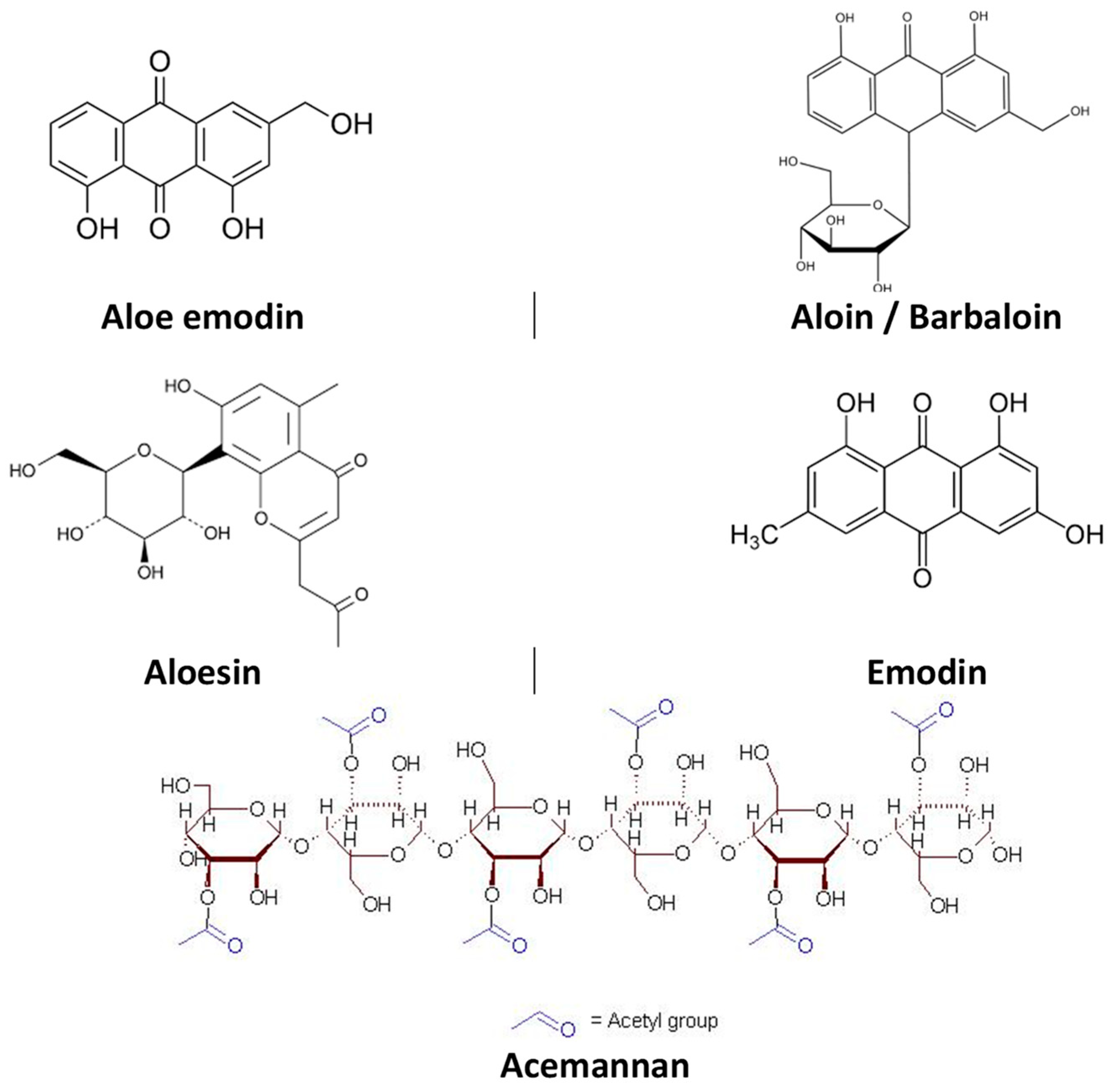
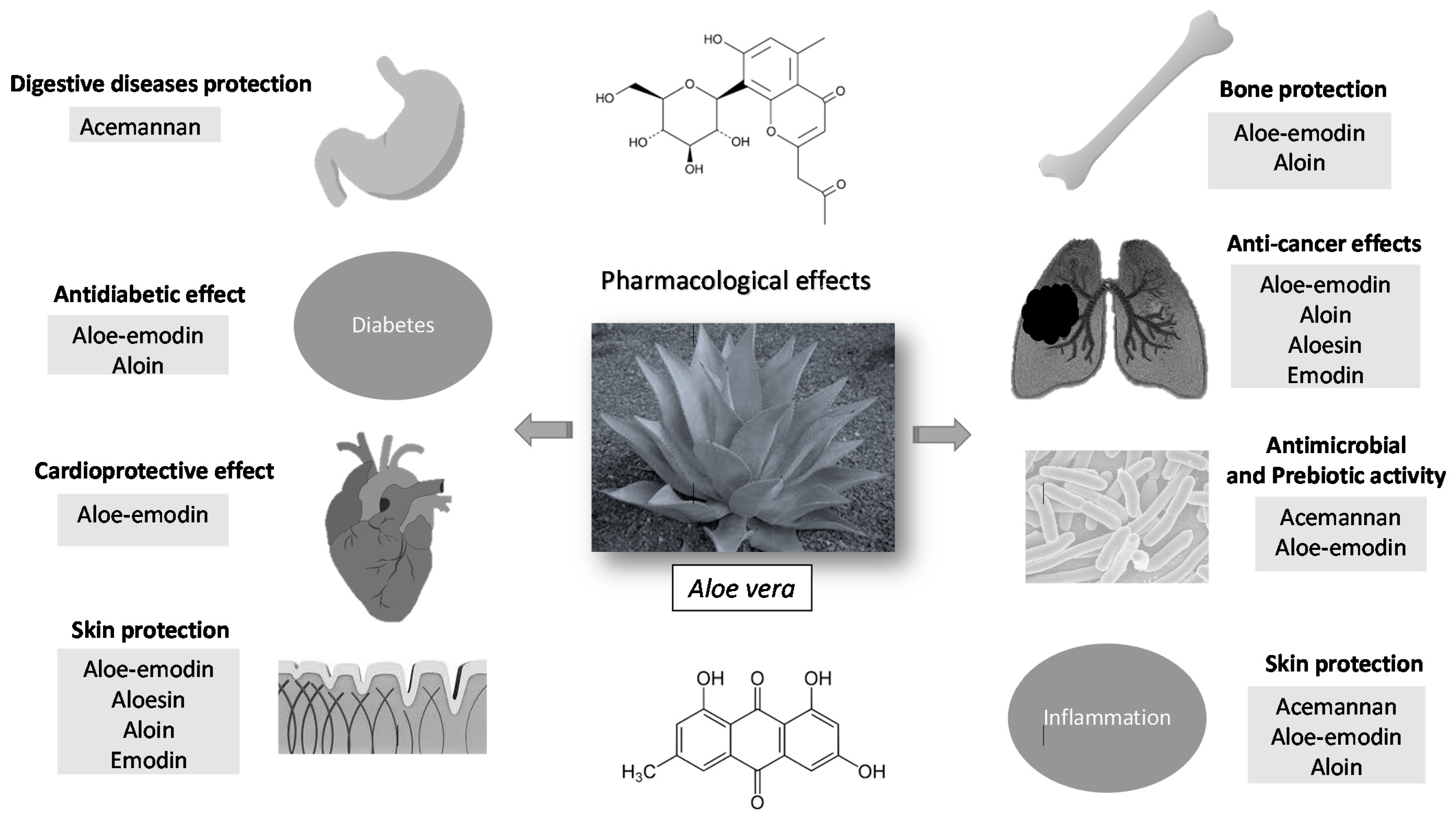
Pharmacological Update Properties of Aloe Vera and its Major Active Constituents

Abstract
Share and Cite
Sánchez, M.; González-Burgos, E.; Iglesias, I.; Gómez-Serranillos, M.P. Pharmacological Update Properties of Aloe Vera and its Major Active Constituents. Molecules 2020, 25, 1324. https://doi.org/10.3390/molecules25061324
Sánchez M, González-Burgos E, Iglesias I, Gómez-Serranillos MP. Pharmacological Update Properties of Aloe Vera and its Major Active Constituents. Molecules. 2020; 25(6):1324. https://doi.org/10.3390/molecules25061324
Chicago/Turabian StyleSánchez, Marta, Elena González-Burgos, Irene Iglesias, and M. Pilar Gómez-Serranillos. 2020. "Pharmacological Update Properties of Aloe Vera and its Major Active Constituents" Molecules 25, no. 6: 1324. https://doi.org/10.3390/molecules25061324
APA StyleSánchez, M., González-Burgos, E., Iglesias, I., & Gómez-Serranillos, M. P. (2020). Pharmacological Update Properties of Aloe Vera and its Major Active Constituents. Molecules, 25(6), 1324. https://doi.org/10.3390/molecules25061324