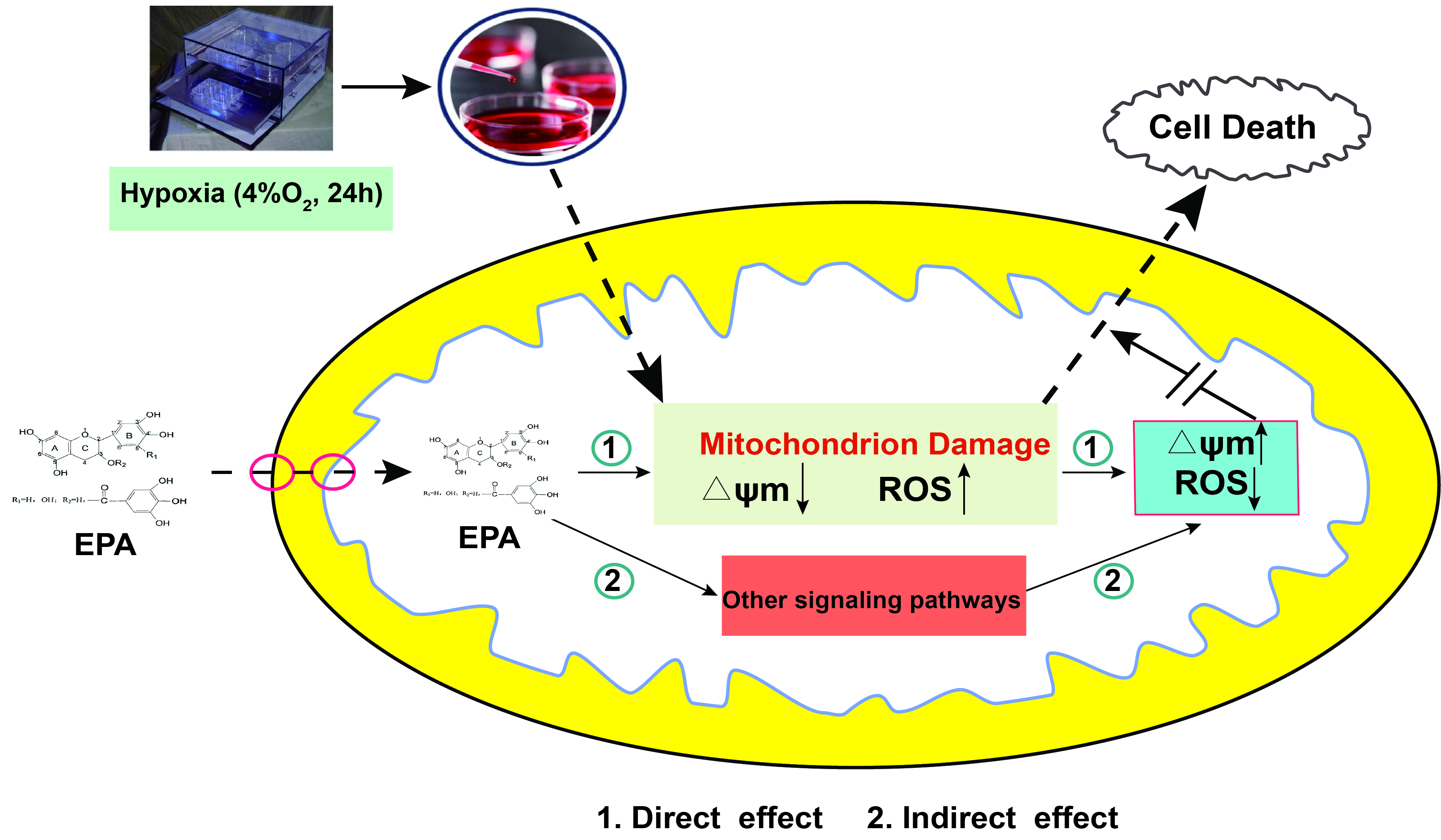
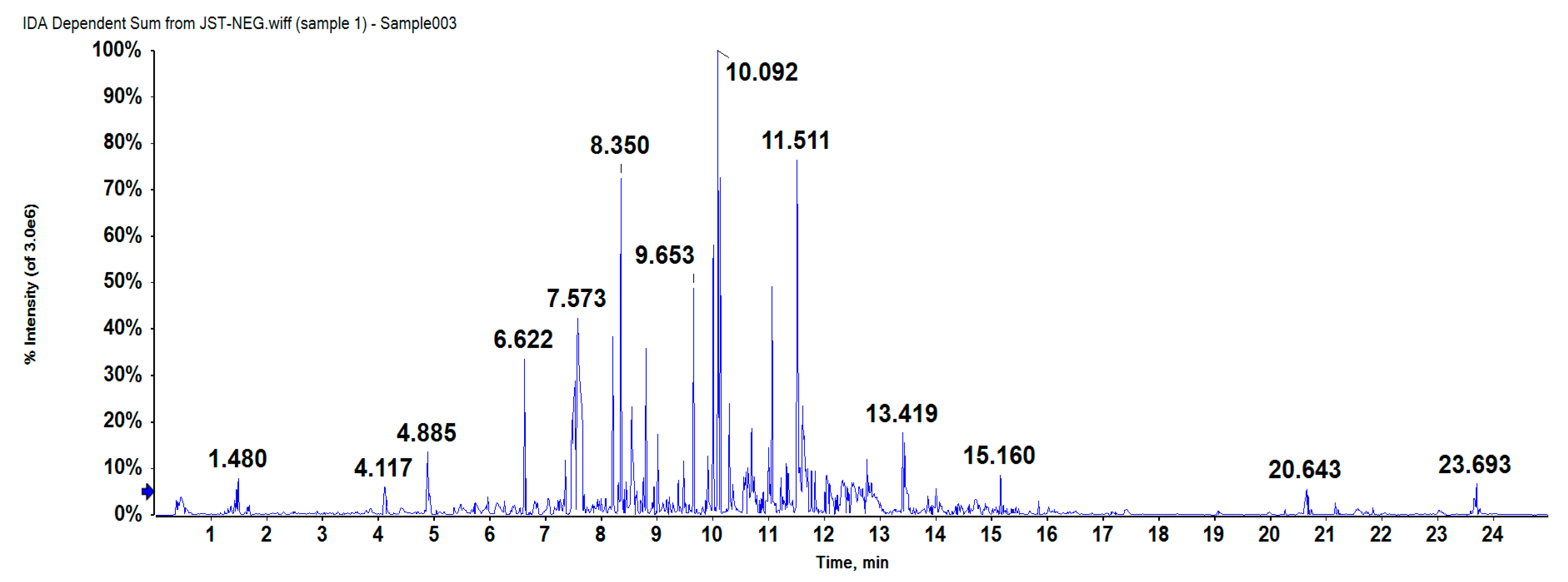
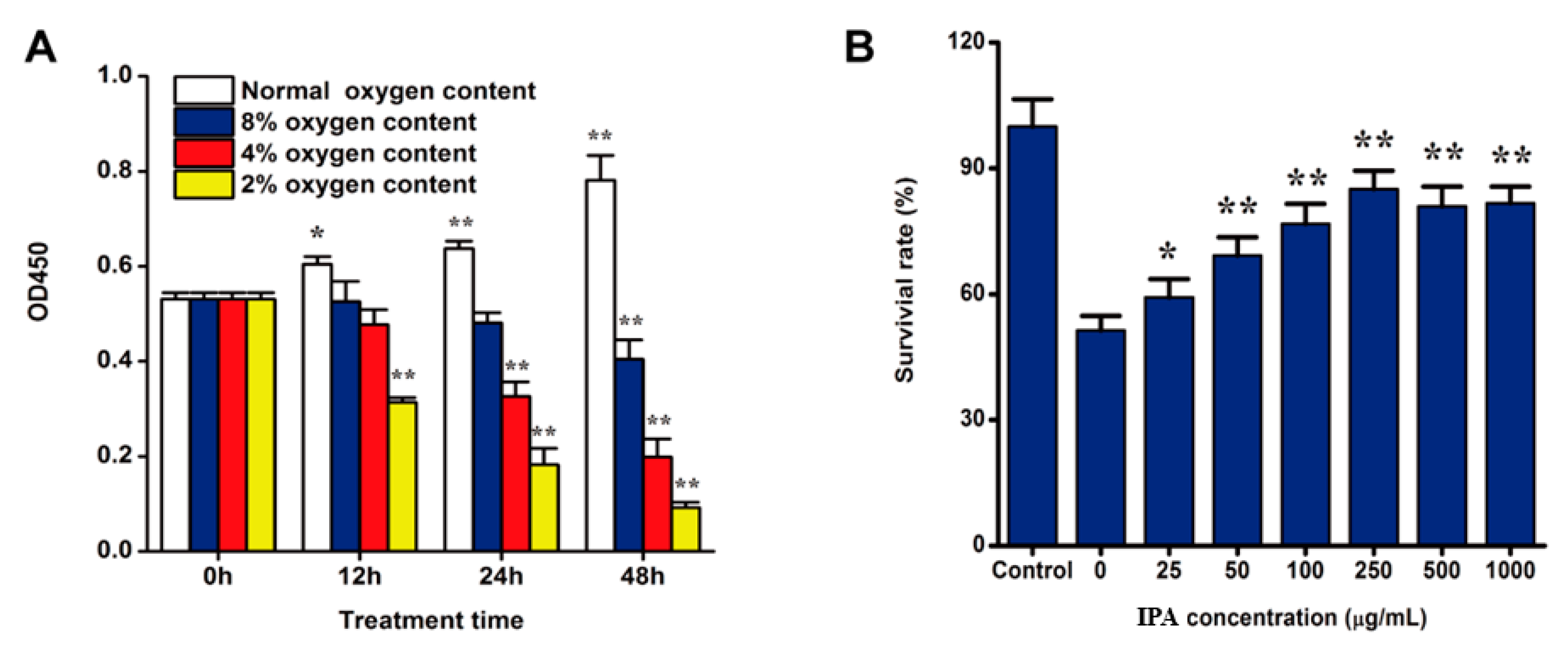
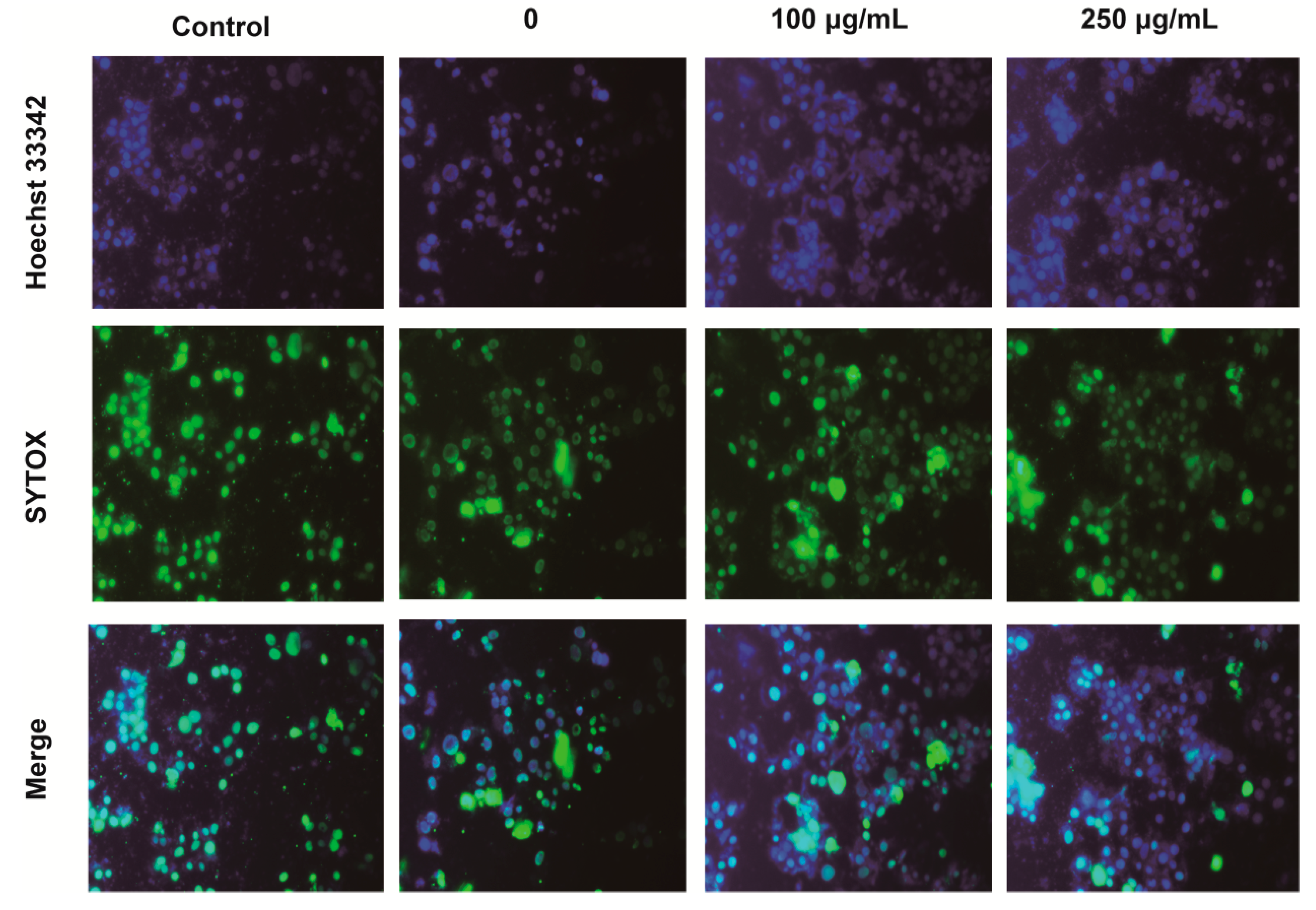
Phenolic Acids-Rich Fractions from Agaricus bitorguis (Quél.) Sacc. Chaidam ZJU-CDMA-12 Mycelia Modulate Hypoxic Stress on Hypoxia-Damaged PC12 Cells



Abstract
Share and Cite
Lu, H.; Jiao, Z.; Jiao, Y.; Wang, W.; Chen, Q. Phenolic Acids-Rich Fractions from Agaricus bitorguis (Quél.) Sacc. Chaidam ZJU-CDMA-12 Mycelia Modulate Hypoxic Stress on Hypoxia-Damaged PC12 Cells. Molecules 2020, 25, 4845. https://doi.org/10.3390/molecules25204845
Lu H, Jiao Z, Jiao Y, Wang W, Chen Q. Phenolic Acids-Rich Fractions from Agaricus bitorguis (Quél.) Sacc. Chaidam ZJU-CDMA-12 Mycelia Modulate Hypoxic Stress on Hypoxia-Damaged PC12 Cells. Molecules. 2020; 25(20):4845. https://doi.org/10.3390/molecules25204845
Chicago/Turabian StyleLu, Hongyun, Zhihua Jiao, Yingchun Jiao, Wei Wang, and Qihe Chen. 2020. "Phenolic Acids-Rich Fractions from Agaricus bitorguis (Quél.) Sacc. Chaidam ZJU-CDMA-12 Mycelia Modulate Hypoxic Stress on Hypoxia-Damaged PC12 Cells" Molecules 25, no. 20: 4845. https://doi.org/10.3390/molecules25204845
APA StyleLu, H., Jiao, Z., Jiao, Y., Wang, W., & Chen, Q. (2020). Phenolic Acids-Rich Fractions from Agaricus bitorguis (Quél.) Sacc. Chaidam ZJU-CDMA-12 Mycelia Modulate Hypoxic Stress on Hypoxia-Damaged PC12 Cells. Molecules, 25(20), 4845. https://doi.org/10.3390/molecules25204845