Article

Molecular Dynamic Simulations to Probe Stereoselectivity of Tiagabine Binding with Human GAT1
Research Center for Modeling and Simulation (RCMS), National University of Sciences and Technology (NUST), Islamabad 44000, Pakistan
*
Author to whom correspondence should be addressed.
Molecules 2020, 25(20), 4745; https://doi.org/10.3390/molecules25204745

Submission received: 3 September 2020 / Revised: 8 October 2020 / Accepted: 12 October 2020 / Published: 16 October 2020
(This article belongs to the Special Issue Drug Discovery and Molecular Docking)

Abstract

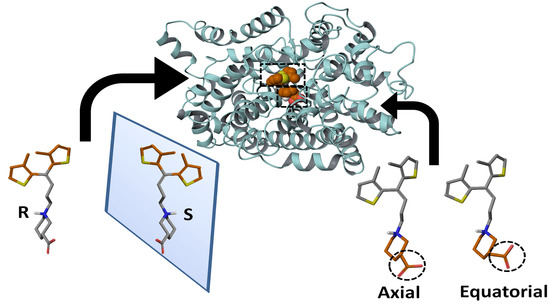
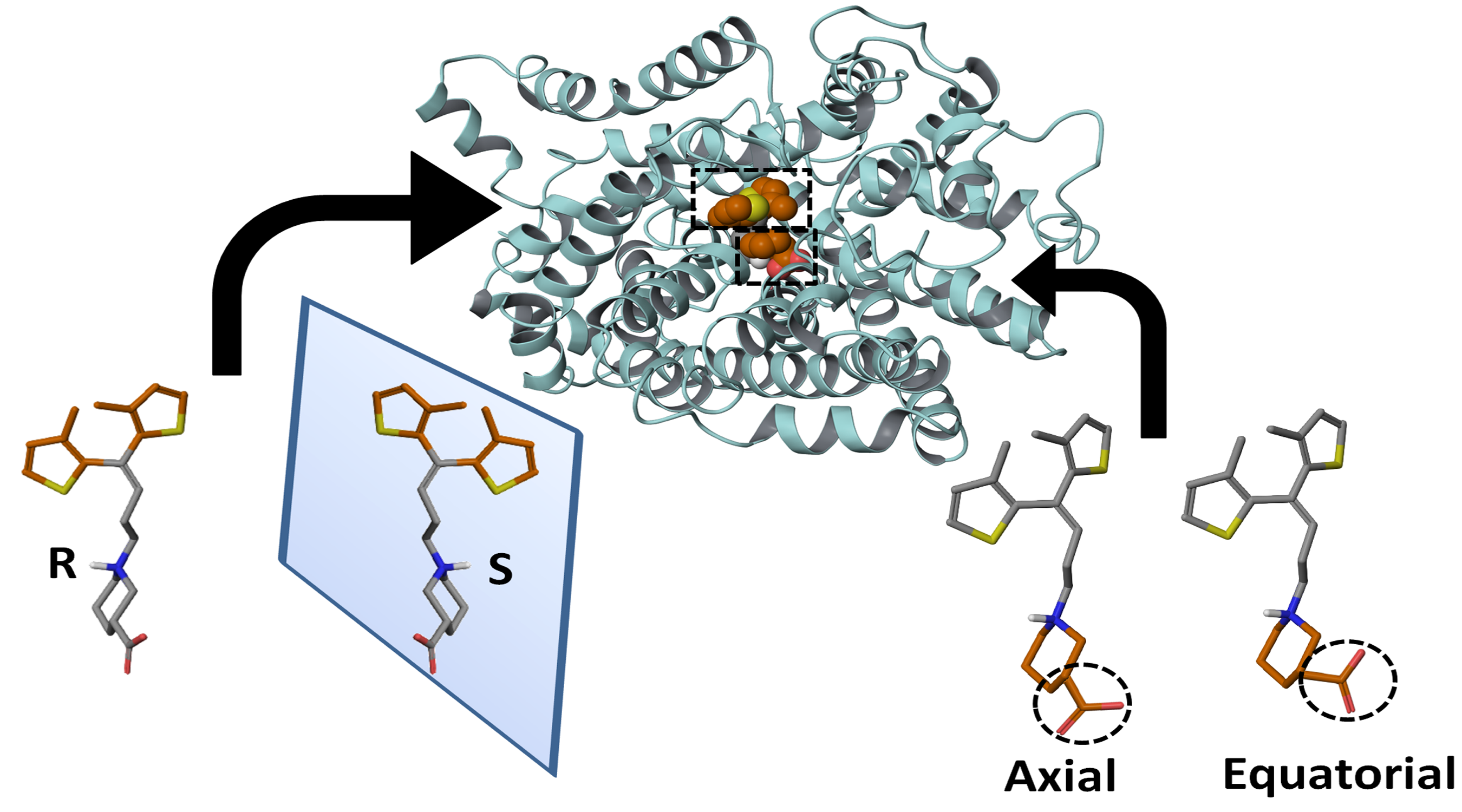
The human gamma aminobutyric acid transporter subtype 1 (hGAT1) located in the nerve terminals is known to catalyze the neuronal function by the electrogenic reuptake of γ-aminobutyric acid (GABA) with the co-transport of Na+ and Cl ions. In the past, there has been a major research drive focused on the dysfunction of hGAT1 in several neurological disorders. Thus, hGAT1 of the GABAergic system has been well established as an attractive target for such diseased conditions. Till date, there are various reports about stereo selectivity of –COOH group of tiagabine, a Food and Drug Administration (FDA)-approved hGAT1-selective antiepileptic drug. However, the effect of the stereochemistry of the protonated –NH group of tiagabine has never been scrutinized. Therefore, in this study, tiagabine has been used to explore the binding hypothesis of different enantiomers of tiagabine. In addition, the impact of axial and equatorial configuration of the–COOH group attached at the meta position of the piperidine ring of tiagabine enantiomers was also investigated. Further, the stability of the finally selected four hGAT1–tiagabine enantiomers namely entries 3, 4, 6, and 9 was evaluated through 100 ns molecular dynamics (MD) simulations for the selection of the best probable tiagabine enantiomer. The results indicate that the protonated –NH group in the R-conformation and the –COOH group of Tiagabine in the equatorial configuration of entry 4 provide maximum strength in terms of interaction within the hGAT1 binding pocket to prevent the change in hGAT1 conformational state, i.e., from open-to-out to open-to-in as compared to other selected tiagabine enantiomers 3, 6, and 9.
Keywords: molecular dynamics; GAT1 inhibitors; tiagabine stereoisomers; GABA reuptake molecular dynamics; GAT1 inhibitors; tiagabine stereoisomers; GABA reuptake
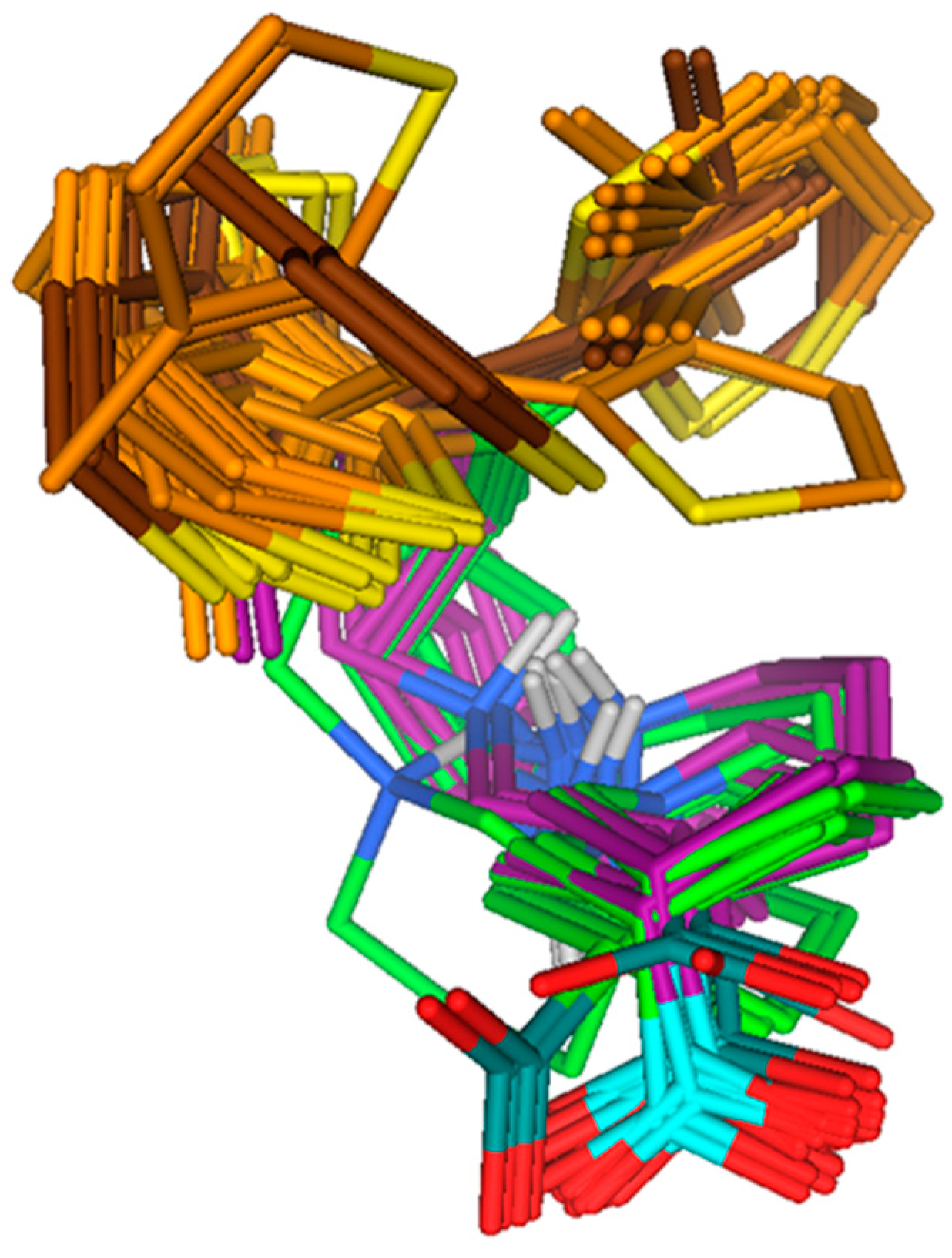
Graphical Abstract