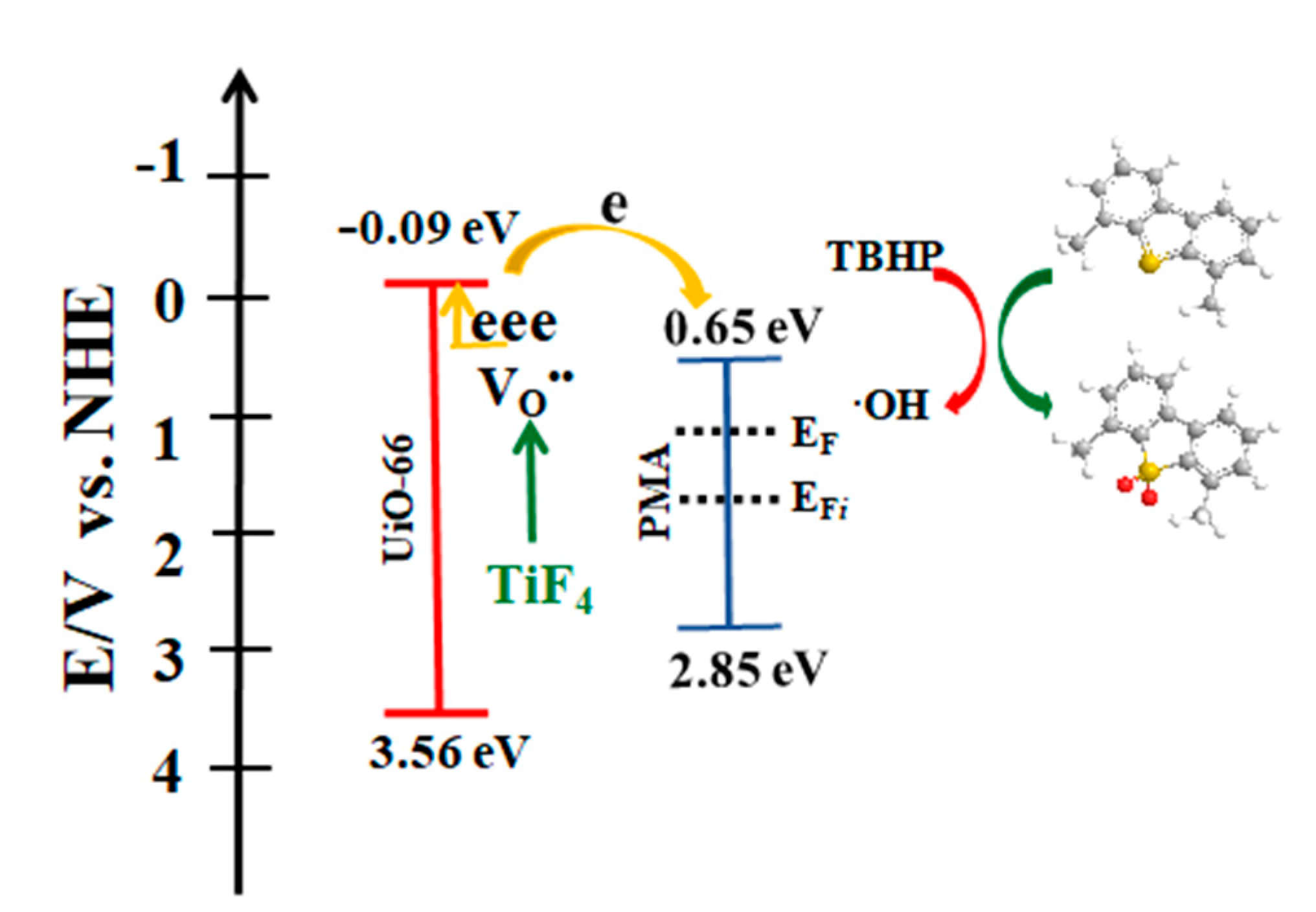
Synergistic Effect between Zr-MOF and Phosphomolybdic Acid with the Promotion of TiF4 Template

Abstract
Share and Cite
Ding, Z.; Zhang, X.M.; Chang, X.; Wang, S.; Wang, D.-H.; Zhang, M.H.; Zhang, T.H. Synergistic Effect between Zr-MOF and Phosphomolybdic Acid with the Promotion of TiF4 Template. Molecules 2020, 25, 4673. https://doi.org/10.3390/molecules25204673
Ding Z, Zhang XM, Chang X, Wang S, Wang D-H, Zhang MH, Zhang TH. Synergistic Effect between Zr-MOF and Phosphomolybdic Acid with the Promotion of TiF4 Template. Molecules. 2020; 25(20):4673. https://doi.org/10.3390/molecules25204673
Chicago/Turabian StyleDing, Zhu, Xiao Min Zhang, Xue Chang, Shuo Wang, Dan-Hong Wang, Ming Hui Zhang, and Tian Hao Zhang. 2020. "Synergistic Effect between Zr-MOF and Phosphomolybdic Acid with the Promotion of TiF4 Template" Molecules 25, no. 20: 4673. https://doi.org/10.3390/molecules25204673
APA StyleDing, Z., Zhang, X. M., Chang, X., Wang, S., Wang, D.-H., Zhang, M. H., & Zhang, T. H. (2020). Synergistic Effect between Zr-MOF and Phosphomolybdic Acid with the Promotion of TiF4 Template. Molecules, 25(20), 4673. https://doi.org/10.3390/molecules25204673