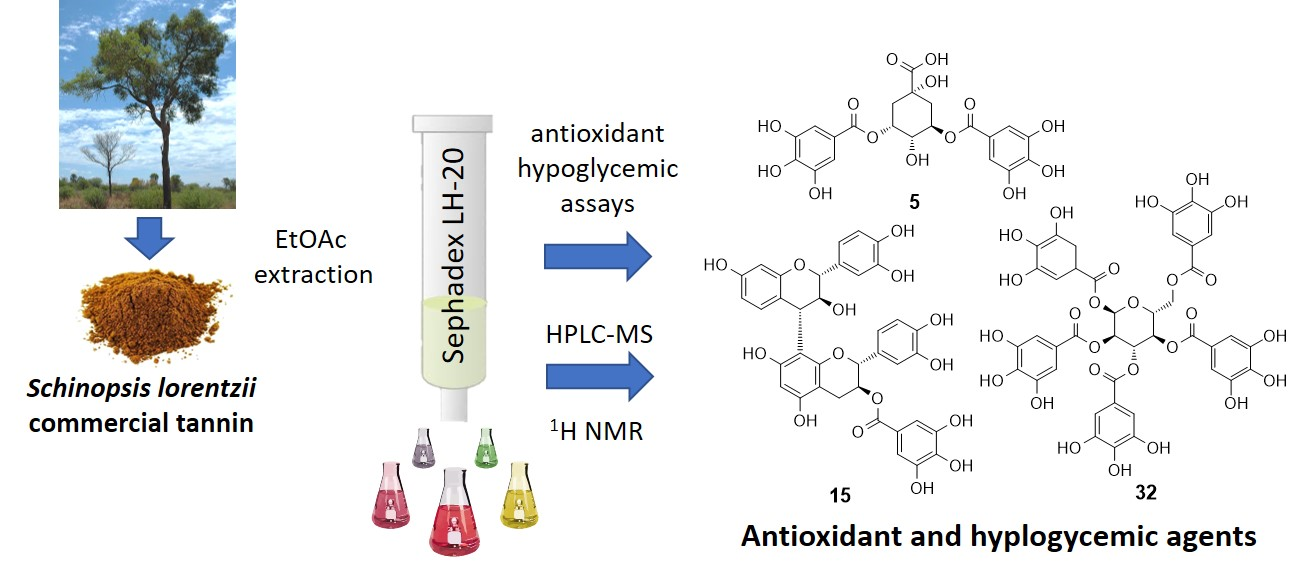
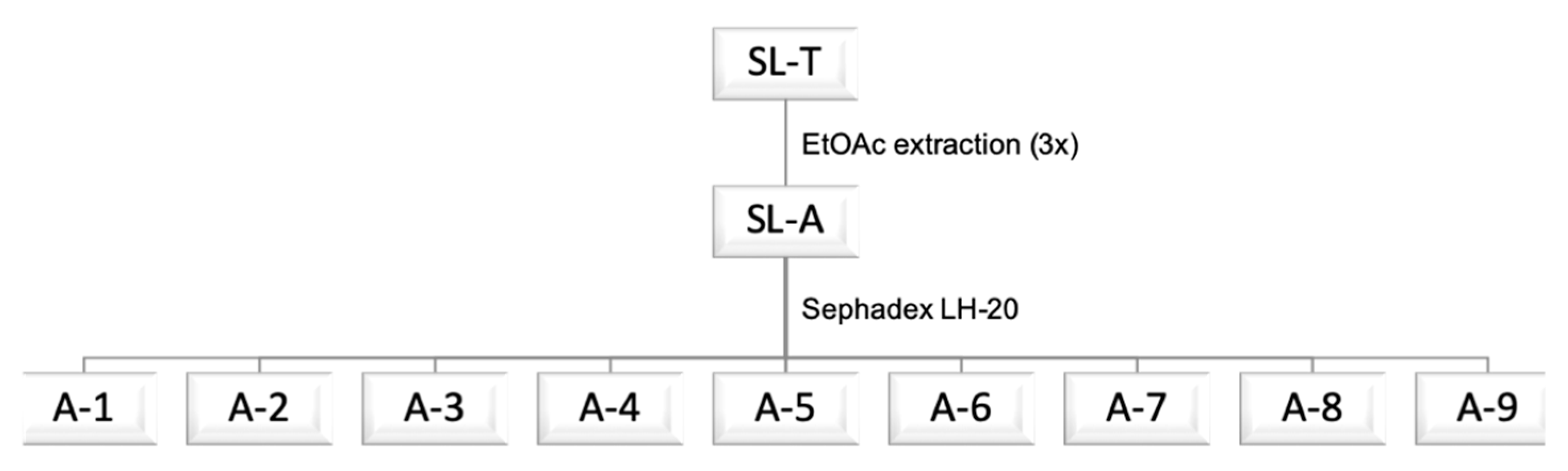
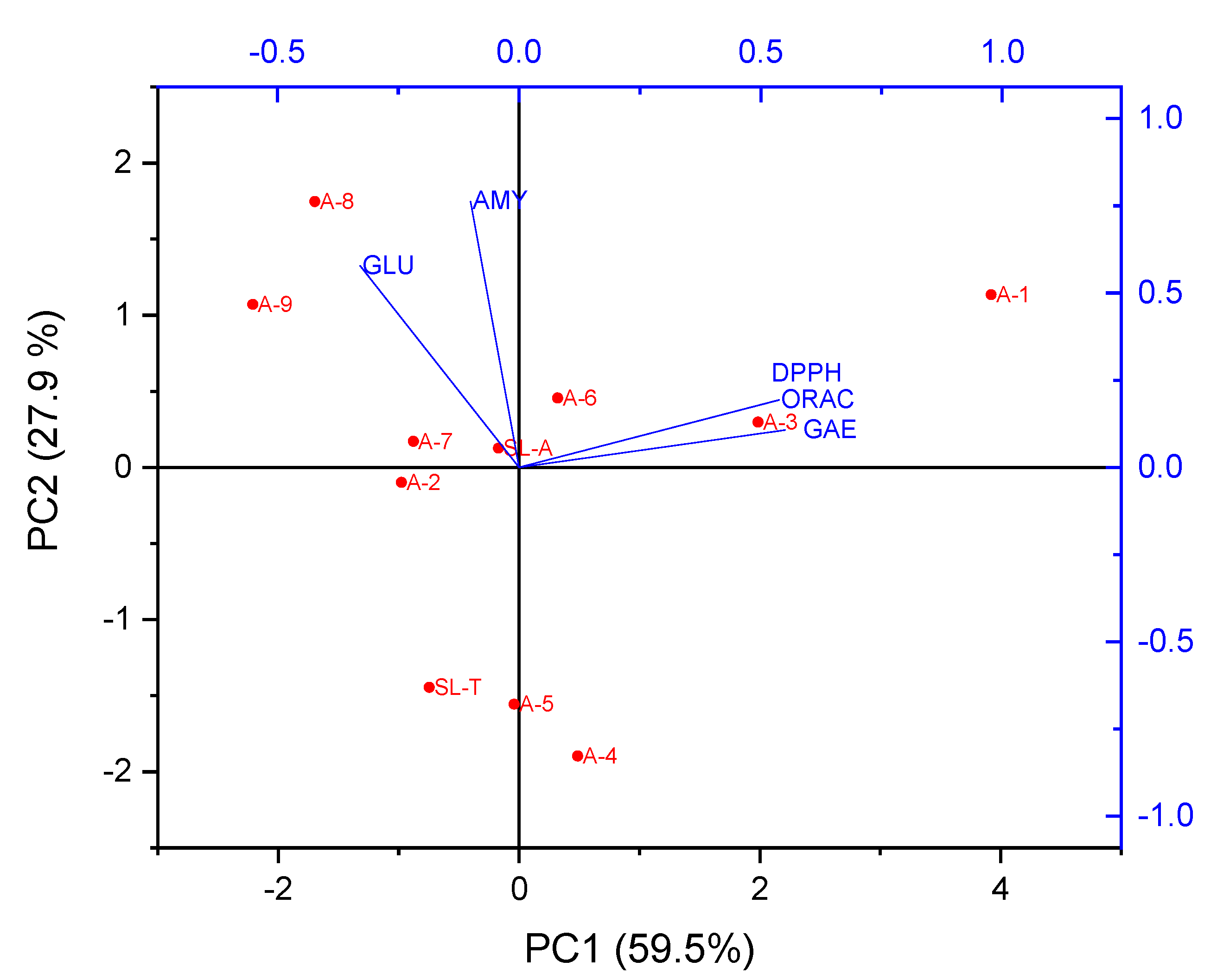
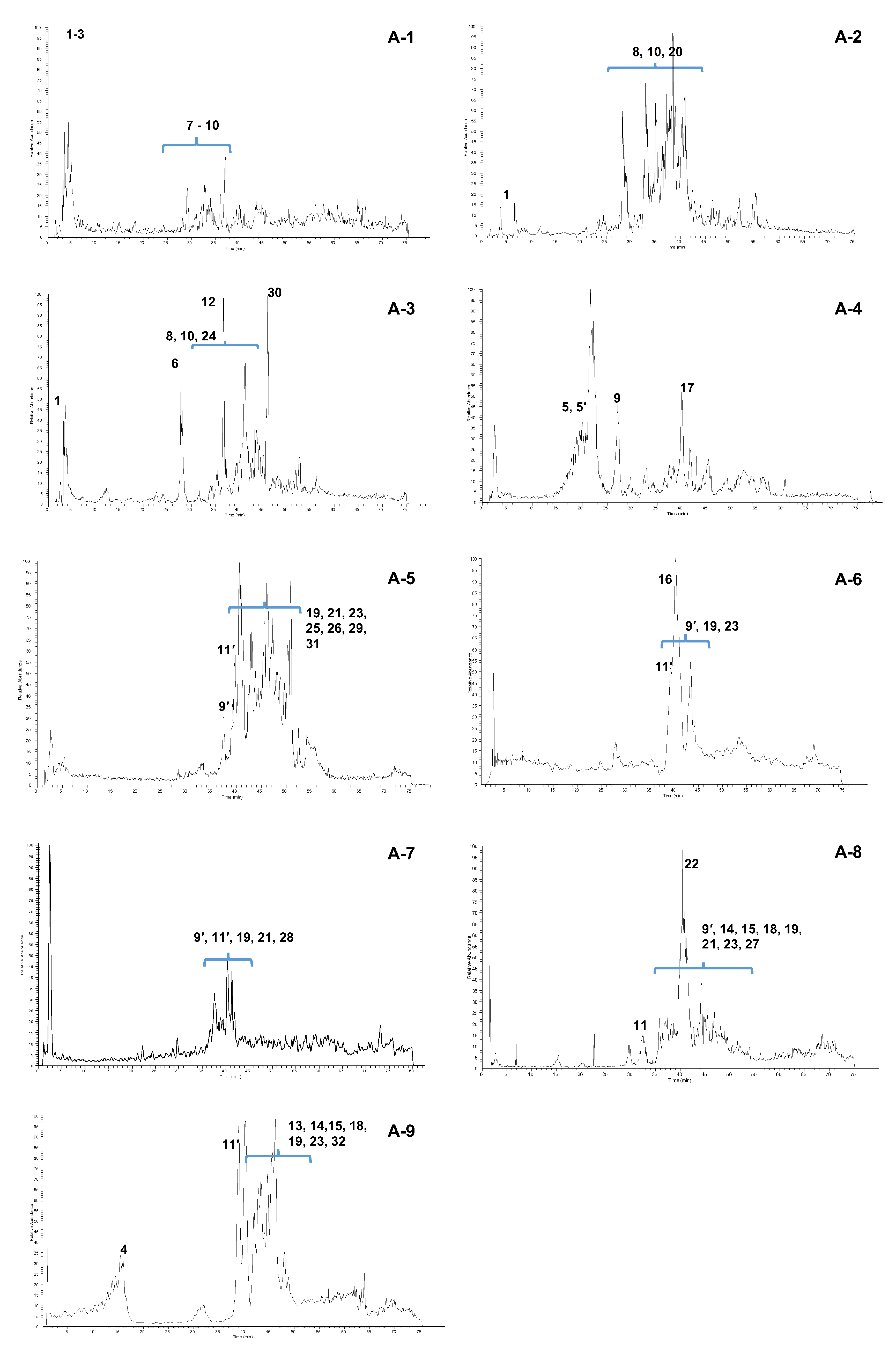
Mass Spectrometry and 1H-NMR Study of Schinopsis lorentzii (Quebracho) Tannins as a Source of Hypoglycemic and Antioxidant Principles

Abstract
Share and Cite
Cardullo, N.; Muccilli, V.; Cunsolo, V.; Tringali, C. Mass Spectrometry and 1H-NMR Study of Schinopsis lorentzii (Quebracho) Tannins as a Source of Hypoglycemic and Antioxidant Principles. Molecules 2020, 25, 3257. https://doi.org/10.3390/molecules25143257
Cardullo N, Muccilli V, Cunsolo V, Tringali C. Mass Spectrometry and 1H-NMR Study of Schinopsis lorentzii (Quebracho) Tannins as a Source of Hypoglycemic and Antioxidant Principles. Molecules. 2020; 25(14):3257. https://doi.org/10.3390/molecules25143257
Chicago/Turabian StyleCardullo, Nunzio, Vera Muccilli, Vincenzo Cunsolo, and Corrado Tringali. 2020. "Mass Spectrometry and 1H-NMR Study of Schinopsis lorentzii (Quebracho) Tannins as a Source of Hypoglycemic and Antioxidant Principles" Molecules 25, no. 14: 3257. https://doi.org/10.3390/molecules25143257
APA StyleCardullo, N., Muccilli, V., Cunsolo, V., & Tringali, C. (2020). Mass Spectrometry and 1H-NMR Study of Schinopsis lorentzii (Quebracho) Tannins as a Source of Hypoglycemic and Antioxidant Principles. Molecules, 25(14), 3257. https://doi.org/10.3390/molecules25143257