Article

Quercetin Inhibits Lef1 and Resensitizes Docetaxel-Resistant Breast Cancer Cells
1
Division of Cellular Signaling, National Cancer Center Research Institute, Tokyo 104-0045, Japan
2
Department of Molecular and Cellular Medicine, Institute of Medical Science, Tokyo Medical University, Tokyo 160-0023, Japan
3
Department of Urology, St. Marianna University School of Medicine, Kanagawa 216-8511, Japan
4
Department of Cellular and Molecular Biology, Hiroshima University, Hiroshima 734-8553, Japan
*
Author to whom correspondence should be addressed.
Molecules 2020, 25(11), 2576; https://doi.org/10.3390/molecules25112576

Submission received: 27 April 2020 / Revised: 29 May 2020 / Accepted: 30 May 2020 / Published: 1 June 2020
(This article belongs to the Special Issue Advances in Anticancer Drug Discovery)

Abstract

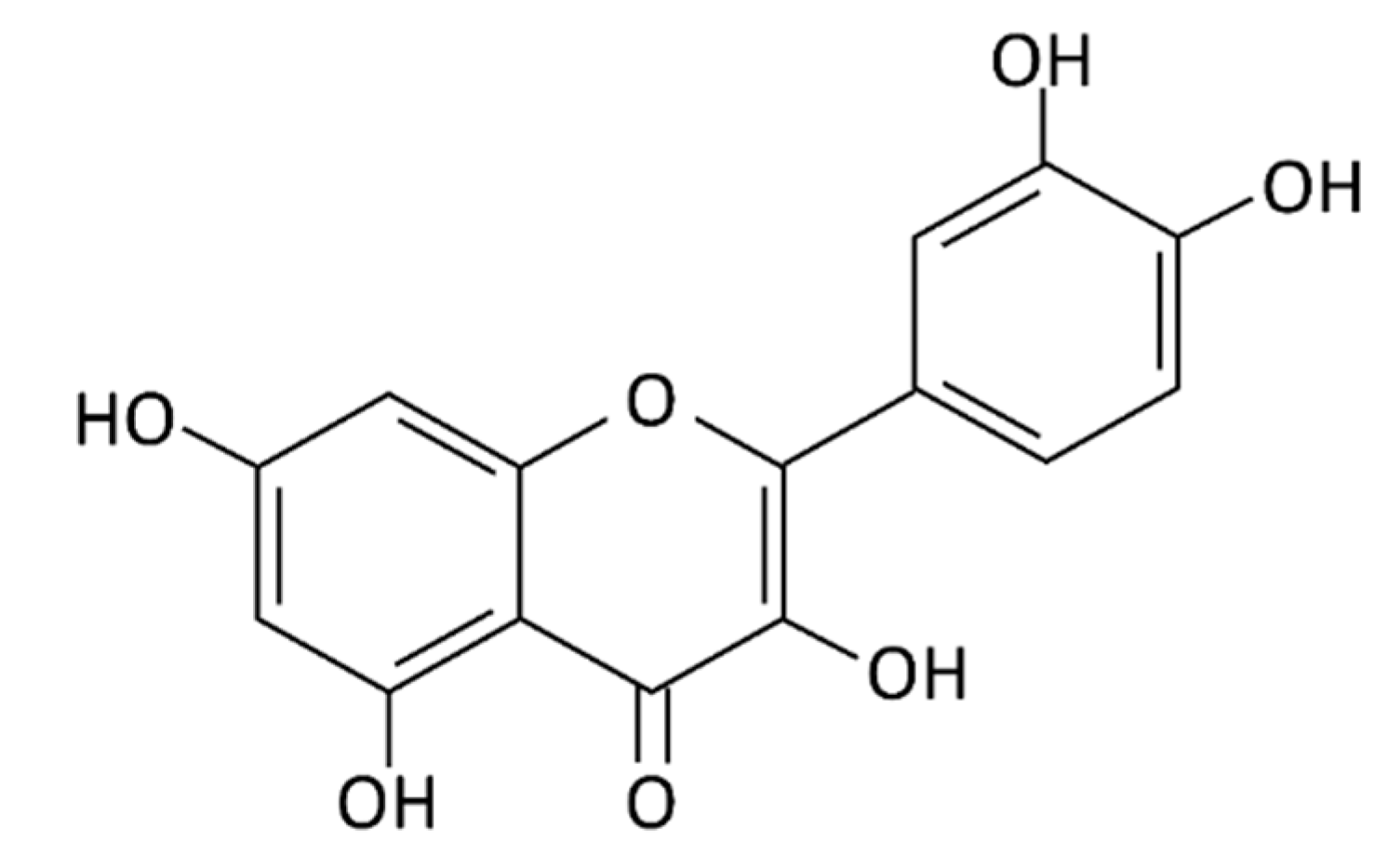
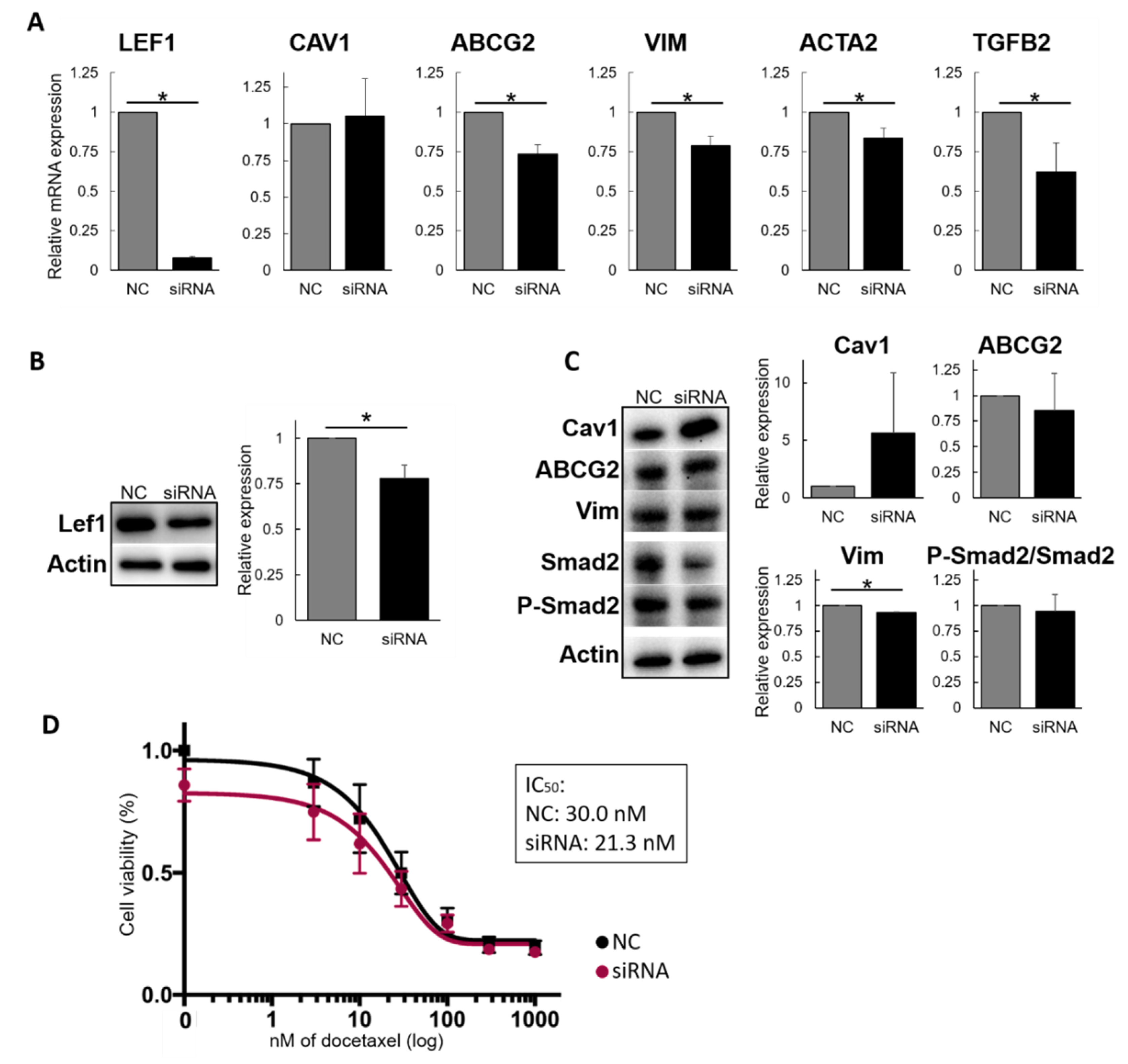
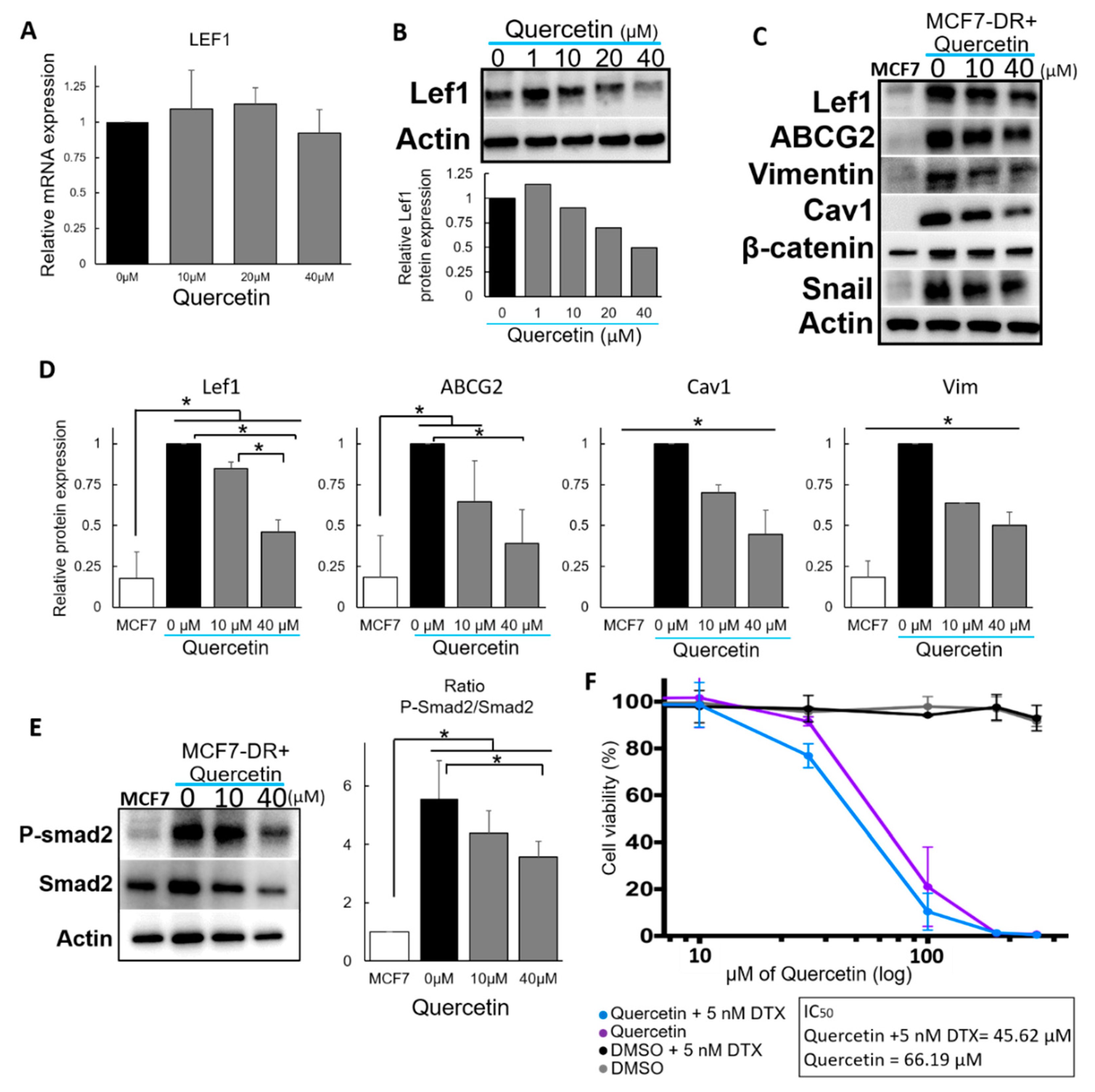
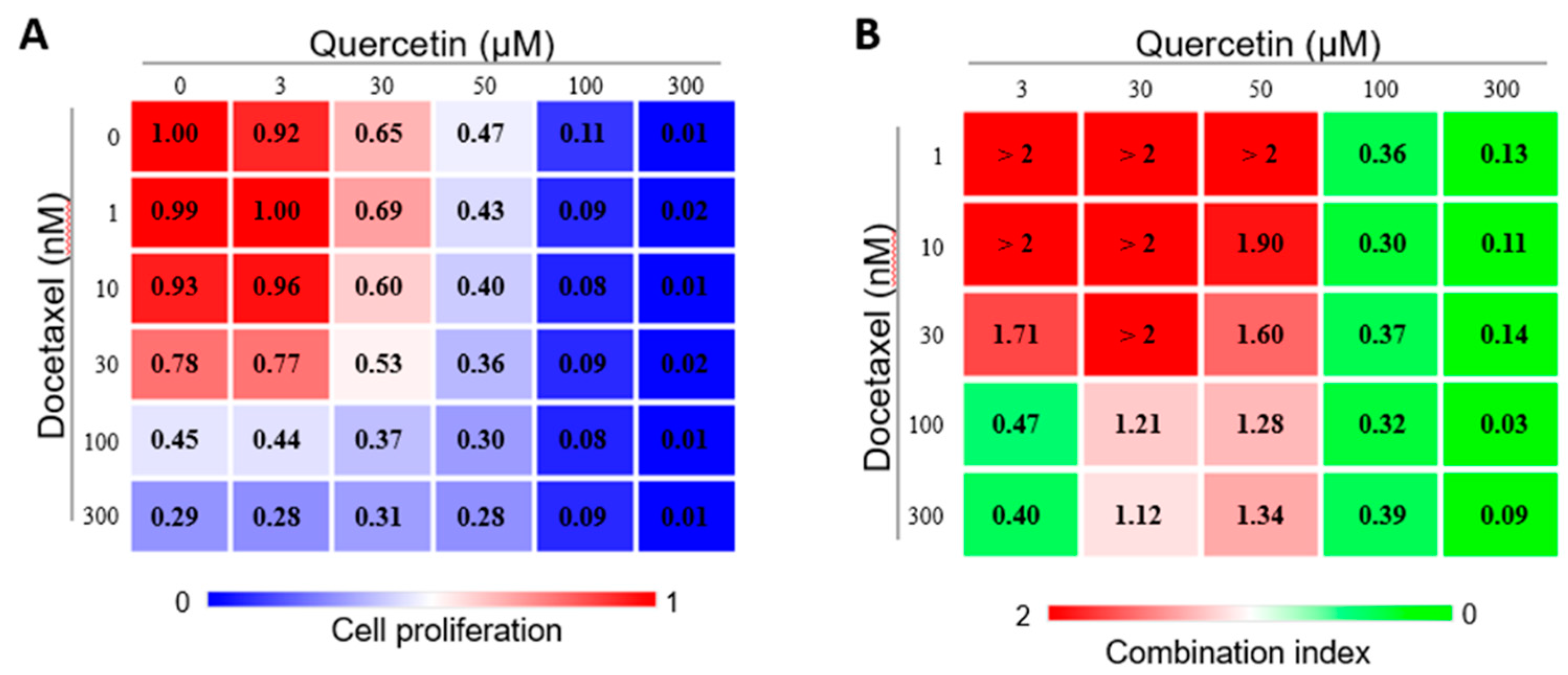
Drug resistance is a major problem for breast cancer patients. Docetaxel is an anti-mitotic agent that serves as first line of treatment in metastatic breast cancer, however it is susceptible to cellular drug resistance. Drug-resistant cells are able to spread during treatment, leading to treatment failure and eventually metastasis, which remains the main cause for cancer-associated death. In previous studies, we used single-cell technologies and identified a set of genes that exhibit increased expression in drug-resistant cells, and they are mainly regulated by Lef1. Furthermore, upregulating Lef1 in parental cells caused them to become drug resistant. Therefore, we hypothesized that inhibiting Lef1 could resensitize cells to docetaxel. Here, we confirmed that Lef1 inhibition, especially on treatment with the small molecule quercetin, decreased the expression of Lef1 and resensitized cells to docetaxel. Our results demonstrate that Lef1 inhibition also downregulated ABCG2, Vim, and Cav1 expression and equally decreased Smad-dependent TGF-β signaling pathway activation. Likewise, these two molecules worked in a synergetic manner, greatly reducing the viability of drug-resistant cells. Prior studies in phase I clinical trials have already shown that quercetin can be safely administered to patients. Therefore, the use of quercetin as an adjuvant treatment in addition to docetaxel for the treatment of breast cancer may be a promising therapeutic approach.
Keywords: quercetin; drug resistance; Lef1; breast cancer quercetin; drug resistance; Lef1; breast cancer