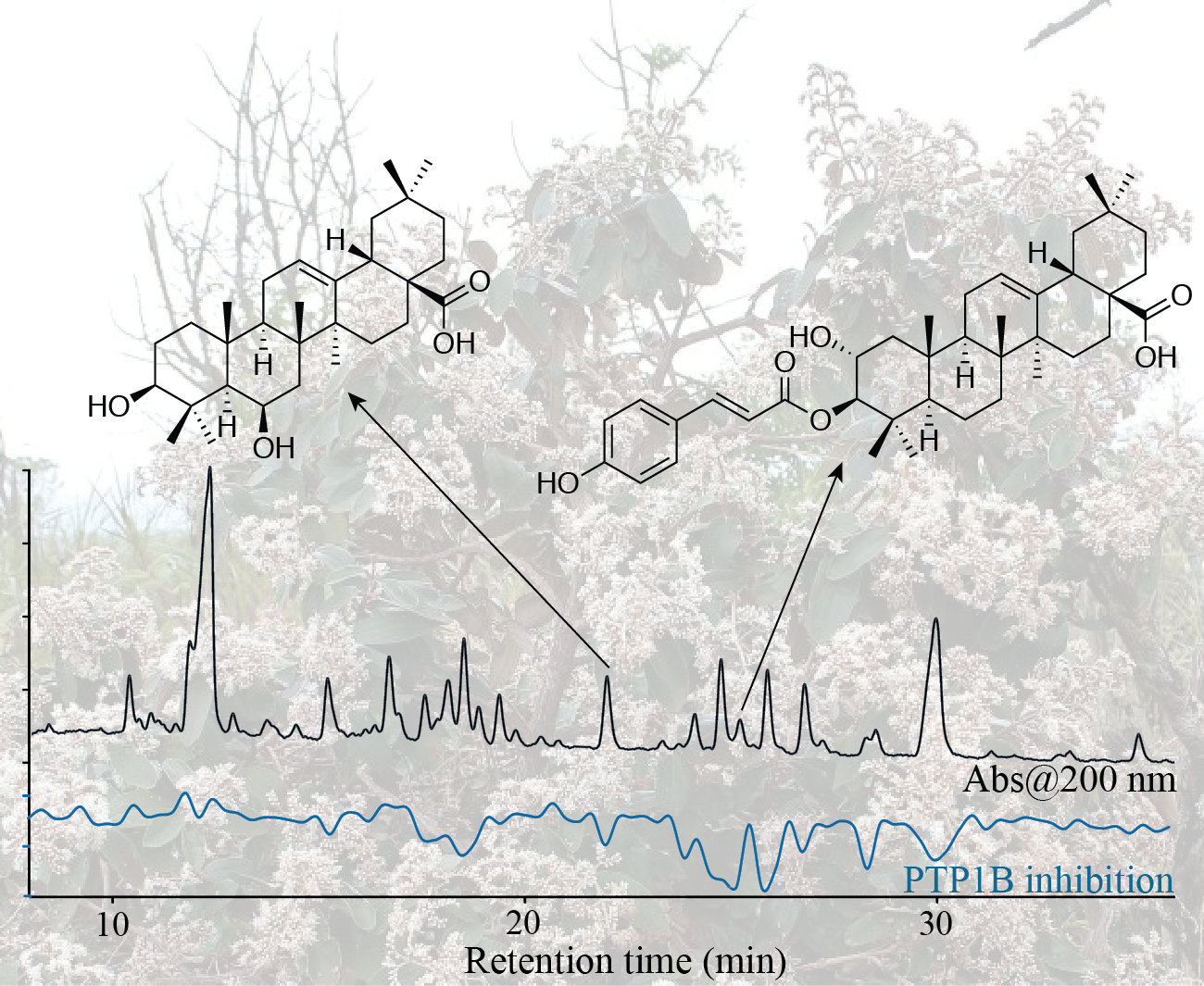
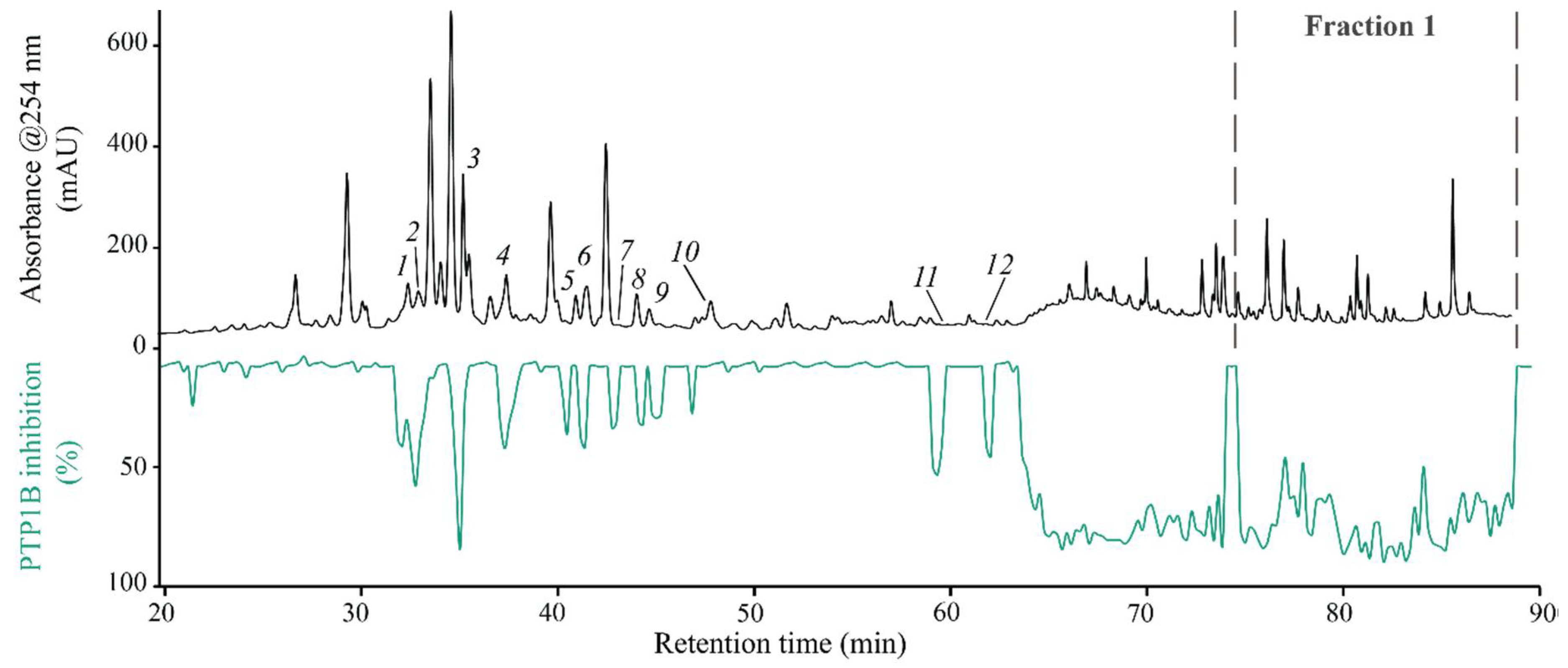
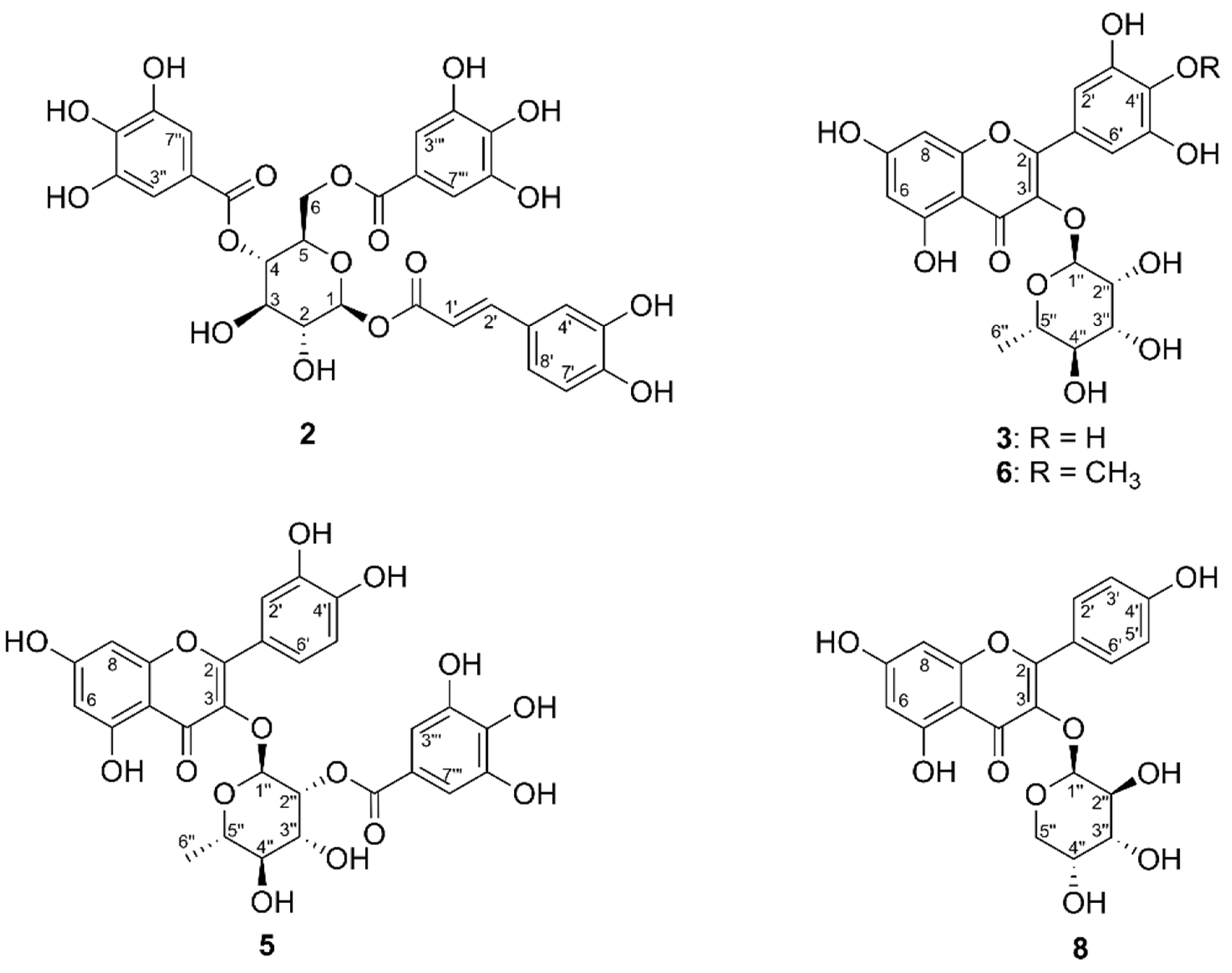
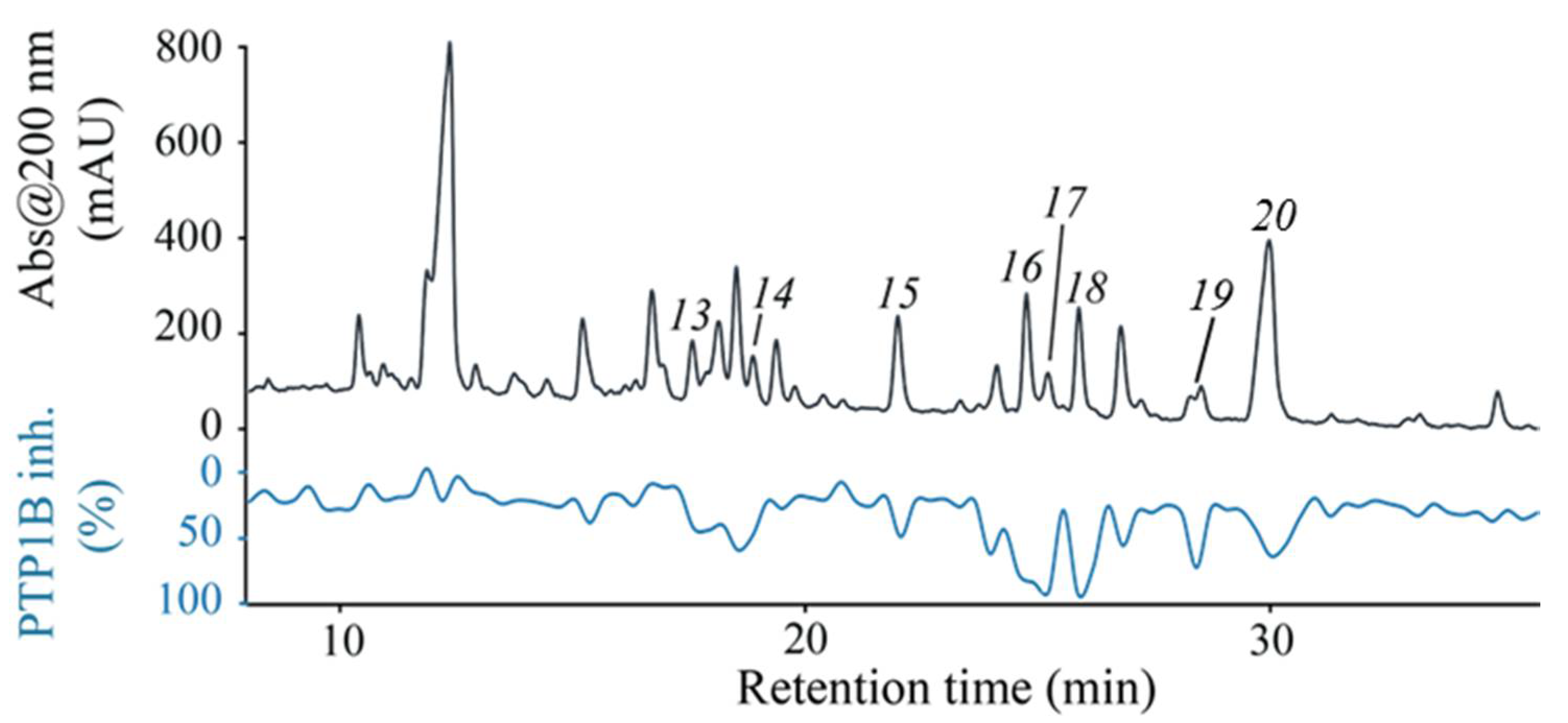
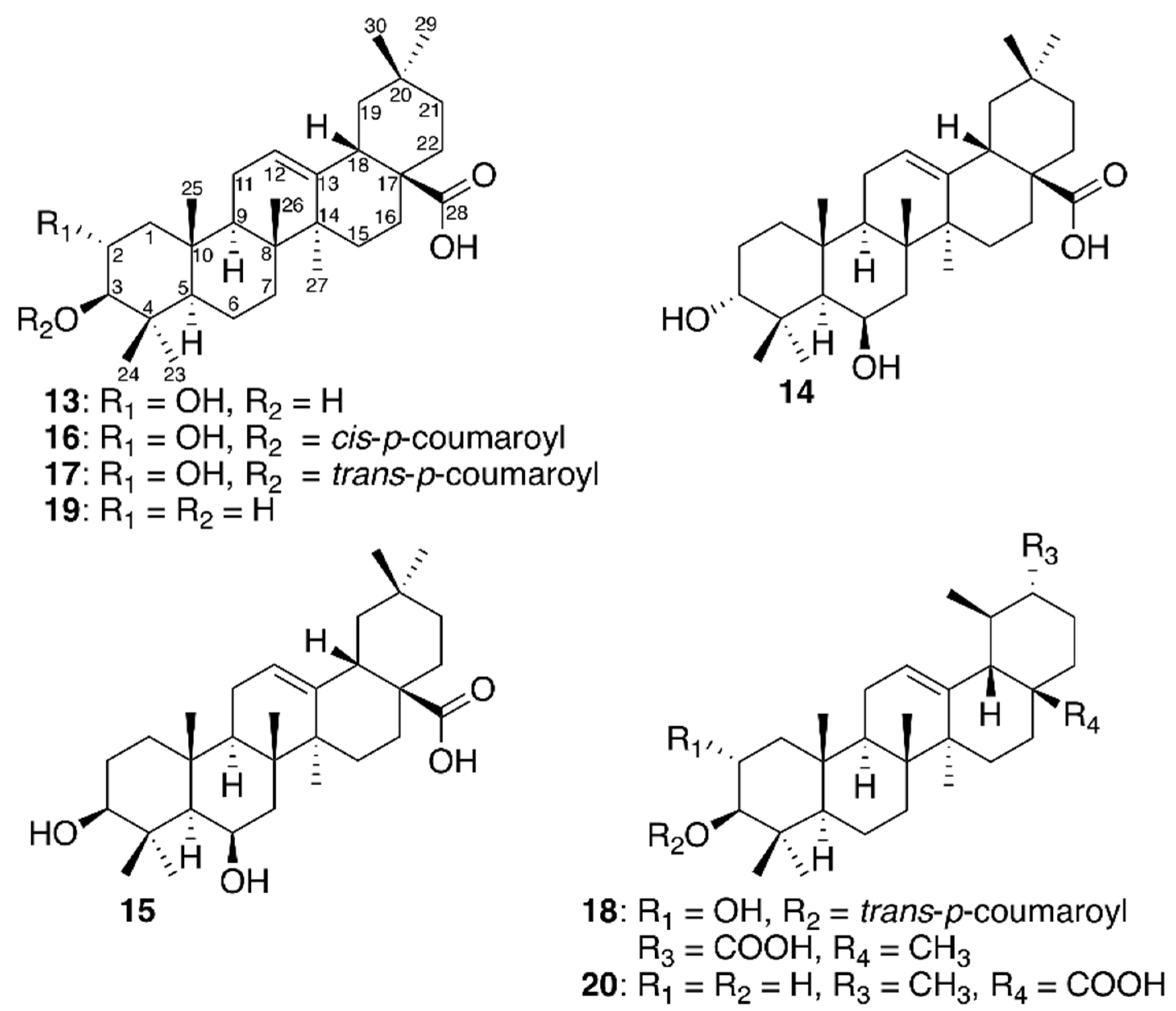
High-Resolution PTP1B Inhibition Profiling Combined with HPLC-HRMS-SPE-NMR for Identification of PTP1B Inhibitors from Miconia albicans

 ,
,  , and
, and 
Abstract
Share and Cite
De Cássia Lemos Lima, R.; T. Kongstad, K.; Kato, L.; José das Silva, M.; Franzyk, H.; Staerk, D. High-Resolution PTP1B Inhibition Profiling Combined with HPLC-HRMS-SPE-NMR for Identification of PTP1B Inhibitors from Miconia albicans. Molecules 2018, 23, 1755. https://doi.org/10.3390/molecules23071755
De Cássia Lemos Lima R, T. Kongstad K, Kato L, José das Silva M, Franzyk H, Staerk D. High-Resolution PTP1B Inhibition Profiling Combined with HPLC-HRMS-SPE-NMR for Identification of PTP1B Inhibitors from Miconia albicans. Molecules. 2018; 23(7):1755. https://doi.org/10.3390/molecules23071755
Chicago/Turabian StyleDe Cássia Lemos Lima, Rita, Kenneth T. Kongstad, Lucília Kato, Marcos José das Silva, Henrik Franzyk, and Dan Staerk. 2018. "High-Resolution PTP1B Inhibition Profiling Combined with HPLC-HRMS-SPE-NMR for Identification of PTP1B Inhibitors from Miconia albicans" Molecules 23, no. 7: 1755. https://doi.org/10.3390/molecules23071755
APA StyleDe Cássia Lemos Lima, R., T. Kongstad, K., Kato, L., José das Silva, M., Franzyk, H., & Staerk, D. (2018). High-Resolution PTP1B Inhibition Profiling Combined with HPLC-HRMS-SPE-NMR for Identification of PTP1B Inhibitors from Miconia albicans. Molecules, 23(7), 1755. https://doi.org/10.3390/molecules23071755