

Kinin Receptor Antagonists as Potential Neuroprotective Agents in Central Nervous System Injury

Abstract
1. Introduction
2. Kinins and Their Receptors
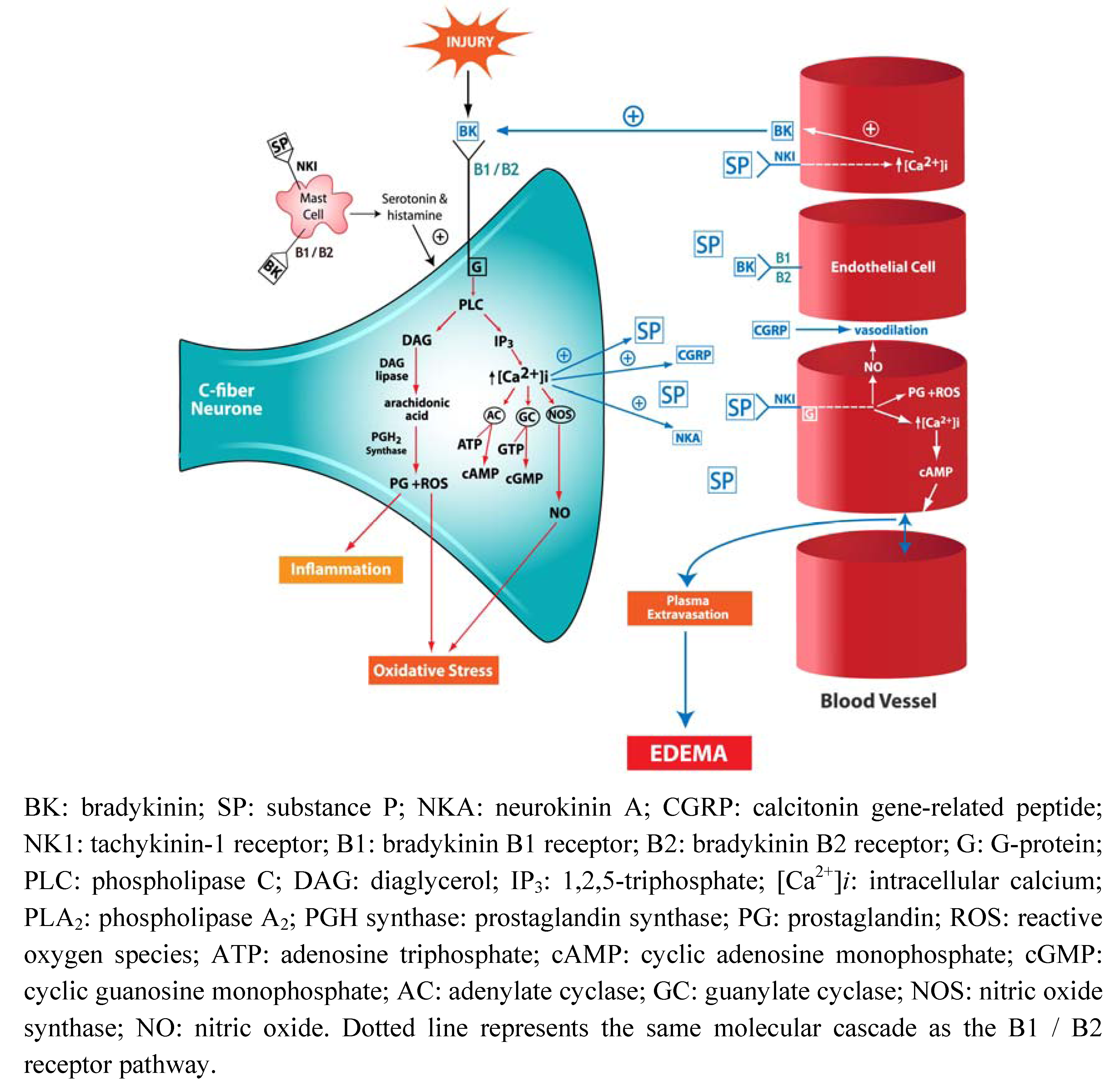
3. Traumatic Brain Injury
4. Spinal Cord Injury
5. Ischemic Stroke
6. Conclusions
Acknowledgements
References and Notes
- Vink, R.; Nimmo, A.J. Multifunctional drugs for head injury. Neurotherapeutics 2009, 6, 28–42. [Google Scholar] [CrossRef]
- Leeb-Lundberg, L.M.; Marceau, F.; Muller-Esterl, W.; Pettibone, D.J.; Zuraw, B.L. International union of pharmacology. XLV. Classification of the kinin receptor family: from molecular mechanisms to pathophysiological consequences. Pharmacol. Rev. 2005, 57, 27–77. [Google Scholar] [CrossRef]
- Nimmo, A.J.; Vink, R. Recent patents in CNS drug discovery: the management of inflammation in the central nervous system. Recent Pat CNS Drug Discov. 2009, 4, 86–95. [Google Scholar] [CrossRef]
- Raidoo, D.M.; Bhoola, K.D. Pathophysiology of the kallikrein-kinin system in mammalian nervous tissue. Pharmacol. Ther. 1998, 79, 105–127. [Google Scholar]
- Rodi, D.; Couture, R.; Ongali, B.; Simonato, M. Targeting kinin receptors for the treatment of neurological diseases. Curr. Pharm. Design 2005, 11, 1313–1326. [Google Scholar] [CrossRef]
- Hokfelt, T.; Pernow, B.; Wahren, J. Substance P: a pioneer amongst neuropeptides. J. Int. Med. 2001, 249, 27–40. [Google Scholar]
- Gerard, N.P.; Garraway, L.A.; Eddy, J.R.L.; Shows, T.B.; Iijima, H.; Paquet, J.-L.; Gerard, C. Human substance P receptor( NK-1): Organisation of the gene, chromosome localization, and functional expression of cDNA clones. Biochemistry 1991, 30, 10640–10646. [Google Scholar] [CrossRef]
- Khawaja, A.M.; Rogers, D.F. Tachykinins: receptor to effector. Int. J. Biochem. Cell Biol. 1996, 28, 721–738. [Google Scholar] [CrossRef]
- Severini, C.; Improta, G.; Falconieri-Erspamer, G.; Salvadori, S.; Erspamer, V. The tachykinin peptide family. Pharmacol. Rev. 2002, 54, 385–322. [Google Scholar]
- Harrison, S.; Geppetti, P. Review: Substance P. Int. J. Biochem. Cell Biol. 2001, 33, 555–576. [Google Scholar] [CrossRef]
- Pinto, F.M.; Almeida, T.A.; Hernandez, M.; Devillier, P.; Advenier, C.; Candenas, M.L. mRNA expression of tachykinins and tachykinin receptors in different human tissues. Eur. J. Pharmacol. 2004, 494, 233–239. [Google Scholar] [CrossRef]
- Mantyh, P.W.; Johnson, D.J.; Boehmer, C.G.; Catton, M.D.; Vinters, H.V.; Maggio, J.E.; Too, H.P.; Vigna, S.R. Substance P receptor binding sites are expressed by glia in vivo after neuronal injury. Proc. Natl. Acad. Sci. USA 1989, 86, 5193–5197. [Google Scholar]
- Noda, M.; Kariura, Y.; Pannasch, U.; Nishikawa, K.; Wang, L.; Seike, T.; Ifuku, M.; Kosai, Y.; Wang, B.; Nolte, C.; Aoki, S.; Kettenmann, H.; Wada, K. Neuroprotective role of bradykinin because of the attenuation of pro-inflammatory cytokine release from activated microglia. J. Neurochem. 2007, 101, 397–410. [Google Scholar] [CrossRef]
- Rasley, A.; Bost, K.L.; Olson, J.K.; Miller, S.D.; Marriott, I. Expression of functional NK-1 receptors in murine microglia. Glia 2002, 37, 258–267. [Google Scholar] [CrossRef]
- Stumm, R.; Culmsee, C.; Schafer, M.K.; Krieglstein, J.; Weihe, E. Adaptive plasticity in tachykinin and tachykinin receptor expression after focal cerebral ischemia is differentially linked to gabaergic and glutamatergic cerebrocortical circuits and cerebrovenular endothelium. J. Neurosci. 2001, 21, 798–811. [Google Scholar]
- Gerard, N.P.; Garraway, L.A.; Eddy, R.L., Jr.; Shows, T.B.; Iijima, H.; Paquet, J.L.; Gerard, C. Human substance P receptor (NK-1): organization of the gene, chromosome localization, and functional expression of cDNA clones. Biochemistry 1991, 30, 10640–10646. [Google Scholar] [CrossRef]
- Saria, A. The tachykinin NK1 receptor in the brain: pharmacology and putative functions. Eur. J. Pharmacol. 1999, 375, 51–60. [Google Scholar] [CrossRef]
- Walker, K.; Perkins, M.; Dray, A. Kinins and kinin receptors in the nervous system. Neurochem. Int. 1995, 26, 1–16. [Google Scholar] [CrossRef]
- Francel, P.C. Bradykinin and neuronal injury. J. Neurotrauma 1992, 9, S27–S45. [Google Scholar]
- Rapoport, R.M.; Murad, F. Agonist-induced endothelium-dependent relaxation in rat thoracic aorta may be mediated through cGMP. Circ. Res. 1983, 52, 352–357. [Google Scholar] [CrossRef]
- Zausinger, S.; Lumenta, D.B.; Pruneau, D.; Schmid-Elsaesser, R.; Plesnila, N.; Baethmann, A. Effects of LF 16-0687 Ms, a bradykinin B(2) receptor antagonist, on brain edema formation and tissue damage in a rat model of temporary focal cerebral ischemia. Brain Res. 2002, 950, 268–278. [Google Scholar] [CrossRef]
- Mosley, R.L.; Benner, E.J.; Kadiu, I.; Thomas, M.; Boska, M.D.; Hasan, K.; Laurie, C.; Gendelman, H.E. Neuroinflammation, Oxidative Stress and the Pathogenesis of Parkinson's Disease. Clin. Neurosci. Res. 2006, 6, 261–281. [Google Scholar] [CrossRef]
- Rock, R.B.; Peterson, P.K. Microglia as a pharmacological target in infectious and inflammatory diseases of the brain. J. Neuroimmune Pharmacol. 2006, 1, 117–126. [Google Scholar] [CrossRef]
- Torreilles, F.; Salman-Tabcheh, S.; Guerin, M.; Torreilles, J. Neurodegenerative disorders: the role of peroxynitrite. Brain Res. Brain Res. Rev. 1999, 30, 153–163. [Google Scholar]
- Brahmachari, S.; Fung, Y.K.; Pahan, K. Induction of glial fibrillary acidic protein expression in astrocytes by nitric oxide. J. Neurosci. 2006, 26, 4930–4939. [Google Scholar] [CrossRef]
- Chauhan, V.S.; Sterka, D.G., Jr.; Gray, D.L.; Bost, K.L.; Marriott, I. Neurogenic exacerbation of microglial and astrocyte responses to Neisseria meningitidis and Borrelia burgdorferi. J. Immunol. 2008, 180, 8241–8249. [Google Scholar]
- Guo, C.J.; Douglas, S.D.; Gao, Z.; Wolf, B.A.; Grinspan, J.; Lai, J.P.; Riedel, E.; Ho, W.Z. Interleukin-1beta upregulates functional expression of neurokinin-1 receptor (NK-1R) via NF-kappaB in astrocytes. Glia 2004, 48, 259–266. [Google Scholar] [CrossRef]
- Parpura, V.; Basarsky, T.A.; Liu, F.; Jeftinija, K.; Jeftinija, S.; Haydon, P.G. Glutamate-mediated astrocyte-neuron signalling. Nature 1994, 369, 744–747. [Google Scholar]
- Vink, R.; Young, A.; Bennett, C.J.; Hu, X.; Connor, C.O.; Cernak, I.; Nimmo, A.J. Neuropeptide release influences brain edema formation after diffuse traumatic brain injury. Acta Neurochir. Suppl. 2003, 86, 257–260. [Google Scholar] [CrossRef]
- Baluk, P.; Bowden, J.J.; Lefevre, P.M.; McDonald, D.M. Upregulation of substance P receptor in angiogenesis associated with chronic airway inflammation in rats. Am. J. Physiol. 1997, 27, L567–L571. [Google Scholar]
- Woie, K.; Koller, M.E.; Heyeraas, K.J.; Reed, R.K. Neurogenic inflammation in rat trachea is accompanied by increased negativity of interstitial fluid pressure. Circ. Res. 1993, 73, 839–845. [Google Scholar] [CrossRef]
- Seybold, V.S.; McCarson, K.E.; Mermelstein, P.G.; Groth, R.D.; Abrahams, L.G. Calcitonin gene-related peptide regulates expression of neurokinin1 receptors by rat spinal neurons. J. Neurosci. 2003, 23, 1816–1824. [Google Scholar]
- Alves, R.V.; Campos, M.M.; Santos, A.R.S.; Calixto, J.B. Receptor subtypes involved in tachykinin-mediated edema formation. Peptides 1999, 20, 921–927. [Google Scholar]
- Beck, K.D.; Nguyen, H.X.; Galvan, M.D.; Salazar, D.L.; Woodruff, T.M.; Anderson, A.J. Quantitative analysis of cellular inflammation after traumatic spinal cord injury: evidence for a multiphasic inflammatory response in the acute to chronic environment. Brain 2010, 133, 433–447. [Google Scholar] [CrossRef]
- Prommer, E. Aprepitant (EMEND): the role of substance P in nausea and vomiting. J. Pain Palliative Care Pharmacother. 2005, 19, 31–39. [Google Scholar]
- Stewart, J.M.; Gera, L.; York, E.J.; Chan, D.C.; Bunn, P. Bradykinin antagonists: present progress and future prospects. Immunopharmacology 1999, 43, 155–161. [Google Scholar]
- Lopes, P.; Kar, S.; Chretien, L.; Regoli, D.; Quirion, R.; Couture, R. Quantitative autoradiographic localization of [125I-Tyr8]bradykinin receptor binding sites in the rat spinal cord: effects of neonatal capsaicin, noradrenergic deafferentation, dorsal rhizotomy and peripheral axotomy. Neuroscience 1995, 68, 867–881. [Google Scholar] [CrossRef]
- Murone, C.; Paxinos, G.; McKinley, M.J.; Oldfield, B.J.; Muller-Esterl, W.; Mendelsohn, F.A.; Chai, S.Y. Distribution of bradykinin B2 receptors in sheep brain and spinal cord visualized by in vitro autoradiography. J. Comp. Neurol. 1997, 381, 203–218. [Google Scholar] [CrossRef]
- Steranka, L.R.; Manning, D.C.; DeHaas, C.J.; Ferkany, J.W.; Borosky, S.A.; Connor, J.R.; Vavrek, R.J.; Stewart, J.M.; Snyder, S.H. Bradykinin as a pain mediator: receptors are localized to sensory neurons, and antagonists have analgesic actions. Proc. Natl. Acad. Sci. USA 1988, 85, 3245–3249. [Google Scholar]
- Ziebell, J.M.; Morganti-Kossmann, M.C. Involvement of pro- and anti-inflammatory cytokines and chemokines in the pathophysiology of traumatic brain injury. Neurotherapeutics 2010, 7, 22–30. [Google Scholar] [CrossRef]
- Stover, J.F.; Dohse, N.K.; Unterberg, A.W. Significant reduction in brain swelling by administration of nonpeptide kinin B2 receptor antagonist LF 16-0687Ms after controlled cortical impact injury in rats. J. Neurosurg. 2000, 92, 853–859. [Google Scholar] [CrossRef]
- Jeftinija, S.D.; Jeftinija, K.V.; Stefanovic, G.; Liu, F. Neuroligand-evoked calcium-dependent release of excitatory amino acids from cultured astrocytes. J. Neurochem. 1996, 66, 676–684. [Google Scholar]
- Rosenblum, W.I. Endothelial dependent relaxation demonstrated in vivo in cerebral arterioles. Stroke 1986, 17, 494–497. [Google Scholar] [CrossRef]
- Trabold, R.; Eros, C.; Zweckberger, K.; Relton, J.; Beck, H.; Nussberger, J.; Muller-Esterl, W.; Bader, M.; Whalley, E.; Plesnila, N. The role of bradykinin B(1) and B(2) receptors for secondary brain damage after traumatic brain injury in mice. J. Cerebr. Blood Flow Metabol. 2009, 30, 130–139. [Google Scholar]
- Ongali, B.; Hellal, F.; Rodi, D.; Plotkine, M.; Marchand-Verrecchia, C.; Pruneau, D.; Couture, R. Autoradiographic analysis of mouse brain kinin B1 and B2 receptors after closed head trauma and ability of Anatibant mesylate to cross the blood-brain barrier. J. Neurotrauma 2006, 23, 696–707. [Google Scholar] [CrossRef]
- Hellal, F.; Pruneau, D.; Palmier, B.; Faye, P.; Croci, N.; Plotkine, M.; Marchand-Verrecchia, C. Detrimental role of bradykinin B2 receptor in a murine model of diffuse brain injury. J. Neurotrauma 2003, 20, 841–851. [Google Scholar] [CrossRef]
- Raslan, F.; Schwarz, T.; Meuth, S.G.; Austinat, M.; Bader, M.; Renne, T.; Roosen, K.; Stoll, G.; Siren, A.L.; Kleinschnitz, C. Inhibition of bradykinin receptor B1 protects mice from focal brain injury by reducing blood-brain barrier leakage and inflammation. J. Cerebr. Blood Flow Metabol. 2010, 30, 1477–1486. [Google Scholar]
- Unterberg, A.; Dautermann, C.; Baethmann, A.; Muller-Esterl, W. The kallikrein-kinin system as mediator in vasogenic brain edema. Part 3: Inhibition of the kallikrein-kinin system in traumatic brain swelling. J. Neurosurg. 1986, 64, 269–276. [Google Scholar] [CrossRef]
- Auer, L.M.; Marth, E.; Heppner, F.; Holasek, A. Proteolytic enzyme activity in patients with severe head injury and the effect of a proteinase inhibitor. Acta Neurochir. (Wien) 1979, 49, 207–217. [Google Scholar] [CrossRef]
- Pruneau, D.; Chorny, I.; Benkovitz, V.; Artru, A.; Roitblat, L.; Shapira, Y. Effect of LF 16-0687MS, a new nonpeptide bradykinin B2 receptor antagonist, in a rat model of closed head trauma. J. Neurotrauma 1999, 16, 1057–1065. [Google Scholar] [CrossRef]
- Schulz, J.; Plesnila, N.; Eriskat, J.; Stoffel, M.; Pruneau, D.; Baethmann, A. LF 16-0687 a novel non-peptide bradykinin B2 receptor antagonist reduces vasogenic brain edema from a focal lesion in rats. Acta Neurochir. Suppl. 2000, 76, 137–139. [Google Scholar]
- Plesnila, N.; Schulz, J.; Stoffel, M.; Eriskat, J.; Pruneau, D.; Baethmann, A. Role of bradykinin B2 receptors in the formation of vasogenic brain edema in rats. J. Neurotrauma 2001, 18, 1049–1058. [Google Scholar] [CrossRef]
- Marmarou, A.; Guy, M.; Murphey, L.; Roy, F.; Layani, L.; Combal, J.P.; Marquer, C. A single dose, three-arm, placebo-controlled, phase I study of the bradykinin B2 receptor antagonist Anatibant (LF16-0687Ms) in patients with severe traumatic brain injury. J. Neurotrauma 2005, 22, 1444–1455. [Google Scholar] [CrossRef]
- Shakur, H.; Andrews, P.; Asser, T.; Balica, L.; Boeriu, C.; Quintero, J.D.; Dewan, Y.; Druwe, P.; Fletcher, O.; Frost, C.; Hartzenberg, B.; Mantilla, J.M.; Murillo-Cabezas, F.; Pachl, J.; Ravi, R.R.; Ratsep, I.; Sampaio, C.; Singh, M.; Svoboda, P.; Roberts, I. The BRAIN TRIAL: a randomised, placebo controlled trial of a Bradykinin B2 receptor antagonist (Anatibant) in patients with traumatic brain injury. Trials 2009, 10, 109. [Google Scholar] [CrossRef]
- Simmon, V.F. Response to: The BRAIN TRIAL: a randomised, placebo controlled trial of a Bradykinin B2 receptor antagonist (Anatibant) in patients with traumatic brain injury. Trials 2009, 10, 110. [Google Scholar]
- Marmarou, A.; Nichols, J.; Burgess, J.; Newell, D.; Troha, J.; Burnham, D.; Pitts, L. Effects of the bradykinin antagonist Bradycor (deltibant, CP-1027) in severe traumatic brain injury: results of a multi-center, randomized, placebo-controlled trial. American Brain Injury Consortium Study Group. J. Neurotrauma 1999, 16, 431–444. [Google Scholar] [CrossRef]
- Ker, K.; Blackhall, K. Beta-2 receptor antagonists for acute traumatic brain injury. Cochrane Database Syst. Rev. 2008, CD006686. [Google Scholar]
- Donkin, J.J.; Nimmo, A.J.; Cernak, I.; Blumbergs, P.C.; Vink, R. Substance P is associated with the development of brain edema and functional deficits after traumatic brain injury. J. Cerebr. Blood Flow Metabol. 2009, 29, 1388–1398. [Google Scholar] [CrossRef]
- Donkin, J.J.; Vink, R. Mechanisms of cerebral edema in traumatic brain injury: therapeutic developments. Curr. Opin. Neurol. 2010, 23, 293–299. [Google Scholar] [CrossRef]
- Zacest, A.C.; Vink, R.; Manavis, J.; Sarvestani, G.T.; Blumbergs, P.C. Substance P immunoreactivity increases following human traumatic brain injury. Acta Neurochir. Suppl. 2010, 106, 211–216. [Google Scholar]
- Williams, T.A.; Hooper, N.M.; Turner, A.J. Characterization of neuronal and endothelial forms of angiotensin converting enzyme in pig brain. J. Neurochem. 1991, 57, 193–199. [Google Scholar] [CrossRef]
- Harford-Wright, E.; Thornton, E.; Vink, R. Angiotensin-converting enzyme (ACE) inhibitors exacerbate histological damage and motor deficits after experimental traumatic brain injury. Neurosci. Lett. 2010, 481, 26–29. [Google Scholar] [CrossRef]
- Nimmo, A.J.; Cernak, I.; Heath, D.L.; Hu, X.; Bennett, C.J.; Vink, R. Neurogenic inflammation is associated with development of edema and functional deficits following traumatic brain injury in rats. Neuropeptides 2004, 38, 40–47. [Google Scholar]
- Vink, R.; Donkin, J.J.; Cruz, M.I.; Nimmo, A.J.; Cernak, I. A substance P antagonist increases brain intracellular free magnesium concentration after diffuse traumatic brain injury in rats. J. Amer. Coll. Nutr. 2004, 23, 538S–540S. [Google Scholar]
- Vink, R.; Cook, N.L.; van den Heuvel, C. Magnesium in acute and chronic brain injury: an update. Magnes. Res. 2009, 22, 158S–162S. [Google Scholar]
- Vink, R.; van den Heuvel, C. Substance P antagonists as a therapeutic approach to improving outcome following traumatic brain injury. Neurotherapeutics 2010, 7, 74–80. [Google Scholar]
- Sharma, H.S.; Westman, J. Blood-Spinal Cord and Brain Barriers in Health and Disease; Elsevier Academic Press: San Diego, CA, USA, 2004; pp. 437–518. [Google Scholar]
- Brightman, M.W.; Klatzo, I.; Olsson, Y.; Reese, T.S. The blood-brain barrier to proteins under normal and pathological conditions. J. Neurol. Sci. 1970, 10, 215–239. [Google Scholar] [CrossRef]
- Sharma, H.S. Pathophysiology of blood-spinal cord barrier in traumatic injury and repair. Curr. Pharm. Design 2005, 11, 1353–1389. [Google Scholar]
- Popovich, P.G.; Horner, P.J.; Mullin, B.B.; Stokes, B.T. A quantitative spatial analysis of the blood-spinal cord barrier. I. Permeability changes after experimental spinal contusion injury. Exp. Neurol. 1996, 142, 258–275. [Google Scholar] [CrossRef]
- Tian, D.S.; Liu, J.L.; Xie, M.J.; Zhan, Y.; Qu, W.S.; Yu, Z.Y.; Tang, Z.P.; Pan, D.J.; Wang, W. Tamoxifen attenuates inflammatory-mediated damage and improves functional outcome after spinal cord injury in rats. J. Neurochem. 2009, 109, 1658–1667. [Google Scholar] [CrossRef]
- Ates, O.; Cayli, S.R.; Gurses, I.; Turkoz, Y.; Tarim, O.; Cakir, C.O.; Kocak, A. Comparative neuroprotective effect of sodium channel blockers after experimental spinal cord injury. J. Clin. Neurosci. 2007, 14, 658–665. [Google Scholar] [CrossRef]
- Nesic, O.; Lee, J.; Ye, Z.; Unabia, G.C.; Rafati, D.; Hulsebosch, C.E.; Perez-Polo, J.R. Acute and chronic changes in aquaporin 4 expression after spinal cord injury. Neuroscience 2006, 143, 779–792. [Google Scholar]
- Sharma, H.S.; Olsson, Y.; Nyberg, F.; Dey, P.K. Prostaglandins modulate alterations of microvascular permeability, blood flow, edema and serotonin levels following spinal cord injury: an experimental study in the rat. Neuroscience 1993, 57, 443–449. [Google Scholar] [CrossRef]
- Sharma, H.S.; Winkler, T.; Stalberg, E.; Olsson, Y.; Dey, P.K. Evaluation of traumatic spinal cord edema using evoked potentials recorded from the spinal epidural space. An experimental study in the rat. J. Neurol. Sci. 1991, 102, 150–162. [Google Scholar] [CrossRef]
- Winkler, T.; Sharma, H.S.; Stalberg, E.; Olsson, Y.; Nyberg, F. Opioid receptors influence spinal cord electrical activity and edema formation following spinal cord injury: experimental observations using naloxone in the rat. Neurosci. Res. 1994, 21, 91–101. [Google Scholar]
- Bilgen, M.; Dogan, B.; Narayana, P.A. In vivo assessment of blood-spinal cord barrier permeability: serial dynamic contrast enhanced MRI of spinal cord injury. Magn. Reson. Imaging 2002, 20, 337–341. [Google Scholar] [CrossRef]
- Cohen, D.M.; Patel, C.B.; Ahobila-Vajjula, P.; Sundberg, L.M.; Chacko, T.; Liu, S.J.; Narayana, P.A. Blood-spinal cord barrier permeability in experimental spinal cord injury: dynamic contrast-enhanced MRI. NMR Biomed. 2009, 22, 332–341. [Google Scholar] [CrossRef]
- Xu, J.; Hsu, C.Y.; Junker, H.; Chao, S.; Hogan, E.L.; Chao, J. Kininogen and kinins in experimental spinal cord injury. J. Neurochem. 1991, 57, 975–980. [Google Scholar] [CrossRef]
- Pan, W.; Kastin, A.J.; Gera, L.; Stewart, J.M. Bradykinin antagonist decreases early disruption of the blood-spinal cord barrier after spinal cord injury in mice. Neurosci. Lett. 2001, 307, 25–28. [Google Scholar]
- Sharma, H.S. A bradykinin BK2 receptor antagonist HOE-140 attenuates blood-spinal cord barrier permeability following a focal trauma to the rat spinal cord. An experimental study using Evans blue, [131]I-sodium and lanthanum tracers. Acta Neurochir. Suppl. 2000, 76, 159–163. [Google Scholar]
- McCarthy, D.A.; Potter, D.E.; Nicolaides, E.D. An in vivo estimation of the potencies and half-lives of synthetic bradykinin and kallidin. J. Pharmacol. Exp. Ther. 1965, 148, 117–122. [Google Scholar]
- Sharma, H.S.; Nyberg, F.; Olsson, Y.; Dey, P.K. Alteration of substance P after trauma to the spinal cord: an experimental study in the rat. Neuroscience 1990, 38, 205–212. [Google Scholar] [CrossRef]
- Faden, A.I.; Jacobs, T.P.; Holaday, J.W. Opiate antagonist improves neurologic recovery after spinal injury. Science 1981, 211, 493–494. [Google Scholar]
- Naftchi, N.E.; Abrahams, S.J.; St Paul, H.M.; Lowman, E.W.; Schlosser, W. Localization and changes of substance P in spinal cord of paraplegic cats. Brain Res. 1978, 153, 507–513. [Google Scholar] [CrossRef]
- Vita, G.; Haun, C.K.; Hawkins, E.F.; Engel, W.K. Effects of experimental spinal cord transection on substance P receptors: a quantitative autoradiography study. Neuropeptides 1990, 17, 147–153. [Google Scholar] [CrossRef]
- Faden, A.I.; Jacobs, T.P.; Helke, C.J. Changes in substance P and somatostatin in the spinal cord after traumatic spinal injury in the rat. Neuropeptides 1985, 6, 215–225. [Google Scholar] [CrossRef]
- Naftchi, N.E. Prevention of damage in acute spinal cord injury by peptides and pharmacologic agents. Peptides 1982, 3, 235–247. [Google Scholar]
- Young, W.; Flamm, E.S.; Demopoulos, H.B.; Tomasula, J.J.; DeCrescito, V. Effect of naloxone on posttraumatic ischemia in experimental spinal contusion. J. Neurosurg. 1981, 55, 209–219. [Google Scholar] [CrossRef]
- Moore, S.D.; Madamba, S.G.; Schweitzer, P.; Siggins, G.R. Voltage-dependent effects of opioid peptides on hippocampal CA3 pyramidal neurons in vitro. J. Neurosci. 1994, 14, 809–820. [Google Scholar]
- Vink, R.; Portoghese, P.S.; Faden, A.I. Kappa-opioid antagonist improves cellular bioenergetics and recovery after traumatic brain injury. Amer. J. Physiol. 1991, 261, R1527–1532. [Google Scholar]
- Suarez-Roca, H.; Maixner, W. Activation of kappa opioid receptors by U50488H and morphine enhances the release of substance P from rat trigeminal nucleus slices. J. Pharmacol. Exp. Ther. 1993, 264, 648–653. [Google Scholar]
- McCarson, K.E.; Goldstein, B.D. Naloxone blocks the formalin-induced increase of substance P in the dorsal horn. Pain 1989, 38, 339–345. [Google Scholar]
- Hacke, W.; Kaste, M.; Bluhmki, E.; Brozman, M.; Davalos, A.; Guidetti, D.; Larrue, V.; Lees, K.R.; Medeghri, Z.; Machnig, T.; Schneider, D.; von Kummer, R.; Wahlgren, N.; Toni, D. Thrombolysis with alteplase 3 to 4.5 hours after acute ischemic stroke. N. Engl. J. Med. 2008, 359, 1317–1329. [Google Scholar] [CrossRef]
- Groger, M.; Lebesgue, D.; Pruneau, D.; Relton, J.; Kim, S.W.; Nussberger, J.; Plesnila, N. Release of bradykinin and expression of kinin B2 receptors in the brain: role for cell death and brain edema formation after focal cerebral ischemia in mice. J. Cerebr. Blood Flow Metabol. 2005, 25, 978–989. [Google Scholar] [CrossRef]
- Wagner, S.; Kalb, P.; Lukosava, M.; Hilgenfeldt, U.; Schwaninger, M. Activation of the tissue kallikrein-kinin system in stroke. J. Neurol. Sci. 2002, 202, 75–76. [Google Scholar] [CrossRef]
- Kamiya, T.; Katayama, Y.; Kashiwagi, F.; Terashi, A. The role of bradykinin in mediating ischemic brain edema in rats. Stroke 1993, 24, 571–575. [Google Scholar] [CrossRef]
- Austinat, M.; Braeuninger, S.; Pesquero, J.B.; Brede, M.; Bader, M.; Stoll, G.; Renne, T.; Kleinschnitz, C. Blockade of bradykinin receptor B1 but not bradykinin receptor B2 provides protection from cerebral infarction and brain edema. Stroke 2009, 40, 285–293. [Google Scholar]
- Su, J.; Cui, M.; Tang, Y.; Zhou, H.; Liu, L.; Dong, Q. Blockade of bradykinin B2 receptor more effectively reduces postischemic blood-brain barrier disruption and cytokines release than B1 receptor inhibition. Biochem. Biophys. Res. Commun. 2009, 388, 205–211. [Google Scholar]
- Relton, J.K.; Beckey, V.E.; Hanson, W.L.; Whalley, E.T. CP-0597, a selective bradykinin B2 receptor antagonist, inhibits brain injury in a rat model of reversible middle cerebral artery occlusion. Stroke 1997, 28, 1430–1436. [Google Scholar] [CrossRef]
- Zhao, H. Ischemic postconditioning as a novel avenue to protect against brain injury after stroke. J. Cerebr. Blood Flow Metabol. 2009, 29, 873–885. [Google Scholar]
- Burda, J.; Danielisova, V.; Nemethova, M.; Gottlieb, M.; Matiasova, M.; Domorakova, I.; Mechirova, E.; Ferikova, M.; Salinas, M.; Burda, R. Delayed postconditionig initiates additive mechanism necessary for survival of selectively vulnerable neurons after transient ischemia in rat brain. Cell. Mol. Neurobiol. 2006, 26, 1141–1151. [Google Scholar]
- Burda, J.; Matiasova, M.; Gottlieb, M.; Danielisova, V.; Nemethova, M.; Garcia, L.; Salinas, M.; Burda, R. Evidence for a role of second pathophysiological stress in prevention of delayed neuronal death in the hippocampal CA1 region. Neurochem. Res. 2005, 30, 1397–1405. [Google Scholar] [CrossRef]
- Xia, C.F.; Yin, H.; Borlongan, C.V.; Chao, L.; Chao, J. Kallikrein gene transfer protects against ischemic stroke by promoting glial cell migration and inhibiting apoptosis. Hypertension 2004, 43, 452–459. [Google Scholar]
- Xia, C.F.; Yin, H.; Yao, Y.Y.; Borlongan, C.V.; Chao, L.; Chao, J. Kallikrein protects against ischemic stroke by inhibiting apoptosis and inflammation and promoting angiogenesis and neurogenesis. Hum. Gene Ther. 2006, 17, 206–219. [Google Scholar]
- Kuhr, F.; Lowry, J.; Zhang, Y.; Brovkovych, V.; Skidgel, R.A. Differential regulation of inducible and endothelial nitric oxide synthase by kinin B1 and B2 receptors. Neuropeptides 2010, 44, 145–154. [Google Scholar] [CrossRef]
- Danielisova, V.; Gottlieb, M.; Nemethova, M.; Burda, J. Effects of bradykinin postconditioning on endogenous antioxidant enzyme activity after transient forebrain ischemia in rat. Neurochem. Res. 2008, 33, 1057–1064. [Google Scholar]
- Xia, C.F.; Smith, R.S., Jr.; Shen, B.; Yang, Z.R.; Borlongan, C.V.; Chao, L.; Chao, J. Postischemic brain injury is exacerbated in mice lacking the kinin B2 receptor. Hypertension 2006, 47, 752–761. [Google Scholar]
- Kleinschnitz, C.; Austinat, M.; Bader, M.; Renne, T.; Stoll, G. Deficiency of bradykinin receptor B2 is not detrimental in experimental stroke. Hypertension 2008, 51, e41. [Google Scholar] [CrossRef]
- Turner, R.J.; Blumbergs, P.C.; Sims, N.R.; Helps, S.C.; Rodgers, K.M.; Vink, R. Increased substance P immunoreactivity and edema formation following reversible ischemic stroke. Acta Neurochir. Suppl. 2006, 96, 263–266. [Google Scholar] [CrossRef]
- Bruno, G.; Tega, F.; Bruno, A.; Graf, U.; Corelli, F.; Molfetta, R.; Barucco, M. The role of substance P in cerebral ischemia. Int. J. Immunopathol. Pharmacol. 2003, 16, 67–72. [Google Scholar]
- Kim, D.K.; Oh, E.K.; Summers, B.A.; Prabhakar, N.R.; Kumar, G.K. Release of substance P by low oxygen in the rabbit carotid body: evidence for the involvement of calcium channels. Brain Res. 2001, 892, 359–369. [Google Scholar] [CrossRef]
- Yu, Z.; Cheng, G.; Huang, X.; Li, K.; Cao, X. Neurokinin-1 receptor antagonist SR140333: a novel type of drug to treat cerebral ischemia. Neuroreport 1997, 8, 2117–2119. [Google Scholar]
- Turner, R.; Vink, R. Inhibition of neurogenic inflammation as a novel treatment for ischemic stroke. Drug News Perspect. 2007, 20, 221–226. [Google Scholar] [CrossRef]
- Kramer, J.H.; Phillips, T.M.; Weglicki, W.B. Magnesium-deficiency-enhanced post-ischemic myocardial injury is reduced by substance P receptor blockade. J. Mol. Cell. Cardiol. 1997, 29, 97–110. [Google Scholar] [CrossRef]
- Weglicki, W.B.; Phillips, T.M.; Mak, I.T.; Cassidy, M.M.; Dickens, B.F.; Stafford, R.; Kramer, J.H. Cytokines, neuropeptides and reperfusion injury during magnesium deficiency. Ann. N. Y. Acad. Sci. 1994, 17, 246–257. [Google Scholar]
© 2010 by the authors; licensee MDPI, Basel, Switzerland. This article is an Open Access article distributed under the terms and conditions of the Creative Commons Attribution license (http://creativecommons.org/licenses/by/3.0/).
Share and Cite
Thornton, E.; Ziebell, J.M.; Leonard, A.V.; Vink, R. Kinin Receptor Antagonists as Potential Neuroprotective Agents in Central Nervous System Injury. Molecules 2010, 15, 6598-6618. https://doi.org/10.3390/molecules15096598
Thornton E, Ziebell JM, Leonard AV, Vink R. Kinin Receptor Antagonists as Potential Neuroprotective Agents in Central Nervous System Injury. Molecules. 2010; 15(9):6598-6618. https://doi.org/10.3390/molecules15096598
Chicago/Turabian StyleThornton, Emma, Jenna M Ziebell, Anna V Leonard, and Robert Vink. 2010. "Kinin Receptor Antagonists as Potential Neuroprotective Agents in Central Nervous System Injury" Molecules 15, no. 9: 6598-6618. https://doi.org/10.3390/molecules15096598
APA StyleThornton, E., Ziebell, J. M., Leonard, A. V., & Vink, R. (2010). Kinin Receptor Antagonists as Potential Neuroprotective Agents in Central Nervous System Injury. Molecules, 15(9), 6598-6618. https://doi.org/10.3390/molecules15096598

