Article

Ethephon-Induced Ethylene Enhances Protein Degradation in Source Leaves, but Its High Endogenous Level Inhibits the Development of Regenerative Organs in Brassica napus

1
Department of Animal Science, Institute of Agricultural Science and Technology, College of Agriculture & Life Science, Chonnam National University, Gwangju 61186, Korea
2
Asian Pear Research Institute, Chonnam National University, Gwangju 61186, Korea
3
Department of Genetic Engineering and Biotechnology, University of Rajshahi, Rajshahi 6205, Bangladesh
4
Faculty of Biotechnology and Food Technology, Thai Nguyen University of Agriculture and Forestry, Quyet Thang Commune, Thai Nguyen City 24119, Vietnam
5
Institute of Environmentally-Friendly Agriculture, Chonnam National University, Gwangju 61186, Korea
*
Author to whom correspondence should be addressed.
These authors have contributed equally to this work.
Plants 2021, 10(10), 1993; https://doi.org/10.3390/plants10101993

Submission received: 25 August 2021 / Revised: 13 September 2021 / Accepted: 17 September 2021 / Published: 23 September 2021

Abstract

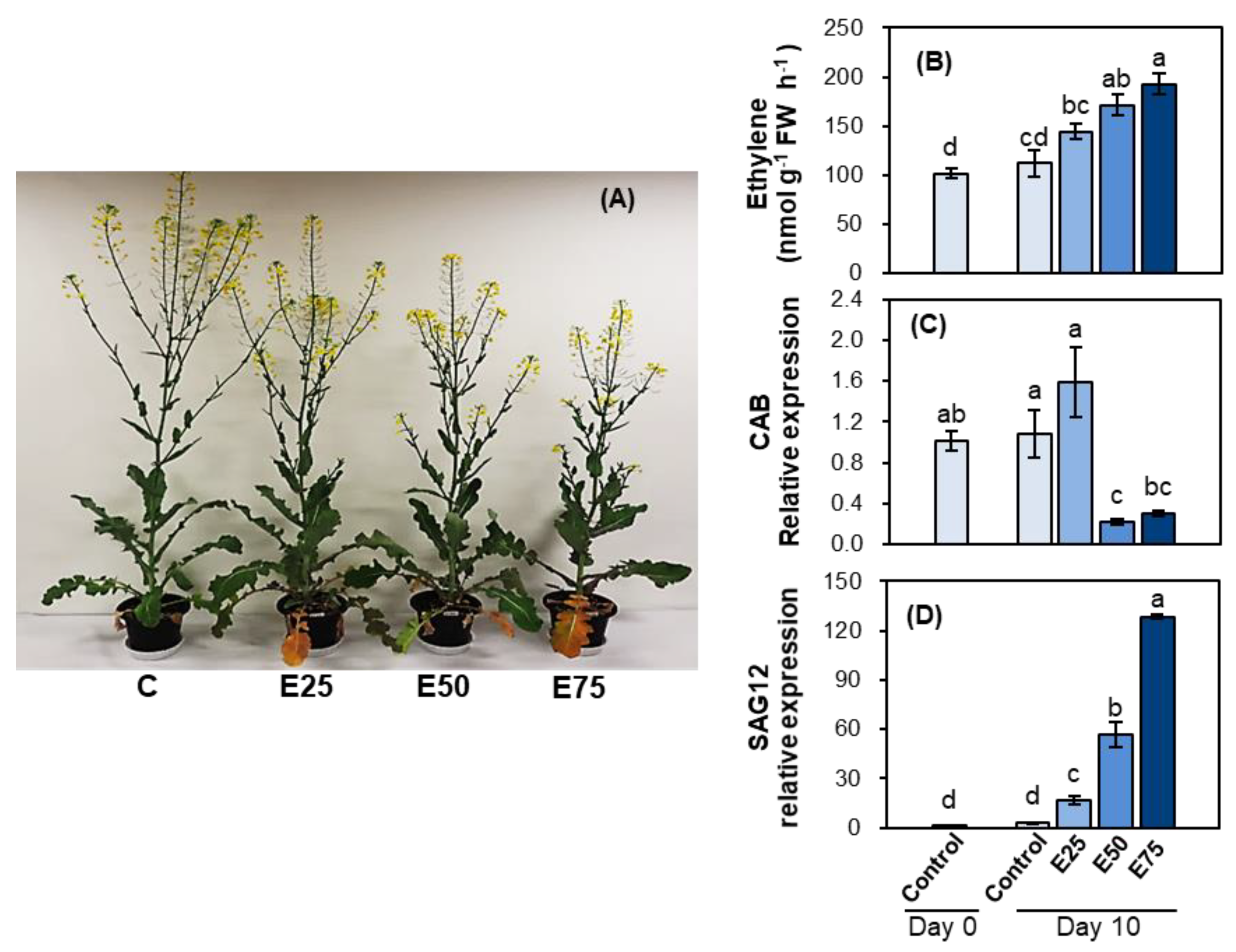
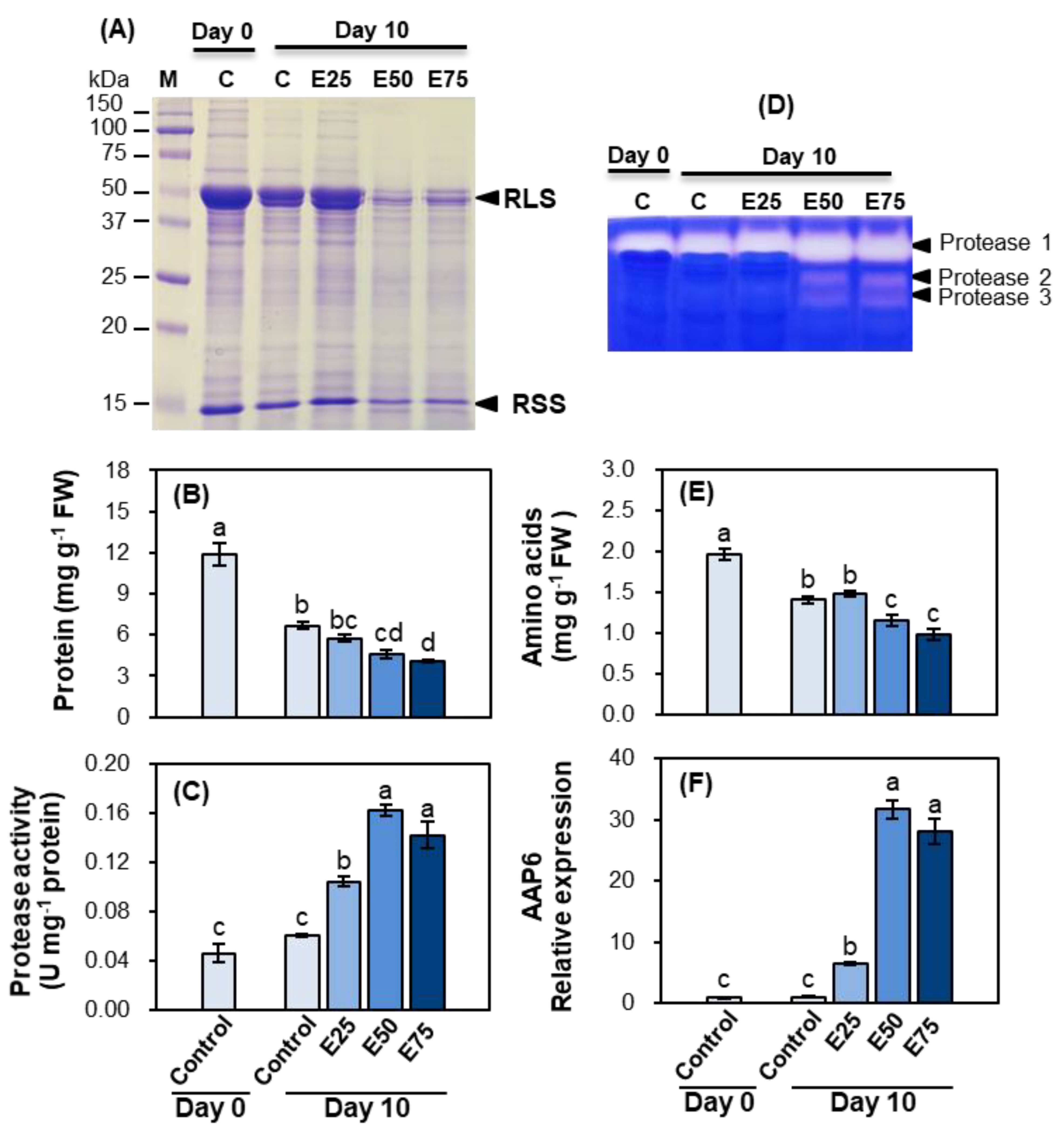
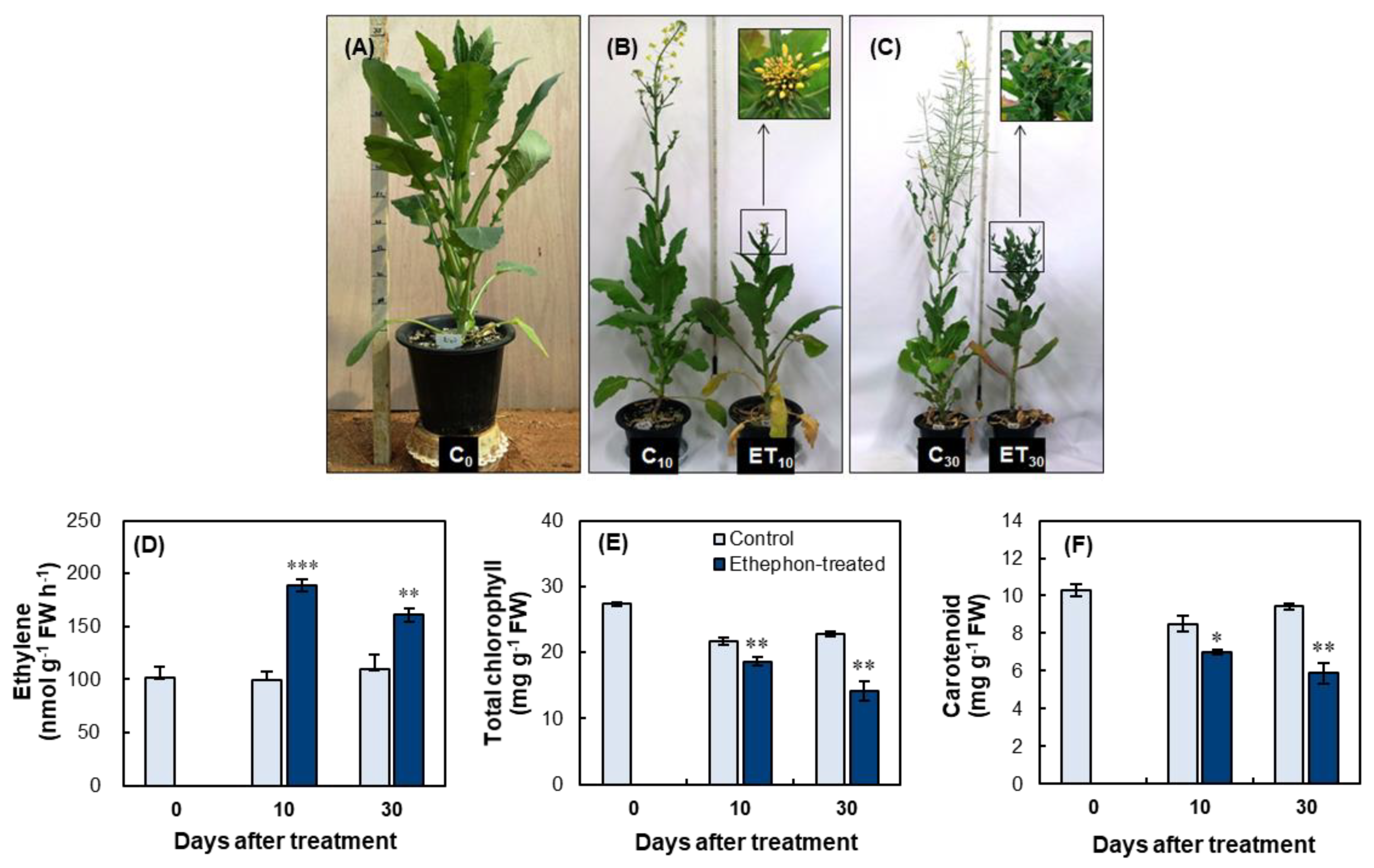
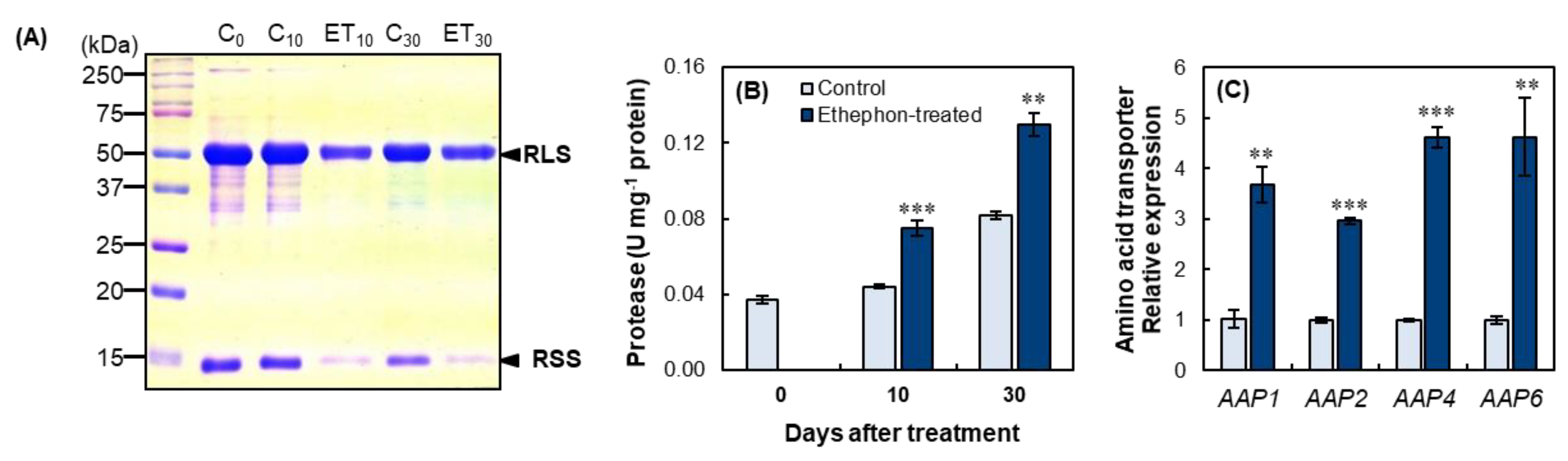
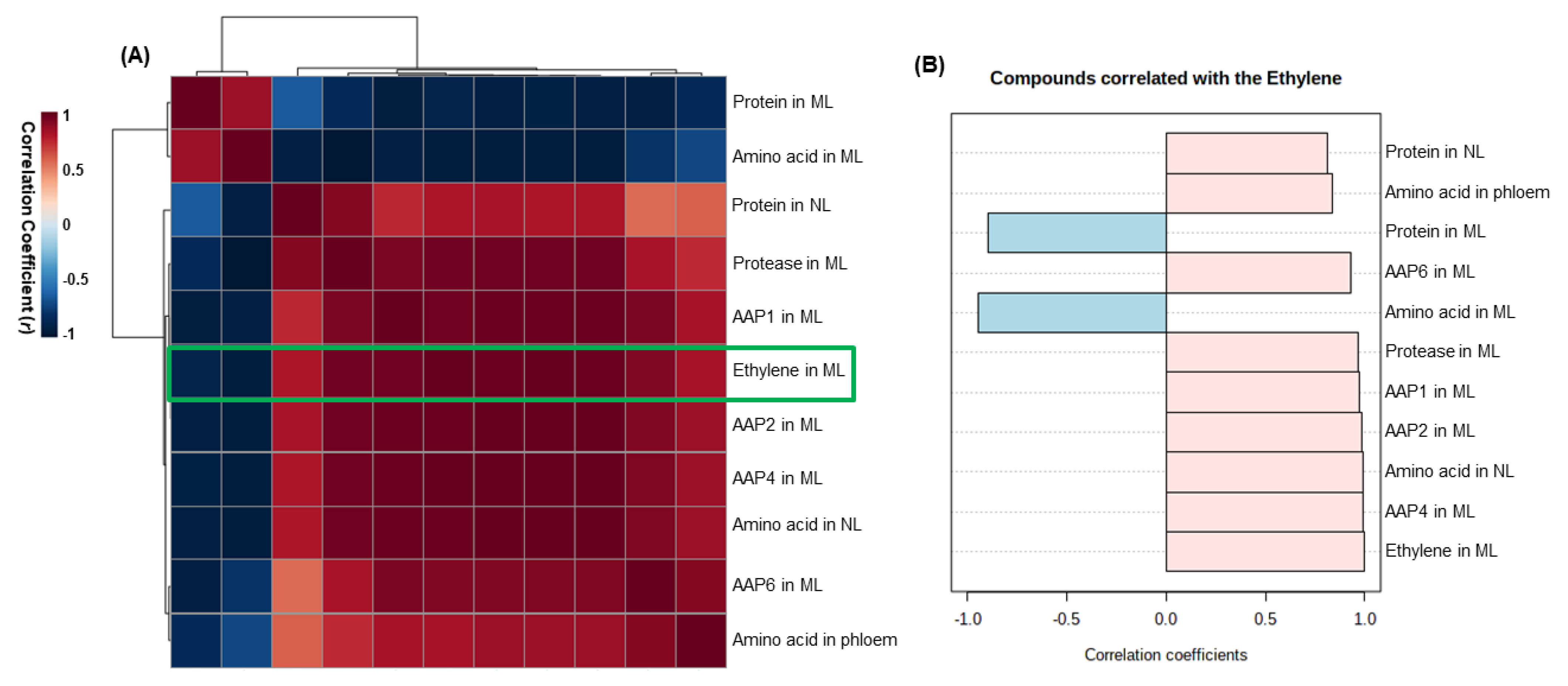
To investigate the regulatory role of ethylene in the source-sink relationship for nitrogen remobilization, short-term effects of treatment with different concentrations (0, 25, 50, and 75 ppm) of ethephon (2-chloroethylphosphonic acid, an ethylene inducing agent) for 10 days (EXP 1) and long-term effects at 20 days (Day 30) after treatment with 100 ppm for 10 days (EXP 2) on protein degradation and amino acid transport in foliar sprayed mature leaves of Brassica napus (cv. Mosa) were determined. In EXP 1, endogenous ethylene concentration gradually increased in response to the treated ethephon concentration, leading to the upregulation of senescence-associated gene 12 (SAG12) expression and downregulation of chlorophyll a/b-binding protein (CAB) expression. Further, the increase in ethylene concentration caused a reduction in protein, Rubisco, and amino acid contents in the mature leaves. However, the activity of protease and expression of amino acid transporter (AAP6), an amino acid transport gene, were not significantly affected or slightly suppressed between the treatments with 50 and 75 ppm. In EXP 2, the enhanced ethylene level reduced photosynthetic pigments, leading to an inhibition of flower development without any pod development. A significant increase in protease activity, confirmed using in-gel staining of protease, was also observed in the ethephon-treated mature leaves. Ethephon application enhanced the expression of four amino acid transporter genes (AAP1, AAP2, AAP4, and AAP6) and the phloem loading of amino acids. Significant correlations between ethylene level, induced by ethephon application, and the descriptive parameters of protein degradation and amino acid transport were revealed. These results indicated that an increase in ethylene upregulated nitrogen remobilization in the mature leaves (source), which was accompanied by an increase in proteolytic activity and amino acid transport, but had no benefit to pod (sink) development.
Keywords: amino acid transport; Brassica napus; ethylene; proteolysis; source-sink relationship amino acid transport; Brassica napus; ethylene; proteolysis; source-sink relationship