Article

A Deep Learning Model to Forecast Solar Irradiance Using a Sky Camera

Department of Mechanical Engineering, Kookmin University, 77 Jeongneung-ro, Seoul 02727, Korea
*
Author to whom correspondence should be addressed.
Appl. Sci. 2021, 11(11), 5049; https://doi.org/10.3390/app11115049
Submission received: 30 March 2021 / Revised: 16 May 2021 / Accepted: 25 May 2021 / Published: 29 May 2021
(This article belongs to the Special Issue Sciences and Innovations in Heat Pump/Refrigeration: Volume II)

Abstract

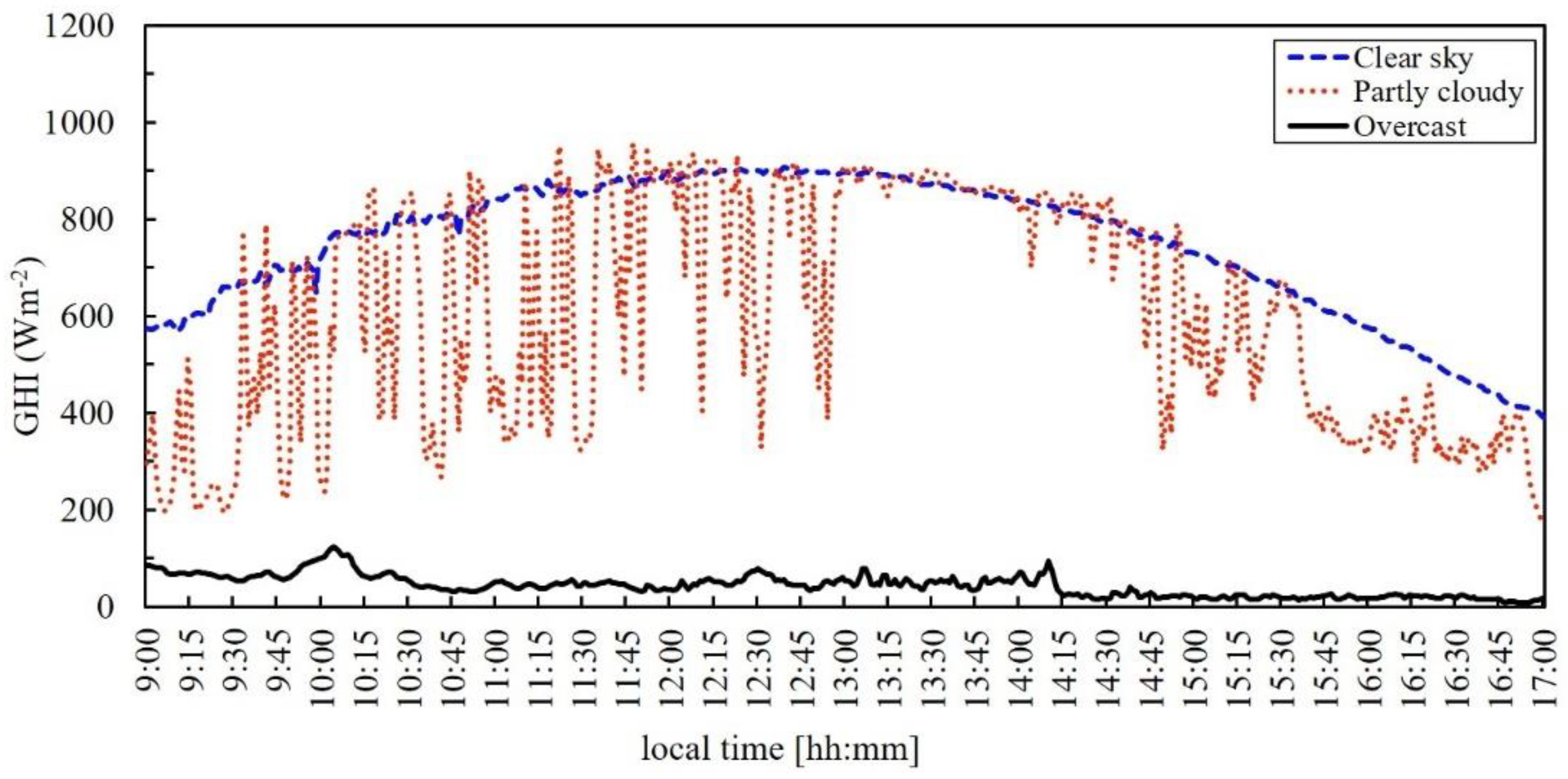
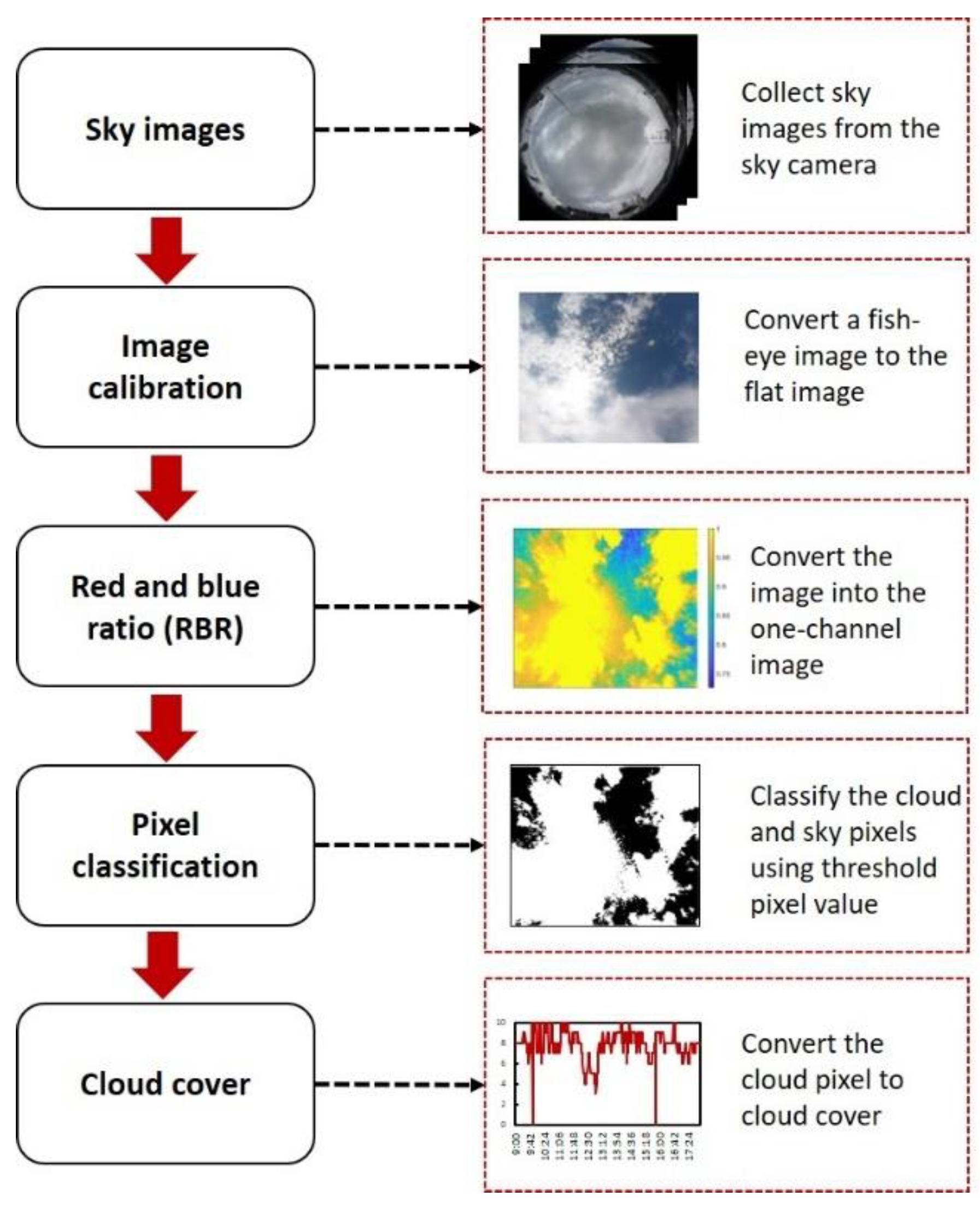
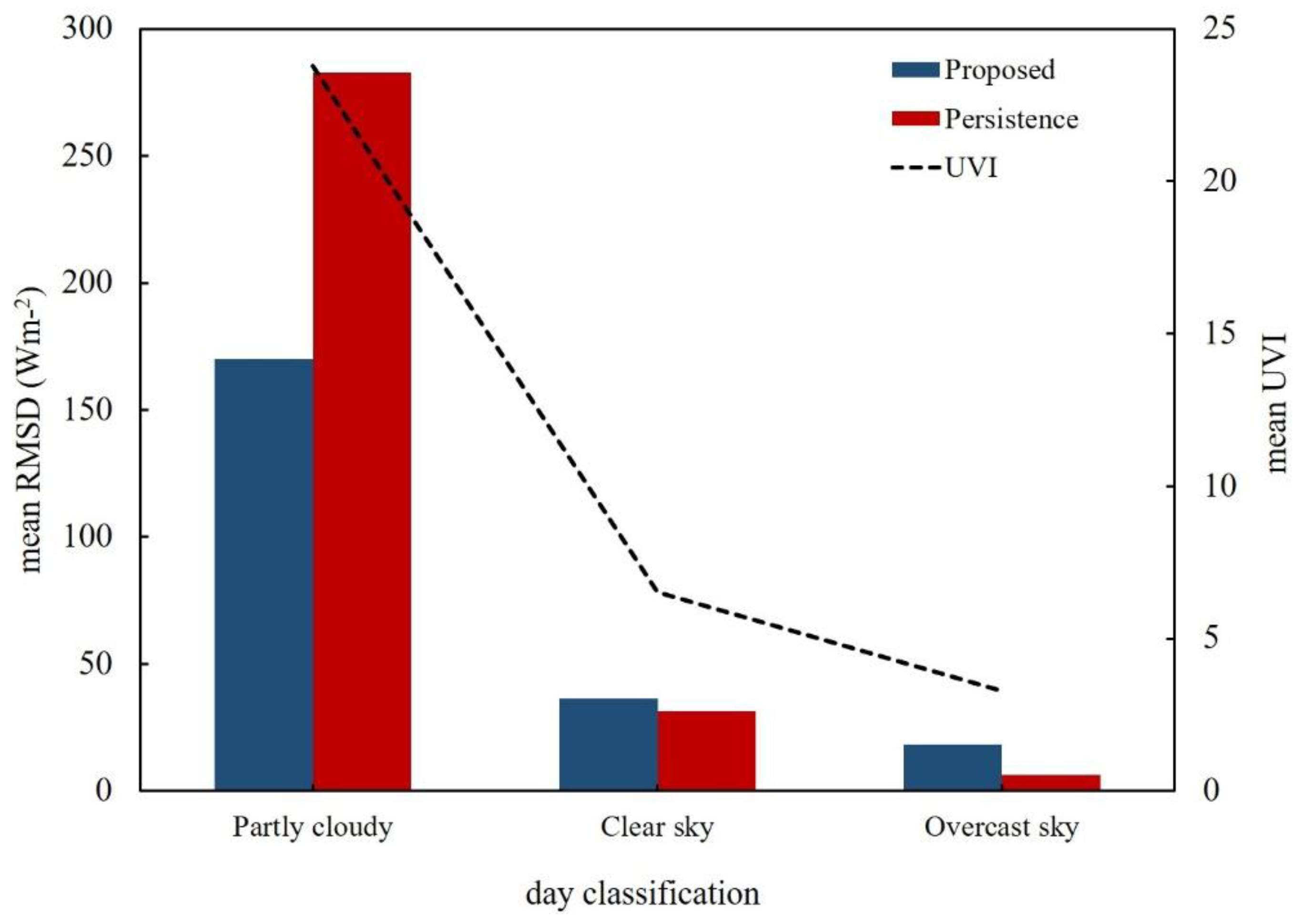
Solar irradiance fluctuates mainly due to clouds. A sky camera offers images with high temporal and spatial resolutions for a specific solar photovoltaic plant. The cloud cover from sky images is suitable for forecasting local fluctuations of solar irradiance and thereby solar power. Because no study applied deep learning for forecasting cloud cover using sky images, this study attempted to apply the long short-term memory algorithm in deep learning. Cloud cover data were collected by image processing of sky images and used for developing the deep learning model to forecast cloud cover 10 min ahead. The forecasted cloud cover data were plugged into solar radiation models as input in order to predict global horizontal irradiance. The forecasted results were grouped into three categories based on sky conditions: clear sky, partly cloudy, and overcast sky. By comparison with solar irradiance measurement at a ground station, the proposed model was evaluated. The proposed model outperformed the persistence model under high variability of solar irradiance such as partly cloudy days with relative root mean square differences for 10-min-ahead forecasting are 25.10% and 39.95%, respectively. Eventually, this study demonstrated that deep learning can forecast the cloud cover from sky images and thereby can be useful for forecasting solar irradiance under high variability.
Keywords: cloud cover; sky image; solar irradiance; deep learning cloud cover; sky image; solar irradiance; deep learning